S.C. Skillman's Blog, page 46
January 17, 2017
The Gatiss/Moffatt Post-StoryTelling World of Sherlock
We’re familiar with the phrase postmodern and more recently with the notion of post-truth. [image error]But now I think, for writers, it is true that there is a post-storytelling phenomenon – which moves beyond and over-turns current rules. And it’s illustrated in the scripts that Steven Moffatt and Mark Gatiss create for their TV drama series Sherlock.
It is now becoming more and more acceptable for audiences, on first viewing, to be confused by a story, but to stick with it for the sake of their love of the characters. This is certainly true of the most recently aired Sherlock episode: The Final Problem which presented a great challenge to the brilliant acting skills of Benedict Cumberbatch, Martin Freeman and Mark Gatiss. Clues as to what is or might be going on are planted in the current or the previous episodes, and because audiences can now view the episode many times, story-tellers are exploring new territory to take advantage of this.
Moving seamlessly between what’s in the mind and what’s actually happening in the physical world, Moffat and Gatiss break genre expectations (for which I here use the word rules – for so long as they can be deemed to exist) to involve their characters in events in the physical world whilst they remain free of the natural consequences, by some means which is not clear – other than through the clues I mention above. The popularity of the story of the modern Sherlock Holmes and John Watson itself seems to justify the transgression of the rules – or the pushing of these rules to their extremes – just like the characters themselves.
We saw Moffatt and Gatiss work brilliantly with a terrifying metaphor – a little girl the sole conscious person on board an aeroplane in mid-flight, needing to be talked into landing the craft. This was very archetypal and the stuff of nightmare, and a powerful metaphor for a small child under stress. But it’s not clear until the very end that this scenario is not happening in the physical world, but it is a metaphor, and in the mind.
However in one respect the story-telling remains strictly true to the original Conan Doyle stories – Sherlock’s ability to take things to an extreme pitch of personal danger to himself and to those closest to him, and then to emerge from it calm, self-possessed and in control. He does that in Conan Doyle’s original story The Adventure of the Dying Detective, where Watson is convinced Holmes is dying from a dreadful Asian disease, but when Holmes has secured the villain’s confession, and Inspector G. Lestrade has walked in, the “dying” Holmes suddenly transforms to his normal self and says, “All is in order, and this is your man.”
I remember well how I felt when I read that story – I was every bit as gripped by that as by watching the latest Sherlock episode on TV. So the Moffatt-Gatiss Sherlock is true to the original in this respect. Moffatt and Gatiss are replicating this factor using very impressionistic stylistic techniques made possible by today’s film/TV technology.
The very essence of Sherlock Holmes’ intellectual genius is his ability to make cool, measured calculations based on reason, whilst in a situation where the majority of people would be undermined by tumultous emotions. But right at the centre of The Final Problem, is Sherlock’s discovery not of his intellectual genius, but of his heart. The appearance of Lestrade at the end and John in the blanket is so reassuring and comforting – “order is restored, John’s in a blanket just as Sherlock was in the very first episode of all, A Study in Pink…. and Sherlock has saved him through supreme reasoning powers allied to his loyalty – and he has told Molly he loves her (twice, and sounding genuine).” So Sherlock has a heart. If he had a choice to live without John’s friendship and loyalty, or to live without Mycroft’s power and intellect, he would choose the second; and when no words could be used to communicate with his profoundly damaged sister Eurus, he alone communicated with her – using his violin.
I read a very telling admission in an interview with the two writers: they say of their character Sherlock “everything he has worked towards, everything he has tried to get away from in himself and deny about himself, is what makes him strongest.”
All in all – on first viewing we are confused, but still electrified – and we love and care for the characters more than ever.
Filed under: About Books I love, Authors I love, British, creative writing, films, inspiration, life, literature, media, musings, psychology, SC Skillman, SC Skillman Author, thoughts, TV programmes, UK, Writing Tagged: Benedict Cumberbatch, characters, Conan Doyle, love, Mark Gatiss, Martin Freeman, Sherlock, storytelling, The Final Problem, truth, TV


The Gatiss/Moffatt Post-StoryTelling World in Sherlock
We’re familiar with the phrase postmodern and more recently with the notion of post-truth. But now I think, for writers, it is true that there is a post-storytelling phenomenon – which moves beyond and over-turns current rules. And it’s illustrated in the scripts that Steven Moffatt and Mark Gatiss create for their TV drama series Sherlock.
It is now becoming more and more acceptable for audiences, on first viewing, to be confused by a story, but to stick with it for the sake of their love of the characters. This is certainly true of the most recently aired Sherlock episode: The Final Problem. Clues as to what is or might be going on are planted in the current or the previous episodes, and because audiences can now view the episode many times, story-tellers are exploring new territory to take advantage of this.
Moving seamlessly between what’s in the mind and what’s actually happening in the physical world, Moffat and Gatiss break genre expectations (for which I here use the word rules – for so long as they can be deemed to exist) to involve their characters in events in the physical world whilst they remain free of the natural consequences, by some means which is not clear – other than through the clues I mention above. The popularity of the story of the modern Sherlock Holmes and John Watson itself seems to justify the transgression of the rules – or the pushing of these rules to their extremes – just like the characters themselves.
We saw Moffatt and Gatiss work brilliantly with a terrifying metaphor – a little girl the sole conscious person on board an aeroplane in mid-flight, needing to be talked into landing the craft. This was very archetypal and the stuff of nightmare, and a powerful metaphor for a small child under stress. But it’s not clear until the very end that this scenario is not happening in the physical world, but it is a metaphor, and in the mind.
However in one respect the story-telling remains strictly true to the original Conan Doyle stories – Sherlock’s ability to take things to an extreme pitch of personal danger to himself and to those closest to him, and then to emerge from it calm, self-possessed and in control. He does that in Conan Doyle’s original story The Adventure of the Dying Detective, where Watson is convinced Holmes is dying from a dreadful Asian disease, but when Holmes has secured the villain’s confession, and Inspector G. Lestrade has walked in, the “dying” Holmes suddenly transforms to his normal self and says, “All is in order, and this is your man.”
I remember well how I felt when I read that story – I was every bit as gripped by that as by watching the latest Sherlock episode on TV. So the Moffatt-Gatiss Sherlock is true to the original in this respect. Moffatt and Gatiss are replicating this factor using very impressionistic stylistic techniques made possible by today’s film/TV technology.
The very essence of Sherlock Holmes’ intellectual genius is his ability to make cool, measured calculations based on reason, whilst in a situation where the majority of people would be undermined by tumultous emotions. But right at the centre of The Final Problem, is Sherlock’s discovery not of his intellectual genius, but of his heart. The appearance of Lestrade at the end and John in the blanket is so reassuring and comforting – “order is restored, John’s in a blanket just as Sherlock was in the very first episode of all, A Study in Pink…. and Sherlock has saved him through supreme reasoning powers allied to his loyalty – and he has told Molly he loves her (twice, and sounding genuine).” So Sherlock has a heart. If he had a choice to live without John’s friendship and loyalty, or to live without Mycroft’s power and intellect, he would choose the second; and when no words could be used to communicate with his profoundly damaged sister Eurus, he alone communicated with her – using his violin.
I read a very telling admission in an interview with the two writers: they say of their character Sherlock “everything he has worked towards, everything he has tried to get away from in himself and deny about himself, is what makes him strongest.”
All in all – on first viewing we are confused, but still electrified – and we love and care for the characters more than ever.
Filed under: About Books I love, Authors I love, British, creative writing, films, inspiration, life, literature, media, musings, psychology, SC Skillman, SC Skillman Author, thoughts, TV programmes, UK, Writing Tagged: characters, Conan Doyle, genre expectations, love, Sherlock, story, storytelling, The Final Problem, truth, TV, writing
January 10, 2017
How Many Books Do You Read in a Year?
Recently I thought it would be fun and interesting to ask this question of fellow-writers on our own dedicated Facebook group, having just learned from Goodreads that I’d reviewed or rated 28 books this year. [image error]
I made a fascinating discovery. Annual reading achievement varied enormously. I thought I was doing quite well at approximately 30 – and I learned via an online search that a “voracious” reader may get through 30-50 books a year but across the general population it is a very different picture: “According to a YouGov survey, the mean number of books read for pleasure by adults in the UK is around 10 each year, and the median is around 4.”
The answers I received from fellow-writers took me by surprise: and not least, because I was humbled and impressed by how the majority of these individuals managed to fit in so much reading alongside writing their own books!
“78 – less than two books a week, which doesn’t seem very much at all to me.”
“No more than 5”.
“In 2016 I read 69 – years ago I might read up to 100 a year. One month I notched up 19 books.”
“About 36.”
“About 12.”
“49 and some other started but not finished.”
“Over 100.”
“120 last year – as at 8 January this year I’ve already read 7.”
“55 from the library alone so probably nearer 70 or 80.”
“Going back through my Kindle orders, 54 not including ones I gave up on or old books I re-read.”
“32 according to Goodreads.”
“Between 15 and 30.”
“Probably about 12-15.”
“175 last year and above 150 for each year since 2011 when I started tracking on Goodreads.”
“55.”
I love to read a book which is a totally absorbing page-turner, a book which you can’t wait to get back to. It’s one of life’s greatest joys. I’ve just finished reading The Essex Serpent by Sarah Perry and I found it a real struggle to read, it’s so slow-paced and (I think) self-consciously literary. I bought it in Waterstones, attracted by the beautiful cover and the interesting blurb. I was determined to persist with it to the end because I’d spent good money on it but felt cheated of that wonderful “must get back to it as soon as possible” feeling with a good book.
When I mentioned this on Facebook, I liked this response:
“Books like that become loo books, read a page or two at a time. A friend sent me a non
fiction title I’d expressed interest in and I can only stomach it a few pages at a time. I’m only persisting because it was a gift and because there is some useful info amid the dross but it’ll get a scant two stars and the fact that I’m only reviewing as a warning to others taken in by the blurb.”
What do you think? Do you know how many books you read in a year? And what’s your view of “fast” and “slow” readers? Does it matter? and does it impact upon the quality of your response to the story, or your reviews, if you do review books (or discuss them at a book club). I’d love to have your comments!
Filed under: About Books I love, book reviews, Books, creative writing, literature, love, musings, SC Skillman, thoughts, Writing Tagged: book club, books, Goodreads, literary, reader, reviews, SC Skillman, writers


January 3, 2017
Dark TV Drama for Christmas 2016 and New Year 2017
This year darkness seems to be the keyword for some of our best drama offerings on TV: from Agatha Christie: The Witness for the Prosecution:[image error]
through Jonathan Creek: Daemons’ Roost;[image error]
Sherlock in The Six Thatchers.[image error] and the Bronte Family in To Walk Invisible.
[image error]
In Sherlock we discovered that Death had an appointment – with Mary Watson in the London Aquarium. Maybe London is Sherlock’s city and he knows the turf. But he was still unable to keep Mary safe, as he had promised. In the Agatha Christie drama, we were drawn in to the personal tragedy of a detective who was finally outwitted by the criminal; in Jonathan Creek we saw our lovable main character largely responsible for the horrific death of a villain; and in To Walk Invisible we were shown a tough and bristly Emily, a Branwell totally lacking in inner resources when things go wrong, a bossy and controlling Charlotte and a rather ineffectual Anne: and all of them powerless against tidal waves of blind misfortune.
I read in an interview with Toby Jones (star of the Agatha Christie episode, and also due to appear as the next villain in Sherlock) that Ten or twenty years ago, Poirot and Miss Marple were cutting edge. But the viewer’s brain processes genre faster now.
I feel this sums up well the challenge facing today’s TV drama writers, screenwriters and novelists. We can no longer get away with anything that approaches transparency or simplicity in plotting or tone or characterisation; especially if we write crime, suspense or thrillers, we have to be at least two or three steps ahead of the viewer / reader. For us, “the game” of which Sherlock speaks has to be the game we play with the reader’s expectations, which are now razor-sharp. In our books we can only get away with characters like Mrs Hudson saying things like “I’ll just go and make a nice cup of tea shall I?” if there is some kind of or even triple double irony bound up in the package of words and character and context.
Against all this perhaps, the Outnumbered Christmas Special was refreshingly light, unless you count the darkness of 1) being led astray by a mischievous old man, now deceased, to travel a long distance to scatter his ashes in a random beauty spot 2) the abrupt discovery that your son plans to disappear off to New Zealand long term, and 3) walking away defeated from a car accident having trashed your car, totally unaware your daughter has obtained evidence that the other party was completely at fault….
All of these dramas, though, are essentially English, and all are about life, and we love them, together with their characters and situations. The darkness in some way is cathartic for us; we identify, we exercise our powers of empathy as we are drawn into the tragedy and horror and irony of the characters’ experiences… and this is why drama, and fiction, is a gateway to truth, and so profoundly important in our lives.
Filed under: British, creative writing, life, London, love, SC Skillman, TV programmes, UK, Writing Tagged: characterisation, drama, irony, life, plotting, reviews, SCSkillman author, suspense, thriller, truth, TV, TV drama


December 27, 2016
Boxing Day Entertainment by the Kenilworth Lions at Kenilworth Castle and Abbey Fields
The English love to do fun – and some might even think silly – things on Boxing Day.[image error]
Perhaps this is a relief from all the stress of preparing for Christmas. It’s also the opportunity for people to gather together in the fresh air and enjoy themselves with traditional English entertainments.
[image error]
Here are a few fun things that took place in one of my favourite places, Kenilworth, on Boxing Day – at Kenilworth Castle and Abbey Fields.
The events were organised by Kenilworth Lions who not only give people a lot of fun and enjoyment, but also provide tremendous support to local charities through their fundraising.[image error]
The entertainments included Morris dancers, Punch and Judy Show, and the best dressed dog contest at Kenilworth Castle…[image error]
……..and the annual duck race along the brook through Abbey Fields – an event which attracts a huge crowd. We followed this with another very popular local activity – a walk through the fields behind Kenilworth Castle, through the area once covered by the Great Mere, filled with pleasure boats, out to the former site of Henry V’s “Pleasance in the Marsh” and back again to the Castle….
May I take this opportunity to wish you a happy New Year and for all of us the chance to play our part in making the world a more compassionate, caring and loving place for us all, one in which people may come together in a spirit of mutual tolerance, acceptance and good will, so in many more countries people may enjoy being together as shown on the pictures in this blog post.
[image error]
Filed under: animals, British, British landscape, English countryside, history, life, love, places I love, places of inspiration, SC Skillman, SC Skillman Author, thoughts, UK Tagged: Abbey Fields, dogs, English, entertainments, fun, humour, Kenilworth Castle, Kenilworth Lions, life, punch and judy, traditional


December 20, 2016
Garden of Significant Inspiration and Curious A-MUSE-ments at Shakespeare’s New Place in Stratford-upon-Avon
O for a muse of fire that would ascend the brightest heaven of invention.
So wrote William Shakespeare in the Prologue to Henry V – and a few days ago we were in the garden at New Place, Stratford-upon-Avon, site of Shakespeare’s former family home – infusing marbles with the power of that same muse.[image error]
In case you’re thinking that sounds eccentric and zany, you’re right – and through the path of the eccentric many of the greatest minds have found both inspiration and ideas that have changed the world. Below is an approximation of what Shakespeare’s family home would have looked like. No [image error]house currently exists at New Place, but is instead represented by a series of gardens is where we embarked on a “Muse Catching” journey with the United Nations Board of Significant Inspiration (otherwise possibly understood as a group of artists / creators / thinkers / acrobats / inventors / actors whose goal is to awake the imagination, fill the mind and heart with fresh possibilities, and raise up the muse for members of the public who choose to visit).
Our purpose: to each take a marble and catch in it some of that muse Shakespeare wrote about, through the four elements of earth, fire, water and air.
The journey itself is full of fun, wonder, laughter inspiration and delight – and at the bottom of this wonderful, quirky, fanciful Art Happening, is a profound question and a fascinating subject for research: is there a correlation between place, time and lightbulb moments?
Shakespeare’s family home no longer exists because it was demolished by a character Shakespeare himself might have created. This “Art Happening” as I like to describe it, was based upon the idea that “the muse” is somehow present in the location where Shakespeare lived and wrote. Many of us are familiar with the idea of certain places having a high level of inspiration. Often it seems to be present in the air, or lie hidden in the fabric of a special building, or within a natural phenomenon or feature of the landscape. But does it perhaps emanate from the ground? This is the idea played with and embodied by the UNBOSI at New Place this Christmas. In the roundel at New Place, several information boards explored this, noting that many world-renowned geniuses had their lightbulb moment by doing very silly things – or by having very silly things happen to them.
So let us be inspired by the fanciful, creative, quirky and even silly… for along that path may lie greatness.
Filed under: Art, art exhibitions, Authors I love, British, buildings, creative writing, empowerment, garden design, history, inspiration, life, literature, musings, places I love, places of inspiration, SC Skillman, thoughts, UK, Writing Tagged: greatness, humour, inspiration, lightbulb moments, muse, New Place, SC Skillman, Shakespeare, Stratford-upon-Avon, writing


December 12, 2016
New Puppeteers at the Children’s Christmas Party at St Mark’s Church Leamington Spa
On the third Sunday of Advent, I became, along with two others – Jamie and Sidney – a new puppeteer.[image error]
That morning, after the Nativity Service led by St Mark’s Church Beaver colony, the children poured into the hall for their Christmas Party – and the centrepiece of the party was a puppet show.
To the sounds of Mary’s Boy Child by Boney M., a group of us, hastily recruited, became puppeteers. I operated a child angel plus the baby Jesus, Sidney took charge of the adult angel, Jamie manipulated, at different times, Mary, Joseph and a sheep. Abigail and John held up the backdrop of the stable at the end. [image error] And Sidney and I held up No Vacancies signs at the appropriate time while Jamie and Sidney held up The Bible sign.
Long time ago in Bethlehem, so the Holy Bible said,
Mary’s boy child Jesus Christ, was born on Christmas Day.
Our trainer and director was master puppeteer Fiona Stutton from Thrive Youth Ministries who with great patience and good humour took two evenings to train us to become puppeteers. Fiona operated a singing puppet at the beginning, and followed this with a short session for the children about the true meaning of Christmas, using magic tricks with silk handkerchieves and a bag that mysteriously changed colour. Then it was time for our puppets to perform Mary’s Boy Child.[image error]
We all had great fun and learned new skills, Fiona was pleased to have trained some new puppeteers, Ros who organised the party was delighted……..
[image error]
and, most importantly of all – the children loved it!
Filed under: life, religion, SC Skillman, stage drama, UK Tagged: angel, children, Christmas, humour, Jesus Christ, magic, party, puppeteers, puppets, Thrive


December 7, 2016
#JoytotheWorld Christingle Church Service
This is such a lovely blog post about a Christingle Service, by Catherine Green, a fellow-author whose blog I follow. I don’t often reblog other posts but this one is beautifully written and uplifting, and just right for this time of year.

It may surprise you to read about my visit to our local church, since this is the blog of the pagan housewife. There are people in our communities who identify as pagan Christians, however, since paganism was simply an ancient form of worship before Christianity came to the UK all those centuries ago. Indeed, Christianity and paganism mingled and wove together many of the popular festivals that we are familiar with today, and now we are fortunate in that we can openly celebrate those that feel right to the individual.
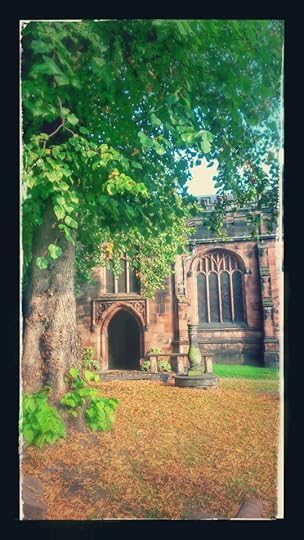
So it was that last weekend I accompanied my elder daughter and our young neighbour to our local CofE church, St Michael and All Angels church in Middlewich. I love the congregation in this church, and indeed, many of them are my friends from the school yard and various parent/child groups that I have attended in recent years…
View original post 214 more words
Filed under: SC Skillman


December 6, 2016
Lovely Atmosphere at King Edward VI School Christmas Fair Book Signing
at I enjoyed selling and promoting signed copies of my two thriller suspense novels Mystical Circles and A Passionate Spirit and meeting readers at King Edward VI School Christmas Fair, Stratford-upon-Avon last Saturday.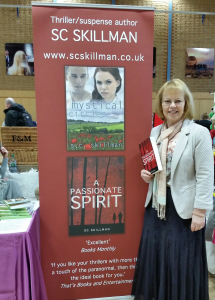
A pianist and choir entertained us with carols, the prefects carried our bags from the car and brought us tea and coffee during the fair, and there was also a fabulous raffle with wonderful prizes like an overnight stay and dinner and wine for two at the Lygon Arms, Broadway… very appropriate for the fact that the final scene of A Passionate Spirit is set in in the Lygon Arms, Broadway. Sadly though I didn’t win the prize!
I chatted with readers and one of them said “This looks just the sort of thing for me for January reading…” also I found once again that men seem to be the first to take initiative in browsing and then buying my books, even persuading their wives to buy them! What is this saying about my target audience?..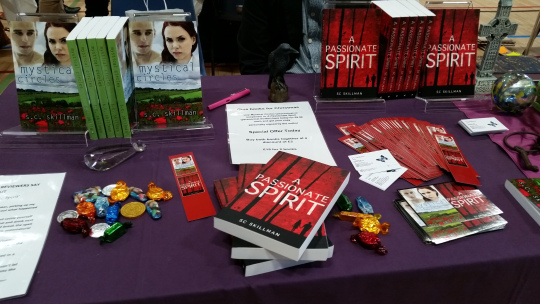
We’ve heard it said before but it always stays true – books make an ideal Christmas present… if, of course, you know the reading taste of your gift recipient!
Happy reading over Christmas and into the New Year.
Filed under: Books, British, British psychological suspense writer, creative writing, life, literature, Mystical Circles, paranormal thriller fiction, psychological suspense fiction, SC Skillman, SC Skillman Author, UK, Writing Tagged: books, Christmas present, January reading, mystical circles, novels, passionate spirit, readers, SC Skillman, target audience, writing


November 29, 2016
A Passionate Spirit and The Cult That Stole Children
A couple of years after I left university, whilst on a spiritual search, I went to a lecture at the Royal Overseas League in London, met, chatted to and became captivated by an inspirational speaker: a Physics professor who wrote spiritual books. His name was Dr Raynor Johnson.
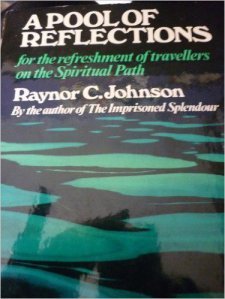 Subsequently I read and loved all his books, beginning with his latest: “A Pool of Reflection”. I later wrote him a letter, to which he responded with a very kind and encouraging reply from his home at Santiniketan, Ferny Creek, Melbourne Australia.
Santiniketan later became notorious as the first premises Raynor Johnson made available for the use of the then beautiful and charismatic Anne Hamilton-Byrne, the cult leader, and where she gave her spiritual talks, and started to gather her followers. At the time, of course, I had no knowledge of this.
I wrote about him and about the cult with which his name has now become ineradicably linked in this blog post: The Curious Case of the Kindly Professor and the Cunning Cult Leader. I also used the story of the cult in my novel A Passionate Spirit (pub. Matador 2015).
This cult is particularly relevant to my interests in writing A Passionate Spirit, because of the way in which the cult leader uses beauty and charisma to win devoted followers, whom she then indoctrinates with her teachings; and the cult preys upon the young and the vulnerable. In addition the cult won the support of many intellectuals and people occupying high professional positions. It is a case which is of vital fascination to a writer of psychological thrillers and suspense.
Later I was contacted by journalist Chris Johnston, who has published articles about the cult in The Age, Melbourne and in the Sydney Morning Herald. He wanted to make reference to my experiences, and to quote from my blog post, in a book he was writing about the cult.
You can watch the story of this cult on BBC TV tonight Tuesday 29 November 2016 in a documentary called: “Storyville: The Cult That Stole Children.” It is being broadcast at 9pm.
M paranormal thriller novel A Passionate Spirit inspired these remarks from a Net Galley reviewer, CE Gray: “as Natasha and James started to take hold of both the centre, and the people within it, the story picked up pace and for me became a page turner. I needed to know, were there supernatural forces at work? Was Zoe imagining it? Were Natasha and James just fraudsters? Was this a story about a cult?
I was pulled in, hook, line and sinker, picking up my kindle at every opportunity to find out what happened next and the end was not disappointing.
I would absolutely recommend this book to anyone interested in cults, the supernatural and thrillers in general.
What I especially loved were the author’s notes at the end, talking about her inspirations for the novel, including the Australian cult, The Family, which sent me scurrying off to the google for an hour after I’d finished the book. A great read.”
A Passionate Spirit is available to buy online and in bookshops.
Filed under: Australia, Books, British psychological suspense writer, creative writing, inspiration, interpersonal relationships, life, literature, love, musings, New psychological thriller fiction, paranormal thriller fiction, people of inspiration, psychology, religion, SC Skillman, SC Skillman Author, spirituality, thoughts, Writing Tagged: a passionate spirit, Anne Hamilton-Byrne, Australia, beautiful, books, charismatic, cult, Dr Raynor Johnson, inspirational, Melbourne, novel, SC Skillman, spiritual