
Simon Dunn's Blog, page 2
August 4, 2024
Anderson Versus Stallone
This is the story of Timothy Burton Anderson, who in 1986 sued Sylvester Stallone and MGM/UA because, he argued, they had stolen his idea for Rocky IV, and then failed to compensate him for it.
A Utah screenwriter has filed a $105 million suit against Sylvester Stallone and officials of MGM/UA studios, claiming they stole his idea for the smash-hit movie ‘Rocky IV.’
Stallone sued over ‘Rocky IV’ idea, Catherine Gerwertz, UPI, 4th November 1986
Tim Anderson said in a suit filed Monday in Superior Court that he wrote a screenplay and plot outline in June 1982 that was very similar to the hit movie.
In his screenplay, boxer Rocky Balboa ‘beats his huge, young Aryan East bloc opponent in a climactic boxing match behind the Iron Curtain despite enormous odds and is eventually cheered on by the communist crowd.’
Anderson seeks $100 million in punitive damages and $5 million actual damages, claiming Stallone and the MGM/UA executives breached the oral contract they made to compensate him for use of his plot concept and screenplay.
According to Anderson, after watching Rocky III, he wrote a 31-page treatment for a movie called Rocky IV, which he handed to MGM executives at a meeting in October of 1982.
There was one slight wrinkle.
The Court identified it like this:
[T]he Court notes that an alleged infringer also rarely has direct irrefutable evidence – such as Stallone’s press conferences describing his ideas of an East/West boxing confrontation before receiving Anderson’s script – that he had independently developed the idea which he allegedly copied from the defendant.)
So taken by this was the Judge, that the whole decision opened with it:
The movies Rocky I, II, and III were extremely successful motion pictures. Sylvester Stallone wrote each script and played the role of Rocky Balboa, the dominant character in each of the movies. In May of 1982, while on a promotional tour for the movie Rocky III, Stallone informed members of the press of his ideas for Rocky IV. Although Stallone’s description of his ideas would vary slightly in each of the press conferences, he would generally describe his ideas as follows:
I'd do it [Rocky IV] if Rocky himself could step out a bit. Maybe tackle world problems. So what would happen, say, if Russia allowed her boxers to enter the professional ranks? Say Rocky is the United States' representative and the White House wants him to fight with the Russians before the Olympics. It's in Russia with everything against him. It's a giant stadium in Moscow and everything is Russian Red. It's a fight of astounding proportions with 50 monitors sent to 50 countries. It's the World Cup - a war between 2 countries.
I get the impression that the Judge, William D. Keller, was mostly unimpressed by the plaintiff’s whole argument:
This Court also finds that the Rocky characters were so highly developed and central to the three movies made before Anderson’s treatment that they “constituted the story being told”. All three Rocky movies focused on the development and relationships of the various characters. The movies did not revolve around intricate plots or story lines. Instead, the focus of these movies was the development of the Rocky characters. The same evidence which supports the finding of delineation above is so extensive that it also warrants a finding that the Rocky characters – Rocky, Adrian, Apollo Creed, Clubber Lang, and Paulie- “constituted the story being told” in the first three Rocky movies.
3. Anderson's Work is An Unauthorized Derivative Work ... This Court must now examine whether Anderson's treatment is an unauthorized derivative work under this standard. Usually a court would be required to undertake the extensive comparisons under the Krofft substantial similarity test to determine whether Anderson's work is a derivative work. See I M. Nimmer, § 3.01 at 3-3; pgs. 25-28 supra. However, in this case, Anderson has bodily appropriated the Rocky characters in his treatment. This Court need not determine whether the characters in Anderson's treatment are substantially similar to Stallone's characters, as it is uncontroverted that the characters were lifted lock, stock, and barrel from the prior Rocky movies.
But the Judge did apply the Krofft test nonetheless, and having outlined the plot and story of Stallone’s Rocky IV screenplay (and subsequent movie), he did the same with Anderson’s treatment.
ii. Anderson’s Treatment
Several scenes at the beginning of the treatment chronicle the development from childhood of an East German boxer Adolph Heinemann. He begins boxing in international competition by the age of sixteen. He goes on to capture the gold medal at the 1984 Olympics. Heinemann then fights the heavyweight champion, Clubber Lang, at Madison Square Garden. Heinemann defeats Lang in the first round. Rocky and Apollo Creed watch the fight from ringside. They are partners in the fight promotion business. Heinemann makes several successful defenses of his title in Eastern Europe cities of Leningrad, Moscow, Leipzig, and East Berlin. Due to dominance of professional boxing by eastern block fighters, all major fights take place in eastern block countries. Rocky and Apollo continue their fight promotion business. Rocky and Apollo use their own money to finance three days of boxing at Madison Square Garden. They place their fortunes on the line to buy television coverage. The main event pits Clubber Lang against an Irish fighter. There is little interest in the event. Rocky and Apollo go broke. Rocky sells all of his possessions to pay his creditors. Rocky returns to the "row house apartment of Rocky I". (This setting is appropriated from Stallone's first movie by Anderson) He goes to work in a meat packing plant in Philadelphia. (This portion of the story also borrows heavily from Rocky I.) A Soviet leader gives a speech to the United Nations in New York. He states that the Communist world is prevailing over the West as exemplified by their boxing champion. He refers to Rocky as an old and weak ex-fighter. Upon hearing the speech, Rocky and Apollo become very distraught. Both Rocky and Apollo, unbeknownst to the other, regroup and begin training in ... seclusion. Rocky is in Philadelphia and Apollo is in Los Angeles. Thereafter, Rocky and Apollo simultaneously take planes to visit the other and break the news of their respective comebacks. Coincidentally, both are on planes which are stopping over in Chicago. While in one of the terminals at the airport they bump into each other. They decide to begin training together. Rocky and Apollo return to the "old gym of original movie" (setting and training scenes based upon Rocky I) and devise a secret strategy for Rocky to beat Heinemann. An East German representative to the United Nations informs Rocky that Heinemann will not fight him because he is too old. Rocky and Apollo then go to New York to East Germany's United Nations ambassador. They barge in the office and intimidate the ambassador into calling Heinemann to ask him to fight Rocky. Rocky insults Heinemann* and convinces him to agree to a fight. To raise money for his training, Rocky fights in exhibitions in Europe and South America. He fights in France, England, and Spain. He also trains in a Parisian bordello and a London nunnery. In London, Rocky is approached by CIA agents and followed by KGB officers. The CIA offers to pay Rocky's training expenses and he refuses. Rocky runs through a number of European capitals and ends up at St. Peters Square in Rome on the day the Pope is to appear. Rocky fights Heinemann at an outdoor stadium one hundred yards east of the Berlin wall. Heinemann originally dominates the fight. However, Rocky makes a heroic comeback and wins the fight when Heinemann refuses to answer the bell in the sixth round. The East German crowd cheers Rocky's victory.
*The idea that Rocky would insult someone demonstrates a lack of understanding of the Rocky character.
After explaining, in several hundred words the material differences between the two stories, and pointing out that any similarities are intrinsic to the developed Rocky saga (eg, Rocky being the underdog against bigger, better opponents) …
In any event, the Court finds that no reasonable audience would recognize the movie Rocky IV as a dramatization or picturization of Anderson’s work. … no reasonable jury could find that Rocky IV is a picturization of Anderson’s treatment …
The Court finds that Rocky IV is not substantially similar to Anderson's work. Nor is any portion of Anderson's work entitled to copyright protection under 17 U.S.C. sections 103(a) & 106(2). The Court GRANTS defendants summary judgment on Anderson's claim that they infringed Anderson's copyright. IT IS SO ORDERED.
Further Reading:
Full Court Order
Editor Fights a Round for Rocky


July 31, 2024
A Story About Nothing, In 3 Parts
Here’s a story about the analysis powers of industry insiders, presented in three parts.
[image error]Broadcasting & Cable, 24th April 1995[image error]Broadcasting & Cable, 1st April 1996[image error]Broadcasting & Cable, 10th March 1997Look at just how many sitcoms were being made.
And here’s the coda …
[image error]Broadcasting & Cable, 5th January 1998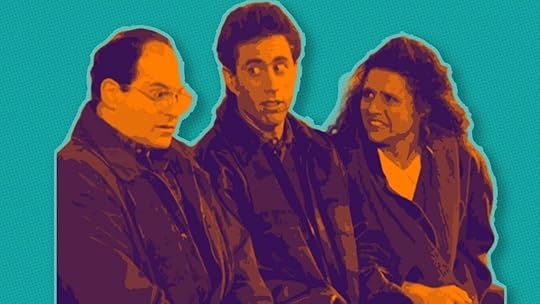
July 28, 2024
When Giftbusters Invented NTV
Before his House Party, Noel did a Saturday Roadshow. It introduced a number of segments and items that would later be developed and refined in his Crinkley Bottom. The Gotchas, Wait Till I Get You Home, and the gunge tank all appeared on the Roadshow, and so did Giftbusters.
This was clearly where the idea for NTV was born.
The Noel Edmonds Saturday Roadshow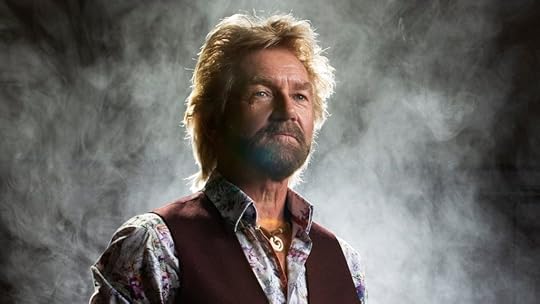
June 30, 2024
Could These Be Your Neighbours?
It’s hard to overstate the way Sylvania Waters changed the landscape of British television, so I won’t. What’s interesting is how the show was received in Australia compared to how it was received here in the UK.
[image error]Canberra Times, Monday 20 July 1992, page 32Sylvania Waters exploded on to Australian TV on 21 July 1992. The link to the fictional soap that inspired it was clear in the tagline: “Could these be your neighbours?” Aussie critics immediately fired up, with the Daily Telegraph Mirror writing it was “a vicious putdown tailor-made for British audiences”.
The Sydney Morning Herald agreed, arguing that Watson was pandering to “every British preconception about Aussies” with a family that was “materialistic, argumentative and heavy-drinking”. Unsurprisingly, Sylvania Waters attracted a huge audience and the morning after it aired everyone seemed to have an opinion on it.
Remembering Sylvania Waters: the real-life Neighbours that angered Australians and titillated Brits, by Andrew Mercado, The Guardian, Tuesday 21st November 2023
Politicians waded in, apologies were made, and as always, opinions were shared.
[image error]Daily Mirror – Thursday 25 March 1993[image error]Daily Mirror – Friday 30 April 1993[image error]Daily Mirror – Friday 23 April 1993Sylvania Waters screened in the UK in 1993 with one critic saying it was “Neighbours gone mad, Home & Away on drugs!” English fans seemed to love that and they lined up to get Noeline’s autograph when she visited, prompting her to say: “After the fuss in Australia, this is a dream come true.”
ibid
This show is indelibly lodged in my brain. Take a look for yourself.
Insert random Australian vernacular[image error]June 16, 2024
Bite The Wax
If you imagine the phrase ‘Bite The Wax’ as spoken by Armando Iannucci, then your day will be all the better for it.
But before we get to that, let’s talk about No’ The Archie Macpherson Show. It’s Wednesday 6th July 1988, and BBC Radio Scotland is about to debut a new youth oriented show that blends news, current affairs, music, and comedy. It’s made BY young people, FOR young people. That’s a fact, it says it in print.
[image error]Dundee Evening Telegraph – Wednesday 06 July 1988I mean, you could even call it ‘a midweek romp’.
The show did well, and even warranted a repeat run in September, complete with a slightly different name.
[image error]Shetland Times – Friday 02 September 1988By October, it was announced that the show had spawned its successor.
[image error]Aberdeen Press and Journal – Monday 31 October 1988Bite The Wax was well received by The Scotsman.
[image error]The Scotsman – Saturday 18 March 1989Then it was time for Armando to step back on to the live stage …
[image error]Scotland on Sunday – Sunday 26 March 1989If anyone know the story about the Whose Line Is It Anyway? audition, I’d love to hear it.

June 8, 2024
Wither The Young Ones Movie?
Here’s a great article from the Liverpool Echo, on Saturday 10th December 1983.
[image error] Click to enbiggenise …‘I want to do more theatre next year. There is an offer of a film, possibly about The Young Ones, but that’s still only an idea at the moment.’
Imagine the trailer, with voice over man growling ‘Once in every lifetime …’
And now I want to see the Drew Struzan poster for it.
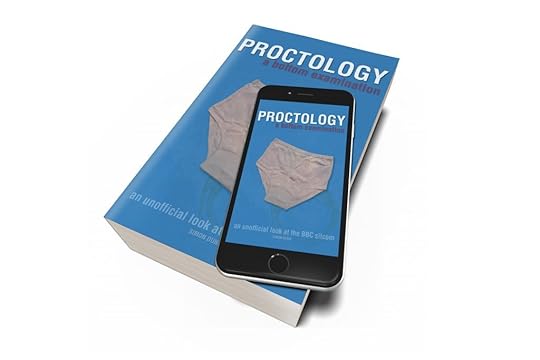
PROCTOLOGY: A Bottom Examination is my in-depth guide to all things Bottom.
Available now on Kindle and in paperback.

April 10, 2024
The Marshall Chronicles Changed Sitcom History (Probably)
A small fact nugget keeps popping up about Seinfeld – that the show was renamed after the pilot to avoid allusions to the ABC show The Marshall Chronicles. As the pilot had been called The Seinfeld Chronicles, and the ABC show was cancelled after four episodes, they went with the much snappier new title.
It’s the sort of fact that sounds totally plausible.
The trivia track on the pilot episode says that the show was first called Stand Up, with early drafts featuring George discussing his own stand up act with Jerry, and that it was next called The Jerry Seinfeld Show.
But here’s a rather more contemporaneous reference, albeit with no attribution.
[image error]Kay Gardella, New York Daily News, 31st May 1990It does seem a little unfair on the ABC show to only be remembered as a footnote to another show, so here’s the first episode. I love how populated the sets are, and there’s even another Seinfeld link, with one of the regular extras having a snog on the train.
American ad placements feel weird to me …Ken Levine has an excellent blog about the show too, which is well worth a read.
[image error]Just normal men …[image error]Sneakers[image error]March 24, 2024
All Rise For Julian Clary
It’s always fun when two disparate things collide. I was reminded of All Rise For Julian Clary by, of all things, The Secret Barrister book, which mentions the show in passing. Barely a day later, following a mention on a YouTube video, I found theoldnet.com, and decided to look at the BBC’s website from 1996. Lo and behold, one of the first links I found was to their page about All Rise …
[image error]Elegant minimalism …The show aired on BBC Two, beginning its first series in September of 1996, and ending after its second series with a Christmas Special the following year.
It featured a mix of members of the public and celebrities, all asking Julian to pass judgment on something or other. It also starred Frank Thornton as Geoffrey Parker-Knoll. Airing stright after Shooting Stars at 9.30pm on Fridays, it had the unfortunate pleasure of clashing with Friends over on Channel 4, but still managed a very healthy 2.96 million viewers.
Here’s how the Perthshire Advertiser promoted it on the first day of broadcast.
[image error]Perthshire Advertiser – Friday 27 September 1996Seeing article like this from the Mirror, it’s impossible not to lament the way mainstream broadcasters moved comedy onto their feeder channels.
[image error]Daily Mirror – Saturday 21 September 1996(Julian almost has a Rachel)
So, here’s the first episode, and I can’t help wondering if it’s borrowed some set elements from Knowing Me, Knowing You … With Alan Partridge. That notwithstanding, it hits the ground running, and the premise is nice and clear from the outset.
Such a good title too …
March 17, 2024
Hewitt – The British Answer To Seinfeld
Inevitably, during the late 1990s, British broadcasters were looking for something a bit like Seinfeld. When BBC Two launched Rhona, The Stage asked the eponymous star:
So am I right in thinking British Seinfeld?
The Real Rhona, Ben Dowell, The Stage, Thursday 20th July 2000
‘We have more of a Seinfeldian interest,’ she says carefully.
Then there was this:
[image error]Scotland on Sunday – Sunday 28 January 2001So, it wasn’t unusual to see little snippets in the trades like this from time to time:
[image error]The Stage – Thursday 21 January 1999Turning to page 3, we get rather a lot more information. As you read, see if you can guess which show Hewitt became …
[image error] The Stage – Thursday 21 January 1999I rather enjoyed small potatoes when it was on, and often try and find it for a re-watch. I’m glad they dropped the whole Seinfeld-a-like thing when the full series launched, because it does the show a disservice.
[image error]The Stage – Thursday 04 November 1999Here’s how the second series arrived on our screens …
small potatoes
March 10, 2024
It’s Slightly Rippled With A Flat Underside
I was slightly amazed to learn that the Cadbury’s Boost bar is older than I thought. I had a feeling it was launched in the 1990s, with the famous Vic & Bob advertising campaign.
They wouldn’t let it lie …(As an aside, here’s the slightly less famous (possibly forgotten) Gladiators one they did).
Cotton buds …But in actuality, the Boost was first seen on our shelves in the mid-1980s, in a rather different form – as a coconut and caramel based snack. And here’s one of the first ways it was advertised.
No wonder it passed me by …Here’s another one from the series, this time complete with Harry Enfield voice-over.
Probably one of his earliest bits of advert voice work …As far as I can see, they soon moved to a more cartoony look, maybe skewing to a younger audience, while launching a new flavour or two.
1989ish …I find this weird and creepy …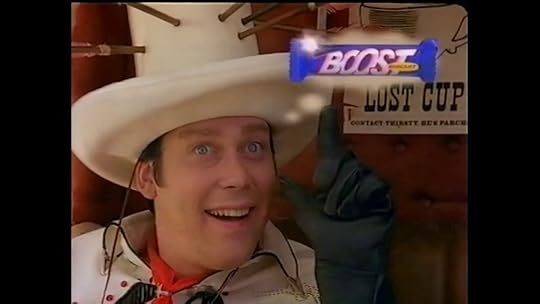


![[image error]](https://www.simondunn.me.uk/wp-content/uploads/2024/06/image.png)
![[image error]](https://www.simondunn.me.uk/wp-content/uploads/2024/03/image-8.png)