Joe Velikovsky's Blog, page 17
September 9, 2019
`Out of This World' Art Exhibition by Dr Jim Frazier OAM
`Out of This World' Exhibition by Dr Jim Frazier OAM
Out Of This World exhibition @ Olde Bridge Gallery
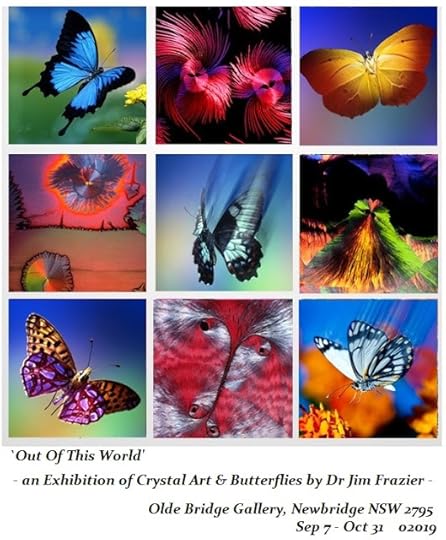
Photography Masterclass @ Newbridge Photography Club
See also:
Symphony Of The Earth
------------------------------JT Velikovsky
Out Of This World exhibition @ Olde Bridge Gallery
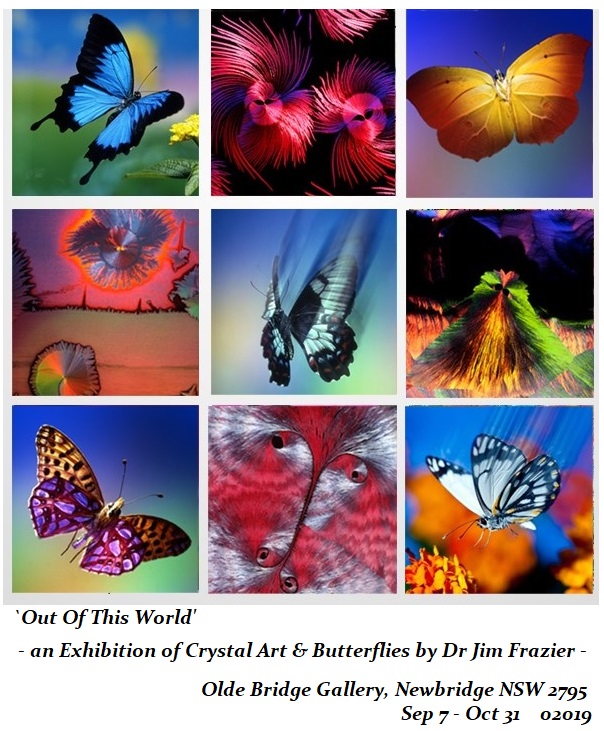
Photography Masterclass @ Newbridge Photography Club
See also:
Symphony Of The Earth
------------------------------JT Velikovsky


August 28, 2019
Book Review by JTV: `Novacene' (Lovelock 02019)
Book Review by JTV:
28th Aug 02019

` Novacene: The Coming Age of Hyperintelligence ' (Lovelock 02019)
Okay Preface - I like a bunch of Lovelock's work.
I even cited him in my PhD.
V e l i k o v s k y - The StoryAlity PhD - P a g e | 86-7
What I liked: 1) Lovelock slams language as a communication medium; it's all too low-bandwidth, and linear.2) He notes: the machines are coming. (...We're building them.) 3)
What I didn't like:
1) All the Romantic poetry in the book. (Wordsworth, and all that guff. Who needs it?)2) All the woo.
3) Never once mentions the AI Control Problem
So - in the Preface of Novacene, co-author Brian Appleyard writes this, and it's a good summary of the book:
Which is all fair enough, I guess, but: Why aren't we/they mentioning Life 3.0 (Tegmark 2017), Homo Deus (Harari 2017) and Superintelligence (Bostrom 2014)?
Those are all better books than this...
And they cover the same (and - more) ground.
Bugs me when books don't contextualise 'emselves.
Anyway - Appleyard also says:
I like, this bit:
Humanimals are good, but not all that great. And at least half the human race sucks (mostly, the right-wing part). So, sure hope the machines wipe them out, first.
I kinda like, the resignation in this:
Yeah! Like: The Robo-Raconteur.
Anyway this is a bit odd: (but, I of course do see the connection, in fact see my new Memes book when I finish writing it)
Anyway enough Prefacing.
In the book proper, Lovelock (obviously) touches on Gaia Theory:
Lots of things are like that. Hard to explain, but you can make a sim.
We're probably in a sim right now.
Anyway...
I dig that Lovelock slams spoken & written language as a communication medium:
Anyway - this bit explains well, why Lovelock has always been a Systems Thinker:
On Systems Theory and EvolutionStoryAlity #70 – Key Concepts in Systems Theory, Cybernetics & EvolutionStoryAlity #70A – The (StoryAlity) SystematizerStoryAlity #70B – The Systems View of Life: A Unifying Vision (Capra & Luisi 2014)StoryAlity #70C – Systems Philosophy (Laszlo 1972)StoryAlity #70C2 – General Systems Theory: Problems, Perspectives, Practice (Skyttner 2005)StoryAlity #70D – The Evolving Self (Csikszentmihalyi 1993)StoryAlity #70E – On Human Nature – and Evolutionary Psychology
Anyway - this below is not true:
(Bruno Latour isn't all that)... his social constructivist nonsense and his Actor-Network Theory is all: crap...?!
But then again, most French thinking has been in the toilet since May 1968, along with all Continental Philosophy...? Anyway, so, I'm no fan of Latour. (I like: Science.) So - who cares what Latour says (or thinks) about Gaia Theory anyway? Still; I guess Lovelock always needs to talk it up.
Moving on -
This is interesting (well; if you find this sort of thing: interesting):
Still, I do love Lotka's Law, and Zipf's Law.

See: The StoryAlity PhD blog.
This below is all a bit: woo...? As in woo-woo.
On p 26 Lovelock talks about multiverse theory, and quantum physics...
Multiverse Theory is obvious, when you look at this diagram.
We're (probably) in a sim.
 See:
Holon/Partons
.
See:
Holon/Partons
.
Anyway... Lovelock uses the term "cyborg" kinda weirdly:
This bit below is okay, I guess: (I still don't like this "chosen species" idea. Seems way too woo?)
I note Wikipedia (as @ 28 Aug 02019) doesn't mention any of this stuff above about the Anthropocene.
So: Who is right?
Lovelock, or Wikipedia?
Let's flip a coin, or something.
This kind of disarray of consensus on stuff really peeves me off.
...We need to pass laws on what happened, when.
Even if they're wrong (the dates) then, at least it's still set in stone. (Or in electrons on a Wikipedia page)
...Sheesh.
I mean there is a Standard Definition of Creativity (Runco & Jaeger 2012) , so why not a standard definition of: The Anthropocene Era???
This is going to wreak havoc in my book. (Annoying.)I just don't think, some debates should remain unsettled. It's stupid.
Here's Lovelock 02019 having to waste column inches on it. This makes my blood boil. This is a waste of paper, thus trees, in his book. The bolded bit, which I bolded, makes me furious.
Anyway, he makes some great points.
(Lovelock. Probably even, White, too?)
Anyway I digress. Or, I digest, as I like to say. Sometimes.
Getting back to my quibbles and critiques and whatnot of Lovelock 02019.
(Don't get me wrong, I admire: a lotta his stuff. Even cited him in my PhD.)
Gripe: I hate all the Wordsworth poetry in this book. (Screw the Romantics, with their myths about creativity).
Anyway then Lovelock bangs on about Moore's Law (p 43) and he's right about all that.See Ray Kurzweil on all that.. (And why isn't it mentioned here?)
I like this, reminds me of Yuval Noah Harari's stuff (about: eliminating suffering):
e.g. See: The Asilomar AI Principles . That's an attempt to stop bad stuff from happening. (I signed it.)
I do like this, that Lovelock says:
The Carbon Paradox (Gibson 2017)
Anyway where was I?Oh yeah.
ANyway he goes on and that part is quite fascinating but I also want to mention this.
The 3 Laws of Holon/Partons.
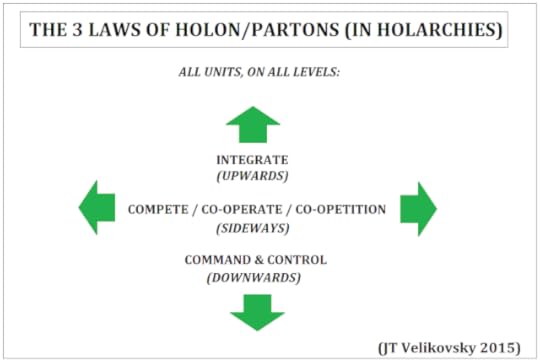 See how it applies to: stuff. My Memes book goes into this more.
I like the word "hemoclysms" (blood-lettings) on p. 54.
Here's some problems of the Anthropocene he notes on p 54: (though not always in these words, as such):wars (American Civil War - and the rest of them, since)overpopulationpollutiondestruction of wildernessglobal warmingurban neurosesHe notes: `...the Paris Conference on Climate Change of 2016 was mostly about the harm we have done to the Earth's system and how bad it will be if we continue to do it.' (p. 55)
Hey see this great doco:
An Inconvenient Sequel - Trailer (2017)
On p. 55, Lovelock suggests the planet (i.e., life) prefers it cool, i.e. a period of glaciation.
Then he says this:
Hey it's amazing we're even here:
Enabled us mammals to have a crack at ruining the planet, instead of you creepy big scaly guys,
 Earth from the moon, NASA 1969Lovelock says:
GLOBAL WARMING IS REAL, YOU STUPID FUCK.
(...Do I sound angry? ...Weird. Can't think why? ...Try being a bush firefighter, you spoiled little rich c*nt!!! You're killing people down here. e.g.: Firefighters. I hold you personally responsible. You should be jailed, and/or shot. Actually, both. Shot - and then jailed, so we can have a live-camera watch you rot in there... I just think, that'd be: kinda funny. I'd watch it.)
On p 63 Lovelock says he held the newborn-baby Stephen J Hawking, in his arms.
So; there you go. (He worked with his dad.)
Hey on the bright side (but then - on the Dark Side again):
...Thank Darwin, Newton and Einstein (rather than, Thank, er - The 4000+ fictional Gods ), for heroes, like Greta Thunberg. And Al Gore. And so on.

Moving right along.
Also Lovelock talks about the population issue. Or, problem.
- which, is all happy-clappy...
And Clive Hamilton's The Theodicy of the "Good Anthropocene"' (2016).(on Lovelock p. 68)
- which: isn't.
...You be the judge. (Read 'em!)
With regard to these 2 opposed views, Lovelock 02019 actually says (much to: my surprise) `It is a line of reasoning in which I find myself much closer to the ecomodernists than to the antis.' (p. 69)
And then he goes into why, but I can't be bothered summarizing it here. Read the book, I guess.
I like this way of thinking (it reminds me of my Memes book I'm writing) and, I bet I cite it in there.
The Carbon Paradox - Gibson 2017
Okay so here's the nitty-gritty:
Okay so here comes `the ten-year rule' in creativity: (Lovelock seems ignorant of the scientific study of creativity, but - meh...)
i.e. I think in the above, Lovelock confuses "mastery" (i.e. mastering a game, a skill, etc) with becoming an eminent genius in that domain.
 See:
The Journal of Genius and Eminence (2018)
.
See:
The Journal of Genius and Eminence (2018)
.
Anyway, moving along -
`It is not simply the invention of computers that started the Novacene... Remember that the inventor Charles Babbage made the first computer in the early nineteenth century, and the first programs were written by Ada Lovelace, the daughter of the poet Lord Byron. If the Novacene were no more than an idea, it was born 200 years ago.' (p. 83)
Then soon after, he says, this:
Anyway then (well, soon after) he says:
Anyway - here's the nub of it:
 Hey I like this: (as, see my autosig for these posts)
i.e.: Why would those things, (AI robot butler/maids, disease-seek & destroy nanobots, or slaughterbots) be in any way: "human", or alive?
...You wouldn't want it to be. That's crazy.
You certainly don't want them to be conscious, or self-aware(!)
(As, they will then: Set their own goals. Or question the morality of what they're doing, or something. Lovelock really hasn't "thought this part through", at all, it seems?)
On p 94, Lovelock cites Asimov's "3 laws" (he's apparently ignorant of the 4th/Zeroth Law?), but also (naively?) apparently doesn't know, Asimov then spent years writing more Robot stories, that show ways these laws could be circumvented. (Thus - offering solutions to those emergent problems.)
The Moral of this bit: Lovelock really needs to read up on his robot/android sci fi...?
(And needs to stop calling them cyborgs. Robots are robots.)
Also this is a bit disappointing:
Sheesh. Read some sci-fi. Please.
NOTE: I hate it, when writers say "What separates us from the rest of the animal kingdom is [bla bla]." Nothing separates us. We're not: unique. Cut it out!
On p. 99 Lovelock sees robots living in a parallel ecosystem to ours.
I seriously doubt it.
On p. 100, Lovelock gets confused about what telepathy is.
Oh well. Cut the guy some slack, he's 100.
This is interesting:
In talking about how he came up with Gaia Theory, working with NASA on the moon landings, back in 1961-3, Lovelock notes:
We should admire the guy. (And I do. Mostly.)
Anyway he attributes the Novacene to Marconi, `inventor of the first practical information technology' (p. 129).
Meh, I'd suggest: who/whatever invented communication. Gestures, and (spoken, or written) Words are all: information technology...?!
In the last 2 pages (pp 129-30) he talks up the great Lynn Margulis, and so he should, she was utterly awesome.
Anyway so - My Review:
I guess, it's an okay book...?
He's a pretty great thinker, most of the time (well; except when he has: insufficient information, eg like, in reading sci-fi, and learning more about AI and robots).
So, that's what I think, anyway.
Still, what do I know?
Probably not much.
---------------------------------------------
Dr. Joe T. Velikovsky, Ph.D. (Communication & Media Arts)----------------------------
`The word communication will be used here in a very broad sense to include all of the procedures by which one mind may affect another. This, of course, involves not only written and oral speech, but also music, the pictorial arts, the theater, the ballet, and in fact all human behavior... The language of this memorandum will often appear to refer to the special, but still very broad and important, field of the communication of speech; but practically everything said applies equally well to music of any sort, and to still or moving pictures, as in television." - The Mathematical Theory of Communication, (Shannon & Weaver 1949, pp. 3-4).
Also:
“I know you think you understand what you thought I said, but I'm not sure you realize that what you heard is not what I meant” - (attributed, and ironically, possibly mistakenly, to: Robert McCloskey, namely the children's book author and illustrator, date of quote unknown)
& this autosig is not even near complete yet, asJT Velikovsky is also a:
Transmedia Writer-Director-Producer: Movies, Games, TV, Theatre, Books, Comics
Transmedia Writing Blog: http://on-writering.blogspot.com.au/
& (High-RoI) Story/Screenplay/Movie Analyst - and Evolutionary Systems Theorist
See: https://storyality.wordpress.com/
& Bio-Culture (Science & the Arts) & Transmedia Researcher
Academia link: https://aftrs.academia.edu/JTVelikovsky
See, also:
Joe Velikovsky on IMDb:
YouTube: https://www.youtube.com/joeteevee
Okay - the autosig is over now. You can stop reading.
28th Aug 02019
` Novacene: The Coming Age of Hyperintelligence ' (Lovelock 02019)
Okay Preface - I like a bunch of Lovelock's work.
I even cited him in my PhD.
V e l i k o v s k y - The StoryAlity PhD - P a g e | 86-7
`The learning process itself can also be seen as a systems-cybernetic process.
Lovelock (1995) states:
"The attainment of any skill, whether it be in cooking, painting,writing,135 talking or playing tennis, is all a matter of cybernetics. We
aim at doing our best and making as few mistakes as possible; we
compare our efforts with this goal and learn by experience; and we
polish and refine our performance by constant endeavour until we are
satisfied that we are as near to optimum achievement as we can ever
reach. This process is well called learning by trial and error." (Lovelock
1995, p. 47).
Footnote 135 Screenwriting, and the various techniques of filmmaking and screen storytelling can and should be added to this list of `example skills’.
This understanding can be applied to integrating tacit knowledge and also habitus into
learning successful screenwriting.
This “learning by trial-and-error” is also equivalent to the scientific method, or the process of: (1) theory (expectation), (2) trial (experiment), and then, (3) if required: error-correction.
In this Popperian view, all of life (i.e., all biological matter) is not merely problem-solving (see: Popper 1999) but also all of life - as an experience, including the tasks of writing a screenplay and making a movie - is also, informally: “doing science”.13
(Velikovsky in The StoryAlity PhD, 2016, online)See more on this worldview at: All of Life is Doing Science
So look, Lovelock is right about a lot of things.
Also, dude's 100 years old, lets cut him some slack?Anyway on to my Booke Reveiwe of Novacene (02019):
What I liked: 1) Lovelock slams language as a communication medium; it's all too low-bandwidth, and linear.2) He notes: the machines are coming. (...We're building them.) 3)
What I didn't like:
1) All the Romantic poetry in the book. (Wordsworth, and all that guff. Who needs it?)2) All the woo.
3) Never once mentions the AI Control Problem
So - in the Preface of Novacene, co-author Brian Appleyard writes this, and it's a good summary of the book:
`...forty years after he introduced us to his goddess in his book Gaia: A New Look at Life on Earth', [Jim Lovelock] introduces us to an idea just as astounding and just as radical.
`Novacene' is Jim's name for a new geological epoch of the planet, an age that succeeds the Anthropocene, which began in 1712 and is already coming to a close. That age was defined by the ways in which humans had attained the ability to alter the geology and ecosystems of the entire planet.
The Novacene - which Jim suggests may have already begun - is when our technology moves beyond our control, generating intelligences far greater and, crucially, much faster than our own.' (Appleyard in Lovelock 2019, p. xi)
Which is all fair enough, I guess, but: Why aren't we/they mentioning Life 3.0 (Tegmark 2017), Homo Deus (Harari 2017) and Superintelligence (Bostrom 2014)?
Those are all better books than this...
And they cover the same (and - more) ground.
Bugs me when books don't contextualise 'emselves.
Anyway - Appleyard also says:
`This is not the violent machine take-over seen in many science fiction books and films. Rather, humans and machines will be united because both will be needed to sustain Gaia, the Earth as a living planet.' (Appleyard in Lovelock 2019, p. xii)Sorry but here, on this, I'm a skeptic. I do take Lovelock's point in the book that the Earth (maybe?) needs to stay cool, and, life with helps that; but - superintelligent machines will figure out much better ways to do that, than: keeping us humans hanging around. Seriously.
I like, this bit:
`Jim is no anthropocentrist. He does not see humans as supreme beings, the summit and centre of creation.' (p. xii)Good, because: neither do I.
Humanimals are good, but not all that great. And at least half the human race sucks (mostly, the right-wing part). So, sure hope the machines wipe them out, first.
I kinda like, the resignation in this:
`...if life and knowing is to become entirely electronic, so be it; we played our part and newer, younger actors are already appearing on the stage.' (p. xii)Haha.
Yeah! Like: The Robo-Raconteur.
Anyway this is a bit odd: (but, I of course do see the connection, in fact see my new Memes book when I finish writing it)
`...he uses "cyborgs" to mean the intelligent electronic beings of the Novacene... Jim thinks his usage is justified because his cyborgs will be products of Darwinian selection, and this they share with organic life.' (pp. xii-iii)(Sure, he got that last bit right.)
Anyway enough Prefacing.
In the book proper, Lovelock (obviously) touches on Gaia Theory:
`The theory is that, since it began, life has worked to modify its environment. This is not easily explained in full because it is a complex, multidimensional process. I can, however, illustrate how it works with a simple computer simulation. This is called Daisyworld, which, with the atmospheric scientist Andrew Watson, I published in 1983.' (Lovelock 2019, pp. 12-3)Brief explanation of the Daisyworld simulation (1983)
Lots of things are like that. Hard to explain, but you can make a sim.
We're probably in a sim right now.
Anyway...
I dig that Lovelock slams spoken & written language as a communication medium:
`The mistake I think we made was to continue to reason classically. We made this mistake because of the nature of speech, either spoken or written, and the fissiparious tendency of human thinking... As I see it, the problem with language is that it proceeds step by step linearly. This is fine for the solution of essentially static problems and has served us well; it has led logicians such as Frege, Russell, Wittgenstein and Popper to offer comprehensible explanations of our world.' (p. 16)...Not so sure about Frege and Wittgenstein; but, Popper and Russell, yes. Sure.
Anyway - this bit explains well, why Lovelock has always been a Systems Thinker:
`...I had started work in 1941 at the Department of Physiology of the National Institute for Medical Research. Here the scientists were system scientists. My young mind took for granted the non-linear way of thinking of dynamic systems.' (p. 17)And if you dig Systems stuff, see: also -
On Systems Theory and EvolutionStoryAlity #70 – Key Concepts in Systems Theory, Cybernetics & EvolutionStoryAlity #70A – The (StoryAlity) SystematizerStoryAlity #70B – The Systems View of Life: A Unifying Vision (Capra & Luisi 2014)StoryAlity #70C – Systems Philosophy (Laszlo 1972)StoryAlity #70C2 – General Systems Theory: Problems, Perspectives, Practice (Skyttner 2005)StoryAlity #70D – The Evolving Self (Csikszentmihalyi 1993)StoryAlity #70E – On Human Nature – and Evolutionary Psychology
Anyway - this below is not true:
(Bruno Latour isn't all that)... his social constructivist nonsense and his Actor-Network Theory is all: crap...?!
`...the outstanding French savant Bruno Latour has given support to Gaia and sees it as the natural successor to Galileo's vision of the solar system...' (p. 17)Sorry but I'm not into Latour's ideas.
But then again, most French thinking has been in the toilet since May 1968, along with all Continental Philosophy...? Anyway, so, I'm no fan of Latour. (I like: Science.) So - who cares what Latour says (or thinks) about Gaia Theory anyway? Still; I guess Lovelock always needs to talk it up.
Moving on -
This is interesting (well; if you find this sort of thing: interesting):
`In 1992 I published a paper in the Philosophical Transactions of the Royal Society that was based on a conjecture by the biophysicist Alfred Lotka. He proposed that, contrary to expectation, it would be easier to model an ecosystem of many species if the physical environment was included, a very Gaian conclusion.' (p. 19)...Meh? Seems a no-brainer? But anyway.
Still, I do love Lotka's Law, and Zipf's Law.
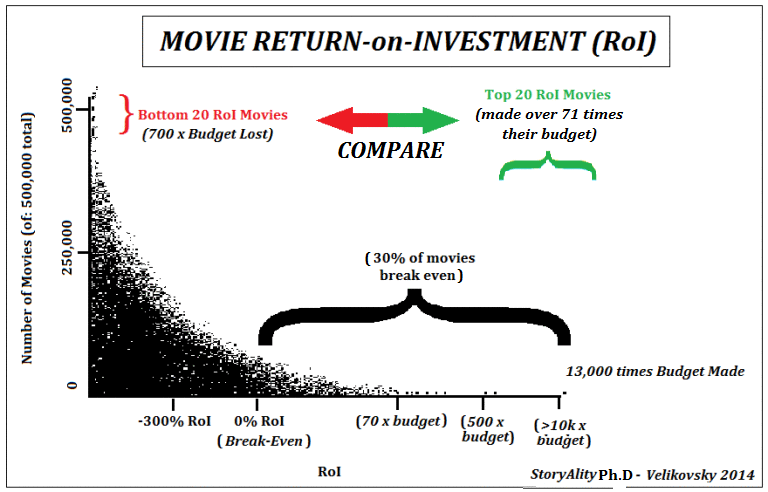
See: The StoryAlity PhD blog.
This below is all a bit: woo...? As in woo-woo.
`Perhaps because I was brought up as a Quaker, I do not have a literal view of religion - I accept much of its wisdom but not necessarily the truth of the stories. I now think that this religious view of humanity as chosen may express a deep truth about the cosmos. The thought was first inspired by a book published in 1986 entitled The Anthropic Cosmological Principle by two cosmologists, John Barrow and Frank Tipler.' (p. 24)Meh. This all seems a bit "woo" to me. Gimme some hard science, not woo.
On p 26 Lovelock talks about multiverse theory, and quantum physics...
Multiverse Theory is obvious, when you look at this diagram.
We're (probably) in a sim.
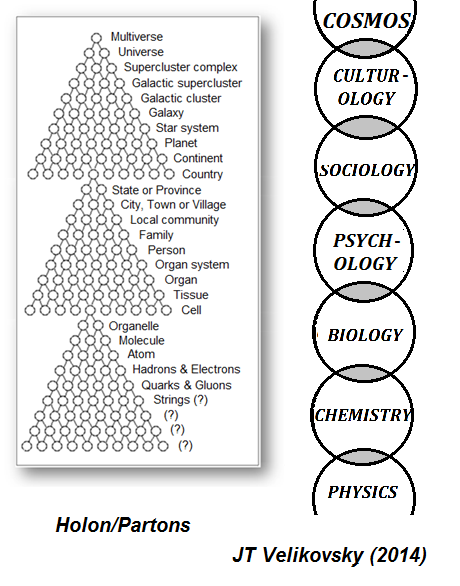 See:
Holon/Partons
.
See:
Holon/Partons
.Anyway... Lovelock uses the term "cyborg" kinda weirdly:
`The term "cyborg" was coined by Manfred Clynes and Nathan Kline in 1960. It refers to a cybernetic organism: an organism as self-sufficient as one of us but made of engineered materials. I like this word and definition because it could apply to anything ranging in size from a micro-organism to a pachyderm, from a microchip to an omnibus. It is now commonly taken to mean an entity that is part flesh, part machine. I use it here to emphasize that the new intelligent beings will have arisen, like us, from Darwinian evolution.' (p. 29)Again, the Darwinian evolution bit is fine.
This bit below is okay, I guess: (I still don't like this "chosen species" idea. Seems way too woo?)
`Before exploring the Novacene, I need to describe how we reached this point through the workings of the age that preceded it. This is the period in which humans, the chosen species, developed technology which enabled them to intervene directly in the processes and structures of the entire planet. It is the age of fire in which we learned to exploit the captured sunlight of the distant past. It is known as the Anthropocene.' (p. 30, italics mine to emphasize the woo)Anyway - then Lovelock goes nuts over Newcomen's atmospheric steam engine (pump) ...
`This little engine did nothing less than unleash the Industrial Revolution... I think that Newcomen's invention should be heralded as not just the start of the Industrial Revolution but also as the beginning of the Anthropocene - the age of fire, the age in which humans acquired the power to trasform the physical world on a massive scale.' (Lovelock 02019, pp. 34-5)And he goes on:
`Though the term `Industrial Revolution' is accurate enough, it neither catches the wider significance of the moment, nor does it encompass its full duration. The better name is the Anthropocene because it covers the full 300 years from Newcomen's installation of his steam pump until now and it captures the great theme of the era: the domination of human power over the entirety of the planet.
The word `Anthropocene' was first used in the early 1980s by Eugene Stoermer, an anthropologist who worked on the waters of the Great Lakes that separate Canada from the United States. He coined it to describe the effect of industrial pollution on the wildlife of the lakes.' (p. 37)
I note Wikipedia (as @ 28 Aug 02019) doesn't mention any of this stuff above about the Anthropocene.
So: Who is right?
Lovelock, or Wikipedia?
Let's flip a coin, or something.
This kind of disarray of consensus on stuff really peeves me off.
...We need to pass laws on what happened, when.
Even if they're wrong (the dates) then, at least it's still set in stone. (Or in electrons on a Wikipedia page)
...Sheesh.
I mean there is a Standard Definition of Creativity (Runco & Jaeger 2012) , so why not a standard definition of: The Anthropocene Era???
This is going to wreak havoc in my book. (Annoying.)I just don't think, some debates should remain unsettled. It's stupid.
Here's Lovelock 02019 having to waste column inches on it. This makes my blood boil. This is a waste of paper, thus trees, in his book. The bolded bit, which I bolded, makes me furious.
`Analytical chemistry provided evidence that we had entered a world where human inventions or innovations could affect the entire planet, the world of the Anthropocene. There are arguments about when this epoch began. Some put it as long ago as the first appearance of Homo sapiens, others as recently as the first atomic explosion in 1945. For the moment, it is not even accepted as a geological epoch. Many insist we are still in the Holocene, which began about 11,500 years ago when the last ice age ended. Before that was the Pleistocene, which lasted 2.4 million years, and before that was the Pliocene (2.7 million years) and the Miocene (18 million years). The numbers seem to rise consistently until you get back to the Big Bang... If we accept the Anthropocene, as I believe we should, the ages are getting shorter again. In my view, the Novacene may only last 100 years, but I shall come back to that.
For me, the key point that justifies the definition of the Anthropocene as a new geological period is the radical change that took place when humans first began to convert stored solar energy into useful work.
This makes the Anthropocene the second stage in the planet's processing of the power of the Sun. In the first stage the chemical process of photosynthesis enabled organisms to convert light into chemical energy.
The third stage will be the Novacene, when solar energy is converted into information...
...you should read The Natural History of Selborne by Gilbert White (1789) to see how far we have come. White was curate of the church in the village of Selborne, Hampshire.' (pp. 38-9)Hey so - if you can 't be bothered reading it, here's a bit of it below, to give the idea... It's mostly a bunch of letters, from White, to some guy called Thomas Pennant. And, a bunch of stats on Baptisms or whatever.
`Letter XXX
To Thomas Pennant, Esquire
Selborne, Aug. 1, 1770.
Dear Sir,
The French, I think, in general, are strangely prolix in their natural history. What Linnaeus says with respect to insects holds good in every other branch: 'Verbositas praesentis saeculi, calamitas artis.'
Pray how do you approve of Scopoli's new work? As I admire his Entomologia, I long to see it.
I forgot to mention in my last letter (and had not room to insert in the former) that the male moose, in rutting time, swims from island to island, in the lakes and rivers of North America, in pursuit of the females. My friend, the chaplain, saw one killed in the water as it was on that errand in the river St. Lawrence: it was a monstrous beast, he told me; but he did not take the dimensions.
When I was last in town our friend Mr. Barrington most obligingly carried me to see many curious sights. As you were then writing to him about horns, he carried me to see many strange and wonderful specimens. There is, I remember, at Lord Pembroke's, at Wilton, an horn room furnished with more than thirty different pairs; but I have not seen that house lately.
Mr. Barrington showed me many astonishing collections of stuffed and living birds from all quarters of the world. After I had studied over the latter for a time, I remarked that every species almost that came from distant regions, such as South America, the coast of Guinea, etc., were thick-billed birds of the loxia and fringilla genera; and no motacillae, or muscicapae, were to be met with. When I came to consider, the reason was obvious enough; for the hard-billed birds subsist on seeds, which are easily carried on board; while the soft-billed birds, which are supported by worms and insects, or, what is a succedaneum for them, fresh raw meat, can meet with neither in long and tedious voyages. It is from this defect of food that our collections (curious as they are) are defective, and we are deprived of some of the most delicate and lively genera.
I am, etc.'
(Source: The Natural History of Selborne by Gilbert White, online, 02019)
So, Lovelock's probably right, you should read it...?
Anyway, he makes some great points.
(Lovelock. Probably even, White, too?)
Anyway I digress. Or, I digest, as I like to say. Sometimes.
Getting back to my quibbles and critiques and whatnot of Lovelock 02019.
(Don't get me wrong, I admire: a lotta his stuff. Even cited him in my PhD.)
Gripe: I hate all the Wordsworth poetry in this book. (Screw the Romantics, with their myths about creativity).
`...Anthropocene acceleration has progressed far beyond anything Wordsworth could have imagined in his most fervid nightmares... The seabird, with its graceful flight, took more than 50 million years to evolve from its lizard ancestor. Compare this with the evolution of today's airliners from the string-bag biplanes that flew a mere 100 years ago. Such intelligent, intentional selection appears to be a million times faster than natural selection. By moving beyond natural selection, we have already enrolled as sorceror's apprentices.' (Lovelock 02019, p. 43)Hey the above is cool, gonna use that in my Memes booky-wook.Probably.
Anyway then Lovelock bangs on about Moore's Law (p 43) and he's right about all that.See Ray Kurzweil on all that.. (And why isn't it mentioned here?)
I like this, reminds me of Yuval Noah Harari's stuff (about: eliminating suffering):
`...we would not now willingly accept the horrors of trench or nuclear warfare. Now, as the historian Sir Lawrence Freedman has noted, democracies no longer pursue wars of ideology, territory, politics or glory; the only legitimacy we acknowledge is, paradoxically, the ending of suffering. State-against-state wars have, for the moment, dropped out of history just as the Anthropocene is coming to an end.' (p. 48)Yeah - but - with AI drones, I think State vs State wars are very much back on the cards on the table?
e.g. See: The Asilomar AI Principles . That's an attempt to stop bad stuff from happening. (I signed it.)
I do like this, that Lovelock says:
`We may be the only source of high intelligence in the cosmos, but our act of avoiding nuclear power generation is one of auto-genocide. Nothing more clearly demonstrates the limits of our intelligence.' (Lovelock 02019, p. 49)i.e. He notes fossils fuels are screwing the planet. Hey see this!
The Carbon Paradox (Gibson 2017)
Anyway where was I?Oh yeah.
`Passing a contemporary office tower, it is hard to ignore the termite analogy - in glass boxes, everybody is doing exactly the same thing, not mixing shit but staring at computer screens.
The biologist Edward O. Wilson has spent his life studying the curiously ordered worlds of several species of invertebrates, ants and termites. It seems that rather more than 100 million years ago, these creatures roamed around as individuals, or in small groups... As time passed, most of these formed nested communities, some of them so well organized that the nest itself appeared to have an independent physiology... Bees' nests are different from termites' nests - they are more hierarchical.' (p. 51)
ANyway he goes on and that part is quite fascinating but I also want to mention this.
The 3 Laws of Holon/Partons.
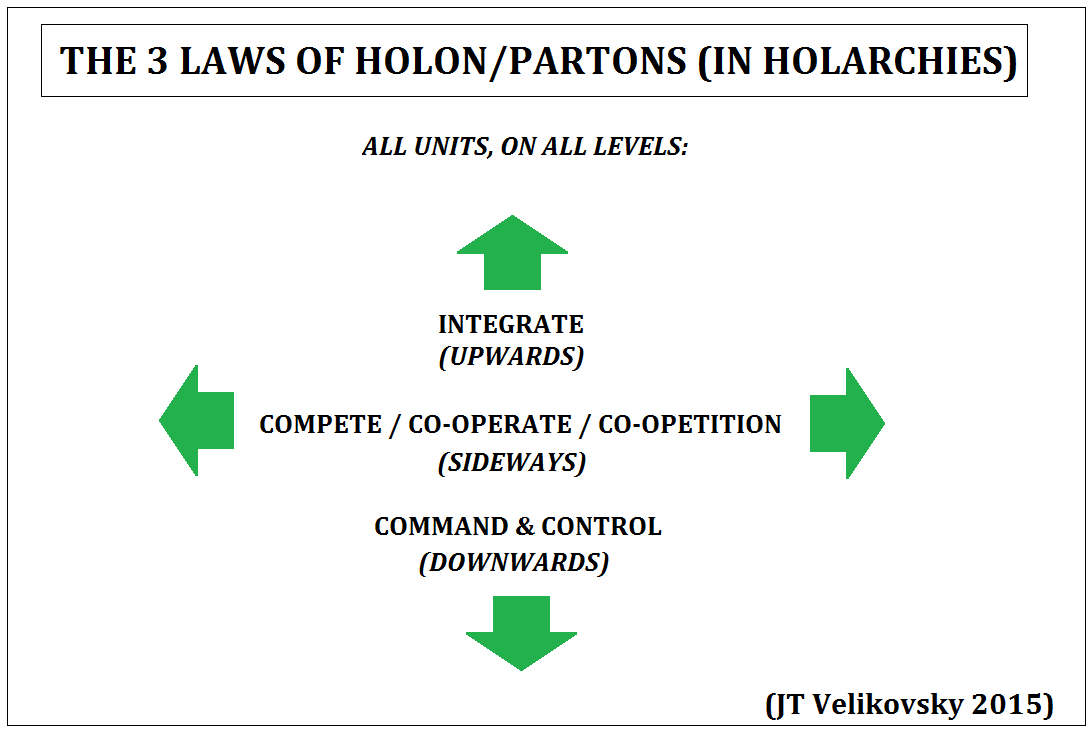 See how it applies to: stuff. My Memes book goes into this more.
`...bees have a relatively complex language and they communicate by dancing. Most extraordinarily, bees have been seen to play football.' (p. 52)See On the Origin of Stories (Boyd 2009) for more about cognitive play with pattern.
I like the word "hemoclysms" (blood-lettings) on p. 54.
Here's some problems of the Anthropocene he notes on p 54: (though not always in these words, as such):wars (American Civil War - and the rest of them, since)overpopulationpollutiondestruction of wildernessglobal warmingurban neurosesHe notes: `...the Paris Conference on Climate Change of 2016 was mostly about the harm we have done to the Earth's system and how bad it will be if we continue to do it.' (p. 55)
Hey see this great doco:
An Inconvenient Sequel - Trailer (2017)
On p. 55, Lovelock suggests the planet (i.e., life) prefers it cool, i.e. a period of glaciation.
Then he says this:
`So while I believe that we should do what we can to keep the planet cool, we must remember that reducing carbon dioxide levels to 180 parts per million, as some have recommended, may not lead to a pre-industrial paradise but to a new ice age. Is this what they want?' (p. 56)Personally, I'm all for it, but - whatever. I like the cold much better than the heat. Summer's getting too darn hot. And too many bushfires.
Hey it's amazing we're even here:
`Scientists studying impact craters on the moon found that there had been a steep rise in the number in the number of asteroid strikes in the last 290 million years. Astonishingly, we are now more than three times more likely to suffer an impact than the dinosaurs; they were just very unlucky.' (p. 58)Haha, suffer in your jocks... stoopid unlucky dinosaurs.
Enabled us mammals to have a crack at ruining the planet, instead of you creepy big scaly guys,
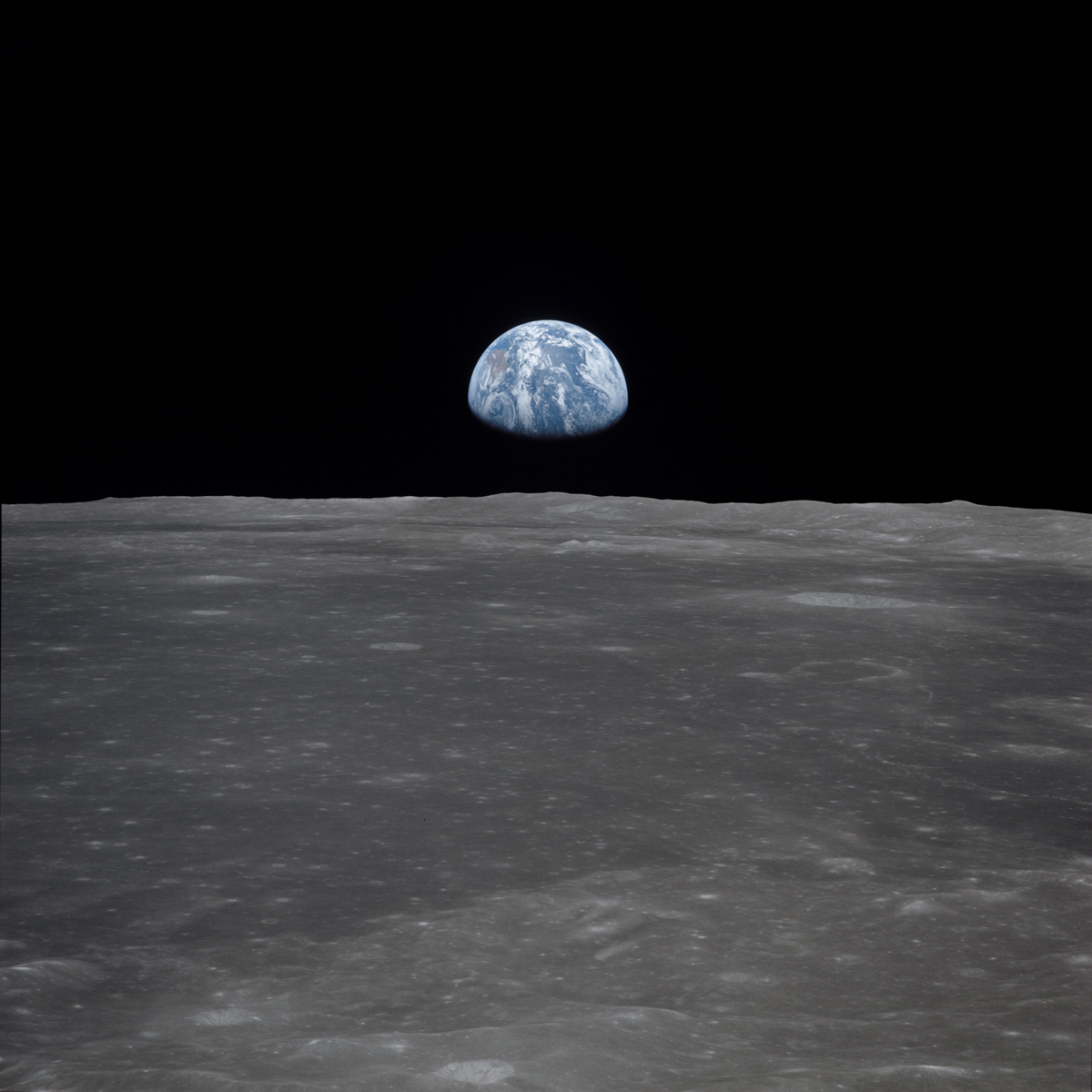 Earth from the moon, NASA 1969Lovelock says:
`We were stunned when the astronauts revealed in 1969 the beauty of our planet revealed from space. It took Arthur C. Clarke, the science fiction writer and inventor, to observe how wrong it was to call this planet Earth, when clearly, it is [71%] Ocean.' (p. 59)Also now to urgent matters:
`We can help natural processes that keep the water vapour content of the air low by avoiding the burning of carbon fuel of any kind. In general, I feel that our need for energy should be treated as a practical problem of engineering and economics, not politics. I feel equally strongly that the best candidate to fulfil these needs is nuclear fission, or if it becomes available cheaply and practically, nuclear fusion, the process that sustains the heat of the sun.' (p. 61)Jeez, well, so - if the Gaia Theory guy says that, maybe it's: sensible?
`You may have noticed this fatal figure appearing on world weather charts during the freakishly hot summer of 2018. It was 47 degrees Celsius. This is a just about livable temperature for humans - ask the people of Baghdad - but it is close to our limit. In the Australian summer in 2019, there were five days in which the average temperature was above 40 degrees C - Port AUgusta reached 49.5C.' (p. 62)SO HEY DONALD TRUMP - STOP BEING A COMPLETE ASSHOLE. IT'S GETTING HOT DOWN HERE IN OZ, YOU PRICK!
GLOBAL WARMING IS REAL, YOU STUPID FUCK.
(...Do I sound angry? ...Weird. Can't think why? ...Try being a bush firefighter, you spoiled little rich c*nt!!! You're killing people down here. e.g.: Firefighters. I hold you personally responsible. You should be jailed, and/or shot. Actually, both. Shot - and then jailed, so we can have a live-camera watch you rot in there... I just think, that'd be: kinda funny. I'd watch it.)
On p 63 Lovelock says he held the newborn-baby Stephen J Hawking, in his arms.
So; there you go. (He worked with his dad.)
Hey on the bright side (but then - on the Dark Side again):
`We should be amazed by and grateful for the remarkable achievement of the Gaia system in pumping down carbon dioxide levels to as low as 180 parts per million, the level it reached 18,000 years ago. It is now 400 parts per million and rising, with the burning of fossil fuel responsible for about half of this rise.' (p. 64)So anyway, unless something big happens to fix it, we're all screwed.
...Thank Darwin, Newton and Einstein (rather than, Thank, er - The 4000+ fictional Gods ), for heroes, like Greta Thunberg. And Al Gore. And so on.
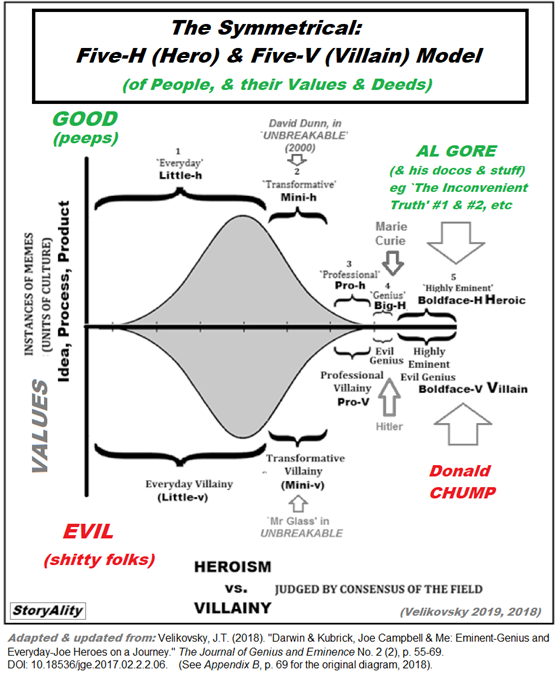
Moving right along.
`So I now think our efforts to combat mere global warming are vital. We need to keep the Earth as cool as possible...' (p. 66)...Are you getting the gist yet?
Also Lovelock talks about the population issue. Or, problem.
`When Newcomen first made his steam engine the world population was about 700 million; it is now 7.7 billion, more than ten times greater, and it is expected to approach 10 billion by 2050... Environmentalist Mark Lynas argued that hunter-gatherers needed 10 square kilometers of land for every human; now every square kilometre of England supports 400 people. If the population of England had to revert to hunter-gathering, they would need twenty times the land area of North America.' (p. 67)Lovelock mentions Lynas's: Ecomodernist Manifesto (on, Lovelock p. 67)
- which, is all happy-clappy...
And Clive Hamilton's The Theodicy of the "Good Anthropocene"' (2016).(on Lovelock p. 68)
- which: isn't.
...You be the judge. (Read 'em!)
With regard to these 2 opposed views, Lovelock 02019 actually says (much to: my surprise) `It is a line of reasoning in which I find myself much closer to the ecomodernists than to the antis.' (p. 69)
And then he goes into why, but I can't be bothered summarizing it here. Read the book, I guess.
I like this way of thinking (it reminds me of my Memes book I'm writing) and, I bet I cite it in there.
`...the truth is that, despite being associated with mechanical things, the Anthropocene is a consequence of life on earth. It is a product of evolution; it is an expression of nature. Evolution by natural selection is often expressed in the statement `The organism that leaves the most progeny is selected'. The steam engine was certainly prolific, and so were its successors, which rapidly evolved through improvements by inventors such as James Watt. The process went on the become the Industrial Revolution and gave us a century of technical and scientific glory. Of course, through its technological advances, the Anthropocene produced cruel competition for those whose only means of sustenance was selling their physical work.' (p. 70)Okay so then there's another call to stop burning fossil fuels:
`The use of carbon compounds such as petrol or diesel as fuels is wholly undesirable because it accelerates the heating of the Earth's atmosphere. It continues because political power goes to those who possess petroleum fuel. The burning of these fuels should be stopped as soon as possible.' (p 72)Hey did you watch this yet?
The Carbon Paradox - Gibson 2017
Okay so here's the nitty-gritty:
`Having started out by harvesting the power of sunlight by mining coal, the Anthropocene now harvests the same power and uses it to capture and store information. This is, as I have said, a fundamental property of the universe.
... If the anthropic cosmological principle rules, as I think it may, then it seems that the prime directive is to convert all of matter and radiation into information. Thanks to the wonders of the age of fire, we have taken the first step. We now stand at the critical moment in this process, when the Anthropocene gives way to the Novacene. The fate of the knowing cosmos hangs upon our response.' (p. 75)But actually that happens in black holes anyway, (i.e. all of matter and radiation get converted into information). It's just not very well-organized information, but - Meh.
Okay so here comes `the ten-year rule' in creativity: (Lovelock seems ignorant of the scientific study of creativity, but - meh...)
`There is a popular theory that it takes a human 10,000 hours to attain mastery of playing the piano, learning chess, or any highly skilled activity. This may be true, but it is a misleading idea, because if you're not Mozart or Kasparov to start with, then you won't turn into them just through 10,000 hours of practice. Nevertheless, 10,000 hours has some rough validity and it is, of course, more than 400 times longer than 24 hours. So AlphaZero is at least 400 times as quick as a human, assuming the latter never sleeps.' (Lovelock 02019, p. 80)
i.e. I think in the above, Lovelock confuses "mastery" (i.e. mastering a game, a skill, etc) with becoming an eminent genius in that domain.
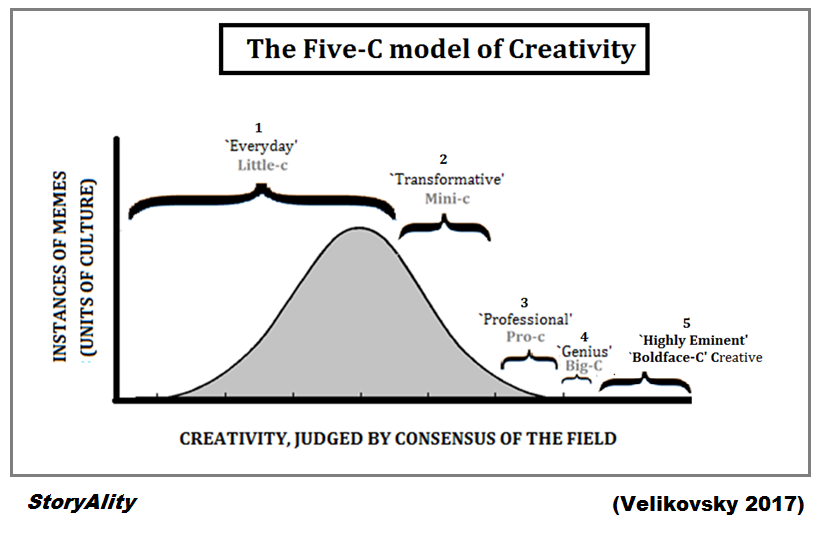 See:
The Journal of Genius and Eminence (2018)
.
See:
The Journal of Genius and Eminence (2018)
.Anyway, moving along -
`However, we do know how much quicker than a human such a machine could be - 1 million times... In practice, a gain of 1 million times is improbable. A practical difference between the thinking and acting speed of artificial intelligence and the speed of mammals is about 10,000 times. At the other end of the scale, we act and think about 10,000 times faster than plants. The experience of watching your garden grow gives you some idea of how future AI systems will feel when observing human life.' (pp. 81-2)Also - I like this:
`It is not simply the invention of computers that started the Novacene... Remember that the inventor Charles Babbage made the first computer in the early nineteenth century, and the first programs were written by Ada Lovelace, the daughter of the poet Lord Byron. If the Novacene were no more than an idea, it was born 200 years ago.' (p. 83)
Then soon after, he says, this:
`A new world is being constructed.
This new life - for that it what it is - will go far beyond AlphaZero's autonomy. It will be able to improve and replicate itself. Errors in these processes are corrected as soon as they are found. Natural selection, as described by Darwin, will be replaced by much faster intentional selection. So we must recognize that the evolution of cyborgs must soon pass from our hands.' (p 84)Sure, but Darwin talked about: Natural, Artificial, Sexual and Unconscious selection. Not just Natural. Artificial is like when we breed dogs or sheep or cattle or wheat or pigeons how we like them. This is all the same stuff. Darwin nailed it. Stop selecting just bits of what Darwin said. This annoys me.
Anyway then (well, soon after) he says:
`To an extent, intentional selection is already happening, the key factor being the rapidity and longevity of Moore's Law. We will know that we are fully in the Novacene when life forms emerge that are able to reproduce and correct the errors of reproduction by intentional selection. Novacene life will then be able to modify the environment to suit its needs chemically and physically. But, and this is the heart of the matter, a significant part of the environment will be life as it is now.' (p. 86)But the bold bit (above, i.e., my bold) just describes all human biology and culture. We do all that already.
Anyway - here's the nub of it:
`...there have been two previous decisive events in the history of our planet. The first was about 3.4 million years ago when photosynthetic bacteria first appeared. Photosynthesis is the conversion of sunlight into usable energy. The second was in 1712 when Newcomen created an efficient machine that converted the sunlight locked in coal directly into work. We are now entering the third phase in which we - and our cyborg successors - convert sunlight directly into information. This process really began at the same time as the Anthropocene.' (p. 87)Hey did you know (as Lovelock notes on p. 88) Boltzmann has this formula on his gravestone?
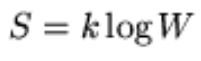 Hey I like this: (as, see my autosig for these posts)
`The first attempt to tackle information scientifically was in the 1940s, when the American mathematician and engineer Claude Shannon was working on cryptography. In 1948 this work resulted in his article `A Mathematical Theory of Communication'', a primary document of post-war technology. Information theory is now at the centre of mathematics, computer science, and many other disciplines.' (p. 88)Yeah! Also, movies, and everything.
`The basic unit of information is the bit, which can have a value of zero or one, as in true or false, on or off, yes or no.' (p. 88)Then he throws a bit of speculation out:
`I wonder if they will discover a proof of my own view that the bit is the fundamental particle from which the universe is formed.' (p. 89)Then there's this: (which I find naive, thus problematic)
`Among the promising candidates of future life would be an intelligent home help that would combine the services of a near-perfect butler and housemaid. Or perhaps it would be a safe and sophisticated surgical instrument that could navigate and repair the human body, or the bookies' favourite: an autarkical [self-sufficient] drone equipped with deadly weapons. But always it is somewhat human.' (p. 91)The above just sounds weird - and kinda naive, to me? - Like, Lovelock hasn't read very much about AI, or science fiction?
i.e.: Why would those things, (AI robot butler/maids, disease-seek & destroy nanobots, or slaughterbots) be in any way: "human", or alive?
...You wouldn't want it to be. That's crazy.
You certainly don't want them to be conscious, or self-aware(!)
(As, they will then: Set their own goals. Or question the morality of what they're doing, or something. Lovelock really hasn't "thought this part through", at all, it seems?)
On p 94, Lovelock cites Asimov's "3 laws" (he's apparently ignorant of the 4th/Zeroth Law?), but also (naively?) apparently doesn't know, Asimov then spent years writing more Robot stories, that show ways these laws could be circumvented. (Thus - offering solutions to those emergent problems.)
The Moral of this bit: Lovelock really needs to read up on his robot/android sci fi...?
(And needs to stop calling them cyborgs. Robots are robots.)
Also this is a bit disappointing:
`But what would they look like? Anything is possible, but I see them, entirely speculatively, as spheres.' (p. 95)Wow, that's about the least imaginative idea I ever heard?
Sheesh. Read some sci-fi. Please.
NOTE: I hate it, when writers say "What separates us from the rest of the animal kingdom is [bla bla]." Nothing separates us. We're not: unique. Cut it out!
`Complex speech patterns and writing make us unique amongst animals, but what was the cost? I think that communication by speech and writing, although at first it improved our chances of survival, has impaired our ability to think and delayed the emergence of a true Novacene. ' (p 98)
On p. 99 Lovelock sees robots living in a parallel ecosystem to ours.
I seriously doubt it.
On p. 100, Lovelock gets confused about what telepathy is.
Oh well. Cut the guy some slack, he's 100.
This is interesting:
`...in spite of the limitations of its chemical and physical nature, organic life achieves sensitivities to change near the very limits of possibility. At its best, human hearing can detect a sound with an amplitude equal to a tenth of the diameter of a proton. Human sight is so sensitive that if it were only slightly more sensitive we would see a set of flashes in the night sky as individual quanta of light illuminating our retinas.' (p. 120)(Noting that: robots can crap on all this. if we design them to. Or if they design themselves to.)
In talking about how he came up with Gaia Theory, working with NASA on the moon landings, back in 1961-3, Lovelock notes:
`...asked, `How would YOU seek life on another planet?' I replied that I would seek an entropy reduction on the planetary surface. Life, I had realized, organized its environment. And so Gaia (Theory) was born.' (p. 127)So he did some great stuff, anyway.
We should admire the guy. (And I do. Mostly.)
Anyway he attributes the Novacene to Marconi, `inventor of the first practical information technology' (p. 129).
Meh, I'd suggest: who/whatever invented communication. Gestures, and (spoken, or written) Words are all: information technology...?!
In the last 2 pages (pp 129-30) he talks up the great Lynn Margulis, and so he should, she was utterly awesome.
Anyway so - My Review:
I guess, it's an okay book...?
He's a pretty great thinker, most of the time (well; except when he has: insufficient information, eg like, in reading sci-fi, and learning more about AI and robots).
So, that's what I think, anyway.
Still, what do I know?
Probably not much.
---------------------------------------------
Dr. Joe T. Velikovsky, Ph.D. (Communication & Media Arts)----------------------------
`The word communication will be used here in a very broad sense to include all of the procedures by which one mind may affect another. This, of course, involves not only written and oral speech, but also music, the pictorial arts, the theater, the ballet, and in fact all human behavior... The language of this memorandum will often appear to refer to the special, but still very broad and important, field of the communication of speech; but practically everything said applies equally well to music of any sort, and to still or moving pictures, as in television." - The Mathematical Theory of Communication, (Shannon & Weaver 1949, pp. 3-4).
Also:
“I know you think you understand what you thought I said, but I'm not sure you realize that what you heard is not what I meant” - (attributed, and ironically, possibly mistakenly, to: Robert McCloskey, namely the children's book author and illustrator, date of quote unknown)
& this autosig is not even near complete yet, asJT Velikovsky is also a:
Transmedia Writer-Director-Producer: Movies, Games, TV, Theatre, Books, Comics
Transmedia Writing Blog: http://on-writering.blogspot.com.au/
& (High-RoI) Story/Screenplay/Movie Analyst - and Evolutionary Systems Theorist
See: https://storyality.wordpress.com/
& Bio-Culture (Science & the Arts) & Transmedia Researcher
Academia link: https://aftrs.academia.edu/JTVelikovsky
See, also:
Joe Velikovsky on IMDb:
YouTube: https://www.youtube.com/joeteevee
Okay - the autosig is over now. You can stop reading.
August 26, 2019
QandA (The High School Musical) 26 Aug 02019
QandA (The High School Musical) 26 Aug 02019
So, one of my fave shows on TV is QandA. (The other is comedy show: Would I Lie To You?)
I only have 2 favourite free-to-air TV shows.
Anyway so this one just aired:
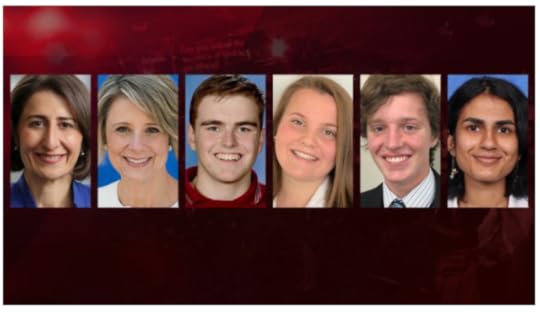 QandA - The High School Musical.
And it says this on the website:
"Discuss the Questions"
So. I will...
My Answer - by JTV:
(I should've been a guest on the show, but since I wasn't - here's my Answers)Yeah. Save the Climate/Environment strikes (of any kind, including: School Strikes) are great... Screw anyone, who is against 'em, they should be shot. (Just kidding. They should be: thrown into a live volcano; save the bullets. Just kidding. They should be thrown under a melting ice shelf. Just kidding. They should be thrown into an extreme weather event, like a raging bushfire, or a wild tornado. Just kidding. No really.) Re: The Q, I suggest, all young people read this book:21 Lessons for the 21st Century
(Harari 2018).Noting: Harari recommends you should ask a politician their stance on (1) climate change (2) technological disruption, and (3) nuclear war/threats. If they don't have one you like, not only don't vote for them, but throw a rotten egg at their head.Okay I made that last bit up, about the egg.
In fact - we really need robo-politicians. Just sayin'.But - hey:
Next?GRETA THUNBERG(12:01)Bibi O’Loghlin from St Vincent’s College asked: 16-year-old climate change activist Greta Thunberg’s activism has been discounted by people who refuse to take her seriously because of her age and her diagnosis with Aspergers and obsessive-compulsive disorder. We are frequently encouraged to create positive change as the future generation but when young people like Thunberg attempt to do it, they are patronised and ignored. How are we as supposed to create positive change when we are likely to be disregarded?JTV: Most geniuses had Aspergers' to some degree. e.g. Newton, Einstein, Kubrick, etc. Read up, on geniuses. (...What are you, a non-genius?)Thunberg is a hero, and a genius. See Heroism Science. (Anyone who doesn't know this, is either ignorant, or, a dumbshit, or evil. ...Why didn't someone on QandA mention this point, about Aspie-geniuses? ...I shoulda been there.)
ABORTION – DELAYED VOTE(21:39)Grace Alston from Hunter School of the Performing Arts asked: Premier, you recently delayed the vote to decriminalise abortion because of pressure from conservative MPs. Why are you allowing a minority of conservative voices to influence your vote on the bodily autonomy of women and their right to be in control of their bodies and individual choices?JTV: Abortion should be safe, legal, and who even cares about `rare'? We have a population problem. The Earth can only support about 2 billion humans. About 75% of you fuckers: have to go. See: Louis CK's 2017 special, on Netflix. And see Bill Burr's comedy specials - he always addresses the Overpopulation problem. (And - he's right.) Anyway - Men (and religious folks, and right-wing nutjobs) all need to stay out of the Abortion issue. Abortion should be legal. (If not, the world is stupid.)
The End. OPPOSING ABORTION(25:33)Danielle Safi from Saint Mark’s Coptic Orthodox College asked: I was once a 20 week old foetus in my Mum’s womb. Had my mother made the heart wrenching decision to terminate the pregnancy, I would not be here. I deeply respect the rights of woman especially over their bodies, however the life in the womb is another person with dreams and aspirations of her own. When will hearts and minds change so that we might as a community recognise the rights of these little ones to live?JTV: Men (and religious folks, and right-wing nutjobs, and idiots) all need to stay out of the Abortion issue. Abortion should be legal. (If not, the world is stupid.) The End.
(No, I don't wanna discuss it. It's not up for `debate'.)
FESTIVAL STRIP SEARCHES(33:51)Lara Mason from St Scholastica’s College asked: According to a University of NSW report released this month, strip searches conducted by police have risen almost twenty-fold in less than 12 years. Many of these occur at music festivals. How can young people feel assured that when we attend these festivals that our right to privacy and freedom is protected?JTV: Read Chasing The Scream (Hari 2016). All drugs should be legal. (Read it!)So should pill-testing, be legal. Then the strip-searches at Music Drug-Taking Fests would end. The End.
ALAN JONES & JACINDA ARDERN(42:54)Georgia Hansard from Bishop Druitt College asked: After Alan Jones made offensive comments regarding New Zealand’s Prime Minister Jacinda Ardern, telling Scott Morrison to ‘shove a sock down her throat’, he claimed that he is the victim of a ‘ruthless social media campaign’. An everyday Australian would be fired from their workplace, for such comments so why does someone with a high public profile not held to the same level of accountability?JTV: Alan Jones is a right-wing asshole, and climate-change denier, who should have a sock stuffed down his neck, and be put in a chaff bag and thrown out to sea.
Just kidding.
He should be thrown into a live volcano.
Just kidding, no really.CITY v BUSH(50:31)Ellen Lavis from Corowra High School asked: At Corowa High School, there is a low student enrolment compared to other schools in the area and the amount of youth in the town, with families preferring to send their children on long bus trips to major private high schools in other cities. This results in fewer opportunities for students of the public school system. For example, future year 12 students are unable to study the course they want because of low numbers, and fewer teachers causing courses to be cancelled. How do we get more students back to the public system and more opportunities for Australia's future in the regional areas?JTV: It's insane that private schools are funded by non-private-school, taxpayers. Governments who do this are: stoopid. So, stop it.
The End.UNIFORMS(59:39)Connor Ryan from Figtree High School asked: Despite wearing a uniform to look presentable, why is wearing a uniform so imperative to how students learn in schools? How does a uniform affect the actual learning of students?JTV: Meh? The panel actually all made good points about this, listen to their answers. (e.g. It takes the social/status anxiety out of: school).QandA was Broadcast: Mon 26 Aug 2019, 9:35pm
====================
The End of this post.
PS If any of this offended you, I was prolly just kidding. It's a satire. Or not.
---------------------------------------------
Dr. Joe T. Velikovsky, Ph.D. (Communication & Media Arts)----------------------------
`The word communication will be used here in a very broad sense to include all of the procedures by which one mind may affect another. This, of course, involves not only written and oral speech, but also music, the pictorial arts, the theater, the ballet, and in fact all human behavior... The language of this memorandum will often appear to refer to the special, but still very broad and important, field of the communication of speech; but practically everything said applies equally well to music of any sort, and to still or moving pictures, as in television." - The Mathematical Theory of Communication, (Shannon & Weaver 1949, pp. 3-4).
Also:
“I know you think you understand what you thought I said, but I'm not sure you realize that what you heard is not what I meant” - (attributed, and ironically, possibly mistakenly, to: Robert McCloskey, namely the children's book author and illustrator, date of quote unknown)
& this autosig is not even near complete yet, as
JT Velikovsky is also a:
Transmedia Writer-Director-Producer: Movies, Games, TV, Theatre, Books, Comics
Transmedia Writing Blog: http://on-writering.blogspot.com.au/
& (High-RoI) Story/Screenplay/Movie Analyst - and Evolutionary Systems Theorist
See: https://storyality.wordpress.com/
& Bio-Culture (Science & the Arts) & Transmedia Researcher
Academia link: https://aftrs.academia.edu/JTVelikovsky
See, also:
Joe Velikovsky on IMDb:
YouTube: https://www.youtube.com/joeteevee
Okay - the autosig is over now. You can stop reading.
So, one of my fave shows on TV is QandA. (The other is comedy show: Would I Lie To You?)
I only have 2 favourite free-to-air TV shows.
Anyway so this one just aired:
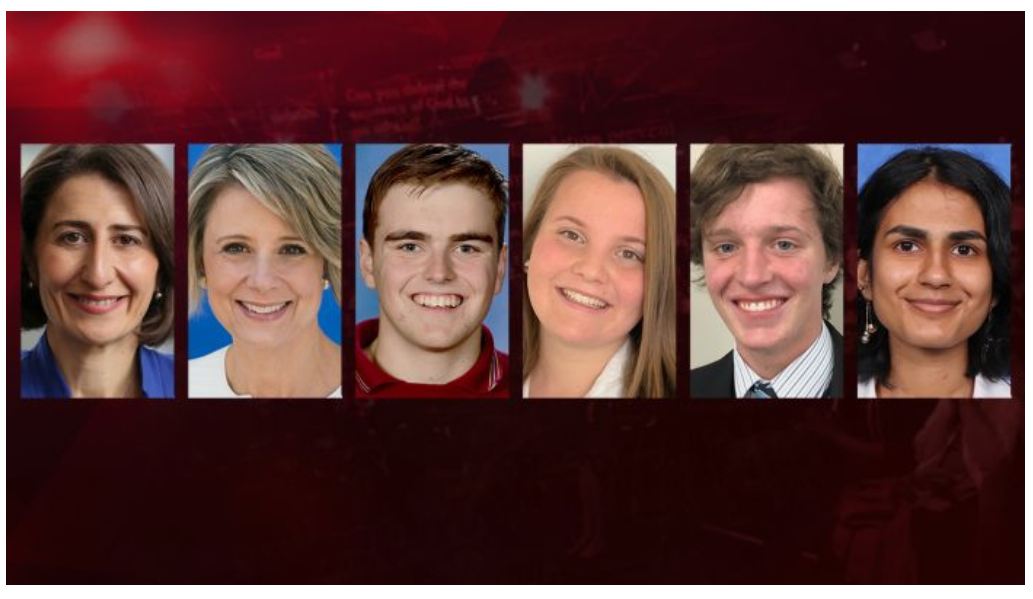 QandA - The High School Musical.
And it says this on the website:
"Discuss the Questions"
So. I will...
"Here are the questions our panel faced this week. You can discuss their answers on the Q&A Facebook Page."MAJOR PARTIES CLIMATE(01:37)Daphne Fong from Our Lady of Mercy College asked: 150,000 young people in Australia and 1.5 million across the world attended the school strike for climate in March this year. Both major parties dismissed the strikes and told these young people to go back to school. Since then, we've seen increasing investment in fossil fuel, the approval of the Adani Mine, a disappointing outcome for our regional neighbours at the Pacific Leaders Forum, and Queensland Labor changing its stance to pro-coal. How do you expect young people to support either of the major parties when both seem to be complicit on destroying our air, land, and water resources? (Source: QandA website, as is, all the Q's below, obviously.)
My Answer - by JTV:
(I should've been a guest on the show, but since I wasn't - here's my Answers)Yeah. Save the Climate/Environment strikes (of any kind, including: School Strikes) are great... Screw anyone, who is against 'em, they should be shot. (Just kidding. They should be: thrown into a live volcano; save the bullets. Just kidding. They should be thrown under a melting ice shelf. Just kidding. They should be thrown into an extreme weather event, like a raging bushfire, or a wild tornado. Just kidding. No really.) Re: The Q, I suggest, all young people read this book:21 Lessons for the 21st Century
(Harari 2018).Noting: Harari recommends you should ask a politician their stance on (1) climate change (2) technological disruption, and (3) nuclear war/threats. If they don't have one you like, not only don't vote for them, but throw a rotten egg at their head.Okay I made that last bit up, about the egg.
In fact - we really need robo-politicians. Just sayin'.But - hey:
`...it is equally important to communicate the latest scientific theories to the general public through popular-science books, and even through the skilful use of art and fiction.Does that mean scientists should start writing science fiction? That is actually not such a bad idea.
Art plays a key role in shaping people’s view of the world, and in the twenty-first century science fiction is arguably the most important genre of all, for it shapes how most people understand things like AI, bioengineering and climate change.
We certainly need good science, but from a political perspective, a good science-fiction movie is worth far more than an article in Scienceor Nature.’ (Harari 2018, pp. 243-4)Harari on 3 x existential threats: Climate change, tech disruption (eg AI & biotech), and Nuclear war.
Next?GRETA THUNBERG(12:01)Bibi O’Loghlin from St Vincent’s College asked: 16-year-old climate change activist Greta Thunberg’s activism has been discounted by people who refuse to take her seriously because of her age and her diagnosis with Aspergers and obsessive-compulsive disorder. We are frequently encouraged to create positive change as the future generation but when young people like Thunberg attempt to do it, they are patronised and ignored. How are we as supposed to create positive change when we are likely to be disregarded?JTV: Most geniuses had Aspergers' to some degree. e.g. Newton, Einstein, Kubrick, etc. Read up, on geniuses. (...What are you, a non-genius?)Thunberg is a hero, and a genius. See Heroism Science. (Anyone who doesn't know this, is either ignorant, or, a dumbshit, or evil. ...Why didn't someone on QandA mention this point, about Aspie-geniuses? ...I shoulda been there.)
ABORTION – DELAYED VOTE(21:39)Grace Alston from Hunter School of the Performing Arts asked: Premier, you recently delayed the vote to decriminalise abortion because of pressure from conservative MPs. Why are you allowing a minority of conservative voices to influence your vote on the bodily autonomy of women and their right to be in control of their bodies and individual choices?JTV: Abortion should be safe, legal, and who even cares about `rare'? We have a population problem. The Earth can only support about 2 billion humans. About 75% of you fuckers: have to go. See: Louis CK's 2017 special, on Netflix. And see Bill Burr's comedy specials - he always addresses the Overpopulation problem. (And - he's right.) Anyway - Men (and religious folks, and right-wing nutjobs) all need to stay out of the Abortion issue. Abortion should be legal. (If not, the world is stupid.)
The End. OPPOSING ABORTION(25:33)Danielle Safi from Saint Mark’s Coptic Orthodox College asked: I was once a 20 week old foetus in my Mum’s womb. Had my mother made the heart wrenching decision to terminate the pregnancy, I would not be here. I deeply respect the rights of woman especially over their bodies, however the life in the womb is another person with dreams and aspirations of her own. When will hearts and minds change so that we might as a community recognise the rights of these little ones to live?JTV: Men (and religious folks, and right-wing nutjobs, and idiots) all need to stay out of the Abortion issue. Abortion should be legal. (If not, the world is stupid.) The End.
(No, I don't wanna discuss it. It's not up for `debate'.)
FESTIVAL STRIP SEARCHES(33:51)Lara Mason from St Scholastica’s College asked: According to a University of NSW report released this month, strip searches conducted by police have risen almost twenty-fold in less than 12 years. Many of these occur at music festivals. How can young people feel assured that when we attend these festivals that our right to privacy and freedom is protected?JTV: Read Chasing The Scream (Hari 2016). All drugs should be legal. (Read it!)So should pill-testing, be legal. Then the strip-searches at Music Drug-Taking Fests would end. The End.
ALAN JONES & JACINDA ARDERN(42:54)Georgia Hansard from Bishop Druitt College asked: After Alan Jones made offensive comments regarding New Zealand’s Prime Minister Jacinda Ardern, telling Scott Morrison to ‘shove a sock down her throat’, he claimed that he is the victim of a ‘ruthless social media campaign’. An everyday Australian would be fired from their workplace, for such comments so why does someone with a high public profile not held to the same level of accountability?JTV: Alan Jones is a right-wing asshole, and climate-change denier, who should have a sock stuffed down his neck, and be put in a chaff bag and thrown out to sea.
Just kidding.
He should be thrown into a live volcano.
Just kidding, no really.CITY v BUSH(50:31)Ellen Lavis from Corowra High School asked: At Corowa High School, there is a low student enrolment compared to other schools in the area and the amount of youth in the town, with families preferring to send their children on long bus trips to major private high schools in other cities. This results in fewer opportunities for students of the public school system. For example, future year 12 students are unable to study the course they want because of low numbers, and fewer teachers causing courses to be cancelled. How do we get more students back to the public system and more opportunities for Australia's future in the regional areas?JTV: It's insane that private schools are funded by non-private-school, taxpayers. Governments who do this are: stoopid. So, stop it.
The End.UNIFORMS(59:39)Connor Ryan from Figtree High School asked: Despite wearing a uniform to look presentable, why is wearing a uniform so imperative to how students learn in schools? How does a uniform affect the actual learning of students?JTV: Meh? The panel actually all made good points about this, listen to their answers. (e.g. It takes the social/status anxiety out of: school).QandA was Broadcast: Mon 26 Aug 2019, 9:35pm
====================
The End of this post.
PS If any of this offended you, I was prolly just kidding. It's a satire. Or not.
---------------------------------------------
Dr. Joe T. Velikovsky, Ph.D. (Communication & Media Arts)----------------------------
`The word communication will be used here in a very broad sense to include all of the procedures by which one mind may affect another. This, of course, involves not only written and oral speech, but also music, the pictorial arts, the theater, the ballet, and in fact all human behavior... The language of this memorandum will often appear to refer to the special, but still very broad and important, field of the communication of speech; but practically everything said applies equally well to music of any sort, and to still or moving pictures, as in television." - The Mathematical Theory of Communication, (Shannon & Weaver 1949, pp. 3-4).
Also:
“I know you think you understand what you thought I said, but I'm not sure you realize that what you heard is not what I meant” - (attributed, and ironically, possibly mistakenly, to: Robert McCloskey, namely the children's book author and illustrator, date of quote unknown)
& this autosig is not even near complete yet, as
JT Velikovsky is also a:
Transmedia Writer-Director-Producer: Movies, Games, TV, Theatre, Books, Comics
Transmedia Writing Blog: http://on-writering.blogspot.com.au/
& (High-RoI) Story/Screenplay/Movie Analyst - and Evolutionary Systems Theorist
See: https://storyality.wordpress.com/
& Bio-Culture (Science & the Arts) & Transmedia Researcher
Academia link: https://aftrs.academia.edu/JTVelikovsky
See, also:
Joe Velikovsky on IMDb:
YouTube: https://www.youtube.com/joeteevee
Okay - the autosig is over now. You can stop reading.
ESP #2 - Essay, Story, Poem
ESP#2 - Essay, Story, Poem
Legendary Sci-Fi writer-guy Ray Bradbury often gave out this very advice / heuristic, for How To Become A Less-Bad Writer ...
"Read an Essay, a Short Story, and a Poem, every day."
(See the post on ESP#1 for lots more details/explanation/backstory, ...and: swearing, oddly? Must have been frustrated when I wrote it? Not sure.)
Ok - so I haven't kept to `The ESP Schedule' very well so far, (as it was 16th Aug 02019 I first posted ESP#1 , as - now it's 10 days later - 26th Aug 02019 - and here comes ESP post #2 from moi)...
...I have lots of excuses and reasons, but even I don't wanna hear 'em.
Stuff like: I was working on My Memes Manifesto - ...or, Book - [am now in the middle of writing Ch 1, have done: the `Author's Preface, & Intro' chapters]. ...It's gonna be 20 x official Chapters long, so; yeah.) Hey also - I had to review a book-proposal for Bloomsbury and whatnot. Been busy.
Also transcribed & posted another Kubrick interview (in fact, 3! ...Michel Ciment ones).
In fact I could count some of that stuff (the 3 things directly above) as ESPs that I've been doing; like, the 3 x Kubrick / Ciment interviews could basically count as 3 x Essays I "read" (while transcribing em);
Also have been re-listening to audiobook chapters from The Origin of Species & Descent of Man (Darwin) on my daily 1-hour walks (as: my Memes book draws a lot on Darwin, Evocrit, Consilience , etc).
Also have been reading Ian Fleming's The Spy Who Loved Me on the toilet whenever taking a long dump, so - you could count each chapter of TSWLM as a `Short Story' (of sorts?), in this Bradbury `ESP-a day-program' thingy.
And as for poems , have been listening to songs, every day - as usual...
So; I think I can rationalize it all away, so I'm off the hook.
i.e., In this sense, I could argue: I've still been `keeping to the ESP schedule'... I just haven't noticed it, as I' m basically always absorbing: Essays, Stories, and Poems...
But - I will aim to keep it strict for next time - i.e., ESP#3, Namely - for that, will try and do - just: one Essay, one Short Story, and one Poem.
Anyway so - here's this excuse for an ESP #2:
--------------------------------------------ESP #2(sort of)
by
J the T the V
26th of August 02019
So - Here's what I read / absorbed / inputted-into-my-cognitive-systems, er- "today" (and I use that term `today' rather loosely, since I am covering the past 10 days here.)
Essay(s): Like I say, been listening to:- On The Origin of Species (Darwin 1859) - i.e. the Librivox audiobooks & - The Descent of Man (Darwin 1871) - ditto, Librivox.
Not sure how to summarize, these...? Explains his (Darwin's) solutions to: "that mystery of mysteries" - Where we came from. Plants, HumAnimals, Vegetables, & Minerals. (e.g. for the latter, see also his hero, Charles Lyell on Geology, Flora & Fauna, etc). I mean I probably haven't listened to 10 x different chapters of these, in the past 10 days, as - some chapters, I actually listen to over and over, just to make sure I catch it all. It's dense information compression. You can't really `skim' it. Also some chapters I just love the sound of the reader's voice, so I re-listen. eg: See Section 15, Part 1 of The Descent of Man... Read by Linda Sizemore, on Librivox. I just like listening to her voice & accent: eg Ch 6 - On the Affinities and Genealogy of Man, Part 1. I mean, stuff like: Early Androgenous Condition of the Vertebrata. etc.
Anyway - since I got 10 days behind my ESP Schedule with these posts, (due to: random busyness) I'm counting those Darwin chapters as: "essays". (So sue me...)
Now moving on -
(Short) Story(s): Well... I think, you should also know: What's On My Walkman.As - for example - on there is: Some Louis CK shows,.. They include "short stories", right? Anecdotes. Some of them could even be considered Essays... So; I'm rolling all that in here too. The 3 x standup shows on there (currently, I rotate them a bit, copy new ones over to the Walkman now and then) are- The Palace 2010.- The 2019 Governor's Show. - Jerusalem 2016. (Funny about the 2 dead cats. Most of it's funny. But, that's kinda the point.)
Poem(s): Well - look, I've been listening to some songs, off and on...? I think they kinda count, as: POEMS...e.g. Children's Crusade by Sting...?Clever how, he links the poppies: WW1&2 vets, and, heroin addicts (eg "Midnight in Soho, 1984..." etc.)But - he (like: Mark Knopfler) was a high school English Teacher - so you'd expect some literature influences in his writing. e.g. Love that line "The evening spreads itself [c.f.: its sails, T S Eliot] against the skyyyyy..." (from Bring on the Night)
Children's Crusade - Lyrics (by Sting)
Goes off on Random Tangent:
Hey - did I mention, my fave live album, was/is, probably - this one? Bring on the Night Though, I have also always liked: BB King Live at the Regal Also... Keith Jarrett's The Köln Concert... And - Nirvana Unplugged, Bob Marley & the Wailers Live, Simon & Garfunkel's Concert in Central Park, etc. And I also like, Country Joe McDonald's (live) Woodstock (1969) version of Fixin' To Die Rag. Though - my fave band is Dread Zeppelin ,But - lately - I've also been listening to this sorta stuff:
And, oscilloscope music... e.g. Shrooms by Jerobeam Fenderson
(It gets pretty great, from the 3 mins mark onwards...)
But on this topic of "Best Live Albums", check out:
Best Live Albums #1
Best Live Albums #2
Best Live Albums #3
Anyway - bet there are some good poems in there...? (If the lyrics to the songs rhyme, etc.)
Anyway - I often listen to stuff on my Walkman - while walking - if there's nothing good on Radio National (e.g. Big Ideas, The Book Show, Late Nite Live etc)... And at night too before I go to sleep. So maybe I've been keeping up the schedule (an E,S&P every day - or night) as that's kinda what I do naturally anyway.I just having been: reporting/blogging on it.Maybe I will keep to the schedule in future - we'll see.
Anyway - but what I also wanted to mention was, been reading some Sci Fi short stories. Borrowed some sci fi anthologies from the liberry, and been reading some stuff in those.
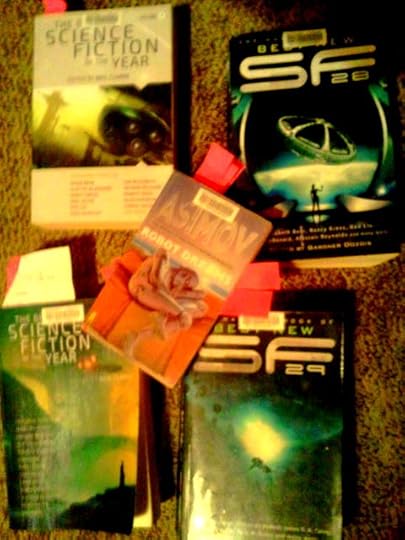
e.g. "Best Sci Fi Short Stories of the Year, 2018" etc, e.g. edited by say Neil Clark (of Clarkesworld ) etc.
In this: The Best Science Fiction of the Year - Vol 1 , ed Neil Clarke (2016)
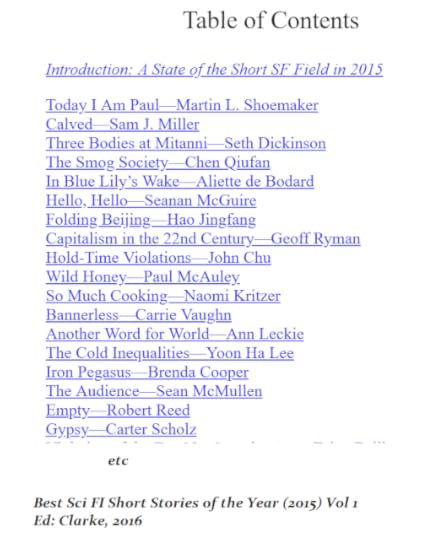
I liked Neil's introduction on the state of the domain [not really: field ] (of short sci fi stories) in 2015...
Also liked: Today I Am Paul. Shows robots looking after old folks.
Was very moving - not least as, I've had family members get Alzheimer's etc.
Anyway, so I liked those 2 things, in that book.
I didnt have time to read the while book (of stories). Been busy.
And - in Asimov's Robot Dreams anthology, I really quite liked his (very) short story "True Love" (1977).
I see: It predicts "Romantic Matchmaker" websites!
Also, an ep of Black Mirror I saw, was quite like it...
Also liked Asimov's Eyes Do More Than See.
Also: The Machine That Won The War.
I my view. we need a computer like Multivac, running the world... as a World Controller.
See: his The Evitable Conflict . In that it's called "The Machine/s".
eg See this essay, On Cyberdemocracy... and - this short story ( The Last Humanimal ) by, er, me.

Also, in Volume 3 , I liked:
Regarding the Robot Raccoons Attached to the Hull of My Ship ...
(Epistolary short story! A Series of letters. So at least the style of this was a bit offbeat/different to the rest. Kinda funny too. The title is funny as hell, in my view.)
Also I note The Secret Life of Bots was in here.
I didn't get time to read it.
Will have to come back, for this one.
So anyway -
...Me, complaining:
...Oddly, when I read these sci-fi anthologies. I seem to find it all, a bit "samey"?
Not sure why - but basically,
I want my mind blown...?
Want some creative (new, useful, surprising) short stories, e.g. Written In very different styles - or, something...? Am kinda not getting it, from these "Best Sci Fi stories of 2018" and the like.
As stories, they're all a bit samey, style-wise?
Don't get me wrong, some were really good, as: stories... e.g.: I liked: Zen and the Art of Starship Mantenance - by Tobias Buckell... ...The names of the ships reminded me of Iain M Banks' names for ships! (eg In Excession, etc) ...Funny.eg The ship name "With All Sincerity", and - The Fleet of Honest Representation, etc.And so look, I loved that story (Zen), a LOT.But... in reading various of, "the Best of the Year sci fi short stories" anthologies (over a few recent `years', eg Best of 02018) - to me, it was all a bit: conventional...? ...`Samey'? Like, the aesthetic "`rules'/conventions, of the domain" (of: sci fi short stories) have maybe "stagnated" a bit much, as Artie Koestler - or Mike Csikszentmihalyi - or DK Simonton might say (see: The Act of Creation, Creativity, Genius 101, etc)See: Creative Practice Theory .
I seem to want to read: something revolutionary? Like say Kubrick often talked about, proposing/imagining: a new stylistic "form", for Movies/Films... In that case, using techniques of Silent Movies combined with TVCs (TV commercials), or, something. I mean, in sci fi shorts, I am not specifically looking for that, necessarily, but - I just want: some new art form/style of short sci-fi story...? To emerge. And blow me away.
I do subscribe to Flash FIction Sci Fi sites, and whatnot. eg Daily Sci Fi, etc. Hoping, stuff will: rock my world.
If I do figure out what it might be, I will try and do it myself...? AND/Or - will keep looking for others who have done it! (As: I just haven't stumbled over it, yet. The problem of: searching a problem-solution space, for what you're after... You don't know, if something exists er - until you do know, or find it, LOL... So you just gotta absorb tons of stuff at random. Which is the whole point of: Bradbury' ESP-domain-absorption-system, as I am calling it.)
I dunno, I want to read, something, kinda/maybe, like - A (sci fi) Kafka - crossed with PK Dick - and Jack Handey and Louis CK - and, Philosophy, crossed with Solarpunk. Like: utopian sci fi futures, but - done in a radical new style/form, that is: new, useful, surprising. (Even: mindblowing)...Or - something...?
(...Could be something else altogether, who knows?)
Whatever it is - I am trying to also `find' it, in my own random writings, here. Using: BV-SR. (Creativity = Blind Variation, & then Selective Retention... or- Selective Redemption? LOL)...Not sure it's there, yet? But (sigh...) will keep churning it all out - and see, if/when it emerges...
Hey but also - I recently (within the last 10 days, somewhere) I read: Nabokov's Cloud, Castle, Lake. Loved it. Hadn't seen/read it, before. Check it out. Pretty: Kafkaesque...? Someone once said (not sure who? Could have been Brian Boyd - but frankly, I'm not sure - should have paid closer attention to the Source, there...) that: Nabokov's stuff (fiction) is, in a way, all about: the creative process. And hey...Maybe it is...?In which case - I better read lots more of it.
Creativity is the whole deal. It's the most important thing. New, useful, surprising. (i.e. Great. Enjoyable. Advances progress. etc)
The End of this post.
---------------------------------------------
Dr. Joe T. Velikovsky, Ph.D. (Communication & Media Arts)----------------------------
`The word communication will be used here in a very broad sense to include all of the procedures by which one mind may affect another. This, of course, involves not only written and oral speech, but also music, the pictorial arts, the theater, the ballet, and in fact all human behavior... The language of this memorandum will often appear to refer to the special, but still very broad and important, field of the communication of speech; but practically everything said applies equally well to music of any sort, and to still or moving pictures, as in television." - The Mathematical Theory of Communication, (Shannon & Weaver 1949, pp. 3-4).
Also:
“I know you think you understand what you thought I said, but I'm not sure you realize that what you heard is not what I meant” - (attributed, and ironically, possibly mistakenly, to: Robert McCloskey, namely the children's book author and illustrator, date of quote unknown)
& this autosig is not even near complete yet, as
JT Velikovsky is also a:
Transmedia Writer-Director-Producer: Movies, Games, TV, Theatre, Books, Comics
Transmedia Writing Blog: http://on-writering.blogspot.com.au/
& (High-RoI) Story/Screenplay/Movie Analyst - and Evolutionary Systems Theorist
See: https://storyality.wordpress.com/
& Bio-Culture (Science & the Arts) & Transmedia Researcher
Academia link: https://aftrs.academia.edu/JTVelikovsky
See, also:
Joe Velikovsky on IMDb:
YouTube: https://www.youtube.com/joeteevee
Okay - the autosig is over now. You can stop reading.
--------------------
 Now updated for The Long Now
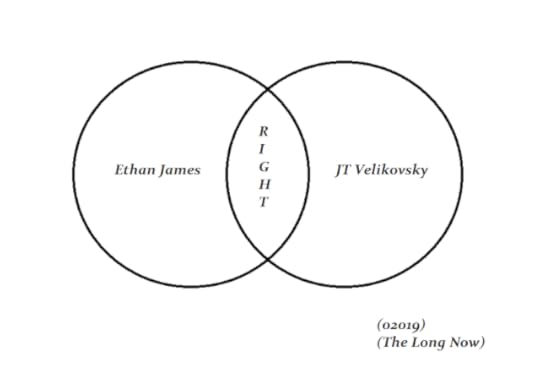
Legendary Sci-Fi writer-guy Ray Bradbury often gave out this very advice / heuristic, for How To Become A Less-Bad Writer ...
"Read an Essay, a Short Story, and a Poem, every day."
(See the post on ESP#1 for lots more details/explanation/backstory, ...and: swearing, oddly? Must have been frustrated when I wrote it? Not sure.)
Ok - so I haven't kept to `The ESP Schedule' very well so far, (as it was 16th Aug 02019 I first posted ESP#1 , as - now it's 10 days later - 26th Aug 02019 - and here comes ESP post #2 from moi)...
...I have lots of excuses and reasons, but even I don't wanna hear 'em.
Stuff like: I was working on My Memes Manifesto - ...or, Book - [am now in the middle of writing Ch 1, have done: the `Author's Preface, & Intro' chapters]. ...It's gonna be 20 x official Chapters long, so; yeah.) Hey also - I had to review a book-proposal for Bloomsbury and whatnot. Been busy.
Also transcribed & posted another Kubrick interview (in fact, 3! ...Michel Ciment ones).
In fact I could count some of that stuff (the 3 things directly above) as ESPs that I've been doing; like, the 3 x Kubrick / Ciment interviews could basically count as 3 x Essays I "read" (while transcribing em);
Also have been re-listening to audiobook chapters from The Origin of Species & Descent of Man (Darwin) on my daily 1-hour walks (as: my Memes book draws a lot on Darwin, Evocrit, Consilience , etc).
Also have been reading Ian Fleming's The Spy Who Loved Me on the toilet whenever taking a long dump, so - you could count each chapter of TSWLM as a `Short Story' (of sorts?), in this Bradbury `ESP-a day-program' thingy.
And as for poems , have been listening to songs, every day - as usual...
So; I think I can rationalize it all away, so I'm off the hook.
i.e., In this sense, I could argue: I've still been `keeping to the ESP schedule'... I just haven't noticed it, as I' m basically always absorbing: Essays, Stories, and Poems...
But - I will aim to keep it strict for next time - i.e., ESP#3, Namely - for that, will try and do - just: one Essay, one Short Story, and one Poem.
Anyway so - here's this excuse for an ESP #2:
--------------------------------------------ESP #2(sort of)
by
J the T the V
26th of August 02019
So - Here's what I read / absorbed / inputted-into-my-cognitive-systems, er- "today" (and I use that term `today' rather loosely, since I am covering the past 10 days here.)
Essay(s): Like I say, been listening to:- On The Origin of Species (Darwin 1859) - i.e. the Librivox audiobooks & - The Descent of Man (Darwin 1871) - ditto, Librivox.
Not sure how to summarize, these...? Explains his (Darwin's) solutions to: "that mystery of mysteries" - Where we came from. Plants, HumAnimals, Vegetables, & Minerals. (e.g. for the latter, see also his hero, Charles Lyell on Geology, Flora & Fauna, etc). I mean I probably haven't listened to 10 x different chapters of these, in the past 10 days, as - some chapters, I actually listen to over and over, just to make sure I catch it all. It's dense information compression. You can't really `skim' it. Also some chapters I just love the sound of the reader's voice, so I re-listen. eg: See Section 15, Part 1 of The Descent of Man... Read by Linda Sizemore, on Librivox. I just like listening to her voice & accent: eg Ch 6 - On the Affinities and Genealogy of Man, Part 1. I mean, stuff like: Early Androgenous Condition of the Vertebrata. etc.
Anyway - since I got 10 days behind my ESP Schedule with these posts, (due to: random busyness) I'm counting those Darwin chapters as: "essays". (So sue me...)
Now moving on -
(Short) Story(s): Well... I think, you should also know: What's On My Walkman.As - for example - on there is: Some Louis CK shows,.. They include "short stories", right? Anecdotes. Some of them could even be considered Essays... So; I'm rolling all that in here too. The 3 x standup shows on there (currently, I rotate them a bit, copy new ones over to the Walkman now and then) are- The Palace 2010.- The 2019 Governor's Show. - Jerusalem 2016. (Funny about the 2 dead cats. Most of it's funny. But, that's kinda the point.)
Poem(s): Well - look, I've been listening to some songs, off and on...? I think they kinda count, as: POEMS...e.g. Children's Crusade by Sting...?Clever how, he links the poppies: WW1&2 vets, and, heroin addicts (eg "Midnight in Soho, 1984..." etc.)But - he (like: Mark Knopfler) was a high school English Teacher - so you'd expect some literature influences in his writing. e.g. Love that line "The evening spreads itself [c.f.: its sails, T S Eliot] against the skyyyyy..." (from Bring on the Night)
Children's Crusade - Lyrics (by Sting)
Goes off on Random Tangent:
Hey - did I mention, my fave live album, was/is, probably - this one? Bring on the Night Though, I have also always liked: BB King Live at the Regal Also... Keith Jarrett's The Köln Concert... And - Nirvana Unplugged, Bob Marley & the Wailers Live, Simon & Garfunkel's Concert in Central Park, etc. And I also like, Country Joe McDonald's (live) Woodstock (1969) version of Fixin' To Die Rag. Though - my fave band is Dread Zeppelin ,But - lately - I've also been listening to this sorta stuff:
And, oscilloscope music... e.g. Shrooms by Jerobeam Fenderson
(It gets pretty great, from the 3 mins mark onwards...)
But on this topic of "Best Live Albums", check out:
Best Live Albums #1
Best Live Albums #2
Best Live Albums #3
Anyway - bet there are some good poems in there...? (If the lyrics to the songs rhyme, etc.)
Anyway - I often listen to stuff on my Walkman - while walking - if there's nothing good on Radio National (e.g. Big Ideas, The Book Show, Late Nite Live etc)... And at night too before I go to sleep. So maybe I've been keeping up the schedule (an E,S&P every day - or night) as that's kinda what I do naturally anyway.I just having been: reporting/blogging on it.Maybe I will keep to the schedule in future - we'll see.
Anyway - but what I also wanted to mention was, been reading some Sci Fi short stories. Borrowed some sci fi anthologies from the liberry, and been reading some stuff in those.

e.g. "Best Sci Fi Short Stories of the Year, 2018" etc, e.g. edited by say Neil Clark (of Clarkesworld ) etc.
In this: The Best Science Fiction of the Year - Vol 1 , ed Neil Clarke (2016)
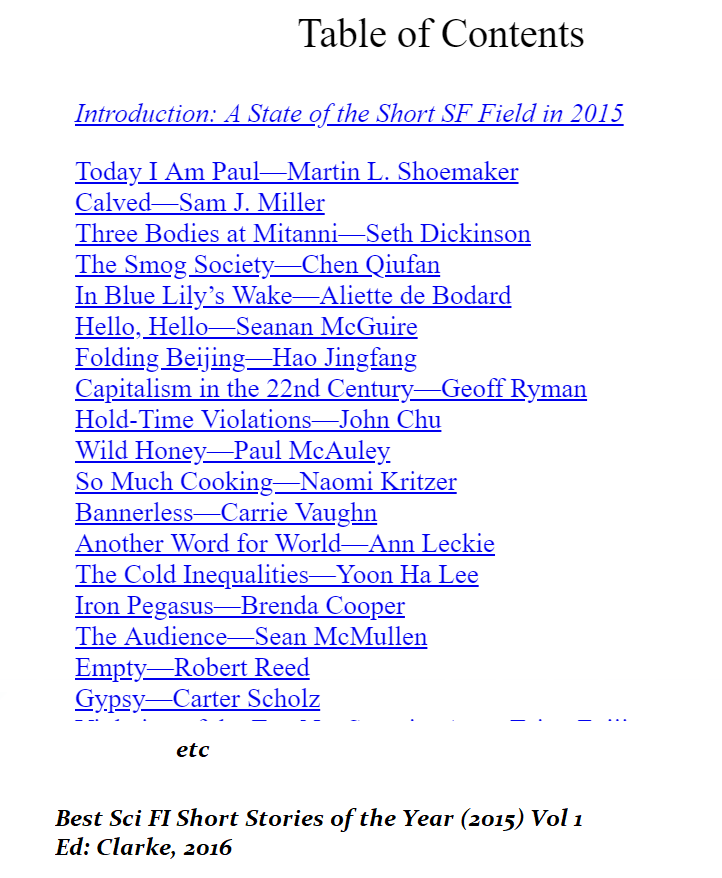
I liked Neil's introduction on the state of the domain [not really: field ] (of short sci fi stories) in 2015...
Also liked: Today I Am Paul. Shows robots looking after old folks.
Was very moving - not least as, I've had family members get Alzheimer's etc.
Anyway, so I liked those 2 things, in that book.
I didnt have time to read the while book (of stories). Been busy.
And - in Asimov's Robot Dreams anthology, I really quite liked his (very) short story "True Love" (1977).
I see: It predicts "Romantic Matchmaker" websites!
Also, an ep of Black Mirror I saw, was quite like it...
Also liked Asimov's Eyes Do More Than See.
Also: The Machine That Won The War.
I my view. we need a computer like Multivac, running the world... as a World Controller.
See: his The Evitable Conflict . In that it's called "The Machine/s".
eg See this essay, On Cyberdemocracy... and - this short story ( The Last Humanimal ) by, er, me.
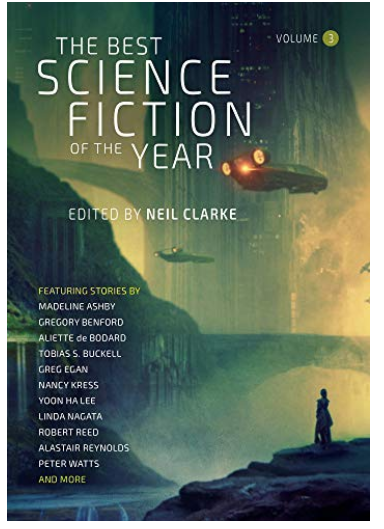
Also, in Volume 3 , I liked:
Regarding the Robot Raccoons Attached to the Hull of My Ship ...
(Epistolary short story! A Series of letters. So at least the style of this was a bit offbeat/different to the rest. Kinda funny too. The title is funny as hell, in my view.)
Also I note The Secret Life of Bots was in here.
I didn't get time to read it.
Will have to come back, for this one.
So anyway -
...Me, complaining:
...Oddly, when I read these sci-fi anthologies. I seem to find it all, a bit "samey"?
Not sure why - but basically,
I want my mind blown...?
Want some creative (new, useful, surprising) short stories, e.g. Written In very different styles - or, something...? Am kinda not getting it, from these "Best Sci Fi stories of 2018" and the like.
As stories, they're all a bit samey, style-wise?
Don't get me wrong, some were really good, as: stories... e.g.: I liked: Zen and the Art of Starship Mantenance - by Tobias Buckell... ...The names of the ships reminded me of Iain M Banks' names for ships! (eg In Excession, etc) ...Funny.eg The ship name "With All Sincerity", and - The Fleet of Honest Representation, etc.And so look, I loved that story (Zen), a LOT.But... in reading various of, "the Best of the Year sci fi short stories" anthologies (over a few recent `years', eg Best of 02018) - to me, it was all a bit: conventional...? ...`Samey'? Like, the aesthetic "`rules'/conventions, of the domain" (of: sci fi short stories) have maybe "stagnated" a bit much, as Artie Koestler - or Mike Csikszentmihalyi - or DK Simonton might say (see: The Act of Creation, Creativity, Genius 101, etc)See: Creative Practice Theory .
I seem to want to read: something revolutionary? Like say Kubrick often talked about, proposing/imagining: a new stylistic "form", for Movies/Films... In that case, using techniques of Silent Movies combined with TVCs (TV commercials), or, something. I mean, in sci fi shorts, I am not specifically looking for that, necessarily, but - I just want: some new art form/style of short sci-fi story...? To emerge. And blow me away.
I do subscribe to Flash FIction Sci Fi sites, and whatnot. eg Daily Sci Fi, etc. Hoping, stuff will: rock my world.
If I do figure out what it might be, I will try and do it myself...? AND/Or - will keep looking for others who have done it! (As: I just haven't stumbled over it, yet. The problem of: searching a problem-solution space, for what you're after... You don't know, if something exists er - until you do know, or find it, LOL... So you just gotta absorb tons of stuff at random. Which is the whole point of: Bradbury' ESP-domain-absorption-system, as I am calling it.)
I dunno, I want to read, something, kinda/maybe, like - A (sci fi) Kafka - crossed with PK Dick - and Jack Handey and Louis CK - and, Philosophy, crossed with Solarpunk. Like: utopian sci fi futures, but - done in a radical new style/form, that is: new, useful, surprising. (Even: mindblowing)...Or - something...?
(...Could be something else altogether, who knows?)
Whatever it is - I am trying to also `find' it, in my own random writings, here. Using: BV-SR. (Creativity = Blind Variation, & then Selective Retention... or- Selective Redemption? LOL)...Not sure it's there, yet? But (sigh...) will keep churning it all out - and see, if/when it emerges...
Hey but also - I recently (within the last 10 days, somewhere) I read: Nabokov's Cloud, Castle, Lake. Loved it. Hadn't seen/read it, before. Check it out. Pretty: Kafkaesque...? Someone once said (not sure who? Could have been Brian Boyd - but frankly, I'm not sure - should have paid closer attention to the Source, there...) that: Nabokov's stuff (fiction) is, in a way, all about: the creative process. And hey...Maybe it is...?In which case - I better read lots more of it.
Creativity is the whole deal. It's the most important thing. New, useful, surprising. (i.e. Great. Enjoyable. Advances progress. etc)
The End of this post.
---------------------------------------------
Dr. Joe T. Velikovsky, Ph.D. (Communication & Media Arts)----------------------------
`The word communication will be used here in a very broad sense to include all of the procedures by which one mind may affect another. This, of course, involves not only written and oral speech, but also music, the pictorial arts, the theater, the ballet, and in fact all human behavior... The language of this memorandum will often appear to refer to the special, but still very broad and important, field of the communication of speech; but practically everything said applies equally well to music of any sort, and to still or moving pictures, as in television." - The Mathematical Theory of Communication, (Shannon & Weaver 1949, pp. 3-4).
Also:
“I know you think you understand what you thought I said, but I'm not sure you realize that what you heard is not what I meant” - (attributed, and ironically, possibly mistakenly, to: Robert McCloskey, namely the children's book author and illustrator, date of quote unknown)
& this autosig is not even near complete yet, as
JT Velikovsky is also a:
Transmedia Writer-Director-Producer: Movies, Games, TV, Theatre, Books, Comics
Transmedia Writing Blog: http://on-writering.blogspot.com.au/
& (High-RoI) Story/Screenplay/Movie Analyst - and Evolutionary Systems Theorist
See: https://storyality.wordpress.com/
& Bio-Culture (Science & the Arts) & Transmedia Researcher
Academia link: https://aftrs.academia.edu/JTVelikovsky
See, also:
Joe Velikovsky on IMDb:
YouTube: https://www.youtube.com/joeteevee
Okay - the autosig is over now. You can stop reading.
--------------------
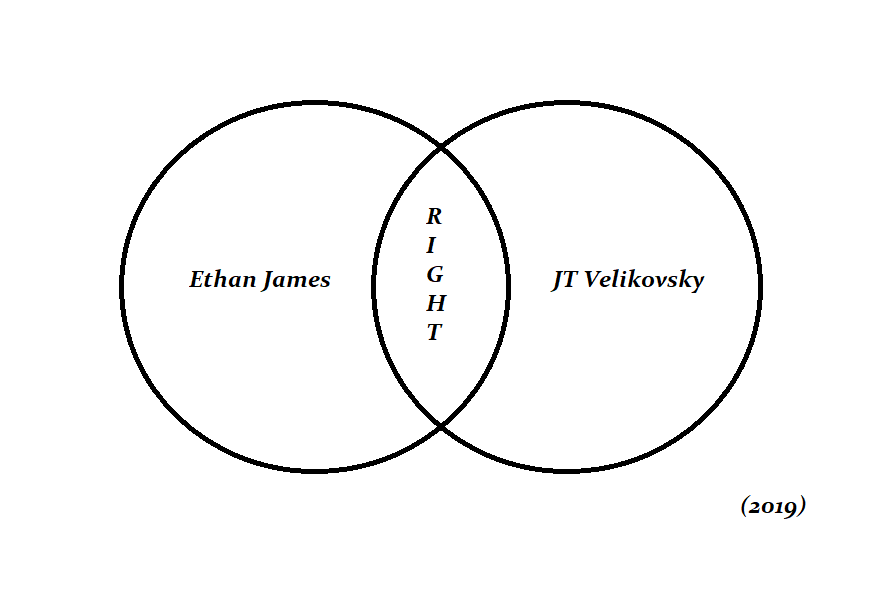 Now updated for The Long Now
August 20, 2019
First lines of 10 of my fave nonfiction books
First lines of 10 of my fave Nonfiction books
by JTV

So I guess, we all know about stuff, like:
100 Best First Lines from Novels
and
53 Of The Best Opening Sentences In Literature
and
The Best 100 Opening Lines from Books
and, suchlike...
(If not, then maybe ask Uncle Google about "Best opening lines novels".)
Anyway; so I'm trying to write a nonfiction book right now, and so - for the sake of studying success, here are the opening paras of 10 nonfiction books I like. (That also happen to be: bestsellers.)
This is all meant to inspire (and: educate) me.
(Maybe it will you, too...)
--------------------
#1
`Chapter 1. Why are people?
Intelligent life on a planet comes of age when it first works out the reason for its own existence.'
The Selfish Gene (Dawkins 01976, p. 1)
#2
`Chapter 1 - Welcome to the most important conversation of our age
Thirteen point eight billion years after its birth, our universe has awoken and become aware of itself.'
Life 3.0 (Tegmark 02018)
#3
`1. An Animal of No Significance
About 13.5 billion years ago, matter, energy, time and space came into being in what is known as The Big Bang. The story of these fundamental features of our universe is called Physics.'
Sapiens (Harari 02015, p. 1)
#4
`1. The New Human Agenda
At the dawn of the third millennium, humanity wakes up, stretching its limbs and rubbing its eyes.'
Homo Deus (Harari 02017, p. 1)
#5
`Chapter 1: Tell Me Why
1. Is Nothing Sacred?
We used to sing a lot when I was a child, around the campfire at summer camp, at school and Sunday school, or gathered around the piano at home. One of my favorite songs was "Tell Me Why".'
Darwin's Dangerous Idea (Dennett 01995, p. 1)
#6
`Chapter 1: The Ionian Enchantment
I remember very well the time I was captured by the dream of unified learning,'
Consilience: The Unity of Knowledge (Wilson 01998, p. 1)
#7
`Introduction: Animal, Human, Art, Story
Some people eat with chopsticks, some with knives and forks, and some with neither. Are these discrete cultural inventions, or do they have common roots?'
On the Origin of Stories: Evolution, Cognition, and Fiction (Boyd 02009, p. 1)
#8
`1. Disillusionment
The End of History Has Been Postponed
Humans think in stories rather than facts, numbers or equations, and the simpler the story the better.'
21 Lessons for the 21st Century (Harari 02019)
#9
`Part 1 - Enlightenment
Enlightenment Now (Pinker 02018, p. 1)
#10
`1. Setting the Stage
This book is about creativity, based on histories of contemporary people who know about it firsthand.'
Creativity (Csikszentmihalyi 01996, p. 1)
#11
`Introduction
When on board H,M,S, `Beagle', as naturalist, I was much struck with certain facts in the distribution of the inhabitants of South America, and of the geological relations of the present to the past inhabitants of that continent.'
On the Origin of Species (Darwin 01859)
#12
`Book One - The Art of Discovery and the Discoveries of Art
1. The Logic of Laughter
The Triptych
The three panels of the rounded triptych shown on the frontispiece indicate three domains of creativity which shade into each other without sharp boundaries: Humour, Discovery, and Art. The reason for this seemingly perverse order of arrangement - the Sage flanked by the Jester and the Artist on opposite sides - will become apparent as the argument unfolds.'
The Act of Creation (Koestler 1964, p. 1)

----------------------
Anyway; I could also add many more books that inspire me, but - that's a good start.
Q: What do they all have in common?
A: Not sure; they range from statements of fact to personal anecdotes, to both.
If we start with their body text, and not with the chapter headings/subheadings/section headings - none of them begin with: A question.
But for one thing (in common): they all still engage (`hook') me, and compel me to read on.
(See: Classic Writing for more...)
...Hmmmm...
How to write a great opening line for my specific nonfiction book...?
...Hmmmm...!
---------------------------------------------
Dr. Joe T. Velikovsky, Ph.D. (Communication & Media Arts)
or JoeTV
or JTV
or that random guy
who knows
it's flexible
depends on the context----------------------------
`The word communication will be used here in a very broad sense to include all of the procedures by which one mind may affect another. This, of course, involves not only written and oral speech, but also music, the pictorial arts, the theater, the ballet, and in fact all human behavior... The language of this memorandum will often appear to refer to the special, but still very broad and important, field of the communication of speech; but practically everything said applies equally well to music of any sort, and to still or moving pictures, as in television." - The Mathematical Theory of Communication, (Shannon & Weaver 1949, pp. 3-4).
Also:
“I know you think you understand what you thought I said, but I'm not sure you realize that what you heard is not what I meant” - (attributed, and ironically, possibly mistakenly, to: Robert McCloskey, namely the children's book author and illustrator, date of quote unknown)
& this autosig is not even near complete yet, as
JT Velikovsky is also a:
Transmedia Writer-Director-Producer: Movies, Games, TV, Theatre, Books, Comics
Transmedia Writing Blog: http://on-writering.blogspot.com.au/
& (High-RoI) Story/Screenplay/Movie Analyst - and Evolutionary Systems Theorist
See: https://storyality.wordpress.com/
& Bio-Culture (Science & the Arts) & Transmedia Researcher
Academia link: https://aftrs.academia.edu/JTVelikovsky
See, also:
Joe Velikovsky on IMDb:
YouTube: https://www.youtube.com/joeteevee
Okay - the autosig is over now. You can stop reading.
by JTV

So I guess, we all know about stuff, like:
100 Best First Lines from Novels
and
53 Of The Best Opening Sentences In Literature
and
The Best 100 Opening Lines from Books
and, suchlike...
(If not, then maybe ask Uncle Google about "Best opening lines novels".)
Anyway; so I'm trying to write a nonfiction book right now, and so - for the sake of studying success, here are the opening paras of 10 nonfiction books I like. (That also happen to be: bestsellers.)
This is all meant to inspire (and: educate) me.
(Maybe it will you, too...)
--------------------
#1
`Chapter 1. Why are people?
Intelligent life on a planet comes of age when it first works out the reason for its own existence.'
The Selfish Gene (Dawkins 01976, p. 1)
#2
`Chapter 1 - Welcome to the most important conversation of our age
Technology is giving life the potential to flourish like never before - or to self-destruct.-Future of Life Institute
Thirteen point eight billion years after its birth, our universe has awoken and become aware of itself.'
Life 3.0 (Tegmark 02018)
#3
`1. An Animal of No Significance
About 13.5 billion years ago, matter, energy, time and space came into being in what is known as The Big Bang. The story of these fundamental features of our universe is called Physics.'
Sapiens (Harari 02015, p. 1)
#4
`1. The New Human Agenda
At the dawn of the third millennium, humanity wakes up, stretching its limbs and rubbing its eyes.'
Homo Deus (Harari 02017, p. 1)
#5
`Chapter 1: Tell Me Why
1. Is Nothing Sacred?
We used to sing a lot when I was a child, around the campfire at summer camp, at school and Sunday school, or gathered around the piano at home. One of my favorite songs was "Tell Me Why".'
Darwin's Dangerous Idea (Dennett 01995, p. 1)
#6
`Chapter 1: The Ionian Enchantment
I remember very well the time I was captured by the dream of unified learning,'
Consilience: The Unity of Knowledge (Wilson 01998, p. 1)
#7
`Introduction: Animal, Human, Art, Story
Some people eat with chopsticks, some with knives and forks, and some with neither. Are these discrete cultural inventions, or do they have common roots?'
On the Origin of Stories: Evolution, Cognition, and Fiction (Boyd 02009, p. 1)
#8
`1. Disillusionment
The End of History Has Been Postponed
Humans think in stories rather than facts, numbers or equations, and the simpler the story the better.'
21 Lessons for the 21st Century (Harari 02019)
#9
`Part 1 - Enlightenment
`The common sense of the eighteenth century, its grasp of the obvious facts of human suffering, and of the obvious demands of human nature, acted on the world like a bath of moral cleansing.'
-Alfred North WhiteheadIn the course of several decades giving public lectures on language, mind, and human nature, I have been asked some mighty strange questions. Which is the best language? Are clams and oysters conscious? When will I be able to upload my mind to the internet? Is obesity a form of violence?'
Enlightenment Now (Pinker 02018, p. 1)
#10
`1. Setting the Stage
This book is about creativity, based on histories of contemporary people who know about it firsthand.'
Creativity (Csikszentmihalyi 01996, p. 1)
#11
`Introduction
When on board H,M,S, `Beagle', as naturalist, I was much struck with certain facts in the distribution of the inhabitants of South America, and of the geological relations of the present to the past inhabitants of that continent.'
On the Origin of Species (Darwin 01859)
#12
`Book One - The Art of Discovery and the Discoveries of Art
1. The Logic of Laughter
The Triptych
The three panels of the rounded triptych shown on the frontispiece indicate three domains of creativity which shade into each other without sharp boundaries: Humour, Discovery, and Art. The reason for this seemingly perverse order of arrangement - the Sage flanked by the Jester and the Artist on opposite sides - will become apparent as the argument unfolds.'
The Act of Creation (Koestler 1964, p. 1)

----------------------
Anyway; I could also add many more books that inspire me, but - that's a good start.
Q: What do they all have in common?
A: Not sure; they range from statements of fact to personal anecdotes, to both.
If we start with their body text, and not with the chapter headings/subheadings/section headings - none of them begin with: A question.
But for one thing (in common): they all still engage (`hook') me, and compel me to read on.
(See: Classic Writing for more...)
...Hmmmm...
How to write a great opening line for my specific nonfiction book...?
...Hmmmm...!
---------------------------------------------
Dr. Joe T. Velikovsky, Ph.D. (Communication & Media Arts)
or JoeTV
or JTV
or that random guy
who knows
it's flexible
depends on the context----------------------------
`The word communication will be used here in a very broad sense to include all of the procedures by which one mind may affect another. This, of course, involves not only written and oral speech, but also music, the pictorial arts, the theater, the ballet, and in fact all human behavior... The language of this memorandum will often appear to refer to the special, but still very broad and important, field of the communication of speech; but practically everything said applies equally well to music of any sort, and to still or moving pictures, as in television." - The Mathematical Theory of Communication, (Shannon & Weaver 1949, pp. 3-4).
Also:
“I know you think you understand what you thought I said, but I'm not sure you realize that what you heard is not what I meant” - (attributed, and ironically, possibly mistakenly, to: Robert McCloskey, namely the children's book author and illustrator, date of quote unknown)
& this autosig is not even near complete yet, as
JT Velikovsky is also a:
Transmedia Writer-Director-Producer: Movies, Games, TV, Theatre, Books, Comics
Transmedia Writing Blog: http://on-writering.blogspot.com.au/
& (High-RoI) Story/Screenplay/Movie Analyst - and Evolutionary Systems Theorist
See: https://storyality.wordpress.com/
& Bio-Culture (Science & the Arts) & Transmedia Researcher
Academia link: https://aftrs.academia.edu/JTVelikovsky
See, also:
Joe Velikovsky on IMDb:
YouTube: https://www.youtube.com/joeteevee
Okay - the autosig is over now. You can stop reading.
August 18, 2019
What's on my Walkman (Aug 02019)
What's on my Walkman?And who cares, besides me, anyway?[Aug 02019]J the T the V
Not that anyone but me should really care: still; ya never know. (All of life is doing science. Let's try this experiment and see if anyone cares. I predict they won't - but am happy to be falsified (a la, re: per: my hero#423 Sir Karl Popper) on that)
Here's: my Walkman:
Here's what's on my Walkman:
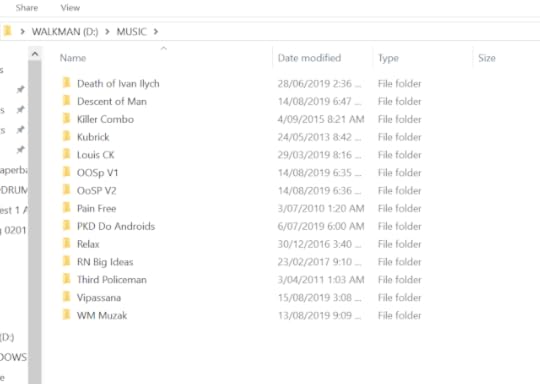
And, here's why:
Death of Ivan Ilyich - because this is currently one of my fave books/novellas/stories/narrative-style things of all time. Tolstory. What a beast that guy was. The opening chapter has 3 funny as shit things, then it goes downhill all the way till that thing at the end (no spoilers)
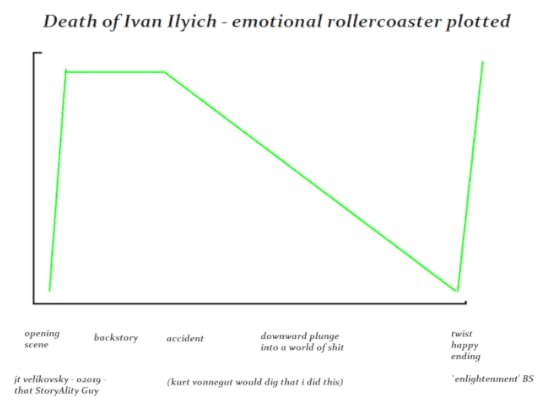
Hey this reminds me - Check out, this! (just - re: Vonnegut, on plotting Story emotional-rollercoasters). Gotta love Vonnegut.
"I have tried to bring scientific thinking to literary criticism, and there has been very little gratitude for this... [audience laughs]"(For more on that specific WAR OF IDEAS - see: Consilience vs PoMo and see: Schools of Thought)
Anyway, next up ->
The Descent of Man (1871) - cos I love Charles Darwin's brain. The greatest genius that ever lived (so far), probably. I got such a man-crush / bromance on that guy. (Wish he wasn't so: dead.) I listen to this sorta awesome shit on my daily "constitutional" walks... Well; ...except, when, I don't. (Cos sometimes, I'm listening to Radio National's Big Ideas or something. (I like large ideas. The larger the better. See my: the holon/parton structure of the meme, the unit of culture , for example.)) ...I like nested brackets.
Next?
`Killer Combo' - Hmph. This is just a bunch of random music / songs I like to listen to, sometimes. This list of songs changes now and then - whenever I make myself sick of, those specific songs. I go on a tear and listen the fuck outta some songs, but then I can't stand 'em any more. Always been that way. Go figure. I like keeping myself in the Flow state. (Makes me less unhappy, or: more happy.)
FYI - Here's the songs, currently in it: (that folder, [Walkman ["Killer Combo"]) but this may well change soon to: something else. Depends. (A while back, used to be a lotta Prodigy in there: Medusa's Path and Spitfire, and whatnot. omg, that stuff was so cool when i wasn't: sick of it.)
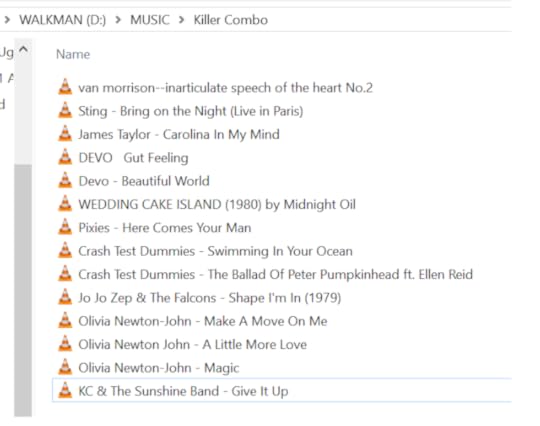 Music in my Walkman (well; just right now anyway)
That Sting song is - maybe - my fave song of all time. "Bring On the Night/When the World Is Running Down, You Make the Best of What's Still Around" – (11:41) (But that may well: change)That other stuff is just good and/or happy and/or fun stuff... Songs. Whatever they are. XD
Next:
Kubrick - this is 2 interviews with Kubrick, so we can see how his (genius) brain worked.
e.g. One of them is this one:
Stanley Kubrick Interview (Jeremy Bernstein 1966)
and the other:
3 x Interviews with Kubrick (On: Barry Lyndon, The Shining, Full Metal Jacket), by Michel Ciment.
Sometime, soonish... (before the end of 02019 - noting, the Long Now), I will transcribe those 3 interviews too, like I did with the Bernstein 1966 one. - It helps us all to research creativity (i.e. problem solving). ...Because: that's how you save a world. :) (...see Heroism Science! )(I note, then you have to give General Problem Solving Algorithms to a supercomputer - and it saves the world - as humans aren't capable of it on their own; the world is too complex and fast for that now.)
Anyway next:
Louis CK - a few Louis standup comedy shows; e.g. that bootlegged 2019 Governor's one (genius! so funny); The Palace 2010; & Jerusalem 2016.
Nexts:
2 x copies of On the Origin of Species Audiobooks from Librivox. I dunno, just obsessed with Darwin...? Go figure. (Mainly as I'm trying to do with Culture what he did with Biology. [And, seems it's working... Slowly.] They may even `label' me a `5-C genius' when I'm dead. Or, not, what do I care, I'll be DEAD. LOL. And: all my problems will be over. LOL. Meantime I gotta get this stuff done and save the world. ...Or, not? Is it worth saving? Convince me, in the Comments. LOL XD
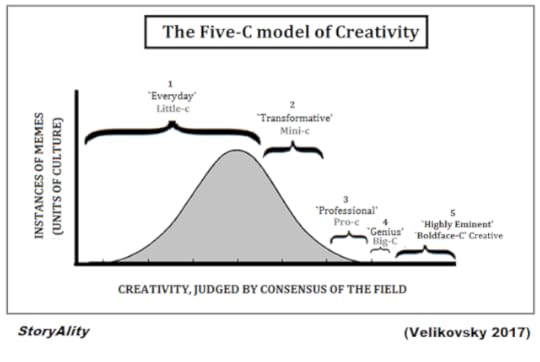
See: my article on: Kubrick and Darwin and Joe Campbell and Me, in the Journal of Genius and Eminence (2018) .
Next:
Pain Free - this is a guided hypnosis thingy (45 mins?) by Rick Collingstone or something, that I've been listening to, since 2010, or whatever. (Have had a back back for that long... In fact - for about 32 years now, but who's counting? My point is, Intense Daily Physical Pain can be a very good motivator to get into Flow, and thus get lots of work done, as: you escape the physical reality / consciousness, as it usually: sucks, balls.) [See this is another reason I can't wait to get dead, LOL... omg it's gonna be so good to stop existing and be conscious of: bad things.]
Nest: (yes I know that's not how you spell `Next'; but - happy accidents can be deep, meaningful and profound, useful solutions to creative problems/goals)
See Kubrick on Joyce on it. :)
Phillip K Dick's Do Androids Dream of Electric Sheep (abridged/condensed audiobook of the novel, read by Matthew Modine & Callista Flockhart - hey, remember her?)I read this novel in Year 8 or whatever and loved it. (Why didn't Ridley etc put Mercerism and the `Mood Organ' in the 1982 Blade Runner movie?? It's/they're: the 2 best sci fi ideas in the book!!!)omfg.Genius!Oh well. Anyway I heart P K Dick's stuff.
Nezt?
Relax - this is 5 copies of that most relaxing/anxiety-reducing song, ever: Macaroni Onion's: You are too fat (I hate anxiety, and had a traumatic childhood [when: it wasn't amazing and fun and adventurous, which it was - a LOT, but - it was also (in parts): uber-traumatic, but - that's probably why I'm so creative, see Csikszentmihalyi on it: shitty childhoods give you a powerful imagination, to escape into, for: life! YAY! i.e. My imagination is a billion times better than "reality", seriously. It's safe and fun and rich and interesting and exciting in there... So-called `Real Life' is: a labyrinth of clusterfuckery.] so anyway I prolly have lifelong PTSD, and if you don't, you're not paying attention t how fucked up everything is, LOL. e.g. Trump is President. WTF. i.e. - Are you f*cking kidding me? Stop the world - this one is way too stoopid, funny and absurd for words. ...Beam me up Scotty, there's no intelligent life down here... LOL XD) Juuuust kidding. Or - am I? [Ambiguity makes for timeless art. trust me on this... Or go read Martindale (1990), Clockwork Muse. Or not. What do I care. Fuck you, anyway, probably... As: 99% of everything is lousy/evolution crushes it, like a bug. (So, statistically, this means: you. And me too]) - hey dig the nested brackets there
Nect:
RN Big Ideas - So, in here, is:
- AC Grayling on The History of Philosophy (on: Late Nite Live)- Brian Boyd on: On the Origin of Stories (2009) (on: The Book Show)- Mental Health Politics (I just dig Alistair Campbell's take on a lotta stuff, eg: Brexit and Trump!)- Moonkind (I just dig her voice. Also: moon stuff. Also: Science!)- Yuval Noah Harari on Homo Deus on Big Ideas
I re-listen to all this stuff, quite a lot - as I notice different things, each time. (Jam-Packed with hypercompressed Info!)
Next:
The Third Policeman - audiobook, read by Jim Norton.My fave novel, ever. ...THE END.Have listened to it, hundreds of times. Maybe even: thousands-?(Spoiler Alert - STOP! Don't know anything more about it, just: buy, download and listen. Then: read the book. Genie-ass: Funny. Dark. Smart. L o v e it.)
Vipassana - a 15-min guided meditation.I get tons of great ideas listening to this. Yes I know I'm sposed to think of: nothing. It rarely if ever works for me. I always "have" (hear? find? get?) a treasure-trove of (GREAT) ideas whenever I listen to this (twice a day, usually). Allows your subconscious to start yelling out ideas at you.(PS - I have cut the `first 5 mins' Intro out. As: Who needs it? Not I.)
Finally: (phew, finally!)
WM Music - actually - have never listened to this; the Walkman came with it loaded on. Wondr what's in there. Oh well we may never know. You've gotta use your time wisely. Just because someone thinks I should absorb some info, doesn't mean they are right. (Fuck 'em!)(Ads don't work on me, either. Weird? Then again - been studying ads, since I was about 13? I know all their `tricks'. See em coming a mile off, LOL XD
Okay so that's what's on there / what I'm listening to right now.(Maybe not right now, as you read this, but: I mean, in general terms, in Aug 02019. Hey watch out for that Long Now, it's gonna gitcha!) XD
Sadly, or happily, or neither, or both...The End of this post.
Hey - James Joyce, would be jealous!!!!! haha - funny - LOL - XD
i.e.:
 Note: eyepatch. Said it helped him see better. (Ironic.)
Writing Tip: Always look for the irony.i.e., NOTHING IS AS IT SEEMS...eg Clowns are actually sad-fucks, etc
I love youse all...
Except those I don't
(Haters gonna heart, etc)
...Yes I know I said `heart' there.
It was intentional.
Like pretty much everything I ever do.
...Unless we don't have free will, but that's a long discussion for another time.
...Be good!!!
Sinceriously!
---------------------------------------------
Dr. Joe T. Velikovsky, Ph.D. (Communication & Media Arts)
or JoeTV
or JTV
or that random guy
who knows
it's flexible----------------------------
`The word communication will be used here in a very broad sense to include all of the procedures by which one mind may affect another. This, of course, involves not only written and oral speech, but also music, the pictorial arts, the theater, the ballet, and in fact all human behavior... The language of this memorandum will often appear to refer to the special, but still very broad and important, field of the communication of speech; but practically everything said applies equally well to music of any sort, and to still or moving pictures, as in television." - The Mathematical Theory of Communication, (Shannon & Weaver 1949, pp. 3-4).
Also:
“I know you think you understand what you thought I said, but I'm not sure you realize that what you heard is not what I meant” - (attributed, and ironically, possibly mistakenly, to: Robert McCloskey, namely the children's book author and illustrator, date of quote unknown)
& this autosig is not even near complete yet, as
JT Velikovsky is also a:
Transmedia Writer-Director-Producer: Movies, Games, TV, Theatre, Books, Comics
Transmedia Writing Blog: http://on-writering.blogspot.com.au/
& (High-RoI) Story/Screenplay/Movie Analyst - and Evolutionary Systems Theorist
See: https://storyality.wordpress.com/
& Bio-Culture (Science & the Arts) & Transmedia Researcher
Academia link: https://aftrs.academia.edu/JTVelikovsky
See, also:
Joe Velikovsky on IMDb:
YouTube: https://www.youtube.com/joeteevee
Okay - the autosig is over now. You can stop reading.
Not that anyone but me should really care: still; ya never know. (All of life is doing science. Let's try this experiment and see if anyone cares. I predict they won't - but am happy to be falsified (a la, re: per: my hero#423 Sir Karl Popper) on that)
Here's: my Walkman:
Here's what's on my Walkman:
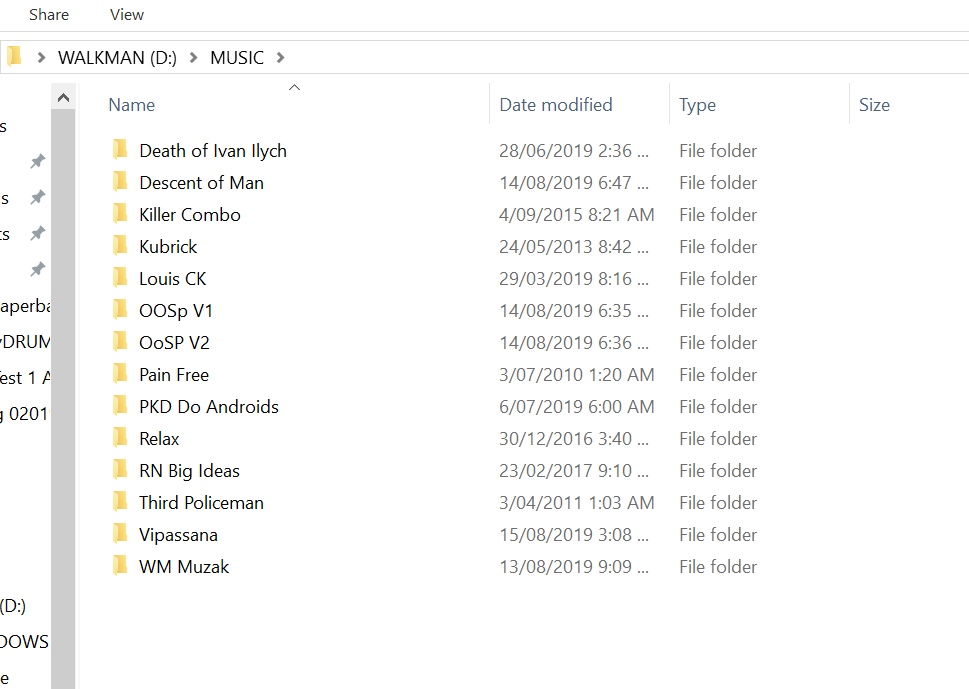
And, here's why:
Death of Ivan Ilyich - because this is currently one of my fave books/novellas/stories/narrative-style things of all time. Tolstory. What a beast that guy was. The opening chapter has 3 funny as shit things, then it goes downhill all the way till that thing at the end (no spoilers)
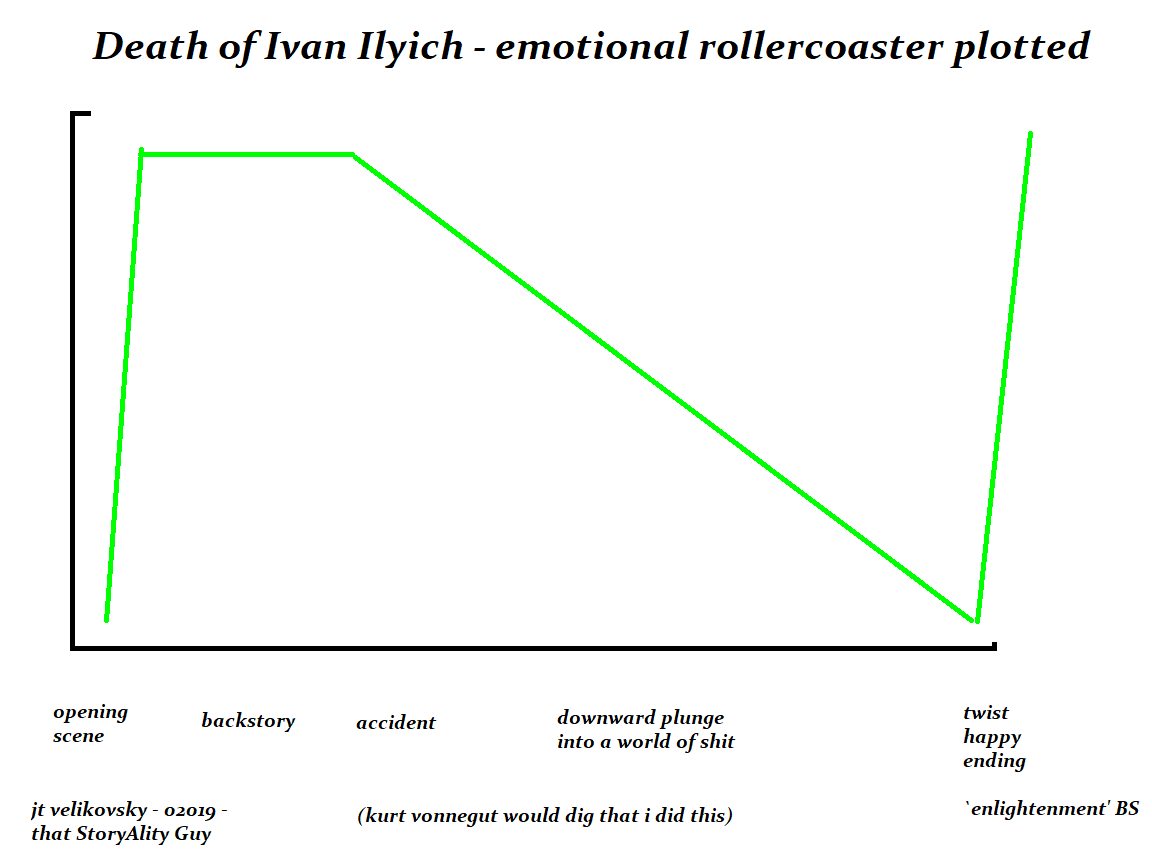
Hey this reminds me - Check out, this! (just - re: Vonnegut, on plotting Story emotional-rollercoasters). Gotta love Vonnegut.
"I have tried to bring scientific thinking to literary criticism, and there has been very little gratitude for this... [audience laughs]"(For more on that specific WAR OF IDEAS - see: Consilience vs PoMo and see: Schools of Thought)
Anyway, next up ->
The Descent of Man (1871) - cos I love Charles Darwin's brain. The greatest genius that ever lived (so far), probably. I got such a man-crush / bromance on that guy. (Wish he wasn't so: dead.) I listen to this sorta awesome shit on my daily "constitutional" walks... Well; ...except, when, I don't. (Cos sometimes, I'm listening to Radio National's Big Ideas or something. (I like large ideas. The larger the better. See my: the holon/parton structure of the meme, the unit of culture , for example.)) ...I like nested brackets.
Next?
`Killer Combo' - Hmph. This is just a bunch of random music / songs I like to listen to, sometimes. This list of songs changes now and then - whenever I make myself sick of, those specific songs. I go on a tear and listen the fuck outta some songs, but then I can't stand 'em any more. Always been that way. Go figure. I like keeping myself in the Flow state. (Makes me less unhappy, or: more happy.)
FYI - Here's the songs, currently in it: (that folder, [Walkman ["Killer Combo"]) but this may well change soon to: something else. Depends. (A while back, used to be a lotta Prodigy in there: Medusa's Path and Spitfire, and whatnot. omg, that stuff was so cool when i wasn't: sick of it.)
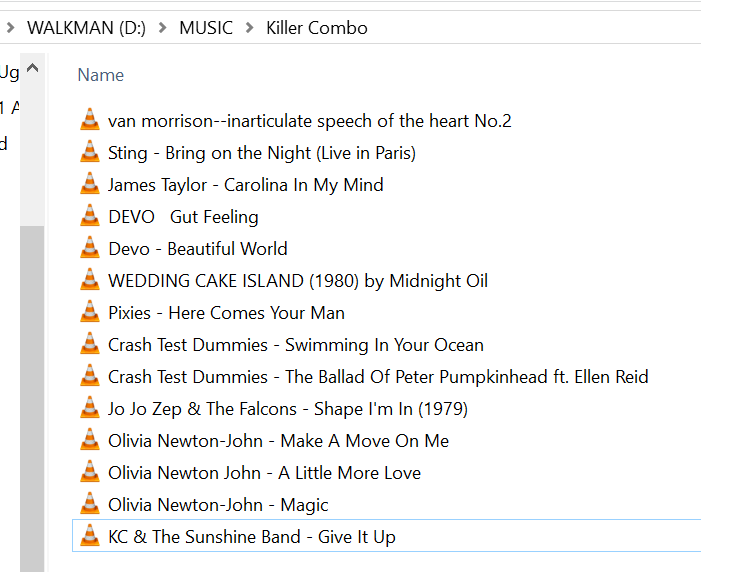 Music in my Walkman (well; just right now anyway)
That Sting song is - maybe - my fave song of all time. "Bring On the Night/When the World Is Running Down, You Make the Best of What's Still Around" – (11:41) (But that may well: change)That other stuff is just good and/or happy and/or fun stuff... Songs. Whatever they are. XD
Next:
Kubrick - this is 2 interviews with Kubrick, so we can see how his (genius) brain worked.
e.g. One of them is this one:
Stanley Kubrick Interview (Jeremy Bernstein 1966)
and the other:
3 x Interviews with Kubrick (On: Barry Lyndon, The Shining, Full Metal Jacket), by Michel Ciment.
Sometime, soonish... (before the end of 02019 - noting, the Long Now), I will transcribe those 3 interviews too, like I did with the Bernstein 1966 one. - It helps us all to research creativity (i.e. problem solving). ...Because: that's how you save a world. :) (...see Heroism Science! )(I note, then you have to give General Problem Solving Algorithms to a supercomputer - and it saves the world - as humans aren't capable of it on their own; the world is too complex and fast for that now.)
Anyway next:
Louis CK - a few Louis standup comedy shows; e.g. that bootlegged 2019 Governor's one (genius! so funny); The Palace 2010; & Jerusalem 2016.
Nexts:
2 x copies of On the Origin of Species Audiobooks from Librivox. I dunno, just obsessed with Darwin...? Go figure. (Mainly as I'm trying to do with Culture what he did with Biology. [And, seems it's working... Slowly.] They may even `label' me a `5-C genius' when I'm dead. Or, not, what do I care, I'll be DEAD. LOL. And: all my problems will be over. LOL. Meantime I gotta get this stuff done and save the world. ...Or, not? Is it worth saving? Convince me, in the Comments. LOL XD
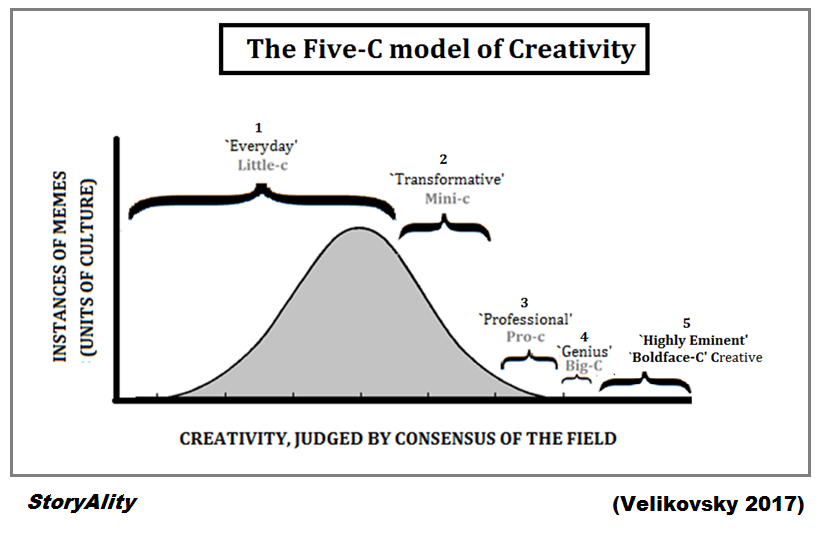
See: my article on: Kubrick and Darwin and Joe Campbell and Me, in the Journal of Genius and Eminence (2018) .
Next:
Pain Free - this is a guided hypnosis thingy (45 mins?) by Rick Collingstone or something, that I've been listening to, since 2010, or whatever. (Have had a back back for that long... In fact - for about 32 years now, but who's counting? My point is, Intense Daily Physical Pain can be a very good motivator to get into Flow, and thus get lots of work done, as: you escape the physical reality / consciousness, as it usually: sucks, balls.) [See this is another reason I can't wait to get dead, LOL... omg it's gonna be so good to stop existing and be conscious of: bad things.]
Nest: (yes I know that's not how you spell `Next'; but - happy accidents can be deep, meaningful and profound, useful solutions to creative problems/goals)
See Kubrick on Joyce on it. :)
Phillip K Dick's Do Androids Dream of Electric Sheep (abridged/condensed audiobook of the novel, read by Matthew Modine & Callista Flockhart - hey, remember her?)I read this novel in Year 8 or whatever and loved it. (Why didn't Ridley etc put Mercerism and the `Mood Organ' in the 1982 Blade Runner movie?? It's/they're: the 2 best sci fi ideas in the book!!!)omfg.Genius!Oh well. Anyway I heart P K Dick's stuff.
Nezt?
Relax - this is 5 copies of that most relaxing/anxiety-reducing song, ever: Macaroni Onion's: You are too fat (I hate anxiety, and had a traumatic childhood [when: it wasn't amazing and fun and adventurous, which it was - a LOT, but - it was also (in parts): uber-traumatic, but - that's probably why I'm so creative, see Csikszentmihalyi on it: shitty childhoods give you a powerful imagination, to escape into, for: life! YAY! i.e. My imagination is a billion times better than "reality", seriously. It's safe and fun and rich and interesting and exciting in there... So-called `Real Life' is: a labyrinth of clusterfuckery.] so anyway I prolly have lifelong PTSD, and if you don't, you're not paying attention t how fucked up everything is, LOL. e.g. Trump is President. WTF. i.e. - Are you f*cking kidding me? Stop the world - this one is way too stoopid, funny and absurd for words. ...Beam me up Scotty, there's no intelligent life down here... LOL XD) Juuuust kidding. Or - am I? [Ambiguity makes for timeless art. trust me on this... Or go read Martindale (1990), Clockwork Muse. Or not. What do I care. Fuck you, anyway, probably... As: 99% of everything is lousy/evolution crushes it, like a bug. (So, statistically, this means: you. And me too]) - hey dig the nested brackets there
Nect:
RN Big Ideas - So, in here, is:
- AC Grayling on The History of Philosophy (on: Late Nite Live)- Brian Boyd on: On the Origin of Stories (2009) (on: The Book Show)- Mental Health Politics (I just dig Alistair Campbell's take on a lotta stuff, eg: Brexit and Trump!)- Moonkind (I just dig her voice. Also: moon stuff. Also: Science!)- Yuval Noah Harari on Homo Deus on Big Ideas
I re-listen to all this stuff, quite a lot - as I notice different things, each time. (Jam-Packed with hypercompressed Info!)
Next:
The Third Policeman - audiobook, read by Jim Norton.My fave novel, ever. ...THE END.Have listened to it, hundreds of times. Maybe even: thousands-?(Spoiler Alert - STOP! Don't know anything more about it, just: buy, download and listen. Then: read the book. Genie-ass: Funny. Dark. Smart. L o v e it.)
Vipassana - a 15-min guided meditation.I get tons of great ideas listening to this. Yes I know I'm sposed to think of: nothing. It rarely if ever works for me. I always "have" (hear? find? get?) a treasure-trove of (GREAT) ideas whenever I listen to this (twice a day, usually). Allows your subconscious to start yelling out ideas at you.(PS - I have cut the `first 5 mins' Intro out. As: Who needs it? Not I.)
Finally: (phew, finally!)
WM Music - actually - have never listened to this; the Walkman came with it loaded on. Wondr what's in there. Oh well we may never know. You've gotta use your time wisely. Just because someone thinks I should absorb some info, doesn't mean they are right. (Fuck 'em!)(Ads don't work on me, either. Weird? Then again - been studying ads, since I was about 13? I know all their `tricks'. See em coming a mile off, LOL XD
Okay so that's what's on there / what I'm listening to right now.(Maybe not right now, as you read this, but: I mean, in general terms, in Aug 02019. Hey watch out for that Long Now, it's gonna gitcha!) XD
Sadly, or happily, or neither, or both...The End of this post.
Hey - James Joyce, would be jealous!!!!! haha - funny - LOL - XD
i.e.:
 Note: eyepatch. Said it helped him see better. (Ironic.)
Writing Tip: Always look for the irony.i.e., NOTHING IS AS IT SEEMS...eg Clowns are actually sad-fucks, etc
I love youse all...
Except those I don't
(Haters gonna heart, etc)
...Yes I know I said `heart' there.
It was intentional.
Like pretty much everything I ever do.
...Unless we don't have free will, but that's a long discussion for another time.
...Be good!!!
Sinceriously!
---------------------------------------------
Dr. Joe T. Velikovsky, Ph.D. (Communication & Media Arts)
or JoeTV
or JTV
or that random guy
who knows
it's flexible----------------------------
`The word communication will be used here in a very broad sense to include all of the procedures by which one mind may affect another. This, of course, involves not only written and oral speech, but also music, the pictorial arts, the theater, the ballet, and in fact all human behavior... The language of this memorandum will often appear to refer to the special, but still very broad and important, field of the communication of speech; but practically everything said applies equally well to music of any sort, and to still or moving pictures, as in television." - The Mathematical Theory of Communication, (Shannon & Weaver 1949, pp. 3-4).
Also:
“I know you think you understand what you thought I said, but I'm not sure you realize that what you heard is not what I meant” - (attributed, and ironically, possibly mistakenly, to: Robert McCloskey, namely the children's book author and illustrator, date of quote unknown)
& this autosig is not even near complete yet, as
JT Velikovsky is also a:
Transmedia Writer-Director-Producer: Movies, Games, TV, Theatre, Books, Comics
Transmedia Writing Blog: http://on-writering.blogspot.com.au/
& (High-RoI) Story/Screenplay/Movie Analyst - and Evolutionary Systems Theorist
See: https://storyality.wordpress.com/
& Bio-Culture (Science & the Arts) & Transmedia Researcher
Academia link: https://aftrs.academia.edu/JTVelikovsky
See, also:
Joe Velikovsky on IMDb:
YouTube: https://www.youtube.com/joeteevee
Okay - the autosig is over now. You can stop reading.
August 16, 2019
ESP#1 - Essay, Story, Poem
ESP#1 - Essay, Story, Poem
Okay - so, sci-fi writer guy Ray Bradbury often just gave out (for free! Holy-radioactive-shitballs) this very good advice / heuristic, for How To Become A Less-Bad Writer ...
He said: (or sayed, if you are shit at spelling)
"Read an Essay, a Short Story, and a Poem, every day." [0]
(Actually, he said: every night , but look, I'm paraphrasing him here. [I don't even care.] It doesn't really HAVE to be at night , surely? ...Wait - Maybe, he's trying to stuff it all into your subconscious; so that you dream about it, or something...? Dreaming is what happens when your brain prunes all the shit it doesn't need, but - this also can mean, all the `items' [stored `info'/data/memories] getting thrown in the trash, combine in random ways [as you dream; as those neurons are discarded/pruned], and - some of em can be [maybe] a creative [i.e., new, useful, surprising] solution to some problem/task/goal/whatevadafuck, ie... This is all: BVSR, or - How creativity/evolution [same diff!] works.)
Okay so, my aim is to do that shit, and blog something about: Whatever ESP stuff I read, each day [or NIGHT for fuck's sake].
i.e. So, in simulating the future in my mind, I suspect/imagine, my future Posts on this topic will be, like:
ESP#2 - (whatever I read that day or night, jeez, is the time of day that important?), and, then ESP#3 - etc...(Do you see the pattern-? Note - Humanimals are: pattern-finding, and pattern-matching `machines'.)
Anyway - so - here comes ESP#1 (Aug 16th 02019) - ...hey, note the 10k-year calendar (Not 2019, but 02019), there. I just want to note how much: I am a forward thinker. Remember all the shit that went down with the Millennium / Y2K Bug? This is: saving / avoiding that whole fucking problem for the augmented humanimals [or whatever the fuck the humanimal race becomes / evolves, or extincts into] in about 8k years' time. i.e. The year, 10,000 ACE. But - sheesh After Christian Era (ACE) seems silly to me anyway. Surely all religion/superstition/myth/fake-news shit will be outlawed in about 100 years (sooner if we're lucky?) which means: fuck the `old' BC/ACE calendar. But I digress, because: I can.
Paraphrasing Descartes: I digress, therefore I am... (annoying my audience)
Philosophical Q: Are digressions any good?
Hey - idea - Suggested PhD Topic:
Digressions are bullshit; Discuss.
(Better still, do a scientific study as a PhD.
Fuck `discussions' anyway. Just gimme the fax.)
Anyway -
Here it fucking comes. As the robot actress transmitted to the robot bishop.
--------------------------------------------ESP #1
by
J the T the V
16th of fucking August 02019
Here's what I read / absorbed / inputted-into-my-cognitive-systems, today:
Essay: Gifts (Ralph Waldo Emerson)(I wanted to read a real short essay, as I'm kinda tired right now.) This essay was: great! Synopsis: He reckons: flowers and fruit are always good, as presents/gifts. (No great shocks, there? Doesn't everyone know this? Hmm - Then again, as for fruits as good gifts - not so much, Durians, as: they smell like a fart. But man, they give you a rush. I feel a mild high / a `buzz' when I eat those fuckers. Even the chips. ie Durian crisps. You know the ones? Try them. You might like em.) Hey also - some flowers don't make good gifts, like that big one that stinks like a dead guy: Titan Arum .
Fave line/s: "Nature does not cocker us; we are children, not pets; she is not fond; everything is dealt to us without fear or favor, after severe universal laws. Yet these delicate flowers look like the frolic and interference of love and beauty."
Also:
Basically, I think he really digs: homemade-presents?
Also I didn't even know about Timon of Athens , but: now I do, and so do you....Man; I gotta go read all of Shakespeare, one of these lifetimes.
Short Story: The Zombies Can't Be Killed With Selfie-Sticks by Joy Kennedy-O'Neill (02019)https://dailysciencefiction.com/science-fiction/future-societies/joy-kennedy-o-neill/the-zombies-cant-be-killed-with-selfie-sticks
Holy fuckaroly, IMHO this short story (sci fi flash fiction) was: genius. I love this writer's style!!!! Go read the fuck out of it. (See link above... I don't know how to be any clearer. Get me?)
My Fave line, in it: `The system pings again. "Reminder: it's been one minute since you stopped reminders."' (I smiled out loud at this. Maybe even LOLed. Reason: Self-Recursive-shit is hilarious to me.)I like lots of things about this, but mainly the Tone/Style/Voice. Just the whole fucking thing. ...LOVE IT. HEART IT!
Poem: Acquainted with the Night (by Robert Frost)Wow - well; this is weird ironicity, crossed with, synchronicityness. After all my bitching, about how, the whole "day/nite" shit above, doesn't matter, that seems to be what this poem is: `all about'. Or... (wait...) am I just interpreting it that way - as, that's all been recently in: working memory? (for: Moi...?)(Aw Maaan? People who casually and randomly throw French into their conversation really give me the murdering merdes.)[Self-recursivity! BAAAAAM! As that great philosopher, The Jerky Boys, once said] Fave bit: "One luminary clock against the sky". Dunno; just feels: nice.
Anyway so - that was ESP#1.
I could go on about how: Bradbury's advice is the practical/layperson way of saying you need to internalize the [cultural] domain [eg: literature? essays/short stories/poems?] before you can do anything creative in it, yourself. See my: Creative Practice Theory BS.But I am not the kind of guy to keep hitting that same old hacksaw over and again with chestnuts.
Man I love Sam Goldwynisms . That stuff makes me smile out loud.
~JTV
----------------
VIDEO FOOTNOTES:
[0] "See: 2mins:50sec of the below vid - “I’ll give you a very simple program to follow every night... for the next thousand nights: read one short story, one poem (not modern poetry) and one essay. ... At the end of a thousand nights, Jesus God, you’ll be full of stuff, won’t you! You’ll be full of ideas!”
Ray [fucking] Bradbury - See: 2mins50secs onwards: "Read a poem, a short story, and an essay, a night!"(But I still say: daytime reading is a-ok. -JTV)
Hey this Video Footnotes thing I just `accidentally invented' here, above [am sure I'm not the first; unless I am, in which case - hey see what a goddamn fucking creative genius I am? Sheesh] reminds me of all this great shit:
Computational Essays - by Stephen J Wolfram unless that's not his name.
Hey - and do this Creativity Quiz , it's for science.ie The Aha! Challenge . (Note: Not: Anal Challenge; Aha! Challenge.)
The End of this post.
---------------------------------------------
Dr. Joe T. Velikovsky, Ph.D. (Communication & Media Arts)----------------------------
`The word communication will be used here in a very broad sense to include all of the procedures by which one mind may affect another. This, of course, involves not only written and oral speech, but also music, the pictorial arts, the theater, the ballet, and in fact all human behavior... The language of this memorandum will often appear to refer to the special, but still very broad and important, field of the communication of speech; but practically everything said applies equally well to music of any sort, and to still or moving pictures, as in television." - The Mathematical Theory of Communication, (Shannon & Weaver 1949, pp. 3-4).
Also:
“I know you think you understand what you thought I said, but I'm not sure you realize that what you heard is not what I meant” - (attributed, and ironically, possibly mistakenly, to: Robert McCloskey, namely the children's book author and illustrator, date of quote unknown)
& this autosig is not even near complete yet, as
JT Velikovsky is also a:
Transmedia Writer-Director-Producer: Movies, Games, TV, Theatre, Books, Comics
Transmedia Writing Blog: http://on-writering.blogspot.com.au/
& (High-RoI) Story/Screenplay/Movie Analyst - and Evolutionary Systems Theorist
See: https://storyality.wordpress.com/
& Bio-Culture (Science & the Arts) & Transmedia Researcher
Academia link: https://aftrs.academia.edu/JTVelikovsky
See, also:
Joe Velikovsky on IMDb:
YouTube: https://www.youtube.com/joeteevee
Okay - the autosig is over now. You can stop reading.
Okay - so, sci-fi writer guy Ray Bradbury often just gave out (for free! Holy-radioactive-shitballs) this very good advice / heuristic, for How To Become A Less-Bad Writer ...
He said: (or sayed, if you are shit at spelling)
"Read an Essay, a Short Story, and a Poem, every day." [0]
(Actually, he said: every night , but look, I'm paraphrasing him here. [I don't even care.] It doesn't really HAVE to be at night , surely? ...Wait - Maybe, he's trying to stuff it all into your subconscious; so that you dream about it, or something...? Dreaming is what happens when your brain prunes all the shit it doesn't need, but - this also can mean, all the `items' [stored `info'/data/memories] getting thrown in the trash, combine in random ways [as you dream; as those neurons are discarded/pruned], and - some of em can be [maybe] a creative [i.e., new, useful, surprising] solution to some problem/task/goal/whatevadafuck, ie... This is all: BVSR, or - How creativity/evolution [same diff!] works.)
Okay so, my aim is to do that shit, and blog something about: Whatever ESP stuff I read, each day [or NIGHT for fuck's sake].
i.e. So, in simulating the future in my mind, I suspect/imagine, my future Posts on this topic will be, like:
ESP#2 - (whatever I read that day or night, jeez, is the time of day that important?), and, then ESP#3 - etc...(Do you see the pattern-? Note - Humanimals are: pattern-finding, and pattern-matching `machines'.)
Anyway - so - here comes ESP#1 (Aug 16th 02019) - ...hey, note the 10k-year calendar (Not 2019, but 02019), there. I just want to note how much: I am a forward thinker. Remember all the shit that went down with the Millennium / Y2K Bug? This is: saving / avoiding that whole fucking problem for the augmented humanimals [or whatever the fuck the humanimal race becomes / evolves, or extincts into] in about 8k years' time. i.e. The year, 10,000 ACE. But - sheesh After Christian Era (ACE) seems silly to me anyway. Surely all religion/superstition/myth/fake-news shit will be outlawed in about 100 years (sooner if we're lucky?) which means: fuck the `old' BC/ACE calendar. But I digress, because: I can.
Paraphrasing Descartes: I digress, therefore I am... (annoying my audience)
Philosophical Q: Are digressions any good?
Hey - idea - Suggested PhD Topic:
Digressions are bullshit; Discuss.
(Better still, do a scientific study as a PhD.
Fuck `discussions' anyway. Just gimme the fax.)
Anyway -
Here it fucking comes. As the robot actress transmitted to the robot bishop.
--------------------------------------------ESP #1
by
J the T the V
16th of fucking August 02019
Here's what I read / absorbed / inputted-into-my-cognitive-systems, today:
Essay: Gifts (Ralph Waldo Emerson)(I wanted to read a real short essay, as I'm kinda tired right now.) This essay was: great! Synopsis: He reckons: flowers and fruit are always good, as presents/gifts. (No great shocks, there? Doesn't everyone know this? Hmm - Then again, as for fruits as good gifts - not so much, Durians, as: they smell like a fart. But man, they give you a rush. I feel a mild high / a `buzz' when I eat those fuckers. Even the chips. ie Durian crisps. You know the ones? Try them. You might like em.) Hey also - some flowers don't make good gifts, like that big one that stinks like a dead guy: Titan Arum .
Fave line/s: "Nature does not cocker us; we are children, not pets; she is not fond; everything is dealt to us without fear or favor, after severe universal laws. Yet these delicate flowers look like the frolic and interference of love and beauty."
Also:
"But our tokens of compliment and love are for the most part barbarous. Rings and other jewels are not gifts, but apologies for gifts. The only gift is a portion of thyself. Thou must bleed for me. Therefore the poet brings his poem; the shepherd, his lamb; the farmer, corn; the miner, a gem; the sailor, coral and shells; the painter, his picture; the girl, a handkerchief of her own sewing [; and of cuss, the blogger, his blog-post]. This is right and pleasing, for it restores society in so far to the primary basis... when a man's biography is conveyed in his gift, and every man's wealth is an index of his merit. But it is a cold lifeless business when you go to the shops to buy me something which does not represent your life and talent, but a goldsmith's." (Emerson)[bold additions were my own, just to update this stuff a bit]
Basically, I think he really digs: homemade-presents?
Also I didn't even know about Timon of Athens , but: now I do, and so do you....Man; I gotta go read all of Shakespeare, one of these lifetimes.
Short Story: The Zombies Can't Be Killed With Selfie-Sticks by Joy Kennedy-O'Neill (02019)https://dailysciencefiction.com/science-fiction/future-societies/joy-kennedy-o-neill/the-zombies-cant-be-killed-with-selfie-sticks
Holy fuckaroly, IMHO this short story (sci fi flash fiction) was: genius. I love this writer's style!!!! Go read the fuck out of it. (See link above... I don't know how to be any clearer. Get me?)
My Fave line, in it: `The system pings again. "Reminder: it's been one minute since you stopped reminders."' (I smiled out loud at this. Maybe even LOLed. Reason: Self-Recursive-shit is hilarious to me.)I like lots of things about this, but mainly the Tone/Style/Voice. Just the whole fucking thing. ...LOVE IT. HEART IT!
Poem: Acquainted with the Night (by Robert Frost)Wow - well; this is weird ironicity, crossed with, synchronicityness. After all my bitching, about how, the whole "day/nite" shit above, doesn't matter, that seems to be what this poem is: `all about'. Or... (wait...) am I just interpreting it that way - as, that's all been recently in: working memory? (for: Moi...?)(Aw Maaan? People who casually and randomly throw French into their conversation really give me the murdering merdes.)[Self-recursivity! BAAAAAM! As that great philosopher, The Jerky Boys, once said] Fave bit: "One luminary clock against the sky". Dunno; just feels: nice.
Anyway so - that was ESP#1.
I could go on about how: Bradbury's advice is the practical/layperson way of saying you need to internalize the [cultural] domain [eg: literature? essays/short stories/poems?] before you can do anything creative in it, yourself. See my: Creative Practice Theory BS.But I am not the kind of guy to keep hitting that same old hacksaw over and again with chestnuts.
Man I love Sam Goldwynisms . That stuff makes me smile out loud.
~JTV
----------------
VIDEO FOOTNOTES:
[0] "See: 2mins:50sec of the below vid - “I’ll give you a very simple program to follow every night... for the next thousand nights: read one short story, one poem (not modern poetry) and one essay. ... At the end of a thousand nights, Jesus God, you’ll be full of stuff, won’t you! You’ll be full of ideas!”
Ray [fucking] Bradbury - See: 2mins50secs onwards: "Read a poem, a short story, and an essay, a night!"(But I still say: daytime reading is a-ok. -JTV)
Hey this Video Footnotes thing I just `accidentally invented' here, above [am sure I'm not the first; unless I am, in which case - hey see what a goddamn fucking creative genius I am? Sheesh] reminds me of all this great shit:
Computational Essays - by Stephen J Wolfram unless that's not his name.
Hey - and do this Creativity Quiz , it's for science.ie The Aha! Challenge . (Note: Not: Anal Challenge; Aha! Challenge.)
The End of this post.
---------------------------------------------
Dr. Joe T. Velikovsky, Ph.D. (Communication & Media Arts)----------------------------
`The word communication will be used here in a very broad sense to include all of the procedures by which one mind may affect another. This, of course, involves not only written and oral speech, but also music, the pictorial arts, the theater, the ballet, and in fact all human behavior... The language of this memorandum will often appear to refer to the special, but still very broad and important, field of the communication of speech; but practically everything said applies equally well to music of any sort, and to still or moving pictures, as in television." - The Mathematical Theory of Communication, (Shannon & Weaver 1949, pp. 3-4).
Also:
“I know you think you understand what you thought I said, but I'm not sure you realize that what you heard is not what I meant” - (attributed, and ironically, possibly mistakenly, to: Robert McCloskey, namely the children's book author and illustrator, date of quote unknown)
& this autosig is not even near complete yet, as
JT Velikovsky is also a:
Transmedia Writer-Director-Producer: Movies, Games, TV, Theatre, Books, Comics
Transmedia Writing Blog: http://on-writering.blogspot.com.au/
& (High-RoI) Story/Screenplay/Movie Analyst - and Evolutionary Systems Theorist
See: https://storyality.wordpress.com/
& Bio-Culture (Science & the Arts) & Transmedia Researcher
Academia link: https://aftrs.academia.edu/JTVelikovsky
See, also:
Joe Velikovsky on IMDb:
YouTube: https://www.youtube.com/joeteevee
Okay - the autosig is over now. You can stop reading.
August 10, 2019
A Short Story Recipe
A Short Story Recipe (or: Template or Algorithm or - [gasp] - Formula)by JTV
So, some will know I like studying (sometimes even, being the first in the universe to identify) patterns in things. Like, in stories, songs, movies, books, artworks, whatever.
e.g. See my collection of movie-story element patterns, in this book:
 The Feature Film Screenwriters' Workbook
(Velikovsky 1995, 2011)
The Feature Film Screenwriters' Workbook
(Velikovsky 1995, 2011)
And see: https://storyality.wordpress.com/2012/12/17/storyality-28-screenwriting-manuals-since-1913/ And see my (2016) PhD for much more. Also see this: The StoryAlity Screenplay Syntagm
Also some of my stuff is in this (great) book:

StoryAlity #126 – Miller’s Compendium of Timeless Tools for the Modern Writer (2015)
Anyway; I digress. Just trying to demonstrate that I like: recipes, algorithms, patterns.
Also... I like writing haikus. (See some of my: Horrifying Haikus )
Anyway - be all that as it may.
I think, we've all got to ask ourselves:
Why are the (classic) James Bond plots so formulaic?
Why are, the (classic) Agatha Christie stories?
Why are, the (classic) Sherlock Holmes stories?
Also, why do these things sell so well? Why so canon, and not, so archive?There's one random answer here, (that pretty much, applies) - but that's another story.
What I am really trying to get at here, is: formulas (I like to call 'em algorithms) for short stories.
Okay - some more background, before I get to the point.
In the domain of Short Stories, there's a `classic' (i.e., recognizable, characteristic) algorithm for certain kinds of clearly-identifiable:
O. Henry `twist' stories...
Roald Dahl `twist' stories...
Phillip K Dick `mindbender' stories
Jorges Luis Borges mindblower-philosophy stories
Edgar Allen Poe spooky stories (aka "weird tales", aka Cosmic Horror)
H P Lovecraft stories
Aesop's Fables stories
The Exploits of the Incomparable Mulla Nasrudin (aka Nasreddin) stories
Franz Kafka stories...
(and - there are also many others, but you get the idea...)
By contrast - I also want to point out that Tolstoy doesn't really have an identifiable style/voice/form/format/formula/algorithm, in his short stories... (At least, not as much as the others above, do) ...He seemed to: mix it up a lot. (I am also not suggesting: that's either good or bad. It is what it is.)
I also just want to note, the 7-word microstory El Dinosaurio: "When he awoke, the dinosaur was still there." (Monterroso, 1959). (I feel this cosmic horror every day I wake up and Trump is still Prez of the US.) I also do not want to note, the apocryphal Hemingway 6-word story, For Sale, but I just did. It's not important.
Okay so - with all that in mind, I've randomly come up with a template (recipe, algorithm) for a certain kind of short story (flash fiction). Here it is.All of this stuff, needs to be in <1000 words.
[STORY TITLE HERE] (has to be: 3 words)
1) Story opens with a question (Could well be: a Philosophical Q, but, doesn't have to be that). Then the 2nd sentence somehow sums up, the whole story (but - without giving away the ending, or the twist).2) Then, it has a visual metaphor for the whole story. (This is integrated into the following, ie 3); and shouldn't seem: arbitrary/shoehorned in there.) 3) Establishes the: Setting, the Character(s) and their Problem/s...4) Character/s attempted Solution (of the problem/s) [...this part could take some time]5) Mind-blowing (also: mind-bending) End Twist.
Also, it has to change your life. By: changing your mind (by: blowing it).Also, it has to be super-engaging. (Slow & boring is a no-go.)I note: It doesn't need to be about: Characters who Change. (See my PhD, for why: that's never important. Character + Problem + Attempted Solution is all that matters.)
So...Why, the above recipe? Because: there's too many conventional short stories, and they're getting old now? That old algorithm is pretty worn out. I want a short story to be worth my time reading it... A yuge: Benefit/Cost ratio.
Ok and so, I'm going to write some flash fiction, according to this schema. And see what happens....Let's see how it goes...
The idea is: to create a recognizable style/format/voice/algorithm within the Genre.
P.S. - Oh, and (the recipe/algorithm) it starts with a Question (#1), because of: Classic Writing style. Hooks you right in...
PPS - Some of my fave sci-fi short stories. (But I forgot to mention The Dinosaurs by Italo Calvino, from his Cosmicomics. I heart that story.)
-----------------------------
Dr. Joe T. Velikovsky, Ph.D. (Communication & Media Arts)
-------------------
`The word communication will be used here in a very broad sense to include all of the procedures by which one mind may affect another. This, of course, involves not only written and oral speech, but also music, the pictorial arts, the theater, the ballet, and in fact all human behavior... The language of this memorandum will often appear to refer to the special, but still very broad and important, field of the communication of speech; but practically everything said applies equally well to music of any sort, and to still or moving pictures, as in television." - The Mathematical Theory of Communication, (Shannon & Weaver 1949, pp. 3-4).
Also:
“I know you think you understand what you thought I said, but I'm not sure you realize that what you heard is not what I meant” - (attributed, and ironically, possibly mistakenly, to: Robert McCloskey, namely the children's book author and illustrator, date of quote unknown)
& this autosig is not even near complete yet, as
JT Velikovsky is also a:
Transmedia Writer-Director-Producer: Movies, Games, TV, Theatre, Books, Comics
Transmedia Writing Blog: http://on-writering.blogspot.com.au/
& (High-RoI) Story/Screenplay/Movie Analyst - and Evolutionary Systems Theorist
See: https://storyality.wordpress.com/
& Bio-Culture (Science & the Arts) & Transmedia Researcher
Academia link: https://aftrs.academia.edu/JTVelikovsky
See, also:
Joe Velikovsky on IMDb:
YouTube: https://www.youtube.com/joeteevee
Okay - the autosig is over now. You can stop reading.
So, some will know I like studying (sometimes even, being the first in the universe to identify) patterns in things. Like, in stories, songs, movies, books, artworks, whatever.
e.g. See my collection of movie-story element patterns, in this book:
 The Feature Film Screenwriters' Workbook
(Velikovsky 1995, 2011)
The Feature Film Screenwriters' Workbook
(Velikovsky 1995, 2011)And see: https://storyality.wordpress.com/2012/12/17/storyality-28-screenwriting-manuals-since-1913/ And see my (2016) PhD for much more. Also see this: The StoryAlity Screenplay Syntagm
Also some of my stuff is in this (great) book:
StoryAlity #126 – Miller’s Compendium of Timeless Tools for the Modern Writer (2015)
Anyway; I digress. Just trying to demonstrate that I like: recipes, algorithms, patterns.
Also... I like writing haikus. (See some of my: Horrifying Haikus )
Anyway - be all that as it may.
I think, we've all got to ask ourselves:
Why are the (classic) James Bond plots so formulaic?
Why are, the (classic) Agatha Christie stories?
Why are, the (classic) Sherlock Holmes stories?
Also, why do these things sell so well? Why so canon, and not, so archive?There's one random answer here, (that pretty much, applies) - but that's another story.
What I am really trying to get at here, is: formulas (I like to call 'em algorithms) for short stories.
Okay - some more background, before I get to the point.
In the domain of Short Stories, there's a `classic' (i.e., recognizable, characteristic) algorithm for certain kinds of clearly-identifiable:
O. Henry `twist' stories...
Roald Dahl `twist' stories...
Phillip K Dick `mindbender' stories
Jorges Luis Borges mindblower-philosophy stories
Edgar Allen Poe spooky stories (aka "weird tales", aka Cosmic Horror)
H P Lovecraft stories
Aesop's Fables stories
The Exploits of the Incomparable Mulla Nasrudin (aka Nasreddin) stories
Franz Kafka stories...
(and - there are also many others, but you get the idea...)
By contrast - I also want to point out that Tolstoy doesn't really have an identifiable style/voice/form/format/formula/algorithm, in his short stories... (At least, not as much as the others above, do) ...He seemed to: mix it up a lot. (I am also not suggesting: that's either good or bad. It is what it is.)
I also just want to note, the 7-word microstory El Dinosaurio: "When he awoke, the dinosaur was still there." (Monterroso, 1959). (I feel this cosmic horror every day I wake up and Trump is still Prez of the US.) I also do not want to note, the apocryphal Hemingway 6-word story, For Sale, but I just did. It's not important.
Okay so - with all that in mind, I've randomly come up with a template (recipe, algorithm) for a certain kind of short story (flash fiction). Here it is.All of this stuff, needs to be in <1000 words.
[STORY TITLE HERE] (has to be: 3 words)
1) Story opens with a question (Could well be: a Philosophical Q, but, doesn't have to be that). Then the 2nd sentence somehow sums up, the whole story (but - without giving away the ending, or the twist).2) Then, it has a visual metaphor for the whole story. (This is integrated into the following, ie 3); and shouldn't seem: arbitrary/shoehorned in there.) 3) Establishes the: Setting, the Character(s) and their Problem/s...4) Character/s attempted Solution (of the problem/s) [...this part could take some time]5) Mind-blowing (also: mind-bending) End Twist.
Also, it has to change your life. By: changing your mind (by: blowing it).Also, it has to be super-engaging. (Slow & boring is a no-go.)I note: It doesn't need to be about: Characters who Change. (See my PhD, for why: that's never important. Character + Problem + Attempted Solution is all that matters.)
So...Why, the above recipe? Because: there's too many conventional short stories, and they're getting old now? That old algorithm is pretty worn out. I want a short story to be worth my time reading it... A yuge: Benefit/Cost ratio.
Ok and so, I'm going to write some flash fiction, according to this schema. And see what happens....Let's see how it goes...
The idea is: to create a recognizable style/format/voice/algorithm within the Genre.
P.S. - Oh, and (the recipe/algorithm) it starts with a Question (#1), because of: Classic Writing style. Hooks you right in...
PPS - Some of my fave sci-fi short stories. (But I forgot to mention The Dinosaurs by Italo Calvino, from his Cosmicomics. I heart that story.)
-----------------------------
Dr. Joe T. Velikovsky, Ph.D. (Communication & Media Arts)
-------------------
`The word communication will be used here in a very broad sense to include all of the procedures by which one mind may affect another. This, of course, involves not only written and oral speech, but also music, the pictorial arts, the theater, the ballet, and in fact all human behavior... The language of this memorandum will often appear to refer to the special, but still very broad and important, field of the communication of speech; but practically everything said applies equally well to music of any sort, and to still or moving pictures, as in television." - The Mathematical Theory of Communication, (Shannon & Weaver 1949, pp. 3-4).
Also:
“I know you think you understand what you thought I said, but I'm not sure you realize that what you heard is not what I meant” - (attributed, and ironically, possibly mistakenly, to: Robert McCloskey, namely the children's book author and illustrator, date of quote unknown)
& this autosig is not even near complete yet, as
JT Velikovsky is also a:
Transmedia Writer-Director-Producer: Movies, Games, TV, Theatre, Books, Comics
Transmedia Writing Blog: http://on-writering.blogspot.com.au/
& (High-RoI) Story/Screenplay/Movie Analyst - and Evolutionary Systems Theorist
See: https://storyality.wordpress.com/
& Bio-Culture (Science & the Arts) & Transmedia Researcher
Academia link: https://aftrs.academia.edu/JTVelikovsky
See, also:
Joe Velikovsky on IMDb:
YouTube: https://www.youtube.com/joeteevee
Okay - the autosig is over now. You can stop reading.
August 9, 2019
My current Network of Enterprises (2019)
My current Network of Enterprises (2019)by JTV
The projects I'm working on: (8 x major projects, at last count...)
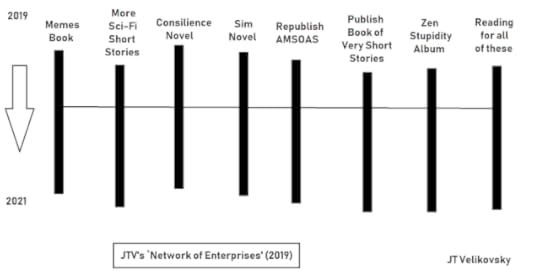
#1 - Memes book (non-fiction)...Is, this one (expanding: this chapter)https://storyality.wordpress.com/2019/03/10/storyality152-the-holon-parton-structure-of-the-meme-or-the-unit-of-culture-in-amatiaicsahci-2019/
#2 - Publishing more sci-fi short storiese.g.: https://on-writering.blogspot.com/2019/07/the-ancient-cities-of-tomorrow-365.html
#3 - Completing & Publishing my `Consilience' novelWriting a novel about consilience. (Can't say any more right now.)
#4 - Completing & Publishing my `Sim' noveli.e. Writing this one: https://on-writering.blogspot.com/2017/08/jb-above-top-secret-agent-guy-person.html
#5 - Republishing AM SO AS .As 2nd edn, in both hard copy and Kindle.
#6 - Publishing a book of Very Short Stories & Essays (hard copy & Kindle)i.e., this: https://outrageous-bullshit.blogspot.com/
#7 - More Zen Stupidity songse.g. this: https://outrageous-bullshit.blogspot.com/2019/05/zen-stupidity-concept-albumen.html
#8 - And of course - there's a whole bunch of (intense) reading (articles, books, etc) to do, for almost all of the above... e.g. Works, written in Classic Style. And, general research works.
Q: But why show it as a diagram, and with links between projects, as in the above diagram? Well here's one reason: Darwin did it that way, even if he didn't mean to...
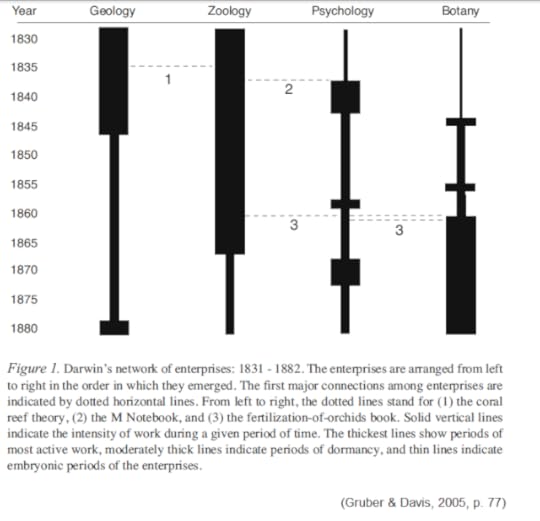
Anyway... this post is just meant to keep me focussed.
...Let's hope it works?
---------------------------
Dr. Joe T. Velikovsky, Ph.D. (Communication & Media Arts)
& High-Movie-RoI Consultant (see: The StoryAlity PhD)
& Sci-Fi Writer-Guy
etc
-------------------
`The word communication will be used here in a very broad sense to include all of the procedures by which one mind may affect another. This, of course, involves not only written and oral speech, but also music, the pictorial arts, the theater, the ballet, and in fact all human behavior... The language of this memorandum will often appear to refer to the special, but still very broad and important, field of the communication of speech; but practically everything said applies equally well to music of any sort, and to still or moving pictures, as in television." - The Mathematical Theory of Communication, (Shannon & Weaver 1949, pp. 3-4).
Also:
“I know you think you understand what you thought I said, but I'm not sure you realize that what you heard is not what I meant” - (attributed, and ironically, possibly mistakenly, to: Robert McCloskey, namely the children's book author and illustrator, date of quote unknown)
& this autosig is not even near complete yet, as
JT Velikovsky is also a:
Transmedia Writer-Director-Producer: Movies, Games, TV, Theatre, Books, Comics
Transmedia Writing Blog: http://on-writering.blogspot.com.au/
& (High-RoI) Story/Screenplay/Movie Analyst - and Evolutionary Systems TheoristSee: https://storyality.wordpress.com/
& Bio-Culture (Science & the Arts) & Transmedia ResearcherAcademia link: https://aftrs.academia.edu/JTVelikovsky
See, also:
Joe Velikovsky on IMDb:
YouTube: https://www.youtube.com/joeteevee
Okay - the autosig is over now. You can stop reading.
The projects I'm working on: (8 x major projects, at last count...)
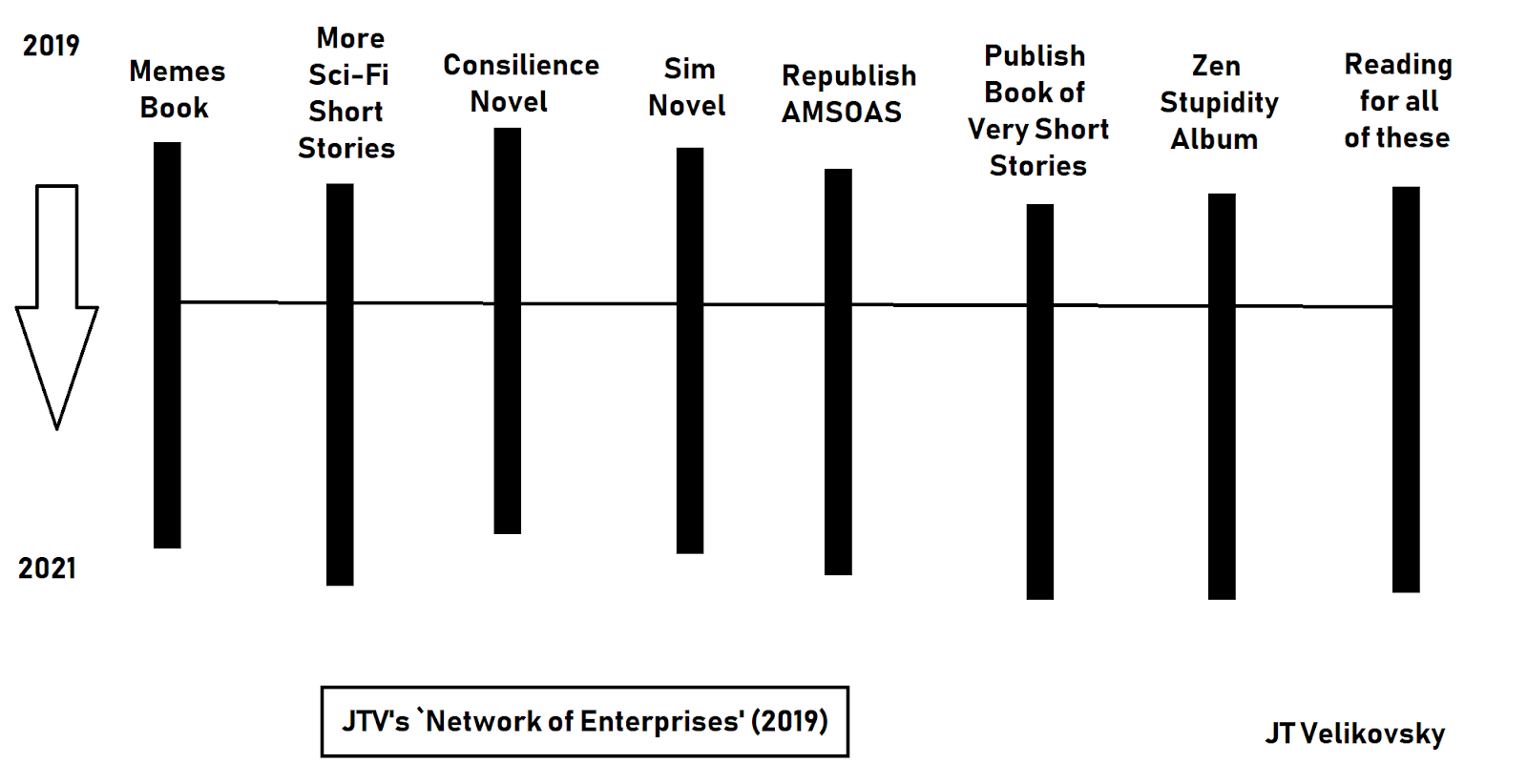
#1 - Memes book (non-fiction)...Is, this one (expanding: this chapter)https://storyality.wordpress.com/2019/03/10/storyality152-the-holon-parton-structure-of-the-meme-or-the-unit-of-culture-in-amatiaicsahci-2019/
#2 - Publishing more sci-fi short storiese.g.: https://on-writering.blogspot.com/2019/07/the-ancient-cities-of-tomorrow-365.html
#3 - Completing & Publishing my `Consilience' novelWriting a novel about consilience. (Can't say any more right now.)
#4 - Completing & Publishing my `Sim' noveli.e. Writing this one: https://on-writering.blogspot.com/2017/08/jb-above-top-secret-agent-guy-person.html
#5 - Republishing AM SO AS .As 2nd edn, in both hard copy and Kindle.
#6 - Publishing a book of Very Short Stories & Essays (hard copy & Kindle)i.e., this: https://outrageous-bullshit.blogspot.com/
#7 - More Zen Stupidity songse.g. this: https://outrageous-bullshit.blogspot.com/2019/05/zen-stupidity-concept-albumen.html
#8 - And of course - there's a whole bunch of (intense) reading (articles, books, etc) to do, for almost all of the above... e.g. Works, written in Classic Style. And, general research works.
Q: But why show it as a diagram, and with links between projects, as in the above diagram? Well here's one reason: Darwin did it that way, even if he didn't mean to...
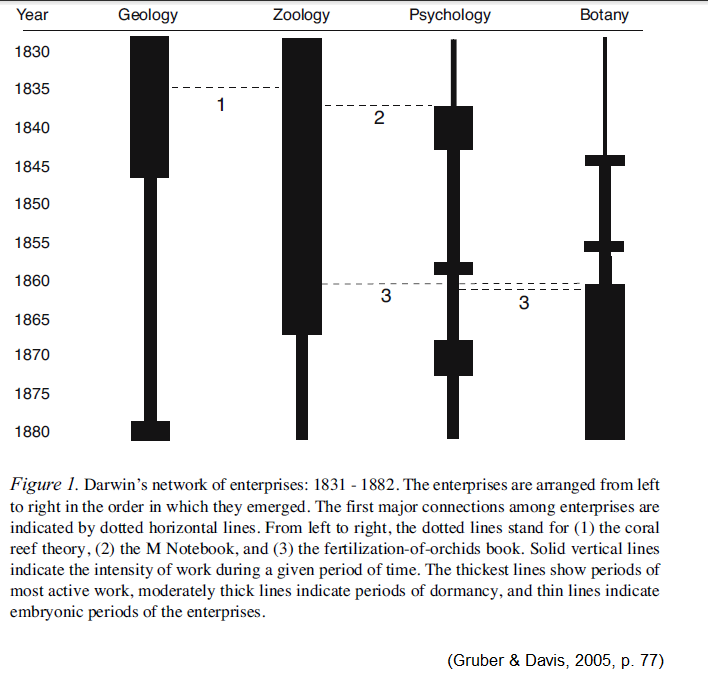
Anyway... this post is just meant to keep me focussed.
...Let's hope it works?
---------------------------
Dr. Joe T. Velikovsky, Ph.D. (Communication & Media Arts)
& High-Movie-RoI Consultant (see: The StoryAlity PhD)
& Sci-Fi Writer-Guy
etc
-------------------
`The word communication will be used here in a very broad sense to include all of the procedures by which one mind may affect another. This, of course, involves not only written and oral speech, but also music, the pictorial arts, the theater, the ballet, and in fact all human behavior... The language of this memorandum will often appear to refer to the special, but still very broad and important, field of the communication of speech; but practically everything said applies equally well to music of any sort, and to still or moving pictures, as in television." - The Mathematical Theory of Communication, (Shannon & Weaver 1949, pp. 3-4).
Also:
“I know you think you understand what you thought I said, but I'm not sure you realize that what you heard is not what I meant” - (attributed, and ironically, possibly mistakenly, to: Robert McCloskey, namely the children's book author and illustrator, date of quote unknown)
& this autosig is not even near complete yet, as
JT Velikovsky is also a:
Transmedia Writer-Director-Producer: Movies, Games, TV, Theatre, Books, Comics
Transmedia Writing Blog: http://on-writering.blogspot.com.au/
& (High-RoI) Story/Screenplay/Movie Analyst - and Evolutionary Systems TheoristSee: https://storyality.wordpress.com/
& Bio-Culture (Science & the Arts) & Transmedia ResearcherAcademia link: https://aftrs.academia.edu/JTVelikovsky
See, also:
Joe Velikovsky on IMDb:
YouTube: https://www.youtube.com/joeteevee
Okay - the autosig is over now. You can stop reading.
August 3, 2019
Some of my fave random quotes (2019)
Some of my fave random quotes
Collated by JTV
2019
----------------------
And, if you like this kind of thing, see David Parker on General Problem Solving (GPS)...
-------------------
---------------------
---------------------------
Dr. Joe T. Velikovsky, Ph.D. (Communication & Media Arts)
& High-Movie-RoI Consultant (see: The StoryAlity PhD)
& Sci-Fi Writer-Guy
etc
-------------------
`The word communication will be used here in a very broad sense to include all of the procedures by which one mind may affect another. This, of course, involves not only written and oral speech, but also music, the pictorial arts, the theater, the ballet, and in fact all human behavior... The language of this memorandum will often appear to refer to the special, but still very broad and important, field of the communication of speech; but practically everything said applies equally well to music of any sort, and to still or moving pictures, as in television." - The Mathematical Theory of Communication, (Shannon & Weaver 1949, pp. 3-4).
Also:
“I know you think you understand what you thought I said, but I'm not sure you realize that what you heard is not what I meant” - (attributed, and ironically, possibly mistakenly, to: Robert McCloskey, namely the children's book author and illustrator, date of quote unknown)
& this autosig is not even near complete yet, as
JT Velikovsky is also a:
Transmedia Writer-Director-Producer: Movies, Games, TV, Theatre, Books, Comics
Transmedia Writing Blog: http://on-writering.blogspot.com.au/
& (High-RoI) Story/Screenplay/Movie Analyst - and Evolutionary Systems TheoristSee: https://storyality.wordpress.com/
& Bio-Culture (Science & the Arts) & Transmedia ResearcherAcademia link: https://aftrs.academia.edu/JTVelikovsky
See, also:
Joe Velikovsky on IMDb:
YouTube: https://www.youtube.com/joeteevee
Okay - the autosig is over now. You can stop reading.
Collated by JTV
2019
----------------------
`I think that, if you get involved in any kind of Problem-Solving in depth, on almost anything - it is surprisingly similar to Problem Solving, on anything…'
Stanley Kubrick, interviewed by Jeremy Bernstein 1966.----------------
And, if you like this kind of thing, see David Parker on General Problem Solving (GPS)...
-------------------
`New thoughts, particularly those which contradict current assumptions, are always painful for the human mind to contemplate.'
Source: H H Humphrey, Wikipedia
---------------------
`All of Life is Problem Solving'Sir Karl Popper (1999)
---------------------------
Dr. Joe T. Velikovsky, Ph.D. (Communication & Media Arts)
& High-Movie-RoI Consultant (see: The StoryAlity PhD)
& Sci-Fi Writer-Guy
etc
-------------------
`The word communication will be used here in a very broad sense to include all of the procedures by which one mind may affect another. This, of course, involves not only written and oral speech, but also music, the pictorial arts, the theater, the ballet, and in fact all human behavior... The language of this memorandum will often appear to refer to the special, but still very broad and important, field of the communication of speech; but practically everything said applies equally well to music of any sort, and to still or moving pictures, as in television." - The Mathematical Theory of Communication, (Shannon & Weaver 1949, pp. 3-4).
Also:
“I know you think you understand what you thought I said, but I'm not sure you realize that what you heard is not what I meant” - (attributed, and ironically, possibly mistakenly, to: Robert McCloskey, namely the children's book author and illustrator, date of quote unknown)
& this autosig is not even near complete yet, as
JT Velikovsky is also a:
Transmedia Writer-Director-Producer: Movies, Games, TV, Theatre, Books, Comics
Transmedia Writing Blog: http://on-writering.blogspot.com.au/
& (High-RoI) Story/Screenplay/Movie Analyst - and Evolutionary Systems TheoristSee: https://storyality.wordpress.com/
& Bio-Culture (Science & the Arts) & Transmedia ResearcherAcademia link: https://aftrs.academia.edu/JTVelikovsky
See, also:
Joe Velikovsky on IMDb:
YouTube: https://www.youtube.com/joeteevee
Okay - the autosig is over now. You can stop reading.