Nigel Bird's Blog, page 65
March 17, 2012
Free Book Syndrome
I was in a bookshop on Thursday.
That shouldn't sound shocking, but it's been a while.
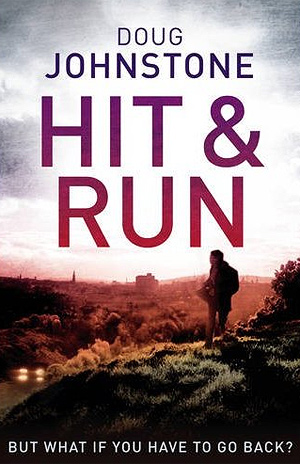
The reason for the visit, the launch of Hit And Run – the new novel from the excellent Doug Johnstone.
If you've never read one of Doug's books or seem him at an event, I'd like to recommend both to you.
Hit And Run sounds like it has all the ingredients for a fast-paced noir thriller and the first chapter certainly has got me hooked. The opening has a partying trio taking the long way home to avoid running into the cops on drink-driving watch. Unfortunately for them, they run into something else, and there's a sense that things are just about to move from bad to really bad with the next turn of the page.
Excellent stuff.
Not only that, but Doug sang a couple of songs. The first I liked, the second was a real humdinger about Bjork and car-crashes. On top of that there were laughs aplenty, so it was great entertainment all round. Make sure you get yourself a ticket for him for the Bloody Scotland festival if you're around for that.
Walking out afterwards, I had a look at the shelves. There was something warm and familiar about them, packed full of books as they were and in neat order.
It was only when I got to the front door that I realised that there was no FREE BOOKS table.
No free books? How do Waterstones (without the apostrophe these days!) expect to survive if they're not giving everything away?
It's an interesting idea, the Kindle Select programme. Put in your book, let it be borrowed and be paid for that and have access to the facility of the giveaway.
Now, I'm a mean guy. Mean in the saving money where I can way. Truth is I have to be if I want to be able to pay for my children to have some of the brilliant experiences that are on offer to them – theatre, cinema, music, football, workshops, soft-play, swimming club, Rainbows and Brownies, you may know the kind of thing.
In the supermarket, if it has a reduced price sticker on an item because it's on the verge of disintegrating in the fridge, you'd have to hold me back to stop me putting it in my basket.
Same goes for books.
Books are my biggest indulgence these days. My shelves are packed to overflow and regular culls don't seem to make any difference. They've been stocked by titles from Amazon, charity shops, car-boots, jumble-sales for as long as I can remember. Not even becoming a kindle user has completely changed my habits and I still can't resist the odd tree-book now and again (take Dead Harvest by Chris F Holm, for example, how could the electronic version do that cover justice?).
Now I have a couple of new syndromes.
The first is called 'Free Kindle Download Syndrome'. I see a book I want or think I might want and press click as soon as I see it's going for nothing (not even for a song!).
The second is 'Giveaway Syndrome' where I keep having the urge to give books away for nothing.
I have another title going for free today. I've enrolled 'With Love And Squalor' again to the Select Programme and it can be downloaded for nothing over the next 3 days.
Why?
To be honest, I'm not even sure myself.
In part, it's down to the desire to be read by as many people as possible. More downloads should equate to more readers even if only a fifth of them are actually opened.
Another part is the sheep mentality. Everyone else is.
I'm also keen to sell books. My fantasy is that at some point in the future I'll be able to swap my hugely stressful and demanding teaching job, a job that is killing me softly, for a part-time one that allows me space to write, the two complimenting each other so that I can make enough money for the roof, the food and all of those clubs.
The idea, give some or lots away for free, sell a few and maybe get some traction.
There's nothing wrong with any of those things.
I do wish I could be more like Pablo D'Stair and his idea of just giving it all away for nothing for as much of the time as possible. I admire his views and his writing. Thing is, that leaves me in the 'killing me softly' job for eternity.
My worry about all of the free books thing is one that's no doubt been aired all over by now. If every book is free for a certain period of time, won't people eventually stop paying for books? It's not stopped me yet, but if I manage to reign in my enthusiasm at some point surely the rational thing is to do that. Stop buying. Be canny.
I guess Amazon know what they're doing from their side.
If a book has 20,000 giveaways and everyone raves about it, then the book will have to be bought in retrospect. But won't it be available for free to the Kindle Prime folk? And won't that persuade us all to join it eventually?
So, the big books will be borrowed and the best-selling authors will do fine.
And that leaves the less well-selling folk. Maybe they'll do OK, but not as well.
Then others will fall by the wayside.
Isn't that the way it's always been. Is this a speedy evolution back to some form of the status quo?
There are differences, I know. The status quo didn't have the self-published before. There might have been a more diverse platform in terms of where people shopped. We had to move and mix in the world to buy our books and chat to people in the shops and find out what was going on in the book-world of their lives.
Don't get me wrong, I'm still embracing the e-book world and its possibilities, I just get nervous about it all from time to time.
If you've seen an analysis of this that makes sense, could you please drop in a link in the comments for me. I really would like to find some informed opinions.
Have a good weekend.


March 16, 2012
Redemption Songs
Dutch author Jochem Vandersteen writes the Noah Milano crime stories about a reformed Mafioso trying to go straight. He tracks the comings and goings of PI fiction on his blog, The Sons of Spade, and is the founder of The Hardboiled Collective .
His newest novelette, Redemption is on sale right now.
Here are a few of his thoughts.
All writers know one of the questions they get asked the most is "Where do you get your ideas?"
Well, there's a billion places they can come from. Mostly, it's all about "What If".
I'll let you in on a secret… The whole idea behind the Noah Milano series is "What If Xena, Warrior Princess was a male PI in LA." Seriously! The whole theme behind a bad man trying to make up for his past sins was inspired by that cheesy but entertaining TV show.
And talk about inspirations coming from cheesy TV shows… The inspiration for my new novelette Redemption came from watching an episode of Dr. Phil where we saw how parents confronted the woman that killed their son. I thought "What If Noah Milano was hired to protect the killer from those parents?"
It worked out pretty well. The whole redemption theme has been a strong and popular element of the Noah Milano stories. Mixing the dark past of the killer with that of Noah's created an interesting story.
Sometimes, like for The Alabaster-Skinned Mule , in which a young girl unknowingly smuggles drugs for Mexican criminals., ideas come from watching somebody walk down the street… Yep, the femme fatale in that novelette actually exists. Well, her likeness, anyway. She's not really a drug mule. Not that I know of. The rest of the story was inspired by a news story about drug mules. That's one hell of an advice to new writers… Watch the news, choose a juice news item, add your protagonist and see what happens.
I never have problems getting ideas. The hardest part is choosing the most promising to work with and finding the time to work them all out.
Where do you get yours?

March 14, 2012
Dancing With Myself: JAY HARTMAN interviews JAY HARTMAN
A few things before the interview today.
I was delighted to get through to the semi-finals of the Favourite Crime E-book tournament over at Spinetingler, and gutted to be knocked out. All the same, I was so pleased to see Ray Banks and Patti Abbot in there (Doc Noir would have given me a smile, too) that I quickly got over it.
In the end, it was Dead Money that came out on top by a very narrow margin. I'd say there were no losers in that one. Well done to all involved.
I was also really pleased to see a couple of posts over at Do Dome Damage.
The first outlined the reasons behind the choice of 'Plastic Soldiers' by WD County. It was my favourite short of last year, so its inclusion was pretty straightforward in lots of ways. I do wonder how many out there would have been brave enough to put it out given the subject matter. Well done to Brian for his decision.
And a lovely piece of news from Dave White - congratulations on both counts.
Followed by a curio from Steve Weddle.
Also a note about the release of Jochem Vanderstein's Redemption and 4 Funny Detective Stories from Benjamin Sobieck. Should be good reads those.
Finally, Dirty Old Town (and other stories) sold its 1500th copy yesterday, so old-man-style cartwheels in my bedroom last night (ouch!).
Now on to the interview.
Jay Hartman. What a good guy.
E-book pioneer.
Hugely professional.
Great man to work with.
Head of Untreed Reads.
I've been lucky enough to have a couple of things out with the publisher. First off, 'Into Thin Air', a short story that has been in the Waterstone's Top Ten short stories on and off for the past 4 or 5 months now (though their charts are in a bit of a mess just now - sort it out WS. please), and as part of the wonderful 'Grimm Tales' which has sold really well into American libraries. However they manage it, I'm glad to be on board with them.
And if you're a writer or a publisher of e-books what more could you ask for in a blog post (answers on a postcard, please)?
Take it away, Jay...
Q: Geez. Wasn't this interview supposed to have happened ages ago? A: You know, it's perfectly possible that I feel guilty enough about not getting it done sooner without my inner consciousness giving me grief about it too. And considering how much time I spend talking to myself, you'd think you'd have figured all this out by yourself.
Q: Well EXCUSE me! Sheesh. Somebody didn't have their coffee today, did they? A: As a raving caffeineaholic, yes...I can be rather testy when I'm running low on brew. There's no venti soy sugar-free vanilla latte in sight at the moment. However, I've got some pumpkin spice brewed up so maybe that will mellow me out by at least halfway through this interview.
Q: So I know that Untreed Reads came about after spending 15 years writing commentary about ebooks, and that you're one of the founders of KnowBetter.com , which was one of the first websites to ever cover the ebook industry. Since that's kind of a yawner, do you have anything INTERESTING you can tell folks about the road to Untreed Reads' existence? A: Well, at KnowBetter we helped do the market research that eventually led to the creation of ebook divisions at both Random House and HarperCollins. It was a pretty exciting time as everything was emerging. I still remember the first time Barnes and Noble tried doing ebooks, then shut down the division and left everyone hanging. I remember when Amazon didn't have ebooks and the electronic publishing space was ruled by the independent publishers. Those were good times. Still, I wouldn't trade the last two years of developing Untreed Reads with my business partner K.D. Sullivan for anything.
Q: You sure have a lot of authors writing with Untreed Reads. But some of these people normally write about erotica and I see they're writing mystery or sci-fi at your place. What's up with that? A: I've never been a believer that authors should be pigeon-holed into a specific genre. A good author has great ideas that can span multiple genres, and I don't think it does the author any justice to be limited in what they write. So, I love having the opportunity to give a voice to all of these folks in whatever kind of story they'd like to write. It's not for me to tell an author what to write, but rather to showcase their work the best way I can.
Q: It seems like everywhere I turn I'm seeing Untreed Reads titles. How do you manage that? A: Early on, we decided distribution was going to be one of the most important things to focus on. It wouldn't do us much good to have a bunch of titles that were only available to US markets. People love reading all over the world, and with the explosion of ebooks in the library market it was even more important to be available through as many channels as possible. We've recently opened up our distribution network to other small publishers and self-pubbed authors to help them get out to the rest of the world too. Pretty exciting stuff.
Q: What's the worst thing about being an editor? A: Having to tell someone you can't give them a contract. It's like telling them their baby is ugly and can't play with the other kids on the swings.
Q: What IS your current acceptance and rejection rate? What sort of things make you turn down a work? A: We run at about a 70-75% rejection rate. I do see a lot of manuscripts where people haven't taken the proper amount of time to really edit or proofread their stories. Overuse of adverbs is another big one that annoys me (he said, curmudgeonly). Not bringing anything new to an existing genre is also pretty much a killer. Telling the reader everything instead of showing them through descriptive narrative. Just like you wouldn't want to go into an interview without being dressed up and presenting yourself in the best light possible, you really should make sure a submission is as clean as it can possibly be.
Q: And now for a completely random question. I hear you're a Back to the Future fanatic. Why? A: I've always had a thing for time travel stories. I remember seeing Time Bandits when I was a kid and being completely blown away. The Back to the Future trilogy was pretty much the same thing. I wish I had more time travel submissions come through, but I don't see too many.
Q: How's the caffeine headache doing? Going away? A: Yes, but now I'm about out of time for this thing. I can only spend so much time talking to myself. How about throwing one more decent question at me and we'll call it quits?
Q: If a train leaves St. Louis at 6pm traveling at a speed of 45 mph... A: Um. I said a DECENT question. Math is my worst subject.
Q: What drives you to keep working on Untreed Reads so many hours a week? I've heard you're a raging insomniac and get most of your work done between 7pm and 4am. A: I genuinely love all of my authors and their works. Their passion, enthusiasm and support of all of us at Untreed Reads makes me want to turn around and give that back double. It's true, I don't sleep much and that makes it possible for me to get stuff done in the wee hours. But honestly? I'd work anytime day or night for these folks. Every time I publish a new story I feel like a proud father, and I think sometimes I've even more excited than the author as I see a particular story take off in sales. It confirms for me that I was right to get into this line of work, and every success we see makes me feel more confident. I'm surrounded by passionate people, whether that's my authors, K.D. Sullivan, our brilliant staff or the agents in NY that we work with. It's hard not to feel energized by these folks.
Q: I suppose this has been an enlightening interview. As your inner consciousness, most of this stuff is pretty much old hat. Hopefully someone else who reads this will find it interesting.
A: Stuff it, and pass the non-dairy vanilla creamer. This coffee was way too strong. I've really got to teach you how to brew better.

Dancing With Myself: JAY HARTMAN interiews JAY HARTMAN
A few things before the interview today.
I was delighted to get through to the semi-finals of the Favourite Crime E-book tournament over at Spinetingler, and gutted to be knocked out. All the same, I was so pleased to see Ray Banks and Patti Abbot in there (Doc Noir would have given me a smile, too) that I quickly got over it.
In the end, it was Dead Money that came out on top by a very narrow margin. I'd say there were no losers in that one. Well done to all involved.
I was also really pleased to see a couple of posts over at Do Dome Damage.
The first outlined the reasons behind the choice of 'Plastic Soldiers' by WD County. It was my favourite short of last year, so its inclusion was pretty straightforward in lots of ways. I do wonder how many out there would have been brave enough to put it out given the subject matter. Well done to Brian for his decision.
And a lovely piece of news from Dave White - congratulations on both counts.
Followed by a curio from Steve Weddle.
Also a note about the release of Jochem Vanderstein's Redemption and 4 Funny Detective Stories from Benjamin Sobieck. Should be good reads those.
Finally, Dirty Old Town (and other stories) sold its 1500th copy yesterday, so old-man-style cartwheels in my bedroom last night (ouch!).
Now on to the interview.
Jay Hartman. What a good guy.
E-book pioneer.
Hugely professional.
Great man to work with.
Head of Untreed Reads.
I've been lucky enough to have a couple of things out with the publisher. First off, 'Into Thin Air', a short story that has been in the Waterstone's Top Ten short stories on and off for the past 4 or 5 months now (though their charts are in a bit of a mess just now - sort it out WS. please), and as part of the wonderful 'Grimm Tales' which has sold really well into American libraries. However they manage it, I'm glad to be on board with them.
And if you're a writer or a publisher of e-books what more could you ask for in a blog post (answers on a postcard, please)?
Take it away, Jay...
Q: Geez. Wasn't this interview supposed to have happened ages ago? A: You know, it's perfectly possible that I feel guilty enough about not getting it done sooner without my inner consciousness giving me grief about it too. And considering how much time I spend talking to myself, you'd think you'd have figured all this out by yourself.
Q: Well EXCUSE me! Sheesh. Somebody didn't have their coffee today, did they? A: As a raving caffeineaholic, yes...I can be rather testy when I'm running low on brew. There's no venti soy sugar-free vanilla latte in sight at the moment. However, I've got some pumpkin spice brewed up so maybe that will mellow me out by at least halfway through this interview.
Q: So I know that Untreed Reads came about after spending 15 years writing commentary about ebooks, and that you're one of the founders of KnowBetter.com , which was one of the first websites to ever cover the ebook industry. Since that's kind of a yawner, do you have anything INTERESTING you can tell folks about the road to Untreed Reads' existence? A: Well, at KnowBetter we helped do the market research that eventually led to the creation of ebook divisions at both Random House and HarperCollins. It was a pretty exciting time as everything was emerging. I still remember the first time Barnes and Noble tried doing ebooks, then shut down the division and left everyone hanging. I remember when Amazon didn't have ebooks and the electronic publishing space was ruled by the independent publishers. Those were good times. Still, I wouldn't trade the last two years of developing Untreed Reads with my business partner K.D. Sullivan for anything.
Q: You sure have a lot of authors writing with Untreed Reads. But some of these people normally write about erotica and I see they're writing mystery or sci-fi at your place. What's up with that? A: I've never been a believer that authors should be pigeon-holed into a specific genre. A good author has great ideas that can span multiple genres, and I don't think it does the author any justice to be limited in what they write. So, I love having the opportunity to give a voice to all of these folks in whatever kind of story they'd like to write. It's not for me to tell an author what to write, but rather to showcase their work the best way I can.
Q: It seems like everywhere I turn I'm seeing Untreed Reads titles. How do you manage that? A: Early on, we decided distribution was going to be one of the most important things to focus on. It wouldn't do us much good to have a bunch of titles that were only available to US markets. People love reading all over the world, and with the explosion of ebooks in the library market it was even more important to be available through as many channels as possible. We've recently opened up our distribution network to other small publishers and self-pubbed authors to help them get out to the rest of the world too. Pretty exciting stuff.
Q: What's the worst thing about being an editor? A: Having to tell someone you can't give them a contract. It's like telling them their baby is ugly and can't play with the other kids on the swings.
Q: What IS your current acceptance and rejection rate? What sort of things make you turn down a work? A: We run at about a 70-75% rejection rate. I do see a lot of manuscripts where people haven't taken the proper amount of time to really edit or proofread their stories. Overuse of adverbs is another big one that annoys me (he said, curmudgeonly). Not bringing anything new to an existing genre is also pretty much a killer. Telling the reader everything instead of showing them through descriptive narrative. Just like you wouldn't want to go into an interview without being dressed up and presenting yourself in the best light possible, you really should make sure a submission is as clean as it can possibly be.
Q: And now for a completely random question. I hear you're a Back to the Future fanatic. Why? A: I've always had a thing for time travel stories. I remember seeing Time Bandits when I was a kid and being completely blown away. The Back to the Future trilogy was pretty much the same thing. I wish I had more time travel submissions come through, but I don't see too many.
Q: How's the caffeine headache doing? Going away? A: Yes, but now I'm about out of time for this thing. I can only spend so much time talking to myself. How about throwing one more decent question at me and we'll call it quits?
Q: If a train leaves St. Louis at 6pm traveling at a speed of 45 mph... A: Um. I said a DECENT question. Math is my worst subject.
Q: What drives you to keep working on Untreed Reads so many hours a week? I've heard you're a raging insomniac and get most of your work done between 7pm and 4am. A: I genuinely love all of my authors and their works. Their passion, enthusiasm and support of all of us at Untreed Reads makes me want to turn around and give that back double. It's true, I don't sleep much and that makes it possible for me to get stuff done in the wee hours. But honestly? I'd work anytime day or night for these folks. Every time I publish a new story I feel like a proud father, and I think sometimes I've even more excited than the author as I see a particular story take off in sales. It confirms for me that I was right to get into this line of work, and every success we see makes me feel more confident. I'm surrounded by passionate people, whether that's my authors, K.D. Sullivan, our brilliant staff or the agents in NY that we work with. It's hard not to feel energized by these folks.
Q: I suppose this has been an enlightening interview. As your inner consciousness, most of this stuff is pretty much old hat. Hopefully someone else who reads this will find it interesting.
A: Stuff it, and pass the non-dairy vanilla creamer. This coffee was way too strong. I've really got to teach you how to brew better.
March 11, 2012
One Man's Opinion: HILL COUNTRY by R THOMAS BROWN

Gabriel Hill. Gabe. An unusual name for a story that's out of the ordinary.
He arrives home one night, steaming drunk to find a body on his doorstep. The body's been dismembered and it holding on to his missing organ. The body happens to belong to a paedophile who has been in a fight with Gabe that very night – and lost.
It's not a good night for him, even though he has connections with the police.
Needless to say, he ends up as prime suspect.
Appearing that same night are animal carcasses pinned to trees in the wood. Reminds the folk there of some odd goings on 20 years earlier when there was a cult operating in the area.
Gabe's brother happened to be in the cult. Was also into drugs and maybe doing things that were distasteful to get them.
Thing is, his brother's just died and it seems that there are a lot of people after what he had, whatever that was.
A trio come to town to find out what Gabe knows and what he is doing with the goods, only now they're split into a duet and a solo.
They're not nice. They know how to get what they want and exactly how to get it.
And there are others after the same thing.
The sensible thing for Gabe to do might be to give everything up there and then, only he hasn't got a clue what they're on about.
Nor is Gabe about to anything sensible, in spite of his post-grad degree. He's a little too messed up, loyal and philosophical for that.
It's a great read from the start.
All the way through, there's a sense of menace in the book that means it's not easy to settle as there's no way of knowing what's likely to happen next.
The people chasing Gabe share not only the motive for being after him, but an expertise in the exploitation of whatever means might be necessary to get what they want.
Gabe paints himself into corner after corner, forms alliances and breaks them in order to stay ahead of the game and to stay alive.
I like R Thomas Brown's short fiction rather a lot and was nervous that this attempt at a novel might have stretched his skills too far.
Not a bit of it.
It shows him to be the craftsman he is. The plot is cleverly put together and the execution is bang on – tension, menace, humour and a constant energy made this a book I'm heartily recommendation.
Among the things that stamp this book out as unusual is the dialogue. It has a different quality to it, somehow. Like Brown is after something new. Somewhere between the conversations of fiction and real life and all the more curious for that.
He has also produced a cast of characters that have roots in tradition, yet who have grown into grotesque mutations once reaching the light above ground.
Totally engaging and worthy of any reader's time.
Hill Country UK
Hill Country US

March 9, 2012
Dancing With Myself: MARTIN BODENHAM interviews MARTIN BODENHAM
Lots of news this week.
First off, Dirty Old Town (and other stories) has made it through to the Final 4 of the Spinetinger I'm also pleased to be able to let you know that Dirty Old Town should sell its 1500th book over the weekend, which is way beyond my initial hopes.
Yesterday the short story competition for the Bloody Scotland crime-fiction festival was announced. The prizes are ace - a pass for the whole event, an engraved decanter filled with some posh (and expensive) whisky, a week at an Arvon course of the winner's choosing and publication in an anthology to be put out by the amazing Blasted Heath. It's £10 per entry, but the cause is a worthy one, so thinking caps on.
And there's news from Byker Books that their latest collection is out this weekend. Welcome to Radgepacket 6.
If that weren't enough, here's Martin Bodenham takng to the dance floor.
Take it away, Martin.
Investment bankers are down there with traffic wardens and tax inspectors; people love to hate them. What made you become one?
When I started in private equity in the 1980s, it was about providing risk capital to growing companies. That appealed to me. But somewhere along the line much of the industry moved on to mega buy-outs, laden with massive amounts of debt, forcing companies to lay off workers and cut costs to meet their debt obligations. Little wonder that taxpayers baulked at bailouts for investment banks that spent the last decade gambling pension fund monies and mutual funds at the casino. Underneath all this, quietly happening in the background, the proper role of private equity goes on. I like to think I am still part of that sane bit of the market.
It sounds like you have little time for the financial masters of the universe.
The truth is there are some big egos in investment banking and many enjoy enormous rewards for taking little risk. Most of the capital they invest is not their own, and yet they take a disproportionate share of the upside. On top of that, the big US private equity fund executives pay tax at the rate of 15% on most of their remuneration. I don't think that's right.
So why set your novels in the financial markets if you don't like the people?
Because those markets are full of great material for a writer. Greed and fear in private equity provide all the conflict and tension I need to create interesting stories. The excesses and the Machiavellian characters I have met in the industry are a bonus for any author looking for inspiration.
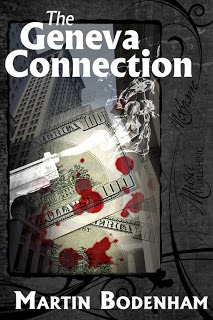
The Geneva Connection was your debut thriller novel last year. What gave you the idea for the story?
Real life. My own private equity firm suffered the loss of its largest investor, and we had to litigate. That made me question what one of the mega firms would do if they lost their largest source of investment funds. How desperate would such a firm become, if the CEO was one of these guys with a massive ego? What corners might such a person cut?
The Geneva Connection is a financial thriller where the worlds of private equity and organized drug crime collide. CEO, John Kent, thought he had it all. The phenomenal success of his private equity firm has propelled him into the world's wealthy super-league. Self-made and from a poor background, he's living his dream. Then he discovers his new financial backers are a front for the world's largest organised crime group, the Mexican Caruana drug cartel. It is run by Felix Safuentes, also known as "Jivaro" after the South American tribe famous for decapitating its enemies. Kent's life spirals into a nightmare when the head of the DEA's investigations unit leans on him to provide evidence against his criminal investors or be incarcerated for collusion and money laundering. It will be obvious to the cartel if he cooperates.
 Are financial thrillers what you want to write in future?
Yes. Having spent the last twenty-five years in private equity, it's an industry I know well. I'd like to use that experience to give my novels an air of authenticity. When I read a novel, I want to be entertained, but I also want to experience worlds about which I know nothing, learn something new. I think the public is fascinated by the world of international finance. It's a mystery to most people. Now the financial crisis is daily news, my judgement is that there is a real appetite for financial thrillers.
Any plans for your next novel?
I have just finished the first draft of my second novel. It is about a private equity firm in Boston Massachusetts and how it becomes caught up in US government corruption going all the way to the top.
The Geneva Connection was partly set in the US as well. Why the fascination with the US when you're a Brit?
Although I grew up in the UK, and my mother is British, my father was an American serving in the US Air Force. I have family there too. For those reasons, I have always had an interest in America. My wife and I lived there for some years when I was working for Price Waterhouse in the 1980s. It is quite interesting that I ended up with a US publisher.
How did you find the process of finding a publisher when you were a debut author?
As a first time author, I thought it would be difficult to attract the interest of the big publishing houses, particularly without an agent. A friend of mine is a multi-published writer, and he suggested that some of the smaller, independent presses were still open to direct approaches from debut authors. This seemed like good advice so I researched the market, both in the UK and US, as my novel was set in both countries, as we just discussed. I ended up with a potential list of fifteen publishers. I started small and approached only one in the US and one in the UK in the first instance. I figured I would learn from those before sending out more submissions. In fact, both publishers showed interest, and I decided to accept the contract from Musa Publishing.
What has surprised or amazed you about the publishing industry as a whole?
I have been amazed by the similarity of the worlds of publishing and private equity. When I sent in my publisher submissions, I remembered what three things matter most to a private equity firm when it decides whether or not to run with a business plan. Only one or two plans out of a hundred are ever considered. These three things were: money (how will the publisher make money out of this?), market (can I convince the publisher there is a sustainable market for my writing?), and management (do I have a strong background in my market which means my writing will have credibility and authenticity?).
Links:
Martin Bodenham website: www.martinbodenham.com
Blog: www.martinbodenham.com/blog
Amazon author page: www.amazon.com/author/martinbodenham
Facebook page: www.facebook.com/martinbodenham.author
Twitter: https://twitter.com/martinbodenham
LinkedIn: www.linkedin.com/pub/martin-bodenham/7/830/822
Reviews: http://www.martinbodenham.com/books

March 7, 2012
Dancing With Myself: KAREN DIONNE interviews KAREN DIONNE
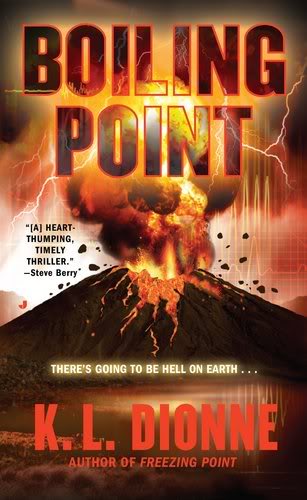
Who is Karen Dionne?
Here's my official bio:
Detroit native Karen Dionne is the internationally published author of Boiling Point, an environmental thriller about an erupting volcano, a missing researcher, and a radical scheme to end global warming. Karen's first science thriller, Freezing Point, was nominated by RT Book Reviews as Best First Mystery of 2008. Freezing Point has been published in Germany and the Czech Republic, and both novels are available in audio from Audible.com. Her short story, "Calling the Shots," appears in the anthology First Thrills edited by Lee Child.
Karen is cofounder of the online writers community Backspace, and organizes the Backspace Writers Conferences held in New York City every year. She is a member of Sisters in Crime, Mystery Writers of America, the International Association of Media Tie-In Writers, and the International Thriller Writers, where she serves on the board of directors as Vice President, Technology.
Karen blogs at The Huffington Post and writes about the publishing industry from an author's perspective at DailyFinance. She also reviews for The New York Journal of Books.
As you can probably tell, I'm insanely busy, but loving every minute.
You write science thrillers. Why did you choose that subgenre? Do you have a scientific background?
While I don't have a scientific background, I've always loved science. When I was a teenager, I fell in love with Michael Crichton's books. I'm also a huge fan of Douglas Preston and Lincoln Child's work, most especially RELIC and RELIQUARY.
So when I decided to take up writing about a dozen years ago, that's what came out!
Your first novel, FREEZING POINT, is about a solar energy company that wants to ease the world's fresh water crisis by melting Antarctic icebergs into drinking water. Where did you get the idea for the book?
 I got the idea for the novel when I read a small feature item in the newspaper about a 1,000-square-mile section of the Larson Ice Shelf that had broken off due to global warming. The image of that giant iceberg intrigued me. What if a researcher had been there when the ice shelf disintegrated? What if they were stranded on the newly formed berg? What if the disaster was somehow their fault?
 Because I'm not a scientist, I consulted with microwave experts, explosives experts, and medical experts in the fields that are touched on in my book. I also read the online journals of people who'd spent time in Antarctica - though I lived for 30 years in Michigan's far north, so I knew and cold.
Your second science thriller, BOILING POINT, is about an erupting volcano, a missing researcher, and a radical scheme to end global warming that centers on geoengineering. You took an unusual trip to research this book.
I did. BOILING POINT takes place during the initial eruption of Chaitén Volcano, a real location in Northern Patagonia, Chile. Chaitén erupted on May 2, 2008 in a major rhyolitic eruption. The magma blasted 3.1 miles (5 kilometers) through Earth's crust in only about four hours, giving townspeople just 30 hours' warning. The plume climbed 12 miles (19 kilometers) into the stratosphere, covering much of Patagonia with volcanic ash and drifting as far east as the Atlantic. No one lost their life in the eruption, but the town at the volcano's based was destroyed by a lahar ten days later.
When I was there a year after the initial eruption, the volcano was still erupting, still on Red Alert. I stayed in the small town at the base of the volcano, even though Chaitén Town remained evacuated, and had no electricity or running water. My guide took me to within one mile of the newly formed lava dome, where I saw steam vents, heard explosions coming from the caldera, and felt a small earthquake. It was an absolutely amazing experience that truly informs the novel.
Were you afraid?
I can honestly say I was not. While I knew that another pyroclastic flow was a very real possibility, I figured the odds of such an event occurring while I happened to be there were relatively small.
Instead, I felt nothing but awe. To be in an area of both destruction and creation and observe firsthand the forces that shaped much of our earth makes you feel very, very small. I understand now why the ancients worshiped volcanoes.
Is there another novel in the works?
I'm delighted to say that there is, though this book is not a science thriller. I was recently asked to write an original novel based on a popular U.S. television crime show and I'm very excited about the opportunity. It's a unique kind of writing, since the story involves someone else's characters, and the novel's readers will be fans of the show.
Because it's extremely important to be true to the characters, I've been immersing myself in the world of show. I've watched the first season episodes twice and taken extensive notes, read everything I can online about the show, and watched all of the cast interviews on the show's website to see what the actors say about their characters. I've also been reading fans' Facebook comments so I can get a sense of what they like best.
So to research my previous novel, I traveled to an active volcano. To research the new one, I watch television. Being a writer is never boring!
Links:
Website: http://www.karen-dionne.com/
Freezing Point – US
Freezing Point – UK
Boiling Point – US
Boiling Point – UK

March 6, 2012
Super 8
I'm really happy today to be able to say that Dirty Old Town (and other stories) has made it through to the Elite 8 in the tournament over at
It's nice that, in a world that can feel so serious, a competition like this can lighten the mood.
Mentions for Speedloader and for Harvest Of Ruins who DOT was up against in rounds one and two. Just to get on the list is very cool, so if you haven't taken at them you should follow the links to see what you think.
This round I'm up against Keith Rawson's 'The Chaos We Know'; followers will know that I really enjoyed that one in the review I placed here towards the end of last year.
The rest of the runners and riders are:
Dead Money by Ray Banks (my review's here)
Rum, Sodomy and False Eyelashes by Scott Phillips
Monkey Justice by Patti Abbott (my review's here)
Just Like That by Les Edgerton
Witness To Death by Dave White
and
Choke On Your Lies by Anthony Neil Smith
It's one hell of a lineup and I intend to read all of the books in the fullness of time (all 32 is my goal).
Other little bits.
I'm still proud of my Blasted Heath page and I really am thinking about getting the tattoo. I already have a heart on my shoulder (where I wear it) and think that the logo might fit in their snugly. Mind you, that Snubnose logo is also pretty amazing and I guess I'm entitled after Speedloader. Maybe I should check with my wife before I go off loose-cannoning.
I'm reading two books at the moment. They're very engrossing in different ways.
First off is Hill Country by R Thomas Brown. It's not your standard scenario by any means and the deeper I go, the darker it seems to get (think about walking into a cave without a torch).
The other is a book of interviews by Len Wanner called 'The Crime Interviews - Volume 1'. I really enjoy reading interviews with writers and there are plenty of them on the web to be seen and savoured. What's different here is the depth of knowledge of the interviewer and the ability he seems to have to take the ball and run just at the right time. He asks the questions that make sense and sometimes comes up with unexpected and tricky once he's lulled his subject into a false sense of security. It's my first 'on-phone' read and suits it well. Perfect for dipping in and out of.
And that's about it.
An hour and a half to prepare for arriving parents to talk about their children for a while. Stressful in the idea of it, but rarely unpleasant in reality.
Till soon.
It's nice that, in a world that can feel so serious, a competition like this can lighten the mood.
Mentions for Speedloader and for Harvest Of Ruins who DOT was up against in rounds one and two. Just to get on the list is very cool, so if you haven't taken at them you should follow the links to see what you think.
This round I'm up against Keith Rawson's 'The Chaos We Know'; followers will know that I really enjoyed that one in the review I placed here towards the end of last year.
The rest of the runners and riders are:
Dead Money by Ray Banks (my review's here)
Rum, Sodomy and False Eyelashes by Scott Phillips
Monkey Justice by Patti Abbott (my review's here)
Just Like That by Les Edgerton
Witness To Death by Dave White
and
Choke On Your Lies by Anthony Neil Smith
It's one hell of a lineup and I intend to read all of the books in the fullness of time (all 32 is my goal).
Other little bits.
I'm still proud of my Blasted Heath page and I really am thinking about getting the tattoo. I already have a heart on my shoulder (where I wear it) and think that the logo might fit in their snugly. Mind you, that Snubnose logo is also pretty amazing and I guess I'm entitled after Speedloader. Maybe I should check with my wife before I go off loose-cannoning.
I'm reading two books at the moment. They're very engrossing in different ways.
First off is Hill Country by R Thomas Brown. It's not your standard scenario by any means and the deeper I go, the darker it seems to get (think about walking into a cave without a torch).
The other is a book of interviews by Len Wanner called 'The Crime Interviews - Volume 1'. I really enjoy reading interviews with writers and there are plenty of them on the web to be seen and savoured. What's different here is the depth of knowledge of the interviewer and the ability he seems to have to take the ball and run just at the right time. He asks the questions that make sense and sometimes comes up with unexpected and tricky once he's lulled his subject into a false sense of security. It's my first 'on-phone' read and suits it well. Perfect for dipping in and out of.
And that's about it.
An hour and a half to prepare for arriving parents to talk about their children for a while. Stressful in the idea of it, but rarely unpleasant in reality.
Till soon.
March 3, 2012
One Man's Opinion: ABIDE WITH ME by IAN AYRIS
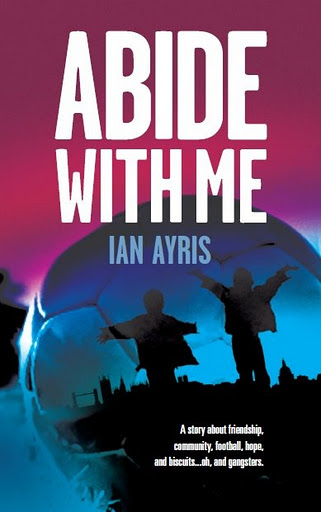
I love the writing of Ian Ayris. His short fiction is outstanding, packed with images and always tapping nerve-ends and ripping at heart strings in ways that many don't even come close to. I like his work so much that when Chris Rhatigan and I had to think of Deringer nominations from the Pulp Ink anthology, we came to immediate agreement that his story, Surf Rider, should be one of them.
Little wonder, then, that I had high expectations for his debut novel 'Abide With Me'.
High expectation's probably not a good think for anyone to hold for too long, whether that be in sport, books, art, exams or whatever it is you're hoping for; there's always the possibility that things will end in disappointment. Tears and heartache.
The good news for me on this occasion is that Ian has earned every one of the five stars I'm giving him for the book at least twice over.
It has a density to it that is slightly unusual. Everything is packed tight. It took me almost two weeks to read the 150 pages. My slow pace is for a couple of reasons, I think. First off, for much of the book there are no end-of-chapter hooks that forced me to read just that one more chapter before moving on. Secondly, the level of emotional reaction I was experiencing at each visit meant that I needed a break after a short while to catch my breath.
So here's an idea of the book, but not too much as it's far too good to spoil.
Johnny and Kenny are lads who grow up on the same East London street. They're pals, but not in any ordinary way, as Kenny is unable to communicate effectively using words. Kenny is the Lenny Small in 'Of Mice And Men' or To Kill A Mockingbird's Boo Radley of this book. He's terrorised at home and he seems to find little comfort in life other than from what he sees in the street-light outside his window or from the writing he does in his notebook.
Johnny, on the other hand, has street-smarts, charm and a settled family life, part of which involves supporting the Hammers through their footballing highs and lows. It's claret and blue blood that runs through the veins of Johnny and his dad, that's for sure.
They live in a tough place, Kenny and John. Money's tight, expectations low, teachers rough and playgrounds brutal.
Ayris takes a journey inside the capsule that is Johnny's mind. He's our filter. We get to feel what he feels and see what he sees. It's a recipe for the best of Ayris – Johnny witnesses horrible events and feels terrible pain and confusion – and as I reader I felt every moment of hurt, misery, pain, hope and happiness that came along, sometimes sent by Santa Claus and others by Satan.
The first half of the book follows the school days. Shows the roots of the damage to the people in Johnny's life. It's dense. It's very internal. It would be difficult to film as so much of it is thought and emotion.
The next quarter isn't dissimilar in style and follows Johnny into early adulthood. Suffice to say, he's harvesting the fruits of earlier misfortunes. It's powerful. Begins to suggest that the ending might just be something special.
And it is.
The last 20 pages or so of the book take on a completely different quality. They rattle along full of tension and a real need to find out what the climax of the book is no matter how scary the prospects for our duo seem. Truly brilliant.
OK. So, Ian Ayris has written an amazingly good debut novel. 5 stars, no problem.
But could it be better still? Can his second blow even this out of the water?
I think yes to both of those.
As I came to the end and relaxed my white knuckles, tried to stop myself crying in pubic and fell back into my seat to take it all in, I decided that all my thoughts regarding improvements must be wrong, that it could only be this way or I'd not have had such an atom-bomb of a reaction at the end.
Now I'm writing about it, I'd like to share those thoughts. Keep in mind that sense that maybe the book needs to be just as it is as you proceed.
There's credit due to Caffeine Nights for snapping this up and taking a chance on such a talent. I think they're on to a winner and deserve every success for that.
I'd like them to consider a few things.
The cover blurb. 'A story about friendship, community, football, hope and biscuits...oh, and gangsters.' I wasn't keen on it when I read it and I'm less keen now. It's a far better book that the sentence suggests. There's no need to by coy – this is dynamite.
Swearing. I mentioned 'Surf Rider' being a gem of a story. It is. And it has lots of swearing. The swearing adds. Here, I'm not sure it's the same. There's a lot of it and I found it distracting. My edit would have taken most of it out to leave it with power when used and also to help the book to sell to a wider audience. I know it might be said that the artist's purity is of paramount importance, but this is the first time I've ever felt less swearing would be a bonus. It's also going to limit the audience for the book and that's just not right. 'Abide With Me' deserves to have a really high profile. A less sweary book will have a far bigger chance of strong circulation.
They're the easy points.
The next one isn't so straightforward.
As I said, the book has a very intense, moving, powerful and emotional opening as we get to know about these kids. And then we have the climax – all energy and action and magical tension. It's like ascending a big mountain in a good way – it's a steady climb, great views along the way, challenging and satisfying and then as soon as you get to the top there's a sprint down the other side full of exhilaration and acceleration.
I guess there are possibilities. One might be to shorten the build up. Another might be to start the book at the action at the end and maybe leave it as a novella. A further option might be to start at the adult stage and put in the childhood as back-story.
In the end, I think it's called right. Leave it as it is and let the people come, for they should.
It's a cracking book. A book that deserves every success. I hope that you'll read this and go straight over to buy it – if I haven't at least made it seem interesting to you, then I've failed in my intention.
Ian Ayris – this boy's going far.Also available in the US.
And ps - WITH LOVE AND SQULOR is free over the weekend. Happy Birday.

March 1, 2012
But What Does It All Mean?
But what does it all mean?
I don't tend to speak much about what a story of mine means. Some of that is my belief that a story means whatever it means to the reader. A writer can intend a meaning, but that's not the same as ensuring that meaning. The more personal reason is that I'm never quite confident enough to tell people that my tale of flight and violence has a deeper meaning.
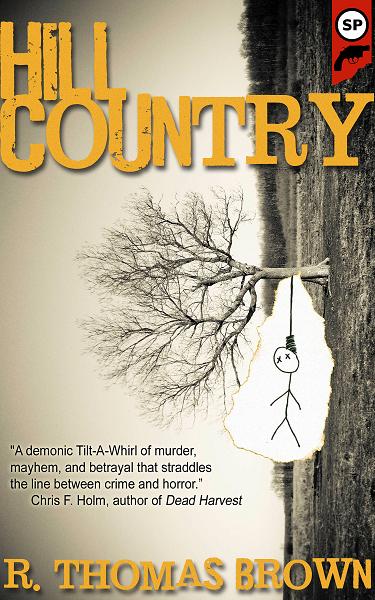
Well, in a small way, I'm going to step away from that. HILL COUNTRY is, for the most part, a thriller. It involves crime, running, danger, death and a good dose of fear. It's meant to be a fast read and an entertaining one. If it meets that goal, and means nothing, I'd be happy that a reader enjoyed themselves.
That being said, there were some ideas that stayed with me as I wrote. One of them is the fight for control. All the characters in HILL COUNTRY strive to take charge of their lives. This is most directly expressed in the antagonist, Tyler who commits all manner of atrocities in an attempt to control his environment and the people around him. But it's not him alone. Gabe struggles to get ahead of the enemies that seem to be all around. Abby uses any tool she has to escape a dependent life.
I, and I think most people, have this drive as well. We're battered with it. Take charge. Seize the day. Make your own destiny. It's a constant, and in some ways noble goal. However, the people of Comal Creek, TX learn over the course of the book that it's a sometimes vain pursuit. You can't control everything, and the rigid demand for total control leaves you unable to adapt and survive.
I didn't really intend to convey all that in the story when I started. But as I created the characters, and filled them to some extent with my own experiences and thoughts, it just came out. It's something that I will keep reminding myself of in many aspects of my life, but especially writing. There is so much about the business of writing that I cannot control. If I were to try, it would likely lead to disaster.
Hill County brings together the amazing R Thomas Brown with the force that is Snubnose Press.
Recommendations for Hill Country include:
"A demonic Tilt-A-Whirl of murder, mayhem and betrayal that straddles the line between crime and horror." - Chris F Holm, Dead Harvest
and
'"In Hill Country, R. Thomas Brown has written an edgy tale full of passion and human fallibility. The story bounds along at a breakneck pace, unrelenting and painfully real. Its cast of characters run the gamut, from broken to brutal, from raw as an open wound to cold and dark as a winter midnight. When you start this tale, plan on not putting it down till you're done, and while you're reading, don't forget to breathe." – Bill Cameron, County Line
I can tell you that I love Ron's writing and that I've bought my copy. It won't be long until I'm there myself and I hope you'll come and join me so you can decide how my reviewing skills are shaping up when I get round to that.