Nigel Bird's Blog, page 40
January 14, 2015
ROGER SMITH: CONFRONTING THE HORROR By Rory Costello

Anyone who’s read Roger Smith’s fiction knows that the world he depicts is rife with the horrors of the human condition. He never flinches or pulls any of his punches – and that’s a big part of what makes the stories he mines from those horrors so compelling. Roger has kindly agreed to give some more insight into his vision.
Q: For you, where does the horror lie? Is it more in society or more in human nature itself? How do you see these forces counterbalancing?
I don’t know that I can separate the two, but for me writing is all about character and my characters are the beams that illuminate society’s horrors.
Q: In a 2012 interview, you responded to a question about censorship, by yourself or others, by saying “If people do it, I write about it.” Personally, how much of this horror can you take?
I try to reflect reality, even when that reality is uncomfortable and difficult—for the reader as well as for me. I’ve written a lot about the Cape Flats, Cape Town’s mixed race ghetto, whose inhabitants are stricken by all manner of hardships and horrors. What always shocks me is when readers from the Flats say to me, “Yes, you’ve got it right, but if anything the reality is even worse than your books.”
A video interview that I did with an ex-convict who lives on the Flats who describes a brutal prison gang killing gives some insight into this.
Q: A couple of years before that, you told Keith Rawson of Spinetingler, “Writing crime set in South Africa isn’t only relevant now, for me it’s about the only way to stay sane.” How do you avoid becoming jaded?
 This links to a later question of yours: with my new book,
Man Down
, I’ve taken a wider view, setting the novel both in South Africa and the U.S. which was an interesting challenge for me. I’m not saying that I won’t be writing about South Africa in the future, but the idea of a larger canvas is appealing.
This links to a later question of yours: with my new book,
Man Down
, I’ve taken a wider view, setting the novel both in South Africa and the U.S. which was an interesting challenge for me. I’m not saying that I won’t be writing about South Africa in the future, but the idea of a larger canvas is appealing.Q: In another interview from 2012, you stated, “More and more I’m submerging myself in the worlds of increasingly dark and messed up people, and I’ve grown to trust that my readers will follow me there.” How do you find that your readership has evolved over time?
My books are not at the “easy listening” end of the crime spectrum, the police procedurals and P.I. novels that, while they depict brutality and amorality, are largely optimistic because good (shopworn and battered, perhaps, but still good) triumphs over evil, allowing readers to turn out the light and sink into their slumbers with their faith in the essential positivism of human nature unchallenged.
My novels take the reader on a more troubling ride and I’m pleased to say that over the years more and more people have happily jumped aboard for the trip and have come to expect a certain type of book from me. That’s very gratifying.
Q: With Vile Blood (under your Max Wilde pseudonym), you turned to a setting in an imaginary United States, influenced by horror comics, B-movies, and lurid American true crime. What are the differences between that breed of horror and your crime fiction? Or perhaps they’re not that far apart?
I chose to write Vile Blood as Max Wilde in order not to confuse—or piss off—readers who were expecting one of my more realistic crime novels. (Although, judging by a couple of on-line reviews, there were some who were still pissed off . . .)
Vile Blood was me having fun. It was liberating not to have to write about a real place with very real ills and the respect and diligence that those ills demand of a writer. But the themes of Vile Blood are not dissimilar to those of my “Roger Smith” books: corruption, the loss of innocence, moral ambiguity and regeneration through violence and the tormented heroine Skye has a lot in common with Sunday in Dust Devils, Dawn in Capture and Louise in Sacrifices who are victims of brutality and indifference and then (with mixed success) take charge of their lives and fight back, and the giant sheriff, Delbert Drum, could well be kin of Gatsby Barnard, Mixed Blood’s scumbag rogue cop.
Q: Your latest, Man Down, also has an American setting, not South African. What was behind this choice?
Well, as I said earlier, it’s set both in South Africa and America. In contemporary Tucson, Arizona, the home invasion of an expatriate South African and his family triggers a series of flashbacks to a crime he committed in Johannesburgten years ago.
Over the last few decades an estimated one million white South Africans (of a total population of less than five million) have fled the political turmoil and violent crime in their country and settled in Australia, New Zealand, Canada, UK and the U.S. I wanted to touch on this in my book and also deal with the collision of a very American crime with a very South African one.
Q: How do you view the parallels in U.S.and South African society – issues of race and class?
Both South Africa and the U.S. were settled by Europeans at roughly the same time and in both countries those settlers took off into the vast hinterlands where they wreaked genocide upon the native inhabitants. The U.S. settlers were more successful in this due to their numerical superiority, but the two countries birthed frontier mentalities that share a vengeful Calvinist God and the implicit belief in the right to bear arms and use them with seeming impunity. When Jimmy Carter, while recoiling from apartheid, famously said “I am an Afrikaner” he was acknowledging this similarity.
Q: One of the things that struck me after reading your books is the kinship (at some level) with some American naturalists, like Nelson Algren. I took the title of this Q&A from a critical study of Algren’s work. Other American authors from the past come to mind too: Frank Norris, James T. Farrell, and Hubert Selby Jr., to name a few. The sense of tragedy and doom is the common bond. Is that just a coincidence, or did any of them influence you at all?
I’ve read Algren and Selby and found them very powerful, particularly Selby, but it’s a later generation of American realists that influenced me more: the so-called Dirty Realists (or Kmart Realists) of the 70s and 80s, like Jayne Anne Phillips, Raymond Carver, Tobias Wolff and Richard Ford. They were mainly short story writers (although Ford, of course, has written great novels) with a fatalistic—or even deterministic—world view who were concerned with the “other America”: the dispossessed, the unemployed, the alcoholics and junkies, the people at the margins and in the trailer parks.
This struck a very real chord and, along with the more obvious influences of the darker crime novelists like James M. Cain, David Goodis and Jim Thompson, helped me find a way to tell my stories.
Q: Your work is very, very bleak – but I don’t think it crosses into nihilism. You offer some rays of sunshine – for example, with Nick, Dawn, and Brittany in Capture. How do you strike this balance?
I’d like to believe that my books are moral and that those most deserving retribution receive it. This retribution doesn’t come from within the criminal justice system which is corrupt and toothless but is rather in the form of karmic payback. The bad choices that my characters make trigger their own downfall and the more vile the character, the more savage the reckoning.


January 4, 2015
The Good, The Bad and The Ugly, December 2014
Having turned 50 and made it over the line for another year, the coinciding drives to shake things up have come together to suggest alteration.
I’m not sure what those alterations are going to be exactly, but I can feel them. Mostly they consider time to be a wonderful asset and the wasting of it a crime. They way I spend it isn’t entirely of my choosing. My teaching job has to stay because my writing income falls way short. My children need me around, albeit in a less intense form. The house needs cleaning and maintaining. I need to write and to find time to rest.
Among the many other uses of my time, I’d say that the internet takes up a huge amount of what’s left (and even eats into the other things I should or could be doing). It’s not that I do exciting things when I surf, it’s more that I find some kind of comfort in my browsing. I feel the need to do less of it and the blog is going to change because of that. I’m intending to do a monthly update, starting today, that encompasses things that might be of interest to others, particularly in the world of writing and fiction. I’ll throw in other aspects of life as they seem important. If you enjoy it, stick around. If not, point your board in another direction.
December 2014
I’ve already posted a review of Steve Finbow’s Down Among The Dead and would urge you to take a look at it. The immediacy of the story and the way a simple life is gnawed away at by an unforgiving past makes this intense and powerful. The book’s as long as it has to be to tell the story and I loved it.
Next came Hugh C Rae’s The Shooting Gallery . This one’s published by 280 Steps, a resurrection from days gone by. The book came as something of a revelation and I’ve clearly been missing something in my choice of reading material in the past. It opens with the body of a young man being dumped at a bleakly set hospital in a small Scottish town. Superintendent McCaig and a team of police officers set about identifying the curious issues surrounding the case, one that is complicated by the victim’s connections to society and to local heroin suppliers. We get to see the story unfold from many angles as Rae uses his characters to enlighten. Each perspective is outlined in broad detail and also exposes the personal landscapes of those involved. This novel is a slow burn. Rae describes moods and scenes in great detail and chooses similes and imagery like a natural (He blobbed out the paint until the air bubbles told him it was all gone, then tossed the gnarled tube over his shoulder like a peasant appeasing the devil with a pinch of salt). One the one hand, this is a page-turner of sorts, on the other it’s a book to be savoured. The only downside to this one relates to the errors – some odd words appear from time-to-time and an issue with the occasional lack of opening speech marks was slightly disconcerting. I’ve already stocked up on a couple of other books by Mr Rae and look forward to taking them on later this year.
Then came a collection of crime novella’s called Russian Roulette: The Konstantin Files by Keith Nixon. This one’s a collection of novellas that work around two main characters, the cool, collected and lethal Russian Konstantin and a sympathetic dominatrix, Fidelity Brown. Konstantin washes up in Margate to lie low and has nothing to lose. He encounters a local gang and deals with them in a quick and brutal fashion. They didn’t stand a chance. Konstantin becomes involved with the lowlife of the local drug-scene and wipes it up with the ease with which a cleaner might mop a floor. Konstantin’s life becomes complicated by the arrival of Fidelity Brown into her life. She needs help in dealing with some financial problems with the local colour. Fortunately for her, and in spite of a sense of caring about nothing, Konstantin takes a shine to her that will see her protected and delving into some of the more complicated issues of her younger days. It’s a hard-hitting collection that will offer plenty to fans of urban crime, dark humour and huge KGB agents who are practically indestructible. My favourites, by some way, were the openers and these alone are well worth the price of entry. Publisher Caffeine Nights promise ‘fiction aimed at the heart and the head...’ and with Russian Roulette they come close to hitting the bull's eye.
Short Story Corner
 Chris Rhatigan’s
Wake Up Time To Die
was published recently by Beat To A Pulp. It’s a collection of stories that have been seen before in many fine places and it makes a lot of sense to bring them together. I read this over the Christmas period and found it to be a real antidote to the sense of over-consumption and indulgence. The opener had me doing double-takes just to make sure I was getting it right. It’s about a man who covets his neighbour’s everything and finds himself taking it all over only to find that protecting his new found success will drive him insane. Story two sees our protagonist walk out on a good thing and decide upon a life of crime that ends with unexpected consequences. Next we’re in the company of Bill Gates (the Bill Gates) as he sets off to rob a local store to get his kicks and encounters a very unusual policeman. Next I was reminded of Gregor Samsa when Rhatigan’s character woke to find a gunman at the end of his bed, the gunman intending to follow his victim around all day. And so on. I found each tale to be unsettling, political, refreshingly honest in terms of the writers’ motivations, superbly written and perfectly rounded off. I reckon you should read it.
Chris Rhatigan’s
Wake Up Time To Die
was published recently by Beat To A Pulp. It’s a collection of stories that have been seen before in many fine places and it makes a lot of sense to bring them together. I read this over the Christmas period and found it to be a real antidote to the sense of over-consumption and indulgence. The opener had me doing double-takes just to make sure I was getting it right. It’s about a man who covets his neighbour’s everything and finds himself taking it all over only to find that protecting his new found success will drive him insane. Story two sees our protagonist walk out on a good thing and decide upon a life of crime that ends with unexpected consequences. Next we’re in the company of Bill Gates (the Bill Gates) as he sets off to rob a local store to get his kicks and encounters a very unusual policeman. Next I was reminded of Gregor Samsa when Rhatigan’s character woke to find a gunman at the end of his bed, the gunman intending to follow his victim around all day. And so on. I found each tale to be unsettling, political, refreshingly honest in terms of the writers’ motivations, superbly written and perfectly rounded off. I reckon you should read it.
Music
A couple of great tracks for you.
The first is by Billie Marten called Ribbon. This young lady has a hauntingly beautiful voice and it needs to be shared. I hope (and believe) that we’ll all be hearing a lot more from her in 2015 and beyond.
Next, a band that tickle me, The Saint Gillbillies . I can’t find the track I’d hoped to as I’m not sure it’s out yet, so here’s a filler. A very cool interpretation of The Message.
Writing
Well, Southsiders is out there and ready to be read. There’s some love for it and there’s been quite a lot of faint praise. However others see it, I’m very proud of it. I’ll be working on the edits to the sequel as soon as I get them and will be starting work on #3 in the series very soon. It’s nice to enter a new year with a couple of things to get immediately involved in on the writing front.
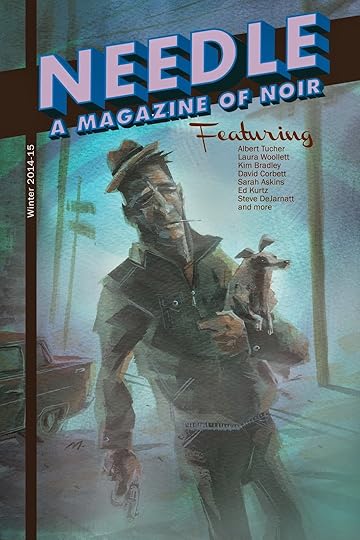
Talking of writing, there’s a new issue of Needle Magazine(as in a magazine of noir). It features a story that was co-written by Chris Rhatigan and I and I hope you’ll consider picking up a copy as it’s always a thing of beauty out and in.
Bits and Pieces
For my 50th birthday, I was treated to a day out at the Lyceum, Edinburgh to see an adaptation of The BFG. This one was adapted by David Wood and directed by Andrew Panton and I loved it. It’s done for now, but I’ll be hoping they return with something next year because I’d be more than happy to make these guys part of an annual event.
Also, With Love And Squalor's free just now.
And that’s about it.
Belated Happy New Year folks. I’ll be seeing you.
December 29, 2014
The Big Five-Oh - Seems Like There's A Hole In My Dreams

The festive fifty? Here on Sea Minor? What was that all about?
Truth be told, it was a little fun activity to help me pass the hours as time shifts and I move closer to my 50th birthday.
It's a time for reflection, without doubt. I've turned things upside down and inside out and looked at them through various lenses and I'm struggling with the view. For all the amazing stuff I find, it still seems like there's a hole in my dreams.
Something has to give. It's just the way it goes. I just have to work out what that will be.
Something needs to go.
December 22, 2014
The Festive Fifty (in books and songs) 10 - 1

10 Die A Little by Megan Abbott and Ella Fitzgerald
9 The Damage Done by Hilary Davidson and Neil Young
8 Volt by Alan Heathcock and Cabaret VOLTaire
7 Old School by Dan O'Shea and Grandmaster Melle Mel
6 White Jazz by James Ellroy and Chet Baker
5 Boom by Mark Haddon and John Lee Hooker
4 Old Ghosts by Nik Korpon and Jethro Tull
3 Jimmy Jazz by Roddy Doyle and The Clash
2 Abide With Me by Ian Ayris and The Grimethorpe Colliery Band
1 Bye Bye Baby by Allan Guthrie and The Bay City Rollers
December 21, 2014
The Festive Fifty (books and songs) 20 - 11

A new list in the Festive Fifty, this time from 20 - 11
20 The Song Is You by Megan Abbott and Frank Sinatra
19 The Good Son by Russell D McLean and Nick Cave
18 Northline by Willy Vlautin and Willy Vlautin
17 Road Rage by Ruth Rendell and Catatonia
16 The Mercy Seat by Martyn Waites and Johnny Cash
15 The Donor by Helen Fitzgerald and Half Man Half Biscuit
14 The Devil Rides Out by Dennis Wheatley and The Monochrome Set
13 Downtown by Ed McBain and Petula Clark
12 The Big Sleep by Raymond Chandler and The Rosie Taylor Project
11 Live Wire by Harlan Coban and Wire (live)
December 19, 2014
The Festive Fifty In Books And Songs (30 - 21)

30 Hit Me by Lawrence Block and Ian Dury
29 Trouble In The Heartland by a whole bunch of great writers and Bruce Sprinsteen
28 Dirty Old Town by Nigel Bird and The Pogues
27 London Calling by Tony Black and The Clash
26 Misery by Stephen King and The Beatles
25 007 by Ian Fleming and Desmond Dekker
24 The Blue Room by Georges Simenon and The Boo Radleys
23 Fire In The Blood by Ed James and Niney
22 Bad Penny Blues by Cathi Unsworth and Humphrey Littleton
21 Puppet On A Chain by Alistair MacLean and Echo And The Bunnymen
December 18, 2014
The Festive Fifty in Books and Tunes (40 - 31)
The next installment...
40 Cheapskates by Charlie Stella and The Clash
39 The Guns Of Navarone by Alistair McLean and The Skatalites
38 Silence by Jan Costin Wagner and Simon and Garfunkel
37 Saturday Night and Sunday Morning by Alan Sillitoe and The Velvet Underground and Nico
36 The Cold Cold Ground by Adrian McInty and Tom Waits
35 Bloody Valentine by James Patterson and My Bloody Valentine
34 Portobello by Ruth Rendell and Jen And The Gents
33 Lazy Bones by Mark Billingham and Green Day
32 Time Bomb by Jonathan Kellerman and Rancid
31 Cherry Bomb by J. A. Konrath and The Runaways
December 17, 2014
The Festive Fifty in Fifty Books and Tunes

The Festive Fifty is an institution, there's no doubt about it. A celebration of good things. I'm doing a little twist on it this year and listing 50 book titles that happen to share a song title. It's mainly for my own entertainment, but if it brings any cheer your way, I'd be delighted.
Thanks for coming.
Here, in absolutely no sensible order are the entries 50 - 41:
50 The Guns Of Brixton by Paul D Brazill and The Clash
49 California by Ray Banks and The Dead Kennedies
48 The Hanging Garden by Ian Rankin and The Cure
47 Frank Sinatra In A Blender by Matthew McBride and Frank Sinatra
46 In A Lonely Place by Dorothy B Hughes and New Order
45 Let It Ride by John McFetridge and Ryan Adams
44 The Dead Beat by Doug Johnstone and Deadbeat
43 Message In A Bottle by Kath Middleton and The Police
42 Watching The Detectives by Deborah Locke and Elvis Costello
41 The Red Right Hand by Joel Townsley Rogers and Nick Cave and the Bad Seeds
More tunes and books from this old-timer tomorrow.
December 3, 2014
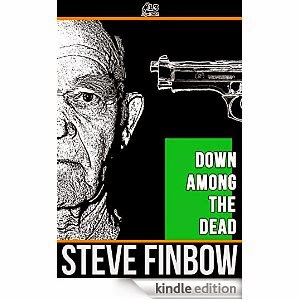
One Man's Opinion: DOWN AMONG THE DEAD by STEVE FINBOW
“It was never the politics with me. Never. It was the being part.” – Michael O’Connor
In Down Among The Dead (UKand US) Michael O’Connor is an old man living on the Kilburn High Road. There are too many steps to his flat and he drinks too many pints to keep himself healthy. His life is now as empty as his fridge and he fills his days with visits to the pub, the bookies and to Mrs Quinn who lives across the way.
The thing is Michael O’Connor has a past. He’s been a soldier for the IRA and has been involved in events that are bound to catch up with him. His problem is that the events that have destroyed his life also happen to be the only things that define his existence. It’s no wonder, then, that he goes shooting his mouth off after a few drinks every once in a while.
Steve Finbow has done a brilliant job with this story. He flicks back and forth between 2008 in Kilburn and 1988 in Gibraltar where he’s on one final job for his boss. The settings in each case are extremely vivid. There’s plenty of detail and each has a constant feeling of menace as the separate story-lines converge to sharply pointed endings.
O’Connor himself tells the story. While he’s clearly kissed the Blarney Stone, he also knows how to tell a tale without wasting a word. This is sharp and bold writing that is populated punchy dialogue and crisply drawn characters. It’s a wonderful voice that is at once sympathetic and pathetic and it’s one that’s very easy to spend time with.
For those of you who are around my age and above, the story of the murder of three unarmed IRA suspects will be brought to mind. The past has a way of haunting us in real life as if it was all just a fiction. This particular fiction is a treat to be part and entirely avoids any of the potential pitfalls of dealing with such material.
In the post script, it mentions that Finbow is currently writing something new. I’m delighted to hear it and I’ll definitely be there to check it out when it’s published. I'm reminded that I have an earlier book of his on my kindle called Nothing Matters (Snubnose Press) which has just joined my must-read pile.
Very highly recommended.
Down Among The Dead is now available for pre-order.
November 29, 2014
One Man's Opinion: TUSSINLAND by MIKE MONSON
A quick mention from me that Southisders is still on offer until the end of the month. That's only a couple of days. It's still at 99p/99c if you're up for a little bit of Elvis, Home Alone and Blue Christmas.
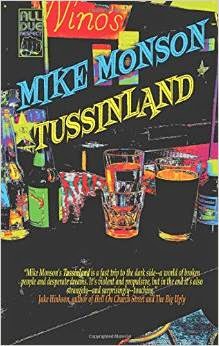
And now to Tussinland. Either just buy it or read the review and then buy it. Here are my quickly scribbled thoughts.
‘I’m a crazy Bosnian rape orphan and I’m out of control.’ – Logan
Tussinland is Paul’s favourite place. It’s a world that’s created when he’s downed a bottle of his favourite expectorant, a rosy world of good feelings and happiness, or at least a break from the normal humdrum of his existence.
He’s not got a good deal going for him, but that doesn’t make him a bad man. This is extremely important to the book because, as the central character in a world where he’s surrounded by the devious and the broken, he’s someone it becomes impossible not to root for.Paul’s problems are many. He has to live at home with his promiscuous mother for a start. He’s lost his family and his teaching job. He’s overweight, is addicted to sugary cereal (which he eats by the packet) and has more friends on the TV than anywhere else. These are only minor issues when compared to the main one, namely that he’s the chief suspect in the murder of his ex-wife and her new partner.
The thing is, the reader knows that he’s innocent from the off. We see it happen at the beginning, Paul’s niece, Miranda, and her boyfriend, Logan, film the killing and then run away with an enormous stash of heroine.
Paul is then painted into a corner. As well as the police, the man who needs to get his hands on the drugs is after him as are his Christian fundamentalist relatives who need the cash. This isn’t just any old story about troubled people who live difficult lives, it’s a very well-written adventure where the twists and turns make for a very emotional ride.
What I liked most about this novel is the way the characters were developed along the way. They grow into fully drawn people and while it happened my sympathies had to adjust. It’s something that’s hard to pull off and also gives the novel a hugely satisfying death.
There are a lot of great reviews out there for this book and it’s been extremely well-received. I was a little worried that it would let me down.
I needn’t have worried. It certainly lives up to its growing reputation and I’d recommend it to anyone who likes to be entertained while they read their crime fiction.
A small word of warning, this one’s very specific and graphic at points. If you’re easily offended, this may not be for you.
Great stuff.