
Candace Fleming's Blog, page 4
August 20, 2014
Cheshire, Massachusetts
 History is everywhere. I love small towns with big stories. Cheshire, MA, had a big story I wrote a picture book about. Check it out!
“Cheshire, [Massachusetts] was incorporated in 1793, and its residents were strongly partisan in the election battles of the country’s early days. The election campaign which put Thomas Jefferson into the presidency was hard fought and Cheshire was the only Berkshire town which favored Jefferson. When their candidate won the election, the town searched for a way...


August 19, 2014
The Role of Books in the Russian Revolution
 By 1905, the working class [in Russia] had begun envisioning a better life. And these visions began with books. “When I came in from work, I did not lie down to sleep immediately,” recalled a weaver named Feodor Samilov. “Instead, I picked up a book, lit a candle that I had bought with my own savings, and read until I could no longer keep my eyelids from closing.”
He wasn’t alone. The speed with which factory workers learned to read “was a little short of astonishing,” noted one historian. By...
August 14, 2014
Baby Storytime!
I have three picture books specifically about babies (okay, one is about baby birds). Put them together and you have a thematic story time all ready to go! Make it an event, gather a group of kids (older siblings will definitely relate!) and have fun reading all three. Or snuggle up with a child in your life and read one.
Smile Lily
 Sweet Baby Lily is inconsolable—she cries “Waa! Waa! Waa!” Each member of her family tries to comfort her with all the usual things: lullabies, tickles, a diaper ch...
August 7, 2014
Museums Now and Then
 Nowadays, most museums are large public institutions created for the purpose of educating people about specific areas of interest such as art, science, and natural history. Experts run these museums. They are well organized. And their information is accurate.
But in [P.T.] Barnum’s day there were no large public museums. Instead museums were owned by individuals who set up their own displays, then charged the public an admission price. The first person in America to do this was Charles Willson...
July 29, 2014
A Suitor For Olga
 In the spring of 1914, court gossips began whispering about an engagement between eighteen-year old Olga and Prince Carol of Romania. Why else, they speculated, would the Imperial Couple plan to visit there? Indeed, a union between Olga and the prince would be advantageous for Russia. Romania was too closely aligned with Germany. Marriage to a Romanov might break their alliance.
Aware of the talk, Olga turned to Pierre Gillard. Since learning the truth about Alexei’s illness, the French teache...
July 25, 2014
Russian Dates
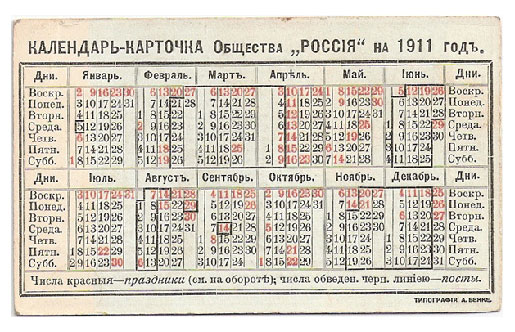 During Nicholas’s reign, Russia used the old-style Julian calendar to record dates, when most of the rest of the world was using the new-style Gregorian calendar. This meant Russian dates lagged twelve days behind during the nineteenth century, and thirteen days behind during the twentieth. Thus Anastasia was born June 5, 1901, according to the Julian calendar, but June 18, 1901, by the Gregorian calendar. Since readers of The Family Romanov are familiar with the Gregorian calendar, all the d...
July 22, 2014
Photo Research
 What’s interesting about photograph research is that the “good” photos aren’t always the “best” photos. I’m constantly searching for pictures readers haven’t seen time and again. I like snapshots – candid, unposed images – which is what made the Romanov research so much lengthier. The family took thousands of pictures of themselves doing the most mundane things – eating, doing homework, shoveling snow. They each had their own Brownie Box camera, even little Alexei, and they snapped along indi...
July 18, 2014
Bulletproof Vests
 The scene of Romanov family’s murders was horrific—you can read the grim details in the last chapters of the book. One of the interesting and complicating things that happened, was that bullets aimed directly at the children’s chests bounced off and “jumped about the room like hail.” It was the jewels they’d sewn into their underclothes as they were led from their home to what they thought was safety. They’d unwittingly turned the garments into bulletproof vests, which in turn increased the t...
July 17, 2014
Royal Titles
 The ruler of Russia is called the tsar or emperor (the titles are interchangeable); his wife is either the tsaritsa or empress; and his male heir is called the tsarevich. His other children are given the titles of grand duke if male, or grand duchess if female.These last titles are passed down just one more generation, so a tsar’s grandchildren are also grand dukes and grand duchesses. But a tsar’s great grandchildren hold only the rank of prince or princess. Thus grand dukes and grand duches...
July 15, 2014
The Plight of the Russian Peasants
 Hunger forced many Russian peasants, including children and old people, to beg from their neighbors. They felt ashamed. But there was no help for it. There was nothing, literally nothing, to eat in their izba. And so they went to other izbas, begging for just a single morsel of bread. Relief worker Jonah Stradling described what he saw.
On entering the izba the [begging] peasant makes the sign of the cross and stops on the threshold in silence, or mutters in a low voice, “Give in Christ’s name...


