Silke Juppenlatz's Blog, page 9
June 9, 2011
Well that didn't go as planned

I've disabled the new theme for now, while I go back to the drawing board.
I'd backed up the settings — only it didn't back it up, but overwrote *everything* instead.
Meaning I am going to start over, not using Weaver this time, because quite frankly… I can't afford to spend hours and hours on revamping a theme and have it wiped out by a backup!
No thank you. Sorry, but that's unacceptable, so I'm going to write my own, from scratch.
I'm *that* annoyed now.


June 5, 2011
The Revamp is complete!
Welcome to the new look Evil Author.
Yes, you're on the right site, I promise.
Everything is still here, nothing moved. I've shuffled things around a little, but other than that – same site.
There are still a couple bugs to iron out, bear with me, but the main area is up and running.
The bug only affects the static pages, and it's only placement. 
I probably put a semi-colon someplace I shouldn't have!
I hope you like the new look!

Dear Diary – or: How much backstory do I put in?
When Jack was three years old, he fell down the stairs and hit his head.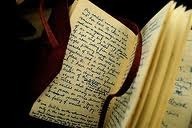
He had a nasty gash on his forehead, but it healed and he was fine.
Then there was the time he fell off his bicycle and scraped his elbow, when his Dad taught him to ride. There were many tears.
Bored yet?
If you start your book with backstory, you are likely going to bore the reader.
You might think the reader needs to know all this, but often they don't. If I find myself skipping pages, then usually it's because of boring and unnecessary backstory, or too much worldbuilding.
If a book starts with backstory, I often don't buy it.
And yet, backstory is important.
It's not a case of when to include it, but how.
Backstory, if done right, can be interesting and move the story forward. However, backstory has to show, rather than tell.
The way I do it is often by letting the character relay the information in dialog or thought. Brief flashes of insight, rather than info dumps. It avoids telling, and you can use it to your advantage.
Consider this:
Claustrophobia took hold. Fifteen years ago he'd been locked into his uncle's cellar for taking some bread because he'd been hungry. The following four months of incarceration had only ended when his brother had broken the lock and got him out so they could run away together. He'd never forget. He'd thought he'd die in the damp cellar, and it came back to him at the worst moments. Sam strode to the end of the corridor and opened the door. Freedom.
The walls were closing in, the corridor becoming narrower, and with every step he took, the old fear of being locked in clawed it's way to the surface until he could hardly breathe. Sweat beaded on his forehead and he wiped it away. He could get out. There was a door at the end. Sam knew, and yet he felt as trapped as he had in his uncle's basement fifteen years ago. He'd thought he was over the four month stint in the stinking, damp cellar. Apparently not.
Which would you rather read? Which gives you more insight into Sam, and which shows you more necessary backstory?
I don't need to know he was locked in for stealing bread. I just need to know he's afraid of being locked in, and where the fear comes from. I don't need to know his brother rescued him, or that Sam thought he would die. It doesn't matter, and by not telling the reader more, you will have them turning the page, wondering what happened to him in his uncle's basement. How did he get there? How did he get out? What happened? Why was he there?
You can slot all the rest in later, either in conversation, or action. Reveal little at a time, and build on it. Give the reader snippets, rather than essays. Explain just enough to bring up more questions, once you've answered one.
Sometimes it's difficult, and you have to find a happy medium. If you find yourself info dumping, try to get the same info into the story in a more fluid, current scenario. For me, that's the key. If you can fit backstory seamlessly into the current action, by thought, by deed, by dialog, it's preferable to telling the reader why how who and what.
However, there is a temptation of having a long diatribe where the character tells another what happened to them. Avoid those, too. It's just another way of info dumping. Memories are important, but look at yourself. Memories are triggered by sights, sounds and scents. They never last long, they never go into detail, and they usually involve the here and now. We weave memories around the current situation, comparing, learning, worrying.
For instance, your character might stand at the edge of a fair and catch a whiff of candy floss. He's insecure, but covers it with bravado. Have him smile and briefly remember buying candy floss for Ella Mae, who he had a crush on when he was ten. Have him wonder if the current love interest would throw the gift at his feet, leaving pink sugary strands sticking to his pants, like Ella Mae had done. Have him grimace at the thought of how embarrassed he'd feel this time, since it had all but destroyed his fragile burgeoning manhood back then when everyone had laughed at him. How he hadn't given a gift since. Maybe end it with the thought of "Sarah wasn't like Ella Mae. She wouldn't embarrass him in front of everyone. Would she?"
Slot it in. Show me what happened, without telling me. Up there, I'll see he was deeply hurt by Ella Mae's reaction, it dented his ego and made him wary. It's why he's still careful around women, and why he doesn't buy them things. He's afraid it'll come back to bite him. There you have the source for his insecurity, a seemingly innocent incident, but it broke something inside him. So if your heroine returns a gift to him, you can have him react badly, unreasonably hurt — and yet your reader will know there's a reason, even if the hero has long forgotten what makes him react the way he does.
Show me what makes them tick — and the key word here is show — so I understand their reactions.
Telling me he once gave a gift to Ella Mae and she threw it back at him won't do it. You'll have to show me how he felt about it, how it still affects him now.
I don't need to know his life history. I don't need to know he trained as an accountant until he felt the calling to be a vet, unless it's important to the story.
Make me want to know more.
How do you handle your backstory?
June 1, 2011
Romance Novels are Bad for you
So it's official — at least if you want to believe ksl.com (A Utah Publication) — Romance Readers are deviants.
It's baaaaaad for you.
It's as addictive as porn, apparently.
It ruins the lives of women everywhere, wrecks relationships…it probably kills the cat and hides your car keys.
According to KSL.com:
"Romance novels revenue topped $1.36 billion last year, while religious, self-help and inspirational books combined sold only $770 million. Romance novels accounted for 55 percent of all the popular mass-market fiction sold."
Jealous much?
The article goes on to say:
"Some marriage therapists caution that women can become as dangerously unbalanced by these books' entrancing but distorted messages as men can be by the distorted messages of pornography," -Author Shaunti Feldhahn
I have never heard of Ms. Feldhahn. I'm sure she's studied this thoroughly.
But despair not! There are also steps you can take to cure yourself of this deviant behavior!
First, commit to stop reading any books that are contributing to this problem. Recognizing you have a problem and making a firm commitment to quit is the most important step.
Then, commit to working on your real relationship, if you are in one. Spend alone time with your partner on a regular basis. Invest in help to make that time more enjoyable. Read self-help books together or contact a relationship professional or coach, who can help you to rekindle the flame in your marriage.
That's it! Switch from reading Romance to self help books! Not only will you cure yourself, but the margin of sales for all this filthy Romance trash will go down, and the margin of sales for Self Help books will go up! Life coaches (like the author) will earn more!
It's a win win situation!
I can tell you now, since I've switched to reading true crime novels, my life has improved by leaps and bounds. I no longer squabble with my partner (I find duct tape works wonders). Yes, true crime novels are so much healthier for me than those romantic things. I feel much better now. And the other day, when he nagged me, I found Arsenic took care of the problem without a hitch.
Does anyone have a shovel I can borrow?
In all seriousness — if a reader can't distinguish between fantasy and fact, then they do need help. But to single out romance novels as the reason for someone's marriage breaking down is not just doing women in bad relationships a disservice, but it's completely idiotic. And to suggest addictive behavior can be cured by reading self help books — pah-lu-heeze.
The professionals quoted probably never said that romance novels are the cause for this, but that for some people, they can be a contributing factor.
If you want to read the entire article, it's here. Form your own opinion.
Personally? I feel sorry for the women in Utah.
It's a load of tripe, and the author basically says women don't have the brains to know when it's fantasy and it will wreck their lives. That's insulting on so many levels, it's not even funny.
No one I know has ever mistaken fiction for fact. No one I know has ever broken up because they had "unrealistic expectations" from reading romance novels. All the women I know have enough sense to know it's fantasy, and pretty much all of them are in long term happy relationships.
I'm coming up to 25 years with the same man, and I've read romance novels since the age of 16.
I've never needed a "Self Help Book" or a "Life Coach" to sort out my relationship, and I never will.
What's your take?
May 31, 2011
Villains – The Sociopath
 As per request, I will try to shed some light on the sociopathic villain today.
Picture the scene:
You have just tripped over a coffee table, hit your head on the fireplace, and you are rolling around in complete agony, bleeding profusely.
The person you're visiting comes into the room and his/her first words are: "How dare you bleed on my carpet!"
That's a sociopath.
Any sane person would be on their knees, checking on you. Or call an ambulance. (You're bleeding from a head wound, after all.)
Not the sociopath. They'd let you die right there (or drag you outside) before they'd call an ambulance for you. You deserve to die for ruining their carpet.
You can be forgiven for hearing "Sociopath" and thinking of a deranged, brutal serial killer. It hasn't been so long ago when no distinction was made. But what you are actually thinking of would be a psychopath, not a sociopath.
A sociopath displays marked antisocial behavior. A psychopath tends to be agressive, perverted and amoral – and display the same antisocial behavior as the sociopath. They might sound the same, but they're not.
You can also be foregiven for thinking a sociopath isn't as "bad" as a psychopath. After all, we've all heard of serial killer psychopaths, right?
Consider this:
Charles Manson was a psychopath.
Adolf Hitler was a sociopath.
A sociopath can be many things. There is no common denominator, it varies from case to case. Many are narcissistic. Many are very adept at lying. (I would bet many could fool a lie detector.)
Above everything else, they are great manipulators. No matter what, they will work hard at making it appear that nothing is their fault.
Don't be surprised if you ask them what their goal in life is, and they answer "World Domination" without hesitation or modesty.
While a psychopath will often try suicide, there is no way a sociopath would consider it. A sociopath is better than everyone else — and don't you dare forget it.
So how do you use one in a novel?
I've just done it in Howl, though I never specifically say he's a sociopath. Instead I use his actions to give the reader a bit of a surprise. They'll never see it coming, just like the hero didn't see it coming. It's the main trait of a sociopath. He lulls you into trusting him, relying on him, praises you, and you would likely give him (her) a glowing personal reference.
Until they make their move and utterly destroy you.
Some (but by no means all) traits a sociopath may exhibit:
Charming and friendly
Remorseless (No sign of guilt at all)
Calculating (Plans his moves carefully)
Narcisisstic (Very high opinion of self)
Doesn't ever feel that there is anything wrong with them
Controlling to the point of obsession.
Needs to be in charge.
Incapable of love
Promiscous, often commits adultery.
Paranoid
Secretive
Shallow
Those are just a few. But you can probably see how you can use them to your advantage in a fiction scenario. Your villain may befriend your protagonist and do anything for them. They will get close to them, groom them, almost to the point of slavery — because "I did X for you. Now you do Y for me." won't seem so terrible to the victim. After all, the sociopath is their friend. They'd never hurt them, right?
They won't — until what they really want is within their grasp, and you are in the way. They'll take the victim's job, lover, family, wealth, status — without hesitation. And they'll make it look like it's the victim's fault, not theirs.
The victim is just a means to an end, nothing more. The sociopath will not feel guilty about what they've done, because they see their gain as something that's rightfully theirs, and it always has been.
A sociopath despises the victim. After all, the sociopath is so much better than the victim, and entitled to everything.
It doesn't have to be a friend. It could be a family member, a colleague, a boss, any profession, any status. Anyone, anywhere.
If you write a sociopath, you need to be completely aware which traits your villain has. Too many, and you'll give the game away. It's a careful juggling act and you best read up on what you're trying to portray. Some is easy, some… not so much. You'll have to research it a little at least, and make sure you keep in mind the reactions your villain is likely to have.
Remember — he does not feel guilt or remorse. So don't have your villain apologize for what he did. He won't. He was entitled to it, and you're a greedy evil bastard for keeping it from him. In fact, you should apologize to him, not the other way around.
A sociopath is rarely in trouble with the law. It isn't the same as a psychopath, either. (Although Psychopaths can be Sociopaths, and vice versa.) The proper term for a sociopath is "Antisocial Behavior Disorder", in case you want to do your own research into it.
I am not a psychologist, or a psychiatrist, and I wouldn't dare to presume I could diagnose anything like this. I have read up on sociopathic behavior, and drawn from that. There are excellent resources out there, and I encourage anyone to check deeper into this, to get a real glimpse of what you want your villain to be.
So — which one do you want next?
Psychopath? Bully? The Bad Hero? Or another I may not have thought of bringing to light?
May 28, 2011
The sequel is coming along.
Yes, I know Howl isn't out yet.
Just another three weeks until release, but it feels like it's been a lifetime.
In the meantime, I was messing around with various other stories, and then, suddenly, I knew which story I had to tell next.
It's Tiffy's story.
She's sixteen in Howl, so this is a little later, after the events in Howl.
It'll be just as dramatic, if not more so.
Tiffy is quirky, she rebels against Zalin, who is trying to keep her safe. She wants her freedom, and when she runs into Keric, it is love at first sight.
It doesn't go well.
Keric rejects her, because he's not about to go anywhere near jailbait.
But time passes and people — even young girls — grow up.
If you thought her problems were over once Keric accepts her, you'd be wrong.
She might love him, but there is more to him than meets the eye.
I guess you'll have to wait to find out.
I'm 13k in now. I'm aiming for 20k by Monday, with a possible final wordcount of around 30-40k.
I'll keep you updated.
May 27, 2011
Villains – The Bitch
A good villain is hard to write.
And there are plenty of different types.
I'll try to blog about some of them.
So without further ado…
bitch –noun
a female dog.
a female of canines generally.
Slang. a. a malicious, unpleasant, selfish person, esp. a woman.
b. a lewd woman.
4. Slang. a. a complaint.
b. anything difficult or unpleasant: The test was a bitch.
c. anything memorable, esp. something exceptionally good: That last big party he threw was a real bitch.
The Bitch has many forms. She can be the heroine's best friend who has a secret agenda (wanting the hero for herself, revenge, etc), she can also be her worst enemy. Think ugly stepsisters in Cinderella.
She can be the boss, who makes life hell for the hero or heroine. An Ex girlfriend. A mother.
As I said, she has many forms and often hides her true nature behind a fake smile.
Then there is the vindictive bitch. The one who will do anything to achieve her goal, even cold blooded murder.
Or the manipulative bitch, who uses mindgames to screw up our protagonists day / life.
She may wear a business suit, or an apron, but her nature is the same, always.
The Bitch can make life absolute hell for everyone.
Being bitchy is slightly different from being a bitch. Often what people consider bitchy, is really catty. There is a difference. A bitch is out to hurt people for her own gain, or just for the satisfaction of inflicting anguish. A catty person is more of a sarcastic nature, but generally not malicious.Being bitchy usually means whining and complaining. Being catty usually means snarky, sarcastic observations.
That's not to say that a bitch is always bitchy. If only it were that easy. Most of the time that's not the case. What defines the bitch, is the ability to act like they have someone's best interest at heart — only to stick the knife in when it is least expected. It hurts more that way, which gives the bitch greater satisfaction.
I say "She", but really, a man can be a bitch too.
A bitch is usually manipulative, conniving, self-serving and power hungry. She can rarely connect emotionally to anyone.
Don't confuse a strong woman with being a bitch. While bitches tend to be self assured and strong, that's not the defining characteristic. Women who are typically stronger than society likes women to be, are often labeled "Bitch" just because they aren't a fluffy innocent little mouse and stand up for themselves.
No, bitches aren't just strong. They are usually extremely vindictive and malicious on top of being strong, abusing power rather than enabling others.
A bitch will never enable someone else — unless it is so they can hang themselves.
If your villain is a bitch, she needs to be consistent throughout. She has to have a compelling motive. The motive is almost always greed. Having something someone else has, be it wealth, status, or a person. They aren't even always mean spirited, but if you write one, you need to show the reader the trigger, and the reaction.
It's not enough to label your villain a bitch. You have to show the reader, through thought or action, that she is one.
A bitch can be a compelling, multifaceted villain, and move the story along if you write them right. If you feel uncomfortable with what she's doing — usually behind her target's back — then chances are your readers will be too. They'll form their opinions, and if they arrive at the conclusion of "Oh man, she's such a bitch." without you ever saying it — then you've got it right.
I'll probably grab another villain by the throat soon. What would you like to see?
Bullies, perhaps? Psychopaths? Sociopaths? How about Bad Heroes?
May 17, 2011
Review: "Bound to Moonlight" by Nina Croft
I don't often review books. (Well, not on my blog, anyway.) Bear with me. I shall explain. 
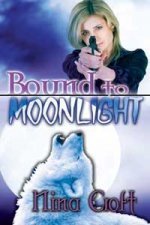 I had the opportunity to read Nina Croft's new release, Bound to Moonlight, today.
Now, I've been a fan of Ms Croft's for quite a while, and even so I somehow managed to miss the first book in this series, Bound to Night.
I guarantee you I have since remedied this, and will read it next.
Bound to Moonlight is the story of Anya, a powerful telepath and trained assassin, and Sebastian, her werewolf target.
Needless to say, all does not go as planned, and Anya finds herself captured by the very man she's supposed to kill.
In fact, he's the man who killed her sister, and she wants to avenge her — and yet she's struggling against her own attraction to him.
Sebastian knows she had something to do with some members of his pack being abducted, but it doesn't sit easy with him to be the one who has to get the truth out of her.
He is torn between duty and the need to protect a woman from harm. Add to this that he desires her, and you have an explosive situation.
I won't give away the story, but I can tell you it's a gripping read and it will leave you wanting to turn the page. (And in my case, grab the previous book!)
The characters are well crafted and you'll find yourself rooting for both Anya and Sebastian in turn. The plot has twists and turns, and keeps flowing easily, without ever leaving you wondering, but at the same time keeping you guessing.
The novella is standalone, you don't need to have read the previous book, but if it's anything like Bound to Moonlight — you'll want to get it.
If you want a sizzling hot page-turner, then click on the cover and grab yourself a copy right now.
(Grab Bound to Night as well, while you're at it, if you haven't got it already.)
It's a definite 10 out of 10 from me.
The Art of Chaos

Chaos is an artform.
Any writer out there who doesn't plot, or plan ahead will tell you chaos usually reigns supreme when they write.
I don't plot (much), so I'm very familiar with chaos. Be it in my head, or the various notes I make along the way.
Chaos tends to be destructive, unless you harness the energy and turn it into something constructive instead. It's doable, but it takes work.
When I say chaos, what I mean is the not knowing what a character will do next. Where the story is going. Being wary of what kind of bomb your muse will drop when you least expect it.
I love writing like that. It keeps me on my toes, and keeps the story fresh and interesting for me. I will jump back and forth, scenes popping into my head, conversations, descriptions. Most of the time I jot down notes, nothing more, but occasionally I'll have a scene I need to write down in full.
Later on I'll fit it in, along with any other stuff coming from the chaos in my mind. Sometimes it works, most times it doesn't.
Sometimes, what seems brilliant when it first comes to you, doesn't fit the story by the time you get to the point of using a scene. Don't be tempted to force it in. If it doesn't fit smoothly, then it'll jolt the reader, and it'll be better not to use it.
Be as chaotic as you like, but in the end, make sure you create order from all that wild disorder. Get control, be that by plotting or by writing a synopsis. (I found a synopsis is a good way of finding out where you went off on a tangent, or if you have a "Saggy middle".)
All in all, a little chaos is good for you — as long as you eventually end up in charge.
May 11, 2011
50 Ways to Trash your Novel
Slip out the back, Jack. Make a new plan, Stan. No need to be coy, Roy…
1. Paragraphs are for wimps.
2. Triple space everything.
3. Don't use commas. Ever. Anywhere.
4. Use the curliest font you can find. It'll make it look funky.
5. Plots are also for wimps.
6. Who needs motivation anyway?
7. Don't have a goal. We all know where it's headed.
8. Have twenty different goals. It adds suspense.
9. Make all goals unattainable. It'll keep the hero on his toes.
10. Have at least eight characters with the same name.
11. Change the names every time a character appears.
12. Make all names unpronounceable.
13. Refer to everyone as "Mr. X", regardless of their actual name.
14. Switch between first and third person for no particular reason.
15. Throw in some omniscient POV for good measure.
16. Change eye or hair colors throughout. Maybe both. Variety is good.
17. Jump back and forth in the time line.
18. Don't use action tags with dialog. Readers can guess.
19. Begin every chapter with the main character waking up.
20. Black background and red text makes your manuscript stand out.
21. Resolve all plot issues with Deus Ex Machina
22. Keep those lovers apart for 95% of the book.
23. Use "That" at least every other sentence.
24. Have the hero and heroine split up for no reason on the last page.
25. Use texting language. UAMAP, KTHX. BWDIK.
26. Have four character's POVs in one paragraph.
27. Conflict? Can't we all just get along?
28. Don't indicate any time transition. Readers have watches.
29. Speling, Gramar and Structere is opteonal. Editers has spelcheekers.
30. Use as many adjectives as you can find. All in one sentence, if possible.
31. Do the same with adverbs. The more the merrier.
32. Just tell the reader your characters fell in love. Why waste words showing it?
33. Describe every article of clothing, furniture, accessories in depth, with detail.
34. If a word is worth using, repeat it. Often.
35. The more contrived and flowery you can make a sentence, the better.
36. Have a character explain, at length, the devious plan to save the princess from the witch.
37. Use lots of the following suffixes to spice things up: -ly, -ing, -ingly, -ize, -ness
38. Who and That are interchangeable. So are affect and effect.
39. Lists are fabulous. List all attributes, or items, in one long sentence.
40. "Gorgeous" is enough to describe what a character looks like.
41. Slang is good. Everyone knows exactly how people in Wales talk and which words they use.
42. Eliminate all instances of had and have. You don't need those words. They are bad.
43. Switch tenses four times per paragraph. Past, present… who cares?
44. Use he said / she said (or a variation) on every bit of dialog. We need to know who's talking.
45. Three pages of continuous dialog from one character are absolutely fine.
46. Don't have a hero or a heroine. Or a villain. They only confuse things.
47. Make your heroine jump off a bridge for no reason. It'll keep the reader turning the page.
48. Clichés will say exactly what you mean. Use them frequently.
49. Using similarly spelled words is fine. Your readers won't loose the will to life.
50. Could of is the same as Could've or Could have. It's just cuter and everyone says it anyway.
There are likely a hundred more, but I'll stop at 50.
It's all stuff I've seen before. Some in commercially published and edited books — which is kind of scary.
Make your manuscript the best it can be.