
David W. Robinson's Blog: Always Writing, page 23
June 27, 2014
You Cannot Escape What Is In Your Head
Inasmuch as I’m known at all, it’s probably for the STAC Mysteries, that series of eleven cosy whodunits which has proved so popular over the last two years.
But that’s not how it was supposed to be.
I originally started out with much darker works, like The Deep Secret and its forerunner, The Handshaker, recently described by one reviewer as ‘savage in parts’.
Slightly less violent, but in my view, more compelling is Voices.
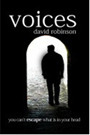 It’s the tale of Chris Deacon, survivor of a terrorist attack who finds himself haunted by strange phantoms and voices in his head. Although the first draft was written in just over a month, the finished product took almost two years to bring to fruition. At about 110,000 words, it’s the longest book I have out, and it is, again in my humble opinion, one of the best, if not the best.
And yet, it sells poorly. Perhaps because I’m so busy with STAC, that I rarely get around to publicising it. It’s also difficult to categorise. It’s currently banded under metaphysical sci-fi, but I think it may be slightly more psychological horror. It has only five reviews, and yet all are 5-star, and, of course, I never solicit reviews, so you can be sure they are genuine.
Here are some of the things the reviewers said.
This is real horror at its best, not because it’s full of blood and gore (there’s plenty) but because you really believe it could be happening.
The apparitions were brilliantly written too – they were scary enough that I was looking under my bed before I got into it
Strong in imagery and filled with believable characters you can really root for. It moves along at a good pace to deliver a powerful ending that will not only leave you feeling incredibly satisfied, it will also leave you wanting more
‘Voices’ keeps you guessing and has a terrific pay-off. David Robinson isn’t afraid to use slipstream techniques or flashbacks to uncover exposition bit by bit
This unusual tale has a gripping plot and believable characters. Highly recommended.
As I write, Voices sits at #25 in its genre chart, and it appears in no less than three such charts.
Here’s an excerpt which I hope will allow you to judge for yourselves.
It’s early in the tale. Chris is in the refectory, queuing for lunch, when he notices one of his students behaving suspiciously. Then the terrifying truth dawns on him.
***
I opened my mouth to shout a warning. The sweep hand on the clock above the service counter reached the top of the hour. The minute hand moved one last time to register 12:45. There was a flash of light and an almighty explosion.
A ball of flame expanded in all directions. With it came the noise of screams, of glass shattering as the windows disappeared, followed by an awful rending of metal. The triple extractors fell from their mountings and crashed to the tables below where they exploded into a thousand pieces. One of the blades embedded itself in the back of Grey Pinstripe’s head. He fell, one hand clawing at the back of his neck. I watched the light go out in his eyes.
At the same time, a wall of superheated air hit my lungs. The blast threw me back, slamming me into the vending machines. Something bloody came my way. I had time to register it as the head of one of the chatterers before I ducked. It struck me a glancing blow on the forehead and my knees buckled.
Dizziness swimming around me, I took in the scene of carnage. Azi and the window where he was perched were gone. The emergency exit had been blown open and at least two students were hurled through it. Pauline was unconscious, one arm laying several feet from the rest of her. In his pram, the baby had a large piece of metal projecting from his chest. Steve Jessop had been thrown towards the service counter, where he lay unconscious, blood streaming from numerous cuts on his face. Emma stared down at a large piece of extractor fan filling the valley between her breasts. As I watched, she keeled over and lay still. Purse Woman lay strewn across Steve’s midriff, her legs slashed to ribbons. Her face was turned my way, but her eyes focussed on the bloody mess that had been Grey Pinstripe’s head.
There was nothing left of the students or the table where Richmond had left his bag. The cleaner’s lower legs were still on the floor. They were several feet apart and the rest of her had been torn from them. All around the central blast area lay the charred remains of what had been people a few moments ago.
Glancing to my left, I could see a counter hand spread-eagled across the hobs, her clothing and hair on fire. I prayed she was already dead. At the staff tables, several were already beyond help; one of the survivors was trying to revive the woman next to him.
Smoke and fumes filled my lungs, I tasted the coppery essence of blood on my lips, my head hurt front and back. I ran a hand across my face. It came away covered in blood. I don’t know whether it was mine or someone else’s.
It seemed as if time had come to standstill. I felt as if I was staring at this horror for minutes, but it was probably less than two seconds.
As the dazed survivors came to their senses, they ran, some making for the emergency exit, the rest, from this side of the room, rushing for the double doors to my right, and the safety of reception beyond them.
The explosion had melted the ceiling tiles and caused a brief flare; enough to kick in what was left of the sprinkler system. Rain poured on the bloodied and charred floor tiles, turning them into a gooey, slippery mess of blood, flesh and water. At the head of the panicked crowd, Marcia Reardon, a tutor from the Languages Department, slipped and went down. The mob trampled her. I saw her tongue loll out before she disappeared under the thundering feet.
I flattened myself to the vending machine as the crowd massed towards the door. A young girl was forced into the corner. She screamed as the herd crushed in on her and pressed her flat against the wall. Then her screams stopped and her eyes faded.
They crushed me too, forcing me back against the unyielding machinery. They were moving to the right. I fought my way to the left, my legs turning to jelly, strength wilting. The tiniest of gaps opened around me and I began to go down.
***Voices is available for download as an e-book in all formats from:
And many other e-book retailers.
It is also available in paperback by searching for the ISBN: 978-1908910424


June 25, 2014
Wednesday Writing: Guest Richard Hardie Talks About Research
Today I welcome YA author, Richard Hardie, creator of the Temporal Detective Agency, a series of time-travelling whodunits.
We all know there’s a lot of research to be done for any crime fiction title, but does it matter when you’re writing for youngsters? Richard says it’s vital. Read on and see why.
 As everyone knows, kids will believe anything and aren’t interested in history, or anything that happened before last week. Everyone knows that… except the kids!
I’ve found that children and Young Adults are among the most discerning readers of any genre. They demand accuracy, mandate that every plot angle and every sub-plot nuance must be neatly tied and that there are no anomalies, or historical errors. Their reviews of a book are from the heart and spare no one, whereas an adult will at least attempt to be kind.
Is research necessary? For the Young Adult readers I write for it’s of paramount importance.
Without giving too much of the plot away, my latest book, due out early August, has all the main protagonists together in the Coliseum in Rome in the presence of Emperor Nero. 99.99% of adults would have had no problem with that and enjoy the story. Not my young friends. It was pointed out to me in no uncertain terms by my YA “testers” that the Coliseum wasn’t even a concept in the time of Nero and was started some 70 years after his death. I tried Caligula and Claudius, but the objection was the same. I did some research and found that the Emperor Vespasian started the building, but it was mainly used during the reign of Emperor Dometian. In fact the emperors who were around when the Coliseum was used for gladiatorial fights were ones most of us have never heard of, but you can’t argue with history… or with kids!
 In my first book, Leap of Faith, I was pretty sure I had both location and history correct in every way. After all, I’d lived on the Gower Peninsular where much of the book is set for many years and I was pretty sure I knew my stuff. One young sleuth told me he loved the book, especially where Tertia, the young detective fights the evil Black Knight on top of the tower of Port Eynon church. However he also pointed out that although the church does have a bell tower, in fact it’s wedge shaped, as many local churches are, and the fight would have been impossible. When I next went back, I checked and of course he was right.
So where do I do my research? I naturally use multiple sources, depending what I’m researching.
Wikipedia is excellent as a general all round information provider. Most of its facts are correct, though as people have found out some can also be outrageously wrong. It’s still my primary source.
Maps are invaluable. In a book people move around (amazing!) and it’s most important that they don’t walk at the speed of sound to get from A to B if the location is factual. Someone aged 14 will spot it! A man who must have used city maps extensively is Dan Brown. Most of his books have his characters racing around major cities, visiting landmark after landmark. Accuracy for him is key.
As my books about the Temporal Detective Agency involve time travel I read and depend on factual history books a great deal. My favourite authors are Peter Ackroyd and Simon Schama. I read both of them for pleasure as well as sources for research. I also have The Chronicle of the World, the Chronicle of the 20th century and The Visual History of the World. For specific historical research I’ll go to the library, though I have to admit I tend to send my Temporal Detective Agency heroes to times and locations I find interesting and for which I have books readily available.
It would be interesting to see if anyone else can spot any temporal, or location inconsistencies in Leap of Faith, I’d love to hear from you! It’s available on http://www.amazon.co.uk/Leap-Faith-Richard-Hardie/dp/
***
 Born in the UK Richard Hardie is a British author who started writing books for Young Adults of all ages while flying on multiple trips to Asia on business. His best known books “Leap of Faith” and “Trouble With Swords” are the first two novels in the Temporal Detective Agency series, which he maintains he will continue writing as long as his characters have fun and he can come up with plots. Richard was a Scout Leader for 15 years and some of his main characters and certainly his sense of humour were developed during his time with the Troop.
Richard is married, with two kids and a cocker spaniel who loves walking long distances along the beautiful Gower Peninsular while Richard bounces plot ideas off him.
You can find Richard on his website at: www.rhardie.com (with additional links to Facebook, Twitter and his email)
He blogs at: http://richardhardies.blogspot.co.uk/
June 24, 2014
Flatcap Regaled
We all know a Flatcap. He’s the bloke in the corner of the pub hovering over a half of mild for two hours, waiting for someone to refresh his glass, in exchange for which he will give you his opinion… on anything and everything.
This is because he is a self-proclaimed expert on anything and everything.
 One of his most popular volumes is Flatcap on Sex. He originally wrote it for men, but it’s proving just as popular with the ladies, as is revealed by the late review from Carol Anne Hunter.
‘This has to be one of the funniest books on the subject – ever. David W Robinson has such a droll sense of humour and his no-nonsense, slightly cynical approach is hysterical. I’ve now purchased the other Flatcap book and can’t wait to read it. I’ll definitely be recommending this one to my friends!’
Thank you Carol.
By way of consolidating his reputation as the Wiki of the Jolly Carter, here is the foreword to his forthcoming volume, tentatively entitled, Flatcap on Marriage. (Note: by forthcoming, Flatcap means any time in the next five years.)
***
They say marriage is a fine institution. So is Strangeways, but would you want to spend the rest of your life there?
In truth, marriage is the biggest con trick in the book. On the day, you only pay for the ceremony, but you pay for marriage for the rest of your life. You’ll tip up your wages every Friday and receive a pittance back out of them, and that’s only to take care of your bus fares or petrol to work.
Over and above the financial sacrifice, you’ll mow the lawn, paint the fence, mend the car, go to Savepennies and do the shopping, clean the windows, program the DVD or hard drive recorder so it tapes all her episodes of Corrie, Stenders and Emmerdale, and after tea you’ll do the washing up. You’ll give up your Saturday afternoon, pre-match pint, and your Sunday lunchtime session with the lads. In fact, marriage will leave you with so little cash that you’ll give up drinking altogether. And smoking. And you’ll give up sex the day after you get married.
Overnight, notwithstanding the fact that you’ve never been nearer to a skilled trade than plugging your X-box into a wall socket, you’ll become an expert on the mechanical iniquities of cars, intruder alarms, cookers, microwave ovens, washing machines, vacuum cleaners, TV’s, radios, dishwashers, central heating boilers, steam irons, curling tongs, lavatories and drains. The minute you’re married you’ll simultaneously become a tree surgeon, gardener, concreter, bricklayer, plumber, carpenter, painter and decorator, roofer, TV aerial rigger, carpet fitter, floor and wall tiler and an accountant. As if all that’s not enough, you’ll be expected to understand the ramifications of a 0.05% decrease in GDP, a 1.2% increase in incidence of irritable bowel syndrome amongst X-Factor contestants, and the fine print in obesity discrimination legislation which is due in from Brussels. At the same time you’ll have to come up with an analysis of the last three months’ winning lottery numbers so you can develop a system to make a profit on it. And that profit will go in her purse, not your pocket.
And what do you get in return? A packet of sandwiches and flask of tea to see you through work every day, and a spot of the other once a fortnight as long as it doesn’t clash with Dancing on Ice.
I’m an expert on marriage. I should be. I’ve had plenty of practice. I fell for it not once but twice. All up, I’m nearing 45 years as a married man. What I don’t know about it by now hasn’t been invented. The bloody Great Train Robbers spent less time behind bars than I’ve spent in marital mayhem, and according to my calculations, if I’d shot both of ’em I’d have been out of jail a week last Tuesday.
There will be those of you reading with a sense of hope, but I’m going to put paid to that right now.
When it comes to marriage, there is no hope. Once you’re in, there’s no way out
***And there you have it. I told you Flatcap was an expert, didn’t I?
You may be wondering whether Flatcap’s work is part of the Crooked Cat Summer Sale. Well, no, it isn’t. With all the perspicacity expected of such a fine organisation as Crooked Cat, they had more sense than to take Flatcap on.
June 23, 2014
Monday Mumbling: World Cup Hangover
The signs are all there. Furred tongue, blurred vision, pounding headache and a general feeling of hell.
Problem is, I haven’t had a drink since we were in Benidorm early in May. Even then it was only the odd half of bitter. I don’t drink.
The real cause is the World Cup. Because it’s held in Brazil, the final match of the day doesn’t end until getting on for one in the morning here in the UK. This means I’m not going to bed until about half past one, and I’m up again for eight. I am simply not getting enough sleep, and that leaves me with all the classic signs of a hangover.
Her Indoors, amongst others, came up with an idea. Forget the late match and watch it online the following morning.
Have you taken leave of your senses? I have been a follower of the beautiful game since granddad bought me the Big Book of Football Champions in 1958. Later, there were times when work intruded, but that aside, I haven’t missed a live World Cup match since 1962. And I only missed them because they weren’t broadcast live from Chile. When the radio in my car stopped working in 2002, I bought a small tranny so I could listen to Becks scoring the winning penalty against Argentina while I was driving to work. I do not miss World Cup matches.
You’d think that because I’m retired, it shouldn’t really matter. Wrong. Living with Her Indoors 24/7, without the luxury of going to work every day, means I have a bigger “to do” list than ever. Anything and everything from mowing the grass out back, to painting the front fence, walking the dog, nipping to the shops, clearing the drains and rejigging the washing line so that it’s properly aligned with magnetic north. The woman is a bigger slave driver than any of the sweatshop bosses I ever worked for.
And in the middle of all this, I’m busy with Crooked Cat’s Summer Sale. (I bet you thought I wouldn’t have the balls to get a cheap plug in there.)
Life is hell and the World Cup is the only cure. Dunno what I’ll do when it’s all over. The mere thought is enough to drive me back to drink.
June 21, 2014
A Sizzling Summer Sale
I was having a good old midsummer moan yesterday, but ten minutes after I’d posted, I learned of the Crooked Cat Summer Solstice Sale.
 You may well ask why, if I’m published by Crooked Cat, was I not aware of it earlier. Well, it was the weekend and me brain doesn’t wake up until Monday afternoon.
The real truth is I forgot. I’m like that. I can recall the registration number of the first truck I ever drove (OWR 207E) but I forget trivia like announcing a sale.
Not to worry. I can tell you about it now.
From yesterday until Friday 27th June, most Crooked Cat titles are priced at just 77p. That’s less than the price of 2.5kg of potatoes at my local hypermarket. True, you can’t slice an e-book up and make chips from it, but it will allow you to disengage your brain from reality and immerse yourself in all sorts of different worlds for hours at a time.
To bring this into perspective, you could download all eleven STAC Mysteries, from The Filey Connection to Death in Distribution for £8.47, and if you want to chuck in my latest release, The Haunting of Melmerby Manor, the first Spookies Mystery, the bill still only comes to £9.24. All that reading for less than a tenner? Crazy.
The sale is already having its effect, with four of the eleven STAC Mysteries now back in the Amazon UK cosy crime chart, but the big surprise is Costa del Murder which has come from nowhere to #24 overnight.
 Not all Crooked Cat titles are on sale. There are some exceptions. The latest releases (I believe) and some other titles have been excluded, but by and large, you’ll find plenty of reading matter at rock-bottom prices.
The sale is only on Amazon, too, so it would appear that if you don’t own a Kindle, you’re snookered. Not so. Did you know you can download free Kindle reading apps onto your computer or other devices?
So there you go. The Crooked Cat sizzling summer sale is in full swing. Grab ’em while they’re hot and cheap.
June 20, 2014
Midsummer Madness
 It’s the summer solstice today. It happens at 10:51 GMT (11:51 BST) this morning if you want to be accurate. So from tomorrow, you can dig out your vest and cardigan. We’re on the slide towards winter, and there are only 187 days to Christmas (NB: days, not shopping days)
I mention that because I want to be the first among my blogger friends to squeeze in a mention of Christmas.
The picture, by the way, was taken in Torremolinos. Its the only one I have of sunrise.
So, midsummer in a World Cup year and with alarming frequency, England are on their way home again. Even earlier this time, having failed to get out of the group stage. And it’s not surprising. They showed flashes of what could be against Italy, but played the same old drab and unimaginative football against Uruguay.
Maybe the England player feel the same as I do about midsummer: depressed. The days are too long, the weather typically unreliable, and sleep is no more than a faint, unrealised hope.
It’ll get worse, too. Wimbledon starts on Monday and I hate tennis with the same passion that I love footy.
For all you World Cup whingers, BTW, there are 7½ hours of tennis on one channel this coming fortnight, and over five hours on another. This compares to about 6 hours spread across two channels of the World Cup, and we get Wimbledon EVERY year, not every four. Not only that, but when the groups stages are over, we’ll begin to get rest days in the World Cup. Wimbledon is rammed down your throat hour after hour, day after day for a solid two weeks.
Enough ranting. Let’s go back to ordinary complaining.
Midsummer is the worst for me. Breathing problems mean I have to watch the heat, and the grass is fully aware of this, which is why it makes an annual attempt to take over the world beginning with my back garden. It needs mowing every three days or thereabouts, if only to ensure that Joe, our crackpot Jack Russell, can go out for a leak without the need of a map and compass to find his way back through the jungle.
The birds, too, love it. They perch on the roof over the back, watching for me bringing the mower out, knowing full well that when I’ve done, there will be a feast of grass seeds just there for the picking up.
And what do I get? Hot sweats, a bad back, and if I’m lucky, a cheese and tomato sandwich to keep up me strength.
Why do I get the feeling that the midsummer the odds are stacked against me?
June 18, 2014
Crime Novels. A heterogeneous genre?
I’ve now opened up the blog to guest posts, and my first guest is fellow Crooked Cat crime author, Catriona King.
The sixth of Catriona’s DCI Craig thrillers was released quite recently. The series has proved popular on both sides of the Atlantic, as you’d expect from a lady whose past career included Police Forensic Medical Examiner.
Here, Catriona talks about the many and various angles which can be incorporated under the banner “crime fiction”.
***
What do you think when you see ‘crime’ on the cover of a novel, or on a sign in a bookshop or library pointing to a book section? Cosy detective novels free of blood and gore? Or as cosy as a crime novel can ever be. Deep psychological thrillers, where twisted individuals with complex back stories, commit even more twisted crimes? Hard-boiled gore fests that have you reading with one eye closed, or smooth intelligent puzzles a la Sherlock Holmes, bringing forth amazing solutions with only minimal clues?
Perhaps you think of contemporary crime like TV’s Lewis, or futuristic crime like Minority Report? Crime set in Victorian times like the Ripper Street Stories, or in the 1940s like Foyle’s War. Lone wolf crime solving or working in a team; there seems to be an insatiable appetite for them all. So…is whatever springs to an individual’s mind when ‘crime novel’ is mentioned really just a reflection of their usual favourite read?
What can help to guide you when you’re purchasing a crime novel? Sometimes the cover gives an immediate clue, with blood splattered across the page, or a quaint scene of an English village setting the tone. Perhaps the title will point to this or that sub-genre: hard-boiled, police procedural and the rest. Perhaps, as happens on Amazon, a book might already be labelled as falling into this section or that, although authors can debate whether their novel is set in the right genre all day long. Is it the back cover blurb that makes you decide whether the novel is a ‘fit’ for you? Are crime novels like boiled eggs, too hard for one but too soft for another, each individual choosing a level of violence that is to their taste?
The truth lies somewhere in all of this but choosing a crime novel can a pretty random business unless you know what the author normally writes. Courtroom dramas from John Grisham, Morse from Colin Dexter etc. That’s often why series do so well. The author is tried and tested and the characters become old friends that we want to meet again.
One thing is true. Rarely has a genre been so heterogeneous and rarely does one offer so much to explore.
So…why limit yourself to procedural, cosy or hard-boiled, why not simply try them all?
***Many thanks to Catriona for this brilliant contribution.
Catriona King is a doctor who was raised in Belfast, Northern Ireland and moved to central London to train and work as a doctor. She trained as a police Forensic Medical examiner. She worked with the Metropolitan Police on many occasions and encountered many fascinating people and situations in both Belfast and London.
In recent years, she has returned to live and work in Belfast, basing her Craig Crime Series in the streets of modern Belfast and Northern Ireland.
Six books in the Craig Series have been released in paperback and e-book and book seven, ‘The Coercion Key’ will be released in August 2014.
Catriona has also released a standalone thriller set in New York City called ‘The Carbon Trail’. It is an action-packed espionage thriller.
 The Slowest Cut on Amazon UK
http://tinyurl.com/nzp2h3q
The Slowest Cut on Amazon UK
http://tinyurl.com/nzp2h3q
The Slowest Cut on Amazon.com http://tinyurl.com/p2awk3m
The Craig Crime Series on Amazon.com http://tinyurl.com/os44kzq
The Craig Crime Series on AmazonUK http://tinyurl.com/p435ro4
Catriona’s website: www.catrionakingbooks.com
Catriona on Twitter: https://twitter.com/CatrionaKing1
June 16, 2014
How Much Per Litre?
Had to go out this morning to fill up the car.
Where I live, getting to a filling station is a work of art. There’s one about two miles from here, near Tesco, but travelling towards Oldham, there’s no way of getting to it because it’s on the wrong side of a dual carriageway. And since the trams arrived, the large roundabout where you could double back, has gone.
You have to think laterally, and travel in a completely different direction first, so you can come up Huddersfield Road on the correct side. It’s a bit like writing a whodunit, except that writers usually engage brain, whereas the planners obviously didn’t have an ounce of brain between them.
So while I’m wandering the highways and byways, I got to thinking about the price of petrol. I’m paying around £1.30 a litre, and that’s scandalous. It comes out at over £6 per gallon and at my age, I remember when it was 25p a gallon.
But what you gonna do? Well, if it helps appease your sense of injustice, you could compare it to the price of other things.
I buy stuff like shampoo and shower gel for about £1 a bottle, and at 250ml per bottle, they run out at £4 per litre. Her Indoors loves milk shake, which comes in 125ml bottles for about £1.30. That’s a princely £10.40 a litre. Stuff like washing up liquid is a snip at a pound a litre, and soft drinks don’t too badly, either, coming in at about that same price, provided you buy them in 2-litre bottles.
At the side of these, checking the medicine cabinet might be calculated to give you a heart attack. I found a bottle of cough medicine (150ml) which cost about £3.90, and that equals about £26 a litre! Worse than that, I have a10ml bottle of cutaneous paint, used to keep warts and skin blemishes under control. Admittedly, I got this on prescription, but if you had to pay for it at the prescription price, it would be a heart-stopping £80 a litre.
All this pales when I look at the dressing table. Even at the cheaper end, it’s terrifying. I bought Her Ladyship a 30ml bottle of some stuff or another when we were in Benidorm. It cost about £50. When you’ve done converting that, it comes to… wait for it… £1650 per litre.
Thank god I’m not running the car on it.
June 12, 2014
The Haunting of Melmerby Manor – Excerpt
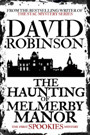 The first of a new series, the Spookies Mysteries, The Haunting of Melmerby Manor was launched the day before yesterday and although it’s early days, it appears to be doing quite well, currently sitting at #9 in the Amazon US British horror bestsellers.
It’s the kind of tale which has everything. Ghosts, ghouls, a poltergeist or two, a violently angry spirit, and a dedicated spirit guide, along with a member of the British aristocracy, a tough ex-cop, and a wheeler dealer IT wiz to provide us with some humour. And it’s all wrapped up with a murder or two and the hunt for 25,000 pirate DVD movies.
Just to whet your appetite further, here is a short extract from the book.
On the trail of a violent and angry spirit, the team have arrived at Melmerby Manor only to find the electricity has been switched off for the winter months. While Sceptre and Pete unload the equipment from the car, Kevin has been sent to the basement to switch on the electricity. He is alone in a maze of wine racks in a pitch dark cellar with only a small flashlight for company.
***
Kevin pressed on. He was sure that at some stage, he would encounter a wall, and when he found it, he would stick to it, follow it until it brought him back to the steps, the electricity switch or both.
Disturbed thoughts jumped into his mind. Didn’t Anthony Perkins keep his mother in the cellar in Psycho? He recalled watching it on late-night TV one night when his parents were out, and how scared he was when Vera Miles turned the decaying old woman round and the cameras gazed into the hollow eyes, fastened on the festering, unrecognizable skin and…
Once more he closed his mind to the images. That was fiction. People didn’t do things like that in real life… did they?
Frantically, he searched his anxious mind for the good things that happened in cellars. To his terrified dismay, he could not think of any. Everything that happened in cellars was bad, dark or dirty, including the delivery of coal in the dim and distant past. When Buffy got into a fight, it was always in some subterranean crypt or vault, and Christopher Lee had spent half his working life in these places before he moved on to cutting people’s arms off with his light sabre and sending orcs to waylay them.
Kevin pressed on, almost tiptoeing so his footfalls would not disturb the phantoms in that black hole.
From somewhere in the distance came a scrabbling. Convinced that it was a figment of his imagination, Kevin stopped and held his breath, ears pricked, listening, listening. There it was again. That was no auditory hallucination; he knew enough about the strange sounds that sometimes emanated from headphones and microphones to know the difference, and this was for real. A scratching, scraping sound, and it was not far away. His aural sense of direction was poor, thanks, he maintained, to all those times when the school had compelled him to sit by the speakers during morning assembly. He couldn’t locate the direction from which the sound came, but there was no mistaking it. A scratch-scratch, scrabble-scrabble, as if something was trying to get in (or out) out of its coffin.
Then came the tiniest of squeaks, leaping into the darkness, and that was enough for Kevin. He ran. Heart thumping painfully, he dashed blindly along the narrow aisles between racks, flashlight waving erratically in front of him. He tripped, rattled heavily into a rack, heard a crash, wondered vaguely if the wine bottles were coming to life to pursue him, and accelerated just in case.
He turned right, ran some more, turned right, ran some more, turned right, ran some more and finally had to stop to catch his breath, the years of smoking and crummy diet catching up to him, denying him the strength to get out of that dark, forbidding vault. He gained some control over his heaving chest and listened. There it was again. Squeak, squeak, scratch, scratch. Something clawing its way towards him. He looked at the torch.
“Maybe the light’s attracting it,” he whispered to himself.
He flicked off the lamp… and promptly flicked it back on again. Less than a second of impenetrable darkness produced terrifying visions far worse than anything he had ever seen in the movies, much more terrifying than the notion of a vampire trying to give him a love bite.
He ran again. Where were those rotten steps? Sod the electricity. Pete could come down and switch it on. He was bigger than Dracula anyway. Bigger and stronger. And so thick-skinned, the vampires would need a hammer drill to get through his neck, never mind fangs.
Ahead, he made out the whitewashed walls, that he knew lay near the steps where he had first come down. He was moving so fast he almost crashed into the wall. He flashed the torch right and left, and still couldn’t see the steps. All he could see was more whitewashed wall, running off in both directions. The scrabbling was coming closer. Consumed by panic, he tried to decide which way. Eeni-meeni-myni-mo. He turned left and hurried along. Ten metres away, another wall sat at right angles to the one along which he was tearing. He reached it, turned left again and …
Suddenly the entire cellar was flooded with light and there, straight ahead of him, was the tall, gaunt figure of a man.
He let out a terrified scream.
***
Who is the stranger in the cellar? Will Sceptre and Pete get there in time to save Kevin, or is he doomed to become another ghost haunting Melmerby Manor?
You’ll have to read the book to find out.
The Haunting of Melmerby Manor is published by Crooked Cat Books and available for download from:
Amazon UK (Kindle)
Amazon Worldwide (Kindle)
Smashwords (all formats)
Crooked Cat Books (MOBI, EPUB, PDF)
June 10, 2014
Writing Whodunits: Why I Prefer the Private Eye
It’s one of those early decisions you have to make when you’re writing crime fiction. Do you want to work with the police or not? I decided early on that I preferred the private eye. That doesn’t just apply to my cosy reads, the STAC Mysteries, but my harder thrillers, The Handshaker and The Deep Secret, too.
I used to joke that I was too lazy to do the research on police procedures, and there is an element of truth in that. You have to get them right or you’ll have readers queuing up to tell you you’re wrong. In fact, the research required with sleuths, amateur or professional, is often just as challenging.
I find I have greater freedom with the plot if I’m using a private eye rather than a cop.
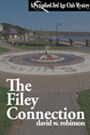 Taking the STAC Mysteries as an example, Joe is the key sleuth, the man with the supreme powers of observation, and the logical mind to wire up the different aspects of the crime. Sheila and Brenda are the support team, the people around him who point out the shortcomings in his deductions, and who are there to support him when the going gets tougher than he anticipates.
In this respect, it’s no different to having a central police officer who drives the investigation, with his 2IC and other junior officers, to support him.
But there are rules to the way police officers just approach an investigation and interrogation. Joe is under no such strictures. He can leap from A-K with bothering about B, C, D, etc. He doesn’t have to wait two or three days for forensic reports to come in. He can dive straight in and begin asking the pertinent questions. He can also come to conclusions which the police might not, very early on. In both The Filey Connection and The I-Spy Murders, for example, Joe decides it is murder long before the police could commit themselves, even had they realised it before him.
But Joe has his restrictions, too. Witnesses are under no obligation to speak to him as they are the police. Carful character construction is needed to get round the problem. In Joe’s case, it’s a mix of badgering, both curmudgeonly and persuasively.
I may be stretching suspension of disbelief with the police acceptance of his “interference”, as it’s often described, but I’m not the first author to do that. In reality the police are no more likely to rely upon Joe than they are a little old lady from St Mary Mead, and even back in the thirties, I doubt that they would have called upon the assistance of a Belgian genius.
And yet the readers accept Joe as they accepted Poirot and Miss Marple, and it’s not because we like to see a private individual put one over on the cops. It’s because the cosy mystery presents a problem that needs brains and observation to solve it, and the readers love to take on that challenge.
Finally, working as I do with a three-cornered MFF combination, allows me to have a lot of fun, usually at Joe’s expense when the two women, his best friends as well as his employees, begin ragging him.
I’m always impressed by the work of the police procedural authors, and I read my fair share of them; works by namesake Peter Robinson, Ann Cleeves, Crooked Cat’s Frances di Plino and Catriona King. But when it comes to producing novels, I’ll stick with my sleuth, thanks.
Always Writing

- David W. Robinson's profile
- 51 followers

