Ryan George's Blog, page 4
January 23, 2024
Soul Whispers from a Desert Heron
This incredible day may have been why I was destined to return to Big Bend National Park a fourth time.
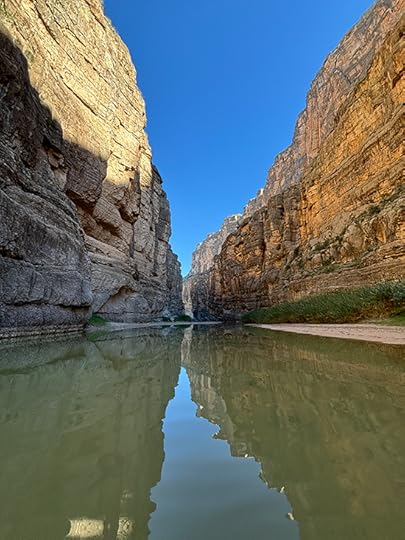
We woke on New Year’s Day to frigid temperatures in our AirBnB camper. The heater had gone offline the night prior, and we couldn’t get it back on. Huddled under layers of blankets on either end of the RV, we talked about options for the day. The Rio Grande’s flow levels were so low (down 90% from the first time I visited which was already low). So no vendor would rent us canoes to run Santa Elena Canyon—one of the most spectacular features of Big Bend National Park—from west to east. Almost able to see our breaths in our trailer, we called one of the vendors at 8am and found a chipper Erin Little. Erin helped us load the canoe on our rental and told us if we were willing to portage a bit, we could probably canoe upstream to a famous natural formation and back out.
Wearing layers of thermal gear, we raced to the east end of the canyon and set off upstream. We paddled through still, lake-like stretches of what used to be a whitewater river. We pulled our canoe through frequent shallows. But in the chilly shadows of a canyon not yet fully warmed by a January sun, we had the tranquil place to ourselves
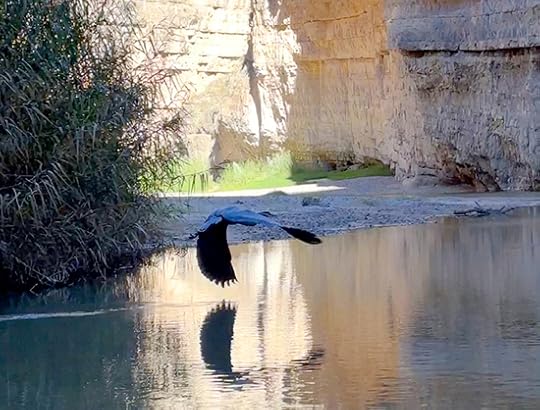
Click to watch the video
Two weeks before our trip, I listened to Sean Of The South’s incredible memoir, Will the Circle Be Unbroken? It was the best book of the 46 books I absorbed in 2023. In it, Sean Dietrich talks about the aftermath of his father’s suicide and about two encounters with herons that marked the journey of making peace with that loss and its consequences.
I’d been struggling to sense God’s presence on this trip, even though my heart typically brims with spiritual connection in wild places and during adventures. I told Jesus I wanted to meet him in this desert. Other than enjoying Aaron’s friendship, with only two days left in Big Bend, I was still waiting on that encounter.
Then we happened upon this heron. I’d never seen a heron in Santa Elena Canyon. It caught a fish right in front of us and held the fish in its mouth for minutes on end. It watched us and let us draw near several times. Then it kept flying 50 yards or so downstream and waiting for us to catch up.
I broke. Hot tears slid down my cheeks. I didn’t say anything to Aaron for a long time. I didn’t even turn around where he could see my liquid emotions.
I was about to return home for the final phase of releasing a book about losing my dad to a very different selfishness, and Jesus knew how to reveal his Good Father’s heart to me. He sent a heron, full of memories from my childhood on the Chesapeake Bay and with figurative meaning from a book that salved my heart.
In the front of that canoe, I now knew I would leave that desert with a nourished heart.
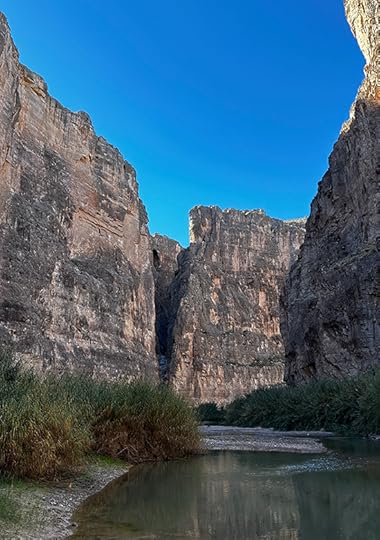
It was wild for me to see how much vegetation was growing in this canyon. For thousands of years, the river was held mostly by rock. With so much water being removed upstream, this section of the Rio Grande felt as much like the marshes of my youth as it did an intimidating desert refuge. What for friends of mine had been a harrowing whitewater journey was for us a slow meander up and down a gentle stream. (You’re looking at Mexico on the left and the United States on the right.)
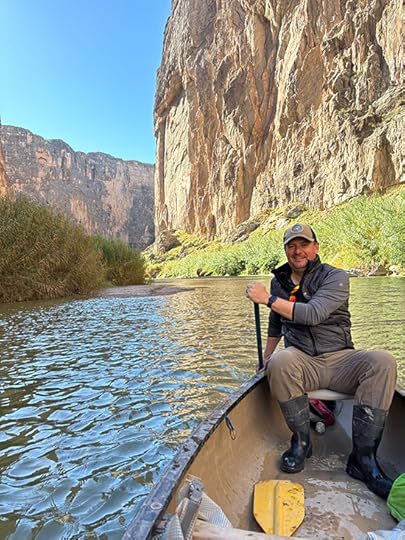
Aaron had heard almost a dozen different folks from our shared church hype Santa Elena Canyon. A lot of that hype came from me. Both my face and my soul smiled for Aaron to get to experience these massive walls, this luxurious solitude, and even the unmistakable smells of this citadel. We had our heads on a swivel the whole time, marveling at the scale and details of the massive walls that held the river and our attention. I asked Aaron if I had oversold it and was relieved when he said I had not.
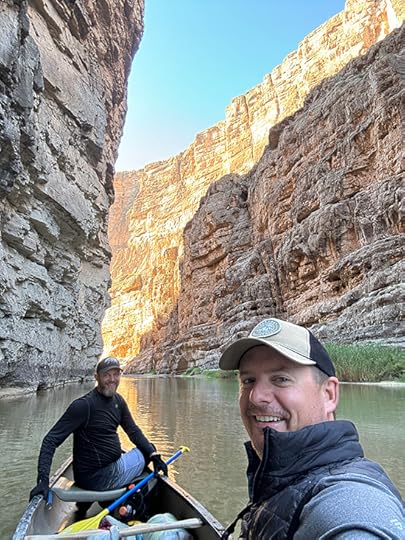
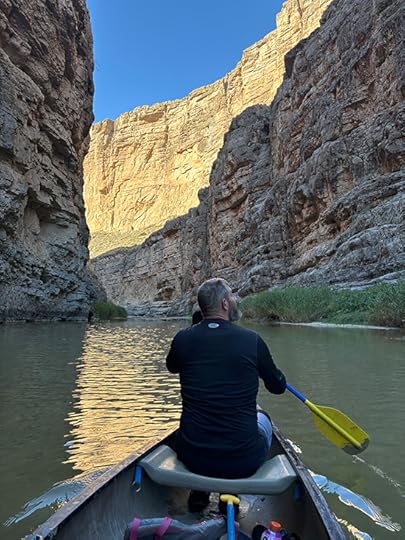
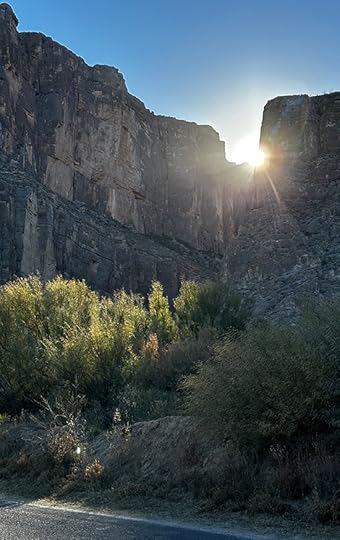
I don’t know if I’ll ever see Santa Elena Canyon again, but I’m at peace with that. Our New Years Day float proved the perfect encore to my previous two float trips there. It’s as if the loose ends of the story were tied into a bow.
As we pulled away from the canyon to return our canoe to the livery in Terlingua, I turned around to see the sun settling—settling into the canyon as if to hide there until the next morning. It was a chef’s kiss goodbye to a place where a number of my friendships have been enriched in shivering cold, wet mud, and unexpected adventures.


June 15, 2023
What Middle School Boys Taught Me About Discipleship
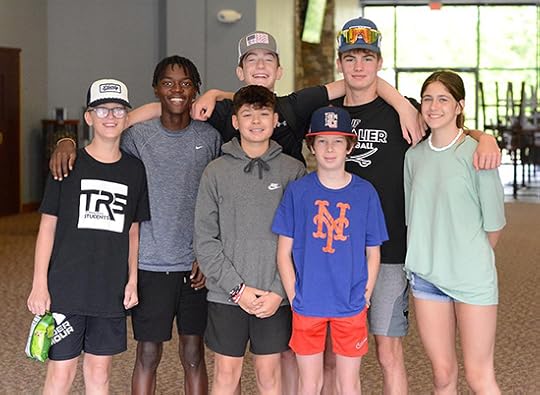
At the end of the church service last Sunday, I got distracted by something happening eight feet in front of me. Four middle school boys had their arms tightly wrapped around each other, swaying as one while they sang the lyrics on the big screens. They held that chain of physical connection through our pastor’s final prayer. I smiled. Those boys must have been at summer camp together this week.
Roughly two hundred students arrived home Saturday night from a camp where 15 of the kids had gotten baptized in a lake—some by their parents. As I scrolled social media before bed, I saw posts from multiple parents about how there was something special happening last week between the high ropes course and the water zip line. Some of the language, photos, and videos reminded me of what observers reported about the recent Asbury Outpouring. It didn’t look like how any week of church camp ended across my multiple experiences as a camper (or my five weeks in 1998 as a counselor).
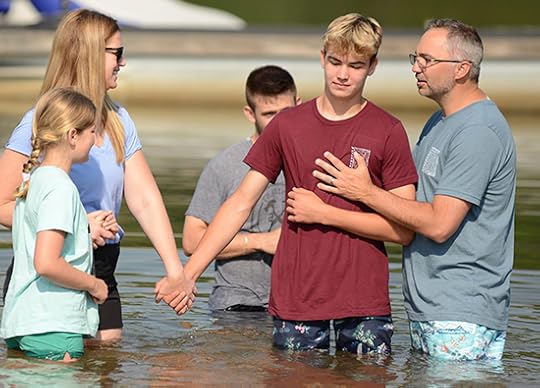
Those middle school boys took me back to a line from Luke’s journalism of the years after Jesus’ resurrection. Luke recorded the response of the Hebrew priests to Peter and John. First, the religious leaders were impressed by the apostles’ boldness despite their lack of education. Then, Luke says the Jewish elites noted that the “men had been with Jesus.”
For the last several weeks, I’ve been thinking about this verse. I co-lead a men’s Bible study with attendees representing up to six different churches in our area. We exegete a lot of Scripture together and spend vulnerable time in intercessory prayer. But I’ve been pondering whether—when we leave our fire pit and head home—our wives and friends can tell we’d been with Jesus.
Jesus said he was the Way, the Truth, and the Life. I wonder if my buddies and I seem more aligned with the way of the kingdom, more authentic with our realities, and more alive and life-giving than we were a year ago. Jesus said he and the Father are one. His protege, John, said, “God is love.” So, looking more like Jesus means embodying love. That leads me to reflect on the list Saul of Tarsus wrote about true love in 1 Corinthians 13.
Am I becoming less irritable? Less boastful? Less rude?
Am I growing less demanding, less vindictive, and less jealous?
Am I developing more patience? More kindness? More hope?
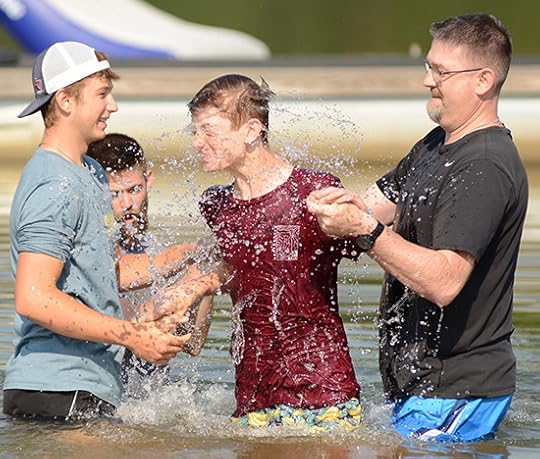
Those middle school boys came home from camp with softer hearts and less concern about appearing cool. While they hadn’t literally “lived with Yeshua” (Acts 4:13 APEB) like Peter & John had, they had a proxy. Those gangling guys had shared cabins and meals and adventures with counselors who’ve spent a lot of time with Scripture, with spiritual music, with vulnerable community, and with faithful mentors.
Those eighth graders exemplified a critical truth:
who we let disciple us determines how much people will be able to see Jesus’ influence on our hearts.
I’ve been taking stock of the voices in my life. I watch standup comedy pretty much daily, and I struggle not to “sit in the seat of the mockers” (Psalm 1:1 NLT) or “take [my] seat among the know-it-alls” (Psalm 1:1 MSG). I listen to probably twenty podcasts and a nonfiction book per week, and I’ve often had to ask myself if the voices I’m absorbing are healthy for my eternal heart. While it’s beneficial to regularly take in opinions different from our own, I’ve wrestled with the tenor of those voices. I’ve had to work to offset the disembodied content of strangers with (1) the voices of seasoned believers around our weekly fire pit, (2) the intuitive perspective of my wife, (3) the questions of my church’s elders, and (4) the insight of my faith-based therapist.
I’m not the only believer who struggles to guard my heart as encouraged in Proverbs 4:23. I have friends who are being discipled by talk radio flamethrowers, cable news pundits, and conspiracy YouTubers. I can tell by the content shared online or referenced in conversation that others filter their Jesus through prosperity salesmen, raging preachers, legalist theologians, or Instagram influencers.
We’re all being discipled by someone else—probably multiple somebodies.
Those disciplers either push us closer to the Way, the Truth, and the Life or pull us farther from the Source of All Love. We’re either getting softer or harder, kinder or more critical, more or less forgiving. And the voices we let speak over us prove to be a critical factor in our spiritual trajectory. So, if we’re not becoming more humble, patient, gracious, and compassionate, it’s wise to ask whether the voices in our lives have those qualities.
While I never want to go back to seventh grade or summer camp, I do hope observers will smile when they see a change in me. For that to happen, I’ll need to regularly inspect the voices I let past my ears and into my soul.
Cover image purchased from iStockPhoto.com
Other images pulled from my church’s social media
April 26, 2023
A Faith Paradox Not Discussed Much at Church
For centuries, both scholars and the uneducated have tried to untangle the enigmas of the Bible. That goes for both people of various faiths and those outside of religious affiliation. We’ve wrestled with sovereignty vs free will, a loving God vs a loveless hell, New Testament grace vs Old Testament legalism, Jesus’ countercultural elevation of women vs Paul’s inconsistent misogyny. Despite all of the content I’ve watched, listened to, and read that attempts to shed clarifying light on these tensions, I still don’t have those mysteries totally settled in my head. I’m not sure if I ever will. In fact, I wonder if finite humans were ever destined to figure out an infinite being.
One specific paradox in Scripture has captivated my attention for years. Hundreds of times in the Bible, readers see the command, “Don’t be afraid,” or “Fear not.” At the same time in Habakkuk, Romans, Galatians, and Hebrews, readers are told, “The just shall live by faith.” These imperatives might not seem incongruent to you. But as an adrenaline junkie, I bump into these opposing declarations a lot.
See, you don’t need faith if you’re certain. I get nervous about a skydive or bungee jump only if I doubt the equipment will work. I update my life insurance when I question the reliability of the harness or the physics involved in my next stunt. You don’t need faith if you thoroughly understand how something works. You don’t need faith when everything is running smoothly. In an ironic way, you can’t express faith unless you have some doubt, some fear, or both. So how do you or I live by faith without some degree of uncertainty?
Jesus’ little brother, James, said we demonstrate our faith by doing what proves we have it. Like Abraham following God’s wild command to sacrifice his son until God called it off, we apparently get credited for our faith only after we act on it. When we do scary things for God, we prove that we love him. Our faith becomes official when we don’t understand where we’re going but follow anyway.
That brings us back to the question: why would holy messengers and even Jesus himself tell us not to fear? Why would we be asked (1) to lean into what only faith can empower but also (2) not to fear, doubt, or worry? Those seem like contradictory assignments.
Between you and me, I don’t know the answer to those questions. I definitely can’t tell you Heaven’s official statement or refer to one from Sovereignty’s legal team. I can, however, explain how jumping off airplanes, buildings, and mountains has clarified this paradox for me.
I walk on the wings of old biplanes in flight or hang hundreds of feet off the ground from a cliff because it scares me. Several times a year, I do things that make my hands sweat, my knees shake, and my bladder scream for release. I put myself in situations where fear pulses in my thumbs and throbs in my eardrums. I regularly pull the fire alarm that engages my fight-flight-fawn-or-freeze response system. I let uncertainty yell right next to my face like a 1980s college basketball coach.
And then I disobey those voices.
I jump anyway. I climb higher. I push the accelerator further. I know that my body will soon fill with reward chemicals and that my conversations will soon be filled with another story of adventure. I hear the detractors, but I move toward the call to adventure.
Jesus said his sheep know his voice and follow him. In situations where the Holy Spirit’s voice is being heckled by fear and doubt and worry, he’s asking us to move toward The Way, The Truth, and The Life. So, when I read, “Fear not,” I hear, “Obey my voice instead of theirs.” I’m not sure that the library of Scripture is claiming that fear is unreasonable from a human perspective or that doubt doesn’t make sense for a finite being. To me, Sovereignty asks us to believe his heart is good for us and that he knows something we don’t.
Scores of times in my life now, I’ve disobeyed fear—harkening instead to the voice of adventure. Every single time, I’ve been rewarded in some way. That streak has convinced me to focus on the prize. That pattern of reward has made it easier for me to lean into new and bigger challenges. A similar pattern has proven true in my faith. I’ve found that the call of a Good Shepherd leads me to healing encounters, beautiful moments, and sovereign appointments.
Both physical and spiritual adventures have cost me—sometimes dearly. In both realms, I’ve walked with a limp every once in a while after disobeying fear. I’ve been underwhelmed a few times by how I feel afterward, but I’ve also felt connected to something larger than my little life. I’ve seen discomfort overmatched by exhilaration. I’ve looked at a bruise and smiled because of what came with it. I’ve found purpose, meaning, and even redemption on the other end of surrender.
After being upside down in a glider, I’m grateful that I didn’t acquiesce to my doubts. After I rappel over the edge of a precipice, I’m thankful I didn’t succumb to fear. And after I complete a spiritual assignment, I luxuriate in the love of a Good Father.
I’ve learned that when uncertainty and Certainty both beckon me to follow them, the voice that bids, “Fear not,” is the one I should trust.
—
Stock images purchased from iStockPhoto.com
April 23, 2023
How Sundays Should End
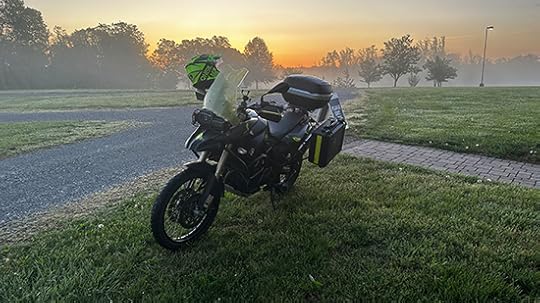
 My dashboard thermometer showed my ride to church dropped as low as 38º, but I was instantly warmed by a gorgeous sunrise, an outdoor speaker blasting introspective music, rousing conversations with friends, and the squeeziest hugs from princesses named Willow, Nora, and Mabel. I left our campus brimming with eternal love dispensed from big speakers and tiny voices.
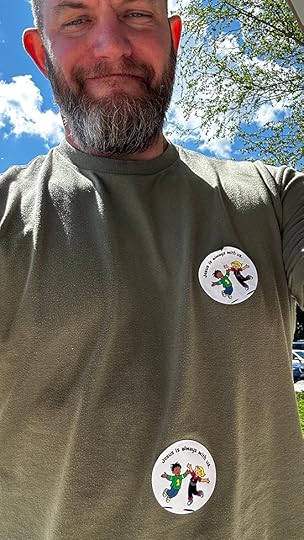
After the service, two princesses gave me their take-home stickers from Blue Ridge Community Church. I know how much stickers mean to little girls. So, I wore these de facto medals with pride—including on my 19 miles of trail riding. And you know what? Jesus WAS with me there (as I expected he would be).
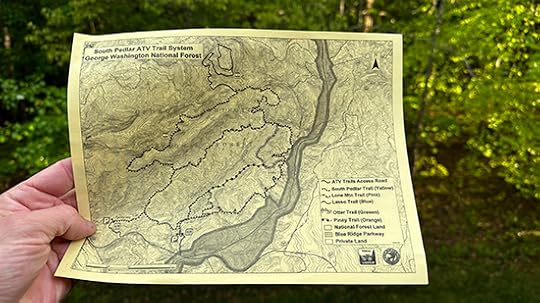
I’ve co-led two different ministries with my friend, Daniel, for almost a decade. He shoots only straight with me. In the past, he’s told me that he was concerned with my riding skills and how big my first bike is. But a week ago, he said I should try my hand at a new level of riding: the South Pedlar ATV trail system. This morning at Blue Ridge Community Church, he gave me intel on this mountain course meant for ATVs and motocross bikes—not 500lb enduros. His vote of confidence gave me the courage to tackle what for me was rigorous, challenging terrain. Alone.
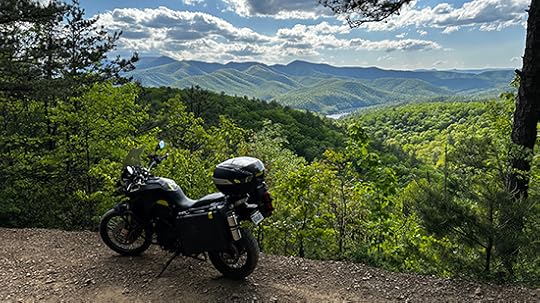
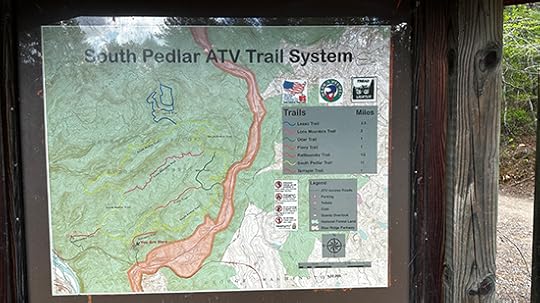 Part of me wishes all of the trails were this flat and smooth. But most of me knows I wouldn’t have come home with anywhere near the sense of accomplishment if it were. If tests are where we prove what we know, today’s trail riding test confirmed that I’m not done learning, growing, and stretching in my journey to the man I want to become.
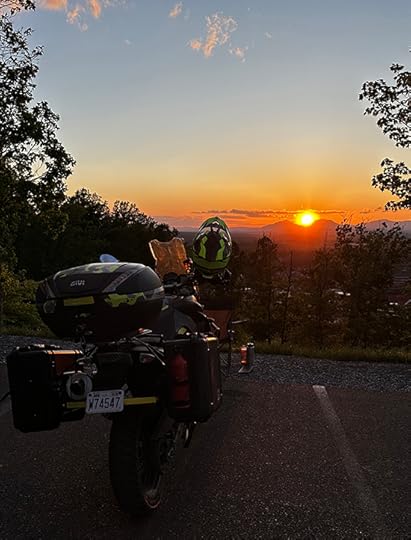 When the sun set on my sabbath, I watched from a paved parking lot on a very different mountain with a different set of trails. Candlers Mountain is where I hike before work and on full moon nights. The stranger parked next to me rolled down his windows and blasted worship music. Every song matched the view. As temperatures dropped with the sun, I drank hot cocoa and texted thank-you notes and updates to friends. This workhorse carried me 125 miles up and down and in between mountains today. I feel those miles in my back and hips and shoulders. But I also feel them in my heart, and it is well with my soul. Something tells me that’s how Sundays should end.
March 2, 2023
Finding My Purpose While Lost in the Woods
This time of year, half of the miles I hike each week happen before sunrise. So, I hike in the dark or in low light a lot. Because I’ve memorized most of my circuits, I often don’t turn on my headlamp unless I know a section has lots of roots and rocks.
On mornings without pressing work deadlines or on nights when I’m luxuriating in a full moon, I regularly add some trails to my standard routes or follow whimsy to paths less traveled. I keep a trail map on my phone and sometimes carry a paper backup copy in my hydration pack. Even with the map and a headlamp, I’ve struggled at times to orient myself in the woods.
In the past few years, the university that owns the land illustrated on the map has made it easier to pinpoint where in the forest I am. They divided the map into squares. Across the top of the map, numbers go west to east. Down the height of the map, letters run north to south. Then, on trees along the trail, they’ve posted white, reflective signs about a fourth of the size of a highway mile marker. On these signs are printed the letter-number combination that indicates the square in which you’re standing.
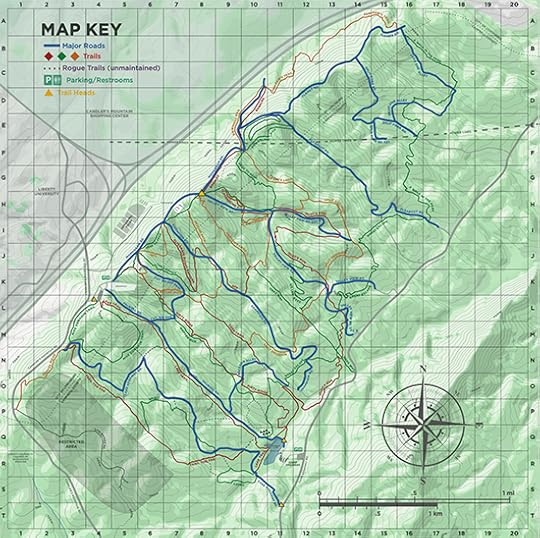
I typically hike without my glasses. So, I can’t see the orienting information until I get to the trees that hold the signs. But I know one of these tiny waypoints is coming long before I get to them because my headlamp turns them into glowing beacons from two hundred feet away.
I’ve been thinking a lot about these trail beacons lately. More specifically, I’ve been pondering a metaphor they represent.
Big Lights, Big ProblemsSee, celebrity pastors, worship leaders, and influencers keep creating headlines. And not the good kind. Scandals tarnish their shiny platforms. Well-lit people of faith are falling prey to doubt or disillusionment. People in the limelight wobble off their pedestals or wrap their ministries with controversy. Seemingly hours later, podcast segments and online think pieces guess at what their downfalls or defections cost American evangelicalism. Eventually, those thoughtful monologues give way to pitiless memes. The spotlights that enlarged the influence of those in the headlines later magnify their faults and limitations.
In the vacuum created by their dismissals and resignations a batch of hungry “leaders” stand ready to step in. One person’s evacuated spotlight is another person’s opportunity. The on-deck circle is full of people who’ve gone beyond praying like Jabez. They’re creating a constant stream of fodder that social media platforms use to expand their territories.
Candidly, I’ve often craved standing in front of crowds. I’ve longed for the stage and its spotlight. If my words were as valuable as people told me they were, I thought they deserved more ears. I assumed that if I got great feedback in conversations with friends or in the comments on my blog posts that bigger audiences would benefit from my observations. With more than a decade as a ministry leader, I figured some sort of Kingdom meritocracy should be rewarding me any day now. If my actions were bearing fruit, it made sense that it should accrue via multiplication instead of slow addition.
Content in the DarkSometimes, Jesus does multiply loaves and fishes. Sometimes, he puts booming voices in front of large crowds. Sometimes, lives are changed by words said on bright stages. My life has.
I’ve learned over the past few years, though, that Jesus does a lot of work outside of the spotlight. That has proven especially true on my journey with him. Some of the most fulfilling conversations of my years in ministry have happened when hikers’ headlamps have lit up my J7 reflector or R9 sign. One of the most affirming things that happens in my life is when someone trusts me as a safe holder of their pain, their questions, or their secrets. A dude will stick around a fire pit after everyone else leaves and unburden his heart. My daughter will climb the stairs to my office and declare, “I have a question.” A sibling will request help reading the topography map of the newest section of their life. Someone will tell me that the card I sent as obedience to a Holy Spirit prompt arrived at a sovereign time.
My contribution matters to the kingdom, but it’s discovered by headlamps and iPhone flashlights—not by stage LEDs.
And you know what? There’s a lot less pressure when you’re just a reflector on a tree instead of an orator on a platform. I don’t have an aura to maintain, a profundity to curate, or a piety to showcase. Shortcuts don’t tempt me as much. I don’t have to stress about growth strategies or crowd management. I’m less likely to measure my impact for the kingdom by counting the butts in chairs or on my Instagram followers list. I don’t have to figure out what I can monetize next to the money changers’ tables. I can be just a curious soul, constantly absorbing books and podcasts and interesting conversations. I don’t have to mine every surface of my life for lessons or analogies or quotes that fit perfectly in Canva-crafted squares. I can wait for all of that to find me. Or for me to find it.
And I do—especially on the dusty trails of the tiny mountain I often traverse before work.
January 30, 2023
Economy Class Sovereignty
It might be selfish of me; but before I start an outdoor adventure or leave on a big trip, I ask Jesus to reveal his heart, his character, or his glory. Before my first flight toward the Arctic Circle, that prayer came with a visual hope: to witness aurora borealis in person for the first time. For this trip, I added a second prayer request: “God, will you show me why you put the desire in me to go on this trip—why you wanted me to search for you in the Arctic Circle?”
That request was answered before I boarded the second of my three flights to Rovaniemi, Finland.
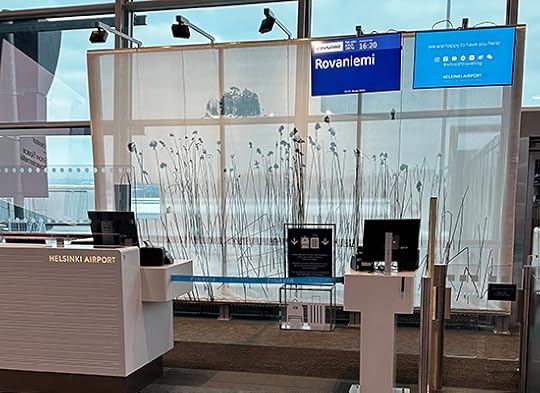
When Finnair personnel appeared at my gate, I approached the podium. I asked one of the agents if there were any empty seats in the front of the plane to which I could upgrade and how much that would cost. She clicked a bunch of keys on her keyboard and studied her monitor. There were no remaining business class seats. “All we have available in Premium Economy are middle seats,” she noted as her eyes worked down her screen. A few metallic clacks later, she added, “To upgrade would be $260.”
The gate agent paused and then quietly suggested that I shouldn’t pay for the upgrade. “I’d stay with your assigned seat. You’re the only one in that row.” If I sat at the 58H on my ticket, I could claim four contiguous seats. Four sets of pillows and blankets. Four screens I could set to different map and camera views. I would have more room than anyone had in business class, let alone in the middle seats right behind the see-through curtains.
The answer to my prayer wasn’t the ability to spread out and sleep, though that was a nice cherry on top. In fact, Heaven’s response to my request only indirectly applied to my trip. It just made each and every wild adventure I was about to have in the arctic a bonus gift.
No, the answer was something bigger than flights—bigger than my vacation.

In 2021, I released my second book through what was basically self-publishing. I hired a former White House writer to edit the manuscript. I commissioned an award-winning book designer in London to design the cover and lay out the interior. I bought a three-microphone recording setup and paid one of the best podcast producers in Nashville to create a podcast series to support the book’s launch. I ordered custom podcast merch. I had impressive full color boxes printed, filled them with books, and shipped them with handwritten notes on custom greeting cards to Christian influencers. I hired one of the top publicity firms in Christian publishing—which has represented more than 90 bestsellers—to book me on as many TV, radio, and podcast shows as they could.
I spent more than $30,000 in an attempt to get people to care about what I had to say. At the time of this posting, I’ve sold fewer than 300 copies. Not great ROI. I’ve been embarrassed by how small the checks have been to the charity that gets all of my author proceeds.
When my publicist asked me why I wanted a publicity tour, I told her I was using Scared to Life as a vehicle to earn some name recognition for my next project. I was writing “the book for which I’ll be known” and assumed that traditional publishers wouldn’t give me a look if I didn’t have a big enough presence in the marketplace.
I finished the manuscript of that third book last summer, hired a literary consultancy to help me build a killer proposal, and landed a well-respected agent to pitch my book to traditional publishers. Over the last few months, every single one of the acquisitions editors he contacted declined to purchase the book. The feedback: I was too much of a risk. With such a small personal platform, I was an unknown variable.
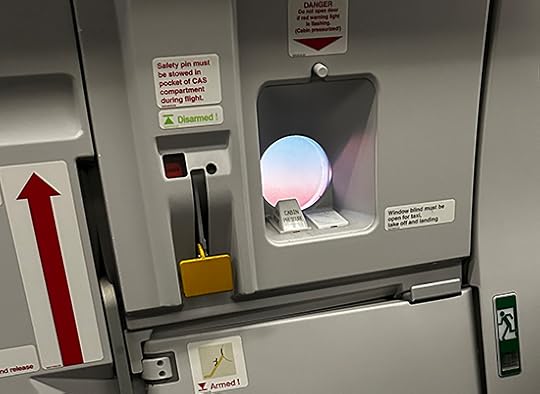
For the past three years, I’ve been trying to buy a middle seat in the Premium Economy section of the Christian Industrial Complex. And it has cost me far more than $260. I’ve asked insiders and professionals over and again how I can get a bigger seat with more wiggle room. I haven’t been chasing fame, but I’ve tried so very hard to sit where people assume your words are worthy of attention.
The irony is that in the back of the plane—in the parking lots of my church, around the fire pits where my friends and I disciple each other, and in the home I share with my adopted daughter—my words already carry weight. In our shared economy seats, fellow passengers say my texts, cards, and conversations minister to their hearts. I luxuriate in feedback from friends, family, and ministry relationships that my life matters and that my investment in others bears fruit. My soul spills over with connection, affirmation, and purpose on Sunday afternoons, on Wednesday nights, and at bedtime after long conversations with my kid on the couch.
A woman in a Finnair uniform of JFK’s terminal 8 implied for my flight what Jesus was speaking over my life: “You’ll be grateful for your assignment in the back of the plane.”
I knew when I arrived home from Finland that a ton of work awaited me. Self-publishing would be a gauntlet again. But this time, I would spend less, press less. I wouldn’t fight my caste or my assigned obscurity. I wouldn’t try to push, pry, and maneuver myself onto a stage Sovereignty knew I wasn’t yet ready to occupy. That realization freed me to absorb five days of frozen adventures with a sense of contentedness and wonder.
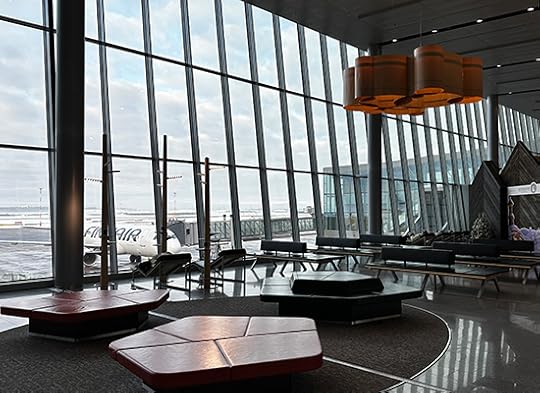
My flight back across the Atlantic didn’t have a seat assigned until I checked in the night before my departure. As I scanned the seat map on the airline’s website, I scrolled down the plane’s rows until I found the seat I wanted. I clicked on 58H and then on the Check In button.
I had the whole row to myself on all three flights back to where my MINI was parked. I drove from that North Carolina airport to the Virginia library where my spiritual adventure community gathers during January & February. The meeting room buzzed as energy radiated from more than 20 guys. Every dude shared what the Holy Spirit was whispering to his heart that week.
When it came time to pray over each other, I scanned the room before I closed my eyes. I removed my hat, bowed my head, and thanked God. I was sitting in the back of the plane, and I knew almost at a cellular level it was exactly the right place to be.
January 17, 2023
When Romance Arrives As Redemption
Last night, I was given the distinct honor of officiating what social media has recently dubbed a “micro wedding.” No registry, no reception, no dancing, no music. Just a quiet moment for two people to walk through a gate into the rest of their lives. I asked the bride if there was anything she’d like me to incorporate into the homily. She said, “restoration and redemption.” I looked into her eyes on the sidewalk next to the courthouse where we filled out the paperwork. I knew those words were her story. I met the groom half an hour before the ceremony and chatted about his journey to this moment. His life story showcased those two words, too.
In case you have some pain you’d like redeemed or brokenness you’d like restored, here’s what I said to the bride & groom. I hope the human vessels of Jesus’ love in your life will likewise help you realize that healing through their acceptance and affirmation, challenge and loyalty.
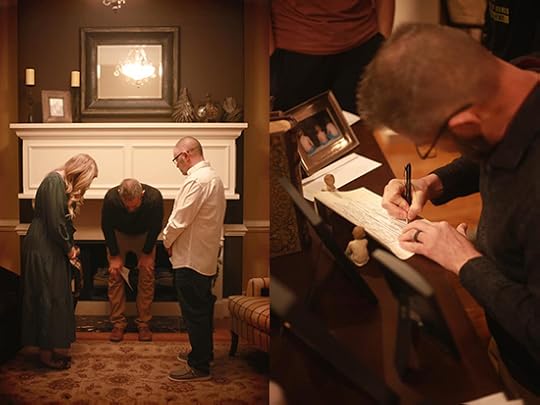
This evening we’re celebrating a new beginning. This small gathering huddles around a burgeoning love and a blossoming romance. This new marriage doesn’t showcase two starry-eyed kids but instead two adults who know well the surprises and challenges that the world can throw at them. In these nuptials stands redemption of past pain, seasons of disillusionment, and prayers seemingly unanswered. This wedding is the official grand opening of a permanent relationship that will help you both forge a new legacy and write a different end to the grand narratives of your lives.
Your vows will start this new reality, but your vows by themselves won’t sustain the work of unity, compromise, and shared mission. Scratched paintings don’t heal their own canvas. Torn fabric doesn’t sew itself back together. Historic houses don’t restore themselves. Neither do classic cars or vintage furniture. Reclaimed beauty is imbued by the wisdom, talent, and energy of someone who envisions what can be, what should be, what will be.
Thankfully for all of us, the Father loves to make all things new. He longs for restoration even more than we do. He dreams of our full and abundant lives more than we ever could. Jesus wants to help you write that story you want to tell at the end of your days. The Holy Spirit wants to guide the transformation of how you experience love and acceptance, forgiveness and mercy, unity and purpose.
Part of that process is being married to each other. God will use your marriage to encourage you, to refine you, and to give you a safe place to coalesce in between the tests that will strengthen you. As you pursue the heart of your Creator and the heart of your spouse, you will find both of those pursuits transformational. As you give access of your will both to Sovereignty and to each other, you will feel stretched and vulnerable. Enlarging our hearts and expanding our souls often comes with growing pains, but the reward outpaces the costs.
Today, we officially celebrate a love that is relatively new to you but that is rooted in a love displayed on a cross two thousand years ago and in a garden thousands of years before that. While we all revel in the romance of this moment, I hope you both will be able to luxuriate in the reality of these vows every day for the rest of your lives. May your faith in Heaven’s omniscience and your trust in each other take you to scenic overlooks you could never have reached alone. May this commitment we’re commemorating today be a constant source of support, healing, and inspiration. And may Jesus do what only he can do in and through you both.
December 5, 2022
What an Angel, a Mermaid, and Santa Claus Taught Me About How I Read the Bible
When the trailer for the new live action The Little Mermaid dropped, my wife had to tear herself away from the videos of little Black girls seeing the preview for the first time. The preschoolers and elementary students squealed and shrieked and jumped up & down. In Halle Bailey, they saw a girl who looked like them. Happy mommas filmed their reactions and affirmed their joy. For some, including my wife, that joy dripped from their eyes.

I don’t watch most of the Disney live action movies; but as the dad of a Black daughter, I support the canonization of a Black Ariel. She’s not just a fictional character; she’s a fantasy creature. A mermaid with Black skin is no odder to me than a woman of any color with scales & fins who can sing underwater. So, if a mystical young dreamer looks more like the beautiful young woman I taught how to drive, I’ll probably be buying multiple tickets to that feature film.
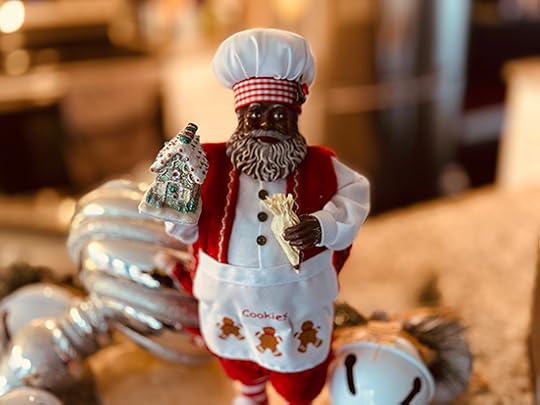
That said, between you and me, I paused the other day after a Thanksgiving lunch with our Black family and their relatives. As I talked to one of our Kenyan friends, I noticed that the Santa Clause on our breakfast bar was Black. That’s new, I thought. My wife does all of our seasonal decorating, and I saw her soft heart through that inclusive addition to her holiday decor. Because of Santa Claus’ European origins, I’d not thought much about a Black Santa other than from this song that makes my wife and daughter roll their eyes. As with The Little Mermaid, though, I didn’t have a problem with a magical, fictional character being Black. We all make Santa what we want him to be. Why not Black?
After our guests departed, I noticed more representation that wouldn’t have crossed my mind to incorporate into our family Christmas tradition. On the buffet stood a beautiful Black angel. There are thousands of unnamed angels in the Bible. I don’t know how many of them were female, but I’d bet a paycheck that none of God’s holy messengers or heavenly warriors looked like Henry Cavill or Chris Hemsworth. As much terror as they caused and with all of the other apocalyptic creatures described in Ezekiel and Revelation, some angels may not have even looked human. We don’t know. We can’t know. Regardless, a Black angel shouldn’t cause a mental record scratch any more than one with any other skin color.
Still, I did a double take. I stood there a moment, soaking it in. I hug a Black girl as often as she offers, and I’ve moved her laundry out of the dryer more times than I can count. I Cash app her allowance every Monday morning and pay the insurance on the Ford Escape parked outside of her on-campus apartment. I luxuriate in conversations on the couch with her long into the night and bring her home a new hoodie every time I take a trip that requires a commercial flight. I’ve laughed with her mom and probably her Uncle Timmy about how there are no caucasian people in the Bible.
And yet it never would’ve dawned on me to buy a Black angel Christmas decoration. My religious imagination was bleached by FlannelGraph characters who looked like they came straight from a church play in upstate Vermont.
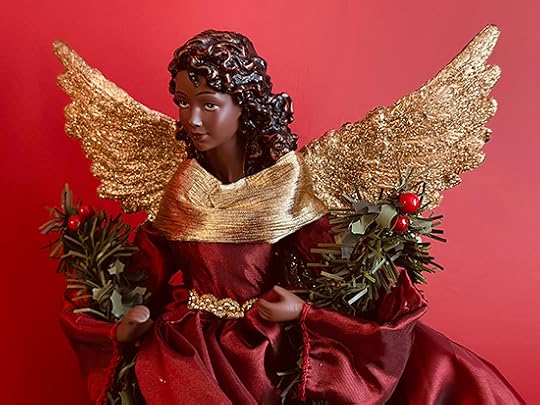
I’ve been working to undo some of that whitewashing of my Bible. Over the past few years, I’ve been reading theology books authored by men & women of color and their allies—those of African, Asian, Central American, and European heritages. I’ve read the work of missionaries who demonstrated how Westerners misread Scripture through various filters of our individualistic culture. I’ve studied the Bible with an Indian friend who explained things all of us white dudes in the circle missed. I’ve learned that the Bible wasn’t written by capitalists or communists, conservatives or liberals, Republicans or Democrats. Authors and podcasters have reminded me that most of Scripture was initially written by the oppressed for the oppressed—not for empire builders and empire maintainers like us Americans.
In short, I’ve discovered that the Bible isn’t what I’ve thought it was. In a good way. It’s not a proof text for my preferences and proclivities. It’s not a security blanket to wrap around my political stances or any patriarchy. Jesus didn’t look like me, and his kingdom doesn’t look like my country has at any point in its history. And the best part? The real deal—whatever I someday will fully understand—is better than the constraints of my biases. The diversity of people in heaven and of the food on our banquet tables up there will embarrass our earthly assumptions. The actual characters of the Bible won’t look like me, speak in English, or discuss mermaids or yuletide characters with me.
I don’t know how our interactions with angels will go down in the next life or what those heavenly creatures will look like. But for years to come, a Black, female angel will stand guard over Christmas in my house to remind me to approach the Bible and its God while holding my instincts, traditions, and preferences loosely in humble hands.
—
Reaction image linked to its source.
Cover art is a combination of an edited image originally purchased from iStockPhoto.com and modified illustrations from Google Images.
November 29, 2022
Hijabs on the Other Side of the Home Run Wall
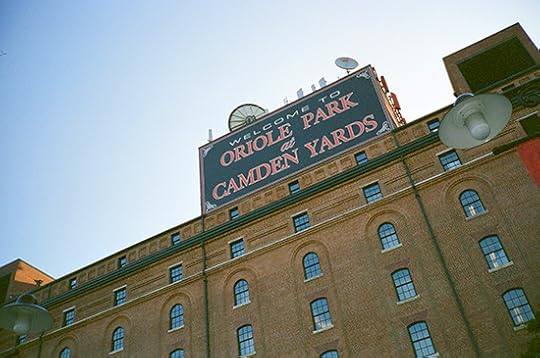
Late on Friday night, May 17, 1996, my younger siblings were asleep in the room right below me. So, I couldn’t shout in celebration over the miracle that had just happened. Up in my attic bedroom, I was listening to Jon Miller describe an anxious moment live on WBAL from the other side of the Chesapeake Bay. The Baltimore Orioles were down by three runs in the bottom of the ninth. Bases were loaded, and there were two outs. In fact, the O’s unassuming catcher stood in the batter’s box with a full count. Three balls. Two strikes.
Chris Hoiles launched the next pitch over the outfield wall with what’s called an “ultimate grand slam.” Out of the 20,272 people who’ve ever played in Major League Baseball, Hoiles joined an exclusive club of just 32 players ever to hit an ultimate grand slam. You, like most people reading this, have probably never heard of him.
Almost every Little Leaguer has at some point in their life stood at a plate and imagined hitting a grand slam with their team down three runs with two outs in the bottom of the ninth. And Chris Hoiles had done just that. I looked around my empty bedroom. Are you kidding me!? Celebration upended my disbelief. Even as a high school senior, I felt an instant nostalgia. The air in my room felt electric as if lightning had struck through my radio.
A love lostLater that season, the Orioles would utterly smash the team home run record set by the 1961 Yankees as seven of the Orioles’ nine starting line up players hit at least 20 home runs. All summer, there was hope in Baltimore and in the hearts of its fans—including mine. The first time in my life I ever dropped an F bomb came in my Christian college dorm room when I learned the Yankees had ended the Orioles’ magical run on the way to Derek Jeter’s first World Series title. I invested so much of my free time and attention in that Baltimore team in 1996. I knew almost every player on the Orioles’ roster and recognized when they were batting or pitching out of order. I wanted to be Brady Anderson, who rollerbladed to work from his downtown apartment.
At my college, we weren’t allowed to watch TV in the dorms; and I couldn’t listen to Orioles games on Florida radio stations a 1,000 miles away. Following the Orioles all but required trips to the library to look at USA Today box scores—assuming another broke college kid didn’t have the sports section at a table to follow their favorite team. During my college summers, I worked twelve-hour shifts in retail or sixteen-hour days as a camp counselor sequestered from the outside world. I didn’t have time for Orioles fandom.
The Orioles and I drifted apart.
Last week on the phone, my brother told me the Orioles were good this year. Apparently, they have a lot of young talent on rookie contracts; and that bodes well for the next couple of seasons. Timmy’s team review verified a headline I saw earlier in the season—a headline for a story I didn’t even take the time to read. While writing this post, I Googled the Orioles’ 2022 roster and didn’t recognize a single name. I couldn’t tell you which of the players were in the starting lineup let alone in which order. I didn’t disagree with a single choice the manager made this season because I didn’t care.
There’s a pervasive pushback in American culture, and particularly white evangelicalism, that those who critique our institutions hate them. I’ve read online the accusations that people like me who shine a spotlight on abuse in the church are agents of Satan. I’ve heard people (who own no more citizenship than I have) say that those who critique our American systems and cultures should move to another country. After another celebrity pastor is found with his hand up a skirt or after a textbook is found to include more than an Anglo-Saxon take on United States history, wagons are circled. Insecure adherents to a particular narrative or worldview become illusionists. They attempt to distract from their embarrassment by demonizing those who ask for remedy.
“If you don’t like it here, leave!” they say of patriots with different antidotes to society’s ills. “You’re hurting the Gospel,” they accuse people who make neither excuses for hypocrites nor shelters for wolves. They assume ripping Band-Aids® off to disinfect wounds is an act of ingratitude and that critique is necessarily hate. Those assumptions aren’t rooted in reality, though. As Austrian psychologist, Wilhelm Stekel, declared, “The opposite of love is not hate but indifference.”
The opposite of patriotism isn’t protest; it’s apathy.
The enemy of true belief isn’t skepticism but ambivalence.
Those who care but have different solutions aren’t traitors; they just love differently.
I find it ironic that those who doubt an opponent’s patriotism and loyalty don’t feel like their critique of government systems & policies disqualifies their love of country. And it’s wild to me that those who try to conceal the gross sins within the church don’t see hypocrisy as a Gospel issue.
A different end to the love storyLike fascists, jingoists, and nationalists, I love my country. But I love it enough to want it to be better for everyone, to represent better values. Having traveled to dozens of countries on all seven continents, I want to be prouder of our collective choices when I stand in other democratic republics. Like fundamentalists, evangelicals, and religious zealots, I love the church. I still think the Gospel is the hope of the world. I just want to remove all of what casts shadows on The Way, The Truth, and The Life—especially the darkness that keeps making headlines.
The protesters in Iran right now don’t hate Iran—just what Iran has become. They’d love a flourishing environment where freedom and equality wafted in the air they all breathe. Iranian women and those they’ve inspired dream of a place with liberty and justice for all. For me, “justice” means tov, the ancient Hebrew word God used over and over when he surveyed his pristine, yet-unfallen creation. I long for a country and a church where everyone is treated as though they were made in the image of God—because they were. I pray for a nation and religion where those who endanger the safety of women and children have boundaries placed around them to protect other potential victims from harm.
I know that’s a lot to ask. I know that’s a ridiculous goal, even in “the land of the free and the home of the brave.” But whether demagogues and their followers trust my heart or my motives, I’m going to keep dreaming for that ultimate grand slam. I no longer follow the Baltimore Orioles. Now I root for the pastors, journalists, and patriots who are speaking truth to power. I’m buoyed by their examples of shining light into the shadows of the things they love so others can eventually see something they love just as much.
—
Photos purchased from iStockPhoto.com
October 18, 2022
An Adventure Unlike Any Other I’ve Ever Done
This afternoon, I completed my thirtieth and final media interview scheduled by my publicist for Scared to Life. The past few months have been filled with conversational roulette—an intellectual adventure. My office pillow pit is where the magic happened for most of those video calls. This non-glamourous setup witnessed hosts admit surprise that I had anything spiritually profound or practical to say. These pillows have heard a host (who had hate-read the first few chapters of my book) pull random quotes and tell me how unbiblical and gutless I was. But, mostly, this bright & cozy spot hosted fun discussions between curious and thoughtful people. Some podcasters even showed me how many pages they’d underlined, highlighted, or dog-eared in my book with ideas that challenged or encouraged them.
As an extrovert, I have relished meeting new acquaintances. As a storyteller, I’ve enjoyed reminiscing on incredible physical experiences & spiritual discoveries. Some of these appearances have yet to air but all of them have taught me something. I can’t thank or recommend enough Robin Barnett of Icon Media Group. She has believed in me and my message like few have and worked hard to get it in front of people. I look forward to growing again through a similar publicity process in the next year or so to support the book I finished writing this summer.