Keri Stevens's Blog, page 2
May 18, 2018
The First Magic Statue
Back when I was a fitness instructor and teaching Oriental/Middle-Eastern folk dance, I invested in a week-long dance workshop in Manhattan.
We danced all day, each way, working our ever-lovin’ tails off. I slogged back to my hostel--Leo House, a lovely little facility run by nuns-- exhausted and overwhelmed by my first trip to this biggest of cities.
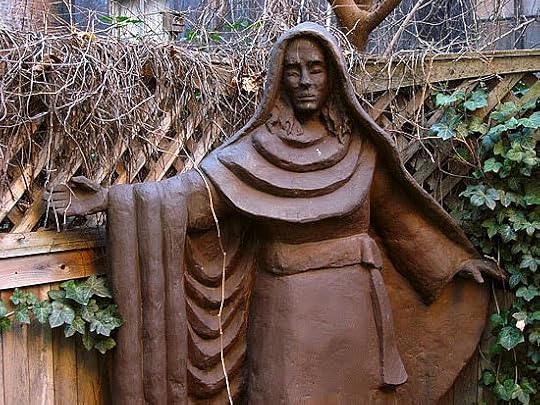
One evening, in this state, I found myself in the hostel courtyard, next to one of the scariest Virgin Mary statues I'd ever seen. (I mean, seriously—look at her!) Not one to let fear or common sense stop me, I began to talk to Mary. I had journal and pen on hand, and rambling aloud moved to rambling on the page. I took down my hallucinatory imaginings of what she'd say. Within minutes I'd fleshed out a scene in which Scary Mary gossips, complains and tells my heroine how to fight dirty. From this scene only a sentence fragment made it into Stone Kissed—but without it, there might have never been a novel.
I've since learned this is the best time and way for me to draft--early in the morning or late, late in the day, shields down, before my conscious mind gets a chance to wake up and say, "This is crap.”
When people ask writers, “Where do you get your ideas?” We cringe. The answer is, we just don’t know. Author Jenny Crusie has a well-developed and joyful theory about the “girls in the basement” of your mind that will tell you everything if you’ll just open the door and go listen. But otherwise, most of us will tell you, “They come as they come.” And we pray that they just keep coming.


March 21, 2018
The First Magic Statue
Back when I was a fitness instructor and teaching Oriental/Middle-Eastern folk dance, I invested in a week-long dance workshop in Manhattan.
We danced all day, each way, working our ever-lovin’ tails off. I slogged back to my hostel--Leo House, a lovely little facility run by nuns-- exhausted and overwhelmed by my first trip to this biggest of cities.
One evening, in this state, I found myself in the hostel courtyard, next to one of the scariest Virgin Mary statues I'd ever seen. (I mean, seriously—look at her!) Not one to let fear or common sense stop me, I began to talk to Mary. I had journal and pen on hand, and rambling aloud moved to rambling on the page. I took down my hallucinatory imaginings of what she'd say. Within minutes I'd fleshed out a scene in which Scary Mary gossips, complains and tells my heroine how to fight dirty. From this scene only a sentence fragment made it into Stone Kissed—but without it, there might have never been a novel.
I've since learned this is the best time and way for me to draft--early in the morning or late, late in the day, shields down, before my conscious mind gets a chance to wake up and say, "This is crap.”
When people ask writers, “Where do you get your ideas?” We cringe. The answer is, we just don’t know. Author Jenny Crusie has a well-developed and joyful theory about the “girls in the basement” of your mind that will tell you everything if you’ll just open the door and go listen. But otherwise, most of us will tell you, “They come as they come.” And we pray that they just keep coming.
March 2, 2018
Magic photos: Double Exposure

Once upon a time, there was a world before the digital camera. We took our photos on film. You had to hand-crank the film forward in order to take the next picture, and sometimes, when you got close to the end of the roll, you’d accidentally crank it back a couple slots—or catch an extra picture beyond the end of the row.
If you made this error, you might be able to take a picture over a picture—a double exposure.
I took these photos some weeks before the beloved first dog of our marriage, Dido, died. Several weeks after that, we relocated, so it took me months to get to a photo calendar and have this picture developed. I’m not one to fret over heaven for dogs or rainbow bridges, but I do love this picture of her “spirit ascending.” It turns out we were able to bring our ghost dog with us, and we couldn’t be more grateful for double exposure, and we couldn’t be more grateful for this double exposure.
Do have any fun or funky photos lying around (or even scanned in to your computer)? If so, feel free to post them in the comments and share your own ghosts.
February 18, 2018
Magic People: The Ghost of Great-Great-Great Grandma Ethel

So, this month I jumped head-first down the rabbit hole of genealogy research, snuffling like a truffle-hunting pig through the family search sites and newspapers.com (where, for a yearly fee, you can search through millions of pages of archived newspapers from around the globe). In the middle of this wine-soaked process, I discovered my great-great-great grandmother, Ethel. Ethel and 3G-Grandpa lived in Tulsa, Oklahoma during and after World War I, where she was a very active member of her church. She hosted the Ladies Aid meeting at her home every weekend, ice cream socials, and dances. She even went to the national church conference in St. Louis as a delegate one year.
But unlike most of our family, she didn’t stick to the traditional Catholic and Presbyterian modes of worship—oh, no! Ethel was a Spiritualist, a member of an exploding number of people who believed in communicating with the beyond, through Tarot readings, seances, trance states and the like. Famous spiritualists in her day included the godfather of all things occult, Aleister Crowley, and Sherlock Holmes author Arthur Conan Doyle.
Ethel’s congregation didn’t meet in a church: They gathered each week for their lectures at the Tulsa city hall. And when she went to the national spiritualist conference, she and hundreds of others were greeted by none other than Mayor Kiel himself. Furthermore, Ethel’s group was one of three Tulsa Spiritualist congregations listed in the weekly church section of the paper. All across America, spiritualist groups were common enough to be almost mainstream.
But, then as now (and perhaps even more so then) they were also reviled on a daily basis for doing the Devil’s work by various ministers and congregations. Anti-spiritualism sermons were featured in almost every Christian denomination. If this bothered 3G-Grandma Ethel, I don’t know. But it didn’t stop her from hosting Ladies Aid.
I make a lot of assumptions about my ancestor’s character based on snippets from newspaper ad sections: I like to think she was a little rebellious, even as she filled her role as housewife and mother to three. I like to think she was creative and open-minded. And I like to imagine that one of these days, when I spread out one of my own Tarot decks, Ethel will have a message or two for me from the Beyond.
Dead People's Photos
More than once in my life, I’ve found myself digging through dusty baskets of old photos in the back corner of an antique shop in a town I’ve never visited before. I find wedding portraits, children on tricycles, scrawny young shirtless men standing on outcroppings, their hips cocked, cigarette in one hand.
I know better. I know better. But I keep expecting to find a picture of someone I recognize. I never have, of course. But occasionally I buy the picture because the image, the person, the face is so compelling. Before I know it, I’m convinced I can read her mind. Whether someone has penciled it in script on the back or not, I know his name. I can tell you who she killed. I can tell you how he got away with robbing that bank.
“You ready to go?” My husband asks me, which shakes me back into reality. Nine times out of ten, I put down the photo and the bank robber and murderess settle back into their dusty basket. But that tenth time, she comes home with me. She’s going to be a character. She’s going to live a new, double life in pixels and on paper.
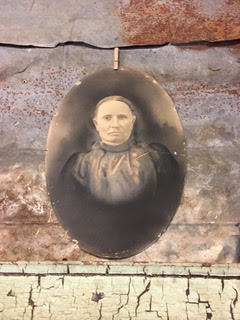
If you’re ever in the back of a barn in southern Missouri, you may meet this fine matron. Don’t laugh too loud, or dance too wildly, or drink too much where she can see you. And if you do so anyway, be ready to get The Look. She was a master at The Look in life, and death hasn’t slowed her down one bit.
February 17, 2018
Magic People: The Ghost of Great-Great-Great Grandma Ethel
So, this month I jumped head-first down the rabbit hole of genealogy research, snuffling like a truffle-hunting pig through the family search sites and newspapers.com (where, for a yearly fee, you can search through millions of pages of archived newspapers from around the globe). In the middle of this wine-soaked process, I discovered my great-great-great grandmother, Ethel. Ethel and 3G-Grandpa lived in Tulsa, Oklahoma during and after World War I, where she was a very active member of her church. She hosted the Ladies Aid meeting at her home every weekend, ice cream socials, and dances. She even went to the national church conference in St. Louis as a delegate one year.
But unlike most of our family, she didn’t stick to the traditional Catholic and Presbyterian modes of worship—oh, no! Ethel was a Spiritualist, a member of an exploding number of people who believed in communicating with the beyond, through Tarot readings, seances, trance states and the like. Famous spiritualists in her day included the godfather of all things occult, Aleister Crowley, and Sherlock Holmes author Arthur Conan Doyle.
Ethel’s congregation didn’t meet in a church: They gathered each week for their lectures at the Tulsa city hall. And when she went to the national spiritualist conference, she and hundreds of others were greeted by none other than Mayor Kiel himself. Furthermore, Ethel’s group was one of three Tulsa Spiritualist congregations listed in the weekly church section of the paper. All across America, spiritualist groups were common enough to be almost mainstream.
But, then as now (and perhaps even more so then) they were also reviled on a daily basis for doing the Devil’s work by various ministers and congregations. Anti-spiritualism sermons were featured in almost every Christian denomination. If this bothered 3G-Grandma Ethel, I don’t know. But it didn’t stop her from hosting Ladies Aid.
I make a lot of assumptions about my ancestor’s character based on snippets from newspaper ad sections: I like to think she was a little rebellious, even as she filled her role as housewife and mother to three. I like to think she was creative and open-minded. And I like to imagine that one of these days, when I spread out one of my own Tarot decks, Ethel will have a message or two for me from the Beyond.
January 31, 2018
Dead People's Photos
More than once in my life, I’ve found myself digging through dusty baskets of old photos in the back corner of an antique shop in a town I’ve never visited before. I find wedding portraits, children on tricycles, scrawny young shirtless men standing on outcroppings, their hips cocked, cigarette in one hand.
I know better. I know better. But I keep expecting to find a picture of someone I recognize. I never have, of course. But occasionally I buy the picture because the image, the person, the face is so compelling. Before I know it, I’m convinced I can read her mind. Whether someone has penciled it in script on the back or not, I know his name. I can tell you who she killed. I can tell you how he got away with robbing that bank.
“You ready to go?” My husband asks me, which shakes me back into reality. Nine times out of ten, I put down the photo and the bank robber and murderess settle back into their dusty basket. But that tenth time, she comes home with me. She’s going to be a character. She’s going to live a new, double life in pixels and on paper.
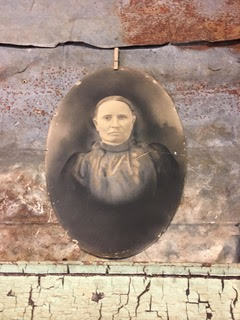
If you’re ever in the back of a barn in southern Missouri, you may meet this fine matron. Don’t laugh too loud, or dance too wildly, or drink too much where she can see you. And if you do so anyway, be ready to get The Look. She was a master at The Look in life, and death hasn’t slowed her down one bit.
June 22, 2017
Magic Places: Neuschwanstein Castle

Poor King Ludwig II. Some children are just not meant to reign.
In 1863, when America was smack-dab in the middle of our Civil War, an 18-year-old boy found himself weighed down with the crown of Bavaria. Given a choice, Ludwig would have spent his days in the theater, surrounded by artists and musicians of every stripe. He wanted what was lovely—and certainly didn’t want to bother with court intrigue. He was handsome and creative and his people loved him.
Perhaps that’s why he got away with spending so much money on the four castles he built—at least at first. He ran through the royal treasury like the Valkyries raging through Wagner’s opera and found himself in debt by the millions. But that didn’t stop Ludwig: He made even more plans for even more castles, and avoided those nasty cabinet ministers who wanted to pull him back to the realities of a country that had been through its own war. They resented his spendthrift ways, and labeled him “mad”—the first step in taking away his crown.
But Ludwig had a new toy: In 1886, he moved into his dream home. Ridiculously ornate, this cake-topper castle was inspired by all things over-the-top. Versailles. Wagner. The fantasies of a lonely young boy forced to be king.
And only six weeks after he moved in, his uncle Liutpold sent a force to abduct him, which included a psychiatrist, Dr. Gudden, who declared him insane, and therefore unfit to rule.
The next morning, both Dr. Gudden and Ludwig, himself, were found dead in a lake near the sanitarium where he’d been taken. Every Bavarian has a theory as to what really happened that day, but Ludwig’s body is sealed in a crypt in Munich, and we will never know the real truth.
Within days of death, the state had taken over the castle and opened it for tours. This massive, glorious, gaudy castle was a home for six weeks, and six weeks only. Neither Ludwig nor anyone else has had a chance to be its ghost.
If you want to see Neuschwanstein, you don’t have to go to Bavaria: Just head to your nearest Disney theme park to see Cinderella’s Castle, which was modeled on Ludwig’s dream.
May 31, 2017
Magic Places: Graffiti in Munich, Germany
Graffiti is one of those things that happens by magic: At some point, when you weren’t there, someone—a rebellious kid, a brilliant artist, or both—made art on a wall, a train car, a public space. Perhaps the art is a secret code—a language for a cabal of Illuminati that you and I aren’t part of.
Or perhaps it’s Herbie, the Love Bug.
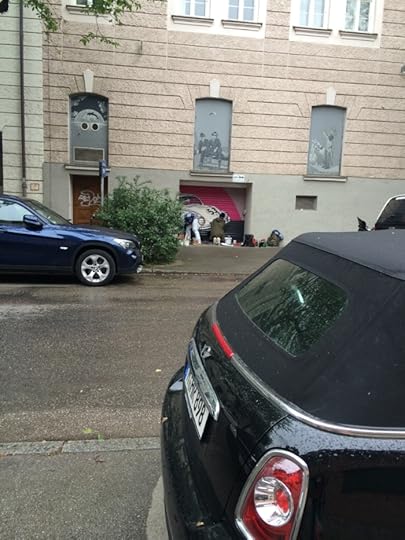
While visiting Munich a couple of years ago, my husband and I saw the magic happen. We walked right past these two artists who carry their lives on their backs and caught them in the act. Okay—maybe not so much. They didn’t even turn as we passed within a couple of yards of them. They had work to do.
The next morning, we went out for breakfast and there was Herbie, fairly bursting off the parade door. I wonder if he knows the Blues Brothers are directly overhead?
Graffiti in Munich
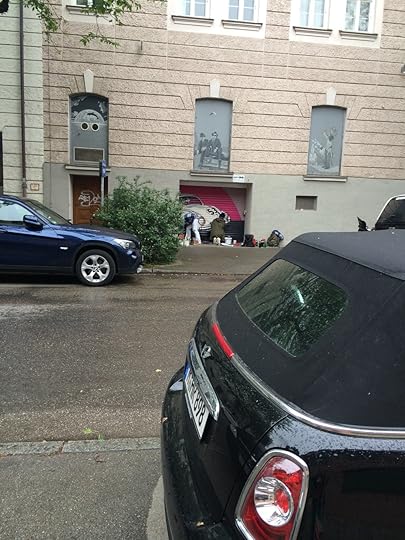
Graffiti is one of those things that happens by magic: At some point, when you weren’t there, someone—a rebellious kid, a brilliant artist, or both—made art on a wall, a train car, a public space. Perhaps the art is a secret code—a language for a cabal of Illuminati that you and I aren’t part of.
Or perhaps it’s Herbie, the Love Bug.
While visiting Munich a couple of years ago, my husband and I saw the magic happen. We walked right past these two artists who carry their lives on their backs and caught them in the act. Okay—maybe not so much. They didn’t even turn as we passed within a couple of yards of them. They had work to do.
The next morning, we went out for breakfast and there was Herbie, fairly bursting off the parade door. I wonder if he knows the Blues Brothers are directly overhead?