Ruth Estevez's Blog, page 5
June 26, 2018
Day 7 with Zoe @Madge Eekal Reviews
Day Zoe @MadgeReviews has asked some more interesting questions…find out about my experience with agents…
https://www.madgereviews.co.uk/jiddy-vardy-by-ruth-estevez/
Plus – a Review of Jiddy Vardy:
Jiddy Vardy by Ruth Estevez
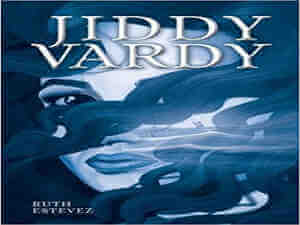
A character-driven YA story with a carefully crafted plot that will challenge you to think about what is right and wrong.
Jiddy Vardy was rescued as a baby from the tumultuous seas in 1779. With her dark skin and hair, she’s always known she’s an outsider in the pale, largely fair-haired, community of Robin Hood’s Bay. Now 16, Jiddy is determined to fit in: she’s desperate to join the Bay’s clandestine smuggling activities even if this means risking her life and freedom. Soon, however, her experiences lead her to question what she really wants and who should command her loyalty.
Although it is not formally divided, Jiddy Vardy is a story in three parts. Turn to chapter one and you’ll find yourself immediately plunged into a truly dramatic scene: a 16 year old gives birth at sea moments before pirates take control of the ship. These opening chapters have everything a good book needs – drama, action and emotion not to mention description so vivid that I could feel myself cringing and almost crying. Move on to chapter four, however, and you’ll find the story takes a new turn. Here we meet our feisty protagonist Jiddy as a child before taking up her story at the same age as our original character. Jiddy is an absorbing character and I was so engrossed that, by the time I reached chapter thirty-nine, I’d almost forgotten those opening three chapters. Then suddenly, all the carefully crafted elements of the plot drop into place and that powerful opening comes into its own.
I have to apologise if this review seems to be written in code but it’s hard to say more without spoiling your enjoyment of this book. On the surface this appears to be a character-driven YA story but the inclusion of those first three chapters lays the ground work for a clever plot and the final section of the book has a wonderful, and truly satisfying, climax and conclusion.
Jiddy Vardy is, however, more than just a cracking story with strong and believable characters. It’s one of those books that makes you think about issues and I was quickly absorbed in an internal debate about the rights and wrongs of the villagers’ smuggling vs the behaviour of the government’s representatives (in the form of Preventives and Dragoons) in Robin Hood’s Bay. Author, Ruth Estevez, cleverly presents a series of events and experiences that shape both Jiddy’s and the reader’s views. I was particularly impressed with the nuances of the situations and the fact that everything, including our cast of characters, has a layer of complexity.
If you enjoyed this, I’d recommend you head to your local bookstore and get yourself a copy of another wonderful historical teen story in The Goose Road by Rowena House.
ISBN: 978-1999863302
Publication date: June 2018
Publisher: ZunTold
Pages: 434
Author’s website: Ruth Estevez
[image error]


Day 6 with Victoria Bennion and @writingNV.com
Day 6 and Victoria @writingNV.com has asked some questions…what are the answers?
[image error] https://www.writingnv.com/young-adult-fiction-books-ruth-estevez.html
Day 5 with Zoe @nosaferplace
Day 5 of the Jiddy Vardy Book Blog Tour with Zoe @nosaferplace!!
http://www.nosaferplace.co.uk/2018/06/guest-post-death-by-ruth-estevez-jiddy.html


Day 4 – Book Launch & Pretty Little Memoirs



Day 4 of the Jiddy Vardy Book Blog Tour and it’s also the release date and Book launch for Jiddy Vardy which is taking place at The Portico Library in Manchester.
Becca from Pretty Little Memoirs inventively asked what music I played while writing. I don’t play music when I’m writing as I find it too distracting, so I sent Becca a playlist of some of the music I listened to when I was 17/18/19 and a few more tunes besides. Have a listen on spotify. See what you think….
Thank you Becca. x
http://www.prettylittlememoirs.com/2018/06/jiddy-vardy-by-ruth-estevez.html
June 20, 2018
Anne Bonny #BlogTour #GuestPost by @RuthEstevez2 #Diversity in #YA fiction #NewRelease YA #Literarture Jiddy Vardy @ZunTold #UKYA #JiddyVardy
Thanks to @Annebonnybook – a great reviewer to follow.

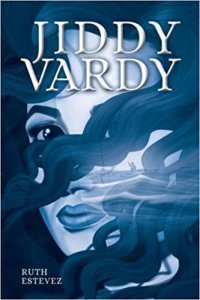 Jiddy Vardy by Ruth Estevez
Full review to follow
Synopsis:
Jiddy is a survivor. Rescued at birth, she grows up in Robin Hood’s Bay, a village harbouring a dangerous secret. Just as romance blossoms and Jiddy finally feels like she belongs, figures from the past threaten to tear her world apart… A thrilling tale of one girl’s search for identity and love, set against a backdrop of smuggling and viole.
Guest post:
Diversity in YA Fiction
I believe there are many young people who aren’t reading because they don’t see it as an option. This could be for many reasons, access to books, difficulties reading, economic, it’s not a tradition in a family or environment to read, there are no role models who love reading, or you just can’t find anything you want to read.
Often, you just want to find a book that you relate to but can’t find…
View original post 890 more words
June 19, 2018
Day 2 – Jiddy Vardy Blog Tour – with Playingbythebook
Thanks today for the astute and observant Zoe Toft for hosting today’s review and article about Belonging, a theme that runs through my books because it is important to me. Take a look at follow Zoe’s spot on observations on all things about writing and books and for today’s post on JIDDY VARDY!!
Twitter: @playbythebook
FB: @Playing by the book
Website: http://www.playingbythebook.net
http://www.playingbythebook.net/2018/06/19/jiddy-vardy/
‘A pacy tale of high secrecy, first love and agonising betrayal there’s much to enjoy in Ruth Estevez‘s début novel, Jiddy Vardy. Dramatic, intense settings (from the North Yorkshire moors and coastline to high society life in London at the time of Haydn) and vibrant characters, (including an independent and brave heroine) enrich a plot packed with momentum. Ruth Estevez’s fine ear for language and dialect, and her nuanced exploration of belonging, family and how judging right or wrong isn’t always black or white provide food for thought as well as comfort reading to curl up with.’
Having enjoyed Jiddy Vardy so much I’m delighted to host a guest post today written by the novel’s author, Ruth Estevez.
Recurring Themes – Belonging
“I’ve been thinking a lot about common themes in my work and a recurring one is belonging.
My Mum spoke about fitting in both as a child and an adult and it’s made me wonder if we can take on a previous generations’ problems and experiences without noticing it until one day, we realise we have. And then come the questions, How did that happen? Why did I let that happen? When did that happen? Is that how I really think or feel? How do I get rid of it?
So, am I interested in writing about belonging because it has seeped into my psyche from previous generations or is it something I’ve added all of my own? Reminds me of the Philip Larkin poem, This Be The Verse, opening line…They f**k you up, your mum and dad which goes on to say that it isn’t their fault, it’s all passed through the line between generations and then some issues are specially added, just for you.
Belonging is a major theme in Jiddy Vardy. From the beginning, the young Jiddy fights to belong in a community she wasn’t born into. Half-Italian, she doesn’t look as if she belongs in a Yorkshire fishing village, with her black hair and darker skin set against the locals’ fairer looks. She stands out like a red poppy in a field of bluebells. She is angry, confused and frustrated and also determined that she will fit in. She won’t let anything passed on be passed on again by her. In the book I’m currently writing, The Monster Belt, neither of the two main characters feel they fit in where they were born and brought up.
It’s made me ask myself why this theme reoccurs in my work. Does it seep in because we are told stories and experiences verbally from parents or grandparents? Or is it deeper, more subtle? Does it enter our psyche through our bodies or is it soaked in through atmosphere and unspoken gestures? I do believe our bodies hold experiences, so the way someone walks, reacts to others, give hugs or not, all those things are ways of passing trauma at its most extreme or annoyances at its lightest. We also take it on board subtle experiences, like being told, ‘oh, you’re pretty…..for a redhead.’ Believe me, I’ve heard that said.
Hang ups can be passed on and I’m trying really hard not to pass my accumulated ones onto my daughters. I’m also trying to break the chain of them and that’s what I enjoy exploring with my characters. Fiction is brilliant for discovering options and how a character can make changes. You can call it therapy. I call it using what you’ve got. And what about those who don’t have parents and grandparents passing their experiences and hang ups on?
Jiddy’s birth mother isn’t around. She has never met her apart from when she was born. Yet she is drawn to luxury, which is what she would have had if she hadn’t been left to a life of poverty in the fishing and smuggling community of Robin Hood’s Bay. Jiddy looks exactly like her mother, Maria Vardarelli. She yearns to travel as her mother loved to travel. She likes pretty things as her mother did.But, Jiddy was brought up in a tough Yorkshire village by a childless couple, where there was no luxury, not until she saw it at the big house on the hill and began to covet beautiful things. This half-Italian girl speaks with a Yorkshire accent. She knows how to fight and how to break the law.
But where does she really belong?
Our family moved from Bradford in West Yorkshire to a rural village when I was two years old. We had a brilliant, free childhood. For Mum as an adult, I’m not so sure. Dad went off to work and she had to interact with women who it seemed were from a different planet to her. She was a young mum surrounded by the wives of doctors and lawyers whose children were grown up and who also went into such professions. As an adult, she carried her childhood insecurities of being the odd one out. She didn’t speak of how she must have felt at the time, but she did more when we were teenagers.
When she was a little girl, a neighbour called her ‘The Odd One.’ She was the middle one of three, with an older sister who this same neighbour called, ‘The Queen of Cowper Place’ and a younger brother. Quite different names with different connotations. Just so you know, Cowper Place was the square where they grew up, in what was called, Poet’s Corner, an area for Bradford where the streets were named after writers and poets. There were Shakespeare, Scott and Wordsworth Streets, Tennyson and Coleridge Place. Mum often talked about the one friend she had, Anita Goldberg, who moved away. Mum carried this with her, but did she pass it on?
I was the only girl to go to my secondary school from my village primary. I remember in the first week, a boy called Robert asked me to meet him after school. I was in such a dilemma and I didn’t know anyone well enough to ask their advice. I didn’t want to appear uncool. In the end, I didn’t go. It was a two mile walk home, and I caught the bus. The next day, I found out he had stayed behind after school. And so had his girlfriend. Months later, I had an argument with a girl in my new friendship group. At the end of lunch break, in Maths, others, led by the leader of the group, weren’t talking to me. They’d known each other from primary school. I was an outsider.
My friends all lived on the housing estate that stood slightly removed from my village. They all had blue eyes except me. They all tanned, except me. I vividly remember sitting on the school field and lining up our arms, most tanned to lightest. The kudos was in being the most tanned. Sounds silly, and trivial, but at that age, teenage years, these things can stay with you. That first year was a crash course in adjusting to kids from other schools who seemed alien to me. I had to work out my place and who I trusted. I became part of the group, I’ll add, and we are still great friends, years later.
And sometimes, out of nowhere though, that sense of not-belonging, not truly belonging, kicks in. All of my own.
I have to admit, I also liked being different as well, or what I took on as being different. I think it made me want to be a writer. It certainly drew me to writing stories and making up characters. I sought out new places where I didn’t know anyone and I loved it. I remember a boyfriend at university saying that I liked feeling misunderstood. It shocked me at the time. ‘No I don’t!’ I remember shouting. I realised though, that I did! And he’d seen it! Perhaps what he said made me be a little more self-aware. It’s all made me look at motivation and how my characters find their place.
Mum used to say everything that we do and that happens to us will be useful at some point. I’ve realised she’s right. Jobs I’ve hated, certain experiences…As a writer, and sometimes in life in general, they’ve proved useful. So, I’m going to be grateful for it all. Our backgrounds, past, and experiences make us all unique and that makes how we view the world unique. For writing, that means, even if we all write about the same subject, each piece will be different because we are. That’s something to celebrate, isn’t it?”
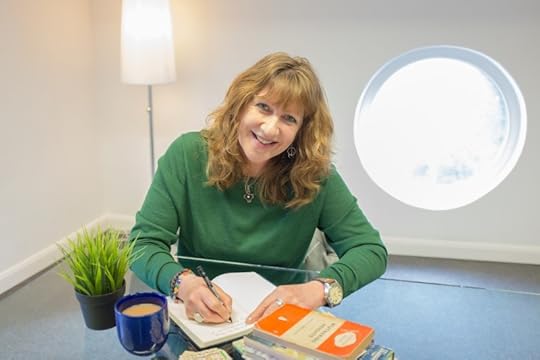
Twitter @ruthestevez2
June 18, 2018
Jiddy Vardy
Thanks so much for being the first reviewer and blogger on the Jiddy Vardy Blog Tour. Such interesting questions you asked! Made me smile about Wuthering Heights – I can imagine you saying this!

Jiddy Vardy was a well-worthwhile detour from my typical reading material. Accustomed to the romances and slow-paced philosophical exploration of the 19th century, the prospect of pirates, adventure, and a sprinkling of teenage angst was actually quite excitingly enticing as I cast my eyes down my ‘To read’ list.
Set in the close-knit, coastal community of Baytown in the late eighteenth century, Jiddy Vardy follows its eponymous, feisty, and loveable heroine through her teenage years, against a turbulent backdrop of smuggling rings, suspicion, and secrecy. The threat of capture looms from the moment an excitable young Jiddy proudly gains entry into the communal undercover bootlegging of her friends and neighbours. The danger of internal destruction, too, poses an even bigger threat. Estevez frankly and emotively depicts the fate of traitors, asking us to question the nature of group identity and the more sinister side of solidarity.
Getting off to a…
View original post 2,187 more words
June 3, 2018
Wuthering Heights
Best review of Wuthering Heights I’ve read. It reminds me why I love it so much too. Perfect. Thank you. X
 Murder Underground Broke The Camel's Back
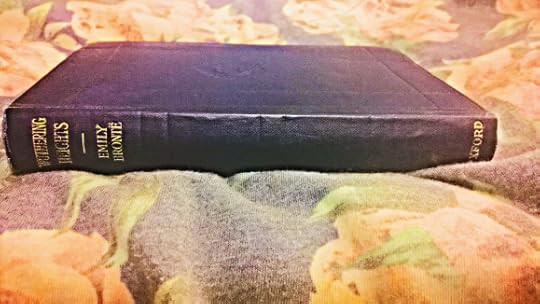 Author: Emily Bronte (sorry can’t find the umlaut!)
Finished on: 18 January 2016
Where did I get this book: This copy was from the amazing haul of books from our neighbour’s friend who died
This is my favourite book of all time.
It is an absolute masterpiece; I love it so much.
I read Wuthering Heights for the first time when I was 11 or 12, and understood probably less than half of what was going on. But I loved it. I loved the atmosphere, the drama, the darkness and the gothic. And oh my word, did I love Heathcliff. It is not an exaggeration to say my idea of what romantic love should be has a lot of its foundation in the character of Heathcliff. Oh dear.
I read it again at about 15, and then later studied it at school for A Level English. I hated having to pull…
View original post 674 more words
May 9, 2018
Passing English Exams
This morning, heard a snippet on Radio 4 with actress Imogen Stubbs talking about the way novels, plays, poetry is taught to pass an English exam. Think it stemmed from Ian McEwan talking about how his son got a C after helping him with an essay/homework. Imogen Stubbs is married to the Guru of Shakespeare, the theatre director, Trevor Nunn. She got him to write an essay on a Shakespeare play and submit it anonymously. He didn’t get an A* and he knew the play backwards, forwards and sideways.
Nunn got feedback! He was told he got a lower grade because he didn’t relate back to the essay question at the beginning of every paragraph and he didn’t tick boxes by talking about assonance etc. However, he felt that he did answer THE QUESTION!
So, another question is being raised; do authors want their books dissected and discussed with exam grades in mind, or would they prefer them to be read for pleasure, inspiration and whatever the reader wants to take from them?
Just a little point – many authors feel they have hit the jackpot when schools add their book to their list. Means big sales! But that is another issue.
Going back to the point in hand. Who then, knows the book, play, poem best? The author? The reader? The teacher? The exam board? Whoever it is who makes the exam criteria?
The author has a story to tell. They don’t usually think about tick boxes. They may know all about structure, but many just want to tell their story. Agh!!! Can feel another discussion coming on…straying from the point, the backbone of my blog – definitely a no-no in writing fiction. (Note to self – subject for next blog post! – Writing by numbers, writing courses, writing to the screenplay format)
Right. Back to the point. And stick to the point.
I remember English Literature putting me off books. We squeezed out meaning, learned quotes to back up theories, pulled out alliteration, analogies, the weather in Thomas Hardy novels. And back then, we read the entire book. My daughter told me, she didn’t even have to read the whole book to pass an exam. What is that about? Very rude to the author who has spent blood, sweat and tears and years writing the book, plus, to understand a book, you need it’s entire, grand sweep. I’m growing emotional now.
So. What do you think?
Who is best qualified to talk about a book in terms of theme, structure etc? Author? Teacher? Someone else?
What is the point of dissecting novels like this?
What questions would you ask the author?
What did the author intend when they wrote the book, as in reading it for personal pleasure or to learn about structure and onomatopoeia?
Once the book is published – who does the book, what is written in the pages, belong to?
Why do you read book?[image error]
May 7, 2018
The Beginning of Spring by Penelope Fitzgerald
 The Beginning of Spring by Penelope Fitzgerald
My rating: 3 of 5 stars
I find it quite difficult to give this book a rating as I'm unsure what to gauge it against. It's a slim book, I picked it for the cover and the quote on the front, 'She is the mistress of the hint of the sublime.'
Well, Fitzgerald is that! I have come away from the book knowing a great deal about living in Russia in the years before WW1. I like that there is no huge awareness to what is about to happen. The subtle hints, I wonder if I pick up because I know what is coming or if I'd have picked up an unease anyway?
However, life is complicated, corrupt and there is a set way of doing things. Plus, everyone knows your business.
It strikes me though, that our protagonist, Frank, is unaware and not very good at reading people. Certainly so at the end.
The story is a quiet one. We have great detail of Russian life along the way, so that the story almost seems secondary. I suppose this is the 'mistress of the hint of the sublime.' There is gentle humour, which I really like and the way the story is told, seeps into you, so that you too become part of the daily ...I was going to say, monotony, but it is the day to day traditions and way of doing things. Monotony, some would call it!
So. If you like action, this isn't for you. If you want your characters to shout their emotions from the rooftops, this isn't for you. Or even to show their emotions. They don't, but then at this time, around 1911, in Russian, did people show their emotions to each other, as they do now? It's remembering this that helps. I've given it 3 stars, but it is a unique book, almost non-fictional in some sense. The ending? Abrupt.
View all my reviews