P.M. Terrell's Blog, page 3
July 18, 2018
The Hero's Trauma and Life-Transforming Journey
We’re continuing with the hero’s journey, and today I want to tell you about the trauma that awakens the hero and catapults him or her along their journey. The trauma can be a death (especially one that is unexpected or sudden), a divorce or split, job loss, illness or a move—especially one that is necessitated by financial burdens. These traumas comprise the most stressful events an individual can experience in their lifetime.
 In
The Shawshank Redemption
by Stephen King, Andy Defresne’ journey begins when his wife is murdered and he is tried, convicted and sent to prison though he is an innocent man. It is one of any man’s worst nightmares, because all he has known is gone and he is left powerless, often victimized in a tough prison where there is no escape—or so we think. Andy embarks on the reluctant hero’s journey because it is not one of his making, but as we turn the pages we discover that Andy finds traits within himself that will not only keep him alive but eventually turn the tables on the corrupt prison management.
In
The Shawshank Redemption
by Stephen King, Andy Defresne’ journey begins when his wife is murdered and he is tried, convicted and sent to prison though he is an innocent man. It is one of any man’s worst nightmares, because all he has known is gone and he is left powerless, often victimized in a tough prison where there is no escape—or so we think. Andy embarks on the reluctant hero’s journey because it is not one of his making, but as we turn the pages we discover that Andy finds traits within himself that will not only keep him alive but eventually turn the tables on the corrupt prison management.All great books show us characters that are transformed by their journeys, whether it is Andy Defresne, Scarlett O’Hara or Oliver Twist .
 I try to remember the life-altering traumas when I write my own books. In
Vicki’s Key
, for example, the book begins with a recurring nightmare, a memory buried in Vicki’s consciousness when a CIA mission failed, resulting in innocent children’s deaths. It is that mission that so traumatizes her that she leaves the CIA and embarks on a new life—only to have the CIA catch up with her. She is transformed through the series as she gains strength and ultimately faces her demons.
I try to remember the life-altering traumas when I write my own books. In
Vicki’s Key
, for example, the book begins with a recurring nightmare, a memory buried in Vicki’s consciousness when a CIA mission failed, resulting in innocent children’s deaths. It is that mission that so traumatizes her that she leaves the CIA and embarks on a new life—only to have the CIA catch up with her. She is transformed through the series as she gains strength and ultimately faces her demons.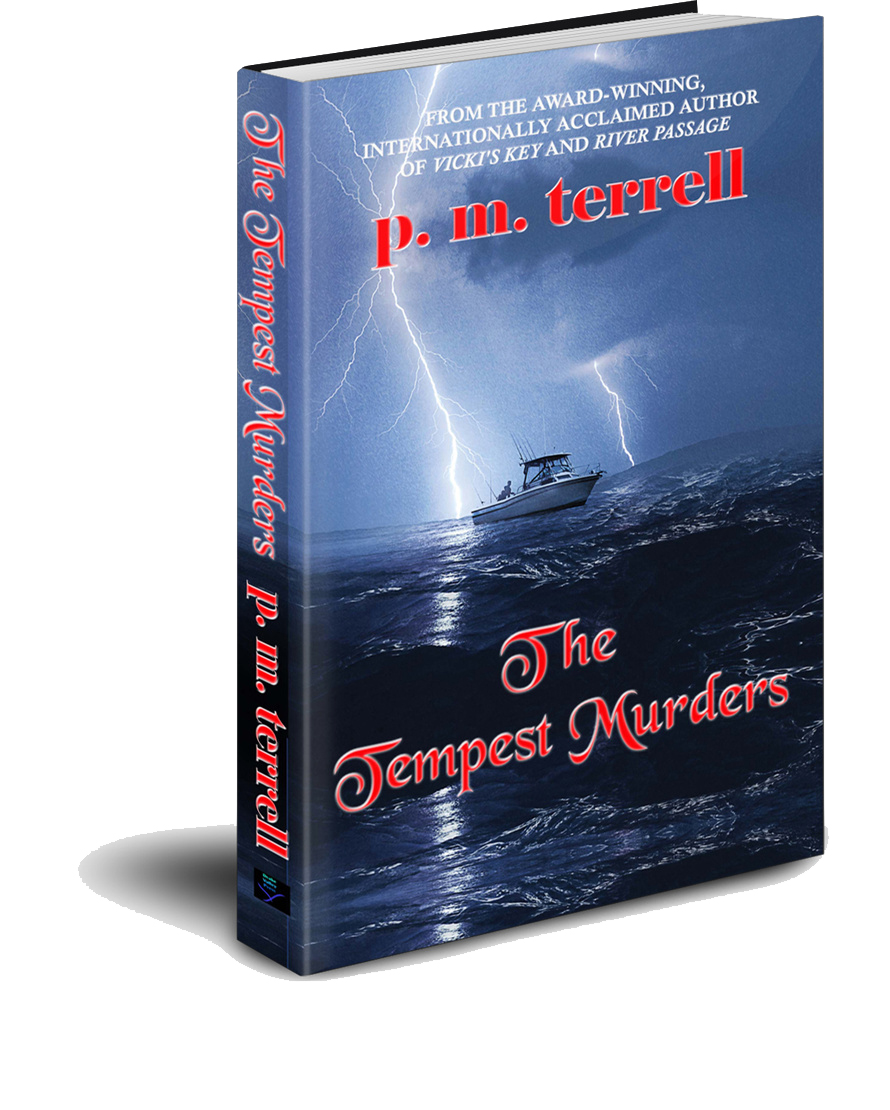 The Tempest Murders
begins with a different type of trauma when Constable Rian Kelly’s lover dies at the hands of a killer during one of the worst storms in Ireland’s history. We then switch to the present day to find Kelly’s great-great-nephew, Detective Ryan O’Clery, investigating a string of murders identical to those Kelly had been investigating—and Ryan discovers his nightmares are actually the memories of his ancestor. He, too, is transformed as he must face inner demons that have haunted him since childhood.
The Tempest Murders
begins with a different type of trauma when Constable Rian Kelly’s lover dies at the hands of a killer during one of the worst storms in Ireland’s history. We then switch to the present day to find Kelly’s great-great-nephew, Detective Ryan O’Clery, investigating a string of murders identical to those Kelly had been investigating—and Ryan discovers his nightmares are actually the memories of his ancestor. He, too, is transformed as he must face inner demons that have haunted him since childhood.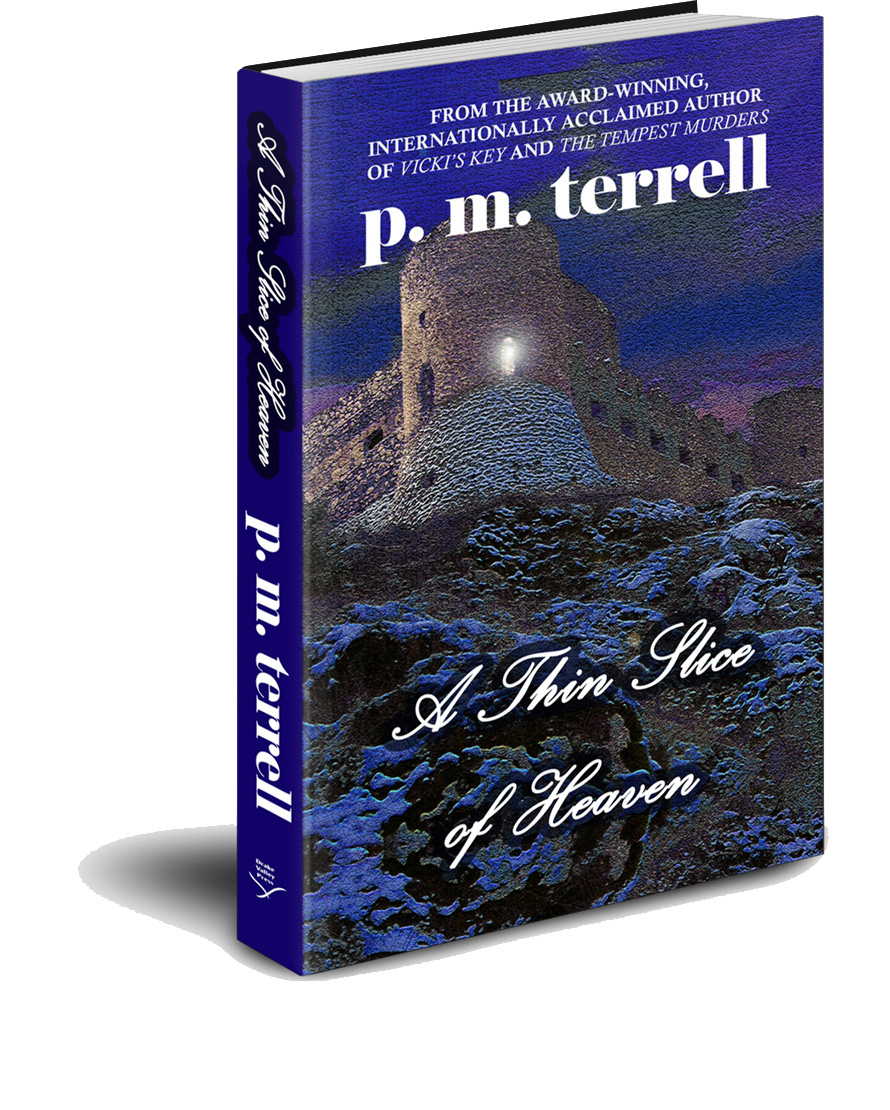 In
A Thin Slice of Heaven
, we encounter another type of trauma that leads our hero on her journey. Charleigh arrives at a remote castle in Northern Ireland anticipating a romantic anniversary celebration when she receives a text from her husband telling her he is leaving her for another woman. Stranded at the castle, she first wallows in her grief before pulling herself together and moving on—and in the process, discovering things about herself.
In
A Thin Slice of Heaven
, we encounter another type of trauma that leads our hero on her journey. Charleigh arrives at a remote castle in Northern Ireland anticipating a romantic anniversary celebration when she receives a text from her husband telling her he is leaving her for another woman. Stranded at the castle, she first wallows in her grief before pulling herself together and moving on—and in the process, discovering things about herself.Great books thrive on conflict: they move the plot forward, they keep readers guessing at the outcome, and they ultimately change the main characters forever. A great book leaves you feeling like you know the main character as if he or she were a close friend; long after you’ve closed that last page, you find yourself thinking of them.
 It was like that for me as I read
The Girl from Ballymor
by Kathleen McGurl, the haunting story of a young woman experiencing the Irish Potato Famine in the late 1840’s. Kitty McCarthy had six children by the age of 30 and within a three-year span had lost her husband to a copper mine accident and five children to famine and disease. I found myself awakening during the night thinking of her life and how similar it must have been to thousands of Irish.
It was like that for me as I read
The Girl from Ballymor
by Kathleen McGurl, the haunting story of a young woman experiencing the Irish Potato Famine in the late 1840’s. Kitty McCarthy had six children by the age of 30 and within a three-year span had lost her husband to a copper mine accident and five children to famine and disease. I found myself awakening during the night thinking of her life and how similar it must have been to thousands of Irish.A life-transforming journey not only changes the main character but also has the ability to change the reader, our views of history and our world, and of mankind—where we came from and where we are heading.
Join the discussion on my Facebook page. Let me know which books and characters that have remained with you over the years, and their life-transforming journeys.
Pictures of staged crime scene and Ireland courtesy of FreeImages.com.


July 13, 2018
The Antidote to Suicide
I know why a person commits suicide. Regardless of their situation or their circumstances, there is a single thread that runs through them all.
 The Centers for Disease Control released a study that concluded suicide rates have risen nearly 30% in the United States since 1999. Twenty-five states experienced increases of over 30%, and in all states except Nevada, suicide had increased in every age group. White middle-aged women had an increase of 80%.
Though the study mentions factors such as relationship problems or loss, life stressors such as work or school, and recent or impending crises, the one thread that exists across all spectrums is the loss of hope as a collective depression has settled in. As long as there is hope that the situation will pass, the pain will lessen. If there is a belief that at some point in the future there will dawn a brighter day, there exists a lifeline that helps individuals place one foot in front of the other. But when all hope is lost and they cannot see their situation improving, there can exist a feeling that there is no sense in carrying on.
With the stock market crash of 1929 came headlines that “you had to stand in line to get a window to jump out of” and lower Broadway was clogged with corpses. (The Washington Post, Bennett Lowenthal, October 25, 1987) But that actually was not the case, as the referenced article points out. From Black Thursday through the end of 1929, the New York Times reported 100 suicides and attempted suicides. It would take until 1932 for the suicide rate to peak with 17.4 out of every 100,000 Americans. On July 8, 1932, the Dow Jones Industrial Average bottomed out at 41.22, the lowest since the Great Depression began. The unemployment rate was 23.6%. The Dust Bowl had been going on since 1930 and would continue for four more years. It was against this backdrop that The Grapes of Wrath took place, as John Steinbeck tells of the Dust Bowl migration of the 1930s, a family evicted from their home and their struggles to survive.
 Those that did commit suicide when they first learned that their money was gone might have thought they could not recover from the financial loss. Perhaps when they looked ahead, they saw in their mind’s eye only food lines, unemployment and a persistent want. By 1932, more people were beginning to see only a bleak future ahead as the Great Depression wore on. By that time, up to two million Americans were homeless, many evicted from their homes and others surviving in shantytowns called Hoovervilles, vividly portrayed in
The Grapes of Wrath
, and described by Steinbeck as “...in the eyes of the people there is the failure; and in the eyes of the hungry there is a growing wrath. In the souls of the people the grapes of wrath are filling and growing heavy, growing heavy for the vintage.”
Those that did commit suicide when they first learned that their money was gone might have thought they could not recover from the financial loss. Perhaps when they looked ahead, they saw in their mind’s eye only food lines, unemployment and a persistent want. By 1932, more people were beginning to see only a bleak future ahead as the Great Depression wore on. By that time, up to two million Americans were homeless, many evicted from their homes and others surviving in shantytowns called Hoovervilles, vividly portrayed in
The Grapes of Wrath
, and described by Steinbeck as “...in the eyes of the people there is the failure; and in the eyes of the hungry there is a growing wrath. In the souls of the people the grapes of wrath are filling and growing heavy, growing heavy for the vintage.”But if the Dust Bowl continued for four more years and the Great Depression did not subside until 1939, why did the suicide rate go down after 1932? Perhaps one argument could be made for the change in government; Franklin D. Roosevelt was elected by a landslide (472 electoral votes to Hoover’s 59), largely because of his plans to pull the country out of the Depression, partly with his New Deal. His plan, considered radical at the time, gave hope to millions. FDR spoke to the hearts of millions when he said, “The test of our progress is not whether we add more to the abundance of those who have much; it is whether we provide enough for those who have too little.”
On January 20, 1989, George H. W. Bush said this during his inaugural address:
 “I have spoken of a thousand points of light, of all the community organizations that are spread like stars throughout the Nation, doing good. We will work hand in hand, encouraging, sometimes leading, sometimes being led, rewarding. We will work on this in the White House, in the Cabinet agencies. I will go to the people and the programs that are the brighter points of light, and I will ask every member of my government to become involved. The old ideas are new again because they are not old, they are timeless: duty, sacrifice, commitment, and a patriotism that finds its expression in taking part and pitching in.” (Bartleby)
When you consider each one of us as a point of light, contributing to the collective good for all mankind and our planet, you begin to understand exactly what Bush was referring to. No one person has all the knowledge of the Universe, but collectively each of us can lend our knowledge, our time, our commitment to the causes we are most passionate about, leading to the best version of Utopia we human beings can attain. Just like a single grain of sand cannot create a beach but billions of them can, each of us can contribute what we are capable of for the collective good.
It is time for every American to decide what they want for the future; not only their personal future but that of their children, their grandchildren, the country and the world. On one hand, we are faced with people who advocate hatred, bigotry and disregard for human life—disregard for any of God’s creatures that do not look like them, sound like them, vote like them, pray like them or act like them. If we were to continue on this path, the United States of America would be turning away from the dreams and plans of the Founding Fathers. Once we start down that road and we move beyond a certain point, we shape our country into one filled with hatred, distrust of neighbors, suspicion, intolerance and disregard for basic human rights. One man or one group will not be able to harness that monster but it will grow larger and uglier with successive generations.
 But today we have the ability to turn this around and project the hope that a thousand points of light can bring. While one person cannot do it all, one person can contribute what they can to promote tolerance, inclusiveness, love and respect for those within their sphere. If we lift up those we can, it creates a ripple effect of greater and greater circles until the country once again symbolizes the hope for all mankind. I do not recall who said it first: that the only thing we must remain intolerant of is intolerance.
We can look to our own personal values, however deep we must dive, to show the better side of being a human being and not its worst. And in focusing on becoming one point of light, we can make things better for those we come in contact with. We can give hope back to the masses. And once we restore hope, I’d wager that suicide rates will go down.
Be the light for someone else.
All images courtesy of FreeImages.com. Join the discussion about this post and others on my Facebook page.
July 10, 2018
When Reality Isn't
Watch the video at the bottom of this blog or visit https://youtu.be/Csrn0wd5Ky8.
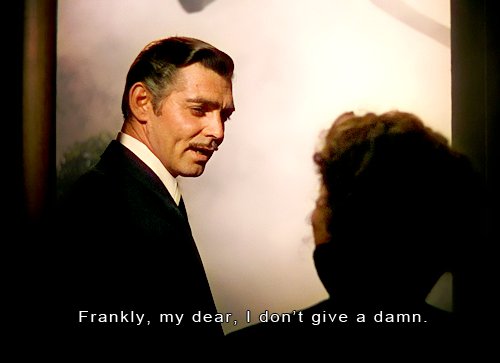 We often consider memories to be solid facts; framed within a moment of time, we remember actions and people as if we are watching a movie in which the scene has been filmed and canned and is now frozen forever like Rhett Butler in the doorway telling Scarlett he doesn’t give a damn. But what if our memories are not accurate representations but they are merely our perception of what occurred, and we have carried with us not true reality encapsulated in a moment of time but a flawed understanding of what might have transpired?
A few years ago, my doctor abruptly closed his office, leaving his patients to scramble for medical care. Friends referred me to another doctor in town and I showed up for my appointment wearing khaki slacks and a royal blue blouse. I completed the paperwork and a nursing assistant took me to the exam room to discuss particulars. She noted that I had written my vocation as “author” and she called me a liar; she said it was obvious that I worked at Wal-Mart because I was wearing the Wal-Mart “uniform”. (Who knew blue and khaki was a uniform?)
She then asked me about my medical history, and I explained that I was taking Lyrica (a non-opiate, non-addictive, non-psychoactive medication that is frequently prescribed for fibromyalgia) due to nerve damage caused by a botched heart ablation that had been carefully documented in my medical records. A few minutes later, after the nursing assistant had left the room, the doctor entered. Before I could speak, he held up his hand to silence me and told me that he had only come into the room to tell me that he did not want me as a patient and he did not prescribe pain medication. He then walked out without giving me a chance to respond.
 If you were to speak to that nursing assistant, no doubt she would relay her memory of that day: how a Wal-Mart employee tried to disguise herself as an author to get pain pills. She might have relayed that information to the doctor as well, and without checking the classification of Lyrica and when and how it is used, he jumped to the conclusion that I was a drug addict there to get opiates for non-existent pain—which is how I was treated. But their memories of that encounter would be flawed by their own perceptions. I have never worked at Wal-Mart, I’ve had 21 books published to date, I have never taken opiates—and I don’t even drink because I never want to lose control of my own senses and actions.
In writing, we see everything through the lens of the character. Their telling of the story (called point of view) is impacted by their beliefs and their often-flawed perception. It may be impacted by their religion or spiritual beliefs, by their cultural and societal upbringing, and even by what they want to see versus what is really unfolding before them.
 An example is a comparison of books about the American Civil War. Shelby Foote was a Mississippian (born November 17, 1916 in Greenville, the heart of the Mississippi Delta, died June 27, 2005 in Memphis) who wrote, among other things,
The Civil War: A Narrative
, which contributed to Ken Burns’ acclaimed documentary series
The Civil War
. The books are written from the point of view of a Mississippi Southerner that remembered the class system of the Deep South, the ingrained beliefs, cultural and societal influences, and within the framework of many that still fly the Confederate flag today.
An example is a comparison of books about the American Civil War. Shelby Foote was a Mississippian (born November 17, 1916 in Greenville, the heart of the Mississippi Delta, died June 27, 2005 in Memphis) who wrote, among other things,
The Civil War: A Narrative
, which contributed to Ken Burns’ acclaimed documentary series
The Civil War
. The books are written from the point of view of a Mississippi Southerner that remembered the class system of the Deep South, the ingrained beliefs, cultural and societal influences, and within the framework of many that still fly the Confederate flag today.Compare his work to The Twentieth Maine by John J. Pullen, about the 20th Maine Infantry Regiment led by Joshua Lawrence Chamberlain. Pullen was born in Amity, Maine in 1914. In contrast to Foote’s Southern prose, Pullen’s work is written from the perspective of Northerners, framed in their commitment to keep the United States intact, surrounded by a culture that did not understand—and was horrified by—the slave trade in the Deep South, impacted further by a Mainer’s cultural and societal influences.
 Each author tells the stories of Antietam, Chancellorsville, Spotsylvania, Fredericksburg, and Gettysburg and both culminating with Lee’s surrender at Appomattox. Both authors relied heavily on letters, journals and records of men that fought in those battles, yet each tells of a completely different experience. Even when their days were the same, consisting of forced marches through mosquito-infested swamps or hunkering down in ice and snow seeking to survive against frigid temperatures and wicked winds, they tell completely different stories because each is not a snapshot of memories but snapshots of perception and their roles within them.
Whether your memories consist of moments in your childhood, work days or relationships, it is often stunning how differently someone that was with you remembers the same events. Taken in this context, our memories are not actually reality with a firm, unmovable setting or scene—but our individual perceptions of moments in time.
In psychology, subjects are often brought back to those moments not only to relive them but to reframe them, and in reframing them they rewrite their own history.
Join the discussion about this topic and more by joining me on Facebook at https://www.facebook.com/pmterrell.author/.
Watch the video below or visit https://youtu.be/Csrn0wd5Ky8:
July 6, 2018
Slaying Some Dragons

[If you’d prefer to watch a video version of this blog, visit my YouTube Channel: https://youtu.be/uJBkk6BjE6Uor watch at the bottom of this blog.]
Heroes in real life as well as in fiction encounter a variety of dragons they must slay. Some are internal, some external, and some require them to leave their families behind in order to experience the journey toward their ultimate purpose or mission.
Homer Hickam is a West Virginia coal miner’s son. His father, his extended family and his community expected him to follow his father’s path and vocation into the coal mines. His memoir, Rocket Boys , tells of his father’s adamant opposition to Homer’s obsession with rocketry after the first Sputnik launch. While other teens were preparing for a life underground, he was experimenting with propulsion even though his father, a mine superintendent, was a constant reminder that his life seemed predestined for the harsh life of a coal miner.
In order for Homer to fulfill his true destiny, he had to break free of the invisible constraints of his environment. Instinctively, he put together a team of adults and fellow students that shared a belief in him and his ideas. Failing miserably at first with cherry bomb rockets, he refused to give up, eventually designing a rocket known as Auk XXXI that propelled 31,000 feet in altitude and going on to win a Gold Medal at the 1960 National Science Fair.
He left home, as so many heroes must do, first to attend Virginia Tech for a degree in Industrial Engineering, and then to join the military, eventually winding up in Huntsville, Alabama with the United States Army Aviation and Missile Command. His fascination and expertise in rocketry and space led him to the National Aeronautics and Space Administration (NASA), where he worked on the Hubble Space Telescope deployment mission, trained crews for a number of Space Shuttle and Spacelab missions, and even worked on the International Space Station Program.
Homer, like every hero, discovers people in his community that are supportive of his ideas, providing advice and guidance. In fiction, often these are sages that may never leave home themselves; from the rather mundane life of a school teacher in coal country to unadorned, sometimes drab homes of an oracle or philosopher. Sometimes these individuals open the hero’s eyes to a life he could not otherwise have imagined. Other times, they open the hero’s eyes to his own internal capabilities and talents.
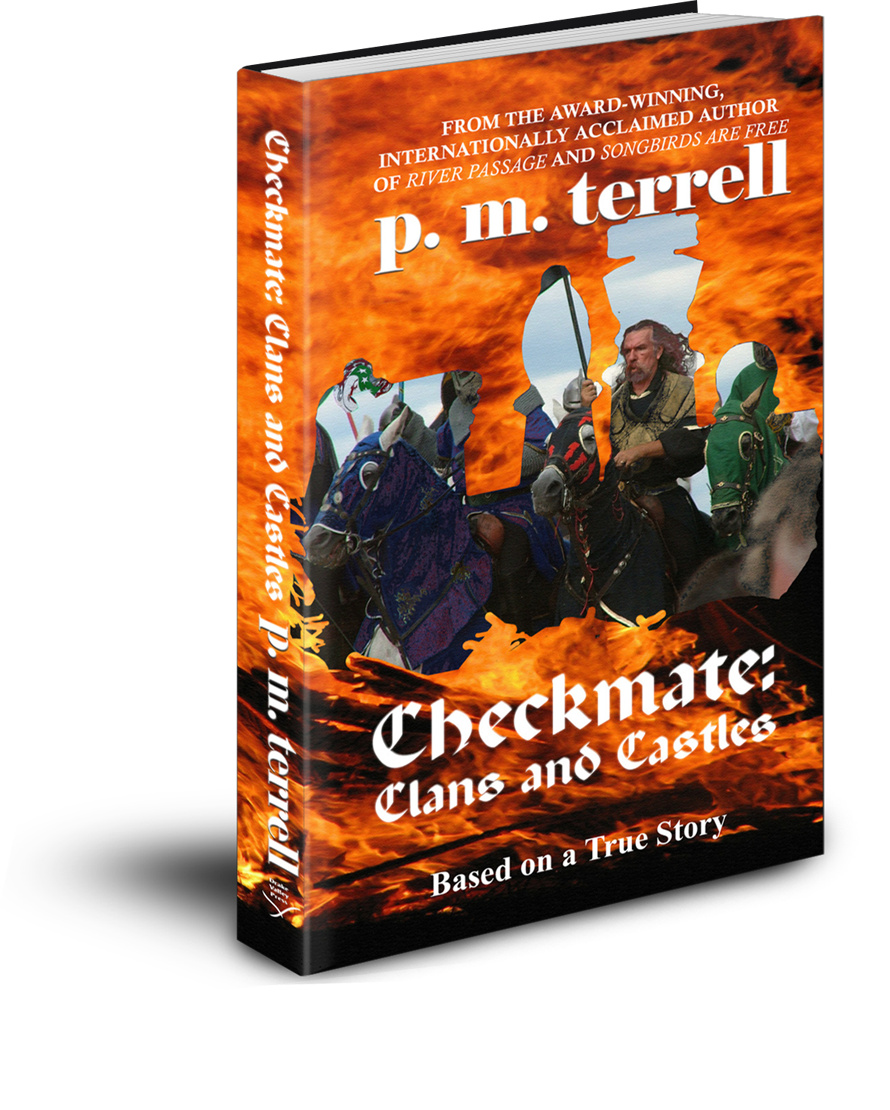 Sometimes the hero is able to perform his mission without ever leaving his community, but most often they find themselves on a journey that takes them far from home. In
Checkmate: Clans and Castles
, my ancestor William Neely leaves his home in Scotland to seek his fortune and his fate in Ulster. That move would set off a chain of events not only for himself but also for his descendants, eventually leading his great-grandchildren to immigrate to America. One descendant, another William Neely, would be one of the first to settle Fort Nashborough, clearing the area of trees around the fort so unfriendly Indian tribes could be spotted earlier. William would die in a Shawnee attack, his daughter Mary captured and held as a slave for three years before managing to escape.
Sometimes the hero is able to perform his mission without ever leaving his community, but most often they find themselves on a journey that takes them far from home. In
Checkmate: Clans and Castles
, my ancestor William Neely leaves his home in Scotland to seek his fortune and his fate in Ulster. That move would set off a chain of events not only for himself but also for his descendants, eventually leading his great-grandchildren to immigrate to America. One descendant, another William Neely, would be one of the first to settle Fort Nashborough, clearing the area of trees around the fort so unfriendly Indian tribes could be spotted earlier. William would die in a Shawnee attack, his daughter Mary captured and held as a slave for three years before managing to escape. In each of their lives, they followed the hero’s journey: William Neely of 1608 venturing away from all he had ever known to follow his destiny in Ireland; William Neely of 1779 moving his cattle westward, his family following on their own fateful river journey that would change their lives forever (
River Passage
); and Mary Neely’s capture, captivity and escape in which she had to find the hero within herself not only to persevere and survive but eventually to triumph over her captors (
Songbirds are Free
).
In each of their lives, they followed the hero’s journey: William Neely of 1608 venturing away from all he had ever known to follow his destiny in Ireland; William Neely of 1779 moving his cattle westward, his family following on their own fateful river journey that would change their lives forever (
River Passage
); and Mary Neely’s capture, captivity and escape in which she had to find the hero within herself not only to persevere and survive but eventually to triumph over her captors (
Songbirds are Free
). Books show us what is possible in our lives even when we are surrounded by people insisting on us living mediocre lives. They open the door to different worlds, various cultures, bygone eras and always, always the hero. And in the end, they show us that in each of us lives a hero; in each of us lives a mission and a purpose that not only propels us forward but reaches back to offer a hand to those behind us, lighting the way. And with each one that follows, the trail becomes wider, the dragons sparser, the journey easier.
 Watch the vlog on YouTube or below:
July 2, 2018
When the Hero Moves
If you'd prefer to watch the video blog, skip to the bottom or visit https://youtu.be/32-7WgA8cqI. Moving to a new location is a theme encountered from the classics to contemporary genre. In a physical move, the hero leaves behind all that he or she has known. This can include family and friendships, a career and coworkers, hobbies or volunteer work, and the familiarity of home. That familiarity can extend to everything that affects a daily life, from the local grocery to a dentist to places the hero has passed every day without thought.
The move throws the hero into the unknown. Perhaps they move to a small town in pursuit of serenity, only to discover the house they move into is haunted—a theme which I used in Vicki’s Key . Moving can be found in horror, thrillers, suspense—but also in romance and comedy.
Regardless of the genre, the hero encounters the unexpected and may go through trials and tribulations before emerging on the other side, better for the experience they had undergone, because in the process they discovered strengths and talents and even renewed purpose.
My mother was born in Spring Hill, Tennessee long before the auto plant was built that caused the tiny town of 416 citizens to swell to more than 37,000. She was grown before their house had a telephone, and her grandparents that lived in the county never did get indoor plumbing. It was expected that my mother would never move but would live out her entire lifetime in that town of 416 (give or take a death or birth) much as her mother and her grandmother had.
But Mom married a man that would become an FBI Special Agent at a time when agents were transferred on a routine basis. By the time I came along, they were living in Washington, DC and over the next ten years we would move to Cleveland, Ohio, Waldwick and Washington Township, New Jersey, Monterey and Pacific Grove, California, and to the Mississippi Delta. The woman that was accustomed to living in a town where one could walk to all four points and literally where everyone knew her name found herself living in an apartment in downtown DC and homes in the north that were completely different from the culture where she had grown up.
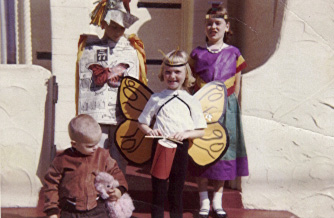 I never experienced fear or trepidation when we were told we were moving, because my mother made every move into a game. Moving excited and invigorated her, and she passed those positive thoughts to her children. She treated each move like the new chapter that it was; knowing doors would open and our lives would be richer and deeper for the experience. Not every move was positive; apartment living with three young children and thin walls had to have been nerve-wracking for a young mother—but I remember how proud she was when she navigated a city bus with us one day, purely for the experience. And though I was convinced our home in Mississippi was haunted, she found the silver lining—and blamed my nightmares on Barnabas Collins.
 As I look back at my moves, I remember participating in the Monarch Butterfly Parade in California; the swing set I loved in Cleveland and how tree roots buckled the sidewalks, which made walking them an adventure akin to Middle Earth. I remember Christmas in shorts on a California day, and Christmas bundled under so many layers that my elbows couldn’t bend in New Jersey.

And later, I would move alone from a sleepy town in the Mississippi Delta back to the place of my birth in Washington, DC, an experience I drew from when writing Kickback .
The heroes in books might relish the move, or they might seek to avert it, but when the book opens to find our hero heading for an unfamiliar place, we know whatever they find will forever transform them and make them into the people they eventually become.
Visit p.m.terrell for more stories about writing and behind the scenes of each book.
Watch the video:
June 22, 2018
The Book That Predicted Election Tampering
 It has been 17 years since I began writing
The China Conspiracy
and 15 years since its release. This summer the cover has been updated and a new Forewordhas been added that tells the story of how I conceived of the idea of election tampering.
It has been 17 years since I began writing
The China Conspiracy
and 15 years since its release. This summer the cover has been updated and a new Forewordhas been added that tells the story of how I conceived of the idea of election tampering.You see, before I became a full-time writer, I had established two computer companies in the Washington, DC area. The first was oriented toward training in the workplace, and the second involved applications development and cyber tools. My clients included the Secret Service, CIA and the Department of Defense.
But my favorite assignment was working as a contractor to detect Medicare fraud and abuse where I worked with a team of auditors. Together, we dreamed up ways in which criminals could defraud the federal government and then we developed programs that could catch them if they attempted it. Our efforts recovered millions of dollars and sent a few to prison.
One day in late 2000, I was having lunch with my coworkers in Virginia. Everyone’s eyes were riveted on televisions with live streaming of Florida’s recount. As the officials held up pregnant and dimpled chads and debated the voters’ intentions, I mentioned that it was ludicrous to still be using such an antiquated system when technology had advanced so far. But as soon as I said the words, we all looked at one another with the same thought: how easy it would be to rig an election.
 As the weeks passed by, we plotted how it would be done and how the government could stop such an attack. We had been trained to think like criminals, from the initial motivation to how the crime would unfold—and the critical ways in which they would almost invariably screw it up so they could be caught. It was astonishingly simple to accomplish; all it needed was access to one voting machine—either remotely or in person—and using the same wireless technology that is used today to update computers, mobile devices and even cable and satellite TV, we could replicate the programming to every other computer. We even knew how to erase the programming afterward so changes to votes would not leave a trail—a trail being the fatal flaw.
We were not the only ones raising awareness, though. Universities including Princeton and Johns Hopkins were also demonstrating how easily voting machines could be manipulated.
Who would be motivated to do such a thing? Anyone that wanted to control government officials. By selecting individuals soft on certain issues or hard on others, the criminal could cherry-pick the ones they wanted in power. I quickly identified who would have the most to gain: China.
When the CIA, FBI, NSA and ODNI concluded that Russia tampered in the 2016 election, I thought I had gotten it wrong. Russia’s military and infrastructure had crumbled compared to the Cold War Era between the Soviet Union and the USA. China was far larger, more populous and had far more to gain than Russia. But when our intelligence agencies testified before Congress, they said that China posed as much if not more of a threat than Russia. CIA Chief Mike Pompeo has said that China has a “much bigger footprint” than Russia to carry out covert activities. And China has steadily been learning about our technology, even manufacturing many critical components used in electronic devices.
But the tampering that occurred by both China and Russia did not begin in 2016. Most likely it began nearly 20 years ago. This was not—is not—something that was simply thrown together like a last-minute prank. This was the result of decades of planning. The United States, for example, declared the Cold War over. The Former Soviet Union never did. To test how well election tampering or hacking performed, they most likely would have started with a much smaller target, such as a local election. Local elections are less likely to have high levels of security, and some have reportedly allowed employees or even volunteers to bring home voting machines in the days before an election. These are considered “soft targets”. All that would be needed is to get to one of those employees—say, someone they could bribe, blackmail or coerce—into providing access—essentially, an inside man (or woman). Another method is to hack into the individual’s wireless network, access the voting machine remotely, infect it, and then spread the virus to all the others when they came online the day of the election.
By selecting smaller targets, the criminals could perfect their methods, growing more emboldened by their success until they were electing governors, senators and representatives. Comparing polling figures from multiple sources, one could easily question how so many could be wrong when the dark horse is elected instead. But it would take years to suspect a foreign government’s interference. Even now, the focus has been on social media and sowing discord among Americans.
While no evidence has been released regarding actual vote alteration, our government has moved forward with more cybersecurity—but progress has been spotty and inconsistent. One reason for this is when a party is in power, they are reluctant to admit that a criminal enterprise might have had something to do with their election. It takes individuals who place America’s security above all else, serving their country and citizens versus establishing their own power. I wrote The China Conspiracy without a political agenda; the antagonist is an Independent, agreeing with the Democrats on some issues and Republicans on others.
The book is a novelized version; Kit Olsen is a veteran CIA programmer-analyst when her son is kidnapped. The ransom: Mandarin computer code covertly intercepted by the CIA. As she tries to get her son back, she must also break the code—which leads to an unimaginable situation and a political bonfire. If you enjoy thrillers that are—especially in this case—realistic plots that will open your eyes to very real possibilities, then you’ll enjoy The China Conspiracy . Best place to buy it is on amazon. Read an excerpt here, and watch the trailer below.
June 1, 2018
The Actions of our Heroes
The most common response to encountering something unexpected or potentially traumatic is to freeze. This has always been my default response to spiders. And once when I was gardening, I stood up to find myself face to face with the largest snake I’d ever seen. It had slithered into a bush and upward through the branches so we were eyeball to eyeball. Instinctively, I froze. But while my body remained perfectly still, my mind was racing—was it a poisonous snake? Had I disturbed it? Was it going to lash out at me?
 In writing, a character might freeze momentarily, as I did. In westerns, minor characters might freeze in the background as the dangerous antagonist enters town. Spectators might freeze as they watch a disaster unfolding, such as floodwaters rushing toward them or the proverbial train wreck. But our hero rarely freezes because that halts the action—or does it?
If a person remains frozen for too long, they can easily become a victim. Our hero’s story might begin with such a moment, such as a hiker that freezes so long that a snake or a mountain lion is able to attack, or an avalanche, tsunami or tornado sweeps them away. That is where the story begins, as the victim must become his or her own hero in order to survive. They must awaken from their frozen status—sometimes forced to by external actions—and they must fight their way back.
In reality, people can remain frozen for more than a few seconds. Soldiers experiencing PTSD often find themselves frozen in time—a horrendous battle, for example, or being gassed, as happened in World War I, keeping them in that moment for years afterward. Others have less dramatic backdrops. An abused wife may remain in the marriage, frozen by an inability to escape because a physical, mental or emotional barrier exists. Oftentimes, these are peripheral characters in a book—a parent that has given up, and the son or daughter, our hero, vows never to follow that path. Ellen O’Hara in Margaret Mitchell’s Gone With the Wind is a frozen character; we learn of her earlier passionate but unrequited love and subsequent marriage to Gerald O’Hara, and though she continues to move through her days, she is but a shell of a person.
 Other times, it is the hero himself we encounter as frozen at the start of the book; the man or woman with a traumatic past, perhaps escaping through alcohol or other vices until they are roused to action. Often, we discover their trauma as backstory interwoven into the plot.
Vicki’s Key
begins as CIA psychic spy Vicki Boyd is remembering a flawed mission resulting in the deaths of children, prompting her to leave the CIA and move to a small town, where she hopes to remain psychologically frozen—but fate intervenes.
Other times, it is the hero himself we encounter as frozen at the start of the book; the man or woman with a traumatic past, perhaps escaping through alcohol or other vices until they are roused to action. Often, we discover their trauma as backstory interwoven into the plot.
Vicki’s Key
begins as CIA psychic spy Vicki Boyd is remembering a flawed mission resulting in the deaths of children, prompting her to leave the CIA and move to a small town, where she hopes to remain psychologically frozen—but fate intervenes.The second reaction to trauma is flight. When I encountered that snake in the bushes, I began stepping backward after those first frozen seconds (or as my family put it, I was doing a great impression of Michael Jackson’s moonwalk) as my mind registered that it was not poisonous but it was huge—over six feet in length. In Alice Doesn’t Live Here Anymore by Robert Getchell, our battered hero flees from her abusive husband and begins a new life. Other times, events dictate our hero’s flight, such as John Steinbeck’s The Grapes of Wrath, in which the Joads are forcibly evicted from their home—or in countless tales of immigrants fleeing starvation, war or vendettas, including Mario Puzo’s The Godfather trilogy as a young Don Corleone immigrates to America to escape Sicilian killers and coming full circle, when his son Michael Corleone is exiled to Sicily from New York to escape Mafia retaliation.
 In writing, it is the flight itself that propels our hero onward, through various challenges and literal or figurative monsters. We know our hero will be forever altered at the end of this journey, and we also know he or she would never have realized their potential if they had remained in place. Reluctant heroes are often frozen characters that have become intimately acquainted with a mediocre existence, but are often propelled upon a journey not of their own making. This is Vicki’s plight in
Vicki’s Key
, as she flees to a small town only to be pulled from her intentioned freeze by a haunted house, a mysterious woman locked away in a creaking old house, an enigmatic nephew, and the CIA calling her back for one more mission.
In writing, it is the flight itself that propels our hero onward, through various challenges and literal or figurative monsters. We know our hero will be forever altered at the end of this journey, and we also know he or she would never have realized their potential if they had remained in place. Reluctant heroes are often frozen characters that have become intimately acquainted with a mediocre existence, but are often propelled upon a journey not of their own making. This is Vicki’s plight in
Vicki’s Key
, as she flees to a small town only to be pulled from her intentioned freeze by a haunted house, a mysterious woman locked away in a creaking old house, an enigmatic nephew, and the CIA calling her back for one more mission.The third reaction is to fight, and our literary heroes must inevitably battle for survival. Their fight might be quite literal, from Dorothy’s destruction of the Wicked Witch of the West in L.Frank Baum’s The Wizard of Oz to James Bond, Jason Bourne or Jack Ryan’s destruction of countless villains.
Other times, their fight consists of survival—a will to live despite their traumatic circumstances. One of my favorite books is Jon Krakauer’s Into Thin Air, a true story in which ordinary people find themselves on Mount Everest during one of the deadliest days in the mountain’s history as a massive storm turned every climber’s life into an epic fight for survival. We know some will perish and others will survive despite the odds, and their individual struggles keep us on the edge of our seats.
Other times, the hero’s struggles are a blend of frozen, flight and fight as their backstory unfolds, revealing a trauma that seems insurmountable; a flight from the location or circumstances; and ultimately, a fight to survive, as in William Styron’s Sophie’s Choice. Our hero may or may not be successful, and it is that uncertainty that propels the story forward. In the climactic scene of Vicki’s Key , Vicki has transformed from one that is frozen to one that is fleeing—and finally, at the end of the journey, to one who must stand and fight.
 In all excellent literature, there exists a constellation around the hero comprised of individuals that are frozen, others that are fleeing, and still others that are fighting. Tom Clavin’s Dodge City is such a book. It is filled with characters that remain in Dodge City despite the hardships and violence because they have simply given up, perhaps believing the entire world is exactly like their lawless town or perhaps because they feel a sense of powerlessness. Others are only passing through, from dance hall girls and prostitutes to cowboys and settlers on their journeys westward. And still others, the ultimate heroes of our story, choose to stand and fight.
When writing their stories, we rarely provide the psychology of each character—nor should we. Their actions—or inactions—are all we need to piece together their profiles in our mind’s eye. Yet the author must delve deeper, arriving at each character’s backstory and motivations, even if those details do not find their way into the storyline. Other times, our main characters become multi-dimensional as we write of both their present and their past trauma, slipping from the current scene to their backstory, while peripheral characters remain at the edges, a little fuzzy perhaps but always representing the ones that froze, that ran… or those that fought.
And that snake in my garden? It was the largest black snake I’ve ever seen before or since; more than six feet in length and as big around as my arm. Neighbors told me to leave it alone, as we lived in a rural area of Virginia known for copperheads, and as it turned out, black snakes dislike copperheads almost as much as humans do. So I named him Jake the Snake, and we peacefully coexisted until an ice storm at Christmas might have frozen him, because after the storm hit, I never saw him again. As large as he was, I hope he’d lived a nice, long life.
All images from FreeImages.com. View the trailer to Vicki's Key below:
May 21, 2018
Change and the Hero
“In AD 1, it took 1,500 years for the amount of information in the world to double. It is now doubling at the rate of once every two years.” This quote came from How to Survive Change You Didn’t Ask For by M.J.Ryan (Conari Press, 2014).
Change is inevitable. It can come in the form of relocation, new or lost employment, new or failed relationships or health crises. Changes can be so huge they overshadow everything else in our line of sight, or they can occur so quietly and stealthily that we remain largely unaware of them. They can propel themselves forward with the speed of light, or stack one upon another like adolescent building blocks.
 There have always been people that resisted change. Sometimes change threatens the status quo, as when Galileo declared the earth revolved around the sun and was promptly jailed as a heretic. Sometimes change destroys jobs or industries; opposite automobile assembly lines were closed carriage shops and horses put to pasture. With the success of supermarkets came the demise of milkmen delivering their products house to house. Newspaper stands destroyed the jobs of paperboys standing on street corners, calling out the headlines to passersby.
Those that succeed are those that embrace change or at least rise to the call, while those that are relegated to mediocre sunsets are typically those unable or unwilling to accept change; those that fight to preserve a status quo and constantly look back at the “good old days” which, if we were to live them again today, would undoubtedly present their shortcomings. Sometimes change can be held at bay; in the past, this might have occurred over years, decades or even centuries, but with change occurring so much more rapidly today, one must either recognize that change is inevitable and prepare to adapt or be left woefully behind.
In writing, the hero is always presented with something he or she did not expect. It is always something that rocks their foundation, often sending them on a journey or quest to emerge on the other side forever transformed. Sometimes, the hero resists the call to action and becomes known in the literary world as “the reluctant hero”. But to emerge victorious, he cannot remain reluctant for long. When he does not answer the initial call, something else unexpected is presented in his path until he can no longer resist.
What the hero never does is bemoan what once was, clinging stubbornly to the past, whether that is a profession that is disappearing or a way of life no longer possible. You will not discover the hero sleeping away the days, the curtains drawn. The hero does not assume the mantle of a victim. He may hide temporarily but he knows he cannot be successful if he remains hidden in the shadows but only when he emerges.
 In writing, the hero must act decisively, quickly and confidently. We do not know whether he will succeed in his quest, what monsters he must slay or what challenges he will encounter. Sometimes he will fail spectacularly. But in the end, he will triumph because of a refusal to give up or give in—and an acceptance that what went before is no longer possible, leading to an embrace of the changes—for it is always change itself that propels him forward.
The novel must speed up the decision and the action, and each scene must carry at least one meaning and piece of the puzzle to carry us forward. In that respect, it is unlike real life, in which people can remain in denial or put up resistance, therefore remaining stuck, through an entire lifetime. We may encounter these characters in novels, but they will always be minor characters and never the hero, and by their reluctance to embrace the new they offer a stark contrast against the hero’s movements forward.
What never occurs, either in life or in fiction, is change that is stopped in its tracks, returning the hero and others to what once was. Today, more than ever before, each of us must make the choice to be part of the change—or be left behind. To continue doing what you’re doing once meant you remained in place. Today it means sliding backward while the rest of the world moves forward without you. When entire countries or regions cling doggedly to the past, they almost never become an idyllic remnant of a perfect place and time, but sink ever more quickly into crumbling oblivion. Our heroes must lead the way, and often the hero is found inside us, waiting for our own permission to emerge.
p.m.terrell is the author of more than 21 published books. For real life books about heroes, visit her non-fiction list and for fictional accounts featuring heroes, visit her mysteries list.
February 21, 2018
A Look at Old Cuba
 I am excited to have as my guest today David Pereda, an award-winning author whose books have won the Lighthouse Book Awards twice, the Royal Palm Awards, the National Indie Excellence Awards, and the Readers Favorite Awards twice. He has traveled to more than thirty countries and speaks four languages. Before devoting his time solely to writing and teaching, David had a successful international consulting career with global giant Booz Allen Hamilton, where he worked with the governments of Mexico, Venezuela, Peru and Qatar, among others. A member of MENSA, David earned his MBA from Pepperdine University in California. He earned bachelor degrees in English literature and mathematics at the University of South Florida in Tampa.
His latest book, Havana Blues, is a provocative and compelling story of old Cuba. The year is 1952 and Ramon Rodriguez’s life as a teenager in fun-loving Havana is filled with typical activities and concerns: girls, education, religion, baseball, parties, and hanging out with friends. The country is enjoying a period of prosperity and happiness--until General Batista stages a coup that topples the government and Ramon’s life is flung into chaos. In a few short years, the carefree fifties morph into a vicious and repressive dictatorship highlighted by corruption, organized gambling, school closures, student demonstrations, police brutality, and assassinations. As Ramon experiences the thrills of his first romantic relationship, graduates from school, and struggles to plan for an uncertain future, he is forced to make important decisions that may be dangerous to him, his family, his friends, and his girlfriend – the beautiful Sonia -- and could turn deadly.

I sat down with David for a recent interview:
Thank you for joining us here today, David! Havana Blues is a coming-of-age story set against the backdrop of revolutionary Cuba. How much of the country is drawn from your personal memories of the place and time?
All of the descriptions of Havana in this book are drawn from my own experiences, as well as from personal diaries and writings I kept about those years.
The book is a departure from your thrillers, though several of the same characters are in Havana Blues as younger people. Was it difficult for you to make the transition from the heart-pounding thrillers like Twin Powers and Killing Castro, to the pace of a coming-of-age book?
Havana Blues was the most difficult book I have ever written and probably will ever write. There were a lot of intense memories from those years I had to deal with, which often interfered with my editing objectivity. Writing in the first person also required an adjustment, since I usually write in the third person -- although one of my earlier novels, Getting Filthy Rich, was written in the first person from the point of view of each of the main characters in the story as I wanted to give the impression of reflections in a mirror. As far as transitioning from writing thrillers to writing a coming-of-age historical literary novel is concerned, no it wasn't difficult. I have written novels about horses, finances and other topics. In fact my most successful book in the marketplace was an erotic novel I wrote under a pen name that sold 50,000 copies. It wasn't until an agent suggested I write thrillers with a Cuban theme that I started writing them. I liked the genre and the characters, so I kept writing them. However, I'm sad to say that none of my other books have ever come close to selling as many copies as that erotic novel. I don't know exactly what to make of that. Does that say something about readers in general?
The book has made me very interested in Cuban history. What are your thoughts on General Batista and Fidel Castro and the changes each made to the country, both in the political climate as well as for average citizens simply trying to live each day to the best of their abilities?
Batista was the reason the Castro Revolution happened. He was a greedy, corrupt and sanguinary dictator who surrounded himself with a cruel and violent police and military. The worst mistake Batista made was to release Fidel Castro from prison and send him into exile after the failed attempt by the then inexperienced Castro to start a revolution by attacking the Moncada garrison. Castro left the country and went to Mexico where he spent years refining his political views and plotting his revolution. The result we all know. Had President Prio stayed in power, I believe there would never have been enough discontent in Cuba to warrant the Castro Revolution. During Batista, the economy collapsed; gambling proliferated to such an extent that just about everyone in Cuba gambled at something or other; the Italian Mafia used Cuba -- mostly Havana and Varadero -- as their summer homes; prostitution was rampant; drugs were plentiful; police brutality was the order of the day; all schools and universities were closed; and terror reigned. Yes, Batista created the need for Castro -- and the latter took advantage of the opportunity. Their partnership, Batista the cause and Castro the effect, took a country known to be at the forefront of technological advances, music, art, education, literature and culture to the broken-down medieval agrarian society that it is today. Did you know that Cuba has one of the highest suicide rates of any country in the world?
Have you returned to Cuba in recent years? If so, have you been able to visit the places mentioned in Havana Blues? I'm curious how much has stayed the same and how much has changed.
I have never been back to Cuba. I have kept up with Cuba via friends and relatives and photos and videos. I would imagine it would be cathartic for me to return to Cuba and visit those same places. I can't even imagine how I would feel.
How much of Havana Blues is autobiographical? Has it been difficult as an author to put the story out there in the public realm?
A lot of Havana Blues is autobiographical. The places, the schools, the culture, the people are mostly all real. Recently, a woman who lived in Havana during those times reviewed the novel on Amazon and mentioned how historically authentic the book was in term of the locations, the people, the sounds, the smells, and the culture. As for your second question, the answer is yes. It has been very difficult for me to put that story out there. There were a number of people who had read the drafts who wanted me to publish that novel, foremost among them my first wife, Kay, to whom the book is dedicated. I finally caved in and published the book. How do I feel about it? I feel naked and exposed. Does that make sense to you?
What types of books do you prefer to read in your spare time?
I read all types of books. The last few books I have read or re-read during the past month or so include: Lord Jim by Conrad, The Lord of the Flies by Golding, 1984 by Orwell, The Remains of the Day by Kazuo Ishiguro, Home and Never Let Go by Coben, The Wrong Side of Good-bye and Two Kinds of Truth by Connelly, and The Rooster Bar by Grisham.
What is coming up for you after Havana Blues? Can you give us a synopsis of your next book and the possible release date?
Freaking Fast, scheduled to be released by Custom Book Publications in March of this year, is coming up. A melange of YA sports thriller fantasy, Freaking Fast is a totally different book from Havana Blues. For starters, it doesn't have exotic places for its setting; although some of the characters can be considered exotic. The story takes place in only one location: Asheville, North Carolina; and not one word of Spanish is spoken in the book -- though there are some phrases in Russian. Secondly, while Havana Blues takes place in the historical past, Freaking Fast takes place in the fantastic future. The story begins in 2066 with the words, "Today I'm going to kill the love of my life," which are uttered by the main character, a woman, world-renown mathematician Doctor Alexandra "Alex" Martin. Have you ever imagined North Carolina, the United States, the world fifty years from now? I have -- and the result is Freaking Fast. I had great fun imagining Asheville fifty years in the future, by the way. Freaking Fast begins in the future for a few chapters, returns to the present for a long flashback, and finishes in the future, as Alex charges into the lion's den to do the deed. Unfortunately, she ends up disarmed and trapped by killing robots on the balcony of a twenty-story building and about to be shot with her own gun by "the love of her life." How does she get out alive and escape a situation like that? The end will surprise you, I guarantee it.
What would you like for readers to know about you and your writing?
It always gives me pause to talk about myself, but here it goes. I'm much like the solution to a good math problem: conceptually simple to read yet difficult to understand and rewarding to solve. I've lived a blessed life, dotted with glitches and mistakes; and I'd like to believe I have been able to use those experiences to learn a thing or two about life. I've done things most people only dream about -- from riding racing camels in the Arabian desert to watching wolves hunt in the Alaskan wild to jumping horses over seven feet hurdles to authoring ten books. I love to teach and write books and travel and solve complex math problems -- not to mention the friendship and company of smart and beautiful women -- but most of all I love my family and spending time with them. As for my writing, I like to experiment with different genres, but I particularly enjoy writing thrillers and mainstream novels with unique characters and exotic settings. I take writing seriously, which might be the reason I have never written another erotic novel despite the prompts of agents and well-meaning friends. The one I wrote was a satire of erotic novels, and I couldn't beat that.
Where can they learn more about you and how can they purchase the book?
Learning more about me is quite easy. Google my name and information about me will pop out, including my website (www.davidpereda.com). I have an Author Page on Amazon with a list of my books and a bio and even copies of some of my non-fiction articles and blogs. Key in Books David Pereda on Amazon and all my books and links will pop out. You can also purchase Havana Blues directly from my publisher, Custom Book Publications: (http://www.custombookpublications.com/bstores_new.htm). If you still want to know more about me, and you're not a crazed killer, a sexual predator like Doctor Nassar, or a drug addict who hates writers, you can email me at davidpereda@aol.com. I'd be glad to communicate with you.
For more about David Pereda and Havana Blues, including book excerpts, follow the Goddess Fish Book Tour.
Thank you for joining us today!
December 27, 2017
A Look Ahead at 2018
Happy New Year!
As 2017 draws to a close, it’s natural that we all should be looking at the upcoming year and all the promises it holds. Nearly everyone I know has experienced more stress in 2016 and 2017, largely due to world events, and I for one am looking forward to a more relaxing and positive 2018.
I am currently working on three books to be released in 2018:
The Essential Marketing Plan for Authors is based on my popular 52-week Marketing Plan Course through The Novel Business. I’ve been mentoring authors for nearly 18 years and have found the biggest challenge to be in the area of marketing; too many authors give up too quickly or they don’t take the time or make the effort to correctly identify their target market, so their efforts miss the mark. This book takes the author through the entire process of identifying their ideal reader (even when they don’t have a clue who they are) and walks them through digital promotional efforts as well as traditional marketing. I am in the editing stage now, and hope this book will be released before the summer of 2018.
The Adventures of Blade and Rye is a venture into writing children’s books (preschool through 3rd grade). I actually wrote this book about three years ago and set it aside, but was recently inspired by Sandra Warren and her children’s book, Spivey’s Web to revive it. Blade and Rye are two fairies and best friends that visit Earth just as life is forming. Their teacher transforms them into two blades of grass so they have a front-row, center seat beside a lake that will see everything from dinosaurs to humans, and eventually (through the series) the formation of villages and then high-rise cities. It is in the production stage now, and I also hope this will be released before the summer of 2018.
 And for those that love Vicki Boyd and Dylan Maguire, I am in the writing stage (first draft) of the 7th book in the
Black Swamp Mysteries Series
.
Cloak and Mirrors
ended with Dylan and Vicki going dark to avoid enemy spies from abducting Vicki and taking her to Moscow. They will find themselves on a sparsely-populated island as a hurricane nears. Cut off from the mainland, they find refuge in an ancient monastery along with half a dozen island residents, and as darkness descends one after another are murdered. It is up to Vicki and Dylan to discover the killer and his or her motives. It is due on the editor’s desk in the spring so hopefully it will be released in the fall of 2018—just in time for Book ‘Em North Carolina’s 7thAnnual Writers Conference and Book Fair.
And for those that love Vicki Boyd and Dylan Maguire, I am in the writing stage (first draft) of the 7th book in the
Black Swamp Mysteries Series
.
Cloak and Mirrors
ended with Dylan and Vicki going dark to avoid enemy spies from abducting Vicki and taking her to Moscow. They will find themselves on a sparsely-populated island as a hurricane nears. Cut off from the mainland, they find refuge in an ancient monastery along with half a dozen island residents, and as darkness descends one after another are murdered. It is up to Vicki and Dylan to discover the killer and his or her motives. It is due on the editor’s desk in the spring so hopefully it will be released in the fall of 2018—just in time for Book ‘Em North Carolina’s 7thAnnual Writers Conference and Book Fair.Book ‘Em is now under the leadership of Robeson Community College and I have returned this year to assist the organizing committee. Please mark your calendar for Saturday, September 22, when we’ll bring together dozens of authors that will be signing and selling their books, giving talks and participating in panel discussions. Headliners are New York Times bestselling authors Jeff Mudgett, Jonas Saul and Elizabeth Massie.
What are you reading?