Susanna Fraser's Blog, page 3
May 31, 2015
2015 Reading catch-up post, books 46-54
So, getting ready for the Europe trip, along with some personal writing projects, has taken over my life for the past month. My reading pace has slowed down, way down, though I'm hoping to be able to make up some time what with all the hours I'll be spending on airplanes and the occasional train in June and July!
46. The Lowland by Jhumpa Lahiri
With this book I ventured into the rare-for-me genre of literary fiction as part of a recent commitment of mine to seek out more books by nonwhite authors. As part of a discussion about people trying to read more books by women, I reflected that that wasn't an issue for me, given that almost all of the fiction I read is woman-authored, along with maybe half the nonfiction. But I could easily go months without ever reading a nonwhite author and not even notice I'm doing it.
So, at least once a month, I plan to read a book by an author of color. And I can't count the same author more than once a year, since it would kind of defeat the purpose of exposing myself to a broader range of voices if I find an author with, say, a nice long mystery series and read one per month.
Anyway, while this was a fascinating book, it was also dark and depressing enough to remind me why I generally prefer genre to literary fiction. I am glad I read it, though.
47. The Underground Abductor by Nathan Hale
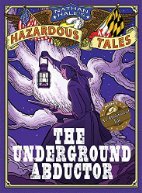
The latest in Nathan Hale's series of graphic novels for upper elementary readers about American history looks at Harriet Tubman's childhood and youth, her escape from slavery, and her work on the Underground Railroad. This wasn't my favorite in the series--Donner Dinner Party has a tighter narrative arc (probably because it covers a shorter time period and was just a more linear historical incident), and Treaties, Trenches, Mud, and Blood impressed me by actually making WWI comprehensible to young readers like my daughter without trivializing it. But an average Nathan Hale's Hazardous Tale is still an awesome book, and I learned quite a bit from it, since I didn't know much about Harriet Tubman beyond her name and the fact she was involved with the Underground Railroad.
48. How We Got to Now by Steven Johnson
A quick, fascinating read looking at how innovations in six different areas have built on each other in unexpected ways over the past few centuries. Definitely recommended for those who like history of science books.
(As a side note, I'm way too prone to describing books as "fascinating." Memo to self: find new adjectives for "this book was cool and really held my attention.")
49. In Real Life by Cory Doctorow & Jen Wang
Another graphic novel read to be shared with my daughter, though this one was a Message Book, and one that was too heavy-handed for my taste despite my agreeing with its views.
50. The Dirt on Clean by Katherine Ashenburg
An interesting, readable social history on the history of cleanliness in the western world from ancient Greek days to the present.
51. Pocket Apocalypse by Seanan McGuire
Fourth in the InCryptid series. I haven't liked the last two books as much as the first two--I enjoyed Verity Price's New York adventures more than her brother Alex's role as zookeeper to creatures both ordinary and paranormal--but this one did have a good bit of the family's Aeslin Mice, which are my favorite magical creatures EVER.
52. Cheated by Jay Smith and Mary Willingham
A detailed account of a long-running academic scandal at the University of North Carolina involving the funneling of academically ill-prepared athletes, especially in the "money" sports of football and men's basketball, into courses whose requirements were basically nonexistent. Basically, it's the kind of thing I always kinda assumed was going on with elite collegiate sports programs, but it's depressing to see it spelled out.
I love football especially so much, but lately between the head injury issues, the stunted educations of young men who are unlikely to ever see the NFL (or play long enough to amass a fortune to last them their lifetimes if they do), and the fact the sport's powers that be seem to think I should be happy to ignore rampant domestic violence and sexual assault issues, I'm finding it harder and harder to justify that love.
53. Heirs to Forgotten Kingdoms by Gerard Russell
What with how busy and travel-focused I've been, it took me two weeks to finish this book, though it's fascinating--an account of the (mostly) obscure minority religions of the Middle East--Druze, Samaritans, Yazidi, Zoroastrians, etc.
54. Dead Wake by Erik Larson
An account of the last Atlantic crossing and sinking of the Lusitania. A good read if you like historical disaster tales, and IMHO Larson's best work to date. It's remarkable in a way that the loss of so many American civilian lives didn't expedite our entry into WWI--and, I have to admit, it speaks well of Woodrow Wilson, who isn't my favorite of the well-known POTUSes for several reasons. But the book's focus, and where it shines, is in the stories of all the individuals aboard the ship (mostly the survivors, though in some cases I guessed wrong about who was going to survive because some particularly vivid account turned out to be from a survivor's memory of a dead companion or from papers recovered from a body).
46. The Lowland by Jhumpa Lahiri
With this book I ventured into the rare-for-me genre of literary fiction as part of a recent commitment of mine to seek out more books by nonwhite authors. As part of a discussion about people trying to read more books by women, I reflected that that wasn't an issue for me, given that almost all of the fiction I read is woman-authored, along with maybe half the nonfiction. But I could easily go months without ever reading a nonwhite author and not even notice I'm doing it.
So, at least once a month, I plan to read a book by an author of color. And I can't count the same author more than once a year, since it would kind of defeat the purpose of exposing myself to a broader range of voices if I find an author with, say, a nice long mystery series and read one per month.
Anyway, while this was a fascinating book, it was also dark and depressing enough to remind me why I generally prefer genre to literary fiction. I am glad I read it, though.
47. The Underground Abductor by Nathan Hale
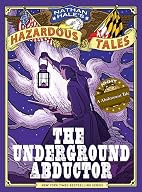
The latest in Nathan Hale's series of graphic novels for upper elementary readers about American history looks at Harriet Tubman's childhood and youth, her escape from slavery, and her work on the Underground Railroad. This wasn't my favorite in the series--Donner Dinner Party has a tighter narrative arc (probably because it covers a shorter time period and was just a more linear historical incident), and Treaties, Trenches, Mud, and Blood impressed me by actually making WWI comprehensible to young readers like my daughter without trivializing it. But an average Nathan Hale's Hazardous Tale is still an awesome book, and I learned quite a bit from it, since I didn't know much about Harriet Tubman beyond her name and the fact she was involved with the Underground Railroad.
48. How We Got to Now by Steven Johnson
A quick, fascinating read looking at how innovations in six different areas have built on each other in unexpected ways over the past few centuries. Definitely recommended for those who like history of science books.
(As a side note, I'm way too prone to describing books as "fascinating." Memo to self: find new adjectives for "this book was cool and really held my attention.")
49. In Real Life by Cory Doctorow & Jen Wang
Another graphic novel read to be shared with my daughter, though this one was a Message Book, and one that was too heavy-handed for my taste despite my agreeing with its views.
50. The Dirt on Clean by Katherine Ashenburg
An interesting, readable social history on the history of cleanliness in the western world from ancient Greek days to the present.
51. Pocket Apocalypse by Seanan McGuire
Fourth in the InCryptid series. I haven't liked the last two books as much as the first two--I enjoyed Verity Price's New York adventures more than her brother Alex's role as zookeeper to creatures both ordinary and paranormal--but this one did have a good bit of the family's Aeslin Mice, which are my favorite magical creatures EVER.
52. Cheated by Jay Smith and Mary Willingham
A detailed account of a long-running academic scandal at the University of North Carolina involving the funneling of academically ill-prepared athletes, especially in the "money" sports of football and men's basketball, into courses whose requirements were basically nonexistent. Basically, it's the kind of thing I always kinda assumed was going on with elite collegiate sports programs, but it's depressing to see it spelled out.
I love football especially so much, but lately between the head injury issues, the stunted educations of young men who are unlikely to ever see the NFL (or play long enough to amass a fortune to last them their lifetimes if they do), and the fact the sport's powers that be seem to think I should be happy to ignore rampant domestic violence and sexual assault issues, I'm finding it harder and harder to justify that love.
53. Heirs to Forgotten Kingdoms by Gerard Russell
What with how busy and travel-focused I've been, it took me two weeks to finish this book, though it's fascinating--an account of the (mostly) obscure minority religions of the Middle East--Druze, Samaritans, Yazidi, Zoroastrians, etc.
54. Dead Wake by Erik Larson
An account of the last Atlantic crossing and sinking of the Lusitania. A good read if you like historical disaster tales, and IMHO Larson's best work to date. It's remarkable in a way that the loss of so many American civilian lives didn't expedite our entry into WWI--and, I have to admit, it speaks well of Woodrow Wilson, who isn't my favorite of the well-known POTUSes for several reasons. But the book's focus, and where it shines, is in the stories of all the individuals aboard the ship (mostly the survivors, though in some cases I guessed wrong about who was going to survive because some particularly vivid account turned out to be from a survivor's memory of a dead companion or from papers recovered from a body).


April 19, 2015
2015 Reading, Books 43-45
43. Ms. Marvel Volume 2: Generation Why by G. Willow Wilson, Jacob Wyatt (Illustrator), Adrian Alphona (Illustrator)
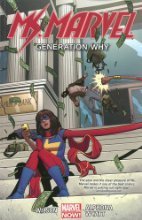
What a fun series, and how awesome to have something like this to share with my geeky tomboy 11-year-old daughter!
44. Roller Girl by Victoria Jamieson
...And I continue to raid my daughter's graphic novel collection. This one got me right in the feels. I seriously almost cried reading it. It's about a 12-year-old girl navigating changing friendships and trying to forge her own identity...and between having a preteen daughter and my own vivid memories of that age, this one was a direct hit.
45. American Apocalypse by Matthew Avery Sutton
A history of fundamentalist and evangelical Christianity in America from the late 19th century through the present day (though the strongest focus is ~1900-1950). Sutton focuses heavily on the importance of apocalyptic belief in an imminent Tribulation and Second Coming and its impact on fundamentalist political engagement. It's a dense but fascinating read. I was surprised to see how deeply rooted the criticisms I've seen of current politicians and policies are--e.g. I hadn't realized FDR came in for similar venom to what Clinton and Obama have been on the receiving end of in my lifetime.
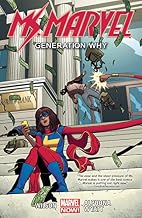
What a fun series, and how awesome to have something like this to share with my geeky tomboy 11-year-old daughter!
44. Roller Girl by Victoria Jamieson
...And I continue to raid my daughter's graphic novel collection. This one got me right in the feels. I seriously almost cried reading it. It's about a 12-year-old girl navigating changing friendships and trying to forge her own identity...and between having a preteen daughter and my own vivid memories of that age, this one was a direct hit.
45. American Apocalypse by Matthew Avery Sutton
A history of fundamentalist and evangelical Christianity in America from the late 19th century through the present day (though the strongest focus is ~1900-1950). Sutton focuses heavily on the importance of apocalyptic belief in an imminent Tribulation and Second Coming and its impact on fundamentalist political engagement. It's a dense but fascinating read. I was surprised to see how deeply rooted the criticisms I've seen of current politicians and policies are--e.g. I hadn't realized FDR came in for similar venom to what Clinton and Obama have been on the receiving end of in my lifetime.
April 7, 2015
2015 Reading, Books 37-42
37. An Invitation to Sin by Sarah Morgan
Harlequin Presents aren't my usual thing, but I do love Sarah Morgan's because she's so good at writing heroines who can stand up to the powerful, rich, sexy alpha heroes required by the line. In this one I enjoyed how the heroine's toughness and confidence upended all the hero's stereotypes and expectations about women without ever crossing the line (IMHO) into the dreaded "I love you because you're nothing like other women" trope.
38. What Matters in Jane Austen by John Mullan
A recommended read for anyone with at least moderately high familiarity with the Austen canon. (If you haven't read the books or maybe read Pride & Prejudice once 20 year ago, you'll be lost and bored.) Over 20 chapters, Mullan looks at how Austen handles topics such as marriage proposals, money, and characters' reading habits across her novels, along with aspects of her literary technique in point of view, dialogue, etc.
39. Pioneer Girl: The Annotated Autobiography by Laura Ingalls Wilder
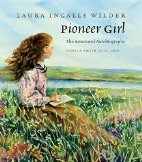
When the South Dakota Historical Society Press decided to put out an annotated version of the autobiography that became the root of Laura Ingalls Wilder's Little House series, apparently they expected it to be of interest to a few historians and scholars, and then had to rush to print copies for all the people like me who read their Little House books into tatters as children!
And if you were also such a child, you should read this book. It's interesting to see how Wilder streamlined her real life into the fictional account. The real Ingalls family was less iconic--e.g. De Smet in the novels seems a lot more isolated than it really was. (Except during the Long Winter. The trains really couldn't get through the snow for months, the settlement really was that unprepared due to the early onset of that year's snows and the fact it was newly settled and therefore no one had managed a large crop that year or had much livestock, and you get the impression people did come damn close to starving. I even wonder if Laura was so very short as an adult, 4'11", partly because of enduring such an experience during her prime growth spurt period in early adolescence, though she probably would've been petite regardless.) But in some ways the real Ingalls family struggled more, since in the novels Wilder left out the worst of the poverty they occasionally fell into, the death of her baby brother, and sundry other incidents that wouldn't seem right for a kids' book.
40. Rose Sees Red by Cecil Castellucci
A YA novel set in the early 80's at the height of the Cold War (and HOW weird is it to see my own youth become an era that gets the retro treatment) about a teenager depressed over her childhood best friend's betrayal who goes out adventuring one night with the Russian girl next door (the daughter of Soviet diplomats). A quick, engaging read.
41. Promise of the Wolves by Dorothy Hearst
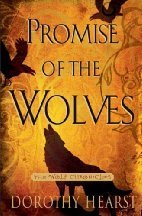 First in a fantasy trilogy about a young wolf 14,000 years ago destined to become a bridge between wolfkind and humankind, and by extension between humanity and the natural world. While I wasn't absolutely blown away by it, I did enjoy it and was sufficiently intrigued to put the second book on hold at my library.
Incidentally, I thought of buying this book as a birthday present for my 11-year-old daughter. It's not YA per se, but it's a coming-of-age story, the reading level is well within her above-grade-level capacity, and she loves animal fantasies.
However, the Kindle edition is $13.99. I'm not normally one to whine about ebook pricing--to me, it's about the content, not the format, and I'm happy to pay the same price I would for a print edition, or very slightly lower because I can't give the ebook away or donate it to the library when I'm done, which lowers the value somewhat. But for a book that's been out since 2008, I don't want to pay more than a normal MMPB price, say $5.99 or $6.99 or so. Maybe I'm somewhat biased by the fact that before I was an ebook reader I was a MMPB reader for almost anything that wasn't a new release by an absolute favorite author--and even then I was willing to wait for the paperback or wait out the hold list for the library hardcover unless the prior book had ended on a cliffhanger. But that still seems high to me.
42. The Nine Tailors by Dorothy Sayers
This was a re-read of a Lord Peter Wimsey mystery I'd only read once, so many years ago that at first I barely remembered any of the plot, though it came back to me as I went along, enough so to give me the pleasant sensation of being ahead of the sleuth for a change. :-) Not my favorite Lord Peter book by a long shot--the story gets bogged down in the minutia of fen drainage and bell-ringing, IMHO--but a lesser Lord Peter book is still better than most of what's out there.
Harlequin Presents aren't my usual thing, but I do love Sarah Morgan's because she's so good at writing heroines who can stand up to the powerful, rich, sexy alpha heroes required by the line. In this one I enjoyed how the heroine's toughness and confidence upended all the hero's stereotypes and expectations about women without ever crossing the line (IMHO) into the dreaded "I love you because you're nothing like other women" trope.
38. What Matters in Jane Austen by John Mullan
A recommended read for anyone with at least moderately high familiarity with the Austen canon. (If you haven't read the books or maybe read Pride & Prejudice once 20 year ago, you'll be lost and bored.) Over 20 chapters, Mullan looks at how Austen handles topics such as marriage proposals, money, and characters' reading habits across her novels, along with aspects of her literary technique in point of view, dialogue, etc.
39. Pioneer Girl: The Annotated Autobiography by Laura Ingalls Wilder
When the South Dakota Historical Society Press decided to put out an annotated version of the autobiography that became the root of Laura Ingalls Wilder's Little House series, apparently they expected it to be of interest to a few historians and scholars, and then had to rush to print copies for all the people like me who read their Little House books into tatters as children!
And if you were also such a child, you should read this book. It's interesting to see how Wilder streamlined her real life into the fictional account. The real Ingalls family was less iconic--e.g. De Smet in the novels seems a lot more isolated than it really was. (Except during the Long Winter. The trains really couldn't get through the snow for months, the settlement really was that unprepared due to the early onset of that year's snows and the fact it was newly settled and therefore no one had managed a large crop that year or had much livestock, and you get the impression people did come damn close to starving. I even wonder if Laura was so very short as an adult, 4'11", partly because of enduring such an experience during her prime growth spurt period in early adolescence, though she probably would've been petite regardless.) But in some ways the real Ingalls family struggled more, since in the novels Wilder left out the worst of the poverty they occasionally fell into, the death of her baby brother, and sundry other incidents that wouldn't seem right for a kids' book.
40. Rose Sees Red by Cecil Castellucci
A YA novel set in the early 80's at the height of the Cold War (and HOW weird is it to see my own youth become an era that gets the retro treatment) about a teenager depressed over her childhood best friend's betrayal who goes out adventuring one night with the Russian girl next door (the daughter of Soviet diplomats). A quick, engaging read.
41. Promise of the Wolves by Dorothy Hearst
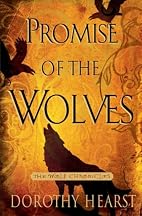 First in a fantasy trilogy about a young wolf 14,000 years ago destined to become a bridge between wolfkind and humankind, and by extension between humanity and the natural world. While I wasn't absolutely blown away by it, I did enjoy it and was sufficiently intrigued to put the second book on hold at my library.
Incidentally, I thought of buying this book as a birthday present for my 11-year-old daughter. It's not YA per se, but it's a coming-of-age story, the reading level is well within her above-grade-level capacity, and she loves animal fantasies.
However, the Kindle edition is $13.99. I'm not normally one to whine about ebook pricing--to me, it's about the content, not the format, and I'm happy to pay the same price I would for a print edition, or very slightly lower because I can't give the ebook away or donate it to the library when I'm done, which lowers the value somewhat. But for a book that's been out since 2008, I don't want to pay more than a normal MMPB price, say $5.99 or $6.99 or so. Maybe I'm somewhat biased by the fact that before I was an ebook reader I was a MMPB reader for almost anything that wasn't a new release by an absolute favorite author--and even then I was willing to wait for the paperback or wait out the hold list for the library hardcover unless the prior book had ended on a cliffhanger. But that still seems high to me.
42. The Nine Tailors by Dorothy Sayers
This was a re-read of a Lord Peter Wimsey mystery I'd only read once, so many years ago that at first I barely remembered any of the plot, though it came back to me as I went along, enough so to give me the pleasant sensation of being ahead of the sleuth for a change. :-) Not my favorite Lord Peter book by a long shot--the story gets bogged down in the minutia of fen drainage and bell-ringing, IMHO--but a lesser Lord Peter book is still better than most of what's out there.
March 23, 2015
2015 Reading, Books 34-36
34. Animal Weapons: The Evolution of Battle by Douglas Emlen
More popular biology, this time comparing animal weapons to human weapons across military history. An interesting, quick read, though not the best book of its kind I've ever read. I could've done with fewer pictures and realistic line drawings of insects (you know how I mentioned above that I hate spiders? I really prefer my animals with four legs or fewer, thank you), but that was unavoidable given that the author's research specializes in dung beetles!
35. When Britain Burned the White House by Peter Snow
And my non-fiction binge continues, though I really need to get on the stick if I'm going to make ten books on the month... ::looks around for some SHORT books, whether fictional or otherwise::
Anyway, I recommend this book for anyone who'd like to know more about the War of 1812--though it doesn't get into the causes, the overall sweep of the war, or the peace negotiations except tangentially--it's strictly about the invasion of Washington and the bombardment of Baltimore. It's even-handed and sympathetic to both sides, which you'd think would be easy to do 200 years after the fact when writing about countries who are now firm allies, but you'd be surprised how many War of 1812/Napoleonic histories can't pull it off.
It's also a contrast to a lot of the military histories and biographies I've read because both sides were so plagued with indecisiveness, mediocre or downright incompetent commanders, etc. A nice reminder that the Napoleons and Wellingtons, the Hannibals and Scipio Africanuses, etc. are the exception rather than the rule! (Though it's an interesting exercise to imagine how the campaign would've played out if Andrew Jackson had commanded the American forces and Wellington had been persuaded to take on the British command. IMHO Wellington was by far the better commander, but Jackson was no slouch and home-field advantage counts for a lot in war.)

36. Ms. Marvel Vol 1: No Normal by G. Willow Wilson and Adrian Alphona
Maybe I'm finally getting the hang of reading graphic novels, because this one completely blew me away. It's about a 16-year-old Pakistani-American girl in Jersey City who's suddenly bestowed with shape-shifting superpowers--and then has to figure out how to control them and make use of them even while grounded. And the characters and setting are SO vivid.
More popular biology, this time comparing animal weapons to human weapons across military history. An interesting, quick read, though not the best book of its kind I've ever read. I could've done with fewer pictures and realistic line drawings of insects (you know how I mentioned above that I hate spiders? I really prefer my animals with four legs or fewer, thank you), but that was unavoidable given that the author's research specializes in dung beetles!
35. When Britain Burned the White House by Peter Snow
And my non-fiction binge continues, though I really need to get on the stick if I'm going to make ten books on the month... ::looks around for some SHORT books, whether fictional or otherwise::
Anyway, I recommend this book for anyone who'd like to know more about the War of 1812--though it doesn't get into the causes, the overall sweep of the war, or the peace negotiations except tangentially--it's strictly about the invasion of Washington and the bombardment of Baltimore. It's even-handed and sympathetic to both sides, which you'd think would be easy to do 200 years after the fact when writing about countries who are now firm allies, but you'd be surprised how many War of 1812/Napoleonic histories can't pull it off.
It's also a contrast to a lot of the military histories and biographies I've read because both sides were so plagued with indecisiveness, mediocre or downright incompetent commanders, etc. A nice reminder that the Napoleons and Wellingtons, the Hannibals and Scipio Africanuses, etc. are the exception rather than the rule! (Though it's an interesting exercise to imagine how the campaign would've played out if Andrew Jackson had commanded the American forces and Wellington had been persuaded to take on the British command. IMHO Wellington was by far the better commander, but Jackson was no slouch and home-field advantage counts for a lot in war.)
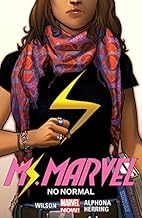
36. Ms. Marvel Vol 1: No Normal by G. Willow Wilson and Adrian Alphona
Maybe I'm finally getting the hang of reading graphic novels, because this one completely blew me away. It's about a 16-year-old Pakistani-American girl in Jersey City who's suddenly bestowed with shape-shifting superpowers--and then has to figure out how to control them and make use of them even while grounded. And the characters and setting are SO vivid.
March 15, 2015
2015 Reading, Books 28-33
Wow, I hadn't realized it had been THIS long since I'd updated. Life has been a little crazy of late, especially the past week after a misstep on uneven pavement led to a faceplant, three hours in the ER, five stitches holding my lip together, and a face full of scabs.
But I'm now mostly recovered and trying to get caught up on everything that took a back seat to napping between doses of the good Tylenol. I'll have more to blog about later, but for now here's six books instead of three:
28. Rita book #8
This one came out in a near-tie with #4 as my favorite of this year's slate--and, as it happens, both are from the same imprint of the same publisher. Neither was necessarily the kind of book I rush to read in terms of setting, character type, etc., but both were strong enough that I think I'll be looking to the imprint in question for change-of-pace/palate cleanser reads in the future.
And that's it for Rita reads for the year, though I expect to be back in 2016 with more vaguely worded and cryptic contest commentary.
29. Ancillary Justice by Ann Leckie
Well, that took forever, but I finally completed my first book for March. (It wasn't this book that bogged me down--I spent too long on a book that just wasn't working for me because it's one enough other people have raved about that I kept plugging along thinking I'd eventually appreciate it. Didn't happen.)
But this book proved fascinating. It's a complex and intriguing debut SF novel, a bit more cerebral than my ideal for leisure reading, but compelling and impossible to put down for all that.
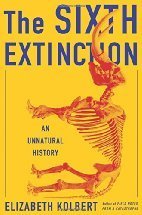
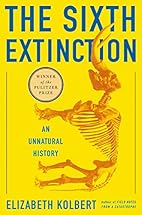
30. The Sixth Extinction by Elizabeth Kolbert
A book that manages the neat trick of being a compelling page turner despite its depressing subject matter--how we as humans are driving an extinction event that's beginning to rival that of the asteroid that killed the dinosaurs.
31. The Nile by Toby Wilkinson
A sort of historical travelogue traversing the Nile from Aswan to Cairo. The book assumes a certain familiarity with the basic outline of Egyptian history, but as long as you have that I recommend it as a way to better tie that history to the geography. And it will never not blow my mind to reflect on the fact that the pyramids are more distant and time from Jesus and Julius Caesar than we are from them.
32. The Oldest Living Things in the World by Rachel Sussman
This is more of a coffee table book than the kind you'd ordinarily read straight through. I did read it quickly, but only because A) I got it from the library, and B) in my current wounded state, a book like this hits just the right spot. It's a photography book, with each set of pictures accompanied by a short essay on the ancient subjects and Sussman's experiences visiting and photographing them. Most of the life forms--trees, along with some lichens, mosses, corals, and the like--aren't all that impressive to gaze upon, though there are some striking exceptions, like the sequoia and baobab trees. And it's striking how many of the long-lived organisms are in bleak environments like deserts or the Arctic/Antarctic. Overall, the book is a testament to both the endurance and fragility of life, since many of the ancient lives recorded here are threatened by climate change.
33. Unbound by Jim C. Hines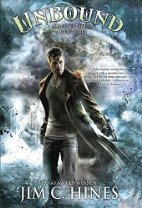
Third in the Magic Ex Libris series, which continues to be one of my favorite current fantasy series. Hines continues to expand his world and bring added nuance to his core characters even while the plot races along at breakneck speed. And he's finally convinced me to wish I had a fire spider like Smudge even though I hate hate HATE spiders.
But I'm now mostly recovered and trying to get caught up on everything that took a back seat to napping between doses of the good Tylenol. I'll have more to blog about later, but for now here's six books instead of three:
28. Rita book #8
This one came out in a near-tie with #4 as my favorite of this year's slate--and, as it happens, both are from the same imprint of the same publisher. Neither was necessarily the kind of book I rush to read in terms of setting, character type, etc., but both were strong enough that I think I'll be looking to the imprint in question for change-of-pace/palate cleanser reads in the future.
And that's it for Rita reads for the year, though I expect to be back in 2016 with more vaguely worded and cryptic contest commentary.
29. Ancillary Justice by Ann Leckie
Well, that took forever, but I finally completed my first book for March. (It wasn't this book that bogged me down--I spent too long on a book that just wasn't working for me because it's one enough other people have raved about that I kept plugging along thinking I'd eventually appreciate it. Didn't happen.)
But this book proved fascinating. It's a complex and intriguing debut SF novel, a bit more cerebral than my ideal for leisure reading, but compelling and impossible to put down for all that.
30. The Sixth Extinction by Elizabeth Kolbert
A book that manages the neat trick of being a compelling page turner despite its depressing subject matter--how we as humans are driving an extinction event that's beginning to rival that of the asteroid that killed the dinosaurs.
31. The Nile by Toby Wilkinson
A sort of historical travelogue traversing the Nile from Aswan to Cairo. The book assumes a certain familiarity with the basic outline of Egyptian history, but as long as you have that I recommend it as a way to better tie that history to the geography. And it will never not blow my mind to reflect on the fact that the pyramids are more distant and time from Jesus and Julius Caesar than we are from them.
32. The Oldest Living Things in the World by Rachel Sussman
This is more of a coffee table book than the kind you'd ordinarily read straight through. I did read it quickly, but only because A) I got it from the library, and B) in my current wounded state, a book like this hits just the right spot. It's a photography book, with each set of pictures accompanied by a short essay on the ancient subjects and Sussman's experiences visiting and photographing them. Most of the life forms--trees, along with some lichens, mosses, corals, and the like--aren't all that impressive to gaze upon, though there are some striking exceptions, like the sequoia and baobab trees. And it's striking how many of the long-lived organisms are in bleak environments like deserts or the Arctic/Antarctic. Overall, the book is a testament to both the endurance and fragility of life, since many of the ancient lives recorded here are threatened by climate change.
33. Unbound by Jim C. Hines
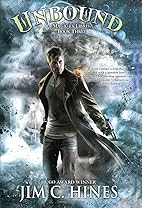
Third in the Magic Ex Libris series, which continues to be one of my favorite current fantasy series. Hines continues to expand his world and bring added nuance to his core characters even while the plot races along at breakneck speed. And he's finally convinced me to wish I had a fire spider like Smudge even though I hate hate HATE spiders.
February 24, 2015
My artistic daughter

My daughter drew this for a fan art contest, and I'm hosting it on my blog so she can enter it.
February 23, 2015
Making me happy, week of 2-22-15
1) OK, so I promise to stop with the babbling about Sleepy Hollow soon. If nothing else, the season finale airs tonight, at which point I won't have anything left to gush about until (hopefully!) the show is renewed and comes back in the fall.
But really, if you're a former fan who's been put off by the show's sophomore slump, you want to come back. They've got the pacing and the focus on the core characters back. The promo for the finale looks AMAZING:
And those lucky souls who've seen the early screeners are all raving from what I've seen.
Watch it! You want to watch it! Help me get my show renewed!
2) Pitchers and catchers have now reported. Baseball is back!
3) Jo Walton's The Just City isn't a perfect book, but it's one of the more fascinating ones I've read in a while.
4) Want a great comfort-food recipe for the lingering winter? Try this Chili-Cheese Mac from Cooking Light. I up all the spices just a smidge, use regular cheddar cheese instead of reduced-fat, and spicy Ro-Tel diced tomatoes with chiles instead of the mild kind.
But really, if you're a former fan who's been put off by the show's sophomore slump, you want to come back. They've got the pacing and the focus on the core characters back. The promo for the finale looks AMAZING:
And those lucky souls who've seen the early screeners are all raving from what I've seen.
Watch it! You want to watch it! Help me get my show renewed!
2) Pitchers and catchers have now reported. Baseball is back!
3) Jo Walton's The Just City isn't a perfect book, but it's one of the more fascinating ones I've read in a while.
4) Want a great comfort-food recipe for the lingering winter? Try this Chili-Cheese Mac from Cooking Light. I up all the spices just a smidge, use regular cheddar cheese instead of reduced-fat, and spicy Ro-Tel diced tomatoes with chiles instead of the mild kind.
February 22, 2015
2015 Reading, Books 25-27
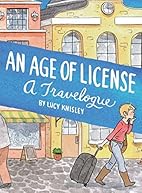
25. An Age of License by Lucy Knisley

The Year of the Memoir continues with a graphic memoir of a month Knisley spent in Europe in 2011. It's something of a coming-of-age travel diary, and one that I liked but didn't love. I got it to see if it might be a good read for my daughter as we're preparing for our month in Europe this summer and ended up concluding it wouldn't work for her. I'm fine with her reading above her age level--best and safest way to try on adulthood IMHO--but I don't think she'd connect with Knisley's writings the way she does with, say, Liz Prince.
26. Rita book #7
Not the best nor the worst of my slate this year. I only have one left, which I'm saving for next weekend--it's one that was already on my wish list by an author I've never read before but have heard nothing but good things about, so I'm hopeful.
27. The Just City by Jo Walton
Jo Walton writes thinky, idea-driven books, and this fantasy novel about a time-travel attempt to build Plato's ideal city of philosopher-kings (with the backing and participation of Athena and Apollo) is no exception. But unlike many idea-driven writers, she creates characters who are believable and human, not just mouthpieces for her Big Idea, and I enjoyed this very much, with two caveats:
1) It ends abruptly, though I've been told a sequel is in the works.
2) Much is made out of a robot spelling out the word "No"--whether it really happened, or was a prank by one of the teenaged "children" being raised according to Platonic ideals. There's talk of it being the English word, which none of the children should know, as they were brought from around the Mediterranean from no later than the Renaissance...only the kid everyone suspects most is Italian, and from late enough that he considers himself and his native language Italian rather than Roman/Latin. And the word for "no" in Italian? Is "no." Just like Spanish, another Mediterranean language. I'm stunned to think someone as well-educated as Walton wouldn't know that. Maybe there's some detail I'm missing, and she's right and I'm wrong. I'd be glad to hear it, if so.
The Year of the Memoir continues with a graphic memoir of a month Knisley spent in Europe in 2011. It's something of a coming-of-age travel diary, and one that I liked but didn't love. I got it to see if it might be a good read for my daughter as we're preparing for our month in Europe this summer and ended up concluding it wouldn't work for her. I'm fine with her reading above her age level--best and safest way to try on adulthood IMHO--but I don't think she'd connect with Knisley's writings the way she does with, say, Liz Prince.
26. Rita book #7
Not the best nor the worst of my slate this year. I only have one left, which I'm saving for next weekend--it's one that was already on my wish list by an author I've never read before but have heard nothing but good things about, so I'm hopeful.
27. The Just City by Jo Walton
Jo Walton writes thinky, idea-driven books, and this fantasy novel about a time-travel attempt to build Plato's ideal city of philosopher-kings (with the backing and participation of Athena and Apollo) is no exception. But unlike many idea-driven writers, she creates characters who are believable and human, not just mouthpieces for her Big Idea, and I enjoyed this very much, with two caveats:
1) It ends abruptly, though I've been told a sequel is in the works.
2) Much is made out of a robot spelling out the word "No"--whether it really happened, or was a prank by one of the teenaged "children" being raised according to Platonic ideals. There's talk of it being the English word, which none of the children should know, as they were brought from around the Mediterranean from no later than the Renaissance...only the kid everyone suspects most is Italian, and from late enough that he considers himself and his native language Italian rather than Roman/Latin. And the word for "no" in Italian? Is "no." Just like Spanish, another Mediterranean language. I'm stunned to think someone as well-educated as Walton wouldn't know that. Maybe there's some detail I'm missing, and she's right and I'm wrong. I'd be glad to hear it, if so.
February 17, 2015
2015 Reading, Books 22-24
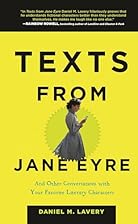
22. Texts from Jane Eyre by Mallory Ortberg
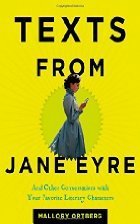
A fun and occasionally laugh-out-loud hilarious imagining of assorted literary characters conversing via text. I think my favorites were Hermione frantically trying to keep Ron from disaster via hopeless cluelessness and gullibility WRT such Muggle matters as credit cards and Nigerian prince spam schemes and the idea that Prissy of Gone With the Wind was faking her stupidity all along in the interests of sabotage.
23. Rita book #6
I am not the target market for this book. Which made it a challenge to judge, because my not being its intended audience doesn't necessarily make it a bad book, you know? But I did my best to evaluate how well it succeeded at what it was trying to do, and to imagine how a reader who was looking for something different from a love story than I am might perceive it, so hopefully I was fair.
24. Getting Lucky by Beth Bolden
A fun, sweet read that I especially appreciated for having likable characters not prone to overreacting or misunderstanding each other just to drive the plot along. That said, I didn't like it as much as Bolden's previous book in the same series because it's not so much a baseball romance as a small town romance about a character who happens to be a baseball player, and contemporary American-set small-town romances are not my personal catnip.
A fun and occasionally laugh-out-loud hilarious imagining of assorted literary characters conversing via text. I think my favorites were Hermione frantically trying to keep Ron from disaster via hopeless cluelessness and gullibility WRT such Muggle matters as credit cards and Nigerian prince spam schemes and the idea that Prissy of Gone With the Wind was faking her stupidity all along in the interests of sabotage.
23. Rita book #6
I am not the target market for this book. Which made it a challenge to judge, because my not being its intended audience doesn't necessarily make it a bad book, you know? But I did my best to evaluate how well it succeeded at what it was trying to do, and to imagine how a reader who was looking for something different from a love story than I am might perceive it, so hopefully I was fair.
24. Getting Lucky by Beth Bolden
A fun, sweet read that I especially appreciated for having likable characters not prone to overreacting or misunderstanding each other just to drive the plot along. That said, I didn't like it as much as Bolden's previous book in the same series because it's not so much a baseball romance as a small town romance about a character who happens to be a baseball player, and contemporary American-set small-town romances are not my personal catnip.
February 16, 2015
On enthusiasm
Instead of a What's Making Me Happy post for this week, I decided to write something about the importance of allowing yourself to be happy--especially when that involves being a fan.
I’m by nature an enthusiastic person. Even an intense one. If I care about something at all, I throw my whole heart into it. If you’ve ever been on Twitter while I’m live-tweeting an Auburn football game or if you’ve seen my recent gushing about Sleepy Hollow , none of this will be a surprise to you. Given the right prompting, I can wax equally enthusiastic about the pizza at Serious Pie, my mother’s stuffing recipe, the military merits of the Duke of Wellington, or the beauty of the Episcopalian liturgy. In my world, if it’s worth liking, it’s worth loving.
And yet until very recently I was trying to suppress that side of my personality. That suppression grew out of a laudable desire to maintain a professional and self-disciplined persona, especially while wearing my writer hat, and especially but not exclusively online. While I don’t have any truly embarrassing internet incidents in my past, in my younger days I had a bad habit, albeit one hardly unique to me, of treating the internet as a sort of diary that talks back. I overshared. I spoke without thinking first.
Once I realized what I was doing, I over-corrected. It’s good that I’ve learned that the internet is public and forever, and that I should therefore step away from it when I’m feeling ranty or needy. It’s even better that I didn’t become published until I was mature enough to force myself to stay offline at all costs upon receiving bad reviews, at least until the urge to rage and cry has passed.
But somehow as a side effect of all that praiseworthy self-control, I started holding in my passions and enthusiasms too. Part of that is my habit of defensive pessimism that I use to protect myself from heartbreak by expecting the worst--like how if the Mariners are ever up by 10 runs with 2 outs in the bottom of the 9th of Game 7 of the World Series, I’m STILL going to be cautioning everyone not to jinx things by celebrating before the final out, and honey you better put that champagne right back in the fridge because remember Super Bowl 49? Of course you do.
Yet it wasn’t just a coping mechanism. Somehow I’d got it into my head--though I never quite spelled it out to myself--that I should’ve outgrown my enthusiasm by now. I’m over 40, after all. Shouldn’t have I outgrown the urge to scream for joy over a football game, or being so caught up in a TV show that I race downstairs to catch it the instant it airs, DVR notwithstanding? Is it really seemly to get a physical rush from singing Handel? And isn’t everyone kind of tired of foodies now? So I tried to deny that part of myself, or at least to keep it under a tight rein.
Only I recently realized that holding back my fangirl enthusiasm was hurting my passion for my own life and creativity. If I didn’t let myself care too deeply about the season-long real-life saga of a beloved sports team or get caught up in shipping characters on a favorite TV show, I struggled to awaken that passion when I was the one inventing the saga and the romance. And my love of cooking and trying new things in the kitchen is at least in part fueled by my passion for eating, of being That Person Who Tweets Her Restaurant Meals in the most cliched of foodie fashions.
Which is where that CS Lewis quote at the top of the post comes into play. Sure, fan-love isn’t on the same level as love for family, friends, God, or the greater good of humanity...but it still matters. It’s part of what gives joy to all those deeper loves. And there’s vulnerability in being a committed fan. Maybe some people are shaking their heads and thinking, “Aren’t you too old for this?” And, you know, FOX might cancel your favorite show, or your baseball team might miss the playoffs by one game, or your football team might pass on 2nd and goal at the one when they could’ve just handed the ball to Marshawn Lynch. None of that would hurt if you didn’t let yourself care. But I don’t want to live like that--it’s as flat as room-temperature soda that’s been sitting out in a half-drunk open can for days. So I’ll keep caring even if sometimes it makes me look like a fool or drives me to rage and weep. Life is better that way.
“To love at all is to be vulnerable. Love anything and your heart will be wrung and possibly broken. If you want to make sure of keeping it intact you must give it to no one, not even an animal. Wrap it carefully round with hobbies and little luxuries; avoid all entanglements. Lock it up safe in the casket or coffin of your selfishness. But in that casket, safe, dark, motionless, airless, it will change. It will not be broken; it will become unbreakable, impenetrable, irredeemable.”
--C.S. Lewis, The Four Loves
I’m by nature an enthusiastic person. Even an intense one. If I care about something at all, I throw my whole heart into it. If you’ve ever been on Twitter while I’m live-tweeting an Auburn football game or if you’ve seen my recent gushing about Sleepy Hollow , none of this will be a surprise to you. Given the right prompting, I can wax equally enthusiastic about the pizza at Serious Pie, my mother’s stuffing recipe, the military merits of the Duke of Wellington, or the beauty of the Episcopalian liturgy. In my world, if it’s worth liking, it’s worth loving.
And yet until very recently I was trying to suppress that side of my personality. That suppression grew out of a laudable desire to maintain a professional and self-disciplined persona, especially while wearing my writer hat, and especially but not exclusively online. While I don’t have any truly embarrassing internet incidents in my past, in my younger days I had a bad habit, albeit one hardly unique to me, of treating the internet as a sort of diary that talks back. I overshared. I spoke without thinking first.
Once I realized what I was doing, I over-corrected. It’s good that I’ve learned that the internet is public and forever, and that I should therefore step away from it when I’m feeling ranty or needy. It’s even better that I didn’t become published until I was mature enough to force myself to stay offline at all costs upon receiving bad reviews, at least until the urge to rage and cry has passed.
But somehow as a side effect of all that praiseworthy self-control, I started holding in my passions and enthusiasms too. Part of that is my habit of defensive pessimism that I use to protect myself from heartbreak by expecting the worst--like how if the Mariners are ever up by 10 runs with 2 outs in the bottom of the 9th of Game 7 of the World Series, I’m STILL going to be cautioning everyone not to jinx things by celebrating before the final out, and honey you better put that champagne right back in the fridge because remember Super Bowl 49? Of course you do.
Yet it wasn’t just a coping mechanism. Somehow I’d got it into my head--though I never quite spelled it out to myself--that I should’ve outgrown my enthusiasm by now. I’m over 40, after all. Shouldn’t have I outgrown the urge to scream for joy over a football game, or being so caught up in a TV show that I race downstairs to catch it the instant it airs, DVR notwithstanding? Is it really seemly to get a physical rush from singing Handel? And isn’t everyone kind of tired of foodies now? So I tried to deny that part of myself, or at least to keep it under a tight rein.
Only I recently realized that holding back my fangirl enthusiasm was hurting my passion for my own life and creativity. If I didn’t let myself care too deeply about the season-long real-life saga of a beloved sports team or get caught up in shipping characters on a favorite TV show, I struggled to awaken that passion when I was the one inventing the saga and the romance. And my love of cooking and trying new things in the kitchen is at least in part fueled by my passion for eating, of being That Person Who Tweets Her Restaurant Meals in the most cliched of foodie fashions.
Which is where that CS Lewis quote at the top of the post comes into play. Sure, fan-love isn’t on the same level as love for family, friends, God, or the greater good of humanity...but it still matters. It’s part of what gives joy to all those deeper loves. And there’s vulnerability in being a committed fan. Maybe some people are shaking their heads and thinking, “Aren’t you too old for this?” And, you know, FOX might cancel your favorite show, or your baseball team might miss the playoffs by one game, or your football team might pass on 2nd and goal at the one when they could’ve just handed the ball to Marshawn Lynch. None of that would hurt if you didn’t let yourself care. But I don’t want to live like that--it’s as flat as room-temperature soda that’s been sitting out in a half-drunk open can for days. So I’ll keep caring even if sometimes it makes me look like a fool or drives me to rage and weep. Life is better that way.