Laurel Garver's Blog, page 8
March 2, 2017
Change one thing: rippling plot complications
 A few summers ago, my hubby got into a low-speed collision that sent our car to the body shop. We are a one-car family, so this altered our routine significantly the few days we waited for rental car coverage to be approved. Even though we live a half mile from a transportation hub served by a dozen bus lines, we felt like our wings were clipped. Our usual five-minute drive to the pool suddenly turned into a 40-minute, two-bus trip, with a mile of walking thrown in. A quick cool-off became a...


February 16, 2017
Fifty fabulous questions to ask an author
 Author interviews are a consistent staple of book blogging and writer blogs. But sometimes the questions posed are a little generic, not inviting deeper engagement, or not showcasing well what is most interesting about this author or the book s/he is trying to promote.
With that in mind, I've compiled a list of some favorite interview question I've used with guests here, that I've been asked by book bloggers, and that wish I'd been asked.
Tell us a little about your story and the story world yo...
February 9, 2017
Writing Compelling Fight Scenes
by guest author Jenelle Leanne Schmidt
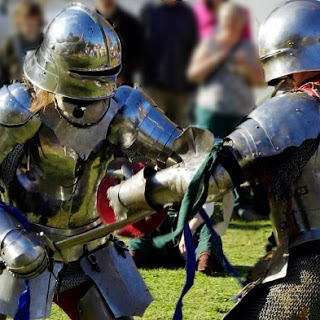 image by Earl35 for morguefileLet’s face it, one of the best things about reading fantasy fiction is the big, epic battle sequences we get to participate in from the safety of our own homes and imaginations. Unfortunately, these can often also be one of the most difficult aspects of the story to write.
The first time I set out to write a fantasy novel, I was 19 years old. I sailed through the story and came at long last to the final, climactic battle, the...
 image by Earl35 for morguefileLet’s face it, one of the best things about reading fantasy fiction is the big, epic battle sequences we get to participate in from the safety of our own homes and imaginations. Unfortunately, these can often also be one of the most difficult aspects of the story to write.
The first time I set out to write a fantasy novel, I was 19 years old. I sailed through the story and came at long last to the final, climactic battle, the...
February 2, 2017
Keep them turning pages with these simple techniques
 End scenes with uncertainty more often than resolutionYou've heard it over and over--readers, agents and editors love "page turners." So you work hard creating characters that readers will invest in and worry about, engage them in inner and outer conflicts, and lead them through obstacles and opposition. You have the groundwork laid. Now what?
Look at how you exit scenes and chapters. If your scene and chapter endings consistently come to a resolution, you aren't getting the maximum...
January 27, 2017
Tips for getting better beta reading
 For the uninitiated, a beta reader is to an author what a beta tester is to an inventor or a manufacturer's research and development division--someone who takes your product for a trial run, then reports about its strengths and weaknesses. It's a necessary step after you've completed a novel, and then fixed as much as you can; other eyes can pinpoint remaining weaknesses and shore up your sagging confidence about the manuscript's strengths.
The reason many authors end up disappointed, misled,...
January 12, 2017
Writing lessons from Sarah Dessen
 Image: https://morguefile.com/creative/Esqua... enjoyed Sarah Dessen's YA contemporary novels for many years now, and her most recent, Saint Anything, did not disappoint.
Dessen carved out a niche for herself when YA was still a fairly new genre, prior to the early 2000s, when the Twilight phenomenon took the publishing world by storm. Despite the proliferation of paranormal romances that followed--and a number of other trends that have come along, from boarding school stori...
January 5, 2017
Building a compelling fantasy world and cast
Today's guest Rachel Rossano has taken her love of history to a whole new level--creating an alt-history world that resembles Renaissance Europe, with some unique twists in how she brings faith elements to bear. She especially has wonderful tips on world building and peopling a fantasy world.
Let's give her a hearty Laurel's Leaves welcome!
Tell us a little about the culture/world in which your story is set. What sort of research was required to create it?
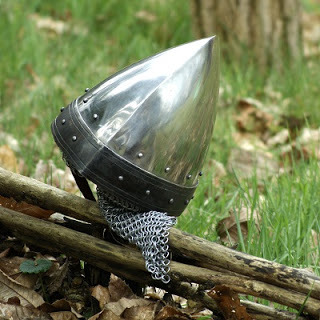 Image credit: https://morguefile.c...
Let's give her a hearty Laurel's Leaves welcome!
Tell us a little about the culture/world in which your story is set. What sort of research was required to create it?
 Image credit: https://morguefile.c...
December 15, 2016
Fleshing out a thin story: thin conflict
 In my previous post in this series, "Fleshing out a thin story: thin characterization," I discussed the ways in which manuscripts drafted hastily, such as during NaNoWriMo, can have some areas of underwriting that need to be fleshed out in revision.
Today's post on underwritten conflict is related, because you first need to have developed characters before you can fully suss out the many potential forms of conflict in your story. Conflict in fiction involves more than just the surface pr...
December 8, 2016
In sickness and in health: being a writer in flu season
I hope to return to my series on expanding underwritten manuscripts in the coming weeks. But since I'm sick, and my family is as well (on and off for about seven weeks now. Not kidding.), I thought I'd address the problem at hand: writing when ill.
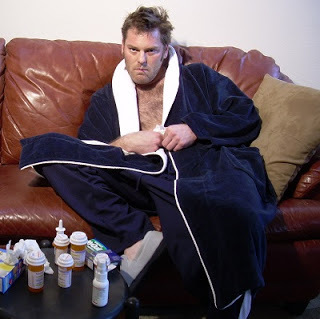 Photo by barterville on Morguefile
The idea of "touch it every day" when it comes to large writing projects seems sensible and exciting when you're in the bloom of health. When you have a pounding sinus headache, a fever and chills, it sounds like ye...
 Photo by barterville on Morguefile
The idea of "touch it every day" when it comes to large writing projects seems sensible and exciting when you're in the bloom of health. When you have a pounding sinus headache, a fever and chills, it sounds like ye...
December 1, 2016
Fleshing out a thin story: thin characterization
 Photo by jackileigh at morguefile.comNaNoWriMonth has wrapped up for 2016, a time when many writers challenge themselves to write 50,000 words in 30 days. On question that often pops up on Twitter near the end of November is whether "winning" NaNo (hitting the 50K goal) means you have a complete book.
Unless you write middle grade fiction (ages 8-12) or novellas, then likely, no you do not. You have either a very bloated beginning of a story, or you have a skeleton of a story that hits a...