
Jerry Apps's Blog, page 3
September 16, 2022
Potatoes, A Favorite Food Steve Apps Photo
It’s potato harvesting time. Since 1967, when we began vegetable gardening at Roshara, potatoes have remained one of our main crops. Maybe it’s because the words of my father remain in my head—a meal is not complete unless it includes potatoes. Thus, as a kid, I remember fried potatoes for breakfast, boiled potatoes for dinner, and boiled potatoes for supper, at least six days of the week. We often had pancakes for breakfast on Sunday, as a special treat, but back to potatoes for dinner and supper. Another treat was baked potatoes, which we had when relatives came for dinner or supper, and especially if it was a holiday such as Thanksgiving or Christmas.
Potatoes have been an important food in the world for thousands of years. The Inca Indians in Peru were believed to have cultivated potatoes around 9,000 B.C. In 1536, the Spanish invaders in Peru discovered the taste of potatoes and took them back to Europe. In 1589, Sr. Walter Raleigh is believed to have introduced potatoes to Ireland. It wasn’t until the 1620s that potatoes made their way from Europe to the United States. Irish immigrants to the U.S. also brought potatoes with them. According to the USDA, in 2021 the top three states in potato production were Idaho, Washington and Wisconsin
Potatoes are a nutritious food; They are plant-based, cholesterol-free, sodium-free. fat-free, and gluten-free. The potato is about 80 percent water and 20 percent solids. An eight-ounce baked or boiled potato contains only 100 calories. They also are an excellent source of fiber and they contain antioxidants that help to prevent diseases.
The potato became the first vegetable to be grown in space—the year was 1995. NASA and the University of Wisconsin-Madison researchers created the technology. The goal was to provide a way of feeding astronauts on long space voyages, and perhaps feed future space colonies.
THE OLD TIMER SAYS: Listen to your dad. Potatoes are good for you.
WHERE TO BUY MY BOOKS
Buy from your local bookstore, or buy online from the Wisconsin Historical Society bookstore, https://shop.wisconsinhistory.org/books, bookshop.org, or purchase from the Friends of the Patterson Memorial Library in Wild Rose—a fundraiser for them. Phone: 920-622-3835 for prices and ordering, or contact the librarian: barnard@wildroselibrary.
Patterson Memorial Library
500 Division Street
Wild Rose, WI 54984.
www.wildroselibrary.org
.jpg)


September 9, 2022
Many will remember this poem, “September,” written by He...
Many will remember this poem, “September,” written by Helen Hunt Jackson in 1892. It was one of several poems we learned when I was a student in a one-room country school many years ago. The first lines are:
“The golden-rod is yellow;
The corn is turning brown;
The trees in apple orchards
With fruit are bending down.”
The goldenrods great claim to fame—it announces the coming of autumn with the happiness of beautiful yellow flowers.
There are more than a hundred species of goldenrod, which is native to North America. It will grow almost everywhere, but it seems to like infertile, sandy soil the best—the kind of soil we have at Roshara. It also likes lots of sunshine. It can grow up to five feet tall, and this time of year, it has an abundance of beautiful yellow flowers. We have solid patches of goldenrod in our prairie at Roshara. Its flowers attract an assortment of bees, and butterflies, which help the pollination of the goldenrod.
Historically, goldenrods had many uses beyond reminding us that summer was about to leave. Honey bees make tasty dark-colored honey from its nectar. It has been used to heal wounds and to cure a variety of other health problems such as indigestion and diabetes. The dried flowers can be used to make tea. A little-known fact, Thomas Edison used the milky juice of goldenrods to make tires for Henry Ford’s Model T Ford car. Native Americans used goldenrod leaves for toothache and other health problems.
A prevalent myth—goldenrod flowers cause “hay fever” type allergies.

Not so. Its pollen is a type that doesn’t fly through the air and attack our respiratory systems. Ragweed is usually the culprit in autumn. Ragweed pollen flies on the wind.
Enjoy the beauty of goldenrods, a time to recall the many memories of summer just passing and the beautiful autumn to come.
THE OLD TIMER SAYS: Goldenrods, nature’s paint brush at work once more.
WHERE TO BUY MY BOOKS
Buy from your local bookstore, or buy online from the Wisconsin Historical Society bookstore, https://shop.wisconsinhistory.org/books, bookshop.org, or purchase from the Friends of the Patterson Memorial Library in Wild Rose—a fundraiser for them. Phone: 920-622-3835 for prices and ordering, or contact the librarian: barnard@wildroselibrary.
Patterson Memorial Library
500 Division Street
Wild Rose, WI 54984.
www.wildroselibrary.org
If you live in the western part of the state, stop at Ruth’s home town, Westby, visit Dregne’s. and look at their great selection of my books. Order a book from them by calling 1-877-634-4414. They will be happy to help you. If you live in northcentral Wisconsin, stop at the Janke bookstore in Wausau (phone 715-845-9648). They also have a large selection of my books.
September 2, 2022
What I Learned About Growing Zucchini Steve Apps Photo.

I don’t remember that my folks ever grew zucchini squash in their garden. They grew lots of other squash—winter squash such as Hubbard and Acorn, but no summer squash, I’m sure the idea of summer squash made little sense to them. They had lots of fresh summer vegetables from our big garden—lettuce, carrots, peas, green beans, and sweet corn.
When I first began gardening at Roshara in 1967, I decided to plant some Zucchini. Several of my friends said I should, that zucchini was the new popular vegetable to grow. I planted a long row of zucchini, alongside a row of butternut winter squash. The first important thing I learned about growing zucchini—plant only two or three hills, not a long row.
The second thing I learned, pick the zucchini before it is four feet long, which is the length it grew in my Roshara garden. Needless to say, with the long row, and the huge zucchinis crowding out the butternut squash, I had enough zucchini to feed the neighborhood.
The third thing I learned—check with your spouse about what to do with zucchini before you plant the seeds. I didn’t and when Ruth asked what she should do with our bountiful harvest, I suggested removing the seeds and baking it. That’s what we did with our winter squash. That is not what you do with summer squash. You don’t prepare zucchini that way.
The fourth thing I learned; it is easy to grow zucchini. A gardening friend said, “If you can’t grow zucchini, you’d best turn your efforts to doing something other than vegetable gardening.”
We continue to grow zucchini. Ruth has a zucchini bread recipe that is just the best—the grandkids will eat it before they eat cookies. We have three hills of zucchini in our garden—no more long rows.
THE OLD TIMER SAYS: Plant some zucchini. You’ll be surprised at what happens.
WHERE TO BUY MY BOOKS
See my book, GARDEN WISDOM. Buy from your local bookstore, or buy online from the Wisconsin Historical Society bookstore, https://shop.wisconsinhistory.org/books, bookshop.org, or purchase from the Friends of the Patterson Memorial Library in Wild Rose—a fundraiser for them. Phone: 920-622-3835 for prices and ordering, or contact the librarian: barnard@wildroselibrary.
Patterson Memorial Library
500 Division Street
Wild Rose, WI 54984.
www.wildroselibrary.org
If you live in the western part of the state, stop at Ruth’s home town, Westby, visit Dregne’s. and look at their great selection of my books. Order a book from them by calling 1-877-634-4414. They will be happy to help you. If you live in northcentral Wisconsin, stop at the Janke bookstore in Wausau (phone 715-845-9648). They also have a large selection of my books.
August 26, 2022
An Afternoon at the Fair. Susan Apps-Bodilly Photo.

I am not doing much traveling these days. But my daughter Sue and I did manage to attend the Waushara County Fair on a recent Saturday. I was there for an afternoon of signing my new book, SEE YOU ON THE MIDWAY: A HISTORY OF WISCONSIN FAIRS.
A huge crowd attended the fair on this sunny Saturday. As one fair goer who stopped by my signing table said, “So many people on the Midway you could hardly walk.”
Everyone stopping by my signing table, where a 4-H Leader and 4-H members from the Pine River 4-H club were helping me, had a story to tell. Of course, I had few to share myself as I first attended this fair with my dad when I was four years old. Dad had shown cattle at this fair back in the 1920s and he had many stories to share. As a 4-H member, I showed calves at this fair for ten years.
The story swapping was interrupted every few minutes, by the air shattering roar of souped-up riding lawn mowers in a lawn mower pulling contest. No such thing when I was a kid. I chatted with a fair director who stopped by to chat, and he said that events like this one, a demolition derby, tractor pulling contest and such bring the younger generation to the fair.
I talked at length with another fair director about the role of fairs these days and whether they had a future. We both agreed that fairs are an important way of telling the story of agriculture and country life to our urban friends, at a time when the number of farmers is small and declining.
Walking through the dairy barn, with well-groomed calves and cows all standing in a row, I spotted a little Jersey calf. A little girl, I’d guess maybe two years old, was petting the calf and she was smiling from ear to ear. The calf seemed to be smiling, too. What a wonderful way to begin telling the story of farming and farm life.
THE OLD TIMER SAYS: The fair is a great way to bring city and country together.
WHERE TO BUY MY BOOKS
See my book, SEE YOU ON THE MIDWAY: A HISTORY OF WISCONSIN FAIRS from your local bookstore, or buy online from the Wisconsin Historical Society bookstore, https://shop.wisconsinhistory.org/books, bookshop.org, or purchase from the Friends of the Patterson Memorial Library in Wild Rose—a fundraiser for them. Phone: 920-622-3835 for prices and ordering, or contact the librarian: barnard@wildroselibrary.
Patterson Memorial Library
500 Division Street
Wild Rose, WI 54984.
www.wildroselibrary.org
If you live in the western part of the state, stop at Ruth’s home town, Westby, visit Dregne’s. and look at their great selection of my books. Order a book from them by calling 1-877-634-4414. They will be happy to help you. If you live in northcentral Wisconsin, stop at the Janke bookstore in Wausau (phone 715-845-9648). They also have a large selection of my books.
August 19, 2022
Sunflowers Add Beauty Steve Apps Photo.

My father loved vegetable gardening. He was gardening just a few weeks before he passed away in 1993, at the age of 93. I learned a lot about vegetable gardening from him, as well as from my mother. One thing I learned from my dad, “Always grow something pretty in your garden.” By that he meant, grow some flowers along with all the vegetables.
During the several weeks that my mother was in a nursing home, almost every day dad picked a flower from his vegetable garden to take to her. This time of the year it was usually a big red dahlia, which brought back memories as well as a little beauty into her remaining months.
For the past several years, the flower of choice at Roshara’s garden has been sunflowers. I like them, my son, Steve and daughter-in-law, Natasha, the primary garden operators these days like them as well. They require little care—some hoeing to keep away the weeds when the sunflowers are little.
Being curious about things, the other day I asked myself, “Where did sunflowers originate?” They are native to America. The early ones were discovered in what is now Arizona and New Mexico. Native Americans grew them as a food source, crushing the seeds into flour for bread. They also knew how to extract the oil from the sunflower seeds, which they used for cooking.
Different cultures symbolize sunflowers in different ways—long life, vitality, good luck, a happy flower. Some people firmly believe that having sunflowers around the house can help relieve stress, anxiety, and depression.
The birds harvest our sunflower seeds as soon as they are ripe, we get what is left over. For more than half the summer, sunflowers add a touch of beauty to our vegetable garden. When I see them, I am reminded of my father and his words to always add a little beauty to your garden.
THE OLD TIMER SAYS: We all need a little beauty in our lives—planting sunflowers is one way.
WHERE TO BUY MY BOOKS
See my book GARDEN WISDOM, for tips on vegetable gardening. Buy it at your local bookstore, or buy online from the Wisconsin Historical Society bookstore, https://shop.wisconsinhistory.org/books, bookshop.org, or purchase from the Friends of the Patterson Memorial Library in Wild Rose—a fundraiser for them. Phone: 920-622-3835 for prices and ordering, or contact the librarian: barnard@wildroselibrary.
Patterson Memorial Library
500 Division Street
Wild Rose, WI 54984.
www.wildroselibrary.org
If you live in the western part of the state, stop at Ruth’s home town, Westby, visit Dregne’s. and look at their great selection of my books. Order a book from them by calling 1-877-634-4414. They will be happy to help you. If you live in northcentral Wisconsin, stop at the Janke bookstore in Wausau (phone 715-845-9648). They have a large selection of my books.
[image error]
August 12, 2022
PICKLE PATCHES Steve Apps Photo

In the 1940s and 1950s, just about every farmer in our western Waushara County neighborhood had a pickle patch. Some were as small as a quarter acre; others were as large as an acre or more. You could tell the size of farm family by noting the size of their pickle patch, as picking pickles was an entire family project, including all of the kids.
Our city cousins wished to correct our language when they visited the farm and we told them about our pickle patch. They tried to show their superior knowledge as they said, “These are not pickle patches. They are cucumber patches. A cucumber does not become a pickle until it is processed.”
We continued to call them pickle patches. From mid-July until early September, if the rains came and warm weather continued, we picked cucumbers two or three times a week. We picked them in five-gallon buckets and when a bucket was filled, we dumped pickles into a gunny sack. In the evening, after the milking was done and the cows let out to pasture, we loaded the sacks of pickles into the back of our old 1936 Plymouth and we were off to the pickle factory in Wild Rose. The H. J. Heinz pickle factory, more correctly called a cucumber salting station, was located across the railroad sidetrack from the E. L. Knoke sawmill.
Arriving at the pickle factory, we dumped our sacks of pickles into a big green machine that sorted our pickles into five different sizes. Number ones were the little ones, sometimes called gherkins, and number fives were the big, wrist-size lunkers. Payment was based on size. Number ones paid the most money. Number fives the least. We waited until the sorter finished, and each size weighed. After waiting few more minutes, we received a check for our pickles. The pickle patch provided much needed money for our family.
THE OLD TIMER SAYS; A check in hand at day’s end helped us forget a sore back from several hours of pickle picking.
WHERE TO BUY MY BOOKS
See my book, IN A PICKLE, for information about pickle growing. Buy it at your local bookstore, or buy online from the Wisconsin Historical Society bookstore, https://shop.wisconsinhistory.org/books, bookshop.org, or purchase from the Friends of the Patterson Memorial Library in Wild Rose—a fundraiser for them. Phone: 920-622-3835 for prices and ordering, or contact the librarian: barnard@wildroselibrary.
Patterson Memorial Library
500 Division Street
Wild Rose, WI 54984.
www.wildroselibrary.org
If you live in the western part of the state, stop at Ruth’s home town, Westby, visit Dregne’s. and look at their great selection of my books. Order a book from them by calling 1-877-634-4414. They will be happy to help you. If you live in northcentral Wisconsin, stop at the Janke bookstore in Wausau (phone 715-845-9648). They have a large selection of my books.
August 5, 2022
Monarch Butterflies in Trouble Photo by Susan Apps Bodilly
I have enjoyed watching monarch butterflies flitting about our prairie every year since we began restoring these several acres to prairie grasses, wildflowers
.jpg)
, and a considerable patch of milkweeds. We began the prairie restoration project in the late 1960s. Little did I know that the lowly milkweed would become one of the important plants that we have growing there.
I was dismayed to hear, back in July, that the monarch butterfly is now listed as endangered. Its numbers are declining to a point that if the trend continues the monarch will go the way of the passenger pigeon—we will see them no more.
The monarchs we see in Wisconsin migrate each year from their summer home in the north to their winter home in Mexico. Along its journey north of several thousand miles, it breeds multiple generations of its offspring. The monarch is the only butterfly to fly south before winter, and return north the following spring like many species of birds.
Why are their numbers decreasing to the point that the beautiful orange and black butterfly has found itself listed as endangered? A major reason is the disappearance of milkweeds. In the caterpillar phase, monarchs eat only the leaves of milkweeds. Milkweeds are disappearing due to droughts, and herbicides used to control weeds in agricultural crops. According to researchers, climate change is also affecting the butterfly’s normal reproduction, and migration.
When I first heard that monarchs had been listed as endangered, my daughter and I made a tour of our prairie. We counted more than a dozen monarchs flitting about our large patches of milkweed. But not as many as I have seen in other years. The monarch is endangered. It’s time to take some action.
THE OLD TIMER SAYS: Plant a milkweed. Save a monarch butterfly.
WHERE TO BUY MY BOOKS
See my book, OLD FARM: A HISTORY, for information about our prairie restoration. By it at your local bookstore, or buy online from the Wisconsin Historical Society bookstore, https://shop.wisconsinhistory.org/books, bookshop.org, or purchase from the Friends of the Patterson Memorial Library in Wild Rose—a fundraiser for them. Phone: 920-622-3835 for prices and ordering, or contact the librarian: barnard@wildroselibrary.
Patterson Memorial Library
500 Division Street
Wild Rose, WI 54984.
www.wildroselibrary.org
If you live in the western part of the state, stop at Ruth’s home town, Westby, visit Dregne’s. and look at their great selection of my books. Order a book from them by calling 1-877-634-4414. They will be happy to help you. If you live in northcentral Wisconsin, stop at the Janke bookstore in Wausau (phone 715-845-9648). They have a large selection of my books.
July 29, 2022
Midsummer Garden Report Jerry Apps Photo

For my vegetable garden friends who enjoy comparing notes with my Roshara garden operations, here is my mid-summer garden report. The rains have come at just the right time, the hot temperatures have helped more than hindered, and the garden, in the overall, is better than it’s been compared to the past couple growing seasons. Thanks to Steve and Natasha, the garden managers, not a weed is in sight.
As you will recall, last summer we had a bunny-wipeout. Those pesky bunnies ate more than I have ever experienced. This year Steve added a third wire to the garden fence. The wire, a couple inches off the ground, has done the trick. Not one bunny has made it inside the garden. Could be they haven’t tried as they have lots to eat outside the garden.
Sue helped with garden harvest the other day. She picked a bunch of green beans, several heads of broccoli, more zucchini than she could carry, some beautiful onions, and the first ripe tomatoes of the season. She also, being a school teacher who knows how to give grades. She offered the following grades for the garden at this point in mid-season.
Green Beans: A; Broccoli: A; Cucumbers: A; Zucchini: A; Potatoes: B; Onions: A;
Cabbage: B; Radishes: C; Peas, C-; Purple Beans: C; Tomatoes: A; Sunflowers: A; Squash: A; Pumpkins: B; Early Sweet Corn: B+; Late Sweet Corn: C-; Kale: A; Lettuce: B-; Carrots: B.
This year’s garden is a perfect example of what warm weather and sufficient rain will do for a good garden. This year’s garden is also an example of when the weather reaches the 90s too early in the season, the cool weather crops such as peas and lettuce suffer.
THE OLD TIMER SAYS: Each year gardening is the same. Each year gardening is different.
WHERE TO BUY MY BOOKS
My book, GARDEN WISDOM is available at your local bookstore, or buy online from the Wisconsin Historical Society bookstore, https://shop.wisconsinhistory.org/books, bookshop.org, or purchase from the Friends of the Patterson Memorial Library in Wild Rose—a fundraiser for them. Phone: 920-622-3835 for prices and ordering, or contact the librarian: barnard@wildroselibrary.
Patterson Memorial Library
500 Division Street
Wild Rose, WI 54984.
www.wildroselibrary.org
If you live in the western part of the state, stop at Ruth’s home town, Westby, visit Dregne’s. and look at their great selection of my books. Order a book from them by calling 1-877-634-4414. They will be happy to help you. If you live in northcentral Wisconsin, stop at the Janke bookstore in Wausau (phone 715-845-9648). They have a large selection of my books.
July 22, 2022
Never Curse The Rain Steve Apps Photo
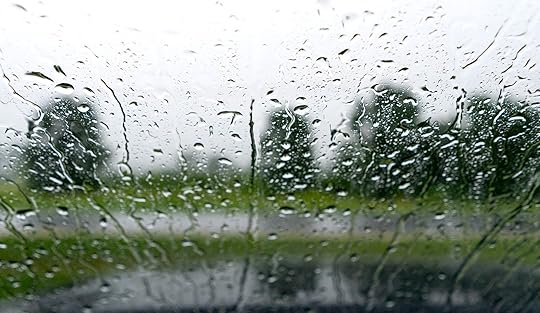
“Never curse the rain.” I’ve never forgotten my father’s words. On a rather rare, rainy day in summer, when one of my brothers or I would complain that we couldn’t do what we wanted to do, he would say these words. He meant them, too. Our sandy, central Wisconsin farm needed all the rain it could get. Limited rain meant no crops.
The entire family had memories of the dust storms that rolled across western Waushara County in the late 1930s. I remember them. The sky was an eerie, reddish color. The sun not able to peek through the dirty dust that filled the sky from morning to night, and sometimes all night if the wind continued to blow. The fine, powder-like dust sifted into the house, too. Sifted under the windows and around the doors. My mother was forever cleaning dust from the dishes, from the furniture and everywhere else in the house.
When the rains came, and they did in the 1940s, we once more had crops to feed the cattle and sooth our souls. I will never forget rainy-days in July, after the barn’s hayloft was filled with alfalfa and clover hay. When the morning chores were done, and the cattle let out to pasture, Pa, my two brothers and I would crawl up into the hay mow and sprawl out on the fresh hay and listen to the rain drops pounding on the barn roof while smelling the wonderful aroma of freshly stored hay. As I think about it today, it was akin to being in a massive theater with the sound all around us, plus the smell of fresh hay. When the rain let up, it usually meant a time to go fishing. Another reason I looked forward to a rainy day.
THE OLD TIMER SAYS: For most farmers, rain can make the difference between success and failure.
WHERE TO BUY MY BOOKS
My book, NEVER CURSE THE RAIN, is available at your local bookstore, or buy online from the Wisconsin Historical Society bookstore, https://shop.wisconsinhistory.org/books, bookshop.org, or purchase from the Friends of the Patterson Memorial Library in Wild Rose—a fundraiser for them. Phone: 920-622-3835 for prices and ordering, or contact the librarian: barnard@wildroselibrary.
Patterson Memorial Library
500 Division Street
Wild Rose, WI 54984.
www.wildroselibrary.org
If you live in the western part of the state, stop at Ruth’s home town, Westby, visit Dregne’s. and look at their great selection of my books. Order a book from them by calling 1-877-634-4414. They will be happy to help you. If you live in northcentral Wisconsin, stop at the Janke bookstore in Wausau (phone 715-845-9648). They have a large selection of my books.
July 15, 2022
Burdock: Weed and More
When is a weed more than a weed? Yesterday, on my daily walk, I saw a huge burdock plant growing alongside the trail. Oh, how my father despised burdocks. He placed that tall, miserable weed, as he called it, right up there with bull thistles, which he hated with a passion.
I stopped to look at the burdock plant (arctium). Could it be as bad as my dad had me believing? I had watched him pull burdock burs from our farm dog many times. And cussing the plant with every bur he pulled loose. I pulled a good many Burdock burs from my pants over the years as well. But as I looked at the plant, I wondered. Could such an attractive plant be all bad?
After a bit of research, I found some interesting information. First burdock is native to both Asia and Europe and was accidently introduced to North America in the 1600s. Burdock was the inspiration for the hook-and-loop fastener, Velcro. According to what I read, a Swiss inventor, George de Mestral in the early 1940s, was pulling Burdock burs from his dog, and he was struck by how well the bur worked—and voilà, he came up with the Velcro fastener.
Burdock, historically has served as a food—both roots and shoots are edible, as well as a medicine. In Asian cuisine, burdock root is usually sauteed in a pan with soy sauce and sesame seed. Burdock flowers and leaves and be used to make tea. The roots can also be used as a medicine. Supposedly, burdock root is a liver detoxifier, aids digestion, is anti-inflammatory, as well as a diuretic and treatment for eczema.
The lowly, often despised, burdock has an interesting positive history—including the inspiration for Velcro that we all take for granted today.
THE OLD TIMER SAYS: Be careful about dismissing a plant as a weed before you have more of its story.
WHERE TO BUY MY BOOKS

My latest book, MEET ME ON THE MIDWAY: A HISTORY OF WISCONSIN FAIRS, is available later this month. You can order it at your local bookstore. order online from the Wisconsin Historical Society bookstore, https://shop.wisconsinhistory.org/books, bookshop.org, or purchase from the Friends of the Patterson Memorial Library in Wild Rose—a fundraiser for them. Phone: 920-622-3835 for prices and ordering, or contact the librarian: barnard@wildroselibrary.
Patterson Memorial Library
500 Division Street
Wild Rose, WI 54984.
www.wildroselibrary.org
If you live in the western part of the state, stop at Ruth’s home town, Westby, visit Dregne’s. and look at their great selection of my books. Order a book from them by calling 1-877-634-4414. They will be happy to help you. If you live in northcentral Wisconsin, stop at the Janke bookstore in Wausau (phone 715-845-9648). They have a large selection of my books.
Jerry Apps's Blog

- Jerry Apps's profile
- 88 followers

