
Jerry Apps's Blog, page 16
August 9, 2019
Mid-Summer Garden Report
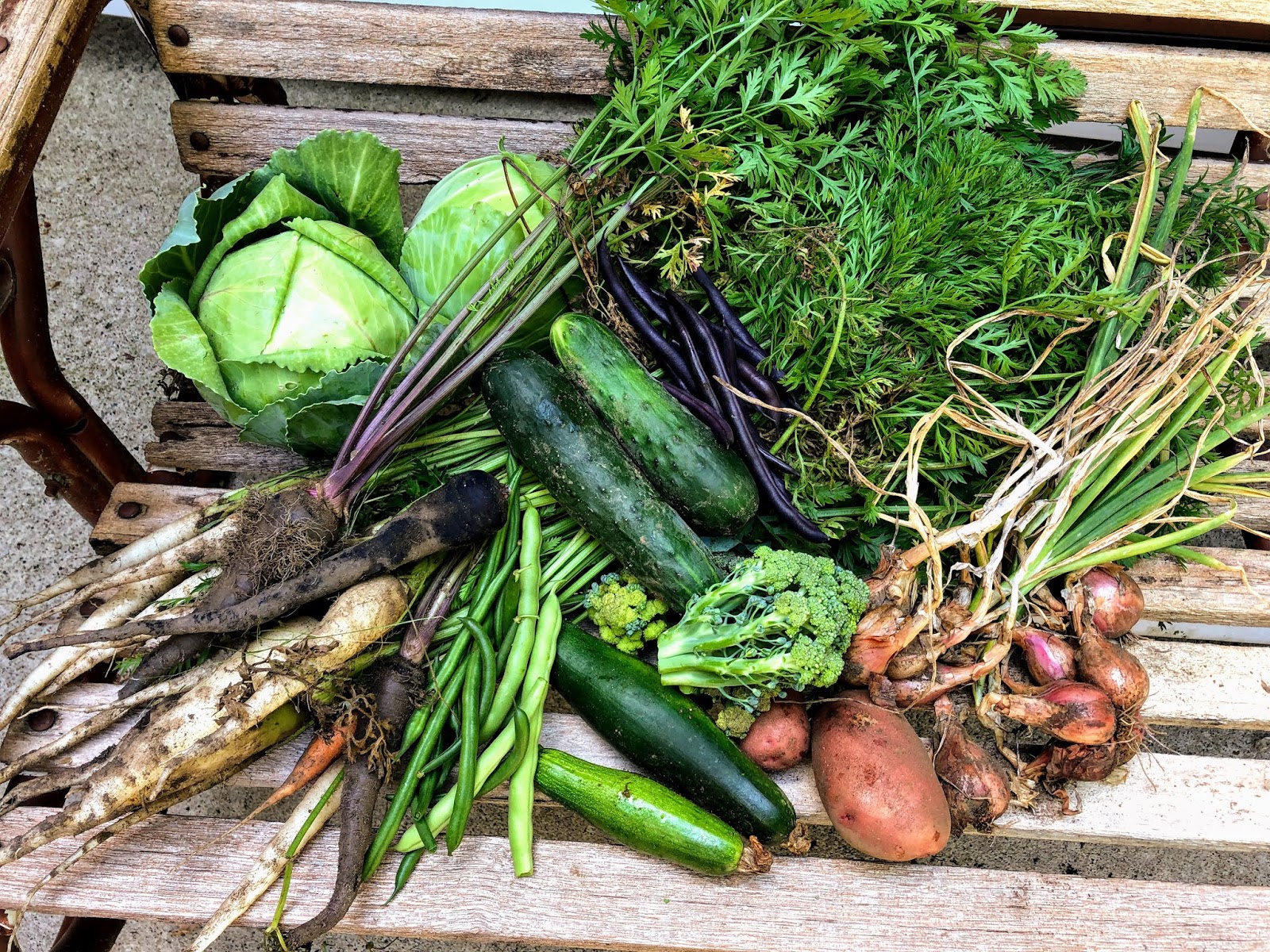
For my vegetable garden friends—time for a mid-summer report on how things are doing. In a word, quite well but first the failures—radishes just didn’t make it. Too hot too soon, I’m guessing. They immediately went to producing seeds and forgot about first making a radish. So zero radishes. Last year they were one of my best crops. Sweet corn doesn’t look all that great either. First harvest coming up.
Outstanding crops so far this year: Cucumbers, broccoli, zucchini, green beans, lettuce, kale, (especially Russian Kale that apparently finds Waushara County a good place to expand its influence), and early cabbage. Beets are tasty, but I’d put them in the average category. Onions are okay, but a bit small.
Three unusual crops, unusual to me anyway. First climbing purple snap beans. Never saw any beans quite like these. They are pretty to look at as they grow. And guess what? When you cook them, they turn from purple to green. I planted some Red Gold early potatoes. New to me. Yield not great, but very tasty. Red on the outside, gold on the inside. And carrots, well my main weed-puller and harvester, daughter-in-law, Natasha, suggested we try some multi-colored carrots. That’s right, you can grow carrots that are white, purple, brown, everything but the orange color of “regular carrots.” They grow kind of long and skinny, to my mind they look like a cross between a poorly developed radish and a lead pencil, Guess what? When you cook them, they don’t turn orange. But they do taste like carrots, mostly.
No comment on my winter squash, pumpkins, and gourds. Patience.
THE OLD TIMER SAYS: When you are gardening, remember to do first things first, but not necessarily in that order.
ANOTHER WRITING OPPORTUNITY:
WHAT: A “Telling Your Story Workshop”
WHEN: Wednesday, Sept. 18, 2019—9:00 a.m. to 4:00 p.m.
WHERE: Wyocena Community Center, Wyocena, WI
REGISTRATION INFORMATION: Contact Wyocena Library (608-429-4899) or Portage Public Library (608-742-4959)
Workshop fee includes a copy of my book, “Telling Your Story,” and a catered lunch.
Sign up soon, limited seats available.
UPCOMING EVENTS:
September 7, 5-8:30, Autumn with the Al Ringling Theater, Wild Rose Ranch, E12311 Cty. Rd. W, Baraboo, Wisconsin. Circus stories.
September 12, 7:00 p.m. Belleville H.S. Auditorium, Belleville. Simple Things: Lessons From the Family Farm.
September 18, 9-4 Writing Workshop, Wyocena Public Library, Wyocena (see above for details)
September 20, 12:30 p.m. UW-Platteville, Baraboo Campus, 1006 Connie Rd., Baraboo, WI. History of WI Agriculture.
October 5, 10-2:00 p.m. Dregne’s, Westby. Book signing.
October 12 1:00 p.m., Fox Cities Book Festival, Menasha Public Library
October 22, 6;30 Sun Prairie Public Library, Sun Prairie, WI
October 24, 1:00 p.m. Friends of Muehl Public Library. Outagamie County Home and Community Education Assoc. Emmanuel Lutheran Church, 349 N. Main St. , Seymour, WI Rural Wit and Wisdom
November 9, 9:00 a.m. 2nd Sat. Plymouth Art Center, Plymouth, WI. Sheboygan County Historical Research Center. Farm Winter With Jerry Apps
November 18, 1:00 p.m. Kiel Public Library, Kiel, WI Wisconsin CCC
Purpose a copy of THE CIVILIAN CONSERVATION CORPS IN WISCONSIN, and SIMPLE THINGS: LESSONS FROM THE FAMILY FARM from your local bookstore or buy them from the Friends of the Patterson Memorial Library in Wild Rose—a fundraiser for them. Phone: 920-622-3835 for prices and ordering.
Patterson Memorial Library
500 Division Street
Wild Rose, WI 54984
barnard@wildroselibrary.
www.wildroselibrary.org


August 3, 2019
A Wren Family in Trouble
The birdhouse was meant for bluebirds. It stood a few yards from our front window, and not far from a big maple tree. As it turns out, not far enough from the maple tree.
Almost every year a pair of bluebirds took up residence in the house, providing Ruth and me a treat watching them fly in and out of the little house, tending to the little ones there.
Not this year. No bluebirds—the birdhouse stood vacant. But not for long. A pair of wrens, searching for a suitable place to take up residence and raise a family, moved in. We watched them and listened to their early morning chatter and their saucy scolding if we walked too near their newfound home.
All was well until a stormy night in late July smashed off a major part of the maple tree, but mostly leaving the birdhouse untouched as the smashed limb surrounded it. A week later, when I assembled my little crew of chainsaw users and brush haulers, everything changed for the wren family. We couldn’t avoid it. A major part of the chain-sawed limb smashed off the birdhouse post and the house fell to the ground.
I hoped the wren family had grown and left, but not so. The little ones were still in the house, shaken, but alive. Steve gathered up the birdhouse—still in good shape, but without a support post—and fastened it to a pine tree. All the while the wren parents flew about, chattering their unhappiness of all that had happened to their little family.
A few days later, I once more watched the wren couple flying in and out of the house. Wren family life back to normal?
THE OLD-TIMER SAYS: Saving a wren family is the right thing to do.
ANOTHER WRITING OPPORTUNITY:
.
WHAT: A “Telling Your Story Workshop”
WHEN: Wednesday, Sept. 18, 2019—9:00 a.m. to 4:00 p.m.
WHERE: Wyocena Community Center, Wyocena, WI
REGISTRATION INFORMATION: Contact Wyocena Library (608-429-4899) or Portage Public Library (608-742-4959)
Workshop fee includes a copy of my book, “Telling Your Story,” and a catered lunch.
Sign up soon, limited seats available.
UPCOMING EVENTS:
August 8, 6:30 p.m. Galloway House and Village, CCC Barracks, 336 Old Pioneer Rd., Fond du Lac. CCC story.
September 12, 7:00 p.m. Belleville H.S. Auditorium, Belleville. Simple Things: Lessons From the Family Farm.
.
Purchase a copy of THE CIVILIAN CONSERVATION CORPS IN WISCONSIN, and SIMPLE THINGS: LESSONS FROM THE FAMILY FARM from your local bookstore or buy them from the Friends of the Patterson Memorial Library in Wild Rose—a fundraiser for them. Phone: 920-622-3835 for prices and ordering.
Patterson Memorial Library
500 Division Street
Wild Rose, WI 54984
barnard@wildroselibrary.
www.wildroselibrary.org
July 25, 2019
Telling Your Story
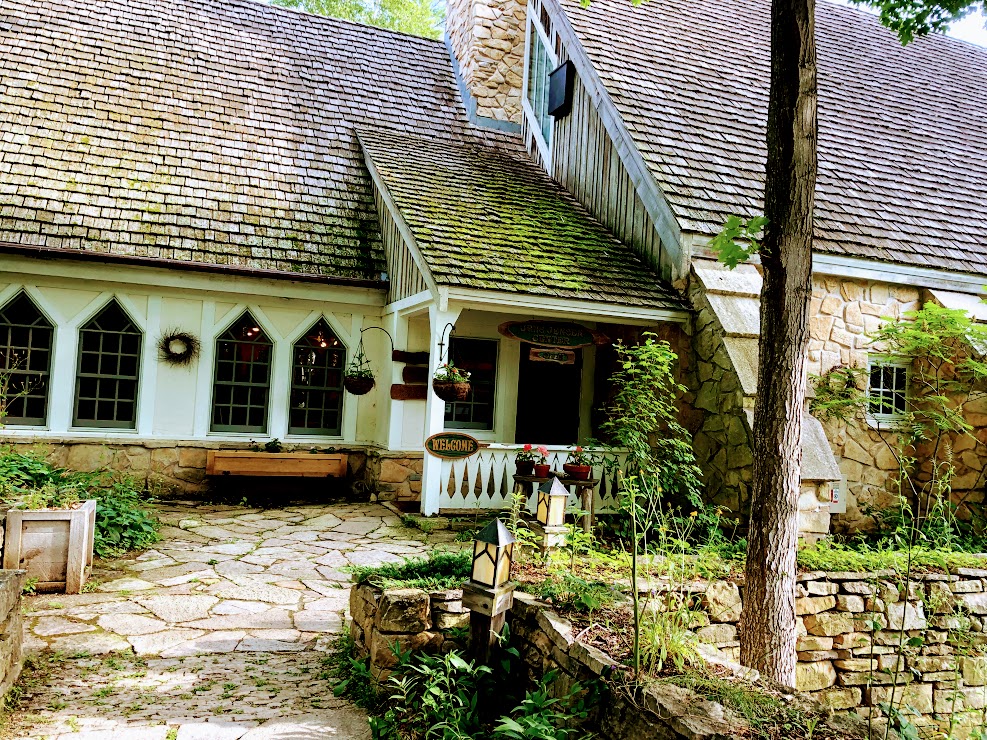
They came from Minnesota and Illinois. But mostly they came from Wisconsin, from Suring and Evansville, from Mosinee and Pulaski, from Wittenberg and Spring Green and places in between. They came to a place called The Clearing Folk School, an adult learning center just north of Ellison Bay in Door County, which was founded in 1935. I was their workshop leader.
Thirty-four of them, all with one purpose in mind—to learn a bit more about stories and how to write them. Personal stories, stories about childhoods, about people who made a difference in their lives, about first memories when they were impressionable toddlers and more. They wrote their stories and shared them aloud for comments of praise and suggestions for improvement.
Some participants were younger—in their thirties, many were older, in their seventies and eighties. But one woman held the record. She looked to be in her late seventies, maybe early eighties. Her little critique group selected her story for one to be read to the entire group. Smiling, she stood up and began reading her story in a loud clear voice. When she finished, I asked, “Would you share your age with us?”
“Sure,” she said. “I’m 79.” She hesitated for a moment. Then she said. “I have dyslexia, I’m really 97.” Silence in the room for the moment. Then everyone stood up and clapped, and the 97-year-old storyteller smiled broadly and sat down.
It was a day of uncovering memories long forgotten, a day for laughter and for tears. A day when the “story” made all the difference.
THE OLD-TIMER SAYS: When we forgot our histories, we forgot who we are.
ANOTHER WRITING OPPORTUNITY: For those unable to attend my Writing Class at the Clearing, here is another opportunity for you.
WHAT: A “Telling Your Story Workshop”
WHEN: Wednesday, Sept. 18, 2019—9:00 a.m. to 4:00 p.m.
WHERE: Wyocena Community Center, Wyocena, WI
REGISTRATION INFORMATION: Contact Wyocena Library (608-429-4899) or Portage Public Library (608-742-4959)
Workshop fee includes a copy of my book, “Telling Your Story,” and a catered lunch.
Sign up soon, limited seats available.
UPCOMING EVENTS: Monday, July 29, 6:30 p.m. Winchester Academy (Waupaca Public Library). The Civilian Conservation Corps.
For more about how to write your own story, pick up a copy of my book, TELLING YOUR STORY, Fulcrum Press.
To learn more about The Clearing Folk Schools and its classes and programs, go to https://theclearing.org/wp/
Purchase TELLING YOUR STORY book from your local bookstore, or buy them from the Friends of the Patterson Memorial Library in Wild Rose—a fundraiser for them. Phone: 920-622-3835 for prices and ordering.
Patterson Memorial Library
500 Division Street
Wild Rose, WI 54984
barnard@wildroselibrary.
www.wildroselibrary.org
July 17, 2019
Dreaded Buckthorn
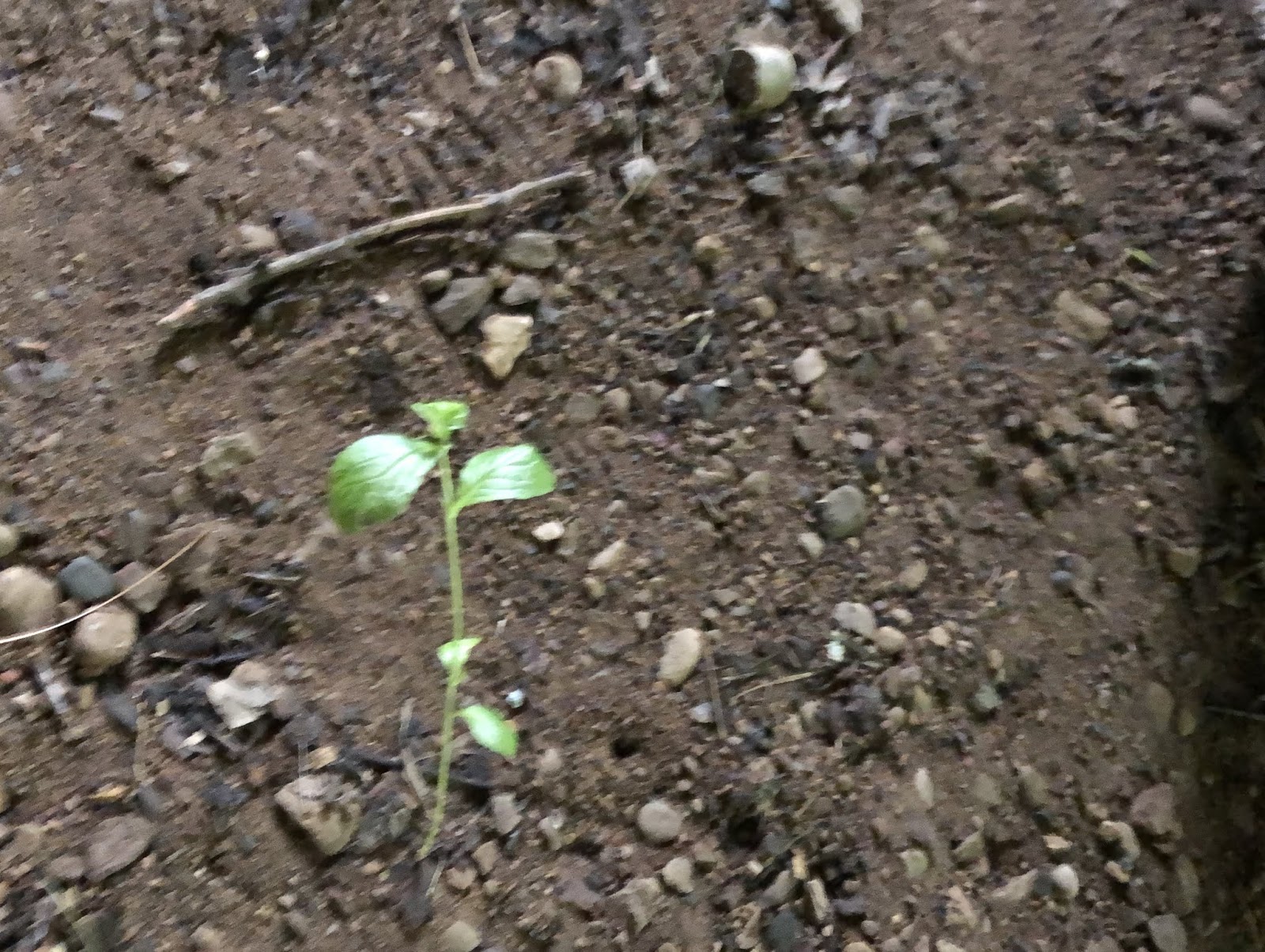
It’s an invasive plant; growing where I don’t want it to grow. Taking over. Shading out other plants, especially new little ones trying to establish. Buckthorn is its common name. It was once considered an attractive ornamental plant, especially when it was introduced into the United States in the mid-1800s.
Not content to remain as an ornamental, it escaped and proceeded to go on a growing rampage, especially in the oak woodlots on sandy farms such as mine. I have buckthorn twenty feet tall, looking like small trees. I have buckthorn six inches tall, and everything in between. It will grow in the shade; it will grow in full sun. It will grow on sandy soil and heavier soil. I even found buckthorn growing in the middle of my tractor shed, which has a dirt floor and little light (see photo above).
Birds love Buckthorn. Mature plants produce abundant purple berries that begin to ripen from August through September. Each berry contains three to four seeds that remain viable in the soil for up to three years. The berries have a laxative effect on birds and mammals assuring widespread distribution of buckthorn through their droppings. The Latin name for Buckthorn, Rhamnus cathartica, recognizes this characteristic of the plant.
Few plants are as competitive as Buckthorn. It is one of the first plants to leaf out in the spring, and one of the last to drop its leaves in the fall. Buckthorn is also allelopathic, which means it produces chemical compounds that inhibit the growth of other vegetation.
I work at controlling this energetic invasive. But I am not winning the battle.
THE OLD TIMER SAYS: Nature has its challenges. Buckthorn is one of them.
UPCOMING EVENTS: Monday, July 29, 6:30 p.m. Winchester Academy (Waupaca Public Library). The Civilian Conservation Corps.
FOR MORE ABOUT OUR FARM, PICK UP A COPY OF Old Farm: A History,. Wisconsin Historical Society Press.
Purchase from your local bookstore, or buy them from the Friends of the Patterson Memorial Library in Wild Rose—a fundraiser for them. Phone: 920-622-3835 for prices and ordering.
Patterson Memorial Library
500 Division Street
Wild Rose, WI 54984
barnard@wildroselibrary.
www.wildroselibrary.org
July 11, 2019
Story of Two Ponds
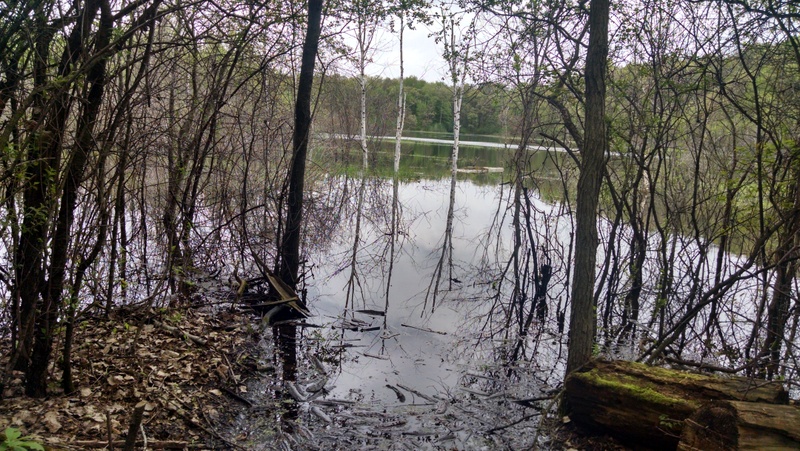 Back in the 1940s, the ponds on our present-day farm were small lakes, teaming with wildlife, fish, and lots of ducks and geese during the spring and fall migrations. Some 25 years later (1966), when we bought the place, the ponds had all but dried up. Even in the spring, with the snow melt, the ponds gained little water and by mid-summer had become wet marshes. Trees began growing where water had been.
In 1993, the ponds began filling with water and continued so into the early 2000s. We canoed on the pond, exploring its many nooks and crannies. A pair of sandhill cranes nested on the northwest shore of the pond, a pair of wood ducks raised their brood on the south shore, a pair of mallards on the east shore. Deer came down to the water to drink, so did raccoons, and songbirds by the dozens gathered there.
Then the water began disappearing, each year a little more, until 2017 the ponds looked like they did in the middle 1960s. Where once there was water, now grew birch and willow trees, some thirty and more feet tall.
In 2018, it began raining. An inch of rain one day, two inches another day, and even more than that on some days in late summer. The pond began inching higher. The snow was deep during the winter of 2018-2019, and more rains fell in the spring. The ponds rose rapidly. Birch trees stood in four feet of water, all dead. Once more we canoed on what are now small lakes.
Will the pond waters recede again? Probably.
THE OLD-TIMER SAYS: Never curse the rain.
UPCOMING EVENTS:
Monday, July 29, 6:30 p.m. Winchester Academy (Waupaca Public Library). The Civilian Conservation Corps.
FOR MORE ABOUT OUR FARM’S HISTORY, PICK UP A COPY OF Roshara Journal:"Chronicling Four Seasons, Fifty Years, and 120 Acres." Wisconsin Historical Society Press, 2016.
Purchase from your local bookstore, or buy them from the Friends of the Patterson Memorial Library in Wild Rose—a fundraiser for them. Phone: 920-622-3835 for prices and ordering.
Patterson Memorial Library
500 Division Street
Wild Rose, WI 54984
barnard@wildroselibrary.
www.wildroselibrary.org
July 7, 2019
FOURTH OF JULY GARDEN REPORT
For my vegetable gardening friends., my Fourth of July report. In comparison to other gardening years, my Waushara County garden is about two weeks behind. Cool weather has been the culprit up until a week ago when the temperature soared into the 80s and mostly stayed there. And the rains continued about 4.5 inches in the past two weeks. Even on our sandy soil, that is more rain than we needed. Last fall we had standing water in our garden. Same thing last week—standing water in the southwest corner.
On the positive side, everything seems to have come up, different from some years when the pumpkins and squash seeds only germinated by half, and the occasional potato plant failed to appear. This year progress has been slow. I have rated each vegetable on a scale of 1-10, with 1 being downright awful and 10 is beyond what one would hope for.
Those that rated five and below:
Radishes---2
Cabbage---3
Cucumbers---4
Green Beans---4
Pumpkins---5
Zucchini---5
Sweet Corn---5
Those that rated six and above:
Winter Squash---6
Late Potatoes---6
Early Potatoes---7
Broccoli---8
Beets---8
Carrots---8
Kale---8
Leaf lettuce---9
Onions---9
Weeds continue to flourish—too wet, too dry, too cold, too hot—no problem for the weeds in my garden. Steve and Natasha are mainly in charge of the vegetable garden these days—but even Steve’s new rototiller and Natasha’s diligent weeding are challenged.
THE OLD TIMER SAYS: Every year a different year for a gardener.
ANNOUNCEMENT: My “Telling Your Story” Writing Class at The Clearing in Door County is set for July 19, 9-4. Call 920-854-4088 if you are interested in attending. A few slots are still available.
UPCOMING EVENTS:
July 12, 6:00 p.m. Frank B. Koller, Memorial Library, 2 US-51, Manitowish Waters. Old Farm Country Cookbook, with co-author, Susan Apps-Bodilly.
See more about gardening in my book, GARDEN WISDOME, Wisconsin Historical Society Press. Purchase from your local bookstore, or buy them from the Friends of the Patterson Memorial Library in Wild Rose—a fundraiser for them. Phone: 920-622-3835 for prices and ordering.
Patterson Memorial Library
500 Division Street
Wild Rose, WI 54984
barnard@wildroselibrary.
www.wildroselibrary.org
June 29, 2019
Enjoying Lakes

Photo: Long Lake near Waupaca, WI
My fondness for lakes began in the mid-1940s when we regularly visited Chain O’ Lake, which was but a mile and a half from the home farm. To clear up the spelling of the lake’s name, Chain O’ Lake has no above ground connection to another lake. But it is connected to a series of other lakes underground. So those naming it comprised—no “s” on the name.
One of my favorite memories involves Hank Lackelt, who Pa hired him for the summer of 1943 or 1944. He owned a Model T Ford “Touring car,” which today we would call a convertible.
On hot summer evenings, after the cows were milked and turned out to pasture, my two brothers and I would pile into the Model T with Hank at the wheel and chug our way along the dusty country road to Chain O’ Lake. Once there, he would back the car into the lake, far enough for us to jump off the back of it into the lake’s cool waters. What fun it was. We would splash around in the lake for an hour or so, until sunset. Then we’d push the car out of the lake and be ready for our trip back home.
But we had to do one more thing before we left the lake, check for bloodsuckers (leaches). We saw them as an annoyance, even if we might emerge from the lake with one or more hanging on us. Earlier we’d discovered the remedy for removing them. We had a salt shaker with us. A little salt sprinkled on the bloodsucker and it fell to the ground.
THE OLD-TIMER SAYS: Nothing better than jumping into a lake after a hard day’s work on the farm.
ANNOUNCEMENT: My “Telling Your Story” Writing Class at The Clearing in Door County is set for July 19, 9-4. Call 920-854-4088 if you are interested in attending. A few slots still available.
UPCOMING EVENTS:
July 12, 6:00 p.m. Frank B. Koller, Memorial Library, 2 US-51, Manitowish Waters. Old Farm Country Cookbook, with co-author, Susan Apps-Bodilly.
BOOKS FOR SUMMER READING;
For more about our antics on the farm when I was a kid, check EVERY FARM TELLS A STORY and LIVING A COUNTRY YEAR.. Purchase from your local bookstore, or buy them from the Friends of the Patterson Memorial Library in Wild Rose—a fundraiser for them. Phone: 920-622-3835 for prices and ordering.
Patterson Memorial Library
500 Division Street
Wild Rose, WI 54984
barnard@wildroselibrary.
www.wildroselibrary.org
June 20, 2019
Strawberry Time
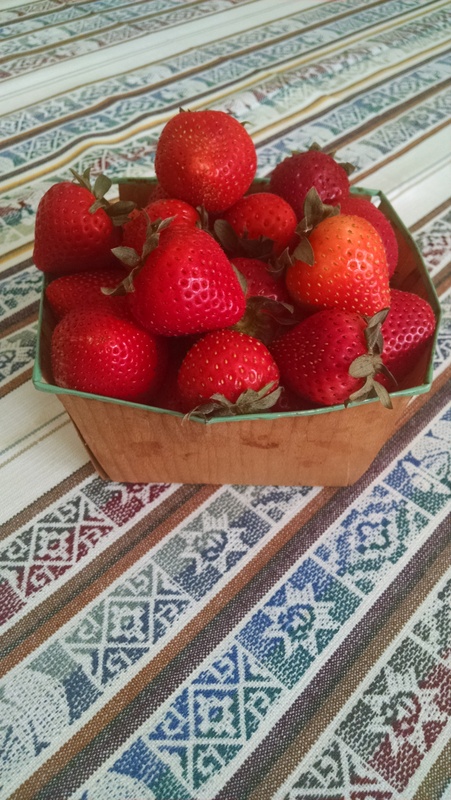
June on the home farm meant strawberry-time. My mother was in charge of our half acre or so patch of the lush, beautiful red berries. It was one of Ma’s money-making projects; the other major one was the chicken flock and the sale of eggs. Beyond the strawberries for our own use, Ma opened her strawberry patch to town folks on a “pick your own” basis. She sold them by the quart picked—and found herself reminding the town pickers that heaping the quart box too far beyond its rim was a “no-no.” I remember hearing her muttering, “Some of them folks pile two quarts of berries in a one-quart berry box.”
Everyone picked strawberries in quart boxes, like the one pictured above. Pa, my two brothers and I also picked lots of strawberries. Ma traded crates of them—16 quarts to a crate—for groceries at the Wild Rose Mercantile. My dad, brothers and I peddled strawberries to the cottage owners scattered around the lakes east of Wild Rose. They were easy to sell. Who could pass up a beautiful quart of strawberries?
And we ate strawberries, three times a day. On our cornflakes for breakfast, strawberry shortcake for lunch, and if we were lucky, a strawberry pie for supper. Sometimes, we made strawberry sandwiches by mashing a few red ripe strawberries between two thick slices of home-made bread. Ma also made jar after jar of strawberry jam, which we enjoyed all winter. In Old Farm Country Cookbook, that my daughter and I wrote, you’ll find several of my mother’s strawberry recipes.
THE OLD-TIMER SAYS: What would a day in June be without strawberries?
ANNOUNCEMENT: My “Telling Your Story” Writing Class at The Clearing in Door County is set for July 19, 9-4. Call 920-854-4880 if you are interested in attending. The class usually fills, so you may want to reserve a spot sooner than later.
UPCOMING EVENTS:
July 12, 6:00 p.m. Frank B. Koller, Memorial Library, 2 US-51, Manitowish Waters. Old Farm Country Cookbook, with co-author, Susan Apps-Bodilly.
BOOKS FOR SUMMER READING:
For strawberry recipes and many more” OLD FARM COUNTRY COOKBOOK
For garden recipes: GARDEN WISDOM
Purchase from your local bookstore, or buy them from the Friends of the Patterson Memorial Library in Wild Rose—a fundraiser for them. Phone: 920-622-3835 for prices and ordering.
Patterson Memorial Library
500 Division Street
Wild Rose, WI 54984
barnard@wildroselibrary.
www.wildroselibrary.org
.
June 14, 2019
Haymaking Breakthrough
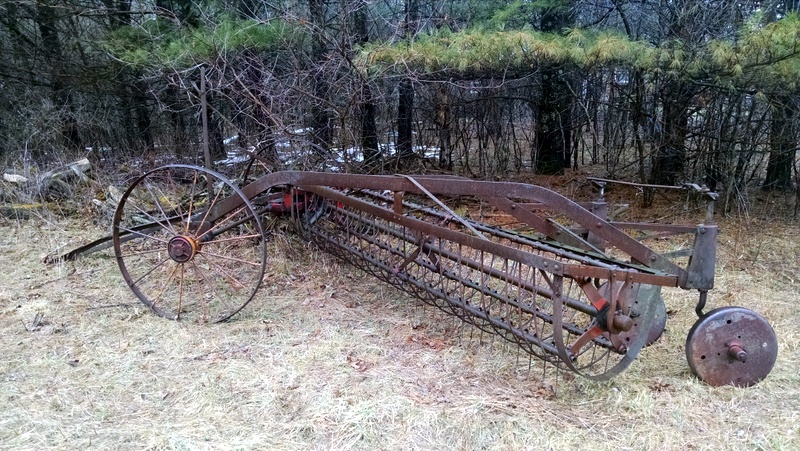
Pa bought our first side-delivery rake back in about 1947. It was an important technological breakthrough. Haymaking was hard work. Now it would be easier.
Before the side-delivery rake, we made hay like this. First Pa cut the hay with our five-foot McCormick mower pulled by our trusty team of horses. Once the hay was cut and dried for a day or so, depending on the weather and lack of rain, he raked the hay with a dump rake, a distant cousin of our new side-delivery rake.
Once the hay was raked, my brothers, Pa and I piled the hay into little bunches—sort of like overgrown cupcakes that soon appeared across the field. After another drying period, a day or so, we pitched the hay bunches on to our steel-wheeled hay wagon, and hauled it to the barn.
Arriving at the barn, we pitched the hay, into the hay mow, by hand. With three-tined forks. All of this was before 1945, when Pa bought our first tractor. And soon after a side-delivery rake and a hay loader.
Haymaking became easier. Once the hay was cut, now with a tractor-pulled mower pulled by the tractor, the hay was raked in long ropes with the side-delivery rake. No more bunching hay by hand. The tractor pulled the hay wagon—we now had one with rubber tires. A mechanical hay loader was attached to the back of the wagon. which automatically loaded the hay onto the wagon. What could be easier?
THE OLD-TIMER SAYS: Learn to appreciate the things that make life easier.
ANNOUNCEMENT: My “Telling Your Story” Writing Class at The Clearing in Door County is set for July 19, 9-4. Call 920-854-4880 if you are interested in attending. The class usually fills, so you may want to reserve a spot sooner than later.
UPCOMING EVENTS:
July 12, 6:00 p.m. Frank B. Koller, Memorial Library, 2 US-51, Manitowish Waters. Old Farm Country Cookbook, with co-author, Susan Apps-Bodilly.
BOOKS FOR SUMMER READING;
Want a book to read this summer? Here are two more of my novels for your consideration.
Each deals with a contemporary rural issue. Purchase from your local bookstore, or buy them from the Friends of the Patterson Memorial Library in Wild Rose—a fundraiser for them. Phone: 920-622-3835 for prices and ordering.
Patterson Memorial Library
500 Division Street
Wild Rose, WI 54984
barnard@wildroselibrary.
www.wildroselibrary.org
Cranberry Red
From Booklist:
In the fourth book in the Ames County series, Ben Wesley, an agricultural agent for the past two decades, is suddenly out of work when funding for his program is cut. He’s immediately offered a job with Osborne University, doing pretty much what he did before but charging people for his services. This makes him a little uncomfortable but not nearly as much as Cranberry Red, a new chemical developed by the university’s researchers that could have spectacular benefits for people with heart disease or Alzheimer’s. When it begins to appear that Cranberry Red has some pretty nasty side effects, Ben is faced with a difficult choice: keep his job and find a way to protect the community, or blow the lid off the secret and risk everything. Apps approaches his familiar themes (honor, the importance of community, the increasing threat to traditional farming) from a new angle, focusing on the issue of genetic modification and its impact on an entire way of life. As usual, he creates compelling characters and places them in a vividly realized setting. –David Pitt
Tamarack River Ghost
When journalist Josh Wittmore moves from the Illinois Bureau of Farm Country News to the newspaper’s national office in Wisconsin, he encounters the biggest story of his young career—just as the paper’s finances may lead to its closure.
Josh’s big story is a corporation plans to establish an enormous hog farm that bought a lot of land along the Tamarack River in bucolic Ames County. Some of the local residents and officials are excited about the jobs and tax revenues that the big farm will bring, while others worry about truck traffic, porcine aromas, and manure runoff polluting the river. And how would the arrival of a large agribusiness affect life and traditions in this tightly knit rural community of family farmers? Josh strives to provide impartial agricultural reporting, even as his newspaper is replaced by a new Internet-only version owned by a former New York investment banker. And it seems that there may be another force in play: the vengeful ghost of a drowned logger who locals say haunts the valley of the Tamarack River.
June 7, 2019
Stonefield Historic Site

Interested in Wisconsin’s agricultural history? Do you enjoy looking at early farm implements? How about the fun of visiting a 1900 replica of a farming village, along with a 1901 farmstead. Yes? Well you are in luck, because in Southwestern Wisconsin a place called Stonefield has all of these things. It’s a Wisconsin Historic Site, one of several operated by the Wisconsin Historical Society.
Stonefield is just a short drive north of picturesque Cassville, one of Wisconsin’s several towns and cities tucked up against the mighty Mississippi River. Stonefield is about a two-hour drive from Madison, and only 37 miles north of Dubuque, Iowa.
The place is steeped in history as Nelson Dewey, Wisconsin’s first Governor, farmed some 2,000 acres here at one time. His beautiful Gothic Revival home is open for tours—it’s a part of Nelson Dewey State Park, which is across the road from Stonefield.
The State Agricultural Museum is located at Stonefield. Here you can see a McCormick Reaper, along with tools large and small that depict the state’s agricultural past. Also there are walls of historic photographs. One is of a group of men raking cranberries by hand. Something I did back in the fall of 1955.
Cross the covered bridge and find yourself in an early Wisconsin village, complete with a cheese factory, newspaper office, saloon, blacksmith shop, railroad depot, saw mill, bank, livery stable, a one-room school, barbershop and more. Visiting the farmstead, you’ll see a farm house, dairy barn, corn crib, chicken coop, and hog house.
What a great place to relive your childhood and to bring the kids and grandkids to show them some early Wisconsin history. Go to: https://stonefield.wisconsinhistory.org/ for more information.
THE OLD-TIMER SAYS: When we forget our histories, we forget who we are.
ANNOUNCEMENT: My “Telling Your Story” Writing Class at The Clearing in Door County is set for July 19, 9-4. Call 920-854-4880 if you are interested in attending. The class usually fills, so you may want to reserve a spot sooner than later.
UPCOMING EVENTS:
July 12, 6:00 p.m. Frank B. Koller, Memorial Library, 2 US-51, Manitowish Waters. Old Farm Country Cookbook, with co-author, Susan Apps-Bodilly.
BOOKS FOR SUMMER READING:
Want a book to read this summer? Here are two more of my novels for your consideration.
Each deals with a contemporary rural issue. Purchase from your local bookstore, or buy them from the Friends of the Patterson Memorial Library in Wild Rose—a fundraiser for them. Phone: 920-622-3835 for prices and ordering.
Patterson Memorial Library
500 Division Street
Wild Rose, WI 54984
barnard@wildroselibrary.
www.wildroselibrary.org
Cranberry Red
From Booklist:
In the fourth book in the Ames County series, Ben Wesley, an agricultural agent for the past two decades, is suddenly out of work when funding for his program is cut. He’s immediately offered a job with Osborne University, doing pretty much what he did before but charging people for his services. This makes him a little uncomfortable but not nearly as much as Cranberry Red, a new chemical developed by the university’s researchers that could have spectacular benefits for people with heart disease or Alzheimer’s. When it begins to appear that Cranberry Red has some pretty nasty side effects, Ben is faced with a difficult choice: keep his job and find a way to protect the community, or blow the lid off the secret and risk everything. Apps approaches his familiar themes (honor, the importance of community, the increasing threat to traditional farming) from a new angle, focusing on the issue of genetic modification and its impact on an entire way of life. As usual, he creates compelling characters and places them in a vividly realized setting. –David Pitt
Tamarack River Ghost
When journalist Josh Wittmore moves from the Illinois bureau of Farm Country News to the newspaper’s national office in Wisconsin, he encounters the biggest story of his young career—just as the paper’s finances may lead to its closure.
Josh’s big story is that a corporation that plans to establish an enormous hog farm has bought a lot of land along the Tamarack River in bucolic Ames County. Some of the local residents and officials are excited about the jobs and tax revenues that the big farm will bring, while others worry about truck traffic, porcine aromas, and manure runoff polluting the river. And how would the arrival of a large agribusiness affect life and traditions in this tightly knit rural community of family farmers? Josh strives to provide impartial agricultural reporting, even as his newspaper is replaced by a new Internet-only version owned by a former New York investment banker. And it seems that there may be another force in play: the vengeful ghost of a drowned logger who locals say haunts the valley of the Tamarack River.
Jerry Apps's Blog

- Jerry Apps's profile
- 88 followers
Jerry Apps isn't a Goodreads Author
(yet),
but they
do have a blog,
so here are some recent posts imported from
their feed.

