
Drew Myron's Blog, page 75
March 10, 2012
Love that line!

Anna misses her husband
the way you miss gloves on
an October day only after you've
seen a nice pair on someone
else's hands.


March 6, 2012
Fast Five with Stefanie Freele
I like to make the middle
something sassy and meaty.
I like to make a fine ending
that swoops.
 Welcome to Fast Five — short interviews with my favorite writers. Life may be short but who doesn't have time for five questions — and a chance to win a great book? (To win, simply post your name in the comments section. See details below).
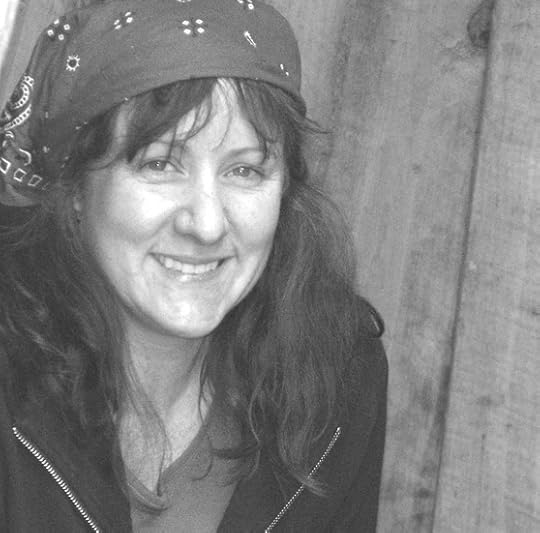 Stefanie Freele's stories and flash fiction can be found in Glimmer Train, Quarterly West, American Literary Review, Pank, and many other literary journals. Her collection, Feeding Strays, was a finalist for both the John Gardner Binghamton University Fiction Award and the Book of the Year Award. Her stories have been twice nominated for the Pushcart Prize. She recently won the Glimmer Train Fiction Open, and her second collection, Surrounded by Water, will be published in May 2012. In addition, Freele is the Fiction Editor at the Los Angeles Review.
How did you come to writing?
As most writers, I have always loved reading. I never knew that I could become a real writer though until I decided to go for my MFA at the Northwest Institute of Literary Arts: Whidbey Writers Workshop. Up until then, I thought there were readers, people who journaled a bit and then some very gifted folks over there that created their wonderful writing for us readers. Somehow a little whisper: write, grew to a yell: WRITE! and one finished story led to another led to a collection.
Your work is wonderfully distinct. Feeding Strays, a collection of 50 short (and short-short) stories, was a finalist in two prestigious contests, and has been described as loopy, sensitive and "full of strange, original invention." How do you describe your writing content and style?
I don't know if I can describe it, I may be too close to my own writing, it is like trying to describe yourself. I don't know if I could do that either. I like to not waste much time falling into the beginning, I like to make the middle something sassy and meaty, I like to make a fine ending that swoops. Okay, I'm being silly there, but truly, it is difficult to dissect one's own writing.
Some people say "first thought best thought." Others edit a piece into place. What is your writing process?
Usually a little something nags at me along the way, something someone said, or something I observed and it nags enough that I finally get down to write about it. The little something then somehow births a story. I don't truly know how it works, but for instance, the last story of Feeding Strays, called "Every Girl Has An Ex Named Steve" began from two incidences.
One: I found myself saying just that to a friend when we were dog walking, "Every girl has an ex named Steve" and immediately knew I needed that line, and extra proud because it came from myself and I didn't need permission to swipe it.
Two: I witnessed a teenager in a banana suit standing outside a store while stiffly handing out coupons. I'd never seen a more miserable looking fellow. He oozed misery. He hated that banana suit body-cast more than he hated anything else in his short little life. I was watching youthful disillusionment happening right before my eyes. I felt achingly painfully sorry for him.
Thus, the first line of the story, "We tell her not to date a man in a banana suit."
I edit later when I think the story is told. Then, I use a different part of my brain, one that organizes and chops and perfects.
As the fiction editor for the Los Angeles Review, what do you look for in a story? What do you love to see, and what makes you cringe?
Cliches make me cringe. Overused plots make me wilt. Flowery self-important writing makes my face do the just-ate-a-lemon. Over-reliance on dialogue has a confusedly queasy affect on me and I have been known to drift off during weighty segments of backstory. I love to see more humor, more wacky, more real crisis and conflict, more creative plots.
You are an accomplished writer, reader, poet and editor. What do you know now that you didn't know when you first started writing?
I did not know I would meet so many talented and genuine authors. I've had an enormous privilege, by being both the Fiction Editor of the Los Angeles Review, a former submissions editor with Smokelong Quarterly and speaking at various conferences, where I've been introduced to some beautiful and amazing writers. When you get a signed book from an author you've just met and you go home and love the book, that is a wonderful feeling. I thought being a writer would be very lonely, very isolated and curmudgeonlike but it doesn't have to be.
And, although I knew I loved words, loved stories, loved to read, I didn't know how much that love can just keep growing until you just want to shout about it. But, shout not too long, because hey, I've got a pile of books to read.
Bonus Question: I'm a collector of words and often have my students collect words, too. Do you have any favorite words?
The other day someone used the word bombastic and I found myself in love with that word. I don't think I've ever said it aloud, however I'm going to attempt to insert it somewhere, either in a story, or in an accusation. I really want to tell someone they are being too bombastic. And, I want to be right about it.
Win this!
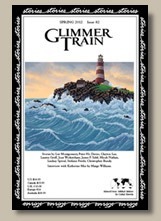 Win a copy of Glimmer Train, the literary journal featuring While Surrounded by Water, the Stefanie Freele story that won the Glimmer Train Fiction Open and evoked the title for her forthcoming collection.
To enter the drawing, simply add your name and contact info in the comments section below. Feeling shy? Email me, with "Glimmer Train" in the subject line: dcm@drewmyron.com
A name will be drawn and a winner announced on Monday, March 19, 2012.
March 5, 2012
This Week in Books
If days after I've finished a book I'm still thinking of the story, characters, pace, or plot, I know it's one I need to shout about. This week I've got enjoyed three great — and very different — books.
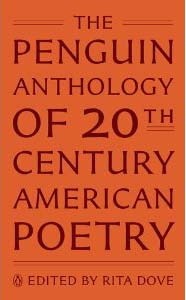 The Penguin Anthology of 20th Centry American Poetry
by Rita Dove, editor
Remember those college English classes requiring the ridiculously heavy Norton Anthologies with onion-skin thin pages? The just-released Penguin Anthology is like that — but so much better. I'm not sure if it's age (it's been, ahem, many years since I was an English major) or my increased appreciation of poetry but I am loving this collection.
Thumbing through the pages is like seeing old friends: Anne Sexton, Walt Whitman, Amiri Baraka (in college I filled an entire wall of my studio apartment with his words: What can I say? / It is better to haved loved and lost/ Than to put linoleum in your living rooms? from In Memory of Radio). There's newer friends too: Kay Ryan, Adrienne Rich, Marie Howe, Billy Collins, and more. With both classic and contemporary poems, this collection deftly gathers 100 years of poetry and manages to shed the academic obligation and emerge refreshingly necessary.
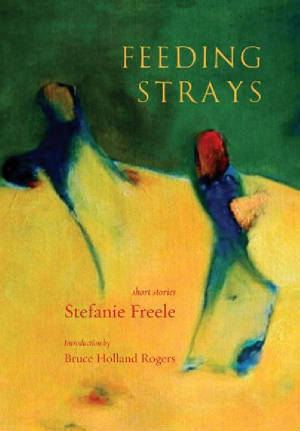 Feeding Strays
by Stefanie Freele
In this collection of 50 short, and sometimes very short (flash fiction), stories, Stefanie Freele offers loopy and touching slices of life. Characters and plot are both sincere and silly, gritty and surreal. At the heart of each absurdity lies great sensitivity. We're all a bit broken, she seems to suggest, and that's what makes us whole.
 Just Like Us: The True Story of Four Mexican Girls Coming of Age in America
by Helen Thorpe
In this engaging narrative nonfiction, Thorpe — a journalist long before she was wife to Colorado Gov. John Hickenlooper — offers an insightful look at immigration policy through a moving (and evenhanded) story of four young women as they struggle to learn, grow and prosper. "Helen Thorpe has taken policy and turned it into literature," says Malcom Gladwell.
March 1, 2012
Thankful Thursday: Read and Misread
Everything Lush I Know
I do not know the names of things
but I have lived on figs and grapes
smell of dirt under moon
and moon under threat of rain
everything lush I know
an orchard becoming all orchards
flowers here and here
the earth I have left
every brief home-making
the lot of God blooming into vines
right now then and always
— Kimberly Burwick
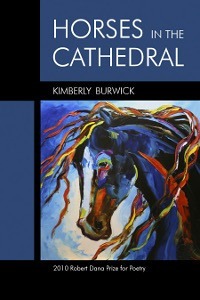 As part of my new routine of reading and writing each morning, yesterday I read this poem from Horses in the Cathedral, by Kimberly Burwick, a writer living in Moscow, Idaho.
Despite its brevity, the poem is full, and well, lush. That first line is an immediate hook — I do not know the names of things — and the reverent details and tone transported me easily from the poem to my journal. Energized, I lifted a line — a lot of God blooming into vines — and started a freewrite.
This prompt produced pages of material. Later, I reread the poem and realized it was not a lot of God but the lot of God. But no matter, whatever unfurls the mind and moves the pen.
On this Thankful Thursday, I am thankful for poems that arrive and energize.
It's Thankful Thursday, a weekly pause to appreciate the people, places, things (and poems) in our lives. Joy contracts and expands in proportion to our gratitude. What makes your world expand?
February 28, 2012
Try This: Morning Read & Write
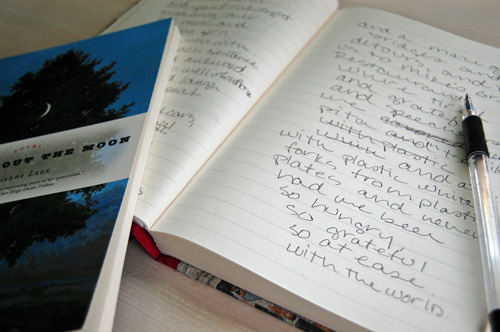
What's your writing routine?
Influenced by Julia Cameron's The Artist's Way, years ago I wrote Morning Pages — a freewwrite filling two full pages, every morning. Most days the pages filled fast, and I started the day doing what I do best and enjoy most: writing.
Poet Molly Spencer, who shares details of her writing life at The Stanza, recently shared with me her writing routine:
What I always do, no matter what, is what I call my morning reading and writing. I read someone else's work, then write something, anything. It's usually junk, but sometimes a jewel finds its way onto the paper. And even the junk feels like an accomplishment because it's writing.
I like this idea because it establishes a time and place for writing. In doing the same thing everyday, I am making an appointment and declaring the importance of writing in my life. And in reading the work of others, I am prepping my write mind.
With Molly's nudge, this morning I read Facts About the Moon, poems by Dorianne Laux, and then wrote fast and fevered, without thinking. What a great way to start the day! I was reminded how powerful morning writing can be. Reading and writing first thing sets a tone and pace for everything that follows.
Try a Morning Read & Write, and let me know it goes for you.
February 23, 2012
Thankful Thursday: Ikea
 I don't even like to shop.
Still, last week I found myself trapped in the dizzy march of the Ikea maze. Sandwiched between screaming toddlers and dawdling adults is not my idea of a fun Saturday morning. Shopping in a concrete warehouse, under fluorescent lights, is really never a good time.
Except when it comes to paper and pens, I don't like a lot of choice. And Ikea, the behemoth of affordable housewares, offers choice after choice after choice. Smart design, clever ideas. And cheap! It's all too much. Saturated with sight and sound, I started snarling at youngsters (those who hadn't been plopped off at the kiddie corral) and glaring at shoppers who were inexplicably having fun.
When my husband not-so-gently asked if I had brought a book and pointed to an empty table in the cafe (Must everything involve food? I snapped), I jumped at the chance to escape the circus.
There, in the din of consumer overload, I wrote. Page after page in the loopy scrawl of the slightly mad. The rant turned inward eventually and slowed to a less charged pace. I wrote and wrote. Hours later, when the shopping was over and the car packed tight, I had written, rewritten, and polished a poem (one which had absolutely nothing to do with consumer waste, screaming children, clueless adults, or food court stench).
On this Thankful Thursday, I am thankful for Ikea — for driving me over the edge and into a poem.
It's Thankful Thursday, a weekly pause to appreciate the people, places, things (and poems) in our lives. Joy contracts and expands in proportion to our gratitude. What makes your world expand?
February 20, 2012
How to feed your writing life
Every week, a friend and I exchange the same question:
How did you feed your writing life this week?
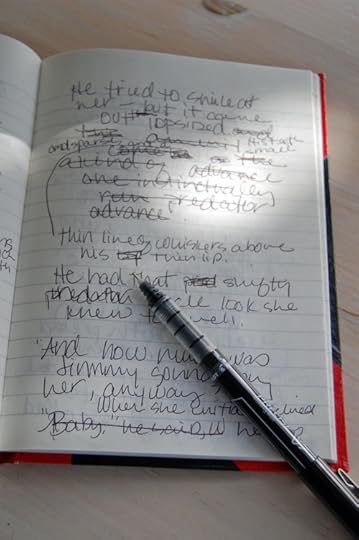 We are writers. We want to write more, and better, and see the results of our commitment to a creative life. And so, like Weight Watchers or a 12 Step Program, we keep each other accountable. We share our drafts and works-in-progress. We exchange achievements and concerns. We encourage each other while also applying slight (but loving) pressure to act. It is not enough to wish. You must write — and when not writing, you must exercise the writing muscle through other literary actions.
Five Ways to Feed Your Writing Life
1.
Read, Read, Read. And read more.
Read more than you write. Read stories, poems, essays, magazines, dictionaries, history books, cookbooks, cereal boxes. Reading will always expand your life and your writing. Influence is good. Let yourself be immersed and influenced. Good writing will shape your own writing.
2.
Attend a Workshop.
I just returned from the South Coast Writers Conference where I led two workshops. The sessions were lively and the writers warm and friendly. It was great fun.
I spend much of my time alone, quietly crafting words. Until I am in a room full of writers, I forget the wonderful rush writing with a group can bring. When we write together, we buzz in a collective creativity, and when we share our work we feel great energy and relief.
Take a workshop. Week-long and weekend workshops are plentiful, but there are loads of one-day, half-day and one-hour events, too. And many are free or low-fee. Look to your library, or local writing organization, for writing opportunities.
3.
Go to a Reading.
Nothing stirs the writing juices like hearing the work of others. Almost every town holds a reading or an open mic night (even small towns, like mine, with just 650 people, have readings at coffeehouses and libraries). At a reading, you'll have the opportunity to meet other writers, hear new ideas, and measure your work against what you hear. Even better, take part! Sharing your words before an audience is an excellent way to discover where your work skips, soars, or lags.
And remember, it's good to encourage one another. We're all in this together. Give yourself bonus points for reaching out to newbies.
4.
Write a Letter.
You know how I feel about letters. They save lives, or at least brighten them. Writing a letter is an excellent way to "pretend" write. You know you should polish your poems, or start your story. But you're not feeling it. Reach instead for pen and paper, and write a letter. You'll quickly find yourself in a pool of words and ideas.
By the way, how is the Month of Letters Challenge going?
5.
Watch a Movie about Writing.
It feels a bit like cheating but watching a movie about writers always inspires me to pick up my own pen. After all, literary acts are really just ways to nudge us back to our own writing.
A few of my favorite write-themed movies are: Il Postino, Freedom Writers, Bad Writing, SlamNation, The Hobart Shakespeareans, Finding Forrester, and Leonard Cohen: I'm Your Man.
Tell me, how are you feeding your writing life?
February 16, 2012
Thankful Thursday: Stones
Sunday morning on Stonefield Beach
On the beach
gathering stones
every appreciation
is prayer
- Drew Myron
Speaking of stones, check out A Handful of Stones, a lovely source of small, powerful poems of observation and appreciation.
It's Thankful Thursday, a weekly pause of gratitude, praise and appreciation. Please join me. What are you thankful for today?
Do you take part in Thankful Thursdays? I'm making a list and will gladly add a link to your website or blog.
February 14, 2012
No obligation
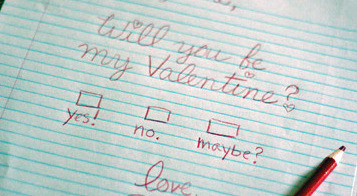 The restaurants are packed with moony lovers bent over pricey meals and bad service. The television blasts must-have gifts: jewelry, flowers, stale chocolates in flimsy cardboard.
Forgive me, St. Valentine, but I've never cared for you. Contrived adoration combined with obligation makes me anxious. I imagine Hallmark counting bags of money and roaring with laughter.
I'm not bitter, really, I'm not. I am gooey with sentiment. I just feel manipulated.
Despite all the hoopla and show, I am thankful that tender, real, private love abounds: in taking out the trash, emptying the dishwasher, making dinner, cleaning the gutters, in gifts without reason and just-because notes. When love shows its beautiful, unforced, unadvertised self, I am almost always surprised and grateful — and not at all obligated.
Valentine for Ernest Mann
You can't order a poem like you order a taco.
Walk up to the counter and say, "I'll take two"
and expect it to be handed back to you
on a shiny plate.
Still, I like your spirit.
Anyone who says, "Here's my address,
write me a poem," deserves something in reply.
So I'll tell a secret instead:
poems hide. In the bottoms of our shoes,
they are sleeping. They are the shadows
drifting across our ceilings the moment
before we wake up. What we have to do
is live in a way that lets us find them.
Once I knew a man who gave his wife
two skunks for a valentine.
He couldn't understand why she was crying.
"I thought they had such beautiful eyes."
And he was serious. He was a serious man
who lived in a serious way. Nothing was ugly
just because the world said so. He really
liked those skunks. So, he re-invented them
as valentines and they became beautiful.
At least, to him. And the poems that had been hiding
in the eyes of skunks for centuries
crawled out and curled up at his feet.
Maybe if we re-invent whatever our lives give us
we find poems. Check your garage, the odd sock
in your drawer, the person you almost like, but not quite.
And let me know.
— Naomi Shihab Nye
February 9, 2012
Thankful Thursday: Mrs. Allison, smoking
It's Thankful Thursday. Joy expands and contracts in direct relation to our gratitude. Please join me in a weekly pause to appreciate the people, places & things that bring joy. What are you thankful for today?
On this Thankful Thursday, I am thankful for:
• Peckish, the word
peck·ish (p k
k
 sh)
sh)
adj.
1. Ill-tempered; irritable, surly.
2. Chiefly British: Somewhat hungry.
• This reminder:
"This corresponds to what I have learned as a writer about seeing 'dry spells' through: it helps considerably if one has developed writerly habits. People often remark that they would write, or paint, or sculpt, if only they had the time. But this is pure fantasy: the artist does whatever is necessary to arrange her life so that she will have the time to make her art."
— Kathleen Norris
from Acedia & me: A Marriage, Monks, and A Writer's Life
• Mrs. Allison in the grocery store, smoking
When I was 12 years old, I spotted my beloved teacher, Mrs Allison, shopping the frozen foods aisle at King Soopers. I was thrilled to see my teacher out of the classroom and in the real world but when I looked closer I was stunned: Mrs Allison was wearing jeans, and she was smoking a cigarette!
This week after a vigorous run, I ran into the grocery store. Bare-faced, sweaty and clad in see-every-lump spandex, I loaded up on the essentials: chips and wine. Just then two of my young students rushed with happiness to see me. I think I recognized the second look they took. Like Mrs. Allison, I am, sadly, human.
Thanks for the memory, Mrs. Allison.


