
Heidi Anne Heiner's Blog, page 86
June 26, 2014
Bargain Book: Faery Tale: One Woman's Search for Enchantment in a Modern World by Signe Pike
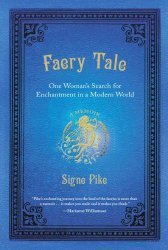

Faery Tale: One Woman's Search for Enchantment in a Modern World
by Signe Pike is currently bargain priced for $6.00 for paperback format ($15 list price)--a lower price than the ebook price for the paper lovers out there. This book is featured in Mary McMyne's Fairy Tale Book Giveaway. But since only one person can win that copy, I wanted to share this one for those wanting an interesting read about the search for faerie/faery.Book description:
One of Kirkus Reviews' Best Books of 2010
A skeptic's search for magic, one faery at a time.
In search of something to believe in again, Signe Pike left behind a career in Manhattan to undertake a magical journey-literally. In a sweeping tour through England, Ireland, Scotland, and beyond, she takes readers to dark glens and abandoned forests, ancient sacred sites, and local pubs, seeking those who might still believe in the mysterious beings we've relegated to the dusty corners of our childhood imaginations: faeries. But as Signe attempts to connect with the spirit world, she'll come to view herself and the world around her in a profoundly new way.
Engaging and full of heart, Faery Tale is more than a memoir-it's the story of rekindling that spark of belief that makes even the most skeptical among us feel like a kid again.


New Book: Never-ending Stories: Adaptation, Canonisation and Ideology in Children's Literature
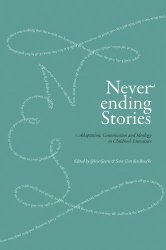

Never-ending Stories: Adaptation, Canonisation and Ideology in Children's Literature (Ginkgo Series)
by Sylvie Geerts (Editor), Sara Van den Bossche (Editor) is officially released in July, but it is already shipping from book retailers. I can't find much about this book online--but the description is intriguing. I also found the original call for papers for the symposium that apparently inspired this publication. So this is a collection of papers edited by the symposium organizers. I would love to see a full table of contents and will share one if I find one!
Book description:
The roots of children’s literature are commonly known to lie in adaptation. The texts most frequently adapted for a child audience are either canonised literary works for adults or children’s books which have acquired a high status of their own. In both cases, the stories are adapted to fit the needs of new readers in other contexts. This volume frames adaptation in children’s literature against a broader socio-cultural background, focussing on the ideological implications of the process. Emphasising both diversity and evolution, it deals with oppositional forces and recent trends informing adaptation. At its core are issues of transmediality and new reader roles, adaptations' orientation towards the ideology associated with the pre-text, as well as canonisation of the pre-texts and of the adaptations themselves. The volume is characterised by a broad international and diachronic spread, with topics ranging from traditional Western fairy tale adaptations to retellings of South African oral stories and Persian myths. The evolution discernible in the cases presented neatly illustrates how the process of adaptation allows canonical texts to develop into never-ending stories.
SYLVIE GEERTS and SARA VAN DEN BOSSCHE are researchers in the Department of Literary Studies at Ghent University.
I found this listing for one fairy tale related article in the book, so I know there are some articles within that will interest SurLaLune readers:
Title: How immortal is Disney's Little Mermaid?
Other Titles: The Disneyfication of Andersen's 'The Little Mermaid'
Authors: Van Coillie, Jan
Issue Date: 2014
Publisher: Academia Press
Host Document: Never-ending Stories - Adaptation, Canonisation and Ideology in Children's Literature pages:127-142
Abstract: Focusing on Disney’s adaptation of Andersen’s fairytale The Little Mermaid, this study reveals some essential characteristics of the so-called ‘Disneyfication’. In order to do so, a comparative analysis is carried out, based on concepts from narratology. The analysis focuses on changes in the plot, characters, space, time and perspective. The central question is in how far these changes are due to the inevitable differences caused by the transfer from text to screen or to the interpretation of Disney as it is reflected in the typical characteristics of his feature films. The analysis makes clear how Disney changes the essence of Andersen’s story. Through these fundamental changes, the story is made to conform to Disney’s world vision and American animation design. More precisely, the adaptation reveals a different view on growing up, gender roles, the relation between adults and children and life’s final destiny.
June 24, 2014
New Book: Thorn Jack: A Night and Nothing Novel (Night and Nothing Novels) by Katherine Harbour
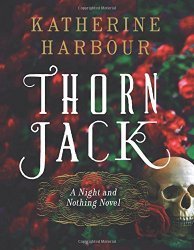

Thorn Jack: A Night and Nothing Novel (Night and Nothing Novels)
by Katherine Harbour is released this week. I have a review copy coming to me so I anticipate a Tam Lin reading binge sometime in my near future. Because I can't read one without rereading some others. Good news is that if we love the book, it's the start of a series.The book is a retelling of Tam Lin. Which is always a catnip tale for me. I'm not sure how many times I reread Pamela Dean's Tam Lin
 while at university, long before I started SurLaLune. And according to Harbour, she loves some of the same Tam Lin retellings that I do. Too many of which are not yet available in ebook format either.
By Katherine Harbour from the Harper Voyager blog:
I began writing THORN JACK when I was seventeen—in the ‘80s, books about fairies were popular and I’d read the ballad ‘Tam Lin’ and other books inspired by it: Elizabeth Marie Pope’s The Perilous Gard, Diana Wynne Jones’s Fire and Hemlock
, Pamela Dean’s Tam Lin
The idea of setting ‘Tam Lin’ in a resort/college town that’s a getaway for theater and film people, the wealthy and the artsy, seemed a perfect way to mask the Fatas’ (faeries) beauty, eccentric style, and lavish parties (faery revels). At the ballad’s beginning, there’s a warning about the ruins of Carter Hall being haunted: ‘“O I forbid you maidens all, that wear gold in your hair, to come or go by Carter Hall, for young Tam Lin is there.”’ It reminded me of those abandoned mansions, like Wyndcliffe, in upstate New York. In Tam Lin, the heroine is compelled to explore Carter Hall. In THORN JACK, Finn Sullivan, the heroine, is drawn to the Fata-haunted mansions of Fair Hollow.
Book description:
Combining the sorcery of The Night Circus with the malefic suspense of A Secret History, Thorn Jack is a spectacular, modern retelling of the ancient Scottish ballad, Tam Lin—a beguiling fusion of love, fantasy, and myth that echoes the imaginative artistry of the works of Neil Gaiman, Cassandra Clare, and Melissa Marr.
In the wake of her older sister’s suicide, Finn Sullivan and her father move to a quaint town in upstate New York. Populated with socialites, hippies, and dramatic artists, every corner of this new place holds bright possibilities—and dark enigmas, including the devastatingly attractive Jack Fata, scion of one of the town’s most powerful families.
As she begins to settle in, Finn discovers that beneath its pretty, placid surface, the town and its denizens—especially the Fata family—wield an irresistible charm and dangerous power, a tempting and terrifying blend of good and evil, magic and mystery, that holds dangerous consequences for an innocent and curious girl like Finn.
To free herself and save her beloved Jack, Finn must confront the fearsome Fata family . . . a battle that will lead to shocking secrets about her sister’s death.
So what is your favorite version of Tam Lin?
June 23, 2014
New Book: The Girls at the Kingfisher Club: A Novel by Genevieve Valentine
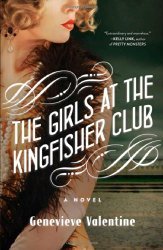

The Girls at the Kingfisher Club: A Novel
by Genevieve Valentine was released a few weeks ago. While it is on my new releases list--see Fairy Tale Influenced Fiction 2014 Part 1 --I didn't notice it was released yet. Sidenote: I already have 2015 lists going at Listmania so do let me know if you are aware of ones I am not yet! The lists for 2014 and 2015 are growing!
But the book has some fans among SurLaLune readers already and they have let me know I shouldn't miss it. Both Veronica Schanoes and Heather Tomlinson have emailed me with high recommendations for the book. Frankly, that rarely happens. So we should probably all listen.
In addition to this novel, Valentine has had several fairy tale short fiction pieces published--see her bibliography on her site to see the list.
The premise of 12 Dancing Princesses set in a 1920s speakeasy is intriguing, to be sure. For me, I am even more fascinated by the popularity of 12 Dancing Princesses in novels this past decade. I'm not sure what caused that since most people in the "regular" world don't even know the tale. I really don't think Barbie did it, see Barbie in the 12 Dancing Princesses
 if you don't know of what I speak. Seriously, I think only Cinderella and Beauty and the Beast continue to outpace 12 Dancing. Sleeping Beauty and Snow White are probably neck and neck with it if you count the books for middle readers, not just YA and adult novels.
But hooray for everyone who embraces this tale that is so very mysterious in motivation and backstory. It has plenty scope for the creative muse, so I understand its appeal. After all, I researched it myself once upon a time for Twelve Dancing Princesses Tales From Around the World
 . I even dabbled with my own fictional retellings at one time and those will stay safely tucked away from the public eye. So I enjoy seeing where the tale takes other authors.
Does The Girls at the Kingfisher Club already have some other SurLaLune fans? Let me know!
Book description:
From award-winning author Genevieve Valentine, a "gorgeous and bewitching" (Scott Westerfeld) reimagining of the fairytale of the Twelve Dancing Princesses as flappers during the Roaring Twenties in Manhattan.
Jo, the firstborn, "The General" to her eleven sisters, is the only thing the Hamilton girls have in place of a mother. She is the one who taught them how to dance, the one who gives the signal each night, as they slip out of the confines of their father’s townhouse to await the cabs that will take them to the speakeasy. Together they elude their distant and controlling father, until the day he decides to marry them all off.
The girls, meanwhile, continue to dance, from Salon Renaud to the Swan and, finally, the Kingfisher, the club they come to call home. They dance until one night when they are caught in a raid, separated, and Jo is thrust face-to-face with someone from her past: a bootlegger named Tom whom she hasn’t seen in almost ten years. Suddenly Jo must weigh in the balance not only the demands of her father and eleven sisters, but those she must make of herself.
With The Girls at the Kingfisher Club, award-winning writer Genevieve Valentine takes her superb storytelling gifts to new heights, joining the leagues of such Jazz Age depicters as Amor Towles and Paula McClain, and penning a dazzling tale about love, sisterhood, and freedom.
June 21, 2014
Happy Summer Solstice! With Recommend Solstice Reading
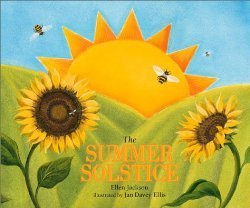

Happy Summer Solstice! Of course, it always feels like summer is in full swing by the time of the solstice but it is a glorious day all the same. Even if a small part of me is sad to think the days will only shorten for the next six months.
The Summer Solstice
by Ellen Jackson is a great book for reading about the Summer Solstice folklore and traditions from around the world. It is appropriate for the whole family, too.Of course, it won't arrive in time for enjoying on this year's summer solstice. So you can also read online Sun Lore of All Ages by William Tyler Olcott from 1914.

Book description:
From ancient times to the present, people have found many ways to express their thankfulness for the sun's gift of warmth and light. THE SUMMER SOLSTICE depicts the mysterious rites of the Egyptians, the tales of fairies and selkies, the modern parades and baseball games--all part of the fun and folklore of this happy time.
WHAT IS THE SUMMER SOLSTICE?
The summer solstice is the longest day of the year, a time when the sun is at its highest point in the sky. The summer solstice marks the first official day of summer.


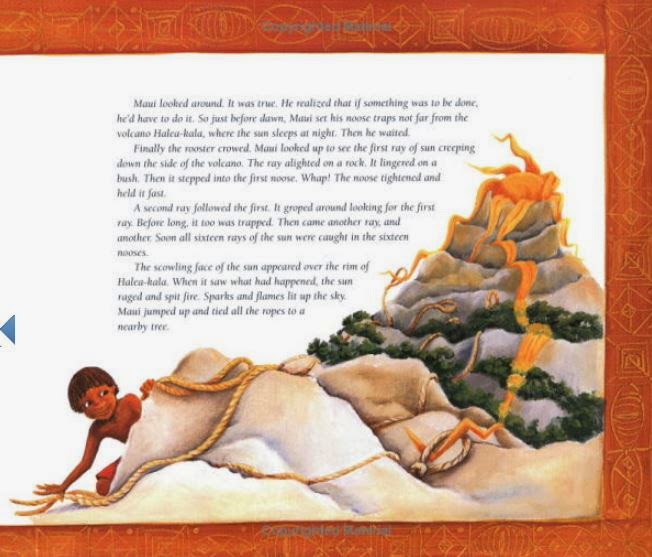


Mary McMyne's Fairy Tale Book Giveaway

One lucky winner will receive these six autographed, collectible, fairy-tale-inspired books in Mary McMyne's Fairy Tale Book Giveaway. McMyne is the author of Wolf Skin which will be appearing on this blog soon.
More On These Books:
Fairy-tale scholar Maria Tatar called the world of Ronlyn Domingue’s The Chronicle of Secret Riven: Keeper of Tales Trilogy: Book Two (The Keeper of Tales Trilogy)a “wonderfully inventive realm” and its title character “so powerful that we are both startled and enchanted as we tumble headlong into her world.”
Andrei Codrescu said the poems in Mary McMyne’s Wolf Skin “reanimate the ancient, tragic fairy-tale figures of Little Red Riding Hood and Rapunzel” in “marvelous prose-poetry stereopticons… stories to be truly chilled by, wolf hair by wolf hair.”
Harper’s Bazaar praised Signe Pike’s memoir, Faery Tale: One Woman's Search for Enchantment in a Modern World, for its “distinctive voice and elegant prose” that captures “the hopefulness of childhood and the magic of believing.”
In a review for Strange Horizons, Lesley Wheeler praised the “lush, uncanny poems, such as ‘Notes from a Fairy Autopsy’ and ‘Naming the Never-Birds” in Sally Rosen Kindred’s Peter-Pan-inspired chapbook Darling Hands, Darling Tongue for their “dazzling fantasy.”
Library Journal said Carolyn Turgeon’s The Fairest of Them All: A Novel“incorporates a sense of melancholy that adds an enormous amount of depth” to this “magic-sparked… fresh…” fairy-tale mash-up, which imagines Rapunzel growing up to become Snow White’s wicked stepmother.
Faerie Magazine #26 features whimsical articles on fairy-tale art, photography, travel, and fashion; humor and lifestyle columns; fairy-tale fiction by Kate Forsyth and Joanne Harris; and a fascinating interview with fairy-tale scholar Maria Tatar.
Good luck!
June 18, 2014
Fairy Tales, Myth, and Psychoanalytic Theory: Feminism and Retelling the Tale by Veronica L. Schanoes

Fairy Tales, Myth, and Psychoanalytic Theory: Feminism and Retelling the Tale
by Veronica L. Schanoes was released late in May. Schanoes has been active on SurLaLune over the years, so I was thrilled to see her name come up as the author of a fairy tale related tome. Funny how my training always makes me want to write last names for authors until I know them--then I keep wanting to type Veronica, Veronica, Veronica.I have a review copy of the book arriving soon and Veronica (!) and I are plotting a guest post from her for the blog. But I wanted to share the book announcement with description and table of contents while we are making that happen.
Book description:
At the same time that 1970s feminist psychoanalytic theorists like Jean Baker Miller and Nancy Chodorow were challenging earlier models that assumed the masculine psyche as the norm for human development and mental/emotional health, writers such as Anne Sexton, Olga Broumass, and Angela Carter were embarked on their own revisionist project to breathe new life into fairy tales and classical myths based on traditional gender roles. Similarly, in the 1990s, second-wave feminist clinicians continued the work begun by Chodorow and Miller, while writers of fantasy that include Terry Windling, Tanith Lee, Terry Pratchett, and Catherynne M. Valente took their inspiration from revisionist authors of the 1970s. As Schanoes shows, these two decades were both particularly fruitful eras for artists and psychoanalytic theorists concerned with issues related to the development of women's sense of self. Putting aside the limitations of both strains of feminist psychoanalytic theory, their influence is undeniable. Schanoes's book posits a new model for understanding both feminist psychoanalytic theory and feminist retellings, one that emphasizes the interdependence of theory and art and challenges the notion that literary revision involves a masculinist struggle with the writer's artistic forbearers.
Contents: Introduction: the mother’s looking-glass; Mother-daughter relationships in theory and text; Revisions of motherhood and daughterhood; Revision and repetition; Through the looking glass: mirrors, fantasy, and reality; Double vision: women and fantasy; Epilogue; Bibliography; Index.
About the Author: Veronica L. Schanoes is Assistant Professor of English at Queens College, CUNY, USA. She works on fairy tales as well as children's literature.
Table of Contents:
Contents
Acknowledgments vii
Introduction: The Mother’s Looking-Glass 1
1 Mother-Daughter Relationships in Theory and Text 15
2 Revisions of Motherhood and Daughterhood 33
3 Revision and Repetition 57
4 Through the Looking Glass: Mirrors, Fantasy, and Reality 85
5 Double Vision: Women and Fantasy 113
Epilogue 141
Bibliography 145
Index 151
June 17, 2014
Once Upon a Time... by Studio C
Studio C is a skit based comedy show on BYUtv. This week they had two skits inspired by fairy tales. The above draws inspiration from the Brothers Grimm, "Once Upon a Time..." The comments say it is Pythonesque. What do you think?
Warning: The skit is fun but it will also inspire you to play a round of "Guess the first line of famous books."
Below is another that certainly finds inspiration in Disney's Maleficent, "Our Wedding Day" by Studio C:
New Book: Grimms' Tales around the Globe: The Dynamics of Their International Reception edited by Vanessa Joosen and Gillian Lathey
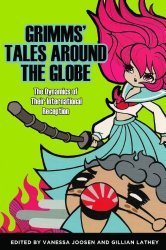

Grimms' Tales around the Globe: The Dynamics of Their International Reception
edited by Vanessa Joosen and Gillian Lathey is released this week. It is the first release of several in 2014 in Wayne State University Press's Series in Fairy-Tale Studies. That cover will certainly grab your attention! It's not like any other fairy tale criticism book sitting on my shelves! Manga fans will recognize it from Junko Mizuno's Hansel and Gretel (Viz Graphic Novel)
 .
. WSUP sent me a review copy (thank you!) and while I haven't finished reading it, it is fascinating reading so far. When I first read about it several months ago, the book description reminded me of Reception of Grimm's Fairy Tales: Responses, Reactions, Revisions
 edited by Donald P. Haase (which is bargain priced currently!). Haase's book has a narrower geographic focus. Haase also happens to be the general editor of this series from WSU Press so he in a way is getting to expand the published works on a topic he is quite knowledgeable about specifically--the Grimms, their translations, and their impact that is. He knows a lot about other fairy tale areas, of course, but the Grimms are one of his specialties.
But back to the new book. This new title, Grimms' Tales around the Globe: The Dynamics of Their International Reception, expands the geography of the discussion about the Grimms' impact globally. Yes, Europe is here with articles about Spain, Croatia, and Poland, for example. But we also get China, India, Korea, and Japan. Colombia is represented, too. I've included the table of contents below to illustrate the breadth of topics and regions.
The book starts strong from page one with a robust introduction discussing how the Grimms have generally been translated, disseminated, and even assimilated into other cultures. The intro is worth the price of admission alone. After all, as it points out, "the Brothers Grimm are also listed in the top ten most frequently translated authors in the world." Anyone who has ever dabbled in translation literary works can appreciate the diversity of those translations, depending on the purposes of the translator (and his/her publisher). Economics and cultural preferences impact the decisions made as well as the strengths and weaknesses of the translator and the diversity between languages.* The accompanying articles delve into these topics from a variety of perspectives that will fascinate you. You will not find the usual suspects of fairy tale literary criticism within, at least not much. This book feels--starting from its cover--very fresh and modern.
On a practical note, it will also provide some fun scope for student papers, for those students searching for academic resources for unusual Grimms discussions.
Book description:
Grimms' fairy tales are among the best-known stories in the world, but the way they have been introduced into and interpreted by cultures across the globe has varied enormously. In Grimms' Tales around the Globe, editors Vanessa Joosen and Gillian Lathey bring together scholars from Asia, Europe, and North and Latin America to investigate the international reception of the Grimms' tales. The essays in this volume offer insights into the social and literary role of the tales in a number of countries and languages, finding aspects that are internationally constant as well as locally particular.
In the first section, Cultural Resistance and Assimilation, contributors consider the global history of the reception of the Grimms' tales in a range of cultures. In these eight chapters, scholars explore how cunning translators and daring publishers around the world reshaped and rewrote the tales, incorporating them into existing fairy-tale traditions, inspiring new writings, and often introducing new uncertainties of meaning into the already ambiguous stories. Contributors in the second part, Reframings, Paratexts, and Multimedia Translations, shed light on how the Grimms' tales were affected by intermedial adaptation when traveling abroad. These six chapters focus on illustrations, manga, and film and television adaptations. In all, contributors take a wide view of the tales' history in a range of locales-including Poland, China, Croatia, India, Japan, and France.
Grimms' Tales around the Globe shows that the tales, with their paradox between the universal and the local and their long and world-spanning translation history, form a unique and exciting corpus for the study of reception. Fairy-tale and folklore scholars as well as readers interested in literary history and translation will appreciate this enlightening volume.
Table of Contents:
Introduction
I. Cultural Resistance and Assimilation
1. No-Name Tales: Early Croatian Translations of the Grimms’ Tales
Marijana Hameršak
2. Polishing the Grimms’ Tales for a Polish Audience: Die Kinder- und Hausmärchen in Poland
Monika Wozniak
3. The Grimms’ Fairy Tales in Spain: Translation, Reception, and Ideology
Isabel Hernández and Nieves Martín-Rogero
4. The Fairy Tales of the Brothers Grimm in Colombia: A Bibliographical History
Alexandra Michaelis-Vultorius
5. “They are still eating well, and living well”: The Grimms’ Tales in Early Colonial Korea
Dafna Zur
6. The Influence of the Grimms’ Fairy Tales on the Folk Literature Movement in China (19181943)
Dechao Li
7. The Grimm Brothers’ Kahaniyan: Hindi Resurrections of the Tales in Modern India by Harikrishna Devsare
Malini Roy
8. Before and after the “Grimm Boom”: Reinterpretations of the Grimms’ Tales in Contemporary Japan
Mayako Murai
II. Reframings, Paratexts, and Multimedia Translations
9. Translating in the “Tongue of Perrault”: The Reception of the Kinder- und Hausmärchen in France
Cyrille François
10. Skeptics and Enthusiasts: Nineteenth-Century Prefaces to the Grimms’ Tales in English Translation
Ruth B. Bottigheimer
11. German Stories/British Illustrations: Production Technologies, Reception, and Visual Dialogue across Illustrations from “The Golden Bird” in the Grimms’ Editions, 18231909
Sara Hines
12. Marvelous Worlds: The Grimms’ Fairy Tales in GDR Children’s Films
Bettina Kümmerling-Meibauer
13. Retelling “Hansel and Gretel” in Comic Book and Manga Narration: The Case of Philip Petit and Mizuno Junko
Marianna Missiou
14. Fairy-Tale Scripts and Intercultural Conceptual Blending in Modern Korean Film and Television Drama
Sung-Ae Lee
Contributors
Index
*I've never shared my woe over translating tales and spending HOURS trying to decide on what words to use for spinning and cloth production implements. The implements could be regional, archaic, and hard to describe, especially to a world who mostly doesn't spin any more. Sometimes the implements were archaic and not well known when the tale was written down two hundred years ago. How could I hope to choose the right words for them for English readers? Never mind the further difficulties of narrator's tone, setting, character names, etc.
Bargain Book: Reception of Grimm's Fairy Tales: Responses, Reactions, Revisions edited by Donald P. Haase
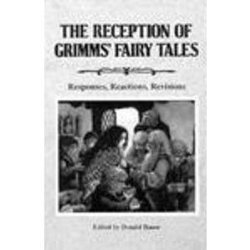
For 15 more copies, Reception of Grimm's Fairy Tales: Responses, Reactions, Revisions
edited by Donald P. Haase is bargain priced in PAPER not EBOOK for $8.78. I discovered this today when I was composing another post that is forthcoming and had to share. This is a great price for a great book. It is out of print, so getting brand new used copies for a used price is a grand thing.This book is an important volume in reading about how the Grimms have been used and interpreted. The scope is definitely Western culture--European and U.S.--but it is a fine book to add to your fairy tale library for a GREAT price.
Book description:
The Reception of Grimms' Fairy Tales brings together premier scholars of the fairy tale, including Ruth B. Bottigheimer, Maria Tatar, and Jack Zipes, with acclaimed creative writers such as Margaret Atwood, Angela Carter, Jane Yolen, and award-winning artist Trina Schart Hyman. The essays address the reception of the Grimms' texts by their readers; the dynamics between Grimms' collection and its earliest audiences; and aspects of the literary, philosophical, creative, and oral reception of the tales, illuminating how writers, philosophers, artists, and storytellers have responded to, reacted to, and revised the stories, thus shedding light on the ways in which past and contemporary transmitters of culture have understood and passed on the Grimms' tales.
Table of Contents
Acknowledgments 8
Introduction 9
The Brothers Grimm as Collectors and Editors of German Folktales 24
Heinrich Prohle: A Successor to the Brothers Grimm 41
The Spoken and the Read: German Popular Stories and English Popular Diction 59
The Publishing History of Grimms' Tales: Reception at the Cash Register 78
Trivial Pursuit? Women Deconstructing the Grimmian Model in the Kaffeterkreis 102
Little Brier Rose: Young Nietzsche's Sleeping Beauty Poem as Legend and Swan Song 127
Fairy-Tale Allusions in Modern German Aphorisms 149
The Struggle for the Grimms' Throne: The Legacy of the Grimms' Tales in the FRG and GDR since 1945 167
Wilhelm Grimm/Maurice Sendak: Dear Mili and the Literary Culture of Childhood 207
Response and Responsibility in Reading Grimms' Fairy Tales 230
Once Upon a Time Today: Grimm Tales for Contemporary Performers 250
Personal Reflections on the Scholarly Reception of Grimms' Tales in France 269
The Brothers Grimm and Sister Jane 283
Grimms' Remembered 290
"Cut It Down, and You Will Find Something at the Roots" 293
Ashputtle: or, The Mother's Ghost 301
Notes on Contributors 304
Index 309
Heidi Anne Heiner's Blog

- Heidi Anne Heiner's profile
- 44 followers
Heidi Anne Heiner isn't a Goodreads Author
(yet),
but they
do have a blog,
so here are some recent posts imported from
their feed.

