
Heidi Anne Heiner's Blog, page 80
September 25, 2014
Beauty and the Beast in Greece from Tales of Faerie
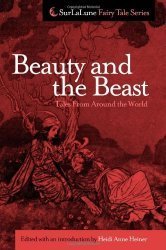

Earlier this week, Kristin over at Tales of Faerie shared Beauty and the Beast in Greece: Part I and Beauty and the Beast in Greece: Part II in which she discussed the Greek versions of Beauty and the Beast tales that appear in Beauty and the Beast Tales From Around the World (SurLaLune Fairy Tales)
.From her first post:
Sometimes reading through a collection of versions of the same fairy tale may seem daunting, because many times versions are so similar it feels like reading the same story over and over again. Yet I find my Surlalune Fairy Tale Series books invaluable-not only for comparing and contrasting similar tales, but because there are so many unexpected and surprising versions of the tales. These samples from Greece are just a few examples of the different versions of "Beauty and the Beast" that will provide interest to even those who are familiar with most standard European versions. (Many of these are closer to "Cupid and Psyche" than BATB: there may not be a rose, and the husband may not be beastly at all, but supernatural-the classification is technically "Search for the Lost Husband" and not "Animal Bridegroom").
It has been over two years since I read most of those tales and she made me want to reread my own book. Believe me, when you read over 200 versions of a tale for consideration in a book like Beauty and the Beast Tales From Around the World
, most of them blend together. Then there's the issue that I've been working on other collections since--soon there will be two new releases, so stay tuned!--so my brain is overly full with some wonderful fairy tales.But reading Kristin's great summaries and discussions of "Donkeyskin" (no, not that one!) and "The Lord of the Underearth" and "The Sleeping Prince" and "The Sugar Man" and "The Enchanted Head" reminded me of how much I LOVED working on that collection of variants of my favorite fairy tale, Beauty and the Beast. It was so rich with variations and interesting quirks and I fell in love with so many tales that we elected for smaller type size just to make room for more. There was a debate of a second volume, too. The variations are so vast that there is much less repetition than you anticipate over the 188 tales included.
And it's no surprise that the Greek versions of the tale are some of the most interesting. There tends to be more murders, more odd things ingested, and overall more strangeness in Greek variants of many tale types. Forget the Grimms, the Greeks are really grim.
So thanks, Kristin, for the walk down my memory lane. And for reminding me of just how unexpected tales like "The Lord of the Underearth" are. Eating rotting feet, gender cross dressing, a beauty and a beast are only a few things to be found in those pages. Then there's the plethora of disembodied heads in folklore. There's some in Beauty and the Beast tales as Kristin points out in her post, but even more in Kind and Unkind Girls tales. Did you know it's rude to point out to someone that their head is missing or unattached? Important fairy tale etiquette folks! But more about that in weeks to come!


Maleficent is Available for Preorder
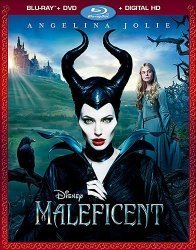

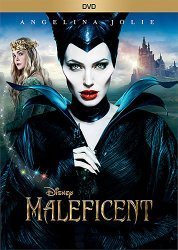

Just received the announcement that Maleficent (2-Disc Blu-ray + DVD + Digital HD)
and Maleficent (1-Disc DVD) are available for preorder. The film will be released on November 4th.

Or if you prefer to own or rent digitally, you can preorder at Maleficent
, too. I still prefer to own a physical copy for portability between my family's houses since a few live near me. And digital is still a little too burpy for my viewing pleasure when I finally agree to sit down and watch a movie. Which isn't very often. I watch TV, but these days I actually prefer TV to film. More women and usually stronger ones overall.I didn't see Maleficent this past summer but my mother and nephew did--my 9-year-old nephew Luke--and they both enjoyed it. They went on Luke's birthday actually for an afternoon out. Which is saying a lot. My mother is far from the type of person who is wooed by Disney stuff--the family joke is that I finally took my mother to Disneyland when I was nearly 30 years old. My mother raised me in art museums instead for which I am very grateful. And Luke may be even harder to impress so that they both recommended it means I will purchase and even watch it.
So did you like Maleficent? Did you see it? Will you see it?
September 24, 2014
New Release: Fearie Tales edited by Stephen Jones
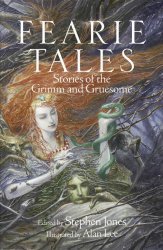


(US / UK covers with links)
Fearie Tales
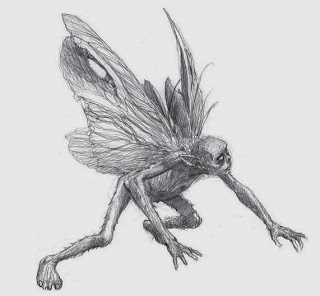
edited by Stephen Jones and edited by Alan Lee (of Tolkien/Peter Jackson films fame) is released in North America this week, a year after its UK release. This one is definitely aimed at the Halloween crowd but it has some great names in the horror genre inside, so if that is your taste, this is your book. Then there is Alan Lee's illustrative work which is always worth the price of admission, too.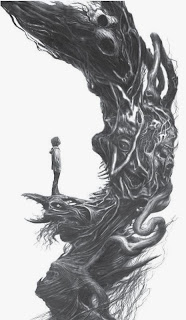
I posted about the book back in January so if this seems familiar to regular SurLaLune readers, it is.
I couldn't get a good list of the table of contents to cut and paste, but the Amazon UK edition has a "Look Inside" so you can see all of the titles within.
Book description from the publisher:
In the grand tradition of the Brothers Jacob and Wilhelm, some of the today's finest fantasy and horror writers have created their own brand-new fairy tales--but with a decidedly darker twist.
Fearie Tales is a fantastical mix of spellbinding retelling of classic stories such as Cinderella, Rapunzel, Hansel and Gretel, and Rumpelstiltskin, along with unsettling tales inspired by other children's classics, all interspersed with the original tales of their inspiration.
These modern masterpieces of the macabre by Neil Gaiman, Garth Nix, Ramsey Campbell, Joanne Harris, Markus Heitz, John Ajvide Lindquist, Angela Slatter, Michael Marshall Smith, and many others, and are illustrated by Oscar-winning artist Alan Lee.
About the Editor:
Stephen Jones is the multiple-award-winning editor and author of more than 100 books in the horror and fantasy genres, including Best New Horror series, Dark Terrors, The Mammoth Book of Vampires, The Mammoth Book of Zombies, The Mammoth Book of Dracula, The Mammoth Book of Frankenstein, The Mammoth Book of Vampire Stories by Women, The Vampire Stories of R. Chetwynd-Hayes, and The Conan Chronicles. Jones is a former television director/producer and movie publicist and consultant (including the first three Hellraiser movies), he has edited the reprint anthology Best New Horror for more than 20 years. In 2014 he received Horror Writers Association's Lifetime Achievement Award.

September 23, 2014
About Rapunzel: Guest Post by Kate Forsyth
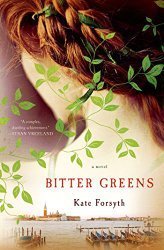

This post is a reprint from when Bitter Greens: A Novel
was first released 2.5 years ago so I wanted to share again:I have a guest post by author Kate Forsyth to share with you today. The topic is Rapunzel and without any further ado, I will let Kate speak for herself. Thanks for sharing, Kate!
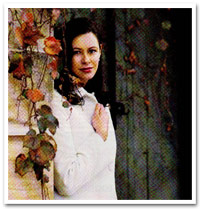
Rapunzel must be one of the most misunderstood of the fairytales, with most people thinking of the long-haired heroine as meek and passive, spending her days hanging round waiting to be rescued.
In recent years, many writers have retold the tale, seeking to return power to Rapunzel by making her stronger and less submissive. I am one of those writers. I’ve spent the past seven years working on retelling the Rapunzel fairytale as a historical novel for adults. I am also halfway through a doctorate on Rapunzel retellings at the University of Technology in Sydney, Australia.
Most critical examinations of the tale have added to the understanding of Rapunzel as a passive victim, with the power all held by the witch as an oedipal figure of dark motherhood. For example, Maria Tatar says ‘Mother Gothel figures as the consummate overprotective parent’ (The Annotated Brothers Grimm, 2004, p55).
Joan Gould says, in ‘Spinning Straw Into Gold: What Fairy Tales reveal about the Transformations in a Woman’s Life’ (2005, p217), that ‘Rapunzel and her foster mother are White Bride and Black Mother. Rapunzel is first confined and then abandoned. The mother-witch’s fury is what pushes the girl from one condition to the other.’
Bruno Bettelheim describes Rapunzel as one of a set of fairy tales which aim to help a girl deal with oedipal conflicts, and says: ‘A little girl wishes to see herself as a young and beautiful maiden … who is kept captive by the selfish, evil female figure and hence unavailable to the male lover.’ (The Uses of Enchantment: The Meaning and Importance of Fairy Tales, 1975, p11)
Marina Warner wonders whether Rapunzel ‘stands for the dark time that can follow the first encounter between the older woman and her new daughter-in-law, the period when the young woman can do nothing, take charge of nothing, but suffer the sorcery and the authority – and perhaps the hostility – of the woman whose house she has entered, whose daughter she has become.’ (From the Beast to the Blonde: One Fairy Tales and Their Tellers, 1994, p220).
Margaret Atwood has even coined the term ‘Rapunzel Syndrome’ for women who wait passively, longed to be rescued. ‘These heroines,’ she says, ‘have internalized the values of their culture to such an extent that they have become their own prisons’ (Survival: A Thematic Guide to Canadian Literature, 1972, p209).
Women writers in the 21st century have grappled with the story in different ways, most seeking to return power to Rapunzel by giving her a more active role. Cameron Dokey (Golden: A Retelling of Rapunzel), Sara Lewis Holmes (Letters from Rapunzel), Adèle Geras (The Tower Room), Donna Jo Napoli (Zel) and Patricia Storace (Sugar Cane: A Caribbean Rapunzel) are just some of the writers who have been inspired to retell this particular tale. Most have chosen to do so as a simple picture book for young readers, as a romantic fantasy novel for teenagers, or using the key motifs of the tale to add resonance to a modern day setting, again for a teenage audience.
Anne Sexton in her poem ‘Rapunzel’ and Emma Donoghue in her short story ‘Tale of the Hair’ have both cast the tale as a lesbian love affair, which is certainly a valid explanation of the witch’s motivations, in some ways more valid than the usual ‘Dark Mother’ interpretation.
I have chosen to retell the story as a historical novel for adults, partly because the Rapunzel tale has always seemed to me to be a novel about desire, obsession, and madness, and so much better suited to an adult audience. I also wanted to tell the story as if it had really happened, as if it was true.
In this way, I hoped to restore to the story some of its mystery and power, lost over the years as it was turned from a literary tale for adults into a rather strange bedtime story for young children.

Excerpt from Bitter Greens by Kate Forsyth
Bitter Greens: A Novel
by Kate Forsyth is released today and I have an excerpt from the book to share. The book draws inspiration from Rapunzel.A Heart of Gall
Château de Cazeneuve, Gascony, France – June 1666
I had always been a great talker and teller of tales.
‘You should put a lock on that tongue of yours. It’s long enough and sharp enough to slit your own throat,’ our guardian warned me, the night before I left home to go to the royal court at Versailles. He sat at the head of the long wooden table in the chateau’s arched dining room, lifting his lip in distaste as the servants brought us our usual peasant fare of sausage and white-bean cassoulet. He had not accustomed himself to our simple Gascon ways, not even after six years.
I just laughed. ‘Don’t you know a woman’s tongue is her sword? You wouldn’t want me to let my only weapon rust, would you?’
‘No chance of that.’ The Marquis de Maulévrier was a humourless man, with a face like a goat and yellowish eyes that followed my sister and me as we went about our business. He thought our mother had spoilt us, and had set himself to remedy our faults. I loathed him. No, loathe is far too soft a word. I detested him.
My sister, Marie, said, ‘Please, my lord, you mustn’t mind her. You know we’re famous here in Gascony for our troubadours and minstrels. We Gascons love to sing songs and tell stories. She means no harm by it.’
‘I love to tell a gasconade,’ I sang. ‘A braggadocio, a fanfaronade . . .’
Marie sent me a look. ‘You know that Charlotte-Rose will need honey on her tongue if she’s to make her way in this world.’
‘Sangdieu, but it’s true. Her face won’t make her fortune.’
‘That’s unfair, my lord. Charlotte-Rose has the sweetest face . . .’
‘She might be passable if only she’d pluck out that sting in her tail,’ the Marquis de Maulévrier began. Seeing that I had screwed up my face like a gargoyle, waggling my tongue at him, he rapped his spoon on the pitted tabletop. ‘You’d best sweeten your temperament, mademoiselle, else you’ll find yourself with a heart of gall.’
I should have listened to him.
September 22, 2014
Fairy Tales in Advertising: Sanctuary Cove Realty: Happily Ever After

Sanctuary Cove Realty: Once uponOnce upon a time...
No actual fairy tale references here but a fairy tale conventions are referenced in an interesting way with a three part campaign starting with "Once upon a time" and ending with "Happily Ever After." It's an intriguing campaign and concept.
Campaign info from Ads of the World:
Advertising Agency: Junior, Brisbane, Australia
Creative Director: Steve Minion
Art Director: Gabriel Woodmansey
Copywriter: Misha McDonald


Bargain Book: Never-ending Stories: Adaptation, Canonisation and Ideology in Children's Literature

Never-ending Stories: Adaptation, Canonisation and Ideology in Children's Literature (Ginkgo Series)
by Sylvie Geerts (Editor) and Sara Van den Bossche (Editor) has had a significant price drop to $17.37 this morning from it's usual $30 range. That's now 62% off the $46 list price for those wanting simple math. And that's for a paper edition--it's not even available in ebook to my knowledge.This is definitely an academic tome with the accompanying academic language not aimed at the masses. Just read that description below. But if you are interested in folklore adaptations in children's literature, it sounds like a good read. And it's a collection of papers, so I imagine some content is more casually readable than others.
I posted much more about the book upon its release this past June. So if you are interested, read that post. There's Disney and other goodies within, but that table of contents still eludes me for sharing here.
Book description:
The roots of children’s literature are commonly known to lie in adaptation. The texts most frequently adapted for a child audience are either canonised literary works for adults or children’s books which have acquired a high status of their own. In both cases, the stories are adapted to fit the needs of new readers in other contexts. This volume frames adaptation in children’s literature against a broader socio-cultural background, focusing on the ideological implications of the process. Emphasising both diversity and evolution, it deals with oppositional forces and recent trends informing adaptation. At its core are issues of transmediality and new reader roles, adaptations' orientation towards the ideology associated with the pre-text, as well as canonisation of the pre-texts and of the adaptations themselves. The volume is characterised by a broad international and diachronic spread, with topics ranging from traditional Western fairy tale adaptations to retellings of South African oral stories and Persian myths. The evolution discernible in the cases presented neatly illustrates how the process of adaptation allows canonical texts to develop into never-ending stories.
New Release: Bitter Greens: A Novel by Kate Forsyth
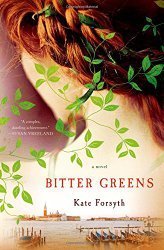

Over two years ago I announced the publication of Bitter Greens: A Novel
by Kate Forsyth in New Zealand and Australia. It was a fine announcement for those of you who live there but frustrating for those of us who couldn't easily obtain the book. A year later, I was pleased to announce that the book was being released in the UK. Great for those you reading from those shores and a little easier for us in the states--namely me--to obtain the book, but not that easy. 
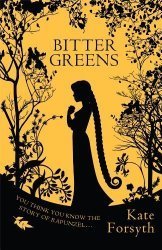

Today, I get to share here that Bitter Greens: A Novel
is finally officially released tomorrow here in North America. With yet another cover, too. This release is in hardcover and ebook and has also sparked a rerelease in hardcover in the UK with the new cover, too. Which makes me a little sad since the original UK cover--the silhouette above--is my personal favorite.When books are able to make the jump from "down under" (phrase with hubris I know) to American booksellers, its a wonderful achievement. And usually means the book is excellent--I have several favorite authors in several genres who have been able to woo publishers here from those foreign lands where Christmas is a summer holiday.
I will be sharing a guest post tomorrow about the book but felt it also deserved the usual book announcement type post I offer for all new releases. And I really want to see Forsyth's other novels get a wider release, so I will do all I can to help! And Kate is a fairy tale kindred spirit so we all want to support her in the fairy tale faith, yes? And actually, The Wild Girl: A Novel
 will also be released in July 2015, but we'll focus on Bitter Greens for today.
Book description from the publisher:
The amazing power and truth of the Rapunzel fairy tale comes alive for the first time in this breathtaking tale of desire, black magic and the redemptive power of love
French novelist Charlotte-Rose de la Force has been banished from the court of Versailles by the Sun King, Louis XIV, after a series of scandalous love affairs. At the convent, she is comforted by an old nun, Sœur Seraphina, who tells her the tale of a young girl who, a hundred years earlier, is sold by her parents for a handful of bitter greens...
After Margherita’s father steals parsley from the walled garden of the courtesan Selena Leonelli, he is threatened with having both hands cut off, unless he and his wife relinquish their precious little girl. Selena is the famous red-haired muse of the artist Tiziano, first painted by him in 1512 and still inspiring him at the time of his death. She is at the center of Renaissance life in Venice, a world of beauty and danger, seduction and betrayal, love and superstition.
Locked away in a tower, Margherita sings in the hope that someone will hear her. One day, a young man does.
Award-winning author Kate Forsyth braids together the stories of Margherita, Selena, and Charlotte-Rose, the woman who penned Rapunzel as we now know it, to create what is a sumptuous historical novel, an enchanting fairy tale retelling, and a loving tribute to the imagination of one remarkable woman.
September 20, 2014
TODAY ONLY Bargain Ebook: Bluebeard by Kurt Vonnegut for $1.99

Bluebeard: The Autobiography of Rabo Karabekian (1916-1988)
by Kurt Vonnegut is on sale today only for $1.99 on Amazon as part of their Daily Deals . It has been on sale before but usually lists in the $7-8 range. I bought it for $1.99 two years ago and I think it has been on sale once since then.
Book description:
Bluebeard, published in 1987, is Vonnegut's meditation on art, artists, surrealism, and disaster. Meet Rabo Karabekian, a moderately successful surrealist painter, who we meet late in life and see struggling (like all of Vonnegut's key characters), with the dregs of unresolved pain and the consequences of brutality. Loosely based on the legend of Bluebeard (best realized in Bela Bartok's one-act opera), the novel follows Karabekian through the last events in his life that is heavy with women, painting, artistic ambition, artistic fraudulence, and as of yet unknown consequence.
Vonnegut's intention here is not so much satirical (although the contemporary art scene would be easy enough to deconstruct), nor is it documentary (although Karabekian does carry elements of Jackson Pollock and Mark Rothko). Instead, Vonnegut is using art for the same purpose he used science fiction cliches in Slaughterhouse-Five; as a filter through which he can illuminate the savagery, cruelty, and the essentially comic misdirection of human existence.
Readers will recognize familiar Vonnegut character types and archetypes as they drift in and out through the background; meanwhile, Karabekian, betrayed and betrayer, sinks through a bottomless haze of recollection. Like most of Vonnegut's late works, this is both science fiction and cruel contemporary realism at once, using science fiction as metaphor for human damage as well as failure to perceive. Readers will find that Vonnegut's protagonists can never really clarify for us whether they are ultimately unwitting victims or simple barbarians, leaving it up to the reader to determine in which genre this book really fits, if any at all.
ABOUT THE AUTHOR
Kurt Vonnegut (1922-2007) is one of the most beloved American writers of the twentieth century. Vonnegut's audience increased steadily since his first five pieces in the 1950s and grew from there. His 1968 novel Slaughterhouse-Five has become a canonic war novel with Joseph Heller's Catch-22 to form the truest and darkest of what came from World War II.
Vonnegut began his career as a science fiction writer, and his early novels--Player Piano and The Sirens of Titan--were categorized as such even as they appealed to an audience far beyond the reach of the category. In the 1960s, Vonnegut became closely associated with the Baby Boomer generation, a writer on that side, so to speak.
Now that Vonnegut's work has been studied as a large body of work, it has been more deeply understood and unified. There is a consistency to his satirical insight, humor and anger which makes his work so synergistic. It seems clear that the more of Vonnegut's work you read, the more it resonates and the more you wish to read. Scholars believe that Vonnegut's reputation (like Mark Twain's) will grow steadily through the decades as his work continues to increase in relevance and new connections are formed, new insights made.
ABOUT THE SERIES
Author Kurt Vonnegut is considered by most to be one of the most important writers of the twentieth century. His books Slaughterhouse-Five (named after Vonnegut's World War II POW experience) and Cat's Cradle are considered among his top works. RosettaBooks offers here a complete range of Vonnegut's work, including his first novel (Player Piano, 1952) for readers familiar with Vonnegut's work as well as newcomers.
Bargain Ebook: A Question of Magic by E. D. Baker for $1.99
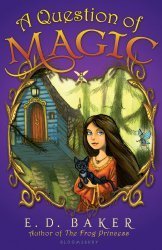

A Question of Magic
by E. D. Baker is bargain priced again--it was on sale this past spring--for $1.99. It is part of the The Big Deal: Kindle Books Up to 85% Off which started yesterday on Amazon and lasts through 10/5/14. It was the only fair tale related title on the list although there are some other fine titles for sale, too.Published late last year, this one is part of the Baba Yaga trend in fairy tale retellings that I've mentioned on the blog here of late.
Book description:
Serafina was living the normal life of a village girl, when she gets a mysterious letter--her first letter ever, in fact--from a great aunt she's never heard of in another village. Little does 'Fina know, her great aunt is actually a Baba Yaga, a magical witch who lives in an even more magical cottage.
Summoned to the cottage, Serafina's life takes an amazing turn as she finds herself becoming the new Baba Yaga. But leaving behind home and the boy she loves isn't easy, and as Serafina grows into her new and magical role answering the first question any stranger might ask her with the truth, she also learns about the person she's meant to be, and that telling the future doesn't always mean knowing the right answers.
In her inimitable and bestselling way, ED Baker has crafted a funny and romantic story that combines some fabulous details from the original Slavic tale, with an all new spin!
Heidi Anne Heiner's Blog

- Heidi Anne Heiner's profile
- 44 followers
Heidi Anne Heiner isn't a Goodreads Author
(yet),
but they
do have a blog,
so here are some recent posts imported from
their feed.

