
Heidi Anne Heiner's Blog, page 56
May 18, 2015
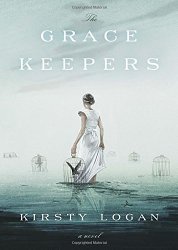
New Release: The Gracekeepers: A Novel by Kirsty Logan


 (US/UK Links)
The Gracekeepers: A Novel
by Kirsty Logan is released this week in the US. It was released two weeks ago in the UK, see the link at The Gracekeepers (UK Link). No specific fairy tale is retold in it that I know at this time, but it does incorporate unspecified Scottish myths and fairy tales according the description. This is one of the rare instances when I actually prefer the US cover!Book description:
A lyrical and moving debut in the tradition of Angela Carter and Margaret Atwood, introducing an original and commanding new voice in fiction
As a Gracekeeper, Callanish administers shoreside burials, laying the dead to their final resting place deep in the depths of the ocean. Alone on her island, she has exiled herself to a life of tending watery graves as penance for a long-ago mistake that still haunts her. Meanwhile, North works as a circus performer with the Excalibur, a floating troupe of acrobats, clowns, dancers, and trainers who sail from one archipelago to the next, entertaining in exchange for sustenance.
In a world divided between those inhabiting the mainland ("landlockers") and those who float on the sea ("damplings"), loneliness has become a way of life for North and Callanish, until a sudden storm offshore brings change to both their lives--offering them a new understanding of the world they live in and the consequences of the past, while restoring hope in an unexpected future.
Inspired in part by Scottish myths and fairytales, The Gracekeepers tells a modern story of an irreparably changed world: one that harbors the same isolation and sadness, but also joys and marvels of our own age.


New Release: Lion Heart: A Scarlet Novel by A. C. Gaughen




Lion Heart: A Scarlet Novel
by A. C. Gaughen is released this week in the US and UK. See Lion Heart: A Scarlet Novel (UK Link). This is the third book in the Scarlet series, following Scarlet and Lady Thief: A Scarlet Novel
 .
.
Book description:
Scarlet has captured the hearts of readers as well as the heart of Robin Hood, and after ceaseless obstacles and countless threats, readers will finally find out the fate of the Lady Thief.
Imprisoned by Prince John for months, Scarlet finds herself a long way from Nottinghamshire. After a daring escape from the Prince's clutches, she learns that King Richard's life is in jeopardy, and Eleanor of Aquitaine demands a service Scarlet can't refuse: spy for her and help bring Richard home safe. But fate-and her heart-won't allow her to stay away from Nottinghamshire for long, and together, Scarlet and Rob must stop Prince John from going through with his dark plans for England. They can not rest until he's stopped, but will their love be enough to save them once and for all?
May 15, 2015
Fairy Tales in Advertising: Prefeitura de Jaraguá do Sul: Once upon a time

Prefeitura de Jaraguá do Sul: Once upon a timeDon't let sexual violence against children repeat.
This is an ad for the Brazil's national day against violence, abuse and sexual exploitation of children on May 18, 2013. This Monday will be May 18th again. I thought I about saving the post for that day instead but I actually like to know about these days in advance so here is the ad as a reminder on our usual Friday instead. A very important cause and a fine poster to call attention to it.
Campaign info from Ads of the World:
Advertising Agency: Squeeze, Florianópolis, Brazil
Creative Director: Cristiano Valente
Art Director: Cristiano Valente
Copywriter: Luisa Sganzerla
Published: May 2013
May 14, 2015
Simonides of Ceos: A Grateful Dead Tale


Today I am sharing another Grateful Dead story, one that is 2,000 years old. It's the simplest form of the story, a rare rendition in which the Grateful Dead motif is the central theme.
From my introduction to The Grateful Dead Tales From Around the World (SurLaLune Fairy Tale Series)
Another early example of a Grateful Dead tale is that of Simonides of Ceos found in Cicero's De Divinatione, written circa 44 BC. Simonides was a Greek lyric poet who lived circa 556–468 BC. Centuries later, Cicero recorded the following brief story:I really like this story because it says so much with so little. It's not a perfect example of ATU 505 but it is certainly an early ancestor of the tales that followed in the millenia since.And who, pray, can make light of the two following dreams which are so often recounted by Stoic writers? The first one is about Simonides, who once saw the dead body of some unknown man lying exposed and buried it. Later, when he had it in mind to go on board a ship he was warned in a vision by the person to whom he had given burial not to do so and that if he did he would perish in a shipwreck. Therefore he turned back and all the others who sailed were lost.
May 13, 2015
Natalie Frank: Tales of the Brothers Grimm
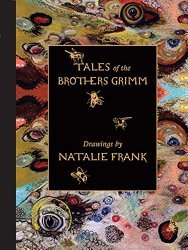

Natalie Frank: Tales of the Brothers Grimm
is officially released on May 26th but is shipping now.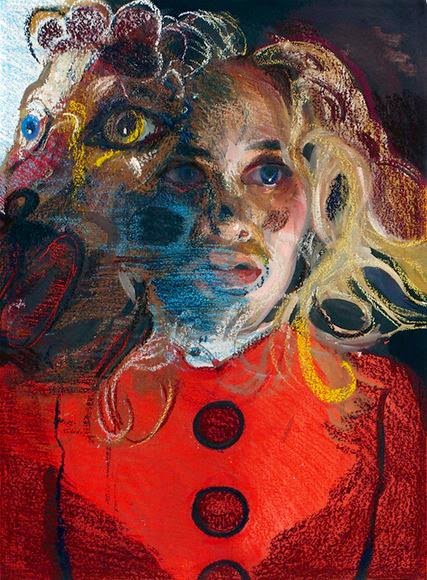
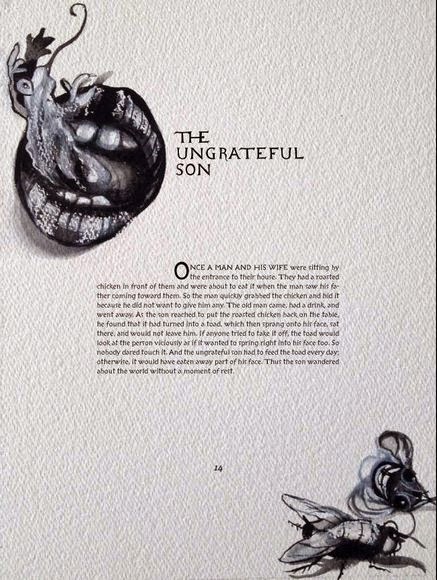
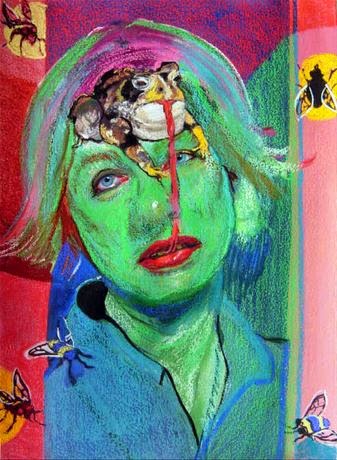
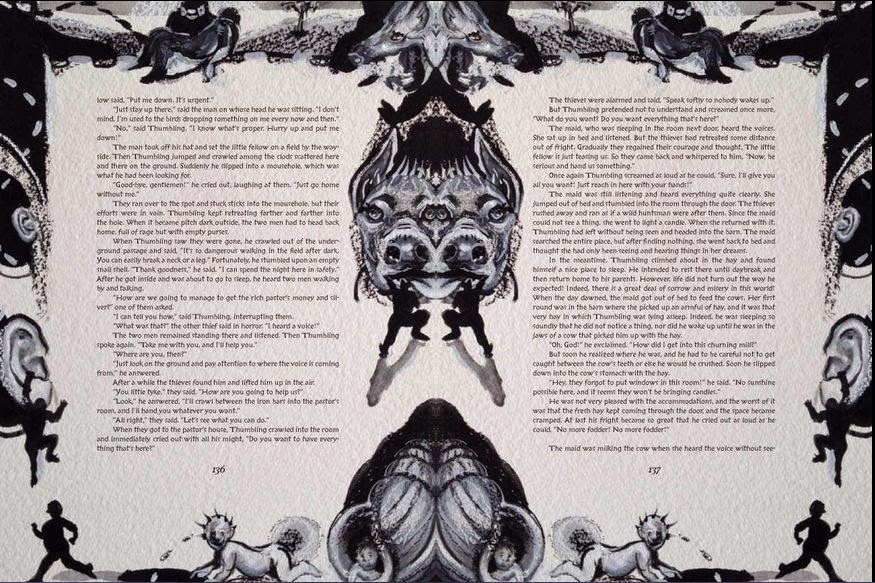
Natalie emailed me to share some info about the book and an art exhibit featuring her work. Here are some of the images from the book and Natalie's own words. You can click on the images to see them larger.
From Natalie Frank's email to SurLaLune:
I am an artist in NY and have just put out my first book, picturing 36 tales of the unsanitized Grimm fairy tales. It has hand-drawn marginalia throughout, 75 color drawings--a third of which are on view at The Drawing Center now in Soho through late June--and has an introduction by Jack Zipes, whose translations I also used, and essays by feminist art historian Linda Nochlin and the curator at The Drawing Center, Claire Gilman and a conversation with theater director and designer, Julie Taymor. It is published by Damiani and distributed by DAP. It was a blast to do and is the largest collection of Grimm's every illustrated by a fine artist. I found them to be such remarkable stories, especially as the originals from 1812-57 are so unknown in their real forms.
Book description:
For Tales of the Brothers Grimm, 36 celebrated and lesser-known of the unsanitized fairy tales collected by the illustrious brothers were carefully chosen by artist Natalie Frank, reinterpreted in 75 gouache and chalk pastel drawings, and cast in a Surrealist dreamscape. This volume, designed by Marian Bantjes, is the largest collection of Grimms' Fairy Tales ever illustrated by a fine artist. Frank's irreverent palette, sophisticated use of color and inventive depiction of these dark narratives capture the original stories with a contemporary and unflinching eye. Each of the tales opens with a hand-drawn title page and is framed by a unique border; small drawings punctuate each story in the tradition of classic fairy-tale editions. The foremost Grimm scholar, Jack Zipes, introduces the book.
The Book of Tobit and the Grateful Dead
The earliest example of a Grateful Dead tale can be found in scriptures. From my introduction to The Grateful Dead Tales From Around the World (SurLaLune Fairy Tale Series):
One of the earliest recorded instances of a Grateful Dead tale can be found in the Book of Tobit. The Book of Tobit is part of the scriptural canon of both the Eastern Orthodox Churches and Roman Catholic Church, but it was relegated to the Apocrypha by Protestant religions, such as the Church of England, most likely because it was not deemed canonical by the Jews. More recent discoveries in the Dead Sea Scrolls challenge Tobit’s apocryphal status, but that is not important to the present topic of study. While the book is set in the eighth to seventh centuries BC, the scholarship majority considers Tobit to have been written no later than 100 BC to AD 25, although it may have been written as early as circa 300 BC.
Tobit is a faithful Jew residing in Nineveh who secretly provides proper burial rites to the Israelites slain by King Sennacherib. For his actions, the king seizes Tobit’s property and exiles him. Tobit returns to Nineveh after Sennacherib’s death and once again buries a man his son finds murdered on a city street. As a reward for his faithfulness, God sends the angel Raphael to guide Tobit’s son, Tobias, on a journey to Media, a far away land. Raphael, disguised as a human kinsman named Azariah, accompanies Tobias, providing protection and counsel which results in Tobias’ marriage to Sarah. Sarah is cursed with a demon who has killed her previous seven husbands on her wedding nights. With Raphael’s help, Tobias marries Sarah and vanquishes the demon instead of becoming its next victim. When Tobias returns home to his father with his new wife, Raphael also instructs Tobias on how to cure Tobit’s blindness. Raphael then reveals his true identity and returns to heaven.
The Grateful Dead is rarely re-interpreted in modern literature and art, but when it is, Tobit is usually the inspiration. Some examples include:
NOVEL: Vickers, Sally. Miss Garnet's Angel. New York: Carroll & Graf, 2001.
NOVEL: Buechner, Frederick. On the Road with the Archangel. New York: HarperCollins, 1997.
PLAY: Bridie, James. Tobias and the Angel: Biblical Drama in Three Acts. New York: Constable, 1931. [This has been filmed at least four times, most recently as the ITV Play of the Week, aired on December 23, 1973 in the UK.]
PLAY: Lan, David, and Jonathan Dove. Tobias and the Angel: A Community Opera. London: Oberon Books, 2007. [World Premiere was at Almeida Opera, Christ Church, London on July 7, 1999. Also performed at The Young Vic Theatre, London, in October 2006.]
NOVEL: Yerby, Frank. Tobias and the Angel. New York: Doubleday, 1975.
May 11, 2015
New Release: The Huntress of Thornbeck Forest (A Medieval Fairy Tale) by Melanie Dickerson

 (US/UK Links)
The Huntress of Thornbeck Forest (A Medieval Fairy Tale)
by Melanie Dickerson is released this week in the US and UK, see The Huntress of Thornbeck Forest (Medieval Fairy Tale Romance) (UK Link). This is the first book in a new series by Dickerson. She previously wrote another series of fairy tale inspired romances, the last one was The Princess Spy , a Frog Prince inspired novel.
Book description:
Swan Lake meets Robin Hood when the beautiful daughter of a wealthy merchant by day becomes the region’s most notorious poacher by night, and falls in love with the forester.
Jorgen is the forester for the wealthy margrave, and must find and capture the poacher who has been killing and stealing the margrave’s game. When he meets the lovely and refined Odette at the festival and shares a connection during a dance, he has no idea she is the one who has been poaching the margrave’s game.
Odette justifies her crime of poaching because she thinks the game is going to feed the poor, who are all but starving, both in the city and just outside its walls. But will the discovery of a local poaching ring reveal a terrible secret? Has the meat she thought she was providing for the poor actually been sold on the black market, profiting no one except the ring of black market sellers?
The one person Odette knows can help her could also find out her own secret and turn her over to the margrave, but she has no choice. Jorgen and Odette will band together to stop the dangerous poaching ring . . . and fall in love. But what will the margrave do when he discovers his forester is protecting a notorious poacher?
May 8, 2015
A History of the Term: "Grateful Dead" in Folklore Scholarship
It's my birthday. It's Friday. Do we care about The Grateful Dead Tales From Around the World (SurLaLune Fairy Tale Series) today? Well, yes, I do so I am offering a longer post and then taking the weekend off. I am doing this so I can move on next week to specific tales and more history. But what I offer today is also history and it's something I researched carefully. If you get to the end of today's post, there is a history of scholarship and the use of the term "Grateful Dead" in folklore scholarship.
There is debate over how the band--I must mention it here--got its name from the tale, but I can offer up what is more important to me--how the term was popularized in folklore. The credit goes to several scholars, but we can only credit those here who got it into print since they provide evidence that way. I don't say this in my introduction, but the scholarship of the likes of Alfred Nutt and Frances Hinde Groome implies that the folklore discussions off the books--and perhaps in unpublished papers--was in use by the 1890s if not earlier. I didn't hunt through archives of manuscripts and correspondence, but the tone and timeline of its appearance in published scholarship is offered here.
First of all,
this book started when I discovered The Grateful Dead: The History of a Folk Story by Gordon Hall Gerould. The book is older and is available online for free in various spots. It has had a semi-renaissance thanks to that although it has also been neglected and lost at times--it is not listed as a source in Uther's The Types of International Folktales: A Classification and Bibliography, for example. I built upon Gerould's work as well as that of other scholars, finding all the English tales available for reprint as well as translating a few myself into English. I also included scholarship that predated and postdated Gerould. The bibliographies in my book are a gold mine, if I do say so myself.Since he used "Grateful Dead" in his title, Gerould is sometimes credited with coining the term. He certainly helped popularize and solidify it but it was already in use, surpassing the second most popular title of "Thankful Dead," both of which come from translating German scholarship ("Der dankbare Tote" and "Die dankbaren Todten"). I admit I am glad "Grateful" outpaced "Thankful." It feels more accurate in the nuances of the words after I have immersed myself in so many versions of the motif. Thanks to Gerould's work and others, Stith Thompson readily used the term when creating his motif and tale type guides.
Here's a little bit about Gerould's work from my introduction:
While the bulk of this book is devoted to sharing full text tales, romances, and plays with the Grateful Dead motif, it also includes some examples of early scholarship about the theme. In 1908, Gordon Hall Gerould wrote a monograph—The Grateful Dead: The History of a Folk Story—in which he discussed over 100 variants of the tale, a remarkable and diverse piece of scholarship that has received higher recognition in recent years. The full text of Gerould’s work is provided in this volume.
While Gerould’s theories on the evolution of the Grateful Dead folktale type are overall obsolete, the book is still a highly useful resource. Gerould provides short, abbreviated titles for each of the tales he studies which can be found in his second chapter, Bibliography, on page 8. A list of Gerould’s titles can also be found in a chart in the end matter of this book with full titles and their tale types when available. Gerould shares useful summaries and groupings of the tales, providing a wider survey of the stories with this motif than most other studies of the tale. This is especially helpful with the dozens of tales he summarizes from other languages, tales that have rarely, if ever, been published in English translation.
While this present book was launched from Gerould’s work, it also extends beyond it, offering more recent scholarship and tales that were not included in Gerould’s original study.
And now some history of the term "Grateful Dead." That's where I hunted and hunted along the journey of researching this book. I may have missed some pieces--it happens, alas--but I searched and found much. Here goes, again from my introduction:
The following is an incomplete overview of the early scholarship about The Grateful Dead. For a more complete overview, this section should be combined with Chapter 1: A Review in The Grateful Dead: The History of a Folk Story by Gordon Hall Gerould, included in this volume. Gerould offers the most important examples of Grateful Dead scholarship published prior to 1908, most of which were written in other languages, primarily German. Not all of those are listed here—including important studies such as Hippe’s monograph, Untersuchungen zu der mittelenglischen Romanze von Sir Amadas, which appeared in 1888 —since they would serve merely as direct repetition of Gerould’s overview.
The primary purpose of this brief chronology is to share the history of the term “Grateful Dead” as the English language title for this type of folktale in folklore scholarship. There has been speculation that Gerould popularized the title but this overview will show that the phrase was in regular use before his study was published in 1908.
A more complete overview of Grateful Dead scholarship up to 2015 can be found in the bibliography of secondary sources in the end matter of this book.
Simrock, Karl. Der gute Gerhard und die dankbaren Todten: Ein Beitrag zur deutschen mythologies und Sagenkunde. Bonn: A. Marcus, 1856.
Karl Simrock is readily credited with publishing the first study of tales relating to Grateful Dead scholarship, bringing focused attention to the tale type. His study is limited to a small number of tales—less than twenty—from a small geographic region. However, his work inspired further scholarship and references to the theme by later folklorists.
Simrock, writing in German in 1856, uses the phrase “die dankbaren Todten” which most often translates to either “Thankful Dead” or “Grateful Dead.” The English term “Grateful Dead” does not appear in the book, but the first hints at the English title are provided here and are clearly inspired by Simrock’s German terminology.
Stephens, George, editor. Ghost-thanks: or, The Grateful Unburied: A Mythic Tale in Its Oldest European Form: Sir Amadace. Cheapinghaven, Denmark: Michaelsen and Tillge, 1860.
This is the first significant study of the Grateful Dead theme written in English only a few years after Simrock’s work. It is the introduction to a book containing Sir Amadace, otherwise known as Sir Amadas, the medieval English romance. Stephens does not use the term “grateful dead” anywhere in the book. His focus rests primarily on the romance of Sir Amadace, but he is obviously aware of Simrock’s work and references other “grateful unburied” stories in his analysis.
Ker, W. P. “The Roman van Walewein (Gawain).” Folklore. Vol. 5, No. 2 (Jun. 1894). pp. 121-128.
In the notes to Ker’s article about another romance with Grateful Dead elements, Roman van Walewein, the editor Alfred Nutt, a noted folklorist and publisher, uses the phrase “grateful dead” when referencing George Stephens’ earlier work:
"In Prof. G. Stephens’ monograph on the “grateful dead” incident (Sir Amadace, Cheapinghaven, 1860), the oldest example he cites is a middle thirteenth century Swedish translation of a French legend, the hero of which is Pippin."
Groome, Francis Hindes. “Tobit and Jack the Giant-Killer.” Folklore, Volume 9. London: Folklore Society and David Nutt, 1898.
A few years after Nutt’s usage, Groome uses the term in this article that primarily summarizes several tales with Grateful Dead themes without providing much analysis. The article is included in its entirety in this volume. Here is the example of Groome’s usage:
The late Professor Stephens, in his edition of Sir Amadace (Copenhagen, 1860), was the first to point out the connection between the story of Tobit and that of The Grateful Dead.
Note that Groome capitalizes the term, emphasizing its usage in describing a tale type.
Groome, Francis Hindes. Gypsy Folk-Tales. London: Hurst and Blackett, 1899.
Groome uses the term again a year later in his collection of Gypsy folktales: “in both ‘Sir Amadas’ and the Russian version the Grateful Dead returns as an angel.” Again the usage is capitalized.
Beatty, Arthur. A New Ploughman’s Tale: Thomas Hoccleve’s Legend of the Virgin and Her Sleeveless Garment. London: Kegan Paul, Trench, Trubner & Co., 1902.
In his introduction to the book, in reference to a poem, Beatty writes, “This poem has a further interest in its similarity to the wide-spread medieval story of the grateful dead man, and how he rewards the knight who risks everything to obtain for the corpse a decent burial.” The poem he references is “The Grateful Dead” by John Lydgate (c. 1370–c. 1451).
The question that arises from the title of Lydgate’s poem is whether it is a name he provided himself which would date the phrase several centuries earlier. The short, straightforward answer: No, Lydgate did not use the title himself.
The title to the poem appears to have been provided by Beatty, implying that “Grateful Dead” was certainly the preferred term by this time in scholarship, although there are not many published instances to support this beyond those provided here. However, Lydgate’s poem was also reprinted earlier in Old Ballads, from Early Printed Copies of the Utmost Rarity (1840) and given the title “Legend of a Monk of Paris” instead, further evidence that Beatty’s assigned title was not Lydgate’s title. Beatty’s choice of title appears to have been influenced by the growing popularity of the “grateful dead” folklore scholarship.
Gerould, Gordon Hall. The Grateful Dead: The History of a Folk Story. London: David Nutt, 1908.
By 1908, when Gerould published his study of the folktale, the term “The Grateful Dead” was unquestionably the accepted standard in English. While Gerould did not invent the phrase, since it was used regularly for at least 14 years previous to his publication, his usage solidified the preference for the term in English language scholarship.
Bolte, Johannes, and Georg Polívka. “Der dankbare Tote und die aus der Sklaverei erlöste Königstochter [The Thankful Dead and the Princess Redeemed from Slavery].” Anmerkungen zu den Kinder-und Hausmärchen der Brüder Grimm: Dritter Band NR. 121-225 [III]. Leipzig: Dieterich’sche Verlagsbuchhandlung, 1918. pp. 490-517.
Liljeblad, Sven. Die Tobiasgeschichte und andere Märchen mit toten Helfern [The History of Tobias and Other Tales of Dead Helpers]. Lund: Ph. Lindstedt, 1927.
These final two studies were published after Gerould’s and are generally considered two of the most important studies of the tale. While the Grateful Dead has remained of interest, it has not inspired the publication of longer studies, but generally shorter articles focused on only a few tales, not the large, diverse family of Grateful Dead tales offered here.
May 7, 2015
More Tale Types with Grateful Dead Motifs: The Grateful Dead Tales From Around the World
I missed completing my blog post about The Grateful Dead Tales From Around the World (SurLaLune Fairy Tale Series) yesterday, so I am doubling up and finishing the tale types posts so I can move on next week to specific tales.
These are interesting tale types within themselves, and are not technically Grateful Dead tales in general, but when other tale types contain the Grateful Dead motif, they are usually one of the following.From my introduction:
ATU 513 The Extraordinary Companions is not a Grateful Dead tale type but the motif occasionally appears within the tale. The best example can be found in the present collection in “The King of Ireland’s Son.” In the tale, a prince seeks a wife. In the course of his search, he pays for the burial of a dead man. As he continues his quest, he acquires several traveling companions, starting with the grateful dead man disguised. The companions act as the prince’s servants and eventually help him acquire the hand of a princess by performing tasks pertinent to their particular skill sets. Thanks to their help, the prince marries the princess and lives happily ever after.
ATU 550 Bird, Horse and Princess is not a Grateful Dead tale either, but some variants include the motif. The most common versions of the tale with Grateful Dead motifs tell of an ill king who can be cured by the singing of a golden bird. His three sons quest for the bird. The youngest son encounters a corpse during his quest and arranges for its burial. He then acquires a traveling companion, often an animal such as a fox, that helps him on his quest during which he acquires a princess, a horse, and the bird. The brothers steal these from him and pretend they acquired the items themselves. The companion saves the youngest son, sometimes reviving him with the Water of Life, and restores him to his rightful recognition as the king’s true savior and the princess’s true bridegroom. A fine example of this tale type can be found in this collection as “The Bird Grip.”
Closely related to ATU 550 is ATU 551 Water of Life. The tale, too, begins with a sick king requiring a fantastical remedy, usually the Water of Life, which his three sons set out on a quest to retrieve. The elder two sons are easily distracted from their task but the youngest is valiant and generous during his quest. He helps bury an indebted dead man along the way and acquires a traveling companion, usually an animal. He reaches a castle that can only be accessed for a limited time each day. He gains access and retrieves the Water of Life. He also sleeps with a princess and leaves a token of his identity with her. He heads home, but stops to rescue his brothers from execution. They in turn betray him and return home with the cure he acquired. The companion revives him but again he is betrayed at home when the king believes the slanders of the other two sons against him. The princess meanwhile awakes, gives birth to a son, and seeks the father of her child using the token he left behind. Through various tests, the youngest son is revealed to the true savior of his father as well as the princess’s mate. He becomes the ruler of her kingdom. An example of this tale in the present collection can be found in “Princess Marcassa and the Drédaine Bird.” [I translated this tale specifically for this collection.]
Finally, ATU 554 The Grateful Animals occasionally includes the Grateful Dead motif, too. A traveling man encounters several animals along his journey whom he helps or rescues. Sometimes one of the animals is more helpful than the others and is implied to be the spirit of a corpse the young man paid to be buried. The animals help the man to win the hand of a princess after accomplishing tasks in a trial set by a king. Sometimes the tale includes the two elder brothers who cheat and injure him similar to ATU 550 and ATU 551. Often the tale type is merged with ATU 550 when it contains the Grateful Dead motif. Examples of this merging can be found in this collection in “The Little Hunchback” and “The White Blackbird.”
Fairy Tale Series by Shanna Swendson


A Fairy Tale (Volume 1)
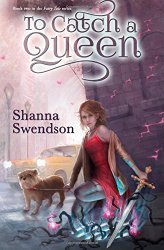
by Shanna Swendson was released late last year and I missed sharing it then. Better late than never! Swendson's previous fiction tends to play with general fairy tale tropes and this new series appears to be building on that skill with an extra emphasis on faerie.The second book in the series was released in March, again I'm late, but now there are two books to enjoy. To Catch a Queen (Fairy Tale) (Volume 2)
has been well-reviewed, too.Final note, I have read Swendson's Enchanted, Inc. series
 and it is lighthearted fun, fine summer beach reading, not that I've ever read on a beach in my life. The books are marketed for adults but they are suitable reading for teens, too, for those who worry about content. The teens I know enjoyed reading grown-up characters without reading content they felt unprepared for. Knowing Swendson, I'm sure the same applies to this series. In other words, not YA in character ages or marketing but YA will probably enjoy them, too.
Book description for A Fairy Tale (Volume 1):
Once upon a time, a girl named Sophie Drake danced with the fairies in the woods behind her grandparents' Louisiana home. But she closed the door to the fairy world and turned her back on the Fae when they tried to steal her little sister Emily. Fourteen years later, Sophie heads to New York City on a desperate mission. Emily, now an up-and-coming Broadway actress, has gone missing. Only Sophie suspects the Fae. Now Sophie has her work cut out for her. Emily's abduction is part of a larger plot involving the missing Queen of the fairy realm. An upstart fairy is making a bid to assume control of the entire Realm, unite the fairies, and become master over the human world. To free her sister, Sophie must derail this power scheme and find the true Queen of the Realm. That's a lot for a small-town ballet teacher to tackle, but with the unlikely aid of her sometimes flighty sister, a pair of elderly shopkeepers with a secret, a supremely lazy (but surprisingly knowledgeable) bulldog, and a wounded police detective searching for his own missing person, she just might prevail--if she can force herself to confront her own past and face her true nature.
Book description for To Catch a Queen (Fairy Tale) (Volume 2)
:Uneasy lies the head that wears a crown–especially the crown of the fairy realm… Sophie Drake has made a promise, and she never breaks her word. She will free Michael Murray’s long-lost wife from the fairy realm even if her intensifying feelings for him make it the most painful thing she’s ever done. But Sophie is running out of time. Dark fae forces are stirring, threatening the human world. To make matters worse, humans are being cast out of the Realm, whether or not they want to leave, and the shock from these sudden evictions can even prove fatal. It’s only a matter of time before it happens to Michael’s wife. All this in the name of the fairy queen. Stunned, Sophie knows this is impossible because she’s the queen. She won the throne fair and square, through trials and blood. Now she must find and fight an impostor for a crown she never wanted in order to save both the Realm and the human world.
Heidi Anne Heiner's Blog

- Heidi Anne Heiner's profile
- 44 followers
Heidi Anne Heiner isn't a Goodreads Author
(yet),
but they
do have a blog,
so here are some recent posts imported from
their feed.

