
Christoph Fromm's Blog, page 2
January 23, 2020
In memory of Stalingrad
10 days until the surrendering!
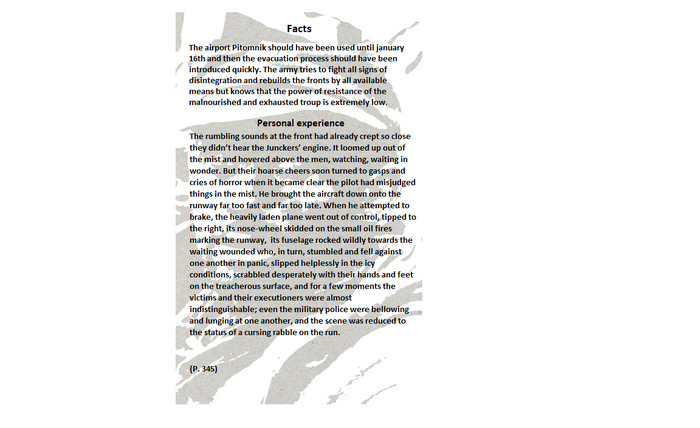 (Kehrig, Manfred: Stalingrad, Analyse und Dokumentation einer Schlacht; Stuttgart: Deutsche Verlags-Anstalt)
(Kehrig, Manfred: Stalingrad, Analyse und Dokumentation einer Schlacht; Stuttgart: Deutsche Verlags-Anstalt)


January 22, 2020
In memory of Stalingrad
Remembering these brave men and their actions!
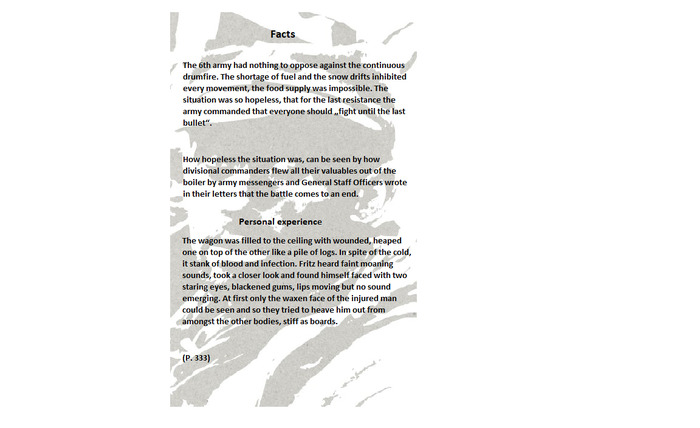 (Kehrig, Manfred: Stalingrad, Analyse und Dokumentation einer Schlacht; Stuttgart: Deutsche Verlags-Anstalt)
(Kehrig, Manfred: Stalingrad, Analyse und Dokumentation einer Schlacht; Stuttgart: Deutsche Verlags-Anstalt)
January 21, 2020
In memory of Stalingrad
The death mountain
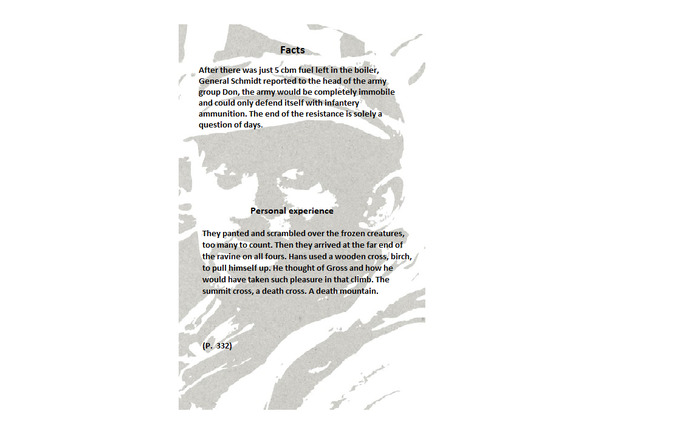 (Kehrig, Manfred: Stalingrad, Analyse und Dokumentation einer Schlacht; Stuttgart: Deutsche Verlags-Anstalt)
(Kehrig, Manfred: Stalingrad, Analyse und Dokumentation einer Schlacht; Stuttgart: Deutsche Verlags-Anstalt)
January 20, 2020
In memory of Stalingrad
Courage and strenght!
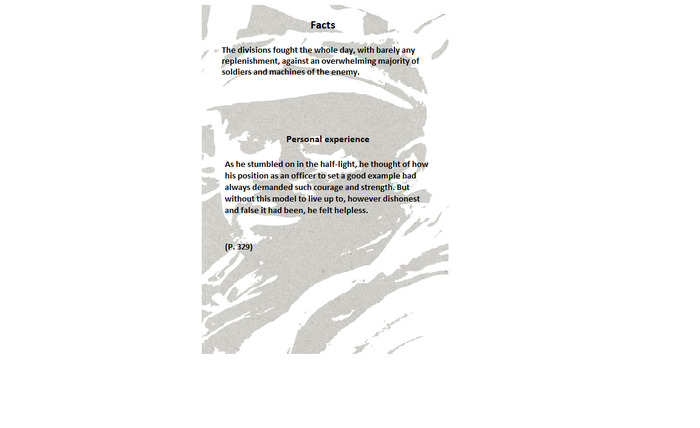 (Kehrig, Manfred: Stalingrad, Analyse und Dokumentation einer Schlacht; Stuttgart: Deutsche Verlags-Anstalt)
(Kehrig, Manfred: Stalingrad, Analyse und Dokumentation einer Schlacht; Stuttgart: Deutsche Verlags-Anstalt)
January 19, 2020
In memory of Stalingrad
Third day of our comparison:
 (Kehrig, Manfred: Stalingrad, Analyse und Dokumentation einer Schlacht; Stuttgart: Deutsche Verlags-Anstalt)
(Kehrig, Manfred: Stalingrad, Analyse und Dokumentation einer Schlacht; Stuttgart: Deutsche Verlags-Anstalt)
January 18, 2020
In memory of Stalingrad
Following yesterday´s post, here comes the second post comparing facts and personal experiences from Stalingrad. Let it sink in!
 (Kehrig, Manfred: Stalingrad, Analyse und Dokumentation einer Schlacht; Stuttgart: Deutsche Verlags-Anstalt)
(Kehrig, Manfred: Stalingrad, Analyse und Dokumentation einer Schlacht; Stuttgart: Deutsche Verlags-Anstalt)
January 17, 2020
In memory of Stalingrad
In memory of Stalingrad it is important to not just remember facts but also what people had to go through on an emotional level. Discussing this there will be a post every day until the 2nd of february, the date of surrendering, showing the factual and personal side of Stalingrad.
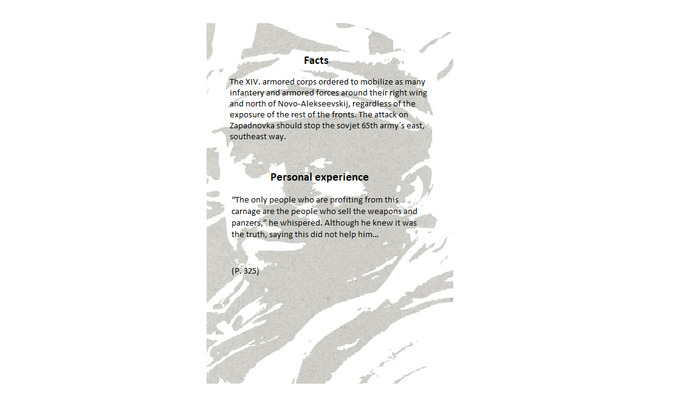 (Kehrig, Manfred: Stalingrad, Analyse und Dokumentation einer Schlacht; Stuttgart: Deutsche Verlags-Anstalt)
(Kehrig, Manfred: Stalingrad, Analyse und Dokumentation einer Schlacht; Stuttgart: Deutsche Verlags-Anstalt)
June 7, 2019
Stalingrad - Baghus - sinking of an army
An army without a uniform. Tangled hair instead of helmets, rags instead of jackets and pants, stockings instead of boots. The soldiers look more human the more their military mask disintegrates. Perhaps the soldiers of an army will find their way back to their humanity especially in defeat. You should not be naive. Some may say so, others continue to be fanatical in their ruthless attitude through the pain of defeat. Significantly, it is always fanatical ideologies that drive people into hopeless situations. In the end, most prefer the wailing of captivity in this world of paradise in the afterlife. It takes a very strong will to commit suicide, even if the act is supported by religious fanaticism. Many who have been in such a situation report the cruel mechanism of a survival drive that becomes stronger as physical deprivations increase. Many, who had lost all hope in the ruins of Stalingrad relied on the bullets of their comrades to die. It had not been different in Baghus. The most threw away their explosive belts and dragged themselves into captivity.
Of course you can dismiss all IS members as crazy, but this will not help. There were reasons for these people to fanatize themselves: Iraq, where a ruthless Shiite regime was installed by the US after the second war, which brutally suppressed the Sunnis. Mullahs, who planted in the prisons of the Americans the poison of a fanatical Islam in the heads of former Saddam officers. Desperate, hopeless people who joined the army of the IS, because it paid better.
There were also reasons to join the NSDAP and march into World War II. Nazi ideology was also brilliant at fanatizing hopeless, humiliated people with the usual ingredients: nationalism, intolerance, racism, supermanhood, glorification of violence, profit maximization; not to forget the unconditional belief in having to sacrifice for one great cause to be part of that greatness.
There are always reasons. Reasons are not to be confused with apologies.
The demise of the IS army in Baghus is not comparable in scale to the catastrophe of the Sixth Army in Stalingrad, but the images of the empty, hopeless, beaten faces, reeling in rags in captivity, are similar. Fanatic ideologies often have the most extreme impact on those who are not part of the sect's innermost circle.
The majority of soldiers in Stalingrad were not fanatical National Socialists. The majority in Baghus also consisted of people, who tried to survive on the side of the supposedly stronger and willing – certainly some full of enthusiasm – to commit war atrocities. To survive the war, not infrequently sadistic traits are developed, which is not only in the "In Stahlgewittern" by Ernst Jünger read. For this, you do not have to be fanatical Nazi or Salafist. Psychological studies show, how quickly the so-called normal citizen can develop into a sadistic monster during the war.
For most, fighting was a job, be it for new sneakers, a coke, a burger, or two weeks of survival – weird, how fast basic values change in a war situation, and for all those involved.
Air strikes left as irreparable mental damage to the soldiers and militias as bloody melee struggles on the ground. And no ideology protects against that - although the Nazi regime glorified war and violence, there were a significant number of SS frontline fighters who needed to be housed in psychiatric hospitals. But of course is the pure conscience, which conveys a murderous ideology, demands the extermination of the enemy with the different faith, and transfigures the fighter into a hero, helpful in killing.This is probably the root of all these hermetic ideas. A self-contained parallel world, in which our own laws apply – why do we long, be it in the game or in bloody seriousness, after such a rigorous decoupling from our real world? Because we basically gave it up long ago? Because only there do we see our omnipotence feelings satisfied in the face of a crumbling real world?
One thing is clear: without a worthwhile alternative in reality, people will increasingly flee into unrealistic parallel worlds and, as in the case of IS, try to impose their cosmos on the rest of the world.
After the Second World War, the victorious powers cleverly dealt with the loser Germany. The Germans were not humiliated again and driven politically and economically into a hopeless situation, as after the First World War. The Nazis were deprived of the ground by allowing the Germans, at least in the West, to experience an unprecedented upswing and prosperity – democracy in Germany only worked as an economic success story.
So far, you cannot see such smart politics in the Middle East at all. Unless the Middle East people are given an economic perspective and given back their dignity, the spiral of violence and hatred will continue. But maybe that's exactly what the politicians want - because during the IS terror the oil was cheaper than ever. Even fanatics need to finance themselves. And nothing is better suited than terrorist attacks to allow the people to accept surveillance of all kinds.
Of course you can dismiss all IS members as crazy, but this will not help. There were reasons for these people to fanatize themselves: Iraq, where a ruthless Shiite regime was installed by the US after the second war, which brutally suppressed the Sunnis. Mullahs, who planted in the prisons of the Americans the poison of a fanatical Islam in the heads of former Saddam officers. Desperate, hopeless people who joined the army of the IS, because it paid better.
There were also reasons to join the NSDAP and march into World War II. Nazi ideology was also brilliant at fanatizing hopeless, humiliated people with the usual ingredients: nationalism, intolerance, racism, supermanhood, glorification of violence, profit maximization; not to forget the unconditional belief in having to sacrifice for one great cause to be part of that greatness.
There are always reasons. Reasons are not to be confused with apologies.
The demise of the IS army in Baghus is not comparable in scale to the catastrophe of the Sixth Army in Stalingrad, but the images of the empty, hopeless, beaten faces, reeling in rags in captivity, are similar. Fanatic ideologies often have the most extreme impact on those who are not part of the sect's innermost circle.
The majority of soldiers in Stalingrad were not fanatical National Socialists. The majority in Baghus also consisted of people, who tried to survive on the side of the supposedly stronger and willing – certainly some full of enthusiasm – to commit war atrocities. To survive the war, not infrequently sadistic traits are developed, which is not only in the "In Stahlgewittern" by Ernst Jünger read. For this, you do not have to be fanatical Nazi or Salafist. Psychological studies show, how quickly the so-called normal citizen can develop into a sadistic monster during the war.
For most, fighting was a job, be it for new sneakers, a coke, a burger, or two weeks of survival – weird, how fast basic values change in a war situation, and for all those involved.
Air strikes left as irreparable mental damage to the soldiers and militias as bloody melee struggles on the ground. And no ideology protects against that - although the Nazi regime glorified war and violence, there were a significant number of SS frontline fighters who needed to be housed in psychiatric hospitals. But of course is the pure conscience, which conveys a murderous ideology, demands the extermination of the enemy with the different faith, and transfigures the fighter into a hero, helpful in killing.This is probably the root of all these hermetic ideas. A self-contained parallel world, in which our own laws apply – why do we long, be it in the game or in bloody seriousness, after such a rigorous decoupling from our real world? Because we basically gave it up long ago? Because only there do we see our omnipotence feelings satisfied in the face of a crumbling real world?
One thing is clear: without a worthwhile alternative in reality, people will increasingly flee into unrealistic parallel worlds and, as in the case of IS, try to impose their cosmos on the rest of the world.
After the Second World War, the victorious powers cleverly dealt with the loser Germany. The Germans were not humiliated again and driven politically and economically into a hopeless situation, as after the First World War. The Nazis were deprived of the ground by allowing the Germans, at least in the West, to experience an unprecedented upswing and prosperity – democracy in Germany only worked as an economic success story.
So far, you cannot see such smart politics in the Middle East at all. Unless the Middle East people are given an economic perspective and given back their dignity, the spiral of violence and hatred will continue. But maybe that's exactly what the politicians want - because during the IS terror the oil was cheaper than ever. Even fanatics need to finance themselves. And nothing is better suited than terrorist attacks to allow the people to accept surveillance of all kinds.
March 9, 2018
For all the historical book lovers!
Hello fellow readers and writers!
If you are a fan of war novels and want to delve into the merciless, psychological strain of the deciding battle of Stalingrad, I’d like to introduce you to my novel “Stalingrad: The Loneliest Death.”
A short synopsis may spark your interest:
September 1942. The few surviving assault pioneers of a battalion deployed in North Africa are drafted to the eastern front. In the course of the deciding battle of Stalingrad, which claimed two million victims, moral principles are of secondary importance: trench war, close combat, hunger and cold, madness as a last resort before death...
Young lieutenant Hans von Wetzland is forced to accept that he cannot possibly keep up even the most basic moral standards. Neither his men’s nor his own.
This historical fiction is based on extensive research and numerous interviews with contemporary witnesses. Its unique focus on the characters’ emotional struggles provides a grim insight into the cruelties on the battlefield and makes this novel a searing indictment against all wars.
In case you are not already hooked, there is also an excerpt available for you to read through.
If you are interested in getting to know me as a writer, you can read through an interview regarding “Stalingrad: The Loneliest Death” on my blog or you can send me any questions you have concerning my writing process, etc.

Happy reading and writing!
Christoph Fromm
If you are a fan of war novels and want to delve into the merciless, psychological strain of the deciding battle of Stalingrad, I’d like to introduce you to my novel “Stalingrad: The Loneliest Death.”
A short synopsis may spark your interest:
September 1942. The few surviving assault pioneers of a battalion deployed in North Africa are drafted to the eastern front. In the course of the deciding battle of Stalingrad, which claimed two million victims, moral principles are of secondary importance: trench war, close combat, hunger and cold, madness as a last resort before death...
Young lieutenant Hans von Wetzland is forced to accept that he cannot possibly keep up even the most basic moral standards. Neither his men’s nor his own.
This historical fiction is based on extensive research and numerous interviews with contemporary witnesses. Its unique focus on the characters’ emotional struggles provides a grim insight into the cruelties on the battlefield and makes this novel a searing indictment against all wars.
In case you are not already hooked, there is also an excerpt available for you to read through.
If you are interested in getting to know me as a writer, you can read through an interview regarding “Stalingrad: The Loneliest Death” on my blog or you can send me any questions you have concerning my writing process, etc.
Happy reading and writing!
Christoph Fromm
November 25, 2016
Review of "Stalingrad - The Lonliest Death"
Vera from www.verasbookreviewsandstuff.com has reviewed my novel "Stalin - The Lonliest Death!"
She writes:
"Author Christoph Fromm created an intense character driven novel of war. This is not a pretty novel for war is ugly. In a time period in which movies glorify war, Fromm presents war at its ugliest without frills or pretty words. As man achieves the ultimate evil against his fellow-man, Fromm's characters fall further into the blackness.
Furthermore, Fromm developed his characters to their full potential. Fromm's main character progressed from an idealist to find humans have a dark side just beneath their thin veneer. Unable to control the SS, his fellow combatants, or himself, he will face the dark pit of war.
Although a work of fiction, Fromm extensively researched his subject. Seen from the view-point of the participants, Fromm skillfully shows the evil of human nature and war. This book was not my cup of tea. The vileness of my fellow-man was hard for me to stomach. However, anyone who enjoys a solid well-written military novel based on fact will enjoy this book.
Additionally, I found Stalingrad The Loneliest Death well-written and the characters well-developed. If you enjoy military war novels, this book will hold your interest and give hours of entertainment."
Thank you, Vera!
You can read the whole review on: http://amzn.to/2fYkPLQ - Have fun :)
She writes:
"Author Christoph Fromm created an intense character driven novel of war. This is not a pretty novel for war is ugly. In a time period in which movies glorify war, Fromm presents war at its ugliest without frills or pretty words. As man achieves the ultimate evil against his fellow-man, Fromm's characters fall further into the blackness.
Furthermore, Fromm developed his characters to their full potential. Fromm's main character progressed from an idealist to find humans have a dark side just beneath their thin veneer. Unable to control the SS, his fellow combatants, or himself, he will face the dark pit of war.
Although a work of fiction, Fromm extensively researched his subject. Seen from the view-point of the participants, Fromm skillfully shows the evil of human nature and war. This book was not my cup of tea. The vileness of my fellow-man was hard for me to stomach. However, anyone who enjoys a solid well-written military novel based on fact will enjoy this book.
Additionally, I found Stalingrad The Loneliest Death well-written and the characters well-developed. If you enjoy military war novels, this book will hold your interest and give hours of entertainment."
Thank you, Vera!
You can read the whole review on: http://amzn.to/2fYkPLQ - Have fun :)


