Sezin Devi Koehler's Blog, page 20
October 21, 2013
Guest Post — Painting Pictures: Trauma and the Third Culture Kid Experience
Originally published at Djibouti Jones.
Under the Surface
Just six days from today marks the 13-year memorial of a night that drew a big, bloody line down the middle of my life: witnessing my dear friend Wendy’s murder in a random and senseless act of gun violence on October 28, 2000. We were celebrating Halloween weekend when we were held up at gunpoint and the woman shot Wendy before giving us time to hand over our wallets. It was a night the sky opened up and I had a glimpse into hell. And worse, my soul sister, a fabulous creative force in the universe, was gone from this plane.

Anyone with post-traumatic stress disorder knows how the incident fragments the way you experience your own life into a Before and After, and is often accompanied by a variety of personality changes in the process.
For me, adventurous and bold became timid and fearful, a virtual about-face from the openness and adaptability that once were a part of my Third Culture Kid repertoire.
At the time of the incident I was going to university in Los Angeles, and my family was living in Switzerland. Instead of coming to my graduation, my mum came to LA for the pre-trial hearing — the one that would determine whether there was enough evidence for an actual jury trial. These were the days before budget travel, and it felt more important to have my mom’s support in the first of three trials to put Wendy’s murderers away than have her at my graduation.
After the two-year process of testifying against Wendy’s killer and her accomplice, a series of events nothing at all like what we see in television crime procedurals, I went into an emotional freefall.
The American method for dealing with trauma or psychological issues is by medicating the person, even if the patient doesn’t want the meds. Anti-depressants and anti-anxiety medications made me numb in a way that felt nothing but wrong — I knew I should feel sad, I should feel scared, these were my mind and body’s way of processing not only the loss of my amazing friend, but actually witnessing her death. A short stay in the hospital later, on account of the medications, and I was across the ocean from Los Angeles to my family in a city I’d never lived in before. I couldn’t deal with myself, my job, my relationship or living in the country that took my friend and ruined my life.
My mom was still living in Switzerland, and because of the high number of UN and other aid offices headquartered in Geneva she found me an amazing trauma counsellor whose specialty was cross-cultural psychology and psychiatry, and one who also used art and drama in his sessions.
Dr Arpin tailored every meeting to the specific cultural background of the patient. My childhood spent in Sri Lanka, Zambia, Thailand, Pakistan and India as well as my time in Los Angeles became the cornerstone for my treatment. He also took into account my conservative Sri Lankan father and radical American mother, a dynamic in my family that was fraught with unease that had spilled over onto me since I was a child. He also noted the tension of my having lived abroad and experiencing my passport country of the USA through a deceptive media machine that hardly prepared me for the reality of the experience, one that took on new levels after surviving a gun crime.
India has been one of my favorite places I’d lived, and I often pray to Hindu deities among Buddhist, Greek, Roman, and even Celtic ones — a measure of pantheism marks my personal brand of Third Culture Kid-ness. Noting this, Dr Arpin would bring stories I’d never heard of Ganesh and Lakshmi into our sessions, which would help me focus on my writing, drawing and dancing as healing practices — the first time I’d ever done that in my life. He also brought my love of cinema, and especially horror films, into the mix, helping me find ways to empower myself and reclaim the things I loved but hadn’t been able to enjoy for years because of the “trigger” factors.
The most powerful exercise, and the one that demonstrated just how traumatized I was not only by Wendy’s murder but also by my Third Culture Kid childhood, took place in the small theatre below his office. He sat in the audience, put the spotlight on me, and asked me to describe my home.
“My desk here, by the window. Kitchen here. Bed here. Door here.” As I mapped out the space with my hands.
“Where are the walls?”
“No walls.” I said.
“No walls?”
“Nope.”
“And who can come in?”
“Anyone.” I replied, in a ‘no duh’ kind of way.

His puzzlement at my response of “Anyone” bothered me. The next week I asked him what other people say when asked the same question. He told me that most people have their rooms separated by walls, and people need to be invited to come in, the door isn’t just open.
I remembered reading in Ruth Van Reken’s seminal study on Third Culture Kids that often times because TCKs are constantly shuttling through various cultures, peoples, situations, we have difficulty setting boundaries unless actively taught how to do so.
The room exercise showed me that I had no personal filters, a trait common among Third Culture Kids, but one that becomes problematic when trauma and PTSD enter the mix. And I realized that the dramatic loss of Wendy, my first friend at that time to have passed away, was reminiscent on other levels of all the friends I’d lost in so many years of moving around. Back then there was no social media, no mobile phones, no Skype. Friends would often move to places with semi-functional mail service, or telephone lines that worked once a week if you’re lucky.
During the first Iraq war my family and I were on Christmas home leave in Milwaukee, my mom’s hometown. We were already on our way back to Islamabad when we found out that all UN personnel and consulate employees had been evacuated. It was a nightmare for my mum to re-route our tickets after we landed in Amsterdam to my dad’s hometown of Colombo since it worked out cheaper to go to Sri Lanka than back to the US or stay in Europe. On my return to school months later, my best friend had been evacuated and nobody could tell me where she’d gone or how to contact her. I didn’t find her again for 15 years.
When I was growing up a Third Culture Kid, goodbye could be pretty darn final.
Reflecting more and more deeply on Dr Arpin’s room exercise, so many memories from my childhood arose. The not-so-nice things of growing up between worlds, the tense and often frightening culture in my homelife between parents with polar opposite worldviews, being bullied at school, the assorted cultural difficulties place to place that amount to small traumas, but when put together become major.
We Third Culture Kids have a charmed life on the surface, but underneath, in the hurt and still-scarred places nobody really wants to talk about, there can be a great deal of hidden trauma that may only surface in the wake of a violent trauma as mine did.
The trauma of Wendy’s murder had opened up a floodgate of issues I’d never properly dealt with — all the goodbyes I never knew were the last time I’d see someone or someplace, the innate sense of rootlessness and never feeling I belonged anywhere not even in my own family, the toxic and abusive relationships that had wounded me because of my “Anyone” policy — the grief was overwhelming. Twenty-four years of it, all coming through at once.
Thankfully, I had Dr Arpin’s help and in the year and a half we worked together he helped me build some necessary walls and begin to put the mess of all the traumas into their own places. He showed me how to mindfully channel all the emotional mines littering my past into writing and creativity. All of this without even the offer of medication, unlike his American counterparts who told me that they couldn’t treat my PTSD without pharmaceuticals.

*Fragmented Heart by Sezin Koehler
And thankfully, I was a Third Culture Kid blessed to be able to leave my passport country and receive the treatment that helped heal at least the most acute symptoms of PTSD. Sadly, there’s no cure for post-traumatic stress disorder; one must learn how to manage it and ride its waves as they ebb and flow, perilous though that may be at times.
Next week marks 13 years since the night that changed my life and broke it into a Before and After. Being a Third Culture Kid indeed heightened my experience of PTSD; yet, at the same time, my unique situation as a Third Culture Kid was what afforded me a powerful path towards healing.
Trauma and Third Culture Kid-ness are forever linked, two of many heads on the hybrid monster Hydra that symbolize my After-trauma life. I’m now a fragmented being constantly in motion, fighting — sometimes myself, sometimes the past, sometimes change — and united in only one goal: storytelling.
*image credit Adam Kerfoot Roberts via flickr
The post Guest Post — Painting Pictures: Trauma and the Third Culture Kid Experience appeared first on Zuzu's Petals.


October 2, 2013
The Story Behind the Story: Blurred Lines, Project Unbreakable and Going (Moderately) Viral

Two weeks ago I was in one of the darkest and deepest pits of despair and depression I’d ever felt in my life. The previous time I felt so utterly distraught was also the last time I lived in the USA in 2002 and it resulted in an ugly hospital stay. Approaching October is always a hard time of year, being itself a trauma trigger, but repatriation to the country that caused the breaks in my life was making it all the worse.
Being in such a dark place is an out of body experience. You drift and look down at yourself all pathetic, but with no way to lift yourself up. You also see the people around you — namely my husband — and all the things they’re doing to try to help, but none of it works.
In the midst of that horrible time I watched the 2013 MTV Music Awards, which became my introduction to Robin Thicke and his song Blurred Lines. At first I was more troubled by Miley Cyrus’s racist performance, but the lyrics to Blurred Lines got stuck in my head. “I know you want it/ You’re a good girl.” The lines kept me up at night, like a mosquito bite in the middle of your back you can’t reach. I was already suffering from a two-week bout of PTSD-related insomnia, the last thing I needed was those rapey words clanging around my head.
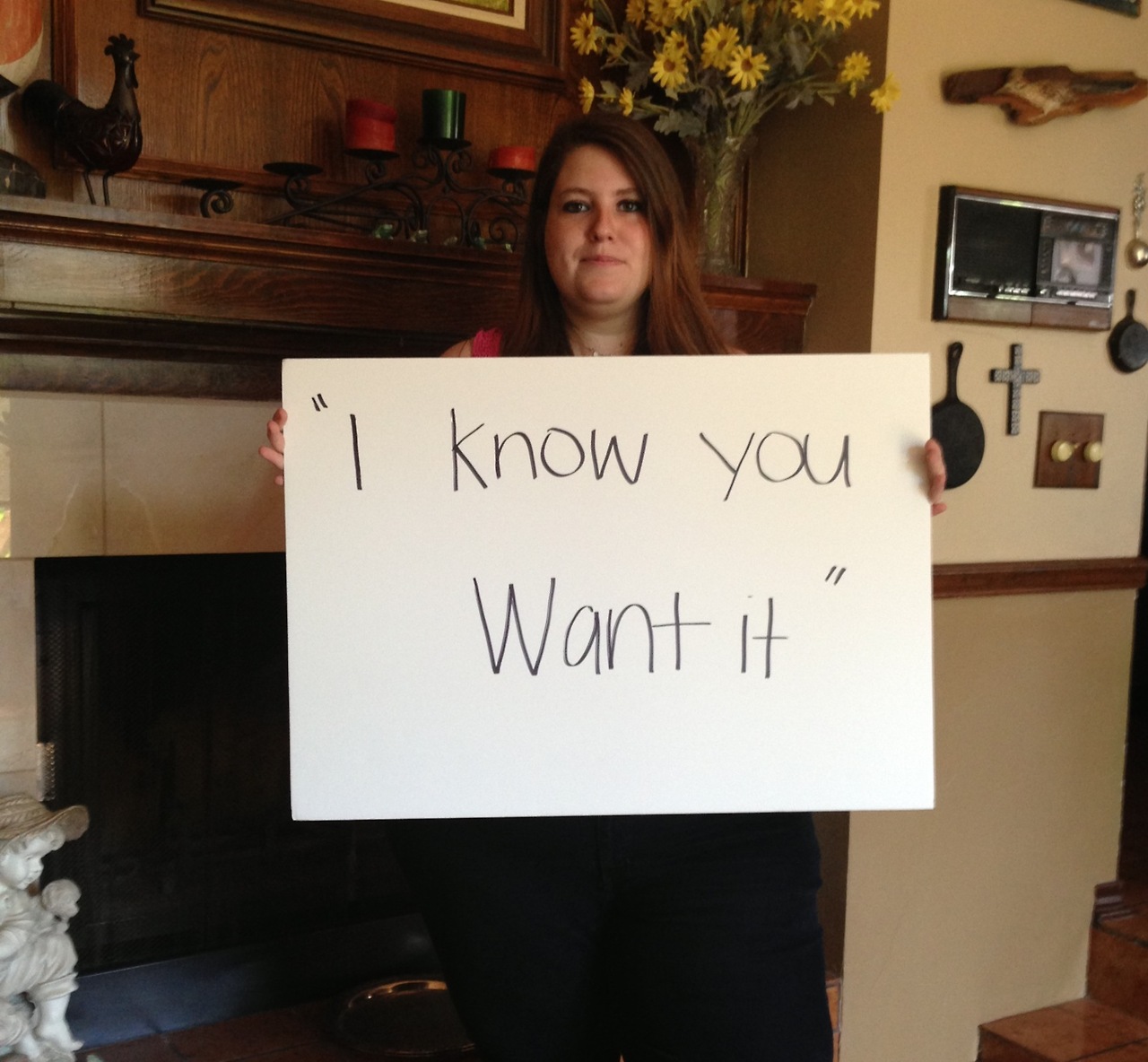
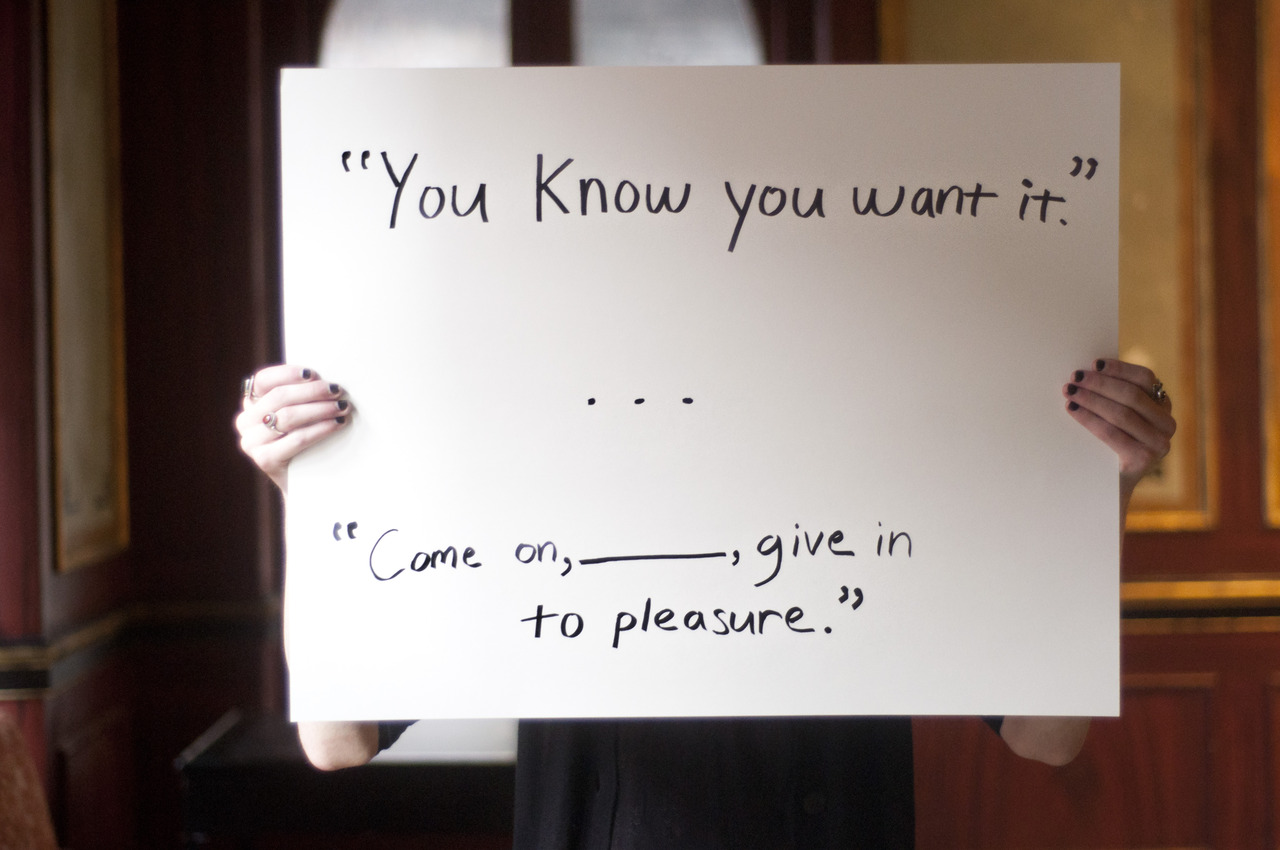
After two nights of that “I know you want it, I know you want it, I know you want it, You’re a good girl,” I shot out of bed in with my eureka moment: I’d seen those words on posters in Project Unbreakable, a photography project featuring images of people holding signs of phrases their rapists said to them before/during/after the assault.
I stumbled into my library in the dark and scribbled down the notes, sure that my editor at Sociological Images, Lisa Wade — for whom I’d written a well-received piece on the fake Harlem Shake — would be interested. She was.
Sleeplessness continued to plague me until I spent an entire day looking through Project Unbreakable (threw some stuff, yelled, Googled to see if castrators actually exist because I was going to buy one) and curating images that paired with Robin Thicke’s disgusting song. There were so many corresponding images it made me physically sick.
Writing the piece was like pulling teeth. Now I had all these images of rape survivors bouncing around my head. I felt I owed them justice for every time they heard that “song of the summer” and had flashbacks. I wanted everybody who read my piece to no longer be capable of listening to the song without thinking about those words as things rapists say. I wanted to press the universal stop button and shut that piece of shit rape anthem down.
Lisa warned me not to read comments as rape apologists come out of the woodwork like nobody’s business. She also said other publications would probably pick up the piece. She said she saw it going big. Me, I just needed that song out of my head.
On September 17, 2013 the article went live under the title “From the Mouths of Rapists: The Lyrics of Robin Thicke’s Blurred Lines”. Within 2 hours it had more than 2,000 Facebook likes on the original post. In 10 hours, 16,000 likes.
In 24 hours it reached 36,000 likes and had been picked up by Al Jazeera, Jezebel, Feministing, xoJane and Ms Magazine. Ms Magazine subsequently invited me to be one of their new bloggers. My editor at Ms told me there were 20,000 hits just in 12 hours.
In 36 hours the article reached 50,000, and Pacific Standard, Think Progress and Buzzfeed had picked it up. By 60 hours after posting, on September 19, we were at 100,000. The next milestone was 150,000 reached on September 24. The number continues climbing at at the time of publishing this blog on October 2 was up to 165,000 Facebook likes. But these figures are only for the original piece. I don’t have access to all the other numbers.
Is this what it means to go viral?

I received dozens of messages from rape survivors thanking me for the piece and making it easier for them to explain to people why the song bothered them so much.
British, Swedish and Australian media also picked up the article.
Inspired by my article, a clever Tumblrian put screen grabs from Thicke’s video next to the Project Unbreakable testimonials, and the result is even more disturbing than my piece.
I heard that discussions on various websites were ferocious and polarized — people who agreed with my analysis versus Blurred Lines defenders claiming the song was about cheating on a partner, not rape.
At this point my article’s reach is so extensive, I have no idea where else my words and ideas ended up.
Who ever would have thought that something I wrote in one of the worst moments of my life would end up becoming something of a global event? Not to mention an event with positive repercussions that would drag me out of my pit of despair? I’ve been reading Ms Magazine since I was a baby feminist and now I’m one of their bloggers. WOW.
Rock bottom has its benefits: it gives the Universe a chance to take the reins and get one back on track. Okay, Universe, I hear you. I’m supposed to write and keep writing and when I’m done write some more.
HEARD.
It’s been two weeks and I’m still rather in shock about the whole thing.
A minor brush with “fame” or notoriety is enough to show this empath that constant public scrutiny is not a life I could maintain on a regular basis. Thankfully the worst I was called to my face was an idiot. My favorite personal attack was that I was a feminist prude who wants to take the fun out of everything. So, it could have been so much worse, especially with such a contentious topic.
I realized that in spite of living in a provincial-minded Florida beach town, meaning is what *we* make of it, and even from this village of 10,000 my voice can have a global impact. After almost two years of repatriation, I finally feel I have a future in the USA. I think there’s a reason why I’ve ended up back in America, and I’m looking forward to seeing what else this place will hold.
My great thanks goes to Sociological Images and my fabulous editor Lisa Wade for featuring my article and promoting it so extensively. This experience has been one of the highlights of my life, and may we share more together in the months and years to come.
My gratitude, admiration and respect to the founder of Project Unbreakable, Grace Brown, and all the brave women and men who’ve participated in her empowering exhibit. Here’s to healing and ending rape culture once and for all.
A huge thank you to Al Jazeera, Ms Magazine, Jezebel, Feministing, Buzzfeed and all the bloggers and journalists out in the wide world who covered this story and extended its reach.
And to Robin Thicke and his fellow sexist pigs: Go fuck yourselves with your blurred lines.
P.S. If you’re of the camp that Blurred Lines isn’t a rape anthem, here’s Robin Thicke talking about how it was a pleasure to degrade women and here’s more evidence of the rapey nature of his whole album in an iTunes Festival review. That’s all I’ve got to say about that.
P.P.S. I wrote this post before the US government shut-down on account of racist Republicans who want to continue depriving American citizens of basic health care. Now I wonder about *anyone’s* future in this country.
©2013 Sezin Koehler
The post The Story Behind the Story: Blurred Lines, Project Unbreakable and Going (Moderately) Viral appeared first on Zuzu's Petals.
September 17, 2013
Guest Post — From the Mouths of Rapists: The Lyrics of Robin Thicke’s Blurred Lines
Originally published at Sociological Images. Cross-posted at Pacific Standard, Ms Magazine. Picked up by Al Jazeera, Jezebel, Feministing, Huffington Post, xoJane, Think Progress, Buzzfeed, and others.
Trigger warning: Graphic descriptions of sexual assault. Note: The opinions expressed in this post belong to Sezin Koehler alone and should not be attributed to anyone involved with Project Unbreakable.
Robin Thicke’s summer hit Blurred Lines addresses what he considers to be sounds like a grey area between consensual sex and assault. The images in this post place the song into a real-life context. They are from Project Unbreakable, an online photo essay exhibit, and feature images of women and men holding signs with sentences that their rapist said before, during, or after their assault. Let’s begin.
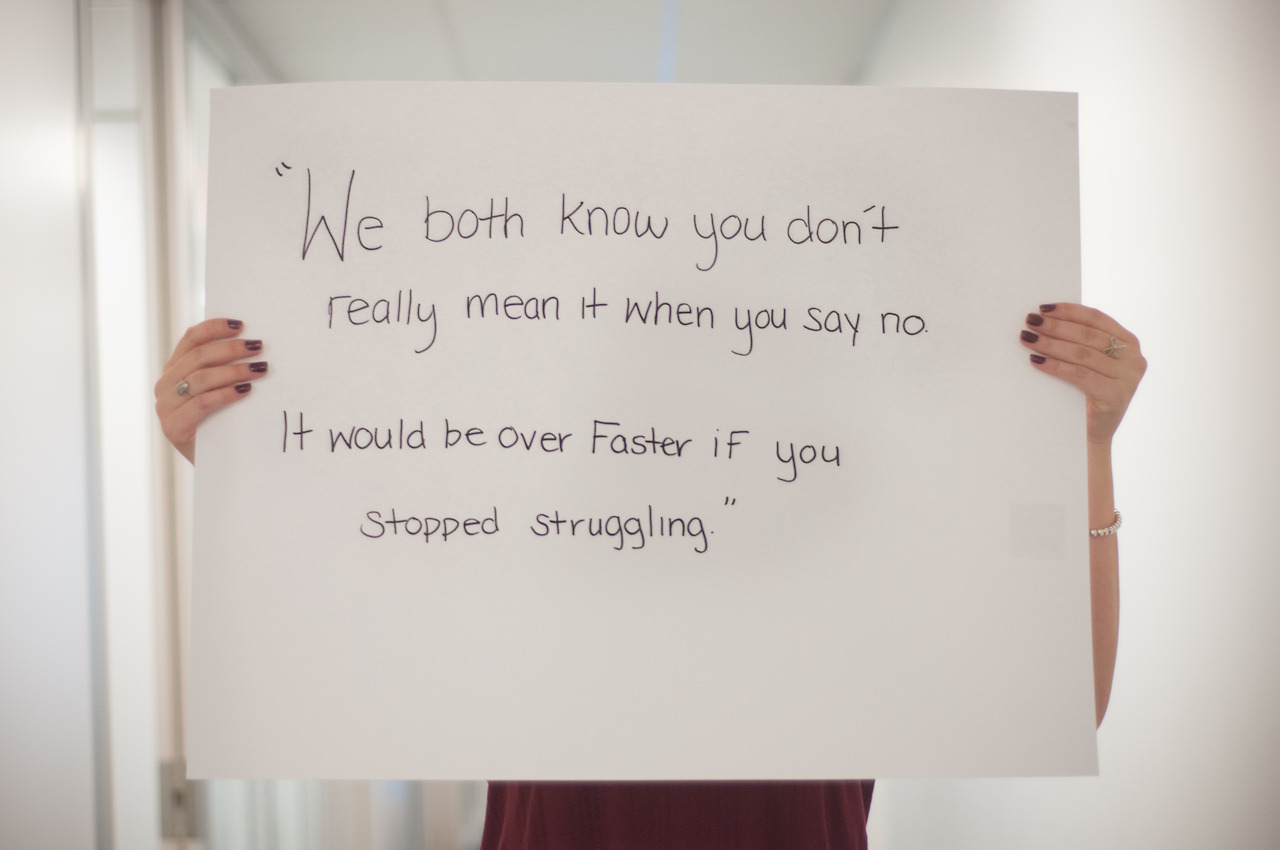
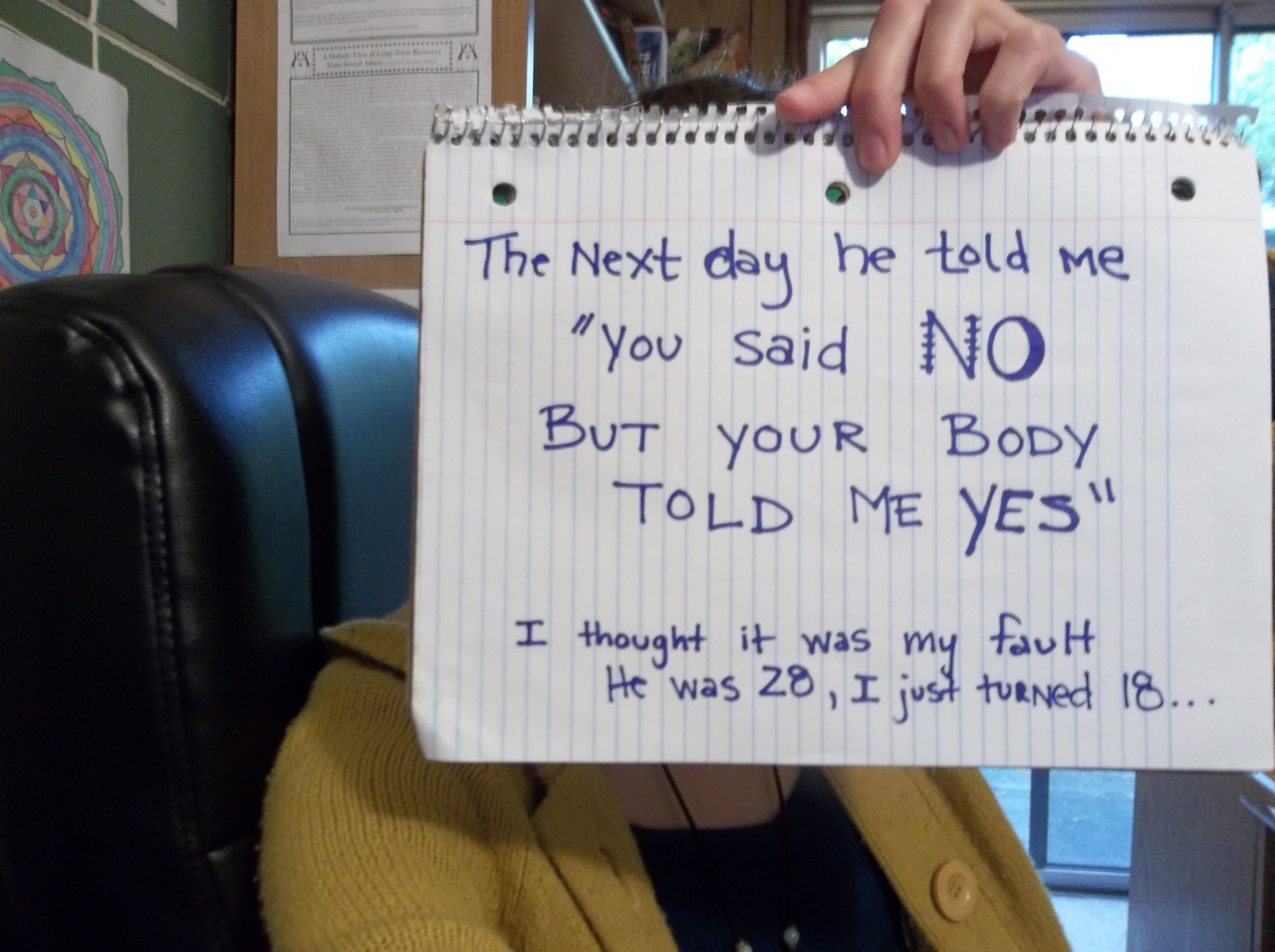
I know you want it.
Thicke sings “I know you want it,” a phrase that many sexual assault survivors report their rapists saying to justify their actions, as demonstrated over and over in the Project Unbreakable testimonials.
You’re a good girl.
Thicke further sings “You’re a good girl,” suggesting that a good girl won’t show her reciprocal desire (if it exists). This becomes further proof in his mind that she wants sex: for good girls, silence is consent and “no” really means “yes.”
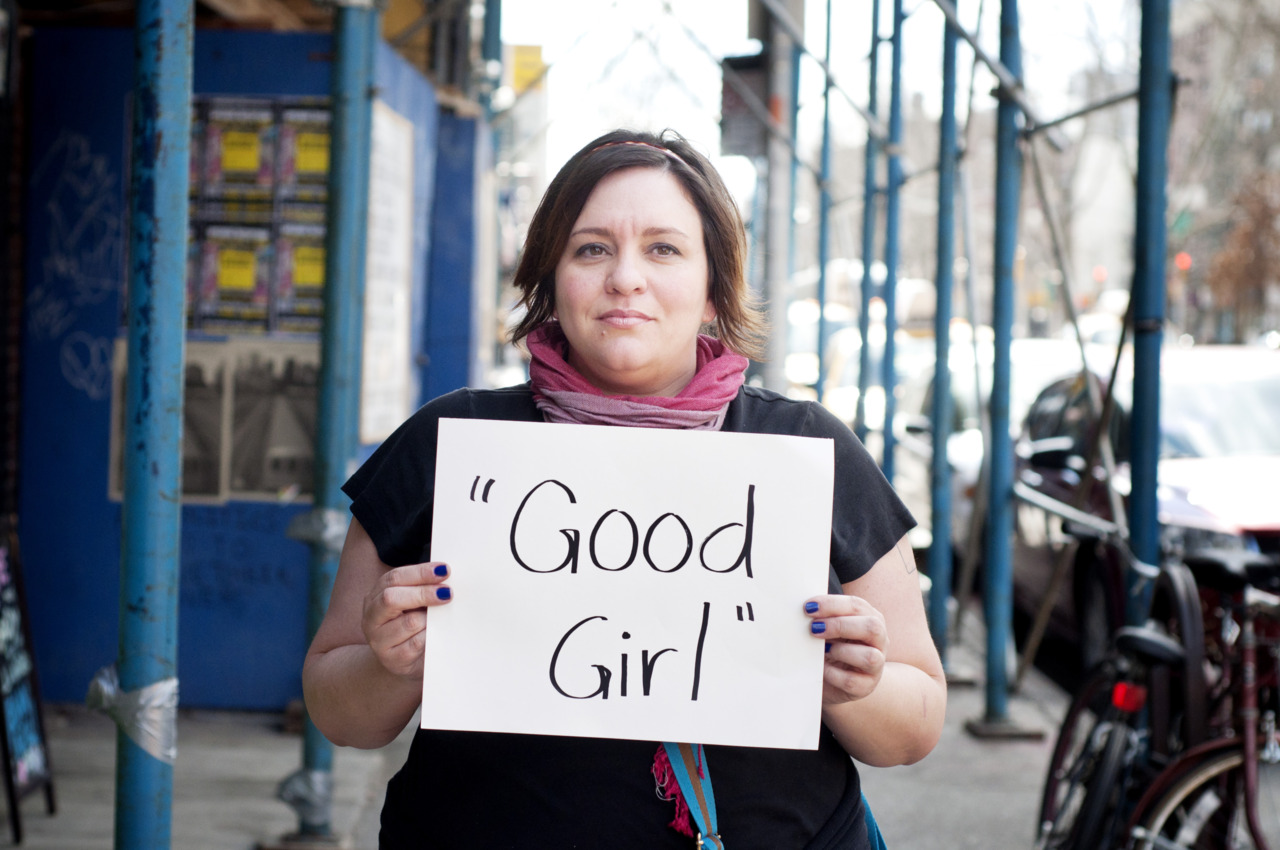
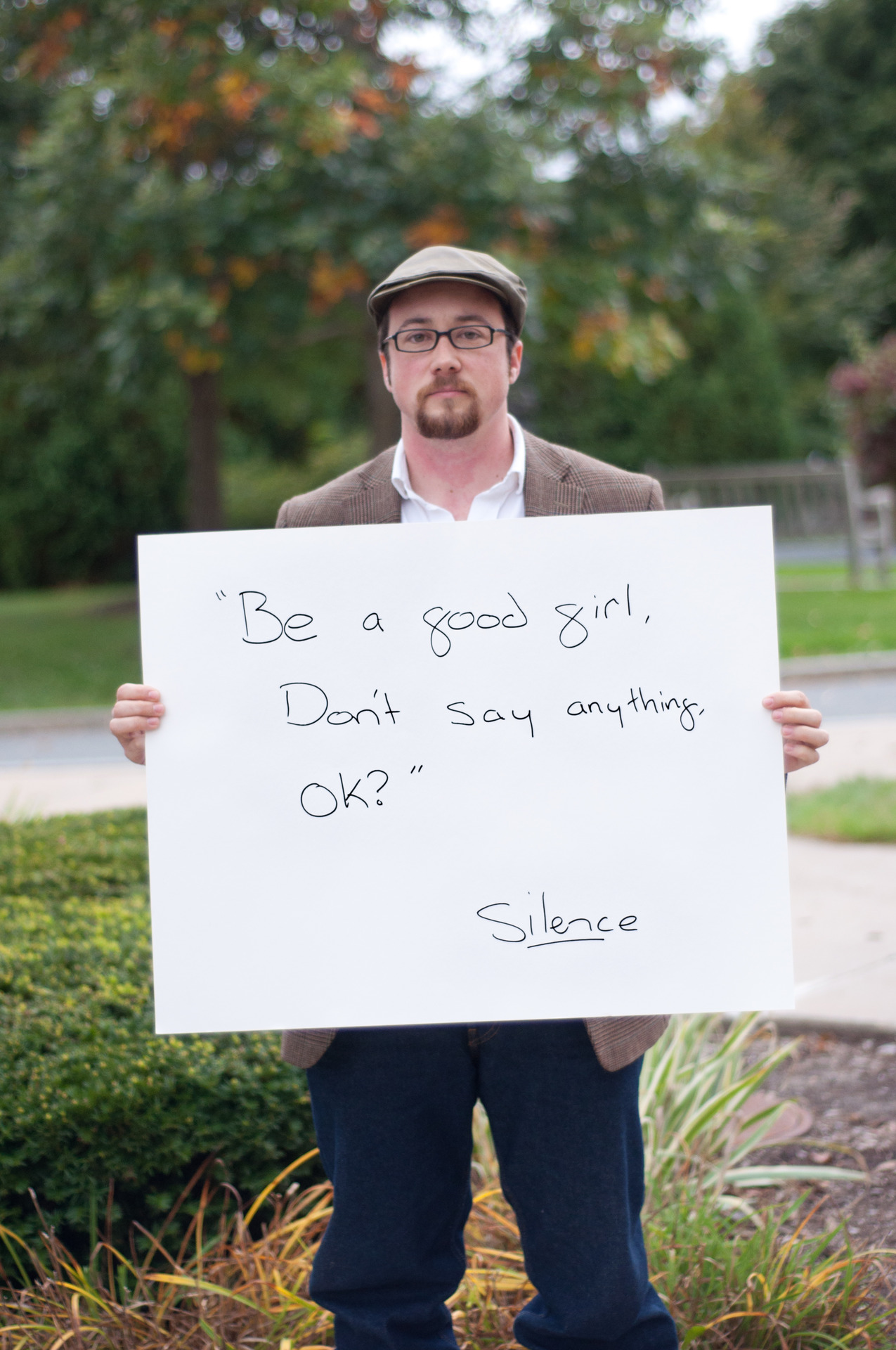
Calling an adult a “good girl” in this context resonates with the the virgin/whore dichotomy. The implication in Blurred Lines is that because the woman is not responding to a man’s sexual advances, which of course are irresistible, she’s hiding her true sexual desire under a facade of disinterest. Thicke is singing about forcing a woman to perform both the good girl and bad girl roles in order to satisfy the man’s desires.
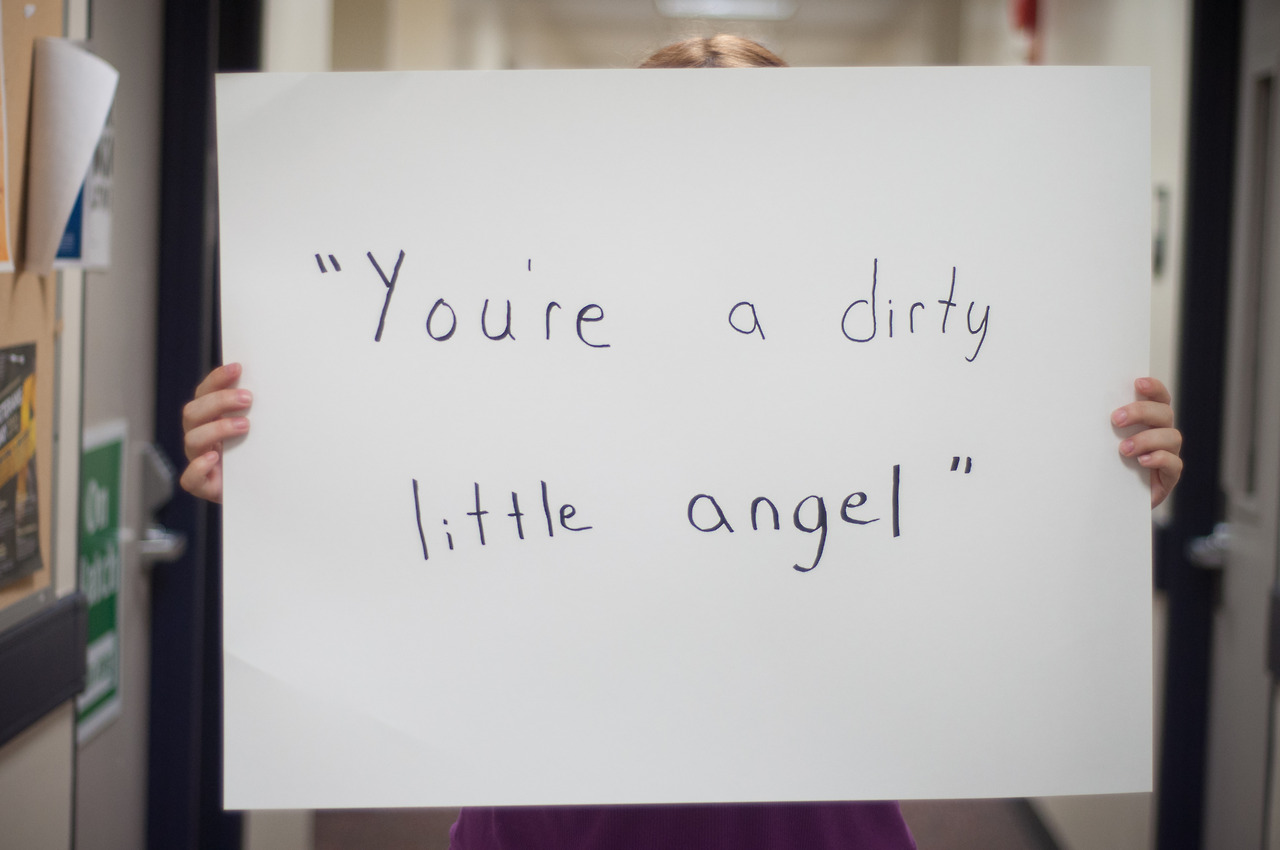
Thicke and company, as all-knowing patriarchs, will give her what he knows she wants (sex), even though she’s not actively consenting, and she may well be rejecting the man outright.
Do it like it hurt, do it like it hurt, what you don’t like work?
This lyric suggests that women are supposed to enjoy pain during sex or that pain is part of sex:
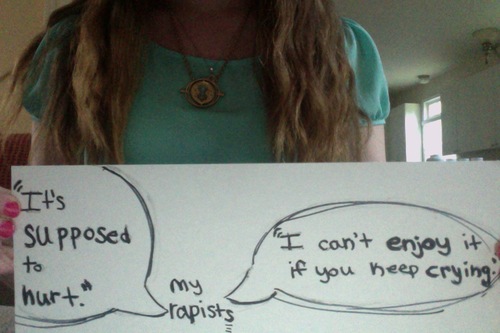
The woman’s desires play no part in this scenario – except insofar as he projects whatever he pleases onto her — another parallel to the act of rape: sexual assault is generally not about sex, but rather about a physical and emotional demonstration of power.
The way you grab me.
Must wanna get nasty.
This is victim-blaming. Everybody knows that if a woman dances with a man it means she wants to sleep with him, right? And if she wears a short skirt or tight dress she’s asking for it, right? And if she even smiles at him it means she wants it, right? Wrong. A dance, an outfit, a smile — sexy or not — does not indicate consent. This idea, though, is pervasive and believed by rapists.
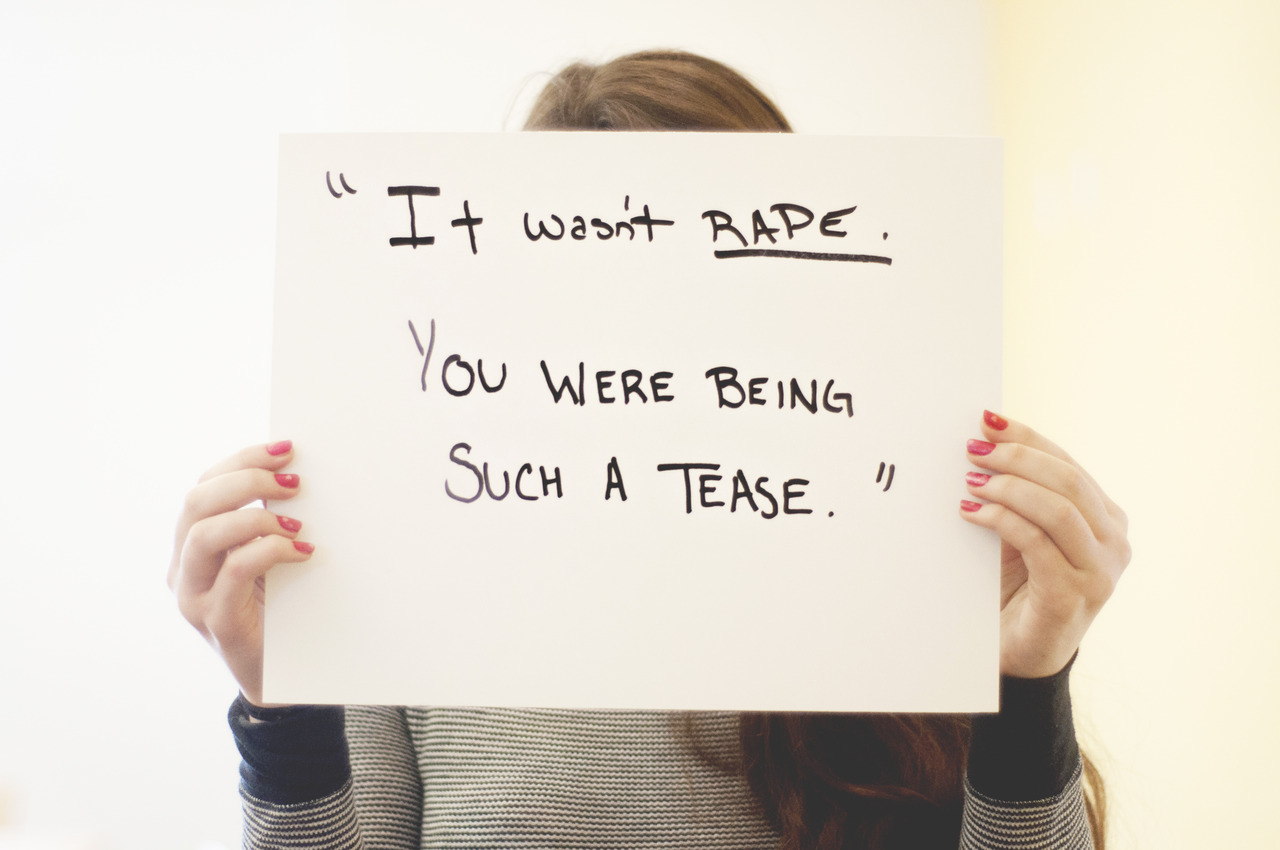
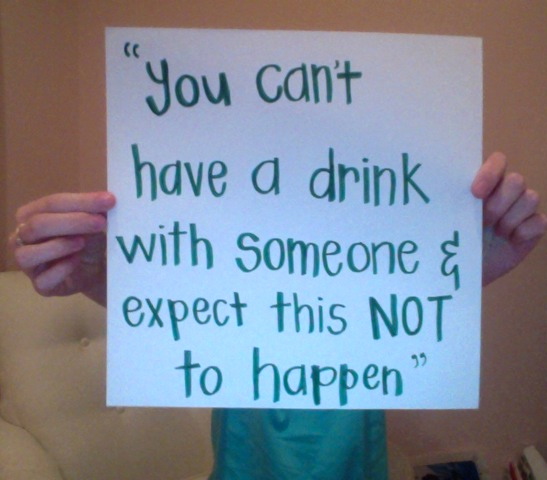
And women, according to Blurred Lines, want to be treated badly.
Nothing like your last guy, he too square for you.
He don’t smack your ass and pull your hair like that.
In this misogynistic fantasy, a woman doesn’t want a “square” who’ll treat her like a human being and with respect. She would rather be degraded and abused for a man’s gratification and amusement, like the women who dance around half naked humping dead animals in the music video.
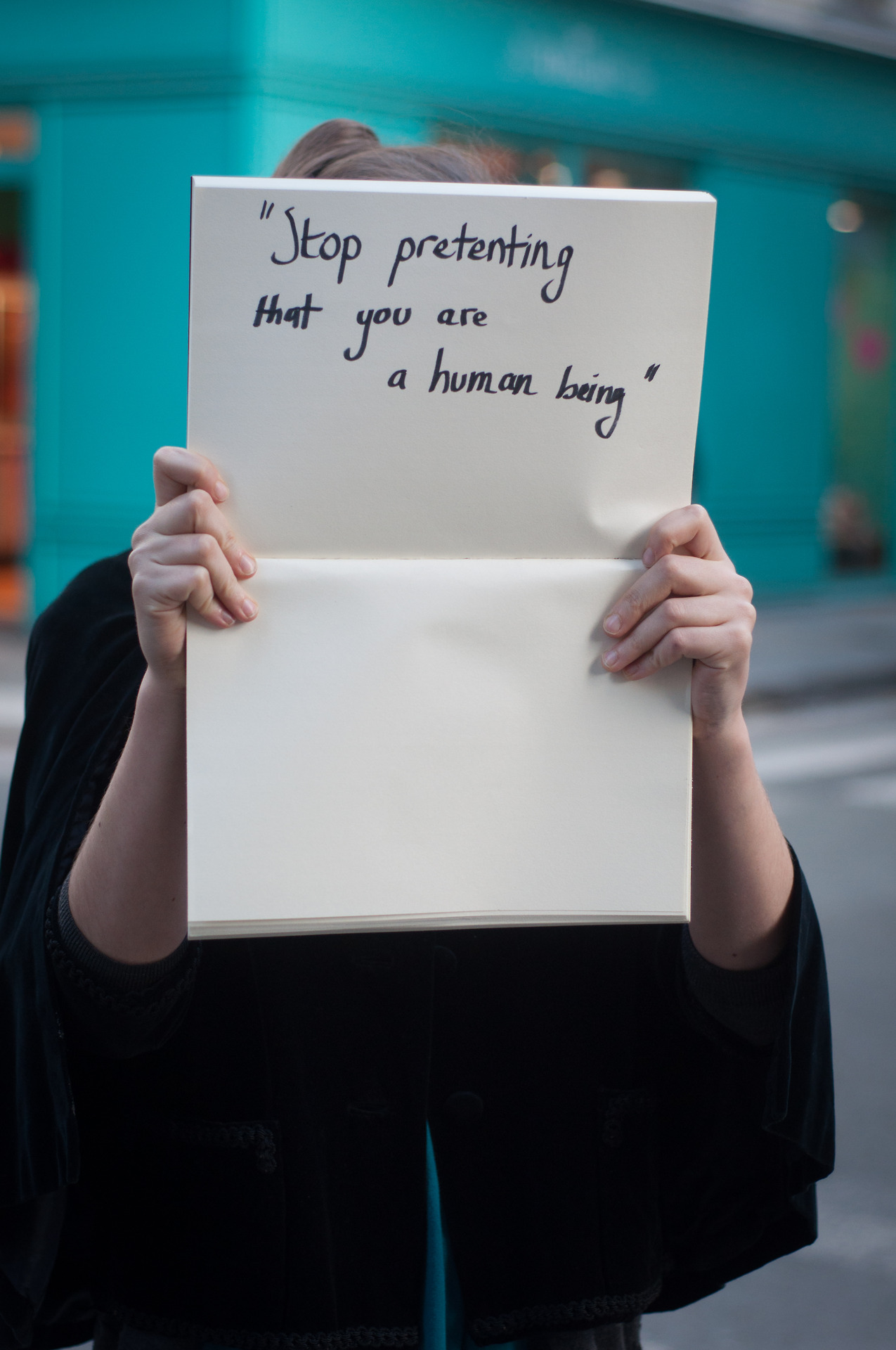
The pièce de résistance of the non-censored version of Blurred Lines is this lyric:
I’ll give you something to tear your ass in two.
What better way to show a woman who’s in charge than violent, non-consensual sodomy?
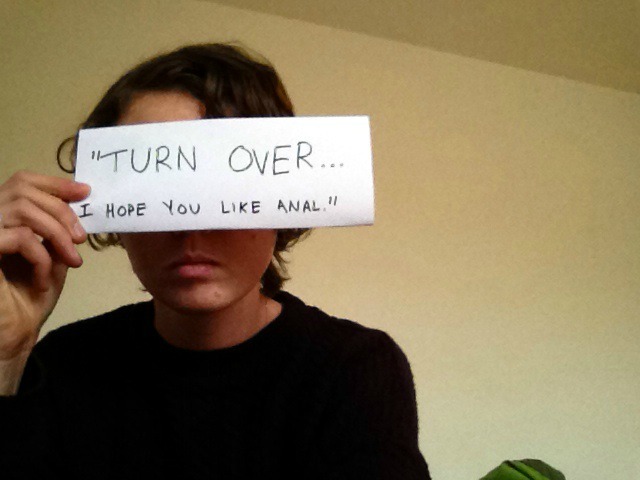
Ultimately, Robin Thicke’s rape anthem is about male desire and male dominance over a woman’s personal sexual agency. The rigid definition of masculinity makes the man unable to accept the idea that sometimes his advances are not welcome. Thus, instead of treating a woman like a human being and respecting her subjectivity, she’s relegated to the role of living sex doll whose existence is naught but for the pleasure of a man.
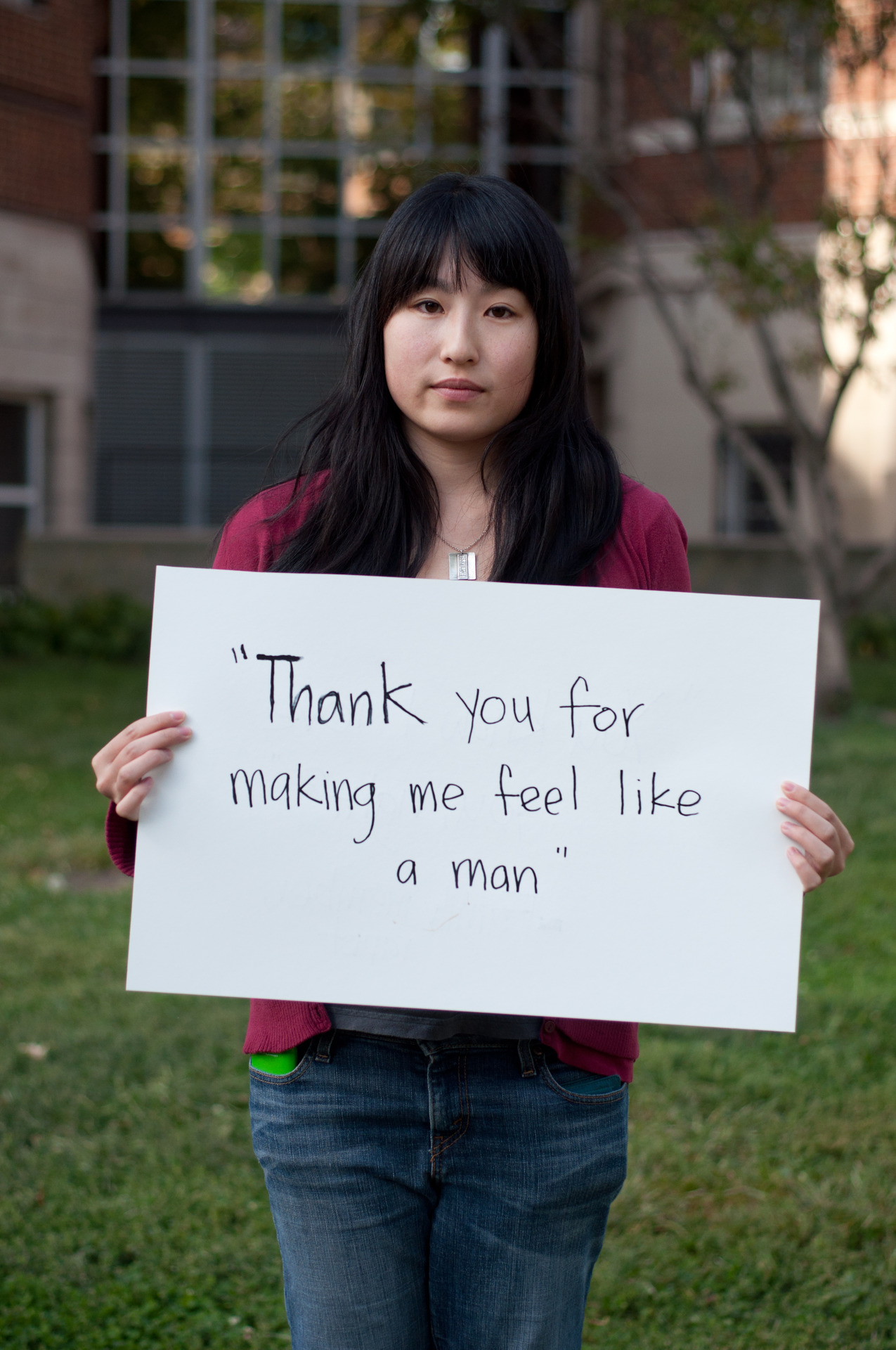
In Melinda Hugh’s Lame Lines parody of Thicke’s song she sings, “You think I want it/ I really don’t want it/ Please get off it.” The Law Revue Girls “Defined Lines” response to Blurred Lines notes, “Yeah we don’t want it/ It’s chauvinistic/ You’re such a bigot.” Rosalind Peters says in her one-woman retort, “Let’s clear up something mate/ I’m here to have fun/ I’m not here to get raped.”
There are no “blurred lines.” There is only one line: consent.
And the absence of consent is a crime.
The post Guest Post — From the Mouths of Rapists: The Lyrics of Robin Thicke’s Blurred Lines appeared first on Zuzu's Petals.
August 27, 2013
Roots in the Sand

Underneath all that mulch is sand. For serious.
To date the longest I’ve ever spent anywhere was six years in California (though in three different cities). I lived five and a half years in New Delhi. Four years each in Islamabad and Prague. If I break my California time down by city, my four years of college in Eagle Rock ties with Pakistan and the Czech Republic.
The bar for my version of long term is not set very high.
As the fates would have it, it appears that Southeast Florida is my home for the foreseeable future.
Wow.
~2~
At first I was surprisingly elated at the prospect of staying on in Lighthouse Point in spite of how horrible it is here. Y’all remember the superficial, racist people living in their little consumer bubble I’ve bitched about ad nauseum?
Yet, the thought of settling into our cute apartment, finding a proper desk and office chair, recycling old moving boxes, outfitting the place with various creature comforts like new showerheads, grown-up kitchen glasses, furniture… all these banal bits of domesticity were a welcome change to the transiency my husband and I felt while convinced we’d be moving somewhere else in a year.
Our visits to St Augustine, Savannah, and New York City brought home that we’re not going to be happy anywhere in this country. There is no better in America. Only more of the same. And colder weather. Fewer job opportunities. More expenses.
At least here we have good jobs, job security, year-round heat, organic food, a spacious and cheap flat, low cost of living and a swimming pool is a cherry on top. From a distance this is a cushy setup indeed; solid jobs are hard to risk these days in the United States of Discontent.
And while I’d happily never move again — the moving process is incredibly stressful for me both emotionally and physically — the thought that I’ve just settled into an area where old people come to die is horrifying.
In the year I’ve lived here I’ve seen obituary announcements for ten or so residents in our apartment complex.
WOW.
~3~
How does one begin to put roots in sand, the false bedrock of a place in which the floor could literally open up and suck you in like the ending of a Sam Raimi horror movie?
Just this month a sinkhole opened underneath a resort north of here and took an entire block of apartments with it.
How do you settle into a place when you’ve never felt so foreign in your life?
Provincial mentalities, conservative politics, racism, and a majority of populace who haven’t a clue about anything outside their bubble of American consumerism… I am lost in translation here on so many levels.
How do you call a place a home when it limits your movements and half the streets don’t even have sidewalks?
There’s a bus but nowhere to go but strip malls and supermarkets. I’ve taken to walking laps around my apartment complex like a rat in a cage. The only time I get to leave a half-mile radius are my husband’s days off.
~4~
My initial burst of excitement has given way to a depressed resignation in the weeks since our decision.
My body responded by putting on an extra ten pounds I can feel around my face and neck.
My lower back keeps going out, relating to the Root Chakra which is the center of feeling grounded and supported.
How can I feel stable when the very ground beneath my feet is hourglass sand, shifting all the time?
And how could it be that global nomad me will now be relegated to a half-mile of not much?
Yes, I’ll have the luxuries of good food, a library, warm climes, art supplies, cable television, Internet access and a regular salary, which is much more than the majority of Americans can say.
I’m privileged. And I am ever so grateful for all that I have. Every time I eat my organic meals I send up thanks. Each commercial-free movie I watch on television comes with a thanksgiving for my blessings.
Yet I can’t help but wonder: what’s the bigger price I’m paying for all these creature comforts?
My physical health?
A sedentary life is all this place has to offer me. I have no idea how I’ll lose the sixty pounds (!!!) I’ve packed on in the last five years of stress, thirty of which are courtesy one year in Lighthouse Point.
My mental health?
The only social interaction I have on a regular basis other than my husband is online. And online is getting old. And frustrating. And adds to my sense of surreality.
Being an introvert I love my alone time.
But this is more like solitary confinement.
The one and only thing that’s not suffering is my creative energy. I’m spewing paintings, collages, multimedia pieces, drawings, art, ideas, words all over the apartment and at such high volumes we’re running out of wall space.
I suppose if a caged Zuzu can’t fly, at least she can sing.
(Which I occasionally do in my wacky YouTube channel.)
©2013 Sezin Koehler, photos by Zuzu Arbus
The post Roots in the Sand appeared first on Zuzu's Petals.
July 28, 2013
La Pelona, or Zuzu Kahlo’s Mourning Locks
Here’s what Zuzu Kahlo did with my mourning locks for Trayvon Martin:

It makes me sad to look at this piece, but I think as much as I miss those locks of hair they will grow back.
Not like Trayvon, Wendy, and everyone who’s been taken by senseless gun violence.
Here’s to ending Stand Your Ground laws.
©2013 Sezin Koehler, photo by Zuzu Arbus
The post La Pelona, or Zuzu Kahlo’s Mourning Locks appeared first on Zuzu's Petals.
July 24, 2013
Zuzu Irwin’s It’s A Snake Eat Snake World

“What is that in the black snake’s mouth?” You’re wondering.

Is it a wire? A branch? A plane?
No.
It’s another snake.

Zuzu Irwin has had it with these motherfucking snakes in her motherfucking yard!
And SNAKES?! Why did it have to be SNAKES?
And not just snakes, CANNIBAL SNAKES!
Ophidiophobia in overdrive.
Excuse me while I go dry heave some more.
Photos ©2013 Steven Koehler-Irwin.
The post Zuzu Irwin’s It’s A Snake Eat Snake World appeared first on Zuzu's Petals.
July 23, 2013
Confederate Pride Lives

A Confederate flag flying just outside Savannah.
I don’t know about you, but if I came from a culture of slave-owning, racist torture-mongers and rapists I’d be ashamed as all hell about it and would apologize every single chance I got.
Well, clearly I’m not from the Deep South — a phrase that now strikes dread in my heart and makes my belly convulse.
For years, and I’m not entirely sure why (past life maybe?) I’ve had an obsession with Savannah, Georgia. I even have an alter-ego named Susannah Merryweather, who’s from Valdosta, Georgia, but lives in Savannah. In 1885, mind you. She doesn’t talk like Georgians of today. She’s got the old accent; it’s rather eerie when she emerges from my Wisconsin-Sri Lanka hybrid mouth.
Since it’s the first year my husband’s been at his job he only gets one week of vacation, and we took the seven days on an east-coast road trip to St Augustine and Savannah. As I’ve already written about, St Augustine proved to be one haunted mess of problematics: glad to have seen it, more glad to have left.
But I still had high hopes for my Savannah.
Until the very moment I arrived in its embrace, that is.

The Spanish Moss-covered live oaks lining the trees and squares is pretty indeed. Picturesque. But the city itself appeared to be mostly residential. The very definition of a sleepy, sultry southern town in a Flannery O’Connor story.
Where was the life? I wondered. The enchanting energy? Things to do? Absent.
The city boasts twenty-plus parks, but other than statues honoring mass-murdering, slave-owning, rapist piece of shit Confederate generals and soldiers, there was nothing *in* the parks. No cafes. No restaurants. No galleries. A whole lot of nothing.
After finding the very sparse high street, and realizing there was a grand total of two restaurants in which I could eat (southern food is a gluten fest, breaded, fried and then breaded again), I knew that the situation was all wrong. This couldn’t possibly be the city I’d been obsessing over for years! I had to be missing something!
I wasn’t.

The Midnight in the Garden of Good and Evil house.
A local pointed us to a Irish pub where non-tourists hang out, Murphy’s Law. At least it had good music, but being like all Irish pubs was basically indistinguishable from the next. While there I had a terrible feeling that something bad was going to happen and proceeded to put my credit cards, cash, ID, iPod and other valuables in my bra and pockets. My husband finally did the same even though the bartender said it was safe to walk around at night.
The next morning at breakfast I read in the paper — alongside stories of Paula Deen supporters taking to the street demonstrating against all those pesky northerners who don’t take kindly to casual racism — that two tourists had been held up at gunpoint, and one shot and killed just a few blocks east of where Hubs and I had been the night before. The murderer took off and was still at large.
Oh. My. Fucking. Gods.
And with that, my obsession with Savannah just up and POOFED. Gone.
My anxiety levels went through the roof despite all the homeopathic calm drops I was gnawing on like no tomorrow. Telling the story to a sister-friend she said that I must have heard the spirits, who were kind enough to look out for me and protect me. Thank you, Spirits. I left you some tobacco in gratitude.
Hubs and I decided to stay for the day, do the tour, and leave the next morning rather than hang around three more days.
So, we’re on the tour and I’m feeling ill as all hell. Empaths really don’t do well in tormented places. At all. And within five minutes the bus is stopped. Why? A mothereffing funeral procession. They were bringing the coffin from the hearse into the church. My heart leaped into my throat, I couldn’t breathe.
The last funeral I attended was my darling Wendy’s.
Okay, Savannah. I get it. You want me to go. I don’t belong here. Point well made. Point damn well taken.
The city tour brought that point home over and over again.
The Civil War doesn’t exist in Savannah. It’s “the war between the states”.
Oh for God’s sake, just go ahead and call it “the war of northern aggression”, you know you want to, Georgia.
Overwhelming was the sense that the good old days of slavery were missed, not just by those who wrote the tour guide script, but by many of the southerners on the tour. All the homage to Confederate notables throughout the city at first was weird, and then became downright disturbing.
As in St Augustine with the Timucuan, the Yamacraw Indians were virtually wiped out after helping the settlers. And in the early 1800s Georgia boasted 407,000 kidnapped African slaves.
You can see the cotton mills in which they worked and the Cotton Repository in which their labors would be sold at auction. All this relayed to us as if those were the good old days.

Where slave labor used to be exploited. No biggie.
My jaw was tired from constantly falling on the floor. My stomach hurt from the hauntedness of the place that was again being whitewashed by pithy anecdotes about the colonial history.
I knew about the horrors of slavery. I have a vivid imagination for history. But being in an actual place where it happened was a horse of a very different color. Hearing the term “colonial” at all makes me shiver now, the context upon which those colonies were built hits home in a more physical way after walking around Savannah’s streets and absorbing the pain of the tortured souls still trapped there.
There’s not enough sage in the world to cleanse this country of its evils.
And I never in my life would have been so grateful to be returning to my corner of Florida, upon which no Indians were harmed in its making and no slave history haunts its present having been uninhabited swampland until the 1950s.
Fuck Confederate pride. And that’s all I’ve got to say about that.
Did I mention that the bench on which Forrest Gump’s ass parked was a part of the “historic” Savannah tour?

They moved the bench to the Savannah Museum just like they did The Bird Girl because it was causing too much ruckus. Oy vey.
©2013 Sezin Koehler
The post Confederate Pride Lives appeared first on Zuzu's Petals.
July 16, 2013
Braids for Trayvon

My mourning locks for Trayvon Martin, whose death goes unpunished and whose murderer walks free.
©2013 by Zuzu Arbus
The post Braids for Trayvon appeared first on Zuzu's Petals.
July 8, 2013
St Augustine: America’s First Auschwitz Turned Theme Park
My eye-opening first and last visit to America's "oldest" city.
The post St Augustine: America’s First Auschwitz Turned Theme Park appeared first on Zuzu's Petals.
June 17, 2013
The Story Behind the Story: Cultural Chameleons — Al Jazeera’s The Stream

It’s officially official. I’m a writer.
Before I became laid out by trauma exhaustion, I was a total news junkie. All my life knowing what’s going on in the world has been as important as drinking water throughout the day. Call it a side-effect of traveling, I couldn’t not know what was going on, and this is something that made living in the US both times very challenging to say the least.
My mom introduced me to Al Jazeera a few years back and to date it is the only news media outlet that actually focuses on the truth rather than spin. Example: it’s the first network that covered the Occupy Gezi protests in Turkey, that has reported on the horrifying conditions of indigenous peoples in the USA, and fairly reported on various armed conflicts around the world. If you’re interested in and can handle the truth: Al Jazeera IS news media.
Imagine my surprise when a beautiful little Al Jazeera fairy contacted me and asked if I’d like to be in The Stream to talk about my experiences as a Third Culture Kid. (If you’re in the US you can watch it here.) Basically, I felt all the emotions in the world and of course agreed. When my husband reminded me that Al Jazeera is broadcast in 147 different countries to millions of people I felt all the emotions plus a few that don’t have names yet. Me?! On television?! The mind reels!
Still being an accidental shut-in, I took to Facebook with my stunned nervouscitedness and asked my girlfriends for help with my on-screen outfit. Dozens of friends in more than twenty cities around the world chimed in and voted on what I should wear, down to my hair accessories. The world we live in. WOW. And I’m so glad they did. I would have worn stripes (a big TV no-no) and a too-big flower for my hair had I not consulted with my girls. And how awesome that I could share my getting ready process for my BIG DAY with dear friends all over this planet. I mean, AL FREAKING JAZEERA, dude. It’s a huge deal, man.
The day of the interview came (US viewers see it here) and I was crazy nervous, trying not to think of those numbers — 147 countries! millions of people! — but of course being able to think of nothing else. I was positively vibrating. My body still can’t tell the difference between good adrenaline and the fight-or-flight stuff — the ever bane of PTSD. There’s really only one moment in the interview where my nerves show: when I confuse my age (34) with my husband’s (36) and for the life of me couldn’t remember which age was mine until hours later. I cracked my husband up with that tidbit.
If you’ve never watched it, The Stream is an audience and community driven program that goes into various issues, be it a current event or an ongoing human rights theme. Femi Oke, formerly of CNN fame, is the wonderful host. What an honor to meet and spend time with her. I always suspected she’d be a kindhearted and gracious person, which she absolutely is. Just lovely. And in the researching of the segment Femi found out that in fact she’s also a Third Culture Kid, something she never knew before. Welcome to the club, TCK sister!

Gush, gush, gushgushgush!
The interview went by in a whirl (here’s the finished program!) and of course in the days since I’ve had numerous l’esprit de l’escalier moments, that is, things I wished I’d said or would have liked to mention had the opportunity arisen. Here are a few:
Denizen Mag founder Steph Yiu asked me if I had TCK siblings I grew up with because in her experience that can be a big help for TCK adjustment later in life. I did have TCK siblings, but our experiences were very different and we were never close. However, what I would have liked to have mentioned was that I have an older sister who isn’t a TCK from my father’s first marriage, and in fact I feel very close to her even though we’ve never even lived together or spent extended periods of time together. Maeva Peet, one of the other participants, mentioned that ultimately it’s personality that draws us to others, and I agree. I also think that my older sister and I share similar values and a creative way of approaching the world which made us kindred. If we weren’t related by blood we’d be damn good friends.
On the question of “Where are you from?” I would have liked to have a said it’s akin to asking about my sex life just after meeting me and my response would be a big, “Back off, buddy! We just met!” But my mum would have been mortified! She watches The Stream every day. See, Mum? I do listen to you!
A few years back I noticed that many of my TCK friends’ parents were retiring to places that weren’t their passport countries or even necessarily places they’d lived. My mum also fit that pattern at the time. I drafted a proposal for an anthology project “The Third Culture Generation” focusing on the stories of the parents of the Third Culture, which felt and still feels very relevant to the canon of literature on TCK issues. The fascinating thing was that of the dozens of people I approached everyone said they’d love to read the book, but it was too painful to examine those years and especially painful to write about it for all to see. In light of many of my comments regarding an exhaustion that seeps into the bones of older TCKs and global nomads, I found people’s reactions to my anthology speaks volumes about what can become a problematic lifestyle the older one gets.
I also would have liked to have addressed the assumption of glamour that non-TCKs assume when speaking to a TCK. “Oh you lived here, here and here? That must have been so great!” TCKs often don’t get asked how they felt or feel about living in these different places, they get told their life is exciting. It makes it difficult to have a simple chat with someone and requires a great deal of patience. I don’t assume that a person’s life was perfect just because they lived in one place and that’s the life I always wanted. So why are people making assumptions about me? About all TCKs? It’s a great way to shut down dialogue or require that us TCKs bridge an ever widening gap towards mutual understanding.
I predict that we’re soon going to see a major generation gap in the new TCKs because of social media and technological developments. When I was growing up we had no email, no Facebook, no smart phones, no budget airlines, no Skype, no text messaging (international or otherwise). We had pens and paper and a landline if we wanted to stay in touch. Now, TCKs can still be in daily contact with friends they leave behind, and I think that will help ease their adult adjustment. Plus, there was no awareness of TCKness at all when I was growing up. Hopefully, parents of the new generation of TCKs will be better equipped to deal with the struggles.
Because it felt really important to me during the interview to address the dark side of constant adapting, I didn’t actually have a chance to talk about what I thought was the best trait my TCK upbringing has given me: an ability to connect with people on a deep level. In fact, it’s the only way I know how to interact with others (and what makes being in superficial Florida the hardest thing to cope with). In my experience one doesn’t have time to pussyfoot around and get to know someone slowly. You have to jump right in because in a year or two or a few either you or the friend might be gone, and you would have missed out. To this day I have friends who I consider extended family and our connection is so strong, even though I might have only spent a short time with the person. Sometimes even just a matter of days at a conference or during a trip! Being a TCK forced me to be friendly even though by nature I’m actually quite shy. To this day meeting new people causes me a lot of anxiety, but I work through it because it’s always what I’ve done. And I never know who’s going to cross my path next. All that said, just because I connect deeply with people doesn’t necessarily mean that a friendship always results or lasts. Every friendship needs time, and a few intersections and soul shares doesn’t necessarily a long-term relationship make. Even now at 34 at least once a year I have a heartbreak over a lost friendship because I do invest so much right from the get-go and I function under no pretenses. It’s the price I pay for all the grand friendships I’ve developed being this way.
So…can I go back to gushing now?!
Al Jazeera! The Stream! ME! Oh. My. Gaga!
This was one of the most thrilling experiences of my life! That one of my favorite television stations invited me to be on their show, found my perspective valuable, considers me to be something of an expert on this topic…I am honored beyond words. And I’m starting to see a grander purpose in my life around Third Culture Kid issues. What that purpose will look like, I’m not entirely sure yet. But something marvelous is happening. I can feel it.
Plus, if Al Jazeera says I’m a writer then I suppose it’s officially official. 
Let me know what you thought of the show in the comments!
The post The Story Behind the Story: Cultural Chameleons — Al Jazeera’s The Stream appeared first on Zuzu's Petals.