Phil Giunta's Blog, page 23
May 27, 2020
“Burn After Writing” – A Tribute to Harlan Ellison
On what would have been Harlan Ellison’s 86th birthday (May 27), Episode #11 of Got a Story for Ya is LIVE with “Burn After Writing,” a short story dedicated to Harlan and soon to be published in SCARY STUFF, an anthology by Oddity Prodigy Productions.
Legendary writer Adrian Halka has died. Disobeying his mentor’s instructions to burn all incomplete manuscripts upon his death, struggling writer Shane Conrad pilfers one of Halka’s unreleased novels. After publishing it as his own, Conrad learns the blistering consequences of playing with fire.


“For a brief time, I was here, and for a brief time, I mattered.”
Harlan Ellison, 1934-2018


May 14, 2020
About This Writing Stuff…
This week, Melodie Campbell offers advice on how to save that sagging middle in your novel while Penny Sansevieri shows you how to optimize your Amazon Author Central page.
Jennie Nash provides a short checklist of common mistakes that might land your manuscript in the rejection pile and Jami Gold explores how our characters can drive the narrative—despite our best laid plans.
Esther Jones extols the benefits of reading SF and fantasy, Julie Glover defends the practice of editing as you go, and Donald Maass helps us to understand how to develop a meaningful narrative.
All that and a little more. Enjoy!
My Novel is as Mess: How to Survive the Chaos Point in Your Novel by Melodie Campbell via Anne R. Allen
Science Fiction Builds Mental Resiliency in Young Readers by Esther Jones
5 Quick Fixes for Making the Most of Author Central (and Why it Should be a Top Priority) by Penny Sansevieri
Do Your Characters Take on a Life of Their Own? by Jami Gold
In Defense of Editing as You Go by Julie Glover
The Secret to More Efficient Revision: Pattern Recognition by Jennie Nash
The Meaning of Meaning by Donald Maass
Eight Ways You May Be Bungling Dialogue by Katherine Grubb
The Art of Condensing an Entire Book into a Brief Sales Pitch by Florence Osmund
Six Common Problems with Short Stories by Oren Ashkenazi
The Rich Can’t Hide from a Plague. Just Ask Edgar Allan Poe by Maya Phillips
April 26, 2020
The New Normal: COVID-19 and the Struggle for Balance
I forced myself to remain awake for another hour to finish watching a Joe Rogan podcast with Mel Gibson and Dr. Neil Riordan about stem cell treatments for injuries and chronic pain. Rather timely, given the aches and pains resulting from these four to six hour stretches of yard work as of late. I ain’t gettin’ any younger, as my back, knees, and shoulders consistently remind me.
Speaking of reminders, I had planned to write for about an hour this morning, until I recalled that for the past three weeks, I’ve not been able to make time to watch two 90-minute training videos pertaining to my volunteer work with CERT (Community Emergency Response Team).
I watched the first of two this morning—Operational Stress Control in the COVID-19 Pandemic. The focus was on recognizing and treating the stress among overburdened first responders and health care workers. I am neither, but as a support tech, some of that information was appropriate.
I’ll save the second video, Behavior and Communications in Public Health Emergencies, for later tonight after a few hours of housechores.
While scanning past posts on my Facebook author page, I was appalled to note that I haven’t made time to write in 11 days. Extreme and unpredictable work hours definitely wreak havoc with one’s personal life, not to mention the enervating power of exhaustion and burnout. Of course, I have little room to complain. I’m not a healthcare worker. They are the true heroes right now and need our support. I’m merely an IT support tech, and as of late, that has meant 12-14 hour days and a few 60-80 hour weeks.
Then there’s the domino effect that occurs in your schedule when your job devours your personal life and the time allotted to other activities such as self care, writing, yard work, house chores, home repairs, etc. Now, you’re scrambling to catch up with all of that and inevitably, some of the above will be neglected. Balance will be lost. It happens. Don’t beat yourself up over it.
I’m doing the best I can to manage my time and I know you are, too. When stress, anxiety, and depression threaten to overtake me, I stop and acknowledge all that I have accomplished as of late, especially since this crisis began. I’ve simply been too busy working and struggling to stop and appreciate that. I’ve also had more than my share of raging meltdowns over the past month and these were a wake-up call.
During these distressing and uncertain times, be sure to stop and take care of yourself and acknolwedge that you’re doing the best you can.
There’s always more work to be done, but there is only one YOU.
April 25, 2020
About This Writing Stuff…
This week, we start strong right out of the gate with Gabino Iglesias and ten types of authors who, let’s just say, he doesn’t like.
Anne R. Allen advises us on how to prepare for life after death on social media, while Hank Phillippi Ryan, Brian Andrews, and Meg Dowell offer tips on writing—and surviving—during the pandemic.
Jami Gold reviews the concept of Scene and Sequel, the folks at Now Novel wax lyrical about crafting captivating prose, and Callie Sutcliffe differentiates between creating a new draft of your work versus editing.
All that and a little more. Enjoy!
Ten Types of Authors Who Can Go F*ck Themselves by Gabino Iglesias
Don’t Become a Social Media Ghost: Appoint a Social Media Executor by Anne R. Allen
Getting Your Writer Brain Back on Track by Hank Phillippi Ryan
A Submariner’s Guide to Crisis and Isolation by Brian Andrews
12 Tips for Writing When You’re Not Calm and the World is Burning by Meg Dowell
Scenes & Sequels: Adding Reflections for Meaning by Jami Gold
Can Comic Books Survive the Coronavirus Era? by Dave Itzkoff
Using Letters in Creative Work—What Writers Should Know About Copyright Protection by Matt Knight
The Practice Novel by Dave King
First Draft, Second Draft, or Editing: How to Know What Draft You’re On by Callie Sutcliffe
Lyrical Writing: 5 Tips for Crafting Richer Prose by Now Novel
April 23, 2020
Book Review: Starshine by Theodore Sturgeon
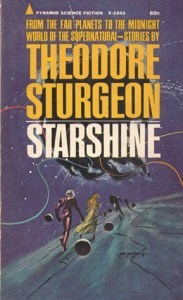 This aptly named collection of six stories shines brightly and showcases the distinct and diverse talents of one of speculative fiction’s most celebrated voices.
“Derm Fool” – While courting a beautiful woman, a man with a disturbing skin disease discovers that she suffers from the same affliction—they both molt like reptiles. After isolating the cause as well as a cure, they decide to put both to a profitable use.
“The Haunt” – Two young men rig an abandoned house with special effects in order to scare an unflappable woman, but the results are far more harrowing than expected.
“Artnan Process” – An alien race known as the Artnans possess the technology to transmute Uranium 238 into Uranium 235, but refuse to reveal the process. Earth and Mars each send a crew to the Artnan homeworld in an effort to uncover the secret. Perhaps they’ll succeed, if they don’t kill each other first.
“The World Well Lost” – A captain and first mate are charged with the task of transporting a pair of alien refugees back to their homeworld. During the journey, the first mate learns that the alien lovers are not only telepaths but of the same gender and for this, they will be executed upon arrival.
“The Pod and the Barrier” – A motley crew of scientists and engineers embark on an expedition to find a way to break through an energy barrier surrounding a planet of benevolent aliens. Each believes that his plan will succeed, but perhaps the power of doubt will be what wins the day.
“How to Kill Aunty” – A willful but crippled elderly woman believes her maladroit nephew is bent on murdering her. Amused by his doltish efforts, she mocks his intelligence by actively aiding his efforts, but the final results are not what she anticipated.
April 16, 2020
Got a Story for Ya! – My YouTube Channel is LIVE!
While we’re mired in the COVID-19 pandemic, it seemed to be a good time to offer a series of short story readings online called…
Got a Story for Ya!
To that end, I launched my YouTube channel with two episodes:
“Take a Cue from the Canine” – A boy and his dog remain loyal to one another until the bitter end… and beyond. (15 minutes)
“So Hungry…” – A young couple scales New Mexico’s Starvation Peak only to encounter the ravenous spirits behind the mesa’s terrifying legend. (11 minutes)
I hope you enjoy these videos. More to come soon. Stay tuned!
April 4, 2020
Cat & Mouse Press Wins Seven State Awards!
Congratulations to indie publisher, Cat & Mouse Press, for winning seven state awards in the Delaware Press Association’s 2020 Communications Contest!
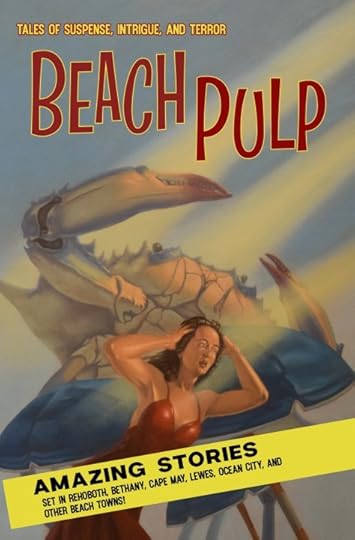
One of the winning books was Beach Pulp, published in March 2019. I’m honored to have two stories in this anthology, “Tapestry” and “The Celestials.”
Read more details about the awards in the Coastal Point.
April 3, 2020
About This Writing Stuff…
This week, Robert Lee Brewer presents several examples of successful query letters categorized by genre. Anne R. Allen offers methods for rescuing a stagnant manuscript as well as an analysis of Amazon’s increasingly stringent review system.
Over at Mythcreants, Oren Ashkenazi discusses ways to avoid recycling the same types of conflict within your story while on Writer Unboxed, Donald Maass discusses the dread and anxiety that propel our protagonists forward. No one likes to receive one-star reviews, but Sandra Beckwith explains how writers can learn from them.
All that and little more. Enjoy!
How to Write Successful Queries for Any Genre of Writing by Robert Lee Brewer
How to Rescue an Endangered Book and Restore Your Author Mojo by Anne R. Allen
Amazon’s Review Rules Have Become Even Stricter in 2020 by Anne R. Allen
Space Kadet: The Twisted Tale of a Sad, Sad Internet Troll by Victoria Strauss
Six Tips for Avoiding Repetitive Conflict by Oren Ashkenazi
5 Important Tips for Achieving Indie Author Success by Dave Chesson
3 Reasons to Embrace One-Star Reader Reviews by Sandra Beckwith
Writing Craft: How Point-of-View Affects Dialogue by Jami Gold
‘Emergency’ Online Library Draws Ire of Some Authors by Alexander Alter
Will Online-Only Events Bring Book Sales? No One Knows Yet by Kate Dwyer
The Upside of Anxiety by Donald Maass
March 31, 2020
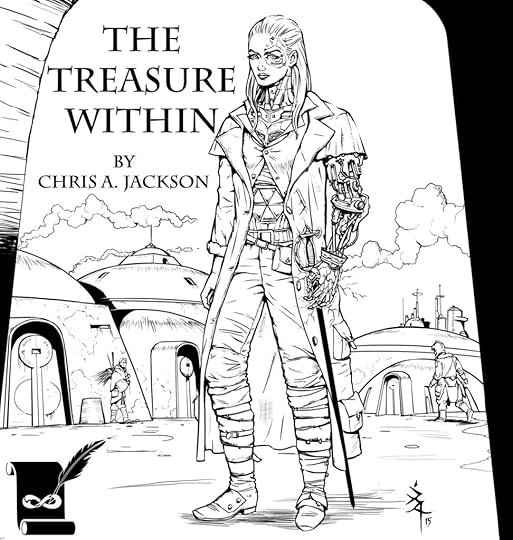
Find “The Treasure Within” on the Infinite Bard!
Let Chris A. Jackson help you find “The Treasure Within.” Check out the latest FREE short story on the Infinite Bard!
March 29, 2020
Weaponizing Social Media
Give the human race a tool and they will find the quickest way to weaponize it.
While social media is an effective platform for disseminating information quickly to the masses, for rekindling old friendships, and keeping abreast of current events, we have all seen how it can be used to spread lies, hatred, threats, and deliberate misinformation.
Facebook especially has degenerated into a cesspool where keyboard cowards find it all too easy to embarrass, humiliate, shame, and bully others. Families and friendships have been temporarily or permanently damaged as a result of unfiltered and caustic disagreements. Some have even committed suicide or have physically injured themselves, or others, as a result of toxic interactions online.
It didn’t take long for people to find a way to weaponize social media.
The political rhetoric and divisions in our country over the past several years have only escalated matters, turning people against one another along not only political, but also gender, racial, and ethnic lines. Now, thanks to COVID-19, matters are worse, if that were possible.
Historically, every crisis brings out the best and worst in humanity.
On Tuesday evening, I posted an article about Dan Patrick, the current lieutenant governor of Texas, who suggested in an interview that senior citizens should be willing to sacrifice their lives for the sake of the economy during this crisis. I found his proposal abhorrent and reprehensible and I shared my sentiments on Facebook.
A longtime friend and mentor—someone I love like a brother—responded that it was typical of Americans to belittle and ridicule someone instead of solving the problem. He concluded with the comment, “Makes me sick.”
I was stunned. I could only wonder, do I make him sick, too? Was he attacking me? Why would one of my closest friends, someone who knows my struggles with depression and anxiety, leave such an incendiary comment on a PUBLIC forum instead of reaching out to me personally if he felt so strongly?
If he had been a total stranger, I would not have cared or even bothered to reply. If this has been an isolated incident, I probably would have taken a deep breath and sent a private message to discuss the matter, but this was not the first time this friend lashed out at me publicly for sharing an article that he found objectionable and this time, his words cut me deeply.
In February, I posted an informational article from NPR about COVID-19. Unfortunately, NPR accompanied the piece with an image of a woman wearing a surgical mask on the streets of NYC. Admittedly, that was poor optics at the time, but the article was sound and cited credible sources such as the CDC. Nevertheless, my friend accused me of spreading panic and fear mongering so I felt shamed and bullied into deleting the article.
There were a few other instances wherein I was lectured, corrected, or humiliated by this same friend on Facebook. I’m not quite sure he even realized the effects of his conduct, and even though it was starting to rankle me, I rolled over and let it go. These are, after all, stressful times and I feared reaching out to him about it because everyone is on edge right now. Why strain a relationship over something as petty as Facebook? However, even my tolerance has its limits.
Thus, by the time Tuesday rolled around and he once again lashed out at me publicly on Facebook—this time more combative than ever—I’d had enough and fired back. I also unfriended him, an overreaction that I regretted later. A friend request was sent the following day once I cooled off, and I also followed up with an email explaining why I was livid, but that I was—and always am—willing to discuss it via a phone call.
That has yet to happen. I hope it does because I love all of my friends dearly and I strongly believe that we must all learn to be more sensitive toward one another under normal circumstances let alone during a global crisis that is unprecedented in our lifetime.
For now, I’ve decided to stop posting any articles or opinions of substance on Facebook or Twitter and limit myself to sharing lighthearted and innocuous material. I no longer have the time or emotional capacity to deal with kneejerk reactions, caustic and pointless disputes, and people’s general negativity. It’s too much for me to deal with when I’m working 60-80 hour weeks, contending with severe depression and waking every day with anxiety attacks, and trying to maintain my health and wellbeing during an uncertain time.
We can be better than this. We must be better than this. I’m certainly not perfect, but you can count on me not to engage in attacking, shaming, or bullying anyone online. I will not shit on your Facebook or Twitter pages. I will, however, state my opinion about public matters—such as inept or corrupt government leadership—and stand up for myself on my own pages. If I am wrong, and you present the facts to me in a reasonable and civil manner, I will stand corrected. However, I will not permit myself to be shamed or bullied by anyone, regardless of our relationship.
If that makes me a villain in the eyes of some people, so be it.
Stay safe and healthy, everyone.