Phil Giunta's Blog, page 119
May 25, 2011
My BaltiCon 45 Schedule
For those attending BaltiCon 45 this coming Memorial Day weekend, here is my panel schedule (below). I'm most excited about Firebringer Press Presents on Friday night at 11PM in Salon A and doing a reading or two at 4:30PM on Saturday in the Pimlico Room.
5/27/11 11:00 PM Duration: 00:50
Room: Salon A Track: Publishers (Mini-Program)
Firebringer Press Presents
Firebringer, publishers of Taken Liberty: A Tale from the Arbiter Chronicles, and Testing the Prisoner, will be on hand with authors Steven H. Wilson and Phil Giunta. The authors will read selections from their published and upcoming works, and we'll hear about several upcoming titles, plus plans to expand Firebringer's eBook and audio distribution channels. Plus, there will be free books available for a couple of lucky fans.
5/28/11 3:00 PM Duration: 00:50
Room: Salon B Track: Fan
Name Droppers
Our panelists tell their most colorful stories about their personal contacts with the field's departed giants. What were they really like?
5/28/11 3:00 PM Duration: 00:50
Room: Maryland Foyer Track: Autographings
Phil Giunta, Wayne Hall, and Bernard Dukas
Autograph Session
5/28/11 4:30 PM Duration: 00:30
Room: Pimlico Track: Readers
Phil Giunta -- Reading
5/28/11 5:00 PM Duration: 00:50
Room: Salon C Track: Readers
Ghosts: Are they scary? Why are they scary? Are we just prejudiced against the metabolically challenged?
5/29/11 5:00 PM Duration: 00:50
Room: Belmont Track: Publishers (Mini-Program)
Authors and Publishers
Small Press Publishing Round Table
Back by popular demand! Small press publishers discuss how they work with authors and authors discuss how their experiences working with small press publishers have been.
5/30/11 10:00 AM Duration: 00:50
Room: Belmont Track: Readers
The Line Between Horror and Paranormal Fiction
Does it matter? Are these really two separate sub-genres or is that just nit-picking?


May 23, 2011
Testing the Prisoner on Smashwords!
Check it out!
Of course, the book has been availble in Kindle since it was released.
Also available in trade paperback from Amazon , Barnes and Noble , Doylestown Bookshop , Powell's Books , and many more online resellers!
May 20, 2011
Author Interview: Michael Jan Friedman - Part Two
Click here to read Part One .
You co-wrote a season two episode of Star Trek: Voyager called “Resistance”. How did that come about? What else have you written for television and/or radio?
Kevin Ryan, Dave Stern’s successor as Trek editor at Pocket Books, was great at developing story concepts. At some point, we decided to collaborate on some ideas and pitch them to the producers of the Next Generation. At the time, everybody and his third cousin was pitching that show.
We got some nibbles, but no bites. A lot of the ideas we pitched were already in development. So we pitched again a few months later. Same deal, close but no kewpie doll. Finally, when the producers of Voyager opened themselves to outside pitches, we suggested the idea: “Janeway plays Dulcinea to a Kazon Don Quixote.” Jeri Taylor, one of the executive producers, called us back the next day and told us she wanted to buy the idea. She also told us that someone had made virtually the same pitch the next day. If we had pitched a day later, that other person would have made the sale and we would have been shut out.
Anyway, they made a few changes in our story and produced it as “Resistance.” We had Brian Dennehy in mind for the Don Quixote character but the producers cast Joel Gray, who was the complete opposite body type. As it turned out, he was brilliant in the role.
I also spent some time writing on-air promos for Nickelodeon. I did spots for My Three Sons, Donna Reed, and Car 54 Where are You? One Car 54 spot was for “the Gunther Toody School of Public Speaking.” Toody was a character known for saying, “Ooh, ooh” in response to pretty much anything, and not much of a conversationalist, wherein lay the humor. I think I was the only guy ever to pitch four promos to Nickelodeon and sell all four of them.
My radio work was a bunch of stuff ranging from on-air promos to public service announcements to restaurant reviews. Nothing you’ve heard of, I’m sure.
At Farpoint 2011, you led a panel to announce a new publishing venture called Crazy 8 Press. Your partners include fellow SF and media tie-in writers, Peter David, Bob Greenberger, Howard Weinstein, Aaron Rosenberg, and Glenn Hauman. Can you provide details as to how and why you fine gents created Crazy 8 Press?
I don’t have to tell you that the publishing landscape is changing. Kindles and Sony Readers and so on are on the rise, making the electronic book a viable commercial vehicle. Now that we don’t have to depend on traditional publishers for printing and distribution, there’s an opportunity that never existed before for professional writers to bring their work directly to the reader, free of the creative restraints imposed on them by the various middle men who had been in the mix.
The six of us got together last July to capitalize on that opportunity, deciding that we would achieve a higher profile in the marketplace as a group called Crazy 8 than as six individuals. The Crazy 8 website will introduce our new works on what will likely be a bi-monthly schedule. Readers can check in and find links through which they can purchase these new works for less money than they can now buy a paperback. So the writers win, the readers win, and...well, aren’t those the people we really care about?
What can you tell us about your upcoming novel, Blood of the Gods? What is the release date?
Blood of the Gods (which is just the working title) will appear on the Crazy 8 website around the beginning of November. It’s a contemporary fantasy involving a police detective and increasingly bizarre circumstances that draw him into...well, that would be telling. Suffice it to say it’s the best thing I’ve ever written.
Anyone that knows Michael Jan Friedman is well aware that he’s an avid runner. Aside from that, what other hobbies do you enjoy, Mike?
I’m a very physical person. I really enjoy taking part in sports (at least insofar as my body is willing to cooperate). In addition to running, I like to kayak and play single-wall handball. Fortunately I live in the New York City area, so I can usually find a handball court and somebody to play with. As for kayaking, I live on a bay off the Long Island Sound and we own a couple of kayaks, so the opportunity is always there. My favorite kayaking weather is when the wind is howling and I’m plunging through line after line of whitecaps. I sleep well after that.
Michael Jan Friedman on Simon & Schuster
Michael Jan Friedman on the Internet Speculative Fiction Database
May 19, 2011
Author Interview: Michael Jan Friedman - Part One
At SF conventions, Mike can often be seen entering the hotel soaked in sweat after a grueling run around the building. In that regard, Mike will always be half the man I am. That was a weight joke. Laugh, damn you.
For thirty years, Mike has written SF, Fantasy, paranormal, media tie-in, biographies, and comic books for both DC and Marvel. He is one of most prolific authors out there. So let's get talkin' to Michael Jan Friedman!
First, tell us where we can find you online such as blogs, websites, Facebook, etc.
My website can be found at MichaelJanFriedman.net. It’s got a blog. I hope to actually start putting in new entries in June, after I get a few other parts of my professional life in order. I can also be found at Crazy 8 Press--more on that later.
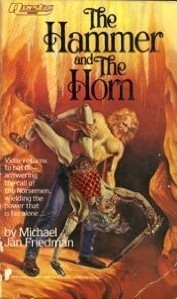
Your first original published fiction was a trilogy known as the Vidar Saga (The Hammer and the Horn, The Seekers and the Sword, The Fortress and the Fire). What inspired the storyline?
I’d always been a big fan of the Norse legends. Marvel’s Thor was a particular favorite of mine, but I’d actually been reading about the Norse gods even before I discovered them in the comics. I was especially interested in Ragnarok, the twilight of the gods, in that it was billed as the final battle for good and evil. And what happens after the “final” battle is over? What kinds of battles will be fought then? These are the questions that compelled me to write the Vidar Saga back in the mid-1980s. People still come over to me at cons and in book stores and tell me they just read my trilogy, and how much they enjoyed it. It’s very gratifying.
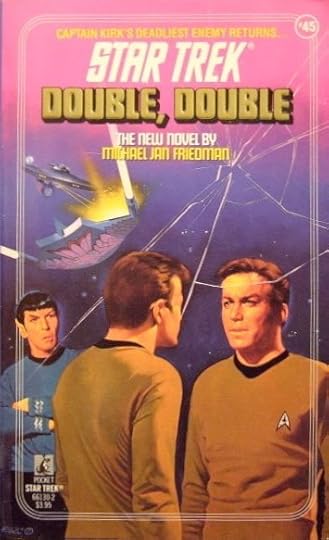
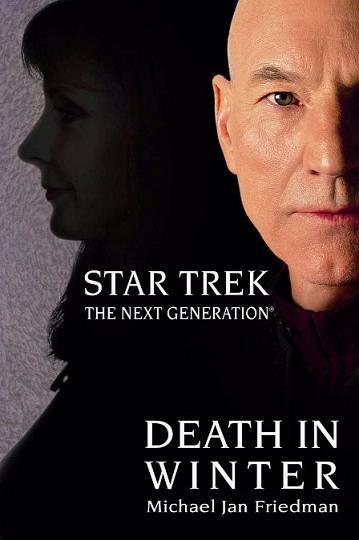
For more than two decades, you have earned recognition as a media tie-in writer beginning with your first Star Trek novel in 1988 called Double, Double. Since then, you’ve written or co-written nearly forty Star Trek novels. What was the catalyst for your enduring relationship with Trek and Pocket Books?
I remember seeing the very first episode of Star Trek back in September, 1966. I was sprawled on my bed in my pajamas, hooked by the eyeballs. Star Trek was space adventure with a heart, with compelling characters, with a sense of right and wrong that felt very much like my own. From then on, I couldn’t miss an episode.
Of course, I had been an avid science fiction reader since I was in first grade, but this was different. It wasn’t a book I’d be reading with a flashlight under the covers long after I was supposed to have gone to sleep. It was out there. It was live action. It was real.
Years later, after I had come out with the Vidar Saga and another original work, The Glove of Maiden’s Hair, my first agent hooked me up with Pocket Books. Dave Stern was the editor then. He turned down my first proposal, which was too fantasy-oriented. Then I sent in the proposal for Double, Double, he liked it, and we were on our way.
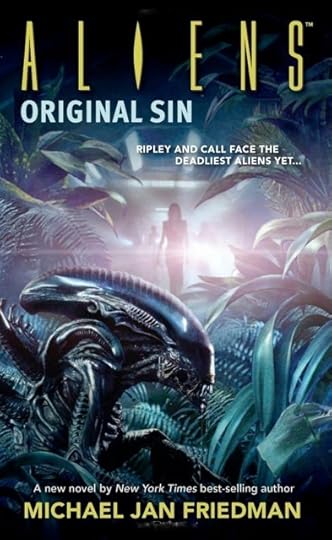
More recently, you also wrote three novels for Darkhorse (Aliens: Original Sin, The Wolfman: Hunter’s Moon, and Predator: Flesh and Blood). How did these projects come about?
Rob Simpson, whom I first met when he was an editor at DC Comics, is a friend of mine and a terrific guy. When he got the editor’s job at Dark Horse Press a few years ago, we talked and he asked me which of the franchises Dark Horse had licensed might be appealing to me. I asked if I could do an Aliens book and a Wolf Man book. I loved Aliens because I found the Ripley character so appealing (not to mention so sexy). Wolf Man got my juices flowing because I wanted to explore the Satanic side of the story. After all, Talbot had been cursed by the devil. I wanted to see how he would react if he were offered a respite from that curse.
The Predator assignment came a bit later; because I had overcommitted myself, I brought in my pal Bob Greenberger to help me with the project, and he did his usual bang-up job. The Predator book is about an organized-crime family in the future--a family that prides itself on its toughness--running up against the toughest beings of all in the form of the Predators.
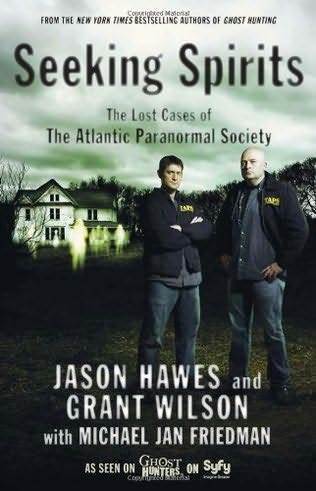
I was delighted in 2007 when I learned that you were collaborating with Jason Hawes and Grant Wilson (from SyFy’s Ghost Hunters) to produce the book, Ghost Hunting. That was followed up by Seeking Spirits in 2009. How did you become involved in these projects and is there another book on the horizon?
My agent called me with the Ghost Hunters gigs. I had seen the show on SyFy and enjoyed it, so I was pleased to have the chance to work with Jason and Grant. Aside from having great stories to tell, they’re good guys to hang out with. One day we spent an hour just sitting in a trailer in Jason’s driveway looking at tapes of events they had experienced but couldn’t explain--for instance, a swinging gate that had no earthly reason to be swinging. A third Ghost Hunters book that collects the first two is on tap for later this year.
You have almost two hundred comic books under your belt from Star Trek to Batman to Flash to Silver Surfer and of course your original title, Darkstars. H ow did you get started in comics?
You can blame that on Bob Greenberger, who was the Trek editor at DC Comics for a while. Shortly after I started doing work for Pocket Books, Dave Stern held a holiday pizza party for his New York City-area writers. Bob was there. I asked him if I could do some work for him. He said there weren’t any openings at the time because he already had a guy named Peter David working on the one Trek title he was editing. However, he would keep me in mind. When DC renewed its Trek license with Paramount and added a Next Gen title, Bob took a chance and gave me the Next Gen book. I don’t think he ever regretted it. At least he’s never said so in public...
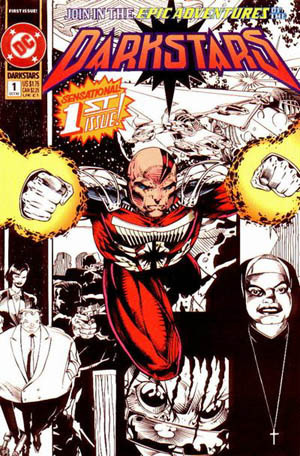
Please share with us the origins of your Darkstars series. What was the premise and how many issues were there?
Darkstars is a take off on the Green Lantern mythos. The Green Lantern Corp was created by a benevolent bunch of little blue guys with big heads who wanted to empower the exemplars of intelligent species to defend their species against evil. The Darkstars were a lot grittier, a lot less idealistic. Their organization was created by the Controllers, who selfishly wanted to keep chaos and violence as far from their civilization as they possibly could. So right from the get-go, the Darkstars were operating under a different philosophy. They defended whatever worlds they were assigned. I remember the first caption I wrote for the title character’s thoughts: “Another day, another dungheap.”
I loved writing Darkstars, although the series reads better if you go through in a single sitting than if you buy it and read it on a monthly basis. The story arcs were long, probably too long for the average comic reader, but they were different. In one issue I introduced an alien criminal who had basically turned state’s evidence and gone into a galactic witness protection program. In another issue I had the Darkstars trying to contain the growth of a tiny expanding universe in the Dallas suburbs.
Part of the thrill of working on Darkstars was the chance to take in great DC characters like Donna Troy and John Stewart who didn’t otherwise have a home at the moment. It made sense that they handled their Darkstar duties and abilities differently than did Ferrin Colos, the star of the series. In the end, Darkstars ran thirty-nine issues and was cancelled because of monthly sales that would be considered stellar (no pun intended) these days. But it was fun while it lasted.
Most of your comics work was with DC. How did you come to write for Silver Surfer (Marvel Comics)?
My friend Ron Marz was stepping away from the title to pursue other work and he knew I liked the character, so we collaborated on issues 101 and 102 of the 1980s-90s run. I had some ideas I wanted to implement for the Surfer but the editor wanted to make a clean break and gave the book to one of his fellow editors, I believe.
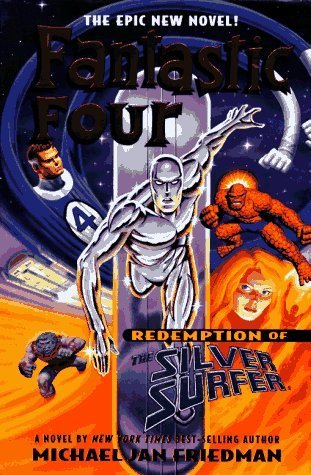
In the meantime, I got a chance some time later to rewrite the ultimate Surfer arc in a title called Marvel Remix, which updated classic Marvel stories. Ruben Diaz, the assistant editor on part of the Darkstars run, had left to become the editor on Remix. He wanted to retell the tale that first appeared in Fantastic Four 57-60 in which Doctor Doom steals the Power Cosmic from the Surfer. It was pretty hard to improve on Stan Lee, but I had a great time trying.
Tune in again tomorrow for Part Two when Mike talks about writing for Star Trek: Voyager, his upcoming original novel, Blood of the Gods, and the formation of Crazy 8 Press with fellow authors Bob Greenberger, Aaron Rosenberg, Howie Weinstein, Peter David, and Glen Hauman.
Michael Jan Friedman on Wikipedia
Michael Jan Friedman on Simon & Schuster
Michael Jan Friedman on the Internet Speculative Fiction Database
Author Interview: Michael Jan Friedman Part One
At SF conventions, Mike can often be seen entering the hotel soaked in sweat after a grueling run around the building. In that regard, Mike will always be half the man I am. That was a weight joke. Laugh, damn you.
For thirty years, Mike has written SF, Fantasy, paranormal, media tie-in, biographies, and comic books for both DC and Marvel. He is one of most prolific authors out there. So let's get talkin' to Michael Jan Friedman!
First, tell us where we can find you online such as blogs, websites, Facebook, etc.
My website can be found at MichaelJanFriedman.net. It’s got a blog. I hope to actually start putting in new entries in June, after I get a few other parts of my professional life in order. I can also be found at Crazy 8 Press--more on that later.
Your first original published fiction was a trilogy known as the Vidar Saga (The Hammer and the Horn, The Seekers and the Sword, The Fortress and the Fire). What inspired the storyline?
I’d always been a big fan of the Norse legends. Marvel’s Thor was a particular favorite of mine, but I’d actually been reading about the Norse gods even before I discovered them in the comics. I was especially interested in Ragnarok, the twilight of the gods, in that it was billed as the final battle for good and evil. And what happens after the “final” battle is over? What kinds of battles will be fought then? These are the questions that compelled me to write the Vidar Saga back in the mid-1980s. People still come over to me at cons and in book stores and tell me they just read my trilogy, and how much they enjoyed it. It’s very gratifying.
For more than two decades, you have earned recognition as a media tie-in writer beginning with your first Star Trek novel in 1988 called Double, Double. Since then, you’ve written or co-written nearly forty Star Trek novels. What was the catalyst for your enduring relationship with Trek and Pocket Books?
I remember seeing the very first episode of Star Trek back in September, 1966. I was sprawled on my bed in my pajamas, hooked by the eyeballs. Star Trek was space adventure with a heart, with compelling characters, with a sense of right and wrong that felt very much like my own. From then on, I couldn’t miss an episode.
Of course, I had been an avid science fiction reader since I was in first grade, but this was different. It wasn’t a book I’d be reading with a flashlight under the covers long after I was supposed to have gone to sleep. It was out there. It was live action. It was real.
Years later, after I had come out with the Vidar Saga and another original work, The Glove of Maiden’s Hair, my first agent hooked me up with Pocket Books. Dave Stern was the editor then. He turned down my first proposal, which was too fantasy-oriented. Then I sent in the proposal for Double, Double, he liked it, and we were on our way.
More recently, you also wrote three novels for Darkhorse (Aliens: Original Sin, The Wolfman: Hunter’s Moon, and Predator: Flesh and Blood). How did these projects come about?
Rob Simpson, whom I first met when he was an editor at DC Comics, is a friend of mine and a terrific guy. When he got the editor’s job at Dark Horse Press a few years ago, we talked and he asked me which of the franchises Dark Horse had licensed might be appealing to me. I asked if I could do an Aliens book and a Wolf Man book. I loved Aliens because I found the Ripley character so appealing (not to mention so sexy). Wolf Man got my juices flowing because I wanted to explore the Satanic side of the story. After all, Talbot had been cursed by the devil. I wanted to see how he would react if he were offered a respite from that curse.
The Predator assignment came a bit later; because I had overcommitted myself, I brought in my pal Bob Greenberger to help me with the project, and he did his usual bang-up job. The Predator book is about an organized-crime family in the future--a family that prides itself on its toughness--running up against the toughest beings of all in the form of the Predators.
I was delighted in 2007 when I learned that you were collaborating with Jason Hawes and Grant Wilson (from SyFy’s Ghost Hunters) to produce the book, Ghost Hunting. That was followed up by Seeking Spirits in 2009. How did you become involved in these projects and is there another book on the horizon?
My agent called me with the Ghost Hunters gigs. I had seen the show on SyFy and enjoyed it, so I was pleased to have the chance to work with Jason and Grant. Aside from having great stories to tell, they’re good guys to hang out with. One day we spent an hour just sitting in a trailer in Jason’s driveway looking at tapes of events they had experienced but couldn’t explain--for instance, a swinging gate that had no earthly reason to be swinging. A third Ghost Hunters book that collects the first two is on tap for later this year.
You have almost two hundred comic books under your belt from Star Trek to Batman to Flash to Silver Surfer and of course your original title, Darkstars. H ow did you get started in comics?
You can blame that on Bob Greenberger, who was the Trek editor at DC Comics for a while. Shortly after I started doing work for Pocket Books, Dave Stern held a holiday pizza party for his New York City-area writers. Bob was there. I asked him if I could do some work for him. He said there weren’t any openings at the time because he already had a guy named Peter David working on the one Trek title he was editing. However, he would keep me in mind. When DC renewed its Trek license with Paramount and added a Next Gen title, Bob took a chance and gave me the Next Gen book. I don’t think he ever regretted it. At least he’s never said so in public...
Please share with us the origins of your Darkstars series. What was the premise and how many issues were there?
Darkstars is a take off on the Green Lantern mythos. The Green Lantern Corp was created by a benevolent bunch of little blue guys with big heads who wanted to empower the exemplars of intelligent species to defend their species against evil. The Darkstars were a lot grittier, a lot less idealistic. Their organization was created by the Controllers, who selfishly wanted to keep chaos and violence as far from their civilization as they possibly could. So right from the get-go, the Darkstars were operating under a different philosophy. They defended whatever worlds they were assigned. I remember the first caption I wrote for the title character’s thoughts: “Another day, another dungheap.”
I loved writing Darkstars, although the series reads better if you go through in a single sitting than if you buy it and read it on a monthly basis. The story arcs were long, probably too long for the average comic reader, but they were different. In one issue I introduced an alien criminal who had basically turned state’s evidence and gone into a galactic witness protection program. In another issue I had the Darkstars trying to contain the growth of a tiny expanding universe in the Dallas suburbs.
Part of the thrill of working on Darkstars was the chance to take in great DC characters like Donna Troy and John Stewart who didn’t otherwise have a home at the moment. It made sense that they handled their Darkstar duties and abilities differently than did Ferrin Colos, the star of the series. In the end, Darkstars ran thirty-nine issues and was cancelled because of monthly sales that would be considered stellar (no pun intended) these days. But it was fun while it lasted.
Most of your comics work was with DC. How did you come to write for Silver Surfer (Marvel Comics)?
My friend Ron Marz was stepping away from the title to pursue other work and he knew I liked the character, so we collaborated on issues 101 and 102 of the 1980s-90s run. I had some ideas I wanted to implement for the Surfer but the editor wanted to make a clean break and gave the book to one of his fellow editors, I believe.
In the meantime, I got a chance some time later to rewrite the ultimate Surfer arc in a title called Marvel Remix, which updated classic Marvel stories. Ruben Diaz, the assistant editor on part of the Darkstars run, had left to become the editor on Remix. He wanted to retell the tale that first appeared in Fantastic Four 57-60 in which Doctor Doom steals the Power Cosmic from the Surfer. It was pretty hard to improve on Stan Lee, but I had a great time trying.
Tune in again tomorrow when Mike talks about writing for Star Trek: Voyager, his upcoming original novel, Blood of the Gods, and the formation of Crazy 8 Press with fellow authors Bob Greenberger, Aaron Rosenberg, Howie Weinstein, Peter David, and Glen Hauman.
Michael Jan Friedman on Wikipedia
Michael Jan Friedman on Simon & Schuster
Michael Jan Friedman on the Internet Speculative Fiction Database
May 18, 2011
About This Writing Stuff...
Get Paid to be a Word Nerd by Rebecca Smith Hurd
Should You Write a Novel or a Short Story? by Elizabeth Sims
When's the Best Time to Query? by Brian A. Klems
MFA Confidential: Another Year Over by Jessie Morrison
The Self-Publishing Set from Jane Friedman
8 Things Readers Want from Self-Published Authors
Should You Self-Publish After a Near Miss?
The "Self-Pub-Is-Crap" Debate
The Chuck Sambuchino List
Is the Second Novel Really Easier? by Douglas W. Jacobson
3 Reasons Why Visiting a Source (or Location) Will Better Your Writing by Dorothy Hinshaw Patent
New Agent Alert: Susan Finesman of Fine Literary
How I Got My Agent: David Halperin
7 Things I've Learned So Far by Rebecca Searle
May 15, 2011
My schedule for BaltiCon 45
Event: BaltiCon 45
Dates: May 27-30, 2011
Location: Hunt Valley Marriott Inn - Hunt Valley, MD (home of Shore Leave and Monster Mania cons as well)
Author Guest of Honor: Ben Bova
Full Guest List Here
While I don't have my entire schedule for this show yet, I am very excited to announce that my publisher, Firebringer Press , has been scheduled for a one hour session called "Firebringer Press Presents." This session is slated for 11PM to Midnight on Friday, May 27. As soon as I'm told which room, I'll post it here.
The session will include readings from author/editor/publisher Steven H. Wilson and yours truly! We will both read from our current and upcoming works and provide updates as to what's to come from Firebringer.
I will also be participating in several other dicussion panels. If they send my schedule along prior to the con, it will be posted here.
May 11, 2011
About this Writing Stuff...
While awaiting the contractors to arrive and finish their work on the house today, I thought I'd sneak in an abridged edition of About this Writing Stuff...
This week, Aaron Elkins gives us 3 Ways to Know When to End Your Chapters while Traci Borum asks if your novel has a Hook or Merely a Gimmick. We also have some how to's as Sarah Domet advises on choosing the best outline method, Kevin Hearne discusses finding your niche in Urban Fantasy and Laura Whitcomb provides ideas for organizing a developing ideas for your novel...and more!
3 Ways to Know When to End Your Chapters by Aaron Elkins
Ask the Pro: Literary Agent Daniel Lazar by Jane Friedman
How to Choose the Best Outline Method for You by Sarah Domet
How to Organize and Develop Ideas for Your Novel by Laura Whitcomb
How to Find Your Niche in Urban Fantasy by Kevin Hearne / posted by Chuck Sambuchino
New Agent Alert: Jeff Ourvan of Jennifer Lyons Literary Agency posted by Chuck Sambuchino
Does Your Novel Have a Hook or Merely a Gimmick? by Traci Borum / posted by Chuck Sambuchino
5 Key Research Sites You May Have Missed (Plus Cool Tricks) by Jane Friedman
A Short Break from Blogging
I suppose getting these jobs done in the same week speaks to efficiency...but the clean up is exhausting. Having your home in disarray ain't no fun either!
Regular blogging will resume in a few days.... for now, I'm taking a nap!
May 7, 2011
Testing the Prisoner's Audio Book Concludes...
IT'S OVER! IT'S ALL OVER!!!! Testing the Prisoner's audio book comes to a conclusion with a brief Epilogue followed by a delightful Q&A with myself and publisher/director Steven H. Wilson.
I've said before that the entire audio book will soon be posted on Podiobooks.com. That IS coming and I'll keep everyone updated. Steve provides other updates after our Q&A. Check it out now! Now, I say!
Check out Prometheus Radio Theatre on Facebook as well.
Thanks for listening and have a wonderful weekend!