Phil Giunta's Blog, page 102
August 27, 2012
99 cent Sale on ALL Firebringer Press Titles!!
NOTE: This sale expires on September 18!
Heroic Park by Lance Woods - CU27W
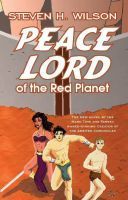
Peace Lord of the Red Planet by Steven H. Wilson - TC75G
Taken Liberty by Steven H. Wilson - HD68N
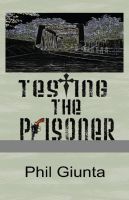
Testing the Prisoner by Phil Giunta - GW84J
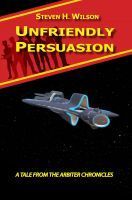
Unfriendly Persuasion by Steven H. Wilson - RV26T
Remember, Smashwords offers eBooks you can read on just about any device imaginable, including Online Reading (HTML, good for sampling in web browser), Kindle (.mobi for Kindle devices and Kindle apps), Epub (Apple iPad/iBooks, Nook, Sony Reader, Kobo, and most e-reading apps including Stanza, Aldiko, Adobe Digital Editions, others), PDF (good for reading on PC, or for home printing) RTF (readable on most word processors) LRF (Use only for older model Sony Readers that don't support .epub), Palm Doc (PDB) (for Palm reading devices) and Plain Text!


August 26, 2012
About This Writing Stuff...
Jody Hedlund wants us to make mountains out of hills (for our characters, not us writers!). Jami Gold questions whether having our books in brick and mortar stores truly helps sales anymore. We get excellent advice from contributors to Writer Unboxed, everything from living the writing life, to knowing our audience, to social media and platform.
Enjoy!
The Best Book Reviews Money Can Buy by David Streitfeld via Howard Weinstein (thanks, Howie!!)
The Indian Kindle Store Isn't the Real Deal...Yet by David Gaughran
How I Did It by Dean Wesley Smith via Kirkus Reviews
Independence by Joe Konrath
Bookstores vs. Backlist: A New Decision by Jami Gold
Obstacles: 3 Ways to Turn Hills into Mountains by Jody Hedlund
The End of the Unprofessional Writer by Kristine Kathryn Rusch
The Practice of Writing by John Vorhaus
Do You Know Who Your Audience Is? No, Really. Do You? by Dan Blank
'Social' Media: Author Ignorance by Porter Anderson
Wherein I Use Ugly Words Like Platform and Audience by David Olimpio
Against Acknowledgments by Sam Sacks
Author Interview: Paul Kupperberg - Part Two
We continue our interview with veteran writer, editor, and creator of the ReDeus universe, Paul Kupperberg. You can view Part One here.

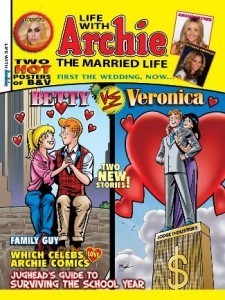
In 2010, you began writing the best selling and Eisner award nominated magazine series Life with
Archie: The Married Life for Archie Comics. How did this series come about?
I’ve known Archie editor Victor Gorelick for a long time, ever since I wrote some advertising custom comics for him back around 1980, but for various reasons, I never wrote any Archie stories for them until 2009. I’d done maybe half a dozen regular teen Archie tales--you know, pretty standard stuff, like Archie has to get Mrs. Lodge’s prize pooch from the groomer to the dog show without getting the dog dirty, Jughead pranking his friends, the students trading places with the teachers at Riverdale High for the day. Then I got a call from Victor inviting me to a meeting with him and Michael Uslan on a new project.
Michael, who I’ve known since the early-70s when he was an assistant editor at DC Comics and who’s now the producer of the Batman films among other things, had just done the six-part Archie marriage story line in Archie #600 - 605 that showed two possible futures in which Archie imagined what it would be like to marry first Veronica, than Betty. Well, that story was such a howling success for them, they decided to continue it as an ongoing series.
Michael was too busy to take on writing two ongoing monthlies, so they went looking elsewhere. I think the reason they went with me instead of one of their regular, long-standing writers was because I was new to the characters and didn’t come to them with a lot of baggage and preconceived notions. I mean, I think I had a good feel for the characters to begin with; I’ve been reading Archie since I was a kid in the ‘60s and continued to dip into the titles every once in a while over the years, just to see what was going on with them. From the very first time I sat down to write Archie, I think I had a good grasp on what made these characters tick, and I tried to do stories that played off their traits rather than just funny teenage humor. I guess since I was tapped for Life With Archie, I was successful at that. It probably didn’t hurt that I also had 35 years experience writing serialized story lines, which wasn’t a necessary skill for the typical Archie writer.
I’ve been on LWA for more than two years now (I’m currently wrapping up the script for #28) and the response to the book has been incredible since the beginning. We’ve gotten great reviews and a lot of media attention for some of our story lines, including killing off Miss Grundy, the marriage of Kevin Keller, and the current tale of Cheryl Blossom’s battle with breast cancer--and, of course, the 2012 Eisner Award nomination for Best Publication for Young Adult Readers--and it’s been one of the best and most exciting experiences I’ve had in comics. I really love writing this book.
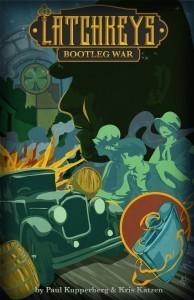
Recently, you co-wrote Bootleg War with Kris Katzen as the fourth installment in the YA series, Latchkeys , from Crazy 8 Press. " Bootleg War" debuted in June 2012. How did you become involved in the series?
Latchkeys, which was the brainchild of Steven Savile, was a project that grew out of a very ambitious gathering of more than half a dozen writers that called itself the Hivemind that formed about three years ago out of a writers email list we were all part of. The idea was that we would throw a batch of book ideas into a hat and pick the three or four we wanted to develop as young adult novel series. We did a lot of work developing these ideas, creating the characters, plotting out story arcs, etc., but the changing face of publishing and shrinking windows of opportunity, plus the paying work many of the members had committed to, finally made continuing our ambitious plans an exercise in futility, so we all sort of agreed to drop them and move on to other things.
A year ago, fellow Hiveminders Bob Greenberger and Aaron Rosenberg and some others started Crazy 8 Press as a venue to publish their own work and the work of their friends. Once they had that up and going, they offered to revitalize the Hivemind, beginning with Latchkeys, which was the concept that was furthest along in development.
I had already written the thirteenth, penultimate episode of Latchkeys, “Emmett,” and, since I had a hole in my schedule, volunteered to step in and do a rewrite on “Bootleg War” to get it ready for publication.
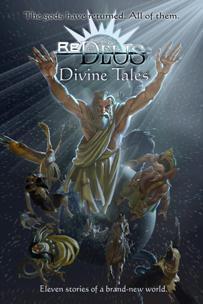
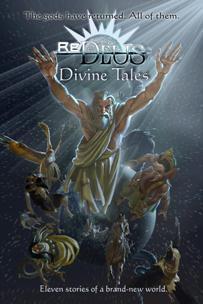
And speaking of Crazy 8 Press, you and I both have stories in their latest anthology, ReDeus: Divine Tales (August 2012), a universe that you helped create. What inspired your story, “No Other Gods Before Me”?
I was one of the architects of the ReDeus world, again with Bob Greenberger and Aaron Rosenberg, so I had a lot of time to think about my story. The premise of the ReDeus universe is that all the worlds’ pantheons return in one fell swoop one day in 2012 and proclaim that they’re back in charge and henceforth, humanity will worship them once again. That’s all well and good, but what about people who still believe in Jehovah, the god of the Bible and the Koran? Worshippers of the Roman, Greek, Native American, what have you gods can actually see and touch their deities, so what does worshipping a god who hasn’t made himself visible do to their faith? I wanted to look at that idea from three big, different perspectives: a casual, non-observant believer, a deeply religious person, and an over-the-top fanatic whose response to the return of what he sees as the “false gods” is to set out on a mission to destroy them.
What can readers expect next from you?
Lots of new and different stuff, I hope! I’ll be continuing on Life With Archie, and I’m currently writing a middle grade novel starring Kevin Keller for Penguin/Grossett & Dunlap that’s scheduled for release next summer. I’ve also got a story in R. Allen Leider’s Hellfire Lounge 3: Jinn Rummy (www.mariettapublishing.com) and I’m working on one for Hellfire Lounge 4: Reflections of Evil (out in May 2012). We’re also hoping to publish more Redeus anthologies, and, of course, my mystery novel, The Same Old Story (set in the world of comic book and pulp publishing in the early 1950s) is available as an ebook on Amazon.com and Smashwords.com, as are two short story collections, In My Shorts: Hitler’s Bellhop and Other Stories and Two Tales of Atlantis. I’m also working on several creator owned comic book properties with some very talented artists that I hope to be able to bring out one of these days.
What does Paul Kupperberg do when he isn’t writing?
Usually think about what I need to be writing next.
August 25, 2012
Author Interview: Paul Kupperberg - Part One
What Paul may be most known for, however, is his extensive work in the comic book industry. He has written for such titles as Superman, Supergirl, Aquaman, Green Lantern, Doom Patrol, Captain America, Conan, Scooby Doo and more. In addition, he is the creator of three DC Comics titles including Checkmate, Arion: Lord of Atlantis, and Takion.
I appreciate Paul taking the time to be with us!

First, tell us where we can find you online.
I’m all around in the dark, wherever you can look--wherever there’s a fight so hungry people can eat, I’m there. I’m in the way guys yell when they’re mad, in the way kids laugh when they’re hungry and they know supper’s ready...but mostly, I’m at Paulkupperberg.com, also known as “And Then I Wrote...”.
What inspired you to write comics and what was your first professional job in the comics industry?
I almost feel like a career in comics was inevitable for me. Comic books have been a part of my life for as long as I can recall. I guess having a brother a couple years older and an uncle ten years older living nearby helped expose me to them at an early age, and I was collecting them by the time I was at least seven or eight years old. In middle school, I met Paul Levitz and we started producing fanzines together and were deeply involved in the whole fan scene throughout high school.
Writing was another lifelong interest. I’ve got stories and comic books I was writing when I was eight or nine years old, so by the time I was in college, majoring in English literature, the writing bug and the professional connections kind of converged and I started submitting stories to some of the smaller comic book companies, like Gold Key and Charlton. My first sales were to editor Nick Cuti at Charlton Comics, short stories for their horror anthology titles, in 1975. The first story I sold was a five-pager called “Distress” which appeared in Scary Tales #3. A few months later, I started selling to DC Comics.
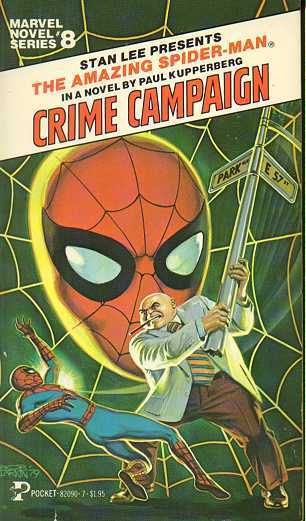
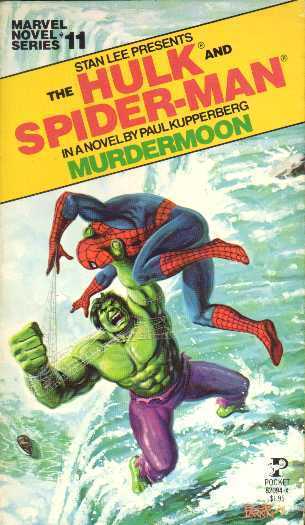
In addition to your extensive work at DC Comics, you also wrote two Spider Man novels in 1979,
Crime Campaign and Murdermoon. Did you pitch these ideas to Marvel/Pocket or vice versa?
Marvel writers Marv Wolfman and Len Wein, who were friends, were packaging the series of twelve Marvel novels for Pocket Books--although only eleven were published; a Silver Surfer novel was shelved because of the possibly of a film, if I remember correctly. Anyway, I was invited to write one of the books...I probably lobbied them for the job, since I didn’t have any experience writing prose at that point in my career and all they had to go on was my word that I could handle a novel, but after I turned in Crime Campaign, I guess they either figured I had the chops or were just really desperate to find someone to write the last one in the series, because they offered me the Spider-Man/Hulk team-up that became Murdermoon. Looking at them now, I’m assuming it was the desperation, but it was great experience and I’m glad I got the chance to do them.
I’ve known Michael Jan Friedman for nearly 20 years through fan-run conventions like Farpoint and Shore Leave. What brought you two together to co-write the middle grade novel The Sirian Conspiracy for the Wishbone Mystery series (Big Red Chair Books, June 1999)?
I got to know Friedman in the early ‘90s when I took over editing Darkstars, a title he had created with Travis Charest a little more than a year before I came on board. Mike had been writing Wishbone novels and he put me on to the editor to pitch for writing work for them. I forget who the original editor was I was dealing with, but I pitched a Wishbone version of Frankenstein, with Wishbone in the role of Victor Frankenstein.
For those who don’t remember the series, Wishbone was a PBS program “starring” a little terrier named Wishbone who retold classic stories and novels in the context of a “real life” story he and/or his human friends were involved in, with Wishbone in the key role of the retellings. It was a really cute and charming show, designed to excite kids about the great books and promote literacy. Big Red Chair Books had several different book series based on the show, including the retelling of the classics, a younger readers program, and a series of original Wishbone Mysteries.
So, I pitched the Frankenstein story, wrote several sample chapters, but got a lot of editorial runaround, so Mike suggested we co-write his next Wishbone Mystery that he was doing with a different editor, Kevin Ryan. I believe it was Mike’s plot, but I wrote the front half of the book and Mike the back end.
Your career has covered a diverse range of topics and genres including non-fiction and humor. What inspired Jew-Jitsu, The Hebrew Hands of Fury (Citadel, October 2008)?
Yeah, I’ve made it a point to work on as many different genres as possible; I’ve written comic books, newspaper comic strips, online animation, story books, chapter books, YA novels, color and activity books, non-fiction, reviews, essays, advertising and promotional writing...just yesterday, I wrote packaging copy for the box of a new tablet computer that’s coming to market.
For the first twenty years of my career probably 90% of my writing was for comics, but as I got more comfortable writing prose and was able to sell a few stories here and there, I started branching out into that. In 2001, I started writing young adult non-fiction books for Rosen Publishing on topics including history, science, and biography. In 2005, I wrote a novel starring the Justice Society of America for DC Comics that was to be published by iBooks, a publisher that went under after the death of its owner, Byron Preiss; the company closed its doors quite literally the week JSA: Ragnarok was scheduled to go to press. I started writing humor in the late-70s, doing movie parodies and other pieces for Crazy Magazine, Marvel’s MAD Magazine rip-off, and later on for DC’s Cartoon Network titles with characters like Johnny Bravo, I.M. Weasel, Scooby Doo, and others.
Jew-Jitsu was an outgrowth of my tenure as executive editor of Weekly World News, the black and white tabloid of fake news from the publishers of the National Enquirer and other tabloids. I left my editorial staff position at DC in 2006 for WWN, where I was working on a number of fronts, including editorial, licensing, and writing. A typical WWN article was a strange blend of fact and fiction served up with heaping helpings of absurdity and social satire.
We published an article about Jew-Jitsu, a martial art developed by a Hassidic Jew, which caught the eye of an editor at Kensington Books. The editor wanted to expand this two page article into an entire how-to manual, but the writer of the article didn’t feel he had an entire book on the subject in him. I did, though, so WWN editor-in-chief Jeff Rovin gave me the gig. I’m a big fan of absurd humor, plus I’m a big old Jew from Brooklyn who knows a smattering of Yiddish and a bit about Jewish religious traditions and customs.
Weekly World News folded in mid-2007, but Kensington had enough confidence in Jew-Jitsu to go through with the project even without WWN branding...unlike another book we were working on for Random House, Mutant Pets, Alien School Boards, and Yard Sales: the Weekly World News Book of Suburban Legends.
Part Two of Paul's interview continues here!
Paul Kupperberg on Amazon
[image error]

August 22, 2012
Author Interview: Dave Galanter
Over the course of the next few months, I will be interviewing each of my fellow ReDeus authors. We start today with Dave Galanter.
I'd known Dave from the Maryland SF conventions, Farpoint and Shore Leave , having attended a few writing seminars that he'd co-hosted with Howard Weinstein , Kelly Meding , and Bob Jones. I can honestly say that Dave is one of the nicest and funniest guys I've ever met.
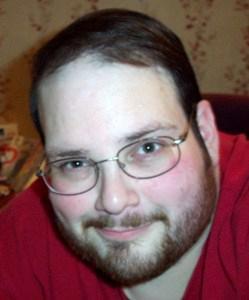
First, tell us where we can find you online.
I have a pretty big internet footprint, so you can find by on Google+ under my name, on FaceBook under my name, and on twitter under @DaveGalanter. Swing a dead nyancat and you’ll probably hit my internet presence.
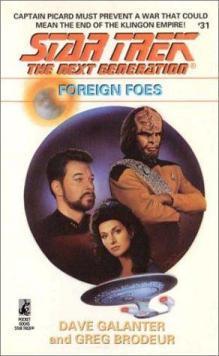
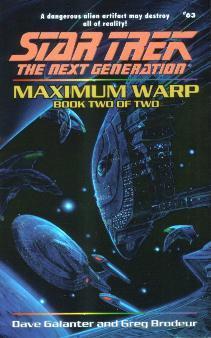
Before publishing Star Trek stories professionally with Simon and Schuster, did you write Trek or other fan fiction?
I wrote things but never published them. I did write a few “Wonder Years” episodes on speculation and tried to sell them, but while the producers like them, they had similar stories in development and so I never sold one.
Although you write solo now, many of your early
Star Trek
novels were co-written with Greg Brodeur, husband of author Diane Carey. How did you come to know Diane and Greg?
I met them in a local bookstore when I was 16. We became friends, and then family as they sort of adopted me by taking me under their wings. I actually lived in their home for 6 years just out of college and consider them family. What’s funny is I was in that book store because I’d just read one of Diane’s books and thought “wow, these Trek books are good—I should get a couple more.” I only saw them on the way out and was shocked they lived just miles from me. I drove home and got my book for them to sign and after more than 25 years we’re still family and I talk to one of them or their kids (my “niece and nephews”) every day. Diane really taught me how to write, and Greg taught me how to plot. I owe who I am as a writer, and in some ways as a person, to them.
You and I both have stories in the new anthology,
ReDeus: Divine Tales
(Crazy 8 Press, August 2012). What inspired your story, “Tricks of the Trade”?
My father remarried a few years ago (my mother has been dead almost 10 years) and this sweet little old Jew married a Muslim woman from Africa. The religions are so similar, it inspired me to have a story which spoke to the similarities as well as gave some thoughts on how someone without a religion would approach the changes in the world if a bunch of “gods” returned.
What can readers expect next from you?
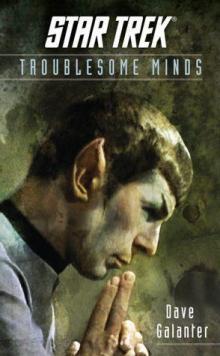
I’ve just adapted my last Trek book “Troublesome Minds” into a teleplay to be filmed by Star Trek: Phase II’s webseries in November, and I wrote the recently released Phase II vignette called “Going Boldly.” I’m also working on a detective novel with a science fiction conceit which I hope to get back to work on soon. It’s been a busy summer. You can also find that my wife and I have a blog called “Sam and Dave Blog Classic Trek” on Facebook (and a similarly titled radio show on MyBlogTalkRadio via NDBMedia.com) on which we watch and dicuss classic Trek episodes as I watch them for the millionth time and Sam (my wife Simantha) watches them for the first time.
What does Dave Galanter do when he isn’t writing?
Well, I spend time with my wife and my brother Josh and his wife recently moved to the area and so I love spending time with their daughter and watching her grow up. I watch too much Reality TV and play videogames and try to be as lazy as possible. I also have a day job at Gallaudet University as a server administrator.
Dave Galanter on Amazon
August 18, 2012
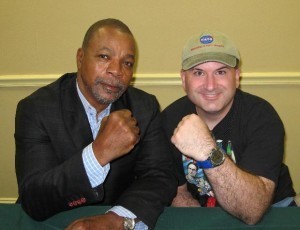
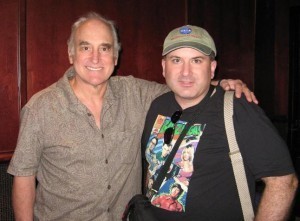
Monster Mania 22 - Cherry Hill, NJ
Other guests at the show included several cast members from the Hellraiser films (including Doug Bradley, Nicholas Vince and others), several cast members from The Walking Dead (including Jeff Demunn, Emma Bell, Norman Reedus, and Steven Yeun), comedic actor Jamie Kennedy, Nancy Allen (RoboCop, Blowout) and many more.
August 17, 2012
About This Writing Stuff...
However, I managed to squeeze in a standard sized edition of About This Writing Stuff. Alan Finder reviews the joys and hazards of self publishing. Courtney Carpenter lists 21 traits of excellent fiction while Brian Klems gives strength to minor characters. Mixing genres? Doing some worldbuilding? Jami Gold has some suggestions about all of that. Jody Hedlund helps us get our stories under control, Kristen Lamb talks setting, and Jurgen Wolff peels the "kick me" sign off our backs.
Finally, Paul Kupperberg thinks the gods are crazy as he discusses our new anthology, ReDeus: Divine Tales.
The Joys and Hazards of Self Publishing on the Web by Alan Finder
The 21 Key Traits of Best Selling Fiction by Courtney Carpenter
Questions to Ask (& Strengthen) Your Minor Characters by Brian A. Klems
How to Write Your Novel: 6 Pieces of Advice by Steven Raichlin via Chuck Sambuchino
Mixing Genres? In-Depth Worldbuilding? How to Manage Reader Expectations by Jami Gold (via Melinda S. Collins)
How to Rein In an Out-of-Control Story by Jody Hedlund
Setting: Adding Dimension to Your Fiction by Kristen Lamb
Writers, Let's Not Wear a Kick-Me Sign On Our Backs by Jurgen Wolff
The Gods Must Be Meshuggenah! by Paul Kupperberg
August 12, 2012
About This Writing Stuff...
Nevertheless, let's congratulate Crazy 8 Press as they turn one year old! Jami Gold provides the second installment in her New Publishing Paradigm series and makes it clear that only the author and reader truly matter in the publishing chain. Kristen Lamb gives us keys to unlock our futures as writers. Kathryn Kathryn Rusch talks more about publishing contracts and Ann Aguirre offers tips on collaboration.
Crazy 8 Press Celebrates its First Anniversary by Bob Greenberger
The New Publishing Paradigm Part Two: What Value Do Publishers Add? by Jami Gold
Unlocking Your Great Future - 5 Keys to Writing Success by Kristen Lamb
The Agent Clause by Kristine Kathryn Rusch
Natural Born Collaborator by Ann Aguirre
August 11, 2012
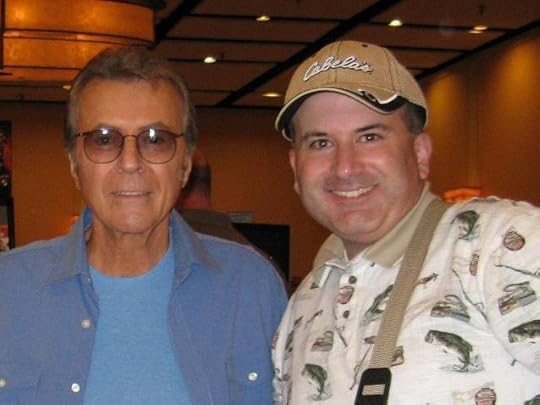
Mid-Atlantic Nostalgia Con
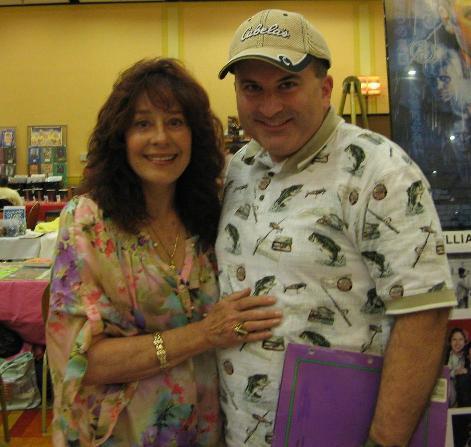
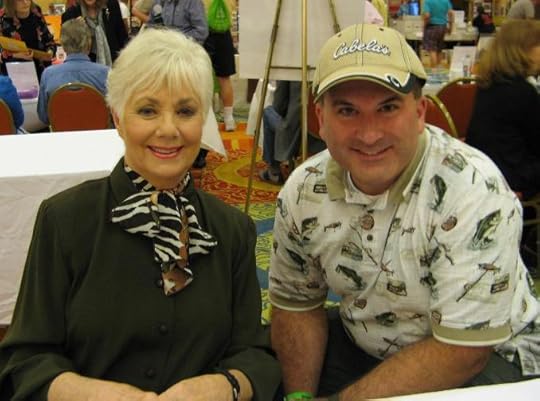
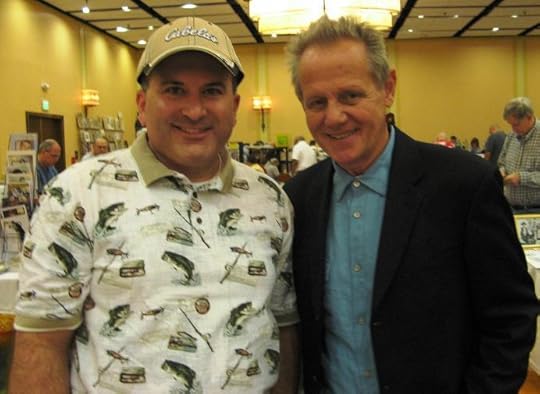
August 10, 2012
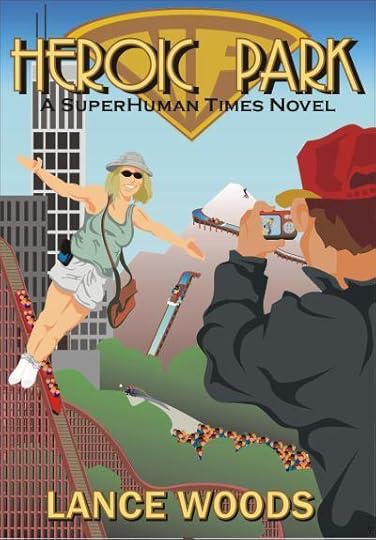
Book Review: Heroic Park by Lance Woods
A week at the beach this summer. Check.
A weekend at Shore Leave SF convention. Check.
A few days at Heroic Park. Check.
Oh, what's Heroic Park you ask? You never heard of the place? Never heard of the theme park in Arizona where patrons can be infused with superhuman powers that allow them to fly, grant them super speed, or amazing strength for one day?
Where the hell have you been? Dorney Park?
Join Superhuman Times newspaper reporter Kevin Dunbar as he takes you on a tour of the world's most thrilling amusement park decked out to resemble Times Square in New York City yet constructed in Pima County, Arizona. During their visit, average humans can choose to be injected with a nano-serum that grants them the abilities of their fellow superhuman citizens.
Superhumans have been around for decades, you know, battling supervillains and saving the planet. However, once the last of the supervillains had fled Earth, what was a pantheon of heroes to do?
Get real jobs, that's what.
Take Nataliya Tzone, for example. A sorceress extraordinaire, Ms. Tzone now owns her own security company, Tzone Defense. It just so happens to be under contract to provide security for Heroic Park. Yet Ms. Tzone has her own reasons for wanting to watch over the place.
And then we have Rei Shinozaki, a superhuman with the ability to fly and fire mean green beams from her eyes. She's also hot and has a past with our intrepid reporter, Dunbar. That past is rekindled when Rei arrives at Heroic Park a few days prior to opening day, having accepted a job as Dunbar's photographer. Surprise, dude!
The creator of the park, Tony Lueras, is idolized by Dunbar who worked New Jersey boardwalk rides as a teen. Lueras is a legnendary theme park designer and visionary. Heroic Park is his greatest accomplishment, but it would not have been possible without the financial backing of Coral Mayhew. Coral not only financed the park but also ponied up the funds for the research into the nano-serum that grants superhuman powers to ordinary folks like you and me. The researcher and developer of the serum is Dr. Juno Moreta, the park's Chief Medical Officer.
Now, you might ask, "wait a minute, how can all this be happening without the federal government's knowledge?" Enter special agent Michael Windham, federal liaison to Heroic Park (which happened to be built on federal land).
After exploring the rides, the posh hotel, and the onsite Crichton Hospital (named for, you guessed it, Michael Crichton), along comes a death to ruin the fun.
The body of a teammate named Jakey is found in his dorm (Teammate is the term given to park employees). The cause of his death was, apparently, high speed collision with a door. Accidental, right? Well, when traces of a new form of untested nano-serum are found on Jakey, things start to get suspicious. See, Dr. Moreto was experimenting with a formula that would grant superhuman abilities for two days, not just one. Yet that serum was not to leave the lab!
The situation is kept fairly quiet by Windham until Jakey's roomate, Vicente, dies in a rather public and gruesome manner the next day. Dunbar, Rei, Nataliya, Coral, and Windham set out to unlock the mystery behind these bizarre deaths and when they do, they get a little more than they bargained for.
Heroic Park is based on characters and situations from Lance Woods' audio drama, Superhuman Times, as heard on Prometheus Radio Theatre. Woods does a delightful job of bringing that world into narrative form for his debut novel. Heroic Park is a fun and easy read with rich and diverse characters in a unique environment. Sure, there are plenty of fictional tales set in amusement parks but how many of their characters have super powers?