
 Sign in with Facebook
Sergei Guriev’s Followers (41)


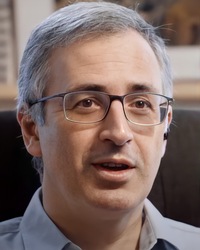
Sergei Guriev
Born
in Vladikavkaz, Russian Federation
October 21, 1971
Twitter
Genre
More books by Sergei Guriev…


“These four changes—in the nature of work, education, social values, and communication technology—make it harder for dictators to dominate citizens in the old way. Harsh laws and bureaucratic regulations provoke furious responses from previously docile groups. These groups have new skills and networks that help them resist. At the same time, violent repression and comprehensive censorship destroy the innovation now central to progress. Eventually, the expansion of the highly educated, creative class, with its demands for self-expression and participation, makes it difficult to resist a move to some form of democracy. But so long as this class is not too large and the leader has the resources to co-opt or censor its members, an alternative is spin dictatorship. At least for a while, the ruler can buy off the informed with government contracts and privileges. So long as they stay loyal, he can tolerate their niche magazines, websites, and international networking events. He can even hire the creative types to design an alternative reality for the masses. This strategy will not work against a Sakharov. But Sakharovs are rare. With a modern, centrally controlled mass media, they pose little threat. Co-opting the informed takes resources. When these run low, spin dictators turn to censorship, which is often cheaper. They need not censor everything. All that really matters is to stop opposition media reaching a mass audience. And here the uneven dynamics of cultural change help. Early in the postindustrial era, most people still have industrial-era values. They are conformist and risk averse. The less educated are alienated from the creative types by resentment, economic anxiety, and attachment to tradition. Spin dictators can exploit these sentiments, rallying the remaining workers against the “counterculture” while branding the intellectuals as disloyal, sacrilegious, or sexually deviant. Such smears inoculate the leader’s base against opposition revelations. As long as the informed are not too strong, manipulation works well. Dictators can resist political demands without destroying the creative economy or revealing their own brutality to the public.”
― Spin Dictators: The Changing Face of Tyranny in the 21st Century
― Spin Dictators: The Changing Face of Tyranny in the 21st Century
“Many scholars believe that dictators commit fraud—and do so blatantly—to demoralize potential challengers. If elections appear free and fair, opponents have an incentive to try to broaden their support and run. But if the incumbent makes clear he will use fraud to cling to power, mounting a campaign may seem pointless to the opposition and its donors. Similarly, anti-regime voters may not bother to vote when they are sure they cannot change the outcome. And, completing the circle, if opposition voters do not bother to vote, then in the end the incumbent does not need to use much fraud.”
― Spin Dictators: The Changing Face of Tyranny in the 21st Century
― Spin Dictators: The Changing Face of Tyranny in the 21st Century
“As countries became postindustrial, educated, and internationally linked, their rulers had to adapt—or, at least, pretend to. Amid the third wave of democracy, liberal norms spread worldwide.
The force of this modernizing onslaught was what eventually caused the losers to rally. Today’s nativist populism—in both West and East—unites the economic resentment and obsolescent values of those hurt by the postindustrial transition. Workers and others from dying industrial regions; owners of polluting factories and mines; farmers and rural laborers; the illiberal old, disoriented by value change—all come together in a powerful but gradually shrinking coalition. That coalition furnishes support for populists in advanced democracies and spin dictators in semi-modernized autocracies. Instead of compensating and reintegrating economic losers, such leaders exploit them.”
― Spin Dictators: The Changing Face of Tyranny in the 21st Century
The force of this modernizing onslaught was what eventually caused the losers to rally. Today’s nativist populism—in both West and East—unites the economic resentment and obsolescent values of those hurt by the postindustrial transition. Workers and others from dying industrial regions; owners of polluting factories and mines; farmers and rural laborers; the illiberal old, disoriented by value change—all come together in a powerful but gradually shrinking coalition. That coalition furnishes support for populists in advanced democracies and spin dictators in semi-modernized autocracies. Instead of compensating and reintegrating economic losers, such leaders exploit them.”
― Spin Dictators: The Changing Face of Tyranny in the 21st Century
Topics Mentioning This Author
| topics | posts | views | last activity | |
|---|---|---|---|---|
| Goodreads Librari...: Please add and Uzbek translation of "Spin Dictators" | 4 | 169 | Aug 09, 2024 04:16PM |
Is this you? Let us know. If not, help out and invite Sergei to Goodreads.
