
Stuart Sharp's Blog, page 6
March 5, 2014
The Glass Goes Free
If you're looking for the IWSG post, it's immediately below this. This is just a quick announcement that for the next few days (until I get horrified by the prospect of it, essentially), my novel The Glass is going to be free on Smashwords. I would do it on Amazon, but I haven't worked out how. Anyway, here's the link if you want to pick up a copy:
https://www.smashwords.com/books/view/404725
I hope you enjoy it.
https://www.smashwords.com/books/view/404725
I hope you enjoy it.


IWSG March
This month, I thought I'd share something that I find encouraging rather than an insecurity. That thought is simply that I'm doing what I always wanted to do, and I'd guess that it's the same for a lot of writers. It's not a race to some far off finishing line of achieving something, but an on going situation where you have.
What do I mean? It's simple. When they asked me what I wanted to do as a child, I wanted to be a writer. I didn't say that, because I didn't think it was conceivable that anyone could just decide to be one, or that they could make a living if they did. I decided to be a solicitor instead, or a civil servant, or a lecturer.
But the truth was that I wanted to be a writer. Notice the simplicity of that desire. Children want to be writers. It's the adults who talk about major successes, bestsellers, and the rest. I've never had a bestseller in my own name. I've written them for others, but I suspect that whatever it is that makes things bestsellers, I don't have that in me. My novels tend too much towards the funny and the weird for that anyway.
But the thing is, I'm making a living through my ghost writing. I'm a writer, and I'm in a position to go on being a writer. I could be upset that I'm not Terry Pratchett or Douglas Adams, but those are more recent dreams. The child who just wanted to make things up for a living would be perfectly happy, and that's enough.
What do I mean? It's simple. When they asked me what I wanted to do as a child, I wanted to be a writer. I didn't say that, because I didn't think it was conceivable that anyone could just decide to be one, or that they could make a living if they did. I decided to be a solicitor instead, or a civil servant, or a lecturer.
But the truth was that I wanted to be a writer. Notice the simplicity of that desire. Children want to be writers. It's the adults who talk about major successes, bestsellers, and the rest. I've never had a bestseller in my own name. I've written them for others, but I suspect that whatever it is that makes things bestsellers, I don't have that in me. My novels tend too much towards the funny and the weird for that anyway.
But the thing is, I'm making a living through my ghost writing. I'm a writer, and I'm in a position to go on being a writer. I could be upset that I'm not Terry Pratchett or Douglas Adams, but those are more recent dreams. The child who just wanted to make things up for a living would be perfectly happy, and that's enough.
February 28, 2014
Some structure books
I own a few different books on the craft of writing, from the traditional and practically mandatory (the hero's journey) to the slightly different (John Truby's The Art of Story) to the frankly quite unorthodox (Stuart Horwitz's Blueprint Your Bestseller). I'm currently about halfway through the massive tome that is the Seven Basic Plots. And I thought I'd have a chat about my feelings on this sort of thing.
Don't worry, I'm not about to lay out my process, or my step by step 'you have to write a novel this way' routine. I just want to talk about the process of laying out a practical poetics of writing, and some of my reactions to it.
My instinctive reactions are twofold. There's a part of me that likes being told that there's an easy way to produce great fiction, because I'd like to be able to produce great fiction and who isn't a fan of easy ways? There's also a part of me though that instinctively assumes that it's a con. That there is no step by step path to success. That dislikes even the idea of someone trying to contain art that way.
Since I work as a ghostwriter, I suppose that I should be on board with this sort of thing. There is definitely a craft of writing that can be learned. There are definitely things people do with building and releasing tension, working towards and setting up an ending that could be called structure. There are even some genre specific structures that I use all the time in my work (such as the Romance 'formula' and variations thereof).
And yet... I think the problems I have are twofold. First, I have significant issues with anyone who says that they have discovered the way that all stories are built, and that even people who don't know it are 'really' doing it the way a particular structure expert has devised. What that really means is that they have built a tool of analysis sufficiently general that they can retrospectively apply it to any story, if they sort of squint, and very occasionally hit the stories with a large hammer to get them into the right shape. I find it particularly amusing when two or three writing books latch onto the same story, and say that it was 'really' written using the elements they prescribe as being essential to any good story.
My second problem comes with the words 'good story', because most of these attempts really tell us very little about what makes a good story. They may be able to cite a few Hollywood blockbusters that have genuinely been written by people who have read their book, but they don't ever mention the flops that the studio thinks 'should' have succeeded, because they follow the same structure. Give me a flop, whether a book or a film, and the odds are that it can be analysed and said to use exactly the same techniques.
Why? Because there comes a point with theories where they become essentially useless. The more general they are, the more applicable they are to every writing situation, the less able they are to do anything to differentiate between different types of writing. The less they actually do any of the heavy lifting for you. We'd probably be better off reading about the nuts and bolts of writing individual chapters, or at least practical advice on tension and release, but we end up reading things that we then try to shoehorn into our approaches.
Why? Why is all this so popular? Why is it such big business? There are probably two answers to that. One is that most of the writers I have met, myself included, tend not to think of themselves as good enough. We wouldn't dare to think that we actually know all about this stuff we do. So we look outside ourselves for answers.
The second, and perhaps more important, is Hollywood. Although there has always been literary criticism, and attempts to pick apart how writing works are as old as Aristotle, it seems like it isn't a coincidence that some of the biggest attempts at the writer's self help genre have come since the birth of cinema. It certainly isn't a coincidence that many of them these days aim themselves firmly at screenwriters, cite movies as their main sources, and seem to hope to be picked up as 'the' method by a big studio.
Why? Because films cost money to make, and film studios want as close to a guarantee as they can get that they will make their considerable investment back. They need to believe that writing in a particular way will guarantee an effective story, because to do otherwise is to suggest that they might be gambling their money on nothing more than an executive's taste in movies. It is the story equivalent of a horse racing 'system'.
Of course, I'm firmly in the other camp. The camp that has to believe that there is no method, because otherwise that devalues my own experience. The semi-mystical quality of the writer's process. The truth is probably somewhere in between. The difference is that I'm prepared to admit that an in between might conceivably exist.
Don't worry, I'm not about to lay out my process, or my step by step 'you have to write a novel this way' routine. I just want to talk about the process of laying out a practical poetics of writing, and some of my reactions to it.
My instinctive reactions are twofold. There's a part of me that likes being told that there's an easy way to produce great fiction, because I'd like to be able to produce great fiction and who isn't a fan of easy ways? There's also a part of me though that instinctively assumes that it's a con. That there is no step by step path to success. That dislikes even the idea of someone trying to contain art that way.
Since I work as a ghostwriter, I suppose that I should be on board with this sort of thing. There is definitely a craft of writing that can be learned. There are definitely things people do with building and releasing tension, working towards and setting up an ending that could be called structure. There are even some genre specific structures that I use all the time in my work (such as the Romance 'formula' and variations thereof).
And yet... I think the problems I have are twofold. First, I have significant issues with anyone who says that they have discovered the way that all stories are built, and that even people who don't know it are 'really' doing it the way a particular structure expert has devised. What that really means is that they have built a tool of analysis sufficiently general that they can retrospectively apply it to any story, if they sort of squint, and very occasionally hit the stories with a large hammer to get them into the right shape. I find it particularly amusing when two or three writing books latch onto the same story, and say that it was 'really' written using the elements they prescribe as being essential to any good story.
My second problem comes with the words 'good story', because most of these attempts really tell us very little about what makes a good story. They may be able to cite a few Hollywood blockbusters that have genuinely been written by people who have read their book, but they don't ever mention the flops that the studio thinks 'should' have succeeded, because they follow the same structure. Give me a flop, whether a book or a film, and the odds are that it can be analysed and said to use exactly the same techniques.
Why? Because there comes a point with theories where they become essentially useless. The more general they are, the more applicable they are to every writing situation, the less able they are to do anything to differentiate between different types of writing. The less they actually do any of the heavy lifting for you. We'd probably be better off reading about the nuts and bolts of writing individual chapters, or at least practical advice on tension and release, but we end up reading things that we then try to shoehorn into our approaches.
Why? Why is all this so popular? Why is it such big business? There are probably two answers to that. One is that most of the writers I have met, myself included, tend not to think of themselves as good enough. We wouldn't dare to think that we actually know all about this stuff we do. So we look outside ourselves for answers.
The second, and perhaps more important, is Hollywood. Although there has always been literary criticism, and attempts to pick apart how writing works are as old as Aristotle, it seems like it isn't a coincidence that some of the biggest attempts at the writer's self help genre have come since the birth of cinema. It certainly isn't a coincidence that many of them these days aim themselves firmly at screenwriters, cite movies as their main sources, and seem to hope to be picked up as 'the' method by a big studio.
Why? Because films cost money to make, and film studios want as close to a guarantee as they can get that they will make their considerable investment back. They need to believe that writing in a particular way will guarantee an effective story, because to do otherwise is to suggest that they might be gambling their money on nothing more than an executive's taste in movies. It is the story equivalent of a horse racing 'system'.
Of course, I'm firmly in the other camp. The camp that has to believe that there is no method, because otherwise that devalues my own experience. The semi-mystical quality of the writer's process. The truth is probably somewhere in between. The difference is that I'm prepared to admit that an in between might conceivably exist.
February 24, 2014
Modern Saber Fencing and Fechtbuchs
No, this isn't some comparison between modern sport fencing techniques and historical long sword ones. Frankly, trying to argue between the two misses the point that one is taking place at a time when swords are obsolete as weapons of personal defence, and that both are perfectly adapted for what they're trying to achieve.
What I would like to do is look at the ways historical fencers use texts, and ask if the examination of a modern book on sport fencing can teach us anything about what it is and is not possible to get out of them. I've picked Modern Saber Fencing by Zbigniew Borysiuk partly because it's the last book on the modern stuff I picked up, partly because I have it readily to hand, and partly because even if the man insists on spelling it the American way, it's typically hailed as a relatively important guide to the state of the sport.
So, let's pretend for a moment that it's anything up to a thousand years in the future. That we have, for arbitrary reasons, lost the accompanying DVD (possibly by storing them in two separate places so that it's impossible to find them both at once, as I do). We've got a copy of the book, so what does it tell us about swordplay in the early 21st century?
Well, it makes it clear that it's all sportive, thankfully, so at least our descendants aren't going to think that we were still fighting with the things, although they'll probably be a bit upset by our persistent inability to invent the lightsabre. It also gives us some history of fencing and its various developments, and I suppose if these future readers are a bit lazy or pushed for time, they might make the mistake of assuming that history is basically correct, rather than just the received wisdom that every fencing coach gets as a kind of starting point to tell their class. What it doesn't give us is a breakdown of the rules as they stand, so that piece of crucial context is entirely missing (the way it can often be awkward, dipping into Talhoffer's work and forgetting that most of this was in contrived judicial duels).
From the extended section on sports science at the back, they might reasonably get the impression that all fencing at the moment is aimed at high level athletes, or at least that it is all aimed eventually at producing them through clear, well coordinated channels (like the ones they no doubt fly down to work in the future). This tends to ignore the masses of casual, semi-casual, and frankly amazed that they keep turning up fencers who populate every fencing club I've ever been in. Fencers who certainly don't do the kind of hard core plyometric and reaction time work that he suggests. Fencers who, unless like me they're recovering academics, probably didn't bother reading most of the second half of the book at all.
With that out of the way, let's look at the bits actually focussed on fencing technique. Specifically, we're looking at two sections. Two, out of quite a long and complex book. There's an initial analysis of hits at one world championships, alongside a breakdown of hits for key matches (as determined by the author) of the preceding couple of decades. The idea there is to give a picture of trends in the sport (decreased double hits, few parries, lots of beats and counter attacks). Would this pattern be recognisable if you went into a competition tomorrow and watched a bout at random? I'd say it would depend a little on the level. Certainly, amongst lower level athletes (like me) there are still a lot of double hits. A lot of double hits. And successful counter attacks are rarer, because they depend on perfect timing and explosiveness to a degree most of us don't have (Borysiuk doesn't point this out, the same way Fiore de Liberi doesn't point out that his knife defences work best if you happen to know that the other bloke's knife doesn't have an edge on it, only a stabbing point). There's a level of context there that isn't stated.
Then there's the section on individual techniques. One point we quickly get here is that the quality of the illustrations matters. There's a review of the en garde position for example that points to modern developments, but then shows an old school en garde in the photo. Many of the photos come across as quite stilted and posed.
The selection of techniques is quite broad, covering individual techniques of footwork, attack, defence and blade preparation, but there are points to make here. First, the terminology used is exclusively the American stuff, which when so much of the world uses the French, could easily mislead our future fencing enthusiast as to how things were back in the 21st century. That's noticeable in the positions to some extent, but also in the preparations on the blade.
Some of those preparations receive rather more attention than the basics of stepping and hitting. Others listed in other fencing books, and that I face regularly, find themselves absent. There is an extensive section on different types of lunge and the so called 'sabre fleche' or 'flunge' (and it's worth noting that there are at least a couple of ways of doing the flunge, only one of which is listed) but nothing I could see on half step changes of direction or the influence of bouncing footwork.
In this, as in the general makeup of the book with its sports science stuff, it reflects the interests of the author, to such an extent that it's hard to see if our future fencing enthusiast could ever take this as a reasonable guide to the whole of the sport. Not only do people fence differently from day to day, but even in the short time since this was published, there have been one or two developments at the highest level (such as the Koreans' typically quite low en garde, seeming to skim towards the opponent with a low line attack of a type not covered in the book).
Could someone learn to fence from this book? I've picked up some interesting technical things, and I suspect that I possibly could go through it and know what Borysiuk means at each point, but I have more than twenty-five years of fencing experience to draw on, in the same time period he's coming from. I have older friends who still have trouble wrapping their idea around not fleching, and about not needing to hit hard to catch the attention of the judges who aren't there.
Could our future historian learn to fence the way we do today from this book? From a book hailed by many as the most up to date guide to the sport? No, I don't believe they could. The individual movements are not sketched out thoroughly enough. The rules of the sport are not set out clearly. There isn't enough context. Borysiuk's personal fencing preferences aren't (can't be) separated from some kind of ideal of fencing to work to. Too many of the passages only make sense if you've been in the situations described. And of course, the main bulk of the book is not on the technique anyway.
Then there's one other point. Even if you could learn to fence from Modern Sabre Fencing, it would not be a guide to fencing in the 1950s. It would not be a guide to fencing quite today (see my notes on the Koreans above). It would not be a guide to fencing in a small gym in Rhyll or a middling tournament in Paris. To any of the many historical, classical or other types of fencing around. To the plethora of Japanese, Chinese, Filipino or other weapon arts to be found practically everywhere at the moment.
And yet we're happy to treat historical texts as potentially representing dozens of countries and hundreds of years. I feel like that rather underestimates our ancestors.
What I would like to do is look at the ways historical fencers use texts, and ask if the examination of a modern book on sport fencing can teach us anything about what it is and is not possible to get out of them. I've picked Modern Saber Fencing by Zbigniew Borysiuk partly because it's the last book on the modern stuff I picked up, partly because I have it readily to hand, and partly because even if the man insists on spelling it the American way, it's typically hailed as a relatively important guide to the state of the sport.
So, let's pretend for a moment that it's anything up to a thousand years in the future. That we have, for arbitrary reasons, lost the accompanying DVD (possibly by storing them in two separate places so that it's impossible to find them both at once, as I do). We've got a copy of the book, so what does it tell us about swordplay in the early 21st century?
Well, it makes it clear that it's all sportive, thankfully, so at least our descendants aren't going to think that we were still fighting with the things, although they'll probably be a bit upset by our persistent inability to invent the lightsabre. It also gives us some history of fencing and its various developments, and I suppose if these future readers are a bit lazy or pushed for time, they might make the mistake of assuming that history is basically correct, rather than just the received wisdom that every fencing coach gets as a kind of starting point to tell their class. What it doesn't give us is a breakdown of the rules as they stand, so that piece of crucial context is entirely missing (the way it can often be awkward, dipping into Talhoffer's work and forgetting that most of this was in contrived judicial duels).
From the extended section on sports science at the back, they might reasonably get the impression that all fencing at the moment is aimed at high level athletes, or at least that it is all aimed eventually at producing them through clear, well coordinated channels (like the ones they no doubt fly down to work in the future). This tends to ignore the masses of casual, semi-casual, and frankly amazed that they keep turning up fencers who populate every fencing club I've ever been in. Fencers who certainly don't do the kind of hard core plyometric and reaction time work that he suggests. Fencers who, unless like me they're recovering academics, probably didn't bother reading most of the second half of the book at all.
With that out of the way, let's look at the bits actually focussed on fencing technique. Specifically, we're looking at two sections. Two, out of quite a long and complex book. There's an initial analysis of hits at one world championships, alongside a breakdown of hits for key matches (as determined by the author) of the preceding couple of decades. The idea there is to give a picture of trends in the sport (decreased double hits, few parries, lots of beats and counter attacks). Would this pattern be recognisable if you went into a competition tomorrow and watched a bout at random? I'd say it would depend a little on the level. Certainly, amongst lower level athletes (like me) there are still a lot of double hits. A lot of double hits. And successful counter attacks are rarer, because they depend on perfect timing and explosiveness to a degree most of us don't have (Borysiuk doesn't point this out, the same way Fiore de Liberi doesn't point out that his knife defences work best if you happen to know that the other bloke's knife doesn't have an edge on it, only a stabbing point). There's a level of context there that isn't stated.
Then there's the section on individual techniques. One point we quickly get here is that the quality of the illustrations matters. There's a review of the en garde position for example that points to modern developments, but then shows an old school en garde in the photo. Many of the photos come across as quite stilted and posed.
The selection of techniques is quite broad, covering individual techniques of footwork, attack, defence and blade preparation, but there are points to make here. First, the terminology used is exclusively the American stuff, which when so much of the world uses the French, could easily mislead our future fencing enthusiast as to how things were back in the 21st century. That's noticeable in the positions to some extent, but also in the preparations on the blade.
Some of those preparations receive rather more attention than the basics of stepping and hitting. Others listed in other fencing books, and that I face regularly, find themselves absent. There is an extensive section on different types of lunge and the so called 'sabre fleche' or 'flunge' (and it's worth noting that there are at least a couple of ways of doing the flunge, only one of which is listed) but nothing I could see on half step changes of direction or the influence of bouncing footwork.
In this, as in the general makeup of the book with its sports science stuff, it reflects the interests of the author, to such an extent that it's hard to see if our future fencing enthusiast could ever take this as a reasonable guide to the whole of the sport. Not only do people fence differently from day to day, but even in the short time since this was published, there have been one or two developments at the highest level (such as the Koreans' typically quite low en garde, seeming to skim towards the opponent with a low line attack of a type not covered in the book).
Could someone learn to fence from this book? I've picked up some interesting technical things, and I suspect that I possibly could go through it and know what Borysiuk means at each point, but I have more than twenty-five years of fencing experience to draw on, in the same time period he's coming from. I have older friends who still have trouble wrapping their idea around not fleching, and about not needing to hit hard to catch the attention of the judges who aren't there.
Could our future historian learn to fence the way we do today from this book? From a book hailed by many as the most up to date guide to the sport? No, I don't believe they could. The individual movements are not sketched out thoroughly enough. The rules of the sport are not set out clearly. There isn't enough context. Borysiuk's personal fencing preferences aren't (can't be) separated from some kind of ideal of fencing to work to. Too many of the passages only make sense if you've been in the situations described. And of course, the main bulk of the book is not on the technique anyway.
Then there's one other point. Even if you could learn to fence from Modern Sabre Fencing, it would not be a guide to fencing in the 1950s. It would not be a guide to fencing quite today (see my notes on the Koreans above). It would not be a guide to fencing in a small gym in Rhyll or a middling tournament in Paris. To any of the many historical, classical or other types of fencing around. To the plethora of Japanese, Chinese, Filipino or other weapon arts to be found practically everywhere at the moment.
And yet we're happy to treat historical texts as potentially representing dozens of countries and hundreds of years. I feel like that rather underestimates our ancestors.
February 21, 2014
Entering the A-Z
Okay, I just entered the A-Z blog hop challenge. Because I have nothing else to do this April, right? I'm probably going to take on a theme this year, and I think I'll probably make it somewhere between writing and historical. An A-Z of the Middle Ages that might actually be useful to writers, maybe.
February 13, 2014
Icy Sedgwick The Necromancer's Apprentice

Icy Sedgwick is doing a cover reveal today for her upcoming novel The Necromancer's Apprentice. I think it has a nice old fashioned look to it and the blurb sounds interesting too:
Though Jyximus Faire lives in a crumbling tenement in the Underground City, he escapes the squalor daily to attend lessons in magic and sorcery at the prestigious Academy in the City Above.
But the pace isn’t fast enough for Jyx. He wants to learn everything—and he wants to learn it now. Then the dread necromancer general Eufame Delsenza sets her sights on Jyx; she needs a new apprentice, and Jyx fits the bill. When she tasks him with helping to prepare royal mummies for an all-important procession, he realises this might be a chance of a lifetime.
Will Jyx’s impatience lead to him taking his education into his own inexperienced hands, and can a necromancer’s apprentice really learn to raise the dead—and control them?
For more, see her blog here
February 5, 2014
IWSG February
This is for the February IWSG A lot of my insecurities this month have been about the things that come up when you put out a book yourself: small things of formatting, design and the rest of it, followed now by the marketing things. Because my new novel, The Glass, came out just the other day on Amazon and Smashwords in ebook form, and I'm just finishing the process on the paperback.
One thing I've noticed with all this is the extent to which I want to just dive into another book, but keep getting stopped by two things: first, the feeling that I should be sorting out the one I'm with at the moment, and second, the feeling of wanting to see how this one does. It's almost like the writing life goes on hold around releases.
It's also like I get the urge to run away from what I've just done, because my ideas have mostly been about going in very different directions, whether it's in terms of trying out a new medium (some scrip writing maybe) or shifting to something more serious and literary. I'm planning on seeing if I still feel the same way once I'm done with the promotion on The Glass.
As another point, which I'm sure you must have seen since you're reading IWSG posts: Alex Cavanaugh's novel Cassafire is a part of a promotional special for the next few days- just 99cents until the 10th of February.
February 3, 2014
Some How to Write Books
I happened to be at the University of Hull today, for an appointment that didn't quite happen, but while I was there, I popped into the university bookshop, where I picked up copies of The Writer's Journey, The Seven Basic Plots, and a short book entitled The Writer's Toolkit, by Penny Grubb and Danuta Reah.
I have something of a love hate relationship with books like this. On the one hand, I see it as important that, as a professional writer, I make an effort to learn as much as I can about the craft. On the other, I think that much of the field is very similar to the realm of diet books, in that there's a lot of nonsense and pseudo-science masquerading as nailed on certainty.
I haven't got far with them yet, although so far, my favourite is probably The Writer's Toolkit, because it is short, practical and doesn't pretend to have all the answers. I bought the others essentially because so many people swear by them and I thought it was only fair to at least read them. I don't particularly expect them to revolutionise my approach (the mixture of nonsensical Jungian psychology and the inevitable 'George Lucas did it so it must be right stuff' from The Writer's Journey is wearing particularly thin), I intend to read quite critically, because claiming to have the answers invites it, but maybe there will be some ideas to spark some interesting directions.
I have something of a love hate relationship with books like this. On the one hand, I see it as important that, as a professional writer, I make an effort to learn as much as I can about the craft. On the other, I think that much of the field is very similar to the realm of diet books, in that there's a lot of nonsense and pseudo-science masquerading as nailed on certainty.
I haven't got far with them yet, although so far, my favourite is probably The Writer's Toolkit, because it is short, practical and doesn't pretend to have all the answers. I bought the others essentially because so many people swear by them and I thought it was only fair to at least read them. I don't particularly expect them to revolutionise my approach (the mixture of nonsensical Jungian psychology and the inevitable 'George Lucas did it so it must be right stuff' from The Writer's Journey is wearing particularly thin), I intend to read quite critically, because claiming to have the answers invites it, but maybe there will be some ideas to spark some interesting directions.
January 31, 2014
The Glass is Out
Good news! My novel "The Glass" has just gone live in ebook form on Amazon. Yes, I know you're meant to spend months planning these things, but I realised I could do that and put things off forever, or I could just get on with it, so I decided to do the second one.
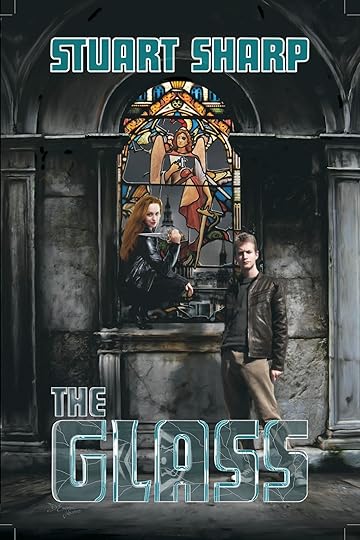
The biggest questions in Mark Tilesbury’s life have generally been fairly straightforward: How exactly did he end up as the assistant to celebrity psychic Greg Rambler? If the dead are getting in touch, why are they always so happy about things? Why is it always him who buys the drinks after the show?
Things get a lot more complicated when a chance meeting with a very strange man lands him in the middle of a war between the last remnants of the angels and the creatures from the other side of the mirror. A war in which it turns out Mark might very well be the ultimate weapon. Kidnapped by a woman who seems far too ready to pull knives out of thin air, he must travel the length of the UK, dealing with crazed angels, estate agents with afterlives for sale and occasional VW campervans, trying to find a way out of this mess before either the angels kill him for his own good or the Glass catch up with him. Ultimately, he has to decide if perhaps the scariest thing in the mirror isn’t… well, him.
I'm working on getting it out on Smashwords, and in paperback, but for anyone who wants to take it up nice and early, it's available on Amazon or Amazon uk
I hope you enjoy this one, as it's my first adventure in indie publishing, and it's a story I like a lot, with a nice balance between the funny stuff and the real story. If you do like it, please let someone know, whether it's on goodreads, a blog, telling them in a suspiciously decorated pub or anywhere else.
The biggest questions in Mark Tilesbury’s life have generally been fairly straightforward: How exactly did he end up as the assistant to celebrity psychic Greg Rambler? If the dead are getting in touch, why are they always so happy about things? Why is it always him who buys the drinks after the show?
Things get a lot more complicated when a chance meeting with a very strange man lands him in the middle of a war between the last remnants of the angels and the creatures from the other side of the mirror. A war in which it turns out Mark might very well be the ultimate weapon. Kidnapped by a woman who seems far too ready to pull knives out of thin air, he must travel the length of the UK, dealing with crazed angels, estate agents with afterlives for sale and occasional VW campervans, trying to find a way out of this mess before either the angels kill him for his own good or the Glass catch up with him. Ultimately, he has to decide if perhaps the scariest thing in the mirror isn’t… well, him.
I'm working on getting it out on Smashwords, and in paperback, but for anyone who wants to take it up nice and early, it's available on Amazon or Amazon uk
I hope you enjoy this one, as it's my first adventure in indie publishing, and it's a story I like a lot, with a nice balance between the funny stuff and the real story. If you do like it, please let someone know, whether it's on goodreads, a blog, telling them in a suspiciously decorated pub or anywhere else.
January 29, 2014
My Cover
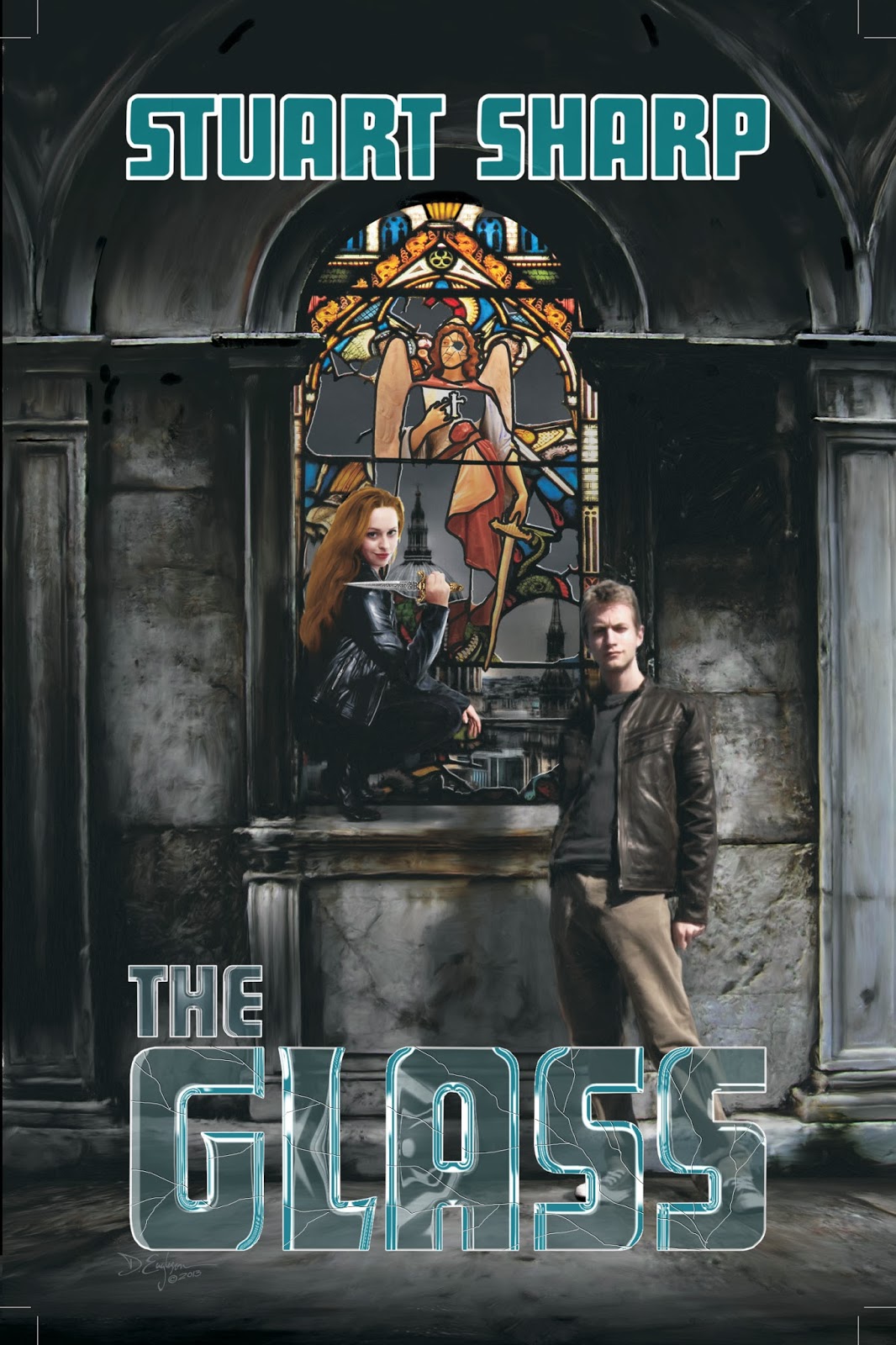
This is the cover for my novel "The Glass" (cover by Duncan Eagleson). I'm not going for the big cover reveal, because I'm told that things are a bit flooded on that front at the moment, so I'm mostly showing it to you now because it's pretty. Here's the cover blurb that goes with it:
The biggest questions in Mark Tilesbury’s life have generally been fairly straightforward: How exactly did he end up as the assistant to celebrity psychic Greg Rambler? If the dead are getting in touch, why are they always so happy about things? Why is it always him who buys the drinks after the show?
Things get a lot more complicated when a chance meeting with a very strange man lands him in the middle of a war between the last remnants of the angels and the creatures from the other side of the mirror. A war in which it turns out Mark might very well be the ultimate weapon. Kidnapped by a woman who seems far too ready to pull knives out of thin air, he must travel the length of the UK, dealing with crazed angels, estate agents with afterlives for sale and occasional VW campervans, trying to find a way out of this mess before either the angels kill him for his own good or the Glass catch up with him. Ultimately, he has to decide if perhaps the scariest thing in the mirror isn’t… well, him.
At this stage, I'm looking to start putting together the promotion that goes with putting this out. I'm planning a couple of giveaways to get things in the mood, but would anyone be willing to help me out with... well, just about anything really? Interviews, mentions, or quick stops on a blog tour would all really help. I'm looking to get the book out in a couple of weeks and get on to the next thing, so I'd ideally be looking to do promotional things at the end of February/start of March.
Stuart Sharp's Blog

- Stuart Sharp's profile
- 8 followers
Stuart Sharp isn't a Goodreads Author
(yet),
but they
do have a blog,
so here are some recent posts imported from
their feed.

