
Iain Rowan's Blog, page 15
July 6, 2011
The biggest reason I am full of hate for Murdoch and Co.
This novel, it features a protagonist who earns his money digging up dirt on celebrities to sell to the red-tops. His own world falls apart when his ex disappears and he becomes suspect number one, but if ever there was anyone equipped to find out the truth, it's him.
But now? It just pales. Absolutely pales. I thought I stooped low, but there are miles and miles of sewers running below the deepest one my imagination reached. And in a few months, every publisher, every agent, is going to be deluged with a flood of phone-hacking bin-dippers.
OK, it's not the biggest reason. Them all being emissaries of Satan, that's the biggest reason. But still.


July 5, 2011
The Co-operative Group - lobby on NOTW
The Co-Op Group (which covers everything, banking, supermarkets, funerals) has today announced its stand on its approach to advertising in the News of the World. Ford, NPower, Halifax, T-Mobile and others have all announced that they are at least reconsidering their ad spend with the NOTW.
Co-Op has announced today: "These are allegations. We have no plans to withdraw our advertising."
Some things to think about here.
News International has admitted phone-hacking in previous cases.
News International has, to the best of my knowledge, failed to deny the most recent allegation, about Milly Dowler.
There is clear evidence not just of unethical behaviour, but criminal behaviour on the part of the NOTW.
NI has lied repeatedly about the extent of phone-hacking, only later to have to admit that each fresh allegation is true.
The Chair of the Press Complaints Commission today stated that the NOTW lied to the PCC.
The former editor of the NOTW and current UK Chief Exec of News International, has told a Select Committee that the paper has in the past paid police officers for information.
And now, the private investigator who hacked into Milly Dowler's voicemail, has released a statement in which he made no denial of the allegation, but instead clearly stated that his work was at the request of NOTW journalists.
All of which makes the Co-Op's innocent-until-proven-guilty stance look like the mealy-mouthed prevarication it is.
You could phone their Customer Relations line on 0800 068 6727, but rather than speak to some poor sod in a call-centre, you might also want to have a look at the media contacts at the Co-Op group here, including their head of Public Relations. I understand that their Head of Marketing can be contacted at Gill.Barr@co-operative.coop.
If you use any of the Co-Op's services, why not give them a call or write them an email and tell them - politely, but firmly - how you feel about their much-vaunted ethical policy in the light of their continued enthusiasm to pay money to a newspaper which has ALREADY admitted criminal behaviour, and which on a day to day basis is exposed as have committed more, worse each time. If you have a bank account, like we do, tell them that you plan to close it. If you shop there, tell them you plan to take your business elsewhere.
You can also post on their Facebook wall, or message them on Twitter, but I think it's better to hold senior staff of the organisation to account. If anyone has any other contact details, please let me know and I will add them to this. If the Co-Op changes its stance, I'll remove them all.

July 4, 2011
A giant pyramid, made of shit
They listened to the messages left for the dead girl. Then, her mailbox filled up. No-one would be able to leave a message. There would be no new stories.
So, they deleted some of the old messages they had eavesdropped upon, to make room so that they could eavesdrop on new messages. It became apparent to the family that messages had been deleted, and for a period it gave them brief, agonising hope that Milly Dowler was still alive. She wasn't.
The police knew this was happening. At the time, they knew. And they did nothing.
So, what do we have? A press that doesn't think twice about breaking into the voicemail of a murdered teenager, destroying potential evidence by deleting messages, and giving her family false hope that she is alive. A press that has done this over and over and over and over, to politicians, to celebrities, to public figures - and, if the stories are to be believed (and now, why shouldn't they be) to the parents of two other teenager murder victims.
A police force, which has known about this for years. Years. And done nothing. Because their cosy, dirty relationship with the press was too good to spoil. Too much information. And too much cash in brown envelopes. The papers paid the police off, for information. And in return, police officers demonstrated that they were twice over unfit to be in uniform - once because they took the bribes, and once because they ignored the crimes of those who lined their pockets.
Supine politicial parties, who are so scared of the Murdoch press and the dirt that they might have on them, that they do nothing but meekly bleat occasionally when the revelations are so terrible that they can't say nothing.
A Prime Minister, who employed the man who was assistant editor at the News of the World at the time Milly Dowler's phone was hacked - and who was editor for years while the rest went on - as his press officer, and backed him to the hilt. A Prime Minister who is a regular dinner guest of the woman who was editor at the time Milly Dowler's phone was hacked, and is now UK chief executive at News International.
A company which has just been given the green light - by the Culture Secretary appointed by that Prime Minister - to take over yet more of the UK media.
So what do we have in the UK?
We have a giant pyramid, made of shit.
There's shit at the bottom, the bent coppers and the dirty hacks who connive to cheat and tap and bribe and cover up. There's shit in the middle, the editors and sub-editors and senior police officers who know it's going on but turn a blind eye, and then have the effrontery to turn around when it all comes out and pretend they knew nothing about it - which means they are either liars, or incompetent fools. And then there's shit at the top, because the cosy dinners between PM and News International execs, Rupert Murdoch being the first visitor to Downing St after Cameron was elected, Labour PMs being guests at Brooks' wedding, every last bit of it, is just the top of the giant pyramid of shit. And it may be the top, but it stinks just as much as the bottom does.
We can't ever point the finger at another country and talk about corruption. We can't. Because the most important thing that the phone-hacking scandal is showing is not the moral bankruptcy of some journalists, it's not that you can buy some police officers like they're on the shelves at Sainsburys: it's that there's a tight and filthy mesh of corruption and bribery and coercion and influence that links significant parts of our society, and it's been there for years, and I fear it's not going away any time soon.

July 3, 2011
Writers Talk About Writing: Alan Ryker
 Time for the next interview in the series, and it's a good 'un, especially for Alan's thoughts on horror fiction and its intersection with literary fiction. But there's lots more too. First, an introduction.
Alan Ryker writes good fight scenes because he studies Muay Thai boxing, though not as often as his coach would like. He lives with his wife in the Kansas City area, where he writes both dark and literary fiction, and tests the boundaries of each. He has previously published short fiction in a number of print anthologies and magazines.
Check out Alan's many adventures at his blog, Pulling Teeth. Enjoy his most mundane thoughts by following him on twitter: @alanryker. Friend him on Facebook.
Read on, and enjoy.
We're in a lift, I'm someone important (come on, pretend), you've got thirty seconds (tall building, slow lift) to tell me about your latest book.
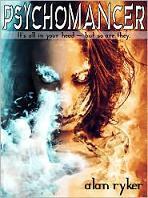 Psychomancer (US | UK) is about 1) the luckiest man on Earth, who washes up on a Florida beach after spending his entire life marooned on an island, 2) the most powerful psion the American government has ever produced, who is sent to capture #1 and 3) a man who travels the United
States writing articles for his syndicated column about strange deaths, and ends up following the swath of destruction #1 and #2 are carving across the country until he gets himself tangled up as well.
When good luck is real, what happens if we end up on the wrong end of someone else's?
Uh-oh. Not sure lifts are meant to stop suddenly between floors like this. Guess we've got a bit more time. Ignore the flickering lights and creaking sounds above us. Would you like to tell me about other books or stories that you have available?
I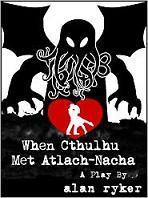 've also got a contemporary vampire western called Burden Kansas (US | UK | paperback), a little short story collection called Pulling Teeth (US | UK), and a domestic comedy one-act play set during a Lovecraftian apocalypse called When Cthulhu Met Atlach-Nacha. It's sassy. It's brassy. It's a dramatic humdinger!
Please stop repeatedly pressing the emergency button. The comment about building a ladder of bones to reach the ceiling hatch and get out of here was just blue-skies thinking. So, what are you working on now?
I'm very tall. It's totally natural to think of kicking footholds between my ribs and climbing me like a ladder.
I'm currently writing a hardboiled novel filled with angels, demons and Muay Thai fighters, a collection of flash fiction with each short centered around an extremely uncomfortable/embarrassing/awkward moment, and the sequel to Burden Kansas.
Here's the thing: when I describe my work it sounds stupid.
Where do you see horror fiction heading over the next few years, and what direction do you hope for your own work to take?
Realistically, I see horror remaining as unread as it currently is. It's currently cooler to play D&D than to read horror.
Horror is a feeling and a literary device. It's not really a genre like other genres are. It's getting a certain type of reaction from the reader, and any way you can get that reaction is fair game. So horror requires a vehicle. The vehicle that we're stuck on is the horror thriller. In my opinion, that's been the demise of the horror genre. The situation has gotten as lame as slashers before Scream came out.
But I also see a continuation of mainstream literary writers embracing their genre roots and writing horror that is read by the public. I'd love to see that stoke interest in horror, and for readers to want more and to be able to find the horror writers doing interesting, artistic and emotionally moving stuff. Most literary writers didn't start out reading Tolstoy at age ten, but unlike artists in other mediums, they've been very reluctant to embrace their past loves, let alone allow them to emerge as influences in their current work.
But that's changing. Right now it's very self-conscious. It's like what happened with comics, with the divide between alternative and hero comics. Then came meta work like Alan Moore did, where there was defiance burning on every page. Now, it's accepted that smart adults can create smart adult comics, and that they can even still have heroes and that that's no biggie. I see the literary world as being a decade behind the comic book world in that regard. And some people get angry, feeling like they've stuck with horror the whole time, so who are these writers like Cormac McCarthy to just step in and take all the accolades? But I like what these writers are doing. Maybe they don't know the rules. Maybe they don't agree with the rules. For whatever reason, they're not following the rules, and that creates something fresh.
Obviously there's been horror writers down in the trenches creating fresh, original work, too. From what I've encountered, it's mostly been short fiction. Across genres, the cool stuff is being done in short fiction.
You've blogged about the intersection between horror and literary fiction. Do you think it's harder for a writer identified as coming from genre to get recognition for the literary nature of their work, than it is for a writer already established as a literary writer to be recognised as writing a novel that genre fans will enjoy? How can those barriers be broken down?
Absolutely. If you get the critics and general readers' trust as a mainstream literary writer, they'll trust where you're taking them. They'll give you much more leeway. Like I said, there are going to be hardcore genre fans who'll be suspicious, but I think they're a small minority. On the other hand, everyone is suspicious of an uppity genre writer, genre and mainstream readers alike.
I guess one way to break down the barrier would be to bang your head against the wall of traditional publishing and have your agent submit to literary presses that can get your book out of the genre ghetto and onto the general fiction shelves. But it seems like traditional publishing is getting pretty tight.
You could submit to literary journals. A lot of them have adopted electronic submission systems, and I've seen many of my pure horror stories make it past the first reading, as you can see the status of your work in these systems. But good lord do they take a long time. And nobody reads them. And most don't pay anything. They're really just for building your CV to get a teaching gig. And you've got self-conscious students worried about looking stupid for passing a werewolf story up to the editor, so you have to send your stuff that does the most fence-straddling.
That's a wordy way of saying that I don't know. I think the key is for the readers and writers of smart, literary genre fiction to try to find each other and get just a fraction of the voice the lowest common denominator stuff has.
What scares you most in fiction?
What really gives me chills is the idea of not being able to trust your senses or your logic. House of Leaves is a great example of that. A writer you've interviewed, James Everington, has a lot of stories playing with that type of horror in his collection The Other Room (US | UK).
Then there's realistic violence that happens to characters you've grown to care about. I nearly threw up reading White Hotel, but its violence is nowhere near the level that goes on in splatterpunk. It's the kind of violence you can never get desensitized to, because it's occurring to someone close to you.
It's safe to say that the vampires in Burden Kansas don't sparkle. How difficult is it to find an original take on such a well-established (sub) genre, and what are you doing to revive the vampire as something to fear, rather than to put a poster of up on your wall?
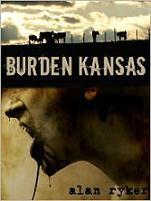 Creating something completely new is rare. I don't know if I could even gauge the difficulty, because I'm not sure how much control you have over something like that. On the other hand, I think that taking something well-established and doing a unique twist only requires intent. If it's hard to find an original vampire novel, it's because most writers prefer to write the billionth goddamn sexy vampire novel.
Making Burden Kansas different from every vampire book you've read was as easy as setting it in rural Kansas. And tossing in meth. Good old crystal methamphetamine. Happiness distilled to its purest form—dopamine—in a level higher than any other chemical or activity could produce. Better than a thousand orgasms. Better than watching your child graduate from medical school. Twelve times more dopamine than your body could ever produce naturally. Literally the happiest you can be.
Speaking of posters, I think you should consider releasing the cover of Pulling Teeth as a poster for dentist's waiting rooms. Or maybe as a nice greetings card. Your excellent covers are very eye-catching - how important do you think this is in marketing your books?
 Thank you! The dental poster is a good idea. I try to do my part for the kids.
A good cover is essential. I'm a nobody. On good days, I consider myself an up-and-comer. When someone stumbles across a thumbnail of my book on Amazon or B&N in a search or in a "customers also bought", I've got one square inch to show them something that makes them click as they zip past to whatever they were intending to buy.
I know my buying pattern for someone I've never heard of: the eye-catching cover gets me to click and read the interesting blurb that gets me to download the well-written sample that gets me to buy. I think that represents the habit of a lot of e-book readers. So the cover has to be professional. It has to minimize well. And most of all, it has to grab the eye and the consciousness.
I spend hours looking for art for my covers. Then I contact the artist and purchase the exclusive rights to use it as a book cover. Then I send it over to my graphic designer, Wendy McBride, who turns it into a cover. Anyone interested in contacting the artists I've worked with can check out the "My People" tab on my blog.
Can you remember what made you sit down to write your first book or story?
A creative writing class when I was a junior in college. I don't think I'd written a story previous to that since junior high. I went from visual art to music, and then ended up really loving writing. If I hadn't taken that class, which was just an English Lit elective, I probably never would have started writing fiction. I'd probably be doing something people appreciate.
Do you have a book or story that you're very fond of, but think should get more attention from the world than it has?
The Drowned World by JG Ballard. It's my favorite of his books, and one of the few books I reread regularly. He's obviously very well-known, but I don't think so much for that book.
Print publishing is a doomed but still predatory dinosaur rotting from the feet up. Ebook publishing is the vomiting out of the world's slushpiles onto the market. In the ongoing war of words and hyperbole, where's the happy medium to be found? Where do you think the publishing business is heading over the next few years, and what are you doing to be ready for it?
Apple saw the direction the music industry was going. Amazon probably sees the way the publishing industry is going. If I could see these things, I'd be rich. I'm just a stupid writer.
It seems that for awhile, at least, both worlds will coexist: the efficient self-publishing world and the curated trad-publishing world.
I've heard people say that once writers see that self-publishing isn't an easy path to riches and fame that they'll give up. No way. I used to read slush at a literary journal. Previously, aspiring writers with no talent have poured money and time into writing with no way to reach readers due to gatekeepers. Reaching a few is infinitely preferable. So the deluge is just beginning.
Quality will still set you apart. How will anyone find your work to know you write quality material? Slowly. Very slowly. I'm lucky that I'm a good essayist, so I've got a growing audience at my blog. Slowly growing. I also feel lucky to have gotten in pretty early.
But like a lot of people who've hustled for years before the e-book revolution, I'm trying to keep a foot in each world. I'm self-publishing collections of short fiction, but not before I try as hard as I can to publish the stories in magazines or journals first. If someone offered me a book contract, I'd really think about it. Not because I think it would be financially smarter in regards to those specific items of fiction, but because I would like to teach creative writing one day. So it would provide me with career opportunities that self-publishing can't.
What book do you most wish that you had written?
Crime and Punishment. But I'd have had Raskolnikov leave Siberia an unrepentant motherfucker.
Do you do much promotion for your books? What do you think is the most effective thing you've done?
I'm pretty ineffective, so I wouldn't encourage anyone to take what I do as a map to success.
Like I said, I'm an entertaining essayist. So I keep a blog and try to put up quality posts that have personality. My books are there on the sidebar, and certain posts keep people informed about what I'm doing. I like the soft sell. I'm not one to shout about my work in a crowded room (a stuck elevator is another matter).
I will get on Twitter and shout links to my blog posts. Other people find Twitter to be a good tool for selling. I don't. I find it good for networking, and for getting people to my blog. Then my blog does a good job of selling.
A giveaway at librarything is the best way to get reviews, for sure. But you will get some people who never would have plunked down money for a book like yours reviewing it. Sometimes they'll say, "I never read books like this, but this was great!" And other times they'll say, "I never read books like this, and this is an example of why!"
What is it that really pushes your buttons as a reader?
Show me something new. Get me with a cool concept, but get me in the heart, too. And I tend to prefer minimalism. The literary world almost seems stuck in a maximalist era of hysterical realism. Blah. Mostly, just don't bore me. New Yorker realism (upper-middle class whiners doing nothing) and standard rock-em-sock-em, that's-so-cool! genre stuff both bore me. I'd rather play a video game.
If you could give an aspiring writer one piece of advice, what would it be?
Don't publish your first novel, unless it's under a toss-away pseudonym.
If you could tell an aspiring piece of writer to ignore one commonly given piece of advice, what would it be?
If you stick with it, you'll eventually succeed.

July 2, 2011
Living In The Ice Age
 As attentive readers will know (not least because I've rambled on about it enough), as well as crime fiction I've written some short fiction that was more in the weird, strange bit of the woods. That place where nobody goes, and if they do, they don't come back.
I've put out three standalone short stories, with the idea of putting out a collection of those and others 'at some point'. Well, I've amazed myself - and set a dangerous precedent in my life - by actually getting round to something sooner than planned.
Ice Age is up now at Amazon (US | UK) and Smashwords. It's a collection of eight short stories, all previously published. Stories in the collection were reprinted in year's best anthologies, and featured in anthologies which were nominated for the Stoker and/or the Shirley Jackson awards.
It's only 99c/71p for now. Go on, treat yourself.
Now that the collection's up, you can get my short story Lilies - reprinted in the Stephen Jones antho Mammoth Book of Best New Horror as a free taster.

July 1, 2011
flash fiction - Lovers' Leap
"Yes," she said. "No. Yes. I'm scared."
"I'm scared too," he said. "But we do this, nothing can scare us. Ever again. Nothing can hurt us. Ever again."
"Hold my hand."
He held her hand.
"Don't let go of it."
"I won't let go of it."
"I'm ready," she said.
"Sure?"
"Sure."
"On three then, we jump."
She just nodded, looked down at the river.
"One," he said.
"Two," he said.
"Three," he said.
They both stood there, on the railing of the bridge, hands pulled apart at the same time, like they were pulling a Christmas cracker.
After a moment, they both climbed down, saying nothing. He walked one way. She walked the other.

Photo: Telstar Logistics.

June 27, 2011
Principles? Yeah, I remember them.


Writers Talk About Writing - Julie Morrigan
And, fortunately given that this is an interview and it would be a rubbish one otherwise, here too.
We're in a lift, I'm someone important (come on, pretend), you've got thirty seconds (tall building, slow lift) to tell me about your latest book.
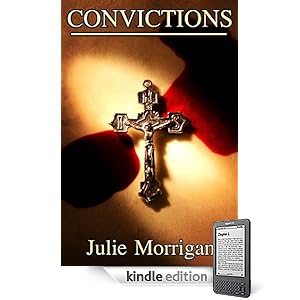 'Convictions' (US) is the story of Tina, a kid who sneaks off to see a boy band with her little sister, Annie. Needless to say it all goes badly wrong, with the outcome that Annie is abducted. Tina has to deal with her guilt, a mother who is verging on the psychotic, manipulation and religious mania. Meanwhile the search to find Annie - dead or alive - continues. All good fun!
Uh-oh. Not sure lifts are meant to stop suddenly between floors like this. Guess we've got a bit more time. Ignore the flickering lights and creaking sounds above us. Would you like to tell me about other books or stories that you have available?
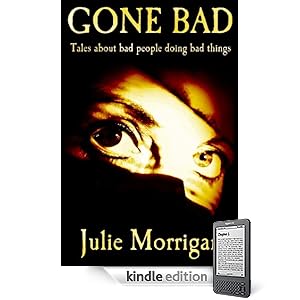 I've had lots of short stories published in print and online, so I took the opportunity to pull some of them together into a collection, which I published as an ebook in March. 'Gone Bad' (US) is dark, sweary and violent and has been described (by Mr Paul D Brazill) as 'kitchen sink noir', which I love. Paul goes on to clarify that 'the kitchen sink is blocked with fast food, cheap blow, lager and blood'.
Please stop repeatedly pressing the emergency button. The comment about building a ladder of bones to reach the ceiling hatch and get out of here was just blue-skies thinking. So, what are you working on now?
I'm finishing off a novel about a 70s rock band with a history of secrets and lies. Lots of musical references, bad behaviour and dead bodies. Hopefully it's also funny.
In addition, I also plan to publish this year a second collection of short crime fiction and one of short horror stories. The latter will be based around 'The Black Dog', a story about a cursed book that won Newcastle Literary and Philosophical Society's 'Phantoms at the Phil' ghost story competition last year.
(The Lit and Phil's a wonderful place , if you're ever in Newcastle, check it out - Ed.)
You set a lot of your fiction in very familiar territory for both of us. Is the sense of place very important to you, and do you think the north-east is fertile ground for crime fiction?
I love the north east, it's a brilliant place. It has a very colourful history, which might explain why there are quite a few crime writers writing in and about the region. One thing that has always struck me as odd - certainly about parts of Sunderland - is how a 'bad' area can be just a stone's throw removed from a 'good' area. That brings very different types of people in close proximity on a daily basis, and that can be very handy for generating conflict.
Most of your characters are on the wrong side of the law, or at best, teetering on the brink. What draws you to these stories, and could you ever see yourself writing a police procedural?
Rogues and rascals are always interesting, I think. There's no story in someone who just goes to work, comes home, pays all their bills on time and doesn't cheat on their spouse or partner. Shake things up a little - maybe they're mugged, or their spouse or partner cheats on them, or they lose their job unfairly and can't pay their bills, and you're getting somewhere. Focus on the bad lads (and lasses) from the start and you can't go wrong.
As far as police procedurals go, I've read plenty of them in my time so it's not that I dislike them, but I never had the slightest intention of ever writing one. Then I started writing Convictions, and the police - who were supposed to be bit part players, there of necessity - started taking over. It isn't a traditional police procedural, but the police are in it a fair old bit. I can't imagine writing anything like that again, but as a general rule, I never say never.
Gone Bad was a collection of fast-moving stories that were like a short, swift punch. Do you think your style has had to change in writing Convictions, your novel?
Funnily enough, all the longer pieces I've written have tended to be in a more laid back style. That's never been a conscious decision, it's just how it worked out. I'd love to write a novel that travelled at the same sort of speed as the shorter pieces. I'll have to have a serious shot at that! (Maybe a novella as a stepping stone … that might be interesting to do.)
Can you remember what made you sit down to write your first story?
I started writing my first novel when I was seven. A friend's mam gave us an old typewriter, a big, heavy, impressive-looking Imperial, and it seemed to me to be a sign that I should write something ambitious. The novel remains unfinished. I still have the typewriter.
What book do you most wish that you had written?
Probably The Grifters by Jim Thompson. Hell, ANYTHING by Jim Thompson!
You're publishing ebooks now - have you learned anything in that process?
Well, the same rules apply, up to point of publication: write the best book you can, get feedback from people who will tell you when you've gone wrong or can do better, and proofread your finished manuscript carefully. I've learned about formatting and I'm learning about promotion. The hardest thing is actually getting your book noticed in amongst all the others people are offering, and read by those people who might enjoy it.
Do you do much promotion for your books? What do you think is the most effective thing you've done?
I find this aspect of publishing the most difficult by far. Interviews like this are good fun, I enjoy them and I appreciate the chance to do them. I blog and I mention stuff on Facebook and Crimespace, although I try not to just bang on about my own stuff. It gets really boring when people do that! Activity on the Amazon forum I'm less good at. I try to do something every few days - which is probably less than I should be doing. I can't bring myself to use Twitter. It's early days yet, so I'm not sure what's the most effective. I like to think it all helps a little, and I'm in this for the long haul, so I hope over time I'll really see a benefit.
Are you 'out' as a writer of fiction with work colleagues/family, and if so, what reaction did you get?
Yes, I think most people know now. I don't have any family to speak of and I work from home, but I have a fantastically supportive partner (Steven Miscandlon, who doubles as my Take No Nonsense Editor) and some smashing friends, and there's a terrific online writing community to share stuff with. For the most part, the reaction is just one of acceptance, which is great.
Gibbons or tigers? (NB this question is to help me in compiling my List of People Who Are Wrong).
Oh, both. See above. ;p(Hmm. Put you down as both right and very, very wrong, then. Ed.)
No denying you're getting on a bit, girl. So what music do you want played at your funeral?
I've actually thought about this! I was pretty ill some years back and decided then I wanted to go through the curtains at the crem to 'Wish me luck as you wave me goodbye'. Since then I've had a rethink and it's currently between My Morning Jacket's 'I think I'm going to hell', The Flaming Lips' 'Ego-tripping at the gates of hell' and The Crazy World of Arthur Brown's 'Fire'. (You might feel you can see a theme developing here.) In reality, I should think it'll be something by Led Zeppelin. Not 'Stairway…', obviously, but maybe 'Ramble on'. Hopefully not for a while yet, though!

June 23, 2011
Six buttons and a fruit machine token
Yes, you read that right.
10%.
To the author.
On an ebook.

June 20, 2011
"A great cow, full of ink"


