
K. Tempest Bradford's Blog, page 18
May 4, 2017
Let Me Sum Up: April 2017 on Patreon
Last month I made a significant change to my goals over on Patreon. Not the amount, but the why. Now I’m not looking for support in general as I write my steampunk Ancient Egypt novel, I’m looking to fund some upcoming research trips I have planned. Since I am writing historical fiction, albeit fantasy-infused, I have a ton of research that needs doing, plus I need to set foot in Egypt at least once in my life in order to capture the sense of place the way I want to. To that end, I published a post about how I’ll use the money donated on Patreon, which you can read as it’s public.
As to what my patrons got to read last month:
Read Along level folks ($10/month) got chapters four, five, six, seven, and eight, which brings me to the end of section 1 of the book. I’m planning on 5 sections, we’ll see if that happens.
Folks on the Sneak A Peek level ($5/mo) also got to read Chapter Eight as well as two interludes that I’m trying to fit somewhere in the structure but don’t know exactly where they’ll go yet. I also posted a glimpse into the very first draft of this novel when it was a short story (ahahaha ahahaha AHAHAHAHAAAAAA ohgodIwillneverwriteanythinglessthan6000againwillI).
All patrons got to read a background scene exploring the history between my main character and her sister.
And there are a few interesting tidbits about my writing process in the Ask Me Anything posts for folks on the AMA tier and above.
As to what’s coming up in May: More of the same! I’m moving into section two of the book where all the DRAMAAAAAA happens. And the lesbian sex. This month’s background work is going to involve a ton of research into how a minority population successfully oppresses and marginalizes a majority population. Not exactly full of sunshine, I know.
One thing that will be on the more fun times end is that I am thinking of doing a class called Writing Practice based on some stuff I’ve noticed in the last couple of years teaching Writing the Other courses. The class will be entirely devoted to writing exercises with feedback from peers. The goal is to come up with one new exercise for every day and the class will last 30 days. But first I need to do one writing exercise every day to figure out which ones I want to use. A bunch of my efforts will likely end up in the patron content for May and June.
To those of you supporting me currently: Thank You So Much! I hope you’re enjoying the content.
To those of you still eyeing all this warily, I have some ideas for more things I can add to what patrons at different levels get that won’t take away from my writing time. Perhaps even the aforementioned writing exercises.


April 19, 2017
It’s My Birthday! Have A Party Favor (i.e. a Story)
Today is my birthday! Break out the confetti and the cupcakes and the ball pit! A real ball pit, not a DashCon ball pit.
Those of you who know me know that I like to celebrate hard when the anniversary of my rotation around the sun comes around. So be warned: this is the first post of many in which I will mention that IT’S MAH BIRTHDAY.
You’re all invited to celebrate with me. So step into my virtual party and collect your party favor. (That’s a free thing you get for showing up.) I’m a writer, so all I can give you is some writing. But it’s free, so hurrah!
The story below is a bit of background writing I did for one of the characters in the Untitled Egyptian Steampunk Novel In Progress, which you have perhaps heard about? If not, there’s an explanation of it over on my Patreon. And yeah, I’m gonna mention how, if you support me via Patreon, you can read more excerpts from this novel and related writings, such as this, each month.
All right, shameless plug over, let’s get to the fiction.
Ibi’s First Dance
The morning of the equinox. The year’s first equinox. The balance of day and night before the night overtakes the sunlight hours. More time for marking the turning of the night sky and the movement of the stars. Ibi’s favorite time of year. It also meant she was closer to the Long Night, marking the end of her second year training in the Spirit House and the beginning of her last.
Two hours before dawn the sorors rang the first bell, calling for the trainees and acolytes to wake up. Ibi was already awake. Fretting. Thinking about the dance. She was a ba-adept, one of the rare people who could see the ba spirits of the dead and guide them. One day guide them. That would be her role, if she completed her training and passed her tests. She was not expected to dance the Hathor ceremony with precision and perfection. But it was her first time and she could not stop being nervous.
She knew the steps. She knew the words. She knew the notes. How many times had she practiced? How many times growing up did she see the dancers and musicians of the Spirit House perform it? Still, she couldn’t shake the fear that she would misstep, fail to hit a note, and ruin the great celebration for everyone.
A good part of her nervousness came from knowing that the Great Mother, Tani, and all the kinswomen of the Pharaoh would be at the ceremony. All of them including Ziwat. What did she look like now? Would she recognize Ibi if she happened to see her dancing?
When she was small and was Ziwat her mother’s favorite student, she attached herself to the woman almost as soon as she got to know her. Ziwat was the best person in the world, aside from her parents and her older siblings. And, like her sisters and brother, Zi grew up and left to live her own life. Natural, yes, but heartbreaking.
Now she was the Superior Engineer of the High House, the netjer Seshat in human form. Ibi was just another ba-adept in the crowd. She probably wouldn’t notice her.
The Supreme Musician of the Spirit House wouldn’t reveal her place in the formation until later that morning. The dancers would be assigned a quadrant in the festival square and stay within certain bounds as they went through the ceremonial steps. The kinswomen would be watching from the West. Part of her hoped to be assigned there, part of her didn’t. To mess up at all would be mortifying. To mess up in front of the Great Mother and Ziwat?
The second bell brought her back to the present. It was time to get ready.
She pulled on the fine, white linen dress worn for ceremonies, its skirt loose to allow for full leg movement, the arms sleeveless to display the Spirit House tattoos and make working the sheer veil easier. She wrapped the veil around her waist for the moment, then followed the other trainees to the inner sanctum.
There were over sixty of them in the columned room, and their energy–mixed nervous and excited–made them want to chatter. None did. The sanctum was only for sacred sound.
The Supreme Musician, voice of Hathor, emerged from the netjer chamber and they all stilled, waiting for her words. She said nothing for heartbeat on heartbeat until a final bell rang announcing the appearance of the Aten disk above the horizon and the emergence of the Kheper-dawn.
She then moved among them, singing the notes for the four directions and touching each of their foreheads as she did. You go north, you go east, you go south, you go west. That last she sang to Ibi; West it would be, then.
The dancers moved to the walls of the room that corresponded to their direction, waiting in no set order. The Supreme’s voice, low, sonorous, and resonant, made the walls vibrate just a touch. At some signal in her tone, instrument players came into the room and moved among them, wrapping belts around their waists and hanging two of the sacred sistrum at the hips. This instrument, only allowed during ceremonies and often only played by dancers, bore the face of Hathor and was sacred to her.
While this happened, the Supreme chanted words marking the passage of time and the role of Hathor as the guiding hand on the sun barge. In response, trainees and acolytes, adepts and sorors, chanted the mirror words. She came to each and arranged them in lines, showing where they would be for the dance. When she came to the West, the last group, she placed Ibi in the front line. Ibi tried not to break her chant, but did take the woman’s hand in her own and squeeze it, her eyes asking “Are you certain?” The Supreme only smiled and cupped her cheeks for a moment, certainty in her own expression.
That should have made Ibi less nervous. It didn’t. Now she wouldn’t even have the comfort of hiding in the crowd.
~~~
The Ra-sun crested the endless blue sky, coming to its highest point before dipping back down to the horizon. The dancers filed out of the Spirit House’s main entrance into the cheerful cacophony of the Festival crowd. They moved to their assigned positions in the Festival square without speaking, the only sound a collective sussurus from the sistrum banging against their hips. Ibi’s feet knew where to go, and she kept her eyes on them while she concentrated on getting to her place.
Around them, the voices of the majority of hetWaret’s citizens called out words of praise and respect and thanks. The dancers and musicians would deliver the grateful joy of the Khemetan people to the netjer and ensure the continuation of the world with their words and notes and music.
When Ibi’s group reached the western quadrant she finally looked up. The congregation of the High House sat on a raised platform a few yards away. Above them, on a higher dais, the kinswomen stood in front of the Pharaoh and the Great Mother, who stood in front of a giant copper scarab. The outer wings were raised halfway up, bouncing the rays of the sun back to the sky. The massive machines were taller than two tall men, wider than two wide elephants, made all of copper on the outside, which had been newly polished on this one. Likely the Pharaoh and Great Mother had come to the square riding in it.
And standing just in front of them: Ziwat. Ibi recognized her right away. Same sand-colored skin, hair twists longer now with touches of silver, wide brows still dark, complimenting her wide, red-tinted mouth. She was beautiful. How was she so beautiful? How had Ibi not remembered that?
Rapid drumbeats signaled the start of the ceremony and the crowd came to attention. The dancers did not move. Still, still, still; counting until the right moment. The first note burst from the Superior Musician’s throat and, as one, they all lifted their arms and began the dance.
Ceremonial song took over Ibi’s mind and body and transported her beyond herself within the first few beats. All nerves, all worry, all self-consciousness dissolved as she became one with the others, one with the voice of Hathor. The dancers moved in unison, each step, arc of the arm, position of the hand, note of the song carrying layer on layer of meaning. Their celebration praised all aspects of the netjer as she moved through the mill of time.
When the first verse ended all the dancers turned to face the center of the square and lifted their voices to create a note that reverberated up to the sun itself, an offering to the Hathor at the center of everything.
Now came the hard part.
They turned back and all danced into the crowd. People parted to allow them in as the front line was expected to move all the way to the back of the crowd and the base of the kinswomen’s dais. Once they were all properly dispersed, the dancers began again, this time inviting the citizens around them to join. The women in the rearmost line took the hands of children new to ceremony to teach them the movements. The lines in the middle danced with adults who knew their part in this well. The highest ranking citizens stood in the back of the crowds on all four sides and often only watched the front line dancers. Their presence was sacred offering enough. Though sometimes they were moved to join the dance.
Ibi lifted her eyes to search for Ziwat and discovered her friend was already looking at her, recognition in her wide smile and joyous gaze. Ibi knew not to approach her directly, even though she wanted to. But with her own smile she tried to communicate the same happiness at seeing Ziwat again.
At a prompt from the song, she unwrapped the veil from her shoulders and spun, the fabric rippling around her in waves. When she faced the dais again, Ziwat was there in front of her. They danced together, Zi matching or mirroring her moves in accordance with the ceremony. They were Seshet and Hathor, celebrating each other, spinning, clapping, harmonious on Earth as in the heavens.
Other kinswomen joined the dancers–more than had in many years, Ibi learned later. Her whole being overflowed with joy.
The Supreme’s voice sang out a note as the song crested toward its highest point, a signal to the dancers to return to formation. Ibi touched Zi’s arm one more time, then spun away, her veil almost wrapping itself back around her. Fingers unhooking the sistrum, feet landing exactly so, arms raised at a right angle, she joined the others in this final display of gratitude and celebration. As one, they shook the sistrum, the small metal disks strung between the cow’s horns clattering against each other. The sound came to the ear harsh at first, then transformed into a sacred vibration that reached into every body, every stone, every thing.
Ibi’s brown eyes swirled to gold and she saw hundreds of fluttering lights rushing toward them. These were the ba spirits of those who had not yet passed beyond the Door to the West. The sound of the sistrum drew them, always. Just as they had at her first Hathor Festival. She’d seem them and cried out “What are those shining birds?” That’s when her family discovered she was a ba-adept. The moment that set her on the path that led to this one.
Dancers shook the sistrum side to side, shaking or rolling different parts of their bodies in precise, isolated movements. Arms only, now wrists, hips now, one leg, then the other, the midriff, then finally absolute stillness as the song and ceremony ended and the crowd burst into cheers and praise.
This is when Ibi sunk fully back into herself, breath and heartbeat rapid, dress clinging to sweaty skin. Above all the heads in front of her she saw Ziwat, hand cupped to her mouth, her ululation directed right to her.
~End~
April 11, 2017
OdysseyCon and Why Serial Harassers Are Safe In Our Community
This post is long, and will have to dip back into history a bit before returning to the present. But this context is important.
A couple of years ago the WisCon concom went through some rough times due to both individual and group responses to the harassment experienced by one of WisCon’s attendees perpetrated by another of WisCon’s attendees. If you’re not familiar, please read about the incident and some of the ways it affected the person harassed. The fallout from this was widespread in our community and long ongoing.
One of the things that happened because of the discussion around what should have been done and what didn’t get done after the harassment was reported is that a long time member of WisCon’s concom, a man named Richard Russell, was removed from the concom via a vote by members of that body. Why was he removed? Because it was decided by WisCon’s governing body that the statement of principles and code of conduct WisCon had for its members during the convention should also be applied to the concom throughout the year. If someone on the concom is being abusive, or harassing, or any other such behavior, they should not get to remain on the concom. Makes sense, right?
Well. Some folks didn’t feel like it did.
Enough folks agreed that this was a proper way to handle things, and so that became a rule. Under the terms of that rule, Richard Russell’s behavior, stretching back literal years, was brought up. Multiple people pointed out instances where they felt Richard was abusive and, even when called on this directly, continued his abusive behavior. Due to this no longer being acceptable[1], Richard was forced to leave the concom.
Mind you, not banned from WisCon. Removed from the concom. That’s important.
Richard set about telling everyone who would listen[2] that he had been treated unfairly, that no one had ever told him what he did wrong, that he was banned, that everyone was a big meanie. How do I know this? (Aside from the thing mentioned in footnotes.) Because someone publicly defended him on these points.
Fast forward to WisCon that year. We had a panel called WisCon: What Happened Last Summer?[3] To talk through the stuff that went down around FrenkelFail and then Richard being removed and all of Richard’s dear friends leaving the concom because of this. One of those dear friends, who also defended him on the concom mailing list to the rest of us many times, was on the panel: Jeanne Gomoll. But I’ve already told that story.
Here’s something I apparently did not mention in my post, but did tweet at the time: A man got up during the part of the panel where the audience was invited to comment and stated that he was there to defend Richard Russell and began to chide us all for the terrible manner in which we had treated him. In my memory, Mikki Kendall, who was one of that year’s con chairs and also on the panel, let him go on for a bit before she informed him that everything he was saying was wrong.
The paraphrased memories I have go something like:
Guy: Instead of banning him–
Mikki: We didn’t ban him. He was removed from the concom but not banned.
Guy: Well but before doing that you should have _______.
Mikki: We did do _______.
Guy: But you didn’t _______.
Mikki: Yes, we did.
Guy: But what about _______.
Mikki: We did.
Guy: Oh.
Mikki then informed him that if he thought that we had banned Richard, never warned him, didn’t explain to him and whatever else he had come there to tell us we should have done, that was because Richard had lied to him. She then reiterated that Richard was removed from the concom because he was abusive. She used that word.
I remember this part clearly because I had a very deep and sudden anxiety attack just hearing these words.
The guy said: “Well, yes, Richard can be an asshole sometimes, sure. But–“
I don’t know if I can adequately express how painful it was to hear someone dismiss the words “he abused” with “he can be an asshole, sure.” I had not been very emotional during the whole of that very emotional panel until that moment. I almost got up and left.
Except the immediate reaction in the room was multiple voices rising up to say NO. NO, YOU DO NOT GET TO DISMISS THAT. NO. Mikki had a mic, so her voice is loudest in my memory. She said the same. She did not let him get away with that. It’s the only thing that kept me calm. The slapping back of that all too common narrative by many voices in the room. I didn’t even realize how much trauma I had around that narrative until that moment.
#WisconLastSummer one of Richard Russell’s friends tried to chide us about dismissing him… w/ only facts Richard told him (which are lies)
— K Tempest Bradford (@tinytempest) May 24, 2015
You can imagine how well that went for him. @Karnythia handed him his ass, Richard’s ass, probably Frenkel’s ass, too. #WisconLastSummer
— K Tempest Bradford (@tinytempest) May 24, 2015
Shortly after that, the guy finally stopped talking, made some mumbling about how maybe he needed to rethink things, and sat down.
Okay, I told you all of that story in order to tell you this one.
Today, Monica Valentinelli, who was slated to be one of the Guests of Honor at OdyessyCon, another local Madison convention, publicly stated she would not attend or be guest because of the presence of a person who had previously harassed her and she did not feel comfortable around[]. You can read her statement explaining this. Here’s some information that wasn’t included in this initial statement because Monica was still attempting to be a professional about all of this. The reason why she posted that statement this morning is because, after sending an email to the concom raising concerns about Frenkel’s involvement in the con, which she had not been aware of, she got this email[5]:
Monica,
While I understand your position, I hope that I can encourage you to reconsider. Jim Frenkel is, and has been for a long time, a member of the Odyssey Con concom, so he is very involved with the convention. As such, he is very concerned that nothing happen that will reflect badly on it. Having attended every prior OddCon myself, I can assure you that he has always behaved in a correct manner there. He does “yeoman duty” for the con every year, and is respected for his contributions.
I have known Jim personally for more than thirty years. Although there have been unfortunate events in the past, I do not now believe, nor have I ever, that Jim is dangerous to any one, in any way. I believe that the lamentably widely disseminated idea that he is, is exaggerated and grows from a lack of knowledge of the facts in his case. His reputation since the WisCon incident has been spotless.
I will, if you wish, take Jim off any panel that presently features both of you, which I hope you would find a reasonable compromise. Banning Jim entirely would be unfair to him, and, in refusing to attend if he is working the con at all, you are being unfair to yourself. Why let other people make your decisions for you? Come and see the man for yourself. You will see that he is a decent man, and not a monster.
Don’t take my word alone. I would urge you to reach out to some of our past guests. I’m sure you know Margaret Weis–she was a guest at last OddCon, why not get her opinion?
Thank you for your consideration,
Gregory G.H. Rihn
Odyssey Con 2017 Programming
Yes. That was said.
Today I looked up Gregory G.H. Rihn on Facebook and discovered that he is the Guy who stood up and defended Richard Russell at that panel. In almost this exact same disgusting language.
And guess who else is on the OddCon concom? Richard Russell[].
So we’ve got Greg Rihn, serial apologist for serial harassers and abusers, responding to a guest of honor in this manner. When said guest of honor responds to that by withdrawing from the con, Richard Russell, who has a history of abusive communications, signs his name to a statement that essentially says “Well she brought all this up awfully late! And also Frenkel has never harassed anyone at OddCon, so we have no grounds to ban him. Plus, we don’t let guests of honor dictate who can come to our safe space. Also, this is a safe space[7].”
I’ve seen a bunch of people commenting on this wondering how it is that Jim Frenkel is in any way involved with any convention at this point in time given everything that’s happened. Well. This. This is why. It’s multiple people[8] who knew full well the problems before this came up yesterday[9] who know Jim and are real sure he didn’t ever do anything wrong, despite those third hard reports from the Internet (who trusts that?? Pish) continuing to allow him to be in official roles because we wouldn’t want to lose all his knowledge and experience.
This is how fandom has worked for decades.
So quit being shocked by it, or ignoring it, and start connecting the dots. Hold these people accountable.
And support the people who take the incredibly difficult step of being public about this stuff. Monica could have quietly withdrawn, made up some innocuous public reason for doing so, and not rocked the boat. Might have been easier on her because she lives in Madison and is in nominal community with these people. Maybe she won’t experience massive blowback because of this, but history tells us that she will. How about we not let that slide. How about we stand by her side, swords drawn, ready to cut down the waves of sexist assholery already coming her way.
Footnotes
And yeah, it’s a whole conversation about this never having been acceptable, but there are reasons motions had to be made and votes taken and rules put firmly in place by governing bodies to make this happen. They are all annoying reasons.
Including a post I remember being on File770 but I now cannot find, making me wonder if I mis-remembered or if they took it down because it was super one-sided and awful.
That link goes to a Storify that covers quite a bit of what was said.
She does not name him, but in the ensuing conversation it became clear she was talking about Jim Frenkel
I am only posting this email publicly because OdysseyCon already did so on their Facebook page
Who, by the by, had his name as a signer at the bottom of OddCon’s first official statement about all of this, which was completely unprofessional and gross, and is just of a piece with all this fuckery.
There is a screenshot of this statement here.
See how many folks are listed on this concom ETA: This page is not working right now. But there are about a dozen people who were listed on the concom.
Sigrid Ellis brought it up a year ago and they ignored it. They wanna act like this is new and it’s not.
April 6, 2017
Yes, in my novel, the Ancient Egyptians are Black
A few weeks ago I was having a conversation with an indie publisher[] about an anthology project they’ve been wanting to do for a long time: speculative fiction stories set in Ancient Egypt where the only rule about the stories is that the authors must make it clear that the Egyptian characters are Black people. They told me every time they get ready to put the wheels in motion for this, they pull back after they ask themselves “Do I really want to deal with the grief and attacks I’m gonna get because of this?”
If your first thought upon reading this is “But of course the Ancient Egyptian characters should be Black Africans because the Ancient Egyptians were Black Africans…” or “But why would people give the publisher so much grief over this that the project keeps getting put on the shelf?” then you belong to the group of people who are attempting to live in a rational world where truth is real and things make sense. Not everyone lives in this world.
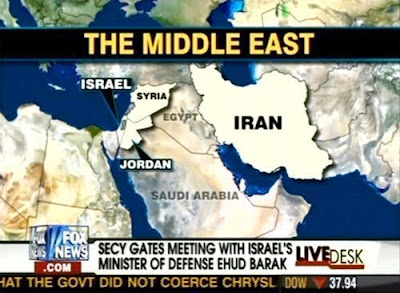
How do I know this? Well, there’s Fox News. But also, as previously mentioned, I’ve been researching Ancient Egypt off and on for over a decade, and in academic circles you will still find people arguing for how the Egyptians weren’t really African, or weren’t sub-Saharan African (which I guess is where all the Black Africans live. Above the Sahara they are so totes white), which is a holdover from the beginnings of Egyptology and archaeology in the West that are built on white supremacist ideas. The pyramids, the Great Sphinx, the many wonders of Egypt are very clearly the work of advanced, intelligent people. But Black folks are just tribal savages rolling around in the mud. Therefore…
Now, you won’t find too many modern academics being quite this blatant with their racism. You will find the average Joe from that forum you frequent wallowing in this nonsense while pretending that isn’t racist as fuck. For some more recent evidence of this, I invite you to venture into the comments of Scott Woods’ post on why The Gods Of Egypt is a terrible, racist movie. You will find therein people who argue vehemently that Ancient Egyptians were not Black like those other Africans, are kind Greek, or some other ridiculousness that I have likely erased from my memory. This is not new. Armchair historians who learned everything they know about the past from watching The Mummy[2] have been giving us this chin music for years.
So yeah, it is a bit of a radical act to stipulate that stories set in Ancient Egypt should have Black Egyptians and I can sort of understand not wanting to walk into that particular hornet’s nest willy nilly. Still though. I’m ready and waiting for this anthology to become a reality because I will just write a story set in the Steampunk Egypt world my novel is set in. Because, other than wanting to ensure the culture I crafted is matriarchal, my other base reality is that all the native Egyptians in the book are Black. I intend to mark their dark skin colors as often as I can get away with, and using language that makes it clear they and other people in Egypt consider that skin to be beautiful. Hell, everything about their features will be marked as the epitome of beauty and the standard by which people of nearby countries judge themselves by.
And if someone out there has a problem with it, I will compose a special song to sing for them that will go something like:
Just keep steppin’ / just keep steppin’ / get that racism out of my waaaaaay!
Just keep steppin’ / stay in your lane / or go right to hell to-daaaaaay.
And yeah, the next time you see me at a con I’ll sing that for you if you like.
Cuz look: Hollywood is gonna keep trying with this Egyptians Were White business. They haven’t lost enough money yet to stop. So other forms of art are going to have to carry this for now. So I challenge you to write stories with Black Egyptians and create art with Black Egyptians and sing songs about Black Egyptians. I know that’s what I plan to do.
Footnotes
Whose name I won’t reveal here because they might not want everyone and their mama to know they have this opinion.
Pick a version. Any version.
March 31, 2017
History, According to Women | The Tempest Challenge
Today is the close of women’s history month! It doesn’t quite loom as large, or as annoyingly, as Black History Month in terms of the kinds of narratives it perpetuates about women. There’s still probably far too narrow a focus on what Women’s History means (I see a bunch of suffragette stuff bandied about). The thing that interests me most about women and history is how different history looks when women write it.
Take the research I’m currently engaged in. The novel I’m writing is a historical fantasy novel set in a real time in earth’s history. I’ve spent over a decade reading books and journal articles about Ancient Egypt for various versions of this project. A few years ago I hit a point where I decided that I just wasn’t going to read any more books on the subject written by men. The more I began to understand my research subject, the more I could see how much patriarchal nonsense plays a role in how everything from artifacts to culture are interpreted and presented.
I recently picked up Merlin Stone’s When God Was A Woman and found in the introduction a reaffirmation of the observations I’d made.
…another problem I encountered was the sexual and religious bias of many of the erudite scholars of the nineteenth and twentieth centuries. Most of the available information in both archaeology and ancient religious history was compiled and discussed by male authors. The overwhelming prevalence of male scholars, and the fact that nearly all archaeologists, historians and theologians of both sexes were raised in societies that embrace the male-oriented religions of Judaism or Christianity, appeared to influence heavily what was included and expanded upon and what was considered to be minor and hardly worth mentioning.
…Despite the discovery of temples of the Goddess in nearly every Neolithic and historic excavation, Werner Keller writes that the female deity was worshiped primarily on “hills and knolls,” simply echoing the words of the Old Testament. Professor W. F. Albright, one of the leading authorities on the archaeology of Palestine, wrote of the female religion as “orgiastic nature worship, sensuous nudity and gross mythology.” He continued by saying that “It was replaced by Israel with its pastoral simplicity and purity of life, its lofty monotheism and its severe code of ethics.” It is difficult to understand how these words can be academically justified after reading of the massacres perpetrated by the Hebrews on the original inhabitants of Canaan as portrayed in the Book of Joshua, especially chapters nine to eleven.
This part in particular caught my eye, given my proclivities:
In 1961 a series of mistakes was described by Professor Walter Emery, who took part in the excavations of some of the earliest Egyptian tombs. He tells us that “The chronological position and status of Meryet-Nit is uncertain, but there is reason to suppose that she might be the successor of Zer and the third sovereign of the First Dynasty.” Writing of the excavation of this tomb by Sir Flinders Petrie in 1900 he says, “At that time it was believed that Meryet-Nit was a king, but later research has shown the name to be that of a woman and, to judge by the richness of the burial, a queen.” He goes on to say, “In 1896 de Morgan, then Director of the Service of Antiquities discovered at Nagadeh a gigantic tomb which, from the objects found in it, was identified as the burial place of Hor-Aha, first king of the First Dynasty. However later research has shown that it is more probable that it was the sepulchre of Nit-Hotep, Hor-Aha’s mother.” And again he tells us that “On the mace of Narmer a seated figure in a canopied palanquin was once thought to be that of a man, but a comparison of similar figures on a wooden label from Sakkara shows that this is improbable and that it almost certainly represents a woman.” Yet, despite his own accounts of this series of assumptions that the richest burials and royal palanquins of the past were for men, rather than women, in describing the tomb of King Narmer he then states, “This monument is almost insignificant in comparison with the tomb of Nit-Hotep at Nagadeh and we can only conclude that this was only the king’s southern tomb and that his real burial place still awaits discovery …” Though some pharaohs did build two tombs, one might expect a “possibly” or “probably” rather than such an absolute conclusion and the implied dismissal of the possibility that, in that period of earliest dynastic Egypt, a queen’s tomb just might have been larger and more richly decorated than a king’s. (emphasis mine)
If you’re interested in this subject you should read the entire introduction because I can’t excerpt all the good parts here.
When God Was A Woman was written in the 1970s, but lo these almost 40 years later, this is still a problem. That’s because many of these foundational ideas of archaeology aren’t being challenged, they’re being taught. So new discoveries are often analyzed through these faulty, patriarchal lenses.
It’s not just men who do this, mind you. On one of my trips to Powell’s I came across a book I should have wanted to buy immediately: Nefertiti: Egypt’s Sun Queen by Joyce Tyldesley. But when I read the introduction I came across a paragraph that made me shut the entire thing and fling it back at the shelf.
The women of the 18th Dynasty enjoyed a freedom that made them unique in the ancient world. They had the same legal rights as men, and were permitted to own property, to work outside the home, and to live alone and raise their children without the protection of a male guardian.
Pause right here. This kind of paragraph can be found in many books or articles that tackle the subject of women in Ancient Egypt. These conclusions are based on several things, including existing records around Egyptian law, plus first person observations of historians and travelers from ancient times. This is where I wish most of these paragraphs would end. Yet there is always a But. Or, in this case, a:
Nevertheless, few women received a formal education and, in a country where maybe between two and ten per cent of the population was literate, few women could read or write. Women were not expected to train for careers.
Pausing again to slam my fist on a table. Because first, no one ever backs that bit about the formal education up with actual data and, second, what is the criteria for “formal education”? Is it “training men receive to do jobs generally done by men in these times”? I bet if you asked Joyce Tyldesley if masonry required a “formal education” she’d say yes, but if we asked her if weaving required one, she’d say no. And she’d be wrong.
Also, that line about “few women could read or write” is always, ALWAYS included in these things. But if less than ten percent of the population could read or write then that means few men could read or write, so why are we taking this time to single out women?
And finally, what constitutes a career in Ancient Egypt? Once again I’m going to bet if we asked, the answers would reveal this is some patriarchal nonsense. Because:
They were expected to marry and produce children, and mothers enjoyed a position of great respect within the home and the wider community. Nefertiti was no exception. Born a non-royal member of Egypt’s elite, she was married as a young girl to the most enigmatic individual in Egyptian history. By the age of thirty Nefertiti had borne at least six children and had transformed herself into a semi-divine human being. Meanwhile her husband, Akhenaten, had instigated a religious revolution and founded a capital city.
I don’t have time to dismantle all the nonsense around the idea of women being wives and mothers means they couldn’t have careers or read or anything, because this would turn into a book and other people have written far better ones on this than I could. But do you see how she positions Nefertiti as a person who was just expected to produce children, which she did, proving she was just like any other woman, but hey she was married to an extraordinary man! This is a book about Nefertiti.
You see why I put it back on the shelf.
And yeah, Joyce Tyldesley is a woman, and she still falls under the sway of patriarchal nonsense, because she was educated by the institutions that uphold it. That’s going to be true for many of the books I come across in my research quest. Still, of the books about Egypt, and about history in general, that I read, the ones I see stepping out of the shadow of patriarchy are all written by women. I’m more willing to give those books my time and money.
Many of the research books I’ve come across in the last few years are written by women who seem to acknowledge that early pioneers in this field had unexamined biases and that their conclusions and conjectures need not be dismissed, but rather re-examined in that light. Still, they are willing to step back and see new things, reach different conclusions, and present a different paradigm.
And that’s so important, not just in archaeology, but in many disciplines that examine the past. The assumptions and base viewpoints of the scholars doing the research will always have an impact. And it would not surprise me to find that across many different history categories there are women writing books, papers, articles, and more that are more willing to poke at those paradigms. It probably costs them to do so. That’s another good reason to seek out their work.
Here are my current favorite books that touch on Ancient Egypt written by women. I’m always on the hunt for new ones. If you know of any, please do share them in the comments.
[image error]When God Was A Woman by Merlin Stone
This book doesn’t focus on Egypt specifically, yet it’s been very valuable to me as I try to construct a matrifocal[1] culture for my book. Stone talks about the evidence she found for how spiritualities and religions with goddesses at the center as well as how women were treated in the cultures where this was prevalent. Then she goes into how matrifocal cultures were invaded and replaced by patrifocal ones. It’s all fascinating and still relevant many decades on. More relevant right now, I’d say.
[image error]Hathor Rising: The Power of the Goddess in Ancient Egypt by Alison Roberts Ph.D.
The way Dr. Roberts illuminates the story of the goddess Hathor through textual, mythological, and archaeological evidence is amazing. Hathor is so much more than just Egypt’s Aphrodite, and is so intertwined with the other major female deities as well as the history and evolution of dynastic Egypt that I’m surprised more alternative Egyptologists don’t spend more time on her. The author is not necessarily of that alternative set; I do find it interesting that the press where she chose to publish this leans heavily toward books on spirituality and not serious books on Ancient Egypt.
[image error]The Dawning Moon of the Mind: Unlocking the Pyramid Texts by Susan Brind Morrow
If, like me, you have ever tried to read the Pyramid Texts or the so-called Book of the Dead and went: “The hell? This doesn’t make sense…” you need to read this book. It’s a new translation of the texts by a woman who understands poetry, knows multiple languages derived from Ancient Egyptian, and views the texts from a spiritual perspective most of the original translators don’t. The middle of the book is the straight up translation, but the first and third parts go through the texts line by line, column by column, explaining the author’s conclusions and readings. It’s so wonderful.
[image error]The Woman Who Would Be King: Hatshepsut’s Rise to Power in Ancient Egypt by Kara Cooney
I haven’t read this one yet! I’m recommending it, anyway, based on the reviews that I’ve read, including this one from a woman Egyptologist on Goodreads. Hatshepsut may be the protagonist of my next book in the Steampunk Egypt books, so this is near the top of my To Read pile. I am side-eyeing that cover, though.
I do have a few other go to Egyptology books that I always keep around written by men. So let’s not hear any of you saying BUT BUT BUT YOU’RE MISSING OUT BLAARRGGG because I’m not. Going forward, though, if an Egyptology book isn’t written by a woman or a trans person or a non-binary person, it’s going to have to prove itself to me in several specific ways before I get too deep into it.
For those who venture into the comments, which books about history written by women are your favorites?
Footnotes
Matrifocal is a new term I heard at this year’s ICFA conference. It encompasses matriarchal and matrilineal, which aren’t exactly the same thing. It’s a nice umbrella term.
March 17, 2017
My AnomalyCon Schedule
I’m one of the guests at AnomalyCon this year! If you’re in the greater Denver area, get on down to the con. If you’re already attending the con: hooray! Come find me.
The Source of Our Power | Fri 6pm in Mesa Verde A
Writing a story is one thing, but writing serial novels and then maintaining an audience and a relationship with that audience takes a lot of energy. Successful authors talk about the source of their (seemingly) endless reserves.
Panelists: Ken Liu, K. Tempest Bradford, Wesley Chu
Social Linguistics | Fri 7pm in Mesa Verde A
Words are created, coopted, morph in meaning, become empowering or divisive. A discussion on the evolution of the meaning of words through their social use, as well as the development of colloquiallism.
Panelists: S. Dunn, K. Tempest Bradford, Ekaterina Sedia
Defense Against the Dark Arts | Fri 9pm in Windstar
Being an activist, or sometimes just being a marginalized person who exists on the internet, or even writing a character the fans don’t expect, can result in a lot of harassment and online backlash that might even creep into your personal life. A discussion of how to protect yourself and your family as much as possible.
Panelists: A Milton Davis, K. Tempest Bradford, Tanya DePass, N. Lightfoot
Technology in Fiction | Sat 10am in Mesa Verde A
We’ve all seen those movies with implausible computers, old tech in a new age, etc. Join us as we discuss how to write believable technology, even if you’re not a techie yourself.
Panelists: K. Tempest Bradford, S. Dunn, K. Major, N. Lightfoot
The Best Science Fiction In The World | Sat 12pm in Mesa Verde A
Science Fiction is bigger than its founders ever imagined, and there’s so much out there. We talk about our favorites: the guilty pleasures, the big inspirations, and the things you should be reading or watching.
Panelists: K. Tempest Bradford, Ken Liu, Seanan McGuire, C. Kemp
Is it Possible to Like Problematic Things? | Sat 1pm in Wind River B
Tale as old as time. Something comes out in one of our favorite fandoms, but the author appropriated a culture or left out any diversity or filled the story with fridging tropes. Is it possible to enjoy but engage? A discussion that should be approached only after attendees have read K. Tempest Bradford’s 101 series.
Panelists: K. Tempest Bradford, S. Glassman
What’s So Funny? | Sat 2pm in Mesa Verde C
Humor is a coping mechanism, but it’s also a vital mechanic of fiction. Our authors talk about humor, and it’s sure to be a lark.
Panelists: K. Tempest Bradford, Milton Davis, S. Dunn
We Need Diverse Books | Sat 3pm in Mesa Verde C
You’ve been reading white authors all your life. Maybe you don’t even think about it. But you need to get your hands on these great and diverse stories.
Panelists: K. Tempest Bradford, Zetta Elliott, A. Howard
AnomalyCon Celebrity Tea Duel | Sat 5pm on the 12th Floor
The grandest excitement on stage! Our biggest guests battle each other for the best cuppa!
Hell Hath No Fury | Sat 7pm in Wind River A
Ways to impede, motivate, change and inspire female characters (that aren’t rape tropes).
Panelists: Seanan McGuire, K. Tempest Bradford, T.L. Morganfield
Queer Identities After the Apocalypse | Sat 8pm in Wind River B
Trans healthcare and queer reproductive choices in post-apocalyptic worlds, even if the topic is a little close to home.
Panelists: D. Edwards, S. Glassman, K. Tempest Bradford
The Messiah/Hero Complex | Sun 11am in Mesa Verde A
Many stories, video games, and legends revolve around the idea of a young “chosen one” who is going to progress through the hero’s journey regardless of what they do to get there. How much of that story is wrapped up in Christianity embedded in our Western storytelling? What storytelling goes beyond this timeless trope?
Panelists: Stant Litore, Tanya DePass, K. Tempest Bradford, A. Brooks
March 13, 2017
Coming Soon: Clockwork Cairo
There’s a new steampunk anthology in town, and this one has a theme close to my heart: steampunk stories with an Egyptian theme. It’s called Clockwork Cairo and it’s coming out in May from TwoPenny Press. The antho features my first original short story in a long while: The Copper Scarab. It’s set in the same world as the steampunk Ancient Egypt novel I’m writing.
The art above is the frontispiece to the story and I am super excited about it. My first story art!
You can pre-order the anthology right now. If you’re curious about the story, I posted the opening over on my Patreon page (for patrons only). You can also hear me read from it at AnomalyCon!
March 11, 2017
Book Trailer: Untitled Egyptian Steampunk Novel In Progress
Can one have a book trailer for a book that isn’t quite written yet? Dunno, but I decided to make one, anyway. Given that I have no budget and only rudimentary video editing skills, this was always going to look very DIY. Enjoy…
Teehee.
As you may have surmised, this is part of the video I made for my Patreon page. I’m in the middle of draft 2 of this novel and I’m looking for some support as I write it. If you become my patron, you can see excerpts from the book each month or even read along as I write one chapter per week. The draft is still pretty rough, so I cannot promise you polished.
I’ll also post about some of my writing process, including the quite intriguing research I’ve done and will do for this book.
Plus there will be deleted scenes, DVD extras, and microfiction every month. I have reward levels starting at $1 per month on up to $25.
March 6, 2017
New Class: Writing Inclusive Fiction 5 Week Course
Nisi and I have a new class coming up that’s designed to be accessible on several fronts. It’s five weeks long with no set meeting times, so folks from all over the globe can participate. It’s a text-based class with some recorded video lectures, all with closed captions and a transcript, that will take place in a private web space designed to work with screen readers.
The class costs $500, but we have payment plans available, some spots set aside for Pay What Your Can Afford, and full ride scholarships. Plus, if you’re a writer of color or Native writer, ping me. I have a discount code specifically for folks who fit in this category.
Our hope is that all this addresses most barriers to taking the class!
We start April 6 and go through May 14.
This class covers several different aspects of writing Diverse Fiction or Representative Fiction, including description and “the Other,” dialogue and dialect, identifying and avoiding stereotypes and tropes across multiple identities, characterization, worldbuilding, and research. All students will get access to four Master Classes on writing Native American characters, Trans and Non-binary Narratives, Deaf and Blind Characters, plus a lecture on Worldbuilding from Max Gladstone.
All the details are over at the Writing the Other website and registration is open!
February 28, 2017
Support Black Authors, Artists, & Creatives | Tempest Challenge Black History Month
Winding down Black History Month by talking about The Black Present, which is more important. History is important to know and understand so we can work toward a better future. But the present is where we live, and Black people’s challenges aren’t a thing of the past. The thing that’s gonna get us through and into that glorious future all humans want for themselves and the people who come after is art, and it’s crucial that artists at a social, cultural, or class disadvantage get all the support we can find for them.
Support Black writers and artists and performers and playwrights and filmmakers and other creative people. Support them by buying their books and art and jewelry or going to their shows or movies. Support them by boosting the signal about their art on social media, to your friends, or to influencers such as editors, publishers, gallery owners, venue owners, museums and the like. Or support them directly through Patreon and crowdfunding sites and tip jars.
For that last one, I challenge you to peruse the list below and back at least one of them, preferably two or three.
Taneka & Genué

Taneka is a black queer tumbleweed and the co-founder of Beyond Press, a small press responsible for the award-winning Beyond: The Queer Sci-Fi & Fantasy Comic Anthology, ELEMENTS: Fire an Anthology by Creators of Color, and the newly launched Passion Fruit: A Queerotica Anthology by Queer Creators. Genué is a queer xicana who has been sharing fancomics and pinups for sites like Tumblr and Filthy Figments, but has finally pushed through to the other side with her debut in ELEMENTS: Fire and as the colorist of Full Circle.
Together, we’re finally ready to share our worlds with you.
Love Circuits, is a comic that was born out of a rotten deal with a publisher that no longer exists (HOORAY). After paying to get our IP back, we have full control of sharing the adventures of Yvonne King, a new kind of sculptor living in an alternative Miami, and Lucos, a refurbished android companion.
Demonomics (or “Business is Hell”), is a fun little doodle comic about demons in the fashion industry starring Reyna, Amon, and Luce. We’ll tell you now, the devil definitely does wear Prada and looks amazing in Louboutins.
Terence Wiggins

From his Patreon page:
Do you like podcasts? What about video podcasts? Do you like writing about video games? What about cookies? Do you also like jokes?
Because I’m doing all of those things.
You should hop over there and look at the whole list, but for me, this cinched it:
Fanfiction Theater is a 10-15 minute podcast where I read crossover fanfictions accompanied by classical music.
Y’all. Come on. Give him a dollar for that at least.
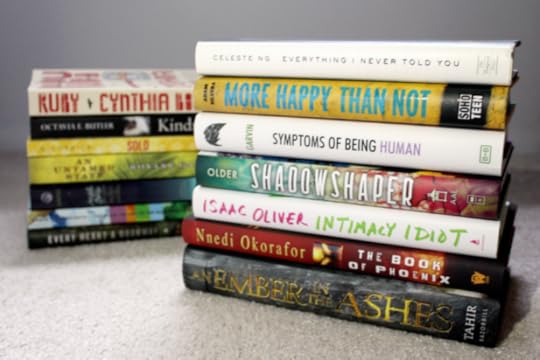
Joyful Reads by Kristen Carter
From the GoFundMe page:
I’m starting a monthly subscription box called Joyful Reads. Joyful Reads is a subscription box committed to marginalized voices and books that reflect the world around us. I would like to open in May 2017. Our target demographic is teenagers and young adults who love Young Adult literature.
You can also support Kristen via:
Ko-Fi
PayPal
Damien
From the Patreon page:
So look, here’s the thing: For the past decade, I’ve been writing, talking, thinking, teaching, and learning about philosophy, comparative religion, magic, artificial intelligence, human physical and mental augmentation, pop culture, and how they all relate. I think about, talk about, write about, and work toward a future worth living in, and I want to do all of that with you.
I mean a future where we have the option but not the expectation to self-cyborg. A future where, when we’re confronted with the new and unprecedentedly strange kinds of minds we’re likely to meet in this century, we can embrace the new and the strange, and use it to make ourselves even more than we already are. A future where everyone has the data, information, knowledge, and ability to conduct their lives in their communities, the best they know how.
I’m doing this work at both AFutureWorthThinkingAbout.com and, now, Technoccult.net, but to do all of this—to write, talk, read, converse, and write some more to, with, and about leading thinkers-and-doers in many fields of philosophy, science, art, technology, magic…so many thing—takes time, and so much of all of our time, these days, is spent trying to make money, and, to be honest, some of the ways we spend our time making our livings can drain the will to live, let alone do the kind of work we love and want to be doing.
That’s where you come in.
Wanda Lotus

Her photos are amazing!
From her Patreon:
I am a native New Yorker and street photographer. Capturing ordinary people living everyday life is my passion. I have been doing it since 2007, when I decided to seriously nurture my life-long interest in photography. Now I am working towards getting my work in front of a wider audience. Your monthly pledges will help me do that! With your donations I will be able to send initial contact packets to galleries and art dealers, self-publish photo books (including hiring professionals to help me with the layouts),enter prestigious photo contests, and have my photos printed and framed for exhibitions.
Odera Igbokwe

My name is Odera Igbokwe and I am an illustrator and painter. You might know me from projects such as”Odera Redesigns the cast of Sailor Moon”,FEM4FEM,”Pepperbreath!: A Digimon Fanzine”, or Black History Month: Celebrating illustrators/painters of the African Diaspora.
I am constantly creating more inclusive illustrations, that celebrate the diversity of people of the african diaspora, and show that we exist in fantastical realms.
With “Melanin Mythologies” I will produce 2* illustrations a month. One illustration is exclusive to patrons, and the other is open to the general public. These will range from character illustrations to original paintings. (*2 illustrations a month can happen if we reach the $500 goal!)
Your support on Patreon will provide me with the resources to create more inclusive illustrations. As an illustrator, many of the assignments I take on continue to exclude people of the african diaspora. With your support I can take on less of those assignments, in favor of showing the world more of our black resilience, intersectionality, and magic aka ~melanin on fleek~
OliveOilCorp / Alone

Alone is a romance comic about the budding relationship between Jack, a quiet widower, and Sarah, a former musician, as they both try to reconcile with their pasts.
While a love story at its core, Alone also deals with themes of grief, family, prejudice,addiction, and the effect music has on our lives. You can read all of the story up to this point for free at alone-comic.com.
I’ve been posting Alone online for the past two years, but between juggling school and other jobs, updates have been…sporadic at best. Supporting my Patreon will help me dedicate more time to working on the comic and other side projects along the way.
Milton Davis
Hey y’all! I’m here with a group of talented artists and writers to create my first Sword and Soul graphic novel series, Uhuru. Uhuru is based on my novel series Meji, but expands the world of the epic fantasy with new stories and new characters. If you liked Meji, you’ll love Uhuru.
Mildred Louis / Agents of the Realm

Agents of the Realm is a College years coming of age story, taking influence from a number of timeless Magical Girl themed tales. Shortly after beginning their first year of college at Silvermount University, Five young women; Norah, Adele, Kendall, Paige and Jordan, discover that they’ve each been chosen to help protect not just our world, but a newly discovered sister dimension as well. As they venture forward through their college years, their lives start to take on forms of their own, providing them with new opportunities to learn just how much power they have over their destinies. This is a currently running webcomic that updates twice a week on Sundays and Thursdays.
Tanya DePass / I Need Diverse Games

I Need Diverse Games is my full time job thanks to I Need Diverse Games becoming a non-profit 501(c)(3) organization as of August 13th, 2016. Because of this change, I’m dedicating all my time and resources available, but doing this doesn’t generate a lot of money to keep the lights on, pay for miscellaneous things that you need daily. In fact, keeping I Need Diverse Games afloat would cost me what little I had to spare when I was employed.
If you can help me support myself while I do this work it would be great. Thank you in advance for any help you can give so I can continue to do this full time.
Zig Zag Claybourne
From his Patreon page:
First rule of Write Club is talk incessantly about writing, because everybody out there has questions about story and I don’t mean just of the written variety. I mean story. Life. So we talk. We might understand something essential maybe around the 27 trillionth conversation had.
I love fiction. Worlds imagined, worlds altered, reshaped or totally twisted. Anything that fires the imagination is a gift from the gods. As such I try to only write fiction that I feel, something that resonates between us beyond the financial transaction. I want to add vitality to that 27 trillion-and-one conversation.
I can do that with your help. Maybe you like blogs on writing. Maybe you don’t mind some slice-of-life. My “Posts” page is for you; we can play however we like there. I’ll write for you, I’ll honor you and, most importantly, we’ll get to listen to each other. That, my friends, is a conversation worth having.
Gisele Jobateh

I have been working on my webcomic Star Trip for three years now and both the comic’s art and writing have improved significantly. I am currently working on Book 2 and the completed comic will be THREE Books in total with around 400-500 pages per book. I really enjoy working on this comic and I am very proud of how much it has grown!
THIS IS WHERE YOU COME IN! Your contributions per month will give me enough of a safety net to help me stay on my feet and keep creating. In return for your patronage you will receive exclusive Patreon only posts of concept art for the currently running Star Trip chapter, Patreon exclusive monthly wallpapers, early access to my mini comics, scanned sketchbooks, and the warm fuzzy feeling that comes with helping an artist do what they love while keeping them housed and fed!
Inda Lauryn
From the Patreon page:
I host a radio show called the Black Swan Collective. When I announced this show, I mentioned that I had larger intentions for it than just music. I wanted to feature artists of all types and give them a platform to showcase their work. So this is what I’m going to do as soon as possible.
I am planning to launch a daily (weekday) show to give Black women artists of all types a platform. I want to talk with women in music, film, theatre, writing, poetry, painting, sculpting, fashion, comics, mixed media, anything they use to express themselves creatively. Furthermore, I want to talk with activists whether or not they use art to address their social issues.
You can also support them via:
Ko-Fi
Bethany C Morrow
I’m a speculative literary author of YA and adult fiction. Raising my voice in a world trying to silence me.
Follow her on Twitter @bcmorrow.
Support her via:
Ko-Fi
Shannon Barber
I’ve been a fan of Shannon’s non-fiction writing for a while; you should read it here. Then head to her Patreon and support her writing by supporting her!
Astria Legends

Astria Legends is a Christian Fantasy series that is being adapted into novels, comics, animated shorts, dance and spoken word productions as well as other visual/performance arts mediums.
Black Girl Squee
From the Patreon:
Podcasting, like mainstream media, has become another male-dominated medium. Even the spaces occupied by people of color tend to amplify male voices over women’s.
I want to change that. My goal is to build a podcast network of shows made by and for women, primarily women of color. My dream is to hear women’s perspectives on everything from music to pop culture to politics, sports, and activism, in a thoughtful way, always considering intersectionality.
You can help make this vision reality by supporting this Patreon. Donations will be used to cover the costs of shows already in production (Black Girl Squee, Ratchet Research) as well the creation of new shows that will be the foundation of the premium podcast network (i.e., the Building Fund).
Random Jeweler
I am rebuilding my jewelry business and to do that, I’m experimenting with selling some poetry. Subjects will include job hunting, Memphis life, and the struggles of living between the margin and the center in the Trump era.
Did I miss you? Go on and add your links and/or pitch in the comments :)
Previous in series Table of contents for Tempest Challenge: Black History MonthTempest Challenge: Black History Month EditionBlack Women in 19th Century American Life | Tempest Challenge BHMThe Temple of My Familiar by Alice Walker | Tempest Challenge BHMScott Woods: Just Read Everything He Writes | Tempest Challenge BHMEartha Kitt’s Biographies | Tempest Challenge BHMZora Neale Hurston: A Life in Letters | Tempest Challenge BHMMelissa Harris-Perry at ELLE | Tempest Challenge BHMWhy Black Stories Matter – Adam H.C. Myrie | Tempest Challenge BHMSun Ra and Afrofuturism | Tempest Challenge BHMMy Life, My Love, My Legacy by Coretta Scott King | Tempest Challenge BHMParable of the Sower / Parable of the Talents by Octavia E Butler | Tempest Challenge BHMLinda Addison Will Scare You (In A Good Way) | Tempest Challenge BHMPushout: The Criminalization of Black Girls in Schools by Monique W. Morris | Tempest Challenge BHMKintu by Jennifer Nansubuga Makumbi | Tempest Challenge BHM1984 & About Writing by Samuel R. Delany | Tempest Challenge BHMAnthologies & Collections | Tempest Challenge Black History MonthLinkspam | Tempest Challenge Black History MonthAugust Wilson’s Plays | Tempest Challenge BHMSupport Black Authors, Artists, & Creatives | Tempest Challenge Black History Month


![[image error]](http://tempest.fluidartist.com/wp-content/uploads/2017/05/Steampunk-Egypt-1-1.jpg)
![[image error]](http://tempest.fluidartist.com/wp-content/uploads/2017/04/birthday01.jpg)
![[image error]](http://tempest.fluidartist.com/wp-content/uploads/2017/04/OddCon.jpg)

![[image error]](http://tempest.fluidartist.com/wp-content/uploads/2017/04/africaegypt.jpg)
![[image error]](http://tempest.fluidartist.com/wp-content/uploads/2017/03/Tempest-Challenge-WHM.jpg)
![[image error]](http://tempest.fluidartist.com/wp-content/uploads/2017/03/GodWoman03.jpg)
![[image error]](http://tempest.fluidartist.com/wp-content/uploads/2017/03/hathor.jpg)
![[image error]](http://tempest.fluidartist.com/wp-content/uploads/2017/03/moonmind.jpg)
![[image error]](http://tempest.fluidartist.com/wp-content/uploads/2017/03/womanking.jpg)
![[image error]](http://tempest.fluidartist.com/wp-content/uploads/2017/03/20170313_120821.jpg)
![[image error]](http://tempest.fluidartist.com/wp-content/uploads/2017/03/CopperScarabFront.jpg)