
Lana Button's Blog, page 2
February 21, 2024
The Path to a Positive Pink Shirt Day
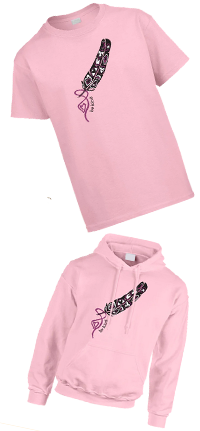
Pink Shirt Day is coming up. On Wednesday, February 28, students across Canada will wear pink shirts to elementary school, and pledge to stop bullying. So, who exactly is this bully? As an early childhood educator and a picture book author, I am coming at this conversation focusing on our kindergarten to primary grade pink-shirt-wearing students. So, when it comes to identifying ‘the bully’— I am not a fan of name-calling. Pink Shirt Day is about being kind, standing up for others, and speaking out when we see unkind behaviour. And I would add- that we need to leave space for our peers and ourselves to acknowledge that we’ve made a mistake, that we’re sorry, and we’d like to try again.
Elementary school is not made up of ‘good guys’ and ‘bad guys’ it is made up of children developing (and making mistakes along the way with) their communication, language and social skills.
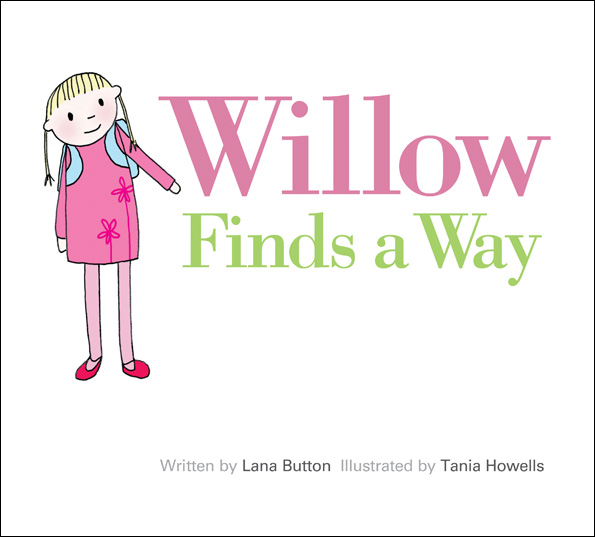
 Willow Finds a Way (Kids Can Press) by Lana Button and Tania Howells
My picture book, WILLOW FINDS A WAY (Kids Can Press, illustrated by Tania Howells) was placed on Publisher’s Weekly‘s Anti-Bullying Books List, and the CCBC Pink Shirt Day List. It’s about how the quietest kid in class stands up to someone being unkind. But the story doesn’t end when the class follows Willow’s lead and crosses their names off Kristabelle’s birthday list. It doesn’t end with everyone turning their back on this primary-grade kid. It ends after Willow once again walks away from unkind behaviour, and gives Kristabelle some grace and some space to try again.
I think we can get to the other side of bullying, where every child feels safe, respected and heard, by helping children develop these three skills:
Communication Skills
Bullies are bad. Stand up to them. That’s the Coles Notes message to children. But what can happen here is a misinterpretation and a miscommunication to young children that it is okay to label a peer a ‘bully’ when they are having a conflict. Here are some tips for helping children better communicate with their peers when dealing with unkind behaviour.
Absolutely, we must flex our communication skills to address someone who is treating us, or those around us badly. Teaching kids to use action words as opposed to ‘labeling words’, when communicating with their peers can help. “Don’t call me that,” is a specific, direct action that is more helpful than ‘You’re so mean.’ And it takes practice! Sit in on any marriage counselling session to remind yourself that adults are still working on it.
It’s also very helpful for children to express how that action makes them feel. “That makes me really sad when you do that.” This healthy communication allows a child to acknowledge their feelings, and it helps them develop their ‘feelings vocabulary” (ie: ‘that frustrates me’ ‘that embarrasses me’)
Okay, but what if a child acknowledges that they are the ones who have been unkind? Are they that primary-grade kid who is “doomed to be a bully, with no chance to make it right?” as Kitty puts it in my picture book WHAT IF BUNNY’S NOT A BULLY? (Kids Can Press, illustrated by Christine Battuz)
 What if Bunny’s Not a Bully? (Kids Can Press) by Lana Button and Christine Battuz
 Let’s add to the phrase, “I’m sorry,” which can often get tossed around like a meaningless magic word. If there’s a breath there first, and an acknowledgment, with some action words, “I made a mistake when I said that… when I did that…etc. I’m sorry.” It is healthy for everyone involved to acknowledge when talking about unkind behaviour, that we all make mistakes along the way.
Social skills practice
Primary-grade students often need guidance when interacting with their peers. I appreciate that it is exhausting and never-ending, but don’t tell kids to stand up to bullying and then shoo them away with “work it out yourselves,” or “I don’t listen to tattling,” when they come to you for help. Children need (and deserve) a calm adult to help them interpret social conflict and find the dialogue to work through social challenges.
Examples of empathy
Cue the picture book! As our students colour in those pink shirt outlines let’s boost experiences with and examples of empathy, by reading books that deal with social conflict and resolution. I implore you to continue the story beyond the ‘stand up and walk away’ message. Arm our children with actions and dialogue through stories where characters have made it to the other side of social conflict. In WHAT IF BUNNY’S NOT A BULLY? everyone has become an expert at walking away from Bunny, even though no one can remember why she’s the bully. But when Kitty starts looking at it from a different angle, questions arise. What if she’s sorry? When do we give her a chance to try again? After the acknowledgement of “I know I’d want another chance if I’d done something wrong.” Bunny is given some grace and some space and apologizes. And there is an acknowledgement that we all make mistakes and deserve a chance to try again. School Library Journal says, “WHAT IF BUNNY’S NOT A BULLY is a great choice for young readers to explore what it means to be a bully and reflect on the power of forgiveness.”
In WILLOW FINDS A WAY, Kristabelle is being mean. She absolutely needs to be called out for it. But when given a chance, she apologizes and tries again. I believe that these stories not only give children a dialogue for standing up for themselves and for others, they also provide acknowledgement that we all make mistakes, and give children space and dialogue to say with meaning, “I’m sorry.”
Experiencing Empathy We develop empathy by experiencing it. A picture book can be a tool for a child
 Tough Like Mum (Tundra) By Lana Button and Carmen Mok
to see another person’s perspective. And they should be cracked open beyond the primary grades. After I read my picture book, TOUGH LIKE MUM (Tundra, illustrated by Carmen Mok) which deals with mental health and socio-economic diversity, I will ask my audience, “Do you think David would have made that joke about Kim eating a Butt Sandwich if he knew that she had to make her own lunch that morning and that was all the food she had?”
After reading an empathy-boosting book I would invite you to continue the conversation by asking:
Who was in the story?Where did it take place?What was the problem?Was it solved?What does it remind you of?Remember- no wrong answers here! Just let your students talk. This can lead to a valuable conversation about empathy and communication- and it can be an excellent way for you to bond with your students- but that’s for another article!
Want an activity prompt? Have our students draw and write about their interpretation of #4 and or #5. You could even do it on a Pink Shirt Day outline!
 https://www.amazon.ca/s?k=Tough+Like+Mum&i=stripbooks&crid=58FZIO2HMX0G&sprefix=tough+like+mum%2Cstripbooks%2C155&ref=nb_sb_noss_1
 https://www.amazon.ca/s?k=What+if+Bunny%27s+Not+a+Bully%3F&i=stripbooks&crid=35NBVUB35LMN5&sprefix=what+if+bunny%27s+not+a+bully+%2Cstripbooks%2C152&ref=nb_sb_noss
 https://www.amazon.ca/s?k=Willow+Finds+a+Way&i=stripbooks&crid=3CKMUBBGGVLG4&sprefix=willow+finds+a+way%2Cstripbooks%2C143&ref=nb_sb_noss_1
 https://pinkshirtdaycanada.ca/official-pink-shirt-day-t-shirts-hoodies/


February 2, 2024
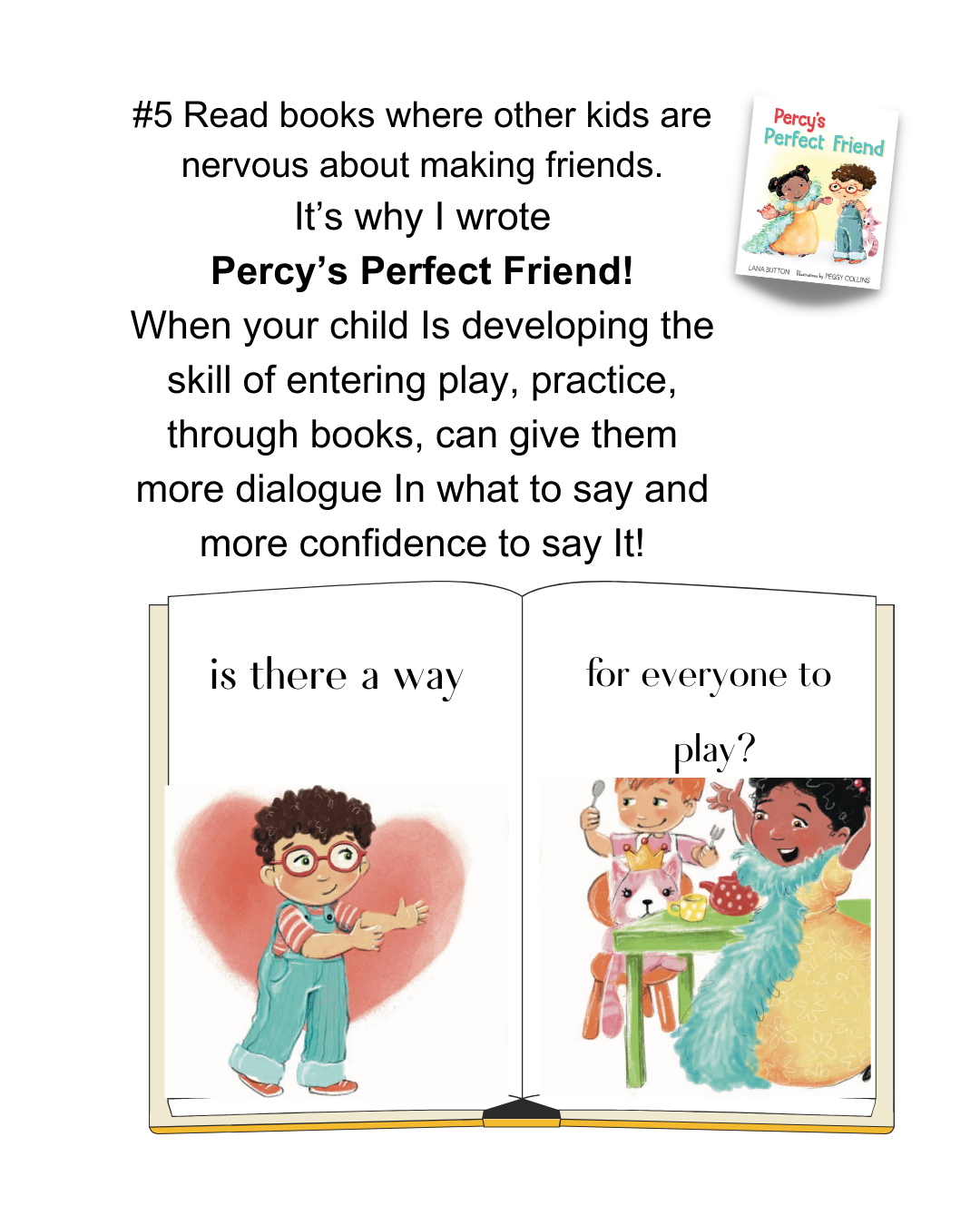
How can we help a child make friends?
Okay, all you new moms and dads, we know you’ve got a ton on your plate. You do everything for those tiny humans! But you know what’s really hard? When you can’t.
It’s our job to get kids to do things independently. But, from the agony of sitting on your hands while they manoeuvre putting on their own coat, to the heartbreak of seeing them struggle to enter play with others, the hardest part of parenting is when you can’t do everything for them.
I am an early childhood educator who spent years behind the kindergarten curtain and I can tell you that the most popular question parents ask is, “Does he play with anyone?”
I am the mother of three girls, and I can tell you that, when the invitation didn’t come, or I watched my daughter on the sidelines, the desperate reality of, “I can’t fix this,” hits pretty hard.
As much as we might wish we could orchestrate situations, “Okay, you play with her. And have fun doing it,” developing social skills and creating authentic social experiences for your child is not something we can force.
But there are things we can do to help a child develop stronger communication skills and social skills to allow for more successful social interaction. I’ve listed a few here.
I wrote the book PERCY’S PERFECT FRIEND (@pajamapressbooks ) perfectly illustrated by @peggysillustration to support kids in developing these important social skills.
It’s available wherever you buy or borrow books. I hope you’ll check it out. DM me for some great follow-up activities that go along with this read-aloud recommended for preschool to primary-grade children.
#makingfriends #belongingandcontributing #socialemotionallearning #socialemotionaldevelopment #socialemotionalskills #kindergarten #kindergartenteacher #kindergartenclassroom #picturebook


January 22, 2024
Mental Health Activities for Kindergarten-Grade 3
Here are some stand-alone activities for your kindergarten to Grade 3 students that address Mental health. They will enhance your Bell Let’s Talk Day conversations or work throughout the school year when addressing mental health strategies or removing the stigma around mental health.
Looking for a read-aloud? I wrote WILLOW’S WHISPERS (Kids Can Press, illustrated by Tania Howells) and TOUGH LIKE MUM (Tundra, illustrated by Carmen Mok)


January 19, 2024
5 Questions to ask after you read a story


“The Five Finger Re-Tell” questions are a great way to get the most out of reading a picture book with a child or with a group of children.
I am an early childhood educator and children’s author and here are more TIPS: Ask these questions in this order No wrong answers! Eventually, your child will grasp Character, Setting, Conflict and Resolution of a story. For now, we are introducing story elements and getting them excited to talk about stories! repeat after me, “That’s interesting.” This is your line! When your child comes up with an idea that you don’t see as relevant to the story, you say, “Oh, that’s interesting.” And you carry on.
The more your child realizes that this is not a test and there are no wrong answers, the more they will share their thoughts and feelings with you. And reading together will be FUN! And repeat! Ask these questions again- the next time you read THIS story. You can say, “Remind me again, who was in the story?” This gives your child a chance to expand on their thoughts, or point out another part of the story they enjoyed or now understand!
And repeat these same questions when you read a new story. Your child will come to anticipate and comprehend the question and will come to enjoy telling you the details of this new story.
Happy reading, friends!
Follow me for more tips on supporting your child in school.
And if you’d like to see more of RAJ’s RULE FOR THE BATHROOM AT SCHOOL (@owlkidspublishing ) written by me and illustrated by @metahatem it’s available wherever you buy books.
January 16, 2024
Tips for Board Book Reading With Your Baby

Reading board books is the best way to develop your baby’s foundational language skills. Exposing your baby to board books will help them develop both receptive and expressive language skills. If you want to build your babies understanding of important words, important people in their lives and common actions, add daily story time to your routine.
I am an early childhood educator and a children’s author, and here are my top tips for board book reading with your baby.
Pick the right book
 STAY MY BABY
 Orca Books
Pick board books with simple, bright clear images. Babies love books with bright photos! Choose books on topics relevant to your baby’s world, that allow for lots of labelling (ie, ‘baby’s eyes’ ‘baby’s nose’)
Point and Pause
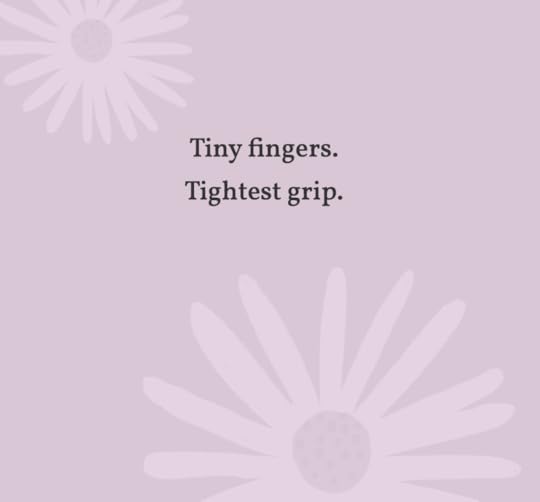
Point and tap on the page and label, “baby’s fingers!” and then repeat,“baby’s fingers!”
Then pause, so your baby can take this in. With their finger, help them point, label again, “baby’s fingers!” and repeat. This engagement allows for lots of fun interaction with you and your baby. And before you know it, your baby will be pointing independently, and eventually, labelling on their own.
When your baby is familiar with this page and the labeling, pull back even further (in ECE talk, we call this ‘scaffolding’) and ask, “Where are baby’s fingers?” when you baby points, say “There are baby’s fingers!”
 STAY MY BABY
 Orca Books
 STAY MY BABY
 Orca Books
Add Actions and Gestures
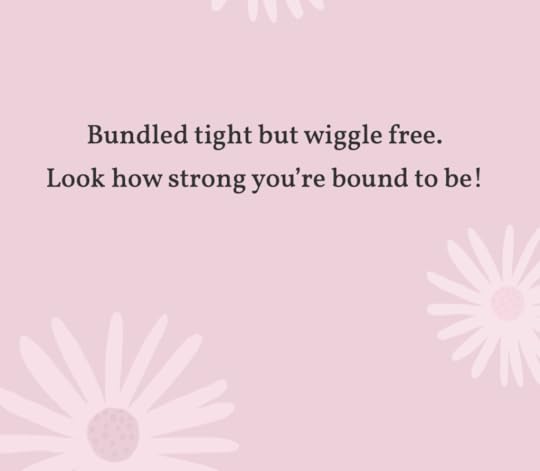
When reading a page like this, from STAY MY BABY (Orca) you could say, “wiggle, wiggle wiggle” and wiggle with your baby. (and repeat!)
This is such a fun way to introduce your baby to the term, ‘Wiggle.’ Bonus- Your baby will associate reading with enjoyment!
Add Sounds!
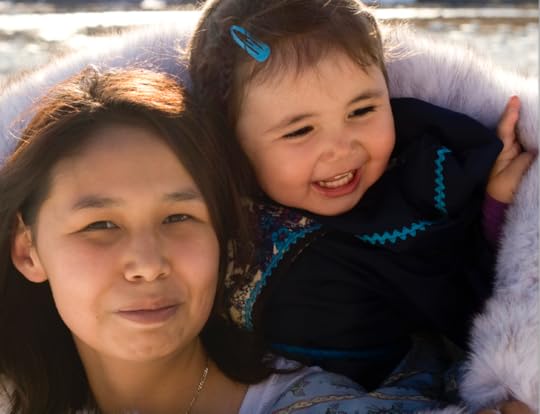
Go on, make those raspberries! Your baby will love it! And using this page from my board book, STAY MY BABY as an example, you could say, “Baby says, Ahhhhh!” (and repeat!) and then say, “Baby says…(add that pause and look at your baby) “Ahhh!”
Your baby will soon be vocalizing a sound every time you get to this page!
 Orca Books
 STAY MY BABY
Babies learn best when they feel safe, secure and loved. So, wrap your baby in your arms and read. You will help your baby develop foundational language skills and you will both look forward to this precious time together. Because, even though they will always be your baby, they will only fit in your arms for a little while.
Interested in adding STAY MY BABY(Orca Books) to you baby’s bookshelf? Order here: https://www.amazon.ca/Stay-My-Baby-Lana-Button/dp/1459836154/ref=sr_1_1?crid=M995TG7JJN5Z&dib=eyJ2IjoiMSJ9.OnX7UZed9-OUeEUWXVrejr_YKqhncnEzPqjz
July 8, 2023
Why You Should Bring Your Child to a Literary Festival This Summer!
As a children’s author, I have had the pleasure of sharing my picture books at some of the best children’s literary festivals in Canada including Ontario’s Eden Mills Writer’s Festival and Telling Tales, New Brunswick’s Frye Festival, Saskatchewan’s Festival of Words, and most recently, Nova Scotia’s Read by the Sea.
Literary Festivals are magical in that they bring children and storytellers together. Summertime is reading-for-leisure time. It’s a glorious opportunity to take the academics, and what can be seen as the chore, out of reading for kids. A day at a literary festival can inspire your child to spend their summer enjoying books.
 Telling Tales Festival, 2018
Instills the importance of reading
When your child sees you choose to read, you are instilling value in reading. Imagine the effect if your child sees you carve out time in your family’s busy schedule to spend time at a literary festival. Your child will understand the importance of books and, at the same time…
Be inspired!
They will be so blown away by the magic of books, as the book’s creators are right in front of them, performing, reading, illustrating and talking about their stories!
 Eden Mills Writer’s Festival, 2018
 R.O.C.K. Story Time, 2020
Allows your child to sample lots of story styles- no purchase required!
Children’s literary festivals often feature creators from various genres. They can sample funny, scary or dramatic stories. They can peruse through graphic novels, check out some new non-fiction, pick up a long-time favourite picture book, and try their hand at a new middle grade. A literary festival is like bringing a library to life, with the creators there to give insight, backstory and inspiration. Make a list of what you like and visit your local library to spend more time with the stories that catch your child’s eye.
Personalizes the Story Experience
 Read by the Sea Festival, 2023
A child can be more connected to, and more committed to reading a book that the creator has introduced to them. And if you do choose to purchase a book, be sure to have the creator sign it! A personalized book that is placed in the child’s hands, provides for a pretty cool moment!
Kid Friendly Fun
Most children’s literary festivals also incorporate lots of fun extras, like music, performances, stickers, activity sheets, and places to picnic. And many festivals have free admission!
 Read by the Sea Festival, 2023
So much fun to be had! So, be the hero in your child’s literacy story, and bring them to a literary festival this summer!
And hey, I’ll be doing a Telling Tales story time at The Art Gallery of Hamilton at 2 pm on August 2, 2023! So, why don’t you pack up the kids and meet me there!

February 10, 2023
Dreaming of Summer (Story Time!)
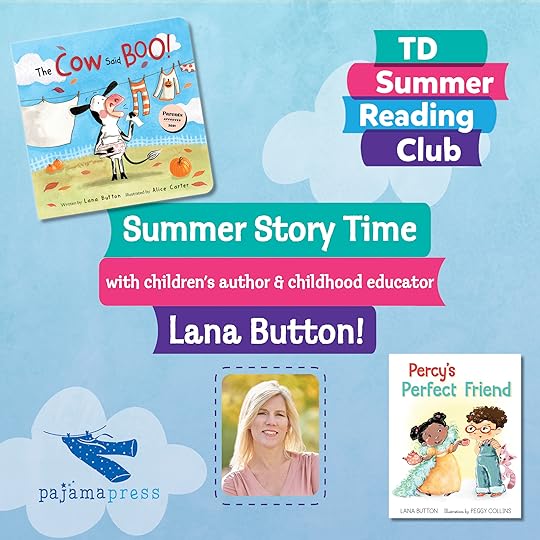
I am dreaming of summer and story time, with the exciting announcement that my picture book THE COW SAID BOO! (Pajama Press) illustrated by Alice Carter, is on the recommended reading list for the TD Summer Reading club!
The TD Summer Reading Club is a fantastic reading program offered to over 2,000 Canadian public libraries, with the goal of inspiring a lifelong love of reading.
I am hoping that this fun story about a stuffy, misunderstood cow who’s MOO! comes out as BOO! will give library little ones lots of chuckles. School Library Journal says that the rhyming text and repeated refrain in THE COW SAID BOO! make this a terrific story time read-aloud.
I am looking forward to offering a special half hour Summer Reading Club story time with libraries—Please contact me at lanabutton3@gmail.com for more information or to book a summer story time visit.
January 19, 2023
I Hope to See you at the OLA Super Conference! Metro Toronto Convention Centre, Feb 2-3, 2023
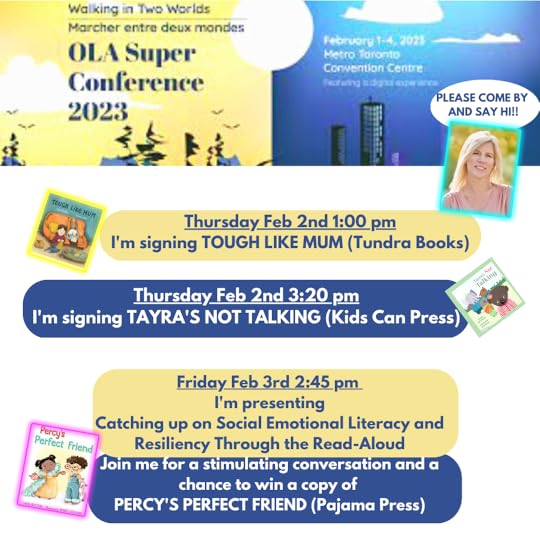
Are you going to the fabulous OLA Super Conference at the Metro Toronto Convention Centre? Please come by and say hi!
I’d love to sign a copy of TOUGH LIKE MUM (Tundra Books) for you. I will be at the Tundra Booth at 1 pm on Thursday, Feb 2nd
I’ll also be at the Kids Can Press OBPO booth at 3:20 pm, helping Kids Can Press celebrate 50 years of publishing, and signing copies of TAYRA’S NOT TALKING (Kids Can Press)
And on Friday, Feb 3rd at 2:45 pm I will be presenting CATCHING UP ON SOCIAL EMOTIONAL LITERACY AND RESILIENCY THROUGH THE READ-ALOUD
And, thanks to the fabulous PAJAMA PRESS I will be giving away 5 copies of the soon-to-be-released PERCY’S PERFECT FRIEND (Pajama Press)
I hope you’ll find me at the OLA! I would love to talk with you about inspiring young students with picture books, and about my school presentations!
May 15, 2022

January 16, 2022
Return to School Teaching Guidelines that Support Positive Mental Health
Created by author and early childhood educator, Lana Button author of My Teacher’s NOT Here! (Kids Can Press) illustrated by Christine Battuz
When considering student mental health, we need to acknowledge that, in addition to, and more important than the academic slide we may see from our students as we continue to bounce between in-person and online learning for what is now the third school year, there may very well be regression in behaviour, regression in attention span, and a much higher degree of anxiety.
We need to meet our students where they are, and address, acknowledge and validate their feelings. We need to be the supportive calm in the storm. I hope teachers might find the following activities and guidelines helpful in their classrooms, to address feelings and ease anxiety for their students.
 Kitty proves to herself she can get through an unexpected day at school.
My picture book My Teacher’s NOT Here! (Kids Can Press, 2018) illustrated by Christine Battuz is a recommended read-aloud to enhance these activities. The story supports students in the challenges they may face when there is a change in their school routine. But these stand alone activities can be completed without the picture book. It is my hope that teachers, heading into the storm, might find some of these suggestions helpful so that we might provide our students with the comfort and assurance they need to continue their learning.
Class Survey
I like school best at school I like school best at home
*What are the results of our survey? What did most of our classmates like best? How did we find out?
Whole Group Discussion Lists:
What should a supply teacher know about our class?
Encourage students to think about class routines, the class leader’s role, classroom rules, etc.
What can you say to someone who is not feeling well?
What I like about school-at school
What I don’t like about school-at school
What I like about school-at home
What I don’t like about school-at home
*Students can draw a picture about the answer they feel strongest about, in terms of likes and dislikes. Encourage students to label their drawing with letter sounds, words and sentences.
-This activity can validate a student’s unhappy feelings while highlighting positive points in either situation.
Fill in the Blank
Sometimes I feel ____________about school.
*Encourage students to share emotions (ie: nervous, happy, frustrated, excited) that they might feel about school and create a class list.
In My Teacher’s NOT Here! Kitty was nervous about school when her teacher was away.
When I am nervous about school I can_______________________.
*Encourage students to share their positive mental health strategies. Some suggestions you might make are, finding a friend to share feelings with, drawing a picture, taking some deep breaths, looking at a favourite story, taking a movement break, holding a soft toy.
I like when my teacher__________________
Create a class list or have students create an individual picture and share with the class. Students can be encouraged to add words and sentences to their picture.
Let’s Get Creative
If your teacher was away, what kind of card would you make them?
*Provide students with folded cardstock to create a card. Students can be encouraged to create get-well greetings, to address the card to their teacher and to sign the card.
Students may choose to make a card for someone else who might need a ‘pick me up’.
__ATA.cmd.push(function() { __ATA.initDynamicSlot({ id: 'atatags-26942-61e3e3c7ec5f5', location: 120, formFactor: '001', label: { text: 'Advertisements', }, creative: { reportAd: { text: 'Report this ad', }, privacySettings: { text: 'Privacy', onClick: function() { window.__tcfapi && window.__tcfapi( 'showUi' ); }, } } }); });

