
Jane Roper's Blog, page 2
May 23, 2025
You look like you could use a coach.
As I touched on in my last post, the miracle that is generative AI may well make many of the services I offer my clients as a copywriter obsolete within the next two weeks several years. But as many people informed me when I shared that piece on LinkedIn, where it went kinda viral, I need to adapt, lest I be trampled under the wheels of progress!
O progress! That great and wonderful and not at all morally complex thing to which we must all bow! We are powerless in the face of it, and therefore we must embrace it wholly and without question—economic, cultural, spiritual, and environmental consequences be damned!
Srsly, tho. I get it. AI is here to stay. It’s going to transform the work world completely over the next few years, across every industry, and we have no idea what that’s going to look like. I, for one, am not thrilled about this, but what can I do?
So, in the spirit of not ending up having to be a cashier at Trader Joe’s—not that there’s anything wrong with that; I’d just end up eating way too many of their crackers—I’ve decided that I should make the time-honored career move of the not-quite-sure-what-else-to-do: Coaching.
Yes, that’s right. I am now supplementing my writing income by offering five different coaching services (for starters). I am an enthusiastic and empathetic coach, highly skilled at helping my clients define and achieve their goals, and find greater meaning and satisfaction in the process. You’re gonna love it.
Don’t see the coaching service you need here? Please describe what you’re looking for in the comments or contact me. I may be able to help.
Dessert coaching. This is where I help you develop and execute an actionable plan for making a ton of desserts—cookies, pies, cakes, tarts, bars, puddings, etc. I’ll provide you with strategies for researching the millions of dessert recipes available, help you determine which ones to make based on what sounds good to me, and work with you to devise an ambitious yet realistic baking schedule. You’ll stay accountable to your dessert-making goals by providing me with a sample of each dessert you make at the agreed-upon deadlines. (Note: Only appropriate for people who are already really good at making desserts.)
Reading coaching. Want to read more books? Hell yes you do! I’ll help set your reading goals for the year, devise a reading schedule, and choose which books to read, based on your specific interests and preferences. For example, if you say you like “really good books” I might recommend my book and books written by my friends. I’ll help you stick to your reading plan with helpful check-ins and motivational techniques such as texting you every night at nine p.m. telling you to get the hell off Instagram and pick up a book for God’s sake. Optional: I will give you fun assignments, like making dioramas based on the books you read.
Hiking snobbery coaching. If you’re a beginner or intermediate hiker / backpacker and you’re looking to take it to the next level, I can help you with one of the most important aspects of advanced hiking and backpacking: Being insufferable. We’ll work on key skills including 1.) Grumbling under your breath at hikers who are wearing inappropriate footwear and clothing and/or don’t understand right-of-way on steep trails 2.) Describing, in detail, all of the different water filtration solutions you’ve tried, which one is the best, and how you’ll never go back. 3.) Humble-bragging about how light your pack is, yet how it’s also so carefully equipped that you could totally survive for weeks in the back country if you had to, bro.
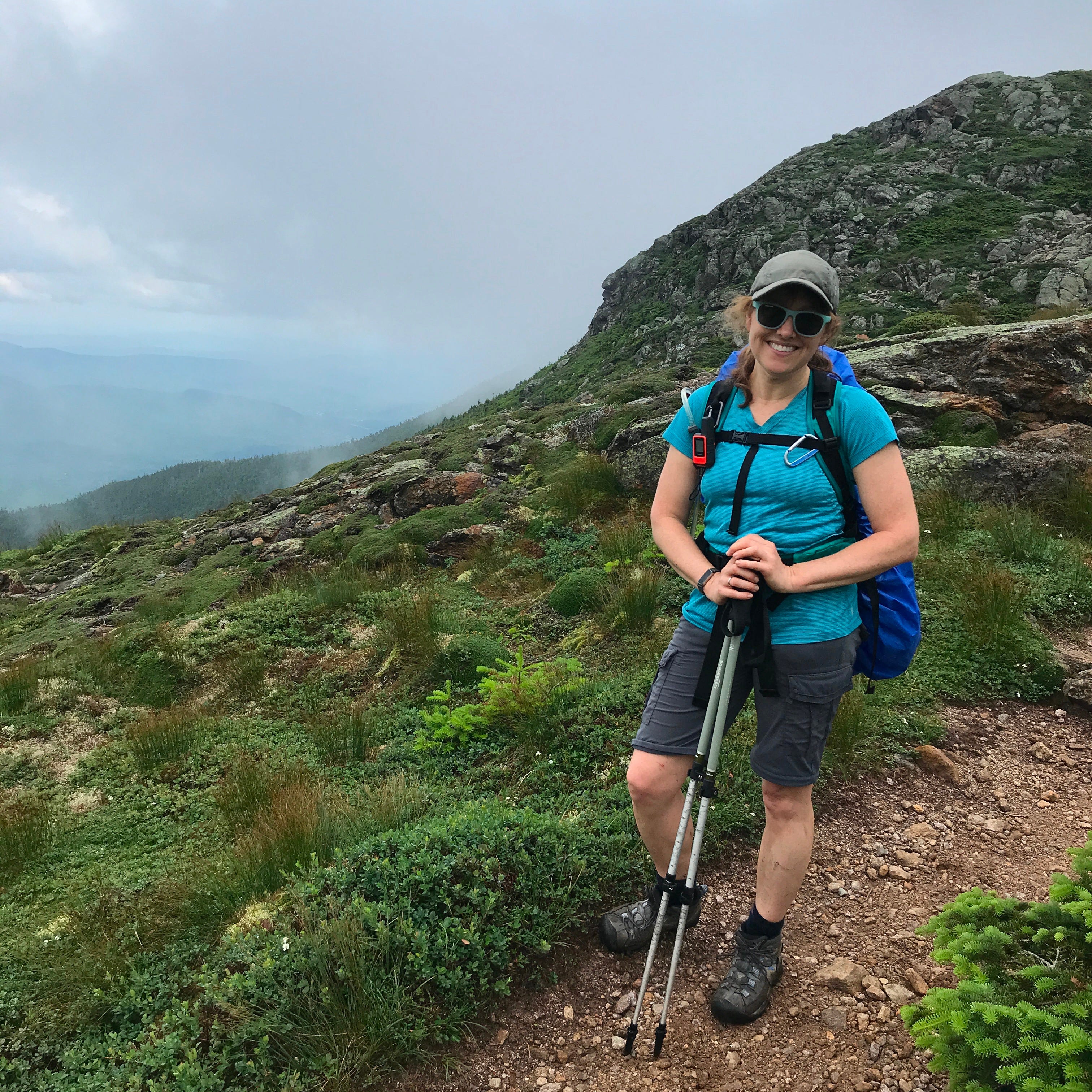 Meet your hiking snobbery coach. My pack is so fucking light.
Sarcasm coaching (for parents of teens). Let me use my five years of experience parenting teens to help you confidently channel your exasperation at your children’s idiocy into a form of “humor” that will drive them crazy while providing you with a cathartic release. In addition to helping you skillfully deploy classics like “So you’re just going to leave that right there, then?” and “Oh no. How will you ever survive?”, I’ll help you find your own voice as a sarcastic parent of teens: linguistic stylings, facial expressions, and delivery techniques that are yours and yours alone, for maximum teen annoyance.
Book coaching. Have you always wanted to write a novel or memoir, but you’re not sure how to start, where to find the time, or how to stay motivated along the way? I can help. No, seriously. I really can. Not that I can’t do those other things up there that I mentioned, especially the dessert one, but this is a kind of coaching I’ve actually already been doing for several years now. I love helping writers at any level bring their books to life, providing accountability, encouragement, troubleshooting, and hilarious anecdotes along the way. I also can provide developmental editing / editorial feedback for finished manuscripts. For the moment, I’m much better at all of this than ChatGPT is. And better looking, too. Interested? Drop me a line.
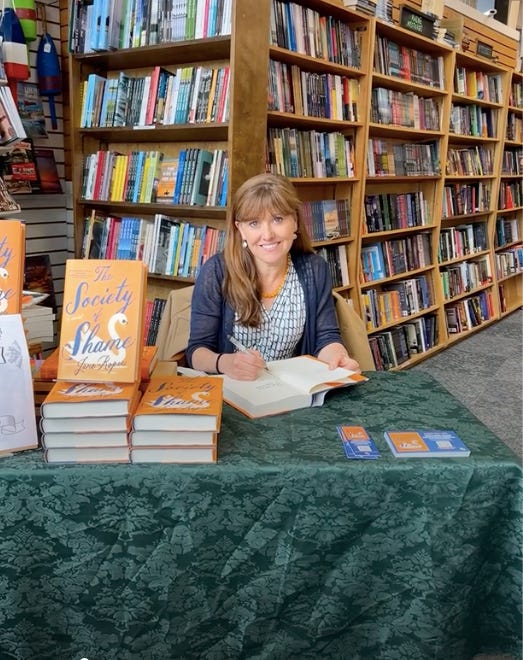 Write your book with help from A REAL LIVE AUTHOR!
 So there you have it. My 5-prong plan to avoid penury and despair as AI nudges me not-so-gently out of a job. And like I said, if there’s a form of coaching you need that I haven't mentioned, let me know! I’ll ask ChatGPT how to do it, and get back to you as soon as possible.
Oh, wait! I actually just thought of one more:
Coaching business coaching. Are you worried about the implications of AI on your ability to make a living? This is the coaching service for you. As your coaching business coach, I’ll help you parlay your unique talents into a profitable coaching business. We’ll take an inventory of your skills and strengths to help you develop your offerings, then practice your coaching skills and create a marketing plan, such as spending 20+ years building a platform through blogging, publishing, and social media engagement. Before you know it, you’ll have a thriving coaching business. NOTE: This service is not available to people who want to become dessert, reading, hiking snobbery, parental sarcasm, or book coaches. You people are on your own.
I look forward to hearing from you!
All posts on my Substack are free, but writing is how I make my living. (In addition to all the coaching, obv.) If you enjoy my work, please consider upgrading to a paid subscription (As little as $4.16666 a month! Cheap!), buying my novel, or shopping for books via my affiliate store at Bookshop.org. Thank you as always for reading!


May 15, 2025
Old lady rants about AI, eats gruel
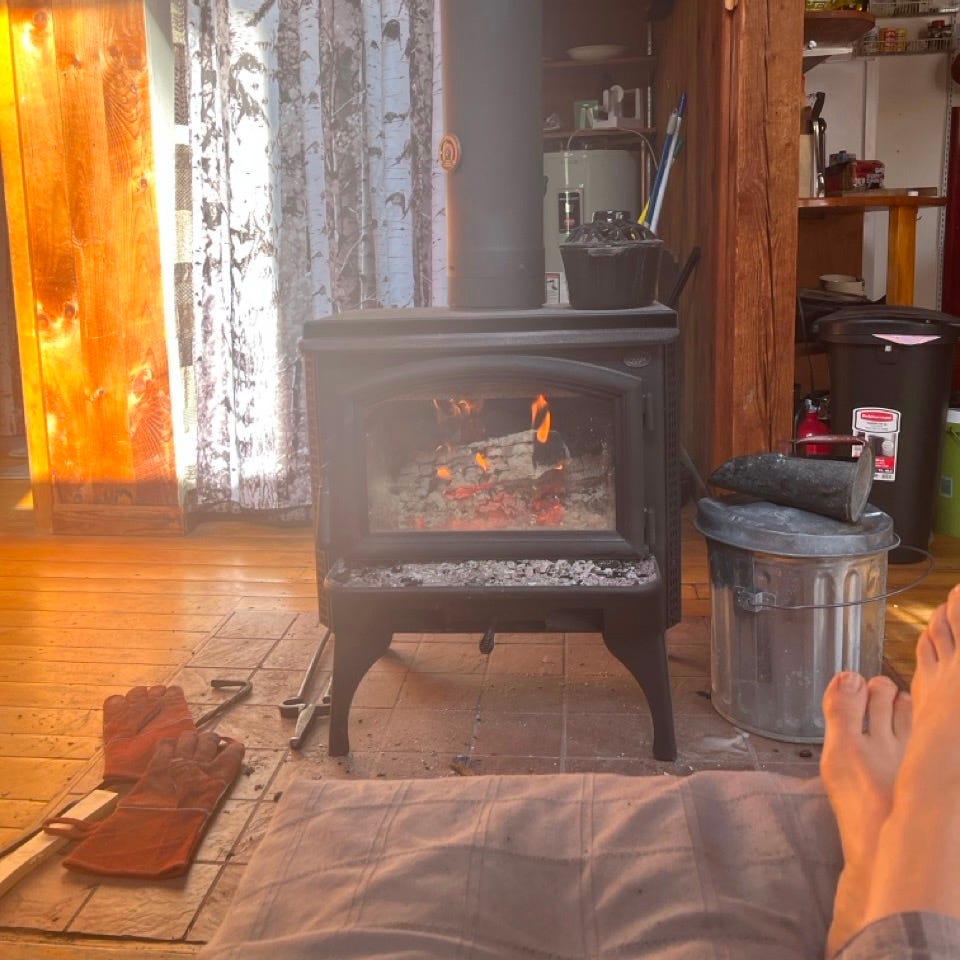
Back in March, I took myself on a little writing retreat in a woodstove-heated cabin just outside of Brattleboro, Vermont, to work on my new novel. (Which I recently sent off to my agent for feedback. Woot!) “Cabin” makes the place sound a little more rustic than it was. There was indoor plumbing, a refrigerator, etc. But I try to do my part to play to romantic notions of the writer’s life.
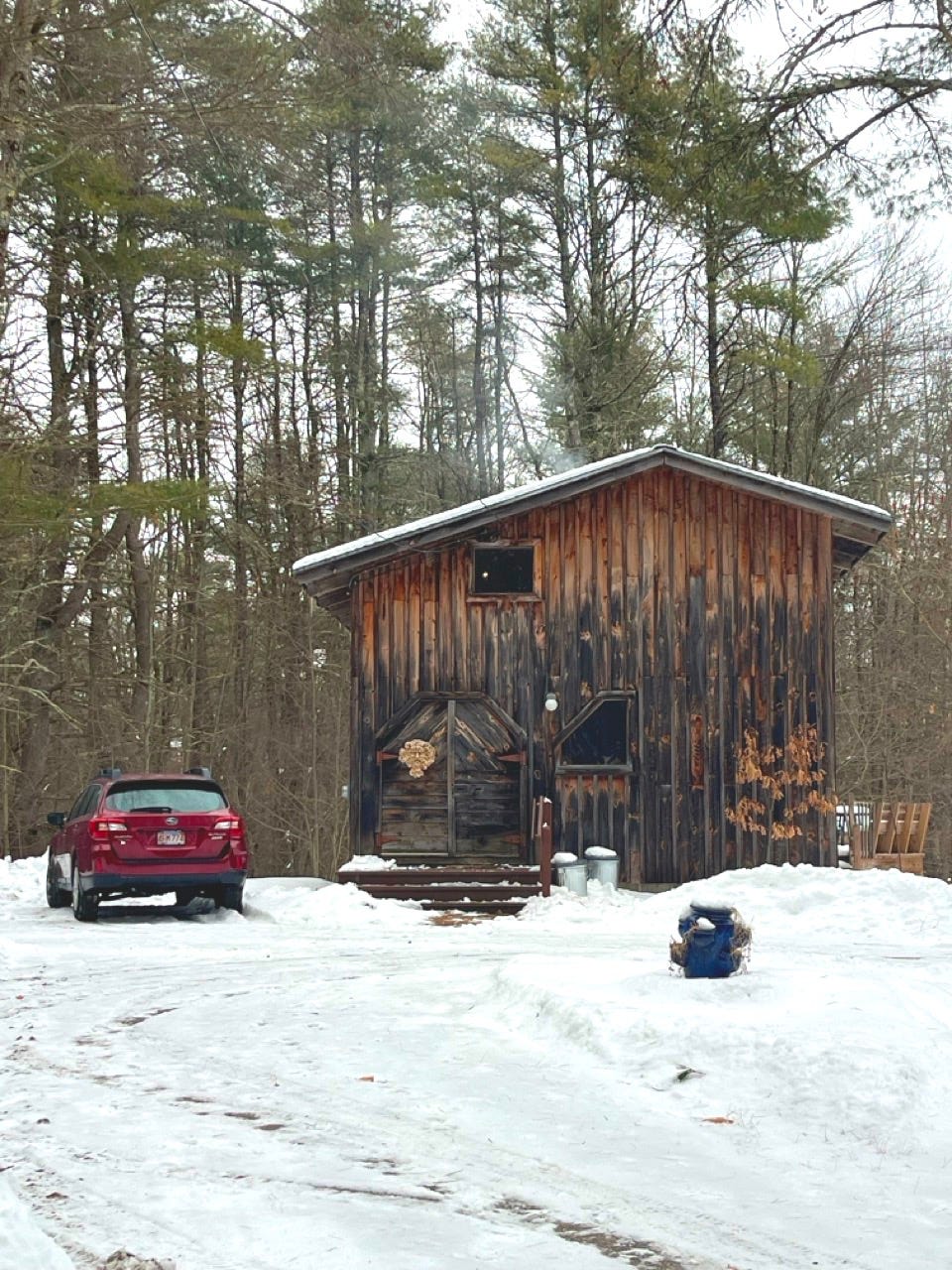 The l’il cabin in the woods.
 One late afternoon during my stay, I went into Brattleboro, did some browsing in the shops, and headed to a local watering hole to sneak in last bit of writing over a glass of wine. (I don’t know why you don’t see more people with laptops at bars. Is it uncouth of me to do this? Am I breaking some unspoken bar rule? Because to me, it is a glorious way to spend the last hour of the workday.)
It was a tiny place, full of retro nautical-themed knicknacks and curios, which was a little odd given that we were about 100 miles inland, but OK. At one point, I overheard the bartender talking to the two other patrons in the bar about ChatGPT, and how awesome it was.
Being a middle-aged lady who has no fucks to give and no longer has any fear about inserting myself into conversations in public places (wait; I’ve sort of always done this?), when the bartender came over to ask if I wanted anything else, I made an innocent, lighthearted comment about AI being satan or something along those lines. When he asked why I felt this way, I explained that AI was chipping away at my ability to make a living as a copywriter and threatening my art-school-bound child’s hopes of being a professional illustrator. Also, it was going to make people’s brains atrophy, because they would no longer have to think.
(Be sure to sit next to me if you see me in a bar! I’m fun!)
The bartender, who was about 25, said that we—meaning humans—just had to think of AI as a “thought partner,” and that he, for one, was excited about “the post-human future.” (UGH.) He also told me that pretty much everyone he knew at his college, where he was getting his degree in something to do with AI and technology, used ChatGPT to write papers—including his girlfriend, who was majoring in English.
This was the point at which I said, yes, come to think of it, maybe I will have a second glass of wine.
After I finished it, I went back to my cabin in the woods, stoked the woodstove, made myself a bowl of watery gruel, and took my ancient bones to bed.
Hahaha. Just kidding about the gruel.
Honestly, though, I don’t think I’ve ever felt as old as I did, sitting there in that weird little bar, listening to that fresh-faced and slightly-too-confident-for-his-age-young man (who probably reads Ayn Rand—or ChatGPT summaries) talking about the glories of the coming AI age.
My friends, I am sorry to be an old poop, but I am not excited about AI, and I don’t like the way it is already starting to transform our society, culture, and economy.
Maybe I wouldn’t have been excited about it at age 25 either. I mean, I think I still would have been pissed off about the fact that generative AI is theft. (I just had to put that in bold type, because most people don’t seem to get it, or give a shit.)
Here’s what I mean: AI crawlers search the web—I picture them as creepy little robot spiders—gobbling up the work of authors, photographers, illustrators, and other creators, then remixing and regurgitating it in response to people’s queries.
Are the makers of the work asked if this is OK? Are they given credit? Are they PAID? No, no, and no. And yes, in case you were wondering: Pirated copies of all three of my published books were used to train ChatGPT and Meta AI.
What’s nuts to me is that most people don’t seem to care—even creative types. I’ve seen authors using AI to create their book covers, art directors/designers using it in their web designs, and ad agencies creating (and touting!) whole campaigns made with AI art. I guess everyone’s just cool with plagiarism? And putting artists out of work? ‘Cuz AI is free and really neat?
Apparently.
But what really rattles my ole bones about it all—and what makes me feel genuinely sad—is the fact that AI is increasingly being used in place of human intellect, creativity, and imagination. And a whole lot of people seem to be OK with this.
Certainly a lot of college students are, which is beyond depressing. Honestly, if you’re using ChatGPT to write your papers for you, what is the point of even going to college?
Writing is thinking! Rarely does someone come to the blank page with ideas or arguments or stories already fully formed in their heads, which they then simply type out. Of course not. They shape and hone their ideas—and develop new ones—through the writing process. Fun fact: the etymological root of “Essay” is from the Middle French “essai” meaning “to try” (“essayer” in modern French.) As in, to try to reason through and understand and express something—BY WRITING IT, NOT BY ASKING CHATGPT TO DO IT FOR YOU, YOU LAZY FUCKS.
Look, I’m not a total luddite. I recognize that AI is pretty damned amazing—and getting better all the time. I’m sure my hapless former ChatGPT intern, Tyler Hotchkiss, for example, has gotten much better at his job, with help from all those creepy web crawlers, and the prompts and questions users continue to feed him. In fact, he’s probably gone one to replace several hundred professional writers. They all work at Trader Joe’s now.
I also totally see how AI is an incredibly powerful tool when it comes to stuff like medical diagnoses and number crunching and research. Not to mention “automating routine tasks, freeing your employees for higher-value work.” I’ve written about this countless times in the copywriting work I do for tech companies. But one has to ask: How many of those employees will actually be kept around to do that “higher value work” and how many will end up having to work at Trader Joe’s with the writers?
Think I’m exaggerating about people starting to lose their livelihoods to AI? I’m not. It’s hitting freelancers hard, and even seems to be affecting the job market for recent college grads. And for us Gen-X creative professionals, AI is accelerating the rate at which our skills and expertise are quickly becoming obsolete—right when we’re at the height of our careers.
But hey, at least the tech bros are getting rich.
Like I said, maybe if all this had happened when I was 25, I wouldn’t be such a pessimist about it. After all, that was the age I was when the internet was starting to transform the whole media and advertising landscape. And while I can’t say I welcomed the change—because I knew it was going to have repercussions, and that certain developments were definitely not good for humanity (and because I’ve kind of been an old woman for my entire life)—I felt fully willing and able to adapt and thrive. And I was not at all worried about my ability to continue to make a living. Now, I am. In fact, I’m already having a harder time at at it than I did for the first 12 years of my freelance career.
It would, of course, be nice if I could make a living Substacking or writing books—things AI is not yet able to do well—but it’s unlikely. (Sorry to ruin those romantic notions of the writer’s life you might have. Should I talk more about the cabin with the wood stove?)
I don’t know, guys. I don’t want to be one of those grumpy people who rants about all the ways the world is going to hell. And yet…and yet…AI feels like an especially troubling technological advance—much moreso than the internet or smartphones or any of the other gamechangers I’ve seen in my lifetime.
But the horse has left the barn, and there’s nothing I can do to shove it back in. So I suppose all I can do is keep advocating for and valuing (in dollars and attention) human thought and creativity. And telling my soon-to-be-college-student kids that if they use ChatGPT, so help me god, I will not continue to pay their tuition.
And if all that becomes too dispiriting, well, I guess I’ll try to channel the optimism of my 25-year-old bartender friend, embrace the post-human future, and be the best damned Trader Joe’s employee I can be.
All posts on my 100% human-authored Substack are free, but writing is also how I attempt to make a living, in defiance of our robot overlords. If you enjoy my work, please consider upgrading to a paid subscription (As little as $4.16666 a month! Cheap!), buying my novel, or shopping for books via my affiliate store at Bookshop.org. Thank you as always for reading.
P.S. My friend Heidi Pitlor recently wrote an excellent post about the dangers of AI that you should check out.
April 28, 2025
Five books to make you laugh
Hey there! I just got back from New York, where I attended the award show for this year’s Thurber Prize in American Humor in writing, as one of the three finalists. [Pause for applause]. Thank you. Thank you so much. It was an amazing thing to be nominated, and even though I didn’t win—that honor went to WaPo humor columnist Alexandra Petri, for her very funy book Alexandra Petri’s U.S. History (more on that below)—I had a blast, and some excellent trout for dinner.
I also realized that it is high time I put together a list of some of the funny books I’ve read recently — and links to them on Bookshop.org, where every purchase supports independent bookstores. If you didn’t make it out to an indie bookstore for Independent Bookstore Day on Saturday, here’s another chance to support the more than 2,000 wonderful non-billionaire, non-penis-rocket-owning, non-Trump-ass-kissing booksellers in this great land of ours.
And here is also your chance to up your daily laughter output. Because, as we all know, laughter is a powerful antidote to things like spiraling into despair because your country has fallen into the hands of an authoritarian moron. Remember: the only kind of laughter fascists and other bad guys like is the evil kind. So, laugh merrily in their direction. They hate that.
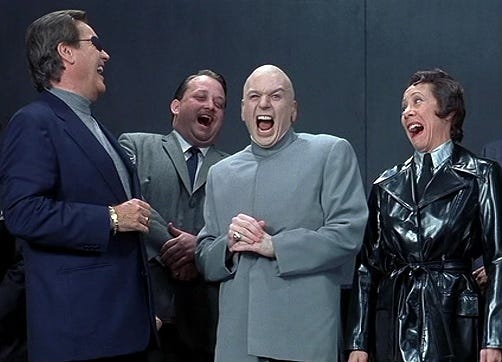 Evil laughter
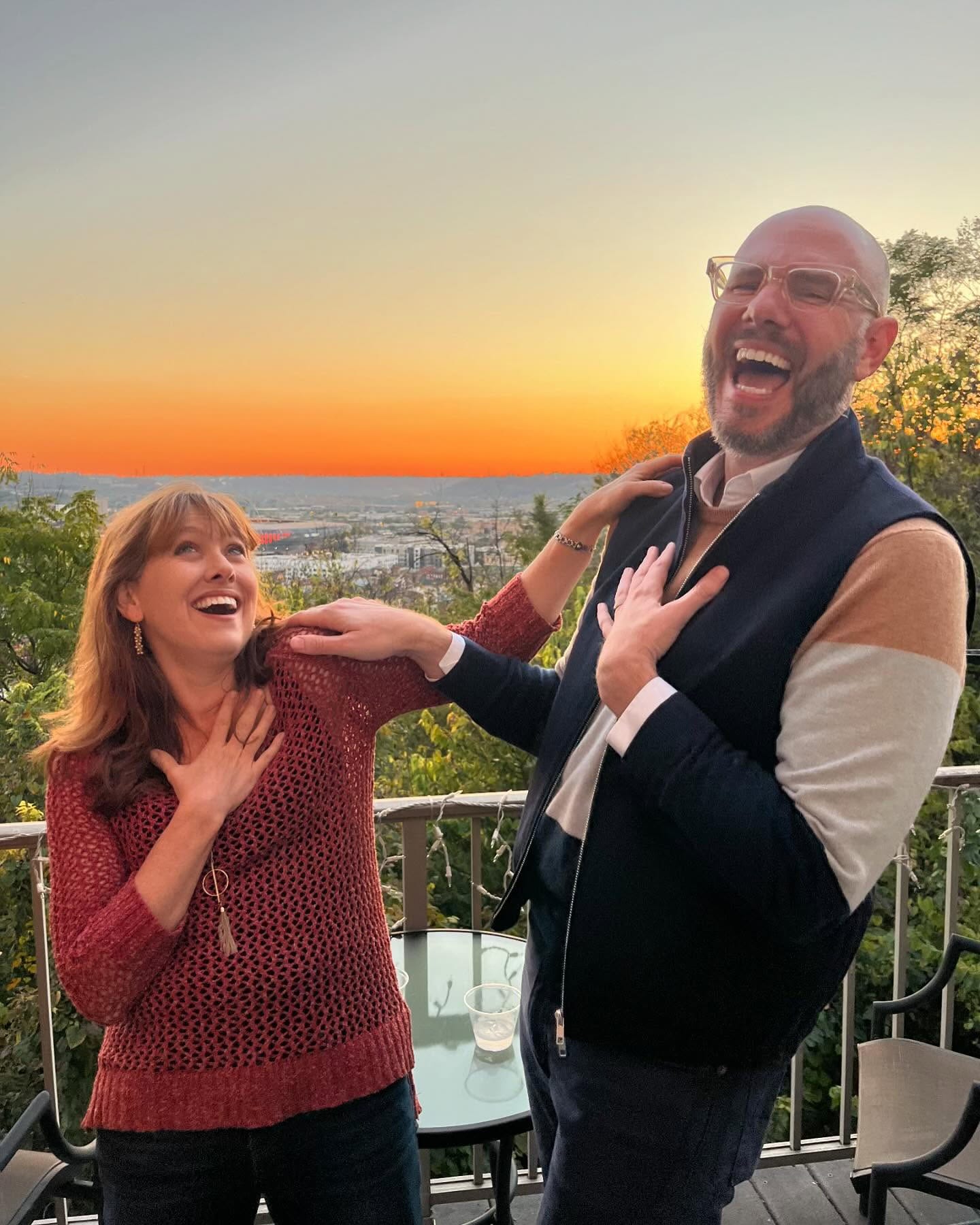 Non-evil laughter — me and Steven Rowley, author of my first book recommendation below.
Now, without further ado, here are five funny books I’ve read recently. Click any cover or title to get it on Bookshop.org.

The Guncle, by Steven Rowley
This Thurber Prize winner by the generous and lovely Steven Rowley is both funny and moving—a combo that I admire so much in a book. “Guncle” is a portmanteau of Gay and Uncle (portmanteaux feature prominently in the book, which is one more reason I love it, and also it gave me an excuse to unnecessarily use the French plural of the word just then). The Guncle in question is former sitcom star Patrick O’Hara, who unexpectedly ends up taking care of his niece and nephew at his Palm Springs home when their mother—his sister-in-law and best friend—dies. The clash between Patrick’s lifestyle and the needs of his six- and nine-year-old charges is frequently hilarious. Quips and bon mots abound, and there are many genuinely poignant moments as Patrick confronts his own grief and and considers how to move forward.
Rating: Two cocktails, a swimming pool, and a seasonally inappropriate Christmas tree.
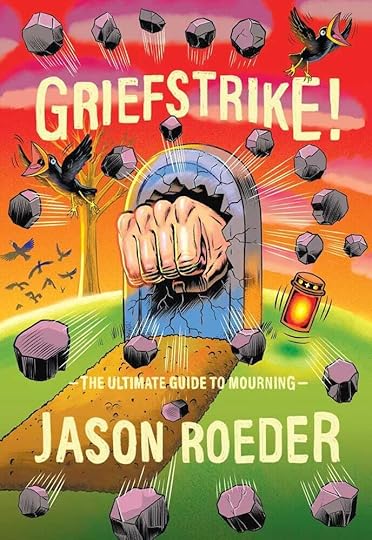
Griefstrike by Jason Roeder
Jason Roeder was my fellow Thurber Prize loser, and a lovely guy. His nominated book, Griefstrike is a humorous guide to mourning, which he wrote in the wake of his mother’s death. It’s a parody of a grief manual, but also has the occasional “sincerity corner,” where Roeder has little heart-to-hearts with the reader. (And they’re funny, too, but in a different way.) Sections/chapters include: “How much am I allowed to blame God?” with a state by state breakdown of whether you can legally blame God for your loved one’s death. (Massachusetts: “Fuck yeah, you’ll love it.”); “The Grief Calorie Counter” (Returning funeral shoes to Marshall’s: 90 calories); and “Grieving Visualization Power Postures” all of which begin standing nude in your sunroom. If you’ve lost close to you someone recently, or expect to in the future (you will), keep this on hand for some cathartic, mucus-y sob-laughter.
Rating: Four sympathy cards and two hundred and six “I’m so sorry for your loss”es on Facebook from people you maybe knew in high school. Or was it college?
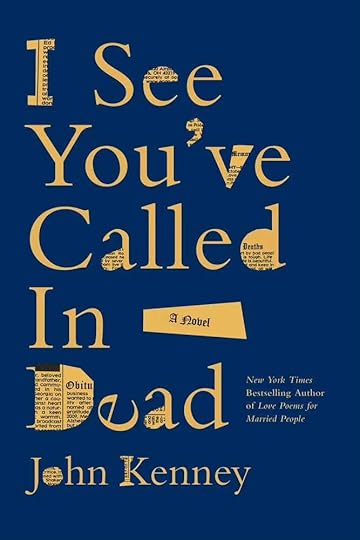
I See You’ve Called in Dead, by John Kenney
MORE GRIEF! Oh my god, it’s almost as if death is funny. It is! It is! Comedy and tragedy are inseperable if you want them to be—and you should. I had the pleasure of being asked to blurb this novel by Thurber Prize winner (For his novel Truth In Advertising) John Kenney, and to quote myself, it is “wise, wry, and heartfelt.” Obituary writer Bud Stanley is in a deep rut after his wife leaves him, and accidentally publishes his own obituary, which costs him his job. It’s only once he gets up close and personal with death—namely by attending the wakes and funerals of strangers—that he figures out how to embrace life again. The humor is subtle and perfect, and you really will come away from this book with a greater appreciation for the precious, fleeting time we get on this earth.
Rating: 4.5 stars (Sometimes the tride and true works just fine.)
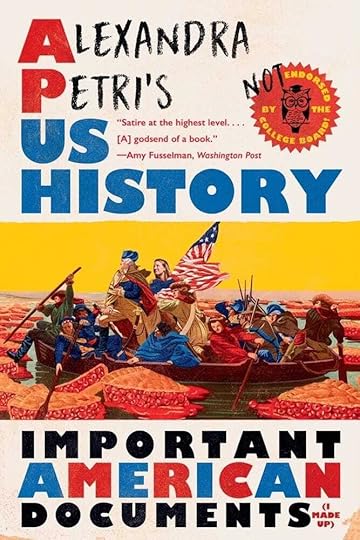
Alexandra Petri’s US History: Important Amercan Documents (I Made Up), by Alexandra Petri
NOT ABOUT GRIEF! This is the kind of book you want to keep on your beside table and pick up and read a piece or two from when it’s too late to read the other book you’re reading, because you wasted forty-five minutes doomscrolling through the fascism, and now it’s almost eleven, and you really should go to bed, but you still want to read something, just really quick. (And also, the doomscrolling has made you sad and you want to laugh.) This Thurber Prize stealing winning book is compendium of humor pieces about American history and culture, including “John and Abigail Adams Try Sexting,” “An Oral History of the Oklahoma! Exclamation Point,” “Ayn Rand’s The Little Engine that Could but Preferred Not to” and “The Team at Build-a-Bear Responds on the Thirteenth Anniversary of 9/11.” I laughed out loud multiple times, especially at the part in “An Oral History of the Constitutional Convention” where Gouverneur Morris, who is supposed to be taking notes, starts doodling a man-sized rabbit and passes the drawing around to the other delegates and asks them to weigh in on what kind of clothes it should be wearing. It’s that kind of book.
Rating: A man-sized rabbit and a Thurber Prize
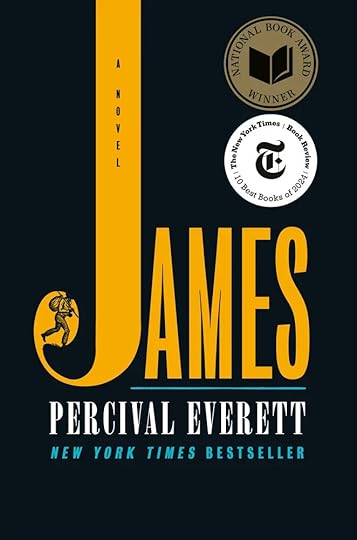
James by Percival Everett
I’m only about eighty pages into James, which reimagines the story of Huckleberry Finn from Jim’s point of view, but I am absolutely riveted. I expected the book to be profound and important and thought-provoking and all of the other things the reviewers have said about it. BUT I did not expect that it would also be quite funny. One of the core sources of this humor is how Jim and other enslaved people, for their own safety and self-preservation, act scrapingly subservient, superstitious, and dim when they’re in the presence of white people, speaking in the sort of broad dialect attributed to Black people in Huckleberry Finn and other books of the time, but speak the King’s English and act like the intelligent, complex, and perceptive human beings they are when they’re amongst themselves. It’s a satrical stroke of genius.
Rating: Liberty and justice for all
And if none of these titles tickle your fancy, some other funny books I recommend include Straight Man by Richard Russo, Cold Comfort Farm by Stella Gibbons, My Sister The Serial Killer, by Oyinkan Braithwaite, and The Girl With The Lower Back Tattoo by Amy Schumer. Oh yeah, and there’s this one, too.
What are your favorite funny books? Please add in the comments below. Happy (non-evil) laughing.
All posts on my Substack are free and publicly available, but writing is also how I attempt to make a living. If you enjoy my work, please consider upgrading to a paid subscription (As little as $4.16666 a month! Cheap!) or buying my book. Thank you.
April 8, 2025
We all need a little shelter from the storm.
Well hello there. It’s been three weeks since my last confession post, but it feels like a lifetime. So many fresh hells and abominations since then! A veritable smorgasbord! People deported and abducted without due process, war plans shared by morons in Signal chats, stock markets clobbered, universities and law firms extorted, history expunged from websites and museums.
It is hard not to feel completely overwhelmed by what is happening, and what may be ahead. I try so very hard to remain hopeful—to remember to feed that thing with feathers that is apparently perched in my soul. (Ew?) But it is not always easy. Lately, in fact, it has been quite difficult. The abduction of Rumeysa Ozturk a couple of weeks ago, right near the playground we used to take our kiddos when they were little, marked something of a turning point for me—a stark confirmation of just how dark things have gotten, and how much darker they may get
At the same time, I find myself being much more keenly aware of—and thankful for—the sources of refuge in my life: the places, people, and activities where I can catch a break from anxiety and anger and intrusive thoughts such as: oh my god are we headed toward martial law and a total breakdown of society and should I stock up on rice and gasoline for bartering with the hordes of armed citizens soon to be roving the streets of my quiet, suburban town?
Those sources of refuge include but are not limited to: laughing with my kids and husband, walking in the woods, making and eating good food, doing crossword puzzles, reading, rock climbing, spending time with friends, and mocking our cats.
But the biggie for me is writing—via this here Substack, yes, but even moreso via the new novel I’m working on. Like my last book, it’s funny, and on the lighter side—so, a nice escape for me and hopefully for future readers—but with some serious themes and emotional truths running through it. I am totally absorbed in the work (which is part of why I haven’t posted here in a while) and am closing in on a decent draft, which I will soon share with my agent and some beta readers.
I don’t think I’ve ever felt so keenly, consciously grateful for writing as I have felt over these past few months—even though I’ve been writing avidly ever since I was first capable of it.
My mom has been going through old slides and photos of late, and sent me this one, in which I seem to be waiting patiently for the muse to enter my body and guide my hands to the keys of my parents’ electric typewriter.
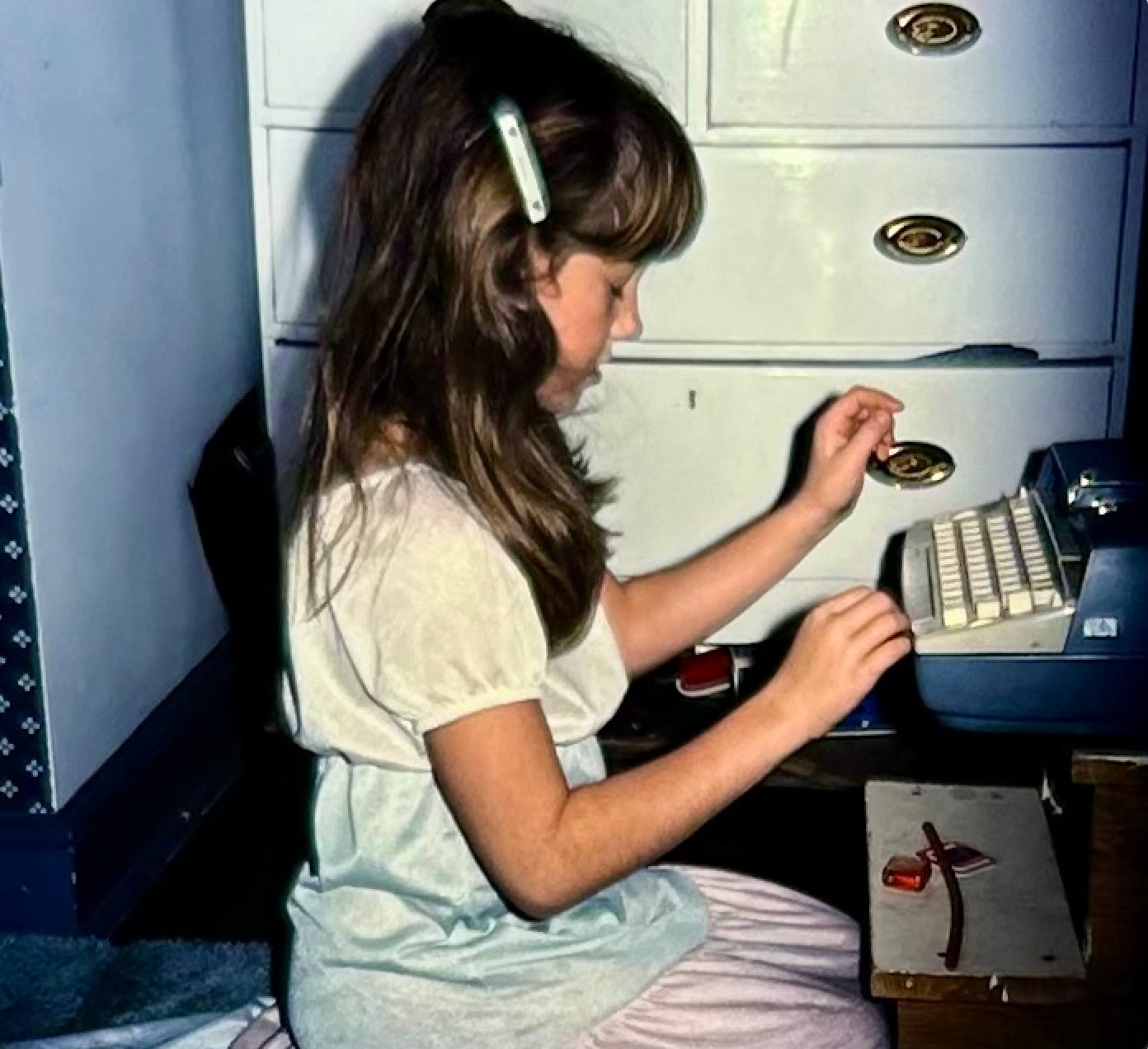
I don’t know what I was working on here. I would say that maybe it was my first major work of nonfiction, The Sticker Sensation: a Fun Guide to Collecting Stickers, but I think I wrote that when I was a little older. The “cool” handwriting on the cover was something I believe I cultivated in fourth grade.

It’s also possible—and would explain the closed eyes—that the photo captured me in midst of teaching myself how to touch-type, which I did, from a book. (I was a strange child.) I still remember the first phrase I learned to type without looking, using the home row keys: Dad had half a shad salad.
Ironically, I don’t remember ever thinking as a kid that I wanted to be a writer when I grew up. This in spite of the fact that I was constantly doing it, whether it was writing in my diary or lightly plagiarizing Shel Silverstein or touch-typing didactic guides to popular children’s hobbies. Jobs like archaeologist, airplane stewardess (the correct term at the time!), actor, and dancer were all much higher on my list.
In fact, I actually had a brief career as an actor / model, doing professional theater and commercials, and modeling for catalogs and department store circulars. Check out my cringey 80s headshots…
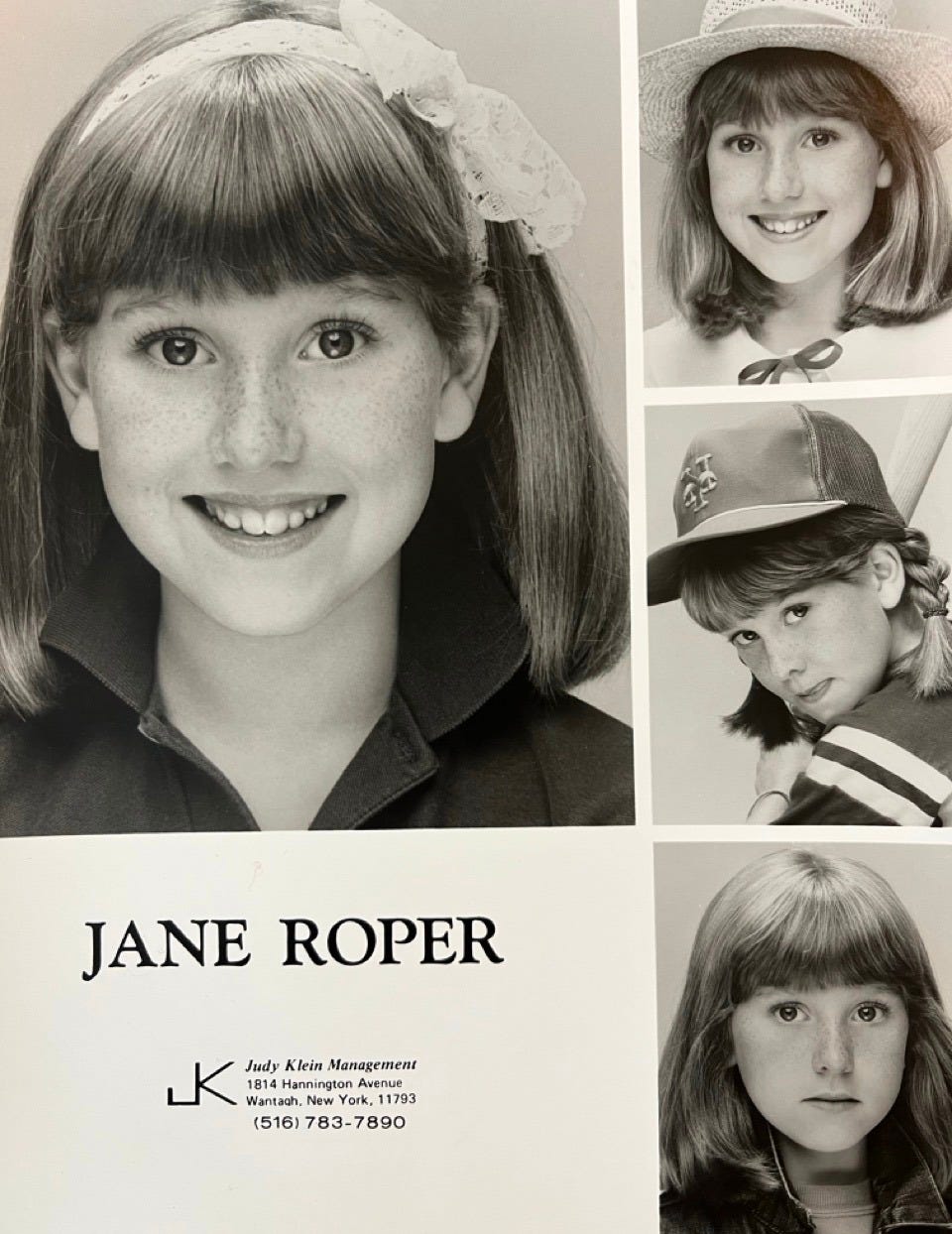 I had immense range.
…and my adorable original SAG card!
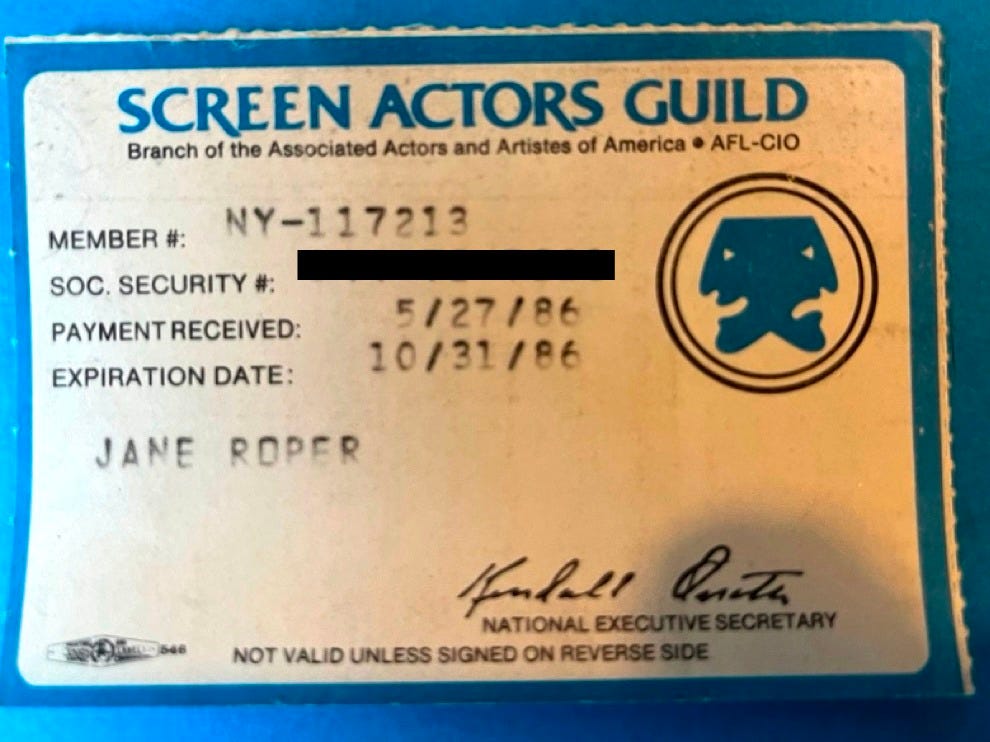 Elon may have my social security number, but you can’t!
As a teenager and young adult, my career dreams shifted from performing (I retired at 12, due to waning interest and braces) to politics and activism and vague designs on “something involving travel.” But no matter how hard I rowed in that direction, I was borne back ceaselessly into the past, to the thing that had made me feel most anchored, contented, and fully myself as a child.
Writing was my soul’s home. And it still is. It can be thankless and crazymaking and tedious as hell. But when I’m doing it, I feel safe. Calm. Fully in the moment of whatever world I’m creating or line of thought I’m exploring. It’s the realest thing I do.
I can’t turn away from what is happening to our country. I can’t stop speaking out (did you protest on Saturday? Wasn’t it amazing?). And I can’t help feeling the anger and sadness and anxiety. That would be impossible.
But I will keep taking shelter from the storm where and when I can (how lucky I am to be free to do that). To refuel and find joy. To stay rooted. And to make sure that thing with feathers (ew?) doesn’t croak.
I hope you’ll do it, too.
All posts on this rambly and sometimes surprisingly earnest Substack are free and publicly available, but writing is how I make my living. If you enjoy my work, please consider upgrading to a paid subscription (As little as $4.16666 a month! Cheap!) or buying my book. Thank you.
P.S. Here’s Bob Dylan singing Shelter from the Storm, which is one of my favorite songs of his. Maybe your shelter, like his, is some chick with silver bracelets on her wrists and flowers in her hair. Whatever works!
March 16, 2025
The story has changed
Buckle up, buttercups, because I’m gonna get a little academic on your asses in this post. A little philosophical, a little political, a little evolutionary. A little bit country, a little bit rock and roll. I’ll make it quick(ish), and there’s no test at the end. I promise.
It’s just that I’ve been feeling awfully unsettled of late—as I think many of us are—and I’ve been trying to get a handle on why. I mean, I know why. Our country is being taken over by an authoritarian regime, the stock market is tanking, and it’s not clear just how much worse things are going to get. (Significantly, I fear.)
But there’s something much more profound happening, too, and I think it’s why the current political situation is so difficult on a psychological level for many of us.
It has to do with the very thing that makes us human.
I was an anthropology major in college. To this day, I’m a sucker for books about evolution and ancient human civilization. Over the past seven weeks, I’ve been thinking a lot about one such book, which I gobbled up when it came out ten years ago: Yuval Noah Harari’s Sapiens: A Brief Human History of Humankind.
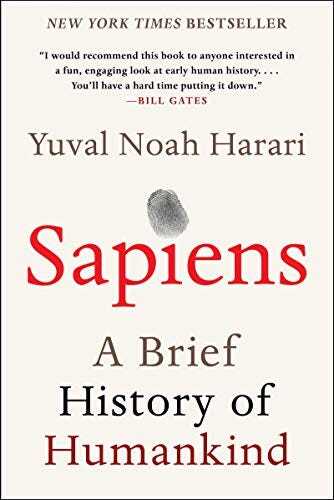
In Sapiens, Harari offers up his explanation for why homo sapiens came to be the dominant homo species on earth, and why we’ve been able to do what other no other species has—create cities and kingdoms and countries and whole civilizations.
What it comes down to, he says, is our unique cognitive capacity for imagination. We’re the only species with the ability to make up and communicate fictional stories.
As he puts it:
Many animals and human species could previously say ‘Careful! A lion!’… Homo Sapiens acquired the ability to say, “The lion is the guardian spirit of our tribe.”
Our ability to share and buy into those stories, Harari argues, is what makes human civilization as we know it possible:
“Fiction has enabled us not merely to imagine things, but to do so collectively. We can weave common myths such as the biblical creation story, the Dreamtime myths of Aboriginal Australians, and the national myths of modern states. Such myths give Sapiens the unprecedented ability to cooperate flexibly in huge numbers. Ants and bees can also work together in huge numbers, but they do so in a very rigid manner and only with close relatives. Wolves and chimpanzees cooperate far more collectively than ants, but they can do so only with small numbers of other individuals that they know intimately. Sapiens can cooperate in extremely flexible ways with countless numbers of strangers. That’s why Sapiens rule the world, whereas ants eat our leftovers and chimps are locked up in zoos and research laboratories.”
He goes on to write about all kinds of stories humans tell, and the systems and institutions we create based on those stories. Money, for example. We’ve all bought in to the story that certain pieces of paper and metal with particular numbers and designs on them have value relative to other things—goods, services, experiences, etc. And, moreover, that they have value relative to money from other defined sections of land on the planet. It’s kinda crazy when you think about it.
Money is a story. Borders are a story. Religions are stories. Class and caste and tribe are stories. The concept of superiority based on race or gender (bad word! shh!) is a story, as is the concept of human rights. Values and belief systems and systems of government are stories.
We very smart apes buy into these stories and countless more, choosing some of them intentionally, being born into others. Some are shared by massive populations, others by sub-populations within them. They undergird our reality, whether we’re conscious of them or not.
National identity is a story. America is a story. And until recently, I didn’t realize just how present that story was (is) in my psyche.
I’m not what you’d call a patriotic person. I’ve never liked pledging allegiance, I don’t love standing for the national anthem, and phrases like “the greatest country in the world” make me roll my eyes so hard I can see the person standing behind me. If you ever catch me chanting “U.S.A.” it’s because I’ve been possessed by a demon. Please keep your distance and call the relevant authorities.
I am just too cognizant of our country’s many sins and shortcomings to get all misty about the stars and stripes. Also? There are a lot of great countries in the world. And also? What even are countries, man? Borders are just a story perpetuated by power-hungry men. We’re all just one big human family. Pass the bong.
But it turns out I do, in fact, carry a certain story of America around with me, which I learned from a young age. You probably carry it—or some version of it—around with you too.
That story says that we believe in laws, not decrees. Democracy, not autocracy. Throwing off the yoke of tyranny is our creation story. We believe in electing leaders, and that those leaders should use their authority thoughtfully and deliberately, bounded by laws and norms. We are not a country where, for example, its ok for leaders to punish people or institutions whose opinions or actions they don’t like, or go around the constitution to get things done.
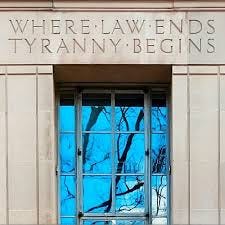
The American story also says that freedom of speech is sacred. Freedom to protest, to publish, to dissent, to express ideas of any stripe is central to who we are. In America, people are not arrested and detained for their political beliefs. We don’t make lists of words that shouldn’t be used.
Another central part of the story of America, at least since the Second World War, is that we should be a force for good in the world. (I know, there are a lot of holes to be poked in this, but just go with it for now, mmmK?) We support and, if necessary, defend other countries that share our belief in freedom and democracy. We do not threaten or bully or disrespect their leaders. We are loyal to our allies, especially those nearest and dearest. We do not cozy up to dictators.
Finally, we believe in using our wealth, and the talents of our people, to accomplish great things in the realms of science, medicine, technology, education, humanitarian aid, conservation, and the arts—not just for the betterment of our own country, but the whole world. We respect the institutions and experts and workers who make all of these things possible.
This is a story that millions of us collectively share, whether we’re aware of it or not. It forms the scaffolding of our nation. It knits us together as not just a random bunch of homo sapiens occupying the same land mass, but a country. Is it an idealized, aspirational story? Hell yes. Are there instances when the reality of what we do is at direct odds with what we profess to believe? Absolutely. Countless instances. But it’s our story nevertheless.
Over the past decade, though—and then with truly alarming speed over the past two months—the story has changed.
And this is why I think what’s going on right now is much bigger than the sum of the various terrible things happening—and why it feels bigger, too. This is not just “these are problematic developments.” This “The lion is the guardian spirit of our tribe” being changed, after two hundred and fifty years, to “The naked mole rat is the guardian spirit of our tribe.” (No offense to naked mole rats.)
We, the homo sapiens of America, are being told that there’s a new American story, now. It’s authored by a bunch of incompetent fascists and Christian nationalists and tech bro billionaire creeps and the many Americans who support them. In this story, the president is more like a king, following the law is optional, loyalty is more important that competence, allies are expendable, science and universities and the press are suspect, and the government can ban “ideologies” or disappear people that they disagree with.
And that’s, like, a really different story.
It’s no wonder so many of us are feeling not just unsettled, but disoriented and shaken to the core.
Some people are eagerly embracing the new story, either because it’s in their best financial and political interest to do so, or because they actually like it.
But it’s a supremely shitty story.
My fellow homo sapiens (and any homo neanderthalenses reading this—good for you!) we need to fight like hell to hang on to the old story. We need to shout it in the streets (I like using a bullhorn for this myself) and on the Substacks and everywhere else. And if we’re lucky enough to keep it, we need to live up to it more completely and consistently—to actually ensure liberty and justice for all. To become a more perfect union.
God damn, listen to me, all patriotic.
It turns out you just don’t know how much a story means to you—how elemental it is to your view of the world—until someone comes along and tries to change it.
Those someones can go to hell.
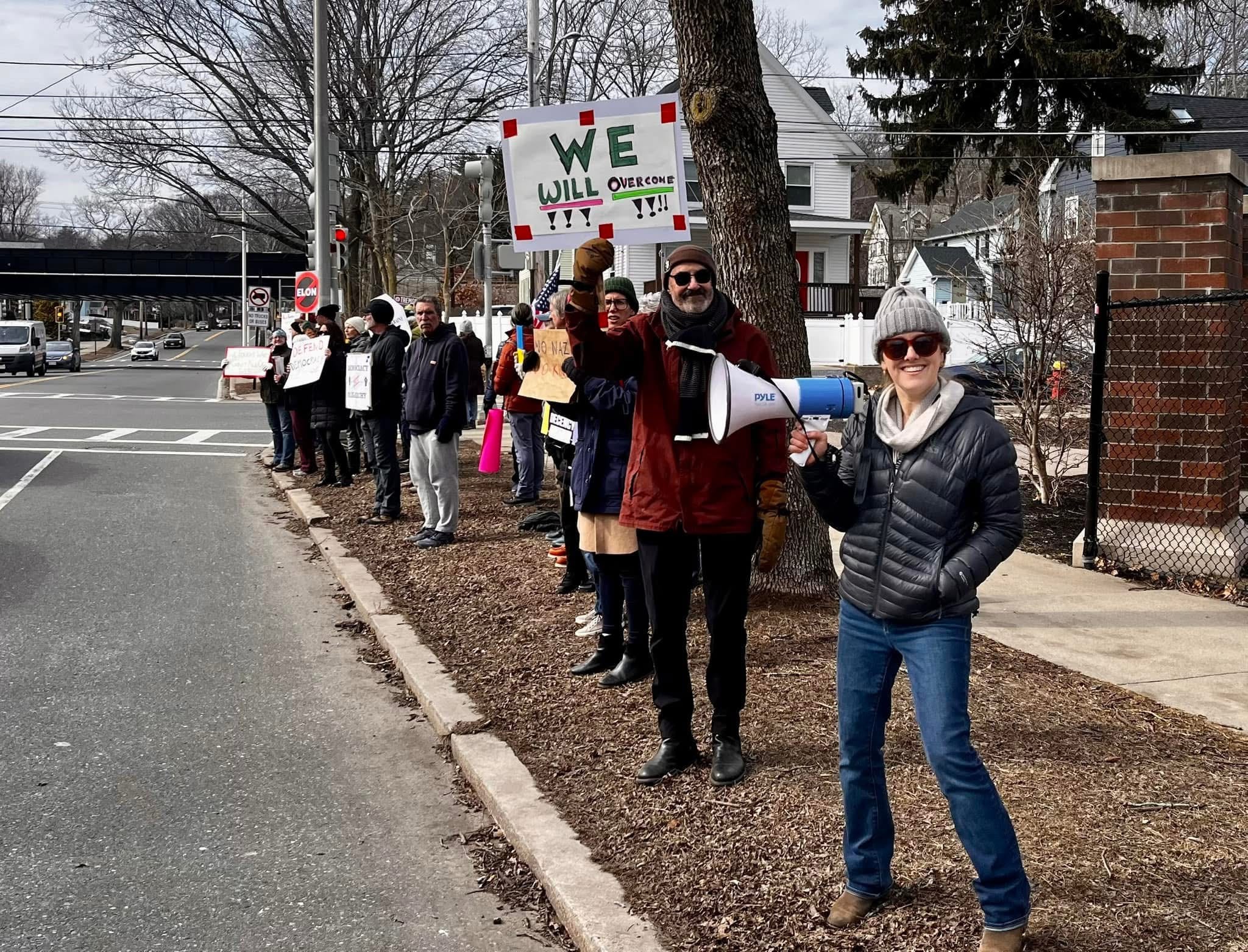 Fig. 1 - Homo sapiens Americanus with bullhorn
All posts on this apparently patriotic Substack are free and publicly available, but writing is how I make my living. If you enjoy my work, please consider upgrading to a paid subscription (As little as $4.16666 a month! Cheap!) or buying my book. Thank you.
February 25, 2025
Six upsides of an empty nest—I hope
This post is NOT POLITICAL! Hooray. I mean, Jesus, we all need a break from this shitshow, amiright? No fake executive orders, no Russian propaganda, no rainforest saving. Just life.
Back in September, I wrote about my feelings of melancholy around it being the last year of our twin offspring being home with us. The last back to school photo. The last open house night at school. The last carving pumpkins for Halloween, and decorating the Christmas tree together. The last, the last, the last.
But then, in December, a wonderful thing happened, and both kids got into their colleges of choice. (Both of which happen to be less than two hours away! Bonus!) And suddenly I didn’t feel quite so melancholy, because I was so happy and excited for them. I still am.
And then, a few weeks ago, I had a dream that one of the kids accidentally got pregnant. In this dream, she couldn’t make up her mind about whether or not to keep the baby until it was too late, so, well, she was going to have the baby. For some reason, she was still planning to go college anyway, while my husband and I took care of said baby. And in my dream, I was like OH HELL NO, this is not how I want to spend the first few years of being an empty nester.
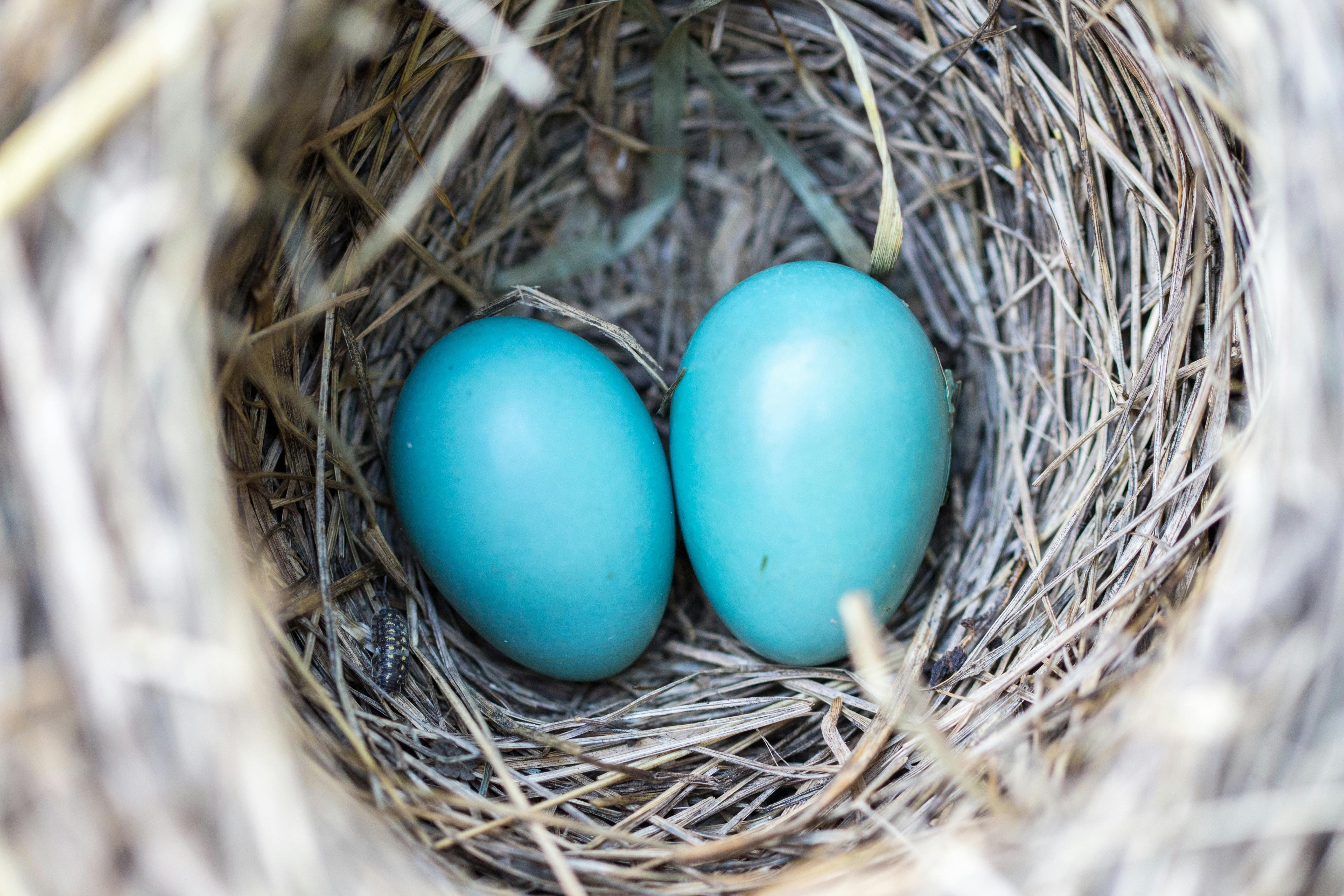 It’s not empty yet!! Photo by Pixabay
I was so delighted when I woke up to the reality that my daughter is, as far as I know, a very un-pregnant high school senior, and that I will not be a full-time grandmother-cum-mother next year.
In a roundabout way, this dream cemented for me the fact that, as much as I am dreading and pre-grieving the fact that my children are abandoning me leaving for school next year, there are a few aspects of their departure that I am (grudgingly) looking forward to—many of which a baby would make more difficult.
I’ve been keeping a mental list of these in my head, which I return to each time I start feeling morose and lachrymose and in need of a mimos(a) about the kids’ impending flight.
Here are a few items presently on it:
I can put the red pepper flakes in the recipes that call for them. I’ve been thinking about this one for quite some time. I’m kind of a wimp when it comes to spicy things, which I blame on my pasty Anglo/Irish/German ancestry. But my kids are SUPER wimps. So I’ve always gone super easy on the heat in my cooking (I am the family chef), eliminating or majorly reducing any scary spicy things called for in recipes. But next year I’m going to ratchet it up, goshdarnit! Bring on the red pepper flakes! The cayenne! The jalapeños! (Or, no, not the jalapeños; the other, slightly less spicy ones. Let’s not go crazy now.) In fact, I can bring on all KINDS of flavors that the kids probably wouldn’t like. I’ll make recipes with things like mushrooms and zucchini and anchovies and, um…I don’t know. Bear meat! Squid Ink! Gorgonzola cheese! BWAH HA HAHAH HAH! It’s gonna be great.
On that note…Supersize Shopping will become a thing of the past. With two teenagers in our midst, we go through large quantities of food. And toilet paper. I look forward to not having to be constantly restocking our supply of yogurt, bananas, toilet paper, pasta, frozen waffles, fake meat for the vegetarian child, toilet paper, peanut butter, granola bars, apples, Annie’s Mac & Cheese, toilet paper, and toilet paper. (Note: I think one of our children, not saying who, uses way too much toilet paper.) I like to think that, instead, I will become the sort of shopper who only ever uses a hand basket, not a cart. I will not plan meals ahead for the whole week, but shop for fresh ingredients every few days, like a European or other non-American person. I will frequently be seen with a baguette under my arm. And maybe a voluminous scarf wrapped just so around my neck.
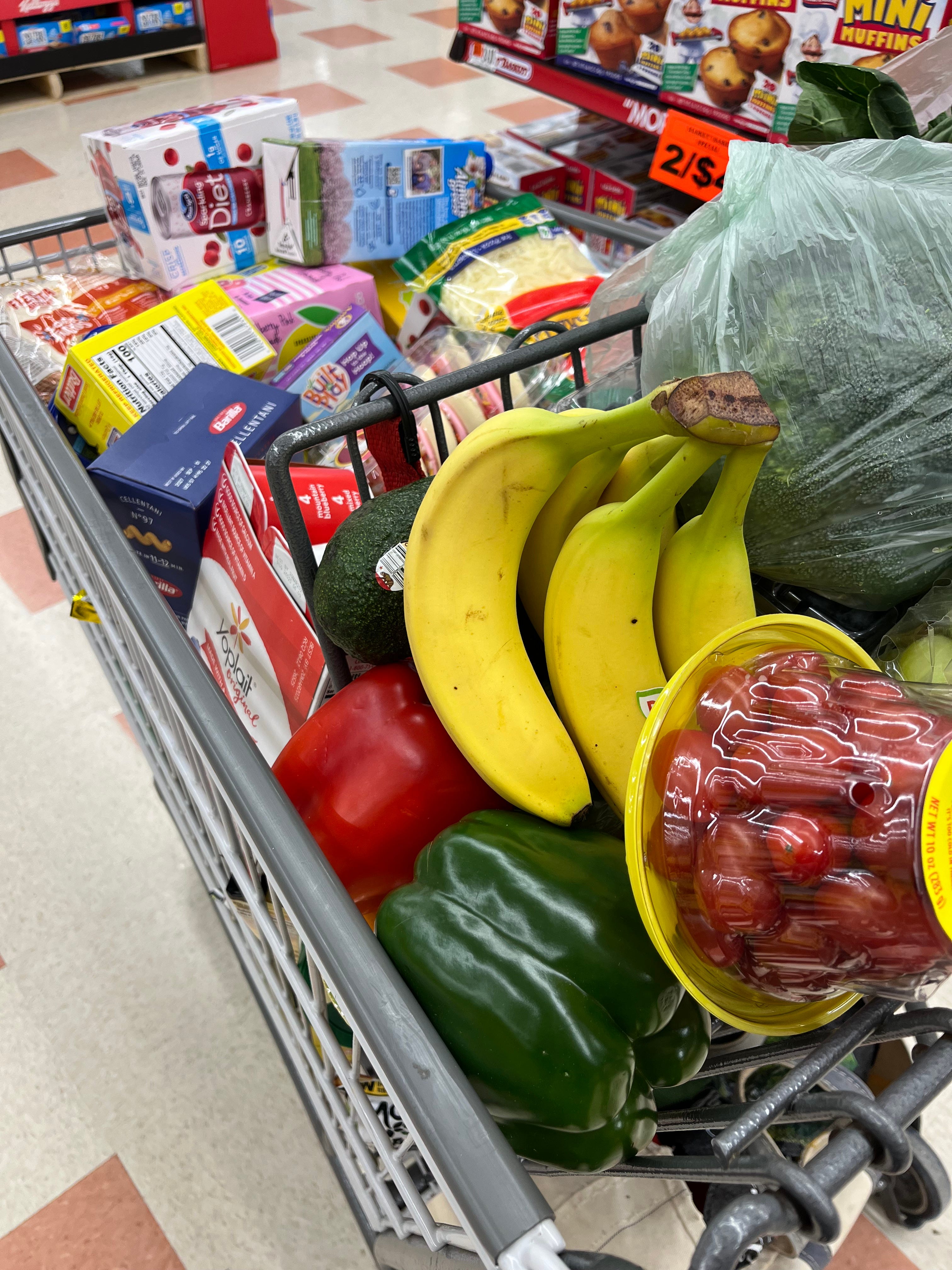 If you’re looking for the toilet paper, it’s under the cart. This photo taken at the Chelsea Market Basket, naturally.
 “We can travel more.” I’m putting this in quotes, because it’s something people (including us) like to say when they talk about being empty nesters as if the only thing holding them back from spontaneously jetting off to Jamaica or Thailand or the Swiss Alps all those years was the kids. As if it didn’t have anything to do with, um, NOT HAVING THE MONEY to do such things, even for just two people. We may be buying less yogurt and toilet paper once the kids leave home, but I’m pretty sure it’s not going to save us so much money that spendy weekends in Manhattan or jaunts to Bonaire are in our future. Hell, I don’t even know where Bonaire is. (Plus, um, paying for college?) Still, in theory, we will be able to do more traveling, and that’s a nice thought. The mister and I did lots of it, very well and happily, in our pre-parenting days. So, even if we just end up taking the occasional spontaneous, low-budget jaunt—an overnight at the Days Inn outside of Albany, say, or a day trip to Sturbridge Village—I know it will be excellent.
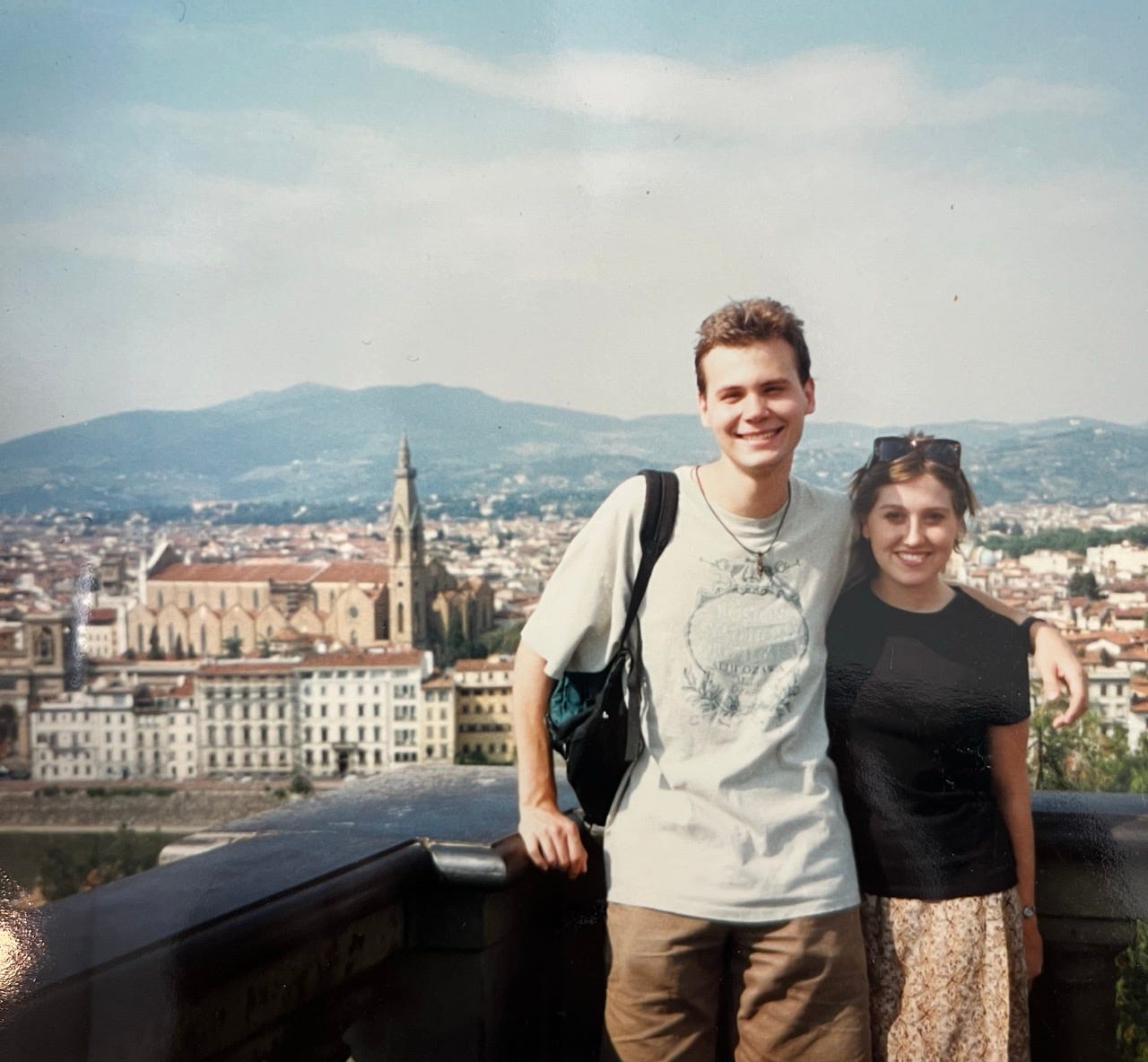 Back in the day. Florence / Albany - same difference.
Special guest contribution from the mister: Our house will be cleaner. Right. So, my husband is a neatnik (and the chief everyday cleaner-upper) and is constantly tormented by the kids’ messes and clutter—especially their shoes, which have a habit of spreading across the front hall like algae. (I confess, my shoes are often part of the bloom as well.) He is also, understandably, annoyed by the fact that they frequently “forget” to put their dishes in the dishwasher—and when they do, it looks like they sorta just tossed them in, like beanbags. Beanbags covered with food residue. Personally, I don’t mind the mess and clutter that much. It comes with the parenting territory, and it’s been part of our life for 18 years. It’s evidence of the kids’ presence in our life, and think I’ll miss it when it’s gone. I tell my husband that he probably will, too, but he doesn’t believe me. I’ll keep you posted.
I will be able to focus. Like, really focus. A twin mom friend of mine, also a writer, said that this was one of the things that struck her when her kids left for college: she was able to get into the kind of deep, focused state in her writing that she used to before she became a mother. As my two kiddos have gotten older / quieter / less inclined to yell “MaMUH!!” up the stairs when I’m trying to work, I’ve certainly gotten back more writing time for myself. But the psychological static of parenting is always still there in the background, and can intrude at any minute—keeping track of schedules, figuring out the logistics of cars and rides and activities, signing permission slips, thinking up red-pepper-flake-free dinners to make every damned night. Maybe it will be nice to have less of all that bouncing around in my head. Maybe I’ll reach new heights of erudition, wit, and word count. Maybe I’ll take up meditation. Maybe I’ll even finally finish The Brothers Karamazov. (Haha. Probably not.)
Last and least: I will always be able to find the duct tape. Because it will always be exactly where I left it.
OK, give it to me, empty nesters: What are the upsides of not having kids at home? Fellow almost-empty-nesters: What are you looking forward to? How are you coping with the anticipatory grief? Do you want to come over for a marginally spicy dinner next year sometime? Please advise. And thanks as always for reading.
All posts on this non-bear-meat (for now) Substack are free and publicly available, but writing is how I make my living. If you enjoy my work, please consider upgrading to a paid subscription (As little as $4.16666 a month! Cheap!) or buying my book. Thank you.
February 9, 2025
It's the rainforest all over again
Dude, I am failing SO miserably at moderating my consumption of news and social media. I was hoping things would not get quite so dire, quite so fast. But they are.
I really want to get back to writing about things like middle-age spread and Tyler, my annoying ChatGPT intern, and husbandly grocery shopping exploits. Things of that nature. But I can’t. Not yet. Case in point: Remember I wrote a love letter to my fave supermarket, the Market Basket in Chelsea? The grand pageant of humanity from around the world? The wonderful employees? Yeah, those employees are too scared to go to work now, because they’re afraid of ICE raids.
So, here’s a post about the rainforest. And why I am, yet again, having flashbacks to the late 80s as I watch the horrors of the Trump / Musk regime unfold. With a special appearance by my bad high school bangs!
As you may or may not recall, in the late 80s/early 90s the Terrible Thing We Must Stop du jour was the destruction of the rainforest. It was all over pop culture, in fashion, in food products. Remember Ben & Jerry’s Rainforest Crunch ice cream? And that little seal with a frog on it to show that products were Rainforest Alliance certified?
This rainforest mania was all going on right as I was waking up to the wider world, going off to Soviet Summer camps on peace exchanges and whatnot. The year after that trip, I spent the summer at The Worldpeace Camp in Maine (which my parents co-owned), where a big part of the programming was learning about various ways to Make A Difference (tm).
At one point, there was a presentation on the destruction of the rainforest. It included a viewing of this extremely cringe “Rainforest Rap” video, complete with white dude in one of those unfortunate tan safari hats that were briefly ubiquitous in the 80s, trying to sound like a rapper. Maybe you, too, were subjected to it as a teenager or middle schooler. (I still periodically get the refrain stuck in my head: “The RAINforest! The tropical RAINforest!”) And maybe you had one of those hats. (I did!)
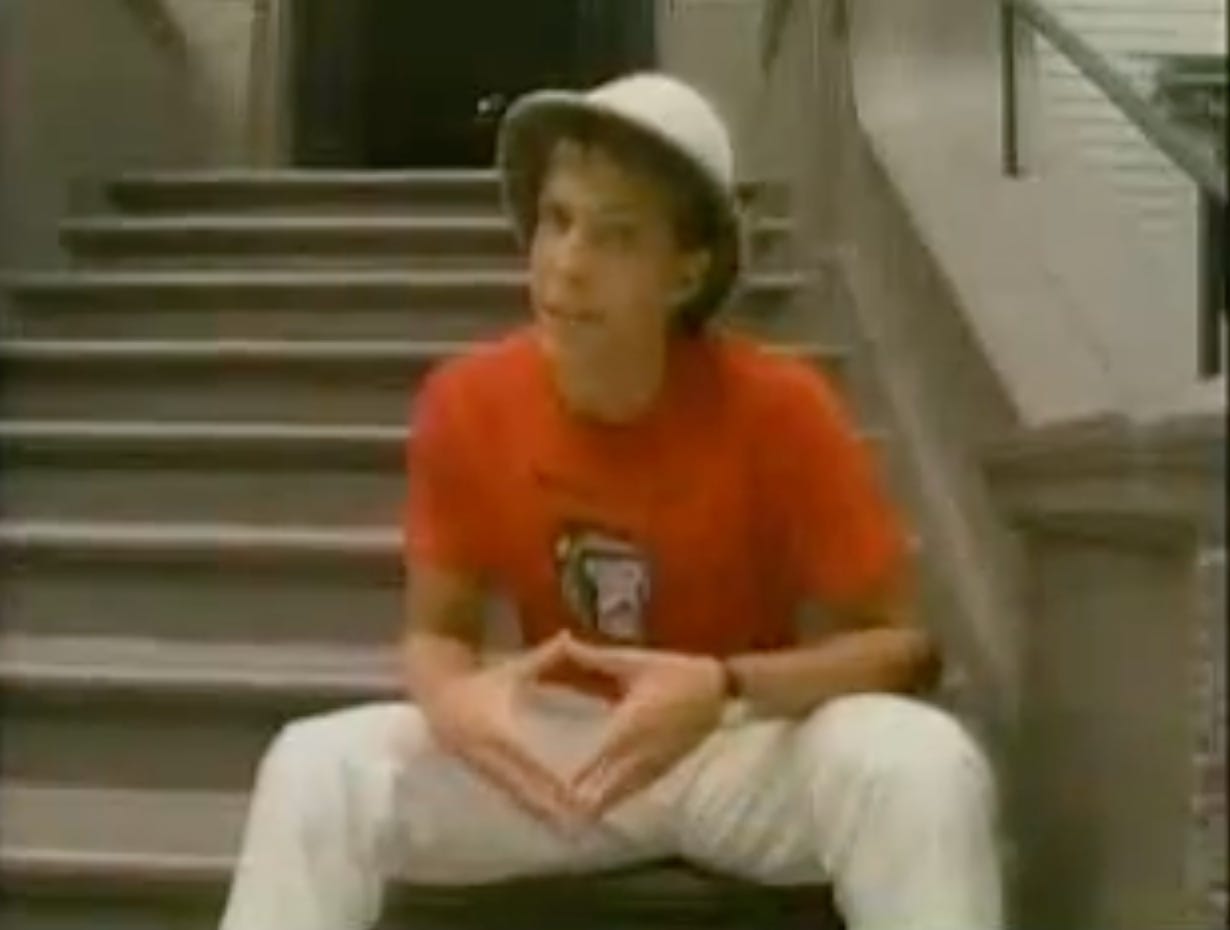 Fig. 1 “Rapper”
 Cheesy video aside, when I learned that a football-field-sized swatch of rainforest was being destroyed every 78 seconds and a species was going extinct every few months, I felt a full-body sense of panic. Why wasn’t anyone stopping this? What could we do? What could I do??
The only advice the adults (WHO WERE NOT STOPPING IT!!) seemed to have was to not to buy palm oil products, beef from south America, or teak, mahogany or rosewood furniture. Very actionable advice for a teenager. (Flash forward to me narrowing a suspicious eye at my parents’ dining room set. Those chairs aren’t teak, are they, Mom? MOM?)
But I wasn’t content to just stand around scrutinizing furniture and eating sustainably grown brazil nuts or whatever while the biosphere burned. And the rainforest was only the half of it: There were landfills overflowing, spotted owl habitats being destroyed by logging, a hole in the ozone layer getting bigger all the time.
It was killing me not to do anything. Why wasn’t EVERYBODY doing something?? What was the matter with people?? (A FOOTBALL FIELD EVERY 78 SECONDS!)
When I got back to school that Fall, a friend and I promptly founded an environmental club. Our group single-handedly set up and administered a paper recycling program, sold “shares” of a cloud forest preserve in Costa Rica, picked up litter, planted seedlings, and a made signs telling people to recycle their soda cans and boycott Burger King and Just Say No to palm oil. (I may be making up the Just Say No part, but very possibly not. It was 1989.)
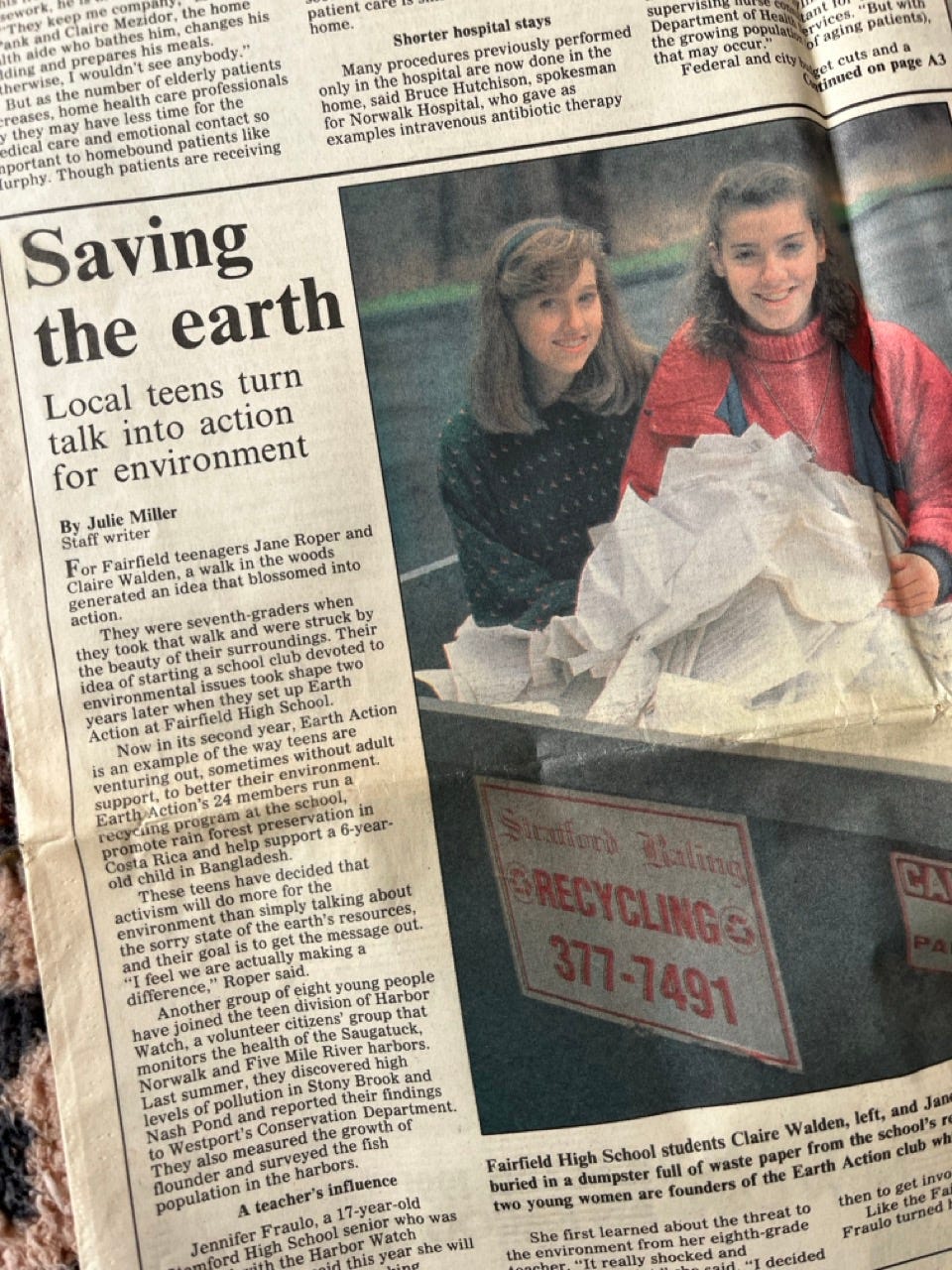 My bangs may be hair-sprayed within an inch of their life, but NOT with the aerosol kind!
 We worked very hard, and kept very busy. It felt good to be doing something—lots of thing! But did any of it actually Make A Difference in the grand scheme of things? I don’t know. (In spite of the fact that I am quoted in the above newspaper story as saying “I feel we are making a difference.”)
Maybe we diverted a few thousand pounds of worksheets and notebook paper from the landfill. Maybe one of my classmates, ten years later, while setting up their wedding registry at Crate and Barrel heard a little voice in their head whisper No! Not the rosewood salad bowl!
But here we are decades later and the rainforest is still being destroyed at an alarming rate, the planet is warming, and the oceans and air and even our bodies are full of plastic, etc.
And still. I feel like I had no choice to do what I did in high school. It was an almost physical compulsion.
I’m feeling the same thing now, as I watch the Mad King and his tech bro Rasputin take a sledgehammer to our government and institutions, issue Orwellian decrees and executive orders (mine are much better), and spew one batshit crazy, fascist idea after another. It’s as heartbreaking and anxiety-inducing as those football-field-sized swaths of rainforest destruction, times a thousand.
And, once again, I can’t not do something.
So I’ve been trying to take action. (This time with better bangs.) I’m making calls and sharing news about actions people can take. I went to a protest in Boston last week—one of those 50 states / 50 capitals / 1 day marches things—and will probably do it again.
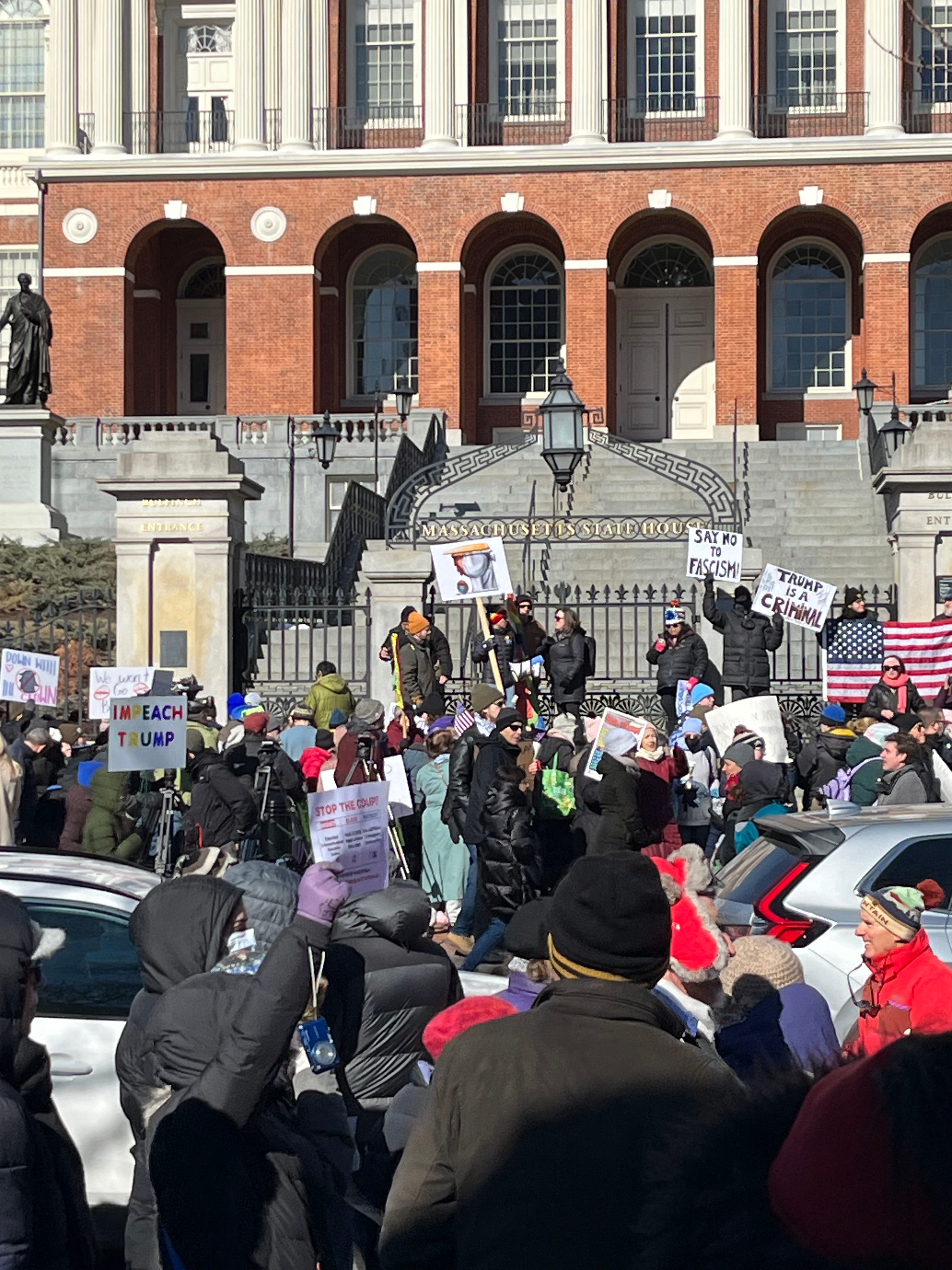
Luckily, there are a lot of other panicky WE HAVE TO DO SOMETHING!! types out there just like me, flooding the phone lines of congress, showing up at demonstrations, writing letters, making donations. Other people are finding their own ways to fight against authoritarianism, inhumanity, and bigotry, whether through art or community involvement or (God love ‘em) trying to get through to their Trump-loving friends and family.
Will any of it, in the end, make a difference? I don’t honestly know. Sometimes it just feels futile. Like avoiding palm oil and teak.
But it doesn’t matter. We have to do it anyway.
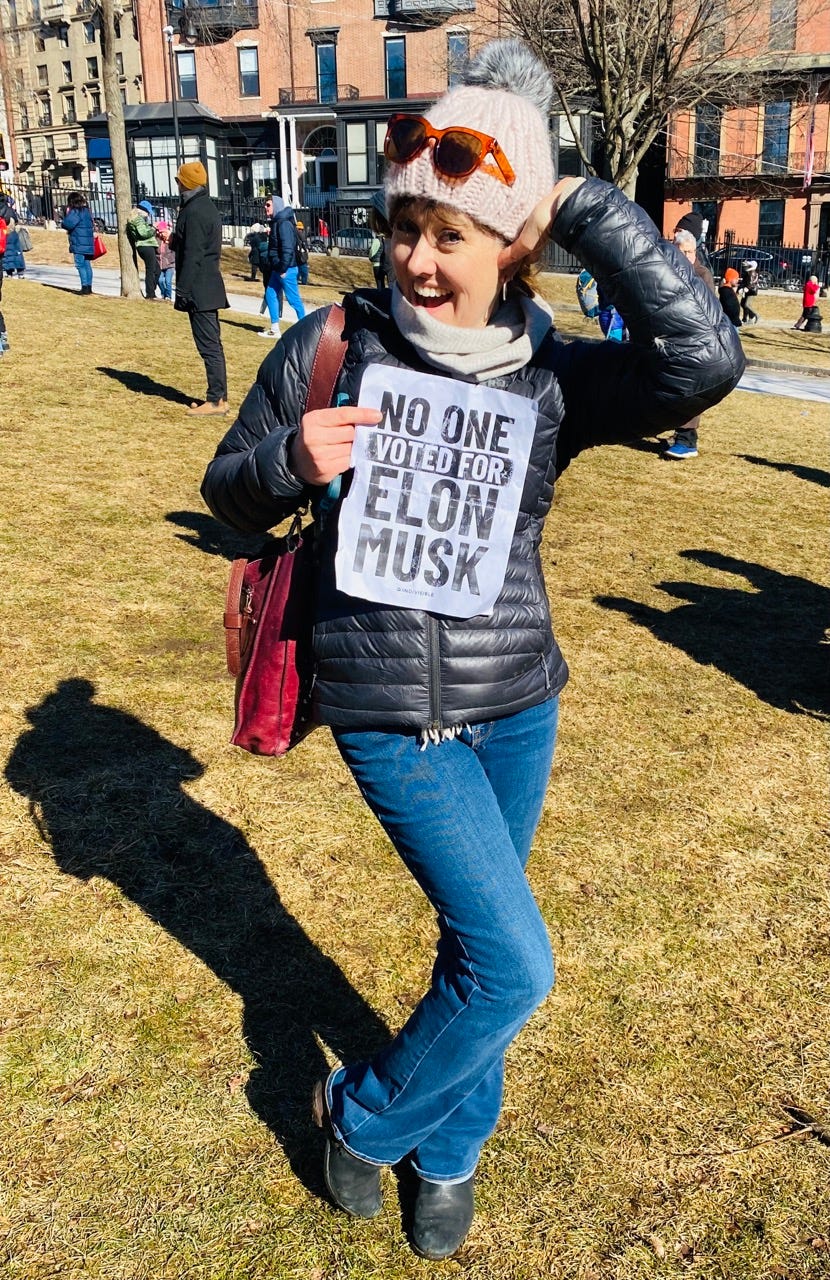 If you can’t be silly while you protest, the fascists win.
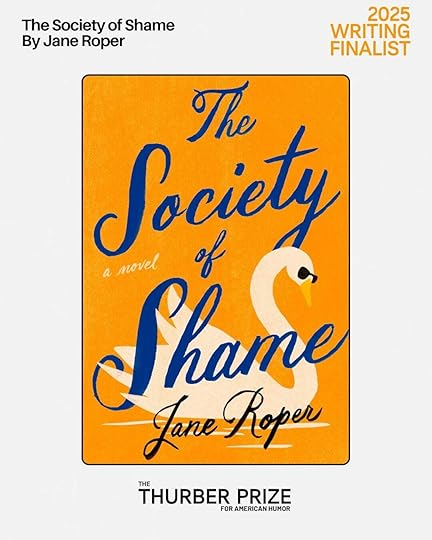
Finally, I’ve got a bit of fun news to share: My novel The Society of Shame advanced to become a finalist for The Thurber Prize for American Humor!! I can’t decide if I’m more excited about the honor or the fact that I get to dress up all fancy and go to an award show in NYC. You can check out all this year’s Thurber Prize finalist and semi-finalist books (and buy them, if you like!) right here.
As always, thank you for reading. Stay strong out there. And remember: Just Say No to Fascism. And mahogany.
All posts on this Rainforest Alliance uncertified Substack are free and publicly available, but writing is how I make my living. If you enjoy my work, please consider upgrading to a paid subscription (As little as $4.16666 a month! Cheap!) or buying my book. Thank you!
January 22, 2025
I've got a few executive orders of my own
I had a fun, personal, non-political post all queued up for this week. But I couldn’t make myself hit the “publish” button. It just didn’t feel appropriate in light of the historically awful occasion of the recent presidential transition, and the truckload of shit that that guy (sorry, I can’t even write his name) has already dumped on our country with a few strokes of his pen.
I didn’t watch the inauguration, and I have been trying to consume news in small bits. But it’s hard to avoid it completely unless you hide under a rock—and it’s extremely frigid outside, so I don’t feel like doing that. Also, I have a bad cold.
It’s also hard to avoid when you find out that one of that guy’s executive orders directly affects people you love. We have dear friends whose kids are trans, or who are trans themselves, and one of our own kids is genderqueer. But according to the new regime, a person’s sex is “fixed and immutable” and either male or female, period. (Never mind that this completely ignores the medical and biological fact that some people are born intersex, or with an extra chromosome.)
So, even if you’re a trans woman who has undergone top and bottom surgery and who has lived as a woman for decades, sorry, you’ve got to put “male” on your passport. And if you’re a nonbinary person with female anatomy and/or chromosomes, you’re female. No more option to use an “X” on your Real ID, as our kiddo does. Are you a trans man, complete with facial and body hair and a flat chest, who nobody would ever, ever mistake for a woman? If you’re charged with a felony, you’ll be going to a women’s prison and denied your hormone replacement therapy. Enjoy.
Will these things be enforced in every instance? It doesn’t fucking matter. It’s a state-sanctioned invalidation of people’s identity—a forced tethering of trans people to the sex they were born into (assuming it’s either male or female; if you’re intersex, you’re nothing I guess?) in the eyes of the government. Identifying as a gender other than your birth sex is now considered “gender ideology,” which sounds like a term straight out of Soviet Russia.
It’s ugly and dehumanizing and as I read the order my heart just kept sinking and sinking.
You can be sure that our family will be standing up for the rights, freedoms, and dignity of trans people whenever and wherever necessary. In the meantime, however, I’ve decided that it would be therapeutic for me to channel my anger around this and other executive orders to issue some of my own. I urge you to do the same if you are so inclined.
If the president can go around arbitrarily changing universally-used names—like changing Mount Denali, as it has been officially called in Alaska since 1970 and federally since 2015, back to Mount McKinley, or renaming The Gulf of Mexico The Gulf of America (snort laugh)—then so can I. Therefore, “Water” shall henceforth be known as “Buttered toast.” (Because being told to have eight pieces of buttered toast a day sounds much nicer than being told to have eight glasses of water, doesn’t it?) “Buttered toast,” meanwhile, shall be called “David.”
As previously mentioned, calling yourself a gender other than the one matching the sex you were born into is now invalid from a federal standpoint. Along those same lines, if you began your life as a fan of a Boston/New England sports team (Red Sox, Celtics, Patriots, Bruins) you may NOT identify as a fan of any New York sports team (Yankees, Mets, Knicks, Giants, Jets, Rangers). You may, however, change your fan identity to match teams in other US markets. Exception: Celtics fans may not transition to Lakers fans. Even if they do, they will not be recognized as such.
Speaking of which: Connecticut shall henceforth no longer be considered part of New England. Let’s be honest; for most of us, it never really was.
The president has declared a national emergency at the southern border because apparently it is “overrun by cartels, criminal gangs, known terrorists, human traffickers, smugglers, unvetted military-age males from foreign adversaries, and illicit narcotics that harm Americans, including America.” I don’t know who this America is that they’re talking about in the last clause (America Ferrera?), but I’m sorry for her suffering. But while illegal immigration is certainly a serious problem, I think Trump and his pals are exaggerating the effects just a leeeeetle bit. (“This invasion has caused widespread chaos and suffering in our country over the last 4 years.” OK….)
I, on the other hand, shall use my self-declared powers to address an issue I feel is actually much more harmful to America and Americans, including America Ferrera: I hereby declare a national emergency because people are spending too much time on their phones. It is isolating them from their fellow humans, leading them down rabbit holes of dis/misinformation and idiocy, and keeping them from engaging in more edifying and important activities such as reading books, daydreaming and contemplating, looking at their children, and not walking into telephone poles. To carry out this order there shall be created a task force of people in need of employment who will be paid a fair living wage to go around and gently remind folks that there’s more to life than screens, and hey, maybe try to cut back by, say, 30 minutes a day for starters. Or even just 15. Like, next time you’re waiting for the bus, or standing in line at the grocery store, try reading a magazine or chatting with a stranger instead of scrolling through TikTok or playing Candy Crush. Could you try that, and let’s see how it goes? Awesome. Have a great day!
If you drop toilet paper on the floor of a public restroom, you must pick it up. Honestly, it’s sad that I have to make this an executive order, but apparently I do, because some of you people are disgusting.
Well, that about covers it for now. Like I said, I’ve got a bad cold, and all this order issuing is tiring, especially since I don’t get to do it while crowds of fawning billionaires applaud me. All I’ve got is my cat, and even he isn’t really tuned in. Dude spends way too much time on his phone.
Nevertheless, in the coming days and weeks of my administration, I may be issuing additional executive orders in the interest of saving America from its shameful decline. Never again will citizens be held hostage by the tyrannical demands of woke radicals who insist on things like buttered toast being called buttered toast instead of David, or who think they can just start wearing a Yankees cap and somehow magically not be a Red Sox fan. And there will, hopefully, be much less toilet paper on the floors of public restrooms.
It’s the beginning of a new golden age.
By executive order, all posts on this Substack are free and publicly available. But writing is how I make my living, so if you enjoy my work, please consider upgrading to a paid subscription (As little as $4.16666 a month! Cheap!), buying my book, or using this link when you buy any and all books, so I get a little somethin-somethin’ on the back end, and so independent bookstores get your bucks instead of Bezos. Thank you!
January 10, 2025
Soviet summer camp, Trump voters, and me
A few months ago, I wrote about two of the three realizations/resolutions I came to in the wake of the presidential election regarding how I want to move through this next Trumpian epoch.
One of those realizations is that I need to be very judicious about how much political content I consume. So if you feel the same, and don’t want to read this post—which is political—I get it! Here, read something fun and apolitical instead! Or check out some of my latest book recommendations! See you next time!
Great. Hi, those of you who stayed. Thank you for indulging me.
I put off writing about this realization because it’s messy and complicated and multifaceted and because it’s taken me a while to fully articulate it to myself. I’m still trying to articulate it, I guess. Here goes.
Let’s start with an anecdote, because those are always fun.
In the summer of 1988, I went on a goodwill trip to the Soviet Union, in its twilight, in memory of Samantha Smith. She was the ten-year-old girl from Maine who wrote a letter to Yuri Andropov expressing her fears of nuclear war, and confusion over what she perceived to be the goal of the Soviet government. (And died tragically in a plane crash just a few years later.) An excerpt from her letter:
Why do you want to conquer the world or at least our country? God made the world for us to share and take care of. Not to fight over or have one group of people own it all. Please lets do what he wanted and have everybody be happy too.
Andropov replied, and extended an invitation to Samantha and her family to visit the Soviet Union to see that “In the Soviet Union, everyone is for peace and friendship among peoples.”
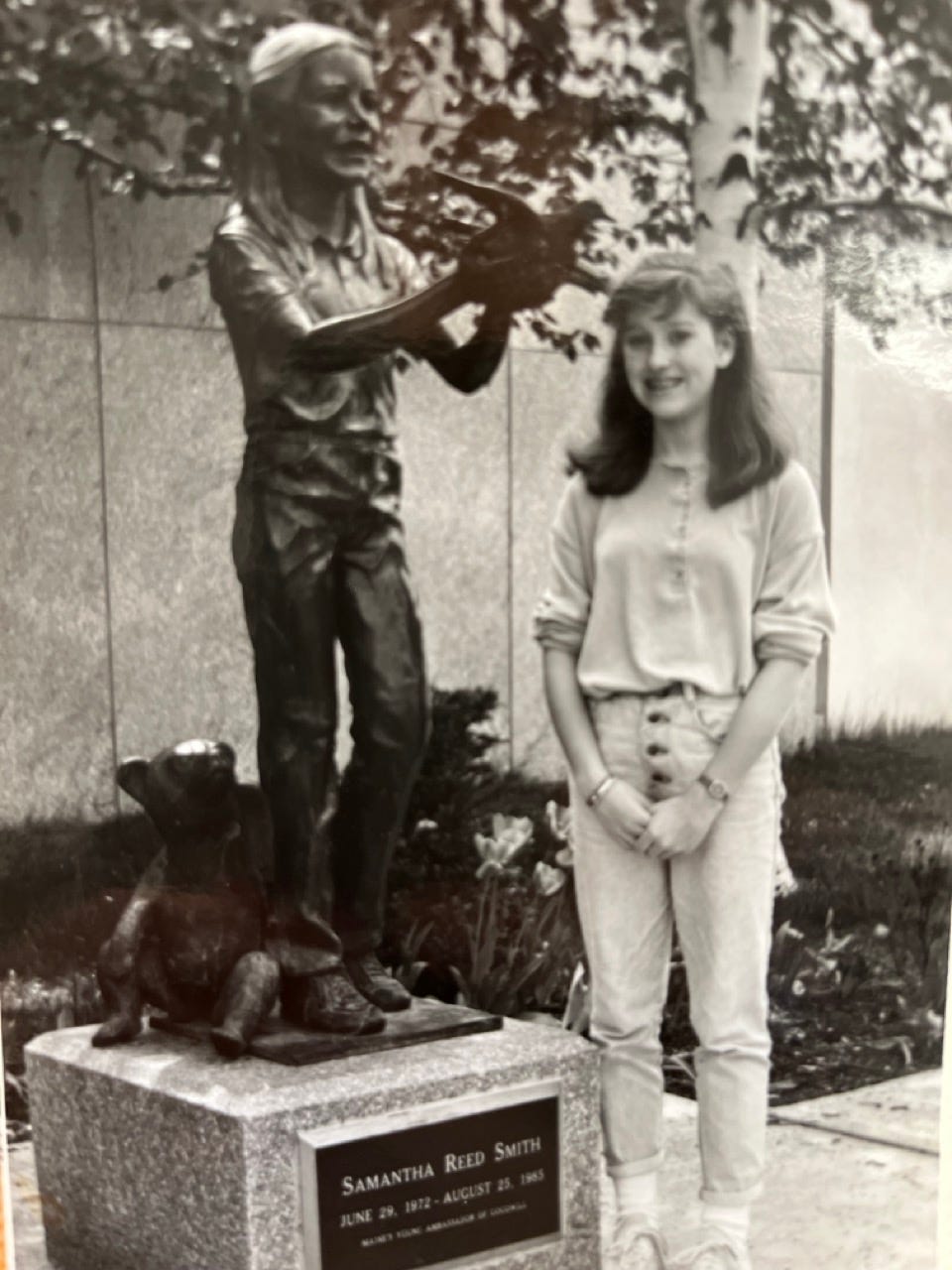 Me with the statue of Sam in Augusta, ME. Too bad it’s black and white, otherwise you’d be able to tell that my shirt is PEACH! The color of the mid/late 80s.
I spent a month at one of the places Samantha Smith visited on her tour: A Young Pioneer summer camp in Ukraine, on the shores of the Black Sea, called Artek. It was beautiful and extremely foreign-feeling and the kids we met there were absolutely lovely: welcoming, funny, playful. They were intrigued by our little group of Americans, and eager to ask us, in their very minimal English, if we liked Michael Jackson and say words like “Mickey Mouse” and “McDonalds.” The counselors were equally kind, if slightly less obsessed with random bits of American culture.
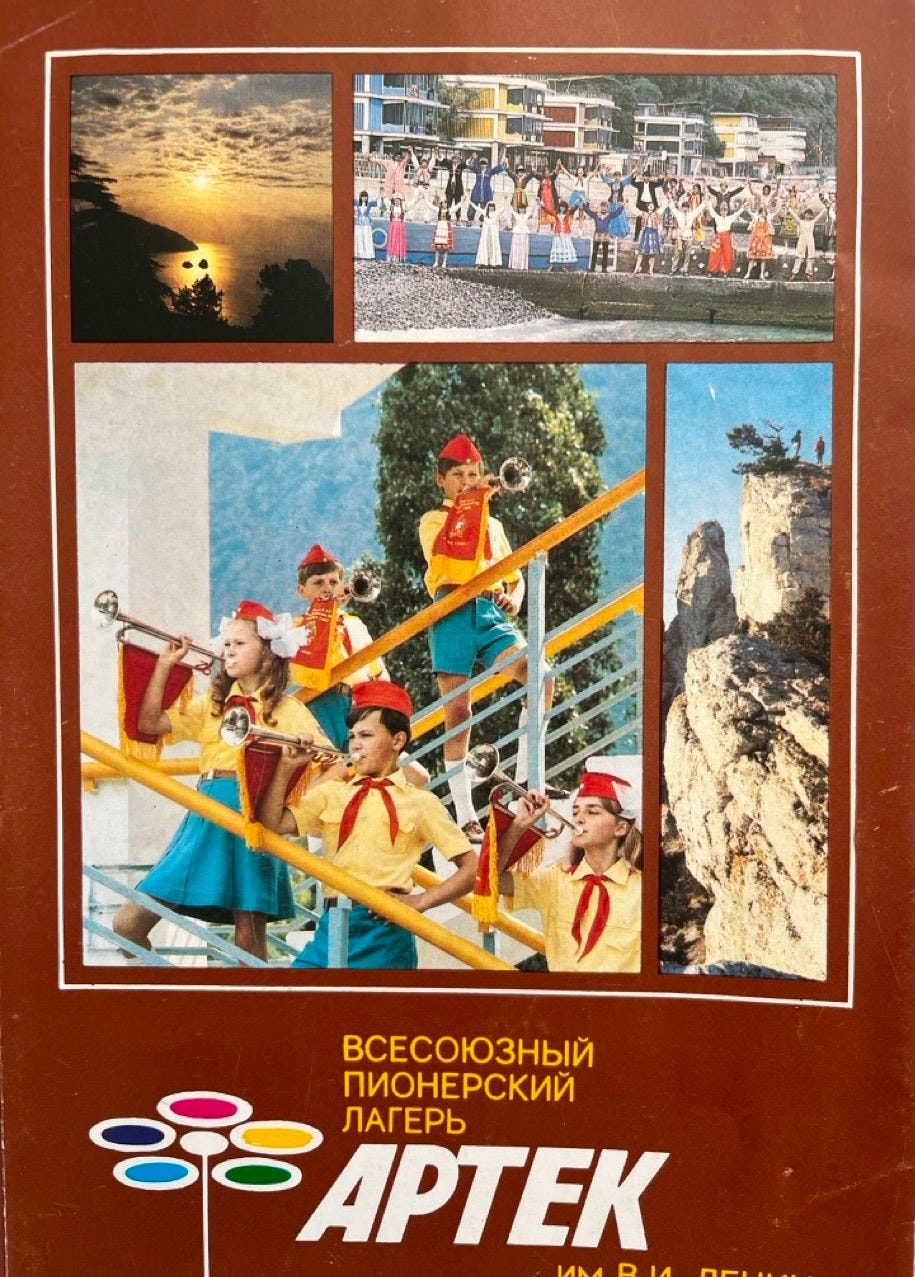
Half the time, we didn’t know what was going on. We let ourselves be shuttled from activity to activity—taking hikes and field trips, playing Sniper (a more aggressive form of dodgeball), singing songs, working in the dining hall, learning dances, competing in the Artek Olympics. I tried to qualify for the 100-meter sprint, but I was up against some serious, State-supported athletes, wearing the only sneakers I’d brought—a pair of white Keds (obviously). So instead, I was assigned to something translated to me as “The Jolly Games.” This consisted of various absurd relay races, many of which involved hula hoops. Sure, OK, great! Said 14-year old me.
But amidst all the wholesome fun, we never forgot that we were in an autocratic country. There were loudspeakers throughout the camp that periodically broadcast patriotic music and exhortations, and everywhere there were statues and mosaics of Lenin, hammers and sickles, and various scenes of communist bliss. (Happy children in their Young Pioneer uniforms! Beautiful factories! Amber waves of grain!).
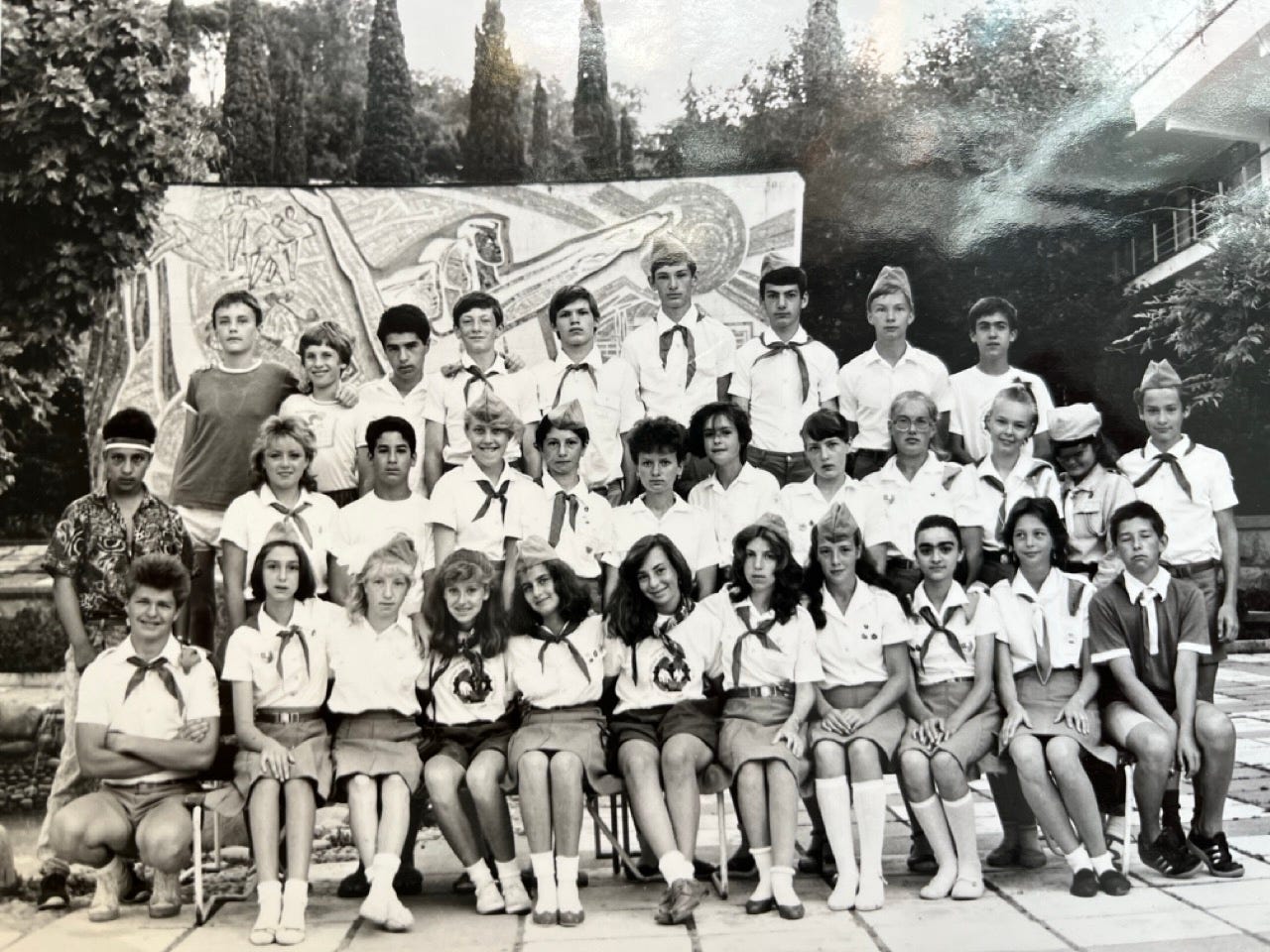 I’m fourth from the left in the front row, between Olga #3 (Olga seemed to be the Jennifer of the USSR at that time) and Silva. We Yanks had our own “uniforms” consisting of T-shirts, navy shorts, and classic western-style blue and white bandanas. U-S-A!
 The pièce de resistance and focal area of the camp was the amphitheater—again, Lenin everywhere—which was the site for morning calisthenics (in too-tight t-shirts and shorts that had probably been in circulation since the late 70s), performances, games, dances, and many, many patriotic rallies and ceremonies.
It was those rallies where the cognitive dissonance kicked in: All these kids who, an hour before, we were having seaweed fights with on the beach, were now in their dress uniforms, saluting and marching and carrying flags, celebrating the virtues of a country that we—GenXers growing up on movies where the Russians were the enemies and music videos where nuclear war was 99 balloons away—were pretty sure was the “evil empire.”
It was difficult to wrap one’s brace-faced, badly permed head around.
And then there the speeches—so many speeches!—usually delivered by fellow campers. We had an interpreter, Masha, assigned to our delegation, who translated things for us—mostly information about activities, or instructions from our counselors. (Russian friends who grew up in the USSR have since told me that Masha was almost definitely KGB.) But she stayed relatively quiet during the speeches.
We got the gist of them; they seemed to be mostly about the glory of communism and the beauty of the fatherland, the desire for peace and friendship throughout the world, blah blah blah. At one point, during a particularly fiery oration by a boy who couldn’t have been more than twelve, I asked Masha to translate in more detail. She smiled a little sheepishly. “You don’t want to hear this,” she said. “He is saying criticism about the United States. About Vietnam and imperialism and such.”
Now, I didn’t know much about geopolitics at the tender age of fourteen. But what I’d gathered about the Vietnam War was that 1.) In retrospect, most people agreed it was fruitless war that the US should never have waded into 2.) It was about preventing the spread of communism / Soviet influence, not about us being imperialists.*
Also, screw that kid! I knew that America had its faults and had made some mistakes, but we were the good guys! We totally saved Europe (including Russia!) in World War II! We had freedom of speech, freedom of the press, the freedom to protest! And Michael Jackson! And jeans! (Which many a camper wanted to buy off of us.) Didn’t they all secretly want to be us?
Maybe some of them did. But no doubt many bought into the officially sanctioned Soviet narrative—that America was a land of greed, depravity, and imperialism, and the USSR was the place to be. (And pay no attention to your neighbor who was shipped off to a gulag for saying something against the government. And don’t ask why so many writers and intellectuals and Jews try to defect.)
But after the speeches and ceremonies were through, it was right back to seaweed fights on the beach and Sniper games in the square. Back to giggling in broken English about which boys were cute. Back to “do you like the Beatles?” (“Girl” and “Michelle” were big hits on the Artek speakers. Maybe because the melodies are vaguely Russian-sounding?)
I took a lot of lessons away from my brief sojourn in the USSR. The biggest one was the classic “We are all much more alike than we realize.” But close behind was: Damn. People around the world are living in vastly different realities depending on stories they’ve been told—by their government, their religion, their culture, their statues in the square.
I was fascinated and flabbergasted by how we humans could have so much in common and yet see things so completely differently. In fact, I can probably trace my choice to major in cultural anthropology in college back to that trip. Maybe even my interest in writing fiction. I’m drawn to the challenge of trying to see the world through other eyes. And I like to think that the practice makes me a more empathetic person than I would be otherwise.
Here’s the thing, though: That sort of fascination with varying worldviews is easy in the abstract, when you’re not living side by side with folks whose lens on the world is so drastically different from your own. It’s a lot harder when you’re sharing a country with them. (Much less an immediate family—something I fortunately don’t have to deal with.)
The first time Trump won, the big wake-up call for me—and for a lot of liberals—was just how many people were willing to overlook, excuse, rationalize (and, in some cases, outright embrace) Trump’s racism, sexism, bullying, anti-democratic impulses, and, um, tenuous relationship with the truth.
For many folks, those things weren’t dealbreakers if it meant that their taxes might be lower or abortion rights would be rolled back further or that, quite simply, a Democrat would not be in the White House.
What I found harder to swallow this time around is that this is still the case—even after eight years of seeing what Trump is all about. I mean, the guy tried to overturn the results of an election, for God’s sake. Yet millions of Americans still think he was a better choice than Kamala Harris.
But while some liberals are quick to say that it’s because all of those millions of Americans are stupid / racist / misogynistic, I think that’s a vast (and unfair) oversimplification—not to mention one that makes Trump supporters dig in their heels.
I very much related to what George Saunders wrote in a recent Substack post:
I am trying to maintain two ideas at once: 1) Most people who voted for Trump are nice people. (I know this because many close friends and family members voted for him and, well, more than half of voters did), and 2) Our democracy really may be in peril. Trump has repeatedly said things to indicate this and people who worked closely with him the first time have said this.
So, what I’m trying to figure out is: how do the people who voted for Trump, some of whom I love, not see what I see in him? And, also, importantly: what am I not seeing, about the way the world looks to them? I'm not saying that the way they see it is right – I feel very strongly otherwise - but I am saying, or accepting that, yes, it really does look that way to them.
Me too.
But there’s another part of the story that Saunders doesn’t get into, and it’s the part I’m more tuned into this time around, because I’m more aware of how integral it is to Trump’s success: millions of very nice, smart Americans are living in a narrative that is at odds with actual, empirical truth. They are seeing a sanitized, carefully curated version of Trump, and a distorted view of reality.
If your response to this is “yeah, no kidding” please feel free to skip to the paragraph below the picture of Chris Pine.
Here are some facts: Crime is not increasing in America. Rather, crime rates continue to decrease steadily. Undocumented immigrants are no less likely than the general population to commit crimes—in fact they’re less likely to do so. (Related: Haitian immigrants in Illinois are not eating cats and dogs. Sorry, I don’t have proof, but trust me.) Yes, people did die during the January 6 insurrection and its immediate aftermath. Vaccines do not cause autism. Gender affirming surgeries are almost never performed on minors. The climate is definitely changing due to human activity. Also, Chris Pine is way hotter than Chris Pratt or Chris Hemsworth.
All of the above, except maybe the Chris part, would come as news to millions of Americans. Is it because they’re all stupid and gullible? Some of them probably are. (As are some non-Trump supporters.) But I don’t think most liberals, particularly those of us ensconced in our blue state, NPR-listening, New York Times reading bubbles, realize just how influential right-wing news, propaganda, and misinformation are in this country.
Huge numbers of people now get the bulk of their information online and/or places like Fox News and Newsmax. Many Trump voters get their information chiefly from friends and family, and/or don’t follow traditional news sources. The less attention people pay to political news, the more likely they were to vote for Trump in 2024. And among Trump voters who *do* follow political news, Fox is their #1 source. (Fox is also the #1 cable “news” network nationwide.)
Are there lies and misinformation coming from the left? Sure. But not nearly to the same extent or with the same reach. Meanwhile, it’s right-wing platforms that have the backing of billionaires, and right-wing media companies that have been buying up (and then often getting rid of) local and regional newspapers for years.
The right is, of course, also getting lots of help from our adversaries in Russia and elsewhere. More than once I’ve wondered if some kid I ran through hula hoops with during the Jolly Games or cleared dishes alongside in the dining hall is working in a troll farm somewhere, posting right-wing memes and picking fights with people on X.
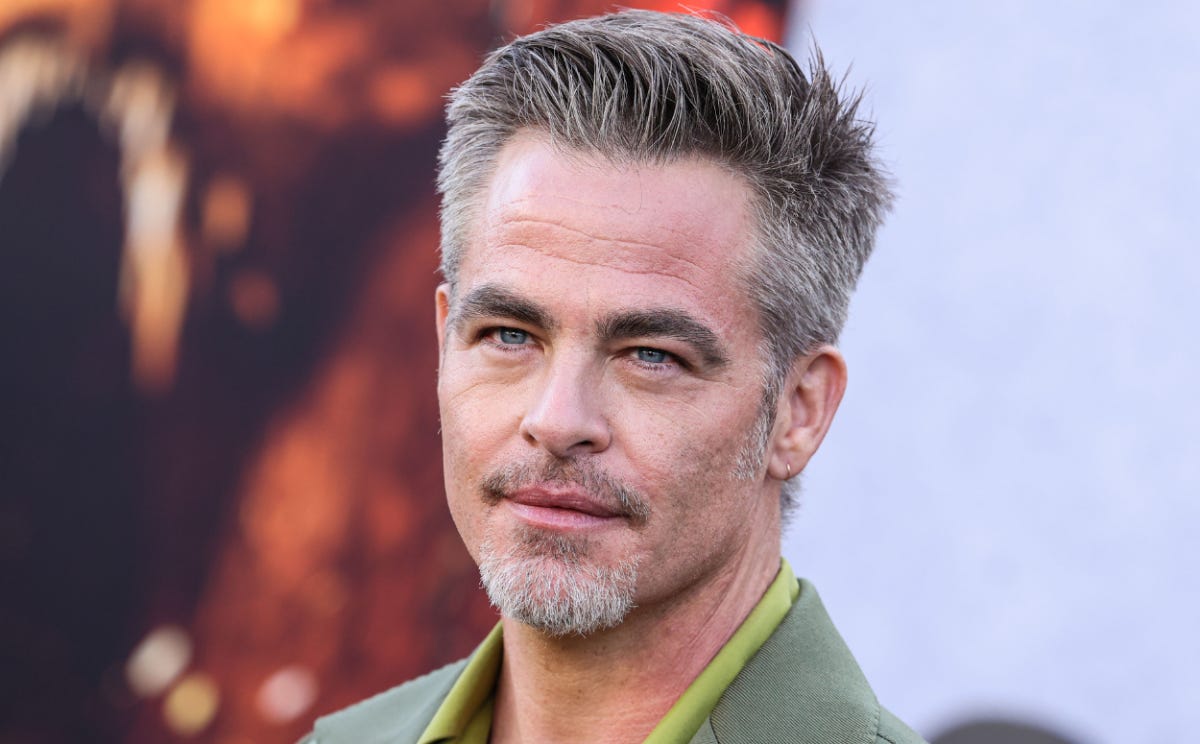 The hottest of the Chrises.
So, here’s the upshot (finally!): While there are many people who voted for Trump for reasons I find abhorrent, and while I will always struggle to understand how so many people can overlook the repugnant things he says, the fascist-y things he pledges to do, and his overall character and temperament, I have also internalized the fact that millions of my fellow citizens are simply not seeing the same Trump, or the same world, that I am seeing. So, I can’t necessarily judge their choice to vote for him by the same criteria I’m using to vote against him.
And I don’t want to go through the next four or forty years feeling angry at and disdainful of millions of my fellow citizens. It’s just too toxic—emotionally, psychologically, and spiritually.
To be clear: This is not a “can’t we all just get along?” post. I can’t “just get along” with people whose values are fundamentally different from my own on certain issues. And I have no desire to “get along” with the extremists and unabashed bigots. As for the wealthy people and broligarchs who know exactly who Trump is but only care about their portfolios and their bottom lines—fuck those people.
I’m talking about the good and intelligent folks who are being manipulated, cut off from truths that might change the way they see things.
It’s worth reading this recent Substack post from the wonderful Rebecca Makkai, who is currently working on a novel set in 1938. An excerpt (boldface mine):
Something I’ve had to accept, in researching and writing this book, is that many of the people who fell for fascism in the 1930s were neither inherently evil nor idiots. They were deeply misinformed, and therefore manipulable.
One reason it’s so, so important for us to realize this: Otherwise, people who know themselves not to be evil, and not to be idiots, will assume they are too good and too smart to fall for the manipulations of narcissistic leaders. Many good and smart people saw through Hitler, but many good and smart people also fell for it all.
The internet helps us live in tiny information villages. It feeds people a far greater quantity of propaganda than was available in 1930s Europe. And as anyone who’s ever tried to get through to a conspiracy-believing uncle on Facebook can attest, it’s nearly impossible to convince someone that what they’ve been reading online isn’t true.
One reason people were so susceptible to propaganda in the 1930s was that it was based in unprecedented advances in both communications technologies (radio, film, cheaply produced printed material and posters) and advertising. Otherwise intelligent people were not equipped to filter out information as potentially manipulative. Similar things have happened in the past 20 years: Older generations used to taking TV news and official-looking printed matter as legitimate do not have the framework for understanding Fox News as propaganda. Younger people have a hard time resisting internet wormholes because we have not, as a species, figured out ways to resist the manipulations of overwhelming bias confirmation.**
To campaign online, to debate online, to try to spread facts online, is to pit ourselves against a tide of so much misinformation that we don’t stand a chance.
She goes on to offer some suggestions as to how those of us who see the danger of Trumpism to our country might fight back against that tide of propaganda and misinformation. I confess, I’m not too optimistic about our chances of victory. But here’s hoping.
In the meantime, I’ll be here continuing to focus on the causes that matter to me; on making and consuming art; on taking political news in small doses; and, finally, on remembering that the real enemy is not really the people who support Trump (not most of them, anyway); it’s Trump himself, and the false narratives and craven corporate interests that have ushered him into power.
I’ll be thinking about about all those sweet, seaweed-slinging, Michael-Jackson-loving Soviet kids I met in ‘88 who had been told all their lives by an oppressive, autocratic government that America was a capitalist hellscape, and the Soviets were the ones who were all about peace, friendship, and understanding.
Those Soviet kids were my friends. They were lovely. And we were all much more alike than we’d realized.
All posts on this non-imperialist Substack are free and publicly available, but writing is how I make my living. If you enjoy my writing, please consider upgrading to a paid subscription ($5/month! Cheap!), buying my book, or using this link when you buy any and all books, so I get a little somethin-somethin’ on the back end, and so independent bookstores get your bucks instead of Bezos. Thank you!
* There are certainly arguments to be made that the U.S. is a wee bit imperialist. I didn’t know as much about that at 14. Nevertheless.
** This bias confirmation stuff definitely happens on the left, too. It’s hard not to silo onesself, given the way algorithms work. (Algorithms that are, of course, designed to maximize engagement and therefore revenue.)
December 30, 2024
The doctors are younger than me now
Happy almost new year, friends! At this point in the holiday season I am, as usually, completely sated by and slightly sick of sweets, cheese, wine, and butter-as-main-ingredient foods. But my house remains replete with them, and a few more parties loom. I’ll be the one in the corner sipping seltzer and picking at the veggie plate. Haha just kidding. That ain’t me, babe. (Aside: anyone else see the new Bob Dylan movie? I thought it was quite good. So did my husband.)
But I ramble. What I came here to say is that as I look ahead at the coming year, I do it as someone who feels—maybe for the first time?—solidly and incontrovertibly middle-aged. And I’m feeling increasingly OK with that.
What’s that you say? That at age 49 + 1 I have already been middle-aged for several years now? Yes, yes, fine. But I’m talking feelings, not chronology. And I feel, for whatever reason, that I’ve crossed some rubicon where I’m finally accepting and settling into this new phase of life, rather than gaping at it in disbelief from a slight distance.
This is not to say that I’m content with every aspect of this transition. For example, yesterday, when I picked up my phone to take a picture of something, the camera was on the selfie setting, and I was looking down at it, which one should never do when one’s camera is on the selfie setting, and it was so terrifying—all the sagging and pooling and rippling—that I felt like stuffing myself into a trash bag and jumping out the window. (That’s an All Fours reference. And, no, it’s not actually true. I adore being alive. Nevertheless, it was a disturbing sight, and one I’m not sure I’ll ever get used to, especially as things continue to…slide.)
I have, however, gotten used to things like the fact that when I go to the doctor’s office, as I’ve had to do a number of times over the past year for various small ailments and routine tests, most of the docs look to me like they should be medical students (or, like, high school students?) not full-fledged MDs.
They’ve started using phrases like “as we get older…” and “as we age…” when they talk to me about things happening in/to my body, and the screenings I should be getting. As we age, our vision changes. As we age, our cholesterol tends to creep up. As we age, we become faced with the looming spectre of our mortality. As we age, we occassionally incur knee injuries simply by standing up.
Obviously, the we, when uttered by a perky twenty- or thirty-something teeming with collagen, is not about “us” but “me”—the lady with the crow’s feet who doesn’t think boba tea is all that. Is this phrasing something they learn in med school? With your patients over 45, be sure to use the first person plural when talking about the terrible things befalling / about to befall them!
The other day, when I went for a routine dental appointment, I had a hygienist assigned to me who I initially thought was somebody’s kid, perhaps in the office for “bring your teen to work day.” He used the phrase “as we age” in reference to my receding gums, which I found particularly absurd (and slighly adorable) given that the boy’s brain probably hasn’t finished developing yet.
At least the ladies who shove my boobs into the mammogram machine once a year still tend to be older than me. For whatever reason, I find this comforting. The one I had last time went on and on about her grandkids. That’s the kind of cancer detection small talk I like. Some whippersnapper talking about, say, the bachelorette party she went to over the weekend, would just piss me off. Overall, though, I’m OK with the idea of people younger than me ministering to my aging bod. I trust them. Mostly.
But the other, bigger reason I’m feeling particularly middle aged of late is that…drumroll please…our teenage wonder twins recently found that they both got into the colleges of their dreams—Wesleyan and RISD, respectively. Then, just this past weekend, they had the audacity to turn eighteen.
And suddenly, it all feels much more real: we are about to become empty nesters, with adult kids. And while this makes me extremely sad on one level, I am also so SO happy for them with regard to their college news—happier than I anticipated I would be—and excited for the adventures they’ll soon be embarking upon.
It’s a huge relief, too, to have the college thing out of the way. I can better focus on important middle-aged activities like doing acrostics, maximizing my CVS coupon/Extra Bucks savings, and clicking on neck cream ads on Instagram.
Bigger picture: I’m starting to feel a little more positive about what could be ahead for me in this next phase of life, terrifying accidental selfies notwithstanding.
I hope that all of you out there, middle-aged and otherwise, are feeling good about what awaits you in 2025. It’s gonna be a rough year on the political front for many of us, no doubt, but I’m hopeful that we can counterbalance that by focusing on what’s good and real and soul-sustaining.
As we age, it’s increasingly important.
Thanks as always for reading, and happy new year.
All posts on this here Substack are free and publicly available, but writing is how I make my living. If you like what you read, and/or are a reincarnated Medici, please consider upgrading to a paid subscription ($5/month! Cheap!), buying my book, or using this link when you buy books so I get a little somethin-somethin’ on the back end, and so independent bookstores get your bucks instead of Bezos. Thank you!
P.S. My husband, Grammy-nominated singer-songwriter Alastair Moock (sorry, hon, had to brag a little), just started a Substack, Letters from a Moock, to share his (excellent) writing on things like music, movies, politics, basketball and other assorted topics. Check out his inaugural post on the Dylan biopic A Complete Unknown.
P.P.S. When I Googled “Letters from a Moock” to see if it came up in the results, the AI preamble said“"Letters from a moock" refers to a fictional collection of letters written from the perspective of a "moock," which is a playful, made-up creature that is essentially a cross between a cow and a moose, essentially combining the characteristics of both animals - large, gentle, and potentially a bit clumsy, with a penchant for grazing and living in a woodland setting.” The AI then offers up a series of ideas about what such a collection might look like, including: “The moock might describe its life in a forest or pasture, detailing interactions with other animals, the changing seasons, and the challenges of finding food.” Note that this is not an accurate description of either my husband or what he intends to write about. But props to AI for creativity. Now fuck off and stop trying to replace artists and writers.
 Isn’t he cute? But neither moose nor cow-like.


