
Susan Elizabeth Curnow's Blog, page 11
January 26, 2013
Interview with Greta van der Rol
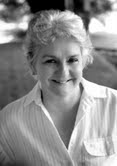 Since it is Australia Day it seemed appropriate to talk to the gorgeous Greta van der Rol today!
Hello to Greta van der Rol who writes ‘Action packed sci fi with a dollop of romance’. Greta is the author of The Iron Admiral and Morgan’s Choice along with many more science fiction novels but also a historical novel – To Die a Dry Death. Greta lives in Australia very close to a beach where she indulges in her other love of photography.
Greta, you are unashamedly self-published. What drove you to take that route rather than hang out for a contract?
First, Sue, thank you so much for this interview. I love the questions. They really made me think.
Die a Dry Death was originally published by a small publisher. I went that route because I knew historical fiction would not be my main genre. Meanwhile, I persevered with querying agents via the traditional route for my SF. Although I got a few nibbles, I withdrew. I'm still not really sure if I feared rejection or I just felt I was getting too old to muck about. I'd had an offer from another small publisher (a friend) who wanted my Iron Admiral books. So I took that route. Since then, the small publishers have folded and I'm effectively on my own. By the way, To Die a Dry Death is the same book as Die a Dry Death, renamed when it moved to a new publisher.
That said, I think we all crave recognition from the more main stream. So I submitted my paranormal novel, Black Tiger' to a few publishers. I was offered contracts but decided to go it alone. Not so long ago, the belief was you'd only self-publish because you weren't good enough to interest a publisher. I think that's no longer true. I'm prepared to do the hard yards to ensure my work is typo free and well formatted. For the rest, it's up to readers.
When agents like Jane Dystell (Barack Obama’s agent) use Kindle as their slush piles, does this show how much agenting and publishing have changed?
I think so. I'm sure it's lovely to have a good agent and certainly it still is the only way to get into the Big Six. Or is it the Big Four today? But I've noticed even the big names are opening their slush piles to unagented manuscripts from time to time. In fact, I'm getting the idea that now, writers are expected to make a 'name' for themselves before they're taken on by agents and publishers. Quite a few of the more successful self-pubbers have been approached after the event.
Do you think it is the author’s ‘platform’ as much as their ability to write which gives them results? Do you personally think that is unfair that folk with marketing ability are more likely to succeed than someone who can write well, or do you just shrug and think like many that good writing always wins?
What an interesting question. What is good writing? I loved Harry Potter and JRR Tolkien, couldn't be bothered to finish the da Vinci Code, loathe Terry Brooks because of how he writes, wouldn't touch James Joyce's Ulysses with a barge pole, don't like Dickens, like Agatha Christie... And I am constantly amazed that a Star Wars fan fic full of elementary grammatical errors managed to hold my attention enough to read it not once, but three times.
So it isn't about good writing, not even about a good story. Look at Fifty Shades of Grey. Or Twilight. (A one hundred-year-old vampire attending a High School ^o^??) But these books have touched a nerve in the reader psyche. I wish I knew how you did that. I think it's the crucial element to success. You have to write a book people want to read. Then they have to find you. Sure you have to market, but word of mouth is still the most important advertisement.
You write mainly space opera but you also wrote a wonderful historical novel called To Die a Dry Death, as well as Black Tiger, a paranormal romance, written to raise funds for tiger conservation. One of the things which delights me about your novels is the passion behind the words. I can feel your love of writing on every page. How important do you think this is for a novelist to succeed?
What a great question. To Die a Dry Death was that book that everybody has in them. Know what I mean? The one I was meaning to write from the time I finished university. It wasn't the first book I wrote but it was the first published. For your readers, the novel is based on the true story of the wreck of the Dutch merchantman Batavia on a desolate group of islands off the coast of Australia in 1629, and the truly horrific events endured by the survivors. There isn't space here to give all the motivation for this tale. Those interested can find it at http://todieadrydeath.com . I grew up with the story of the Batavia both because of my Dutch ancestry and because I grew up in West Australia, where the ship was wrecked. I could easily have had a relative on board that ship. So yes, I think you'll find passion in that story.
Black Tiger is certainly something I feel passionate about. I love nature and animals and it breaks my heart to see how close tigers are to extinction. There are more tigers in zoos and backyards in the US than there are left in the wild. So while it's a romance, I wove that aspect of tiger conservation in a tale that incorporates Indian traditions.
For my SF – I write what I'd like to read. I hope that shines through in the stories.
Does it lead to success? I doubt it. I think most writers would claim they love to write. Whyever else would you do something that requires so much time and dedication, with no guarantee of success? That said, you'll write a better book if you let your passion show. I firmly believe that's what holds readers, despite poor grammar and spelling.
You already have a fan base and readers demanding sequels. Isn’t this one of the main reasons why we write – to share? Have you ever tailored your writing to a particular market/dynamic, or do you write only for yourself?
I write to be read. Otherwise, it's pointless. But I think if all I wanted was monetary success I'd teach myself to write straight romance. It's the biggest seller. But I don't read the genre, so how can I expect to write it? I don't 'get' zombies and it's beyond my understanding how a vampire can be sexy. So I don't think I'll attempt either of them. Black Tiger is about the closest I'll get to simply romance – and I don't seem to be able to avoid adding the action and adventure stuff because that's what I like.
I have a small fan base and they like what I write, which to me is fifty shades of wonderful. For them, I'm delighted to write a sequel if the elements are there to do it in a plausible, interesting way. My latest book, Morgan's Return (due out in Feb) is a sequel to Morgan's Choice. But the possibility of a sequel was there in the storyline. I didn't have to resurrect anybody from the dead, or dream up a long-lost something-or-other. The biggest, scariest challenge was to come up with a story as interesting to readers as Morgan's Choice.
You often write quite raunchy sex scenes. Are you surprised that the sci fi crowd enjoy that?
Not at all. There's a very popular niche market for erotica in space. I don't 'do' erotica – but one of the reasons I write what I do is that a bit of good old sex was so often missing from the SF novels I read, and the movies, too. Remember the chaste kiss between Han and Leia in The Empire Strikes Back? Boooooring. And I know I'm not the only one.
Tell readers a bit about your next project and how you see your future as a writer.
As I said, Morgan's Return will be out in February. I hope it's as well-received as Morgan's Choice. But that's up to the readers.
Here's the blurb.
"When you delve into ancient history you never know what strange forces you might unleash.
When Morgan Selwood and Admiral Ashkar Ravindra travel to Morgan's Human Coalition to learn more about the origin of Ravindra's people, their relationship is soon sorely tested. Morgan is amongst her own people and Ravindra is overprotective and insecure, afraid of losing her. Even so, not everyone is keen to welcome Morgan home, not when they'd gone to all that trouble to get rid of her in the first place. Soon Morgan and Ravindra have a rogue Supertech on their trail with only one goal – kill Selwood.
Together, Morgan and Ravindra follow a tenuous trail back into humanity's past, to the Cyber Wars, the time historians call the Conflagration. But what begins as an innocent archaeological investigation escalates into a deadly peril for both humans and Manesai when Morgan and Ravindra are thrust into the middle of an unexpected conflict. And that rogue Supertech's still out there, determined to kill."
After that, I've started sketching out a new novel set in Morgan's universe. Morgan and Ravindra won't star, but they will possibly make a cameo appearance. I'll write a sequel to Black Tiger if I feel there is an interest.
My future as a writer? I'll keep on writing. The more novels you have in your list, the better. If people like one of my books, hopefully they'll read others. That's certainly what I've found.
Greta van der Rol can be found at:
website: http://gretavanderrol.net and http://todieadrydeath.com
twitter: @gretavdr
Facebook: https://www.facebook.com/Author.Greta.vanderRol
Greta’s novels can be found at: http://gretavanderrol.net/books-2/


January 25, 2013
Interview with Alma Alexander
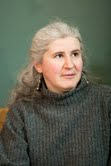 Alma Alexander is the author of the WorldWeavers trilogy, The Secrets of Jin-Shei, The Hidden Queen/ Changer of Days duology, and Midnight at Spanish Gardens. Currently she lives in the U.S. but was born in Yugoslavia and educated
 in South Africa and the UK.
It is an old adage that like gravitates to like, and among writers, even complete strangers find it relatively easy to strike up a conversation. The advent of the internet produced a strange phenomenon called ‘blogs’ where people suddenly opened up to the world. Yes, I am guilty of that sin as anyone and in that process I ‘friended’ Alma for no other reason that she was a writer. Er, not entirely true. She was a writer I could identify with, whose words I wanted to follow. Writers often like to discuss their process or their latest work, or simply brainstorm and very often you find a kindred spirit.
Blogs are another face of the changing industry. If you don’t have one of those, like a twitter account and a dozen other social media platforms, you simply don’t exist.
Because readers, if they like your work, start clicking.
Alma, thank you so much for participating. Do you feel what I have said is true? That if you don’t have an Internet presence, whether you are an established author or a ‘newbie’, that you don’t exist?
It sure feels that way sometimes. As purely a social connection phenomenon
and nothing more, Internet footprint seems to be the equivalent of fingerprints
these days. And perhaps that was inevitable in the modern and very connected
culture where the cyberworld feels as real as stepping out of your front
door into your driveway and driving down to buy a quart of milk at the grocery
store down the hill. But the downside of that is the equally inevitable
distancing effect, and you find yourself with good friends who live halfway
across a country or a continent or the world away from you and with whom you
might never actually sit down for a “real” cup of coffee or a shared meal.
Many, if not most, publishers these days insist on a cyber-footprint for
their authors. This is probably because the publicity and promotion machine, at
the publishers’ end, needs to run a lot less hot if the author is already
shouldering part of the outreach load. In the days of yore it used to be that
you wrote the book and THEN gained an audience – these days the way it seems to
work is that you need an audience first, before you write the book. And yes, if
you don’t have a toe in the cyberwaters (and more likely a whole foot,
with all the platforms where you now “absolutely need” to be seen and present)
you are already operating at a disadvantage as compared to other writers who DO
– whose books are going to be known about in advance, awaited, perhaps
pre-ordered (when the authors give the relevant links in their blogs or on
Facebook), talked about – and we all know how important that is – cue (I think)
Oscar Wilde: “The only thing worse than being talked about is NOT being talked
about”.
But the flip side of that question is, just how much do you want or need to
know about a writer and his or her own personal life and views before it all
becomes too much? How much of all of that is going to be enough to tip you into
thinking about the writer as not just the writer of a book you might like but
someone who holds views with which, perhaps, you find yourself uneasy with (at
best) or at worst completely impossible to live with and now that you have
found out about them here in cyberspace you find yourself unable to stomach
reading any further words of fiction written by someone whose worldview was
informed by the attitudes you didn’t care for? I know that a number of people
abandoned Orson Scott Card when some of his – shall we call them , a little
extreme – political views came swimming to the top on his blog. Is it better, in
that sense, “not to exist” in your readers’ minds, as opposed to existing rather
more vividly than they can bear (and continue to read you)…?
In the end I think it boils down to a very personal choice, and to how much
you are comfortable sharing about yourself, and how you might perceive reactions
you could get to the things that you share. The days of a complete writing
recluse, however, are well and truly numbered, I think. Even if YOU aren’t
writing about yourself someone else out there will end up writing about you, and
you can’t escape the electrons. Far better, I think, to control your own
presence inasmuch as you are able to do this. Blog as often as you want to and
dig as deep or as shallow a furrow as you need to, on subjects that YOU are
passionate about or interested in – the idea is to engage a reader with your
words long before they commit to reading to your actual fiction. Myself, I am a
certified introvert who doesn’t do too well in “real” crowds and “real” parties
– but I have found a niche within a community or three here in cyberspace, and I
am happy with that – perhaps one of the most oft-quoted maxims of our age, “I
think, therefore I am”, should now be adapted to modern times and restated along
lines similar to, “I share my thoughts, therefore I am”…
I don’t think it’s possible to live in a vacuum. But I do believe that you
can choose your friends and those who surround you, no matter how and where you
engage in doing so. And there are ways that interacting with readers is
absolutely essential for any writer, no matter how introverted they might
be.
So yeah, do come and read my blog [grin] I write it because I want to,
because there are things that I want to say and share, and (not the most
important but not insignificant either) because it keeps me connected to readers
even when they are not actually reading one of my books. Because a blog entry
that intrigues them might LEAD them to a book. If not today, if not tomorrow,
then instinctively some time in the future when they gravitate towards a title
and don’t even remember what the source of their interest in it once was….
As well as your novels, you’ve put together some superb anthologies. Do you think this is an essential part of an author’s resume – to write short stories? Is
this why you are putting together the Alexander Triads?
No, of course not. Some fine novelists have never written anything “short” in
their lives – others have but the short works were awful (because they insisted
on being embryonic novels) and some brilliant short story writers have never,
and WILL never, write anything longer than maybe 10,000 words. And that’s
perfectly okay. Being able to write both short AND long is not a requirement in
this game – and in fact you are blessed if you can. People like, for instance,
Neil Gaiman are equally at ease in both formats. I actually don’t write THAT
much “short” fiction – my natural length is somewhere in the region of (on
average) 90,000 words. The rules for writing long and writing short are very
different indeed and it takes experience and practice to be able to follow them
properly in either format. Think of novels as a full necklace of gleaming
diamonds, something that works together to produce a nice, well balanced piece
of jewellery. A short story is by contrast a single perfect gem. And where the
occasional flaw in the occasional gem in that necklace can be masked by the
quality of the stones next to it the short story has no such luxury – it has to
work and stand on its own, there is nothing that exists around it to hide those
imperfections. This can be a daunting task, for some. You wouldn’t think so if
you just compared the sheer amount of words but a short story is a much heavier
load than a novel is – and if the novel is all you can comfortably carry the
weight of a short story can crush you. And no, it is in no way essential as a
part of a writer’s resume. You write short stories because they insist on being
told that way, because you WANT to, and never, not EVER, because you think you
are obliged to.
As for the Triads, they kind of grew out of an original collection of short
stories which was literally my first published book – originally “The Dolphin’s
Daughter and Other stories”, it now has a new lease of life as the Alexander
Triads book #1, “Once upon a fairy tale” – and once I reissued those three
thematically connected stories it was a natural progression to come up
with other “triads” of connected stories, some published and others never before
seen, and produce little collections under the umbrella of a common theme. It’s
been rather fun, actually. And there are a couple more Triads planned, and in
the works.
Since you have an amazing biography and have traveled several
countries, how important do you think experiencing life is to an author? I am
asking this one because everything is a click away these days, but nothing
substitutes for RL. You can find anything via Google or wiki, but is it real?
Stories are fiction but they are made up of elements of truth. In writing
fantasy an author could write ‘anything’ because, well, it is fantasy.
Worldweavers is aimed at the YA market; do you feel that fantasy is often a
reflection of true life?
Not often, ALWAYS. Even the most whimsical of fantasy is in some way rooted
in the real – and fantasy is at its absolute best when it is telling some hard,
hard truths which it would be difficult or impossible to swallow if it weren’t
filtered through this fragile veil of silver lace. When you read stories like
“Those Who Walk Away from Omelas” you are aware that on a visceral level you are
reading a scathing indictment of something that, in a different form, exists in
your own world too. “Mary Poppins” might be all fun and games – but it is the
quintessential “spoonful of sugar that makes the medicine go down” because in
the end its message isn’t confined to frolicking around with cartoon penguins
but tears, eventually, through everything (even while leaving the illusion of
things being nicely tucked out of sight) and leaves us with some real truths
about our world, and our relationships in that world. “Tigana” by Guy
Gavriel Kay is one of the most beautiful – and most harrowing – books that
exists; I don’t know how he knows what it feels like to have your soul ripped
away from you but he does, and he makes YOU understand. That is the power of
fantasy.
And yes, there is a certain amount of living necessary in order to reach an
understanding of the things that lie beneath. It matters that you are taught to
see things differently, because you (the wirter) are the privileged prism
through which these truths will become obvious and known. Unless you understand
something of where they come from and how rooted they are in your own cultural,
geographical, metaphysical, and otherwise-boundaried position in life it is
impossible for you to even realize that there are other people out there who do
not share you own particular and unique worldview and who must be reached out to
in order for them to understand what your stories are truly about. This is
partly the root of the whole controversy of “cultural appropriation” because too
often a writer without the required breadth of worldview is incapable of
understanding that the shiny and interesting things which seem to be
crying out to be included in any given story cannot be used so without some
understanding about, and respect for, the position and importance of said shiny
things in their own particular environment. Being a part of a wider world, as I
was, and am, gives me a broadened vision of the things that were, and are now,
and are in the process of becoming. It is that much easier to write of a world
that exists outside your own walled courtyard when you are aware that the
outside world actually exists – and independently of that sheltered little
courtyard which may have been shielded from all kinds of harsh realities by the
walls it threw up against that world. Knowledge leads to understanding – and in
some ways direct experience is the ultimate form of knowledge.
Not so long ago, the only reviews mainstream authors received were through professional critics. Now, the whole world feels entitled to tell you how they feel via Amazon, Good Reads and other book sites. Do you think this changes how novels are perceived?
How they are perceived by whom?
I actually do draw a line between a piece of literary criticism – which can
be VERY high-faluting and ivory-towered and thus rendered almost completely
irrelevant to the reader-at-large – and a book review by an interested and
involved reader. To be perfectly honest, I would rather have a raw and
passionate response to something I’ve written from someone who was somehow
touched by my words on some raw place which necessitated a reaction than I would
aspire to a clinical, dissected autopsy of a book of mine spread-eagled on a lab
slab while sniffy professionals argue about cause of death. I don’t know that I
would prefer to get high technical marks for a perfection of prose, for
instance, over an outpouring of enthusiasm for an emotional truth which my words
have laid bare for a reader.
I don’t believe in vicious put downs for no reason at all – a reviewer who
comes up with a negative response to a book simply has to provide the reasons
why the book was disliked so, and I will be the judge, thank you very much, of
whether or not I agree with those reasons or whether they in fact matter to me
at all. I don’t believe, in other words, in reviews where the reviewer is
talking about THEMSELVES, and their own opinions or beliefs, rather than
discussing the book which they were entrusted with. A book, any book, deserves
to be judged on its own merits. The reviewer (whether writing for the New York
Times or Joe’s Book Blog) has the responsibility to provide a light which
illuminates the reading material at hand. Admittedly we all do this with a lamp
which is coloured by our own attitudes and beliefs and that is fine – but they
should not get in the way of the book being discussed, never mind take
precedence over it.
Perception of a piece of writing by the reading public, in fact, seems to be
very much dependent on how many people are actually talking about it, and how
loudly. To be perfectly honest, the frothy denouncements of the Harry Potter
books and how they are teaching our children witchcraft probably served the
books better than many a gushing review ever did. (Apparently you need to get
the right people good and mad over something you’ve written, and success is
almost guaranteed…)
So go right ahead. Leave me a review of any of my books – on Amazon, on
Smashwords, on your own blogs, on review sites, in magazines. I’m always
more than happy to know how my books have been perceived.
Do you think the ease with which people can self-publish has hurt the industry or do you see that as a vital injection to wake up an ailing and often old-fashioned way of thinking?
Yes, and no, and maybe. Oh dear. That is not helpful.
Look, it has been said that in most cases of people saying that they “have a
book in them”, that is precisely where said book belongs, and should stay. There
IS something to be said for a level of quality control, where someone other than
the author/their mother/their clutch of BFFs actually thinks a book has merit,
where the contents of such a book is properly and professionally edited (I’ve
seen a self-published volume where the author apparently honestly believes
that the second day of the week is spelled “Teusday”, despite having only to
look at the nearest calendar to be disabused of that notion), and has a decent
cover that doesn’t look like it was painted in crayon by the writer’s
six-year-old (or produced in bad Photoshop by their college-age kid who’s living
rent free in the basement).
Yes, I think it is a bad thing that there are only a handful of “big”
publishers left out there, and that they are increasingly geared for the
literary superstars of the world. No, I don’t believe that is the end of the
world because there are any number of smaller presses, some of them quite
successful, which are popping up to take up the empty places in the
publishing ecosystem. Yes, I believe there are books that are actively swimming
against the stream when it comes to the mainstream publishers and which would
never see the light of day if the author waited for that light to turn green
while they grew old and grey waiting for the postman to deliver their yes
answer. No, I don’t believe that every self-published book is in that category.
I think that a new publishing paradigm is still in the process of evolving
and it is likely that many of the authors working in that world today are going
to get ground into mincemeal trying to negotiate the grinding stones they are
dodging at every step of the way. It may be optimistic but at some point (when
the really bad wannabes who don’t see immediate rewards are going to abandon
this as a bad way to get the spotlight that they crave and will go off looking
for a new instant gratification) we will probably reach an equilibrium. When
that will be and how much we will have to endure before we get there… ah,
there’s the rub. Ask me again in ten years.
Thank you so much for participating – can you tell readers about your latest projects?
There are two or three new Triads in the works. My three YA books, the
Worldweavers series, are being reissued this year – initially as ebooks but
later as paperbacks – and a brand new two-volume conclusion to the entire series
will follow them – and that conclusion is going to be fabulous. I’m working on a
new YA concept and shopping that around for a home currently, and also some
other projects which are on the back burner right now (one of which is
going to be just pure FUN). Of course, more short stories when and if they come
calling. Maybe another anthology where I will wear the editorial hat. Lots going
on.
Alma Alexander can be found at:
www.AlmaAlexander.org
www.AlmaAlexander.com
http://anghara.livejournal.com
https://www.facebook.com/pages/Alma-Alexander/67938071280
http://storytellersunplugged.com/almaalexander/
http://www.sfnovelists.com/
https://twitter.com/AlmaAlexander
Alma’s novels can be found at:
Ebooks on Kindle:
http://www.amazon.com/s/ref=nb_sb_noss?url=search-alias%3Ddigital-text&field-keywords=Alma+Alexander&x=12&y=21
Ebooks for other formats:
http://www.smashwords.com/books/search?query=Alma+Alexander
You can also purchase actual Real Books ™ from Amazon, or Book Depository, or ask your local bookstore. Or, if you want a signed copy of the books I have in stock here, you can always contact me directly and we can talk.
January 24, 2013
(Short Story) As One
 As One
Clarity was not the haven advertised. For three quarters of the year, it
rained in varying degrees of intensity. No one had told the colonists that rain
could be as bad as drought when it came to growing crops. Such plans those initial colonists had. All failed. And since no ship had deigned to pass by in several generations, Estar Astron was as stuck as everybody else.
She survived as everybody did. It was that or die. Science could create so many
wonders, but it couldn’t stop the rain, and while food stuffs could be grown
under cover, the whole infrastructure of Clarity failed. The rich, if there was
any such thing on Clarity, might have their glass houses; the rest of the world
scrabbled for a living in the muck.
Which was why Estar became a hound.
There were natives on Clarity. But that was another thing the first explorers
failed to mention in their copious and useless reports. They’d classified
herbivores and omnivores and carnivores, but they hadn’t classified the horses.
Because they weren’t just horses, were they?
Humans have such a lovely habit of wanting life to fit neatly into a box so that
they can label it as this or that. Give them a true alien and they go into panic
mode and forget all sense. At least Estar presumed so. Horses! She knew what an
Earth-type horse was and what it looked like, and, sure, those horses ate the
blue grass like the creatures back home. Horses back home, however, did not
transform themselves into ‘something else’ when they felt like it.
Because Clarity’s ‘horses’ didn’t live in towns or cities, the planetary surveys
presumed the lack of structures meant no truly intelligent life-forms. Well, as
in humanoid-type-intelligent-life-forms. That might have been because the
natives didn’t build permanently. Sensibly Clarity’s natives had adapted to
their surroundings and were nomadic. The majority of humans weren’t like that.
They wanted permanency. They wanted what they’d left, and they’d bought Earth
with them in the shape of seeds to plant and plans for cities. Earth-type seeds
rotted in the soil or grew like pathetic yellowing stalks. There wasn’t enough
nitrogen or enough phosphates. Someone hadn’t done their damned research.
Oh yes you adapt and survive when you have no choice. Trouble is it isn’t always
you who suffers. Humans thought Clarity was theirs now, warts and all, and when
it came to survival you did what you had to.
#
Bite him, get him, hold him.
Scent of sweat, scent of male, scent of musk, scent of death.
Like the rhythm of an ancient drum, the stallion's hooves pound dirt. Blue-green oaks bend their branches as he passes. Dying leaves flutter in his wake.
Estar howls, urging her hounds after him. This one will not escape her pack. Can’t. She needs his blood.
Sweat lathers the stallion's sides as he gallops from the trees. Hooves thunder onto
river rock, scattering pebbles like shards.
No! Don't let him reach the river. Steady, don't rush him. Canen! Too soon, too soon, young pup. Estar cringes as Canen flies through the air, victim of a great hoof. He lies still on the rocks as the stallion leaps into the river.
No. No, you won't escape me.
No.
In a ripple of charged air, Estar transforms. From brindled hound to human, she changes, muscles and bones stretching, forming new structure and shape. Agony flares at the rapidity; her howls change to screams of triumph and pain. She dives into the river, the dismayed howls of her pack echoing in her ears.
Fed by snowmelt from Harmony Mountain, river water meets Estar's skin
and dances a shiver along her spine. The force of the river's current tugs her
southward. She fights against that strength, cutting through waves.
The stallion leaps out the river on the far bank and shakes from head to tail. In
his arrogance, he doesn’t look back. True, most hounds will not dare the river
because of its currents, but this horse doesn’t know Estar. The rushing water
conceals any sound Estar makes as she pulls herself free. Not until she
transforms again does he sense her.
Estar leaps, teeth bared, to land on the stallion's back. She scrabbles for purchase on his smooth black hide. She bites down on his withers. He roars, twisting to shake her free. Muscles bunch and he bucks, a violent concussion of power. Still she hangs on, teeth buried in flesh. In desperation, he rears up and up, forelegs pawing the air in his anger and pain. Her weight pulls him over. She jumps free before he crashes to the ground and lies still. Estar sniffs the air. The scent of his blood tickles her senses
until she licks her lips. Then he changes, as she knows how to change.
Instinct begs her to hamstring him; fascination with his transformation
keeps her frozen for seconds. He must have struck his head when he fell;
he is too motionless to be faking unconsciousness, his heart and breathing slow.
Estar approaches him, sniffing him all over, then sits on her haunches in
bewilderment. As a hound she cannot not tie his limbs. Even though she does not
want to transform again, she does. Finds some river wrack and ties his wrists
and ankles. Then she sets about making a fire to dry herself while she waits for
the pack to catch up. They will have to find a bridge or a ford, which will take
time.
#
As her fire smokes miserably in drizzling rain, Estar studies her captive.
Long black hair cascades down his back as thick as his mane. The honed muscles
of an athlete sculpt his body. His features are strong even in sleep. A beard of
dark hair coats his broad chin, wide nostrils flare with every breath.
Anger flares through her. A pretty face changes nothing. She'd hunted him for
sacrifice for good reason. Without the stallion's blood, the crops will fail and
her people starve, and his pretty face only confirms what folk say about the
stallions. Like handsome male birds, he flaunts his plumage to capture females
and breed like pests. The great herds of horses only deplete the land and must
be culled to save humanity from ruin. Too much rain washes the essential
nutrients out of this land, which the stallions’ sacrifices will replace.
Her captive stirs with a groan. No doubt he has a massive headache. Estar
draws her knife from its sheath around her neck. He awakes to the kiss of steel
at his throat and freezes, staring up at her with rich dark eyes.
"This world changes many things, but this… What is this?" she asks. He would know what she means, she is sure. Her blade does not waver at his throat as he swallows.
Clarity’s humans know the horses transform, but no one has ever seen it close
to. They’d been as elusive as ghosts when humans had tried to approach,
thus adding to their mystery.
"If you understand the rules, then why are you surprised?"
She frowns. The rules? His face shines wax pale beneath the stubble, a green tinge around his lips speaking of pain. Though he is naked and apparently-human, he smells of horse. Her nose twitches as she sheathes her knife and hunkers down beside him.
"The rules are that your blood is needed to nourish the land."
"Whose rules?" he shoots back. "Man's rules, not Clarity's. Do you believe everything you are told? Do you honestly think one stallion's blood will change things?"
"Don't belittle my intelligence. Who is the one lying trussed?"
He shifts, a grimace of pain twisting his features. Maybe he's hurt more than his head, but he says, "Why does man take the stallions?"
She stares into those fathomless eyes. So inhuman. No whites at all. "Because you are all rutting whores and breed like vermin."
Temper flares across his face at her taunt. He attempts to move and grunts in pain.
She wonders if he's hurt his spine. He fell hard. "You are foolish to move if you've hurt your back."
"What do you care?" he grinds out. "It will only make it easier to drag me to sacrifice."
For a while neither speaks. The bitterness in his voice touches a chord within her.
He asks her name. Why does he want her name? The idea worries her but then she
shrugs. "Estar, leader of Pack Astron." There is pride in leading the pack of
the biggest town on Clarity. She's fought many battles to become alpha. Let him
know who has captured him.
"You should not be,” she says, because somehow this seems wrong, this human-like form before her, who speaks so tidily in human words. Who is the beast now?
"I am as natural as you are. You exist to hunt, we exist to preserve."
"We exist to prevent folk from starving."
"The lie is subtle but not the truth."
She thinks over his words. The hounds had been developed within the cities and are not natural at all. Does that mean the stallions have also been created by science? The common folk call the hound's transformation magic but it is not so. Where had those scientists gained their knowledge to achieve such a thing? Truly, Estar has not questioned it before.
He waits for her to answer, his gaze making her uncomfortable. "Then what is
the truth, you profligate brute?"
He snorts at her label. "No amount of blood could satisfy the land, which is simple science. Wrapping up slaughter in ritual might make our deaths acceptable to you. It is not the solution to Clarity's problems."
"So you say."
"So I know." Fury tinges his voice.
"The false priests of man might have a way with words, but they do not
tell the whole truth. It is not blood alone which encourages your crops to grow.
You would need whole herds of our bones to do that."
"Then why do the crops flourish with each sacrifice?"
He hesitates, staring beyond her toward the river. "I am Tarin," he says softly, and, "I will show you. Look behind you."
Estar turns, sure he means to trick her. Her heart drums against her
ribcage. Within the river gallops an image of a black stallion. Flowing water
becomes his mane, tail and feathers, his body a swirl of impressions. The beauty
of the image holds her spellbound so that she has to wrench her gaze away.
In her heart she'd known it was a trick. The priests are not wrong, and now
he's broken his bonds. She faces him, knife in hand, wishing for something
heftier. He arches his neck, pawing the ground in challenge and letting out a
neigh that deafens her. When he rears, she cannot prevent instinct to step back.
His hooves dance in the air so that she feels the wind as they pass, and then he
comes crashing down. She stands her ground, knife raised, knowing it might be
her end, but she will not die a coward. At the last moment he twists
sideways. Her knife sinks into his flesh. A primal scream fills the air.
Startled, she lets go of her knife and spins. His hooves come down, not on
her but a catspawn. A feline as tall as a young child. It lies on its side, ribs
shattered, testament to what might have happened to her. She has no time to
wonder, for the catspawn is not alone. Unearthly yowls echo across the river
bank as the cats approach, dark-striped fur bristling their rage, teeth drawn
back to reveal over-sized canines.
Estar transforms and howls a dare to the cats, who no doubt are lured by the stallion's blood. In a flurry of fur, one cat leaps. So does Estar, a savage growl in her throat. The cat goes down, it's back broken, but there are six more circling at a distance.
Listen to me.
His voice in her mind. Used to the hound's communication it does not shock
her.
Listen, Estar Astron, and believe. Stallions' magic is not like yours, it is the true power of this land. Take some of that power within yourself. It is the resonance which nourishes the land, not our blood, and your priests understand that.
I don't need it.
You do. I am wounded both from the fall and your knife. Take what I have left. This is our seed, it is no rape. This once, we will fight together.
She hesitates, one eye on the approaching cats, weighing the odds, and knows she cannot outrun six catspawn. She bites her lip in hesitation. She can kill him afterward. She nods.
Power arcs between them. He neighs, she howls, and their voices join, a vibration that matches.
Resonance. She feels it to her core, a primal play which finds rhythm and dances
an archaic waltz of survival. Strength fills Estar until her veins tingle
and she wants to burst from her skin. Wonder at that power makes her want to
question.
Now.
Her lips draw back from her incisors, ears fold, tail raises and her haunches bunch. She expects to fight alone, but Tarin is not done yet. They dance indeed, using their strengths to fight and defend. Tarin kicks as Estar worries at throats. He tramples, breaking bones so she can go in for the kill.
Minutes it takes and then the roars stop, the screams stop. Estar pants, the smell of blood and offal surrounding them. Ichor coats Tarin's hooves, blood plasters Estar's pelt. Carnage lies around them.
Resonance. It ripples between them, the connection vivid, so that she knows when he changes to human form--experiences it so that she knows his every muscle as well as her own. Feels his pain from the wound she's inflicted.
"Why? Why would you do that?" she asks, bewildered.
He holds a hand to his side where she'd stabbed him. It cannot conceal the blood that flows down. He takes a breath. "We protect the herd from prey. Today you were my herd."
"It's that simple?"
"Things often are."
"Explain them to me then."
He opens his mouth as though to reply but then he staggers. She stops him falling. Before this hunt began, Estar had no qualms about killing these creatures. None. Now guilt rushes through her that she's injured him. She feels his essence within her, joining with her more intimately than anything she has ever experienced. The wonder of it still burns through her as her heart matches rhythm with his. She will never be the same. He is no longer the beast she's always thought the stallions to be. He is right
that this is a lie. She doesn’t know the whole truth yet but she will.
Gently she lowers Tarin to the ground, straining with his weight. Despite
his objections, she studies his wound. If her knife has penetrated deeply enough
it will have damaged his intestines and there is nothing she can do. She bites
her lip.
"Can't you use your power to heal yourself?"
"Balance, it's all about balance," he says softly.
"You were going to tell me."
His gaze drifts away from her, as though he has already gone somewhere else. She catches his chin between her fingers and turns his face toward her. "Tell me why I am
wrong."
"You believe that the stallions' blood nourishes the land. There is some truth to that, but you were taking too many and destroying the balance. We are part of this world and its power resides within us. The world made us. Wefight our own battles to nourish the land, but man takes too much. That is why the crops wither and die."
He lifts a hand. "This world is not man's birthplace, yet he treats it as such. The rules here are different and he breaks them. There is power but it is not limitless."
"The hunts have been going on for years. Why have you done nothing to stop them? You say things are often simple, but often they are not. I became what I am for a reason. Do you now tell me I live a lie?"
"You believed a lie. There is a difference."
"Why should I believe your truth and not theirs? In the beginning, why did we not
know that you could transform like the hounds?"
"We learned it from you."
"How? Why?"
"Because it was needful for our survival."
Estar pauses. Humanity had come to Clarity hundreds of years earlier. A colony ship that had traveled the stars for millennia. They had no way back to their roots nor wanted any, but Clarity's climate was not as ambivalent as was first supposed. Facing
starvation from failed crops, scientists searched for answers and discovered
that wherever large mammals died vegetation thrived. The one thing that
flourished on Clarity were the herds of black horses. In desperation, men gave
hope to a starving population by sacrificing a stallion. When that year the
crops thrived, people grasped at the concept and the hounds were born, never
realizing that one horse's death could never have achieved such a miracle.
People believed what they wanted to believe.
"We call it 'magic'?" Estar says.
"That is your word for things you do not understand."
"But I do understand. You are saying that it is the power within you that enriches the
land."
"Yes, and always has. But humans changed the balance."
"You spoke about rules before, as though I should understand them."
"It is simple. If you use anything you must replace it in kind."
"Is that why you aren't fighting to live?"
"Nature will decide if I am strong enough."
"Will it? I understand what you are saying. It makes sense, but nature like anyone needs help to survive. You aren't an animal any more than I am."
That seems to sting for his eyes open more fully. "When the hunt arrives, what will you do?"
She thinks and then says, "Tell them to go away."
"Will they listen to you?"
"Yes!"
She says it too quickly and knows it. They will listen to her but they will argue and yip and whine about it. She has been so certain about things, now she is not, and that rankles. That an upstart male has thrown everything she thought is right and true into disarray. Trouble is, he could be dying and that pulls a different set of strings entirely. A stallion might instinctively wish to protect his herd, an alpha female is not so different.
"What is your hierarchy within the herd?' she asks, thinking.
He looks away uttering a long, pain-filled sigh. "There is more than one herd among the horses. There is the Great Herd and then the smaller herds within it. You know
the way of things. The strongest gets to mate; the strongest survives or gets
driven away. How do you think you come across stallions at all?"
"So you lost?"
"Oh no, I won."
She frowns. "Then--?"
"The stallion I chose to fight was leader over all the herds. I won, but I refused to deliver the killing blow."
"Why?"
"Because… I could not."
That isn't enough of an answer. Estar thinks back to the whole hunt and an idea occurs to her. "You placed yourself in our way. You meant to be caught. You meant to die. I thought luck was on our side, but it was no such thing. Tarin, why?"
She uses his name, and that changes things between them. He's become a person and not just a creature to hunt. He's given her his strength so both could survive. He fades. She feels it.
"Tarin, don't you leave me! You said you would explain and you haven't even begun."
"Why prolong it?"
"Because you aren't a coward and yet you act like one now, and I need to understand. If you want me to change my mind about anything, I need to know why. Yes, I felt your power, but it isn't enough."
"Then ask any of us."
"I am asking you."
He shivers. Estar touches him. "You gave me some of your power. Take it back."
"He will not give it because he is too proud and stubborn."
So it is not the hunt who arrives first. The man who walks into their tableau looks very like the man who lies dying. Estar does not attempt to run. He kneels beside Tarin and reaches with one hand. Despite his weakness, Tarin grips the man's wrist. "No," he whispers.
"You made a choice, am I not allowed to make mine? Are you truly that arrogant?"
Estar does not realize she holds her breath until she has to breathe. Whether it is weakness or he is shamed by the other's words, she does not know, but Tarin releases his grip on the man's arm.
"Stubborn colt. Wise decision. Have you not proved your worth that you have got a Hound to care for you?"
"That is not enough for your life!"
"Oh, but it is. My life was over the moment you defeated me, but thank you for the time given me to say goodbye."
Estar feels like the worst kind of voyeur watching the two. She rises to give them privacy but the stranger looks up. "No, don't leave, someone must witness this." He presses on Tarin's wound.
Tarin arches his back, a cry rattling the air. Power crackles as Tarin writhes on the ground. The man does not release his grip until Tarin stills. Then he leans forward, brushes the mane back from Tarin's brow and places a kiss there. Without words, he slips sideways and lies still.
Estar shakes. Tarin breathes hard. There are tears running down his face. In that moment she wants to hold him but does not dare.
"Who was he?" she asks.
The sorrow on his face is poignant enough to bring tears to her eyes. "His name was Rathor and he was my sire," Tarin says as he climbs his feet, "and the greatest leader the Herd has ever had."
"Why did you fight him?"
"Because he challenged me. Nature is a hard taskmaster and cruel as anyone. He said he had had his time. That it was time for a younger stallion. I did not agree."
"But he has had his way in any case."
Tarin wipes his eyes and lets out a rough laugh. "Yes. Yes he did, and he called me
stubborn."
He lifts his head and stares across the river rushing beyond. Estar turns, wondering what he sees. On the opposite bank stand twelve black horses. As one they dive into the river. It seems only moments before they stream forth and surround them. One comes forward and stares down at Rathor's body then back to Tarin, a question in his dark eyes. Tarin's answer is to change. He rears, cutting the sky with his hooves as he neighs. The other stallions join him so that Estar covers her ears, her body vibrating with sound.
Once more they rear, but this time Tarin does not and their action is an unspoken acknowledgement of him, Estar is sure. Then they turn and gallop away, thundering along the river bank. When Estar looks back, Rathor's body has gone. His imprint still presses into the ground. The catspawn's blood has vanished with him as though the land has absorbed them all.
Perhaps it has.
The hunt never came for them and somehow that feels more of a betrayal than
anything, as though she hasn't mattered. For a moment hurt spikes but then she
lets the emotion go. She changes into hound form and barks at Tarin. He stomps a
hoof and shakes his head, mane flying in all directions.
Come, she hears in her mind. I promised the answers to your questions. She doesn’t hesitate. She runs at his side as he takes off, and as one they gallop into the trees.
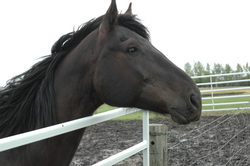
(Today's photo is Everest, a Canadian Horse I used to own.)
Dedication
 When I opened this blog, I began with a story as to why I followed the path to
 publication. Unfortunately, when we updated the site, that post went with it.
For the people who didn’t get to read it and who want to know a little bit about
me: I’ve always written. It’s in my blood. Don’t ask me why. It just is.
Like many another author I didn’t do it for publication or fame (snort). For years I quietly wrote in notebooks, then a typewriter, then a PC. Then one day I found the on line writing workshop for science fiction and fantasy. And I thought, why not.
Several years of being torn to pieces later…
Yes, years.
A few short stories published. A few ‘bites’ from agents. That close but not quite
close enough philosophy. But also a lack of confidence on my part. I didn’t
believe in myself, and, if you don’t believe in yourself, how can you believe in
what you wrote? Especially when it comes to selling it. Some people may say that
the two aren’t connected, that the writing and you are separate entities, but
for me they aren’t.
I’d never had a ‘career’. I worked with horses and was a proud stay at home mum of three sons, although I had a stint at secretarial college. I’d tried an office or two but it really wasn’t ‘me’.
Fifteen years ago we moved to Canada because my husband wanted to come home. That was an adventure and of course, life-changing. Scary when you get off a plane in snowy Alberta with five suitcases and a dog. Nowhere to live, just a whole country waiting for us with its possibilities. New schools for the kids, new jobs for the husband and learning how to drive on the wrong side of the road, and learning how to cope with ridiculously cold temperatures and lots of snow.
That was fun and exciting and different. Mountains dwarfed us and the
prairies stretched on forever. Which naturally gave me even more inspiration to
write, although I always wrote science fiction or fantasy or a combination of
both.
But, publication. With the ever changing industry I had got to the point where I thought, why bother? Too much competition, not enough moolah. Then tragedy happened and my middle son passed away. When something like that happens
to one of your kids, pursuing a dream of publication becomes something very
trivial. Yet it was something he always wanted me to do. He even downloaded all
my novels and took them to Afghanistan with him.
When Jeanne from Artema Press asked me for “Games of Adversaries” my mind was still in a bit of a fug. I found it very hard to focus for a long while. Was it karma that she asked me at that point? I’m not sure, but after a while I found that passion again, returned to that place only writers know.
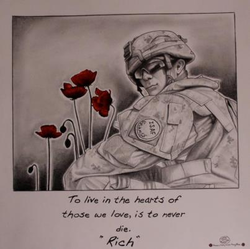
So, Rich a lot of this is for you and your memory, but it is also for me, and for all those readers out there, who I hope will enjoy my stories as much as you did.
January 23, 2013
Why We Do What We Do
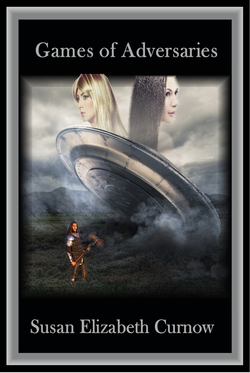 A while back I spoke about inspiration and 'where authors get their ideas from'. The book cover for "Games of Adversaries" shows two beautiful ladies above a spaceship at an obviously bad angle, and beneath that, a hunk with an axe.
The novel is about contrasts and there are certainly a few on that cover. I mean, what exactly is the hunk going to do with that kind of weapon against a spaceship? And why are there women on the cover when the main story is about men?
Why did I write a story about some holier-than-thou prince who danced?
It's quite simple. When you are thrown to extremes, how do you survive? Yes, that's another question, but that was the question which inspired the story.
Have another picture.
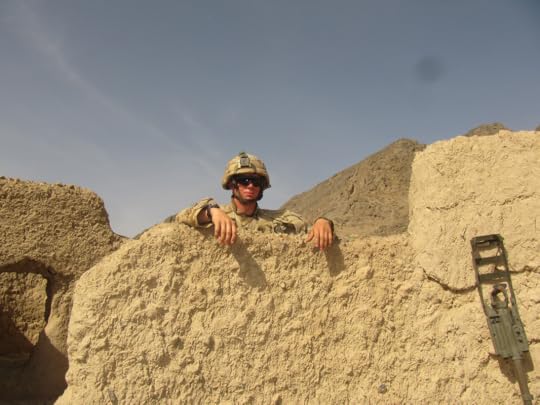 Photo credit to Patrick Moulden.
I've mentioned before that there are references to PTSD (post traumatic stress syndrome) within "Games", even if they are not hit over the head kind of references. The reason I posted this picture? Contrasts. Take a young Canadian soldier and throw him into an alien world. We think, because we have 'social media', that we know everything. That once we 'wiki' we know all there is to know about another culture because, well, we can read about it, research it, look at pictures, watch films. We do all that at the touch of our fingertips. We don't 'live' it.
This isn't just about Afghanistan in particular. Soldiers the world over are thrown into conflicts with no true knowledge, just orders, a love of their country, and a desire to protect it.
Although I began "Games" before I personally knew a soldier who went to Afghanistan, when it came to polish the words, I knew that this is what the story is about. Because another country, to many of us, is an alien world. "Games" is all about that.
From our safe computer chairs and our laptops, could you survive? What would drive you to overcome horrendous odds, injury and terror? It's no computer game, believe me.
So I took two young men and turned their worlds upside down. From one, I took everything he believed in. From the other I took the love of his life. See if they both survived in "Games of Adversaries" and wonder if you might have done the same.
Please feel free to tell me why you wrote your current novel.
January 22, 2013
Snippet
 From "Vicadia" an upcoming fantasy novel.
“Magic is the nature of all that is around us. It is a summer morning when the
mist rises and the sun burns away the dew. It is winter when the snow falls in
silent flakes and enshrouds the ground until spring. It is the love between man
and woman and the laughter of a child. It is the butterfly emerging from a
cocoon or the rainbow caught in a waterfall's spray.”
"Sarain sighed. “Evil is the man who would condemn the use of magic and yet
use it for his own ends. Evil is someone who would drown ten thousand souls and
yet suffer one man to live. Evil is not a child who uses the wishes of her heart to
help someone else. --I am weary. I would sleep,” he said, and curled up in his
cloak."
Today's picture by Richard Curnow. Helmand Province Afghanistan 2010
January 21, 2013
Do You Tattoo?
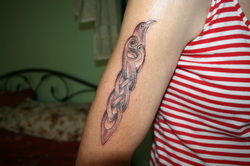 Do you have a tattoo? I'm just curious. Do you find you get 'reactions' from having one? Do people automatically label you because of it?
I had mine done because although I don't need a reminder of my son, I wanted something permanent that said how I felt. The raven is symbol for 'cornwall' and my name means Cornwall. The 'R" at the top of his wings is for Richard and the triple tail to denote all three of my sons. Cornwall is as celtic as Ireland and Wales in many ways, so I definitely wanted to show that ancestory.
But people often presume it is 'tarty' or you're trying to be tough. For some it is a statement, for others it is pure decoration - why did you do it? Or if you didn't, how do you feel about them?
OMGOMGOMG, I just wrote your instead of you're. All my wingeing and I wrote... \0/ definitely been on FB too much...
January 19, 2013
Outlining grandaughter style
 I decided yesterday to give editing a break and write something new. A while back I began a novel about an eight sided castle, but it didn't go anywhere because, well, at the time, I wasn't sure about it. But as I started re-writing I thought, stop, write an outline so you have clear motivation and conflict and all that stuff novels are supposed to have.
I was writing it this morning and all I could think of was a conversation I had with my grandaughter over the phone that went something like: And then we went to this biiiig house, and then we builded a lego castle, and then we went to nanas and I builded another castle! And then.... so on and so forth, and I ended up tittering away to myself. A only likes princesses and 'pink'. Anything pink. No disney princesses and, booooring!
I also remember her in Chapters. I sat her down on a bench while I searched the fantasy and sci fi section. I said, you may pick up books but be careful of them. Oh, she was - she's only four. I watched her pick up a book and hold it carefully like I'd asked, then she flipped the pages and in a loud voice began - blah blah blah blah blah blah blah, until the pages finished flipping, then she said brightly - The End! Of course, there were no pictures, especially not of princesses.
I did finish the outline and a whole load of questions that must be asked and answered, but I did it with a smile and felt like Bart Simpson in front of his chalk board - must not write blah, must not write blah...
January 18, 2013
Writing Advice - Not
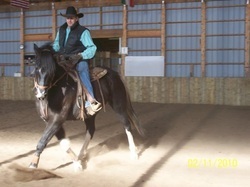 Giving writing advice is a little bit like horse training. Everyone does it differently. This is Merlin being 'trained'. Merlin didn't like being trained. Merlin likes noms and slow meanders through mountains. Do fancy stuff like side-passing, wooo no! But he's a good boy. He grumbled lots and then said, look, I can do it, okay? Do I have to like it though? No. And the point is, although it was good to see him doing the fancy side-passing and stopping on his haunches, it didn't make him happy. Knowledge makes us all more rounded people and while input into anything gets the brain-gears going, it can also stop you dead in protest.
I am a little like that when someone says - you must. I'm like one of those little kids who asks why is the sky blue, and if you haven't got the right answer keeps going - why?
So if someone says to you - you MUST write every day, you MUST write an outline, you MUST do six drafts, I am all, like - why?
You can argue that writing is a professional job and MUST therefore have the discipline of a job and a routine, and you can totally stultify your inner muse. Although, I seem to remember someone poo-pooing that one too. It's NOT a muse dammit; it's not some angel whispering sweet nothings into your ear, it's work!
Er, if I want to call it my muse, my spirit guide, my angel, or those strange scary voices in my head. I will, thanks muchly.
The 'rules' are simple actually. You sit down and write, with clarity and not too many adverbs, and hopefully with the commas in the right place (whistles - blame my english teacher). You write something which you feel passionate about and that you want to share. And then you do it all over again, lots.
Oh, and you have to be stubborn. Very, very, very stubborn. And persistent. And just a little bit crazy.
January 16, 2013
Who the Heck Do You Think You Are?
 Todays picture comes to you from Afghanistan. Always loved this one. My son is on the right, a Canadian soldier beneath an American flag and vice versa.
Back to the subject matter.
Just who the heck do you think you are? Yes. You! You may have sweated rocks to write a book. You may have even caused rifts with your obssession. But why do you think anyone is going to read it? What entitles to think anyone should bother?
Really. No, this isn't a poor me, no-one-will-read-my-book-post. Far from it. It is something I have noticed as I have been trying to learn about marketing. Because, I wanted to do it subtly. Not with a shout, but as a gradual build up. Yet I see tweets and FBs and tumblrs and whatever! media, people shouting out 'buy my book'. Why would anyone?
You have to have a reason why anyone would buy your book. Are you interesting? Do you have something positive to say? Is your book such a grabber that people have to read it?
Yes, you have to reach people.
I, for example, am a wallflower. No, seriously. So why would anyone know who I am? Why would anyone shell out ten bucks to buy one of *my* books? I really don't expect it. I am totally grateful if you do. But I am not going to bully you into it.
There are such wonderful oppotunities out there for authors. Don't abuse them. Connect and enjoy, because without joy, well, what is there?


