Lisa M. Collins's Blog, page 6
June 4, 2015
Interview with I.A. Watson — Vinnie De Soth, Jobbing Occultist
I.A. Watson is an adventure, fantasy, and SF author from Yorkshire, England. Since his fiction debut in 2010 he’s won several awards for writing in the pulp genre although he’s still not sure what that genre actually is. He just likes to write and he likes people to read the stories he’s told. The fact people pay for this sometimes is a lovely bonus.
Interview with I.A. Watson
author of Vinnie de Soth,
Jobbing Occultist
6/4/2015
What is your current release and (without spoilers) tell us about the new book or series.
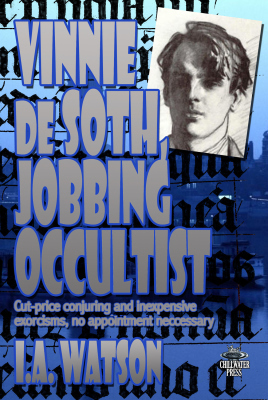
Due out any day now is VINNIE DE SOTH, JOBBING OCCULTIST. It’s the everyday story of a down-on-his-luck urban sorcerer eking his living in modern day London between the corporate vampires and the blue collar werewolves, avoiding his enraged sorceress ex-fiancé and his corpulent landlord whilst trying to stand up for the little guy. I had a really hard time trying to decide if it classified as horror or dark humour.
 What is the usual process for your writing? Are you a plotter or a pantser?
It depends on the project. I first broke into publishing with stories for each of White Rocket’s SHERLOCK HOLMES: CONSULTING DETECTIVE series (now up to volume 7), and to do those right one has to plot out the mystery before one lets the characters interact with it. Another upcoming release, “Murder at Barrowbrocks” in Space Buggy Press’ STRANGE AND COZY, was so complicated it involved movement grids for all the characters, four pages of timeline, and eight sheets of backstory. On the other hand, where the story is primarily an adventure yarn, as with ROBIN HOOD, KING OF SHERWOOD and the other three volumes in that series, I tend to have a vague mental impression of what has to happen and I set the characters loose to find their ways there. It’s nice when they surprise me. Different methods for different jobs, really.
Once you have an idea that sparks your imagination do you research your idea or do any world-building exercises, or do you just begin to write and see where the Muse takes you?
Two ways again. I’ve discovered that if I wake up in the middle of the night with a burning story opening, or think of a great concept while I’m on a long car journey, I need to commit that to paper or computer file quickly to consolidate it. Otherwise the insight goes away. But when it comes down to telling the story, research and notes are ways not only to inform and authorise the narrative but to get me in the mood as well.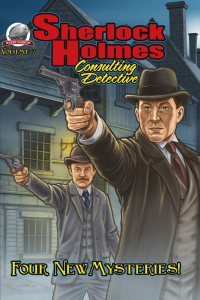
A lot of what I’ve written has historical settings. ST GEORGE AND THE DRAGON Books 1 and 2, from Chillwater Press, are set in 3rd century Roman Africa. The ROBIN HOOD books are based in 12th century England. Holmes has a Victorian setting. Even alternate-history stories, like my BYZANTIUM fantasy novella series from Pro Se Press has historical foundations; in that case set around A.D. 1000 in a world where Christianity never emerged and magic never went away. I find that researching the era helps me shape the characters and the plot. It gets me into the mindset for how stories happening in that time and place should go.
I also tend to draw maps or even sketches of the characters and places I’ll be using. Sometimes I mock up cover images. It all helps me get into the zone, and it informs the story.
Some writers listen to music or read similar works to prepare. I find that I can’t read or listen to anything too close to what I’m trying to write because it draws me off my game. I have a stack of great literature piled up ready to read some time that I’ve had to avoid so as not to get sidetracked.
 Are you a full time writer? If so when did you make the decision and what factors led to the decision? If you are not a full time writer…Is your plan to one day being a full time writer?
Fiction writing started out as a stress-relief hobby, because it requires a very different skillset to running a company. These days I make my living as a consultant management troubleshooter or project starter, which requires me to be very hard and very forceful and to think like a dyspeptic accountant. Writing involves me sitting alone in my study, thinking about wonderful worlds far from corporate takeovers.
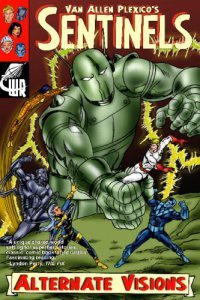
I resisted being published for years, fearing that if my hobby became another job it would stop being a hobby and an escape. Eventually I got sucked in to print – starting with a tiny story in White Rocket Books’ superhero anthology SENTINELS: ALTERNATE VISIONS – and discovered that having a wider audience and a paycheque didn’t necessarily interfere with the fun.
I’m lucky in that I get paid an obscene amount of per diem for consultancy work, so a couple of days average a week covers my bills and the rest can be writing. The only way I could afford to be a full time writer is to be successful enough to match that income, and for that I’d need to be the next Stephen King or Terry Pratchett.
What is your daily writing time like?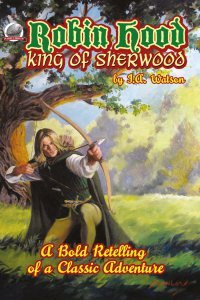
There’s a narrow window to get started. I crawl out of bed into the bathroom, then feed the cat, then make coffee. At the computer I check e-mails and look at five sites – Girl Genius, Order of the Stick, Darths and Droids, Something Positive, and the Doctor Who News page. Then I get writing. If I miss that window it is really hard to start later. I also find that I can’t mix consultancy work days with fiction writing days because the mental switch is too great, and I even struggle between writing days and proofreading days.
Once I’m writing, I keep going until I get distracted. On a typical day I’ll get about 4000 words of first draft or 5000 words of second draft done, though I have been known to get up to about 6000 words a day when I was really inspired. A novel usually takes me about 35 days.
Can you tell us about your publishing experience? Are you Indie, Traditional, or do a bit of both?
I’m so far out of the loop on publishing that I had to stop and think about what Indie and Traditional meant. My general policy is that I write either because I want to tell a story from an idea I had or because somebody asked me to write a story on a particular topic.
 So, my novels SIR MUMPHREY WILTON AND THE LOST CITY OF MYSTERY and THE TRANSDIMENSIONAL TRANSPORT COMPANY were books no-one asked for, just stories I needed to tell. Few editors say, “Hey, how about a book about an eccentric World War II secret agent with a time-mangling pocketwatch?” or “Ian, we need you to do an urban SF novel featuring an outfit that delivers packages to alternate universes. Stat!”
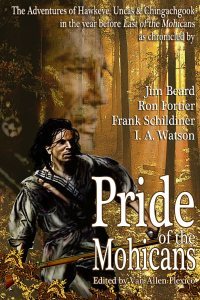
Conversely, stories like “The Fort of Skulls” in White Rocket’s PRIDE OF THE MOHICANS, which won Best Pulp Short Story in this year’s Pulp Factory industry awards, or “Blood-Price of the Missionary’s Gold” in Pro-Se’s NEW ADVENTURES OF ARMLESS O’NEIL, or “Famous Monsters of World War II” in Mechanoid Press’ MONSTER EARTH, or “Prey of the Mask Reaper” in Moonstone’s THE SPIDER: EXTREME PREJUDICE were all written to order. I like doing that kind of work too because it imposes disciplines and subject constraints on me that stretch me as an author.
Most of my experience has been with small-press publishers. More recently, as small-press publishers haven’t been able to keep up with my output rate, I’ve also tried independent publishing. I’ve found the latter to be a bit more time-consuming and technical than I’m comfortable with, and I certainly haven’t cracked how to market those works, but I enjoyed the freedom.
Everyone likes to know where an author gets their ideas from, but what I want to know is what is the strangest thing to inspire one of your stories?
I’m amazed how many ideas from childhood games and from bedside stories I told my children have made their way into my works. Storylines from make-believe my friends and I played when we were kids have informed my SF work in THE MANY WORLDS OF ULYSSES KING and its forthcoming sequel. A tale I wrote to amuse my infant daughter and son informed the adult novel THE LABOURS OF HERCULES, due out just before Christmas.
The strangest thing, though, was probably a spooky event from when I was around seven or eight. My mother took me on holiday to some tiny little seaside resort – think Innsmouth but on the east coast of Yorkshire, England. It was a strange place, tide-washed and seagull-haunted. We had a flat above a shop on the high street, with a view across at the shops opposite, all lit at night by the rotating beam of a lighthouse literally at the end of the road. My bedroom had a single bulb with a wicker shade that cast cobweb shadows over the ceiling when the wind blew it. Assuming that was the wind.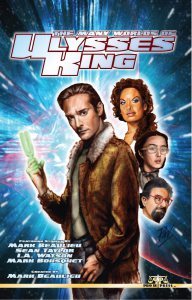
The place was inherently spooky, both the rooms we were staying in and the town as a whole. On our last night there, mum and I were sitting in the kitchen/dining room playing cards. The light went on in the upper room of the shop across the road from us, the equivalent space to where we were. It was a storeroom above a butchers, and we could see pig carcases hanging on meathooks, with the butcher moving about between them.
Then, right by the window, there was a huge hairy hand. This was before Star Wars or I’d have said it was a Wookie arm. The thing was huge, a couple of feet of it sticking out from one side of the frame. The hair was shaggy and matted, covering even the fingers and thumb. At least that’s what I saw. Mother thought it was maybe a grinning goats’ head. Neither of us could work out what the hell it actually was. The butcher gave no indication of noticing it was there, even through the arm was slowly waving up and down as if it was trying to hail a taxi.
We watched for maybe a minute before the butcher’s light went off and we could see no more. In that time I had a feeling of absolute alien terror, as if I was seeing something I was not meant to view. Mum was pretty troubled too, though she laughed it off afterwards and assured me it was just some hanging carcass that the butcher had disturbed. And it probably was. But I haven’t forgotten that moment of existential terror as the normal world dropped away, and when I really want to seriously write horror then that is the moment I go back to. Readers have to feel like that!
 Can you tell us about some of your other writing (fiction or nonfiction) and any appearances or signings that you have planned?
I get asked to speak in public a lot, but rarely about my writing. I’m so far out of the writing community that I have never met any published author. I’ll be attending my first ever convention, FantasyCon 2015, in Nottingham, UK, in October of this year.
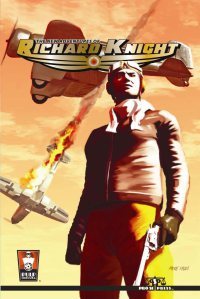
Upcoming publications that I haven’t mentioned yet include WOMEN OF MYTH, an anthology all by me reinterpreting some classic legends and fairy tales (due out in August), BYZANTIUM: REBELS RUN, BYZANTIUM: GHOST ARMIES, and BYZANTIUM: SHATTERED BONDS, PREMIUM DELIVERY TO THE CENTRE OF THE EARTH, THE NEW ADVENTURES OF RICHARD Knight volume 3, HOLMES AND HOUDINI (probably next year), and some stories in anthologies.
As an author what inspiration or advice would you give to a writer who is working to make the transition to Author?
I doubt I’m a very good example to give that kind of advice, but if I had to choose something I’d go with “professionalism”. A pro will work through the tough patches, will show discipline to finish things he or she has started (ending stories is a major part of the skillset and it needs practice), will deal with peers and publishers with courtesy and integrity, will add that bit of extra polish on every product, and will prioritise the work to be sure it is done and done right. Few people want to be a bad author or a sloppy author. Professionalism is the key to being the kind of author others want to work with, want to promote, want to contract, and ultimately want to read.
Who is your favorite author? Tell us what makes this author stand out in your mind, and what book would you recommend to someone new to that author?
Favourite authors vary depending on my mood, but favourites from my youth to which I return again and again are Tolkein, M.R, James, T.H. White, Dorothy L. Sayers, Anne McCaffery, and Stan Lee, and the books Watership Down, The Good Companions, Three Men in a Boat, and Carnacki the Ghost Finder.
More recent favourites include Neil Gaiman, Terry Pratchett, Jack Campbell, Lindsay Davis, early Tom Clancy, and Lois McMasters Bujold.
For one book that is a masterclass in how to introduce characters, world-build, show action and emotion, and tell a damned good story I would point would-be authors at Lois McMasters Bujold’s The Hallowed Hunt. Better stories have been written (though not that many), but for someone looking to pick up writing pointers that book has a lot to offer.
A full list of I.A. Watson’s works appears along with previews and free stories by clicking here.



May 28, 2015
Interview with J. Walt Layne — Breathless: A Tale from Champion City
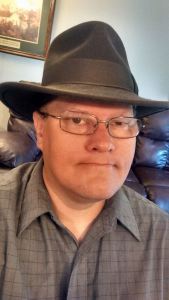
J. Walt Layne lives in Springfield, Ohio. He is a veteran of the US Army, a married father of three, and a voracious reader. A prolific writer, he is the author of Frank Testimony a legal thriller set in Bedford, Mississippi in the 1950s. He is also the author and creator of The Champion City Series of pulp detective stories to be published exclusively by Pro Se Press (March 2013). He has written a laundry list of articles for Backwoodsman Magazine and is the former Op-Ed columnist for The Albany Journal (Albany, Georgia). You can catch up with him on Facebook as Author J Walt Layne.tom
Interview with J. Walt Layne
author of Breathless:
A Tale from Champion City
5/22/2015
Thank you for inviting me to your blog. (Looking around) Nice digs…
What is your current release and (without spoilers) tell us about the new book or series.
Ha… No spoilers? I have a number of things in the pipe, One from Pro Se, one from Airship 27, late this year maybe a little something for those who follow my outdoor, How-to and DIY work. Earlier this year the first volume of my Pro Se Single Shot- from the Pen of J. Walt Layne, Hard Up! was published and My first horror/ adventure The Wendigo of Black Lake was published in Monster Aces 2. I have a story in Airship 27’s upcoming Secret Agent X Vol. 5. So much exciting stuff going on this year. 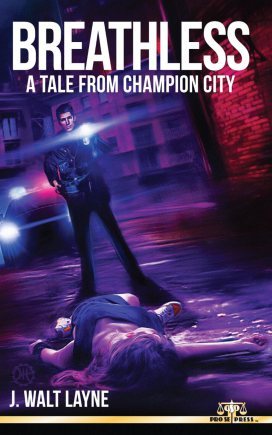 I think the project I am most excited about right now is the Secret Agent X. This was my first attempt at writing X… I enjoyed it very much because X’s legacy isn’t as vague as some of the classic characters which made research a joy. I started with reading all the classic stuff that was available on Project Gutenberg and finished with two volumes of the Airship 27 Secret Agent X to me sure I got the flavor and texture right… My story is set in New York and I tried to maintain that turn of the century, innocent pursuit of a new life membrane, stretched thin over a sinister framework. Keep an eye out for Dead Men Don’t Lie in Secret Agent X Volume 5, coming soon from Airship 27.
What is the usual process for your writing? Are you a plotter or a pantser?
It really depends on what I am writing… If I am writing a short story for an anthology I use a more strict approach than for a novel. I’m most comfortable telling a 90,000 word story, but the small presses shy away from 320 page books… When I am writing articles or projects I’m very strict and have a template I developed to keep me on track. However, aside from an abstract that I write to get the idea for a novel fleshed out a bit, I generally write novels without restriction. Flying by the seat of my pants is a good way to put it…
Once you have an idea that sparks your imagination do you research your idea or do any world-building exercises, or do you just begin to write and see where the Muse takes you?
I hate to repeat myself, but it depends. Sometimes I sit down and the story literally overflows and I fight to keep up. Other times when I want to try something new, or I’ll sign on to write for an anthology that is something out of my comfort zone. This way I can learn something new, I always say I’m a storyteller learning to be a writer.
Are you a full time writer? If so when did you make the decision and what factors led to the decision. If you are not a full time writer…Is your plan to one day being a full time writer?
Yes, I do write full time, matter of fact until January of this year I worked eight hours a day, six days a week. I’ve had some health stuff come up and frankly I’ve slowed down to a point where the one book a year crowd might call me a loafer. For me, I’ve always been a writer, I was a soldier and I have done just about every crappy job there is. My wife and I were in business and when the economy crashed we were out of business and unemployed. My coming home to write full time really came out of necessity to be here for our children. I always wanted to write fiction, but I started selling outdoor articles right off. If I hadn’t met Tommy Hancock who I both thank and blame for any success I might have, we might not be having this conversation. 
What is your daily writing time like?
In the summer I hit it early so that I can have a respectable amount of work done by time the kids are up and ready to go to the pool, hiking or read and complain while I try to fish. From September to May I have days to myself while everyone is at work or school, so I try to make diligent use of the time. I don’t aim for a specific word count. It used to be important, but I’d rather tell a story you can’t put down than hit a word count exactly and have 20 percent filler. I like music sometimes, sometimes quiet. I like drinking my coffee on the balcony in the morning and hammering off a couple of thousand words. I don’t drink alcohol anymore so I can’t say if it hurt or helped.
Can you tell us about your publishing experience? Are you Indie, Traditional, or do a bit of both?
I self-published back when it was still a stigma. I had an adversarial mentor who did a lot in the way of discouraging my efforts and by the time I got an approving word a decade later, she was already terminally ill. I’ve assisted others in self-publishing, done some formatting and packaging, but frankly I just want to tell stories. I learned being in business that if I work hard then I don’t have to work with people I don’t like. I love the publishers I work with currently. I recently fired one who made me a lot of promises that turned out to be fiction. I keep thinking about starting a small publishing concern, but I don’t have the patience.
Everyone likes to know where an author gets their ideas from, but what I want to know is what is the strangest thing to inspire one of your stories?
Geez, do you want me to tell you where I hid the bodies, or just show you the shovel… I find inspiration in often depressing places. A military funeral, the report of the death of Princess Diana and newspaper articles following a string of unsolved murders. The strangest, I’d have to say is when I was trying to write a first ten submission script for an Indiana Jones film festival. My script, Indiana Jones and The Tree of Life was lousy, because I ran aground on historical research that would later become a pet project I can’t tell you about yet.
Can you tell us about some of your other writing (fiction or nonfiction) and any appearances or signings that you have planned?
I have a dozen unpublished projects in the drawer. Probably research for 50 more… I’m a polymath so research is fun for me… I have lots of things going. Last fall I did a writing workshop, some of my students still contact me from time to time. I have a signing coming up at the new bookstore in town but the calendar is loose. I had the year completely scripted, but that all sort of changed. 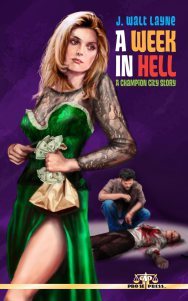
As an author what inspiration or advice would you give to a writer who is working to make the transition to Author?
Never quit. Never stop learning. People who discourage you make great villains and victims in your story. Submit far and wide, you don’t know where your first break will come from. Read the work of your peers. If you haven’t inked a four book deal with a seven figure advance, you might want to listen to an editor’s criticism.
Who is your favorite author? Tell us what makes this author stand out in your mind, and what book would you recommend to someone new to that author?
I have a lot of favorites, but I’ve learned a lot of writing by reading David Morrell. His style is direct and no nonsense. I’ve never read anything of his that left me with that feeling that I should have spent my time watching paint dry. I could recommend a lot of his books, you can’t go wrong with Morrell. If I have to select a title, I’ll suggest The Spy Who Came for Christmas, It doesn’t continue anywhere else and is a very fun read. From there you can decide what to read next, he has some excellent series and breathtaking stand alone works.
If you would like more information about J. Walt Layne and his books look on Amazon, Facebook, Twitter, or his website.


May 22, 2015
Interview with Chuck Miller — Tales of the Black Centipede
Chuck Miller was born in Ohio, lived in Alabama for many years, and now resides in Norman, Oklahoma. He is a Libra whose interests include monster movies, comic books, music, writing, and getting paid for writing, which is the most elusive beast of them all. He holds a BA in creative writing from the University of South Alabama, and little else.
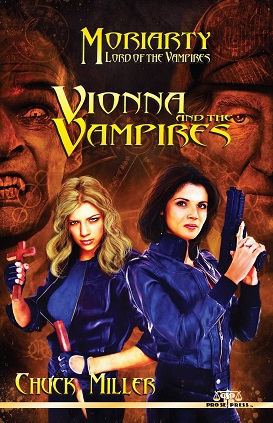
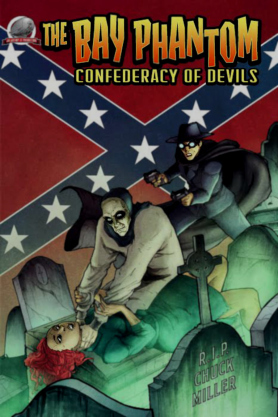
He is the creator/writer of Tales of the Black Centipede, The Incredible Adventures of Vionna Valis and Mary Jane Kelly, The Bay Phantom Chronicles, and The Mystic Files of Doctor Unknown Junior. He has also written stories featuring such classic characters as Sherlock Holmes, Jill Trent: Science Sleuth, Armless O’Neil, The Griffon, and others.
Interview with Chuck Miller
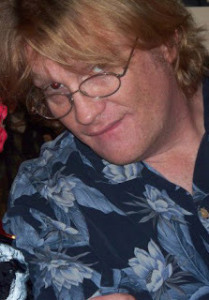
author of Tales of the Black Centipede
5/22/2015
What is your current release and (without spoilers) tell us about the new book or series.
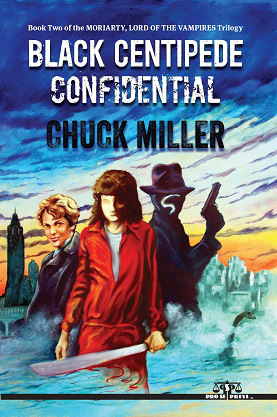
“The Return of Little Precious” will be coming out at some point in the not-too-distant future. It is the first Doctor Unknown Junior novel and the third part of the Moriarty Trilogy. Little Precious is a bizarre cybernetic terrorist, a binary consciousness that inhabits two bodies– a nine-year-old girl named Jessie Von Cosel and a small, ultra-sophisticated robot. She killed two million people worldwide before being deactivated and locked away. Now, eleven years later, the deadly Little Precious persona appears to be coming back online. Doctor Dana Unknown and her partner Jack Christian are called in. Dana is the daughter of the original Doctor Unknown, who was featured prominently in “Black Centipede Confidential,” and Jack is a reckless, alcoholic former superhero kid sidekick. I won’t give away too much, except to say that Moriarty is a part of the story, and there are a few surprises– including the revelation of Dana’s most shocking secret.
I’ve also got a Sherlock Holmes novel coming out from Airship 27, but I don’t know exactly when that will be.
 What is the usual process for your writing? Are you a plotter or a pantser?
Both. I always have at least a vague idea of where a story is going, and sometimes I have a very detailed one. But they almost always end up going somewhere else. I think some kind of structure in the beginning is essential, so you’ll have something to twist all out of shape. If I think I know where I’m going, I can proceed with more confidence, but I’m always prepared to let random factors change the course. I almost always get to the ending that I originally envisioned, but I arrive there by an unexpected route.
Once you have an idea that sparks your imagination do you research your idea or do any world-building exercises, or do you just begin to write and see where the Muse takes you?
I almost always do some kind of research. Usually a lot. It’s good that you don’t actually have to go anywhere to do research nowadays. Sometimes, in fact, I do too much– I get caught up in something I’m researching, and take all kinds of side roads with it, and forget about the story for a while. And the research itself can play the Muse and lead me in new directions. I use a lot of real-world characters and events in my stuff, and when I’m researching them, I often find things that suggest new wrinkles for the story.
 Are you a full time writer? If so when did you make the decision and what factors led to the decision? If you are not a full time writer…Is your plan to one day being a full time writer?
I devote a lot of time to it, possibly more than some people devote to a full-time job, even when they’re there every day. My goal is to one day be able to support myself with it. Which I actually could do now, if I gave up extravagances like food and shelter.
What is your daily writing time like?
I start at about nine every evening and keep going until I can’t continue. Sometimes I only get an hour or two, sometimes twelve or more, depending on how it’s going. Some days I have to force out a few paragraphs, other days I can hardly type fast enough to keep up.
Can you tell us about your publishing experience? Are you Indie, Traditional, or do a bit of both?
Thus far it’s been mostly indie, spread out among several small publishers. Most of my work, all the Black Centipede and related stuff, has been for Pro Se Productions. The new Bay Phantom series is with Airship 27. And I’ve done work for a few other companies.
Everyone likes to know where an author gets their ideas from, but what I want to know is: what is the strangest thing to inspire one of your stories?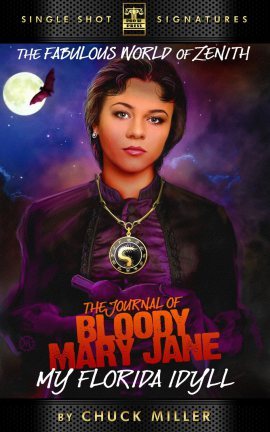
That’s a tough one to answer. One of the most peculiar true stories that I have incorporated into my work is that of “Count” Carl Von Cosel and Elena de Hoyos. It’s a disturbing tale, even a little bit sickening. To cut a long story short, Von Cosel was working in a hospital in Key West Florida in 1931, when he developed an obsession with Elena, a young tuberculosis victim. After she died, he dug up her body and tried to return her to life. He ended up keeping her in his house for about seven years, performing weird procedures, and replacing her decaying flesh with wax. Eventually, the authorities got wind of it and had her taken away and reburied.
Jessie Von Cosel, aka Little Precious, is Carl’s granddaughter, and Carl and Elena both figure into the story.
Aside from that, I have had stories that were inspired by things like broken toys I’ve found and online mistranslations of phrases.
Can you tell us about some of your other writing (fiction or nonfiction) and any appearances or signings that you have planned?
I’m working on the second installment of the Bay Phantom series from Airship 27. There are a couple of other things that I can’t mention just yet, but one of them is something I’ve wanted to do for about 40 years.
 As an author what inspiration or advice would you give to a writer who is working to make the transition to Author?
Just keep at it. Use every opportunity you can find or make to get your work out there. Blogs, social networking sites, whatever. Don’t be afraid to approach publishers or other writers. And you have to really want to do it. If you’re looking to get rich in a couple of years, you’d be better off robbing banks. Money has never been a prime consideration of mine– I’m in it for the ego gratification.
Who is your favorite author? Tell us what makes this author stand out in your mind and what book would you recommend to someone new to that author?
There isn’t just one. But if I absolutely had to pick, I’d probably say Flannery O’Connor. Her characters are so relentlessly, brutally human, they can be hard to take at times. They are very starkly ordinary, complete with the horrible thoughts and attitudes that everyone has, but no one wants to think or talk about. She really doesn’t cut the reader any breaks. I try to take the same approach to my own characters. Their flaws are very prominent, and while they do sometimes learn lessons, they never come close to being perfect in any sense. If you want to write honestly, Flannery is an excellent role model. I would recommend one of her short story collections to a new reader, “A Good Man Is Hard to Find” or “Everything That Rises Must Converge.” Both, I think, are equally representative of what she does best, more so than either of her novels.
The books that have influenced me most in terms of narrative voice are “Fear and Loathing in Las Vegas” by Hunter S. Thompson, “Junkie” by William S. Burroughs, and the Nero Wolfe stories by Rex Stout. Echoes of Archie Goodwin can be heard in the Black Centipede and Doctor Unknown stories.
If you would like more information about Chuck Miller and his books look on Amazon, Twitter, Facebook, Goodreads, or his website.


May 11, 2015
Interview with Vered Ehsani — The Automaton’s Wife
Vered Ehsani has been a writer since she could hold pen to paper, which is a lot longer than she cares to admit. She lives in Kenya with her family and various other animals. When she isn’t writing or running a radio show, she pretends to work as an environmental consultant. Visit Vered and her world of African paranormal thrillers and get a free book.
Interview with Vered Ehsani

author of The Automaton's Wife.
05/11/2015
What is your current release and (without spoilers) tell us about the new book or series.
My most recent novel is the second in a series concerning dead husbands, African legends and the search for a perfect spot of tea. I wrote it for those readers who adore “Pride & Prejudice” and would love to experience “The Parasol Protectorate” set in colonial Africa. So basically I wrote it for myself.
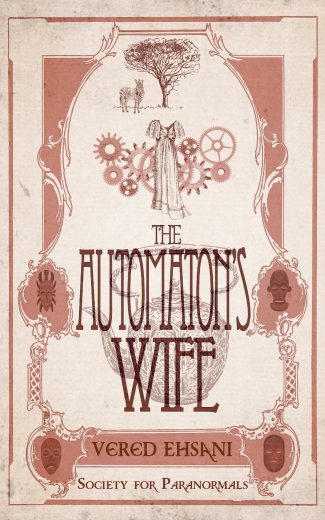 In Book 2 The Automaton’s Wife Beatrice Knight has enough to contend with: a zebra is dead on her lawn, her horse is possessed and a gentleman has arrived with the temerity to propose to her. To top it off, her dead husband Gideon has absconded with an automaton, threatening to return for his wife. The wife in question however soon has other issues, for a killer has moved into town with a nasty habit of carving up the victims. As luck should dictate, who should be the next target but Mrs Knight herself?
The first in the series is Ghosts of Tsavo it introduces paranormal investigator Beatrice Knight as she travels to colonial Kenya and lands herself in the middle of a mystery involving man-eating lions and other inconveniences. Armed with Victorian etiquette, a fully loaded walking stick and a dead husband, Mrs Knight is desperate for a pot of tea. What she ends up with are the machinations of her best friend’s dashing godfather and the efforts of her safari guide to feed her to the lions.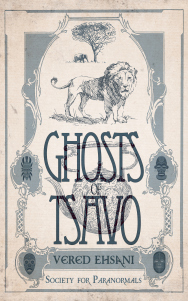
What is the usual process for your writing? Are you a plotter or a panther?
Oh my, such a personal question! I’m a bit of both. I do sketch out the overall flow of the story, the major plot points, characters, important directions, that sort of thing. But in the writing process, some intriguing little detours pop up, and often I didn’t see them coming. For example, I had no idea Mrs Knight felt that way about a certain person whose name shall go unmentioned.
Once you have an idea that sparks your imagination do you research your idea or do any world-building exercises, or do you just begin to write and see where the Muse takes you?
For this series, there was quite a bit of research. I needed to study not only the historical facts around Kenya of the time, but also Victorian dress and conduct, East African culture and myths, the general events of the time that may have impacted on decisions and attitudes etc.
 Are you a full time writer? If so when did you make the decision and what factors led to the decision. If you are not a full time writer…Is your plan to one day being a full time writer?
It depends. I’m a consultant, which means I’m either overworked or unemployed. When I’m unemployed, I write full time. When I have a contract, not so much.
I love writing, but I also love being out in the world, so I don’t imagine I’d want to be a full time writer.
What is your daily writing time like?
My schedule, when I’m not working on a contract, is not much different than if I do go to work elsewhere. In other words, I treat this as a business, so I sit down and do the work for several hours.
 Can you tell us about your publishing experience? Are you Indie, Traditional, or do a bit of both?
Mostly Indie, although I have a couple books through small publishers (one in Europe, the other in India). I love being independent and controlling what my book looks like, when it will be released etc.
Everyone likes to know where an author gets their ideas from, but what I want to know is what is the strangest thing to inspire one of your stories?
A cup of tea. Tea is very important to me, and it is to Mrs. Knight as well. It also inspired my first Indie book – Diary of a Part Time Ghost – which is all about the Boston Tea Party (the historical event, not the political party).
Can you tell us about some of your other writing (fiction or nonfiction) and any appearances or signings that you have planned?
My other books have for the most part also been in the paranormal sphere (apart from a brief dabble into Sci-Fi, but it still had a bit of the unworldly involved).
If you come visit me in Kenya, I’d gladly sign a book for you!
 As an author what inspiration or advice would you give to a writer who is working to make the transition to Author?
Keep writing! Also a book I’d recommend highly is “Write. Publish. Repeat.” Practical and to the point.
Who is your favorite author? Tell us what makes this author stand out in your mind and what book would you recommend to someone new to that author?
One of my favorite books is Pride & Prejudice, and one of my favorite authors is Elise Stokes. Her Cassidy Jones series is awesome. But quite honestly, I have so many books and authors that I enjoy.
If you would like more information about Vered Ehsani you can visit her website, blog, Facebook, Twitter, Amazon, or Goodreads.


April 30, 2015
Interview with James Palmer — The Clockwork Conundrum
James Palmer is a 2014 New Pulp Award-nominated author, editor and publisher. He has written articles, interviews, reviews, columns, and poetry for Strange Horizons, The Internet Review of Science Fiction, Continuum SF, RevolutionSF.com, SciFiKuest, andBlood Blade and Thruster: The Magazine of Speculative Fiction and Satire, among others.��James also edited the charity anthology Voices for the Cure, which benefits the American Diabetes Association, and features work by Robert J. Sawyer, Mike Resnick, Cory Doctorow, and others.
Interview with James Palmer
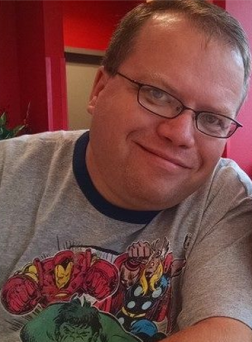
author of The Clockwork Conundrum
4/30/2015
Tell us about your newest release or series, and where should a new reader of your books be best suited to begin reading their way through your back catalog?
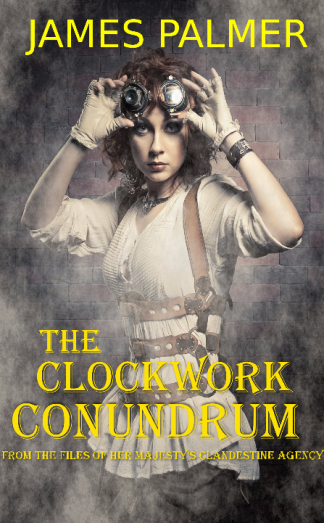 My newest release is a steampunk short called The Clockwork Conundrum: From the Files of Her Majesty���s Clandestine Agency. It���s about a young woman named Sarah Frost�� and a plot by beings from the future to take over the British Empire. I intend for it to be a series of novellas. A great way to get acquainted with my work is through my short story collection Into the Weird, which features most of my previously published Pulp and New Weird stories.
It seems writers today have to publish more often than in the past to really make a living. How do you manage your time? What length of works do you write…mostly novels, novellas, short stories, or flash?
So far I���ve only written short stories and novellas, and edited a few anthologies. I���m still learning to tackle things at novel length. I think the great thing about indie publishing and e-books is that length is no longer that much of a factor. Readers only want good stories. They don���t care about arbitrary lengths invented by traditional publishing.
Authors today seem to need a social media platform that covers everything from Q&A posts to video; what do you think the fledgling authors need to focus on to get on the right track with social media?
I think authors need to do what is comfortable to them, and not get overwhelmed. Pick one or two platforms and get comfortable with those before moving on to something else.
Actually, I���d suggest authors create and nurture their own email list of readers interested in their work. Social networks constantly change the rules so that it is harder to reach potential readers. If you own your list, you are in control, not Facebook or Twitter.
If you could go back in time to when you were just starting out, what advice would you give yourself? What pitfalls would you steer away from?
I stopped writing fiction for a long time and focused instead on freelance nonfiction writing. If I could go back I would tell myself to keep going so I���d be ready with plenty of material when Amazon first launched the Kindle and self-publishing first became a truly viable option. I would tell myself to take the long view.
How important is it that authors do the Convention circuit? When in a career do you think con appearances become a valuable tool?
I think writers should take advantage of con appearances as soon as possible. Even before they have written enough to become guests, they should go as attendees and go to writing panels and network and get to know people. I have met so many fellow writers as well as artists, podcasters, and potential readers, not to mention some of the best friends I���ve ever had. I���m the writer I am today because of people I met at Dragon Con and a few smaller cons years ago.
 Do you consider yourself a indie/traditional/both?
Right now I���m definitely indie. I doubt I will ever go traditional, but if a good deal came along I wouldn���t pass it up.
Getting books into audio is the latest thing that writers seem to be learning how to do. Are your books available in audio format? And if so how was the recording produced?
I have one short story in audio, part of a magazine published by Pro Se Productions and produced in audio by Dynamic Ram. I haven���t gone the audio route yet, but if I write a novel that becomes popular I will definitely look into creating an audio version. ACX make it very easy to do audio now.
If you enjoyed this interview with James Palmer��be sure to read my first interview with the author.��You can get��more information about his books on��Amazon, and updates about his writing on Facebook,��Goodreads��, Twitter, and on his��website. You can also find out more about Mechanoid Press by Twitter, Facebook, or on the website. ��
When you��sign up for James’ newsletter either on his personal site or the Mechanoid Press site you will��get a free e-book. ��Go to��jamespalmerbooks.com or mechanoidpress.com and entering your��email address in the box on the right.


April 23, 2015
Interview with Percival Constantine — Vanguard
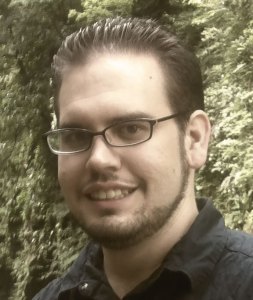
Born and raised in the Chicagoland area,��Percival Constantine��grew up on a fairly consistent diet of superhero comics, action movies, video games, and TV shows. At the age of ten, he first began writing and hasn’t stopped since.
Percival has been working in publishing since 2005 in various capacities���author, editor, formatter, letterer���and has written books, short stories, comics, and more.��He��has a Bachelor of Arts in English and Mass Media from Northeastern Illinois University and a Master of Arts in English and Screenwriting from Southern New Hampshire University. He currently��lives in Japan���s Kagoshima prefecture, where he��works as a literature and writing instructor at the Minami Academy.
Interview with Percival Constantine
author of The Vanguard series
4/23/2015
What is your current release and (without spoilers) tell us about the new book or series.
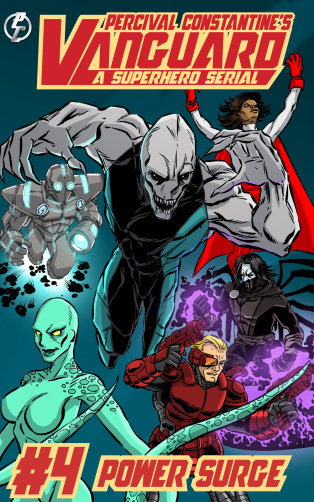
I just released Vanguard #4: Power Surge. This is the fourth episode of my superhero serial, Vanguard. The first episode, Come The Exemplar, introduced the world of the series. A mysterious event has somehow triggered the development of superhuman powers in a small percentage of the population. To police these beings, called specials, the President of the United States has ordered the creation of a secret team of superheroes, called Vanguard.
The latest episode sees the team going up against a powerful special named Lucent who can absorb and redirect energy in a variety of forms. Lucent was being experimented on by a research company, and a mysterious threat that���s been lurking in the background since the first episode is involved as well.
 What is the usual process for your writing? Are you a plotter or a pantser?
I used to be a pantser, but after writing myself into a corner with several projects and abandoning them, as well as struggling with other projects when I got to a certain point, I decided it was time to start plotting.
My process is to first jot down notes and story ideas in a notebook. When I���m ready to start seriously plotting out, I sit down at my computer and type up a full synopsis of the entire story in Scrivener. I then break that synopsis down into individual scenes (also in Scrivener). Sometimes if I���m struggling with scene order, I���ll write the scene ideas on index cards and post them up on a corkboard, working out the order and seeing what���s missing.
Once you have an idea that sparks your imagination do you research your idea or do any world-building exercises, or do you just begin to write and see where the Muse takes you?
It depends. Most times when an idea occurs to me, it���ll be for a project that will come later on down the line when I can fit it into the schedule. So I make a note of it in my notebook and come back to it later.
The Myth Hunter series requires a bit more research than the others, so I���ll do research on the legends that I think might serve as the basis of an interesting story. My Luther Cross series may also sometimes require a little more research into the supernatural phenomenon I���m going to write about. But with Vanguard and Infernum, those ideas come more from characters and situations.
I don���t really engage in any world-building exercises. I think of the characters that I want to include in the story or the plots I want to explore and go from there.
 Are you a full time writer? If so when did you make the decision and what factors led to the decision. If you are not a full time writer���Is your plan to one day being a full time writer?
I���m not full-time yet. At the moment, I���m a teacher and I also do a few other side jobs in addition to writing. Ideally, I���d like to get to the point where the bulk of my income is generated by writing, but I���d still like to teach a few classes a week.
What is your daily writing time like?
Lately I���ve been writing more in the morning. I find it���s a lot easier to get it out of the way first thing. Waiting until night (like I used to) resulted in a lot more missed days because I felt too tired.
I write in Scrivener, which is wonderful because it allows me to keep everything I need in one place, tracks my word count, and helps me minimize distractions. To further minimize distractions, I���ll run a program called Anti-Social as I write to block social media, email, and any other websites I specify. I write with the Pomodoro Method, which says you do twenty-five minutes of work followed by a five-minute break.
My daily writing goal is 1000 words. Usually I���ll manage to hit that in about an hour or so.
 Can you tell us about your publishing experience? Are you Indie, Traditional, or do a bit of both?
I entered the publishing world in 2005, working as an editor for Making Comics Studios. I self-published my first novel, Fallen, in 2007 and shortly after that, I started writing and lettering comics for a variety of publishers, including AC Comics.
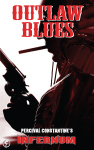
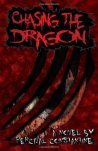 My next book, Chasing The Dragon, followed in 2008. Then in 2010, I published Love & Bullets and became part of the New Pulp movement. My output was slow at first, only putting out a novel or novella a year. But with this year, I���ve committed to increasing my backlist.
I���m currently writing four series, three of which are self-published and one which is published through Pro Se Press��� Single Shot Signatures line. Tommy Hancock approached me with the idea about contributing to the line, and I had actually been thinking of experimenting more with serials, so I decided to do one of my serial ideas for him.
Also beginning this year, I joined Nifty Entertainment, an author cooperative with Mat Nastos.
 Everyone like to know where an author gets their ideas from, but what I want to know is what is the strangest thing to inspire one of your stories?
That���s actually a very good question and to be honest, I���m having a hard time finding an answer! Most of my ideas come from pretty mundane sources and I don���t often remember where I got them from.
Can you tell us about some of your other writing (fiction or nonfiction) and any appearances or signings that you have planned?
I have four series I���m currently working on:
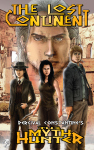 The Myth Hunter ��� A pulp adventure novella series centered on Elisa Hill. Elisa is a myth hunter, a type of adventurer who travels the world seeking out the various myths and legends. She���s often accompanied by Asami, a Japanese changeling, and relies on ancient weaponry. Curse of the Necronomicon is the third book, featuring the quest to find the Necronomicon, and set for release in June and now available for pre-order on all platforms.
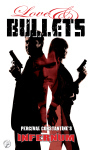 Infernum ��� An action thriller novella series centered on a criminal syndicate called Infernum. Each book focuses on a different protagonist working for the mysterious power broker known only as Dante. Gentleman Rogue is the third book, featuring a thief forced to work for Dante to obtain a biological weapon. That will be released in July and is available for pre-order on all platforms.
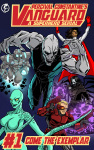 Vanguard ��� The aforementioned superhero serial. Each season of the serial consists of five novelette episodes, plus a special bonus episode that will be available to mailing list subscribers. Vanguard #5: Rise of the Red Fist concludes the first season, with Vanguard going up against a terrorist organization bent on world domination. I���m currently working on the second season, which will have a tentative release date of September. At the moment, the first season is only available on Amazon and if you���re a Kindle Unlimited subscriber, you can read the episodes for free. But soon, the series will be available on all platforms, including a compilation of the complete first season.
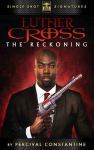 Luther Cross ��� A supernatural action short story series focusing on paranormal investigator, Luther Cross. Half-demon and half-human, Cross is a true anti-hero who uses his knowledge of the occult and his demonic powers and magical abilities for his own benefit. The third episode, Bloodlust, is in the hands of my editors at Pro Se and should be released shortly.
As an author what inspiration or advice would you give to a writer who is working to make the transition to Author?
Write because it���s something you love to do, not because you think it will bring you fame and fortune. Trying to make a go of it as an author means you have to clock a lot of hours sitting in that chair and banging away at a keyboard. It also means finishing what you start and moving onto the next project almost immediately.
If you want to be an author because you have a romantic notion of the author lifestyle or because you want to be one of those ���get rich quick��� Kindle success stories, you���re going to end up very disappointed.
But if you love telling stories and don���t mind a near-Sisyphean uphill climb, then sit in the chair and start typing.
Who is your favorite author? Tell us what makes this author stand out in your mind, and what book would you recommend to someone new to that author?
I have to pick one? In that case, I���ll go with Derrick Ferguson. Anyone who wants to know how to write a great pulp action book needs to read his Dillon series. He manages to combine stellar characterization with breakneck action and put it together in a package that, though familiar, sometimes seems brand new.
If you would like more information about Percival Constantine��and��his books look on Amazon, Twitter,��Facebook, Goodreads, or��his website.��


April 9, 2015
Interview with Tara Johnson — Hollow Victory
Tara Johnson is an author, singer, speaker from Alexander, AR. A passionate lover of stories, Tara shares her journey through depression and people-pleasing through fiction and nonfiction work, song and laughter.��
In 2004, she signed with Incubator Creative Group, a ministry-based record label out of Eugene, OR.�� Tara loves to travel to churches, ladies retreats and prisons to share her testimony of how God led her into freedom after spending years living shackled to the expectations of others as a preacher’s kid.
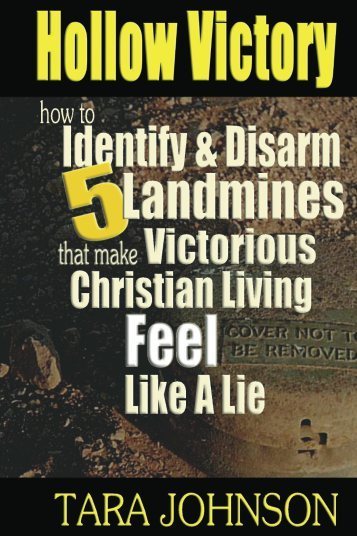
This past year has kept Tara busy writing both fiction and nonfiction and her latest book Hollow Victory: How to Identify and Disarm 5 Landmines that Make Victorious Christian Living Feel Like a Lie was released in 2014.�� She has won the Bronze Medal in the Frazier awards hosted by My Book Therapy and has articles published in Plain Truth Magazine and Live It Loud Magazine and has been a featured guest on Voice of Truth radio and Enduring Word radio. Tara is a member of ACFW and is represented by Janet Grant of Books & Such Literary Agency. She and her husband Todd have been married for seventeen years and the Lord has blessed them with five children:�� Bethany, Callie, Nate, as well as Taylor Lynn and Morgan Lane who are with Jesus.
Interview with Tara Johnson.

Author of Hollow Victory
4/09/2015
��What is your current release and (without spoilers) tell us about the new book or series.
My current release is Hollow Victory: How To Identify & Disarm 5 Landmines That Make Victorious Christian Living Feel Like a Lie. It’s a book birthed from my own pain as I struggled with depression, people pleasing and more. In 2002, I had the worst year of my life and continually kept thinking, “Lord, this is not the victorious life that you promised.” It felt hollow and empty. I had become exhausted from working so hard to keep everyone around me happy. God very tenderly showed me that those landmines that had exploded in my life were the result of, not just being a human in a broken world, but the culmination of what happens when I choose to replace God’s unconditional love with the conditional love of people. Hollow Victory is a book of hope for the hurting.
 What is the usual process for your writing? Are you a plotter or a pantser?
It depends on what I’m writing. For nonfiction, I’m a plotter but for all of my fiction work, I’m definitely a pantster! I like having a rough guideline of what will happen, and I develop in-depth character sheets for my main characters. (Thanks to Jody Hedlund for the brilliant character sheets.) By the time I’ve spent so much time living with my characters, the plot usually flows pretty easily. “Pantsering” can be scary though. With my first book, I thoroughly wrote myself into a corner for the climax. I stressed myself completely out! Finally, I pushed away from the computer and threw up my hands. “Lord, you’re going to have to fix this!” Boom! The next morning I woke up with a perfect finish in my mind, which was pretty cool because I knew that if I didn’t see it coming, my readers wouldn’t either! Being a pantser is faith-writing at its finest.
Once you have an idea that sparks your imagination do you research your idea or do any world-building exercises, or do you just begin to write and see where the Muse takes you?
Since most of my fiction stories are historicals, I do a lot of research before I ever start clacking away on the computer. I just recently got an idea for a story about a female Civil War spy. Typically, I spend a month reading everything I can find on the subject, as well as developing characters sheets. I try to keep myself immersed in newspaper clippings or books about that particular historical time while I’m writing the basic rough draft. As a history nerd, it’s a joy to be able to pick a topic that interests me and learn all I can about it. One of my latest manuscripts was all about women gamblers in the Old West. Now that was fascinating research!
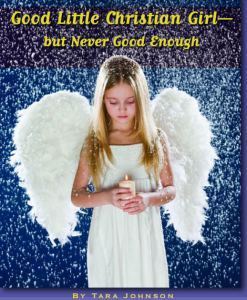
Click here to read Tara’s article, “Good Little Christian Girl���
but Never Good Enough” in Plain Truth Magazine
Are you a full time writer? If so when did you make the decision and what factors led to the decision?��If you are not a full time writer���Is your plan to one day being a full time writer?
If you look at the hours I log writing fiction or nonfiction, I would be classified as a part-time writer, especially since I’m a homeschooling Mom and have a speaking/music ministry as well. But between my writing, songwriting, blog posts, articles and various other things, I think it’s safe to say that I’ve morphed into a full time writer. Last month, I signed with Janet Grant of Books & Such Literary Management, which makes this writing ‘gig’ feel all the more real.
What is your daily writing time like?
I usually get up a couple of hours before my kids wake up and spend some time reading my Bible and praying before digging in to whatever is on my writing agenda for the day. Once they’re up, I spend the morning getting snatches of time here and there but don’t really get a solid chance to focus until after my little boy goes down for his afternoon nap. Then it’s another few hours of writing while he naps. One night a week, my awesome husband is good about letting me shut myself into my office for some special writing time. It works pretty well and forces me to really concentrate when I have those chunks of uninterrupted time.
 Can you tell us about your publishing experience? Are you Indie, Traditional, or do a bit of both?��
Hollow Victory was self-published through Createspace but I’m pursuing traditional publication for my fiction stories. The nice thing about self-publishing is the creative control you retain. An advantage of traditional publishing is having several people adding their input to make the story as good as it can be. Both are advantageous in their own way.
Everyone likes to know where an author gets their ideas from, but what I want to know is what is the strangest thing to inspire one of your stories?
One of my dearest friends is an older man in our church who has lived a colorful life. As a precocious country boy, he dreamed up more trouble than any child I know. One Sunday morning, he and his friend got up extremely early and caught a jar full of red wasps. They pulled the stingers out and then placed the angry wasps under the key lid of the church piano. When the pianist sat down and opened the lid to play the opening hymn, a flurry of red wasps flew out. The poor pianist screamed and fell backwards off the bench, her legs sticking up in the air! That very story, and my friend’s continual mischief, inspired one of my favorite characters in Marble Falls—Timmy Jenkins. The entire book’s plot was propelled forward by Timmy’s antics and yes, the red wasps and the irate pianist make their appearance in that book.
Can you tell us about some of your other writing (fiction or nonfiction) and any appearances or signings that you have planned?
I recently finished my sixth fiction story To Heal Her Heart, based loosely on the life of James McParlin, one of the Pinkerton’s most acclaimed detectives. The three book series is based out of Astoria, Oregon and set in 1880. The previous three book series was based out of Marble Falls, Arkansas and revolves around the quirky people living there—a frustrated U.S. Marshal, a headstrong debutante, a crazy Confederate soldier, a local busybody and a little boy who terrorizes the entire town. It was a fun series to write. I hated to say goodbye to the characters. I keep an active speaking schedule and you can always get up-to-date information about upcoming events at tarajohnsonauthor.wordpress.com.
 As an author what inspiration or advice would you give to a writer who is working to make the transition to Author?
First, surrender all of it, your writings, plans and dreams to God. He opens the doors no man can open and paves the way for amazing things when we give Him control. In the meantime, make your writing time a priority. No one will take your dreams seriously unless you do first. Carve out time to write, daily if possible. Read as much as you can and pay attention to the way your favorite authors write. You can learn a lot through observation and study. Buy some craft books on learning how to write. No one in any successful profession just magically wakes up knowing a skill set. Writing is a craft and must be learned, just like any other skill. With every book you read, try to learn one or two new things and apply them to your current story. You’ll be amazed how much you can learn in just a few short years.
Who is your favorite author? Tell us what makes this author stand out in your mind and what book would you recommend to someone new to that author?
That is the hardest question yet! I have a running list of favorites but at the moment, I would say Jody Hedlund. I’m eating up her books like wood going through a chipper!��The descriptive turn of her phrases and the elegant way she spins a story is both entertaining and inspirational. My favorite book of hers is The Noble Groom.
If you would like more information about Tara Johnson��you can visit her��website, blog, Facebook, Twitter, Amazon,��Goodreads, ReverbNation, YouTube, or Pinterest.��


April 2, 2015
Interview with Ann McCauley — Loved by Choice
Ann McCauley married her sweetheart, Randy, thirty-eight years ago. The McCauley���s have seven children (one in heaven), four internationally adopted from South Korea, the Philippines, and Siberia. Ann���s first stories were published by Baker/ Revell in the book, Loved by Choice���True Stories That Celebrate Adoption.
Interview with Ann McCauley.
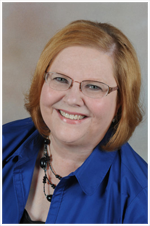
Contributor to Loved by Choice
4/02/2015
Thanks for featuring me this week, Lisa! I’m stoked. The year 2014, a year of revealing, has led to an exciting 2015 for me. After many months of waiting on whether I had secured a contract with two major Christian publishing houses, the wait is over. After climbing all the way to committee in both houses, my historical fiction was declined. But wait��� Did I say this was exciting?
Here���s the scoop. For more than eighteen years I have been working and honing my fiction writing craft. I obtained my agent in 2007. I now know? ��I am publishable. Which in a sense qualifies me for what I believe God is calling me to do.
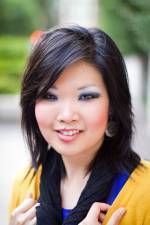 In September my daughter, Meg, and I launched a speaking ministry. The first time God nudged me about this was two years ago on my long commute to a summer ACFW Arkansas meeting.�� At the time, I couldn’t see myself doing this. I didn’t understand.�� And, I did nothing. Then in April of 2014, things became clearer. Who better to speak on rejection than one who���s experienced it over the course?�� Who better to understand the heart of the writer than one of its own? I believe God has anointed my heart to speak, write, and inspire many people on various topics, but especially other writers.
Last month when I received the final of the two rejections, I was engrossed in the Bible study, Breathe, by Priscilla Shirer. God used Priscilla���s words to bring me comfort. I chose to take my fiction and lay it on the altar before the Father.
My soul is brimming over. The speaker in my head longs to exhort others, teach them how to follow up on their callings, motivate them to rise to challenges, and inspire them to see God���s dreams for their lives through to fulfillment.
I love taking traditional writing ideas and exploring how God sees them. The Five Spiritual Senses in Your Writing is a workshop I taught recently to the Arkansas ACFW group. How do we create characters who demonstrate the LIFE of God without being preachy? Having been trained in the five natural senses and how they ground a story, I began to realize the spiritual senses play just as valid a role in story.
I am a busy mom of six adult children and a grandmother to five babies under the age of four. So, my writing time changes from day to day, depending on their visits. I work hard at being consistent as possible. My writing is an outflow of my quiet moments with God and I take my calling seriously and keep my goals moving forward. A good writing day consists of time to write and edit for several hours. When the family takes precedence, I try to stay in touch with my writer and reader friends through snatches of time on social media.
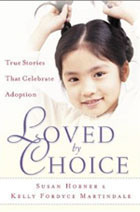 In Loved by Choice: True Stories that Celebrate Adoption by Susan Horner and Kelly Fordyce Martindale. ��I share the stories of my own children, adopted from South Korea, the Philippines, and Siberia.
My daughter, Meg, adopted from Seoul, South Korea at five months of age has grown into a beautiful woman, gifted artist, songwriter, and worship leader. She travels with me to large engagements when possible and shares her testimonies. Meg and I have also started 3-2-1 meetings in homes for smaller groups. If you live within four hours of central Arkansas, we would love to share with your church, writers group, women���s retreat, or conference. ��To hear samples of what we do, check out our speaker page at anncoopermccauley.com.
And, stop by my blogs at anncoopermccauley.com! I do my best to pray and pour as God leads. I have no greater desire than to bless you.
Ann���s Speaking Topics
Writer Workshops: Where Fiction and Nonfiction Intersect, Weaving Grace into Your Story, The Believing Writer and Rejection, The Five Spiritual Senses in Your Writing, Christian Publishing in Today���s World
General Topics: Whoa God! You Want Me to What?, The Loss of a Child: What to do When You’re Paralyzed, International Adoption and the Father���s Heart
Homeschooling Special Needs: Cast Your Net, When Homeschooling is Hard
Meg���s Speaking Topics
He Has Made Us Victorious Spirits,��Celebrate Your Singleness: Love is an Open Road,��Hi, I���m Megan, and I���ll be Your Server,��What? I���m Adopted!,��A Homeschooled Girl in a Secular World
If you would like more information about Ann and Meg McCauley you can visit them on their website, blog, Facebook, Twitter, LinkedIn, G+, Goodreads, or Pinterest.��


March 28, 2015
Interview with Ralph L. Angelo Jr. — The Cagliostro Chronicles
From his hidden lair somewhere on Long Island, NY the adventurer known to the world at large as Ralph L. Angelo, Jr. shares his fantastic life and adventures in thinly veiled novels that are really NOT about him, no, they���re not, really. Truthfully, not about him. Really…
Interview with Ralph L. Angelo Jr.

author of The Cagliostro Chronicles
3/28/2015
Tell us about your newest release or series, and where should a new reader of your books be best suited to begin reading their way through you back catalog?
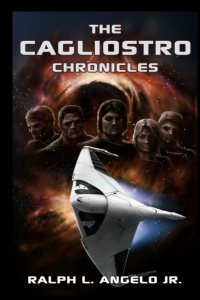
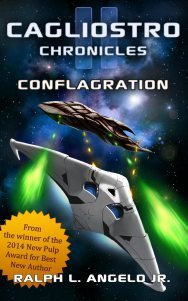
Hi Lisa, how are you? Thanks for having me back on your blog. My newest release is will be called ‘the Cagliostro Chronicles III-Into the Heart of Evil’ and is almost finished, at least on the writing end of things. Then it will have to be edited. The cover work has already begun. It is a continuation of my sci-fi/space opera saga. This series right now is planned as open ended, but the entire first adventure will culminate in book four. After that the series will take a different turn, but we won’t be able to talk about that for a�� year�� at this point.
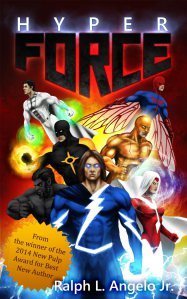 The book that came out previously to this one is called ‘Hyperforce’ and is a superhero novel. that came out on September 30th,2014. That is my homage to 1970’s and 80’s superhero comics. It’s full of adventure and action. This one is a roller coaster ride full of fun and excitement. It’s one of my favorite things I’ve written.
It seems writers today have to publish more often than in the past to really make a living. How do you manage your time? What length of works do you write…mostly novels, novellas, short stories, or flash?
Lisa, At this point I’m not making a living doing this, and no one I know of is actually. But I had a VERY promising August and if it had held those types of sales numbers through the rest of the year then yes, I would definitely be making a living selling books I wrote. I published three full length novels this past��year and almost finished a fourth, but I had a bit of burn out going on when fall came along. I should have finished this current book months ago, but I kind of hit a wall and I’ve slowed down quite a bit. I primarily write novels, with a few short stories thrown in during the year. I also wrote four short stories for various anthologies this year besides the three completed novels. For what was essentially my second full year writing professionally, I had a busy one. As far as managing my time, When I get into a writing groove I usually write about a thousand words��in the late afternoon and then another thousand late at night, usually after 10 or 11 PM. I seem to work best at night for some reason.I’m actually writing this at 2 AM.
 Authors today seem to need a social media platform that covers everything from Q&A posts to video; what do you think the fledgling authors need to focus on to get on the right track with social media?
Social media is a cruel mistress. from what I have been told you have to be in it to sell books. I tweet a lot using hootsuite and when I get on a roll I post on about 75 Facebook groups, and sometimes I do that several times in a week. I also pay for various social media advertising platforms such as ones found on Fivverr and some of the websites that advertise books and e-books. When I have a new novel coming out I go on the attack with promotion. I don’t know if it works or not, but I have to assume it does.��The bottom line is get your name and novels name out there in social media, but I can’t help but think there is another way myself. I just��haven’t been able to discover it at this point, and believe me, I’ve tried.,
If you could go back in time to when you were just starting out, what advice would you give yourself. What pitfalls would you steer away from?
The greatest advice I could give myself or any fledgling author is to ignore the naysayers. Those that do not have constructive��criticism for your work, but just want to tear it apart. Ignore them as if they do not exist. There’s an old saying ; ‘To thine own self be true.’ That is especially true of authors and something they should all live by. Write books that you would want to read and to hell with anyone who has garbage to say about your work.
How important is it that authors do the Convention circuit? When in a career do you think con appearances become a valuable tool?
Well, I did one con last year, and while I loved the experience, it was on the whole a let down for me. I’m not even certain I’ll be going to the same one again this year. I may be looking for smaller, sci-fi and fantasy oriented cons closer to home this year. I think my name is just not known enough yet, no matter how many books I’ve sold this past year. So when is it important that you go to cons? When you are more well known. At this point I would have to think year three of your authors journey.
 Do you consider yourself a indie/traditional/both?
Definitely an Indie author. Hey if some big publishing house wants to offer me a big contract�� I’ll sign on the dotted line in a flash. I’m almost surprised I haven’t been contacted by anyone yet considering how many copies of my ‘Cagliostro Chronicles’ series I’ve sold the past two years.
Getting books into audio is the latest thing that writers seem to be learning how to do. Are your books available in audio format? And if so how was the recording produced?
Not yet, but it’s something I should tackle this year, at least with the two (three counting the new one) ‘Cagliostro Chronicles’ books and ‘Hyperforce’ as well.
If you would like more information about Ralph L. Angelo Jr.��and��his books look on Amazon, Twitter,��Facebook, Pinterest, Blog, or��his website. Also you can read the first interview I had with Ralph here.


March 12, 2015
Interview with Sean Taylor — The Ruby Files
Sean Taylor is an award-winning writer of stories. He grew up telling lies, and he got pretty good at it, so now he writes them into full-blown adventures for comic books, graphic novels, magazines, book anthologies, and novels. He makes stuff up for money, and he writes it down for fun. He’s a lucky fellow that way.
Interview with Sean Taylor
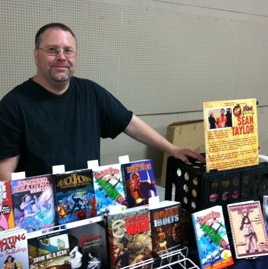
co-creator of The Ruby Files
3/12/2015
What is your current release and (without spoilers) tell us about the new book or series.
My newest upcoming release will be the second volume of The Ruby Files from Airship 27 Productions. It���s a collection of novelettes featuring private detective Rick Ruby, a character created by Bobby Nash and me. Rick���s obviously a throwback to classic P.I.s like those created by Chandler and Hammett, but also the TV detectives like Richard Diamond.
My particular tale for this volume puts Rick in the middle of what seems to be a racially motivated murder with a clear-cut killer, thanks to visiting members of the Klan. But as Rick begins investigating the murder as a favor to his black lover, something doesn’t feel right to him about it, and it could be that someone is casting the bastards of the Klan in the convenient role of patsy.
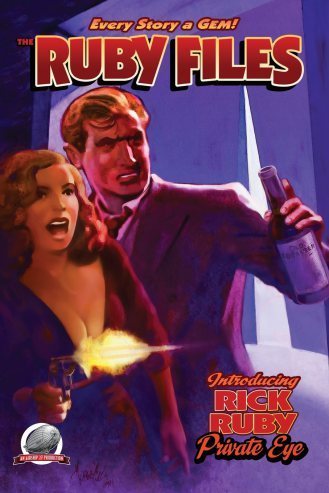
The Ruby Files Volume One (Volume 1)
What is the usual process for your writing? Are you a plotter or a pantser?
It depends on what I���m writing. Anything that is a scene type of story (short stories and short shorts) I tend to pants when writing. Anything that requires a plot that connects multiple scenes, I NEED to plot. For longer works like novellas and novels and comic book scripts, I do not only plots, but full plots. I do everything from page breakdowns to throwing in bits of dialog that I want to be sure not to forget.
Once you have an idea that sparks your imagination do you research your idea or do any world-building exercises, or do you just begin to write and see where the Muse takes you?
Much of the writing I���ve done comes complete with pre-made worlds in that I���m either writing characters and worlds already remembered nostalgically by fans or I���m being paid by a publisher to play in some other creator���s playground (a la the Gene Simmons line of comics). When I do get to craft with my own clay (so to speak), I begin with character first. I prefer to let the world develop around my characters. I do, however, in the midst of my plotting (see response above) tend to create the world as I build that plot document.
Are you a full time writer? If so when did you make the decision and what factors led to the decision?��If you are not a full time writer���Is your plan to one day being a full time writer?
I used to be a full time writer, and I did it as long as I could afford to do so. But bills will take precedence, so I had to go back to a full-time job and write as a part-time one. But that���s the difference between writing before and writing after. Before I wrote in my spare time. Now I write as a part-time job. That���s means I put regular hours into and devote myself to those hours. It takes a dedication whether part or full time.
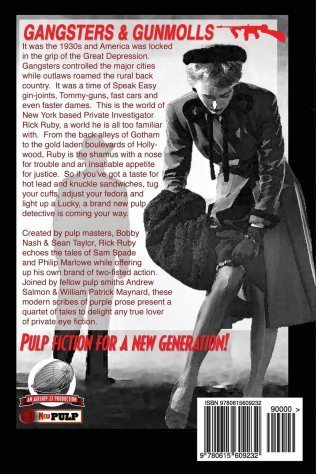
The Ruby Files Volume One (Volume 1)
What is your daily writing time like?
I write at Starbucks. Well, I write BEST at Starbucks, I should say. I can write just about anywhere as long as I have my laptop or tablet with me. But because I can simulate the office experience at the ���Bucks, I prefer to write there. What I mean by that is I can block off the sound and ���be alone��� in the crowd, or I can stop working for a few minutes to shoot the breeze with some of the baristas. I get the full office experience, from the locked door to the water cooler chit-chat. I���m ADD, so I need the constant change of both.
When I sit down for a writing shift, I go into it with a word count goal in mind and try not to stop until I hit it. I try to keep it within the realm of possibility though. I mean, sure, I can knock out 5,000 words in a sitting if I don���t care what I���m writing, but to turn out something that it salvageable by a good edit, I should probably plan somewhere in the territory of 2,500 words.
 Can you tell us about your publishing experience? Are you Indie, Traditional, or do a bit of both?��
Yes, I am. :)
I���ve have published one book independently, my collection of early writings called Gomer. But I prefer to work with established publishers. I���ve been lucky enough to work with both small and mid-level prose publishers, and I���ve only had good, solid, enjoyable experiences with them.
I think I write better when I know I have a team that has my back when it comes to editing and publishing. Writing is my strong suit, though I have been on both sides of the publishers��� desk. I don���t mind running the show, but it���s so much more enjoyable for me to just write, edit, and send it off for someone else to make it look pretty.
Everyone likes to know where an author gets their ideas from, but what I want to know is���what is the strangest thing to inspire one of your stories?
I have two. One is from a drive to a convention. I suddenly, and still don���t know where this came from, had the thought: ���Wouldn’t it be cool if the mirror from Alice Through the Looking Glass and Snow White was the same mirror?��� From that stray thought came my story ���The Fairest of them All: A Symphony of Revenge��� from IDW Publishing���s Classics Mutilated (later reprinted in Required Reading Remixed Volume 2 from IDW).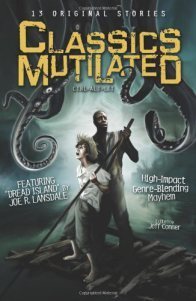
The other is from a get-together for writers and artists. I happened to be wearing a shirt that had the lobby art for the movie Hot-Rod Girl on it. Well, a friend walked up and asked me if that was for the next comic book project I was working on. I thought for a moment, put together a full plot in the time it took to look down at the shirt and back to my friend���s face, then said, ���Yes. Yes, it is now.���
Can you tell us about some of your other writing (fiction or nonfiction) and any appearances or signings that you have planned?
I feel like lately I���ve become almost exclusively a new pulp writer, with trips into the adventures of private detectives, masked heroes like the Black Bat and Golden Amazon, and pilots like Lance Star. I���m really looking forward to hitting some of the other kinds of stories that I enjoy. What���s coming up around the corner are my first finished novels ��� one for my new subdivision with one of my regular publishers that will be for more extreme action adventures like those from men���s magazines and the sixties. Then, in addition to that, I���ll also be tackling my first YA urban fantasy, about a teenage boy in love with a true force of nature (and that���s not a metaphorical descriptor).
 As an author what inspiration or advice would you give to a writer who is working to make the transition to Author?
I would give this advice: Dream big, and learn to network.
Dreaming big gives you almost unattainable goals. Learning to network with other writers, publishers, artists, readers, librarians, booksellers, etc. will teach you what you need to know to read them and make them far more possible and attainable.
Who is your favorite author? Tell us what makes this author stand out in your mind, and what book would you recommend to someone new to that author?
I used to have a single favorite author ��� C.S. Lewis, and he���ll always be my first-step inspiration, but my writing and reading world expanded beyond him to writers who have actually had far more influence on me now than Lewis ever did. Now, I look to Ernest Hemingway, Raymond Chandler, Zora Neale Hurston, Edgar Rice Burroughs, and Flannery O���Conner for the folks I prefer to read and who are responsible for who I am as a writer.
As for recommended works from them all:
Lewis ��� Till We Have Faces
Hemingway ��� A Farewell to Arms
Chandler ��� The Big Sleep
Hurston ��� They���re Eyes Were Watching God
Burroughs ��� A Princess of Mars
O���Conner ��� Wise Blood
If these are the only books you ever read, you will still be able to say you’ve experienced a full life of written love, romance, horror, loss, pain, adventure, and beauty.
If you would like more information about Sean Taylor��and��his books look on Amazon,��Facebook, Blogs, or��his website.