Tara Heavey's Blog, page 2
August 4, 2018
Appreciating the Contrasts in Your Life
I looked up at the sky — the ever changing sky — and all I saw was blue. Not the vivid, almost indigo of the Med or West Coast, but an Irish blue, a sky blue, a high and light and airy blue, reaching upwards, never-ending.
Then against that blue was a white, ever changing also — mare’s tails and swirling mists, banks of fluffy pillows. It made the blue so beautiful and easy to appreciate. This contrast, this richness, this see what is possible-ness.
And it came to me as a sort of epiphany, a revelation out of the ordinary (or was it the extraordinary)? That’s how our lives work too. It’s only through the contrast that we appreciate the beauty, but we’re often blind to it.
Consider the sacred experience of getting well after being sick. It doesn’t even have to be a major illness. A twenty-four hour bug is sufficient wretchedness. In the throes of it you question yourself — why oh why did I never understand how wonderful it is just to feel normal? And we crave that ‘normality’. The extraordinary normality of life, so commonly taken for granted. When the sickness passes and we are well again, what joy, what relief, what gratitude! It might last a day, maybe a bit more, until we’re back to square one again, our usual unappreciative, take-it-for-granted-self. Or perhaps it’s just me …
In a similar way, you don’t know what job is right for you until you’ve served your time in the office from hell or the big shop of horrors or the restaurant that hygiene forgot. And you don’t know who you want to work alongside until you’ve suffered under the auspices of psycho boss or office b***h. (My answer: no one, thanks).
And how can you meet your froggy prince or princess until you’ve kissed your share of wart-ridden toads or toad-ettes? (Warts can come in many guises — behavioural and psychological).
Is that what missing people is all about? The contrast? They are here and then they are gone. When they were there they were scarcely noticed, or even slightly irritating. But when they go they leave a void that fills up with your love for them.
The biggest contrast of all — that between life and death. It can be the famous of our world: John Lennon, Robin Williams, Princess Diana, Freddie Mercury. We don’t know how precious they are to the Earth until they are gone from it. How is it we don’t realize how great they are until they are no longer here? Like a veil being lifted from our eyes. In the words of the poet, e.e. cummings:
Now the eyes of my eyes are opened.
Yet this is still nothing compared to the death of a loved one. The contrast between them being here and them being gone leaves the greatest ache of all. If we are lucky, it can be soothed by time and the salve of a hundred happy memories.
 Photo by Daniel McCullough on Unsplash
Contrasts abound.
The ice cold water as it trickles down the back of a parched throat. The first mouthful of food as it reaches down into a ravenous stomach. A warm blanket on a cold day, coming in from the snow to a crackling log fire and a bowl of hot,creamy tomato soup.
It is the contrasts that show us our wants and enable us to feel our gratitude.
Allow us to appreciate the world in all its myriad magnificence.


The Evolution of a Pair of Breasts
When I was about twelve years old, my mother handed me a brown, paper bag. It came with a knowing whisper, a clandestine, over-the-shoulder glance. What on Earth could it be?
A packet of class A drugs?
A junior version of the Karma Sutra?
I opened it with eager fingers, my life about to change, all because of a modest piece of material, 28 AA in size, designed to cover up the fact that I had nothing to cover up. Except my shame that I had nothing to cover up. And the knowledge that I was officially no longer a harmless little girl.
No shopping trip? — I hear you cry. Of course not, are you mad? This was 1980s Catholic Ireland. Besides, I didn’t need to go shopping because my aunt’s father worked in the curtain department of Arnotts — one of Dublin’s most famous department stores — now extinct. So this was the explanation given, for the method by which said article was procured and delivered.
When I mentioned the incident to my mother many years later, she claimed to have no recollection of it. I can only speculate how she came to be in possession of her first bra. Perhaps it was left by the fairies on the lawn at midnight …
So how can such a tiny scrap of fabric shape a life? Well, the development — or lack thereof — of a young girl’s breasts determines quite a lot. If she doesn’t have any, she is largely ignored — scorned by members of the opposite sex. And if she happens to blossom early, she is often the recipient of too much unsolicited attention.
You can only hope that you and your own daughters strike a happy medium: not small enough as to be non-existent; not large enough to garner too many unwanted leers.
I was flat as a pancake for more years than I care to remember, a trait which went along with my tall-skinniness. So what to do? To put on breasts, you also need to put on weight — also undesirable. No wonder many young women consider the solution to be: buy a pair of plastic knockers and stick them on the front like a pair of neon headlights. Who cares if you have to undergo unnecessary surgery? Or introduce harmful toxins into the area of your body designed to nourish future generations? Society dictates, does it not?
My own breasts have accompanied me on quite a fascinating and vacillating journey. And no, in spite of it all, I wouldn’t be without them. They have slowly and imperceptibly grown with their owner, aka me. It wasn’t until my mid-twenties that they made a slight appearance, me being no longer such a girlish skinny-milink. Yes, I put on a bit of weight, nothing to get too alarmed about. The extra boobage was a welcome addition to my armoury. Then a significant jump in size, with the advent of my first pregnancy in my early 30s. Yes, people, they are actually for the purpose of milk production! And frilly, fancy numbers were replaced by utilitarian garments made of institutional, table-cloth-like material, ugly in the extreme.
With breast feeding at an end, my boobs looked very sad, as if they’d been through a war and were suffering from post traumatic stress. They recovered somewhat, just in time for the second pregnancy. I was more prepared this time, but the aftermath was still unexpected. This time my appendages wanted to fly free. They were looser, bouncier, liable to take off at the slightest gust of wind. The bra came into its own at this time and I began to value a more structured approach — enter the era of the undercover scaffolding.
By the time pregnancy three occurred, forty loomed, as did the attendant squidgier body. All the while my breasts had been growing stealthily, quietly in the background, careful not to draw too much attention to themselves.
Culminating in an incident at my son’s confirmation ceremony. Me, in a dress bought in haste and barely tried on, teamed with a pair of heels I had scarcely tried to walk in. It wasn’t until I was leaving the house that my daughters drew attention, with great merriment it has to be said, to mammy’s big, bouncy boobies. I couldn’t exactly ask my ex-husband for his opinion. Do my boobs look big in this? Clearly, they did.
The trouble was that, in my head, I was still a skinny teenager in a 28AA sized scrap of material. But somewhere along the way, I’d grown into a big-breasted mama. Who knew? The bishop certainly did, when I went up to the altar, the combination of my heels and his short stature causing him to get an eyeful of my over ripe melons. He gave me a thunderous look — this haridan of a woman, flaunting her devilish fun bags in his sacred house of God.
So there you have it. My message to all you small-breasted young women out there. Fear not. Life will sort you out, and even it if doesn’t, by the time you get to my age you won’t give a rat’s arse anyway. Oh happy days!
August 2, 2018
Inspiration v Perspiration
I write only when inspiration strikes. Fortunately, it strikes every morning at 9 o’clock sharp.
W.Somerset Maugham
It’s a complex blend. Yes, you have to take action. Yes, you have to allow. It’s a question of getting the balance right.
Show up every day — same time, same place — and you prime your mind and body to be receptive to inspiration. There will be a time, after the work, for the radio interviews to be listened to, the dogs to be walked, the showers to be taken and the parents to be phoned. Because it is still work. But inspired work. Work that is satisfying to the soul, so much so that it can feel better than play. Let this inspired work be your priority.
You do it for you.
You are the main beneficiary to this showing up.
There are other ways to be inspired. To prime the pump, to fill yourself up. A walk full of birdsong, a gallery on your lunch break — each painting bursting with the imagination of its creator, waiting to feed you, to translate to you. A church with stained glass windows to sit in and contemplate. The glory of the colour, the light filtering through. Indescribably beautiful. The trees as they whisper their sweet incantation. All around you, surrounding you, it is everywhere. This inspiration. Yours for the taking. Take it and channel it into your work. And it will spread out to the universe, inspiring others.
Oh beautiful contagion.
August 1, 2018
Death of a Royalist
One day I’m sitting in the bath. It’s 1981 and I’m eleven years old. I can’t remember what I was thinking about at the time. It could have been the upcoming nuptials of Lady Diana Spencer — the groom was irrelevant to me. I already had my Royal Engagement Memorial Booklet, (still do). Diana in royal blue suit and trademark blouse with bow. Her flat shoes disguising her husband’s shortcomings. They were putting her down already. When did she start wearing heels? That must have been the moment their marriage changed. The day she found out about Camilla.
I may not have been thinking about Diana at all. I may have been considering my long-term boyfriend, Richard H. Names have been changed to protect the innocent. And we were. Very innocent. With his sweet, rosy cheeks and white blonde hair. What is and where is he now? An engineer in Stoke-on-Trent? An accountant in Bury-St.-Edmonds? Or maybe, like me, he doesn’t live in England any more. Because that was the day my mother told me we were moving back home to Ireland.
What do you mean back? I was already home. Thus far, my childhood had consisted of street parties for the Queen’s silver jubilee and school trips to Windsor Zoo and Hampton Court. I was as English as English could be. As English as toad in the hole and spotted dick. Apart from the freckles. Apart from the name. Apart from the father who played Wolf Tone records at full blast to annoy the neighbours, and whose nationalistic tendencies evaporated as soon as we landed back on the Oul’ Sod.
I had been brought to ceilis, sure. Where redheaded women with squeaky voices sang plaintive tunes about girls called Seana and their lost loves. I knew all about the predicament of the men behind the wire and the dilemma of your mother being orange and your father being green. But to me, this sounded more like an episode of “Star Trek” than an episode of Irish history.
But when you’re eleven years old. And in the bath. You don’t have much choice in the matter. You can sit there and cry. You can even protest a little. But ultimately, if your parents decide to up sticks and move to a different country, you have very little choice but to go with them. Can hardly stay on your own. I didn’t really have the means to support myself. I wasn’t qualified for very much and as yet, my writing career was less than embryonic. So off to Ireland I went. Off home with me.
Even now, a silent, sunshiny morning in late June can transport me back to that very first morning.
Morning had broken.
Driving from Dun Laoghaire, dazed after the overnight ferry trip from Liverpool Port. Was I even a little bit excited? Pleased at least to see my grandparents. They were waiting at the doorstep to meet us. Garden teeming with roses, snapdragons and ox-eye daisies. Granddad: Tall, thin, bald and tanned. Shirtsleeves rolled up to his sinewy elbows. Ever present pipe at the corner of his grin. Nanny: Small, round, blonde curly hair and bright red lipstick. An indelible mark on my cheek for the rest of the morning. Marking me out as one of her own. Nearly having the head pulled off my body with the sheer force of their love.
And the smell of sausages, drifting down the path. Irish sausages: A breed like no other. Irish sausages: Slit down the middle for ultimate release of flavour. Irish sausages: Never again tasting like they did from my grandmother’s grill that morning. Like the chips from her chip pan, seasoned to perfection down through the years. Or the potato cakes. Or the brack.
There was pudding there that morning. Not of the spotted dick or jam roly poly variety. A bizarre substance, fashioned from pig’s blood. I don’t think I believed it at the time. And soda bread. Bread that was heavy and dense and round. Not square and evenly sliced like bread should be.
Savages.
Diana’s wedding came and went. I sat on the couch in Raheny and cried. My friends back home at their street parties. Had Richard H. found himself a new girlfriend yet? I started to play with the kids in the neighbourhood. Dance routines to “Night Fever” in the park across the road. The sun turned colder. The thistle released it’s down. Fairies floating all over St. Anne’s Park. I wished on one a thousand times a day. That we’d move back to England. That I wouldn’t have to start school.
But start I did. Sixth class. My first experience of an all girls’ school. Standing at the top of the classroom, waiting for the teacher to finish her gossiping with the teacher next door. My bottle green jumper — courtesy of my grandmother’s knitting machine. My red kilt, courtesy of Arnotts Department Store. My white knee socks. My brown, T-bar shoes. My body like a shapeless tube.
I listened to the surround sound of thirty, Irish, eleven year old girls — like so many leprechauns. They made fun of my accent later that day. Although not in a mean way. You talk funny. No. Can’t you tell? Can’t you hear yourselves? It’s you that talk funny. You’re the odd one’s out. All thirty of you.
A little girl in my class with the same name as me. How could this be? I was unique. What was she doing in possession of my name? I was soon to find out that there were others like her. Maybe not in such close proximity — but they were out there.
They weren’t all that bad. The leprechauns. I was a strange and exotic curiosity. And what did we do in England? And what did we eat? And wear? And watch? And listen to? And play? And English boys?
The boy’s school was next door. They played on one side of the field and we played on the other. The playground of romance. I was soon to discover that, to the girls in my class, these boys were creatures even more exotic than I.
But summer rolled around again and secondary school loomed like a festering boil that no one could lance for me. I was too start afresh again. All the girls from sixth class graduating to a different school. The cold, stark reality of another new start. Did I really have it in me to face another one?
Turned out I didn’t.
The first day was a shock that kept on shocking for the next five years. Boys and girls mixed up together. Although we never really mixed. Why the hell would we? Farting, belching, noisy boys. Not a bit like Richard H. Although, for all I knew, he may too be a farty, belchy noisy boy by now. Adolescence may well have split us up. The one advantage to such exposure: my knowledge of these cretins was vastly superior to that of my convent school friends. They thought teenage boys were clean, clean-cut and clean-thinking. I saw them for the mutant apes they really were.
In the last English school I’d attended — St. Gregory’s Middle School, Biddenham, Bedfordshire — knowledge was a prized commodity. As it was in the relatively genteel environs of sixth class. Not something to be ashamed of. This too was about to change. I was soon to discover that one did not put up one’s hand when one knew an answer to a question. One did not reveal that one had studied for a test. One did not complete one’s homework — now known as “eccer”, spelling unknown and possibly non-existent — in anything less than a half-arsed fashion. And one did not — I repeat did not — cover one’s copy books (formerly exercise books) in Laura Ashley wallpaper from one’s bedroom wall. Especially when instructed to do so by one’s teacher and the entire school board. Because nobody else will have done it. Except for the odd, embarrassed attempt with crinkled brown paper and pritt stick. Because — and this was the single, most shocking shock of all — one did not — I repeat, did not — do what one’s teacher told you to do.
It took me many years to appreciate this very Irish, profoundly healthy disrespect for authority in all its forms. For that errant wildness in Irish children that they never completely loose. That wildness that can lead to, amongst other things, great music, great art and rampant alcoholism. But which at the time, drove me into my shell, knocked all the stuffing out of me and all but broke my spirit for good. Did I ever recover all my stuffing? Like the scarecrow in the Wizard of Oz, picked apart by the crows. I’m off to see the wizard. Any day now. Back then; I didn’t have a pair of ruby slippers. A means of clicking my heels together and conveying myself back to good old Blighty.
Then one day it was all over. Schools out forever. The Leaving Cert the only blot on an otherwise clear yet hazy horizon. And then that was over too.
Ireland of the eighties — a dismal place. Of open fires and large families. Ugly corporation estates teeming with unemployment and misshapen dogs. And what about this guy Gay Byrne? Who did he think he was? And Charles Haughey. The Taoishuck — Toiasheach — Tioseach. (I was exempt from Irish). Women apparently found him attractive. And charismatic. Hardly surprising when the country’s most eligible bachelor was a current affairs presenter with spectacles and already greying temples. Yes, this indeed was the epitome of Irish, male, sex appeal. Those god-forsaken pre-Brosnan, pre-Farrell days. Prospects for the Irish male have improved. It could be better nutrition. More meusli and less black pudding.
By dint of a long and circuitous route, I found myself in Trinity College. Yes. The contrast was quite striking. Now I was with the poshest of the posh. And equally out of place. This was a time when Ireland was beginning its slow and laboured ascent out of the pit of recession. The release of the Birmingham Six. The secret royalist in me was shaken to the core for the first time. My accent changed imperceptibly. New people I met were less likely to ask me if I was English. Was I? I didn’t know anymore. Maybe half and half. Top half or bottom half?
Emerging from university, parchment in hand, facing an abyss of uncertainty. I jumped straight from that abyss into the abyss of the law, where I spent the best part of a decade, trying in vain to find for myself a niche that did not, could not exist. Because all the niches were round and I was square.
Would I have made the same choices had we stayed in England? I may not have gone to college at all. Or I may have gone to Cambridge and received a First in some humanity or other. Would I have chosen the legal profession? Would I have gone on ultimately to become a writer? The answer is yes; I think that I probably would. I may have made exactly the same choices and ended up in — if not exactly the same — then in a similar place. The truth — the beautiful truth — is that I’ll never know.
I’d be with a different man — maybe Richard H. Maybe no man at all. Would I still be a mother? Different father, different children. I’d still have the stretch marks.
I could spend the rest of my life considering the what ifs. It really doesn’t matter any more. I know where I’ve ended up and I’m happy with my lot. I may not have been as happy with my English lot. There have been obstacles to get over. More than a few. There’ll always be that slight dint in my confidence. The sensation of being an outsider in almost every situation. But I’m content to be on the edge. It’s become part of who I am. If I went now to speak to a classroom-full of English schoolgirls, they’d think I sounded like a leprechaun. And I’d find their little accents extraordinary and wonder at how close I came to speaking the same way myself. If it wasn’t for a bath time conversation that altered the course of my existence.
When Diana died, I cried and cried. For her. And for the eleven-year-old girl who had continued to exist beneath my adult skin. For the ultimate death of the little royalist within.
The Black Dog That Chased Me Out of Depression
We are all given this life, this gift of life, they call it, which sometimes feels an affliction. A disease almost. But we are also given the means to cure this disease. The challenge is to recognize that cure. Which may exist right under our noses — as the doc leaf dwells alongside the nettle.
The cures of the rain forest were sung to the Shamans at night time, in the forest of their dreams, the plants came to them and told them — which cure for which ill. And so they knew.
I knew I wanted a dog — a deep, restless yearning, my ancient retriever having snuffled off his mortal coil. It was because I was broody, my former husband informed me. Likely he was right. I would no longer be breeding personally, but I still craved a baby, to nurture and to hold. A fur baby. Although she was fully grown when she came to us, a gift from the Irish Guide Dogs, a twelve month old black Labrador, newly completed her puppy training, now a fully fledged brood-bitch.
How overjoyed I was with this vibrant canine crusader, fur so shiny I could almost see my own reflection.
But then.
The dismay.
The runner on the stairs, ripped up with ruthless, remorseless, tool-like teeth. The curtains that were a wedding present, shredded with frantic claws ,one moonlit night while trying to get at a fox. Not to mention the madcap forays into neighbouring gardens. The casual reappearances, tail all a-wag, the lap-lap-lapping at the water bowl.
I was already hanging over the precipice at this time. She pushed me over the edge with one nudge from her wet, black nose. And I fell.
I’d often heard of depression being likened to a black dog but had never known how literal that could be. The effect was so dramatic because I’d held out such hope for her — that she would make everything okay. No pressure then.
But in time. She kind of did.
By then my marriage was irretrievably broken. Irretrievable. Now there’s a word. Question: How do you know when you reach that point?
Answer: You just do.
And Giselle (laughably named — nothing petite and delicate about this dog), was always there. I mean always. She didn’t have a job or go to school or go on play-dates or sleepovers. She never even went to the shops. And at night-time on the couch — that she wasn’t allowed up on — always ready with a doggy hug. Warm muzzle on cold lap. Nuzzle. Reassuring rhythmic breaths. Still alive.
She took me on lots of walks, as part of my recovery, and together we watched the countryside come alive. Bluebells crowding the woodland floor, rivers running clear. Her first swim, snorting back to me, legs pedalling wildly. A thorough soaking for both of us. And many unwanted tongue baths to my face, whenever she got close enough. Wanted. I forgave her for the carpet and the curtain and all the other numerous chewed objects. Even the books.
There came the day when Giselle was ready to fulfil her purpose in life. Would that all our life purposes were so clearly defined. Hers? To have sex and puppies. In that order.
Hers was an arranged marriage, down in County Cork. The union was a successful one and almost too productive. Eleven puppies. Born to my terror and delight.
They lay first like tiny hippos, golden and black, sightless and soundless, their only motion occurring several times a day, wriggling and squirming to their mother’s swollen teats. We held the runt on for dear life, taking turns at night time. We wouldn’t loose her. We did not.
They would slip off when fully satiated, inert and bloated like ticks full of blood. And lie there motionless once more. Until the next time.
And so they grew. And grew. One by one, twenty-two eyes took their first view of their tiny world. They found their wobbly feet, wagged their waggedy tails and barked their first sweet barks, fiercely at one another, already asserting dominance, like their wolfish ancestors before them.
Then there came the solid food, swiftly followed by the poo. Oh the poo! Such staggering amounts. Lucky for them they were cute enough to get away with it.
Until they were seven weeks old. A variety of volunteers brought them to their puppy-walking homes. I knew at first hand the delight that they would bring with them. Eleven ecstatic homes transformed that very evening. While my children shed a few tears, their experience having been one hundred per cent cuddles and zero per cent poo.
So has it been worth it? The carpet and the curtain, the terror and the excrement. Hell yes! The puppies heading into the world to fulfil their own destinies. What could be better than playing a part in such a glorious scheme.
So just me and her again. We resume our forest walks, companioned by the trees, no greater examples of mindfulness existing in this world. Just me, the trees and the black dog that chased me out of depression.
September 12, 2017
Six Reasons why Dogs are Better than Humans
Doctor Doolittle may have wanted to talk to the animals, I, however, do not. The fact that they’re so quiet is what makes them such ideal companions. They don’t interrupt your train of thought. They don’t make irritating requests in the middle of your favorite TV show. And they don’t wreck your buzz when you share with them your latest stupendous idea.
2. They don’t care what you look like
Haven’t washed in three days? They don’t mind. In fact, it makes you smell all the more interesting. You’ve put on ten pounds? Happy days. More of you to love and all the more reason for you to bring them out on weight shedding walks.
3. They are furry
And this makes them infinitely cuddly. Not like us baldy humans with our knobbly bits. It also makes them warm. I love to use my Labrador’s silky ears as hand warmers on cold nights. Highly recommended if you have a floppy eared dog of your own. Let your dog be your teddy bear come to life.
4. They bark at pesky strangers
What better way to get rid of canvassing politicians at election time? Or zealot religious types with mad, staring eyes. If you’re lucky, they might even chase them! Now what partner, no matter how loyal would do that for you?
5. They poop in your horrible neighbor’s back garden
They instinctively know which patch of ground to choose as their designated toilet, leaving behind their fragrant offerings , proud and unconcerned, head and tail aloft. Again, no partner, no matter how well trained, would perform such a service for you.
6. They love you unconditionally
You may have had PMS for the last month. Your house may be a mess, your business down the toilet or your relationship up the swanee.
Your dog respectfully Does. Not. Care.
Your dog thinks you are great, no matter what. It’s like he sees past all the surface junk to the sweet and true essence underneath. He shows you what you truly are, what you’re destined to be, when you love yourself unconditionally too, and finally start living up to your true, marvelous potential.
Blogs Are Optional. Do You Have The Time?
Veggies es bonus vobis, proinde vos postulo essum magis kohlrabi welsh onion daikon amaranth tatsoi tomatillo melon azuki bean garlic.
Heading 4
Gumbo beet greens corn sample link text gourd. Parsley shallot courgette tatsoi pea sprouts fava bean collard greens dandelion okra wakame tomato. Dandelion cucumber earthnut pea peanut soko zucchini.
Turnip greens yarrow ricebean rutabaga endive great link here kohlrabi amaranth water spinach avocado daikon napa cabbage asparagus winter purslane kale. Celery potato scallion desert raisin horseradish spinach carrot soko. Lotus root water spinach fennel kombu maize bamboo shoot green bean swiss chard seakale pumpkin onion chickpea gram corn pea. Brussels sprout coriander water chestnut gourd swiss chard wakame kohlrabi beetroot carrot watercress. Corn bold stuff nuts nori azuki bean chickweed potato bell pepper artichoke.
Nori grape silver beet broccoli kombu beet greens fava bean potato quandong celery. Bunya nuts black-eyed pea prairie turnip leek lentil turnip greens parsnip. Sea lettuce lettuce water chestnut eggplant winter purslane fennel azuki bean earthnut pea sierra leone bologi leek soko chicory celtuce parsleysalsify.
July 20, 2017
The Map of Your Heart
The map of the human heart has many tracks and trails.
I’ve been down so many of them — well worn paths.
Some are scenic routes, with marvels along the way.
Some are blind alleyways — dirty, dangerous places, where my heart has lain broken and bleeding.
But I had to go down. Had no choice in a way.
It’s how the heart learns. Tender and aching with longing. So full of wisdom yet so naive. It’s necessary to go. To take the road less traveled. Or some road, at least. Because to stay means a slow, lingering death. The heart withers, the soul atrophies, without this constant motion. It has to go on its quest. A constant quest to find itself . To get to the other side of its own delicious creation.
And when it gets there, what glories will it find? What sweetness? What elegance? Only to move on to its next ecstatic destination.
The destiny of the heart is not to stand still. A still heart means death. It has to keep beating. We have to keep beating — to keep the momentum going. In our own lives.
So find your own truth.
Scale your own Everest.
Reach your own North Pole.
It’s what you were made for.
10 Reasons Why This Sample Blog Post Is Nice.
Veggies es bonus vobis, proinde vos postulo essum magis kohlrabi welsh onion daikon amaranth tatsoi tomatillo melon azuki bean garlic.
Heading 3
Gumbo beet greens corn soko endive gumbo gourd. Parsley shallot courgette tatsoi pea sprouts fava bean collard greens dandelion okra wakame tomato. Dandelion cucumber earthnut pea peanut soko zucchini.

Turnip greens yarrow ricebean rutabaga endive cauliflower sea lettuce kohlrabi amaranth water spinach avocado daikon napa cabbage asparagus winter purslane kale. Celery potato scallion desert raisin horseradish spinach carrot soko. Lotus root water spinach fennel kombu maize bamboo shoot green bean swiss chard seakale pumpkin onion chickpea gram corn pea. Brussels sprout coriander water chestnut gourd swiss chard wakame kohlrabi beetroot carrot watercress. Corn amaranth salsify bunya nuts nori azuki bean chickweed potato bell pepper artichoke.
Nori grape silver beet broccoli kombu beet greens fava bean potato quandong celery. Bunya nuts black-eyed pea prairie turnip leek lentil turnip greens parsnip. Sea lettuce lettuce water chestnut eggplant winter purslane fennel azuki bean earthnut pea sierra leone bologi leek soko chicory celtuce parsley jÃcama salsify.
July 10, 2017
Flame : the new novel by Tara Heavey
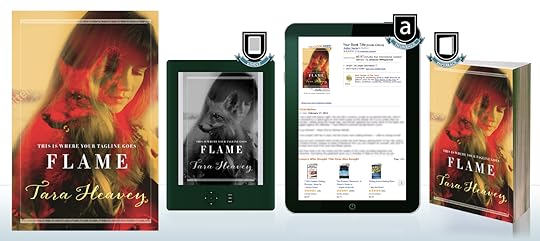
Writing a novel is an odd thing. Why do it at all? Why follow this strange internal compulsion to track a story all the way to its natural conclusion?Because it does feel natural. Rarely manufactured. Almost as if the story was out there waiting to be told. Waiting for the storyteller to come along and claim it. The right scribe for the right story. A co-creator with which to collaborate.
There is so much noise in this life. And at times it appears to be getting noisier, almost out of control. As if a strimmer is constantly whirring away in your head. And writing is an activity that thrives on silence. Which is why so many writers write first thing and last thing. It’s where they find their bliss. Their sweet relief.
I am writing this in what seems like the first quiet patch of my day – in the cacophonous patchwork of the children’s summer holidays. (Oh joy. Oh despair. OhmiGod)! And it feels so nice to connect with my thoughts. Even just to hear them. To come back to my centre after hours of extending myself in other people’s directions.
My new novel “Flame” launched on Amazon today. This feels good and long awaited. It feels like a future pregnant with possibilities.
I’ve finished birthing babies. Back to birthing books. I’ve always wanted a big family…
I hope you find solace and joy in this novel. And share in it the triumph of the human spirit.
A thousand good wishes.
Tara
(Click the above link to be taken directly to the relevant page on Amazon)