Robert Pacilio's Blog, page 5
September 2, 2019
Teachers: 5 Songs to Play for Your Students NOW and WHY
 Photo by Mohammad Metri on Unsplash
A long time ago, I thought that the first day of school was about the rules. That ended 25 years ago when I realized that there was no greater method to make the students believe that you, the teacher, were like one of the horrifying teachers in the film Pleasantville; if you have not seen the film — for shame! You have missed a film that captures the form of magical realism so “colorfully”…but I digress.Music, you see, is the medium that teachers and students still have in common. It may be the last link a teacher has to the ‘kid culture’ — especially if you are over 40 years old (and still think Flock of Seagulls was a band that would become legendary). I learned that a song could speak to students much like it speaks to me and, without them knowing, create a literary bond.That’s right — I said literary. For all you stubborn snobs who believe that only Dylan and his ilk of folk singers were the last of the literary luminaries, I have news for you. When you were following that Pete Seeger group down the Hudson River, the generation before you thought you and they were commie/ hippie/ Woodstock druggies. That generation looked at you “upstart crows” and dismissed you completely. So it is time to get off your high horse and recognize music is literature, even if “it’s still rock and roll to me.”
 Here are 5 songs to start your teaching year.First. Rise Against is a band and their anthem is a song entitled “Swing Life Away.” I would play it on Opening Day. Why? Because its message is that we all have scars, we all have fears, (even the teacher), and if we could just take a step closer to each other and reach across the aisle, we would discover that we have so much in common. It is a heart and soul melody that show the students that you care.[all grades/ all classes]Second. Tracy Chapman’s “Fast Car” is the finest example of the vicious circle of poverty in America. It does not matter the color of one’s skin: poverty is poverty. Chapman’s song is focused on black circumstances, particularly a woman’s plight as her hopes to escape poverty vanish much like the symbolic and illusionary “Fast Car” that lured her long ago. Since America is recognizing “The 1619 Project,” the 400 years of slavery beginning with the Dutch slave trade of that year, this song speaks to the inherent injustice that is at the root of this nation’s Original Sin. { high school, English or Social Studies}
Third. The Beatles’ “Yesterday”is a compliment to Romeo and Juliet in that it is ‘Romeo’s Lament’ to his lost love, Juliet. Just listen to the words and you can hear how Shakespeare’s “star crossed lovers” surrender to a fate that they cannot escape, one that they do not deserve — one that continues today as lovers are torn apart by wars and drug lords that are interchangeable with the families of Verona. {high school preferably}Fourth: Bruce Springsteen’s “41 Shots- American Skin” is a must when teaching the fate of Tom Robinson in To Kill a Mockingbird. Springsteen, inspired by the police shooting death of Amadou Diallo, warns his audience that “you can get shot just for living in your American skin.” For students living far from the inner city, or naïve to the power racism and fear instills in all of us (even if we are afraid to admit it), it is an eye opener. After all, Harper Lee’s theme is that you “can’t understand a person until you walk in his shoes”…even when his shoes are stained with blood. { high school — try the video of the live performance; it is particularly chilling}Five: In 1989, Bruce Hornsby warned folks of the upcoming disaster that is Global Warming in his song “Look Out Any Window.” Hornsby looks to the sky, the sea, and the landscape and sees just how much damage is being done. That same year Lester Brown and the World Watch Institute published The State of the World and warned of the calamity approaching faster than even Al Gore predicted in A Inconvenient Truth. As I type these words, the Brazilian rainforests are burning due to deforestation that is rooted in a mentality that deems profitability over sensibility. {All science teachers middle –high school should be on to this; I taught this in English as part of non-fiction literature}There you have it. I know I have not included music from the last five years, but I could. As a matter of fact, that is probably my next essay. But for now, just remember this:

You cannot teach kids if you cannot reach them


August 29, 2019
Teachers: 5 Songs to Play for Your Students NOW and WHY
 Photo by Simon Noh on UpsplashA long time ago, I thought that the first day of school was about the rules. That ended 25 years ago when I realized that there was no greater method to make the students believe that you, the teacher, were like one of the horrifying teachers in the film Pleasantville; if you have not seen the film — for shame! You have missed a film that captures the form of magical realism so “colorfully”…but I digress.Music, you see, is the medium that teachers and students still have in common. It may be the last link a teacher has to the ‘kid culture’ — especially if you are over 40 years old (and still think Flock of Seagulls was a band that would become legendary). I learned that a song could speak to students much like it speaks to me and, without them knowing, create a literary bond.That’s right — I said literary. For all you stubborn snobs who believe that only Dylan and his ilk of folk singers were the last of the literary luminaries, I have news for you. When you were following that Pete Seeger group down the Hudson River, the generation before you thought you and they were commie/ hippie/ Woodstock druggies. That generation looked at you “upstart crows” and dismissed you completely. So it is time to get off your high horse and recognize music is literature, even if “it’s still rock and roll to me.”Here are 5 songs you want the students to hear:
 Photo by Mohammad Metri on UnsplashFirst. Rise Against is a band and their anthem is a song entitled “Swing Life Away.” I would play it on Opening Day. Why? Because its message is that we all have scars, we all have fears, (even the teacher), and if we could just take a step closer to each other and reach across the aisle, we would discover that we have so much in common. It is a heart and soul melody that show the students that you care.[all grades/ all classes]Second. Tracy Chapman’s “Fast Car” is the finest example of the vicious circle of poverty in America. It does not matter the color of one’s skin: poverty is poverty. Chapman’s song is focused on black circumstances, particularly a woman’s plight as her hopes to escape poverty vanish much like the symbolic and illusionary “Fast Car” that lured her long ago. Since America is recognizing “The 1619 Project,” the 400 years of slavery beginning with the Dutch slave trade of that year, this song speaks to the inherent injustice that is at the root of this nation’s Original Sin. { high school, English or Social Studies}
 Photo by Paulette Wooten on Unsplash
Third. The Beatles’ “Yesterday”is a compliment to Romeo and Juliet in that it is ‘Romeo’s Lament’ to his lost love, Juliet. Just listen to the words and you can hear how Shakespeare’s “star crossed lovers” surrender to a fate that they cannot escape, one that they do not deserve — one that continues today as lovers are torn apart by wars and drug lords that are interchangeable with the families of Verona. {high school preferably}Fourth: Bruce Springsteen’s “41 Shots- American Skin” is a must when teaching the fate of Tom Robinson in To Kill a Mockingbird. Springsteen, inspired by the police shooting death of Amadou Diallo, warns his audience that “you can get shot just for living in your American skin.” For students living far from the inner city, or naïve to the power racism and fear instills in all of us (even if we are afraid to admit it), it is an eye opener. After all, Harper Lee’s theme is that you “can’t understand a person until you walk in his shoes”…even when his shoes are stained with blood. { high school — try the video of the live performance; it is particularly chilling}Five: In 1989, Bruce Hornsby warned folks of the upcoming disaster that is Global Warming in his song “Look Out Any Window.” Hornsby looks to the sky, the sea, and the landscape and sees just how much damage is being done. That same year Lester Brown and the World Watch Institute published The State of the World and warned of the calamity approaching faster than even Al Gore predicted in A Inconvenient Truth. As I type these words, the Brazilian rainforests are burning due to deforestation that is rooted in a mentality that deems profitability over sensibility. {All science teachers middle –high school should be on to this; I taught this in English as part of non-fiction literature}There you have it. I know I have not included music from the last five years, but I could. As a matter of fact, that is probably my next essay. But for now, just remember this:You cannot teach kids if you cannot reach them first.
August 10, 2019
Blinded by Springsteen’s “Western Stars”
 Photo: courtesy Katy Leigh
On the evening of August 7th in a ‘movie house’ in Asbury Park, Bruce Springsteen and his wife Patti Scialfa witnessed the debut of a film Blinded by the Light, a true story, of a young man so enamored of the Jersey rocker and his E Street Band that his life was forever changed. Boy, can I relate.Having taught English for 32 years, I found that one way I could nudge my students into an appreciation of literature and its powerful themes was to use songs, “a three minute record, baby” (as Springsteen reminds us in “No Retreat, No Surrender”). One particular Springsteen song from the 1980’s connected viscerally with my high school students: “The River.”“The River” tells the story of young high school lovers whose passion leads to unexpected, let predictable consequences. Pregnancy, dropping out of school, a marriage of conscience, and the eventual regret these forlorn lovers feel would imprint on my high school students especially when the lovers eventually see their dreams fade away as deeply as the wrinkles that line their faces. It was a good lesson for seventeen- year olds…it is a lesson for us all.“The River” may well have been one of the many songs in the Springsteen collection that propelled the new film Blinded by the Light; I don’t know for sure since Asbury Park is 3,000 miles from Encinitas, California where I pen this essay. But one thing I do know for sure: Bruce Springsteen has not lost his touch with his latest work: Western Stars.Being authentic is one quality that writers understand to be essential. One either writes what one knows or seeks to find out that truth by going to the source. It boils down to understanding empathy and sympathy, and Springsteen’s thirteen songs have a little of both. They are told as vignettes of chorus and verse with Springsteen’s raspy voice holding its center. This is an album that only a writer of Springsteen’s stature can produce as the poet laureate of his medium, and with the enthusiasm of a youthful orchestra behind his melodies, he touches a nerve that makes one twitch.And what, you ask does a (soon to be) seventy-year old Springsteen have to offer today? He has followed his Broadway life story chronicled from his autobiography Born to Run, with this album filled with characters facing their own mortality, and in many cases…all alone. These stories depict the evolution of Springsteen from a rollicking rocker to a wise sage, time travelling to those places west of the Mississippi where the wild horses, the movie stars and truckers roam. Wherever he takes us, we remind ourselves of the pain and joy that comes with age.Springsteen’s stories begin with a wandering “Hitchhiker” who seems content with riding shotgun and appreciating the lives of those who trust him enough to take him anywhere down the road. Far more somber is a lonely truck driver often loses track of where he is, who he is, and what loves he has left behind. He’s reduced to calling himself “The Wayfarer.”All is not doom and gloom. “Tucson Train” is a redemption yarn, the story of a man who has worked through “the pills and the rain” in an effort to prove to his past lover that all was “not in vain.” He is going to prove to her that “a man can change” as he is waiting for her to arrive “on the 5:15.”Perhaps the most intriguing tale is the album’s title track “Western Stars.” His aging storyteller finds himself no longer a bit player in the western movies of yesteryear, but instead he’s milking the last of days of his B star fame, doing commercials for Viagra. He knows all he is good for is retelling the old story of how he was shot by John Wayne to bar hounds willing to pick up his tab. The songs goes farther though, as Springsteen gives homage to the old cowboys and the charros, the proud Mexican riders who Springsteen’s narrator insists are his brothers who “cross the wire and bring the old ways with them.” It is a bittersweet melody that one is drawn to despite the fact that the old cowboy knows his only hope is that when he wakes up in the morning “his boots are still on.”Springsteen charts the sunrises and sunsets, some somber but some miraculous as he crosses Montana, California and Arizona. The most upbeat sunset appears when he saddles up to “Sleepy Joe’s Café.” The surf guitar and the accordion get the locals who show up at sundown to dance and “flirt the night away,” putting their hard day’s work behind them for at least a few hours before beginning anew the cycle of “an honest day’s work.”The quietest, most sober song is whispered by a guitar player who has come “into town with a pocketful of songs”: the town, Nashville. His mission to land a contract in the town that makes musical careers come to life. Unfortunately, “Somewhere North of Nashville” is where this poor soul realizes he “just didn’t do things right.” He’s just another broken record, freezing in his car and utterly lost.It is an authentic, panoramic view from atop hills in Montana at all those times one “Chases Wild Horses” only to dream about catching one and someday and riding her as “her hair flashin’ in the blue” is beyond reach.; like a wild horse, he’ll never lasso or tame her — those days over and done.
 Photo of author:courtesy of Christa Tiernan (note: album covers)
These are not the songs I would teach to high school students. No. They are meant for those of us who have driven those El Caminos down Highway 5 for many a decade. When we were young, we were “Blinded by the Light” — nowadays, it’s time for us to look up to the night time stars that shine and take stock of who we are and what really matters in life.
August 8, 2019
Economic Segregation: “Plague on Our Public School Houses”
Before I explain why, let me tell you about Adam Lambert. I taught him along with my wonderful colleagues at Mount Carmel High School — a public high school. He excelled for all four years. He did not transfer to one of the charter schools for the arts, nor did he attend a private school for the rich. His success came from a state that equalized funding to districts, a district that embraced diversity, and a faculty that worked their collective rear ends off. Remember that, please, as I tell you why this is the exception, not the rule.Author Jonathan Kozal made that clear in his landmark work Savage Inequalities, and Thurgood Marshall and William O. Douglas stamped it as de facto segregation in the 5–4 Milliken v. Bradley decision.I’ll make this clear as I can. There isn’t overt racial segregation. Economic segregation is the new “red lining.”

“Justice Thurgood Marshall’s dissenting opinion stated that:School district lines, however innocently drawn, will surely be perceived as fences to separate the races when, under a Detroit-only decree, white parents withdraw their children from the Detroit city schools and move to the suburbs in order to continue them in all-white schools.[11]Justice Douglas’ dissenting opinion stated that:Today’s decision … means that there is no violation of the Equal Protection Clause though the schools are segregated by race and though the black schools are not only separate but inferior. Michigan by one device or another has over the years created black school districts and white school districts, the task of equity is to provide a unitary system for the affected area where, as here, the State washes its hands of its own creations.”Schools get what the district’s income basis is based on property values in most states. Poor areas get less per pupil. Rich districts get more. Milliken v. Bradley set the walls up; a student cannot cross district boundaries. That’s why Detroit inner city kids can’t jump to the suburban schools that are well funded.So that’s that. The documentary Waiting for Superman tried to make all this clear. California, is one of the few states that funds all schools equally, unlike say…New Jersey which spends four times as much on Cherry Creek schools vs. Camden schools (Kozal evidenced).In states that do not equalize per pupil spending (i.e. most states) there is no way out of poor performing schools except to do one of the following: move to a better neighborhood, go to a private school, a charter school, a religious school, or just home school. That’s it. Every one of those school choices draws away from the public schools the funding, the families, and the energy that those families provide.And why do families abandon the underfunded, underperforming public schools in their area? Well, it’s obvious. They want what’s “best” for their children. Most can’t afford to move into a “better” district because of the rising cost of housing, so some desperately lie and say their children live with a family member that may live in a nicer district. Some choose a religious school. Some keep them home. Some parents have children who are not “gifted” to qualify for a charter that specializes in STEM, STEAM or whatever the newest acronym is. *( See update in following paragraph) They certainly can’t afford the private schools — which now cost as much as what college charge — 20K-40K…a year.
*Update 8/8/19: Regarding Charter Schools: it is noted that these are public schools and they do open their doors to all students. Some schools are impacted by a flood of eligible students and they are forced to only accept a percentage. In many states, the funding for these schools varies so I am not arguing ALL charter schools are draining funds or students from the public schools; some charter schools offer the only opportunity for a better education since the public schools in a particular state are so under funded and underperforming.Vouchers? Not a chance. First, states won’t even equalize funding to schools in the first place — what makes anyone think the voucher will be so lucrative? Second, Milwaukee tried it. No dice.Ah, but even states that have equalized Average Daily Attendance (ADA) like California have a way to get the rich districts richer — it’s called foundations. One for the band, the sports teams, the arts…they fund raise to make up for a lack of funding. That money (done with stipends.) can even go to paying for semi-teachers (not on payroll) who teach music lessons, coach lacrosse, etc..So what does one do to make public schools better?First, Betsy Devos and the Trump administration need to be sent packing.Second, a national standard of ADA must be set and adjusted with inflation.Third, the private schools will always be there; but states must change the method of distributing funds. All public school districts must be equalized in financial resources. The Federal Government will have to put money into the states’ coffers and enforce the law. This means that states like New Jersey must equalize; therefore, they must reduce funding to the prima donna districts. (They will still have foundations so don’t shed a tear.)Fourth, rather than privatize failing schools (based on dubious test scores*), either bulldoze them, renovate them, and re-populate them with teachers who receive a 20–40% pay hike in their annual salary. Believe me; good teachers will transfer if the money, safety, and facilities are improved.Last but not least, Unions must agree to have teachers fired who are not performing or under-performing. I say Unions because they cannot ask for the moon and not expect to give up something big. In this case, below average teachers. I know some will howl at this suggestion — too bad. The students and parents have been howling at the wind for too long. If you really want to make public schools better, it will take more than money.You can’t change the Supreme Court’s decision. You can’t ban private schools. And you must not allow charter schools to be the ‘private’ option for those who “qualify” because of the student’s aptitude for math, dance, science, music etc. Instead, the public schools need to step up their game on all these

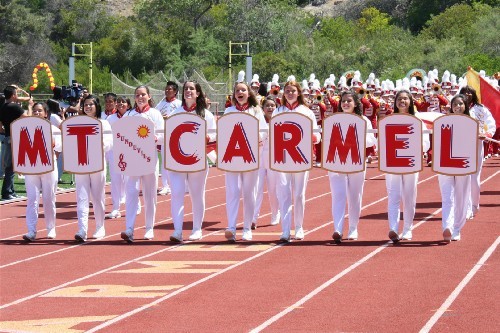 photo by Robert Bjorkquist (teacher at Mt. Carmel HSAdam Lambert had these advantages. He should not be the only American Idol. All our kids deserve the spotlight.
July 30, 2019
A Pep Talk for Teachers Whose Summer Fades…

My 28,000 one hour shows equal 5,000 kids in the audience over a 32 year high school teaching career. The playing field—aka, my classroom from 1977 to 2010. It was a great ride! We had many winning seasons. Really. I mean it. Never a perfect, undefeated season, but always in the hunt, always finishing with a winning record.
What was the magic trick? The secret? The ace up my sleeve? We will get to that shortly but first, gather around, huddle up, it’s halftime and it’s time to have a serious gut check.
Ah, I can see the doubters out there—the teachers for whom the burdens of teaching have set you into a cynical spiral of despair. You’re down, and it’s only the half way point of the year. Your classroom seems like “Groundhog Day” (the movie) in which things that drag you down are repeated over and over.
Let’s make a list: unruly kids; way too many of them; lack of supplies; tepid admin support; parents who either don’t care, don’t want to know what’s wrong with their children—or worse, they ask you what to do!
Have I touched on some of your problems? I bet I have. But let’s not forget these mind numbing fumbles: the pay check is dismal at best; the curriculum you are told to teach is boring, not just to the kids but to you, as well. One more thing. You have no social life, no money for one, and no idea how to get out of this funk.
Is that what’s ailing you? Yes, I know. I just caused you to cry. “Are you crying? Are you crying? There’s no crying”… in teaching. (Okay, you can cry a little: but there is no crying in baseball). Now wipe away the tears, and as they say “Huddle up and listen.”
 What makes a great teacher? I’ll tell you what. Endurance. Curiosity. Compassion. Selflessness. Humor. A solid work ethic. And the most important element—faith that you have something to offer those kids every single day. Ask yourself if that is what you are out there playing for? Are those qualities the ones you value, not just as a teacher, but are those the qualities you are teaching kids?
That’s right. I just identified the real ‘Lesson Plans.’ You don’t teach to a test. You are the test. You set the goal. You emulate the skills that you want them to begin to value and someday maybe master.
Let me add one important quality that I implied: patience. Malcolm Gladwell (if you don’t know who he is, then you are not paying attention to the way we learn) argues it takes 10,000 hours of productive practice to master anything; a musical instrument, a sports game, the act of public speaking, and on and on. So, for all you young guns out there teaching: patience, endurance. It’s going to take a while to learn the art that is teaching. Each year is a marathon, and summer is when you collapse at the finish line (or try to, if you’ve saved enough money…more on that later).
So what to do? Teach them to sing. To dance. To listen. To create with their hands or finger tips. Whatever you do—you do it first and preferably with them. Show them that it’s doable. Heck, you were once a student and you did it. They can, too.
I found lots of teachers who felt they hated what they were teaching. Take WWI, for example. Boring? Really? The gas used in that war is much like what Assad used on his Syrian people. It’s what Saddam Hussein used on the Kurdish citizens to keep control. It’s the weapon of choice for dictators. Ask the kids what we, as Americans, should do about it? And how different is that, really, when it comes to knowingly allowing drinking water in Flint, Michigan to be poisoned with lead? Get them pissed off. Remember, the sins of the past will repeat if you, their teacher, do not help your students to learn from the mistakes of our elders.
 That’s your job. Your job is to get them to rise up. To ascend to a high level of thinking, of competence, of humanity. That is so notboring. And if you are not flying out of this huddle fired up to make a difference, then you may not belong in this arena. 50% of teachers can’t cut it and quit after less than five years. But if you have been reading this far into my pep talk, I’m betting you are not a quitter. I’m betting that you give a damn about most, if not all, of your kids.
 I know the pay sucks. But stick together. Unions made the difference for me. We took pay cuts for medical coverage to kick in after we retired until 65. That was very ‘Union’ smart. We had to save for retirement, and those pensions that teachers have are golden—just ask folks in the private sector about that. You are a professional, so keep fighting for that profession. Those who can’t teach often don’t have the patience, the selflessness, the vision of a bigger picture, the persistence to get something right. They may have more money, but let me tell you, the Beatles got it right, “Money can’t buy you love.”
And when this season is over, when the scoreboard says you have won more than you lost, when the kids start meandering out of your classroom—that’s when you will notice that ‘Thank You’ note left on your desk that reads “You don’t know how much it meant to me when you ran out to the parking lot to ask me if I was ‘okay’. It mattered a lot.”
So, the season really begins anew.
To quote John Keating, “What will your verse be?”*
(If you don’t know who he is…for shame. Look him up. Oh, one more thing, ask a wonderful, retired teacher to come back and share a lesson to your kids. Those folks still got it…just ask, me
www.robertpacilio.net
July 18, 2019
It’s Time for a ‘WE ARE THE WORLD’ Moment
 I’ll keep this short and tart. On March 7th in 1985, people of all ages, religions, colors, and sexes put their egos outside the door and came together to sing a song of unity. It was a fundraiser called “USA for AFRICA.” It was all everyone could talk about for over a year.
 Singers from all backgrounds: rock, Rand B, country, pop, folk and even the Big Band era joined their voices to remind the United States that we could do great things when we sang as a chorus. They had one thing in common—they were Americans and they saw something terrible happening globally. It was time to ask people to rise up to “make the world a better place for you and me.”
The people who need to be front and center today are not the singers; they are our politicians. All of them.
This time is now. I’m not talking about the Moon, Mars, or even the protection of the Earth (although that is an imminent threat to our survival). I am talking about American Intolerance. We cannot be defeated on the battlefield, but we can be defeated by division, selfishness, and persecution.
I am old enough to remember the phrase “AMERICA: LOVE IT OR LEAVE IT.” It was aimed at those who protested the war in Vietnam. It was really about disagreement, fear, and anger. James Michener said it best in the final line of his work about Kent State, “Tolerance. God, how we needed it then.” Four died that day in Ohio in May of 1970, and it took the lives of these college students to turn public opinion against the conflict in Vietnam. It brutally reminded every American that the right to protest should always be part of the creed all Americans hold dearly.
Winston Groom, the author of the book Forrest Gump, was asked what the theme was.. His simple answer: “We can’t all be smart; we can’t all be rich; we can’t all be famous, but each and every one of us can treat all people with dignity.”
 This is the team we play for. All of us.
https://www.youtube.com/watch?v=M9BNoNFKCBI
Photos from Upspsplash
Top photo courtsey of :Natalie Rhea Riggs
Lower phote courtsey of James Lee
July 15, 2019
Lincoln’s Lament: We Must Find Our Political Center and Save the Union
 Lincoln’s house is most definitely staggering in all directions.Divide and conquer — that’s how the battle goes. The nation is tugged to the left with the progressive, magnetic pull of figures like Warren, AOC, and Sanders most of whom argue for government to take on the burdens of health care, climate crisis, and income equality (they are just some of those proponents).Meanwhile, America is in the grips of the right with the Trump administration, the influence of McConnell on the judiciary and legislative branches, and the fear of a “Deep State.”And if that were not enough, Americans find themselves worrying whom to trust. (Where did you go Walter Cronkite?) The “mainstream” media is labeled “fake news” by an administration, which claims that organizations like The New York Times are the “enemy of the people.” The Fox News channel is blamed for being a collaborator and mouthpiece for the interests often labeled “Far Right.”So what do Americans trust and where is the center of political gravity? The answer: “pragmatism, compromise and limits” according to the writer Beverly Gage. (Yes, for full disclosure, she writes for The New York Times Magazine.) As a matter of fact, she explained that this moderation “…can be hard to rally people behind….” However, this essay is my singular rallying cry. Read on.While moderation and “centering” oneself may be the mantra of personal wellness; I would argue it is the only way to heal the divide that has pitted patriotic Americans against each other. (After all, it was the key to success for the great Coach John Wooden, but let’s stick to politics for now.) Let’s take on the issues and see if there is consensus.Can we agree that Medicare generally works? Can we agree that keeping one’s private insurance if one prefers is also beneficial? They do not have to be mutually exclusive. There are many Democratic candidates who support this position; Beto O’Rourke comes to mind. The Republican option is to kill the ACA with no plan to insure the 20–40 million people who would be removed from insurance to have any hope for coverage.Can we agree that drug cartels in the three Central American nations are murderous, breed corruption, and have been the reason for the exodus of innocent people in harm’s way? So wouldn’t it make sense to deal with security and poverty there before many more immigrants pour into Mexico and America? Wouldn’t that be a smart investment?Can we agree that those who do seek asylum need to be treated according to the “Golden Rule?” Haven’t we learned from the past wars that refugees are the innocent ones caught in the gunfire? Can’t we agree that these folks really are here as a last resort? Wouldn’t we do the same if we were as threatened as they?
Can we agree that human beings of all races and standing must be treated with dignity?So can’t we agree that immigration judges, who are under the overwhelming stress of 50 cases before them a day, be bolstered with more judges? Money being allocated to deal with the problems of overcrowding and underserved (in terms of food and other necessities) should be targeted to the problem and not feeding the coffers of private security firms (which are making a killing financially on a per diem basis.)Can we agree that the globe is heating up at unprecedented rates? That the glaciers are melting? That ubiquitous extreme weather conditions are not normal? Now the tricky part — can we agree that man made pollutants are the cause? I think we can. 121 nations agreed in Paris. (Then, America pulled out of the Paris Accord.) So do 95% of all scientists (The other 5% are working for the fossil fuel industry — the source of energy that may be replaced.) Can we also agree that our children and their children will face a crisis of unimagined horror if we don’t begin now? Perhaps a “Green Revolution” may be too extreme for some, but renewable energy is the only way out. We cannot “clean coal” our way out of this. Neither is fracking or drilling in the Arctic long term solutions.So ignoring these issues or denying that they exist is not an option. Numerous candidates are behind varying plans to move America in the direction needed. Some say, why should we lead, or what good will it do if other nations pollute? Answer: why did we enter WWII and stop Hitler? That’s what we do. We save the world from disaster. That’s what makes us great. But we have to do it as one.Finally, let’s talk income insecurity. Can we agree that medical insurance and prescription drugs cost too much? Well, my first point on Medicare/ private insurance would go a long way to dealing with part of that. (Of course, it means that Obamacare is a good idea that needs to be expanded.) We know the voters were up in arms when they believed they would lose it. (And only Senator John McCain saved it, along with a tepid Justice Roberts).As for prescription drugs, can we agree that Canada and other nations have eased the burden of high cost? (If you don’t believe that one, do a little research. Diabetics know how expensive insulin is and how much cheaper it is Canada. What it means is that Big Pharma has to be reeled in. Many candidates have plans for that, too.So why aren’t any of these ideas being debated in the halls of Congress. One reason is the filibuster. According to Senate rules: “In essence, a filibuster is any use of procedural rules to block or delay legislative action. The continual talking prevents the matter from being voted on, and the bill may simply be ‘talked to death.’” Nowadays, they just know that if either side can’t get 60 votes, why bother? However, sometimes legislation may get the votes, then the second barrier comes into play. Senate Majority Leader McConnell can refuse to bring a bill to “the floor.” That is why he calls himself “the Grim Reaper.” Remember, we reap what we sow; and if we sow division, we all lose.That’s why nothing happens…or at least a reasonable part of why nothing is accomplished. So what can be done? Several candidates like Governor Jay Inslee (among others) advocate that the filibuster must end; 51 votes in the Senate should allow a bill to pass. And the power of the Speaker should not be absolute. If, say for example, 30 senators demand a bill be brought to the vote, so be it. It may not be Robert’s Rules of Order…but since I am Robert, I can make a new rule.
Moderation, compromise, pragmatism, limits — these are not liberal or conservative ideas. They are part of the building blocks that help build American values.Our Civil War was the bloodiest attack this Union has ever experienced. It’s true that Lincoln made many compromises to end slavery. The economic issues on which the South relied, as well as the protection of States’ sovereignty did not outweigh the inhumane, inherent nature of slavery that America considers its Original Sin. The State of our Union is in crisis. If we don’t find our center and make a change in our discourse, we will, most surely, perish as the bastion of freedom for all.
June 15, 2019
Teachers: Students’ Moral Compasses Are Spinning;. All the standardized testing will never measure character and citizenship.
 I was interviewed by a panel of esteemed teachers and administrators in 1998 since I was nominated to be the San Diego County’s Teacher of the Year. “What did I teach,” the asked. My answer: “Invisible things.” Naturally, they were perplexed. So they asked for specifics. I replied, “Compassion, tolerance, honesty, envy, jealously, loyalty…you know, the stuff we are supposed to teach.” The wisdom of Atticus Finch seemed to fit the occasion. He told his daughter, “Scout, in order to understand a person, you have to step into a man’s shoes and walk around in them.” That’s what I taught; five shows a day, five days a week, 32 of the most passionate years of my teaching life.
So it with high regard that I express kudos to writer Paul Barnwell, the author of The Atlantic’srecent article regarding the failure of schools to teach character; he made it abundantly clear that: “The pressures of national academic standards have pushed character education out of the classroom.” (7/25/2019)
How bad has it gotten? Barnwell gives many examples, but one quantifies the situation, “…according to a 2015 Council of the Great City Schools study, eighth-graders spend an average of 25.3 hours a year taking standardized tests.” That comes as no surprise to me since my 32 years as a high school teacher in San Diego evolved into a manic panic of administrators behaving like testing cheerleaders for week-long testing; prepping for testing; testing to meet the minimum standard to graduate (which scares the heck out of the kids whose first language is not English), testing for State Exit exams, etc.. I think you get the picture.
 What is at stake for the school and its district? In “good” schools/ districts (typically ones with parents of financial means) — it’s all about bragging rights. In “poor” schools/districts (best described as “poorer, ghetto schools”) —closure or survival; thus being taken over by an bean counting state administrator, who often is well versed in dollars and adverse to educational quality. Naturally principals get the hook, as well as head honchos at the district office in charge of curriculum.
 And let’s not forget the real estate market. God forbid a school’s score card of proficiency does not fall too far below “the schools with comparable income status” — then it’s RED ALERT! Buyers will opt out of that district’s boundaries and head for private schools (if they have the deep pockets). It is a realtor’s worst nightmare—financial flight from their home, home on their range.
What does all this testing mean to students? Ironically, virtually nothing. As long as the student passes a very basic test in language that the aforementioned second language students distain the scores have no affect on students. None. Zero. As a matter of fact, the teachers never see the results until those students are long gone. The parents get a letter from the state about the math/ language skills of Joey or Jane and promptly deposit it in recycling (after their children say it has no effect on GPA, college admissions, yada, yada). And the kids are right. Fact is, many of the brightest students blow it off because they are stressed out and tested to death; they prefer to concern themselves with an AP test down the road. Administrators then beg them to not opt out. Please!
So what is forsaken for all this testing, not to mention all the money spent on the companies that charge the various states for their “latest-got-to-have-it” tests? Simply put — teaching character, ethics, a moral code that points True North.
Ask any teacher who has taught 5 to 10 years and they will confirm what I am saying. I don’t have time or patience to document the problem of testing any more than I have (read The Atlantic article if you doubt me). I refer teachers who are somewhat experienced because they are the ones who have realized what has been stripped away; the newbie teachers simply are battered down with expectations and are running like crazy to keep up.
So what to do, you ask?
 As the San Diego County “Teacher of the Year,” let me introduce some the characters whose values I insisted my students hear from and contemplate: Ma and Tom Joad from The Grapes of Wrath, who refuse to allow ‘the regular folk to be beaten down by ‘the man’; Mockingbird’s Scout and Atticus Finch, who witness the outrageous miscarriages of justice in the Deep South; Holden Caulfield, as he tries to be the Catcher in the Rye, watching poor souls falling from buildings; Gatsby’s only real friend Nick Carraway, who sees the bloodshed caused by careless, thoughtless rich fools; the ‘slave’ Jim who guides Huck Finn’s adventure as histrue father figure; Our Town’s heroine Emily Webb, who realizes, much too late, that people just take life for granted; and the wide array of unforgettable characters of Bruce Springsteen’s “American Skin.”
These authors and their thematic motifs served me well, and to this day, my students remember those lessons, especially Don McLean’s eulogy to an America that has “gone dry” in his classic song “American Pie.”
When I retired, my former students implored me to write down what I taught and how I taught it. So I did. Meetings at the Metaphor Cafe is now taught is several school districts. But many teachers will say that they don’t have the time. My answer: make the time. Spend the minimum time giving tests and more time guiding the students though the harrowing experience of being a teenager in this cynical world we inhabit. (If you are a teacher, parent, or administrator, I’ll send you a free copy…really! Just Google it…I’ll even pay the shipping. I’ll do anything to get this ship sailing True North.
After all, it is the invisible things that are the heart and soul of what students remember all those years later.

June 3, 2019
Aaron Sorkin Meets Atticus Finch in the New Jim Crow Era
 Paying it forward. That is what one of my former students, Dr. Frank Lopez, did for me. He knew my wife and I were visiting New York City, and he made sure we would be attending Broadway’s To Kill a Mockingbird. Why it mattered so much to Dr. Lopez is that it was the novel I taught him (and other high school students for 32 years) and because his son Lex would be reading Mockingbirdthat year. So it was that Harper Lee’s novel and Horton Foote’s Academy Award winning screenplay was brought to life in Aaron Sorkin’s new play, and my wife and I along with his family were witness to the courtroom drama.
I was reminded that evening by Dr. Lopez what an impact the heroic Atticus Finch had on him, as well as the tragedy that befell Tom Robinson because the topic of social justice was a motif in my classroom, sometimes dubbed “The Metaphor Café.” As we leaned forward in our seats that evening to hear Atticus Finch once again battle the ignorance “of a tired old town,” I looked at two generations of students—a doctor and his son, and wondered how this new version of Mockingbird would be received.
However, this Atticus Finch, played by Jeff Daniels, is not portrayed as a shining white knight; rather he is a simple country lawyer used to handling land disputes and wills. He discovers he is powerless against the forces of ignorance that prevails then…and now.
For those who do not recall the details, Finch takes Tom Robinson’s case, knowing that both were beat “before they started”—victims of the 1930’s racism that is all too familiar today. I will not repeat depressing statistics of black incarceration or the systematic injustice in America’s courtrooms that is evident to this day, despite what some felt President Obama’s election could rectify—namely, a post-racial society. One man’s election, no matter how historically significant, has not changed intransigent racist attitudes.
With that in mind, Aaron Sorkin’s version of To Kill a Mockingbird challenges its audience that is far too complacent with the outcome of Harper Lee’s disheartened Atticus Finch and bullet-ridden, doomed-from-the-start, Tom Robinson, to imagine a scenario in which the Finch’s maid Calpurnia redefines the novel’s theme.
At the outset, Atticus reminds his children, Scout and Jem, and generations of American students, that one has to “step into his shoes” to understand a person. Nobel in words, but Calpurnia makes it dramatically clear to Atticus that “understanding” the virulent hatred and violence that racism breeds in the antagonist Bob Ewell and the vast majority of Maycomb, Alabama’s white citizens (and by extension the Deep South) justifies their ignorant behavior. Jeff Daniels, in an interview, explains that his character is “an apologist.”
Yes, Atticus’ defense of Robinson is courageous and an act worthy of admiration. That is undebatable. His motive is equally compelling as he tells his daughter Scout his personal reason for defending an obviously innocent man so many others attack because of the color of his skin, “You have to learn to live with yourself before you can live with other folks.”
However, in both the novel and the film, Atticus stops short of physical action, other than standing guard at the courthouse when the town’s racist men seek to take justice into their own hands with a noose. Atticus symbolically stands at the door holding only a book which will not stop the henchmen. What stops them? Guilt. Guilt that is stirred up by his children who remind the men how much they owe their father and what he has done for them in their time of financial need. The voices of children who stubbornly refuse to move reminds the angry men that they are still human.
Sorkin decides it is time for his hero Atticus to respond, in deeds and promises of future actions. Atticus fights back, physically, with the threats of Bob Ewell—something he refuses to do in the novel because he argues that letting Bob Ewell blow off steam and save face ”would save Mayella another beating.” This is a pivotal moment and Sorkin’s signature that it is time for Atticus to put a stop to one man’s threats.
Mayella Ewell, the sexually abused daughter, is trapped in a lie and a society that views her as white trash. She, too, is a victim—a mockingbird who, like Robinson, sings out, only to draw the hunter’s attention. And hunt they do. I’m reminded of a line that Horton Foote added to the film absent in the novel: Atticus turns to Jem, who has just witnessed his father being ridiculed, and says, “Son, I’d like to keep you from all the ugliness in the world…but that’s just not possible.” Indeed.
And that is just the point Sorkin drives home, as deeply as Boo Radley plunges a kitchen knife into the heart of the novel’s antagonist. “We’ve got to stop this right here and now,” Atticus Finch demands to a faceless jury. “It has gone too far.” Aaron Sorkin is making that same argument; dignity demands that ignorance no longer be tolerated. Not now. Not ever again.
Metaphorically, this play is about just how long this nation will remain apologists, enablers of racist policies of The New Jim Crow, documented by the distinguished writer Michelle Alexander. History will not look kindly to this jury if America continues to show malice towards those mockingbirds that “sing their hearts out for us.” This Atticus Finch aims to show us the way and reminds us, again, “That it is a sin to kill a mockingbird.”
 When the curtain came down that evening, and the audience stood, my eyes locked on to Dr. Lopez. There was so much to say and so little time to say it. So this is my time. I hope when Dr. Lopez’s son Lex engages in a class discussion about the characterization of Atticus Finch that he remembers words really do matter, but actions speak louder than words.
 May 20, 2019
The Most Important Question for Students (all of us): WHY?
I was invited into an American literature class by a young, wonderful teacher, Ms. M. She had graciously asked me to say a few words to her “kids” since I had been her teacher so many years ago.
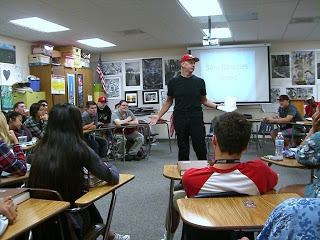 I looked around at the circle of students who had their Great Gatsby novels and notebooks opened on their desks. I asked them a simple question: Why did Gatsby want Daisy to leave Tom and fall in love with him? Why would she? Why…why do fools fall in love? (I explained that was a song…well, actually, I sang it…a little off key — they laughed.)
Nice. They had a sense of humor.
Silence. I waited them out. Tick-tock. Then I asked them another question: Why didn’t each of them ask that question of Gatsby and Daisy? I said something to the effect of “Do you know what makes people so things crazy things when they are, or think they are, in love?”
Now these students are top notch. They know exactly what happened in the novel: spoiler alert — it does not end well for old Jay Gatz. They may know what all the symbolism is about; the “eyes of Doctor T.J. Eckelburg” looking down on the “Valley of Ashes” etc. But silence befell them at the word WHY.
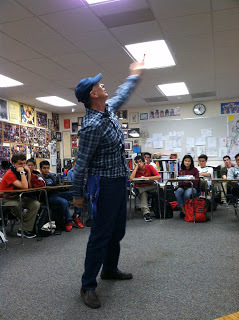 Before I go back to that “teachable moment,” as all the pedagogy textbooks refer to it, (in other words, it is what Oprah calls the “Ah-ha Moment”), let me say this. History and English teachers particularly must stop asking what, when, and where. That’s kid stuff. Primary grades go there. When middle/high school teachers are fishing around for that information — that’s just a box to quickly check off to make sure that the students have done their “homework.” It has nothing to do with why those students are studying Gatsby, or WWII, Watergate, Mockingbird, or what’s bothering Holden Caulfield.
Those questions are great for Journalism 1 classes. The question How is the stuff of science and math — perhaps business. Those teachers want kids to know how things work, first and foremost. Not that Why does not matter to those teachers, but first –how does it work?
Some teachers too often “dumb down” material and hope that that will suffice. Teachers are pushed, for all sorts of reasons, to make the job a true/ false, scantron, there-is-one-clear-answer message. It takes less time, less effort, and I know that these teachers are bogged down with too many students, too many standards, too many problems in the students’ homes, and too little money in their bank account. I get that. But the American taxpayer who needs to invest much more in public schools (more on that in another essay) must expect higher level thinking from the young people coming up. Lord, we know these kids will face some challenging issues in their lives and what the problem is, well that’s obvious — why it exists and how to solve it is another matter altogether.“Why? Because if you don’t ask, you don’t dance.”
Okay, I am off my soapbox, let’s get back to that classroom.
So, finally I ask one young man, much to his surprise, this question, “I am sure there is someone here at school that you would love to go on a date with, right…no names…but someone?”
Now I really had the full attention of the class. He stammered something, but it was reduced to a nod. I then turned to a young lady next to him and asked her the same thing. Laughter ensued. Nervous laughter. They were having a good time. I had strummed a chord that they all related to that song. Then I said to both of them, “I bet you can’t explain why you are enamored with that person?” One student laughed and said that is a vocabulary word on their test. More laughter. I followed up, “Seriously, think about it. That person you two are thinking of, or persons (more laughter) doesn’t know you from Adam or Eve, right? What do you know about them? Why in the world are they…of all the charming, smart, fun, and attractive people in your life, that special one? The one you would do something crazy for?”
A beat. I looked around. “Each of you is thinking of that person right now. Maybe a prom date? But the question is why them? It is irrational, isn’t it? Here are some of the heartbreak kids: Romeo. Juliet. Harry. Sally. Rick. Elsa. The head and the heart don’t always sing the same song. Gatsby loves Daisy because of what she was or seemed to be — a dream. But what she is, in reality, is careless, selfish and spoiled. Remember what Nick, your trusty narrator, explains: Daisy and Tom were careless people who crash into people and then leave it to others to clean up their mess as they escape with their money.
The room was quiet. Then I said, “I encourage each of you to follow your hearts. Yes, it may get bruised. Remember this: Don’t be careless with people’s hearts, but don’t be shy either. Why? Because if you don’t ask, you don’t dance. And that is where the fun is.”
Photo by author
 I looked around at the circle of students who had their Great Gatsby novels and notebooks opened on their desks. I asked them a simple question: Why did Gatsby want Daisy to leave Tom and fall in love with him? Why would she? Why…why do fools fall in love? (I explained that was a song…well, actually, I sang it…a little off key — they laughed.)
Nice. They had a sense of humor.
Silence. I waited them out. Tick-tock. Then I asked them another question: Why didn’t each of them ask that question of Gatsby and Daisy? I said something to the effect of “Do you know what makes people so things crazy things when they are, or think they are, in love?”
Now these students are top notch. They know exactly what happened in the novel: spoiler alert — it does not end well for old Jay Gatz. They may know what all the symbolism is about; the “eyes of Doctor T.J. Eckelburg” looking down on the “Valley of Ashes” etc. But silence befell them at the word WHY.
 Before I go back to that “teachable moment,” as all the pedagogy textbooks refer to it, (in other words, it is what Oprah calls the “Ah-ha Moment”), let me say this. History and English teachers particularly must stop asking what, when, and where. That’s kid stuff. Primary grades go there. When middle/high school teachers are fishing around for that information — that’s just a box to quickly check off to make sure that the students have done their “homework.” It has nothing to do with why those students are studying Gatsby, or WWII, Watergate, Mockingbird, or what’s bothering Holden Caulfield.
Those questions are great for Journalism 1 classes. The question How is the stuff of science and math — perhaps business. Those teachers want kids to know how things work, first and foremost. Not that Why does not matter to those teachers, but first –how does it work?
Some teachers too often “dumb down” material and hope that that will suffice. Teachers are pushed, for all sorts of reasons, to make the job a true/ false, scantron, there-is-one-clear-answer message. It takes less time, less effort, and I know that these teachers are bogged down with too many students, too many standards, too many problems in the students’ homes, and too little money in their bank account. I get that. But the American taxpayer who needs to invest much more in public schools (more on that in another essay) must expect higher level thinking from the young people coming up. Lord, we know these kids will face some challenging issues in their lives and what the problem is, well that’s obvious — why it exists and how to solve it is another matter altogether.“Why? Because if you don’t ask, you don’t dance.”
Okay, I am off my soapbox, let’s get back to that classroom.
So, finally I ask one young man, much to his surprise, this question, “I am sure there is someone here at school that you would love to go on a date with, right…no names…but someone?”
Now I really had the full attention of the class. He stammered something, but it was reduced to a nod. I then turned to a young lady next to him and asked her the same thing. Laughter ensued. Nervous laughter. They were having a good time. I had strummed a chord that they all related to that song. Then I said to both of them, “I bet you can’t explain why you are enamored with that person?” One student laughed and said that is a vocabulary word on their test. More laughter. I followed up, “Seriously, think about it. That person you two are thinking of, or persons (more laughter) doesn’t know you from Adam or Eve, right? What do you know about them? Why in the world are they…of all the charming, smart, fun, and attractive people in your life, that special one? The one you would do something crazy for?”
A beat. I looked around. “Each of you is thinking of that person right now. Maybe a prom date? But the question is why them? It is irrational, isn’t it? Here are some of the heartbreak kids: Romeo. Juliet. Harry. Sally. Rick. Elsa. The head and the heart don’t always sing the same song. Gatsby loves Daisy because of what she was or seemed to be — a dream. But what she is, in reality, is careless, selfish and spoiled. Remember what Nick, your trusty narrator, explains: Daisy and Tom were careless people who crash into people and then leave it to others to clean up their mess as they escape with their money.
The room was quiet. Then I said, “I encourage each of you to follow your hearts. Yes, it may get bruised. Remember this: Don’t be careless with people’s hearts, but don’t be shy either. Why? Because if you don’t ask, you don’t dance. And that is where the fun is.”
Photo by author