Alex Sumner's Blog, page 60
December 24, 2011
Music In Theory and Practice – Part 2

S L Macgregor Mathers
Mathers' corollary to "The Chromatic Method"
Following on from yesterday's post, I would like to review a similar method which Macgregor Mathers gave to the Alpha et Omega – it is set out in full detail in Pat Zalewski's book Inner Order Teachings of the Golden Dawn .
.
Like Case and Bennett, Mathers made an association with colours and musical notes – however he differs in several important aspects. Firstly, Mathers starts with the assumption that Red = F, not C as in the Case / Bennett system. Secondly: there are no sharps or flats in Mathers' system. Thirdly, the Seven planets follow a scale starting with the F above middle C, and ascending in the same order as the walls of the Vault of the Adepti. Hence:
Hebrew Letter
Colour
Note
Heh
Pe
Shin
Red
F
Vau
Red-Orange
F or G
Zayin
Resh
Orange
G
Cheth
Amber
G or A
Teth
Beth
Aleph
Yellow
A
Yod
Yellow-Green
A or B
Lamed
Daleth
Green
B
Nun
Green-Blue
B or C
Samekh
Gimel
Mem
Blue
C
Aayin
Tau
Indigo
D
Tzaddi
Kaph
Violet
E
Qoph
Vermilion
E or F
This system has its advantages – and disadvantages. From a musicological (read: "snobbish") point of view, some of the reasons that Mathers gives for adopting the particular peculiarities of this system are suspect and inconsistent, and smack of "dumbing down." The only reason I can see for starting with Red = F and treating the planets as he does is to make use of the spaces and lines of the Treble Clef. Perhaps if he was confident with leger lines we might have had a whole different secret teaching! It could, of course have been to allow Adepti to play the piano one-handed, the left-hand being left free to hold a ritual implement or something.
However, Mathers' aversion to sharps and flats is something else. The reason Mathers gives for avoiding it touches upon a problem that musicians have had to deal with for thousands of years, namely Temperament. It is impossible to tune the twelve-note chromatic scale so that all intervals are "perfect" – therefore, historically, several different methods have been proposed including the Pythagorean, "Just Intonation" (like Pythagorean but with easier arithmetic), "Well Tempered" (made famous by Bach's Das Wohltempierte Klavier), and "Equal Temperament," amongst others. The upshot of this is that depending on which system of Temperament you are using, the actual tuning of some chromatic intervals might vary by as much as 10Hz – enough to create an out-of-tune "beating" sound, assuming two different instruments had been tempered differently.
How did the Secret Chiefs, from whom Mathers claimed to derive this teaching, resolve the problem of Temperament? Um, well, the unfortunate fact is that all they were willing to lay down minutiae on a whole host of other topics, they conveniently passed on this one: the simplest way for Mathers to resolve the situation was to avoid using sharps and flats.
Of course, on the other hand, Mathers might have interpreted "Quite the night and seek the day," as meaning "avoid the black keys and play only the white keys."
What we thus have from Mathers is therefore a reduction of the chromatic scale to the F-Lydian mode – ironic, as Mathers complained about using modes as well.
HOWEVER: the very fact that Mathers' system is completely unsophisticated compared to the Case/Bennett system is in fact its greatest advantage – because it allows Hebrew words to be chanted in simple melodies. This in turn makes it highly conducive to teaching a temple full of initiates whose musical talent may well range from hardened rock-musicians reared on Frank Zappa and Led Zeppelin to, well, drummers. By way of example, I shall now attempt to re-score the Lesser Banishing Ritual of the Pentagram according to the note-values suggested by Mathers.

The Lesser Banishing Ritual of the Pentagram, composed by Alex Sumner © 2011. Based upon a music system devised by S L MacGregor Mathers.
Filed under: Occult Tagged: Alpha Et Omega, Golden Dawn, lesser banishing ritual of the pentagram, Macgregor Mathers, Music, Pat Zalewski


December 23, 2011
Music In Theory and Practice – Part 1
Starting today I present a short series of blogs on the esoteric use of music in the Western Mystery Tradition.
As I understand it, there are four main methods of incorporating Music into the esoteric practices of the West. These are:
The Chromatic scale method;
The Harmonic method;
The Modal method; and
The Intuitive method.
Each of these embraces dogmatism and pragmatism to differing degrees. The Intuitive Method is the least dogmatic / most pragmatic, and typifies the approach of mainstream composers creating works for the general public, but is not necessarily best suited for a ritual unless it were specifically composed for such. On the other hand, the chromatic method is probably the most dogmatic and arbitrary – but, once learnt, it can be deployed the most quickly to create Qablalistically-correct ritual chants. However a chant thus created would sacrifice aesthetic charm for intellectual rigour, which is a polite way of saying Geekishness.
I intend to review each of the four methods: the Chromatic Method today, and the other three in blog posts in the days to come.
The Chromatic Scale Method
This method has been advocated by Paul Foster Case and Allan Bennett. The basic principle may be expressed thus:
There are 12 notes in the Chromatic Scale; they have a one-for-one correlation to the 12 colours of the Artist's colour wheel.

The Chromatic Scale
As those who follow the GD teachings know, the letters of the Hebrew alphabet can all be related to the colour wheel, hence on this basis when can then relate them to the chromatic scale as well. This is done by arbitrariliy saying C = Red, C# = Red-orange, D = Orange, etc. A full list would be as follows:

Hebrew letters / Colours / Piano keys
Hebrew Letter
Colour
Note
Heh
Pe
Shin
Red
C
Vau
Red-Orange
C #
Zayin
Resh
Orange
D
Cheth
Amber
D #
Teth
Beth
Aleph
Yellow
E
Yod
Yellow-Green
F
Lamed
Daleth
Green
F #
Nun
Green-Blue
G
Samekh
Gimel
Mem
Blue
G #
Aayin
Tau
Indigo
A
Tzaddi
Kaph
Violet
A #
Qoph
Vermilion
B
Armed with this knowledge you can now grab any music instrument you have to hand, such as a guitar, recorder or a keyboard (if convenient), and start working out how Hebrew divine names would sound if sung to the notes proposed in the table above. Here are some I prepared earlier:
The Qabalistic Cross

The Qabalistic Cross (chord accompaniment optional).
Lesser Banishing Ritual of the Pentagram

Divine and angelic names from the LBRP
Conclusion
If you are a musician and have stayed with this so far, you will probably have noticed that the use of this Chromatic method does not a pleasing melody make! More interesting, though is the fact the interval between one note and the note represented by its opposite on the colour-wheel is the infamous tri-tone, which historically is known as the Diabolus In Musica of "Devil's Interval" (the fact that the melody of "Black Sabbath" by the group of the same name is based on the tritone is not a coincidence!).
Finally I would just like to leave you with this video, in which a group of musicians have set the Lesser Banishing Ritual of the Hexagram to music using just this method. Although it's called "Rites of Luna," from what I can make out in the excerpt shown the lady is just doing the regular Hexagram ritual.
Filed under: Occult Tagged: Allan Bennett, lesser banishing ritual of the pentagram, Music, Paul Foster Case, qabalistic cross


December 18, 2011
Vampire Ringtones!
Recently I appealed to my many millions of fans with the following question:
Suggestions please: if you were the Lord of all Vampires, what song would you have as the ring-tone on your phone?
This may or may not have something to do with a writing project on which I am currently working. Anywho: I have compiled the various answers I have received from Facebook and Twitter into this blog post, and at the end I will give you the chance to vote on your favourite!
1. Walk This Way – Run DMC & Aerosmith
Why: the classic drum-intro fulfils the first and most important function of a ring-tone, i.e. to alert you that you are being called! More importantly this song would be appropriate because it features in the soundtrack of the classic Vampire movie The Lost Boys (although curiously it doesn't seem to have made it to the soundtrack album
 ).
).
2. Bat Out Of Hell – Meat Loaf
Why: it's got "Bat" in the title, get it? Also, the opening chords are suitably loud.
3. Who Wants To Live For Ever – Queen
OK so there's an obvious immortality theme here, although I think it being a ballad it would take me until the third verse before I realised someone was trying to phone me. Although, of course, if I were a Vampire I would have super-hearing, no? This one was suggested by Nick Farrell, on the grounds that "most vampires are camp." 
4. Immortality – The Fall
[image error]
Another "Immortal" themed song. Probably make a good ring-tone if they shaved off the first ten seconds and started with the main synth-riff right from the start. A little known fact about Mark E Smith is that he is also a tarot reader. Hell: anyone who can wash that much speed down with that much scotch and not die must be one bad-ass Nosferatu!
5. Lust For Life – Iggy Pop
Somebody suggested "Eggs On A Plate" by Iggy Pop, "just because I'd be freaking Lord of the Vampires." However, it quickly occurred to the Sumner-family brain-cell that Mr Pop – who on a good day, it has to be said, does indeed look like death warmed-up – has had more obvious vampire-themed songs, so I put this one in my list instead.
6. I've Got You Babe – UB40 & Chrissie Hynde
Hey! Someone replied and suggested this, so who am I to argue? Apart from if it's over Iggy Pop's back catalogue, obviously (see above).
7. Bring Me To Life – Evanescence
It was a close call between this and "My Immortal." Hell, Evanescence have so many death-related songs that I wouldn't be surprised if Amy Lee really is a member of the Undead!
8. Barber's Adagio for Strings – William Orbit
Quote from my Facebook wall: "Always a club classic for D.J's and for classical music..so would have been the vampire Lord's fav for nearly a century."
9. Whiter Shade of Pale – Procul Harum
10. By The Rivers of Babylon – Boney M
I presume this one was suggested as a joke. Either that or the thought behind it was, "I'm Lord of the Vampires, so if you don't like my taste in music, you can bite me."
11. San Francisco – Scott McKenzie
I was doubtful about this at first, although in the video I noticed that one of the hippies has Occult symbols on his head-band.
12. O Fortuna from Carmina Burana (Carl Orff) – André Rieu
I chose Rieu's version because it was the first one I found on Youtube. The tune is an undoubted all-time classic. Also very occultish, in a "Jovial" way.
13. Midnight Rambler – The Rolling Stones
Hey, I've just had a brilliant idea. If one wants to know what the Lord of all Vampires has for a ringtone, who better to ask than Keith Richards? It makes perfect sense.
View This Poll
Filed under: Occult Tagged: Aerosmith, Boney M, Carl Orff, Chrissie Hynde, Evanescence, Iggy Pop, Meat Loaf, Procul Harum, Queen, Run DMC, Scott McKenzie, The Fall, The Rolling Stones, UB40, William Orbit


December 8, 2011
The Truth About The Golden Dawn!!!
Disguising myself as a human being, I teleported to London, England, last night in order to attend a talk upon the Golden Dawn. I shall not reveal the precise location of the talk, nor who gave it, for reasons which I fear will become all too obvious.
Anywho – I have now been informed of the Truth about the Golden Dawn! So all you people like Chic Cicero, Robert Zink, David Griffin, Nick Farrell, Pat Zalewski, etc etc take note! Here is what I was told (I shit ye not):
William Wynn Westcott did not play a major part in forming or running the Golden Dawn. He did not translate the Cipher Manuscripts, and when Macgregor Mathers emigrated to Paris, he did not run the English branch of the Order as Chief Adept in Anglia until his resignation in 1897.
Westcott also was a fuddy duddy old man with a long grey beard when the Golden Dawn began, even though he was only 39 years old at the time.
Samuel and Moina Mathers translated the Cipher manuscripts themselves.
Moina persuaded Annie Horniman to join the GD by saying "Hey, it's really cool, it's like dropping acid."
When Macgregor & Moina Mathers emigrated to Paris, they retired from the Golden Dawn altogether and did not really do anything more for the Order (like creating the 5=6 ritual, designing the Vault of the Adepti or coming up with the inner order curriculum) from that point on.
Florence Farr was thus left as the sole chief in charge. She and W B Yeats wrote a load of new rituals for the Golden Dawn, which can be found in Regardie's Black Brick
 . Probably.
George Bernard Shaw was a member of the GD. So too was Oscar Wilde's wife Constance who, despite only turning up for her neophyte ceremony and then not appearing in the Temple again, was a member of long-standing.
No-one in the Golden Dawn who attended a temple outside London ever did anything of note, ever.
So let this be a lesson for you whenever someone purports to tell you the history of the GD!
Filed under: Rant Tagged: Irony, Oh My God That's Seven Pounds and two hours of my life I want back, Sarcasm





December 6, 2011
Get The Magus Trilogy – 3 for the price of 2!
Christmas is coming, so why not fit in some early Yuletide shopping by getting the complete "Magus Trilogy" – pay full price for two books and get the third one free!

Front cover artwork © 2009 by the author.
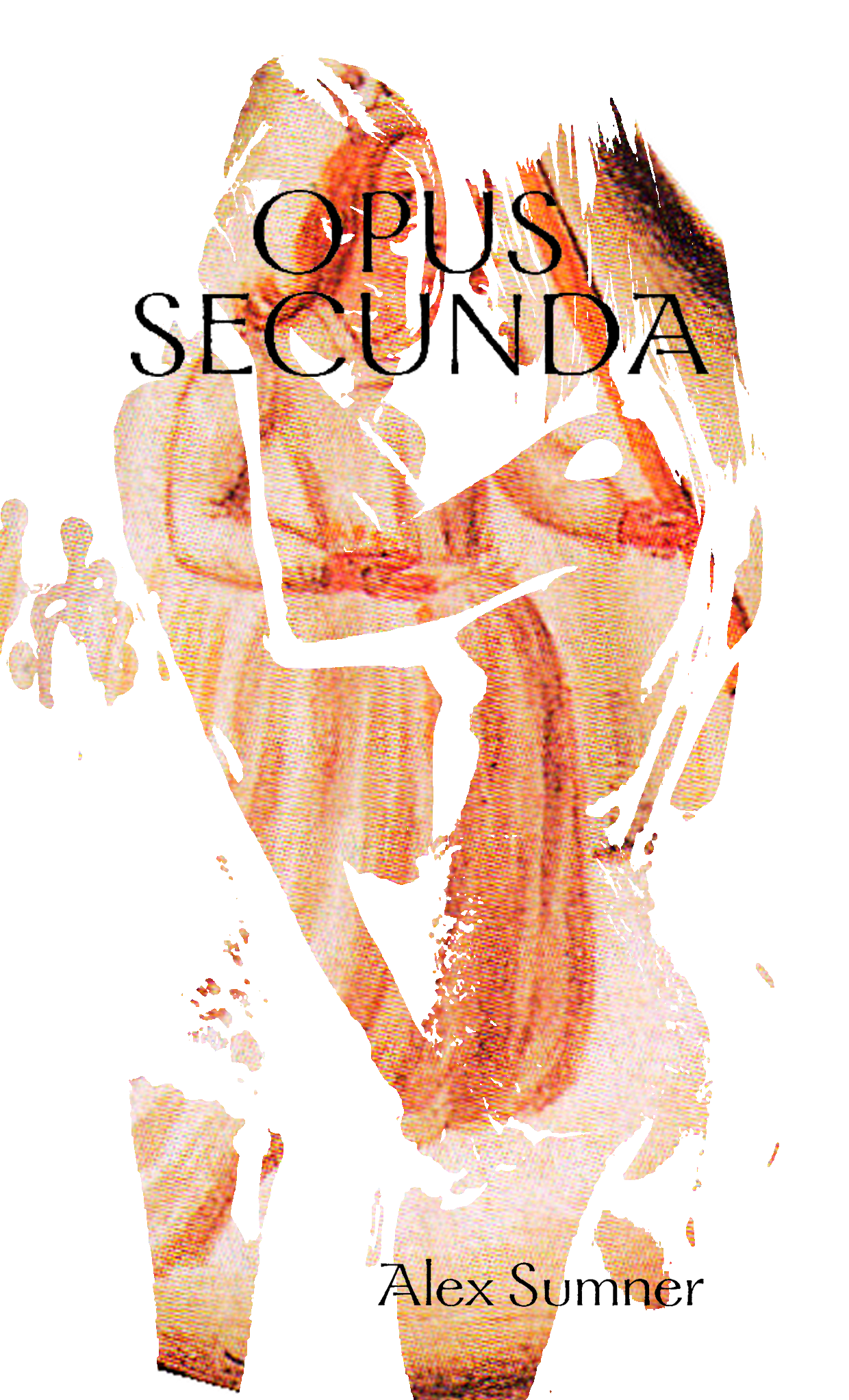
© Front cover artwork copyright the author, 2010

Front cover artwork © 2011 by the author.
To take advantage of this offer, simply order my books from Lulu, and enter the code BUY2GETONEUK305 at the checkout. Please hurry as this offer ends on 7th December 2011.
Thanks! 
Filed under: Licence To Depart, Opus Secunda, Publications, The Magus Tagged: 7th December 2011, christmas, lulu.com, special offer





December 1, 2011
How To Curse Effectively
You are able to use Cursing to achieve real-life effects – so say scientists! Specifically they are talking about pain-relief. In a news story in the Daily Telegraph today (which given their track-record of up to the minute scientific reportage probably means that the events reported actually occurred sometime in the 19th century) scientists have found that letting out a good hearty profanity helps relieve pain! Now before you all say "No shit, Sherlock!" – it may very well have been the case that people have been swearing like troopers to relieve pain since the invention of the hammer and the nail: however this is the first time that there has been a scientific study of the subject.
However, when I read the article, I realised that it lacked the most vital information, viz which swear-words are most effective. Hence: purely in the spirit of scientific enquiry I have created the following poll, to see if from among the many millions of readers of this blog some kind of consensus can be reached.
View This Poll
Filed under: Comment Tagged: Bollocks, Cunt, Curse, daily telegraph, Fuck, God, Jesus, Keele University, Motherfucker, Poll, Shit, Swearing



November 10, 2011
How To Use Horary Astrology With Tarot

A real Hermeticist would be able to crawl all the way through.
Horary Astrology is the art of using Astrology to answer a particular question. Essentially the astrologer notes the time, date, and place that he or she first heard the question (or if it is on behalf of oneself – when he or she first formulated the question). This becomes the moment the question is "born," and the astrologer can then draw up a chart for it in the usual manner and interpret it to gain insight into the circumstances in which the question arose, what is likely to happen, and what the eventual outcome will be. Horary Astrology is slightly different from Natal Astrology, although the similarities are such that one who has already mastered the latter can easily learn to practice the former.
The leading text on the subject is Christian Astrology by William Lilly (1602 – 1681). Wikipedia claims that Lilly was the last major practitioner of Horary Astrology. I can asssure you that although it is not so well known as Natal Astrology there are still some of us who practice it today!
Being a Tarot reader as well, I find the Horary art intriguing, as it indicates a way that Astrology may be successfully combined with Tarot, to wit: by making a note of the time, date and place of when a question is asked for a tarot divination, one ought to be able to use Horary Astrology to double-check the results. Presumably if one's astrological and tarot skills are as highly advanced as one another, one should find that the combined readings come up with the same results. In practice I find that the two types of reading complement one another, with each one providing extra details which are not apparent with the other.

Fifteen card tarot spread
So for example: the Tarot spread which I use most often is the fifteen-card spread, mainly because this was recommended for use with the first deck I ever bought, The Golden Dawn Tarot . The cards in the middle (2, 1, 3) represent the Here and Now. Those on the Right side (4, 8, 12; 7, 11, 15) represent what will happen if the Querent does not attempt to change his or her current course of action. Those on the Left ( 13, 9, 5; 14, 10, 6) however represent what will happen if he or she does attempt to change. Moreover the top-row represents the short-term future, whilst the bottom row represents the long-term future.
Here then is a table of comparison between Horary Astrology and Tarot, specifically the fifteen-card spread.
What
Horary Astrology
15 Card Spread
The circumstances in which the question
arises is determined by…
Luna, which represents the question itself.
Its position in the chart gives information
relating to the nature of the question. The
distance of Luna from the last planet it
conjuncted can be used to work out the date of a
past event which has led to the current
situation, or whether the cause is too remote in
time. If Luna is "Void of Course"
(i.e. it does not form a major aspect with any
other planet before it leaves that particular
sign), it indicates "Nothing will come of
this question."
The central three cards, 2 – 1- 3. The first
card usually indicates the prime of main meaning
whilst cards two and three aid in its
interpretation (NB: in GD spreads, there are
no "reversed" cards. Instead a card is
"well-dignified" or "ill-dignified." Dignity is
determined by whether nearby cards are of a
harmonious or inharmonious nature.)
The development of the question
in the short-term is determined by…
It depends – a horary figure
admits some versatility. If the Querent is the
astrologer him- or herself, the position of the
Lord of the Ascendant will
generally indicate what is likely to happen. The
"Lord" of the Ascendant or indeed of any other
given house is the Planet which rules it. In
Horary Astrology Planets tend represent actual
people or things in the life of the Querent.
If the Querent is someone else, then they will
be represented by the Lord of the
Descendant. If however the Querent
is not asking on his/her own behalf but on that
of someone else (e.g. a relative) or of
something related to the Querent, then a house
is selected to represent it and the Lord of that
is examined. E.g. the tenth house relative to
the Ascendant represents the Astrologer's
mother; the eleventh house relative to the
Descendant (i.e. the fifth) represents the
Friend of a querent where the querent is someone
else, etc.
The cards along the top row.
The three on the right represent what will
happen if the Querent does nothing in particular
to changer his/her fate; the cards on the left
represent what will happen if they do try
something. Each triad of cards is interpreted in
a similar manner to that above, with the left
and right cards determing whether the middle
card is well- or ill-dignified.
The end of the matter is
determined by…
The fourth house, and its
ruler.
Also, in a manner similar to that mentioned
above, the position of Luna can also be used to
determine when in the future a decisive event
will occur.
The cards along the bottom row.
Those on the right can be imagined as being what
will arise as a consequence of those on the
right top-row; similarly with those on the left,
mutatis-mutandis.
Miscellaneous extra information
is given by…
Lilly's work, cited above,
gives examples of how a Horary figure may be
used to extra effect in certain particular
cases, e.g. finding lost items. A complete list
of all the possible applications would be to
long to put here.
The number of each different type of card may
also add another layer of interpretation, for
example: the number of Aces, the number of Court
Cards, the number of Trumps, and the number of
cards of a particular suit. Personally, I only
look upon the number of a particular type of
card as significant if it is noticeably greater
than the average number one would expect from an
evenly shuffled deck. I.e. out of fifteen cards,
the average number of
Any one suit is 2.7;
Trumps is 4.2;
Court cards is 3.1;
Aces is 0.8.
The relative merits of each
type of divination are…
Horary astrology aspires to
give a more mathematical or precisely vision of
the outcome of the question. Being somewhat
arbitary it provides a tough yard-stick which
forces the diviner to consider factors which
might not have been apparent in a more
subjective system such as tarot.
Whilst not having a mechanism
for being as definite as to dates etc as a
Horary figure, I find the tarot cards provide
more nuances of meaning than is suggested by
looking at the planets alone (this may just be a
personal opinion.)
Filed under: Occult Tagged: astrology, Golden Dawn, Horary Astrology, Tarot, William Lilly





November 9, 2011
How To Use Satanism To Market Your New Book

Aleister Crowley (1875 - 1947)
Aleister Crowley has been condemned for many things such as leading a debauched life of sex, drugs and Eastern mysticism, and for making the Occult popular today. He has also been praised for many things, such as leading a debauched life of sex, drugs and Eastern mysticism, and for making the Occult popular today. He has of course also been made the subject of a number of unfounded allegations, of which I thought I had all heard – until now. Whilst reading the Evening Standard (hey! I was bored) yesterday, I came across the newest allegation, in a full page article luridly entitled: "Were six bizarre deaths, linked to curse of King Tut, actually the work of this notorious Satanist?"
Apparently this is the theme of a new book published this week called London's Curse: Murder, Black Magic & Tutankhamun by a chap called Mark Beynon, whom the Evening Standard describes as a "historian." The Curse of Tutankhamun has been the subject of books before, but this new work focusses on some half a dozen deaths allegedly connected with it. Amongst those cited are:
Captain Richard Bethell, personal secretary to Howard Carter - died in his sleep whilst staying at his Mayfair club in 1929. Beynon alleges that he was "smothered."
Lord Westbury, father of Bethell, died from falling from a sixth-floor window in St James, 1930. Beynon states that he kept Egyptian artifacts which his son had given him. NB: Lord Westbury was 78 at the time.
E A Wallis-Budge, the famous Egyptologist, died at home in Bloomsbury in 1934 aged 77.
Aubrey Herbert, Lord Caernarvon's half-brother, died in a hospital in Park Lane in 1923. Wikipedia states that he died from complications arising from an extremely bizarre dental procedure, although Beynon said that he had recently visited Luxor as well.
Now Howard Carter first breached the seal of Tutankhamun's tomb in November 1922, only fully entering the tomb in February 1923. The original idea of The Curse arose from Lord Caernarvon dying just three months after stepping inside, in April 1923. Thereafter, a number of deaths of people connected with the expedition in relatively quick succession poured fuel on the notion.
Hence: although Aubrey Herbert's demise looks pretty ominous, the other deaths cited begin to look increasingly improbably due to the remoteness in time from the opening of the tomb (Howard Carter himself died in 1939). Also note that two of the people in the list above were in their late seventies, so Lord Westbury's demise could have been an accident due to his infirmity.
Ah, no! Says this new book. They were in fact all murdered by notorious Satanist Aleister Crowley! Indeed, Crowley rushed over from North Africa to London in 1923 to murder Aubrey Herbert, and then plotted the deaths of the others over an eleven (!) year period. Now here is the kicker: the reason that Beynon concentrates on these as well as certain others is apparently because that their places of death, when plotted on a map of London, form a Pentagram, which is obviously a Satanic symbol.
Where can I begin to pick apart this notion? Well for a start there is an allegation in the book that "Crowley murdered his servants while in India." I presume this is a reference to the infamous Kangchenjunga incident in which one of Crowley's fellow mountaineers and two servants died not through being murdered but in an avalanche. (Crowley did attract notoriety for this, not for causing their death but for not going to help them after they had suffered their accident, thus breaking the code of honour commonly observed by mountaineers). However the most glaring flaw in the whole scheme is the inclusion of Wallis-Budge. Wallis-Budge retired from the British Museum in 1924, only a year after the opening of the Tomb, and was not directly involved in the Expedition. Crowley would however have had reason to be grateful to Wallis-Budge, as the latter was the pre-eminent translator of classic Egyptian texts such as the Papyrus of Ani (aka The Book of the Dead ).
).
It seems fairly obvious to me that Wallis-Budge's death has been included for the sole purpose of finding fifth point for the overly-contrived Pentagram-theory. Indeed, poor old Aleister Crowley seems to have been picked upon simply because he was the most famous occultist around the time of the alleged events. Never mind that there were other students of the Egyptian mysteries alive during the whole time period! I suppose it was probably too difficult to actually find evidence against one of the more obscure occultists of the time period, although were Mark Beynon a real historian, in the academic sense of the word, this kind of task would be par for the course.
All in all, the attendant press-hype is a good example of how to use Satanism to market your new book.
THE NOVELS AND SHORT STORIES OF ALEX SUMNER – NOW AVAILABLE FROM AMAZON
 AND ITUNES (the author would like to point out that rather than scholarly historical works, his books are most definitely fiction!)
Filed under: Comment, Occult Tagged: Aleister Crowley, London's Curse, Mark Beynon, Satanism, Tutankhamun


November 4, 2011
Alex does Manchester
Manchester! Home of Joy Division! The Fall! And has one of the greatest football teams ever! But enough about Tranmere Rovers, for I, Alex Sumner will be up there the weekend of 26th – 27th November. I am in the process of sorting out a venue which will accommodate all the fans that are expected to turn up, but I will keep everyone informed. Message me to be kept in touch.
Filed under: Uncategorized Tagged: Manchester





October 31, 2011
The Halloween Conspiracy – An exposé!

Merry Samhain!
There is a sinister Halloween conspiracy afoot. It is a truly insidious attempt to subvert this traditional holiday and turn it into something evil. As far as I am aware, this has never been talked about publicly before, so powerful is the wall of silence surrounding this dastardly scheme. This conspiracy is so disturbing it makes the members of the Warren Commission look like pillars of rectitude, and the extraordinary renditions of British citizens to Libya during Tony Blair's time in office as UK Prime Minister nothing more than an attempt to send these people on holiday.
However, that is all about to change as I, Alex Sumner, the World's Greatest Conspiracy Theorist, now blow the gaffe on the great Halloween Conspiracy. What is fundamental to understand is that this particular conspiracy is being perpetrated by an unholy partnership of Christians and secular groups on Wiccan, Pagans, Occultists – and indeed other Christians.
I shit ye not! This all occurred to me when I was pondering why there has been a move away from traditional Halloween costumes in recent years towards costumes which are not particularly scary at all. Heidi Klum's effort to look like a dead-body is probably the worthiest Halloween costume that your humble blogmaster has seen this year: it is not only a highly artistic effort, but splendidly enters into the macabre spirit of things. Other costumes however seem to be missing the point of Halloween, with a lot of people under the impression that all that is required is "fancy dress."
I have said this before, but for the avoidance of doubt I will say it again: a costume is only an authentic Halloween costume if it amounts to a disguise – i.e. so that if an evil spirit came along, it would not recognise you. This is how the tradition of wearing costumes Halloween derives from the pagan celebration of Samhain.
That's when it hit me: the move from traditional scary costumes to non-traditional fancy dress is a deliberate ploy to take the "Samhain" out of "Halloween" ! Now a lot of Christian Fundamentalists simply come out and say: "Don't celebrate Halloween, because it's Satanic," and all they achieve is they manage to publicise the pagan festival which is its origin. However: the Halloween Conspiracy seeks to spread the idea that Halloween is not about scary costumes but about fancy dress – and hence subtly sever the associations to Samhain. It is in fact the Pagan equivalent of All Souls' Day, the day of honouring ones deceased relatives. I believe the ancient Church recognised this and deliberately chose to mark All Souls' Day as close to Samhain as possible (November 2nd) for this very reason.
By severing the connection between Halloween and Samhain, it plays partly into Christian hands who find a secular fancy dress holiday more palatable than one associated with wrongly-so-called Satanic imagery. However, far more pernicious is the fact that it also plays into the hands of secular-politically-correct-atheistic-liberal-consensus that is uncomfortable with any mention of spirituality whatsoever.
Hence: what Christians and Pagans should be doing is, instead of fighting each other, join forces to combat the growing rise of secularism. This can only be done by Christians embracing the scary imagery, and by pagans realising that Christians are not necessarily the enemy but potential allies in the cause of Keeping Samhain Spiritual.
Filed under: Rant, Religion Tagged: Christianity, hallowe'en, paganism, samhain, wicca [image error]
 [image error]