
Michael Offutt's Blog, page 68
August 21, 2018
It shouldn't be a curse to grow old in America.
 Psychology Today's online blog had an interesting article they posted on Tuesday, August 21, 2018. It was called, "Challenging Youth Culture: The Problem of the Puer Aeternus (eternal youth)," and you can read the whole thing HERE. It's part of a continuing series of articles that are examining "Failure to Launch," which is a phenomenon that is seeing people ages 21-34 (mostly male) still living at home well into adulthood. The article does acknowledge that there are economic factors at play that have impacted an entire generation's ability to move into full adulthood. However, it argues that this is a small part of a bigger movement that started in the 1960's counter-culture that's had a lasting effect on American society.
One such factor has been the emphasis on youth, with the ages between 18 and 25 being viewed favorably as the peak of a person's life and then the rest is just one long decline.
Another, is the unwillingness to commit in order to keep all options open. People are avoiding committed relationships, career preparation, and schooling all because they want to have as many possibilities in life as they can. Only these things I mentioned are ones that teach the value of day-to-day effort and perseverance...skills a lot of people nowadays do not seem to have. The biggest travesty that I have witnessed with my own eyes comes from people who are hitting 40 and their mid-40's and suddenly experience anxiety and depression because they spent their entire youth partying, doing drugs, having multiple partners/falling in love, and engaging in thousands of sexcapades. In order to make time for all of this, what suffered was working on their education or their careers--what I call "the boring stuff." They realize in less than a decade that they can qualify for AARP membership, and yet they still work at McDonald's or Pizza Hut. However, some of their friends who didn't make these choices are now in successful careers, and the jealousy and fear start to set in.
A third factor has been adults eschewing the role of mentor and authority figure for one where they are friends and buddies with their children, with their students, and with their employees. Mentoring has been pushed to the back-burner and is rarely celebrated if ever, while friendships, and activities with friends are posted all over Facebook and Instagram. It's one way someone can become "internet famous."
The article finally concludes with a simple sentence: "The cult of youth has become toxic and is impacting on our society as a whole." Would you agree with this statement, given all the things written above? I know that I agree with it, I'm just not sure there's a ready fix for all the "Peter Pans" that I'm surrounded by on a continuous basis.
And regarding "Peter Pan's"...it's also weird.
It's a strange thing to be told by a 42-year-old man that he cannot watch Deadpool because he's not supposed to watch R-rated movies. It's another strange thing to watch a 38-year-old man seize his steering wheel in the Chuck-A-Rama parking lot like a child driving a bumper car, and move slowly around behind a group of friends making like he's going to run them down (all because it seems funny). It's a funny thing to see middle-aged (35) year-old men wearing skin tight jeans with holes ripped in them, and shirts covered in words and pictures of skeletons in cool poses that are tight enough you can see their nipples and belly buttons. Or if I'm going to turn the table and pick on women, middle-aged women wearing tube tops and/or tank tops. It's weird and strange and seems odd. So yeah...I think there's a problem. Especially when people literally bankrupt themselves for plastic surgery bills in order to stay young-looking (and this doesn't always work out very well). Surgery is traumatic people. It's okay to have wrinkles and gray hair. The only caveat is that Americans don't like to have sex with old people (so yes, there is that). But they'll "friend" you, which (I admit) is not enough for most people. So yeah, unfortunately embracing your natural aging process is (for most of us) also learning to accept that sexual options are drying up. It's a sad sad thing I guess. Not for me, per se, but I've always been a bit different.
Honestly, I can say with great clarity that I've never been happier in my life. Each new year is consistently better than the last. But I also never found a partner to journey through life with, so maybe there's a lesson to be had here: Mike didn't "play the game of youth" and decided to grow up so Mike must be okay with being alone. Maybe that's true, but even knowing the truth doesn't make me regret the fact that I'm headed for old age someday and looking forward to it, whether or not there's someone there to talk to. But it does make me feel sorry for others out there who made the same choice and aren't quite as adapt at being an adult who lives alone. It shouldn't be a curse to be a grown adult in our society. It shouldn't be a curse to grow old in America.


August 19, 2018
The absurdity of megalodon as an actual creature makes me realize how wacky the universe we live in actually is.
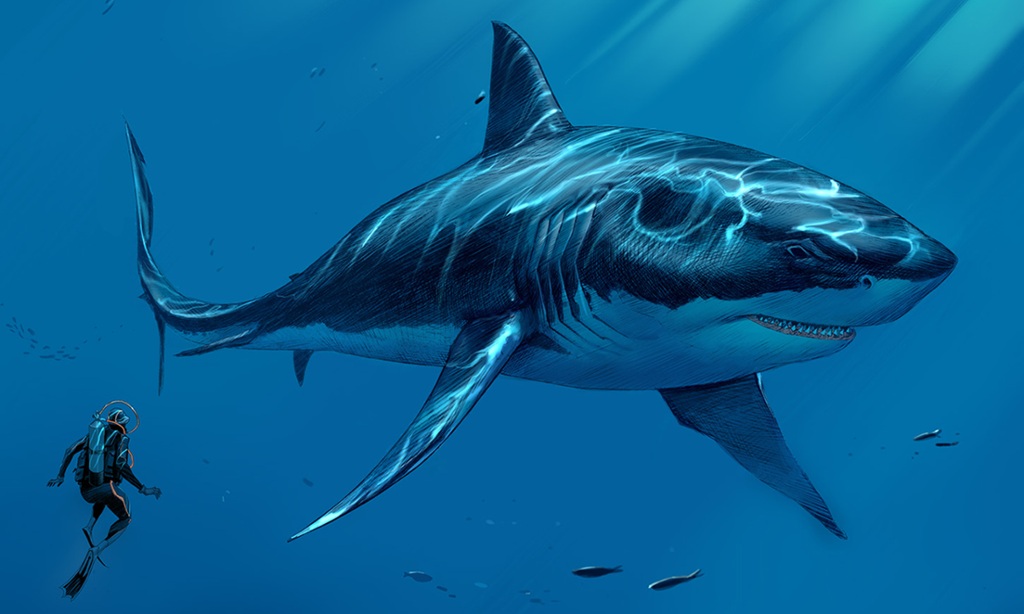 Looking back on "The Meg" which I saw in theaters a little over a week ago, I'm struck by how absurd the entire monster is. You can't help but find it absurd, as it swims along a beach packed with people bobbing in the water and just scoops them up like a fishing net. Down they go...right into its gullet. I am tempted to think, "wow...this is just absurd and oddly comical," and then I realize that an actual paleontologist weighed-in on "The Meg" and its accuracy. In short, he said it wasn't all that accurate, however, they definitely got the mouth right and it (megalodon) could have done just that.
So I guess the thought I have for today's blog is this: the megalodon was an absurd creature. It was absurdly large, too big to be real (even if it was real), and the fact that this thing once swam in the oceans of the earth is proof positive that nature has a sick sense of humor. Why was this gigantic meat tube with a mouth even a real thing? It had the largest bite force of anything that ever swam, flew, or crawled on the earth. It snapped full grown whales in half with its jaws. And the paleontologist in that interview I read said that a megaladon would have no problem biting a metal yacht in half. That's a ridiculous thing to even picture and it smacks of SyFy channel low-budget corniness. Only, it was real folks. Nothing corny about it.
The more I understand about our real universe, the more I'm kind of amazed at how science fiction and science fact are not always that far apart. Did you know that on Jupiter, the storms are so violent that they cause a chemical reaction that makes it rain diamonds? Who would ever have dreamed that up. On Titan (Saturn's moon) there are oceans of methane and it rains huge drops of methane into rivers that carve the surface the same as water does on earth. There are planets comprised of material that absorb nearly all visible light, thus making them black (like Geidi Prime in Dune) from space. And on earth, we had sharks so large that they could bite modern yachts in half with just their jaws and then keep swimming.
It makes me ask the question: why do so many of us spend time in virtual worlds looking for crazy stuff when reality is as strange as any fiction that we dream up?
August 17, 2018
Are people who act helpless flaunting their privilege?
 There are both men and women who I know that put on a daily act of helplessness so that they can be rescued by others around them and/or their direct partners. The most recent example of this happened on Tuesday of this week. I invited a man over (and his husband) who I haven't seen in about ten years. I remembered this person being quite capable in the past, but when he was over on Tuesday night, he was essentially helpless.
Case in point, he left the refrigerator door ajar, and I asked him to close it. The man stared at the fridge and then shoved it with a somewhat limp wrist and it didn't close. "It's broken," he said. I replied, "No it just has a bar that unfolds when you shove it closed. Use some force." He tried again and failed. Then he opened the door and looked at it closer. "There's something blocking it," he said. Again, I told him to use some force. He finally managed to get it closed. The refrigerator (to his credit) requires about five pounds of force to be exerted to get it to latch. But it was like pulling teeth to get him to do it, and he seemed very put out by it.
When we played cards, we asked him to take his cards in one chunk directly from the top of the deck. The goal is to get exactly 22. If you don't, it's no big deal because you just put extra cards back. If you end up with fewer cards, you just draw up to 22 (again no big deal). But if you nail it, and get exactly 22 to start Hand and Foot with, you are awarded with 100 points. So it comes to his turn to grab cards off the deck, and he daintily puts his hand on the deck and starts to thumb through them, taking an excruciatingly long time to get his cards. "Are you counting them?" someone asks. He replies, "No, but this is the only way I can get cards. I can't grab like you do. I just can't do it." He looked at his partner for help. His partner just grinned and said, "Just take a chunk of cards." "I can't," the man replied. "This is so weird. I don't get it." He obviously wanted help, but we didn't enable him. Finally he got his cards and we started play. Again he looked "put out." He wanted to be rescued.
Another example of this occurred with my brother's roommate. I guess he pressed the garage door opener and the garage door started to descend and then detected something and went back up again. He freaked out, waving his hands on either side of his head, and went into the house saying, "I-I don't
know what's happening...the garage is broken. Help." My brother (baffled) stepped out into the garage, and hit the button again and this time the garage closed. My brother told this man, "Sometimes some dirt or something or a leaf, debris of some kind, gets into the track and can cause it to go back up again. Just hit the button again." The man replied, "I'm so sorry. I'm glad you were here. I'd never figure it out."
Before I get onto my actual point in this piece, I want it clear that I'm not complaining about people who practice what seems to me to be obvious "learned helplessness." Rather, I'm wondering why it happens in people with no disabilities? I want to ask, "How are you so helpless? What's going on here?" It would be easy to dismiss it as sexuality, as in "he's an effeminate man and a homosexual so this was taught to him by the community." My comeback against this is a simple and abrupt rebuttal: "But was it really? I think something else is going on that has nothing to do with sexuality or appealing to male egos (as in the case of women who might act "helpless" in order to "create a circumstance worthy of rescue."
My idea? Privilege.
I live alone. I have no one to help me that lives in my house if something catastrophic happens. If there is something that breaks, I cannot shout into the empty room, "Oh no...it's terrible...I don't get it someone please help" and sob and break down with my hands fluttering in the air and batting my eyelashes and actually expect a voice from that empty room to come to the rescue. If I don't fix it myself, if I don't address the problem, then whatever is broken STAYS broken and non-functional. I don't have a choice, and I don't have the privilege to act helpless.
So I started to look at people who do act helpless trying to identify enablers in their life that coddle them and allow them to get away with acting like this. And in every circumstance, I found one (usually a partner). It was a ridiculous epiphany as I realized in my own head, "In this relationship, one person is creating work for the other and the other person is oblivious to it. They are absolutely capable and have the intelligence to fix this issue. But they are lowering themselves to the baseline of child-like helplessness--as in acting AS HELPLESS as a child. I've seen years and years of this compound until the person actually is helpless because they've not used or relied upon areas of their brain for so long that these skills have atrophied. It's a fascinating thing. Why would anyone do it? Is it because they are flaunting their privilege to an audience of people who may not have privilege? A "look at me. I have someone that takes care of me and you don't!" type of attitude. Could it be that petty?
Knowing how people are and how the rich flaunt their wealth and how the beautiful flaunt their bodies, it makes sense to me that flaunting privilege of this kind is yet another example of how people shore up a waning self-esteem (by trying to get validation that someone cares by repeatedly asking for rescue).
Anyway, these are just thoughts, but I wanted to ask you (dear readers) what you thought. Are people who act helpless flaunting their privilege? And if not, then why are there so many people out there who embrace helplessness and shamelessly cry out to be rescued when they really could rescue themselves quite easily from whatever problem is causing them distress.
August 14, 2018
Talent allows you to increase your chance of success by exploiting the possiblities offered by pure luck.
 Monday was my birthday (I turned 47), and I had one of the loveliest and most memorable birthdays in my life. My friend Geneva has a son named David (also a friend) that is only 14 years old (by a few months). He's fantastically gifted, and he played "Happy Birthday" for me on his viola. As beautiful as that was, he followed it up with the "Game of Thrones" theme and then some Bach. When I say he's good, I mean it...like symphony level good. It's amazing how much talent this kid has in him.
So all of this got me to thinking about talent and the nature of talent itself, and it made me think that (in many unfortunate ways) just being talented in our world is no longer enough to guarantee fame and fortune. But as a caveat, I don't really know if it ever was. For example, even if only .01 percent of the population could do what you do, then that still means (in a world of 7 billion) that there are millions and millions of people who are similarly talented. That's just how the math works out. Not everyone can be a star, and there are some who will fail simply because they weren't lucky (they weren't in the right place and the right time, etc.). I know there's at least one study out there with an astounding conclusion that supports what I'm saying, and it says that luck plays an overwhelming part in the real-word realization of success.
Consider these facts "pulled from the Scientific American blog" linked in the above paragraph:
1) Half of the differences in income across people worldwide is explained by their country of residence and by the income distribution within that country.
2) The chance of becoming a CEO is influenced by your name or month of birth.
3) Those with last names earlier in the alphabet are more likely to receive tenure at top departments.
4) People with easy to pronounce names are judged more positively than those with difficult-to-pronounce names.
5) Females with masculine sounding names are more successful in legal careers.
So does talent give a person an edge? Well that's a different question. Scientific American says that "in general, those with greater talent had a higher probability of increasing their success by exploiting the possibilities offered by luck." But if you have no luck at all? Well that sucks for you.
I know how all of this sounds, and those who have narcissistic personality disorder are (in particular) going to be furious and push back at the notion that their success (if they have any) has a lot to do with luck. But I'm convinced that the hidden value of luck (especially in capitalism) plays a heavy hand in the actual way events come to pass within a person's life (from beginning to end).
Forrest Gump anyone?
August 10, 2018
Let's all agree to rebrand shark movies from "Horror" to "Shark Fiction."
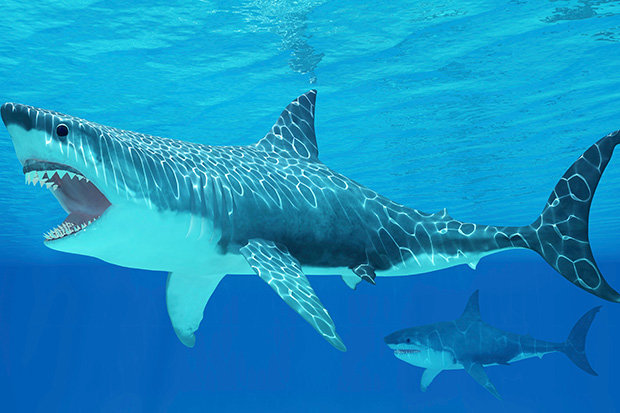 You know how genre's in fiction kind of just appear? Maybe it's the book industry that declares a new genre (kind of like the Academy Awards suddenly makes up a new category) and everyone just has to deal? For example, the broad category of fantasy has been divided (since the eighties) into "young adult" and "dark fantasy" and "urban fantasy" and "supernatural" and what all else I'm forgetting. I think the same thing needs to happen with shark stories. So here's my proposal:
When Jaws came out last century in the late 1970's, it was branded a horror movie. But over time, I think the argument can be made (and I'm going to make it) that it was, in fact, the first movie in a new genre. We currently have a genre called, "Dark Fiction." So along these lines I'm wanting to create one called, "Shark Fiction." Catchy, right?! No need to compliment me on my acumen and creative abilities...YOU'RE SO WELCOME. And now I'm going to list all of the movies and media I can think of that are "Shark Fiction" starting with the latest one which opens tomorrow called "The Meg." I have no doubt that you will be convinced that (after seeing this list) there are enough individual properties to warrant its own category in today's "category obsessed" world.
1) The Meg
2) Jaws
3) Sharknado (and all sequels)
4) 47 Meters Down
5) The Shallows
6) Shark Tale
7) Deep Blue Sea
8) Mega Shark versus Giant Octopus
9) The Reef
10) Bait
11) Open Water
12) Shark Night
13) Ghost Shark
14) 2-Headed Shark Attack
15) 3-Headed Shark Attack
16) Dark Tide
17) Jurassic Shark
18) Sand Sharks
19) Sharktopus
20) Jaws 2
21) Jaws 3-D
22) Jaws: The Revenge
23) Red Water
24) Megashark versus Crocosaurus
25) Avalanche Sharks
26) Malibu Shark Attack
27) Swamp Shark
28) Dinoshark
29) Cruel Jaws
30) Shark Attack
31) Hammerhead: Shark Frenzy
32) Snow Shark
33) Super Shark
34) Shark in Venice
35) Spring Break Shark Attack
36) 12 Days of Terror
37) Shark Swarm
38) Raging Sharks
39) Shark Zone
40) Monster Shark
41) Blue Demon
42) Great White
43) Tintoera
44) Mako: The Jaws of Death
As you can see, there are at least 44 titles I could think of (and probably many more). This is its own category folks. I don't think "horror" cuts the mustard anymore.
Long live "Shark Fiction!"
August 7, 2018
The internet has taught me an immense amount of things that I use for daily living.
I'm feeling rather handy today, because I got a small natural gas grill for my birthday present (from my brother and his partner) and I was able to connect it to the natural gas line on the exterior of my house all by myself. Here's a picture of the work I did:
 What you are looking at is a 1/2 inch brass nipple connected to a brass reducer which is connected to a 3/8 inch brass nipple which is then connected to a quick connect valve and hose. All of it is wound with yellow natural gas Teflon tape and tightened using two wrenches. I wet the outside with water and dish soap to look for leaks (bubbles) and didn't see any. I was able to light the grill and feel heat, so at this point, I'm thinking I did the whole thing correctly. So how did I know to do this?
The internet.
I started to look back on how much I use the internet to train myself how to do things, and I realized it's probably the most useful tool I have access to, and I'm thankful for that. I've taught myself how to do the following (and these are only things that I can remember):
1) Install a gas grill to an outside (capped) gas line and what pieces to buy from the hardware store.
2) Replace a damaged refrigerator door gasket with a brand new one that I bought direct from Kitchenaid online.
3) Figured out what components were required to begin wiring a system capable of supporting a 4K signal.
4) Figured out how to make IKEA "box" furniture look "built-in."
5) Taught myself to remove and fix siding on my house.
6) Figured out how to sharpen a lawnmower blade.
7) Figured out how to remove windows from the inside so that I could clean them.
8) Figured out how to hang cabinets on drywall.
9) Learned how to kill wasp nests effectively.
10) Learned how to change out a sprinkler head on a lawn sprinkling system.
11) Learned how to fix a backflow preventer.
12) Learned how to reseed grass.
13) Learned how to use a thatch rake and where to buy it from.
14) Learned how to fill my own wiper fluid in my car (and how to mix it properly buying concentrate online).
15) I taught myself how to paint cabinets so that the paint was smooth.
16) I learned how to repair holes in drywall.
Anyway, this is a short list of things that the internet has taught me. I'm thankful for its existence, because I honestly feel like life would be much more expensive and harder without it being around. And I freely admit that I would know none of the things above were it not so easy for me to just click and watch an instructional video of an expert doing the job. It has saved me so much time and money.
 What you are looking at is a 1/2 inch brass nipple connected to a brass reducer which is connected to a 3/8 inch brass nipple which is then connected to a quick connect valve and hose. All of it is wound with yellow natural gas Teflon tape and tightened using two wrenches. I wet the outside with water and dish soap to look for leaks (bubbles) and didn't see any. I was able to light the grill and feel heat, so at this point, I'm thinking I did the whole thing correctly. So how did I know to do this?
The internet.
I started to look back on how much I use the internet to train myself how to do things, and I realized it's probably the most useful tool I have access to, and I'm thankful for that. I've taught myself how to do the following (and these are only things that I can remember):
1) Install a gas grill to an outside (capped) gas line and what pieces to buy from the hardware store.
2) Replace a damaged refrigerator door gasket with a brand new one that I bought direct from Kitchenaid online.
3) Figured out what components were required to begin wiring a system capable of supporting a 4K signal.
4) Figured out how to make IKEA "box" furniture look "built-in."
5) Taught myself to remove and fix siding on my house.
6) Figured out how to sharpen a lawnmower blade.
7) Figured out how to remove windows from the inside so that I could clean them.
8) Figured out how to hang cabinets on drywall.
9) Learned how to kill wasp nests effectively.
10) Learned how to change out a sprinkler head on a lawn sprinkling system.
11) Learned how to fix a backflow preventer.
12) Learned how to reseed grass.
13) Learned how to use a thatch rake and where to buy it from.
14) Learned how to fill my own wiper fluid in my car (and how to mix it properly buying concentrate online).
15) I taught myself how to paint cabinets so that the paint was smooth.
16) I learned how to repair holes in drywall.
Anyway, this is a short list of things that the internet has taught me. I'm thankful for its existence, because I honestly feel like life would be much more expensive and harder without it being around. And I freely admit that I would know none of the things above were it not so easy for me to just click and watch an instructional video of an expert doing the job. It has saved me so much time and money.
August 5, 2018
At this point in my life I'll watch Jason Statham versus anything.
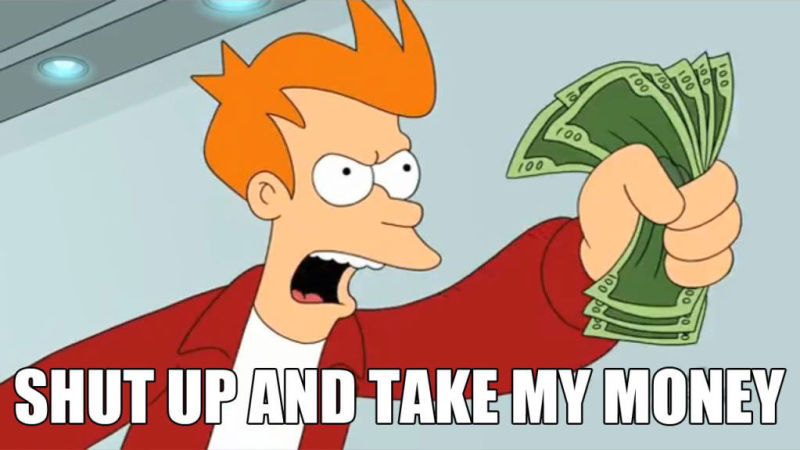 This is my reaction to Jason Statham being in The Meg, which "opens wide" this weekend.
I'd appreciate it if Dwayne Johnson and Jason Statham continued to spend downtime between F&F movies trying to one-up each other making SyFy movies with huge budgets. It's a billion dollar idea...at least admit this. And even though it would cost the studios a ton of dough, we (the public) would be the real winners of such a competition.
I'm so excited to see "The Meg" this Friday. I have a love/hate relationship with sharks not to mention an ongoing debate with my friend Brad as to whether the latest shark movie has a shark that's bigger than a school bus--the "school bus" standard being where the bar is set. Is it bigger than a school bus? Mmm...maybe? There's no doubt a lot of kids would fit inside that shark. That's how the conversation usually goes.
Random musings:
1) The Meg was a book published in 1997. So it's been a 21 year journey to realize as a movie. Those of you with stars in your eyes that want your stories to be realized in film, just think about this. Two decades. Yeah.
2) This movie strikes me as having the same nods to the audience as Snakes on a Plane. It's ridiculous, but will be super fun anyway. It seems like a good movie to send summer out on a bang, kinda like Guardians of the Galaxy was a few years ago.
3) I wonder if the movie has multiple sharks in it. The book did. The premise is that megalodons were able to survive in the deep near volcanic vents where the water was warmer.
4) I hope Jason Statham punches the shark at some point.
5) I appreciate that the Chinese/International market is allowing movies to stray from the same five locations that they previously were restricted to.
6) I want a fishing boat collecting shark fins for "shark fin soup" to be eaten by megalodon. That'd be dramatic irony, and kind of funny.
7) I'm kind of excited to see the giant squid too (that's in the trailer).
8) I think there's a prologue in the book where a megalodon eats a T-Rex. This got me thinking that if they kept that, there should be a crossover with Jurassic World at some point. I'd be on board.
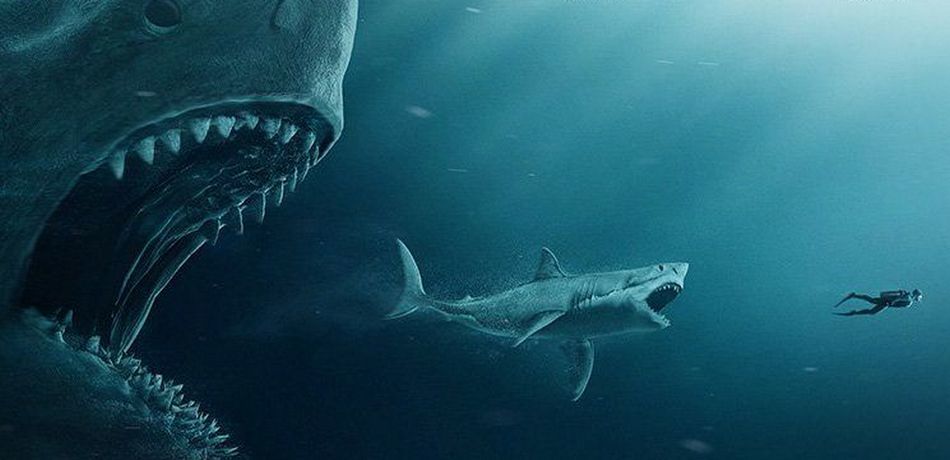
9) Take a look at this poster. I like it a lot. "There's always a bigger fish." Qui-Gonn Jinn from The Phantom Menace
August 2, 2018
I started an intellectual discussion about the effectiveness of teaching boundaries in a capitalist society.
 This week I was the cause of a discussion on Facebook that quickly turned rather intellectual. The message in the meme is prescient with our present era/times, and I had a lot of fun discussing the topic (and my ideas about it) and then have people with PhD's weigh in on it as they too seemed to find (in particular what I had to say) comment-worthy. So here is what was originally posted and what follows (sometimes with my inner thought on that comment) with names removed:
"My teenage nephew told me he asked a girl out and she turned him down. I said, "You know what to do now, right?" He said, "I know I know keep trying" and I said "NO. LEAVE HER ALONE. She gave you an answer." He was shocked. NO ONE had told him that before. TEACH. YOUR. BOYS."
My comment: Framed in this manner, I wonder if ignoring the word "no" is a systemic problem built into capitalism, and it has just leached into everything else. Capitalism and the whole "if you fail you must not have wanted it enough" mantra that gets repeated by readers of Tony Robbins and through the written works made by various "people influencers" spanning decades. If it is related to systemic capitalism, then I wonder how effective education might be. One voice says, "Take 'NO' for an answer," and 200 million voices shout back, "Keep Trying. Never Give Up!" Anyway, interesting thoughts.
1st Guest: Capitalism is NOT the same as sexual relationships, just in case you weren't aware of that fact.
My thought that never got posted: This person is just posting emotionally and doesn't understand my comment at all....
2nd Guest: No, but Michael Offutt has a point that in a capitalistic society young men are raised not to take "no" for an answer, and that that message can bleed over into sexual relationships. We need to teach young men (and everyone) the difference. And that difference is that women are PEOPLE and not OBJECTS. But there aren't enough people out there who don't realize that.
3rd Guest: (To 1st Guest), I don't think Michael Offutt intended to say that they were. I think he means to say that "don't take no for an answer" bleeds into all parts of our culture, including relationships if you've never been taught not to view them as transactions.
My thought that never got posted: This is exactly what I was trying to express.
My comment: (To 1st Guest), Right, and I understand the difference. But for someone with cognitive processing issues (there are more out there than people realize) the message in this meme (which is a good one) might be difficult to get across. For example, built into the message itself are interesting contradictions. On one hand, it is a message to parents to "try harder" to make sure that a message of "let go" or "give up" is received. And to someone with cognitive processing issues (example might be someone who eats Tide Pods for a challenge) then I think the message could be confusing.
"I'm supposed to try harder at giving up?"
Answer: "Yes, try harder at getting a boy to give up."
"But what if I internalize that message and give up too?"
Answer: "No you must try harder! Giving up is the message we want to convey!"
And so on and so forth, ad nauseum. It seems at once over-simplified and then extremely complex. Anyway, I did not mean to offend.
1st Guest: Michael Offutt, I was pointing out the over-generalization that you used. If a person nowadays doesn't know the difference between "work" and "personal" situations/boundaries... THERE is a failure to parent! A parent's job is to teach where limits and infinity apply, NOT try to be a kid's "over-sized buddy."
My comment: (To 1st Guest), You pose an interesting hypothesis. I'm not sure if I can completely agree that if a person becomes an adult and still doesn't understand the difference between "work" and "boundaries" that it is due to terrible parenting. It has been my experience that people learn and process information differently. Trying to figure out the why and the how can take a lifetime. For example, there's a saying in education that if you know one person with autism, you now know "one kind of autism." Anyway, I do appreciate your input. I love thinking about these things.
4th Guest: Capitalist structures and thinking underlie our entire society, (1st Guest), note your use of the phrase "a parent's job" above. We don't have distinct language to describe our personal and familial relationships so we borrow some words from the bank.
This discussion brings to mind some of David Graeber's ideas from his fascinating book, Debt: The first 5000 years:
"Surely one has to pay one's debts."
The reason it's so powerful is that it's not actually an economic statement: it's a moral statement. After all, isn't paying one's debts what morality is supposed to be all about? Giving people what is due them? Accepting one's responsibilities? Fulfilling one's obligations to others, just as one would expect them to fulfill their obligations to you? What could be a more obvious example of shirking one's responsibilities than reneging on a promise, or refusing to pay a debt?
It was that very apparent self-evidence, I realized, that made the statement so insidious. This was the kind of line that could make terrible things appear utterly bland and unremarkable.
If history shows anything, it is that there's no better way to justify relations founded on violence, to make such relations seem moral, than by reframing them in the language of debt--above all, because it immediately makes it seem that it's the victim who's doing something wrong. Mafiosi understand this. So do the commanders of conquering armies. For thousands of years, violent men have been able to tell their victims that those victims owe them something. If nothing else, they "owe them their lives" (a telling phrase) because they haven't been killed.
My comment: (To 4th Guest), So, if I'm understanding Graeber's concepts correctly and apply it to my original hypothesis that a capitalist structure continuously pushes, "Don't take no for an answer," then those participants in a capitalist economy really have no choice (and are ultimately unwilling) but to participate, and they "could" be considered victims if they fail in effectively teaching "You need to take no as a final answer and then move on"...is this what you are saying?
5th Guest: And it might behoove us to remember that heterosexual marriage is originally conceived of as economic exchange between two men, long before the birth of capitalism. The language of capitalism, of course, helps to cover up the exploitive nature of that relationship, just as commodity fetishism hides the importance of labor in the production of wealth.
My comment: (To 5th Guest), Excellent point. Another thing that comes to mind in thinking of the original meme above and all of the following comments comes from a book I read by Dr. Martha Stout called, The Sociopath Next Door.
Dr. Stout posits in that book (based on research) that 4% of the population in the U.S. has no conscience, and she draws a clear connection to capitalism. The rate is like .04% in other developed countries that are much higher in socialism. She states that capitalism as a system rewards sociopathic traits, and that sociopathy itself is not restricted to serial killers. It's valuable to CEO's, business people, nurses, politicians, etc. because "power" and "access to power" are the core values.
To relate this back to the original meme, the writer wants parents to raise children who respect boundaries. But raising a child who respects boundaries may destroy any chance they have to thrive, because the people who don't respect boundaries are continuously rewarded. In other words, the person who is a sociopath goes on to make all the money and to become the boss and overlord of the person that respects boundaries.
Just to be clear, I'm not saying that all children who are raised to respect boundaries shall be crippled financially and perhaps be doomed to poverty and struggle. But it might be wise for all of us to take a look at what we are seeing in real life and see if courtesy and playing by the rules is rewarded with money and respect (two things that are considered "of value" in our present society). Also, Dr. Stout says that the occurrence of sociopathy is rising with every new generation. This will have an effect on every aspect of life.
5th Guest: (Michael Offutt) Wow.
And that was pretty much the end of the discussion. I wanted more people to weigh in, but no one has commented in days. It gathered quite a few "likes" along the way, and I think I got people to start contemplating the deeper ramifications that this meme sought to deliver from a unique perspective.
I didn't really like the comments from the 1st Guest all that much. I thought that she was not understanding anything I was saying and might have been a person (for example) with cognitive processing issues. The problem with pointing that out though is that the person would never believe it, which is a kind of cognitive bias that results in straw man arguments and futile communication. Essentially, it's why humans have difficulties being on the same page (as populations swell to massive numbers).
My thoughts on the meme are pretty much that its heart seems to be in the right place, but passing this task of teaching boundaries as something that is easy and obvious (and ultimately a sign of good parenting) is completely wrong. Furthermore, it's my opinion that the problem pointed out in the meme is just a symptom of a much bigger problem. In the end I had no definitive answers, only questions about effectiveness and application. For one, would this thing (if applied by only those who read it) actually make any difference at all in the world because it's application is such an enormous undertaking (if one's goal is to affect a change in an entire society)? And second, if one's goal is to not affect a change in an entire society, then my next question is: "What then is the point? To push the tide back with a broom?"
Please leave your thoughts in the comments :).
July 31, 2018
Here are seven pitfalls new writers should avoid on their publication journey.
 Today is Wednesday, August 1st, and it's Insecure Writer's Support Group day. If you want more information on this monthly blog festival, go HERE for details. Ages ago it was started by Alex Cavanaugh, and it's grown to be one of the most influential resources for writers online.
Now, onto the August question:
What pitfalls would you warn other writers to avoid on their publication journey?
Oh I have a list of things!
1) Try not to create ultimatums in your head on what is and is not acceptable as far as publishing is concerned.
2) Don't read your online reviews. You'll be much happier if you just skip all that.
3) Keep strict boundaries on your maximum word count and try to hit that target. Keep stories as short as possible. There's more money in shorter stories than there is in longer ones (generally speaking). Plus it's way easier to edit shorter works.
4) Decide who your audience is before you write the story and target that audience. You should know exactly who would want to read your writing.
5) Read lots of books. Reading is a way to be inspired to write.
6) Keep in mind that if it's too good to be true it probably is.
7) Never pay someone to publish your story.
And that's all the advice I have to give today. Have fun in the blogfest fellow insecure writers.
July 29, 2018
I think it's within the realm of possibility that Tom Cruise has superpowers.
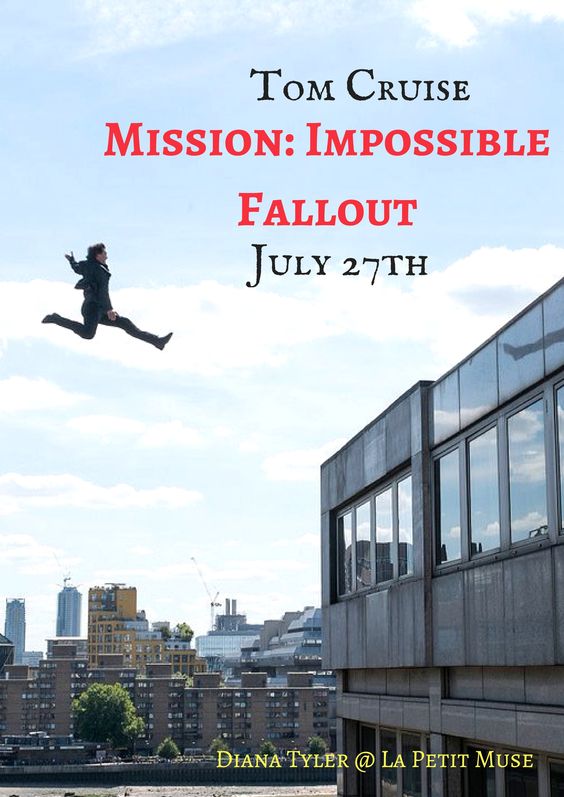 I'm not a fan of Tom Cruise. But when it comes to commitment to being totally crazy, I admire it 100%. After seeing Mission Impossible: Fallout, I think there can be a reasonable argument that maybe Scientology and Xenu have given Mr. Cruise superpowers. It would be easy to dismiss the stuff that this 56-year-old man manages to pull off in the "I don't need a stuntman or a professional" department as just modern camera trickery or computer generated graphics, but the reality says differently. These are not C.G.I. and nearly everything in the film that Tom is seen doing, he actually does.
According to sources I've read online, Tom went on a hundred H.A.L.O. drops including extensive training in wind tunnels and other kinds of skydiving to prepare for the one stunt that you see in the trailer to the movie. It was so dangerous, that Tom Cruise prevented Henry Cavill from participating. He cited something like, "You would get the rest of us killed because there are things I need to do in the air that you are not trained for." Holy crap.
Tom Cruise actually broke his leg leaping what looks like a huge gap between actual buildings. He learned how to fly a helicopter, and he and Cavill (in helicopters) were actually four feet from each other's rotors and at points, less than that from an actual cliff in New Zealand (filming the Kashmir sequence). Cavill said that one mistake, and they would both be dead.
There's another stunt in the film where Cruise climbs a rope that's connected to a payload beneath a helicopter. This was absolutely real, and the helicopter is flying through the air. Cruise falls and catches the netting. It was a planned stunt, but the people on the ground didn't know that was going to happen and actually thought for a few moments that Cruise had just fallen to his death. Of course, Cruise just climbs the rope again and gets into the helicopter.
Look...again I'm no fan of this guy's real life work. I think he belongs to a cult that worships him like a god. But there are parts of my brain that think...hey, maybe he is one. A demigod at least. It's absolutely insane what he does to make these movies. In comparison, I had a piece of siding come loose on my house that needed to be snapped into place, and I was terrified to get up onto my roof so that I could fix it, and I'm ten years younger.
When I suggested to the collective mind of my Dungeons and Dragons group that Tom Cruise is the new "Chuck Norris" as in the whole "Chuck Norris" meme that went wild online about a decade ago, they all shot it down. My friend Matt said, "Tom got his start in movies by just being pretty. Chuck Norris had actual talent."
Eh...that may be completely true. But at 56, it's hard to argue that Tom Cruise is not doing things that put anything Chuck Norris ever did to complete shame.


