
Michael Offutt's Blog, page 46
July 22, 2020
Agents of S.H.I.E.L.D. is almost over and I'm grateful for the ride.
 This is the seventh and final season of Agents of S.H.I.E.L.D., and it's been a terrific ride. It also has lasted far longer than I originally anticipated that it would. Last season when they made the decision to move it's time slot to Friday evenings, I thought to myself, "Fridays is where television shows go to die." However, I was proven wrong when it got a half season more from ABC to wrap things up, and they are doing so by going on a time traveling bonanza similar to another beloved series, The Legends of Tomorrow.
This season has been a lot of fun, and it's also a bit less bonkers than the last storyline which had the Agents in a space of the future in which the Earth was destroyed and the Kree were gathering inhumans to participate in gladiator-like combat. In that same storyline we got introduced to Deke, who is somehow Fitz and Simmon's son (we know they deeply love each other), and then there was the whole evil Fitz thing that I didn't like because it was played so well that you just never know if you can trust him like you used to be able to do...but somehow Simmons finds a way.
And Coulson now has died so many times that I can't keep track. They've basically just stored his mind in a computer and can upload it into a life-like decoy, essentially guaranteeing that we always have Coulson around. It reminds me of Leto in Children of Dune and the subsequent books, falling in love with Duncan Idaho and keeping infinite clones of him so that he can always have him around. I suppose the whole circular notion of things repeating themselves is a well-done trope in television, especially in a Groundhog Day-esque episode. In practically every series I've seen, there usually crops up some kind of Groundhog Day episode. In Star Trek: Discovery it happened in the first season. In Agents, it's going to happen in the next episode as the ship they're in gets stuck in some kind of time storm. And I'm pretty sure there was an episode like this in Legends, though I can't quite remember what it was about.
The final season has also been a great place for the actors to let their hair down. Coulson is a delight, as is May who has really come into her personality over the course of seven seasons. Simmons is a bit intense all the time, but Deke is great. There's even an episode this season where (stuck in the eighties), he forms together a band and starts singing historic hits while claiming that he wrote them. Deke's onstage outfit channels a lot of Zoolander. I like that Yo-Yo got her hands back and that she was able to go onto the next step of the progression of her powers by not having to bounce back. So now, she's basically a female version of Quicksilver, which is really powerful if you think about it. Coulson got to spend time as Max Headroom (remember that guy?) by residing in an eighties television set. And we got some really funny "Shield" agents that Deke recruited while waiting for the time ship to bounce back into existence (they got stranded in a timeline for a while). It doesn't really matter that I couldn't figure out how Mac paid for anything while he was living in an apartment wallowing in his depression over the death of his parents (they were killed by chronocoms). The whole season has just been fun.
So yeah, it's going to be a bit poignant when it all ends. I've enjoyed the ride. The show never intersected with the movies all that much (which was something I was hoping it would do some seven years ago when it all started). However, it managed to pave its own path and be a continuous source of fun and entertainment in a time when the real world is causing a lot of anxiety, which is just another way for me to say that they should be proud of the work they have done.


July 19, 2020
George A. Romero's magnum opus The Living Dead can be purchased on August 4th and I'm getting myself a copy.
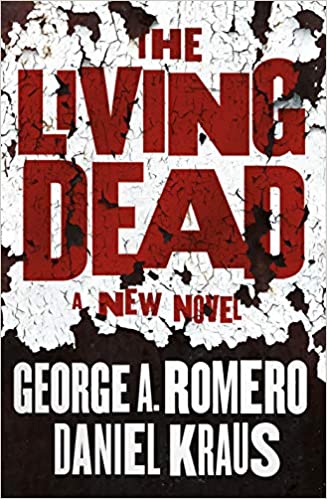 Daniel Kraus finished writing George Romero's magnum opus called The Living Dead, and it hits the shelves next month. If you don't know who George Romero is, you need only to watch a single episode of The Walking Dead to see his influence. He's the director that's largely credited for making zombie-fiction a thing on film. People have been inspired by his work for years, and I (for one) will be purchasing a copy of The Living Dead to read. It's been a while since I've indulged in a good zombie plague tale, and this one promises to be the granddaddy of them all, by encompassing decades of time by telling the story of the fall of a civilization overrun with this particular brand of the undead.
In thinking about reading this book, I pondered the question: where did zombies come from? My research turned up quite a few things, and I decided to share them with you. According to some historical sources, the ancient Greeks may have been the first civilization to believe in zombies. Archeology discovered skeletons pinned down by rocks and other heavy objects, leading scientists to believe that the people who did this were trying to prevent the dead bodies from reanimating.
A little closer to present times, zombie folklore existed for centuries in Haiti. Some think it might have originated with African slaves who longed for freedom from the brutal conditions on the sugar cane plantations. The "zombie" then, became a representation of the horrific plight of slavery, which definitely is sad if you take the time to digest what's going on there.
Then there are religions like Voodoo, where some practitioners (known as bokor) used a tradition of alchemy to create concoctions including "zombie powders," which contained tetrodotoxin. If used carefully, the deadly neurotoxin could turn a person into a shambling creature with respiratory problems (still alive) but with a lot of mental confusion. High doses of the neurotoxin could lead to paralysis and coma. That way a person could appear dead and be buried alive, only to be later revived. So, a kind of zombie, but not an actual zombie. And from what I've read, many practitioners of voodoo today believe zombies are a myth.
So zombies have an interesting history, and it isn't important that George Romero invented them or not. However, I do enjoy many of his stories, and I think this book will probably hit some pleasure buttons. I guess we'll see. Anyone else thinking of giving it a read? Here's a LINK to the Amazon page where it will go on sale on August 4th.
July 16, 2020
The modern pandemic and America's response has made me believe in things that I'd previously thought couldn't happen.
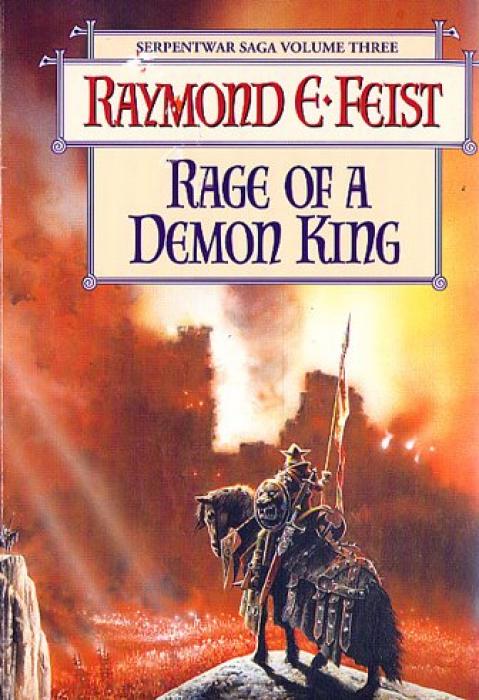 In reading Raymond E. Feist's Serpentwar Saga, in particular the book Rage of a Demon King, I realized that current events in our country made me more readily believe the stubborn and ultimately fatal choices people of privilege make. There's a particular example that occurs about midway through the book, Rage of a Demon King, when "The Kingdom" is finally being invaded by an army of ruthless warriors, dark sorcerers and priests, and a demon king at the helm of it all. This army sailed to the shores of the kingdom on about 700 boats (more or less) and has spent months at sea. The Kingdom has been preparing for the invasion for about five years, although much of it in secret so as not to panic the populace. But even with their preparations, an army of this size is like a tidal wave swamping everything in its path. I don't know how many descriptions I read that repeated pretty much this: "the enemy, despite killing so many of them, seemed endless and disappeared over the horizon."
So, in this section of the book I'm talking about, there is a rich, privileged man (named Jacob Easterbrook) who has made his fortune being a merchant with treasonous ties to the Empire of Great Kesh (a rival if not outright enemy of the Kingdom). He's portrayed as cunning, but he does have charisma (although he seems to have no empathy whatsoever, which doesn't surprise me coming from a rich man). However, when it comes to the invaders, he rebuts any attempts to move him off the estate to safety. Rather, he puts forward that his skills at being a diplomat and negotiator will put him in a prime position to negotiate a treaty of trade on behalf of Kesh with the new conquerors. "They will need this and that, etc.," is his reasoning. He doesn't fear the invaders, rather he looks at them as a new business opportunity by which he will profit handsomely. Even when a main character, Rupert Avery, who has been seeing Jacob's daughter for some two years now tells him to flee and cites his own first-hand experiences of what kind of monsters these people are, he refuses to go claiming that Roo knows nothing of what he talks about and that the danger is overblown.
Then Rupert flees with his family and barely makes it out alive. What happens to Jacob Easterbrook is horrifying. Not only do the invaders slaughter him when he tries to negotiate, but they eat him as well and then eat everything that is edible on his lands (chickens, cows, etc.). I think it's this privilege that Easterbrook had that blinded him to facts about the enemy, and I think it's relevant to what we're seeing in the pandemic with the discussions around "masking" and "not masking." It seems to me that the people of privilege in our society are the ones raising the most hell about being forced to mask, and I find that fascinating. In some cases, people of privilege just outright don't believe that it exists. If they do believe it exists, in their minds they've reasoned that masks don't work like everyone else thinks they do and then resolve to "deal with the crisis if it ever affects them." This sounds a lot like what Jacob Easterbrook said to Rupert Avery in this Feist book.
What I haven't puzzled out then is the why. Why does having privilege insulate you from recognizing real danger when it surfaces? Is it because privilege by itself seems to be invisible, and by virtue of it being invisible, one thinks that they are more powerful than they actually are? Shrug. I guess I have more thinking to do. But I will say this, the modern pandemic and America's response to it has made me believe in things that I'd previously thought couldn't happen.
For example, had I read Rage of a Demon King a few years ago, I would have said, "Jacob Easterbrook would never have stuck around like that to be eaten by cannibals! He was a smart merchant. He would have believed Rupert and fled with him to safety." But now I think, "This is totally reasonable. I could see this arrogant douchebag doing exactly that and being eaten by cannibals while ignoring all the evidence that was contrary to his opinion." What an about face! But hey, we learn a little more about the behavior of people every day during this thing. Now some behaviors aren't far-fetched at all.
July 15, 2020
Raymond E. Feist novels read like a Dungeons & Dragons campaign.
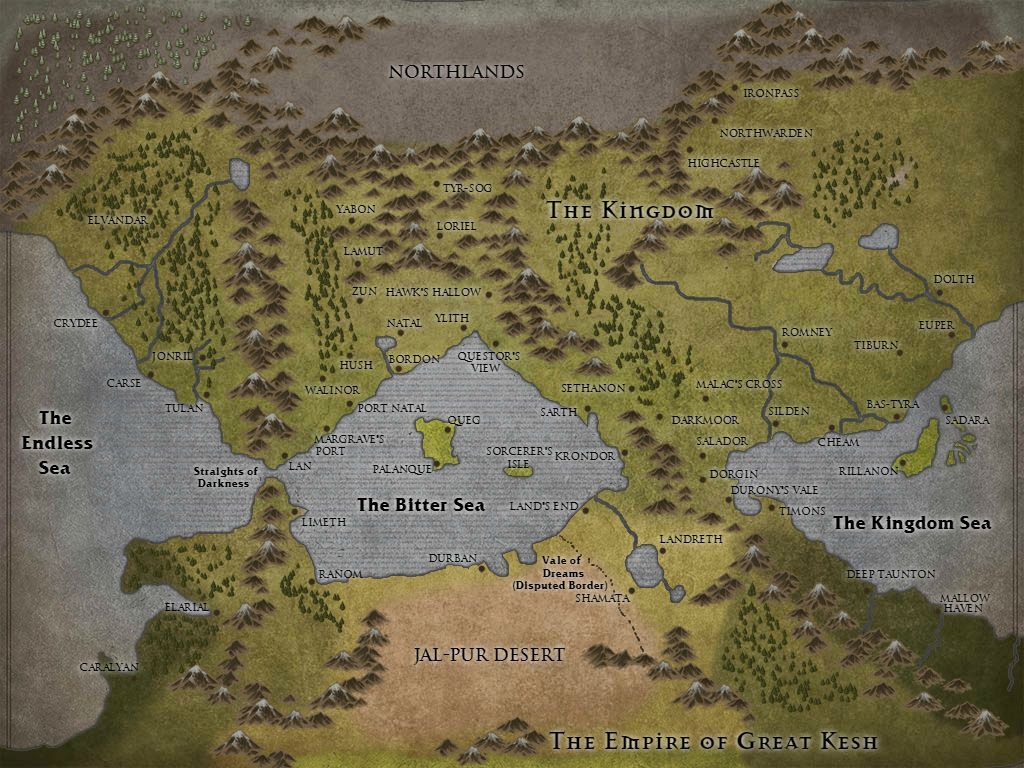 This is a map of Midkemia, Raymond E.Feist's book world. I have a suspicion that it's also his gaming worldfor a D&D game (or one definitely inspired from D&D). Someone with a mind like Feist probably home-breweda world much more unique that required a deviation from the standard Dungeons & Dragons worlds thatthey provide to us plebes.I've been reading the Raymond E. Feist fantasy novels (of which there are about thirty), and I'm having an odd bit of fun doing so. Why odd you say? Well they read like a really thoughtful and well-plotted Dungeons and Dragons game. I'm serious. They're a much different breed of fantasy literature. High brow they are not, but thick and pulpy with well crafted villains and recurring characters they most certainly are, and the magic system comes straight out of a Dungeons and Dragons rulebook albeit with a few changes for copyright reasons.
A little research also confirmed my theory. Raymond E. Feist had a D&D group that met weekly. I can only imagine that the characters I'm reading about were played by people around the table, and the stories (which are pretty great) were probably adventures that they went on as a group. As I'm reading, I think to myself, "Okay that is the rogue in the party, definitely the magic-user, who's the tank? Oh...that's this one."
Anyway, about the only thing I can compare them to are the Dragonlance novels by Tracy Hickman and Margaret Weiss. Those (intentionally) read as a Dungeons & Dragons game group, because they were written for Dungeons & Dragons. So that really was the whole purpose behind their creation. I just think that it's interesting how influential a silly game like D&D is on an entire genre. I suppose that D&D originally pulled its inspiration from the works of Tolkien, C.S. Lewis, and Lloyd Alexander. And now it's influence inspires other authors to write, because they fall in love with the characters they've created (and the stories they put those characters through over the years).
So I have this question for my few readers: Have you ever created a D&D character or a character in another RPG system that inspired you to write stories about them? If so, please share. I'd like to hear about it.
July 12, 2020
Doom Patrol is a weird show and its hard explaining the characters to another person.
 Doom Patrol is a weird show. I realized that as I started streaming the second season in my living room, and my friend's 18 year old daughter was sitting on the couch (she had come over to bake banana bread). Said friend had not watched season one, so immediately she had questions which I started answering, but then I realized my answers are really crazy.
First off there's The Chief played by Timothy Dalton. He's a medical doctor that basically saved every one of the Doom Patrol characters in one way or another. However (even more complicated), he orchestrated the events that caused members to develop their powers, and he's really old.
Then there's Jane. I said that this was a woman who has a ton of separate identities living in her head. Her head is an actual place that people can go and visit and interact with the characters. Each one has a different power.
Rita Farr is a former Hollywood actress whose cellular structure collapses into jelly when she gets emotional. So she really struggles to maintain a solid form. When she gets upset, then her face will melt.
Larry Trainor is also incredibly old, yet has the body of a young man, and he wears bandages because he's severely disfigured from a plane crash. He has a negative energy entity living inside of him that likes to help him out and walk him physically through his traumas so that he can heal.
Cyborg is a young ambitious superhero who has cybernetic enhancements from his father Silas following an accident that led to his mother's death.
Cliff Steele is an all-metal man with a human brain (voiced by Brendan Fraser). He was a NASCAR driver.
Mr. Nobody is an omnipresent supervillain capable of traveling through dimensions and altering reality. He often breaks the fourth wall and manipulates events through his narration.
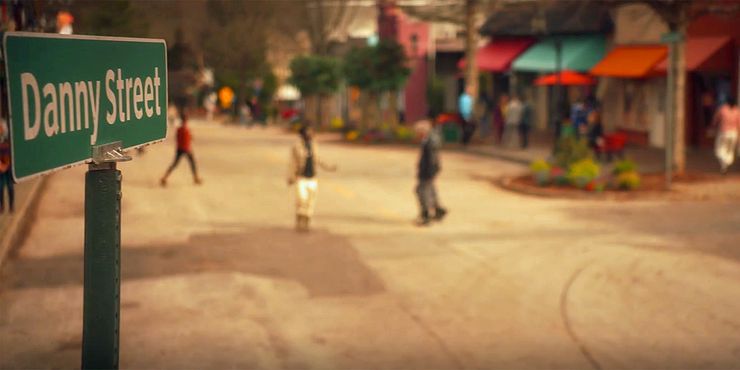
Danny is a street that communicates via flashing signs and billboards and who provides a space for all the misfits of the world to have a home (this is seriously my favorite character). My friend's daughter asked me, "So this character is a street?" I was like..."yep." And then she paused and said, "I don't understand any of it."
Yeah... Doom Patrol is not for everyone. However, I really like it probably because I've seen nothing like it on television. Here's to season two being available to stream now.
July 10, 2020
I think it's stuff like what's in this video that really makes me think America makes no sense.
We're in the middle of a global pandemic. People are dying by the thousands. The global economy is collapsing. But hey, behold the One Percent Fortnite House. It's a mansion some YouTube gamers bought and made their own. This multi-million dollar property comes with a wall of wine that none of them drink, and they want sponsors to buy out space in it so they can make some more dough, yo! They've got their fancy cars in the driveway, girlfriend in the bedroom, sick lighting in the game room where people might want to crash for some streaming. It's kind of a grotesque infomercial that seems to capture everything I dislike about entitled people who fall into easy money by plying the natural gifts they were just born into.
Imagine creating an organization that celebrates conspicuous consumption and unearned wealth and then having either the extreme self-awareness, or the extreme lack thereof, to call yourself the One Percent. These guys could have done anything with the money they've made. Instead they went and bought someone's giant mansion in order to ask for more money and party like its 1999. The only fun thing that might come of this are the stories that will splash the news feeds as some incredibly bad decisions are about to take place in this strange palace occupied by man children.
Haters gonna hate, right?
Imagine creating an organization that celebrates conspicuous consumption and unearned wealth and then having either the extreme self-awareness, or the extreme lack thereof, to call yourself the One Percent. These guys could have done anything with the money they've made. Instead they went and bought someone's giant mansion in order to ask for more money and party like its 1999. The only fun thing that might come of this are the stories that will splash the news feeds as some incredibly bad decisions are about to take place in this strange palace occupied by man children.
Haters gonna hate, right?
July 7, 2020
Sam Smith has done a cover of the Coldplay single called "Fix You" and it's amazing.
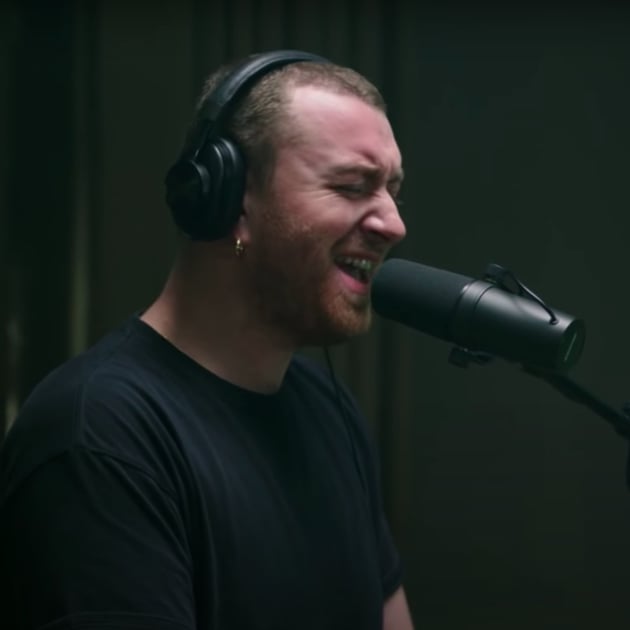 Sam Smith has done a cover of the Coldplay single called, "Fix You," and it's lovely. I'm embedding it below so that you can give it a listen. Although I do love the Coldplay version (Coldplay is a band that I desperately want to see live someday), there's just so much emotion in Sam Smith's version that I actually think I prefer it to Chris Martin (forgive me Chris Martin).
Recently Sam Smith (I think it was in September 2019) said they would like people to use the pronouns "they/them" after coming out as non-binary. They wrote on Instagram: "After a lifetime of being at ware with my gender, I've decided to embrace myself for who I am, inside and out." The singer added: "I've been very nervous about announcing this because I care too much about what people think." Sam Smith said six months earlier that they did not feel male or female, but flowing somewhere in-between.
I'm joking when I say this, but Sam Smith can ask of me anything they want as long as they keep singing so beautifully. I've probably listened to this single a dozen times. Their voice is so incredible and quite powerful (if that's an adjective that's appropriate to use for a song). Anyway, if you have a moment, please give it a listen. It's worth your time.
July 6, 2020
Is Hamilton worth its hype?
 I watched Hamilton on Disney Plus this weekend, and I suppose I enjoyed it. Part of me wishes that I could enjoy rap more than I do, but I've always found its rhythm kind of jarring because it emphasizes words over music. I have a long history of this in my personal life, as for the most part, I get drawn to a song by its melody and sometimes it is years later that I actually hear the lyrics for what they are and think, "Oh! That's what that song is all about!" So, it's hardly unusual that in a play where every word uttered comes out in rap form, that someone like me might wish that it was just delivered as dialogue and not hip hop.
However, I can separate my own personal biases enough from a work of art such as Hamilton to declare that it is indeed worth watching even if you are (like me) not really drawn to rap. If anything, you can see the remarkable diversity of the cast and realize what a thing Lin Manuel Miranda has done by casting all these people of color to a uniquely American story. Additionally, the breathless pace of the thing moving from one scene to the next without ever taking a break from the hip hop style of delivery and the ever present musical chords in the background used to punctuate a song are kind of mind-blowing. I can't even imagine the kind of mind it would take to write all of these songs. And that seems natural too, because I'm not a genius (unlike Lin Manuel Miranda).
For me though, Hamilton is probably a one and only watch. Sure it's artsy and fun, but it's not really my "cup of tea." If there's any criticism I can make of the show, it's that there's a ton of content coming at you as an audience member, and it's pretty fast and furious. There are two things that happen in this scenario. The first is that you get a bit of an information overload from the Hip Hop delivery. The second is that there's little opportunity while rapping to show any emotion outside of 1) anger or 2) confidence. The emotions of anger and confidence can get you far, I suppose, and it seems like a natural thing for people to be experiencing these emotions a lot when designing a new country. However, for a theater watcher like me, I kind of like to see (and revel) in the other emotions in the human spectrum (sadness, love, jealousy). Those are kind of my bread and butter.
There was one section of the play that did have a large range of emotion: the death of Alexander Hamilton's son. In a song that delivers with a line "The Hamiltons are facing the unimaginable..." it plays out. But then again, it plays out because (for that song) they abandon the hip hop. And I enjoyed it a ton. So again, maybe I'm just not a fan of hip hop as a delivery vehicle for dialogue. As a side note, I want to mention that the death of Alexander Hamilton's son was really kind of shocking. For one, Hamilton dismissed rather readily and with some comedy the fact that his son was going to a duel. Additionally, he gave him some really horrid and terrible advice, telling him to aim high instead of shooting because the other party would do the same (out of honor). It was incredibly ridiculous. If I had a son, I certainly wouldn't have allowed them to duel no matter what I had to do. It ultimately really shows that Alexander Hamilton was a terrible parent (if that wasn't obvious with his affair, etc.).
All in all, I'm glad that I got to watch the show on Disney Plus streaming. But I'm not envious of people who have seen it live, nor do I even want to buy a ticket to it to see it live myself. So is it worth the hype? Yes, I suppose it is. But I'm answering that for other people and not myself. I know my views on rap aren't shared by a lot of people who love it. But I definitely respect it as an art, and I'm glad it's around for other people to enjoy.
June 30, 2020
For this month's IWSG I'm answering a question about the future of publishing.
 For once, time seems to be not moving as fast as I used to think it did. Thanks, Covid-19. But even if it does seem slower now, the first Wednesday of every month still rolls around. It's now July 1st, and it's time for the Insecure Writer's Support Group.
Here's the purpose of that blogfest: to share and encourage other writers by providing a safe place to discuss our insecurities. That being said, many of us choose to answer the monthly question that our co-hosts come up with. If this is something that interests you, please head on over to this place and sign up.
July 1st question: There have been many industry changes in the last decade, so what are some changes you would like to see happen in the next decade?
Based on what I've observed Michael J. Sullivan doing with his Kickstarters, I predict that traditional authors (he was one of these) will go hybrid. Meaning that they will publish some of a series with the Big Six, and the remainder of a series by going self-publishing. The reason? Money. Michael J. Sullivan has probably made half a million dollars in the last year doing the self-publishing thing, and I think that's really damn good. I also don't think it will slack off. I think he's probably established himself enough, and he's got enough of a following, that this will be his income in perpetuity.
I also think that self-publishing is going to be where people are making the most beautiful print books. I'm talking all the works with the fancy paper and the gorgeous artwork and the things that previously seemed untenable without a big publishing house. The reason? Photoshop is making it super easy to create stunning covers and places like Lulu are offering publishing options wherein a final product is indistinguishable from a professionally done manuscript. Additionally, the price is going to keep falling on being able to do this as artists are a dime a dozen online and the price of producing print has become super affordable.
Anyway, those are the changes that I think are coming down the pipe. I can't wait to read some of yours. Thanks for stopping by.
June 28, 2020
You should take a few minutes from your Monday to appreciate Mark Hamill singing a country song about King Kong's dong.
In these really strange times, Mark Hamill singing a country song about King Kong's dong size seemed to capture a rather perfect moment in time. So, I'm linking it below for your enjoyment. It really is worth a watch, if anything, because it's hilarious. Have a Happy Monday.


