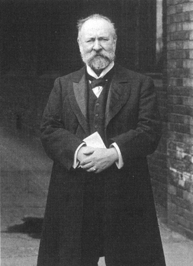
Sharpe was born in London and studied at Brighton College, The King's School, Peterborough and Loughborough Grammar School. At the age of sixteen he went to work for Smith & Sons in London. In 1864 he commenced his first ornithological work, the Monograph of the Kingfishers (1868–71).
In 1867 Sharpe was given the post of librarian of the Zoological Society, on the recommendation of Osbert Salvin and Philip Sclater. On the death of George Robert Gray in 1872 he joined the British Museum as a Senior Assistant in the Department of Zoology, taking charge of the bird collection. He became Assistant Keeper in 1895, remaining there until his death from pneumonia.
Sharpe founded the British Ornithologists' Club in 1892 and edited its bulletin. He wroSharpe was born in London and studied at Brighton College, The King's School, Peterborough and Loughborough Grammar School. At the age of sixteen he went to work for Smith & Sons in London. In 1864 he commenced his first ornithological work, the Monograph of the Kingfishers (1868–71).
In 1867 Sharpe was given the post of librarian of the Zoological Society, on the recommendation of Osbert Salvin and Philip Sclater. On the death of George Robert Gray in 1872 he joined the British Museum as a Senior Assistant in the Department of Zoology, taking charge of the bird collection. He became Assistant Keeper in 1895, remaining there until his death from pneumonia.
Sharpe founded the British Ornithologists' Club in 1892 and edited its bulletin. He wrote thirteen and a half of the 27 volumes of the Catalogue of the Birds in the British Museum (1874–1898). His handsome Birds of Paradise, published in two large volumes (over 21 inches x 14 inches) in 1891 and 1898, presented these colourful birds to the world: as Sharpe wrote in his preface, "a great number of the species are here figured for the first time". The book, with 79 hand-coloured plates, is purchased by collectors at prices around £60,000 in 2013....more