
Michael Nava's Blog, page 3
December 10, 2012
Ruth Barton
I am sometimes asked how I became a writer. My answer is always the same; I didn’t become a writer, I always was. My love of language and my need to give shape to my experiences in words seems to me to have been inborn. What I did need was permission to develop and pursue that inherent desire to write. I received this permission from an extraordinary woman named Ruth Barton who was my teacher, friend and mentor when I was a college student at Colorado College. Ruth died the Friday after Thanksgiving. Her son told me she had wanted me to speak at her memorial service. This is what I said:
Ruth Barton was my first teacher at Colorado College; I took her course in creative writing. In typical Ruth fashion, we met not in one of the sterile classrooms at Armstrong Hall but in a lounge at Montgomery Hall with windows that framed Pike’s Peak. On that morning in September 1972, the ten or so of us young writers arranged ourselves on chairs and couches and waited for Professor Barton – who was late.
Time passed and still no Professor Barton. We glanced at our watches, sneaked looks at each other, but no one spoke. Finally, the door opened and shambling into the room was a small woman in cat eye glasses who, in my memory, was clutching a sheaf of books and papers and a cup of coffee. She arranged herself in an armchair, brushed dog hair off her blouse, pushed her own thick hair back from her sharply pointed face, smiled warmly at us, and lit a cigarette.
“Good morning!” she exclaimed cheerfully. “I’m Professor Barton.”
That voice! Slightly gravelly, rather low, a little breathless. Ruth’s voice was her signature: you could hear the Sweetwater, Texas childhood; you could hear the flat Midwestern and western intonations from her years at the University of Wisconsin and in Colorado; but, most of all, you could hear in her voice the lively, inquisitive, humorous, and skeptical intelligence that made her such a compelling presence notwithstanding her unassuming appearance.
Ruth did not look like a college professor to my 17-year-old eyes. She looked like one of the nice lady librarians who worked at the reference desk at my hometown library. But Ruth was to a small town librarian what an astrophysicist is to a high school science teacher; same genus, very different species.
As the creative writing class unfolded, it became apparent that Ruth was a person of profound erudition and a passionate commitment to literature, especially poetry. It was her commitment to the written word that made her such an extraordinary teacher. For Ruth, literature was not optional; it was not an ornament to decorate a liberal arts education like a shiny topper on a Christmas tree. Literature was what gave depth and meaning to our human experience; it was a way of framing our moment-to-moment perception, a way of seeing the world.
Twenty–odd years after I’d graduated, on one of my visits back to Colorado Springs, she and I had a conversation about the uses of poetry. I told her that sometimes I would see something or have an experience and spontaneously a line of poetry that I had learned from her would come into my mind to describe that vision or that experience. Yes, she said, of course, and then we sat in her back yard and traded lines from our favorite poems. “Glory be to God for dappled things,” and “Teach us to care and not to care/ Teach us to sit still,” and “The best lack all conviction while the worst/ Are full of passionate intensity,” and “A single ship assembles all the sea,” and “At evening, casual flocks of pigeons make/Ambiguous undulations as they sink/Downward to darkness on extended wing.”
Naturally then, her love of literature led her to becoming a mentor to generations of student writers. As a teacher of writing, Ruth imparted a vital lesson: writing is thinking; if your writing is unclear, it is because your thinking is unclear or as she might have put it “dubious.” I’m sure this was a revelation to students who thought that the two were separate activities. But no, Ruth might say, you cannot write clearly if you have not thought clearly about what it is you want to say. In that precept is the key to all good writing. The number of student writers who studied with Ruth or worked with her on the Cutler Board, and then went on to become successful professional writers is amazing: David Mason, David Owen, Alan Predergast, Greg Easterbrook, Jenette Barnes, Russell Martin and me, just to name a few. I told her once the college could host a writer’s symposium that consisted entirely of writers she had mentored.
But as every grateful student knows, great teachers impart life lessons as well as academic ones. Ruth was no exception. Yes, she gave me poetry but more than that she gave me permission to think of myself as a writer by taking seriously what I wrote and treating me as if I were already published. And then she gave me even more; she loved me. I don’t say that sentimentally. Ruth was not a sentimental person. She was a clear-eyed, clear-headed rationalist with a frontier woman’s stoicism in the face of life’s losses: the loss of her husband of 40 years, of her beloved daughter. Life, she and I agreed, was basically a struggle. Literature helps make it bearable; the great works of literary arts illuminate our suffering and console us. Another helpmate is kindness.
Ruth was kind. She was kind in the ancient sense of that word which derives from the Old English word for family. Not kind in the way that means “nice” – nice is a behavior that even a sociopath can learn, but kindness is bred in the bone. Ruth was kind in the way that means connected; kin, kindred, kinfolk. Ruth’s kindness was brisk and practical and generous. I was desperately poor when I was a student at this school and Ruth knew that. Unobtrusively, she fed me at her table, sheltered me under her roof, and hired me for odd jobs to put some money in my pocket. The door of the Barton residence on Custer Street was always open to me. I know I was not the only beneficiary of her kindness, far from it.
I know that generations of students sat at her dining table and poured out their hearts to her; their fears, their hopes, their conflicts, their aspirations. Unlike other adults who were quick to offer advice or admonitions, Ruth knew when to simply listen. She listened to every waif who appeared at her doorsteps with the same kind attention, as if she had not heard these outpourings a hundred times before, as if she did not know that we were simply being young and that time and perspective would lay to rest most of our troubles. She let us purge ourselves of our anxieties and we came away grateful and relieved. In this and in so many other ways, Ruth was kindness in action; she was love in all of its practical manifestations. And that lesson – how to be a good, kind, decent, loving person – that lesson was also not lost on us; indeed it may have been the most important lesson of all that we learned from Ruth. Another lesson I learned from her was to be true to my deepest experience of myself. When Ruth told me I could be a writer, she gave me the permission to trust myself in a way that no one else ever had.
W.H. Auden – a poet about whose virtues Ruth and I mildly disagreed – wrote a poem called “Archeology” in which he says:
Our school text books lie.
What they call History
is nothing to vaunt of,
being made, as it is,
by the criminal in us:
Goodness is timeless.
What he is describing in those lines is what I call the secret history of humanity; it is the history of generations of women and men, who are mostly unknown to us, who have worked quietly but tirelessly to feed the hungry, clothe the naked, shelter the homeless, console the sick and dying, advocate for the imprisoned, and, like Ruth, educate the young. Sometimes they appear at decisive moments and leave such a large footprint that we know their names. Most of the time, however, they do their work in relative obscurity but, while their names may be forgotten, their acts of lovingkindness continue to send ripples into the stream of time. Those of us who are fortunate enough to know such women and men metabolize their goodness and carry it with us for as long as we live.
Ruth was a figure in this secret history. The lives she touched, she changed for better. Mine was just one of them. Thank you, Ruth.


July 8, 2012
Mystery and History: Part One
FROM MYSTERY TO HISTORY: PART ONE
My last novel, Rag and Bone, was published 13 years ago and it marked the end of my career as a mystery writer. Last year, I finished writing The City of Palaces, the first of a projected quartet of novels called collectively The Children of Eve. These books, set in Mexico, Arizona and Hollywood between 1895 and 1929, are based very loosely on the life of the silent film star, Ramon Novarro – a gay, Mexican immigrant who achieved international fame in the 1925 version of Ben Hur – and my grandfather who was a Yaqui Indian; a tribe whose ancient homeland is in the modern-day Mexican state of Sonora.
When I tell people about this new project, they seem puzzled by my shift from writing crime fiction to writing historical fiction. Internally, however, there is perfect continuity between Henry Rios and Jose Gavilan and Mateo Flores (the two boys who are the center of my current project.) As a novelist I am less interested in genres than in my own obsessive themes and interests.
I am chiefly obsessed as a writer and a human being with the social, political, cultural and moral position of the person I call the Outsider/Insider. This person – male in my novels but, in life, just as often or more often a woman – is someone who belongs to a dispossessed minority but who nonetheless achieves some degree of status and authority within the dominant culture.
Henry Rios, for example, is a gay Latino (and also a recovering alcoholic) who is also a first-rate lawyer with a law degree from Stanford University. The Rios novels are as much about how Rios experienced his double reality (spic faggot on the one hand, learned counsel for the defense on the other) as they are about whodunit and why.
In the mystery genre, moreover, I discovered an extremely useful literary vehicle to explore my obsession with the Outsider/Insider. For in the American noir tradition, the detective is presented as the archetypal outsider; a man (he was always a man) who embodies the virtues society pretends to honor – physical courage, loyalty, decency, gallantry – but rarely demonstrates. Society regards him with disdain if not outright contempt as hired muscle, a thug, a low-life fixer. The detective is made brutally aware of society’s assessment of his status but refuses to internalize it. He moves amid society’s hypocrisies and self-delusions, fully conscious of the moral ambiguities and the corruption around him, but with a clear sense of his own moral footing and his own human and professional worth.
Moreover, the mystery concerns itself unambiguously with large issues from which most so-called literary fiction shies away; questions, literally, of life and death, of the meaning of justice and of systemic corruption.
When I began to think about writing fiction, after a long apprenticeship as a poet, I wanted to write about large issues and the conflicted position of someone who knows his value even in the face of aggressive social contempt. Ah, ha! The crime novel.
Who was better poised to occupy that outsider role than an actual outsider like Rios?
As it turned out, my insight was not an original one. The 1980s and the 1990s saw an explosion of crime fiction populated by protagonists who, in the traditional white, straight, male dominated mystery field, had been victims, criminals or comic relief. I am thinking of writers like Sara Paretsky, Walter Moseley, and Lucha Corpi, among many others. For me, this was the golden age of American crime fiction and I was honored to be part of it.
After seven Rios novels, however, I had exhausted the possibilities of the mystery novel for my own particular purposes of exploring the Outsider/Insider. I found myself slipping into the formulaic and, worse for a writer, I was bored. Writers, like other artists, must grow in their craft and continue to challenge themselves or they stagnate. So I bid farewell to Henry Rios.
My obsession with the Outsider/Insider, however, remained just as strong. Indeed, as demography has begun to change America’s complexion from white to brown, as women have begun to outnumber men as breadwinners and professionals, and as LGBT people have begun to win recognition of their civil and human rights, the question of who is an outsider and who is an insider in America has never been more pressing, challenging or fascinating.
As I looked for a way to continue to explore this question, I found myself reaching back into the past.
In my next entry I will talk about the genesis of my current project.
June 16, 2012
The City of Palaces
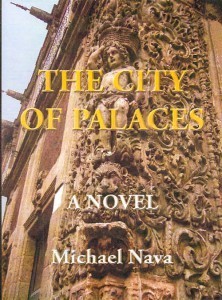
In the decades before the Revolution, Mexico was governed by a tiny elite that aped European culture, grew rich from European and American investment, and prized racial – meaning white – purity. Meanwhile, the vast majority of Mexicans, who were Indian or mestizo – of mixed Indian and Spanish blood – were politically disenfranchised and increasingly impoverished. Presiding over this authoritarian system was Don Porfirio Díaz, the ruthless and inscrutable President of the Republic. Don Porfirio’s official motto was Progreso y orden – progress and order – which he imposed with his unofficial one, pan o palo – bread or the stick. Beginning with his first presidential term in 1876, Díaz imposed an iron peace on Mexico with a mixture of seeming benevolence and actual terror.
It is against this backdrop that The City of Palaces opens in a Mexico City jail with the meeting of Miguel Sarmiento and Alicia Gavilán. Sarmiento is an idealistic young doctor, only recently returned to Mexico from Europe and tortured by guilt for a crime he committed ten years earlier. Alicia Gavilán is the old maid daughter of an aristocratic family whose face was disfigured by a childhood bout of smallpox and who, as a result, has devoted herself to working with the city’s destitute. This unlikely pair – he a scientist and atheist and she a committed Christian – will marry and through their eyes and the eyes of their young son, José, we follow the collapse of the old order and its bloody aftermath.
Most of the novel is played out in the capital, which, at the end of the nineteenth century, was home to half-a-million people in the basin of a valley ringed by volcanos. It was built on the ruins of the legendary Aztec city of Tenochtitlan which the Spanish conquered and sacked in 1519. For 300 years, the capital was the jewel of the Spanish empire, its massive colonial buildings earning it the title of the city of palaces. By 1900, the city lay half in the colonial past and half in the modern age: horse-drawn carts shared the cobblestone streets with the first automobiles, the central city was lit with electric lamps while its impoverished edges were still lit by torch light. The rich flushed their odure into a sewage system built for their neighborhood while the poor emptied their buckets of “night soil” into the streets. Beautiful and squalid, the city of Mexico in the age of Porfirio Diaz was famous for its translucent light and nauseating stink; it was a place of incredible wealth and bone-grinding poverty. It is the beloved city of Miguel and Alicia and a character of the novel in its own right.
Because Nava has written a novel, not a history. The City of Palaces is a city of stories. It is the story of two people, one of them lost in his guilt, the other surrendered to her solitary fate, who find each other and create a marriage of loving equals. It is the story of their son, a boy as beautiful and lonely as a child in a fairy tale. It is the story of the clash between the traditional Mexico represented by Alicia’s mother, a shrewd old aristocratic, and Don Porfirio’s modern Mexico represented by Alicia’s rags-to-riches brother-in-law who grows rich from backroom deals. It is the story of the idealistic Francisco Madero, who overthrows Díaz with Miguel Sarmiento’s help, only to discover that he has overthrown the tyrant but not his system. It is the story of Miguel’s cousin Luis who is hounded out of Mexico for being a “sodomite,” only to return a decade later making no apologies for his nature. It is the story of faith on the one hand and reason on the other and how they meet and fail to meet in the marriage of Miguel and Alicia. It is the story of street cars and water vendors, grand opera and silent film, presidents and priests, the living and the dead.
It is out of these stories that award-winning novelist Michael Nava has created the glittering mosaic that is The City of Palaces.
June 15, 2012
Rag and Bone
 One of the most highly acclaimed writers in the mystery genre “explores new emotional depths” in this last Henry Rios novel. The gay Mexican-American attorney, after the loss of his lover, must face his own mortality while recovering from a heart attack-and reach out to a family he didn’t know he had.
“For more years than we’ve noticed, Michael Nava has been creating an intricate series of fictions about Henry Rios . . . to give voice to the voiceless, the outsiders . . . to remind us that these outsiders are our kin.”
—The Washington Post
“What has always set Nava apart . . . is the emotional depth he brings to his stories. While his writing style is simple and understated, his themes are complex, mostly dealing with his characters’ need to both give and receive love and compassionate and understanding . . . [A]n extraordinarily gifted writer. We thank him for illuminating the life of an always fascinating character and perhaps educating a few people along the way.”
—The Denver Post
The Burning Plain
 Still devastated by the death of Josh, Henry nonetheless falls for a young actor he successfully defended against burglary charges. When the young man is murdered after leaving Henry’s house, Henry finds himself the target of a murder investigation. But the murders don’t stop, and with his life in desperate danger, Henry follows the trail of evidence, ever upward to the top levels of Los Angeles politics and Hollywood power.
“A jaywalk into evil . . . . Like Chandler’s better work, The Burning Plain pushes at the edges of the genre, turning a crime novel into a morality play.”
—Los Angeles Times
“A harrowing narrative.”
—The New York Times
“Nava’s mysteries grab readers by the lapels and don’t let go.”
—San Francisco Chronicle
“Nava writes an excellent mystery featuring crisp dialogue, diabolical suspense, and a subtle wit, but it’s his unflinching look at what it’s like to be an openly gay man today that makes this series special. Rios is a flawed, human, and achingly real hero, and this is a provocative and genre-expanding novel.”
—Booklist
The Death of Friends

 Chris Chandler, a closeted Los Angeles judge and an old friend of Henry’s, has been murdered. The investigation is focused on Chris’s younger lover, Zack, who turns to Henry for help. Devastated by his friend’s death and traumatized by his own lover Josh’s rapid descent towards death from AIDS, Henry isn’t sure he wants to know what his investigation will ultimately reveal about Chris’s double life.
“This is a high-quality work of fiction that deserves to be widely discovered.”
—The Chicago Tribune
“As the many fans of the previous Rios mysteries know, Nava can devise as canny a plot as he can a defense motion. His latest though, has something special – the scent of memory that lingers as poignantly as a departed lover’s cologne.”
—People
“Like Raymond Chandler, Nava uncovers trickle-down corruption in high places. Like Simenon, he tracks crime to its intimate moral source in familiar human weakness, gradually implicating murderer, victim, sleuth, and maybe even the reader.”
—Entertainment Weekly
The Hidden Law
 Henry explores his Mexican-American roots as he defends a young Latino accused of murdering a rising Latino politician. A strong emotional connection with both the victim and his accused killer results in a deepening internal conflict for Henry as he battles L.A.’s corrupt political machine and faces Josh’s impending death from AIDS.
“The Hidden Law is a beautifully conceived but gritty novel. Nava writes the kind of clean, powerful novels that build in emotional power almost invisibly, leaving us breathless at the end.”
—Los Angeles Times
“The Hidden Law is an eloquent story about the paralyzing legacies fathers bestow on their sons, and the terrors of loss.”
—The Washington Post
“It’s a rare, rare thing, in our current confessional age of detective fiction, when copious descriptions of the hero’s private life manage not to push the plot of the page. But it can be done, and in The Hidden Law, Michael Nava shows us how. Henry Rios is an admirable hero.”
—The New York Times
Howtown
 Henry has relocated to Los Angeles, where he now lives with Josh, who has been diagnosed HIV-positive. The mystery involves Henry’s defense of a child molester accused of murdering a child pornographer. Henry returns to his home town. It is in Howtown that the series becomes deeply entrenched in the cultural and social conflicts of Los Angeles, and the relationship between Henry and Josh faces wrenching developments.
“Nava’s mysteries are faithful to the conventions of the genre, but they are set apart by their insight, compassion and sense of social justice . . . . How Town is Nava’s bravest and most ambitious novel to date.”
—Los Angeles Times
Goldenboy

 By the beginning of Goldenboy, Henry has become sober, finding spirituality in his recovery while becoming further engaged in gay activism. He decides to assist a Los Angeles attorney who is dying of AIDS with the defense of a young gay man on trial for killing a coworker who threatened to out him. Goldenboy probes explosive themes of homophobia and exploitation within the gay community and also introduces Josh Mandel, who will become a critical part of the series arc.
“A fast paced novel that is as troubling as it is entertaining . . . . It is the many rough edges of Goldenboy that linger in the reader’s mind long after the breathless conclusion.”
—Publishers Weekly
The Little Death
 Henry Rios is introduced as a troubled public defender battling alcoholism and burnout. While investigating the murder of an old friend, he traces clues back to the man’s own wealthy family. It is here that we first encounter Henry Rios’s struggle to maintain his faith in a legal system caught between justice and corruption, a theme that will continue throughout the series.
“In The Little Death, Nava has established himself as a genuinely gifted writer, one with a special brand of power and integrity.”
—The Advocate
“The book has a calm sort of strength, and the homosexual elements are handled with dignity.”
—The New York Times
“This murder mystery about a gay public defender . . . is distinguished by good writing and by skillful adaption of the genre’s traditions.”
—Publishers Weekly


