
Randy Susan Meyers's Blog, page 54
February 24, 2011
First Pages Friday: Professor Cromer Learns to Read
First Pages Fridays offers a taste of an author's book—from ones long on the shelves to those newly launched, because while you can't judge a book by the cover, you can tell plenty from the first pages.
Today's book, a memoir, was called
…an intellectual and emotional road map for anyone who has, is currently, or may in the future navigate the swampy waters of caregiving for a loved one with serious disability.
by Mel Glenn, MD, Director of Outpatient and Community Rehabilitation,Spaulding Rehabilitation Hospital; Associate Professor, Harvard Medical School. Professor Cromer Learns to Read received the 2010 Neal Duane Award for Distinction and a Solimene Award for Excellence in Medical Writing from AMWA-NE.
Most of all, it is a wonderful read, a book I will never forget.
Professor Cromer Learns to Read: A Couple's New Life after Brain Injury
July 5, 1998
One night in early October, I arrived home from the hospital, exhausted and depressed. Flipping on the answering machine, I was deluged by a cascade of messages from my husband, Alan. In rapid succession, he said:
"Hi Janet, just want to talk to you before you go to sleep. Lots of things to tell you about if I don't forget them. I love you!"
Click.
"Janet, you were here today, right? When will you be back?"
Click.
By the fourth message: "First time I've called. Just wanted to see if I know how to use the phone. Nothing special going on. Forgot what I wanted to say. Call me."
Click.
"Hello? I'm lost. Come get me. They won't let me leave."
Click.
The eighth message really grabbed me: "Thank you for everything you've done for me and half the things you've done I don't even know about." That was the first time in four months he'd thanked me.
Click.
"Where are you? Are you ever coming back to me?"
Click.
The last message was in a tremulous voice: "Hello? It's Alan. Is anyone there? Call me to say hello to me, okay?" Calling to ask you a question about something. I forget."
Click.
In the thirty minutes it had taken me to drive home, Alan left twelve messages. As soon as he hung up, he forgot he had called. So he called again.
Alan called me from his bed on the Brain Injury Unit of Spaulding Rehabilitation Hospital in Boston. As I listened, questions ricocheted inside my head: "How did this happen? Who is this man posing as my husband? Where is the life we knew so well and were so happy to be living?"
********
Everything changed on July 5, 1998.
Alan and I had traveled from Boston to Chicago for a family reunion to celebrate the fiftieth wedding anniversary of Alan's sister, Barbara, and her husband, Sanford Kahn. We arrived Friday, and on Saturday, family and friends from across the United States gathered for a gala party at an Italian restaurant. Alan used his new digital movie camera to film the guests and record their messages to the anniversary couple. He always bought the latest technology and then enjoyed mastering the manual. While I sat at a table talking to his cousins, I could hear Alan's hearty laugh from across the room.
A few weeks earlier, Alan said, "I want to update my look for the party. I need some new clothes." Now my handsome, dark-haired husband looked like a PBS documentary director in his stylish black silk tee shirt and pleated linen trousers. When Alan buzzed by our table, I said, "Hey Larry, take a picture of Alan and me." Alan wrapped his arm around my shoulder as we added our congratulations to Barbara and Sandy. We looked like a happy and thriving couple in the prime of life. Indeed, we were. At sixty-two, Alan was a professor of physics at Northeastern University, prolific author, and developer of many educational programs. I was forty-eight, a psychiatric nurses, teacher, and registered art therapist building a private practice. We had been married for eleven years. Although we did not have children, we cherished our close relationships with several nieces and nephews.
All of the guests offered high-spirited tributes and reminiscences. Later that night, the family gathered back in the Kahn's back yard for more conversation while fireflies flickered like stars.
On Sunday, the extended family shared lunch at a Japanese restaurant before dispersing back across the country.
Alan and I were running late as we drive to O'Hare international Airport. We weren't concerned. If we missed the flight, we could just catch the earliest flight out on Monday. Alan was scheduled to start his favorite teacher-training program, Project SEED. I was due to facilitate support groups in a cancer program. We were in the thrall of a joyous weekend that put us back in touch with what mattered most: spending time with the people we loved.
Just that morning, we'd made love in our hotel room before joining the family on a three-mile, multigenerational walk. Alan jogged part of the route, and then walked while quizzing the children about math and astronomy. Ever the science teacher, he was always good for explosive demonstrations and tricks that turned out to be elegant experiments.
I should have known something was wrong the second time Alan got lost trying to find the rental car return as we approached the airport. After the first wrong turn, I said, "No Alan, Hertz is on the right. Even with two wrong turns, we made it to the terminal as the last boarding call sounded. We sprinted down the long corridors of O'Hare to the farthest gate.
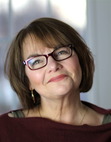
Janet Cromer is a psychiatric RN, licensed psychotherapist,educator, and healthcare features writer. When not writing memoir, she indulges in essays and poetry. Professor Cromer Learns to Read is the recipient of a 2010 Solimene Award for Excellence in Medical Communication and the Neal Duane Award for Distinction from the American Medical Writers Association- NE Chapter. Janet's proudest accomplishment was sharing life with Alan for twenty years. A lifelong resident of Boston, Janet now lives in Bethesda, MD.


Book Trailer Thursday: 32 CANDLES
Book trailers are such a brave new media. Some are awful droning talking heads (you know what I mean) where the author looks like he'd rather be shoveling coal in Siberia than filming the interview. Some are almost good–but too long. And some, like Goldilocks found, are just right and manage to capture the spirit and genre of the book.
Today's book trailer is for 32 Candles by Ernessa T. Carter
"32 Candles is a perfect bookclub choice!! I want everyone to read this book so we can all talk about the absolutely wonderful and utterly imperfect and refreshingly real Davie Jones. If you have ever been teased about anything at all, you will fall head over heels in love with Davie."
–
Dolen Perkins-Valdez, author of Wench
February 23, 2011
Remembering Miep Gies: The Ways Books Challenge Us
This is not a new book, but one of those to which I return. I even like holding it in my hands and just looking at the name of the woman whose journey it reveals: Miep Gies. Miep is the woman who, with her husband Jan Gies, helped hide Anne Frank from the Nazis. Like so many young Jewish girls growing up I was more than a little obsessed with stories from the Holocaust; especially The Diary of Anne Frank. At the time she wrote in her diary, she was probably only a bit older than I was at the time I read the book, so, of course, I walked in her shoes. It certainly didn’t seem long enough ago to not think about her as me, and me as her.
Was there a Jewish child growing up anywhere in the world who didn’t think what if? Some, I imagine, averted their thoughts from the events of WWII and pretended it was all as far away as the Roman Empire. Others, went through life compulsively reading about it, breathing the lives of those who’d lived through it and those who had lost their lives.
On top of the obvious victims, were the other victims—those who were forced to witness the atrocity, those who participated. After visiting the Holocaust Museum in Washington DC, and I paraphrase here, what my husband and I remembered most deeply, were the audiotaped words of a survivor. In speaking about his experience in a concentration camp, he related a story of being berated by a fellow internee for praying.
“Why are you thanking God?” he was asked.
“I am thanking him for not making me him,” the man said, pointing to a guard.
It is horror without relief to have been a slave, a concentration camp internee, and a victim in Darfur. It is another horror, to have been the victimizer.
Books like this, they always make me wonder, given the circumstances, on which side would I end up? We read the books, we watch the movies, and we assume we’d have the courage of the righteous, but I believe it bears remembering how brave people like Miep Gies had to be, and to remember all the Miep and Jans out there today. I pray that given the circumstances, we’d follow their path.
February 22, 2011
An Awful Lot of Women-Hating (a reprised post)
When I taught in a batterer intervention program—an educational, not counseling program—we'd draw a triangle on the board to help the men look at their belief system. During this lesson on the hierarchy of power, we'd use different 'systems' so they could identify the ways they classified people. Schools, corporations, and prisons were just a few of the organizations we sliced and diced.
They stratified prison, showing the prisoners on the bottom, squashed under the guards, wardens, politicians, and everyone else in the world. When I asked if the guards had any chance of having an "authentic relationship" with the prisoners as they loomed over them as shown in the hierarchy triangle, their laughs were loud and derisive.
When we asked them to define the layers of family, the woman usually laid on the bottom of the heap. Some men argued that the women rated a place above the male children, but they were always wedged under the husbands and fathers. Men who'd grown up in single mother households still stuck the father figure on top.
This doesn't come from the air.
Last July, the Boston Globe reported on a domestic homicide, the sixteenth in Massachusetts since January. Sarin Chan was murdered by an ex-boyfriend. The murder was witnessed by her 4-and 6-year-old children. (The article does not say if they are boys or girls, and it is not known if the alleged murderer is the father.)
Honestly? I feel a bit shaky writing the above. My novel, The Murderer's Daughters, revolves around young girls witnessing their father murdering their mother, I worked with men who savagely beat (and some murdered) their partners. My father tried to kill my mother, and still I try to pretend that it's not happening. If I'm trying to live in this fantasy world, how deep do others bury it?
The Boston Globe reports that 9 of the alleged perpetrators tried to commit suicide. None succeeded.
In February, another Boston Globe article reported that rising economic stress as a contributing factor in the domestic violence spree in Massachusetts. This may or may not be true, but if we're not careful, that can be a facile way to pigeonhole domestic homicides.
There's an awful lot of woman-hating in the world, and it's all too acceptable. Certainly, Mel Gibson's self-pitying and rage-filled rant at Oksana Grigorieva could have little relation to the economy, not when the word 'billion' has been used to describe his net worth.
Men who batter and kill their partners are usually self-pitying and see themselves as victims, victims with fists. For these men, it's all-too-comfortable to step on someone else's head to lift oneself up. Night after night, when I worked with batterers, the men demonstrated that the bodies on the bottom of the hierarchy belong to their woman at home.
If men are angry because of the economy, why do they kill their wives and girlfriends? Why not bosses, ex-bosses (not that I'm suggesting this!) or bankers or government workers?
The men I worked with, after being arrested for hurting their wives, usually claimed good reason. "She pushed my buttons." "She was being a bitch." "She knows I hate it when she . . . "
I'd ask them if they ever punched their boss, and they'd laugh as though I were crazy.
"Don't you ever get mad at your boss?" I'd ask. "Don't they push your buttons?"
"Of course, but I don't hit them."
"Why?" I'd want to know. "Do you love your boss more than you love your wife?"
Usually they'd open their mouth and sputter, not knowing what to say. That's when we'd go back to the hierarchy of power.
It's easier to step on the person on the bottom, and we're still sadly in a world that places wives, girlfriends, daughters, and mothers on the bottom rung for the crime of being female in this world.
There's a lot left to teach our children, such as notions that equality can equal life, and authentic relationships. Sometimes I'd say very simple things to the men I worked with (and many of them were men who wanted to change):
Hitting, yelling, pushing—these are all bad. It doesn't make you big and manly. It makes you small and mean.
(Originally published July 2010)
February 21, 2011
Miep Gies Remembered–Thinking About Courage
"I am not a hero. I stand at the end of the long, long line of good Dutch people who did what I did or more—much more—during those dark and terrible times years ago, but always like yesterday in the hearts of those of us who bear witness. Never a day goes by that I do not think of what happened then. More than twenty thousand Dutch people helped to hide Jews and others in need of hiding during those years. I willingly did what I could to help. My husband did as well. It was not enough." (from the prologue of Anne Frank Remembered by Miep Gies.)
This is not a new book, but one of those to which I return. I even like holding it in my hands and just looking at the name of the woman whose journey it reveals: Miep Gies. Miep is the woman who, with her husband Jan Gies, helped hide Anne Frank from the Nazis. Like so many young Jewish girls growing up I was more than a little obsessed with stories from the Holocaust; especially The Diary of Anne Frank. At the time she wrote in her diary, she was probably only a bit older than I was at the time I read the book, so, of course, I walked in her shoes. It certainly didn't seem long enough ago to not think about her as me, and me as her.
Was there a Jewish child growing up anywhere in the world who didn't think what if? Some, I imagine, averted their thoughts from the events of WWII and pretended it was all as far away as the Roman Empire. Others, went through life compulsively reading about it, breathing the lives of those who'd lived through it and those who had lost their lives.
On top of the obvious victims, were the other victims—those who were forced to witness the atrocity, those who participated. After visiting the Holocaust Museum in Washington DC, and I paraphrase here, what my husband and I remembered most deeply, were the audiotaped words of a survivor. In speaking about his experience in a concentration camp, he related a story of being berated by a fellow internee for praying.
"Why are you thanking God?" he was asked.
"I am thanking him for not making me him," the man said, pointing to a guard.
It is horror without relief to have been a slave, a concentration camp internee, and a victim in Darfur. It is another horror, to have been the victimizer.
Books like this, they always make me wonder, given the circumstances, on which side would I end up? We read the books, we watch the movies, and we assume we'd have the courage of the righteous, but I believe it bears remembering how brave people like Miep Gies had to be, and to remember all the Miep and Jans out there today. I pray that given the circumstances, we'd follow their path.
February 6, 2011
Fiction From Emotional Fact
Ellen Meeropol’s exploration of family loyalty, the aftermath of violence, and the possibilities of redemption in HOUSE ARREST fascinated me. How one reconciles the past and lives with tragedy that is not of one’s own making, but that color ones’ daily existence was the nub of my own book, THE MURDERER'S DAUGHTERS, where sisters cling to each other in the aftermath of witnessing their father’s murder their mother, building their lives in the shadow of his imprisonment. In HOUSE ARREST, a nurse responsible for the health of a pregnant patient (who is under house arrest for the cult-related death of her toddler daughter) is haunted by the consequences of her parents’ antiwar activism a generation ago. Her pregnant patient grew up troubled by her father’s connections to racially motivated violence.
I was only four when my father tried to kill my mother—an event I could never truly remember, despite being there. Then, after ten years of working with batterers and the women they’d victimized, I wrote a story of sisters who witnessed their father murder their mother and how they then lived as virtual orphans.
When Ellen Meeropol fell in love at 19, she had no idea that her husband-to-be was the son of executed "atomic spies," but his family story led to her political education and activism. Years later, when she started writing fiction, she had no intention of exploring the Rosenberg case, and she never has, not directly. But her characters led her to the intersection of political activism and family, of injustice and divided loyalties.
Neither home-care nurse Emily Klein, nor her pregnant patient Pippa, are happy about being thrown together in HOUSE ARREST, but despite their differences, they make a connection. As anti-cult sentiment in the city grows, the women must make decisions about their conflicting responsibilities to their families and to each other—facing in some sense the same issues as did their parents.
As an activist and a mother, author Ellen Meeropol often worried about what would happen to her daughters if she were arrested, imprisoned or hurt during a demonstration, or if she were targeted by an overzealous security apparatus. Her husband was three-years-old when his parents, Ethel and Julius Rosenberg, were arrested and charged with conspiracy to commit espionage. He was six when they were executed. When Ellen started writing HOUSE ARREST, she had no clue where Pippa and Emily’s story would take her, but it’s not surprising that themes of politics and families wormed their way into the narrative. Both her characters are haunted by their parents’ actions – very different actions – and both have been constrained by these legacies.
Meeropol’s characters have empathy for people who’ve done awful things and made terrible mistakes—mistakes that caused death and destruction. A large plot concern, revolving around a religious cult, is handled with great wisdom, managing to avoid the heavy hand of the usual judgment shown around this topic. This, I think, is the genius of HOUSE ARREST, the cult is portrayed as a collection of people. Whether exploring an imaginary cult or real ones, we’ll never be able to prevent tragedy borne of zealotry unless we can see into the hearts and minds of those attracted and those repelled by such intense, and sometimes misguided, loyalty.
In researching cults, Ellen Meeropol found a quote that must have guided her work, as she walked the line of finding a realistic moral compass and empathetic burrowing into a character’s heart:
"...if you believe in it, it is a religion or perhaps 'the' religion; and if you do not care one way or another about it, it is a sect; but if you fear and hate it, it is a cult." Leo Pfeffer.
December 14, 2010
The Trauma of Writing Fiction Truthfully
A few months ago I had a minor bout of depression that depressed the hell out of me. Truly, I had no reason for the melancholy that overcame me. Daily I ran through my checklist: Family healthy? Check. Children doing okay? Check. Marriage in good shape? Check. Career on the right path? Check.
Friends, love, home? Check, check, check.
I was ashamed of my dispiritedness. People were starving. Women were being forced into sexual servitude. Unemployment. Cancer. Hurricanes. What the heck was my problem? My husband kept suggesting I dig into it. He wanted me to figure how and why it started. What was the trigger? (Perhaps I was depressed because my husband was so damn analytical.)
After too long a period of rolling my eyes at my husband's suggestions, I allowed myself a (short, always short) trip into my emotional depth, a place I loathe. Better to keep busy. Better to scrub my floors and alphabetize my spice jars.
Slowly I circled the events leading up to my sinking down and pinpointed it to a time I was writing a piece for Mail, a British newspaper (on the occasion of the UK version of The Murderer's Daughters being launched.) For that essay, they wanted background material: Why did you write the book? What happened, really really really happened, in your family? How did events affect you, your sister, mother, father...
While writing my novel, I accessed dark emotional truths. I took real events (my father trying to kill my mother) and then punted the reality into a far more dramatic story. Fiction. However, what I denied (until forced by writing the Mail article to go deeper into my own family background) was the cost of doing business.
Truthiness makes for a deeper more satisfying read. Truthiness often has little (and sometimes nothing) to do with whether one is portraying actual events from one's past. Sometimes using biographical material adds up to little more than reporting. But when one accesses the emotional truth, the ugly parts of the self that trauma can reveal, that's a gift to the reader -- but it's often ripped from the writer in a way they don't immediately recognize.
Writing my book meant digging deep into family secrets and crypts. Family facts weren't really revealed so much as a family culture was uncovered and combed through. After the book was published, after I raised my head from the comforting minutia of plot and structure and query letters and editorial letters, at some point I realized something: I wasn't telling fairy tales. I'd ripped away a scrim of denial that I'd spent years perfecting, a scrim made up of food and books and television and all the myriad ways we keep ourselves at a distance from ourselves.
Doctor, writer, friend, Kathy Crowley, talking about a study done by her colleague, Dr. Jane Liebschutz, recently told me that "one of the big things that gets missed is how victims of violence or trauma unconsciously narrow their lives -- they do almost nothing, maybe sit and watch TV most of the time, lead these incredibly dull existences, and how this is, in her mind, a protective response to the trauma."
Probably this is why digging hurts in the aftermath. While I was in the midst of writing, I became dissociative, thus able then to access feelings and events and transform them into fiction spaghetti. Then, months later: Pow, right across the kisser.
Hopefully, mixing up all that fact and fancy turned into nourishing meal for the reader, but I think I've learned something (besides why writing was deemed a depressing job by Health Magazine). If one's past is cooked and served correctly and honestly, it's bound to leave the writer with a bit of indigestion.
November 24, 2010
10 Reasons for Writers to be Thankful
Social Media for Readers: The explosion of sites where readers can gather, share information, reviews, thoughts and recommendations is tremendous. Even when we wince at reviews, we should cheer at the sheer number of people out there talking books—like Goodreads, Shelfari, Library Thing and so much more. Jefferson County Library in Colorado has a great list of links for readers . . . which leads to another reason to be thankful:
Online Bookstores: Whether you love or hate Amazon, IndieBound, Powells, B&N, Borders and other online bookstores, those who live in remote places can now access every book at any moment. And that is good.
Facebook and Twitter: Scoff all you like, nonusers; I can’t believe the number of writers and readers to whom I now feel close kinship. I truly feel as though I have a worldwide web of friends.
Backspace: This is a closed forum (which any writer can join for a small yearly fee) where writes support and teach each other. (And sometimes, um, debate.) It’s a safe haven in the huge Internet. Best sellers help newbies, newbies help each other, and it’s the only place I’ve found where you can uncover the hidden secrets of launching a book (like what you buy as a present for your editor.) You too can join.
Agents: Listening to writers moan about having to do so much of their own promotion in this social media crazy world, I imagine this scenario—what if I had to also go out there and sell, bargain, contract, etc. Sure, I know self-publishing is one option, but for those of us who stay in the mainstream, knowing you have someone who has your back is gold.
Editors: Face it, these men and women are laboring over your love. I know my book is a stronger read because of my editor. Don’t we all need a pair of cold, cold eyes? Don’t even get me started on the importance of those patient copy-editors, without whom my characters would never know how old they are.
Publicists: Writers like to work alone wearing sweatpants. Or pajamas. We like to shower at around 4 PM. We should be very grateful for having people willing to force us out there, making us put on grown-up clothes, so we can sell our books.
Bloggers: Who else could get a debut novelist (without a penny for publicity) in front of readers? Who else would spend their time creating word of mouth for an unknown book? It means the world.
Readers, Halleluiah, Readers: It’s a fast world with a billion media choices. If not for those who still revel in the stillness of a book, our words would fall in darkness. As a writer, I am eternally grateful to be read. As a reader, I am eternally grateful to the writers for providing me with the endless stream of books that are my lifeblood.
November 17, 2010
When Our Parents Define Us: IN HER WAKE
“The day my mother killed herself, she had just finished preparing her house on Marlborough Street for the anticipated return of her children after a fierce custody battle with my father. There were six of us and much to do.”
I tend to read very fast, often too fast. While reading IN HER WAKE I forced myself to slow way down, because I didn’t want to miss a sentence, or let a single thought go unread or undigested. Nancy Rappaport’s gripping story is entwined with a depth of easily understood research, so much so that as I followed in Rappaport’s wake, as she uncovered her family secrets, so to did I begin to understand some of my own.
Who doesn’t continue to examine their past through out their life? When my mother was in her late seventies, she asked me to find information about her lost father—still seeking reasons why he’d chosen to have two families. My mother went to her last days puzzling on her father’s bigamy.
Nancy Rappaport didn’t wait this long. Her mother, committed suicide when Nancy was barely four. Many years later—the author now herself a mother—sets out to discover why her mother left her in this manner. She takes us on her discovery in such an up close way, we feel as though we’re walking beside her, also anxious for clues, for truth, for some morsel of closure.
This is an achingly honest read—the only times the author flinches at revealing facts and feelings is when she tells us that she’s flinching. So embracing is her writing, that we understand and sympathize. Her father, her stepmothers, her eleven brothers and sisters (siblings connected through a variety of parents) are reading over her shoulder and are often unhappy about the family ground being turned over.
Silence has weighed down Nancy Rappaport’s family since before her mother’s death. Family silence can wrap each member tight enough to choke out life and love—but Rappaport finds and shows the tender love she feels towards her father, even as she examines his role in her mother’s decline as she devolved from a woman spinning in circles of achievement to a mother finding her final answer in a handful of pills.
Rappaport is a grieving daughter searching for the comfort of reason. She is also a child psychiatrist, schooled in investigation, comfortable in teaching, and excellent at synthesizing research. IN HER WAKE in a book for any who’ve had divorce, death, infidelity, and neglect touch their lives. I thought of my sister and I sneaking into my mother’s purse and remembered being nabbed for shoplifting on Flatbush Avenue in Brooklyn (after my father’s death,) when I read this passage:
“When I think about my ‘sticky fingers,’ the observation of revered British psychoanalyst D.W. Winnicott—that when an adolescent steals, she is looking for something that she has a right to, that she is making a claim on her mother and father because she feels deprived of their love—seems a plausible explanation for my impulse to steal . . . I stole rock candy and Sugar Babies on the way home. I stole pencils and colored flair pens. I did Christmas shopping at the Harvard Square Co-op—coming out with a well-packed duffle bag of records, paperbacks, a scarf and socks, all unpaid for.”
When I was seventeen I walked out from Macy’s in San Francisco carrying a stolen small sewing machine on which I never sewed a thing.
In a testament to Rappaport’s skill with words, she weaves into her family history, not only pertinent and fascinating psychological and sociological information, but a mini-history of a slice of Boston’s history, including her family’s discomforting connection to the loss of the West End (an entire neighborhood in Boston) and shines a light into the inner-working of Boston politics through the connections of her mother and father to that world.
The mark, for me, of a truly wonderful book, is one that holds up bits of mirror where one’s own secret tears and thoughts are reflected. With this, one feels less alone. IN HER WAKE was this book for me. Despite the lack of factual similarity, the amount of emotional resonance, coupled with eye-opening information on divorce, infidelity, suicide, and more broke down the walls between the book and my life and I sank inside.
A parent’s problems, if they rent too much space in a child’s mind, can crowd out everything else. Nancy Rappaport’s journey to uncover her mother’s sadness seemed designed to help the author finally claim her own soul, even as she mourns her mother. As she does, she teaches the reader and allows them pages and hours that can engender their own self-reflection.
Faced with the horror of a colleague’s suicide, Rappaport reports, “My therapist told me that when someone kills herself it is as if she puts her skeleton in her closet. I did not want this skeleton and I resented the intrusion.”
Passages like this, allow those clicks of recognition that make IN HER WAKE a universal read while telling an intense and personal family story, which reads at times like a mystery.
This is a book generous and comforting because of the truth. It is a book that clarifies one’s own thoughts on the meaning of past and family. It is deeply moving.
November 3, 2010
Writers Debuting When They're Past 40
But, recently, along with the plethora of lists of writers under 40, I was faced with the declaration that, as headlined in a Guardian UK article about writers, ‘Let’s Face It, After 40 You’re Past It.”
Then I read Sam Tanenhaus opine in the New York Times that there was “an essential truth about fiction writers: They often compose their best and most lasting work when they are young. “There’s something very misleading about the literary culture that looks at writers in their 30s and calls them ‘budding’ or ‘promising,’ when in fact they’re peaking.”
Thus, in the interest not of division, but of keeping up the flagging spirits of those who don’t want to be pushed out on the ice floe until after publishing all those words jangling in their head, I present 40 0ver 40:
Paul Harding, author of Tinkers, won the 2010 Pulitzer Prize with his debut novel, published when he was 42. Robin Black, author of If I Loved You I Would Tell you this, was 48 when she debuted this year. Holly LeCraw published her debut novel The Swimming Pool at 43. Julia Glass was in her early 40s when she published Three Junes. Charles Bukowski’s first novel, Post Office, was published at 49. James Michner’s first book, Tales of the South Pacific was published when he was forty—he went on to publish over 40 titles. Sherwood Anderson, author of Winesburg, Ohio published his first novel at the age of 40. Amy Mackinnon debuted Tethered in her 4o’s.
Henry Miller’s first published book, Tropic of Capricorn, was released when he was over forty. Tillie Olsen published Tell Me A Riddle just shy of 50. Edward P Jones was 41 when his first book Lost In The City came out. Claire Cook published her first novel at age 45. Chris Abouzied published his first novel Anatopsis at 46. Kyle Ladd was 41 when her debut, After The Fall, was published.
Lynne Griffin published her first novel, Life Without Summer at 49. Elizabeth Strout’s first novel Amy & Isabel debuted when she was 42. MJ Rose first novel came out when she was in her mid forties. Melanie Benjamin was 42 when she debuted. Therese Fowler was forty exactly when Souvenir debuted.
Margaret Walker wrote Jubilee, her only novel at 51. Raymond Chandler debuted at 51 with The Big Sleep. Belva Plain published her first novel, Evergreen, at 50. Alex Haley published his debut novel Roots when he was 55. (His first book, the nonfiction The Autobiography of Malcolm X was published when he was in his mid-forties.) Jon Clinch debuted with Finn at age 52. In 2010 his wife Wendy Clinch published Double Black.
Also in 2010 Iris Gomez published Try To Remember in her fifties, as did Joseph Wallace with Diamond Ruby, and I published The Murderer’s Daughters at 57. Sue Monk Kidd was 54 when she debuted The Secret Life of Bees. Annie Proulx’s first novel, Postcards, was published when she was 57. Jeanne Ray published debut, Julie and Romeo in her fifties.
George Elliot’s first novel, Adam Bede, debuted when Elliot turned 50. Isak Dineson’s first, Seven Gothic Tales came out when she turned 50. Hallie Ephron author of Never Tell A Lie began publishing fiction after fifty. Jackie Mitchard was past 50 when The Deep End of the Ocean debuted. Richard Adams debuted with Watership Down at 52.
Laura Ingalls Wilder published her first novel (beginning the Little House series) at 65. Harriet Doerr won the National Book Award, for Stones for Ibarra, written when she was 74. Katherine Anne Porter published her only novel, Ship of Fools, at age 72. EJ Knapp just debuted Stealing The Marbles, saying “I'm so far past forty I can't remember it anymore." Norman McLean wrote A River Runs Through It at age 74.
When compiling this list, Ellen Meeropol asked: "Do I count? My first novel, House Arrest, will come out in February, two months before my 65th birthday." Karen LaFreya Simpson will be 55 when her first novel Act of Grace debuts next year and Nichole Bernier will be over 44 when The Unfinished Live of Elizabeth D is published in 2012. Yes, that’s my answer, Ellen. We all count.
This is only a list of first novels. Compiling lists of bestselling, Pulitzer Prize winning, Orange Prize winning, etc. books written after the age of 40—that will take several essays.


![[image error]](http://www.randysusanmeyers.com/blog/wp-content/uploads/2011/01/first-pages.jpg)
![[image error]](http://www.randysusanmeyers.com/blog/wp-content/uploads/2011/02/cromer-cover.jpeg)
![[image error]](http://www.randysusanmeyers.com/blog/wp-content/uploads/2011/02/janet-cromer.jpeg)
![[image error]](http://www.randysusanmeyers.com/blog/wp-content/uploads/2011/01/book-trailer-tuesday1.jpg)
![[image error]](http://www.randysusanmeyers.com/blog/wp-content/uploads/2010/07/crying-child.jpg)
![[image error]](http://www.randysusanmeyers.com/blog/wp-content/uploads/2011/02/red-door.jpg)