
Randy Susan Meyers's Blog, page 47
May 24, 2011
Rescuing Children With Happiness (Reprise)
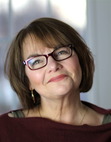
Flowers from Mom after Camp Mikan staff show
Summer can save a kid. One person can offer a child enough hope to hang on. Think about this as we get ready to slide into school vacation.
Being invisible is pretty hard for a kid. Crummy childhoods take many forms and usually it's an amalgam of yuck. Smacks and screams thankfully have a time limit, but neglect is the evil gift that never stops.
Even the most benign neglect—like being a latchkey kid—can foster loneliness.
When trouble fills a family, kids are pushed to the background. I lived in a land of my own imagining, where I believed my real parents, President Kennedy and Jackie, had left me to fend for myself, testing a 'cream will rise to the top' theory. Meanwhile my beleaguered sister, by nine, was trying her sullen best to cook me supper.
If it hadn't been for the Federation of Jewish Philanthropies I doubt my sister and I could have ended up strong at the broken places. Our mom was a struggling single mother who did her very best. Our dad suffered in ways we'll never understand, papering his sadness with drugs and dying at thirty-six.
But we had the summer! Through the magical generosity of the Federation of Jewish Philanthropies, we spent our summers at Camp Mikan, our paradise. We entered a bus somewhere in Manhattan's Lower East Side and came out of the bus blinking in the sunlight and breathing the sweet green air of Harriman State Park. Sunshine! Swimming! Friends!
Visibility!
In memory, it was a Wizard of Oz transition from black and white to color. At camp we went from unnoticed to the coolness of being all summer campers. My sister became a big shot, a member of an envied clique, moving up the ranks of camp hierarchy until eventually she was head of the waterfront (only the coolest job in the world.) I became part of a pack of safely rebellious friends who kept me going through the lonely winters.
We got to be kids
I starred in Guys and Dolls. Jill gathered groupies! We hiked. Canoed. Short-sheeted counselors. Married head-counselors Frenchy and Danny taught me I could be lovable and through loving them I learned early on that interracial marriage was a non-issue. Luke Bragg taught me to get up on stage and from being with him, through osmosis, I learned gay or straight made no difference.
We got to be kids.
Women ran Mikan. They taught Jill and I that women were strong and loving and firm and trustworthy. They taught us that is was possible to be protected in this world.
Back home, we were once again invisible and quiet children cleaning the house, uncomplaining and obedient, waiting for the year to pass so we could again have a childhood. Summer came and once more we could swim, sing, mold clay, hit a ball, learn folkdance (I still dance the mizourlou in my mind) and unclench from being coiled watchers.
Doris Bedell, who ran the camp, shaped our lives more than she'd ever imagine. She loved us, she scolded us, and she made us feel seen. She probably helped my sister become the best teacher in Brooklyn. Her memory stayed with me when I ran a camp and community center in Boston.
One adult can change a child's world.
Remember this.
Think of who you can touch.
Thank you Federation of Jewish Philanthropies. Thank you for my childhood.


May 23, 2011
The Suicide Index by Joan Wickersham
"In the airport, coming home from vacation, he stops at a kiosk and buys grapefruits, which he arranges to have sent to his daughters. They will stumble over the crates waiting on their porches, when they get home from his funeral."
Thus opens this stark and haunting memoir, written in prose that surrounded me like clear clean water. The book that has lived on my 'very best' list since it released in 2008; a book that made me feel less alone, even as Wickersham shared her loneliest time.
If the best books tell truth the best, then this memoir climbs to the top of the pile THE SUICIDE INDEX by Joan - doesn't necessarily tell universal truths, or even grand lofty truths, it tells the intense truth of Wickersham's experience of her family, and through her generous helping of genuineness—with no moments where this reader felt she was being fed anything shined up for the audience—the author gifts us with a read that is so present, so authentic, that I felt as though I walked beside Wickersham on her painful journey.
SUICIDE INDEX has no villains. It has no heroes (except perhaps for the mostly off-stage father of the suicide—dead long before the act takes place.) Chapters are presented as an index; a conceit of objectivity, which allows Wickersham distance to delve as honestly while taking nothing from the reader:
Suicide:
act of
attempt to imagine, 1—4
bare-bones account, 5—6
immediate aftermath, 7—34
In this before and after story of a well-loved father, the author attempts to make sense of his final act. It is also the story of Wickersham's bristling and uneasy relationship with her mother.
The story of her father's suicide is presented bluntly:
Wickersham's father makes coffee.
He leaves the usual morning cup for his wife, the author's mother.
He goes into his study and puts a gun to his mouth.
He leaves no note.
Wickersham searches for clues: Was it a brain tumor? Money owed from a sour business deal? His long-hidden depression? Did the mix of his abusive father's emotional and physical violence and his own perceived and real failures finally form a poison strong enough to eat away at the protective lining (wife, daughters, grandson, brother, etc.) which should have precluded suicide as an option?
The twisted love Wickersham's mother has for her husband—her vocal struggle with his never successful, and in the end tragically unsuccessful, attempts at business victory, at odds with her love and loyalty—is presented as fact, never as blame. The reader watches in horror as Wickersham's father repeatedly tries to please his hypercritical wife. He rarely does. Even after his death she resents his stumbling. In the section labeled Suicide: life summarized in an attempt to illuminate, the author writes:
After he died, when we learned that the gun malfunctioned lightly—it put a bullet into his brain but did not fire with enough force to blow his head apart as might have been expected—my mother said, "Jesus Christ, he couldn't even do that right."
Joan Wickersham didn't find the definitive answer to why her father killed himself. In the end no note was found, no secret unearthed that could explain his actions enough for the author to say, 'oh, so that's what happened,' but she does a spectacular job of taking us with her on a journey not dissimilar to one most of us must take. Perhaps, like Wickersham, we try to learn why good parents killed themselves, or we question why parents couldn't take care of themselves or us, some of us need to know how violence became such a constant visitor in our home. Or why we were neglected. But in the end, if we are lucky, we, like Wickersham, shape our past into something we can hold in our hand and our memory, and from which we can learn some measure of distance, despite how it pulls us back. Even with tragedy behind us, we learn to live with the dissonant rhythm of building our lives forward; even knowing our past always burrows inside.
The Suicide Index by Joan Wickersham (reprise)
"In the airport, coming home from vacation, he stops at a kiosk and buys grapefruits, which he arranges to have sent to his daughters. They will stumble over the crates waiting on their porches, when they get home from his funeral."
Thus opens this stark and haunting memoir, written in prose that surrounded me like clear clean water. The book that has lived on my 'very best' list since it released in 2008; a book that made me feel less alone, even as Wickersham shared her loneliest time.
If the best books tell truth the best, then this memoir climbs to the top of the pile THE SUICIDE INDEX by Joan - doesn't necessarily tell universal truths, or even grand lofty truths, it tells the intense truth of Wickersham's experience of her family, and through her generous helping of genuineness—with no moments where this reader felt she was being fed anything shined up for the audience—the author gifts us with a read that is so present, so authentic, that I felt as though I walked beside Wickersham on her painful journey.
SUICIDE INDEX has no villains. It has no heroes (except perhaps for the mostly off-stage father of thesuicide—dead long before the act takes place.) Chapters are presented as an index; a conceit of objectivity, which allows Wickersham distance to delve as honestly while taking nothing from the reader:
Suicide:
act of
attempt to imagine, 1—4
bare-bones account, 5—6
immediate aftermath, 7—34
In this before and after story of a well-loved father, the author attempts to make sense of his final act. It is also the story of Wickersham's bristling and uneasy relationship with her mother.
The story of her father's suicide is presented bluntly:
Wickersham's father makes coffee.
He leaves the usual morning cup for his wife, the author's mother.
He goes into his study and puts a gun to his mouth.
He leaves no note.
Wickersham searches for clues: Was it a brain tumor? Money owed from a sour business deal? His long-hidden depression? Did the mix of his abusive father's emotional and physical violence and his own perceived and real failures finally form a poison strong enough to eat away at the protective lining (wife, daughters, grandson, brother, etc.) which should have precluded suicide as an option?
The twisted love Wickersham's mother has for her husband—her vocal struggle with his never successful, and in the end tragically unsuccessful, attempts at business victory, at odds with her love and loyalty—is presented as fact, never as blame. The reader watches in horror as Wickersham's father repeatedly tries to please his hypercritical wife. He rarely does. Even after his death she resents his stumbling. In the section labeled Suicide: life summarized in an attempt to illuminate, the author writes:
After he died, when we learned that the gun malfunctioned lightly—it put a bullet into his brain but did not fire with enough force to blow his head apart as might have been expected—my mother said, "Jesus Christ, he couldn't even do that right."
Joan Wickersham didn't find the definitive answer to why her father killed himself. In the end no note was found, no secret unearthed that could explain his actions enough for the author to say, 'oh, so that's what happened,' but she does a spectacular job of taking us with her on a journey not dissimilar to one most of us must take. Perhaps, like Wickersham, we try to learn why good parents killed themselves, or we question why parents couldn't take care of themselves or us, some of us need to know how violence became such a constant visitor in our home. Or why we were neglected. But in the end, if we are lucky, we, like Wickersham, shape our past into something we can hold in our hand and our memory, and from which we can learn some measure of distance, despite how it pulls us back. Even with tragedy behind us, we learn to live with the dissonant rhythm of building our lives forward; even knowing our past always burrows inside.
May 20, 2011
Friday First Pages (The Kid's Edition:) ANNIE'S ADVENTURES
First Pages Fridays offers a taste of an author's book—from ones long on the shelves to those newly launched, because while you can't judge a book by the cover, you can tell plenty from the first pages. With summer vacation almost here–this one's for the kids.
Today's first pages are from The Sisters 8 series for young readers ages 6-10, written by Lauren Baratz-Logsted with Greg and Jackie Logsted. The series is about octuplets whose parents go missing one New Year's Eve, leaving the girls to solve the mystery of their parents' disappearance while keeping the outside world from realizing that eight seven-year-olds are living home alone. The following excerpt is from Book 1, Annie's Adventures.
There will be nine-books in the series. Book 7 Rebecca's Rashness was released on May 2.
Listed by School Library Journal in "The Top 100 Children's Novels Poll"
ANNIE'S ADVENTURES
It was New Year's Eve, 2007, at approximately ten o'clock at night, and we were just getting ready to celebrate Christmas.
This may seem an odd time to celebrate Christmas, but we had been stranded by snowstorms in Utah. Our parents had decreed that we celebrate our belated holiday on the eve of another holiday, and so we were about to enjoy a twofer. Or so we thought.
"But where are the presents?" asked Zinnia.
We were in the drawing room, which sounds like a room you draw pictures in but that we mostly used to sit in. On this night, we were mostly sitting around the dying fire, waiting for something exciting to happen.
Betty came in with her dust cloth, which wasn't exciting at all. Betty was our mother's invention, a black and gold robot to make our life easier by cleaning. But something had gone wrong with Betty's programming.
"Why don't you dust the floor under the tree?" Zinnia suggested to Betty. "That way, it will be cleaner there when our presents arrive."
Betty took the dust cloth, which she had draped over one of her accordion arms, and with one pincered hook placed it upon her own head.
Do you see what we mean about Betty?
"Good job, Betty," Zinnia said. Really, what else could one say?
"Bye, Betty!" we all shouted after her as she exited the room. Betty would probably now head outdoors to dust under the wrong tree.
The drawing room was our favorite room of the house. There was a grandfather clock and even a suit of armor propped in one corner. Daddy always said every home should have one – the suit of armor, not the clock. Daddy hated clocks. The walls of the room were made out of big slats of gray stone, which was cool in summer, but not so hot in winter.
"Perhaps Mommy and Daddy are waiting until we go to sleep as usual," Annie said to Zinnia, "and why do you always have to worry so much about presents anyway?"
"I don't know why you have to be so bossy," Durinda said to Annie.
"Because she's the oldest," Georgia said. There was something sneering about the way she said it, like she was thinking of waging a coup.
"Do you always have to sneer so much, Georgia?" said Petal, in a rare stab at speaking out of turn. Petal was our shy girl.
"The mouse roars," observed Rebecca snidely.
"I don't think you should pick on Petal," said Jackie, our peacemaker.
"And I don't know why you have to stick up for everyone all the time," observed Georgia. Then she sighed. "I'm bored."
"How can you be bored?" Annie asked. "You got caught in an avalanche in Utah. Wasn't that enough excitement for you?"
Georgia yawned. "It was just a tiny avalanche. I could have swam out myself if you'd only left me there another hour."
"Excuse me," said Marcia, staring into the rapidly diminishing fire in the fireplace, "but hasn't anyone else noticed something is missing?"
"Such as?" prompted Rebecca.
"Perhaps I shouldn't have said something," Marcia self-corrected.
"Well," said Georgia, "if you're not going to say something, then why did you say anything at all?"
"No, not that," Marcia said, growing impatient. "What I should have said was, 'Hasn't anyone noticed someone is missing?' Or some ones?"
"I'm afraid you've lost me," said Petal.
"Mommy and Daddy," Marcia prompted. Marcia was the observant one among us. "You know, those adults we live with?"
We looked around us and realized she was right.
When had we last seen Mommy and Daddy?
Turn the clock back about twenty minutes:
"I'm going to the woodshed for logs for the fire," Daddy had said.
"I'm going to go fix a tray of eggnog for us all," Mommy had said.
"How long do you suppose," Petal asked now, "it takes a person to gather wood for a fire? Or pour ten glasses of eggnog?"
"Dunno," Zinnia said. "I suspect five minutes for the first, perhaps another three for the second if you put the carton back in the fridge. So, five and three – eight. It should have taken them eight minutes."
"But they were doing it simultaneously," Georgia said, "not one after another, so they both should have been back within five minutes, tops, even if Mommy took a really long time putting the carton back. Even if she decided to bring us cookies too."
"I could be wrong," said Annie, "but I think it's a little early to file a missing persons report."
"But they should have been back at least fifteen minutes ago!" Zinnia said, clearly starting to panic. "More, if you consider the time we've spent talking since we realized it was twenty minutes since they disappeared!"
"Well," Annie corrected, "that's not technically true. We noticed – "
"I noticed," Marcia briefly cut in.
" – at the twenty-minute mark," Annie went on. "But that doesn't mean that's when they disappeared. It merely means that's when we noticed – "
"I noticed."
" – they weren't exactly here anymore."
"This is no time for petty squabbles about time," said Jackie. "What do you think we should do?"
"We should look for them, of course," Annie said simply. "There's no doubt some simple explanation and then Georgia can go back to being bored and Zinnia can go back to worrying about presents."
Lauren Baratz-Logsted is the author of 20 books for adults, teens and young children, the most recent of which is the YA Victorian suspense novel The Twin's Daughter. Greg Logsted is the author of two books for teens, Something Happenedand Alibi Junior High. Jackie Logsted, six when she first helped conceive The Sisters 8, is now 11 and likes to write plays.
May 19, 2011
Book Trailer Week: VIOLETS OF MARCH by Sarah Jio
Book trailers are such a brave new media. Some are awful droning talking heads (you know what I mean) where the author looks like he'd rather be shoveling coal in Siberia than filming the interview. Some are almost good–but too long. And some, like Goldilocks found, are just right and manage to capture the spirit and genre of the book.
Today's trailer is from author Sarah Jio. Her book, Violets of March, was published by Plume on April 26.
"A romantic, heartfelt and richly-detailed debut. The Violets of March is the story of a woman who needs to step away from her shattered life and into the magic of Bainbridge Island before she can find herself again. Sarah Jio delivers a gem of a book, perfect for reading on the beach or under a cozy quilt." —Sarah Pekkanen, author of The Opposite of Me and Skipping a Beat
"A book for anyone who has ever lost love or lost herself. A fresh, satisfying, resonant debut." —Allison Winn Scotch, New York Times bestselling author of Time of My Life and The One That I Want
"The Violets of March is a captivating first bloom of a novel, with tangled roots, budding relationships and plenty of twists and turns. Sarah Jio is one talented writer!" —Claire Cook, bestselling author of Must Love Dogs andSeven Year Switch
"An enchanting story of love, betrayal, and the discovery of an old diary that mysteriously links the past to the present. The Violets of March is a delightful debut." —Beth Hoffman, New York Times bestselling author of Saving CeeCee Honeycutt
"The Violets of March is a captivating, bittersweet tale of what happens when the long-buried truth finally makes its way to the surface. I didn't want this book to end!" —Kelly O'Connor McNees, author of The Lost Summer of Louisa May Alcott
May 18, 2011
Words For Staying Safe
[image error]Right now, I'm thinking about the character of the mother in my book, The Murderer's Daughters. Perhaps it's because today I thought about how happy my own mother would be to see my book coming out. Although she never stopped telling me that I should lose weight, wear more make-up, cut my bangs, let my bangs grow, wear shorter dresses, wear longer dresses, and wear BIGGER jewelry, my mother had infinite faith in my writing abilities. Before she died, she'd read all my 'practice' books and thought each one perfect.
What a gift she gave me with that.
She never read The Murderer's Daughters, which may be a blessing, as the story is a 300-page speculation about my father's attempt to kill her – what if he had succeeded?
Luckily for my family, my mother lived. But Celeste, the mother in my book dies, as do so many women—leaving sons and daughters all over the world effectively orphaned, just as my characters Lulu and Merry are.
With that in mind, it feels important to share here a list of warning signs that you may be in an abusive relationship—remembering that though these warnings are written in the guise of straight man/straight woman, abuse knows no gender or sexual preference boundaries.
Jealousy: Does he want to be with you constantly? Accuse of you cheating? Follow you? Call far too often?
Controlling Behavior: Does he become angry if you're late, always need to know who you were with, where you went, what you wore, and what you said? Do you have to ask permission to do things? Does he want veto power over your friendships?
Instant Involvement: Be careful of a man who claims 'love at first sight', and says that you are the 'only one who can make him feel this way.' Be cautious of a man who pressures you for commitment too quickly, perhaps suggesting that you move in together or become engaged within 6 months of meeting.
Unrealistic Expectations: This may seem strange, but compliments that seem excessive are a warning sign. Beware those who see or expect perfection, and those who say, "you are all I need; I am all you need."
Isolation: Controlling and abusive men will try to cut off your resources and distance you from your friends and family, perhaps by telling you that your family doesn't love you or that you are too dependent on them. They will say your friends are stupid. They will keep you from the car, get angry when you talk on the phone, and make it difficult for you to go to school or work.
Blames Others for Problems: For controlling and abusive men, any problems they have at school or work are always someone else's fault. In the relationship, anything that goes wrong is because of you.
Blames Others for Feelings: Beware of men who make you feel responsible for how they feel, who see everything as a personal attack, are easily insulted, and who have tantrums about the injustice of things that happen to them. Abusive men will look for fights, blow things out of proportion, and overreact to small irritations.
Disrespectful or Cruel to Others: Dangerous men will punish animals and children cruelly. They are insensitive to pain and suffering and have expectations of children that surpass abilities. They tease children until they cry and treat people disrespectfully.
Use of Force During Sex: When men show little concern over whether you want sex or not and use sulking or anger to manipulate you into sexual compliance, this is a warning sign. Degrading sexual remarks about you should be taken as indication of a serious problem.
Rigid Sex Roles: Abusive men often believe that women are inferior to men and that a woman cannot be a whole person without a relationship.
Dr. Jekyll & Mr. Hyde: Beware of men who are nice one moment and explode the next, and men who have rapid and extreme mood swings.
Past Battering: Abusers will deny and minimize their past violence, saying it is a lie, or their ex is crazy, or that is wasn't that bad.
Breaking or Striking Objects: Violent men will break things, beat on tables, throw objects, and use other methods to inspire fear.
Any Force during an Argument: No one should be physically restrained, pushed, or shoved. Any use of weapons, kicking, hitting, slapping, or other physical violence is abuse.
Let's all stay safe out there.
If you need help:
National Domestic Violence Hotline
Help For Lesbian, Bisexual and Transgendered Community
May 17, 2011
(Almost) Weekly Writer at Work: Mo Hanley
Writers' Work-in-Progress showcases the work of new and long-published authors. This is what their first pages look like now—perhaps the published versions will read exactly the same, perhaps they will be quite changed. That part of the mutable beauty of writing—always a work in progress, until the book hits the shelves.
The Healing House is about a family transitioning through grief.
The Healing House by Mo Hanley
I'll never know how long my mother lay at the bottom of the stairs, broken and bleeding. I was too caught up in my own problems at the time.
Because of my foolishness, she was alone at the Dorchester home where she was raised, with only memories to greet her. She probably thought I'd forgotten, or had something better to do, neither of which was true.
All week, I'd looked forward to this rare, exclusive time with my mother because I wouldn't have to compete with my nine siblings for her undivided attention. Together, we'd cull through clothing, books, and assorted bric-a-brac that had accumulated over five generations. We'd share memories without interruptions from my brothers and sisters, who might tell a better story—something funny or witty— to distract her attention from me.
My grandmother (we called her Mamo) and my Aunt Amelia had lived in the federal-style house for more than eight decades, until they both died the previous month. We'd spent every holiday and most Sunday afternoons together in their home, but that tradition died with them. I wondered what would happen to the place (and us), now that they were gone.
Nearly two hours after the designated time, I slid into a spot behind Mum's blue Taurus, in front of 11 Temple Street. I rehearsed a series of excuses while I chewed another mint and swished the last ounces from a water bottle around in my dry, bitter mouth. I couldn't tell her the truth.
Maybe the alone time was better for her, I told myself as I approached the front gate. A little private time to process all she had lost.
I was a little surprised that the front door of the two-family dwelling was not completely closed. We were always careful to push down on the brass knob, and then pull it up real quick to coax the latch into the groove. I stepped into the foyer and secured it properly.
Familiar bells, whistles, and controlled applause from the McNulty's television were audible through their white, paneled door. I knew Lillian and Marion, (my grandmother's elderly tenants), were probably side-by-side on their sofa, watching their favorite game show.
Mamo's apartment was locked. I knocked, but got no response. I figured Mum was already sorting through things in an upstairs closet and couldn't hear me. I used my key to let myself in, and there she was—splayed on the floor at the bottom of the stairs.
It took a second to register, and when it did, every nerve ending exploded on my scalp and back. I shivered, despite the humidity. The impossible angle of her neck brought hot bile to my throat; my voice croaked as I yelled for the neighbors to call an ambulance. I charged into the room, dropped to my knees on the Persian rug and smoothed dark curls away from her face. Blood, the color of eggplant, leaked over her bottom lip and pooled under her jaw.
"Oh God, Mum—what happened? Can you hear me?" I didn't dare move her. I wished I had my stethoscope. The faintest whistle of air was all that I could detect when I placed my cheek close to her mouth. My trained fingers searched her dusky skin for a pulse—nothing at the wrist—thready at her carotid. She was barely alive. I did the only thing I could think of to help until an ambulance arrived. I crouched over and prayed in her ear.
I was aware that Lillian and Marion had come into the parlor, and the shrill sirens out front screamed that an ambulance had arrived. But I was drawn into this cocoon I had formed around my mother and was reluctant to come out.
Three burly firemen blazed in, and the room quickly erupted in urgent activity. Seconds later, two EMTs bustled over the threshold. I backed away and sat on the piano bench while they assessed her. One plugged his stethoscope in his ears and jumped the bell over my mother's chest, as if she were a checkerboard. The other donned blue gloves and produced a hard cervical collar from a black supply kit.
"What happened?"
"I don't know." My heartbeat thundered in my ears; I barely heard my own voice.
They were so gentle, as they adjusted the collar to immobilize her neck. Then the one with the gloves packed a wad of gauze against a deep gash on her right temple.
I'd seen wounds that were far worse—hundreds of them, when I worked in a burn unit. But the sight of my mother— my champion—powerless and unresponsive, was disorienting. I began to hyperventilate. Lillian offered to drive me to the hospital, but I shook my head and asked to ride in the ambulance instead.
"Call Trisha's house," I told Marion, and with a shaking hand, wrote the phone number on a magazine I swiped from a coffee table. "Tell her to take my father to the Carney!"
Lillian gave me my purse, which I had dropped on the floor. "Go, Maeve," she said. "God Bless!"
Inside the ambulance, I made deals with God—all sorts of promises that I would do anything, if he would just save her. We arrived at the hospital in a matter of minutes, and they whisked her away without waiting for me, without needing my assistance. The receptionist stopped me from going directly to the patient area, a stunning experience for me—helpless—on the opposite side of a medical crisis. She told me I'd have to wait, that I'd be in the way while doctors tried to help my mother.
I used my cell phone to call my father's best friend. Fr. Paul McDermott had married my parents, and presided over all of the sacraments of our large Catholic family. He had never done a funeral for us though, and I hoped if he came right now, he wouldn't have to.
Maureen "Mo" Hanley is a former high school teacher, a registered nurse, and mother of three young men. Her first novel, THE HEALING HOUSE was inspired by her grandparent's Dorchester home and her fascination with large families. Growing up with ten siblings, and living and working in a Boston neighborhood known for its Irish Catholic roots became valuable resources to draw on while writing about a family transitioning through grief. When Mo is not writing, she is most likely reading or walking along the numbered grid and alphabet side streets of South Boston.
May 16, 2011
Novels about Novelists (Reprise)
[image error]Does everyone have sub-genres within genres for which they hold an unusual fondness?
I can't resist a good infidelity story (really, can anything beat Presumed Innocent by Scott Turow?) I can rarely refuse the intricacies of inter-racial love (Meeting of the Waters by Kim Mclarin,) or a memoir about substance abuse (Drinking: A Love Story by Caroline Knapp. I treasure reading about the layers of an unknown (to me) culture (A Fine Balance by Rohintin Mistry) or the heartbreak of emigrants navigating a new world (my current audio/car book is Shanghai Sisters by Lisa See,) but for a real roll in schadenfreude reading, I pick up a juicy novel about novelists.
Favorites that pop into my head (too much wrapping for Chrismanakuh to research the recesses of my brain) are:
Grub by Elise Blackwell: I ate up this Shakespearean 'all's well that ends well' satire, described as a "a long overdue retelling of New Grub Street—George Gissing's classic satire of the Victorian literary marketplace—Grub chronicles the triumphs and humiliations of a group of young novelists living in and around New York City." This book reminds writers to watch the hubris and check literary-attitudes at the door; but it does it with tender love and great humor.
Breakable You by Brian Morton: All of Morton's novels reveal the writer in his/her quirks, foibles, and often-unattractive hunger—though never callously. It's hard for me to pick just one of this author's books, but I found it most memorable for the story of just how far a writer might go to gain glory, and what it life might be as the wife, daughter, or friend of such a writer.
Read all of his books.
How I Became a Famous Novelist by Steve Hely: This broad satire of Pete Tarslow, a lost soul who sets out to write a novel to impress the woman who dumped him, somehow meets what seem like disparate goals by portraying a character who is a naïf attempting to be Machiavellian. Hely skewers self-importance with a broad gun. This is a fast and funny read. Treat yourself after the holidays: spend New Year's Day reading this.
Misery by Stephen King: Page-whipping layered with psychological insight, this is a book that will not be put down. Publisher's Weekly said: "a writer held hostage by his self-proclaimed "number-one fan, is unadulterated terrifying. Paul Sheldon, a writer of historical romances, is in a car accident; rescued by nurse Annie Wilkes, he slowly realizes that salvation can be worse than death."
The Bestseller by Olivia Goldsmith: This fun and gobble-it-down tale for authors is described thusly by Publisher's Weekly: "It's is an old adage that books about publishing do not sell, because those likely to be most interested will beg, borrow or steal them rather than buy. In the case of the latest by Goldsmith (The First Wives Club) that would be a pity, because it is a highly entertaining tale with a good share of romance and drama, considerable humor and some cynical fun at the expense of the book business; there are many recognizable characters, and a number of real-life walk-ons. (There's even an index so book people can look themselves up, but be warned: it is not what it seems.) Goldsmith's busy plot which makes publishing seem as glamorous and crazy as fashion or the movies (settings for two of her previous books)? offers four women with novels being considered by high-powered New York publisher Davis & Dash. There is an elderly romance queen with a fading readership; a proud mother trying to get someone to read a magnum opus by her dead daughter; a cool young Englishwoman who has penned a quirkily charming book about a busload of American tourists in Tuscany; and a desperate young woman whose devious husband is trying to steal all the credit for her true-crime roman a clef. Throw in a corrupt publisher doctoring the books to try to make his own sales look bigger, a nymphomaniac and alcoholic editor-in-chief, a staunch young editor and her lesbian agent friend, and you have the makings of a spicy literary stew."
Fun, huh? Can you see why I had to include almost the entire review? Sadly, the book is out of print (the author, Olivia Goldsmith died six years ago) but it's well worth getting from the library or ordering second-hand.
What do you love in this genre?
Novels about Novelists
[image error]Does everyone have sub-genres within genres for which they hold an unusual fondness?
I can't resist a good infidelity story (really, can anything beat Presumed Innocent by Scott Turow?) I can rarely refuse the intricacies of inter-racial love (Meeting of the Waters by Kim Mclarin,) or a memoir about substance abuse (Drinking: A Love Story by Caroline Knapp. I treasure reading about the layers of an unknown (to me) culture (A Fine Balance by Rohintin Mistry) or the heartbreak of emigrants navigating a new world (my current audio/car book is Shanghai Sisters by Lisa See,) but for a real roll in schadenfreude reading, I pick up a juicy novel about novelists.
Favorites that pop into my head (too much wrapping for Chrismanakuh to research the recesses of my brain) are:
Grub by Elise Blackwell: I ate up this Shakespearean 'all's well that ends well' satire, described as a "a long overdue retelling of New Grub Street—George Gissing's classic satire of the Victorian literary marketplace—Grub chronicles the triumphs and humiliations of a group of young novelists living in and around New York City." This book reminds writers to watch the hubris and check literary-attitudes at the door; but it does it with tender love and great humor.
Breakable You by Brian Morton: All of Morton's novels reveal the writer in his/her quirks, foibles, and often-unattractive hunger—though never callously. It's hard for me to pick just one of this author's books, but I found it most memorable for the story of just how far a writer might go to gain glory, and what it life might be as the wife, daughter, or friend of such a writer.
Read all of his books.
How I Became a Famous Novelist by Steve Hely: This broad satire of Pete Tarslow, a lost soul who sets out to write a novel to impress the woman who dumped him, somehow meets what seem like disparate goals by portraying a character who is a naïf attempting to be Machiavellian. Hely skewers self-importance with a broad gun. This is a fast and funny read. Treat yourself after the holidays: spend New Year's Day reading this.
Misery by Stephen King: Page-whipping layered with psychological insight, this is a book that will not be put down. Publisher's Weekly said: "a writer held hostage by his self-proclaimed "number-one fan, is unadulterated terrifying. Paul Sheldon, a writer of historical romances, is in a car accident; rescued by nurse Annie Wilkes, he slowly realizes that salvation can be worse than death."
The Bestseller by Olivia Goldsmith: This fun and gobble-it-down tale for authors is described thusly by Publisher's Weekly: "It's is an old adage that books about publishing do not sell, because those likely to be most interested will beg, borrow or steal them rather than buy. In the case of the latest by Goldsmith (The First Wives Club) that would be a pity, because it is a highly entertaining tale with a good share of romance and drama, considerable humor and some cynical fun at the expense of the book business; there are many recognizable characters, and a number of real-life walk-ons. (There's even an index so book people can look themselves up, but be warned: it is not what it seems.) Goldsmith's busy plot which makes publishing seem as glamorous and crazy as fashion or the movies (settings for two of her previous books)? offers four women with novels being considered by high-powered New York publisher Davis & Dash. There is an elderly romance queen with a fading readership; a proud mother trying to get someone to read a magnum opus by her dead daughter; a cool young Englishwoman who has penned a quirkily charming book about a busload of American tourists in Tuscany; and a desperate young woman whose devious husband is trying to steal all the credit for her true-crime roman a clef. Throw in a corrupt publisher doctoring the books to try to make his own sales look bigger, a nymphomaniac and alcoholic editor-in-chief, a staunch young editor and her lesbian agent friend, and you have the makings of a spicy literary stew."
Fun, huh? Can you see why I had to include almost the entire review? Sadly, the book is out of print (the author, Olivia Goldsmith died six years ago) but it's well worth getting from the library or ordering second-hand.
What do you love in this genre?
May 13, 2011
Friday First Pages:THE THINGS THAT KEEP US HERE
First Pages Fridays offers a taste of an author's book—from ones long on the shelves to those newly launched, because while you can't judge a book by the cover, you can tell plenty from the first pages.
I've read and loved this book–oh, what a page turner.:
"The Things That Keep Us Here is without a doubt one of the most powerful and realistically frightening books I have ever read… Readers will find themselves inevitably swept into the lives of this family; sharing their fears, heartbreak and success while watching helplessly as the systems meant to better everyone's lives breakdown. With staggering intensity, Buckley's writing will leave you speechless. "
—Suspense Magazine
The Things That Keep Us Here
by Carla Buckley
Prologue
It was quiet coming home from the funeral. Too quiet. Ann wished Peter would say something, but there was just the soft patter of rain and the wipers squeaking back and forth across the windshield. Even the radio was mute, reception having sizzled into static miles before.
As they crossed into Ohio, Ann turned around to see why Maddie hadn't called it, and saw her seven-year-old had fallen asleep, her head tipped back and her lips parted, her book slipped halfway from her grasp. The first hour of their trip had been punctuated by Maddie asking every five minutes, Mom, what does this spell? Ann leaned back and teased the opened book from her daughter's fingers, closed it and put it on the seat beside Maddie. Kate hunched in the opposite corner, a tangle of brown hair falling over her face and obscuring her features, the twin wires of her iPod coiling past her shoulders and into her lap.
Ann turned back around. "The girls are asleep."
Peter nodded.
"Even Kate. I don't know how she can possibly sleep with her music going."
He made no reply.
"Do you know I caught her trying to sneak her iPod into the church? I don't think giving her that was such a great idea." When Peter remained silent, she went on. "It's just one more way for her to tune everyone out."
He shrugged. "She's twelve. That's what twelve-year-olds do."
"I think it's more than that, Peter."
He said nothing, simply glanced into the rearview mirror and flicked on the turn signal, glided the minivan around the slower-moving vehicle in front of them.
It was an old argument and he wasn't engaging. Still, there was something else lurking beneath his silence. She read it in his narrow focus on the highway and along the tightness of his jaw. "You all right?" Of course he wasn't.
"Just tired. It was a long weekend."
A long, horrible weekend. All those relatives crammed together in that small clapboard house, no air-conditioning, Peter's mother wandering around, plaintively asking everyone where Jerry was.
"I'm glad your brother made it."
"Yep."
Not yes, or yeah. Yep. He never talked like that. He was throwing up warning signs, telling her to back off. But fourteen years of marriage made her plough straight through anyway. "Everything okay between you two?"
"Sure."
So he wasn't going to tell her. "Bonni said she saw you and Mike arguing."
He glanced at her. So handsome her breath snagged for a moment. The strong, tanned planes of his face and the beautiful blue-green of his eyes that Kate had inherited; now he looked drawn and older than his forty years. He returned his attention to the road. She wanted to cup her hand to his cheek, but he was sending out those keep-away signals.
She crossed her arms. "Mike doesn't think it was an accident."
"Mike doesn't know what he's talking about."
"He has a point, though. It is strange your father wasn't wearing blaze orange."
"What are you suggesting, Ann? Suicide by hunter? Give me a break."
She should have, but she couldn't let it go. The questions piled up inside her, three days' worth of strangers whispering, three days of Peter's mother tugging at Ann's sleeve. "Things have gotten so bad with your mom, Peter. I had no idea. This morning, she told Maddie that her parents must be looking for her and that she'd better run along home. You should have seen the hurt look on Maddie's face." Ann shook her head. "It just breaks my heart. We can't leave her like this."
"Bonni will check in on her."
"Checking in's not enough. She needs round-the-clock care." The rain had stopped. A watery sunshine glinted through the clouds. Peter switched off the wipers. "I don't want to talk about it. Especially not with the girls in the car."
"You mean the girls who are sound asleep?"
"Ann."
Maybe she was pushing too hard. She leaned her forehead against the window and watched a hawk spin circles high above.
"You sure you need to go into the field tomorrow? Maybe one of your students can go in your place."
"I've got no choice. Hunters are nervous enough right now without me sending in some twenty-year-old."
"Because of the bird flu?"
"Exactly."
"Do you think you'll find anything?"
He shifted position. "Probably. But it's not an isolated case that's a problem."
"It's a cluster of cases."
"Right."
The hawk grew smaller and smaller, a smudged dot that eventually disappeared. No doubt to perch on a branch somewhere and watch for prey. "I forgot to tell you, things were so rushed Friday, but that interview came through."
Carla Buckley is the debut author of The Things That Keep Us Here. She has worked in a variety of jobs, including a stint as an assistant press secretary for a U.S. senator, an analyst with the Smithsonian Institution, and a technical writer for the Tomahawk Missile System. Named a Thurber House "New Voice in Fiction," Carla chairs the International Thriller Writers Debut Program, and lives in Ohio with her husband, children, and two dogs. Bantam Dell will publish Carla's next book, Invisible, in 2012.


![[image error]](http://www.randysusanmeyers.com/blog/wp-content/uploads/2011/04/book-trailer-tuesday.jpg)
![[image error]](http://www.randysusanmeyers.com/blog/wp-content/uploads/2011/01/first-pages.jpg)