
Linda Welch's Blog, page 11
November 6, 2011
Shéa MacLeod
I'll be hosting an Indie Chick author every week for the next 25 weeks. First up is Shéa MacLeod. Her personal story touches a chord with me and, I'm sure, will with you.
Knight in Shining Armor
by Shéa MacLeod
It's strange how long a bruise can last.
Long after the physical evidence is gone, the muscles remember. A raised hand or an angry voice, and the body flinches away. The mind tries to forget, bury the pain deep … but the scars are forever.
It didn't start that way, of course. He said all the right things. Did all the right things. When I was sick he took care of me. When my car broke down he fixed it. I thought I'd finally found my knight in shining armor.
What I'd found was a nightmare. The minute I was hooked, everything changed. It started with the name calling, the blame, the bouts of rage. As time passed, he turned increasingly violent. It was always my fault. I was useless. I'd never be anything. Do anything. Accomplish anything.
If I tried to fight him, he threatened to destroy everyone I loved. To ruin their lives. Stupidly, I believed him.
He was always sorry after.
You might ask why I didn't leave. It's a fair question. But until you've been there, until you've lived through that, you have no idea how messed up a woman's head gets when she has to live through that day after day. There is no such thing as confidence, self-esteem. You learn to live with the overwhelming conviction that this is all there is. You have nowhere else to go.
That's the very worst part of abuse. Beyond the bruises and the emotional scars. The absolute knowledge that this is the way you will live. And most likely the way you will die. You don't deserve anything else.
In a way, I was lucky. I had something else. A secret weapon, if you will. I just had no idea back then how powerful that weapon was.
I could write.
All through those nightmare years I wrote. Not about what I was living through, but about something else. An imaginary world where I would escape, where I was strong. A place where I kicked bad guy ass. A place where I was my own hero.
Prophetic? Perhaps.
The writing kept a spark of something alive in me. My soul? Hope? Who knows. But one day, that tiny spark of something flared up. I couldn't take another minute.
I had nothing. No money. Nowhere to go. But I walked out that door and never looked back.
Nobody rode in on a white horse to save me. I saved myself.
It was a very long uphill struggle to get healthy again, but through it all I kept writing. Writing had always been my passion, now it was my salvation, too.
Through writing I regained my sense of self. I grew strong. Stronger than I ever had been before. Words poured from me as my mind and body healed itself. Slowly but surely I recovered.
It's nine years later and that life seems like a distant nightmare. The woman I was then could never have dreamed of the life I am living today.
The writing has never stopped. It just moved with me, changing zip codes. I now write in a sunny room in a Georgian townhouse in London, England. I have self published two novels and am about to publish the third. My stories, while sometimes holding a dark edge, are still full of hope and my readers love them. I am now selling enough that I can stay at home and write full time. I made my dreams a reality.
Guess what?
You can, too.
The day I walked out of that abusive relationship was the day I became my own hero. That one action changed everything.
If you or someone you know is in an abusive relationship, please visit the Hot Peach Pages for a list of agencies all over the world who help women living in domestic violence.
No woman deserves to be abused and mistreated. It's time to say NO to violence.
It's time to be your own hero.
http://sheamacleod.wordpress.com/
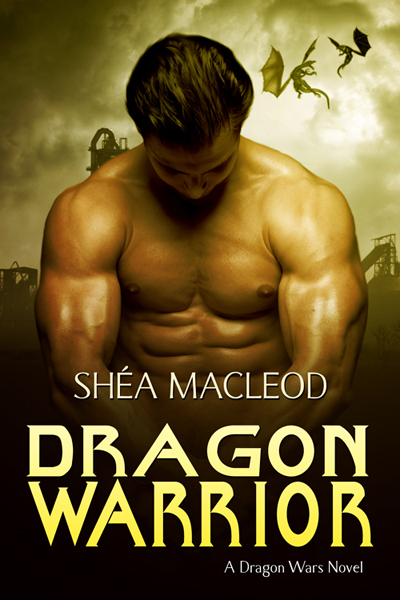
This is one story from Indie Chicks: 25 Women 25 Personal Stories available on Amazon and Barnes & Noble. To read all of the stories, buy your copy today. Also included are sneak peeks into 25 novels! My novel, DRAGON WARRIOR, is one of the novels featured. All proceeds go to the Susan G. Komen Foundation for Breast Cancer.
Indie Chicks is available on Amazon and Barnes & Noble.
Tweet


October 30, 2011
Introducing: Indie Chicks. 25 Women, 25 Stories.
 To say a writer's book is their baby sounds like a monumental overstatement, but writers know what I mean. You nurture your work, guide it, watch it grow, try to send it along the right path. Sometimes it's a difficult child. Sometimes it wants to choose its own path and you have to trust it knows what it's doing. And then it goes out into the world. You watch its progress with hands clasped to heart. You are elated when it receives praise. You're hurt when someone insults it. Sometimes, you cry. There are times when you want to step in and speak on its behalf, but you don't because you know it has to stand alone on its own merits.
Nowadays, sending your child into the world means releasing it to the treacherous, far-flung reaches of cyberspace and you are the navigator. Together, you visit blogs, review sites, online communities and networks. They can be dangerous places. We've all heard the warnings. We know those who have suffered at the hands of the despicable in every area of internet interaction. But we go out there anyway, and we find it is also an immensely rewarding experience. If you're fortunate, you meet other friendly parents who are nurturing their own children. You become a member of a community of caring, helpful people. They are always ready with advice and support. They stand with you shoulder to shoulder. At times, it seems they care as much for your child as they do for their own.
That is how I came to meet twenty-four wonderful women who decided to collaborate in a project. Under the leadership of Cheryl Shireman, author of Life is But a Dream, we wrote Indie Chicks, an anthology of personal stories which we hope will motivate other women from all walks of life. 100% of the revenue from sales will go to Susan G. Komen for the Cure, a worthy foundation that helps us battle breast cancer; a terrible, insidious disease.
Go on, take a look at our child. We hope you like her as much as we do. Indie Chicks is now available from Amazon US, Amazon UK and Barnes & Noble. To kick off the launch, here are a few words from our fearless leader, Cheryl Shireman:
Is Your Life Whispering to You?
By Cheryl Shireman
I believe life whispers to you and provides direction. I call that life force God. You can call it whatever you want, but there is no escaping it. If we are open, and brave enough to say yes, life will take us in directions we never expected, and you will live a life beyond your wildest dreams.
Those whisperings often come in the form of a "crazy" idea or a nudge to move into a certain direction that seems odd or silly or daring. Then there is that moment when you think, Well, that's weird. Where in the world did that come from?
And then there's the second moment, when you have to make a choice. You can dismiss the crazy notion, and probably even come up with a dozen reasons why it's a bad idea. You don't have the time, the money, or the resources. Besides, who are you to do such a thing? What in the world were you thinking? So, you dismiss the idea. We always have that option – to say No.
But it comes back – that whisper. Sometimes again and again. But if we are practical, and safe, we can squash the notion until it is almost forgotten. Almost.
Such a notion came to me a couple of months ago. I began to think of an anthology composed of women writers. An anthology that would be published before the rapidly approaching holiday season. The title came to me almost immediately – Indie Chicks. It was a crazy notion. I was working with an editor who was editing my first two novels, and was also in the middle of writing a third novel. Working on three books seemed to be a pretty full plate. Adding a fourth was insane.
But the crazy notion kept coming back to me. It simply refused to be dismissed. So I sent out a "feeler" email to another writer, Michelle Muto. She loved the idea. I sent out another email to my writing buddy, J. Carson Black. She loved the idea, too, but couldn't make the time commitment. She had just signed with Thomas & Mercer and was knee deep in writing. I took it as a sign. I didn't have the time for the project either. Perhaps after the first of the year, when final edits were done on my own novels. I dismissed it, at least for the present time. I'd think about it again in another couple of months, when the timing made more sense.
A week later I surrendered, started developing a marketing plan for Indie Chicks, and began sending out emails to various indie writers – some I knew, but most were strangers. I contacted a little over thirty women. Every one of them responded with enthusiasm. Most said yes immediately, and those who could not, due to time commitments, wished us well and asked me to let them know when the book when the book was published so they could be part of promoting it.
One of the first writers I contacted was Heather Marie Adkins. Earlier this year, while I was browsing the internet, I came across an interview with Heather. The interviewer (oddly enough, Michelle Muto) asked Heather, When did you decide to become an indie author? Heather's answer was: About a month ago. My dad had been trying to talk me into self-publishing for some time, but I was hesitant. One night, I sat down and ran a Google search. I discovered Amanda Hocking, JA Konrath, Victorine Lieski; but it was Cheryl Shireman that convinced me. This is the field to be in. I was shocked (Astonished! Flabbergasted!). I had no idea that I had ever inspired anyone! To be honest, it was a bit humbling. And,okay, yes – it made me cry. So, of course, I had to invite Heather to be a part of the anthology. Heather not only said yes, but she also volunteered to format the project – a task I was dreading.
As Heather and I exchanged emails, I told her about how I had been similarly inspired to become an indie writer by Karen McQuestion. My husband bought me a Kindle for Christmas of 2010. Honestly, the present angered me. I didn't want a Kindle. I wanted nothing to do with reading a book on an electronic device! I love books; the feel of them, the smell of them. But, very quickly, I started filling up that Kindle with novels.
One day, while looking for a new book on Amazon, I came across a title by Karen McQuestion. I learned that McQuestion had published her novels through Amazon straight to Kindle. Immediately, I began doing research on her and how to publish through Kindle. I had just completed a novel and was ready to submit it through traditional routes. Within 48 hours of first reading about McQuestion, I submitted my novel, Life Is But A Dream: On The Lake. Twenty four hours later, it was published as an eBook on Amazon. Within another couple of weeks it was available as a paperback and through Nook. Did I jump into this venture fearlessly? No! I was scared to death, and I almost talked myself out of it. Almost. The novel went on to sell over 10,000 copies within the first seven months of release.
As I shared that story with Heather, another crazy notion whispered in my ear – Ask Karen McQuestion to write the foreword for Indie Chicks. Of course, I dismissed it. We had exchanged a couple of tweets on Twitter, but other than that, I had never corresponded with McQuestion. It was nonsense to think she would write the foreword. I was embarrassed to even ask her. Surely, she would think I was some sort of nut. But, the idea kept whispering to me and, with great trepidation, I emailed her. She said yes! Kindly, enthusiastically, and whole-heartedly, she said yes. Karen McQuestion had inspired me to try indie publishing. I had inspired Heather Adkins. And now the three of us were participating in Indie Chicks, that crazy whisper I had been unable to dismiss.
The book began to develop, and as it did, a theme began to form. This was to be a book full of personal stories from women. As women, one of our most powerful gifts is our ability to encourage one another. This book became our effort to encourage women across the world. Twenty-five women sharing stories that will make you laugh, inspire you, and maybe even make you cry. We began to dream that these stories would inspire other women to live the life they were meant to live.
From the beginning, I knew I wanted the proceeds of this charity to go to some sort of charity that would benefit other women. While we were in the process of compiling the anthology, the mother of one of the women was diagnosed with breast cancer. Almost immediately upon learning that, Michelle Muto sent me an email. Hey, in light of *****'s mother having an aggressive form of breast cancer, can I nominate The Susan G. Komen foundation for breast cancer? I mean, one of our own is affected here, and other than heart disease (which took my own mother's life), I can't think of anything more worthy than to honor our sister in words and what she's going through. A daughter's love knows no bounds for her mother. Trust me. I know it's a charity that already gets attention on its own. But, that's not the point, is it? The point is there are 25 'sisters' sticking together and supporting each other for this anthology. I say we put the money where the heart is. We had our inspiration. All proceeds would go to the Susan G. Komen foundation for breast cancer research.
The stories started coming in. Some were light hearted and fun to read. But others were gut-wrenching and inspiring – stories of how women dealt with physical abuse, overwhelming grief, and a host of bad choices. It was clear; these women were not just sharing a story, but a piece of their heart. I felt as if I were no longer "organizing" this anthology, but just getting out of the way so that it could morph and evolve into its truest form.
Fast forward to just a few days before publication. Heather was almost done with the enormous task of formatting a book with twenty-five authors. We were very close to publishing and were on the homestretch. That's when I received an email. An unlikely email from someone I didn't really know. Beth Elisa Harris and I were involved in another indie project and Beth sent an email to all of the authors in that project, including me. She attached a journal to that email. For whatever reason, Beth had been inspired to share a journal she wrote a few years ago. She cautioned us to keep her confidence and not share the journal with anyone else. I tend toward privacy and don't tend to trust easily. This is a HUGE step for me. I've only read it once since I wrote it. Intrigued, I opened the journal and began reading. It dealt with her diagnosis, a few years back, with breast cancer! Before I was even one third of the way through the journal, I felt I should ask Beth to include this journal in the Indie Chicks anthology. It was a crazy notion, especially when considering her words about privacy and trust. We didn't even know each other, how could I ask her to go public with something so personal? I tried to dismiss the notion (are you noticing a pattern here?), but could not. I wrote the email, took a deep breath, and hit send. She answered immediately. Yes. Most definitely, yes.
Indie Chicks: 25 Women 25 Personal Stories, with foreword by Karen McQuestion and afterword by Beth Elise Harris, is now available through Barnes and Noble and Amazon. The book includes personal stories from each of the women, as well as excerpts from our novels. And it began as a whisper. A whisper I did my best to ignore.
What whisper are you ignoring? What crazy notion haunts you? What dream merely awaits your response? I urge you, say Yes. Live the life you were meant to live. Say yes today.
Stories included in Indie Chicks:
Foreword by Karen McQuestion
Knight in Shining Armor by Shea MacLeod
Latchkey Kid by Heather Marie Adkins
Write or Die by Danielle Blanchard
The Phoenix and The Darkness by Lizzy Ford
Never Too Late by Linda Welch
Stepping Into the Light by Donna Fasano
One Fictionista's Literary Bliss by Katherine Owen
I Burned My Bra For This? by Cheryl Shireman
Mrs. So Got It Wrong Agent by Prue Battten
Holes by Suzanne Tyrpak
Turning Medieval by Sarah Woodbury
A Kinky Adventure in Anglophilia by Anne R. Allen
Writing From a Flour Sack by Dani Amore
Just Me and James Dean by Cheryl Bradshaw
How a Big Yellow Truck Changed My Life by Christine DeMaio-Rice
From 200 Rejections to Amazon Top 200! by Sibel Hodge
Have You Ever Lost a Hat? by Barbara Silkstone
French Fancies! by Mel Comley
Life's Little Gifts by Melissa Foster
Never Give Up On Your Dream by Christine Kersey
Self-taught Late Bloomer by Carol Davis Luce
Moving to The Middle East by Julia Crane
Paper, Pen, and Chocolate by Talia Jager
The Magic Within and The Little Book That Could by Michelle Muto
Write Out of Grief by Melissa Smith
Afterword by Beth Elisa Harris
Indie Chicks is available for your Kindle on Amazon and your Nook on Barnes and Noble. You may also read it on your computer or most mobile devices by downloading a free reader from those sites.
Indie Chicks on Barnes and Noble
Stop by our Facebook page - http://www.facebook.com/IndieChicksAn...
Follow our Indie Chicks hash tag on Twitter! #IndieChicksAnthology
October 18, 2011
A Not So Scary Halloween Tale

In a bucolic setting of farm and fields, wood, lanes and river, the old farm worker's cottage had thick walls and a thatched roof. Originally a two-up, two-down, a new extension on the back of the cottage gave it a toilet and kitchen downstairs and a bathroom, landing and third bedroom upstairs. As farming families did hundreds of years ago, the new occupants congregated in the room where a big, black Rayburn coal-burning stove squatted against the wall, which for the purpose of this tale I call the "family room." There they ate, talked, watched television and relaxed. The other downstairs room, which originally would have been the parlor – reserved for special events – was unused at first, until Mother redecorated and it became the living room. The cottage was very old and quite ordinary, but for one architectural peculiarity. Each of the two original bedrooms that faced across the stairwell had two doors. One door led to the landing, the other toward the front of the house gave access to another, narrow landing that spanned the stairwell like a tiny bridge, connecting the two rooms.
The river flowed just beyond the lawn and flowerbeds. A large barn owl roosted in the big barn, a floating, ghostly white shadow when it flew away to hunt come evening. Ducks waddled up from the river for breadcrumbs. The family picked puffballs in the fields, mushrooms in the woods, blackberries from the hedges and wild flowers from grassy banks. Father walked hills and dales, shotgun over his arm, gundogs ranging back and forth ahead of him. Mother was the best cook in the area and had the greenest thumb; her pies, cakes, flowers and vegetables consistently won first prize at the annual village fete.
If you looked from the window early in the morning, when mist wisped at the boundary of the garden and only the caw of crows and distant low of cattle broke the silence, you could forget noise and pollution in nearby towns, and that traffic would soon break the silence of the country lanes. The countryside was a haven of rural tranquility at that time of morning.
However, life inside the cottage was anything but tranquil.
The baby in the television set made itself known not long after they moved in. All heard it. All said nothing. At first, they took no notice of a baby wailing during a television program, until they decided hearing a baby cry during a tense courtroom drama or a Disney wildlife documentary somewhat odd. When one of the family did mention the baby, they all chimed in. When the novelty wore off and the noise became annoying, they moved the television set to the other side of the family room and baby was heard no more. Later, the television went into the living room.
Had a child lain there, in that spot in the family room, wailing for attention long years ago? Perhaps it continued to cry, but lacking the medium of the television, nobody heard.
Or perhaps, when it could no longer call through the television, the baby made the mirror in the living room mysteriously swing from side to side?
What unseen apparition threw the youngest girl's doll off the bed? And who, when she and her friend listened to Roger Daltry's "I'm Free" in her bedroom, said in a clear child's voice, "I'm four," and sent the girls screaming from the room.
Who held a party in the spare bedroom when it was being redecorated – laughing, chatting and chinking glasses – and how did all of them fit in a tiny five by nine room?
And who turned the light switches on and off every evening?
The switches did not actually turn on, or off. They were the old-fashioned type, the plate a dome with a thick switch protruding from it, and they made an unmistakable sound. The family stood in the small hall at the bottom of the staircase and listened, and although the switch did not move, the lights did not come on or go off, they heard the clearly identifiable click. This also happened upstairs in mother and father's bedroom, which was odd, because the click did not come from the light switch beside the bedroom door. It came from the other door.
One day, a decade or so after the family moved into the cottage, an elderly lady and her grandson arrived. She explained her grandson was driving her around the country so she could revisit the places of her childhood. As children, she and her brother lived in the cottage with their grandparents. She asked to look around the cottage. Mother agreed. She remarked on the extension. One mystery was solved.
She reminisced about the time electricity was installed. Granddad didn't trust this new-fangled way to light your house, and he gave the light switches a good, firm, click every evening to ensure they really were turned off and wouldn't come on again of their own accord, and start a fire.
And the nonexistent switch in the bedroom? Before the extension was built, the staircase rose from the back of the house north to south up to the tiny landing that connected the two bedrooms. The light switches for those bedrooms, therefore, were next to those original doors. When the extension was added, new doors were put in the two older bedrooms to give access to the new landing; the staircase was torn down and a new one built to run from the front of the house south to north up to the new landing. The house was rewired upstairs so that switches were conveniently placed beside the new bedroom doors, but the old doors and tiny landing remained.
Did Granddad's paranoia continue beyond death? Was he still there, clicking those light switches on and off?
What do you think?
This is not a frightening Halloween tale, but it is true. My family lived in that cottage and I often visited. I heard the sound of the lights switches and the baby in the television. The old place was torn down years ago, replaced by a mega-size farmhouse cleverly built to look hundreds of years old. I wonder if a spectral baby wails in the new house, or a mirror swings, or the landowner hears odd clicks in the evening. I wonder if his daughter's dolls ever take flight off the bed.
When I remember the cottage and those odd sounds, I wonder if the old gentleman remained there long after death, making sure those switches were off? If so, why didn't the switches move? If the switches didn't move, where did the sound come from? My husband and I wondered the same thing when we lived in Ogden, Utah, and heard footsteps up and down the stairs, doors slamming, and the crash of heavy furniture hitting the floor. Inexplicable? I think I go with residual haunting activity, which theorizes that positive or negative energy is blasted into the atmosphere, causing the atmosphere to imprint or record the events. Those events may seem small and insignificant to us, but not to those who originally experienced them.
But what made the doll whizz off the bed? My niece Cath was a child, and poltergeist activity is said to be caused by children or adolescents.
I've had quite a few ghostly experiences both seen, heard and sensed. Once, I saw something that came close to scaring the living daylights out of me. Perhaps I'll tell you about it, one of these Halloweens.
September 27, 2011
I'm not Tiff Banks, or am I?

I found a slug on the road yesterday evening. Not just any old slug, this thing was seven inches long. I asked my husband, "Am I exaggerating, was it really that long?" He agreed it was. It was beautiful in its own way, so I used a large leaf to pick it up and put it in the grass. At this time of year, when the road surface absorbs the day's heat but the nights are nippy, we find quite a few creatures on the road. Snakes. There are a lot of harmless snakes of all sizes. Most of them end up squished by cars. Some stay on the road too long and become lethargic when the sun disappears over the western mountains. That happens earlier every day and I'm always surprising by how quickly the temperature drops. I move the snakes to the side of the road, too. Last week I moved a pretty jade-green and coral snake. Last year I moved five tiny, blind, baby mice. Poor little things.
I'm not Whisperings' Tiff Banks but her observations, of course, are mine. I spot the first tiny, yellow, orchid-like spring onion and know spring is truly here. I walk the mountain trails, step across the narrow seasonal streams, watch hawks ride the thermals, their undersides the bright copper of Royal's hair. I delight in the ever-increasing profusion of wild flowers. I stand on the mountainside and look down at my beautiful valley.
In fall I steer my sneaky little "MacKlutzy" away from rotten crab apples and acorns, which he loves to eat. I see the first tree turn color on the mountainside and know hundreds more will have joined it in a couple of weeks. I know winter will soon arrive. And in winter I look upon a dazzling white wonderland. I feel the bitter bite of frigid air. I drive the treacherous roads and plod along them, muffled to the ears in layers of clothing. I see a landscape of gray skeleton trees in late winter when the snow has melted off them.
No, I'm not Tiff Banks, but don't be surprised if a giant slug makes an appearance in one of her adventures.
September 17, 2011
Where Have All the Indies Gone?
I woke to the sound of thunder and torrential rain this morning. I've actually wished for rain for the past week, but not today. The timing was wrong.
Much the same thing happened with Amazon this summer. It made changes and the timing was wrong for Indie authors. During the Sunshine and Big Deal sales, when readers rushed to purchase traditionally published books at greatly reduced prices, the sale of Indie books that were not in the top 100 lost some momentum. This happens in summer anyway, when people are busy with summer activities rather than curling up with a good book. We expected sales to bounce back in August. But something strange happened. Instead of picking up, many Indie book rankings sank, some dramatically.
I have noticed something peculiar: For the past six weeks or so, I see authors asking "Is KDP (Kindle Direct Publishing) frozen? My sales and ranking have not moved for hours (or days.)" Some authors contacted Amazon and were told either, "Yes, there is a glitch and we're working on it," or "Yes, there is a glitch but it's not affecting your book." Not affecting your book? How can a "glitch" target some books but not others? And if there was a glitch which froze notification of sales when we were making sales, you would expect sales to jump when the glitch is remedied, wouldn't you. But they didn't.
This happened several times with my books. Sales reporting and ranking seemed to freeze, and when it picked up it did so in tiny increments. In a matter of days, Along Came a Demon's ranking slipped from in the 3,000s to the 11,000s. That's a huge drop in a very short time. And it got worse. Along Came a Demon, which rarely left the 3,000 ranking range since it first started making decent sales in January 2010, now wavers up and down between 9,000 and 15,000.
I recently found this blog post. http://tinyurl.com/3uczv5o. Perhaps you'll take a moment to read it before you continue with my post.
Like Ruth Ann Nordin, I want to make a disclaimer. The blog post and quoted Kindleboard post are theory which I neither support nor disparage. If anything, I don't think Amazon deliberately connived to make Indie books invisible. I think it found a way to more effectively do what it's always done, push the big money-makers into the forefront, and some Indie books are a casualty. (I don't agree with the "conspiracy" idea that Amazon banned Indies from its forums the same time it changed its algorithms. I think it more likely Amazon saw that readers were annoyed by authors jumping into every thread they could find to promote their books, when the threads were not there for that purpose.)
How does this affect me personally? My sales are now a mere trickle. Lower overall ranking = less exposure = less sales = lower ranking . . . ad infinitum. Books sink lower in Amazon's genre lists, so there is less chance of readers finding them.
I'm not the only author bemoaning lack of sales. Many independently publishing authors are experiencing an unexpected, drastic plummet. And it's getting worse. Once you're down, the longer you're down, the harder it is to rise up again.
It also affects me and my readers in another way. In May I reached a position many independently publishing authors dream of: I could quit my day job and concentrate on writing fulltime. I'm glad I didn't, because I'd be job hunting now. So I'm sorry, I won't be getting Demon Demon Burning Bright out earlier than predicted. I won't be publishing a new book every six months or so.
I don't blame Amazon. It's a business, not an evil arch-villain. Businesses have to make a profit, the bigger the better. It can get far more from working with Big Publishing than the measly $5,000 profit it made from my books in April and May. Peanuts. I can only keep writing, publishing and publicizing (which I admit I'm lousy at) and hope readers who enjoy my books spread the word.
Can you do that? If you enjoy an Indie book will you spread the word? Can you write a review on Amazon or Barnes and Noble, even a couple of sentences? It helps. We write and publish for you. We're still out there, waiting for you to notice us, hoping to entertain you.
If you can find us.
August 26, 2011
Genre,anyone?
 I needed to pick a published review as part of the material I'll send a promotional website. Choosing one wasn't easy. The problem is, readers get different things out of a book; their interpretation can vary wildly. Look at any book product page and you'll know what I mean. You'll end up asking yourself: did all of them read the same book?
"This is a solidly constructed, well written, nicely executed story."
". . . found it to be one of the easiest reads, thanks to both the storyline and the marvelous way the author writes."
Vs.
" . . . repetitive phrasing, odd sentence structure, awkward phrasing."
". . . .could have benefited from a strong edit on this book."
Hm. See what I mean? And how about this:
"The relationship between Tiff and Royal is dull. I really don't care about the relationship and I never felt like the two characters had real chemistry."
Vs.
"The sexual tension between the two leads is sizzling without turning this strong urban fantasy into a cheesy romance novel."
As you can see, readers' opinions of Whisperings vary. I expect that. What I find interesting is their opinions of genre.
"Along Came a Demon is labeled as paranormal mystery, but personally I'd call it a paranormal romance."
"This is not some flighty, no substance, romance book. Although there is a romantic element, this book should never be classified as such."
". . . a well thought out cop-like mystery."
"All in all this was a solid UF (urban fantasy) that held my attention from beginning to end."
"It's rather hard to slide it neatly into one genre."
I didn't have a specific genre in mind when I wrote Along Came a Demon, but found I had to choose one when I published. Everyone wants a book to be identified by genre, and I understand why. Most readers have their favorite genre and pick books categorized as such. Books not in a specific genre can be overlooked, and traditional publishing houses won't touch them.
What is Whisperings? Urban Fantasy? Maybe, but I'd say light rather than dark Urban Fantasy. Mystery? The paranormal element pulls Whisperings out of what is considered traditional Mystery. Along Came a Demon has romance and sexual tension, but does that make it Romance or Paranormal Romance? I finally settled on Paranormal Mystery.
Having decided on a genre, I discovered online publishing platforms don't make selection easy.
When you publish with Amazon, you are not given a choice of genre; you get a choice of "categories." You can select two categories and their sub-categories, but these don't include Paranormal Mystery or Urban Fantasy. For Amazon, I finally settled on: Fiction> Romance> Paranormal; Fiction> Ghost, and Fiction> Mystery & Detective> Women Sleuths.
All well and good, except on my product page, Amazon persists in categorizing my books only as: Kindle Store> Kindle Books> Fiction> Genre Fiction> Horror> Ghosts.
Where did "Horror" come from? Great, I thought, now readers will buy thinking it's a horror novel, be disappointed when it's not, and leave me lousy reviews.
Then there are Amazon "lists." Lists pop up when a reader searches for specific genres. They are in every imaginable genre and sub-genre. For example, in the USA, Along Came a Demon has been on the top 12 "Urban Fantasy" list for over 18 months (#7 today) and as I write is #3 on "Urban Fantasy Paranormal." In the UK, it's #1 "Paranormal Fiction" and #2 "Paranormal Mystery." I would rather Amazon puts lists and list positions on the product page, as they are more indicative of the genre.
Barnes and Noble categories seemed more appropriate. I chose: Fiction > Fantasy > Paranormal; Fiction > Ghost; Fiction > Romance > Paranormal, and Fiction > Mystery & Detective > Women Sleuths.
But when B&N highlighted Along Came a Demon in their Pubit! Pick Store, they described it as Science Fiction. I was so baffled, I emailed them to ask why. They told me that "Fiction" falls under "Science Fiction," hence, my books are Science Fiction. Voila! Funny, it didn't say that when I chose my categories. Science Fiction was a whole separate category.
Other online sellers put Whisperings in the general "Fantasy" category.
Anyway, to get to the point, don't mistake "categories" for "genre." Some of my author friends find their books listed in the strangest categories. Some readers are disappointed when books aren't of the genre they supposed. Read the product description and reviews; they should give you a better indication of genre.
Is Whisperings Paranormal Mystery, Paranormal Romance, Urban fantasy, Mystery? For book four, Demon Demon Burning Bright, I'm thinking : "Romantically Mysterious Urban Fantasy Paranormal Female Detective Novel. With ghosts."
What do you think?
July 19, 2011
Demon Demon Burning Bright gets its very own poetry!

Demon, Demon burning bright
in our rituals of the night;
what immortal case of die
did shape thy soul to yearn for mine?
In what distance deeps or skies
turns your world of funeral pyres?
On what wings does death conspire?
By whose cloaked hand will we expire?
What did smolder to make your start
twist such fetid sinews into an heart?
And as that corruption began to beat,
why turn your hand to chain my feet?
Why the scythe – to secure my bane?
In what furnace burns thy brain?
Whose poor soul did you first grasp
within your ravenous evil clasps?
And when you did withdraw your skewer
why mount their heads upon a mirror?
Did you smile; your work to see?
Did he who made hellfire make thee?
Demon Demon burning bright,
In our rituals of the night;
What immortal court up high
Finds me so cursed that I should die?
THANKS SO MUCH, KENNETH!
Check out his website, The Pit of Raeben
July 11, 2011
It's a wonderful day in the neigborhood . . .
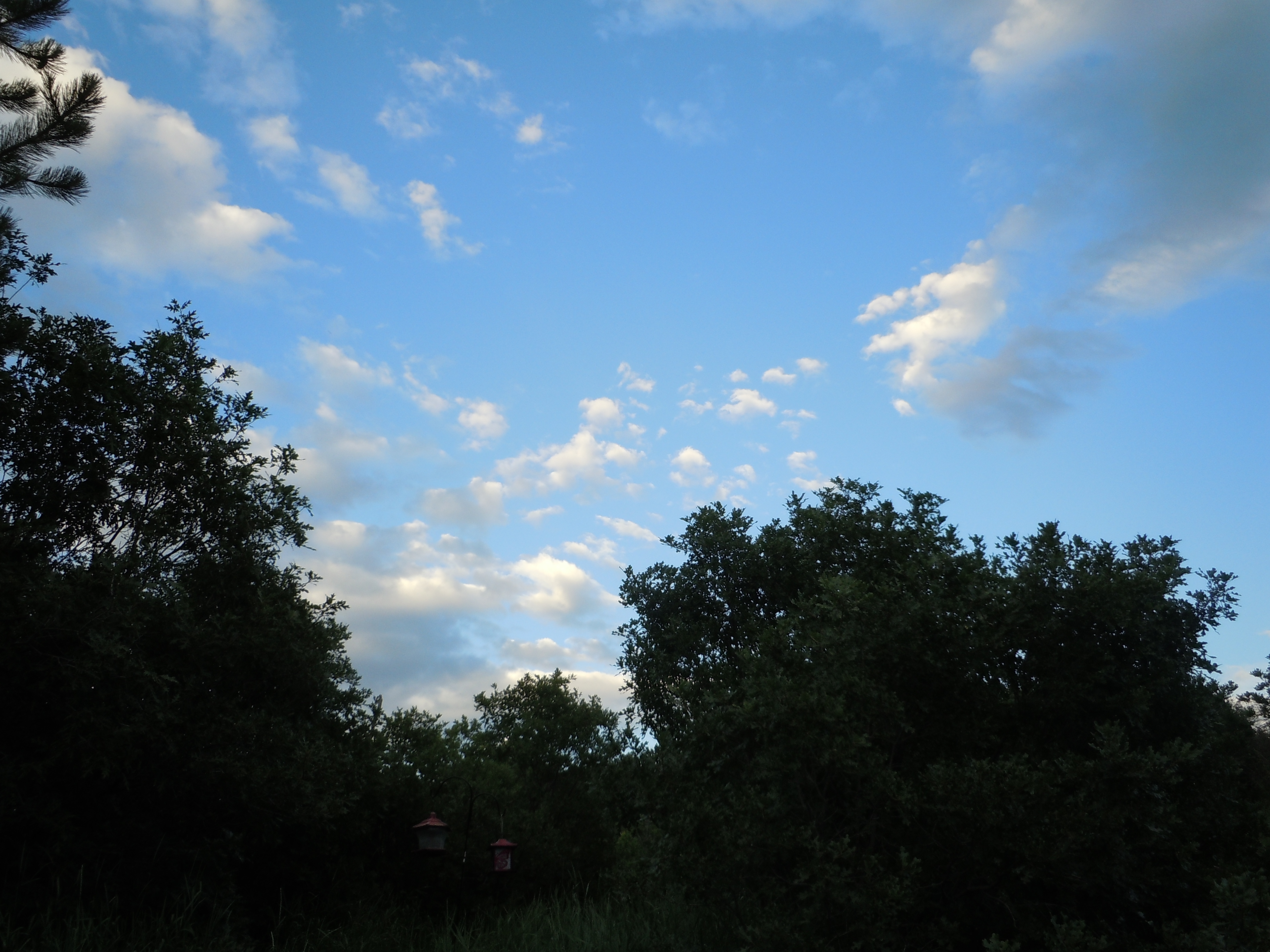
I am sitting outside my house, looking at a beautiful blue sky and a few fat silver clouds slowly climbing from behind the hill. Scrub oak, long wild grass, flowering shrubs and wildflowers cover our property this time of year. A big, beautiful butterfly flew past just now and tiny white ones are doing a kind of aerial ballet together, flitting in circles. My Scottie Duncan is on his belly in a patch of shade cast by the house, and Asher the cat thinks he's going to catch a mouse on the other side of the French ditch. I complain about the snow and bitter cold in winter, the heat in summer, but really, I love this place. I wouldn't want to live anywhere else. There are no street lamps, no pollution and little traffic to disturb the peace. I walk my dog along lanes silent but for bird song and the chitter of squirrels. The neighbors are friendly and would be here in a shot if I needed them, but they value their privacy, as I do mine; they are never intrusive. Days like this make me realize how much I have to be grateful for, how much of true value is in my life. I live in Eden – and if anyone thinks I'm over-reacting, that is the name of our village. I have my health, my home, a husband who loves me and I love him, I have a part time job with a charity which gives me a huge sense of accomplishment, I have my writing, and I have my wonderful readers.
Let me back up a bit. When I looked at my sales figures at the end of June, I realized that sometime during the month I passed a sales milestone. I didn't pay a whole lot of attention to it because I know authors who've sold a lot more in less than the 18 months this took. Then a friend said to me, don't compare your sales to those of other authors, just as you can't compare your writing to theirs. And she's right. I've accomplished something I never dreamed of and I should be proud of it.
When I first published in November, 2009, I didn't think this many people would buy my e-books. So when I say I'm grateful I have readers, I mean it from the depths of my heart. I'm grateful for them, and to them.
I'm amazed I receive so many emails and personal messages via Facebook and Twitter, or on my website. That is the biggest high. There is nothing like opening a message that begins, "I love your books . . ." I have always been an avid reader, yet never thought to write to an author and tell them how much I enjoy their writing. I am humbled that so many take the time to tell me.
This is my public thank you to everyone who buys my books, special thanks to those who put a review on Amazon or Barnes & Noble (nice reviews encourage sales,) and oodles of love to those who send me lovely notes. You make it worthwhile.
Linda
UPDATE:
I'm almost to the end of the first draft of Demon Demon Burning Bright. Bear in mind this is the first draft, which means there is still a way to go. Look for a preview- the first chapter – coming soon.
June 26, 2011
Sample Sunday: Along Came a Demon, Chapter 1.
"There's a naked woman in the garden," Jack said.
"Ung?" I mumbled, which was about as coherent as I got at seven in the morning. I glanced out the diamond-paned kitchen window. Yep. Naked woman standing on the grass. I didn't recognize her. I groped my way to the counter and hit the button on the coffeemaker, glad I remembered to load it up the night before. The programmable timer hadn't worked for months, and the less time I spent in that no-man's land between getting out of bed and sucking down my first cup, the better.
"Don't you think that's a bit odd?" Jack insisted.
Happily, I was not slugging back my first caffeine fix of the day, or I would have snorted coffee. Odd? When was anything in my life not odd? I lolled over the counter as the first drop of water hit the grounds and the truly wonderful aroma of coffee laced with caramel permeated the air.
"A naked wet woman in the garden. Dripping wet," he emphasized.
I sighed and turned to lean my spine on the counter. I would rather she were an escaped lunatic who wandered into the neighborhood than what she really was. Although how she could be wet on a chilly November morning was anyone's guess.
"I've been watching her from the bedroom window," Mel said, coming through the door from the hallway, mussing up her permanently mussed red hair with one hand. "She's been standing there, wet, for half an hour."
Not a disoriented stranger in the wrong backyard. Not an escaped loony. Worse. One of them. I sighed again. I did not want to deal with her this early in the morning. "She'll have to wait till after I have my coffee."
I didn't want to deal with her, period. I'd just signed off on an unpleasant case and looked forward to a break. Warren Bigger of Ogden reported his wife missing. She went to visit a girlfriend and never came back. He called the friend, but she said she didn't see Monica and did not arrange to meet her. Twenty-four hours later, Warren and the boys were frantic and he called the police. Search parties were organized and leads investigated. Warren stood outside his house, looking solemn, his sons at his side as he spoke to reporters. One of the boys couldn't take it and shook with tears. Sympathy poured in from the community. And I had to go stomp on everyone's good intentions and commiseration by finding Monica's body and fingering Warren as her killer.
I almost gave up after I questioned every dead person in Ogden – and there are a lot of them – and got nowhere. But I methodically went from one to another leading away from the city. Then I talked to Sheila. She saw Warren and Monica take the onramp and head toward Brigham on Interstate 15, the same morning Monica was supposed to be with her girlfriend and the boys were in school. Philip saw them turn off Highway 13 west of Corinne. Finding Monica in the desert took me less than an hour; she was the only woman standing on flat terrain with her hands and ankles tied and a flour sack on her head, right over where her body lay. She told me who killed her. DNA evidence did the rest.
So now the Bigger twins were in foster care, the last place I wanted any kid to be, but would soon be given into the custody of their maternal grandparents, which eased Monica's anguish. Their dad was in the state penitentiary. Hopefully, he would end his days there and Monica could go on to where the shades of the dead go.
I wanted to sit out the morning in the silence of my kitchen, drink strong coffee, maybe clean out my old pink refrigerator, and make a pan of Louisiana bread pudding with whiskey sauce.
No such luck.
Jack sniffed condescendingly, went back to the kitchen table and stooped over the newspaper I picked up on the way home last night, his long brown hair flopping over his brow into his eyes. Mel stood at his shoulder.
Jack's hair permanently flops in startled pale-blue eyes. Mel's hair is always mussed up, as if she just got out of bed, or battled a strong wind. She rakes at it, or tries to smooth it down, but it never changes. Mel's freckled face wears the same apprehensive expression as Jack's does.
I opened the newspaper, then turned back to the counter to fill my mug with precious liquid. I got liquid creamer from the refrigerator, added a good dollop to the coffee, and took my mug to the window. I watched the woman as I sipped. This was kind of strange, or I should say stranger than normal. They always remained at their place of departure and this one sure did not depart from my backyard, unless I missed some bizarre event during the night. And why dripping wet? It indicated drowning, but she couldn't have drowned out there.
She looked right at me.
"Ahem!" from Jack.
I stepped to the table, flipped to the next page for him and took a seat, then nursed my mug in both hands. "So what's new with the world?"
"Unfortunately, our provincial little paper doesn't often mention the world," Jack said with a sneer in his voice. "However, you might be interested to know there was a death in the apartments."
"The apartments? You mean. . . ?" I jogged my head.
"Yes. Those apartments. The ones behind us."
"Coralinda Marchant," Mel added helpfully as she peered near-sightedly at the newspaper. "Found dead in her bathtub."
I twisted to look through the window at the tall, dark-haired, wet woman in my backyard. I took another sip of coffee. "What a coincidence."
Now I really did not want to go outside. "Do they know who killed her?"
"No mention of murder. The police are in their no-comment mode," Jack informed me.
"Then they're stalling. She was murdered."
"Cops? Useless!" Jack opined too vehemently. I internally winced, recognizing a lead-in to one of his totally unfunny jokes. They always involve dead people in some way.
"Did you hear the one about the Irish cop? A newcomer said he'd heard about a lot of criminal activity in the area, but it seemed like a quiet little place to him. So the cop tells him, 'Ah, to be sure, we haven't buried a living soul in years.'"
This had to be his fifth rendition of the same, stale old joke.
Mel wrapped her arms over her stomach and deadpanned, "Oh, Lord! she says, clutching her stomach and rolling on the ground with unrestrained mirth."
"You've heard it before," Jack stated.
"Why would you think that?"
Tsking, I put my mug on the table and pulled the paper to my side. Coralinda Marchant: single, thirty-two, lived alone, worked as a secretary at a storage facility on West Canal. A neighbor found her when he saw her apartment door wide open and couldn't resist a snoop; two days ago, on November 17th. They estimated her death as the evening of November 16th.
I pushed the paper back to Jack, turned to the next page for him and tucked my feet up on the rungs of the chair, wishing I put slippers on over my socks. The sun would soon rise above the peaks and flood the kitchen with light and warmth, but until then the inadequate heating left it cool, and the floor felt icy. The radiant heating in my house is old. It is also noisy, popping and crackling at odd hours of the day and night. One day, when I strike it rich – ha ha – I will replace the heating system. Until then, a cold day in mid-November tends to worm its way inside.
A redbrick cottage built in the post-World War II era, my house is small and well built, boasting the original wooden floors and window frames. My favorite rooms, the kitchen and bathroom, are large, and in winter the warmest rooms in the house, the bathroom big enough for my treadmill and TV to fit in with room to spare. I can jog for hours and watch my favorite shows at the same time.
I have to keep in shape. At six-foot-four and slim, my muscle will go to fat if I don't take care of my body, then I'll look like a great lump. I used to be fanatical about exercise, but when my special little talent reared its ugly head, for a while there I lost interest in just about everything except hiding away from the outside world. Seeing the sorry – okay, flabby – shape I was in, helped pull me out of it.
I drained my mug, leaned over it so I could see out the window. She was still here, but now she wandered in tight little circles.
It did not make sense. Why – more importantly, how – did dead Coralinda Marchant end up in my yard?
****
On a half-acre of land at the end of a cul-de-sac, the house butts right up to the curb, with a narrow strip of grass either side and in front where Beeches Street begins a winding descent to Clarion. The woman stood in the middle of the strip on the north side of the house, hands hanging loose at her sides, waiting.
I walked beside the house, my shoes leaving tracks in a thin coat of frost. Hesitating at the corner, I braced for a vision. I don't always see a shade's death, but when I do it literally flashes on the insides of my eyelids like a flickering movie. Even though I know I watch the last moments of a person's life, I think I could learn to live with it as there is a kind of detachment, if not for the accompanying emotion. I feel what they feel and I will never become accustomed to that.
I see what they see. Except for when they are taken from behind, I see the face of their killer.
But nothing came. That's always a relief, but can make discovering what happened to a shade harder, because they are not always sure themselves.
One of the first things I learned about talking with the dead is you do not offer them information. You do not put words in their mouths. If they are confused and you say, "Can you get a message to my Aunt Bertha?" they are just as likely to say they can, because they want to please you. They figure if they please you, you will talk to them again.
So I walked up to the woman I presumed to be Coralinda Marchant and stopped in front of her with one eyebrow hiked like a question mark. The early morning chill bit at my exposed face and hands. I wrapped my arms around myself to stifle a shiver.
I wasn't sure, but I thought tears mingled with the water on her face.
"Thank you," she whispered.
I once asked a spirit why he whispered to me, why they all did. He said he didn't whisper, he spoke in a perfectly normal voice. To me, they seem to whisper.
Her voice was rather high, the sort which could become piercing if she were excited and talking a mile a minute. Dark-brown hair clung to a pointed face and almost down to the waist of a tall, slim, lanky body with small breasts and narrow hips. Thick brown lashes framed huge blue eyes. Not beautiful, but attractive enough to turn a man's head as she walked past him. Just my opinion. The water on her fascinated me; her entire body, every strand of her hair, each individual eyelash. I expected it to drip off, but it coated her like a sheath.
"I'm Lindy Marchant. I live . . . lived on the third floor," she went on, flicking one hand back over her shoulder to indicate the apartment complex behind her.
At least she knew she was dead. Sometimes they don't.
"I've seen you walking the neighborhood and thought I recognized you. I saw your picture in a newspaper when I lived in New Jersey, when you helped the police with the Telford murder. It said you're a psychic detective. I thought, how neat, a psychic, and she lives near me."
Ah, the Telford case, my little piece of notoriety. It involved a meat packer named- wait for it – Mark Butcher, a 1965 Mustang Shelby Fastback, a panicked seventeen-year-old and a clever, panicked father who did not want his boy in the hands of evil law enforcement; a smart county sheriff who stewed over the case for six months before making a call to his old friend Mike Warren, and little old me.
When I work with other PDs, like Clarion they try to keep me under the radar, but a resident of tiny Telford, New Jersey, thought she knew what I did for the police. She told her brother, the editor-cum-reporter-cum-everything else of the Telford Times. He got a picture of me and wrote a story. I'm glad the national newspapers didn't pick it up.
So Lindy lived in New Jersey and just happened to read the article. People like to debate fate and coincidence. I don't believe in fate, and coincidence can be a huge pain in the butt as far as I'm concerned.
"One, I'm not a detective. Two, I'm not a psychic. I don't disagree when people call me that because they'd have a harder time with me if they knew what I really do. I see the departed. I can talk to them," I told Lindy.
"So you're a medium?"
"Not really. Mediums can sense a presence and if they're luck communicate with it, but I see you as a flesh and blood person. Mediums don't have person-to-person conversations with the departed as we're having."
"Oh." Her gaze drifted from me for a moment. She looked lost, then distraught, as her hands came up to catch hanks of her long hair and pull them. "Then you can't help me."
But damn me, I was going to try. I couldn't cope with a nude spirit camped out in my backyard. "I might be able to, if you tell me what you need."
She crossed her wrists, wrapping the ends of her hair around her throat. "My little boy . . . I have to know what happened to Lawrence."
I frowned. The paper did not mention a child. But there could be a reason, something the police were not sharing with the public.
"He didn't leave with the police officers?"
She shook her head wildly. "No! He wasn't in the apartment. I couldn't feel him."
"Feel him?"
"I always felt him there. It was a little harder when he played outside. I had to stretch my senses farther."
"You mean you sense his physical presence?"
"Of course. Can't all parents?"
Not that I knew of. I had vague memories of my foster parents yelling through my bedroom door, "Tiffany, you stop right this minute," and not understanding how they knew what I was doing when they couldn't see me. Later in life, I learned it's intuition possessed by most parents, not an uncanny talent. Lindy meant something other than intuition.
Okay, skip it. Not important right now.
"Lawrence? He would be Lawrence. . . ?" The paper said she was single, but he could have his father's name.
"Lawrence Marchant."
"Okay. Do you have family or friends he could have gone to?"
She shook her head. "No. Nobody. We were all alone."
"Then he's probably in the state's care." I tried to give her a reassuring smile. "They'll make sure he has a good home."
I almost choked on the words. I was in and out of their shelters and went through five foster-families, till my latest foster-father made life impossible. I should have gone to my caseworker, but I just wanted out of there, fast. There are a lot of good people at Child and Family Services, but it's a state bureaucracy; too many regulations and massive caseloads can wear down most well-intentioned people. I figure I did them a favor by cutting through the red tape and leaving Utah.
"Do you think so? Perhaps they took him before I woke. Can you find out?"
I halfheartedly nodded. "If it's what you need, to know where he is, it shouldn't be hard."
Then I had to ask. "Lindy, what happened to you?"
She let her hair loose and wrung her hands together.
Until I became accustomed to it, seeing the faces of the dead was an alarming experience, because they are stuck with the expression they wore when they died. Lindy went through the physical motions of pulling on her hair and wringing her hands, as if distressed, but her expression didn't alter.
"I was taking a bath and I know I locked the front and back doors. A man came in the bathroom and went behind me. I couldn't even scream. I wanted to, but I opened my mouth and nothing came out. I gripped the sides of the tub and tried to haul myself up, and he touched me on the forehead. I barely felt it. But then it was like a . . . a jolt through my body. It took my breath away. I went under the water, just for a second, came back up and I still couldn't breathe. That's all I remember till I woke again."
I stepped closer. "What do you recall next?"
Her eyes slid away as she concentrated on a memory which could already be fading. "People there. Police. In the bathroom." Her gaze darted back to me and her tone turned indignant. "It was so embarrassing! One of the officers picked up my thong and said he wondered if his girlfriend would like one. The detective said he'd get one for his wife, but it would cut off her circulation¾not that it would matter because her crotch atrophied years ago. I was stark naked in my bathtub and they joked about my underwear! And then the other officer said he'd heard on good authority if you – "
I cut in. I didn't need that much information. I kept my voice and expression neutral, although I wanted to grin at the mental picture her words evoked. "Making jokes at a crime scene is a coping mechanism. A kind of barrier they put between them and the reality of what they see and have to deal with. Your underwear was an excuse, a distraction if you like."
She stared at the ground and I hoped she hadn't lost her train of thought. But she continued: "I tried to cover myself with my hands as I got out the tub. I yelled at them, but they took no notice, as if they didn't hear me. I tried to wrap a towel around but I couldn't seem to pick it up. I was . . . I froze. I couldn't understand what was happening. And then. . . ."
She brought her hands up to cover her eyes.
After talking to so many dead people, you would think I'd become hardened to it, but although I learned to keep my feelings to myself, their sad stories still get to me. After a while they come to terms with what happened to them, and become resigned – although I did meet a couple with a serious case of self-denial. But people like Lindy who have only just passed over – I feel so damned awful for them, for what they go through, not only losing their lives, but the frustration, disbelief and fear they experience as they come to realize they are no longer among the living.
She dropped her hands and looked me in the eyes. "They were talking about the dead woman in the tub and I realized they meant me.
"They left after a while, taking me with them. I mean . . . I watched them take my body, but I was still there! Then I was all alone. And then I remembered you. So I came to see you."
"How did you manage that, Lindy?"
"I walked here. It isn't far. Although it did seem to take a real long time."
Two days. She took two days to reach me.
I didn't explain how her leaving the apartment was, as far as I knew, an oddity. "I'll see what I can do. But it could take time and I can't have you waiting in my yard."
"I won't be a bother," she said quickly.
I had to be blunt. "Well, you are a bother when every time I look out the window I see you staring in."
She glanced at the yard. "I don't want to go back to the apartment. Can I stay here if I keep out of your way? If I keep out of sight?"
I closed my eyes and puffed out a quick breath. I didn't want her here, but I couldn't make her leave if she didn't want to. Compromise would work better.
The rest of the lot stretches out behind the house. I have an honest-to-god orchard back there with a pear, a couple of plums, a Bing cherry and four apple trees. Grapevines smother the back wall. The harvest is nothing special as the high altitude means a short growing season, but my neighbors are glad to come in and pick their own, and in return I get a few jams, jellies and relishes. Hoping Lindy could follow, I walked toward the orchard. "Why don't you hang out with the apple trees for now? But when I find your son, I want you gone from here, Lindy. That's the deal."
She came after me. "But where will I – "
"I don't know," I cut in. "But not here."
I'm not unsympathetic, far from it, but there have to be boundaries between the living and the dead. Their place of departure is typically their boundary, but in Lindy's case, with her ability to move about, I had to outline those boundaries for her. My backyard would not to be the place she lingered till she passed over.
"By the way," I added as she wandered toward the fruit trees, "the man in your apartment, what did he look like?"
She half-turned back. "I don't remember very well. He moved so fast, he was a blur. I think he had long yellow hair. Oh, and his eyes seemed to glint. I don't mean how a person's eyes can gleam in lamplight, they . . . oh, I don't know. They just looked strange."
I headed for the backdoor leading to the kitchen, acorns from the scrub oak crunching underfoot. I made a face – another oddity. The one thing the dead never forget is the face of their killer.
****
"Well?"
I poured more coffee. "It's her all right."
"And?"
"A man was in her apartment. I think he killed her, but I don't know how. She doesn't know herself. All she's interested in is her little boy." I frowned at Jack, wondering if I skipped over some of the newspaper article. "The paper didn't mention a child, did it?"
"If it had, I would have told you."
I got up from the table. "I'm gonna talk to Mike."
Jack went to the window in the backdoor, from where he could see Lindy. "She's a looker. Wouldn't mind wrapping myself around that."
"Now that I'd like to see," said Mel.
"Yeah, Jack," I chimed in as I headed for the stairs. "And why don't you pass me the newspaper while you're at it."
I gave Mel a conspiratorial look – we girls have to stick together. Jack glared at both of us. "I suppose you think you're funny."
"Well . . . yeah."
Dead people. They slay me.
June 24, 2011
Everybody else is doing it.

I mean, of course, blogging about traditional publishing vs self-publishing.
I read a lot of blogs. I read those from writers who decry self-publishing. They say the low-cost, self-published e-book is vanity publishing, trash, not a real book. They say authors only self-publish because their work is so bad, a traditional publishing house won't touch it. Some of these writers have spent hundreds of hours sending query letters, samples and synopsis to literary agents and sweat as they await a reply, if they're lucky enough to get one, because they want to be a real author with a real book in a real bookstore.
I've read blogs by Indie authors who roll their eyes at writers who go the traditional route. They rant at Big Publishing and say it's going down. Some say they won't take a publishing deal if it's offered them, yet they are ecstatic that agents and publishing houses have approached and signed contracts with some of their number. Hey, they say, those dudes finally admit we can write! Not quite. While agents are wising up to the possibilities presented by Indie work, Big Publishing is not trolling Amazon, buying and reading books they think are marketable. They are zeroing in only on Indie work which has already sold tens of thousands or hundreds of thousands of books in a relatively short time, authors who already have a large, established readership. Publishing houses don't spare a glance for anything less.
Blogs tells me the paper book is a dinosaur doomed to extinction. Blogs tell me the e-reader is a fad and an e-book does not compare to holding a cardboard and paper book in one's hand.
What to do, what to do? Traditionally publish or self-publish? Paperback or electronic file?
Go with trad publishing and you get the backing of the publishing house. You get an experienced editor, a professionally created cover, professional copy editing. Your book will be in bookstores and online stores in paperback and electronic format. Your publisher will market your books and look after your interests. Right? Well, not always. Publishers don't give a big push to every author they sign. They are cutting costs and only offer all those wonderful services to what they think are sure-fire hits. If a mid-list author's book does not bring the publisher a profit of $250,000 in the first six months, it's gone. A series can be put on hold for the duration of the contract. Some mid-list books appear and disappear from the shelves almost overnight.
Indie? Those who opt to go Indie can make significant royalties from self-publishing in electronic format, even if they price them low, and their book doesn't sit with the publisher for 18 months to two years till publication either. Self-published authors can now reach audiences which traditionally published authors cannot, and their book is out there forever, or as long as they want it to be. Sure, they don't get the big advance, but remember that advance is a loan. An author won't earn a penny in royalties until the publisher has recouped that loan. But you do it all yourself. Everything. Editing, proofreading, cover design, marketing. If you have the cash you'd be wise to hire a good editor and cover designer; if you don't, join a critique group, use Beta readers, ask the opinion and help of fellow Indie authors. You can release your book on Amazon as paperback and Kindle, on Barnes and Noble as Nook, or use Smashwords to convert your electronic file to a number of different formats which go out to Smashwords, Amazon, Barnes and Noble, Apple, Diesel, Kobo, Scrollmotion and Sony. But you won't reach all those readers who shop their local bookstore.
What is the future of publishing? Heck, I don't know. Right now established, traditionally published authors are self-publishing their backlist books and projects their publisher rejected, and making a bundle doing so. Indie's are signing with Big Publishing for a specific series, and continue to write/self-publish other books and/or series. That sounds good to me.
I would like to see publishing houses concentrate on getting paper books into stores and letting authors self-publish the electronic version. But because I don't see that happening, it would be nice if publishing houses put out e-books at a reasonable price, NOT higher than the paperback version, and gave authors better royalties on e-books.
And pigs might fly. . . .


