Larry D. Sweazy's Blog, page 3
March 7, 2016
Influences: Pat Conroy
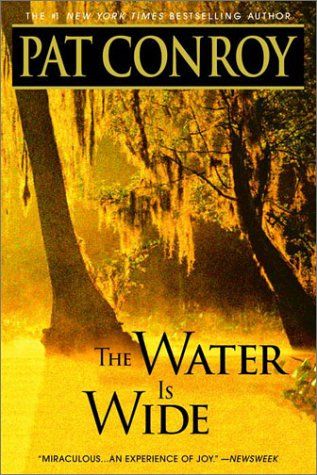
I was sad to learn this week of author Pat Conroy’s passing. As a reader, I discovered Conroy in the 1970s with The Water is Wide, but it really was with The Great Santini and The Lords of Discipline that I began to understand that the reason I loved Pat Conroy’s books so much was that I was able to bring my story to his. I understood his pain and anguish, his difficult family relationships and torn devotions. I recognized myself in his stories and I felt less alone, less isolated. And it was in that understanding that helped free me to explore my own emotions, my own story in the form of fiction. I loved his beautiful use of language and was captivated by his flawed characters. I knew them all, had lived with some of them, and was a few of them myself. Very simply, I was inspired to write because of the emotional scope and depth of Pat Conroy’s books. There were no boundaries, no reasons to restrain the darkest, deepest feelings. If it was honest, it belonged on the page. I will read his books over and over again, and will miss knowing that his work is complete, that there are no more stories from this master of voice. I can think no higher complement to a writer.
“I’ve never had anyone’s approval, so I’ve learned to live without it.”
-- Pat Conroy, The Great Santini


March 1, 2016
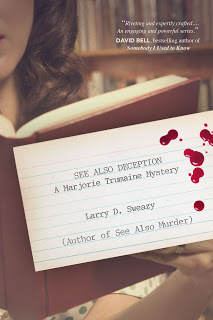
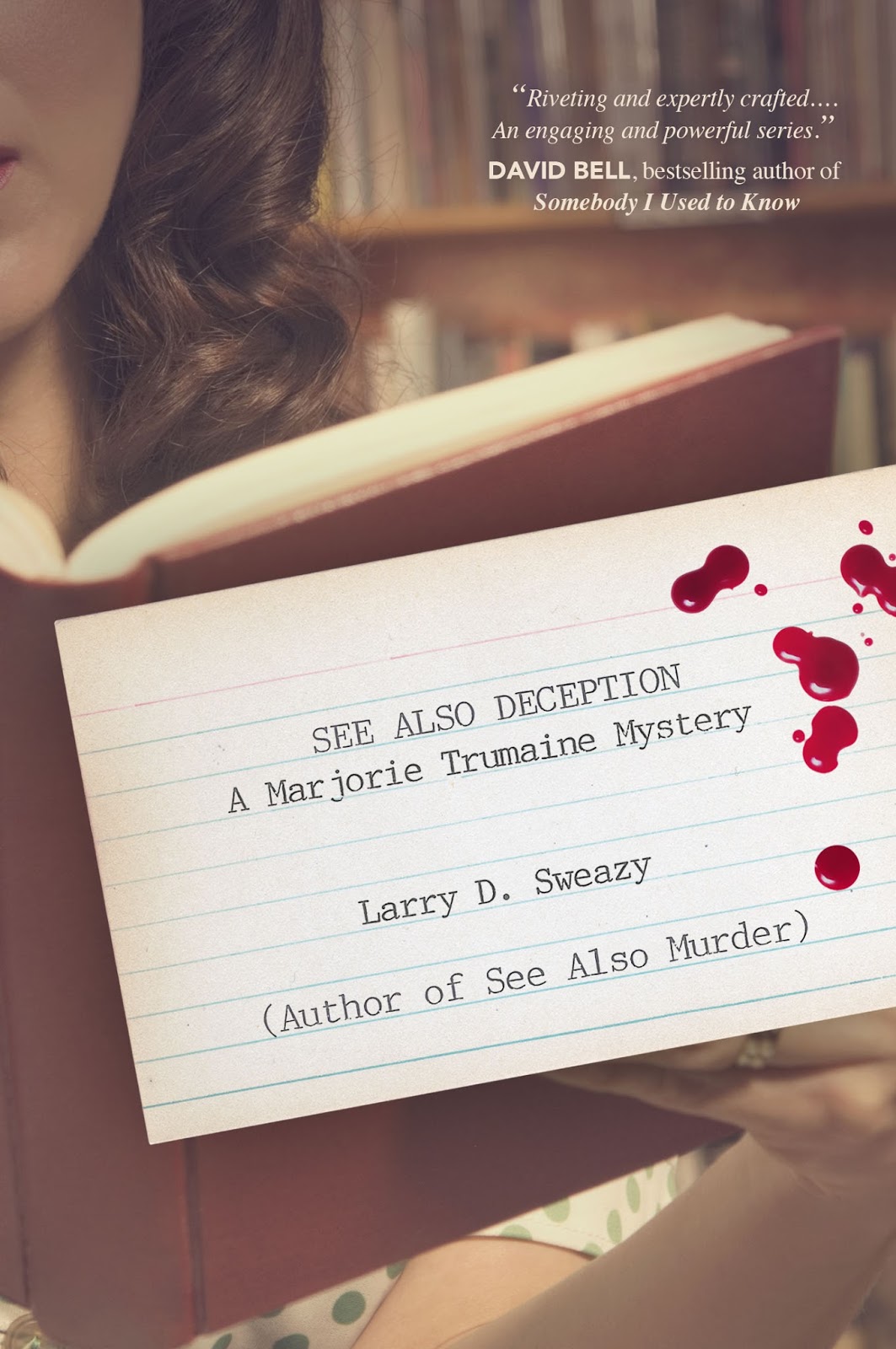
SEE ALSO DECEPTION giveaway
My publisher, Seventh Street Books, is giving away copies of my upcoming novel,
See Also Deception: A Marjorie Trumaine Mystery
on Goodreads. To enter click here to go to Goodreads.
“Brimming with atmosphere and filled with well-drawn characters, See Also Deception is bound to delight mystery readers everywhere. Marjorie Trumaine rings as solid and true as any heroine ever created.”
—SUSAN CRANDALL, bestselling author of Whistling Past the Graveyard
“Welcome to Dickinson, North Dakota, 1964—a place so real you can smell the rakfisk cooking…. Bookish farmwoman Marjorie Trumaine is the ideal amateur sleuth—steely, steady, and in tune with the subtle rhythms of small-town life. Sweazy’s perfect pacing, spine-tingling tension, and living, breathing characters make See Also Deception one of the best mystery novels I’ve read in a long time. You’re going to love this book.”
—JENNIFER KINCHELOE, author of The Secret Life of Anna Blanc
“Sweazy’s lean writing style and consummate storytelling skills will sweep you up and dump you onto the harsh prairies of North Dakota. The mouth-dropping ending will have you marking the days till Marjorie Trumaine’s next case.”
—DEBORAH MORGAN, award-winning author of the Jeff Talbot Mystery Series and of Junction
“The riveting See Also Deception rewrites the rules for small-town mysteries, adding a retro element that evokes times long before cell phones and the Internet. But Larry D. Sweazy’s formidably stalwart heroine, Marjorie Trumaine, is still more than up to the task of peeling away layers of secrets and subterfuge in getting to the bottom of a local librarian’s death. This is deceptively dark mystery writing par excellence, a potboiler of a tale that proves an able mix of Peyton Place and Agatha Christie.”
—JON LAND, USA Today bestselling author of Strong Light of Day
“Brimming with atmosphere and filled with well-drawn characters, See Also Deception is bound to delight mystery readers everywhere. Marjorie Trumaine rings as solid and true as any heroine ever created.”
—SUSAN CRANDALL, bestselling author of Whistling Past the Graveyard
“Welcome to Dickinson, North Dakota, 1964—a place so real you can smell the rakfisk cooking…. Bookish farmwoman Marjorie Trumaine is the ideal amateur sleuth—steely, steady, and in tune with the subtle rhythms of small-town life. Sweazy’s perfect pacing, spine-tingling tension, and living, breathing characters make See Also Deception one of the best mystery novels I’ve read in a long time. You’re going to love this book.”
—JENNIFER KINCHELOE, author of The Secret Life of Anna Blanc
“Sweazy’s lean writing style and consummate storytelling skills will sweep you up and dump you onto the harsh prairies of North Dakota. The mouth-dropping ending will have you marking the days till Marjorie Trumaine’s next case.”
—DEBORAH MORGAN, award-winning author of the Jeff Talbot Mystery Series and of Junction
“The riveting See Also Deception rewrites the rules for small-town mysteries, adding a retro element that evokes times long before cell phones and the Internet. But Larry D. Sweazy’s formidably stalwart heroine, Marjorie Trumaine, is still more than up to the task of peeling away layers of secrets and subterfuge in getting to the bottom of a local librarian’s death. This is deceptively dark mystery writing par excellence, a potboiler of a tale that proves an able mix of Peyton Place and Agatha Christie.”
—JON LAND, USA Today bestselling author of Strong Light of Day
February 29, 2016
Repetition: This Week's Blog Post
I thought for a while that I could sustain the blog with an interaction between training Kassi and how that training and those commands related to writing. I still think there’s still value in that idea, but I also think that I need to broaden the parameters of posts. I’m not sure yet what that will entail, but I’ll probably experiment with the format over the next few weeks...
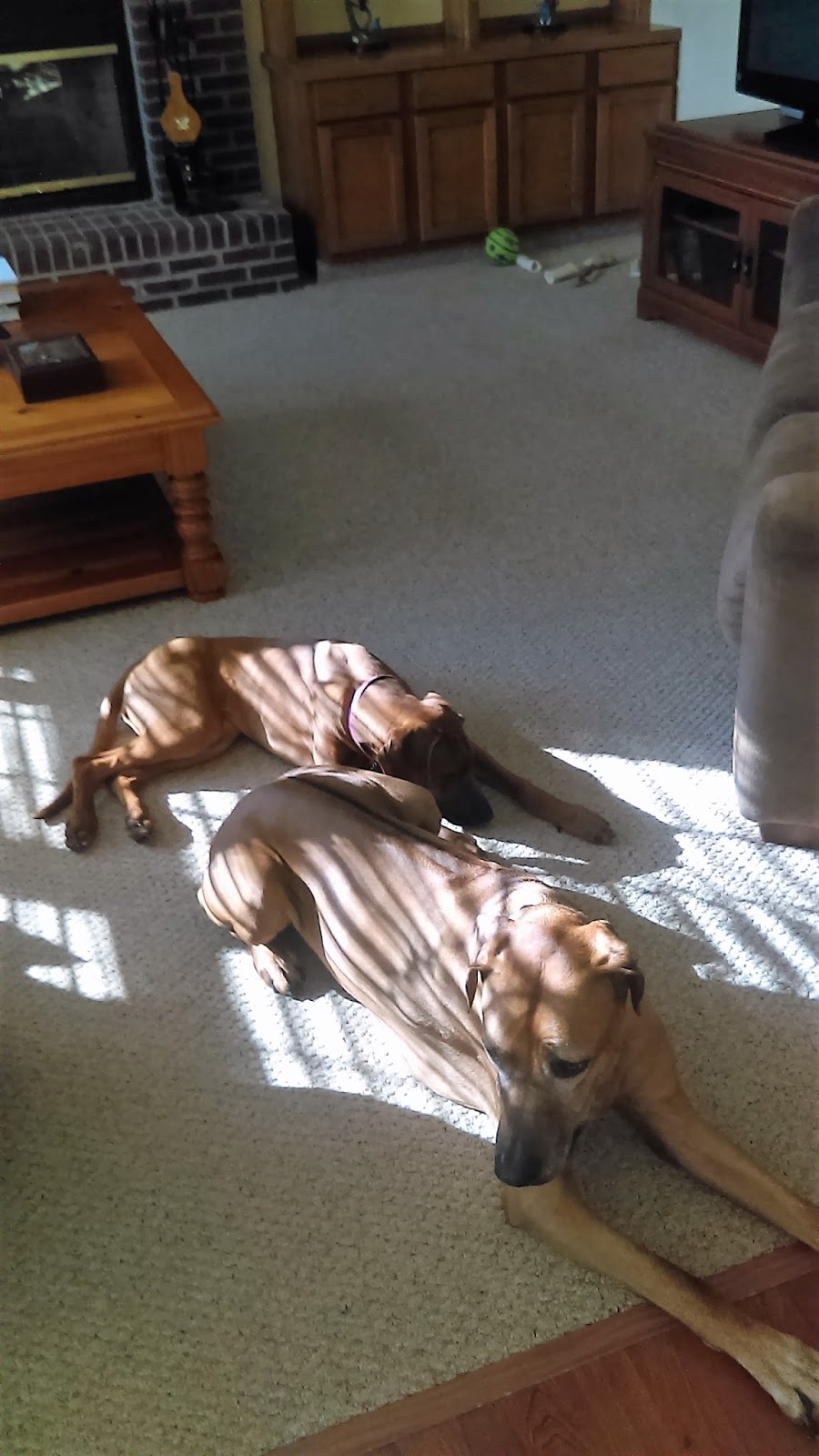
As I’ve said before, Sunny was nine years old when Kassi came along, and to be honest with you, I had forgotten how I had trained him, at least until I started training Kassi. The basics, sit, stay, etc. came easily enough, but the more specialized commands seemed difficult, until I realized that my secret to training Sunny was repetition. Every time I put his leash on him, I said, “Get your leash on,” and he would go to the same spot and wait to be leashed. Kassi followed suit. Now she does it, sits alongside Sunny just like Sunny sat alongside Brodi. Every time we leave, I tell Kassi, “Go get in your crate.” And she does, willingly because I also give her a treat and put in her favorite bone to chew. She knows what’s going to happen long before it does by our actions, getting on our shoes, coats, readying to leave, but I say it anyway. Every time. When I release her from her crate, I say the same thing every time. And I will always keep on saying it to calm her, to give her comfort, so she knows what to expect. When I give the dogs treats, I always tell them to “Be Nice.” It's a command that means be patient, wait, don’t bite the hand that feeds you, be gentle. Kassi watched Sunny from the start and now she’s a pro at "Be Nice." If I fail to give that command it’s all about the food, and I’m risking and encouraging aggression and that's something I don't want to do. If I got a nick on my finger it would be my own fault. So, the secret is repetition…always, even when the dog shows you that they know what's coming next.
As a writer, or artist of any kind, the same mindset can be applied to make life easier. Show up every day, establish a routine, keep doing it over and over until the patterns become established and you are able to get out of your own way. Repetition is boring, but it almost guarantees a body of work over a period of time, over a career. But repetition is a necessity to sustain a creative life and to train a sane, relaxed hundred eighty pound hunting dog.
February 15, 2016
Kusasa -- This week's blog post
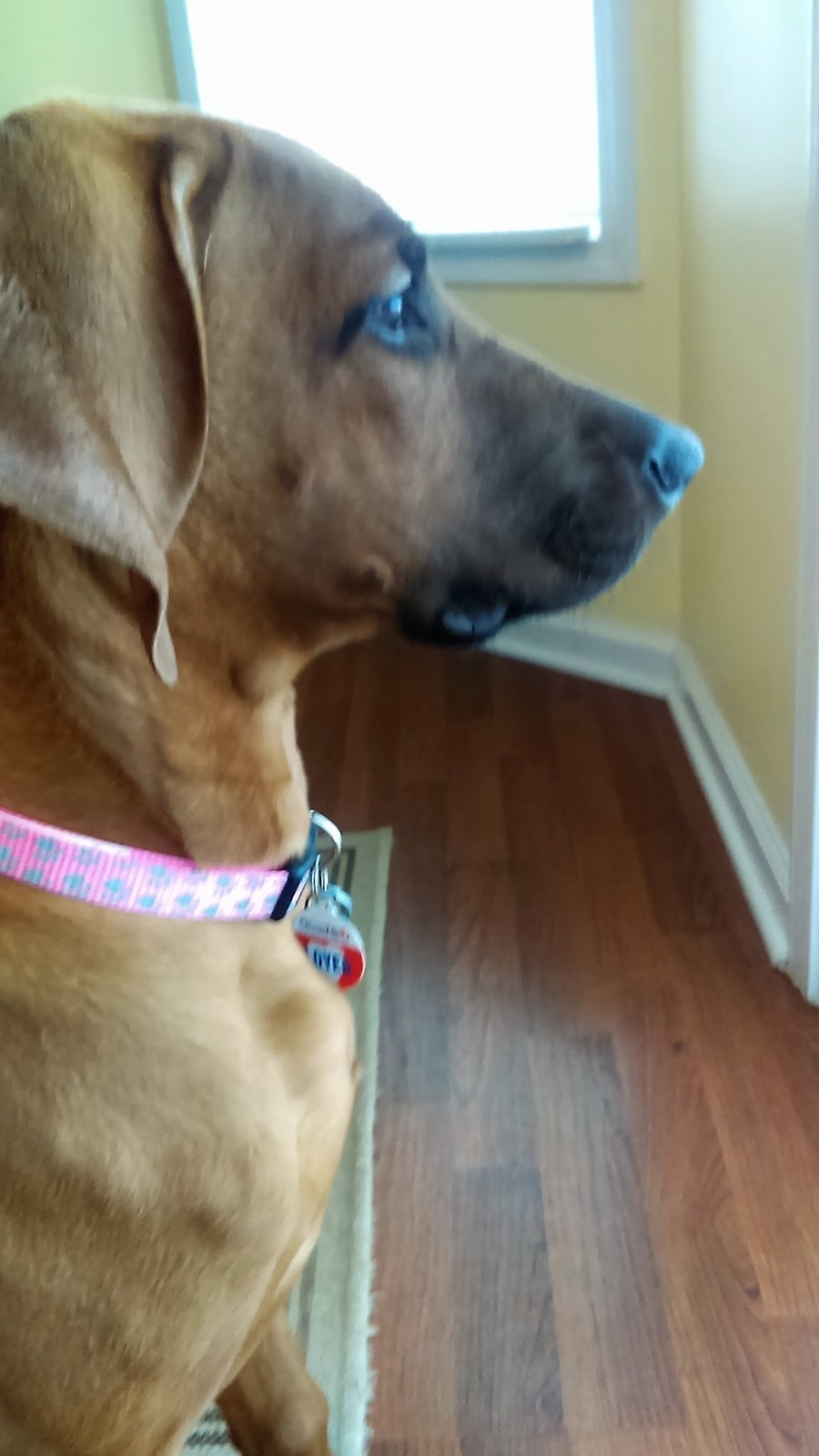
Kassi’s African name is Kusasa. It means future, or tomorrow. Deciding to get a pup was a big decision for us. After losing Brodi it was hard to think of going through that loss again. Sunny grieved and he had some health issues afterward that we’d never experienced had before. After about six months, he recovered and returned to his spry self. But he was coming up on nine years old. I still hope we have a long time together, but big dogs being big dogs, you just never know. We figured he was healthy enough to handle a pup at this point, but if we waited any longer, then it might be too late. I really wanted him to help train the new dog in the house, which turned out to be really helpful. We considered a rescue, and that might still be a possibility down the road, but we had to look at our own ages as well, and the truth is, Kassi might be our last big dog puppy. It was a now or never decision, one that we haven’t regretted from day one. Kassi was meant to carry on the legacy of Brodi and Sunny, to fill our house with as much ridgebackiness (yes, I know that’s not a word) as possible, for us to keep walking and moving into the future. Plans change, life changes, but one hopes that there will be some constants. Kassi is our constant, and she has proven that she’s more than up to the task. We couldn’t have asked for a better pup.
When someone asks me about writer’s block, I usually respond that I don’t believe in it, that you can’t edit a blank page, that you have to keep moving and write you’re way out of the spot you’re stuck in. I totally believe that, and I’ve used Anne Lamott’s “Don’t be afraid a shitty first draft,” as a mantra for more years than I can count. Writers, artists, musicians, creative people don’t quit. At least not the ones who are obsessed, who have to create or tempt madness. No matter what life throws at you, if you’re an artist, you have to create, exercise your craft, believe in the future.
Whatever it takes. Keep moving. Find that constant, whether it’s the dream of publishing one book or striving for a career. Whatever it is you have to have something to hang to and something to pull you forward, otherwise when the going gets tough, it’ll be easy to walk away, to quit, and then there’s only regret left to chew on… Find your own Kusasa, your own future and believe in it as deeply and completely as possible.
February 1, 2016
Gentle Leaders
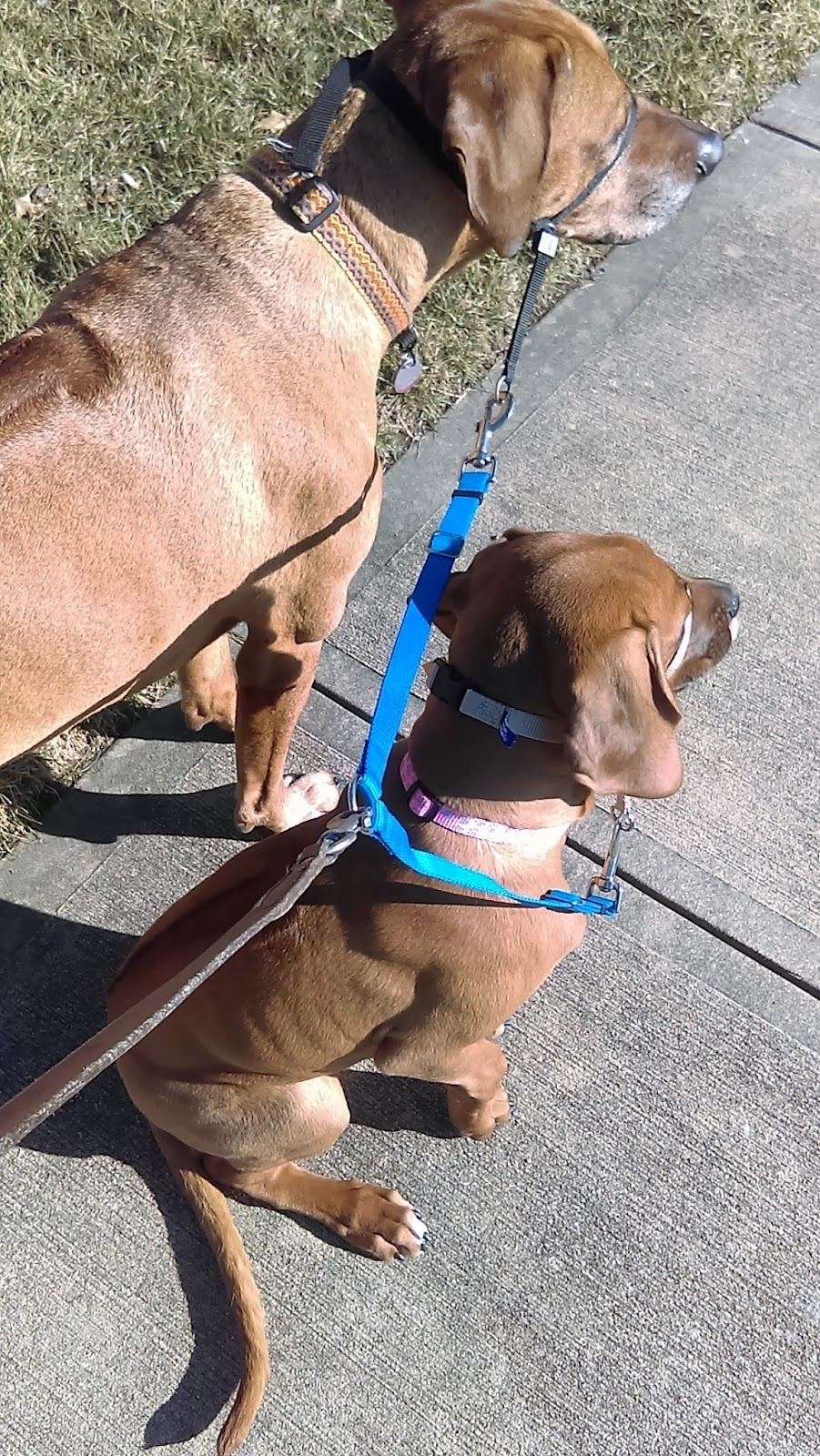
I'm a big fan of Gentle Leaders. As a dog walking tool, I really haven’t found a better alternative. They are far more humane than pinch collars or choke chains. If you’re not familiar with Gentle Leaders, they are essentially a head harness that give you control of a dog in a similar way that a rider controls a horse. People sometimes mistake them for a muzzle, but they do not restrict the dog’s mouth, and are far more comfortable than the collars I've mentioned.
I started using a Gentle Leader with Brodi, who weighed well over a hundred pounds. He was all muscle, strong, and stubborn as a mule when he decided he didn’t want to do something. When we added Sunny to our lives and I was faced walking two strong, willful, hundred pound dogs, I used the Gentle Leader, too. It should be no surprise that I have started using one with Kassi. She’s been pretty good on a leash, and we’ve taken her out leashed since day one, so the transition was just a matter of getting her accustomed to the feel of the Gentle Leader, and walking alongside Sunny. What seemed like a big challenge was made easier with experience and the right tool.
The weather over the weekend was perfect, and we went out for our first big walk. Kassi fell in beside Sunny really well (the blue harness helped keep them together, but after two walks, she didn't need it any longer), and proved what I have thought from that beginning that she was going to be a natural walker. There’s still a lot to learn, and trust me, the moment when I realized that I had two ridgebacks back on the leash and I was walking my old path was a bittersweet moment, but it was an easier transition than I had expected.
Tools that have worked for us in the past keep us on the path forward, creatively, or when walking the dogs. It’s natural for me to use character development to propel the plot. I have always believed that plot was just the footprints that a character left behind, but as a mystery writer there has to be an added layer. There has to be that interaction between the reader and writer that borders on a game, or a puzzle given to be solved. Detectives, amateur sleuths, and PIs (private investigators), all have certain traits that are natural to them that automatically advance the plot, but they still need to be original in their own ways. So one tool, can help create the next. Creating the puzzle is never easy, and the writer has to play fair with the reader—give them all of the information they need so they can solve the puzzle just like the main character. One defines the other, and honestly, without the solution of the crime, or a puzzle, a mystery is not a mystery. The puzzle is a tool that has to be used honestly and with care and restraint to move the story, the plot, and the character from the beginning to the end.
January 25, 2016
Shake
Ridgebacks are swatters. They use their front paws frequently to box with other ridgebacks (they go up on their hind legs and bat at each other), to hold bones while they chew, and to express themselves. Kassi will frequently paw at us when she wants something. Imagine a pack of ridgebacks on the African savanna with a big male lion cornered. It swats at the pack and the pack swats back. Its offense and defense for them. Swatting is in a ridgeback's DNA. So, it should be no surprise that teaching Kassi to shake came pretty easy. Teaching shake was easy with our other two ridgebacks, too. I tapped her right leg, pulled it toward me once, put her paw in my hand, and gave her a treat. I tapped her leg again and motioned for her to give me her paw, and she did. One time. For the treat.
Some things just come natural, are easy to teach and learn. Of course, the more complicated commands will take time. Writing is like that, too. You have to figure out what comes easy to you. Dialogue? Description? Pace? The mystery? Characters? Whatever it is, learn to use it as a foundation for the other skills that don’t come as natural to you. I have always been a visual person, that's how I learn, and that's how I create. Description seemed to come easy to me when I first starting writing. But my dialogue was stiff and stilted, and no matter how hard I tried, I couldn’t find a rhythm that sounded true. So, I took music lessons, read a lot of poetry, and read a lot of good writers who had an ear for dialogue. It took me a long time to feel comfortable with mimicking conversations.
There are always going to be challenges for new writers, but finding your strengths and building on them is a helpful way to grow. Just don’t rely on those natural abilities too much. Kassi and I are already on to the next command and skill, and it won’t be an easy one…

January 18, 2016
Walking (Part 2)
I should probably take a step back and explain why I chose to have Rhodesian ridgebacks in my life. After freelancing for a couple of years, I knew I needed a reason to get out from behind the desk. I was indexing more and writing less in those days and I was spending a lot of time in my chair. When we moved to the house we live in now, I would be sitting and working, and at certain times of the day I would look up and see a guy walking a big Siberian husky regularly. Like clockwork. And I thought, that’s I what I need to do… And so it began.
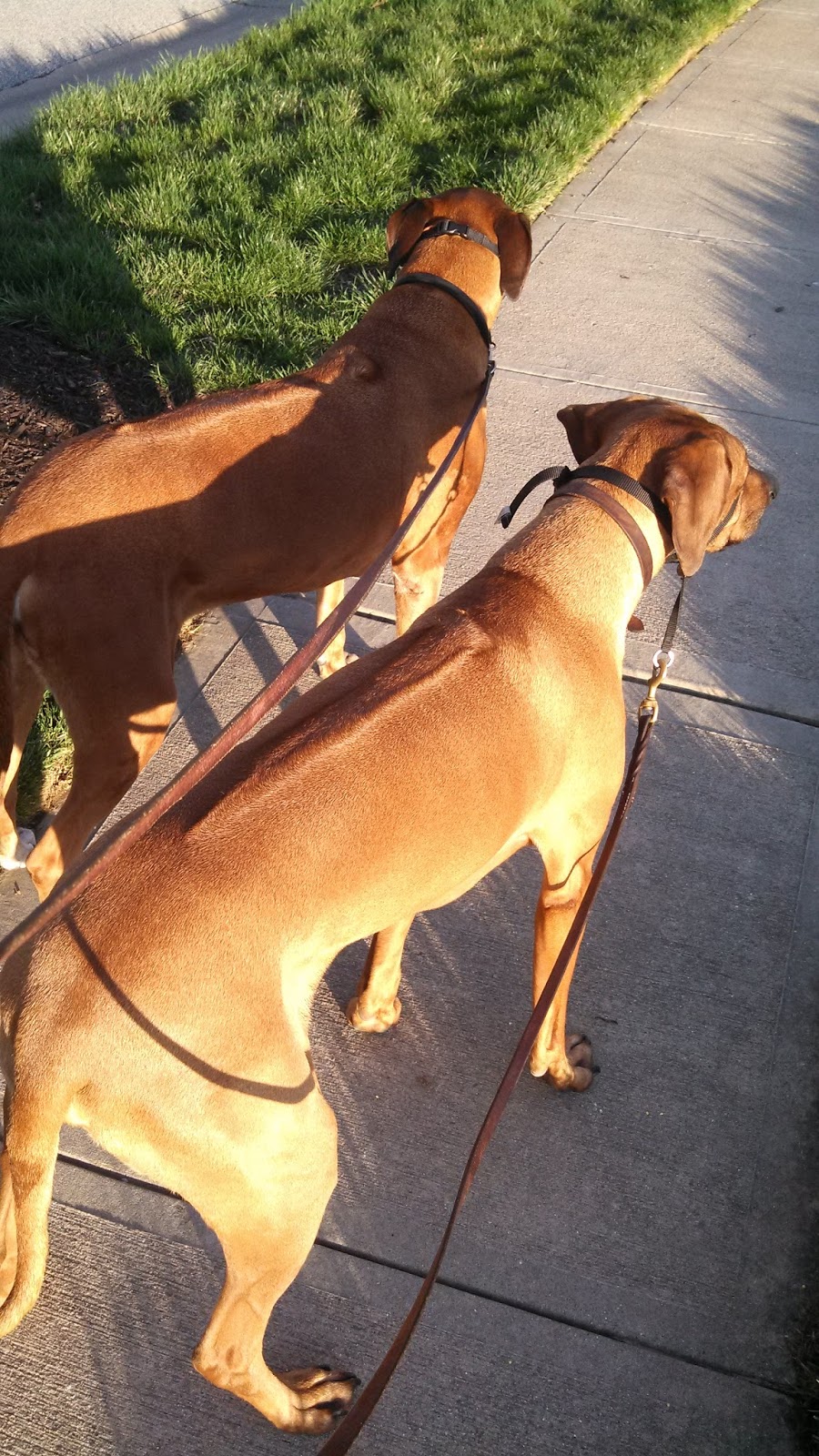 Up to that point, I had not been a dog walker even though we’d had a dog, Meggie, a basenji, that lived to be sixteen. I would even venture to say that I was a sub-par dog owner. She got a decent amount of attention, decent food, reasonably regular vet visits, but that was about it. No exercise, no focus on her. Meg was just part of our house and part of our life. I learned a lot from her. So, after some time without her, I started looking into large breed dogs. I wanted a dog that could handle walking regularly. Meg had a lot of African attributes that we liked. Short hair, quiet, smart, loyal, so I started looking in that direction and I immediately found ridgebacks. Then by happenstance not long after, Rose and I were out at a park walking, and a guy with two big red ridgebacks came our way. We stopped and talked for a minute, then off they went. It’s still a vivid memory today almost fifteen years later. I knew right then that ridgebacks were for me and it wasn’t long before Brodi, our first ridgeback, came into our life. He was a great dog, and I probably have lot more to say than that, but we did walk every day, three times a day in the beginning and two most other days unless it was just too cold. After we lost Brodi, when he was almost thirteen, I calculated that we had walked all the across the United States and half way back again. It wasn’t a glamorous walk, nothing to brag about. That was never the point. We hardly ever left the neighborhood. But in that time, I got out from behind the desk, got some exercise, experienced some sunshine and rain, and worked out a whole lot of plot problems and gained more ideas than I could ever hope to finish.
Walking on a regular, disciplined basis has become an essential part of my writing and indexing practice. But so has my time with the dogs. After we lost Brodi, Sunny and I walked the same path, and that unbroken routine helped to ease the pain and allowed us both keep going. Our decision to bring Kassi into the house will help us all walk into the future, which by the way is the basis for Kassi’s name. Her African name is Kusasa. It means tomorrow, the future. Once the weather warms up, Kassi will join Sunny and I on our journey to anywhere…as I solve plot problems and continue to wonder and wander in and out of my imagination. Sometimes the the biggest, most important part of writing happens when you aren't working.
Brodi’s African name was Baruti, by the way. It means teacher.

January 11, 2016
Walking (Part 1)
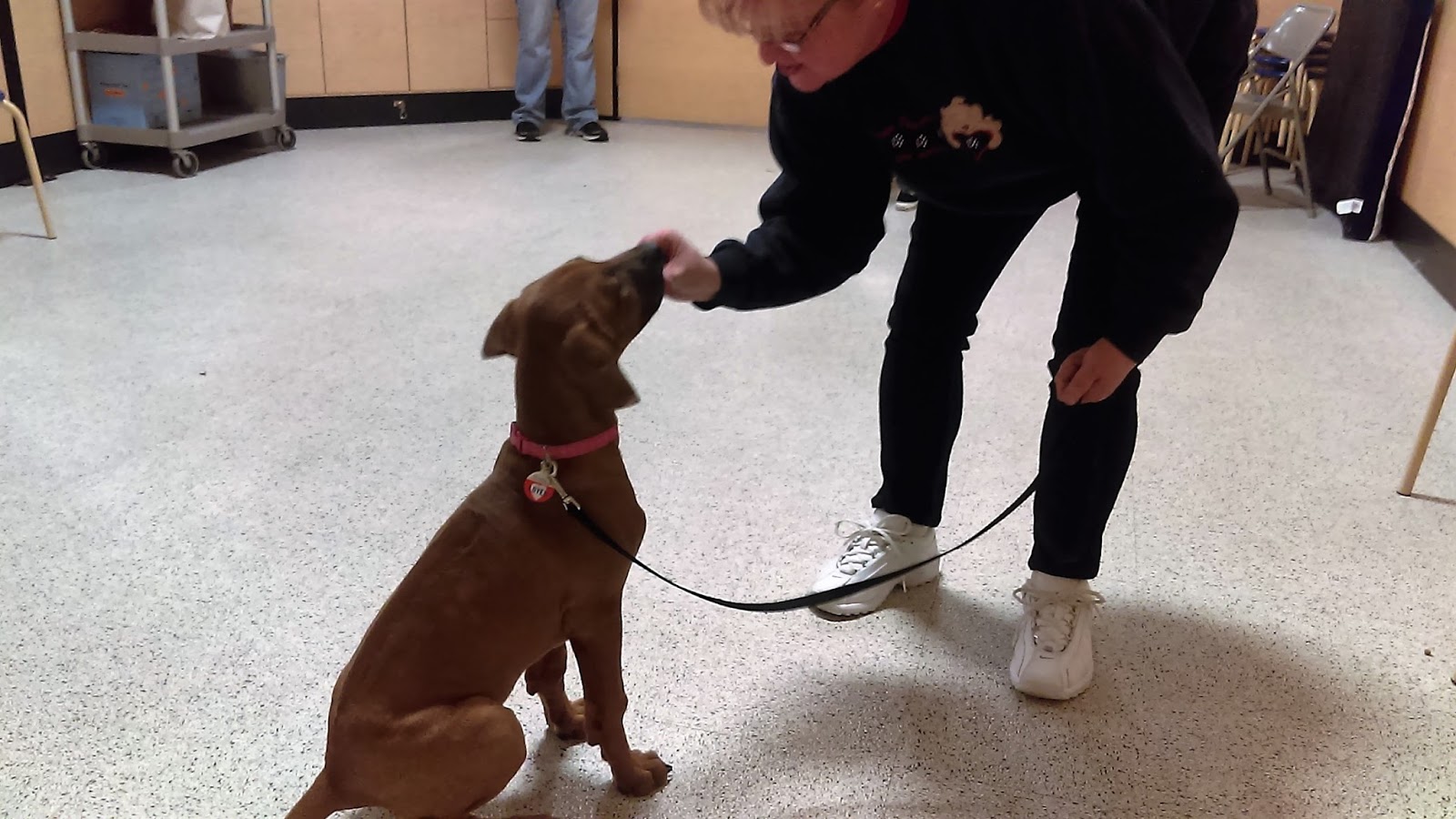
No dog ever wants to walk on a leash. Imagine tethering a wolf and telling it to heel the first time you meet it. Good luck with that. One of the most useful ways to train a dog to walk on a leash is to introduce the lead slowly to a pup. If you put a leash on a pup then pull it in tight next you and start barking orders, then the pup is going to stress out, feel your disappointment, and most likely start bucking like a wild horse. A loose leash is usually the best place to start training a pup to have some walking manners. Wrap the leash around you, walk backward slowly, and entice the pup to follow you with a treat and with no tension on the lead. If your pup is food-motivated like Kassi is, then it won’t be long before your pup will ignore the leash and focus on you. Heeling comes later.
Starting out as a writer is just as stressful as pup learning to heel. What to write, how to get it published, what will readers think (oh, I hope grandma doesn’t read this), etc. can be very intimidating. So can writing a novel. It’s so long… How do you keep your momentum and your enthusiasm?
I started out writing short stories. The treat I was following was length. I was happy to finish a story so I could start another one. I was intimidated by novels. I wrote one story after another, learning and submitting as I went. I did that for a couple of years until I was comfortable with what a story really was, and then I attempted to tackle the elephant in the room, the long feared novel. I proceeded to eat it one bite at a time. I wrote seven novels before the first one was published.
Short stories might not be your thing. Maybe the novel is your ultimate quest. You can still make it simple. Write page a day. A year later, you’ll have a novel. Don’t stress out and don’t make it so hard on yourself that you stop pursuing your dream. And remember to give yourself a treat when you’ve accomplished your daily goal, even if that treat is the simple satisfaction for taking one more step closer to writing the best novel you can.

January 4, 2016
A Few Things About Crows
My eleventh novel, A Thousand Falling Crows , publishes on Tuesday, January 5th. Here are a few things about that novel that you might find interesting.
 The novel started out as a short story, “Shadow of the Crow,” published in the anthology,
Beat to Pulp:Round Two
, edited by David Cranmer and Matthew P. Mayo. There are a lot of major differences between the story and the novel, but Sonny Burton, the Texas Ranger who encounters Bonnie and Clyde coming out of a movie theater, is the heart of both. It was Sonny’s character that drove me forward to find the novel that was buried inside the original story. A few of my novels have evolved from short stories. I'll talk about that process on this blog some time in the future.
The novel started out as a short story, “Shadow of the Crow,” published in the anthology,
Beat to Pulp:Round Two
, edited by David Cranmer and Matthew P. Mayo. There are a lot of major differences between the story and the novel, but Sonny Burton, the Texas Ranger who encounters Bonnie and Clyde coming out of a movie theater, is the heart of both. It was Sonny’s character that drove me forward to find the novel that was buried inside the original story. A few of my novels have evolved from short stories. I'll talk about that process on this blog some time in the future. I started writing this novel after I had finished the first Lucas Fume novel, Vengeance at Sundown . I was still under contract with Berkley for one more novel, but this was just after the merger between Penguin and Random House and they had already put a hold on buying any more Western paperbacks. This was the line where I got my professional start as a novelist. It looked like the end of the road there was coming, that the handwriting was on the wall, and I had a burning desire to write about Sonny Burton, so I decided to write this novel in between the Fume books in case my agent and I were right about the future. I’m glad I took that risk and doubled up my work in that period of time. After finishing Crows, I went on to write and finish the last Lucas Fume book. Halfway through it, my longtime editor was fired and Berkley did put an end to publishing paperback Westerns… Escape to Hangtown was one of the last books to come out of that line. I had written eight books with Berkley and my professional world was coming to an end just like Sonny's. Crows offered me a new beginning, but I had no contract for it at the time.
This is the first novel I have written where a dog, Blue, has been a central character. If you follow this blog at all, you know I love dogs. This is the time it made sense to introduce a dog into the story. Josiah Wolfe and Lucas Fume were wanderers. Sonny Burton has roots and an empty house. He needed a dog.
Probably the most important and personal aspect of this novel is the fact that Sonny Burton is an amputee, lost his right arm in the (fictional) shootout with Bonnie and Clyde. When I was a teenager, my grandmother lost her leg due to the late onset of adult diabetes. This was in the 1970s and medicine and the understanding of diabetes was in a much different state then than it is now. My grandmother was a physically diminutive woman, less than five feet tall and she probably weighed ninety pounds soaking wet if she was lucky. But she had a big spirit and one of the best laughs I have ever heard in my life. I was lucky to spend a lot of time with my grandmother. She is one of the major influences in my life. I watched her, late in life, change from an outgoing optimistic woman, to a withdrawn and depressed human being, who only showed glimpses of the grandmother I knew before she had lost her leg. She never could conquer the heavy prosthetic that was available to her. Her struggle was difficult to watch and since I was a teenager, I’m not sure that I understood everything that I was seeing. This novel may be an attempt to make sense of that time in my life. I could never begin to imagine the emotions that one must feel in that situation, losing part of your body so late in life, but I tried my best with Sonny’s journey to honor my grandmother the best I could.
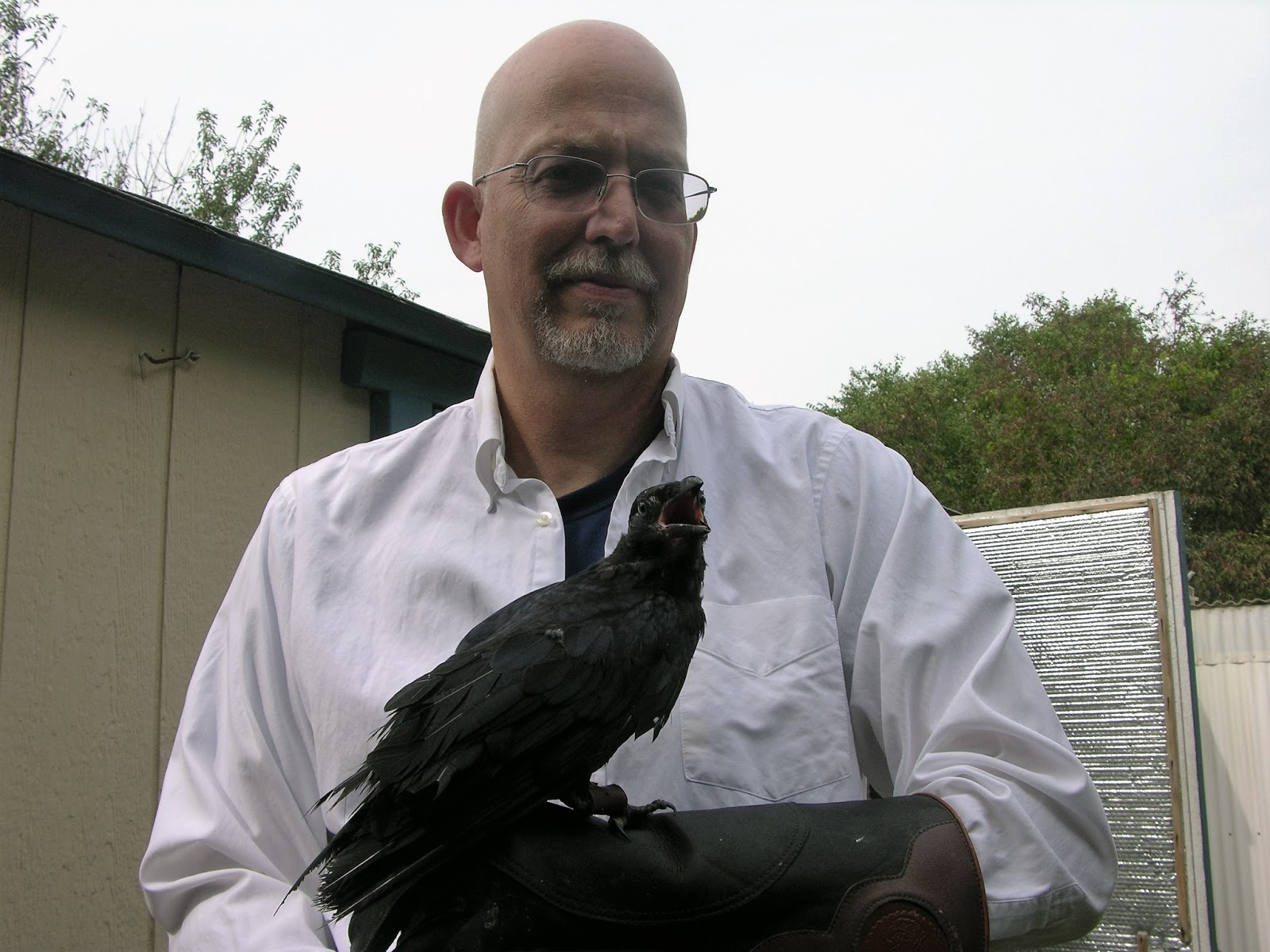
I have spent the last ten years visiting with a local bird rehabber and a fair amount of time around American crows. Corvids (blue jays, crows, etc.) have long fascinated me. They have a talent for language and are extremely social birds. Somewhere along the line, I decided they would make a great Greek chorus and I'm glad I did. It was a narrative that risk scared me artistically, but that same burning desire I had to write about Sonny Burton convinced me to include the crow's point of view. Fear is a necessary ingredient in any creative endeavor as far as I'm concerned.
Every novel is a challenge to write, but this was one was more so than any other up that point. It may be my most personal book yet. I hope you like it.
The Library Journal gave A Thousand Falling Crows a starred review and made it their Mystery Pick of the Month for January, 2016. They said, “Sweazy ( See Also Murder ) vividly evokes the Great Depression and the Dust Bowl in this gritty historical. Sonny is an engaging, determined hero drawing on his Texas Ranger experience to find some measure of justice. Sure to attract fans of Westerns and readers who favor well-plotted mysteries with plenty of atmosphere.”
Some of my fellow authors who have already read the book, had this to say:
“Sweazy has crafted a powerful, gripping novel of the American West. Parallel tales of murder and flight propel the reader across the harsh Texas plains, story lines exploding together at the end in a hail of dust, blood, and bullets. Gritty and deeply atmospheric, Sweazy has created one of the most fascinating leading characters in crime fiction. With the one-armed Sonny Burton at its helm, A Thousand Falling Crows crackles with menace, drama, and atmosphere.”
—Mark Pryor, author of Hollow Man
“With a panoramic sweep of vision and language that borders on poetry, Sweazy brings to life a historic period in the Texas Panhandle, during the Depression and the days of the last outlaws—when America was trembling on the edge of the modern world.”
—Terry Shames, Macavity Award–winning author of A Deadly Affair at Bobtail Ridge
“Larry D. Sweazy’s A Thousand Falling Crows is a richly atmospheric and powerfully intense historical thriller that brings to life the ethnic complexity and free-range lawlessness of Depression-era Texas. It reads like Bad Day at Black Rock crossed with Bonnie and Clyde. Larry D. Sweazy is always good, but this is his best book yet.”
—David Bell, author of Somebody I Used to Know
I’ll be presenting at a few book signings in early January. The launch will be held at the Noblesville Barnes and Noble and I will be accompanied by Edgar Allan Crow, and American crow, and his handler, veteran bird rehabber, Liz Hatton: January 5th: Barnes and Noble Booksellers, 17090 Mercantile Blvd., Noblesville, 5-8 p.m. If you can’t make that signing, I’ll be signing the following Saturday, January 9th from 1-4 PM at: Barnes and Noble Booksellers, The Shops at RiverCrossing, 8675 River Crossing Blvd, Indianapolis.
December 28, 2015
Treats
Ridgebacks are food hounds. They love to eat. They are also talented counter-surfers so you have to be careful what you leave laying around. Like an open bag of pork rinds. That story is for another day, but a healthy appetite makes training easier. Kassi is very responsive to being rewarded for following basic commands. That’s going to make life easier for us all, especially once she is full-grown.
A treat system can work for writers, too. Reading a book, a long walk, watching a movie can all be treats, as long as the writing is done for the day. I have a word count goal I aspire to every day, and all the fun stuff comes after I'm done working for the day. The easiest thing in the world is to have a treat and not write, but trust me, that’s not a cycle you want to start. Sit, stay, get a treat. You decide what the treat is. Setting word goals for the day is the foundation for completing any large project, like writing a novel.
Treats are in abundance this time of year. Distractions are everywhere. It’s hard to write every day, to stay on schedule, but if you treat writing as a job, then you have no choice but to get those words on the page. Sometimes, the best treat is the simple satisfaction of being done for the day so you can enjoy whatever comes next.