
Cora Buhlert's Blog, page 84
January 9, 2018
Star Trek Discovery – Through the Looking Glass and into even more Grimdarkness
The post title sums it up really. Star Trek Discovery is back and it’s as grimdark and depressing and un-Trek-like as ever in spite of liberally borrowing from Star Trek‘s most popular tropes.
If you’ve been following my Star Trek Discovery posts, you may remember that by the last couple of episode before the winter break, it seemed as if the show was improving. Well, it didn’t. Even worse, Star Trek Discovery seems hell-bent on destroying even the very few things about the show that actually worked.
As you may recall, when we last left Starfleet’s worst ship, crew and captain, they had just won a decisive victory in the war against the Klingons (well, they’ve had decisive victories before, considering that the tide of that particular war seems to turn every single episode), managed to destroy the Ship of the Dead, render the Klingon cloaking device useless, rescue Admiral Cornwell and take a high-ranking Klingon officer prisoner. So far, so good. Unfortunately, they also managed to fry the brain of their navigator and resident magic mushroom expert Paul Stamets, who promised to do “just one more jump” (a clearer case of famous last words were never uttered), one last jump which managed to land the Discovery somewhere else. Where exactly – past, future, gamma quadrant, delta quadrant, mirror universe, other parallel universe? – was not clear.
The answer to the mystery where the Discovery has landed after its last jump is one that is so utterly unpredictable that absolutely nobody could have seen it coming.
Warning! Spoilers behind the cut!
Just kidding, the production team went for the most predictable destination they could come up with, cause it turns out that the Discovery has jumped into – surprise! – the mirror universe. Yes, I’m sure absolutely no one saw that coming, especially since the various incarnations of Star Trek have been regularly visiting the mirror universe since 1967, i.e. 51 years ago. Now the reason for the popularity of the mirror universe in the past 51 years of Star Trek is that the episode which introduced the mirror universe, Mirror, Mirror, is a damned good episode, which holds up well even today, as Camestros Felapton noted on his recent rewatch. However, frequent repetitions do not necessarily make a good thing better. And so later reiterations of Star Trek visited the mirror universe again and again. Deep Space 9 had several episodes set there and Enterprise also visited the mirror universe in a two-part episode. I have very little memory of these episodes, since I had stopped watching both shows regularly by that point.
What makes the original “Mirror, Mirror” work so well is also the contrast between the utopian with a few flaws Federation and the dystopian Terran Empire. Therefore, the decision to have the darkest 1990s/2000s Star Trek series such as Deep Space Nine and late series Enterprise take a detour into the mirror universe is somewhat baffling, because the contrast just won’t be so great. Perhaps they were trying to prove that even though the characters of Deep Space Nine and to a lesser degree Enterprise did plenty of questionable things, they at least weren’t as bad as that.
And now Star Trek Discovery makes a detour into the mirror universe, set chronologically before Kirk’s famous trip there, but after Enterprise‘s. And since the Federation of Star Trek Discovery already is a dystopia which hands out life sentences for fairly minor misdemeanours and apparently builds its post-scarcity society on slave labour by prisoners, there really isn’t that much of a contrast between the Federation as portrayed in Discovery and the Terran Empire, except that the Terran Empire is xenophobic (which does not really match the Terran Empire we’ve seen in “Mirror, Mirror”, where Spock could rise to first officer) and that it has cooler uniforms. And so the shock of the Discovery crew upon finding out what their mirror universe counterparts have been up to (“Oh no, how could we be such evil people in this universe? And how can the Terran Empire be so much like the Federation, but so evil?”) rings hollow, because honestly, have these people ever looked at their own universe? They already live in a dark place, so the fact that the mirror universe is a degree darker doesn’t change all that much. Indeed, Camestros Felapton puts it best in his review, when he says that Star Trek Discovery has finally found a universe that suits it. Besides, all characters of whose fate we learn are actually better off in the mirror universe than in the regular universe with the sole exception of Lorca (and Connor, but then Connor dies in both universes, but at least got to become captain in the mirror universe). And I’m not all that bothered by bad things happening to Lorca, because he has been an awful person for much of the season. Though maybe that means his mirror universe counterpart is good. And indeed, there are suspicions that the Lorca we have been watching for the past seven episodes is actually from the mirror universe and somehow ended up in ours, which explains why he is so erratic and an awful person even by the admittedly low standards of the dystopian Federation. Given how very bad the Discovery production team are at surprises and shocking twists that actually shock or surprise anybody, I wouldn’t even be surprised if that theory turned out to be true.
Indeed, part of me was hoping that it would be revealed that the Discovery originated in yet another parallel universe (we know there is an infinite number of them from the Next Generation episode “Parallels”) and that they would have landed in the familiar quasi-utopian Star Trek universe instead. Cause that would at least have been interesting and less predictable and it also would have fixed a whole lot of issues with Star Trek Discovery in one swoop.
The crew figures out what’s up pretty quickly and after some initial shock decide to blend in by pretending to be their mirror universe counterparts. They also find some further help in records retrieved from the destroyed rebel ships the Discovery finds itself surrounded by. Turns out that mirror Lorca was some kind of rebel who tried to kill the Emperor, did kill mirror Burnham and vanished (three guesses where he vanished to). Mirror Burnham was the captain of the mirror Shenzhou before her untimely death, while mirror Tilly did become captain of the mirror Discovery and is so infamous for her cruelty to the point that she is nicknamed “Killy”. Burnham, Lorca and Tyler (because where Michael Burnham goes, Ash Tyler goes) are sent on a mission pretending to be their evil counterparts to infiltrate the mirror Shenzhou, where Lorca is promptly stuck into a torture chamber (well, he is a wanted traitor and fugitive in this universe), which seems to bother absolutely nobody, whether Burnham, Tyler or the audience, probably because Lorca is just plain unpleasant. Though Lorca sure gets tortured and killed a lot. Three out of ten episodes so far contain extensive scenes of Lorca getting tortured or killed. Meanwhile, Burnham gets into a fight with the mirror Shenzhou‘s current captain Connor (previously a redshirt aboard the Discovery) and has to kill him, because that is the mirror universe way.
Meanwhile, the mirror Discovery under the command of Captain Killy is in the universe where Discovery originated (and I’m still not convinced that this really is the Star Trek universe we know) and is probably about to single-handedly take over the dystopian Federation and win the war with the Klingons. It’s probably not telling that I would not care at all, if this were the case, because I find I don’t give a damn about either Discovery‘s Federation or the Klingons.
The bits about the Discovery and her crew impersonating their somewhat more evil miror universe selves are actually a whole lot of fun, from the Flash Gordon-esque uniforms (but then the mirror universe has always had a certain Flash Gordon look about it) via Lorca using Jason Isaac’s native Scottish accent, while pretending to be the Discovery‘s chief engineer (Lorca getting tortured also never gets old, sorry) to Captain Killy hamming it up. And if this had been all the episode was about, then it would have been a good one, even if not exactly original.
But this is Star Trek Discovery and so of course, they can’t just have a simple excursion into the mirror universe. Because this is modern quality TV (TM), dark and gritty (TM), where everything can happen, shocking twists abound and everyone can die (and not just their mirror universe counterparts either like poor Connor whom I have to confess I had already forgotten). And of course, Discovery had to prove that they, too, can be Game of Thrones and so they had to have a shocking twist (which shocked absolutely no one, cause people have been speculating about this for months now) and a shocking main character death (which actually was shocking and still managed to adhere to some of the oldest and most hated tropes in the book).
I am talking of course about the “Ash Tyler is really the Klingon Voq, surgically altered to look human” theory which – I am sad to report – is not a theory anymore, since the show pretty much confirmed it. I can’t even begin to say how much I hate this development, even if it wasn’t exactly surprising, since plenty of people called it months ago. For starters, Ash Tyler is one of the most likable characters in Star Trek Discovery next to Tilly and Dr. Culber. Most of the other characters, including even Tilly, took some time to grow on me (and some never did – I still can’t stand either Lorca or Saru), but Ash was likable pretty much from the start. Plus, Ash was the only person who treated Michael like a human being right from the start (everybody else, including even Tilly, behaved like jerks to her early on) and the budding romance between Ash and Michael has been one of the very few things I actually liked about Star Trek Discovery.
But Ash Tyler, the ace pilot, good guy and conscientious officer, torture and rape survivor, never existed. He is just a fake persona created to hide Voq, one unlikable Klingon among a whole bunch of them. Oh yes, and his memories of torture and abuse are either false or falsely interpreted and the sex Ash had with L’Rell was totally consensual, since Voq and L’Rell were lovers. And of course, Ash’s PTSD, which left him literally paralysed the last time we saw him, is not real either, but the result of faulty Klingon conditioning.
In my last post on Star Trek Discovery before the winter break, I actually praised the way the show handled the subjects of PTSD and male rape, as did Laura Hudson at The Verge and Emily Asher-Perrin at Tor.com. The whole “Ash is Voq” development, however, not just undermines the entire character of Ash Tyler as presented so far, it is also a slap into the face of abuse and rape survivors everywhere. Because let’s face it, while our entertainment media has gotten better at portraying PTSD, it still doesn’t do all that great at portraying survivors of sexual violence, particularly male survivors. And Star Trek Discovery basically just dismissed a character’s traumatic experiences of torture and sexual violence as “Oops, it was all in your head. None of that every happened, at least not the way you remember it, and it was all totally consensual, the Klingon conditioning just got some wires crossed.”
As for how Ash/Voq learns all this, even though she gave him the mother of all PTSD flashbacks last episode, Ash still goes to see L’Rell in the brig and even lets her out of her cell for short periods of times. For some reason, no one notices this or finds it even remotely strange, but then Starfleet is apparently so bloody incompetent by now that they’re not even guarding the brig anymore (and coincidentally, the brig aboard the Shenzhou wasn’t guarded either, as far as I recall). L’Rell tries to trigger Ash’s memories that he is really Voq with a Klingon phrase, but because the conditioning is faulty, it doesn’t really work and Tyler is now partly Ash and partly Voq. Indeed, someone referred to him as “Klingon/Klingoff”, which is highly appropriate.
Coincidentally, it’s not just Starfleet that’s bloody incompetent in Star Trek Discovery, the Klingons are just as incompetent from getting stuck in their Ship of Dead without food or energy to completely botching the transformation and conditioning of Ash/Voq. Indeed, considering how bloody incompetent the two powers vying for dominance in the galaxy are, it’s a miracle that the Romulans or the Cardassians or the Borg or even the Ferengi haven’t already conquered them all.
L’Rell’s attempts to trigger Voq’s memories leave Ash (I’ll continue to refer to him as Ash) with disturbing flashbacks, memories that aren’t his own and occasional attacks of full blown Klingoness. So he does what humans (and presumably Klingons) normally do when they are experiencing health or psychological problems, namely he goes to see a doctor.
Doctor Culber hasn’t had an easy time at all. For starters, his life partner Paul Stamets is in a coma following that last disastrous universe-barrier breaking jump he did and still hasn’t come to except to occsionally mumble prophecies of dire doom and have one violent outburst. What is more, Lorca has assigned some other member of the Discovery‘s medical staff (Are there even other doctors aboard the Discovery? Cause Culber is the only one we’ve ever seen) to care for the comatose Stamets to avoid potential conflicts of interest. Which would be a sound decision, if I even remotely trusted Lorca to make it for the right reasons (which I don’t). Nonetheless, Doctor Culber is understandably upset.
When Ash comes to him, complaining of mysterious symptoms, flashbacks and the like, Doctor Culber runs a battery of tests and scans (one wonders why they haven’t done this before, e.g. after Ash escaped from Klingon captivity) and finds something strange that shouldn’t be there. Whereupon Voq’s personality emerges from Ash and snaps Doctor Culber’s neck.
Yes, that really happened. Star Trek Discovery just had one half of the only gay couple in Star Trek history killed by a previously sympathetic character in front of his life partner (though we hope poor Stamets was at least unconscious and didn’t have to watch) for cheap shock value. Worse, they have also killed off the third main character of colour in the span of ten episodes (five, if you include the two Klingon head honchos Michael killed, since both were played by actors of colour). That leaves Michael and Ash as the only characters of colour in the main cast still standing and I’m pretty sure that Ash wont survive the end of the season either. Hell, it’s very possible that Michael won’t survive the end of the season, but instead has to nobly sacrifice her life to redeem herself for whatever sins the writers seem to think she has committed.
Honestly, for a show that explicitly bills itself as progressive and diverse, Star Trek Discovery‘s track record on race, gender and sexual orientation is appalling. Captain Philippa Georgiou, who was billed as one of the main characters in the publicity materials, is killed off after only two episodes and briefly reappears from beyond the grave as a hologram. The Discovery‘s first security chief, played by an actress of Asian origin, dies of terminal stupidity after two episodes, unmourned because she was a horrible character. Doctor Culber, a gay man of colour, was killed off after ten episodes all in all (and he didn’t even appear until episode four or five). His life partner Paul Stamets, another gay man, is in a coma with severe brain damage. Michael Burnham, a woman of colour, is imprisoned and abused at every turn for things white men get away with all the time (including in Star Trek Discovery) and blamed for everything bad that ever happened in the entire Federation. Ash Tyler, a man of colour, is revealed to be a Klingon sleeper agent and also a murderer. And coincidentally, Ash Tyler is portrayed by Shazad Latif, a British actor of Pakistani origin. So Star Trek Discovery had the lone Muslim actor (not sure if Shazad Latif really is Muslim, but statistically it’s very likely, considering Pakistan is 96% Muslim) portray the sleeper agent and infiltrator who betrays his friends and colleagues to destroy the Federation and the production team obviously sees nothing whatsoever wrong with that. Honestly, it’s as if the Star Trek Discovery producers are trying to check off a whole bingo card of offensiveness here, considering their flat out appalling track record in the treatment of people of colour, LGBT people, Muslims as well as rape and abuse survivors.
At least, the Discovery showrunners seem to be aware how offensive killing off a gay main character (one of only two in the history of Star Trek) is, since they did some preemptive damage control by pointing out that yes, they know killing off LGBT characters is a trope and that it’s offensive, and would we please, please trust them. It’s the same thing we’ve been hearing over and over again from the cast and crew ever since Star Trek Discovery started. “Please, trust us. We know what we’re doing, honestly. We’re Star Trek fans, just like you, and trust us, what we are making is proper Star Trek. Just please be patient.” Indeed, here is another interview of that sort, in which two of the showrunners promise that the rest of season 1 will involve “a lot of fun for Star Trek fans” and that season 2 will be more Star Trek-like.
There is just one problem with all of those promises. By this point, pretty much no one trusts the showrunners anymore that they really know what they’re doing and that they have even an inkling of what Star Trek is supposed to be like. And indeed I feel sorry for the poor actors who are asked to defend the hot mess that is Star Trek Discovery over and over again, especially since it’s pretty obvious that most, if not all of them know what a mess the show is. Take a look at this interview with Shazad Latif and Jason Isaacs, where it’s pretty obvious what Shazad Latif thinks of the part he’s playing and literally says that he doesn’t have any control over the show and what happens to his character. And coincidentally, even though the showrunners seem to be aware that killing off a gay character is offensive, particularly in a franchise with as bad a track record on LGBT issues as Star Trek, they seem to be totally unaware that killing off only characters of colour and letting the lone Muslim in the cast play the evil sleeper agent is just as offensive, since I have heard zero apologies about that.
Besides, showrunners, writers and creators should not have to tell their audience over and over again to trust them, because if they actually did their job right, the audience would trust them without requiring constant reassurance. And indeed, constant reminders by the people in charge of a beloved franchise to please, please trust them are always an indicator that something is seriously wrong. Just remember the whole “Steve Rogers is and has always been a Hydra agent” storyline that Marvel Comics came up with last year in its infinite wisdom. Fans were up in arms – and for very good reasons, too – and the writers were constantly asking their fans to please trust them and have patience. But even with a brand that has an established reputation like Star Trek or Marvel Comics, patience and trust eventually run out, especially when it’s clear that the people in charge have no real clue what they’re doing. By this point, Star Trek Discovery has pretty much exhausted mine and everybody else’s patience. Indeed, the comments under one of the many “please, please trust us” article I linked above were very telling. “Oh, so it’s going to be fun for Star Trek fans”, someone commented, “So what are they going to do? Kill Kirk? Kill Spock? Blow up the Enterprise?” Because by this point, much of the audience expects that if there is a new way to piss on what Star Trek used to be, the Discovery showrunners will find it.
Coincidentally, the many random Star Trek Easter eggs such as the reference to the USS Defiant from the original series episode “The Tholian Web”, revealed to have ended up in the mirror universe in an Enterprise episode I did not watch, are another symptom that the production team constantly has to remind us that yes, this is Star Trek we’re watching. Because if Discovery actually felt like Star Trek, we wouldn’t need constant Easter eggs to remind us.
At the start of the winter break, I was cautiously optimistic that Star Trek Discovery might be salvagable, since the show was actually getting better, the annoying Klingon war plotline seemed to have been wrapped up and the jump to somewhere else was a chance to give the show a fresh start. But with this episode, Star Trek Discovery pretty much destroyed what little was good about the show – mainly the relationships between Stamets and Culber and Michael and Ash – in one swoop, plus killed off one of the few likable characters and made another of the few likable characters a pretty much irredeemable villain. Really well done, Star Trek Discovery showrunners. You just managed to destroy one of the very few things about your show that actually worked.
We are currently in the unprecedented situation that we have two takes on Star Trek (three, if you include the Black Mirror one shot “USS Callister”) airing at the same time. And of these three, the official version, Star Trek Discovery, manages to do the worst job. For while “USS Callister” is not Star Trek (nor is it trying to be), it does use the visual language of classic Star Trek to make a point about toxic masculinity and nerd entitlement and one about the rights of digital persons that is worthwhile in its own right. And I certainly wouldn’t mind seeing more of the adventures of the USS Callister under the command of Captain Nanette Cole.
The Orville, meanwhile, is Next Generation era Star Trek with the serial numbers filed off and some sophomoric humor added (though less than you’d think, given showrunner Seth MacFarlane’s other output). Indeed, it’s easy to imagine that while Star Trek: The Next Generation followed the adventures of the Starfleet flagship, crewed by the best Starfleet has to offer, The Orville follows the adventures of a lesser Starfleet ship crewed by well meaning, but somewhat less competent people. The Orville is not Star Trek, but it works as Star Trek, a lot better than Discovery does. And indeed I wonder what we’d have gotten if Seth MacFarlane rather than Bryan Fuller, Alex Kurtzman and whoever else had been given the mandate to make a new official Star Trek show.
Meanwhile, the official Star Trek show, Star Trek Discovery manages to be the least Star Trek-like of the three. Coincidentally, it’s also the hottest mess. For while it’s pretty clear what Black Mirror in general and “USS Callister” in particular as well as The Orville are trying to do with the basic Star Trek idea, I have no real clue what Star Trek Discovery is trying to do and I suspect the production team has no idea either. Yes, they keep talking about redemption arcs and wanting to show us what the Federation is like at war and how the Federation journeys from darkness into the light and apparently, there’s also a point about xenophobia, isolationism and Trump somewhere in there as well. Most of these points are not exactly new and have been done by other versions of Star Trek, usually better. Besides, very little of what the production team assures us the show is about actually shows up on screen. Ten episodes in, I have no idea what Star Trek Discovery is trying to do and what sort of show it wants to be beyond dark and gritty and a bit like Game of Thrones with shocking twists and lots of characters deaths.
There’s just one problem: If I want to watch Game of Thrones, I will. If I want dark and gritty and twisty and shocking, there are plenty of good SFF shows and mainstream shows I can watch, most of them better than Discovery. But what I expect from something labeled Star Trek is very different from what I expect from Game of Thrones or Outlander or Westworld or The Expanse or The Handmaid’s Tale or Hard Sun or [insert prestigious SFF show here]. A franchise like Star Trek evokes certain expectations, expectations that Discovery not just consistently fails to meet, but that it also goes out of its way to violate. Indeed, it seems to me as if the producers are trying very hard to make a show that’s the opposite of Star Trek. This is of course something you can do and indeed plenty of fine science fiction shows have tried to make “the opposite of Star Trek” with varying success. But if you want to make the opposite of Star Trek, then maybe don’t call it Star Trek.
Can Star Trek Discovery be salvaged? Well, never say never, but at this point I think very little next to a total reset can save this show. They had their chance to hit a reset button of sorts with the excursion into a different universe, but in typical Discovery fashion, they blew it.
In fact, by this point, I’m so angry with the show that I’m not even sure if I’m going to continue watching. If I do, it will only be because now I started with these dissections/reviews/recaps, I want to continue to the bitter end. And it is only five more episodes
 Send to Kindle


January 7, 2018
“USS Callister” and the Successful Mutiny Against Toxic Masculinity
A few days ago, I wrote a lengthy post about the treatment of mavericks and mutineers in recent science fiction, using the characters of Michael Burnham in Star Trek Discovery and Poe Dameron in The Last Jedi as examples (there’s also a detour into West German postwar cinema among other things, because I’m weird that way).
The main point was that both Michael Burnham and Poe Dameron, though normally loyal officers and typical hero material for their respective franchises, get into conflict with their respective superiors and find themselves pushed to the point of mutiny. In the past, both characters would have been proven right and their attempts at mutiny would have been forgiven, especially since we have seen plenty of characters do the same things Michael and Poe did in their respective franchises. However, both Michael and Poe are unlucky. Not only do their respective mutinies fail, both characters also pay dearly for what they did. Michael is tragically proven right and yet punished out of proportion for what she actually did and also considers herself wrongly responsible for the deaths of a whole lot of people, including her captain and a Starfleet admiral. Meanwhile, Poe Dameron is proven tragically wrong to such an extent that it’s obvious the plot is rigged against him, especially since a quick conversation could have cleared up Poe’s misunderstandings. Poe is also punished, though in proportion to the actual crime, and actually is indirectly responsible for the deaths of a whole lot of people, including a highly decorated Resistance vice admiral.
Star Trek Discovery uses its mutiny and punishment plot to initiate a redemption arc for a character who doesn’t really need one and also furthers its creepy focus on victory through pain and suffering. The Last Jedi uses its mutiny and punishment plot to make a point about individualism, toxic masculinity and the wisdom of older women. All of these are worthy points, The Last Jedi just doesn’t make them very well.
Viewed in isolation, I would have considered what happened to Michael Burnham and Poe Dameron merely bad plotting and an attempt to make a point that doesn’t work. However, two stories about heroic characters turning mutineer and failing miserably and getting punished appearing in two of science fiction’s biggest franchises, franchises which normally celebrate maverick heroes and heroines at that, so shortly after another seemed like a troubling pattern, particularly considering that there are plenty of voices already calling for more conformity, lest we ‘force’ the poor beleaguered regular people to vote for extremist parties, because everybody’s individualism is so very in their face.
Shortly after I wrote that post, however, I came across another filmic science fiction tale about a mutiny in space, a tale that’s part of a small franchise, but mimics one of science fiction’s biggest franchises. And this time around, the mutiny is successful.
I’m talking about “USS Callister”, an episode of the latest season of the British science fiction anthology series Black Mirror. There will be spoilers under the cut, so read on at your own peril:
Now Black Mirror is a series I was aware of, but never watched until last year, largely because I harbour an intense dislike for Black Mirror creator/showrunner Charlie Brooker stemming from his time as a TV critic for The Guardian approximately ten years ago. And as a TV critic, Brooker not only regularly praised shows I disliked and slammed those I liked, he was also a jerk about it. He was also influential, because a lot of people parrotted his opinions. So when Charlie Brooker switched from criticism to screenwriting, I decided to ignore his output. For starters, we obviously had very different tastes, so it was highly unlikely I’d enjoy any program he made. And secondly, there is plenty of good programming made by people I don’t find unpleasant, more than I have time to watch, so I can safely skip over programming made by unpleasant people.
So I never watched Black Mirror nor anything else Brooker did until last year, when the Black Mirror episode “San Junipero” was nominated for a Hugo Award in the best dramatic presentation short form category. Since I was a Hugo voter, I sought it out and watched it and actually liked it a whole lot. Indeed, “San Junipero” was the first time I faced the “good work made by bad people” conundrum. In short, my personal Hugo voting policy is: “good work made by good people” will be ranked accordingly above “no award” (in normal years, these will be the majority of the finalists), “bad work by good people” (i.e. things I don’t like, but with whose creators I have no issues) will be ranked below “no award” and “bad work by bad people” (puppy leaders and a very few others I have personal beef with and will not vote for) I will leave off the ballot entirely. In theory, there should also be “good work by bad people”, but in practice I had never come across an example during the puppy heyday of 2015/16, simply because if I have issues with a person, their work normally isn’t to my taste either.
But then I watched “San Junipero” and here was a very good piece of television made by a person I really did not like. And mind you, I’m not calling Charlie Brooker a bad person or equating him with the puppies, he’s simply someone who’s rubbed me the wrong way in the past. I would have similar issues if e.g. a good episode of The Orville wound up on the Hugo shortlist, because I dislike Seth MacFarlane. In the end, I put “San Junipero” in the top spot in the best dramatic presentation short form category (though it lost out to The Expanse in the final voting), because the Hugos should be about the work (which was very good) and not the creator. And besides, film and television are team efforts anyway and a whole lot of people beyond Charlie Brooker were involved in “San Junipero”.
But though I’d enjoyed one episode, I still did not watch the rest of Black Mirror, if only because I have a huge backlog of shows I like a lot more and still haven’t found time to watch. However, when I saw the promos for season 4 (because of the link round-ups at the Speculative Fiction Showcase, I see a lot of trailers for and reviews of shows I don’t watch) and saw that there would be a Star Trek parody episode, I was intrigued, especially considering there currently are two other takes on Star Trek on the air, one official version, Star Trek Discovery, which is of highly variable quality to put it mildly, and one unofficial version, The Orville, which seems to be doing a better job of being Trek-like than the official show. So it would be interesting to see what a third take on Star Trek would add to the mix.
In the end, it turns out that “USS Callister”, the “Star Trek” episode of Black Mirror is only superficially about Star Trek. This shouldn’t really come as a huge surprise, since Black Mirror normally focusses on “five minutes into the future” tech dystopias and not far future space opera. And indeed, my initial reaction to the “USS Callister” scenes in the general season 4 trailer was, “Huh. Now that doesn’t look like Black Mirror at all.”
And indeed it quickly turns out that the scenes in the trailer of a day-glo 1960ish Star Trek type space adventure are just an immersive virtual reality game created by a programmer named Robert Daley, where he can forget his sad everyday existence and instead live in the world of his favourite TV show, a Star Trek clone called “Space Fleet”, as the heroic captain leading an adoring crew to explore the unknown. At first glance, this seems to be harmless enough, though it is notable that the crew of the USS Callister look very much like his co-workers. Things take a turn towards the seriously creepy when Daley steals the coffee cup of a new employee, swabs it for DNA and pushes a sample into a device attached to his computer.
The employee in question, Nanette Cole, suddenly finds herself aboard the USS Callister as part of the crew. Turns out that Daley has been recreating self-aware and sentient copies of his co-workers inside the game from the DNA samples he steals. Of course, DNA doesn’t work that way, but then the episode is less interested in scientific accuracy and more in making a point about toxic masculinity and (male) nerd entitlement. Inside the game, Daley is not just captain but god, warping reality like a particularly toxic Gary Stu. People who annoy him, whether in or outside the game, are turned into monsters, have their faces erased or are killed off in gruesome ways. In one case, Daley even throws the kid of his business partner out of the airlock.
Daley is a monster, but he is a monster we are familiar with. Because we’ve met this dude. We’ve met him dozens of times, both online and off. On occasion, we’ve even been this dude. He’s the Star Trek fan who cries that the franchise as now fallen to the social justice warriors, because the lead of Discovery is a woman of colour. He’s the Star Wars fan who first claimed the prequels murdered his childhood and now insists that Disney personally hates him and all real fans (TM) because Star Wars now features women and people of colour and because it turned out the Jedi were not such a great thing after all and that Luke was definitely bloody useless as a Jedi. He’s the Doctor Who fan who freaked out at references to modern pop culture in the show and who completely freaked out when the Doctor started kissing people and had a heart attack when the Doctor regenerated into a woman. He’s the Ghostbusters fan who cannot get his mind around an all-female reboot. He’s the Lovecraft fan who can’t handle the fact that people are discussing Lovecraft’s racism. He’s the Marvel Comics fan who’s furious that Thor is a woman now and Captain America a black man, that Ms. Marvel is a muslim teenager and that Captain Marvel has short hair and no longer wears revealing costumes. And heavens beware if there is a hint of romance or sex in his science fiction entertainment. And indeed, Daley makes very sure that there will be no filthy sex invading his personal space adventure and recreates his puppet crew sans genitals, though he does insist on melodramatic kisses from the female crewmembers. Robert Daley is what happens when such a person is given the power not just over his favourite media property, but over people as well. Though he sure as hell doesn’t see his crew of enslaved co-worker replicas as human, which is his downfall in the end.
Because when Daley is not logged into the game, his crew is more or less left stranded with nothing to do and no way to escape, because Daley’s private little playground is walled off from the MMORPG of which it is a part. And so, led by Nanette, Daley’s crew begins to plot against him. Nanette hacks into the game and sends her real life counterpart a message. When that does not work, she blackmails herself with private photos to sabotage real life Daley, while virtual Nanette seduces virtual Daley (well, as much as possible, considering they don’t have genitalia) to get him to let down his guard. In the end, Daley is trapped alone in his virtual world, unable to exit the game, while his physical self lies dying or dead in his apartment and won’t be found anytime soon because of a long holiday weekend. Meanwhile, the USS Callister and her crew blast off through a wormhole into the greater world of the space-themed MMORPG Infinity. The ship and crew morph into something more modern looking and get their genitals back as well. They do encounter another entitled male player, apparently voiced by one of the stars of Breaking Bad (which I didn’t get, because I never watched that show), suggesting that there are many Daleys out there. But he is no threat and so Nanette settles down into the captain’s chair, while the USS Callister takes off for further adventures.
Like “San Junipero”, “USS Callister” is a great little self-contained story. Once more, the visuals are excellent. Where “San Junipero” pitch-perfectly recreated a seaside town straight from a 1980s teen movie, “USS Callister” contrasts the very 1960ish visuals of the Space Fleet scenes, the real world tech company scenes and finally, the Infinity scenes with their more modern space opera look. This is done really, really well, down to displaying the early parts of the episode in 4:3 aspect ratio. In many ways, the USS Callister with its afros, beehives, mid-riff baring, but navel hiding (navels were apparently so shocking in the 1960s that costumes such as Barbara Eden’s in I Dream of Jeannie were specifically designed to hide them and coincidentally, the original Star Trek was one of the first shows to show female navels on TV) mini-skirted uniforms and go-go boots looks even more 1960ish than the original Star Trek, which is quite a feat, considering how more 1960ish than the real 1960s Star Trek often looked. This became particularly apparent, when a German TV station reran original Star Trek episodes right after Mad Men, which was set in the very period the original Star Trek was made. And Star Trek‘s 1960s view of the 22nd century looked a lot more 1960ish than the 21st century painstaking recreation of the 1960s of Mad Men. While the colourful Space Fleet scenes evoke the peak 1960s looks of original Star Trek, the Infinity scenes at the end evoke the darker and more lensflare heavy look of contemporary science fiction from the new Battlestar Galactica via J.J. Abrams’ Star Trek movies to Star Trek Discovery.
Like all of Black Mirror (at least based on what I know of the series), the theme of “USS Callister” is technology and its consequences, usually negative. However, “USS Callister” has another theme and that is the toxic aspects of nerd and fan culture and the viciousness of nerd rage, a theme that is a lot more timely now thanky to Gamergate, the Sad and Rabid Puppies, the recent swatting death of an innocent man due to a quarrel in Call of Duty and other expressions of toxic fan culture than it would have been a few years ago. Daley’s social awkwardness paired with his creepy obsessiveness and seething rage, his Mary Sue fantasies, his insistence on his childhood dreamworld remaining intact and unchanged, his hostility to sexuality invading his fantasy world resonate, because we know this guy, because we’ve met him. Occasionally, we even have a little bit of Daley in ourselves. And coincidentally, talking about the hostility of certain SFF fans to sexuality, here is Black Mirror showrunner and writer Charlie Brooker in his TV critic days tearing into the Doctor Who spin-off Torchwood because it contains more sex, swearing and violence than Brooker wanted to see in something derived from Doctor Who. We can easily imagine Robert Daley writing the same about a modern and grittier Space Fleet reboot. So yes, there is a little bit of Daley in many of us. “USS Callister” shows what happens when he is left to run unchecked.
But what I found particularly interesting about this episode is that after two failed mutinies in space with awful consequences for all involved in our two biggest science fiction franchises, we now have a successful mutiny in space (well, sort of) in a world modelled after one of the two big space opera franchises. And all within a few months of each other. It’s also interesting that “USS Callister” and its mutiny against toxic masculinity and nerd entitlement make the very point I suspect The Last Jedi wanted to make with Poe Dameron’s failed mutiny against Vice Admiral Holdo. Only that unlike The Last Jedi, “USS Callister” actually pulls it off. Nanette Cole also ends up where Michael Burnham should end up, after getting rid of a villainous captain (though Daley is much worse than Lorca, since Lorca at least has some redeeming features), namely in the captain’s chair.
We all know examples of very similar works coming out within weeks or months of each other, too close together for one to have influenced the other, due to some kind of zeitgeist serendipity. Whether it’s the original Star Trek and Raumpatrouille Orion coming out within two weeks of each other, the year of the two Robin Hood movies, the year of the two “asteroid hits Earth” movie or the year of the two volcano disaster movies. And in 2017, we had not just three very different takes on Star Trek coming out within a few months of each other, but we also had three stories of mutinies in space appearing within a few months of each other, two of which have a point to make about toxic masculinity. And all three show women in positions of command as well.
What, if anything, does this signify? I don’t know. But maybe, it’s time for me to reevaluate Charlie Brooker and his work, because the two Black Mirror episodes I’ve seen were both very good TV.
Send to Kindle
January 4, 2018
Culinary Archaeology: The Quest for Schillerlocken Salad
As I mentioned in my Christmas post, I decided to forego the traditional herring salad for Christmas 2017, because it is a lot of work and with my Mom largely out of commission, I was stuck doing the holiday cooking/food preparation all on my own.
So I looked for something nice to serve for dinner on Christmas instead and suddenly remembered Schillerlocken salad, another fishy salad which my Mom occasionally made for festive occasions in the 1980s. I’d always liked this salad, plus it contains fewer ingredients than herring salad, so I thought, “Maybe I’ll make Schillerlocken salad instead.”
However, my quest to make Schillerlocken salad was doubly thwarted. For starters, my Mom had lost the recipe – at any rate, I couldn’t find it in the messy collection of magazine clippings stuffed into a notebook that my Mom uses as a recipe collection. My Mom also had no real memory of the salad (“Yeah, maybe I made something like that. I don’t really remember and it was a long time ago. No, I don’t know where the recipe is.”) and while the internet yielded a few recipes for Schillerlocken salad, none of them were even remotely close to what I remembered. So I had to recreate the ingredient list from memory.
The second obstacle I encountered in my quest to make Schillerlocken salad was more serious, because it turned out that the key ingredient, a type of smoked fish named Schillerlocke (named so, because it curls up like Friedrich Schiller’s ponytail, when smoked), had become nigh impossible to get, because the fish species in question, a type of shark called spiny dogfish, has become endangered due to overfishing, at least in the North Sea. Apparently, so I later learned on Twitter, spiny dogfish is still plentiful in North American coastal water to the point that Maine fishermen often discard it as bycatch, which seems like a collossal waste.
Still, you can’t make Schillerlocken salad without Schillerlocken and so I resigned myself to placing it on the list of foods I used to like a lot, but will probably never get to eat again, because it derives from an endangered species. Lady Curzon soup, a particular type of turtle soup, is another example. There are substitute recipes for Lady Curzon soup around (which I should really try some day, just to see if it still tastes as good as I remember) and you can still get turtle soup in Louisiana, made from non-endangered snapping turtles. But I haven’t even seen Lady Curzon soup on a menu in more than thirty years, let alone had it.
However, a few days ago, my abandoned quest for Schillerlocken salad took an unexpected turn, when I came across the elusive Schillerlocken after all, in the display of a Bremerhaven fish vendor. “Are those real Schillerlocken?” I asked the salesperson, who answered in the affirmative.
Now the fish vendor is a reputable company with its own smokehouse and restaurant, renowned for its high quality and sustainably fished products, so the Schillerlocken were not the result of dodgy pirate fishing ignoring fishing restrictions (in which case I wouldn’t have bought them). They or rather the spiky dogfish was likely imported from North America, where it’s not endangered. So I bought two Schillerlocken and got to have Schillerlocken salad after all.
[image error]
Two Schillerlocken, fresh from the fishmonger
Of course, I still didn’t have the recipe, but I managed to cobble together a pretty good approximation of the ingredient list from memory, consisting of Schillerlocken, red bell pepper, tomatoes, spring onions, pickled celeriac, pickled cucumbers and pickled pearl onions in a sauce consisting of olive oil, red wine vinegar, ketchup, Dijon mustard, salt, pepper and a mix of dried herbs I like adding to salads.
I’m not sure how closely I managed to hit my Mom’s original recipe from the 1980s, but the result was delicious. I’ll definitely make it again, though only for special occasions. For starters, because the Schillerlocken are really pricey. They also apparently have a fairly high mercury content, so it’s not healthy to eat them too often, especially since I also still have two mercury containing tooth fillings from way back when.
Apparently, there is a Schillerlocken substitute called Goldlocken now, made from tilapia, so I may try making the salad with those to see if the taste and consistency are the same.
[image error]
And here is the Schillerlocken salad. The matchstick shaped bits are pickled celeriac.
Send to Kindle
January 1, 2018
A handy guide to all SFF-related posts and works of 2017
I tend to feel uncomfortable with eligibility posts, but I posted such an overview for the first time last year, when someone added my name to the Hugo Nominations Wiki. And since I did it last year, I decided to make an overview post for 2017 as well.
So if you’re interested in what I write, here is an overview of all SFF related blogposts of 2017, in chronological order, as well as a list of the SFF fiction I published.
At this blog:
Rest in Peace, Richard Hatch, the original Captain Apollo
Some Thoughts on the 2016 Nebula Nominees, the Shadow Clarke Award and some other awards
Reactions to the 2016 Nebula Award Nominees
More 2016 Nebula Awards Reactions
An interview and a new post-apocalyptic collection: After the End
The Puppies Are Pooping Again
Of narrative catnip, cultural taste differences, telling my own stories and a new “In Love and War” novella: Dead World
The Space Opera Resurgence
The Obligatory Hugo Nominations Reaction Post 2017 – and the first ever Nommo Awards
Reactions to the 2017 Hugo Finalists
Yet More Reactions to the 2017 Hugo Finalists.
And even more reactions to the 2017 Hugo Finalists
Space Opera – It’s not just for white men anymore (and never was in the first place)
What is it that makes Space Opera so good?
A few words on the 2016 Nebula Awards, the 2017 Arthur C. Clarke Awards and the Shadow Clarkes
Rest in Peace, Roger Moore.
The July Short Story Challenge 2017 – 32 Short Stories in 31 Days
Some Comments on the 2017 Dragon Award Nominees.
A Very Few Words on the 2017 Hugo Awards.
Some Videos of my WorldCon Adventures.
Some More Words About the 2017 Hugo Awards.
WorldCon 75 Photos and a Report
Some Comments on the 2017 Dragon Award Winners
2017 Dragon Awards Reactions.
Let us welcome our Robot Overlords
Romance Bashing: The New York Times Edition.
Cultural Differences and Some Baseless Speculation about Star Trek Discovery.
Nobel Honours for SFF Writers and More on the Latest Round of Romance Bashing
Redemption Arcs and Yet More Complaints about Star Trek Discovery
Cannibalizing Star Trek: Yet More Star Trek Discovery Complaints
More Griping about Star Trek Discovery and Some Surprising Parallels to Raumpatrouille Orion.
The Darth Vader Parenthood Award for Outstandingly Horrible Fictional Parents
Star Trek – Into Grimdarkness
More than just a Bond Girl – Remembering Karin Dor
Star Trek Discovery – Of Rubberheads and Rushed Romances
Star Trek Discovery – Now with Sweet Gay Kisses, Full Frontal Nudity and Klingon Prison Rape
A Milestone, Two Sales and a New Science Fiction Story: A Mess of Arms and Legs and Limbs
Michael Burnham, Poe Dameron and the Decline of the Maverick Hero
Twelve editions plus a special holiday edition of Indie Speculative Fiction of the Month
Eight editions plus a special holiday edition of Indie Crime Fiction of the Month
Elsewhere:
Interview at Troglodad.
I also co-run the Speculative Fiction Showcase , a group blog focussed on indie SFF, and the Indie Crime Scene , a blog focussed on indie mysteries, crime fiction and thrillers.
Fiction (SFF only):
After the End – Stories of Life After the Apocalypse , short story collection
Dead World , novella
Tea and Treachery , short story
A Mess of Arms and Legs and Limbs , short story
Christmas on Iago Prime , short story
“Baptism of Fire” in The Guardian: Eleven Science Fiction Short Stories , edited by Alasdair Shaw, short story
“The Trump That Ate the Solar System” in Steaks, Walls and Dossiers: The Best Trump Anthology Ever , edited by George Donnelly, short story
Poetry:
“Experiment” in Umbel & Panicle, Issue 6, Graft
Send to Kindle
December 31, 2017
Happy New Year 2018
2018 is about two hours old here in Germany. So first of all, a happy, healthy and successful 2018 to all of you and may it be better than the trashfire of a year that was 2017.
I spent New Year’s Eve at home with my parents, since my Mom still doesn’t feel well enough to go out. What is more, the restaurant where we usually went for New Year’s Eve the past couple of years has closed. And whatever desire I might have had to attend some of the big public parties, which was already close to zero, was further reduced by seeing the extreme security measures which make partying at the Brandenburg Gate look about as much fun as a visit to a maximum security prison. Besides, the fireworks are pretty good in our neighbourhood and require no security checks to view.
[image error]
A potted four-leaf clover plant and some good luck symbols for the new year.
For dinner, we had mussels. The broth for steaming the mussels is based on this recipe and was very flavourful. Though we didn’t serve the mussels with pasta, but just with baguette. The broth also makes a great soup a few days down the line.
[image error]
Steamed North Sea mussels for dinner.
[image error]
And here is the champagne, ready for the new year to begin.
After drinking our champagne, we went outside for the fireworks. Well, my Dad and I went outside. Mom stayed indoors and watched from the window. Luckily, the rain stopped just in time for midnight. And because some of the people who’ve moved to my parents’ street in the meantime are enthusiastic igniters of fireworks, we had a great show.
Photographing fireworks is notoriously tricky, especially if you only have a smartphone camera, but I managed to catch some good shots:
[image error]
A close-up shot of fireworks.
[image error]
The Russian family who moved into the house behind my parents are enthusiastic fireworkers.
[image error]
And even more fireworks, courtesy of the Russian neighbours.
[image error]
The people a bit down the street are enthusiastic fireworkers as well and apparently have a lot of money to spare for the 25 to 30 EUR a piece fireworks batteries.
[image error]
And here is another look at a fireworks battery burning up in its full glory.
[image error]
No, the smoking bush is not the first miracle of 2018. Firework smoke simply got trapped in the foliage.
Send to Kindle
December 30, 2017
Michael Burnham, Poe Dameron and the Decline of the Maverick Hero
Science fiction has always been the genre of the maverick hero and occasionally, the maverick heroine. Han Solo, Malcolm Reynolds, Kirk and Spock, Riker, Worf, Kathryn Janeway, the Doctor (“Fine chaps, all of them” – and now a fine lady, too), Apollo and Starbuck, Commander Cliff Allister MacLane, Perry Rhodan, Miles Vorkosigan, Devi Morris, Sirantha Jax, Jim Holden, Breq – for all of those characters, orders were merely suggestions, to be ignored or creatively interpreted, if necessary. They went their own way, did what needed to be done and most of the time, they pulled it off, too. Occasionally, they got slapped down by their superiors, but mostly they got a pat on the shoulder from Admiral Ackbar, Commander Adama, Aral Vorkosigan, Colonel Wamsler and General Villa, Brian Caldswell or a random Starfleet admiral and were gruffly told, “Well, you did ignore orders, but you saved lives and the Rebellion/the Federation/the Fleet, so well done.”
Hell, Commander Cliff Allister MacLane of the patrol cruiser Orion himself put what seemed to be science fiction’s guiding principle into words, when he told off his navigator (“astrogator” in Orion lingo) Atan Shubushi, who had been out in a shuttle broadcasting an energy ring to mimic the Orion‘s signature, while the Orion crew was off investigating a cosmic oddity and ignoring orders as usual, and in the process managed to drain the shuttle energy so much that he nearly got himself and communications officer Helga Legrelle killed. When MacLane and the Orion crew rescues them just in the nick of time, MacLane tells Shubashi: “Why didn’t you just switch that shit* ring off? Don’t just blindly follow orders, but think for yourself!”
As I’ve mentioned before, I am increasingly coming to the conclusion that Raumpatrouille Orion is my science fiction lodestar in many ways and that “What would Commander MacLane do?” is the question by which I judge other science fiction characters. And MacLane very clearly tells Atan Shubashi and the audience not to blindly follow anybody’s orders, including his own, but think for themselves. I think that’s a good principle to live by.
And I have to admit that science fiction’s celebration of people (and the occasional alien or robot) who go their own way is a part of what drew me to the genre in the first place. I never particularly cared for following rules and doing what everybody else did myself, so the maverick heroes and heroines of science fiction appealed.
What is more, due to our sorry history, not blindly following orders, but questioning what you’re told is considered a good thing in Germany. At least those of us who came of age in the 1970s and 1980s were actively encouraged towards independent and critical thinking (honestly, this was a top-level educational objective at the time) and also told to question everything, though teachers usually weren’t happy, if you started questioning them. We also learned – from history lessons as well as movies and documentaries – that “I was just following” orders was not an excuse, when the orders were blatantly illegal, and were also presented those who did not follow orders, but quietly or openly defied or reinterpreted them as heroes to admire and emulate. What is more, TV was full of postwar movies about WWII and – less commonly – WWI, which sharply contrasted ordinary soldiers with heartless officers and officials. Two of the best of those movies – Rosen für den Staatsanwalt (1959) and Wir, Wunderkinder (1958) – also show how those ordinary grunts never catch a break and are still struggling in postwar Germany, while the nasty Nazis often just continued as before. In both movies BTW, the nasty Nazi gets his comeuppance at the end.
I should probably talk about Rosen für den Staatsanwalt (Roses for the Prosecutor) a bit. It’s not even remotely science fiction, but trust me, it will be relevant later on. Rosen für den Staatsanwalt begins in the last days of WWII, where a young soldier, Private Rudi Kleinschmidt (Walter Giller), is sentenced to death for the terrible crime of stealing two tins of chocolate (it’s this brand of chocolate BTW, which is still available) by the cruel military judge Wilhelm Schramm (Martin Held). Luckily for Private Kleinschmidt, an air raid interrupts his execution by firing squad and Kleinschmidt manages to escape, while pocketing his signed and stamped death warrant. Fast forward to the late 1950s: Kleinschmidt is still struggling, while working as an itinerant salesmen of novelty articles. Meanwhile, Wilhelm Schramm, the military judge who sentenced Kleinschmidt to death has risen to the post of head prosecutor in postwar West Germany. He also insists that he was totally never a Nazi, not at all. When Kleinschmidt and Schramm meet again, Schramm immediately feels threatened by this man who should be dead and who could expose his totally not a Nazi facade. Kleinschmidt has no intention of exposing Schramm, but Schramm uses his position to harrass him mercilessly anyway. Eventually, things come to a head, both men face off again in court and Kleinschmidt produces the death warrant signed by Schramm. Schramm’s career is destroyed, while Kleinschmidt gets together with the woman of his dreams (not a housewife type, but a selfmade businesswoman).
Rosen für den Staatsanwalt is a great film and you should absolutely watch it. Luckily, it’s available on YouTube. It still resonated when I first watched it sometime in the 1980s and it must have resonated even more with audiences in 1959, because there were a lot of Wilhelm Schramms in positions of power in postwar West Germany. And unlike in the movie, even exposure did not stop them, as this real life Wilhelm Schramm proves.
So in short, I’ve been very much primed to love the maverick heroes and heroines of science fiction who defy orders, if necessary, and do their own thing, though I don’t love them for the same reasons American readers/viewers do. And this is also why I am troubled by the fact that the maverick hero/heroine seems to be under threat in recent science fiction.
The three biggest science fiction franchises of our time, Star Wars, Star Trek and Doctor Who, all featured maverick heroes in their original incarnations. Star Wars, at least the original trilogy, is the story of a rebellion against an all powerful, oppressive regime. Its heroes are people (as well as Wookies and droids) who defy that regime, who choose to join the rebellion, even though it would be safer to just go along with the system and trust in her privileged position (Leia), to stay at home and become a moisture farmer (Luke), to continue smuggling, while staying under the Empire’s radar (Han). Star Trek is the story of a spaceship and its crew exploring the unknown and grappling with ethical dilemmas for which the laws and regulations of the Federation don’t always have a clear answer and even if they have one, it’s not necessarily right. Doctor Who, finally, is the story of a man who runs away from the all-powerful Time Lords, because he can no longer tolerate their passivity and their refusal to intervene when there are lives, planets and whole civilisations to save. All three franchises firmly come down on the side of the maverick hero/heroine who is willing to ignore orders and convention in order to do what needs to be done.
All three franchises are also currently having new installments out at the same time, which hasn’t happened in more than thirty years now. So far, the Doctor is still doing his own thing, though it remains to be seen how things will develop, considering he only just regenerated into the first female Doctor. However, both Star Trek and Star Wars have taken to condemning the order-defying, rule-breaking hero/heroine, which is a complete reversel from what these franchises usually offered us.
Spoilers for Star Trek Discovery and The Last Jedi under the cut:
Let’s start with Star Trek first. I have written at length about Star Trek Discovery and Michael Burnham, so here’s just a short summary: Michael Burnham, human orphan raised by Vulcans, joins Starfleet, rises to first officer aboard the USS Shenzhou and seems to have a stellar career ahead of her. All this changes, when the Shenzhou runs into Klingons for the first time in ages. Michael, who is not entirely objective, since Klingons killed her family, insists firing on them at once, because that is what Vulcans supposedly do. Captain Georgiou, however, wants to talk to the Klingons, which causes Michael to turn against her mentor and surrogate mother and mutiny against her. The mutiny goes nowhere except that Michael knocks out Captain Georgiou with a Vulcan nerve pinch for about sixty seconds. The Shenzhou never fires on the Klingons, Captain Georgiou recover and Michael lands in the brig. The Klingons, who are evil xenophobic isolationists in this version of Star Trek, attack anyway, Captain Georgiou dies, the Shenzhou is destroyed and the Federation finds itself at war with the Klingon Empire and loses eight thousand Starfleet personnel in the first few days, because Starfleet is fucking incompetent. And because Starfleet can’t just admit that they’re fucking incompetent, they find a convenient scapegoat to blame for everything, namely Michael. She sentenced to life in prison by a military tribunal that is only slightly less farcical than the one at the beginning of Rosen für den Staatsanwalt (though Michael no more started the war with the Klingons than Rudi Kleinschmidt stealing two tins of chocolate lost the war for the Nazis) and sent to a labour camp (because the supposedly post-scarcity society of the Federation is apparently based on slave labour). Later, she is forcibly conscripted by Captain Gabriel Lorca of the super-secret research vessel Discovery. Initially, everybody treats her horribly, because they all believe the Federation’s propaganda that Michael is responsible for starting the war (Michael even believes this herself), but later on several of the characters come around, in one case literally via a personality transplant. However, Michael still isn’t pardoned, while several white male characters in Star Trek Discovery (and one rubberhead) ignore orders with impunity and do things such as blowing up their own ship and killing off the entire crew that are much worse than anything Michael ever did. In short, Star Trek Discovery is set in a nightmarish dystopian version of the Federation as imagined by Wilhelm Schramm, if he’d ever watched Star Trek (though I’m pretty sure he wouldn’t have. Too American for his refined Germanic tastes).
Some people are bothered by the way the Federation is portrayed in Star Trek Discovery and by the many disparities with established Trek continuity, but remarkably few are even remotely bothered by what happened to Michael and the excessiveness of her sentence which comes close to the military tribunal at the beginning of Rosen für den Staatsanwalt. Indeed, lots of people, including those otherwise critical of Discovery, dislike Michael and are completely okay with sentencing someone to do slave labour for the rest of their lives for the crime of a single nerve pinch that caused no permanent harm. Apparently, everybody has also forgotten that Michael’s foster brother Spock nerve-pinched plenty of people during the original series and the movies, including Starfleet personnel and superior officers. He nerve-pinched Kirk himself at least twice. In fact, I’ve also seen people claim that Michael got off lightly and that she should have been executed. I suspect these people would also watch Rosen für den Staatsanwalt and believe that the prosecutor was the hero.
Star Trek Discovery seemed to improve in the past few episodes before the winter break and I will hold off my final judgement until season 1 is complete. What is more, Star Trek was always a franchise focussed on members of the establishment, even if the establishment was a supposedly egalitarian utopia. And Starfleet, for all their talk about exploring and going boldly where no one had gone before, were always an official, state-sanctioned military organisation. Not to mention that we got hints before that the Federation is not really the utopia it likes to pretend it is.
But surely the other big science fiction franchise, the one focussed on a group of plucky rebels fighting an oppressive regime, still has room for mavericks who ignore orders and break rules and still somehow manage to save everybody and snatch victory from the jaws of defeat. This is Star Wars, after all, the franchise of science fiction mavericks, created by the man because of whom I came across the word “maverick” for the very first time**.
So I watched The Last Jedi. And I enjoyed the film – with the same reservations I have about all of the Disney produced Star Wars films. I love the new diverse cast of Rey, Finn, Poe and now Rose as well as Jyn Erso and her multicultural crew from Rogue One and I love the fact that Force powers are not just for people from noted bloodlines anymore, but also for nobodies (and remember that Anakin was as much of a nobody as Rey and that kid from Canto Bight, when Qui Gon and Obi Wan found him), but I’m not all that happy how the new movies have basically turned the heroes of the original trilogy as well as the rebellion itself into complete and utter failures. I understand why they made the choices they did. After all, they were lucky enough that the entire cast of the original trilogy (with obvious exceptions such as Sir Alec Guinness and Peter Cushing) were still alive when The Force Awakens started shooting, so I understand why they wanted to bring them back. But personally, I would have been happier, if The Force Awakes and The Last Jedi had been set 100 rather than 35 years after Return of the Jedi (similar to what Simon R. Green did with his Deathstalker Legacy series) and Kylo Ren was a more distant Skywalker/Solo descendant.
Still, the movies are what they are and so we once again (since the New Republic was not just a failure that failed to adequately address the First Order, but also managed to get itself completely wiped out by them) follow a small and plucky group of rebels fighting against a seemingly all-powerful oppressive regime. At the start of the movie, the Resistance is on the run, mercilessly pursued by the First Order which can conveniently track them through hyperspace and picks off rebel ships one by one. Coincidentally, for those who complain about the new magical hyperspace tracking device, remember how the first Death Star was able to track the Millennium Falcon to Yavin in A New Hope via a tracker hidden onboard of the Millennium Falcon? Presumably whatever the First Order is using to track the Rebels in The Last Jedi is an updated version of that technology.
Poe Dameron is not all happy with how things are going for the Resistance. And therefore he decides to do something about it and orders a bombing run on the First Order’s forces, without consulting with the Resistance leadership first (and for those who complain about bombers in space, there were bombers in the original trilogy, so space bombers are a thing in the Star Wars universe). The mission goes disastrously wrong, all bombers are destroyed and all crews die and only one bomber even manages to deliver its payload. Whereupon Poe gets dressed down and demoted by General Leia Organa herself.
Shortly thereafter, Leia is nearly killed in battle in an “Okay, so that’s how they’re writing out Carrie Fisher – uhm, wait a minute, no, she survived.” moment. Since she is incapacitated, a new character, Vice Admiral Amilyn Holdo (played by Laura Dern), takes command of the Resistance fleet. Arkady Martine says in her appreciation of the character that Amilyn Holdo seems to have wandered in from a completely different movie and indeed my first thought when I saw Holdo and her purple hair on screen (and note that though the Star Wars universe has clearly made great advances in hairstyling technology, they don’t actually seem to dye hair, at least not in colours not found in nature) was “Okay, so that’s what became of the moonbase staff from UFO.”
Coincidentally, one aspect of The Last Jedi that I haven’t seen discussed anywhere is how many callbacks to other 1970s filmic science fiction director Rian Johnson managed to sneak into The Last Jedi. Nowadays, the original Star Wars a.k.a. A New Hope is often seen as a singularity, which seemingly burst onto the scene from out of nowhere, forgetting that it is still part of the filmic science fiction tradition of the 1970s. Rian Johnson, however, sneaks in references to some of the immediate predecessors, successors and contemporaries of the original Star Wars. Amilyn Holdo and her glorious purple hair are straight from the live-action Gerry Anderson SF show from the 1970s such as UFO or Space 1999 (and coincidentally, Brian Johnson who did the effects for Space 1999 also worked on The Empire Strikes Back and Return of the Jedi). And of course Amilyn Holdo is played by Laura Dern whose father Bruce Dern starred in the 1972 science fiction movie Silent Running. The desperate chase through space evokes Battlestar Galactica (both the original and the remake), while Canto Bight recalls both the disco/casino planet from the pilot of the original Battlestar Galactica and the pleasure world of the domed (and doomed) city from Logan’s Run.
Poe Dameron does not get on any better with Vice Admiral Amilyn Holdo than he got on with General Leia Organa. Because Holdo’s strategy in dealing with the First Order seems to consist of running away. Running away, however, is not something Poe Dameron does and therefore he comes up with a plan to disable the First Order’s tracking system, allowing the Resistance to escape. And so Finn (who actually does try to run away, knowing a doomed cause when he sees one) and Rose are sent to the pleasure casino world of Canto Bight to find a legendary hacker who can disable the tracking system. However, Finn and Rose don’t find the hacker they’re looking for and the hacker they do find, a guy called DJ, played by Benicio Del Toro, promptly sells out the Resistance to the First Order. To make matters worse, Holdo actually does have a plan – she just neglected to tell anybody except Leia about it. And since Poe has no idea what Holdo is planning, he decides to stage a mutiny against her. He is about as successful as Michael Burnham was in her mutiny, since Leia recovers just in time to shoot down the mutineering Poe with a stun gun. Holdo finally reveals her plan, which is to lure the First Order to a former rebel base on a planet called Crait. Except that Poe’s meddling and Finn and Rose’s actions on Canto Bight have accidentally exposed that plan to the First Order – oops. Cue a huge battle, in which Holdo heroically sacrifices herself to take down the First Order flagship, most of the Resistance is wiped out nonetheless and only a handful manage to escape.
Now unlike Michael Burnham in Star Trek Discovery, who was actually right (provided one accepts that Vulcans of all people would shoot first at Klingons – but that’s not the craziest claim Star Trek Discovery has made) and who is not responsible for the many things she is blamed for, from getting Captain Georgiou killed and the Shenzhou destroyed to starting the war with the Klingons and causing the deaths of eight thousand members of Starfleet, Poe Dameron is actually wrong throughout the movie. He is completely and tragically wrong and actually does indirectly cause the deaths of a whole lot of Resistance members who might otherwise have survived. And indeed, there are already people calling for his summary execution in the comments to this io9 post celebrating the character of Amilyn Holdo. Hey, I think I saw Poe pocketing two tins of chocolate in the galley of the Resistance flagship, too.
Now I can see what Rian Johnson was trying to do with the Poe/Leia/Holdo plotline. He was trying to deconstruct the trope of the male maverick hero who is always right and is telling Poe (and through him the audience) to listen to women, particularly older women, because they might just know something that the hot-headed young man does not know. Now that’s not a bad message at all and indeed, I have seen many people, particularly women, praising it (here is one example by Heather Rose Jones). However, I have issues with the way the Poe/Leia/Holdo subplot was handled, because it makes all three characters look bad. For though Poe’s plan was ultimately a disaster, it was not a bad plan at all. It could have worked, too, if Finn and Rose hadn’t run into DJ and enlisted his help. And while Leia and Holdo’s plan was not a bad plan either, would it have killed them to share it with their people? Would it have killed them to say even as much as, “We know it looks like running away, but trust us, we have a plan”? Especially since there is no real reason not to share their plan with their people such as a traitor in their midst. Nor is it the Rebel/Resistance way not to explain their plans to their people – indeed, the original trilogy contains plenty of scenes of Rebel leaders explaining the battle plan du jour to fighter crews and other Rebel personnel (and to the audience).
What is more, The Last Jedi – and to a certain degree Rogue One – make the Rebellion/Resistance seems like the sort of sticklers for hierarchy and order following that they never were portrayed as in the original trilogy, even if they borrowed their honour ceremony choreography straight from Leni Riefenstahl.
Now I was fascinated by Star Wars long before I got to see the actual movies (which were not easy to see in Germany in the 1980s, if you didn’t have a VCR and access to a video store – and my parents considered both a waste of money). So I built up my own image of Star Wars assembled from magazine clippings, trailers, comic books, a making of documentary and later the novelisations of the original trilogy before I saw the actual movies. In most cases, the movie version superceded whatever was in my head, but sometimes the version of Star Wars that existed only in my head persisted even after I’d seen the movie. And this was the case with the way I imagined the Rebellion worked. For you see, my Rebellion was an egalitarian and non-hierarchical organisation where pretty much everything was decided via the members taking a vote. And indeed the Rebels in my Shattered Empire series, who hold lengthy debates and votes on everything including which brand of toilet paper to use, are pretty much what I imagined the Star Wars Rebellion to be like.
Now I had a very good reason for imagining the Rebellion as a basis-democratic organisation. Because this was what my teenaged self viewed as the ideal way to run a political organisation. Now I’ve stated before that fighting against an oppressive system is SF catnip to me and indeed once was so important to me that it was part of my personal definition of science fiction. This is also part of the reason why Star Wars spoke to me so much. Because the original Star Wars trilogy with its story of a boy from a small town in the desert where nothing ever happens who wants nothing more than get out of there and who hates the oppressive system he lives in, a system that teachers, guardians and the media doubtlessly told him was a great place to live, even though the cracks were more than apparent, was born from the anger of the man who created it, another boy from a small town in the desert where nothing ever happens, who wanted to get out and who could see only too well that the system he lived in was not the perfect place that teachers, parent and the media painted it as, but that it was rotten and just plain wrong in many parts and that things could be so much better. George Lucas’ anger at the US of the Vietnam and Watergate era pretty much permeates the original Star Wars trilogy, so much that it radiated halfway across the world and struck a chord in another kid from a small town where nothing ever happens (not in the desert, though it might as well have been) who also wanted nothing more than to get out of there and who could also see that the system she lived in, a system everybody told her was such a great place, actually could be much better. George Lucas’ Empire was the US of the Vietnam and Watergate era, his Emperor was Richard Nixon. And my Empire was the West (and later unified) Germany of the never-ending leaden Helmut Kohl era. And no I’m not saying that either the US of the Nixon era or Germany of the Kohl era were truly like the Empire, cause they weren’t, just that they felt stifling and oppressive and that there were so many things that could have been improved. Plus, Kohl came to power through a coup of sorts (at least, that’s the way it felt at the age of eight, when I didn’t realise that his predecessor wasn’t any better) and then just sat there and sat there and sat there in office like the proverbial immovable object. I was a very politically interested teenager and very much much wanted to get rid of him, except that I couldn’t even vote. And I wanted to vote so very, very much, probably because I assumed that if I and other teens like me could vote, we’d kick out Helmut Kohl. Okay, so that probably wouldn’t have worked, but it still hurt not to even have a say, because we were supposedly too young. It still bothered me to be forcibly unified with a very alien country without anybody getting a vote (probably because they knew or suspected that the answer would have been ‘no’ in the West), just because some old men thought those people were our long lost compatriots.
So the Rebellion I imagined was a Rebellion that let its people vote on everything, because I wanted to have a say in how things were run so very much. Of course, there is no indication on screen that this Rebellion ever existed, but there also is no real indication that it didn’t. Because we simply don’t learn very much about how the Rebellion is organised, where its leaders come from and how they were selected, etc… in the original trilogy. What we can glean, however, is that the Rebellion doesn’t seem to care for the past of its members, since they accepted Han, Chewie and Lando (and Luke for that matter) without any questions, and that it doesn’t much seem to care for its members following orders, since hardly anybody ever does. Luke, Han and Chewie go against Obi-Wan’s initial orders to stay put and go off to rescue Leia. Luke switches off his targetting computer against explicit orders and uses the force to blow up the Death Star. Han explicitly tells off some Rebel commander and rides out into the icy night on Hoth to rescue Luke. Leia defies evacuation orders and stays on Hoth until Han literally drags her out. Luke does not fly to the Rebel rendezvous point, but goes to Dagobah instead, and later defies Yoda and Obi-Wan to go to Bespin and rescue Han, Leia, Chewie and C-3PO. I’m pretty sure none of the Rebel leaders ever authorised the mission to rescue Han from Jabba and Luke goes against orders, pleadings and common sense and surrenders himself to Darth Vader to bring his father back to the light. None of these people ever follow orders and yet they pull it off every single time.
And this is why seeing the Rebellion/Resistance in general and Leia in particular suddenly turning into sticklers for hierarchy who issues orders and don’t even bother to explain them bothered me so much. When Leia dressed down and demoted Poe, I thought, “Okay, so that’s who you are now, Leia? Someone who insists on hierachy, orders and the chain of command? No wonder Han left you.”
Now unlike Michael Burnham’s arc in Star Trek Discovery (where we have a bunch of white and mostly male people dressing down a woman of colour at every turn), Poe’s arc in The Last Jedi is not actively offensive, since here we have a hot-headed ace pilot, a typical Star Wars character, rebelling against the authority of two older women who actually do know better than he does. Though it’s interesting that both Poe and Michael mutiny against older female authority figures (Philippa Georgiou in Michael’s case and Leia and Amilyn Holdo in Poe’s) and that Michael explicitly does not try to take down Gabriel Lorca and Saru, at least not so far, though both are actually awful commanders, unlike Georgiou, Leia and Holdo. But then, Gabriel Lorca is a white man and Saru, while alien, is a sort of honorary white man played by a white actor.
And while I have no idea what Star Trek Discovery is trying to do except a badly thought out redemption arc for a character who doesn’t need one (but then I strongly suspect that the Star Trek Discovery producers have no real idea what they’re doing either), I can see what Rian Johnson is trying to do with Poe’s arc. I just don’t think that it works. What is more, unlike Star Trek Discovery, the Disney Star Wars films also give us a positive example of a character who chooses not to follow orders that are blatantly wrong and illegal in Finn, the Stormtrooper conscript turned rebel (and Rogue One does something similar with Jyn Erso and her crew). And I suspect the whole Poe/Leia/Holdo plot wouldn’t have annoyed me quite so much, though I still wouldn’t have liked it, if it hadn’t come so hot on the heels of Star Trek Discovery with its dystopian Federation, incompetent Starfleet and Rosen für den Staatsanwalt worthy mutiny plot. But seeing two of the three biggest science fiction franchises on the planet going from “the maverick hero/heroine is always right” to “follow orders and be a good little soldier” in the space of three months was truly striking.
What is more, given our current world political situation, I find the message of “Conform or else…” that these stories send – though I’m pretty sure it’s not the message Rian Johnson wanted to send and who the hell knows what the Star Trek Discovery people are thinking? – extremely problematic. Yes, I know that the US has a problem with extreme and toxic individualism and that this is the lens through which many Americans view Poe’s arc in The Last Jedi, but my lens is different. Because here in Germany and not just here, we are increasingly hearing voices that call for less individualism and more conformity and social cohesion, because apparently those of us who insist on individualism and diversity are leaving those people who live lives of conservative conformity behind and thus force them to vote AfD and become rightwing extremists or some such thing. Like the UK after Brexit and the US after the 2016 presidential election, we have been inundated with thinkpieces and profiles about whiny white people who just want the world to be as it was in some idealised past that never was and this is why they were forced to vote for Brexit/Trump/the AfD. It’s not because they are racists, xenophobes and homophobes, you see, it’s because the rest of us – those they call the elites, even though many of us actually earn less than many of them – are just so in their face with our individuality and don’t want to conform to their idea of what a real German/American/Brit is like.
What is more, pretty much every culture page of every newspaper and every cultural program on TV felt compelled to discuss this book by a sociologist who believes that today’s elites and middle classes are being much too individualistic and that we must enforce more conformity, lest the lower middle and working classes feel compelled to vote for the AfD. Here is one example and here is another – there are many more. Honestly, for a while it seemed as if you couldn’t open a newspaper or switch on a cultural program without being confronted by that bloody book. To be fair, I haven’t read the book itself and the author’s point may well be more differentiated than the fairly crude summaries pushed by the cultural press.
There is also the “Leitkultur” debate, which rears its ugly head every couple of months, when some politician (usually, but not always conservative) calls for common values which everybody who lives in Germany supposedly has to accept. Why our laws don’t suffice and what those common culture and values supposedly are no one is quite sure. Shaking hands and exchanging germs is often named, as is not wearing burqas (because burqas are such a huge issue in Germany that I’ve never even seen one in the flesh). Occasionally, someone starts blathering about Martin Luther’s Bible translation (non-Christians apparently can’t be Germans now, never mind that very little of the modern German Bible we are familiar with is actually based on Luther’s translation) or Goethe and Schiller (apparently, you can’t be German either, if you haven’t read them, not to mention that Schiller was very much a non-conformist himself). In short, it’s a stupid concept and a stupid debate that nonetheless refuses to die.
So in this context and viewed through this lens, it is obvious why I find it deeply troubling that even Star Trek and Star Wars now come out in favour of conformity and following rules. Even if that’s not the message they want to send – and I’m pretty sure that it’s not the message The Last Jedi wants to send, though I’m not sure about Discovery – that’s the way it comes across.
And yes, I want more awesome older women like Philippa Georgiou, Leia Organa and Amilyn Holdo in positions of authority in science fiction. But I also want science fiction that allows misfits, mavericks and non-conformists of any age and gender to thrive, that allows a character to do what they think is right without getting punished for it, often way out of proportion for whatever wrong they committed. And I definitely never want to see a science fiction version of Rosen für den Staatsanwalt as anything other than a clear dystopia.
*Yes, this is the first time I know of that the word “Scheiße” was uttered on German TV in adjective form, 15 years before Horst Schimanski burst onto our screens.
**In the late 1980s, I assembled a collection of movie books and backissues of Starlog Magazine, all found at the wonderful Dutch used book chain De Slegte. It was in one of those books or magazines – I don’t remember which one – that I came across the phrase “George Lucas is a movie maverick”. I had no idea what the last word meant, so I looked it up. Amazingly, I actually found it, too. And the ancient English-German dictionary that had once belonged to my great-uncle defined “maverick” as “cattle without a brand” (which would have been the sole definition in 1902, when the dictionary was published). This left me very confused and I thought, “So George Lucas is cattle without a brand? But that makes no sense at all.”
Send to Kindle
Indie Speculative Fiction of the Month for December 2017
 It’s that time of the month again, time for “Indie Speculative Fiction of the Month”.
So what is “Indie Speculative Fiction of the Month”? It’s a round-up of speculative fiction by indie authors newly published this month, though some November books I missed the last time around snuck in as well. The books are arranged in alphabetical order by author. So far, most links only go to Amazon.com, though I may add other retailers for future editions.
Once again, we have new releases covering the whole broad spectrum of speculative fiction. This month, we have epic fantasy, urban fantasy, paranormal mystery, paranormal romance, science fiction romance, space opera, military science fiction, dystopian fiction, post-apocalyptic science fiction, time travel, witches, werewolves, vampires, dragons, cyborgs, fugitives, angels, demons and demon slayers, assassins, Christmas in space and much more.
Don’t forget that Indie Speculative Fiction of the Month is also crossposted to the Speculative Fiction Showcase, a group blog run by Jessica Rydill and myself, which features new release spotlights, guest posts, interviews and link round-ups regarding all things speculative fiction several times per week.
As always, I know the authors at least vaguely, but I haven’t read all of the books, so Caveat emptor.
And now on to the books without further ado:
 Fringe Campaign by Rachel Aukes:
There is no turning back from war now.
The Fringe Liberation Campaign has sparked protests and rebellions across the Collective. Can the fringe unite into a single front before the Collective Unified Forces send everything they’ve got to destroy the Campaign and kill every last torrent?
Hope is a luxury traitors can’t afford.
To say Rebecca has some doubts about her personal choices would be underestimating the situation. In this second installment of the Collaborator series, Rebecca finds herself being chased by Blackout officers, border patrol, military intelligence, and surveillance drones.
Rebecca still isn’t sure she can trust any of these people who’d escaped the exploding station, but what choice does she have? She is a fugitive and a certain Blackout officer wants her back.
 Christmas on Iago Prime by Cora Buhlert
Eight-year-old Libby has come with her parents to spend a year at the newly established colony on the planet Iago Prime. Libby’s parents believe that this is a great opportunity for all of them, but Libby is unhappy on Iago Prime. There are no other children on Iago Prime and Libby can’t go anywhere, because she doesn’t even have a space suit. Worst of all, they will spend Christmas on Iago Prime, where there aren’t even any Christmas trees.
However, Libby’s parents, with a little help from Santa Claus himself, conspire to give Libby an unforgettable Christmas on Iago Prime.
This is a science fictional Christmas story of 6600 words or approx. 22 print pages.
[image error] Dragon Storm by Lindsay Buroker
Dragons have been gone from the world for over a thousand years. Now they’re back.
Telryn “Trip” Yert has always been a little odd, with hunches that are too accurate to explain. Magic is feared and forbidden in Iskandia, so he’s struggled his whole life to hide his eccentricities. As a boy, he was forced to watch his mother’s execution. Her crime? Witchcraft.
Understandably, Trip wants nothing to do with the power that lurks within him, always threatening to reveal itself. Instead, he dedicates himself to serving as an officer in the king’s army, to battling pirates and imperial conquerors. He longs to become a soldier as respected and renowned as the legendary General Zirkander.
But his country is in need of more than a soldier.
After disappearing for over a thousand years, dragons have returned to the world. A few of them are willing to be allies to mankind, as they were millennia before, but far more want to destroy or enslave humans and claim the world for themselves.
There are few people left with the power to fight dragons. For reasons he doesn’t understand, Trip may be one of those people. But if he chooses to learn more about his heritage and the power he can wield, he risks losing everyone he loves and everything he longs to be.
 I Witch You a Merry Christmas by Snow Eden:
A heart-warming story about Christmas, elves, Santa Claus…and a really mad witch.
There are many things Cinnamon Mercy Claus is struggling with this holiday season: the memories of long forgotten holidays when the Christmas season was about family; that she’s just found out her grandfather is Santa Claus; and that her grandmother is a witch—who is bent on destroying Christmas for them all.
This is a 30,000-word novella with a dose of Hallmark warmth and crazy witch mayhem!
It is a ‘clean’ read with no cursing. Situations should be appropriate for all ages.
 Valence by Jennifer Foehner Wells:
Earth’s days are numbered.
Two very different women race to prepare for the battle to come. The future of Earth is in their hands.
One struggles to resurrect her ruined ship so she can navigate the politics at the galactic core in a desperate bid to recruit allies.
The other strives to master alien technology to supply the forces of Earth with the tools needed to defend themselves against the ravenous Swarm.
Between them, Jane and Zara offer humanity its best chance at survival, but the odds are stacked against them and their best may not be good enough.
Together again, and ready to bring the system to its knees.
Karin Makos has spent the last two months running from one thing or another—but all that’s about to change. Her sister’s back, and Nomiki’s ready to grab their problems by the horns, throw them on their backs, and rip into them with her modified carbon steel blades.
With the backing of the Fallon Empire and a promising new lead, the two are determined to reach down into the mystery of their past and pull out its secrets, once and for all.
But they aren’t the only ones on the move. And looking may uncover more than even they could have bargained for.
 Nerves of Steel by Lee Hayton:
For a thousand years, vampires ruled the earth. They bent men to their will and molded cities into hotbeds of depravity.
Ha! Just kidding. Vampires are weaklings that catch fire if you push them into sunlight. As soon as humans found out they existed, they captured the suckers, enslaved them, and put the pallid creatures to work.
So, imagine my surprise when a free vampire strolled into Joe’s Bar just before closing. Fair enough if he’s ditched his chains but walking around in public? That does not compute. As an escapee cyborg with a bounty on her head, I don’t want to dig for trouble. Don’t see, don’t tell is the motto for survival on the empire’s rough streets.
If it weren’t for my best friend, I’d turn a blind eye. But I owe that thirteen-year-old vampire my freedom and most probably my life. If something is changing for his species, then he deserves to know.
Sure, this investigation might open a seething can of bother, but if trouble comes for me, I’m ready. My body is 34% titanium, my skin is silicone polymer, and I’ve got nerves of steel.
 Star Keeper by Chris Heinicke and Kate Reedwood:
Axel Ryan is running for his life.
Pursued by bounty hunters with a price on his head, he should disappear into the stars to hide and continue his search for Stardrives. But his soulmate, Element Cruz, has resurfaced and after spending the last six months searching for her with no luck, finding her again is worth gambling his life. She’s putting her own in danger by infiltrating an illegal slave auction where the Star Keeper of Endaria is being sold; a woman with empathic abilities, worth more credits then Axel can legally gather.
It should be an easy mission. Crash the auction, save his girl, and fly off into the galaxy to live happily ever after together. But the universe has another destiny in store for Axel, one he’ll need to embrace to save them all, or die trying.
 The Siege of Sirius by Eddie R. Hicks:
The dream to travel to the stars has become the nightmare to escape from them.
Rebecca’s passion for space exploration made her a captain. Living through an alien invasion made her strong enough to endure the harshness of the galaxy.
Rebecca has been given the opportunity of a life time, command of the ESRS Carl Sagan an exploration and colonization starship. She along with her trusted crew embark on an expedition to establish the human race’s most remote colony located in the heart of the Sirius system.
Upon awaking from their multiyear cryostasis sleep, Rebecca and her crew quickly discovers that what exists in the Sirius system isn’t what scientists had predicted.
Not even remotely close.
Their journey to the brightest star in the skies of Earth has now become a dreadful catastrophe with the potential to reach Earth if left unchecked. With innocent colonists at risk and no means of communicating with Earth, Rebecca must abandon her primary mission of exploration in order to take on a new one, survival.

Meet Carmen Rebello – Rune Witch, owner of the best magic store in Barcelona, and black sheep of her family.
When Carmen successfully removes a spell from a bewitched human, she never thought she would get ensnared in an ongoing Supernatural Bureau of Investigation case. Her life is already complicated by trying to stay hidden from her powerful family members, Carmen can’t afford the attention of joining the investigation but the SBI insist on her involvement. Add an annoying (but hot) SBI agent and her life is getting more difficult by the day. Can she help the SBI without exposing her identity?
Magic Runes is the intriguing first novel in the Magic Runes series. If you enjoy stories filled with supernatural creatures, magic and mystery, and a sprinkle of romance in an urban fantasy setting, this is the book for you!
[image error] Blue Skin by Steven Jenkins:
What will you do when they come for your children?
The world has turned inward, away from the sun, in the wake of a mysterious disease that has altered the human race. No longer able to bear healthy human children, our mothers and daughters have brought vampire-like hybrids into the world, and with it a new order. Now that reproduction has been banned, those left with young children face a terrible and devastating decision – turn your babies over to the government or pay the price. For young Freya, keeping her brother hidden is the only real option.
Enemies of the state, Freya must stand between her family and the forces of a fearful world. Although her brother may not be human, there is little else separating her and those of the blue skin.
Choices will be made. Lines will be drawn. The battle for humanity has only just begun.
BLUE SKIN is the first book in a 5 part vampire dystopian, thriller horror series.
[image error] The Game Players of Meridien by Robert I. Katz:
Douglas Oliver loves to play games.
Playing games is in his blood.
Douglas Oliver’s ancestors were genetically engineered to be perfect soldiers for the Imperial armies. The Empire has been gone for 3000 years but it’s legacy remains. Strong, fast, smart and aggressive, the people of Illyria relish competition of every sort.
In Meridien, the richest nation on Illyria, the greatest game of all is the Game of Life, and in the Game of Life, keeping score is simple. Status, riches and power mean that you’re winning, but the rulers of Meridien know that too much competition can destroy everything. The Guilds and the Guild Council ensure that the rules of the Game are followed.
Douglas Oliver is nowhere near the most powerful player in the Game, but he’s young and he’s successful. He has time. He understands the rules and he isn’t afraid of being challenged, until a challenge arrives from an unknown agent and suddenly, the Game is no longer just a game. It’s an all-out war with Douglas Oliver at its center, a war that threatens everything and everyone that he loves.
 Chameleon’s Death Dance by B.R. Kingsolver:
Even a chameleon can be a target.
Libby makes her money as a thief and an assassin, but a girl has to have a cover. To her surprise, her business installing security systems in 23rd century Toronto is taking off, as is her romance with Wil—North America’s top cop.
Then an insurance company hires her to recover a fortune in stolen art and jewelry. Bring them the stolen goods and they’ll pay an outrageous fee, no questions asked.
The Vancouver art scene is hot, in more ways than one. Billionaires compete for bragging rights, and they aren’t picky who they deal with.
With big money and reputations on the line, Libby is on a collision course with the super-rich. When too many questions make the art thieves uncomfortable, one of the world’s top assassins is hired to eliminate those who know too much—including Libby.
[image error] The Lion of Ackbarr by Erme Lander:
“Primal forest, dim light and the muscular grace of a large predator sliding through the undergrowth. Mika twitched, caught up in her dream. Gnats swarmed above the moss coated pools. The crashing of beasts in the distance and the humming of bees. She threaded her way through, blinking in the green light.”
Fifteen year old Mika is to be married to a foreign boy she has only met once, despite her family mourning the recent disappearance of her twin brother, Kaylan. Forced to live in a strange land, far from her home in Cassai, she is resigned to her life as a lady until the day she discovers her new family dead around her. Mika escapes the city and disguises herself to travel to Ackbarr, certain she will discover the real reason for her brother’s disappearance.
Meanwhile, her dreams are filled with a predator stalking the forests of her homeland. Dreams that leave her trembling with the taste of blood.
 The Ministry of Detection: Project Cocoon by James Lawson:
Arthur Winter’s job at the Ministry of Detection used to be simple: track down the humanoid alien hybrids and lock them up.
But after a botched operation, he finds himself on a different kind of assignment. One that’s off the books and very hush-hush.
Mary Haddon, eminent scientist and daughter of a senior politician, is missing and its Winter’s job to find her.
But when Winter discovers Mary’s history of communication with illegal alien hybrids, he realizes that his assignment is about more than just a missing woman. As he gets deeper, he finds questions going in every direction.
If Mary ran, who is chasing her? Why is her disappearance a matter of secrecy? And what is Project Cocoon?
The only thing Winter knows for sure is this is definitely above his pay grade.
[image error] Back to Black by Kyoko M.:
Seer and demon slayer Jordan Amador has had it rough lately: separated from her husband the archangel Michael, hated by the angels who think she betrayed them, hunted by demons who want her dead or enslaved, and rejected by her friends and family for lying to them. Disgraced and miserable, she’s all but ready to lay down and die until another Seer named Myra Bennett saves her life. Myra gives Jordan a new mission: to wipe out a nest of demons that are terrorizing her family as well as the innocent people of Houston, Texas. Jordan goes undercover to infiltrate the demons’ nest and figure out how to eliminate them. Meanwhile, she’s locked in a deadly game with the archdemon Belial, who constantly visits her night after night in her dreams to convince her to give him her soul. Between the insanely gorgeous, but dangerous archdemon poking around in her head and the vicious creatures surrounding her, she’s not sure how much longer she can survive.
Back to Black takes place between She Who Fights Monsters and The Holy Dark in the Black Parade
[image error] The Ghost Club: Newly Found Tales of Victorian Terror by William Meikle:
Writers never really die; their stories live on, to be found again, to be told again, to scare again.
In Victorian London, a select group of writers, led by Arthur Conan Doyle, Bram Stoker and Henry James held an informal dining club, the price of entry to which was the telling of a story by each invited guest.
These are their stories, containing tales of revenant loved ones, lost cities, weird science, spectral appearances and mysteries in the fog of the old city, all told by some of the foremost writers of the day. In here you’ll find Verne and Wells, Tolstoy and Checkov, Stevenson and Oliphant, Kipling, Twain, Haggard and Blavatsky alongside their hosts.
Come, join us for dinner and a story.
 Not His Christmas by Annie Nicholas:
It’s Eoin and Angie’s first Christmas together and he wants to make it special. But his dragoness is lacking holiday spirit and doesn’t want anything to do with celebrating. Does Angie think Eoin is the type of dragon who could ignore her unhappiness? Clipping on his jingle bells and grabbing the mistletoe, Eoin is on a mission.
 How Aunt Tillie Stole Christmas by Amanda M. Lee:
Fourteen years ago, Christmas hit Walkerville with a bang. Or, rather, a big ball of fire.
When a local group home for orphaned children goes up in smoke right before the holidays, Tillie Winchester volunteers her family to take in some kids – even though her arch nemesis Margaret Little is dead-set against it. Of course, that’s part of the appeal for Tillie so she’s considering it a win.
Three boys – all of them with a little attitude – have no idea what to expect from the Winchester household. No matter what, Tillie is sure they’re about to get more than they bargained for. In short order, they’re welcomed into the family at the same time the town is on edge due to a second fire.
Tillie is determined to prove the boys are innocent while also finding them a forever home … even if she has to take on a local judge and declare all out war to do it.
So, hang your stockings by the fire and sit back for another Christmas with the Winchesters. You’ll never be the same again.
Note: This is a 28,000-word novella set in the Wicked Witches of the Midwest world. It’s set back in the past so it can be read in any order.
 Christmas in New York by Monique Martin:
Time-Traveling adventurers Simon and Elizabeth Cross return in an all-new Christmas novella!
Along with their young daughter, Charlotte, the Crosses travel back to 1937 New York City to visit an old friend, Charlie Blue. But Charlie’s in trouble — holiday-sized trouble — and their plans for a pleasant little Christmas vacation soon fly out the window.
Christmas in New York is the fast-paced and heartwarming tale of the true meaning of Christmas — and the importance of the people we share it with.
 Snowed in with the Alien Dragon by Sonia Nova
A Christmas without warmth…
Rachel hates her life in Alaska. She hates the weather, but even more, she hates her job which requires her to stay in the sodden state even for the holidays! Instead of going to visit her family in sunny California, she will be spending the holidays alone in the cold north. But when she encounters an unconscious, golden alien on the way home from work – amidst a massive snowstorm to top it all off – it looks like the holidays might not end up as boring as she’d thought after all!
A dragon paralyzed by cold…
Captain Erro of Traag never thought to go down in a battle. Even less did he think to find his mate on the surface of the planet he crashes on! Trapped in the planet’s frozen wasteland, Erro can hardly function in the cold climate. He’s a dragon, for heaven’s sake! He needs some heat! And yet, despite the icy weather seeping into his bones, every time the strangely beautiful alien female smiles at him, his inner flame burns stronger than ever. She is his mate, there is no question about that.
Now, if only he could understand what the hell she was saying…
Snowed in with the Alien Dragon is a standalone sci-fi romance novella with a scorching hot dragon, a HEA and no cliffhangers. Intended for mature audiences only.
 The Krampus Hunters by J.P. Reedman:
Krampus, haunter of the dark winter’s nights before Yule, comes bearing a switch to beat ‘bad children’…
Young Snoefrith, daughter of the Erl-King, leaves her homeland on a quest to find her lost mother…and a life. As she travels in wild, unfamiliar lands, she is accosted by Old Nickor, a red-robed goblin who flies the wintry skies in a sleigh pulled by coal-black deer, and his bestial companion, Krampus. Nickor sets Krampus upon Snowfrith, seeking to capture her to sell to the Kobold King who dwells under the mountains.
Rescued by Red Roo, a feisty girl who is the best archer in the Wandron tribe, Snoefrith believes she is now safe.
But Krampus is determined to capture his prey and please his master, Nickor. Under cover of darkness, he destroys the Wandron’s caravans and sends Snoefrith and Red Roo fleeing into the forest and beyond.
Soon they learn that they cannot flee forever.
The hunted must become the hunters….
KRAMPUS HUNTERS
A short fantasy novelette for all ages, 15,000 words.
[image error] Piercing the Veil by Guy Riessen:
What do flesh-eating cell phones, brain-enhancing tacos, and a real live dead foot have in common?
They’re all tools in the destruction of our world, and a weapons-grade team of heavily-armed Miskatonic University nerds may be humanity’s last hope.
Something is ripping holes in the Veil of energy that separates our world from that of the ancient evils writhing just beyond what we think is reality. Time is running out for Professors Derrick LeStrand, Howard Strauss and their team of researchers as they race to hunt down a mysterious Frenchman who wields Necromantic Death Magic unlike anything they’ve seen before.
Tearing open psychological wounds from Derrick’s past, the cabalistic sorcerer is gathering ancient icons of power to pierce the Veil and bring down the only thing shielding mankind from the relentless horrors beyond.
If they fail, the only questions that will remain are who will live in servitude to the Great Old Ones and who will die…and who will supply Derrick with tacos?
Set against the backdrop of a world where H.P. Lovecraft was not a fiction writer, but a Sweep, a special operative trained to protect the collective sanity of the human race with misinformative blends of fact and fiction … where the Dungeons and Dragons Monster Manual is little more than a slightly skewed Audubon Field Guide, and the monster movies you grew up with are more documentary than not.
It’s Lovecraftian Lethal Weapon cranked to eleven.
 Joyeux: A Musketeer Space Novella by Tansy Rayner Roberts
There’s mistletoe growing out of the walls, it’s snowing inside the space station, and a sex scandal is brewing that could bring down the monarchy. Must be Joyeux!
Joyeux on Paris Satellite is a seven day festival of drunken bets, poor decision-making, religious contemplation and tinsel. But mostly, poor decision-making. Athos and Porthos aren’t going to sleep together. Aramis is breaking up with her girlfriend because it’s that or marry her. Athos is not ready to deal with the ghost of his ex-husband. Oh, and no one wants Prince Alek to break his marriage contract by hooking up with a sexy Ambassador…
It’s down to the Musketeers and the Red Guard to save the space station and the solar system from disaster. So… that’s not going to end well.
This novella is a festive prequel to Musketeer Space, a genderflipped space opera retelling of The Three Musketeers by Alexandre Dumas.
 Jingle Starr by Jenny Schwartz:
When a starship decides to play Santa Claus…
Ahab is a mLa’an artificial intelligence embedded in the starship, Orion.
The campaign for AIs to be recognized as full citizens of Galaxy Proper is within reach of its extraordinary goal. The only thing that could stop it now is if an AI did something foolish…like take a space station hostage to save eight orphaned children.
***
And this is the letter to Santa that starts it all:
Dear Santa
I don’t know if yourreindeers work in space. But if you have room in your sleigh after you finishdelivering presents to the lucky kids with parents and homes, can you come and getme and my friends? Please?
We’ve been good. Well,we haven’t been really bad. We’re on Station Elphame, in the junkyard, and Zoeis sick. She’s bad sick. I think she’d be better on a planet. We don’t needpresents. We just need a way out of here. Ollie tried to sneak onto atrampship…he died.
Please, Santa, I don’twant any more of my friends to die.
Aiden.
Send to Kindle
December 29, 2017
Indie Crime Fiction of the Month for December 2017
 Welcome to the latest edition of “Indie Crime Fiction of the Month”.
So what is “Indie Crime Fiction of the Month”? It’s a round-up of speculative fiction by indie authors newly published this month, though some November books I missed the last time around snuck in as well. The books are arranged in alphabetical order by author. So far, most links only go to Amazon.com, though I may add other retailers for future editions.
Our new releases cover the broad spectrum of crime fiction. We have cozy mysteries, small town mysteries, culinary mysteries, paranormal mysteries, historical mysteries, a whole lot of holiday mysteries, police procedurals, legal thrillers, crime thrillers, psychological thrillers, private eyes, missing children and missing adults, lawyers, meddling witches, crime solving housemaids, deadly doughnuts and much more.
Don’t forget that Indie Crime Fiction of the Month is also crossposted to the Indie Crime Scene, a group blog which features new release spotlights, guest posts, interviews and link round-ups regarding all things crime fiction several times per week.
As always, I know the authors at least vaguely, but I haven’t read all of the books, so Caveat emptor.
And now on to the books without further ado:
[image error] Fatal Festive Donuts by Cindy Bell:
Christmastime at the holiday market means mistletoe, colorful lights and…a dead body.
It is almost Christmas and Joyce and Brenda are excited to get a coveted spot at the local holiday market. Business is thriving and they are looking forward to celebrating the holidays.
But Christmas becomes the last thing on their minds when a dead body is found on ‘Donuts on the Move’. Not only is their truck shut down, but they become the prime suspects. With the evidence stacking up against them and a detective who thinks they’re guilty, they decide to take things into their own hands and find the murderer.
Joyce and Brenda’s investigations lead them straight towards danger. Will they find the killer before they land up in handcuffs or even become victims themselves?
Recipe Included: Baked Gingerbread Donuts with Ginger Glaze
[image error] Merry Masquerade in Savannah by Hope Callaghan
Carlita, Mercedes, and Tony are gearing up to celebrate their first Thanksgiving at their new home in historic Savannah, Georgia. Along with the excitement of the upcoming holiday season, there’s a lingering sadness because part of their family won’t be there to celebrate.
When Carlita’s friend, Victoria “Tori” Montgomery, invites the Garlucci family to her “Merry Masquerade” party at Montgomery Hall, Carlita is thrilled to have something to take her mind off the approaching holiday.
Despite a recent theft and an assault on her butler, Tori moves forward with her party plans, a grand affair and a gathering of Savannah’s elite. The Merry Masquerade turns out to be everything it was billed to be and more, when one of Tori’s employees is found murdered inside the pool house.
Is the murder linked to the recent break-in and the butler’s attack at Montgomery Hall? Could the killer be living under Tori’s roof? Or was it a masked party guest trying to make it look like an inside job?
Join the Garlucci women as they help one of Savannah’s most prominent residents track down a killer!
[image error] Tampa Two by David Chill:
David Chill’s colorful and brilliant mystery captures both Raymond Chandler’s gritty vision and Robert B. Parker’s biting humor.
Tampa Two marks the return of Judy Atkin, the teenage runaway who P.I. Burnside arrested a decade earlier for prostitution. He made an enormous mistake by trying to help her, and wound up losing his job as an LAPD officer, along with his honor and reputation. Judy was the catalyst that led him down the path of becoming a Private Investigator, and all the good and bad that came with it.
But Judy is back in L.A. again, and is desperate for Burnside’s help. Her life is in danger, and she tries to persuade Burnside to accompany her into a dangerous situation. While Burnside isn’t fooled this time, she still manages to rope him in, and he quickly finds himself to be a person of interest in a grizzly Santa Monica homicide.
Tampa Two continues to showcase Burnside at his wise-cracking best, exchanging quips with an assortment of fascinating characters, no matter what side of the law they are on. This well-crafted novel is the embodiment of the classic Southern California noir mystery, set against a Los Angeles backdrop, a city that many think they know, but few really do. The story leads readers down a trail of theft, murder and deceit, with sharply honed banter and strikingly original characters. It is a tightly written story that is loaded with both suspense and humor, as well as some jaw-dropping surprises!

He’s dedicated his life to saving missing persons, but will it be enough to save himself?
Alex Mercer traded in his troubled past to protect the powerless. His blog for tracking down missing persons got his foot in the door at the police academy. But on his first day of training, a heroic act drops him into the hands of the captors he once hunted.
Zoey planned to tell Alex how she felt the night he disappeared. As she and Alex’s family discover the bloody signs of his fate, past regrets and dark secrets begin to come to light. It’s enough to tear Alex’s loved ones apart.
Without hope of rescue, Alex must rely on his cunning to escape captivity. In his line of work, he knows all too well that each passing hour could kill his chances of survival…
Little Lies is the third captivating standalone novel in the Alex Mercer series of thrillers. If you like edge-of-your-seat suspense, complex characters, and unflinching explorations of real-world problems, then you’ll love USA Today bestselling author Stacy Claflin’s pulse-pounding novel
[image error] Merry Buried Christmas by Lyndsey Cole:
Murder always ruins the best baked plans . . .
Annie Hunter has a lot on her plate just before Christmas, but it’s not all sugar and spice and everything nice! With an open house at her aunt’s new Blackbird Bed and Breakfast, all Annie hopes for is a drama-free day.
Of course, events never go as planned.
On top of preparing a whirlwind of food, holiday decorating, and keeping to a tight schedule, a surprise visitor is also on the menu. When that visitor turns up dead, Annie must search for the killer to keep everything from crumbling like a stale Christmas cookie.
Annie’s plan to flush out the murderer includes one tasty bribe, a pinch of needling, and a heaping tablespoon of accusation. When she is threatened, it’s time to put it all on the back burner.
But the killer has other ideas.
While the snowflakes fly, Annie finds herself caught between a cookie and a crazy person. This time, it looks like she bit off more than she can chew.
***Merry Buried Christmas is volume 12 in the Black Cat Cafe Cozy Mystery Series. Lyndsey’s books can be read and enjoyed in any order.
[image error] Where We Went Wrong by Andi Holloway:
Two families’ pasts unravel when the last person to see a missing girl alive is murdered and the victim’s crime-writing father becomes the prime suspect.
Second wife Harper Stone’s life is nothing like she imagined. A talented writer bound for the kind of greatness she inspires in her husband, Harper exchanges her lifelong dreams of becoming a bestselling author for the ready-made family of her nightmares.
With her eight-year-old stepson at the center of a missing person’s investigation, Harper struggles to balance the obligations of motherhood with her calling as an author, ultimately sacrificing her success in support of her husband, whose crime-writing career is fueled by their ordeal.
It’s only when he becomes the prime suspect in his son’s murder, years later, that she begins asking the difficult questions about his past, about their marriage, and about the disappearance of the little girl whose remains have never been found.
As Harper looks into the cold case where their problems began, she discovers people aren’t who they seem. Not the missing girl’s mother. Not Matthew, the last person to see the girl alive. Not her husband, whose obsession with the disappearance has caused an irreparable rift between them. Not even Harper herself, a woman trapped by obligation and circumstance.
In the throes of an investigation based in the past, solving Matthew’s murder means getting to the bottom of what happened all those years ago. Two families are destroyed by a single bad decision. The question is which decision, and whose was it?
How Aunt Tillie Stole Christmas by Amanda M. Lee:
Fourteen years ago, Christmas hit Walkerville with a bang. Or, rather, a big ball of fire.
When a local group home for orphaned children goes up in smoke right before the holidays, Tillie Winchester volunteers her family to take in some kids – even though her arch nemesis Margaret Little is dead-set against it. Of course, that’s part of the appeal for Tillie so she’s considering it a win.
Three boys – all of them with a little attitude – have no idea what to expect from the Winchester household. No matter what, Tillie is sure they’re about to get more than they bargained for. In short order, they’re welcomed into the family at the same time the town is on edge due to a second fire.
Tillie is determined to prove the boys are innocent while also finding them a forever home … even if she has to take on a local judge and declare all out war to do it.
So, hang your stockings by the fire and sit back for another Christmas with the Winchesters. You’ll never be the same again.
Note: This is a 28,000-word novella set in the Wicked Witches of the Midwest world. It’s set back in the past so it can be read in any order.
 Kathleen Catches a Killer by M. Louisa Locke:
It’s the very end of December, 1880, and the servant Kathleen Hennessey expects to spend a quiet week taking care of the O’Farrell Street boarding house while her employers, Annie and Nate Dawson, are off spending the Christmas holidays with Nate’s family. However, when she agrees to help out one of her friends, Kathleen discovers that a simple case of a servant being dismissed without notice has turned into a complicated puzzle that she is determined to solve.
While featuring minor characters from Locke’s Victorian San Francisco mystery series, Kathleen Catches a Killer contains all the light romance, humor, and suspense of the longer works. Chronologically, this novella comes right after the events in Pilfered Promises, but it can be read as a stand-alone and an excellent introduction to this mystery series about the gas-lit world of the late 19th century.
[image error] Frostycake Murder by Summer Prescott:
MERRY CHRISTMAS FROM MISSY AND CHAS!!!
Life is full of surprises in the sleepy beachside town of Calgon, Florida, and the holiday season proves to be no exception. Echo faces a new reality that could change her life forever, Missy and Chas wrestle with the pain of facing their own limitations and uncertainties, while Spencer finds himself in a sticky situation relationally.
In the midst of all of the personal turmoil, a gruesome murder is discovered, and Chas once again has to take charge and hope that he finds the ruthless killer, before tragedy strikes a bit closer to home.
 Murder Over The Bones by Stephen Randorf:
Detective Gilbert Bass searches for the identity of a homeless man found dead in an archeological dig site. Dinosaur fossils unearthed in the city? Mrs. Wicker and her adult children want the bones, two partners in real estate want the land, and a local activist wants to keep his girlfriend.
[image error] Beset by E.H. Reinhard:
Beset: The Lieutenant Harrington Series, Book 2.
When a spring breaker is found with his head all but removed along the side of a posh Miami Beach hotel, Lieutenant Nash Harrington is tasked with tracking down the person responsible.
But the dead college kid in the bushes is only the beginning. The victim came to town with friends—friends who start dropping like flies.
Just as the lieutenant closes in on his killer, the case takes an immediate left turn into the unknown, a place where Harrington could find himself directly in harm’s way.
 North Pole Unlimited: Decker and Joy by Elle Rush:
Jaded P.I. Decker Harkness must track down a missing prototype if he wants a shot at a corporate security contract. Sexy cat-lady Joy McCall has her own investigation running after someone breaks into her animal shelter. When they cross paths during a triple kitten-napping, they’ll have to work together to close their cases. Will everyone make it home to celebrate a merry Christmas together?
Only Santa knows.
[image error] Reasonable Doubt by Rachel Sinclair:
A prominent artist from New York City, in town for a show, is found brutally murdered in the back of an art gallery. A prominent gay art dealer stands accused of the murder. He fears he might have done it. He doesn’t remember if he did or not. Damien must get at the truth, which is made more difficult by the fact that even his client doesn’t know the truth about what happened.
In the meantime, Damien throws himself into getting his three best friends out of prison. These men mean everything to him. But getting the three guys out means that they must leave Connor O’Brien behind. Damien can’t stand for this to happen, so he risks everything to make sure that Connor can be freed with the others.
With the hairpin turns and lightning fast pace that you’ve come to expect from a Rachel Sinclair legal thriller, “Reasonable Doubt” is not to be missed!
Send to Kindle
December 25, 2017
Christmas 2017
So here is the obligatory Christmas post. I spent the holidays at my parents’, as usual. Though this year, I did all of the cooking on my own, because my Mom was in hospital until a few days ago and still isn’t 100% well. I also forgot my camera, so the following are all smartphone pics.
So let’s have some photos:
[image error]
Here is our Christmas tree with many vintage ornaments as well as real beeswax candles.
[image error]
A close-up look at the tree. The two woodshavings angels are personal favourites of mine.
[image error]
The Madonna of the Burning Heart, which is not a miracle, but a kitschy votive candle holder. Though it inspired my crime short “Our Lady of the Burning Heart”, where she puts the fear of god into a small time crook.
[image error]
More holiday ornamentation: Two votive candles make this glass nativity scene glow.
[image error]
Wrapped presents (my Dad’s)
[image error]
Wrapped presents (my Mom’s): The bag holds some chocolates.
[image error]
Wrapped presents (mine). Except for the hairdryer, because I used it a day before Christmas. For why should I keep using the old, annoying hairdryer, when I have a brandnew one just sitting there?
[image error]
My Mom is unwrapping presents.
[image error]
My Dad unwrapping presents.
[image error]
Me unwrapping presents.
[image error]
Unwrapped presents (my Dad’s). The Wonder Woman DVD is from me. I actually wanted to buy him a different movie, but when two stores didn’t have it, I bought Wonder Woman instead. After all, my Dad says he had a bunch of golden age Wonder Woman comics inherited from an older cousin.
Coincidentally, this is the first year I don’t have to “censor” the calendar with strategically placed socks and the like, because the model on the cover is wearing a top.
[image error]
Unwrapped presents (my Mom’s): The books are the German versions of “Midnight Bayou” by Nora Roberts and “Honour’s Knight” by Rachel Bach respectively.
[image error]
Unwrapped presents (mine). The books are evenly split between romance (Alyssa Cole), mystery/thriller (Rachel Caine and G.B. Williams) and science fiction (Mike Brooks and Catherine Cerveny). The gender split is one man (Mike Brooks) and five women.
[image error]
Christmas eve afternoon coffee with holiday cookies and a vintage Scandinavian Modern candleholder. I rediscovered the candleholder in a closet and liked it so much I promptly put it on the table.
[image error]
Christmas Eve lunch: Deer mushroom stew with red cabbage, penne and apple cranberry sauce.
[image error]
Christmas Eve dinner: Cobb salad, olive bread and truffle butter. I decided to forego the herring salad this year, because it is too much work for just one person to make.
[image error]
Christmas Day lunch: Sailor’s curry with plenty of pickles.
[image error]
And here is the pickle tray to go with the sailor’s curry (clockwise from top left to bottom right): Mango chutney, pickled beetroot, banana, hard-boiled egg, lime pickle, chopped gherkin, chopped onion, atjar tjampoer
For more about sailor’s curry, see this post from 2016. And yes, I decided to take my own advice and use the dish in a space opera setting.
[image error]
Christmas is also Star Wars time, so enjoy Paige, Rose, Chewie, a Porg and a random panda pose for a picture.
And that’s it for today. I hope you all had a lovely Christmas or other seasonal holiday of your choice.
Send to Kindle
December 23, 2017
Two new releases just in time for the holidays: Christmas on Iago Prime and Weihnachtsshopping mit gebrochenem Herzen
Well, I promised you more new release announcement in the run-up to the holidays and today, I am pleased to announce not one but two new releases. Both of them are holiday stories, one in English and one in German.
Let’s start with the English language story. Back during the first July short story challenge in 2015, I wrote a little story called Valentine’s Day on Iago Prime, in which a couple attempts to celebrate Valentine’s Day at a new settled space colony.
I’d assumed that this was the first and last time I’d ever visit the colony of Iago Prime. However, I try to write a holiday story every year. And when I searched for ideas for a holiday story for this year, I suddenly thought “Why not write a science fictional holiday story about Christmas in a space station or interplanetary colony?” And then I thought, “Why not reuse the Iago Prime setting?”
The result is Christmas on Iago Prime. The protagonist this time around is Libby, a little girl whose scientist parents are due to spend a whole year on Iago Prime, including Christmas. Libby is not at all thrilled about this, at least at first. Kai and Maisie from Valentine’s Day on Iago Prime also appear and they have big news to share.
Currently, the A Year on Iago Prime series has only two installments. However, I may well write other holiday stories set on Iago Prime. After all, we haven’t yet seen Easter on Iago Prime and we only get a tiny glimpse at Halloween on Iago Prime.
But for now, let’s blast off into space and celebrate…
Christmas on Iago Prime
[image error]Eight-year-old Libby has come with her parents to spend a year at the newly established colony on the planet Iago Prime. Libby’s parents believe that this is a great opportunity for all of them, but Libby is unhappy on Iago Prime. There are no other children on Iago Prime and Libby can’t go anywhere, because she doesn’t even have a space suit. Worst of all, they will spend Christmas on Iago Prime, where there aren’t even any Christmas trees.
However, Libby’s parents, with a little help from Santa Claus himself, conspire to give Libby an unforgettable Christmas on Iago Prime.
This is a science fictional Christmas story of 6600 words or approx. 22 print pages.
More information.
Length: 6600 words
List price: 0.99 USD, EUR or GBP
Buy it at Amazon US, Amazon UK, Amazon Germany, Amazon France, Amazon Netherlands, Amazon Spain, Amazon Italy, Amazon Canada, Amazon Australia, Amazon Brazil, Amazon Japan, Amazon India, Amazon Mexico, Kobo, Barnes & Noble, Apple iTunes, Scribd, Smashwords, Inktera, Playster, Thalia, Weltbild, Hugendubel, Buecher.de, DriveThruFiction, Casa del Libro, e-Sentral, 24symbols and XinXii.
***
The second new release for today is not actually a brand-new story. Instead, it is an existing story, Christmas Shopping with a Broken Heart, translated into German.
So enjoy…
Weihnachtsshopping mit gebrochenem Herzen
[image error]
Zwei einsame Herzen finden im vorweihnachtlichen Shoppingchaos zueinander.
Als ihr Freund sie vier Wochen vor Weihnachten sitzenlässt, stürzt Hannah sich in die Weihnachtsvorbereitungen, um die Schmerzen zu betäuben. Aber nichts scheint zu helfen, bis Hannah beim Weihnachtseinkauf im wahrsten Sinne des Wortes mit Owen zusammenstößt.
Zwischen Hannah und Owen funkt es sofort. Dabei kämpft Owen mit seinen eigenen alten Schmerzen…
Dies ist eine kurze weihnachtliche Liebesgeschichte von ca. 6300 Worten oder ca. 25 Buchseiten.
Mehr Informationen.
Länge: 6300 Worte
Preis: 0,99 EUR, USD oder GBP
Erhältlich bei Amazon Deutschland, Amazon USA, Amazon UK, Amazon Niederlande, Amazon Frankreich, Amazon Italien, Amazon Spanien, Amazon Canada, Amazon Australien, Amazon Brasilien, Amazon Mexico, Amazon Japan, Amazon Indien, Kobo, Apple iTunes, Thalia, Weltbild, Hugendubel, BOL, Osiander, Mayersche, buecher.de, buch.de, eBook.de, Barnes & Noble, Scribd, 24symbols, Playster, txtr, Inktera, Smashwords, DriveThruFiction, Casa del Libro, Flipkart, e-Sentral und XinXii.
Dieses Buch gibt es auch auf English.
Send to Kindle
Cora Buhlert's Blog

- Cora Buhlert's profile
- 14 followers


![[image error]](http://corabuhlert.com/wp-content/uploads/2018/01/WP_20180103_18_25_44_Pro-3.jpg)
![[image error]](http://corabuhlert.com/wp-content/uploads/2018/01/5B191EDB-6A5D-4122-9224-900AFD823394.jpg)
![[image error]](http://corabuhlert.com/wp-content/uploads/2018/01/WP_20171231_18_22_57_Pro.jpg)
![[image error]](http://corabuhlert.com/wp-content/uploads/2018/01/3AC3D12C-C81F-46FB-B572-F81326EB5B70.jpg)
![[image error]](http://corabuhlert.com/wp-content/uploads/2018/01/WP_20180101_00_00_00_Pro.jpg)
![[image error]](http://corabuhlert.com/wp-content/uploads/2018/01/WP_20180101_00_03_17_Pro-1.jpg)
![[image error]](http://corabuhlert.com/wp-content/uploads/2018/01/WP_20180101_00_04_26_Pro.jpg)
![[image error]](http://corabuhlert.com/wp-content/uploads/2018/01/WP_20180101_00_04_50_Pro.jpg)
![[image error]](http://corabuhlert.com/wp-content/uploads/2018/01/WP_20180101_00_12_14_Pro.jpg)
![[image error]](http://corabuhlert.com/wp-content/uploads/2018/01/WP_20180101_00_16_25_Pro.jpg)
![[image error]](http://corabuhlert.com/wp-content/uploads/2018/01/WP_20180101_00_14_04_Pro.jpg)
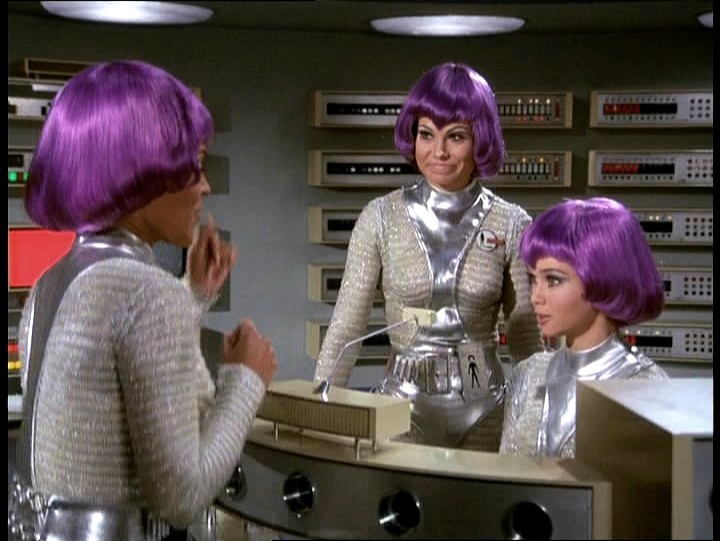
![[image error]](http://pegasus-pulp.com/wp-content/uploads/2017/12/51wnXf51oCL.jpg)
![[image error]](http://pegasus-pulp.com/wp-content/uploads/2017/12/51xZFFypZDL.jpg)
![[image error]](http://corabuhlert.com/wp-content/uploads/2017/12/5122f04gRYL._SY346_.jpg)
![[image error]](http://pegasus-pulp.com/wp-content/uploads/2017/12/51xYXnaDqL.jpg)
![[image error]](http://pegasus-pulp.com/wp-content/uploads/2017/12/51zx2blr5iL.jpg)
![[image error]](http://corabuhlert.com/wp-content/uploads/2017/12/51aZZ7BW6HL.jpg)
![[image error]](http://corabuhlert.com/wp-content/uploads/2017/12/51AcC3yjyQL._SX322_BO1204203200_.jpg)
![[image error]](http://pegasus-pulp.com/wp-content/uploads/2017/12/51mtDC2d4FL.jpg)
![[image error]](http://pegasus-pulp.com/wp-content/uploads/2017/12/51f2FrsAkFL._SY346_.jpg)
![[image error]](http://pegasus-pulp.com/wp-content/uploads/2017/12/41-BBkDVIwL.jpg)
![[image error]](http://pegasus-pulp.com/wp-content/uploads/2017/12/51epAX4T4wL.jpg)
![[image error]](http://pegasus-pulp.com/wp-content/uploads/2017/12/51zyXCXo1tL.jpg)
![[image error]](http://pegasus-pulp.com/wp-content/uploads/2017/12/51drCs4JqBL.jpg)
![[image error]](http://pegasus-pulp.com/wp-content/uploads/2017/12/51tnA6VYDGL.jpg)
![[image error]](http://pegasus-pulp.com/wp-content/uploads/2017/12/51g007HfttL.jpg)
![[image error]](http://corabuhlert.com/wp-content/uploads/2017/12/WP_20171224_009.jpg)
![[image error]](http://corabuhlert.com/wp-content/uploads/2017/12/WP_20151224_010.jpg)
![[image error]](http://corabuhlert.com/wp-content/uploads/2017/12/7011EE47-7974-484F-8B0F-C651361590B5.jpg)
![[image error]](http://corabuhlert.com/wp-content/uploads/2017/12/WP_20171224_20_44_09_Pro.jpg)
![[image error]](http://corabuhlert.com/wp-content/uploads/2017/12/CD659259-8BE9-499B-8679-E90D690CECBB.jpg)
![[image error]](http://corabuhlert.com/wp-content/uploads/2017/12/55E87967-0BC0-4454-B255-B05A388A36FB.jpg)
![[image error]](http://corabuhlert.com/wp-content/uploads/2017/12/FE3897F3-39A1-4501-94C9-C0647DC086F8.jpg)
![[image error]](http://corabuhlert.com/wp-content/uploads/2017/12/WP_20171224_20_46_16_Pro.jpg)
![[image error]](http://corabuhlert.com/wp-content/uploads/2017/12/WP_20171224_20_48_48_Pro.jpg)
![[image error]](http://corabuhlert.com/wp-content/uploads/2017/12/WP_20171224_20_56_02_Pro-2.jpg)
![[image error]](http://corabuhlert.com/wp-content/uploads/2017/12/WP_20171224_21_05_59_Pro_2.jpg)
![[image error]](http://corabuhlert.com/wp-content/uploads/2017/12/WP_20171224_21_06_07_Pro_2.jpg)
![[image error]](http://corabuhlert.com/wp-content/uploads/2017/12/WP_20171224_21_06_19_Pro_2.jpg)
![[image error]](http://corabuhlert.com/wp-content/uploads/2017/12/1D89E05E-F2D3-46BA-88E7-F95830FE4104.jpg)
![[image error]](http://corabuhlert.com/wp-content/uploads/2017/12/39CB0F3C-3F3D-4F68-AB33-CBD1BBBC1B30.jpg)
![[image error]](http://corabuhlert.com/wp-content/uploads/2017/12/WP_20171224_19_09_18_Pro-2.jpg)
![[image error]](http://corabuhlert.com/wp-content/uploads/2017/12/WP_20171225_12_10_51_Pro.jpg)
![[image error]](http://corabuhlert.com/wp-content/uploads/2017/12/WP_20171225_12_08_20_Pro.jpg)
![[image error]](http://corabuhlert.com/wp-content/uploads/2017/12/WP_20171214_19_51_47_Pro-2.jpg)
![[image error]](http://corabuhlert.com/wp-content/uploads/2017/12/Christmas_on_Iago_Prime.jpg)
![[image error]](http://corabuhlert.com/wp-content/uploads/2017/12/Weihnachtsshopping_mit_gebrochenem_Herzen_01.jpg)