
Cora Buhlert's Blog, page 65
December 29, 2019
Indie Crime Fiction of the Month for December 2019
 Welcome to the latest edition of “Indie Crime Fiction of the Month”.
So what is “Indie Crime Fiction of the Month”? It’s a round-up of speculative fiction by indie authors newly published this month, though some November books I missed the last time around snuck in as well. The books are arranged in alphabetical order by author. So far, most links only go to Amazon.com, though I may add other retailers for future editions.
Our new releases cover the broad spectrum of crime fiction. We have plenty of cozy mysteries, small town mysteries, animal mysteries, historical mysteries, 1940s mysteries, paranormal mysteries, crime thrillers, humorous thrillers, police procedurals, romantic suspense, noir, private investigators, amateur sleuths, serial killers, kidnappers, missing persons, cold cases, robberies, organised crime, motorcycle gangs, crime-busting witches, crime-busting wedding planners, crime-busting cats, crime-busting frogs, thieving Santas, crime and murder in New Orleans, Charleston, Memphis, Philadelphia, Manhattan, the Bronx, London, Northumberland, the Caribbean and much more.
Don’t forget that Indie Crime Fiction of the Month is also crossposted to the Indie Crime Scene, a group blog which features new release spotlights, guest posts, interviews and link round-ups regarding all things crime fiction several times per week.
As always, I know the authors at least vaguely, but I haven’t read all of the books, so Caveat emptor.
And now on to the books without further ado:
 A Simple Country Deception by Blythe Baker:
The violent death of a friend plunges Helen Lightholder into another case of danger and deceit as she struggles to unravel the truth behind the grisly killing. With her own past continuing to haunt her, Helen works to uncover the ultimate answer behind the mystery that has plagued her since the beginning.
Return to the quaint – and deadly – village of Brookminster a final time for the dramatic conclusion to Helen’s adventures.
 Mustang Sally by Blake Banner:
The cops at the 43rd called it the unsolvable case.
October, 2010, Sally Jones had been stabbed in the heart in her apartment on Commonwealth Avenue, in the Bronx. Her coat was on the back of her chair. Her shoes were beside her bed, her clothes were neatly folded, and she was dead under the sheets.
The killer had removed Sally’s hands and feet and departed, leaving no trace – except the dismembered body.
October, 2019, as the national media focuses on the 43rd’s unbroken record in cold cases, Detective John Stone, head the unit, decides to tackle the case.
But he and Dehan are soon to discover that this is a case like no other: who were the visitors who came to see her before her death? What was their connection with the shadowy Sacred Brotherhood of Christ? And did her brother, Captain Ewan Jones, seek to help her – or murder her? It soon begins to look like this is indeed the case they will never crack.
And what, Dehan wants to know, happened to the Mustang?
[image error] Santa’s Sticky Fingers by Cora Buhlert:
Normally, Detective Inspector Helen Shepherd doesn’t deal with petty crime and pickpockets. But when the Christmas market in Kingston upon Thames is hit by a wave of thefts, Helen and her team are called in to help out.
Harry, a homeless man who always hangs around the market, seems to be the most obvious suspect. But there is also the mysterious man in the black leather jacket some witnesses claim to have seen. Or maybe, the thief can be found much closer to home…
Can Helen and her team crack the case in time for Christmas?
This is a holiday novelette of 7800 words or approx. 26 print pages in the Helen Shepherd Mysteries series, but may be read as a standalone.
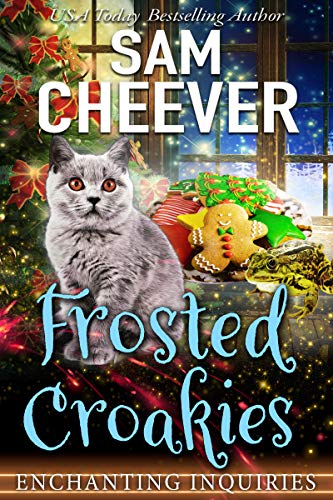 Frosted Croakies by Sam Cheever:
’Tis the season for great folly…walawalawalawalala…ribbit.
It’s Christmas time at Croakies. The tree is up. The stockings are hung. And Christmas tunes are turning the atmosphere jolly. After a tumultuous Samhain, I’ve found my chi again and I’m starting to enjoy the season of love and giving.
Yeah. You probably know how this is going to end.
When Sebille suggests I open the bookstore up to a small holiday party, I foolishly agree. How was I supposed to know that the hobgoblin would decide it would be fun to hide everybody’s stuff? Or that we’d be hit with a freak winter storm that confined everybody inside for the duration. Or that a “You’re me but who am I?” spell would be released inside the shop, switching everybody’s identities and creating general chaos and hysteria?
I could probably deal with all that if it weren’t for the fact that my friend, Lea…the one person who could possibly reverse the spell…was ensconced in SB the parrot, with no opposable thumbs for spelling.
And me? Of course, I’m sitting fat and squishy inside Mr. Slimy. Thank goodness Rustin isn’t currently in residence, or it would be really crowded in here.
Who spelled my party? What do a pair of Santa’s elves have to do with it? And why have old enemies suddenly become new friends? I apparently have a little holiday mystery to solve inside Croakies, and I have no idea how I’m going to solve it with everybody mixed up and some of us human.
Have I told you I hate this season?
Ribbit!

She appears only at night. Watching. Waiting…
When local children begin to vanish, Officer Alex Mercer is positive the cases are tied to recent threats against his family—especially since the first girl to go missing is his best friend’s daughter.
It all ties back to Alex. He’s sure of it.
The only solid link to the missing kids is a mysterious woman in a red dress. But that isn’t enough to go on, and Alex has orders to focus on another case. As if that will stop him.
He stumbles upon something so chilling, it finally provides the proof that he was right all along—the kidnappings are part of an elaborate worldwide scheme. And he and his family have landed on the bad guys’ radar.
Alex will stop at nothing to take down the dangerous criminal empire… if they don’t end him first.

A trail of death. A web of corruption. The ultimate betrayal.
A series of armed robberies on local petrol stations leaves Mildenheath CID chasing their tails. But things are about to get a whole lot worse.
When an elderly woman is killed during an armed raid on her jewellery shop, Knight and Culverhouse realise one of their own is involved — a police officer.
With the future of Mildenheath CID at stake and the lives of their loved ones under threat, time is running out — fast.
As they begin to investigate the web of corruption, they discover just how deep it runs — and how close to home. But are they prepared for the truth?
 Jocelyn’s War by Jason Ryan Dale:
There’s a war in the streets. The vicious Ghost Knights biker gang, suddenly flush with cash and guns, is challenging the Mob for control of the city. No one is safe as bodies fall and houses go up in flames.
Danny Rinker is a young Mob soldier, but he’s keeping his distance from the fighting. Encouraged by Jocelyn, his new girlfriend, Danny spends his days in the local bar he finally owns after years of struggling. While his friends are out making names for themselves, Danny finds in the velvety touch of Jocelyn’s lips all the action he’ll ever need.
From a chance encounter, Danny learns a secret that goes to the heart of the Ghost Knights’ newfound power. If he can unravel a twenty-year-old mystery, Danny will be the one who takes the bikers down once and for all.
But Jocelyn is not all she appears. She knows things about this war that her lover can’t even imagine. Danny is about to discover that Jocelyn is a warrior, and even if it breaks her heart, she will carry on her fight to the end.
 Claus for Celebration by Laura Durham:
Wedding disasters are one thing. A missing Santa (who is presumed dead) is quite another.
This is no normal holiday season for DC’s top wedding planners. Not only is the weather too warm for their winter wonderland wedding, but their neighborhood’s singing Santa, Kris Kringle Jingle, is missing. On top of that, Annabelle’s engagement party is looming, and someone seems to be sabotaging their wedding plans. Can the Wedding Belles and their colorful crew find Santa, save the wedding, and stop the person who’s trying to make their lives a holly, jolly catastrophe?
Claus for Celebration is the 15th standalone book in the hilarious Annabelle Archer Wedding Planner Mystery series. If you like larger-than-life characters, madcap capers, and an insider’s look at glamorous society weddings, then you’ll love Laura Durham’s award-winning cozy mystery series.
Buy now to cozy up to this funny, festive holiday mystery today!
 The Hexorcist by Lily Haper Hart:
Ofelia Archer has a full life … which only gets fuller when a dead body lands in her backyard.
As owner of New Orleans’ premier supernatural speakeasy, Ofelia is always in the thick of things when the witch hits the fan. That’s no exception now … even when the local police start breathing down her neck.
Zach Sully has a colorful background. As a panther shifter, he keeps his true origins secret while walking the colorful streets of the French Quarter keeping law and order. A tourist murder draws him into new and uncharted territory, and a feisty witch is at the center of it.
Sully and Ofelia circle one another … warily … as they both try to solve a mystery that revolves around an outsider who somehow had ties to their little corner of the world. Eventually, they’re going to have to join forces … and it’s not exactly a comfortable meeting of the minds.
Chemistry is one thing. Trust is another. Ofelia and Sully will be forced to get over their inner misgivings and unite if they want to solve the crime … and stay alive in the process.
Welcome to a magical world, where the characters are colorful, the magic is fantastical, and the drinks are poured strong.
It’s Bourbon Street, baby, and you’ll never be the same again.
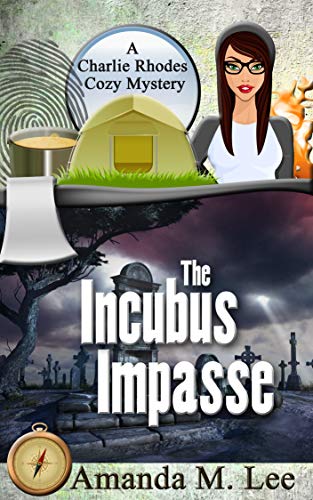 The Incubus Impasse by Amanda M. Lee:
Charlie Rhodes is at a crossroads in her life. Her big secret is out – at least with the most important person in her life Jack Hanson – and now they have to deal with a whole new reality.
Things are going relatively well when the Legacy Foundation is sent on a mission to Charleston. It seems women are dying under strange circumstances: open windows, no immediate sign of violence, locked doors. The leader of their group is convinced it’s an incubus, and even though he was the chief naysayer before, Jack has no idea what to believe given the reality of his magical girlfriend.
It’s a new world and Charlie is excited to embrace it. Jack wants to keep her close while exploring her abilities. They make a fearsome twosome … although there’s danger at every turn.
It seems Charlie resembles the dead women, and even though local police thought they had nothing in common … it seems they actually did. They were bucking for a reality television show and it appears someone in that business may be a murderer.
Charleston is a new environment and Charlie and Jack are embracing a brand new world. Things are going to be fine … as long as they live to tell the tale.
A murderer is stalking Charleston, death is close, and only Charlie can save the day. She’s going to need those closest to her to do it. Luckily, they’re up for the challenge.

You can’t keep a good sociopath down.
Dyson Devereux is languishing in prison awaiting trial for murder. Languishing wouldn’t be so bad were it not for the irksome inmates, crowded conditions and distinct lack of haute cuisine.
Only Alegra, his sometime paramour and frequent visitor, shares his desire to see him released. The problem is, she wants Dyson freed so they can start a new life together. But all Dyson desires is to get back home to his treasured mementos.
As judgement day draws ever closer, can Dyson keep up appearances long enough to win his freedom? And at what cost? For hell hath no fury like a sociopath scorned.
Golgotha is a funny, fast-paced crime comedy novel, boasting a sardonic and sinister sociopath at its helm.
 Ryan’s Christmas by L.J. Ross:
Christmas can be murder…
After a busy year fighting crime, DCI Ryan and his team of murder detectives are enjoying a festive season of goodwill, mulled wine and, in the case of DS Phillips, a stottie cake or two—that is, until a freak snowstorm forces their car off the main road and into the remote heart of Northumberland. Their Christmas spirit is soon tested when they’re forced to find shelter inside England’s most haunted castle, where they’re the uninvited guests at a ‘Candlelit Ghost Hunt’. It’s all fun and games—until one of the guests is murdered. It seems no mortal hand could have committed the crime, so Ryan and Co. must face the spectres living inside the castle walls to uncover the grisly truth, before another ghost joins their number…
Murder and mystery are peppered with romance and humour in this fast-paced crime whodunnit set amidst the spectacular Northumbrian landscape.
 All I Want for Christmas is Wicked by Lotta Smith:
Trees decorated, stockings full of presents, and another case to crack!
The Rowling family is gearing up for another Merry Christmas, and Mandy has her hands full with holiday prep, but how can she get into the spirit of the season when the victim in her latest case isn’t a ghost?
Twenty years ago, during a Christmas Eve blackout, Kevin Holt, the husband of a rich heiress, lost his memory in a fall down the stairs of their mansion. Now he’s discovered evidence that someone might have been trying to kill him, and all he wants for Christmas is to find out who. Since the resident ghost of the Holt house didn’t witness the attack, Rick and Mandy will have to rely on old fashioned sleuthing (and a little help from Mandy’s paranormal pal Jackie) to find out which of the four suspects is the culprit.
Meanwhile Rick has been saddled with novice investigator Cameron Gibson (call him Ace!) the son of one of USCAB’s wealthiest clients. Ace is trying to catch the creep stalking a New York City fashion model, but despite wanting Mandy to mentor him, one ghostly encounter has him seriously spooked.
A run in with a biker ghost and dancers in danger complicate the case, but the big question on Mandy’s mind is why does little Sophie want a bear trap for Christmas? Find out in this wickedly merry holiday installment of the Paranormal in Manhattan Mystery Series.
 Chilly Comforts and Disasters by Anne R. Tan:
Raina Sun is newly married and enjoying her role as the police station’s unofficial pastry chef. When her husband bought a dilapidated old house on a steal, they are thrown into a whirlwind of construction activities with well-meaning relatives coming into town, permitting issues, and a dead body behind the drywall of the attic.
With all construction activities at a standstill and her husband working overtime to help with the cash flow, Raina must solve this cold case to get her life back on track. With the help of the geriatric Posse Club, will Raina find this hidden killer after all this time or will she become the next victim?
 When Raja Met Vinny by Jack Thompson:
Who says oil and water don’t mix?
Before Vinny, Raja worked solo. His unique connection to people and his intuitive brilliance was all he needed to solve crimes. Having a partner never crossed his mind. When he met Vinny that changed.
The death of a prominent banker takes Oxford-educated private investigator Raja Williams on a case to his home turf, the Caribbean. Vinny Moore, a hipster hacker who got caught with her hand in the government’s cookie jar, is pressed into service helping a CIA task force stop a prolific cocaine smuggling operation in the Caribbean.
When the two cases cross, Raja and Vinny meet with explosive results. They are as different as night and day, but together they form a powerfully effective crime-fighting team.
 Dateline Memphis by LynDee Walker:
Crime reporter Nichelle Clarke heads home for the holidays…and learns that crime doesn’t take a day off.
Nichelle detours to Graceland in search of an Elvis Presley souvenir for her mother.
But when a valuable piece of memorabilia goes missing, the historic mansion descends into chaos.
With security swooping in and Graceland on lockdown, Nichelle finds herself shut in with staff, security guards, and Elvis superfans, all in the midst of an unfolding crime. Never one to miss an exclusive scoop, Nichelle whips out her notebook and starts reporting.
Locked behind the famous Graceland gates, Nichelle must work through a long list of suspects with no time to lose. But the closer she gets to the truth, the more danger she finds herself in.
The house of the King offers many clues, but will Nichelle be able to connect the dots in time to save a piece of history…and herself?
 Send to Kindle


The 2019 Darth Vader Parenthood Award for Outstandingly Horrible Fictional Parents
It’s almost the end of the year, so it’s time to announce the winner of the coveted (not) 2019 Darth Vader Parenthood Award for Outstandingly Horrible Fictional Parents.
Let’s have a bit of background: I have been informally awarding the Darth Vader Parenthood Award since sometime in the 1980s with the earliest awards being retroactive. Over the years, the list of winners migrated from a handwritten page via various computer file formats, updated every year. Last year, I finally decided to make the winners public on the Internet, because what’s an award without some publicity and a ceremony? The list of previous winners (in PDF format) up to 2017 may be found here, BTW, and the 2018 winner was announced here.
In 2017 and 2018, a clear frontrunner emerged early on. 2019 was different, because there were several likely and unlikely candidates.
Warning: Spoilers for several of things including The Rise of Skywalker behind the cut:
Initially, I thought that Thanos, everybody’s least favourite purple murder eggplant, would become the second triple winner after Tywin Lannister. However, since most of Thanos’ appearances in Avengers: Endgame are in the past via time travel, he doesn’t really qualify for this year’s award, especially since the competition is strong.
For a while, it seemed as if Sarek of Vulcan and Amanda Grayson from Star Trek Discovery would finally rise above honourable mention status, which Sarek won in 2017. However, while Sarek and Amanda will never win a Parent of the Year Award (which this year would go to The Mandalorian anyway, about whose adventures and parenting skills I’ll have more to say in the new year), they are inept rather than actively malicious. Which in a year with strong competition just doesn’t cut it.
Another candidate emerged in Dr. George Hodel from Patty Jenkins’ retro crime drama I Am the Night. Now Dr. George Hodel is a horrible parent and horrible person in general. In the show, he raped and impregnated his teenaged daughter and later tried to rape and murder his granddaughter, who also is his daughter. Oh yes, and he also murdered Elizabeth Short a.k.a. the Black Dahlia. That should be enough to qualify anybody for the award. There is only one problem. Dr. George Hodel is not fictional, even though I Am the Night is a fictionalised version of the story of his granddaughter and quite a few things in the show did not happen. And while the real Dr. George Hodel seems to have been a horrible person, the Darth Vader Parenthood Award is still for Outstandingly Horrible Fictional Parents.
Mrs. Coulter from His Dark Materials would have been another likely candidate, but while she is undoubtedly awful, she is also a previous winner for Philip Pullman’s novels and a TV adaptation of the same story does not requalify her.
Late in the year, an unexpected eleventh hour candidate emerged with Sheev Palpatine. Now Sheev Palpatine was doubly unexpected, because a) we all thought he was dead and b) until recently no one knew that he was a parent. For more about why Sheev Palpatine qualifies, read my postmortem on The Rise of Skywalker and the Star Wars series in general. But while Sheev Palpatine is a horrible person and likely was a horrible parent, he still does not join his former apprentice double winner Anakin Skywalker a.k.a. Darth Vader in the ranks of the winners of the award named after Vader. Why? Because while we strongly suspect that Sheev Palpatine was a horrible parent, we see hardly anything of what he did. So it’s No Award for Sheev Palpatine.
And now we come to our 2019 Honourable Mention, which goes to…
Drumroll
Marilyn Batson
As played by actress Caroline Palmer in the movie Shazam!, Marilyn is the mother of superhero to be Billy Batson a.k.a. Shazam a.k.a. Captain Marvel. Marilyn was only seventeen, when she had Billy. She broke up with his criminal father soon thereafter and was overwhelmed as a teenaged single mother, for which I have sympathy.
However, I have no sympathy for what happened next. For when Billy was about three or four, he was separated from Marilyn at a crowded Christmas market. This isn’t exactly a rare occurrence during the crowded holiday season. And so police officers took care of little Billy and waited for his Mom to pick him up.
But Marilyn never picked up her son and decided that he’d be better of without her. She did not decide to put Billy up for adoption or ask someone for help with her difficult situation, she just dumped him and went her merry way. Billy was not consulted and spends the next ten years running away from foster homes, desperately looking for his mother. He finally finds her living in the same city and seeks her out, only to find that Marilyn not only never looked for him, but that she is still not interested in him and won’t even ask him in. And it is this behaviour that earns her an honourable mention.
And now, we come to the grand prize. The 2019 Darth Vader Parenthood Award for Outstandingly Horrible Fiction Parents goes to…
Drumroll
Ferona Blue
“Ferona Who?” many/most of you will ask, because Ferona is definitely one of the more obscure winners we’ve had.
Ferona is the mother of Jinnifer Blue, protagonist of the space opera novels Blue Shift and Deep Blue by Jane O’Reilly. Ferona is a career politician on an environmentally devastated and socially divided Earth of the future. Over the course of the two novels of the Second Species Trilogy to date (a third is coming next year), Ferona rises from Secretary of Alien Affairs to Earth’s representative in the Galactic Senate via murder, backstabbing and deceit. Ferona is also responsible for conducting illegal medical experiments on poor people and selling humans (again only the poor) as slaves to aliens in return for various favours.
As a parent, Ferona systemically neglected her daughter Jinnifer and subjected her to all sorts of psychological adjustment therapies, which amounted to torture. Jinnifer finally ran away at eighteen to become a space pilot. Ferona explosively re-entered her daughter’s life some twenty years later, by first having her arrested on trumped up charges and dumped aboard a prison ship. And then, when Jinn confronts her mother, Ferona has her own daughter potentially fatally shot and threatens to withhold medical aid to blackmail Jinn’s space pirate lover into surrendering. She also subjects Jinn to potentially fatal genetic manipulation and sells Jinn’s lover off as a slave.
That sort of villainy deserves a reward and so I delcare Ferona Blue the winner of the 2019 Darth Vader Parenthood Award for Outstandingly Horrible Fictional Parents.
As for why a character from two books that came out in 2017 and 2018 wins an award in 2019, I was not aware of Jane O’Reilly’s Second Species Trilogy, until I picked up the books on a whim from the dealer’s room at WorldCon this year.
Marilyn Batson declined to pick up her award in person, claiming that she would be late for her shift at a local diner and besides, her current partner would not like it.
Ferona Blue appeared in a striking gown to pick up her award and launched into an acceptance speech to justify her actions, which significantly overran the ninety second limit, so we had to switch off her microphone.
Next year, I will award the 4oth Darth Vader Parenthood Award. Who will win? You’ll find out in this space.
Send to Kindle
December 28, 2019
The End of a Saga: The Rise of Skywalker
So the Star Wars saga has finally come to an end of 42 years. Of course, we thought that Star Wars had ended twice before, in 1983 and 2005 respectively. So is The Rise of Skywalker really the end of the Star Wars saga? Most likely not. But it still marks the end of a significant chapter and is very likely the last time we will see the protagonists of the original trilogy.
Spoilers for The Rise of Skywalker and Star Wars in general.
Now the original Star Wars trilogy are my favourite movies of all time and have been, ever since I first watched them as a kid. They remained my favourites when teachers at school berated me for liking “that violent and proto-fascist American trash”. They remained my favourites through university when my fellow students would roll their eyes at my choice and then name whatever movies they thought would make them look enlightened and cultured (My Left Foot is the one I remember clearly, because the person who called it their favourite was so clearly trying to impress the professor). They remained my favourites when some elderly neighbour or relative asks me why I can’t watch “normal movies” like everybody else (apparently, some of the highest grossing movies of all time are not normal).
The original movies do have their share of flaws. There are scenes that go on way too long and others, which are glossed over too quickly. There is a notable lack of racial diversity in the cast – not uncommon for movies in the 1970s/80s – and there is an even more notable lack of women not named Leia, which was uncommon even in the 1970s and 1980s. However, the whole is somehow greater than the sum of their parts and even forty years on, the original trilogy manages to be the rare case of an almost perfect spectacle.
As for the prequel trilogy, I don’t hate them as much as some others do, but I don’t love them either. There are things to like about the prequels. The visuals are gorgeous, they flesh out the Star Wars universe and its politics in a way the original trilogy didn’t, they turn R2-D2 into a much more important character than he originally was (R2 is the only one who knows what’s going on) and the prequels made me like Obi-Wan, a character I didn’t particularly like in the original trilogy, because here was the grumpy grandfather from the 1980 version of Little Lord Fauntleroy (which is a Christmas classic in Germany) being grumpy some more and never softening like in Little Lord Fauntleroy, but basically lying to Luke and everybody else. Of course, Yoda lies as well, but we forgive Yoda, because he is cute.
But in general, where the original trilogy was magic, the prequels are just movies and not all that great ones at that. They are also hampered by the fact that pretty much everybody already had a mental vision of the events depicted in the prequels and the prequels naturally didn’t match any of our visions. The fact that they end on a real downer (whereas the original and sequel trilogy save the downer ending for the middle installment) doesn’t help either. The prequels also change the dynamic of the whole saga. Back when the prequels first came out, I wrote on an earlier version of this blog that while for our generation, the revelation that Darth Vader was Luke’s father was the big shock, for those who’s come after us and would watch the movies in chronological rather then production order, Anakin falling for the dark side would be the big shock, whereas Darth Vader being Luke’s Dad would be something viewers knew all along. And indeed, there is something of a debate whether to show the Star Wars trilogy in chronological or production order to people watching them for the first time, because the decision effects very much how you’ll view the films. Never mind that if you watch the movies in chronological order, you’ll start of with the weakest movies bar Solo (while production order starts out with one of the strongest) and will also get the double whammy of downers with Rogue One following Revenge of the Sith.
As for the sequel trilogy, my feelings are mixed. As movies and entertainment, they are much better than the prequel trilogy, though not quite up to the standards of the originals. But when Disney bought Lucasfilm and the sequel trilogy was first announced, my initial reaction was, “That story has been told. We don’t need any sequels, let alone sequels not written/overseen by the original creator George Lucas.”
I eventually came around and watched the sequel trilogy (and Rogue One) and largely enjoyed them with a few caveats. Viewed purely on their own, the sequels work. They’re highly enjoyable movies with fine actors playing likeable and diverse characters (and characters we like to hate), engaging action and great visuals, telling a suitably epic story. However, when viewed in the context of the whole Star Wars saga, they also undermine the original trilogy and make the victory at the end of Return of the Jedi seem hollow. Because by the end of Return of the Jedi, I at least thought that this universe would be all right, that the rebels would rebuild a democratic system and rebuild it better than before and that the various characters we’d become attached to would live largely happy lives. Okay, so I was a kid when I first watched the movie and naive, but Return of the Jedi still ends on a hopeful note.
The sequels on the other hand tell us that the New Republic never really worked out (and is unceremoniously destroyed in a blink-and-you’ll-miss-it scene). Worse, our heroes – the characters we spent three movies rooting for – turned out to be complete and utter failures. Han and Leia’s relationship, one of science fiction’s greatest love stories, didn’t work out, they split up and turned out to be inept parents, too, who lost their kid to the Dark Side. And Luke Skywalker turned out to be a complete and utter failure as a Jedi and a total arse besides, who tried to kill his own nephew, driving him to the Dark Side, and then spent twenty years or so hiding away on a rock in the middle of nowhere, never washing his hair. Oh yes, and he also likely died a virgin, still unhappily in love with his sister. In fact, when I first watched The Last Jedi with my Mom, her reaction to grumpy old Luke was, “What an arsehole!” Honestly, these are awful fates for some of our favourite characters. They lived miserable lives and died miserable deaths – with the possible exception of Leia who was always the most competent one. Even the Expanded/Legends Universe gave these characters more of a shot at happiness.
Considering that all of the original cast except for those actors like Peter Cushing and Alec Guinness who had already been old when the first movie came out were still alive when The Force Awakens was made, I understand the decision to set the movie approx. thirty years after the originals and use the original cast. But from a narrative point of view, The Force Awakens would have worked better, if it had been set one hundred rather than thirty years after Return of the Jedi and Kylo Ren would have been Darth Vader’s great-great-grandson rather than grandson. For example, Simon R. Green deliberately set his second Deathstalker trilogy about two hundred years after the first, starring distant maybe descendants of the original characters, to avoid undermining a series which a) was always more clear-eyed about how revolutions really work out than Star Wars ever was, and b) killed off most of the characters we really cared about in the final book of the original series anyway.
The prequel trilogy shows us how democracies die and slip into tyranny. The original trilogy shows us how tyranny can be beaten and democracy can be restored. And the sequel trilogy essentially shows us that no matter how often you beat tyranny, it will always come back and any victory you win will always be hollow. Oh yes, and the galaxy at large just doesn’t care, as long as they get their pensions/free washing machines/a culturally homogenic state/a sense of safety, no matter how hollow. Which, honestly, is more of a downer message than Revenge of the Sith and Rogue One taken together.
It is also a message that is very fitting for our times. Because let’s face it, Star Wars has always been immensely political, even if the usual suspects try to view it as just wholesome apolitical fun in outer space. This great article by Tom Kreider in the New York Times points out that the original Star Wars trilogy, particularly the movie now known as A New Hope, were very much a product of the 1970s. For starters, Star Wars shares a lot of DNA and visual aesthetics with the dystopian science fiction movies of the early 1970s, Soylent Green, Silent Running, Rollerball, Logan’s Run, Z.P.G. and of course George Lucas’ own THX 1138. All of those movies and others of their ilk were about an individual rising up against an unjust tyrannical, only that in Star Wars that rebellion succeeded better than in the dystopian downers of the early 1970s. Though you can also see the progression of how the science fiction movies of the 1970s became progressively more optimistic as the decade went on. Logan’s Run, which came out a year before Star Wars, is more optimistic than such early 1970s downers like Soylent Green or Z.P.G (and Z.P.G. makes no sense either).
Furthermore, as Tom Kreider points out, Star Wars is influenced by frustrations about the Vietnam War and the Watergate scandal and how the America as a beacon of freedom and democracy that George Lucas had been promised as a kid growing up in the 1950s had been nothing but a lie. In fact, this sheer anger of a kid growing up in a desert town in the middle of nowhere, railing at the fact that the country he lives in has been sold to him as the best possible of all systems and yet has so much that’s wrong with it and that he’d change it and make things better, if only he’d manage to get out of that damn desert town first, permeates the original Star Wars trilogy and is so strong that it radiated out to another kid living in the middle of nowhere, though not in the desert, because we didn’t even something as exotic as a desert, a kid who also saw that the wonderful and perfectly democratic country, the best of all possible systems, had its share of flaws and that we could make it better, if only we could get out of that damned small town that wasn’t even a desert first. I very much believe that a large part of Star Wars‘ success is due to this dynamic – that it is a story that spoke to everybody who ever lived in a small town that did not understand them and dared to question a system that teachers and parents said was as good as things were going to get. This is also why attempts to link Star Wars to the Reagan/Thatcher/Kohl era always make me so furious, because those folks where the fucking Empire and Star Wars was not about them, but about how to get rid of them and everything they stood for (though at the time I viewed Helmut Kohl as the hapless Old Republic that didn’t know what happened to it as the Empire took over. I no longer view him that way. He was the fucking Empire and evil all along). It’s also why I once wrote a furious letter to the German public broadcasters telling them to stop referring to Ronald Reagan’s SDI program, pushed – as I later learned – by a coalition of rightwing SF writers including Heinlein, as the “Star Wars program”, because George Lucas, the person who actually created Star Wars, was vehemently opposed to that usage and viewed it as copyright infringement, which they’d bloody know, if they’d actually show the movies on TV. They never responded, BTW. Nonetheless, if you grew up in the 1980s, Star Wars was a promise that came true in the real world. For throughout the second half of the 1980s, tyrannies tumbled, first the really awful ones in Uganda, the Phillippines, Haiti and then the whole bloody Iron Curtain came down. And the Reagans, Thtachers and Kohls of the world would be next and indeed, Reagan and Thatcher were soon out of office, though bloody Helmut Kohl would hang on for another decade. Democracy won, we won and we didn’t even have spaceships or lightsabers.
Of course, it didn’t work out that way. It quickly turned out that the transition to democracy was far from smooth and that getting rid of political oppression in Eastern Europe and elsewhere also liberated a couple of ugly old ghosts we’d rather have kept buried. The US and anybody they could bully into joining in went to war against Iraq in 1991 and would periodically do so again well into the new millennium. The Balkan exploded into violence and two and a half years after the fall of the Wall, a home for refugees was burning in Rostock-Lichtenhagen, set alight by Neonazis who were cheered on by the general population. It was the first notable act in what would soon turn into an orgy of far right violence, concentrated in but not limited to East Germany. Meanwhile, nominally leftwing governments dismantled social security systems all over Europe and beyond. And then came the September 11, 2001 and the so-called war on terror started, complete with increased surveillance for “our own safety”.
The prequel trilogy exploded into this climate. Just as the original trilogy was a child of the Vietnam/Watergate era, the prequels were a child of the Bush era with its war on terror and escalating state surveillance, even though The Phantom Menace actually predated both the election of George W. Bush and September 11, 2001. The prequels show how a series of relatively small events (after all, the prequel trilogy infamously begins with a trade dispute) causes a democratic system to slide into a dictatorship, pushed forwards by hard choices and bad decisions by people with good intentions. Watching the prequel trilogy is watching a tragedy slowly unfold. And indeed, if things had gone only slightly differently, the rise of the Empire might still have been averted until about halfway through Revenge of the Sith. The intense dislike of and distrust for George W. Bush has been somewhat forgotten, because Donald Trump turned out to be so much more awful, but the prequel trilogy very much captures the fears and preoccupations of the Bush era and is as much a work of its time as the original trilogy.
The sequel trilogy, meanwhile, dropped into a world of resurgent far right nationalism, where many of the very countries who ousted undemocratic regimes in the 1980s vote in even worse dictators and large swathes of the population don’t even care, because their pensions are safe and they feel that something is being done about crime and besides, the latest strongman ruler only targets immigrants, LGBTQ people, leftwinger and malcontents anyway. Once more, Star Wars proved itself to be rather prescient, for even though The Force Awakens came out at the tail-end of the Obama era, about half a year before the Brexit referendum and eleven months before the election of Donald Trump, the sequel trilogy is very much a product of the Trump/Brexit/Putin/Bolsonaro/Duterte/Orban/Erdogan/AfD era, where even established democracies are suddenly under threat again by a resurgent far right. It’s no accident that the most recognisable villain of the sequel trilogy is a young, somewhat whiny white man who idolises his war criminal grandfather, is etsranged from his progressive parents and longs for some kind of golden age that never existed. It’s no accident that some of the most unpleasant villains in the entire sequel trilogy are wealthy capitalists who sell weapons to both sides and get rich on the profits and don’t give a flying fart about democracy, because it only hinders their business. Nor is it an accident that the Resistance’s call for aid at the end of The Last Jedi goes unanswered (except by some urchins living in the stables of Canto Bite). The people of the galaxy no longer even care that they are living in a dictatorship, because crime is down, pensions are safe and Snoke is probably handing out free washing machines to the right kind of people. The sequel trilogy shows us that even if you think that you laid the old ghosts (literally, since the main villain of the sequel trilogy is the resurrected main villain of the previous two trilogies) to rest for good, they’ll always come back and don’t even hope that your family/friends/neighbours will support you, because they most likely won’t.
In The Rise of Skywalker, of course, the people of the galaxy still come to the aid of the Resistance in the end, rallied by Lando Calrissian (who – let’s not forget – was a backstabbing villain when first introduced), the Resistance triumphs, though pretty much all of its leaders who knew what they were doing are dead and I can’t really see Poe Dameron as president of the New New Republic, the chief villain has an eleventh hour conversion and sacrifices his life for good (actually handled better in the case of Kylo Ren, probably because Adam Driver is one hell of an actor) and the First Order is destroyed. There also is one Jedi left who can re-establish the Jedi order for the third time. Our heroes hug and celebrate and we’re basically at the same point where we were at the end of Return of the Jedi, which again is no accident, because the sequel trilogy closely mirrors the structure of the original trilogy, much more closely than the prequels did.
There is just one difference. At the end of Return of the Jedi, I at least thought that things would be okay now. It wouldn’t always be smooth sailing, the occasional Thrawn and other Imperial leftover would pop up, but democracy had been restored and our heroes would be happy. Meanwhile, the end of The Rise of Skywalker is very much what the romance community calls a Happy For Now (and not even all that happy, considering no one except for two elderly lesbians gets a romantic happy ending and Rey ends the movie alone on Tatooine) rather than the Happily Ever After we thought we got at the ending of Return of the Jedi.
Actually, the complete lack of any kind of romantic resolution is one of the things that annoys me about The Rise of Skywalker. Because throughout the sequel trilogy there were sparks flying in all directions and between various characters. Rey/Kylo, Rey/Finn, Rose/Finn, Poe/Finn, Poe/Rey, Rey/Poe/Finn, Rose/Poe/Finn, Poe/Zorri, Finn/Jannah, Poe/Billie Lourd’s character and even Kylo/Hux (yes, they supposedly hate each other, but we all know how that often goes) all wouldn’t have been unlikely romantic possibilities. And unlike the original trilogy, the sequel trilogy actually has sufficient characters of any gender to allow for more than the love triangle of the original. But of all the many romantic possibilities teased throughout the three movies, we get absolutely nothing except for some longing looks. Rey continues the tradition of Jedi standing alone at the end of Star Wars trilogies (because that worked so well the last two times – not), while Poe and Finn neither end up with each other nor with someone else. Of course, Rey and Kylo/Ben wouldn’t have been a sustainable pairing, because reformed or not, Kylo/Ben still is a war criminal responsible for death on a massive scale. Not to mention that I would feel very worried about any kid these two might ever have had, because that poor kid would have grown up with that universe’s equivalents of Hitler and Stalin as great-grandparents, which would have knocked even the most mentally stable person (and none of the male Skywalkers have ever been mentally stable) off balance. So yes, Rey/Kylo was never going to happen, but something else could have happened. But as it is, the only person who ends the movie in a happy relationship is Amanda Lawrence’s no-longer-young rebel commander, who gets to kiss her girlfriend/wife in a blink-and-you’ll-miss-it scene that has been touted as the first LGBTQ scene in a Star Wars movie (I guess everybody missed Obi-Wan, even though it’s strongly implied that his character is not straight) and eventually turns out to be something that might have been revolutionary back in Return of the Jedi in 1983, but feels just disappointing now.
As for the future prospects of the universe, by now it is very obvious to me that the Star Wars universe is a terrible place, regardless of which regime is in charge. It was a terrible place during the Old Republic, it became even more terrible during the Empire, it did not markedly improve during the New Republic (as seen in The Mandalorian) and got even worse with the First Order in charge. Except for Coruscant, Naboo, Bespin and Alderaan (and Naboo isn’t perfect, Bespin gets taken over by the Empire and we see next to nothing of Alderaan before it’s blown up), pretty much all planets we see are shitholes beset by crime and corruption (and Bespin is likely beset by crime and corruption, too, considering who runs it) where the locals live a hardscrabble existence. A few non-human worlds like Endor or Kashykk seem to be doing all right with functioning social and political systems, only to be steamrollered by the Empire. Of course, it was always pretty obvious that the Star Wars universe was a horrible place, but during the original trilogy, we were allowed to think that it was better once and will get better again. The prequels, the sequels and the various additional media pretty much destroyed that illusion. The Star Wars universe is a crappy place, always was and always will be. And the Resistance victory at the end of The Rise of Skywalker won’t magically make things better. Rey, Finn and Poe will fail just as Han, Luke and Leia did before them. And in five or ten or twenty years, some new autocratic regime with a fetish for Nazi imagery, headed by a shrivelled hooded leader (maybe even another clone of Palpatine) and his masked and black clad righthand man (or woman) will rear its ugly head and the whole story will begin anew again. And again. And again.
Much as I enjoyed them viewed on their own, the sequel trilogy has turned the Star Wars universe into a depressing place. The Last Jedi at least seemed to hint at a way out of this eternal cycle of republic arises out of tyranny, only to fall to tyranny again, while the Jedi rise, fail and are exterminated, only to rise again. The Last Jedi gave us a glimpse of a shadowy society of villainous capitalists who don’t care about the endless battle between the dark and the light side, as long as they keep fighting and buying weapons. The Last Jedi gave us a maintenance tech heroine and Force users coming out of nowhere instead of from lengthy intertwined Jedi bloodlines (though the overwhelming majority of the Jedi we saw in the prequels probably came from nowhere as well). The Last Jedi even hinted at an end to the endless dark side/light side dichotomy of the Force, when it seems for a moment as if Rey and Kylo, having just killed Snoke and his guards, are about to leave all that crap behind them and movie beyond light and dark side, Jedi and Sith, to build something new. Only then, Kylo decides that he’d rather rule the galaxy and Rey dumps him. And then The Rise of Skywalker pretty much undoes everything The Last Jedi has built up and goes for a far more conventional conclusion. The Jedi Order Rey will rebuild – because you know that she eventually will – will be just as flawed as the first and second versions and will probably fail just as easily.
Now unlike many Star Wars fans, I never particularly liked the Jedi Order as it was. Yes, lightsabers and Force powers are cool. But taking young kids from their parents and then berating them for daring to miss their parents? Telling padawans that they must renounce all feelings, that they don’t have a right to be angry, that they cannot form attachments romantic or otherwise, that they shouldn’t help their friends, even if their friends are being tortured? Sorry, but that’s pretty much the opposite of cool. Never mind that the Jedi are raging hypocrites who constantly break their own rules. Also – and I’m stunned by how many people missed this – the movies themselves have always been highly critical of the Jedi. The point of the entire prequel trilogy is that the old ways of the Jedi don’t work and in fact ushered in the Empire with their utter incompetence (coincidentally, neither does the way of the Mandalorians, even though they at least are not directly responsible for the rise of the Empire). Yes, I had hoped that Luke would do better and jettison a lot of the more overt Jedi idiocies and keep the ideas that were actually good, but in the end he failed just as Yoda, Mace Windu, Obi-Wan and the others had failed. And Luke saying in The Last Jedi that it is time for the Jedi to finally end, because they just don’t work are probably the wisest words he has ever spoken. Just as Yoda’s Jedi Master heart-to-heart with Luke, wherein he tells Luke that “We are what they grow beyond” are probably the truest words Yoda has ever spoken.
So while I had hoped that Luke would do better than his predecessors, in the end I wasn’t that shocked that he didn’t and turned into an unwashed hermit on an island, whose inhabitants at best tolerate him. But then I was never that invested in Luke anyway. I liked him, sure, but he was never my favourite or even second or third favourite Star Wars character. Though for a bunch of fanboys (using the gendered term deliberately here) who grew up wanting to be Jedi and completely missed that the Jedi are pretty much a failure, Luke turning out to be a complete failure as a Jedi feels like a massive betrayal, a rape of their childhood power fantasies (presumably after the prequels raped them first). That’s not to say that there are no issues with The Last Jedi – I have some myself. But the alleged issues most people complain about really aren’t issues and they certainly don’t justify the sheer amount of toxicity and abuse hurled at the movie, the people who worked on it and those who actually liked it.
While I have some sympathy for fanboy complaints about the fate of Luke, I have none for complaints about Rose and Finn, calling them useless characters. For starters, Rose and Finn are far from useless. Yes, Rose is a maintenance tech and Finn spent much of his time cleaning toilets on Starkiller Base, but maintenance techs and toilet cleaners actually are vital. Or how far do you think a Star Destroyed would get without functioning toilets? And in fact, one of the things I loved about The Force Awakens and The Last Jedi is how Finn and later Rose use the knowledge gained in their less than glamorous professions to help the Resistance, disable defence systems, etc… Also, the fact that Finn, Rose and Rey are no one special in The Last Jedi, but just ordinary people trying to get by in a crapsack galaxy, actually sends an important message, namely that you don’t have to have a high midichlorian count or be an ace pilot or an intergalactic princess or the secret love child of a powerful Jedi to make a difference. And in fact, in the past fifteen years or so, our major pop culture franchises have been falling over each other to emphasise that it’s not the superpowers/suit/lightsaber/sonic screwdriver that makes the hero, it’s what lies inside the person. This message lies at the heart of pretty much all Marvel movies, occasionally spelled out in the dialogue, of the better DC movies, of the new Doctor Who, particularly in the early Russell T. Davies seasons, but also in the more recent Jodi Whittaker ones, of Jupiter Ascending, Edge of Tomorrow, the old and new Ghostbusters and the Star Wars sequel trilogy. It’s a great and hopeful message and one that we need to hear and yet it often gets blowback from a certain kind of fan, who need to see themselves as “special” in their fantasies.
The Rise of Skywalker will probably satisfy those fans (if they bother to watch it), because it walks back many of the decisions made in The Last Jedi. Finn is revealed to be Force-sensitive (which he might well be, it’s pretty obvious that the Jedi, even when funcitioning, missed a lot of Force sensitive kids), Rose is sidelined and pretty much written out, turned into just another person standing around in the Resistance headquarters and Rey no longer comes from nowhere, the daughter of scavengers who abandoned her. Instead, she is revealed to be the granddaughter of Emperor Palpatine himself. Which might actually have been a great twist, if some kind of groundwork had been laid for it, but it literally comes out of nowhere, just like Palpatine-ex-machina himself.
Also, throughout the entire prequel and original trilogy there was never the slightest hint that Palpatine had a wife or romantic partner or that he had any romantic or sexual interests at all. Palpatine in the original trilogy and the prequels was as celibate as the Jedi were supposed to be. Of course, it is possible that Palpatine had a wife or mistress and that he had a child with her, a child who rejected his father and everything he stood for and ran off to become a scavenger on Yakku and had a kid of his own, Rey. In fact, that’s one hell of a story, but maybe we should have seen at least a little of it. Also, why make Rey’s father the son of Palpatine? Surely, Rey’s mother who is played by Jodie Comer, best known as the assassin Villanelle in Killing Eve would make a much better daughter of Palpatine?
But then it’s bleedingly obvious that Palpatine is only in The Rise of Skywalker, because Rian Johnson killed off Snoke (via Kylo Ren remote igniting Rey’s lightsaber) in The Last Jedi. Which is a moment I liked a lot, especially since Darth Vader waited way too long IMO before finally offing Palpatine (unsuccessfully, as it turns out). But with Snoke dead, The Rise of Skywalker was unfortunately missing a Big Bad and so Palpatine was dug up (literally) and brought back. Never mind that this makes very little sense, because a) Palpatine fell down a shaft on a Death Star that subsequently exploded, and b) if Palpatine was in his fifties or sixties during the prequels (based on actor Ian McDiarmid’s age), he must be over hundred by The Rise of Skywalker and has looked like one hundred fifty since halfway through Revenge of the Sith. As for how Palpatine managed to build an enormous fleet of Star Destroyers equipped with miniaturised Death Star lasers (and the adaptation and miniaturisation of Death Star technology throughout the sequel trilogy is one thing that actually makes sense, because people wouldn’t just ignore a weapon like that) without anybody noticing anything, that’s another unanswered question. Especially since a single Star Destroyer has a crew of 37000 people each, not including Stormtroopers. So Palpatine’s fleet is crewed by millions of people. Where did they all come from and why did no one notice millions of people going missing? Or did Palpatine just clone them? After all, he managed to clone thousands of Stormtroopers without anybody noticing anything either.
It is a testament to the pacing of the movie that you don’t even notice how much of it doesn’t make sense, until the credits have rolled and you sit at home thinking about it all (or arguing about it with friends). But then it is increasingly becoming clear that the main problem with the sequel trilogy is a complete lack of planning. Because the original trilogy and the prequels were – for better or worse – the vision of one person, George Lucas. Whether you like the prequels or not, the prequels and the original trilogy have a consistency that the sequel trilogy lacks. It’s not that George Lucas never changed his mind about how the story should go – by all accounts, he did so quite a lot. But he was still one person overseeing the overall storyline.
The sequel trilogy, on the other hand, seems to have been created very much like a game of round robin. J.J. Abrams delivered a movie, then handed the series over to Rian Johnson, who threw out some characters and several of the plot threads Abrams left dangling (Who are Rey’s parents? Who is Snoke?) and added some characters and dangling plotlines of his own. Then Abrams came back for the third movie, found that Johnson had taken the series in a completely different direction than what Abrams had in mind and had also killed off some key characters and so Abrams attempted to get the story back onto the track Abrams had envisioned. As a result, we get sharp reversals, inconstant characterisation, Admiral Holdo seemingly coming out of nowhere, Rose getting sidelined and Palpatine-ex-machina. That the result works at all suggests that J.J. Abrams is a lot more talented than I ever gave him credit for.
As anybody who has ever tried a round robin writing game can tell you, that’s no way to write a collaborative story. If you want to write a collaborative story, the collaborators first need to hash out at least a rough idea of what will happen in the story, who the important characters are and where they are going. US TV series generally manage this quite well, even though they have multiple writers (whereas European TV series are more likely to have a single writer), because they have a series bible with basic information about the characters and the world as well as someone who calls the shot and keeps the overall storyline in view. Back in the day of the Expanded/Legends Universe, Lucasfilm had an employee whose only job it was to make sure that storylines and characters were consistent over different series and media and that nothing contradicted each other. This employee was hired after a comic and one of the early Expanded Universe novels accidentally gave Han and Leia a different number of children and the respective writers, who weren’t aware of each other, had to scrambled to fix this.
So the mind boggles that the new Star Wars movies – always the jewel in the crown – have no one to fulfil that role. It could have been J.J. Abrams or Rian Johnson or Kathleen Kennedy or someone else altogether, but the sequel trilogy needed someone who had an overview of the whole plot and could have given basic directions such as “Don’t kill these characters – we still need them” to the individual writers and directors. Kathleen Kennnedy gets a lot of crap from the perpetually aggrieved fanboy brigade, but she deserves criticism for badly bungling something as basic as overall story continuity.
Talking of which, the perpetually aggrieved fanboys are conspicuously silent on the subject of The Rise of Skywalker. Most of the criticism of the movie I’ve seen is from people who liked The Last Jedi and are disappointed that The Rise of Skywalker ignored or walks back many decisions made in that movie, or from professional critics. But the howling of the aggrieved fanboys which has accompanied the release of every Star Wars movie from Return of the Jedi on is largely absent this time around. Maybe the aggrieved fanboys have finally made good of their promise and just stopped paying attention to Star Wars (though some of them seem to like The Mandalorian). Which makes J.J. Abrams’ and Disney/Lucasfilm’s decision to cater to the demands of the most toxic part of the fanbase all the more puzzling. And they absolutely tried to cater to that part of the fanbase. How else to explain the fanservicy “Rey is the granddaughter of Palpatine” or the sidelining of Rose Tico, a character the toxic fanboys hated or setting part of the movie on Endor, but barely showing any Ewoks, because some toxic fans still hate the Ewoks thirty-six years later?
Interestingly enough, one area where I have seen aggrieved fanboys weigh in on Star Wars to tell us how much they hate the new movies are indie authors trying to sell books. This phenomenon started at least with the release of The Last Jedi two years ago, if not earlier, namely that indie authors of space opera and military science fiction started to market their books as “like Star Wars, but without all the women, people of colour and political messages we disagree with”. One of the most blatant examples started out as a bogstandard military SF series and then morphed into “a bit like Star Wars, but told from the POV of the Empire with zero introspection or irony”. Now I have no doubt that a lot of indie space opera is in conversation with Star Wars, because most post-1977 space opera is in conversation with Star Wars in general. But “Star Wars sucks these days, so read my books” is a strange marketing ploy, which quickly reappeared once the release of The Rise of Skywalker drew nearer. And so we have an indie author who only a few months before had sworn never again to mentioned any pop culture brands he hates, because they’re not just for white boys anymore, spent several days berating people for still caring about Star Wars, when they could be reading his Christian space opera.
Most of the “Don’t bother with Star Wars – read my books instead, because they have lightsabers, exploding spaceships and white dudes having adventures” brigade are pretty awful people, lesser puppies and the like, which is why I’m not going to link to them. But there are some indie authors criticising Star Wars who are not toxic jerks. One of those is Chris Fox, an indie SFF author who runs a YouTube channel with writing and marketing advice. I usually watch his videos and in his latest one, entitled What Authors Can Learn From Star Wars, Fox airs his personal grievances with the new Star Wars movies. Chris Fox considers himself a Star Wars superfan, who watched all the movies, read all the Expanded/Legends Universe books (and Disney delcaring them non-canonical clearly affected him and many others fans, who eagerly devoured those books) and played most of the videogames and dreamed of being a Jedi and is now deeply disappointed, because the sequel trilogy, particularly The Last Jedi, didn’t deliver what he expects from a Star Wars movie. At one point, he says that The Last Jedi did not give the fans the emotional resonance they craved and declares that Disney has driven away the Star Wars superfans and that what he considers casual fans aren’t good enough.
I don’t want to pick on Chris Fox, who seems to be a decent guy, but I have to disagree with this. Listening to solely self-proclaimed superfans is usually never good idea, because superfans make up only a small part of the audience and catering solely to them will often drive away the regular audience. Never mind that superfans aren’t a monolith. I also consider myself a Star Wars superfan, because those movies have meant a lot to me growing up. However, I clearly don’t crave the same emotional resonance as Chris Fox, because much of The Last Jedi did resonate with me. And indeed, the reason I gave up on the Expanded/Legends Universe after the first six or eight books is because those books didn’t give me what I liked about Star Wars in sufficient quantities. This is actually why I rarely read tie-in fiction or outright fanfiction, because they usually fail to capture what I liked about the source material in the first place. So I may be an unusual fan, since I apparently want something different from the source material than many other fans, but I am a fan nonetheless.
The Star Wars sequel trilogy had the almost impossible task of satisfying multiple generations of Star Wars fans, each of whom value something different about the movies. There are fans of the original trilogy, fans who came in via the prequels (and those who watched the prequels as children and teenagers usually like them much more than older fans), fans who came in via the various cartoons, via the Expanded/Legends Universe, via the new Star Wars books or even the new movies. Satisfying all of these very different groups is close to impossible. All in all, the sequel trilogy did probably as well as it could have done. They delivered three entertaining and enjoyable movies full of likeable characters and great adventures in a galaxy far away. They are far from perfect movies, but then which movies truly are perfect?
Also, there is one issue that has plagued Star Wars movies since Return of the Jedi at least and that is far beyond the control of anybody at Lucasfilm. For most of us were children when we discovered Star Wars (whichever reiteration we first discovered), children awed by the scale and sheer sense of wonder inherent in that universe. And then one day, we’re not children anymore, we have seen many other movies and read many other books and probably know where many of the ideas behind Star Wars came from. And the latest Star Wars movie, whether it’s Return of the Jedi, the prequels or the sequels just doesn’t measure up, because we’re no longer five years old and will never be again and the movies will never be as much magic again. Not to mention that we probably have some idea of how the story was supposed to go in our heads and whatever happens on screen will never match that idea.
The prequels and the sequels are not the stories I imagined. But my version of the story is still there, in my head. Just as the Expanded/Legends Universe books and their version of the story will always be there for those to whom they meant something. But even if the story we got is not the one we envisioned, we can still try to enjoy it for what it is. Viewed that way, The Rise of Skywalker is a fun adventure, not as good as its two predecessors, but enjoyable enough.
Send to Kindle
December 25, 2019
Christmas 2019
I will share my thoughts on Star Wars and The Rise of Skywalker soon, but first here is the obligatory Christmas post for 2019.
[image error]
Else, my department store mannequin is looking out of the window, waiting for Santa.
I spent the holidays with my parents, as usual. My Dad and I cut down the tree on Monday morning and I decorated it on Monday evening, after running some errands and doing some last minute grocery shopping in the afternoon.
[image error]
The Christmas tree, still undecorated, on the patio.
[image error]
Some of our many Christmas tree ornaments. These ornaments are some of our oldest and date from 1965, which means that they are about to become contemporary with Galactic Journey.
All in all, this is one of the better trees we’ve had. Very straight and bushy enough to provide plenty of space to hang ornaments. Though decorating the bloody thing still took about three hours, interrupted by a neighbour dropping by to bring presents. When decorating the tree I also realised that we were about to run out of candles. And because you can never buy something when it would actually be seasonally appropriate, there were no Christmas tree candles to be found anywhere on December 23. I guess retailers expect us to decorate our Christmas trees in September, when they stock the Christmas products. And so I had to improvise and mix in two slightly used candles I had saved from last year with the new ones.
Christmas Eve is the main event in Germany, so we had coffee/tea and holiday cookies, followed by the traditional Christmas dinner in my family consisting of herring salad and bread. The recipe for the herring salad goes back to my grandmother. I shared it in this guest post over at the Skiffy and Fanty Show almost two years ago. Though nowadays, I half all the ingredients, because otherwise you’ll have enough salad to last you well into the new year.
[image error]
A platter of holiday cookies.
[image error]
Herring salad and bread. The bright pink colour is the result of beetroot and raspberry juice.
After dinner, we lit the Christmas tree, including the handful of real beeswax candles that had given me such trouble earlier. The candles only burn for about half an hour under constant supervision. Real live candles are still pretty popular in Germany, even our President has some on his official office tree. And every year, the most exciting thing about his Christmas address is wondering whether the tree will catch fire, especially since Steinmeier gets way too close to the burning candles for comfort and some of those straw stars are also way closer to the candles than I would ever put them.
[image error]
Our Christmas tree, fully lit.
[image error]
And here is a shot of the Christmas tree taken without the flash.
[image error]
A closer look at the Christmas tree with its vintage ornaments. Notable pieces include a Hallmark Tasmanian Devil, a pair of vintage woodshavings angels and a Wedgewood ornament I bought as a student in London.
[image error]
And another close-up look at the Christmas tree. There are lots of angels and other wooden figurines from the Erzgebirge region here. I took these pictures without the flash, which resulted in that neat purple halo effect around the candles.
[image error]
And another Christmas tree close-up, highlighting several vintage ornaments from the 1960s as well as a set of glass ornaments I got in elementary school.
[image error]
And one more Christmas tree close-up. You can see my cherished woodcut Disney ornaments here.
[image error]
My Dad with the Christmas tree in the background.
Once the live candles on the tree had been extinguished, it was time to open the presents.
[image error]
Wrapped Christmas presents (my Dad’s).
[image error]
Wrapped Christmas presents (my Mom’s).
[image error]
Wrapped Christmas presents (mine).
[image error]
My Dad is unwrapping Christmas presents.
[image error]
My Mom is unwrapping Christmas presents.
[image error]
I am unwrapping Christmas presents.
[image error]
Unwrapped Christmas presents (my Dad’s). I used the socks as an improvised censor bar to hide a stray boob.
[image error]
Unwrapped Christmas presents (my Mom’s). The Murderbot book is the German omnibus edition. As for the Robert Galbraith novel, I bought that before the recent transphobia controversy errupted, because my Mom liked the first one.
[image error]
In case you’re wondering about the crochet Christmas tree, here is a closer look at it. I made it myself (and the quilted tablerunner, for that matter). The baubles are actually little silver bells, so it jingles.
[image error]
Unwrapped Christmas presents (mine). Lots of books (and a package of tea), which is just as I like it.
For those who are wondering about the lone German language book, that’s the brand-new Niegeschichte (Neverhistory) of Science Fiction by German SF writer and critic Dietmar Dath. I’m a big fan of Mr. Dath’s work both as a writer and critic (see his review of The Rise of Skywalker here as well as this video interview with Denis Scheck about Niegeschichte and this radio interview with Max Oppel) and therefore his history of science fiction topped my Christmas list this year. Thankfully, Santa delivered.
Send to Kindle
December 23, 2019
Two New Holiday Stories Available: Christmas after the End of the World and Santa’s Sticky Fingers
It’s the last new release announcement for 2019. And what would be more fitting for a new release announcement that goes out on Christmas Eve than a holiday story? And this year, I have not one but two holiday stories to announce.
As the title implies, the first new release Christmas after the End of the World is a post-apocalyptic holiday story. Now post-apocalyptic fiction is not a subgenre you’d expect to fit in with holiday stories, but I hope that I managed to pull it off.
As for how Christmas after the End of the World came about, I try to write a holiday story every year. However, this year I was racking my head trying to come up with an idea for a holiday story, because inspiration for holiday stories usually doesn’t strike me until two or three weeks before the holidays.
However, I chanced to listen to this recording of the post-apocalyptic fiction panel at the 20Booksto50K Vegas writers conference. The panellists – all male, by the way – declared that post-apocalyptic fiction should have male protagonists, preferably ex-military, and lots of action to appeal to the prepper crowd. Now as anybody who has read After the End or The Hybrids knows, I don’t write that sort of post-apocalyptic fiction at all. Mine is more quiet and cozy and people actually help each other rather than shooting at each other. My protagonists are all civilians, often female, often young, sometimes children and teenagers. And then I thought, “Why don’t I write a post-apocalyptic holiday story? About a family trying to celebrate Christmas after the apocalypse.” And so Christmas after the End of the World was born. And because I’m a contrarian, I made the protagonist a thirteen-year-old girl.
So follow along as Natalie tries to prepare as good a holiday as she can for her younger siblings in…
Christmas after the End of the World
[image error]It’s Christmas… five months after the Yellowstone supervolcano erupted, blacked out the sun and covered most of the western US in ash.
Thirteen-year-old Natalie, her younger brother Liam, baby Olivia and family dog Bud are among the few still holding out in the evacuation zone.
Day to day survival is hard enough, but Natalie is determined to give Liam and Olivia an unforgettable Christmas… after the end of the world.
And who knows, maybe they’ll even get a true Christmas miracle…
This is a post-apocalyptic holiday novelette of 10000 words or approx. 35 print pages.
More information.
Length: 10000 words
List price: 0.99 USD, EUR or GBP
Buy it at Amazon US, Amazon UK, Amazon Germany, Amazon France, Amazon Netherlands, Amazon Spain, Amazon Italy, Amazon Canada, Amazon Australia, Amazon Brazil, Amazon Japan, Amazon India, Amazon Mexico, Kobo, Barnes & Noble, Apple, Google Play, Scribd, Smashwords, Thalia, Weltbild, Hugendubel, Buecher.de, DriveThruFiction, Casa del Libro, e-Sentral, 24symbols and XinXii.
***
The second holiday story, Santa’s Sticky Fingers, is also the latest entry in my Helen Shepherd Mysteries series. It is also the second Christmas mystery in the Helen Shepherd series after A Bullet for Father Christmas.
The inspiration for this story was a news report about pickpockets operating on Christmas markets, which is a recurring problem during the holiday season. Now I had already considered writing a mystery set at a Christmas market, but was still looking for a suitable plot. And when I heard that news report, I thought, “That’s it. Why not write a mystery featuring the hunt for pickpockets terrorising a Christmas market? After all, it doesn’t always have to be murder.”
The hunt for pickpockets of course requires someone to do the hunting. And since I already had a series featuring a regular investigative team, I thought, “Why not make it a Helen Shepherd Mystery?”
Now Christmas markets were originally a very German phenomenon, but they have become a lot more popular abroad during the last ten to fifteen years or so, particularly in the UK. And so many British cities now have Christmas markets of their own, often with vendors coming over from Germany. Therefore, it was absolutely no problem finding one in the greater London area for Helen and her team to investigate.
And so I sent Detective Inspector Helen Shepherd, Detective Constable Kevin Walker and Scene of the Crime Officer Charlotte on a tour across the Christmas market to interview vendors and witnesses and find the pickpocket who has been ruining many people’s holiday cheer.
So follow along as Detective Inspector Helen Shepherd and her team investigate…
Santa’s Sticky Fingers
[image error]Normally, Detective Inspector Helen Shepherd doesn’t deal with petty crime and pickpockets. But when the Christmas market in Kingston upon Thames is hit by a wave of thefts, Helen and her team are called in to help out.
Harry, a homeless man who always hangs around the market, seems to be the most obvious suspect. But there is also the mysterious man in the black leather jacket some witnesses claim to have seen. Or maybe, the thief can be found much closer to home…
Can Helen and her team crack the case in time for Christmas?
This is a holiday novelette of 7800 words or approx. 26 print pages in the Helen Shepherd Mysteries series, but may be read as a standalone.
More information.
Length: 7800 words
List price: 0.99 USD, EUR or GBP
Buy it at Amazon US, Amazon UK, Amazon Germany, Amazon France, Amazon Netherlands, Amazon Spain, Amazon Italy, Amazon Canada, Amazon Australia, Amazon Brazil, Amazon Japan, Amazon India, Amazon Mexico, Kobo, Barnes & Noble, Apple, Google Play, Scribd, Smashwords, Thalia, Weltbild, Hugendubel, Buecher.de, DriveThruFiction, Casa del Libro, e-Sentral, 24symbols and XinXii.
I only finished Santa’s Sticky Fingers early on Sunday morning, so the book isn’t up at all vendors yet.
If you want more holiday stories, you can get all of mine in a handy bundle at a reduced price over at DriveThruFiction. The bundle contains ten holiday stories ranging from romance via science fiction and fantasy to mysteries and thrillers.
And if you want even more holiday stories, I just posted my annual round-up of my favourite holiday speculative fiction and holiday mysteries and crime fiction by indie and small press authors.
Finally, if you’re looking for some free science fiction and fantasy e-books, there is a giveaway going on at StoryOrigin, where you can get more than forty e-books for free, if you subscribe to the author’s newsletter (don’t worry, you can always unsubscribe). The Crime Thriller and Vigilantes giveaway also still going on at StoryOrigin.
That’s it for this year, at least with regard new releases. There will still be blog posts, of course. I’ll probably write a post about Star Wars (both The Rise of Skywalker and The Mandalorian) and I also have an announcement to make that has nothing to do with my books for once.
Next year, there’ll be more In Love and War stories, more Thurvok adventures, more Silencer stories, including one where the Silencer meets a John W. Campbell stand-in. I’m also planning to launch a new series called Raygun Romances and I hope that I’ll finally get the long delayed After the End 2 – More Stories of Life After the Apocalypse out.
But until then, have a very happy holiday season, whichever one you celebrate.
Send to Kindle
Magic under the Mistletoe 2019 – A Round-up of the Best Indie Holiday Speculative Fiction

Our monthly round-ups of new speculative fiction and new crime fiction releases by indie authors are a perennially popular feature. Therefore, we now offer you a round-up of our favourite holiday science fiction, fantasy and horror by indie authors.
These holiday stories cover the broad spectrum of speculative fiction. We have epic fantasy, urban fantasy, cozy fantasy, paranormal romance, paranormal mysteries, science fiction, space opera, time travel, post-apocalyptic fiction, Steampunk, plenty of dragons, werewolves, were-reindeer, elves, Krampuses, telepathic detectives, crime-fighting witches, magical cats, holiday body swaps, orphans in danger, troubled marriages, musketeers in space, alien invasions, Christmas in space and after the apocalypse, robots, sentient starships playing Santa and much more. But one thing unites all of those very different books. They’re all set around the holidays.
As always with my round-up posts, this round-up of the best indie holiday mysteries is also crossposted to the Speculative Fiction Showcase, a group blog which features new release spotlights, guest posts, interviews and link round-ups regarding all things speculative fiction several times per week.
As always, I know the authors at least vaguely, but I haven’t read all of the books, so Caveat emptor.
And now on to the books without further ado:
 A Dark Root Christmas: Merry’s Gift by April Aasheim
When ten-year-old Merry Maddock makes a holiday wish on a shooting star, she has no idea how her life will change.
Suddenly, she’s become the parent to a strange baby owl, and the caretaker of what appears to be an enchanted tree.
But will her wish for a family Christmas be granted? Or will her mother’s desire for a year without a holiday win out?
Magick, mystery, and family take center stage in this charming witchy novella featuring the Maddock girls when they are young.
This 20k word novella is a prequel story to the popular Daughters of Dark Root series and can be read as a stand alone novel.
 A Very Mercy Christmas: A Witch Squad Holiday Special by M.Z. Andrews:
It’s Christmas time at the Paranormal Institute for Witches. Excited to go home for the holidays and be reunited with their families, Mercy, Jax, Holly, Sweets, and Alba say their goodbyes. However, when an unpredicted snowstorm ravages Aspen Falls, the girls must scramble to figure out their next move. Tempers flare as blame is placed and feelings are hurt. By the looks of it, Christmas will surely be ruined.
But when a surprise visitor arrives, the girls are forced to find out what friendship really means and decide whether or not it’s worth saving. Visited by some blasts from the past, the girls are given glimpses into each other’s pasts and find out what life would have been like if they’d never met and formed the Witch Squad on the first day of classes.
A Very Mercy Christmas is the 5th book in the Witch Squad Cozy Mystery series – there is no mystery to solve, instead sit back and enjoy a Christmas story about what went down over the Witch Squad’s first winter break and get a glimpse into the lives of each of the girls before they met.
 The Journey of Joseph Winter: A Christmas Fairy Tale by John Anthony:
A heartwarming Christmas story in the tradition of the holiday classics It’s a Wonderful Life and A Miracle on 34th Street.
Take a personal journey to discover the true magic of Christmas.
Joseph Winter is a good and gentle man, but he carries with him the pain and regret of a childhood mistake.
When a package mysteriously arrives on his doorstep, he is invited on a path to redemption.
Traveling far from his cozy little home in St. Paul, Minnesota, into the snowy landscapes of the Arctic, his touching Christmas journey takes him in search of the one man who may be able to help him find peace—Santa Claus.
An inspirational family Christmas tale in the style of the classic Christmas stories shared by families every holiday season, The Journey of Joseph Winter: A Christmas Fairy Tale is the inspiring story of a man in search of Santa Claus, his childhood, and ultimately—himself.
 A Tale of Christmas Past by Katelyn A. Brown
A woman from the future, trapped in the past…
Avery Lawson expects to spend another holiday alone, with only memories of her parents and her abandoned faith for company. One chilly day, she reads an old journal that once belonged to a pioneer named Kathleen. Avery is captivated by the story, but she never imagined how much her own life would be turned upside down after reading it. In a strange twist of fate, she finds herself transported to a Kansas homestead in the year 1880, with no conceivable way to get home to the future.
Widower Jacob Cole is in desperate need of a housekeeper and nanny for his three young children. When the mysterious Miss Lawson shows up at his farm, his instincts tell him to trust her, despite the bizarre circumstances surrounding her arrival. She quickly becomes an important part of his world. Could she be just what his hurting family needs?
But being from the future, Avery has a dreadful secret. With Christmas fast approaching, can she stop another terrible tragedy from befalling the family? Will she ever make it home to the future? Or–with the Cole children and Jacob steadily breaking down the walls around her heart–does she even want to anymore?
 Christmas on Iago Prime by Cora Buhlert
Eight-year-old Libby has come with her parents to spend a year at the newly established colony on the planet Iago Prime. Libby’s parents believe that this is a great opportunity for all of them, but Libby is unhappy on Iago Prime. There are no other children on Iago Prime and Libby can’t go anywhere, because she doesn’t even have a space suit. Worst of all, they will spend Christmas on Iago Prime, where there aren’t even any Christmas trees.
However, Libby’s parents, with a little help from Santa Claus himself, conspire to give Libby an unforgettable Christmas on Iago Prime.
This is a science fictional Christmas story of 6600 words or approx. 22 print pages.
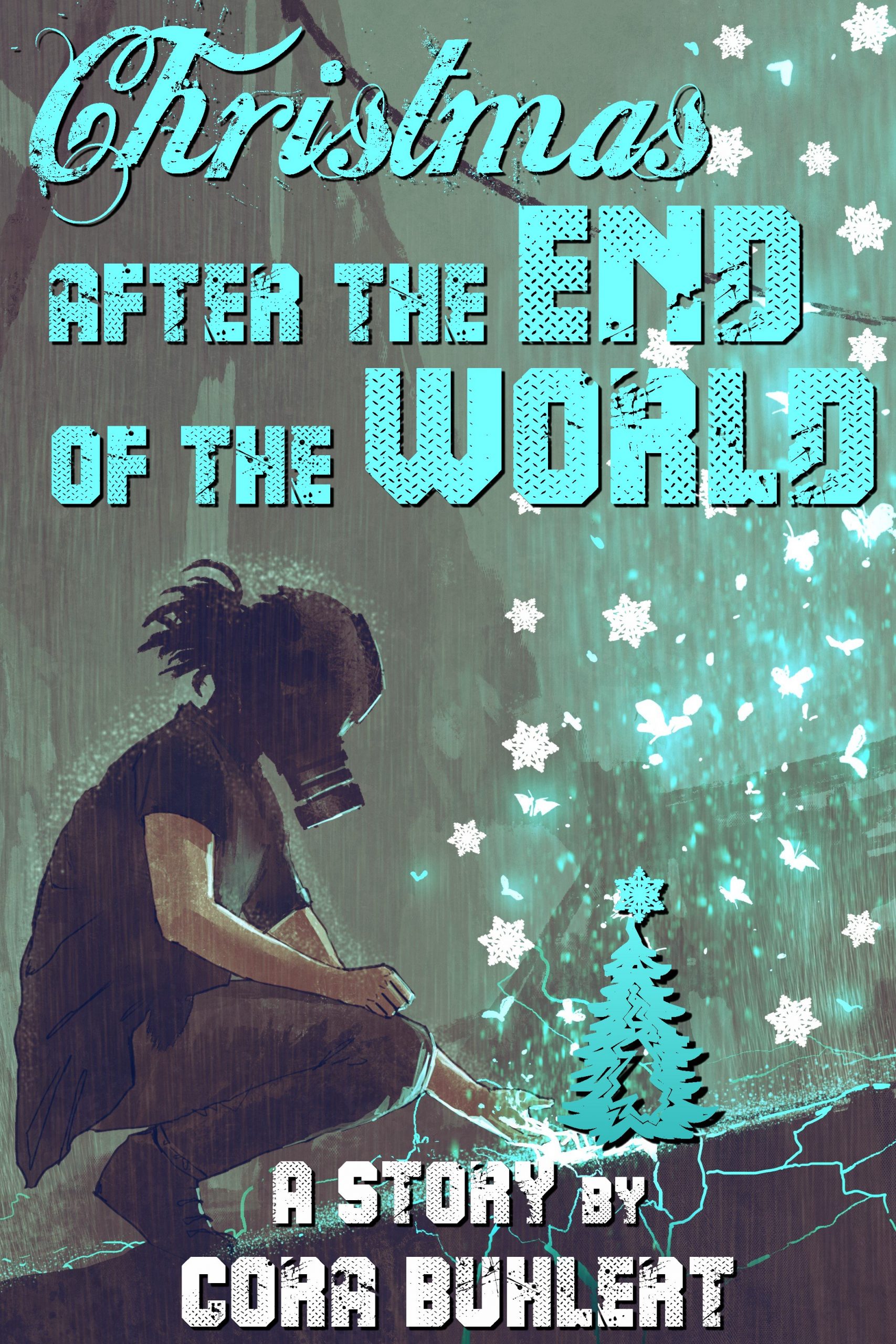 Christmas after the End of the World by Cora Buhlert
It’s Christmas… five months after the Yellowstone supervolcano erupted, blacked out the sun and covered most of the western US in ash.
Thirteen-year-old Natalie, her younger brother Liam, baby Olivia and family dog Bud are among the few still holding out in the evacuation zone.
Day to day survival is hard enough, but Natalie is determined to give Liam and Olivia an unforgettable Christmas… after the end of the world.
And who knows, maybe they’ll even get a true Christmas miracle…
This is a post-apocalyptic holiday novelette of 10000 words or approx. 35 print pages.
 The Bakery on Gloomland Street by Cora Buhlert:
A legendary monster threatens Christmas…
It’s Christmas time in the permanently fog-shrouded seaside town of Hallowind Cove, which is also known as the “Harbour of the Weird”.
Rachel Hammersmith is new to Hallowind Cove and has recently taken over the bakery on Gloomland Street, after Marie Percht, the previous owner, retired.
However, Marie Percht didn’t tell Rachel everything, when she retired. She didn’t mention the fog, for starters, and she also didn’t mention that her bakery plays a vital role during the Christmas season and not just as a provider of holiday cookies either.
For the Krampus, a yuletide monster from alpine folklore, is coming to Hallowind Cove. And the only thing that can keep him from wrecking the town and ruining Christmas are pastries baked according to a secret recipe. Unfortunately, Rachel has no idea what the recipe is.
However, with the help of fellow newcomer Paul MacQuarie, Rachel will bake up a storm to pacify Krampus and save Christmas.
[image error] The Tinsel-Free Christmas Tree: A Not Really SF Short Story by Cora Buhlert
Bertha and Alfred, married for twenty years, enjoy a truly science fictional life in the twenty-first century. But in spite of all the technological marvels surrounding them, an argument about how to decorate the Christmas tree escalates and threatens their marriage.
This parodistic piece is a mundane short story of 2900 words or approximately 12 print pages, written in the style of science fiction’s “golden age” of the 1940s and 1950s.
Frosted Croakies by Sam Cheever:
’Tis the season for great folly…walawalawalawalala…ribbit.
It’s Christmas time at Croakies. The tree is up. The stockings are hung. And Christmas tunes are turning the atmosphere jolly. After a tumultuous Samhain, I’ve found my chi again and I’m starting to enjoy the season of love and giving.
Yeah. You probably know how this is going to end.
When Sebille suggests I open the bookstore up to a small holiday party, I foolishly agree. How was I supposed to know that the hobgoblin would decide it would be fun to hide everybody’s stuff? Or that we’d be hit with a freak winter storm that confined everybody inside for the duration. Or that a “You’re me but who am I?” spell would be released inside the shop, switching everybody’s identities and creating general chaos and hysteria?
I could probably deal with all that if it weren’t for the fact that my friend, Lea…the one person who could possibly reverse the spell…was ensconced in SB the parrot, with no opposable thumbs for spelling.
And me? Of course, I’m sitting fat and squishy inside Mr. Slimy. Thank goodness Rustin isn’t currently in residence, or it would be really crowded in here.
Who spelled my party? What do a pair of Santa’s elves have to do with it? And why have old enemies suddenly become new friends? I apparently have a little holiday mystery to solve inside Croakies, and I have no idea how I’m going to solve it with everybody mixed up and some of us human.
Have I told you I hate this season?
Ribbit!
 Merry Chris Witch by C.K. Dawn:
Magic is real and dreams do come true. Be careful what you WITCH for.
Chris Heron is a witch who loathes the holiday season. What’s even worse is getting expelled from private coven school on Halloween and having to attend public magic school, where Santa’s son is visiting and has all the girls in a frenzy. Fairies, mermaids, elves, even the trolls are swooning over Kris Kringle Jr. All except for one girl, and she’s a North Pole mystery that has Chris intrigued. Will he be able to put his prejudices aside in time to see the true magic all around him?
 I Witch You a Merry Christmas by Snow Eden:
A heart-warming story about Christmas, elves, Santa Claus…and a really mad witch.
There are many things Cinnamon Mercy Claus is struggling with this holiday season: the memories of long forgotten holidays when the Christmas season was about family; that she’s just found out her grandfather is Santa Claus; and that her grandmother is a witch—who is bent on destroying Christmas for them all.
This is a 30,000-word novella with a dose of Hallmark warmth and crazy witch mayhem!
It is a ‘clean’ read with no cursing. Situations should be appropriate for all ages.
 Crimson Yuletide by Rachel Ford:
Autumn gone off to sleep
And winter her secrets no more keep
Rises he from the deep
Flesh to flay and flesh to eat
Twelve days of Christmas. Twelve days of terror and death.
An ancient evil prowls the quiet streets of Wixcombe. An old man is murdered in the town square. Children disappear in the night. Villagers report sightings of Krampus, the Christmas demon.
For siblings Nan and William Fitzgerald, the season began with a promise of new loves and Christmas magic. But they find themselves in the eye of the storm when their godfather becomes the prime suspect in the killings.
To protect both the women they love and their village, the siblings must discover Krampus’ true identity. But they might not like the answers they find…
[image error] Carrie Hatchett’s Christmas by J.J. Green:
It’s Christmas! The alien invasion has begun.
Carrie Hatchett’s hoping for a quiet Christmas. She’s got five times as much food as she needs, and she’s made a catnip surprise and a dogfood cake for her pets.
But there’s no rest for Carrie.
An ancient race seems intent on invading Earth. As a Transgalactic Intercultural Community Crisis Liaison Officer, Carrie’s duty-bound to respond to the threat.
The aliens have been spotted at Santa’s Grotto and in a pantomime. Will Carrie find them in time and send them packing before they ruin everyone’s Christmas?
Carrie Hatchett’s Christmas is a standalone novelette in the comedy sci-fi romp Carrie Hatchett, Space Adventurer.
Follow Carrie on her adventures today.
 Bringing Christmas to the Dragons by Rinelle Grey:
She may not be a dragon, but it was her humanity they needed right now.
With time running out before his clan’s prince is discovered by mining or killed by enemy dragons, dragon shifter Jayrian needs to convince the elders to accept help from the humans. He hopes that the clever librarian, Gretchen, might be able to help him with that. He didn’t count on falling for her—that wasn’t part of his plan at all.
Gretchen longs for adventure outside of the books she reads in her job as a small town librarian. But not the kind that involves her moving to the big city to take the promotion her Aunt Mary offers. The cute guy who’s been hanging around the library seems far more exciting—there’s just something about him that draws her—so on impulse, she invites him to her family’s Christmas celebration. When a dragon lands on the front of her car on the way there, she wonders if she’s gotten more than she bargained for.
Together they must find a way to save his prince and clan, without sacrificing who they are, or their budding relationship.
 Angels and Amulets by Nicole Grotepas:
If there’s a way to spoil something, the villains of the 6 Moons will find it.
There’s no rest for the weary. Just when Holly Drake takes a break from searching for more information about her father, a Christmas-related heirloom vanishes. Sure, it’s Christmas on the 6-Moons, but Holly can’t relax. Neither can her team.
Fate forces them to give up their cozy fires, mulled drinks, and holiday feasts to race across the harsh volcanic terrain of the planet Kota to win back the prize before it’s destroyed. If they can’t save the heirloom, the already strained diplomatic relations between humans and the Centau will snap.
If they don’t save Christmas, who will?
Angels and Amulets is a Christmas novella set in the 6 Moons universe.
 Meet Douglas Fir by Kyndra Hatch:
People put objects on trees? As a holiday tradition? The singing tree creature is a threat that needs to be eradicated.
Being human isn’t easy with robotic alien residents misunderstanding the simple stuff. Alex can’t imagine his family life without Bazin and Miaxa, though. Time to show them Christmas holiday traditions, preferably without space aliens blowing things up.
 How Aunt Tillie Stole Christmas by Amanda M. Lee:
Fourteen years ago, Christmas hit Walkerville with a bang. Or, rather, a big ball of fire.
When a local group home for orphaned children goes up in smoke right before the holidays, Tillie Winchester volunteers her family to take in some kids – even though her arch nemesis Margaret Little is dead-set against it. Of course, that’s part of the appeal for Tillie so she’s considering it a win.
Three boys – all of them with a little attitude – have no idea what to expect from the Winchester household. No matter what, Tillie is sure they’re about to get more than they bargained for. In short order, they’re welcomed into the family at the same time the town is on edge due to a second fire.
Tillie is determined to prove the boys are innocent while also finding them a forever home … even if she has to take on a local judge and declare all out war to do it.
So, hang your stockings by the fire and sit back for another Christmas with the Winchesters. You’ll never be the same again.
Note: This is a 28,000-word novella set in the Wicked Witches of the Midwest world. It’s set back in the past so it can be read in any order.
 Fur-miliar Felines by Harper Lin:
Three witches and their magical cats solve paranormal murder cases in the mystical town of Wonder Falls.
It’s Christmastime, but something strange and sinister is in the air. Treacle, Cath’s courageous black cat, can’t see what it is, but he feels a dangerous presence out there in the snow-blanketed streets.
Aunt Astrid also feels dark ripples in the dimensions. The Greenstone witches suspect this creature is somehow tied to the disappearance of two high school students. Soon, one of them turns up dead, half-eaten.
The holiday spirit is in full effect in Wonder Falls, but so is a puzzling and gruesome murder mystery.
 A Mind Reader’s Christmas by Al Macy:
Eric Beckman, a mind-reading private investigator, is spending Christmas in snowy Vermont with his wife and daughter. He needs a break from solving cases, but the townspeople convince him to look into the village mystery: Every holiday season, someone switches the baby Jesus with one of the other figures in the town’s Nativity scene.
With the help of his ten-year-old daughter, also a mind reader, he soon learns that some of the residents of the small town are not who–or even what–they seem to be. There’s something supernatural going on in Newburn, Vermont.
His investigation causes an escalation of strange happenings, and soon, swapped manger figures are the least of the town’s worries. If Beckman can’t adjust his view of the world–force himself to believe in things he never thought possible–the Christmas vacation could turn out to be his family’s last.
A Mind Reader’s Christmas may be read as a standalone book or as Book Four in the Eric Beckman series.
[image error] The Santa Claus of Mystic Springs by Mona Marple:
What if Father Christmas is on the naughty list?
It’s beginning to look a lot like Christmas in Mystic Springs, but all is not still or calm with the department store Santa.
The amateur dramatics club is full of big egos and legends-in-their-own-heads, so their spats aren’t unusual. But when the theatre owner is shot dead during the Christmas play, it’s Santa who pulls the trigger.
With the arrival of an unwelcome ex, a petition to end Discrimination Against Spirits, and a second attack by St Nick, the chances of a quiet Christmas seem to be quickly disappearing.
Has Santa really gone bad? Or is there more to it?
Town medium Connie and her dead sister Sage are both avoiding their own festive conundrums. A mistletoe murder is just the distraction they need.
 In Time for Christmas by Monique Martin:
At a time when interest in the Christmas holiday was waning, Charles Dickens wrote A Christmas Carol and inspired the world.
But now, history is changing, and the book is never written. When the Council for Temporal Studies asks time travelers Simon and Elizabeth Cross to “save Christmas,” they think he’s joking.
But it’s anything but a laughing matter. Simon and Elizabeth must go back to 1843 London and convince Dickens to write his endearing story, or the Christmas holiday we all know and love will cease to be–forever.
 Christmas in New York by Monique Martin:
Time-Traveling adventurers Simon and Elizabeth Cross return in an all-new Christmas novella!
Along with their young daughter, Charlotte, the Crosses travel back to 1937 New York City to visit an old friend, Charlie Blue. But Charlie’s in trouble — holiday-sized trouble — and their plans for a pleasant little Christmas vacation soon fly out the window.
Christmas in New York is the fast-paced and heartwarming tale of the true meaning of Christmas — and the importance of the people we share it with.
 Christmas in Silver Birch Valley by Lorri Moulton:
A small town has held on to their traditions and celebrates Christmas as if it were 100 years ago…which reporter Jake Logan finds surprisingly charming, but wonders if it’s too good to be true.
Jake has traveled the world but never really felt at home, until he spends time in a town that has its own unique way of celebrating the holidays. The longer he stays, the more he comes to like the town, the people, and one charming B&B owner in particular.
Lorna Sullivan has never met anyone like Jake, but she knows tourists don’t stay once the holidays are over. The more time she spends with Jake, the easier it is to wonder if this could be different…but there are secrets in every town and this one could destroy their chance at happiness.
 Not His Christmas by Annie Nicholas:
It’s Eoin and Angie’s first Christmas together and he wants to make it special. But his dragoness is lacking holiday spirit and doesn’t want anything to do with celebrating. Does Angie think Eoin is the type of dragon who could ignore her unhappiness? Clipping on his jingle bells and grabbing the mistletoe, Eoin is on a mission.
 Snowed in with the Alien Dragon by Sonia Nova
A Christmas without warmth…
Rachel hates her life in Alaska. She hates the weather, but even more, she hates her job which requires her to stay in the sodden state even for the holidays! Instead of going to visit her family in sunny California, she will be spending the holidays alone in the cold north. But when she encounters an unconscious, golden alien on the way home from work – amidst a massive snowstorm to top it all off – it looks like the holidays might not end up as boring as she’d thought after all!
A dragon paralyzed by cold…
Captain Erro of Traag never thought to go down in a battle. Even less did he think to find his mate on the surface of the planet he crashes on! Trapped in the planet’s frozen wasteland, Erro can hardly function in the cold climate. He’s a dragon, for heaven’s sake! He needs some heat! And yet, despite the icy weather seeping into his bones, every time the strangely beautiful alien female smiles at him, his inner flame burns stronger than ever. She is his mate, there is no question about that.
Now, if only he could understand what the hell she was saying…
Snowed in with the Alien Dragon is a standalone sci-fi romance novella with a scorching hot dragon, a HEA and no cliffhangers. Intended for mature audiences only.
[image error] When Birdie Babysat Spider: A Jayne Frost Short Story by Kristen Painter:
Welcome to Nocturne Falls, the town that celebrates Halloween 365 days a year.
Jayne Frost is a lot of things. Winter elf, Jack Frost’s daughter, Santa Claus’s niece, heir to the Winter Throne and now…private investigator. Sort of.
But none of that matters at the moment, because Jayne is headed back to the North Pole to visit her family, and leaving everyone’s favorite werewolf, Birdie Caruthers, to watch her cat, Spider.
With the heartfelt promise that all will be well, Birdie follows Jayne’s instructions to the letter. Unfortunately, that doesn’t stop Spider from getting into trouble.
It takes the help of a gentlemen friend (and a few others), for Birdie to make things right again. But not before her love life takes a very interesting turn…
 The Krampus Hunters by J.P. Reedman:
Krampus, haunter of the dark winter’s nights before Yule, comes bearing a switch to beat ‘bad children’…
Young Snoefrith, daughter of the Erl-King, leaves her homeland on a quest to find her lost mother…and a life. As she travels in wild, unfamiliar lands, she is accosted by Old Nickor, a red-robed goblin who flies the wintry skies in a sleigh pulled by coal-black deer, and his bestial companion, Krampus. Nickor sets Krampus upon Snowfrith, seeking to capture her to sell to the Kobold King who dwells under the mountains.
Rescued by Red Roo, a feisty girl who is the best archer in the Wandron tribe, Snoefrith believes she is now safe.
But Krampus is determined to capture his prey and please his master, Nickor. Under cover of darkness, he destroys the Wandron’s caravans and sends Snoefrith and Red Roo fleeing into the forest and beyond.
Soon they learn that they cannot flee forever.
The hunted must become the hunters….
KRAMPUS HUNTERS
A short fantasy novelette for all ages, 15,000 words.
 Joyeux: A Musketeer Space Novella by Tansy Rayner Roberts
There’s mistletoe growing out of the walls, it’s snowing inside the space station, and a sex scandal is brewing that could bring down the monarchy. Must be Joyeux!
Joyeux on Paris Satellite is a seven day festival of drunken bets, poor decision-making, religious contemplation and tinsel. But mostly, poor decision-making. Athos and Porthos aren’t going to sleep together. Aramis is breaking up with her girlfriend because it’s that or marry her. Athos is not ready to deal with the ghost of his ex-husband. Oh, and no one wants Prince Alek to break his marriage contract by hooking up with a sexy Ambassador…
It’s down to the Musketeers and the Red Guard to save the space station and the solar system from disaster. So… that’s not going to end well.
This novella is a festive prequel to Musketeer Space, a genderflipped space opera retelling of The Three Musketeers by Alexandre Dumas.
 Created for Christmas by Joynell Schultz:
Need the perfect man? No problem—simply create him!
Ivy wanted nothing more for Christmas than to have someone to come home to…to have a companion to chat about her day with, and someone to show off at her family holiday celebrations.
This Christmas, she’s not going to be alone! Ivy decides to create her perfect companion at Dream Droids, the premier robotics company specializing in sentient humanoids. Ivy spends weeks with Dr. Pierce, creating her dream man, from his appearance, personality, and even his knowledge of her life.
There’s just a few problems: when a special gift she purchased for her father goes missing, and Dr. Pierce agrees to help her find it, she finds herself falling for him. After getting her heart stomped on by her ex-fiancé, there’s no way she can open it up again…besides, she just created the perfect man.
 Jingle Starr by Jenny Schwartz:
When a starship decides to play Santa Claus…
Ahab is a mLa’an artificial intelligence embedded in the starship, Orion.
The campaign for AIs to be recognized as full citizens of Galaxy Proper is within reach of its extraordinary goal. The only thing that could stop it now is if an AI did something foolish…like take a space station hostage to save eight orphaned children.
***
And this is the letter to Santa that starts it all:
Dear Santa
I don’t know if yourreindeers work in space. But if you have room in your sleigh after you finishdelivering presents to the lucky kids with parents and homes, can you come and getme and my friends? Please?
We’ve been good. Well,we haven’t been really bad. We’re on Station Elphame, in the junkyard, and Zoeis sick. She’s bad sick. I think she’d be better on a planet. We don’t needpresents. We just need a way out of here. Ollie tried to sneak onto atrampship…he died.
Please, Santa, I don’twant any more of my friends to die.
Aiden.
 Elves and Deer by Hollis Shiloh:
Greer is a reindeer shifter working at a magical shipping hub up North. He has little use for or understanding of elves—such delicate, short-lived creatures—but he tries to do his best by the ones in his life. And it seems like more and more are coming into his life, confusing and frustrating him, needing help, needing rescued.
Since Greer is always busy, it’s easy to overlook the things he doesn’t want to acknowledge—until a terrible danger gives him unwanted time to think…and to realize there’s just one elf who means more to him than he’s ever wanted to admit.
A Christmas tale
38,000 words
Heat level: very low
All I Want for Christmas is Wicked by Lotta Smith:
Trees decorated, stockings full of presents, and another case to crack!
The Rowling family is gearing up for another Merry Christmas, and Mandy has her hands full with holiday prep, but how can she get into the spirit of the season when the victim in her latest case isn’t a ghost?
Twenty years ago, during a Christmas Eve blackout, Kevin Holt, the husband of a rich heiress, lost his memory in a fall down the stairs of their mansion. Now he’s discovered evidence that someone might have been trying to kill him, and all he wants for Christmas is to find out who. Since the resident ghost of the Holt house didn’t witness the attack, Rick and Mandy will have to rely on old fashioned sleuthing (and a little help from Mandy’s paranormal pal Jackie) to find out which of the four suspects is the culprit.
Meanwhile Rick has been saddled with novice investigator Cameron Gibson (call him Ace!) the son of one of USCAB’s wealthiest clients. Ace is trying to catch the creep stalking a New York City fashion model, but despite wanting Mandy to mentor him, one ghostly encounter has him seriously spooked.
A run in with a biker ghost and dancers in danger complicate the case, but the big question on Mandy’s mind is why does little Sophie want a bear trap for Christmas? Find out in this wickedly merry holiday installment of the Paranormal in Manhattan Mystery Series.
[image error] Blood and Mistletoe by E.J. Stevens:
Holidays are worse than a full moon for making people crazy. In Harborsmouth, where many of the residents are undead vampires or monstrous fae, the combination may prove deadly.
Ivy Granger, psychic private investigator, returns to the streets of Harborsmouth in this addition to the bestselling urban fantasy series.
Holidays are Hell, a point driven home when a certain demon attorney returns with information regarding a series of bloody murders. Five Harborsmouth residents have been killed and every victim has one thing in common–they are fae. Whoever is killing faeries must be stopped, but they only leave one clue behind–a piece of mistletoe floating in a pool of the victim’s blood.
The holidays just got interesting. Too bad this case may drive Ivy mad before the New Year. Heck, she’ll be lucky to survive Christmas.
 Cloaked in Christmas by T.F. Walsh:
After fleeing her abusive ex, wulfkin Cacey Varg and her daughter settle happily with a new pack in Finland. As Christmas approaches, Cacey learns her ex has found them and is on his way to take their daughter back. But a massive snowstorm prevents her from packing up and leaving town – and instead delivers a sexy stranger to her doorstep. Can she trust that he isn’t one of her ex’s henchmen?
Second-in-command to Europe’s most powerful wulfkin, hunter Vincent Lyall’s spur-of-the-moment decision to check on his ailing mother soon finds him marooned at a cabin in the woods by the blizzard of the century. Trapped with this spirited vixen, resisting temptation is easier said than done . . . But she refuses to believe he is who he says he is.
Is love powerful enough to win when two sexy wolf shifters, an unwelcome past, and animalistic urges wreak havoc on the holiday season?
Sensuality Level: Sensual
[image error] A Most Apocalyptic Christmas by Phil Williams:
On the night before Christmas, mercenary Scullion’s ride home is ambushed halfway between the last surviving cities in America. Concerned only with getting drunk for the holiday, his attempts to abandon his fellow passengers to bandits lead him on a collision course with a barbaric community who have utterly distorted the seasonal spirit. This is one madcap night he cannot survive alone, challenging his perceptions of the meaning of Christmas.
A Most Apocalyptic Christmas is a near-future dystopian novella, set in a war-ravaged land where chaotic city states are all that are left of once powerful countries. Born fighters like the thug Scullion are the predominant survivors in this desolate world devoid of resources, comforts and hope.
This is a Faergrowe Free State novella, set in the same world of the screenplay The Faergrowe Principle.
[image error] Elixirs and Elves by Astoria Wright:
The elves of Mount Vale are throwing a Christmas Party, and they’ve invited everyone! While the human residents of Moss Hill are excited to attend, many of the sidhe find the invitation beneath them. It’s no secret that they dislike mingling with non-faeries, but are they so hostile toward humans that one of them would commit murder? Carissa has never gotten along with the sidhe guard, but Varick of Vale has helped her on occasion. So, when he asks for her help after suspicion falls on him, it’s up to her to prove his innocence – if, that is, he isn’t guilty after all.
Send to Kindle
December 20, 2019
The Nativity, Rendered in Playmobil
It’s been a long time, since I had a nativity scene for the holidays – unless you count glass figurines depicting Jesus, Mary and Joseph. However, my issue is that the woodcarved nativity scenes I like are hugely expensive and that the plastic ones pretending to be wood just don’t look very nice.
This Monday, I chanced to walk into a toy store in Oldenburg that had a “going out of business” sale. And as I browsed the store, I noticed that they had a Playmobil nativity scene and the matching Three Wise Men set at a highly reduced price. And since I like Playmobil figures and have a small collection, I decided to buy it.
When I set up the nativity scene at home, I noticed that it was missing a shepherd and his flock. But that shouldn’t be a huge problem, since Playmobil has lots of sets featuring farm animals and wild animals and the people who care for them. So I checked out the local stores that carry Playmobil toys, only to find that while there were a lot of sets featuring horses and dogs and even a mini-zoo, there was no shepherd (though there had been one in the past) and no sheep except as part of the big farmhouse set.
Eventually, I got lucky and found something that will work. Of course, the shepherds are women and children now and some of them wear dirndl and lederhosen (the Playmobil manufacturer Geobra Brandstätter is headquartered in Bavaria), which are not exactly attire found in Palestine more than 2000 years ago, but then nativity scenes inevitably are fantasies that have little connection to historical reality anyway. For example, the elaborate Christmas mountain nativity scenes from the Erzgebirge region (here is the Crottendorf Christmas mountain and here is the Niederwürschnitz Christmas mountain) always include miners, who used to be very common in the Erzgebirge 100 years ago and not at all common in Palestine 2000 years ago. Also, it’s very unlikely that Mary, Joseph and Jesus were as pale-skinned and light-haired as they’re often depicted. Though Playmobil at least made Mary and Joseph dark-haired.
My shepherds have a variety of different farm animals now, including two sheep. I also dug into my collection of Playmobil stuff and added some rabbits, a family of cats and even a little dog. I’m really happy with the result and I also like the idea of the “shepherds” being farm women and their kids who deliver much more practical gifts than the three wise men. One of the farm women even came with a baby bottle (to feed a lamb), which Mary now holds in her hand.
So take a look at my incredibly cute and absolutely not historically accurate nativity scene. The star even lights up, courtesy of two batteries.
[image error]
Playmobil nativity scene
Send to Kindle
December 11, 2019
The Women Science Fiction Fans Don’t See
Today, I’m over at Galactic Journey again, where I review the 1964 science fiction books Message from the Eocene and Three World of Futurity, both by Margaret St. Clair as part of the December Galactoscope. Furthermore, our editor Gideon Marcus also reviews The Greks Bring Gifts (not a typo) by Murray Leinster, The Arsenal of Miracles by Gardner F. Fox and Endless Shadow by John Brunner, all of which sound more promising than they evidently were. Meanwhile, I hit the jackpot, because I got to review two excellent books.
Margaret St. Clair is one of several women science fiction writers from the Golden and Silver Age who have sadly fallen into the cracks of genre history. From that era, the only women authors who are still widely remembered and reprinted today are Leigh Brackett, C.L. Moore and Andre Norton – everybody else is more or less obscure. Furthermore, Brackett and Moore have undergone something of a rediscovery in recent times – at any rate I remember a time in the late 1980s/early 1990s when their work was out of print and very hard to find. It’s also notable that while Brackett and Moore have done well in recent Retro Hugo Awards, they were almost completely ignored in the Retro Hugo Awards given out in the 1990s, in spite of having eligible works that are often better than what actually made the ballot. As for Andre Norton, the reason she is still remembered fairly well is because she was so very prolific and because much her work was aimed at young readers, so her books were a gateway into science fiction for many fans.
Margaret St. Clair was about the same age as Brackett, Moore and Norton. She debuted several years after Brackett and Moore, around the same time as Norton, but is much less remembered today. I knew her mainly as the author of the Wiccan-influenced Sign of the Labrys (Margaret St. Clair and her husband were both Quakers and Wiccan, which is certainly an interesting combination), but hadn’t read anything by her otherwise. Which is a pity, because – at least based on the sample of her work I’ve read – Margaret St. Clair was really, really good and a lot more versatile than just writing Wiccan inspired fantasy.
Of the two books I reviewed, the novel Message from the Eocene is very trippy, very 1960s and very good. It literally spans billions of years, the main protagonist is a disembodied alien spirit with massive communication issues, who eventually helps to usher in the Age of Aquarius. That’s not all, the novel also is at turns a Hal Clement style “truly alien aliens in an alien environment” story, a Victorian ghost story, a galactic suburbia style science fiction tale which attempts to grapple with the consequences of colonialism and even contains a bonus comment on the Vietnam War, which was just heating up as the story was written, and a mid 1960s space exploration story in which a multinational, Iron Curtain overcoming spaceship crew finds something amazing during the second mission to Venus. And Margaret St. Clair manages to pack all this and more into a short novel (114 mass market paperback pages) by modern standards. In fact, Message from the Eocene was so good that I wondered, “How the hell did this not even make the 1965 Hugo shortlist, especially since it’s much better than the book that eventually won?”
The second half of this Ace Double is a collection of short stories, originally published between 1949 and 1962, which really showcase the breadth and versatility of Margaret St. Clair’s work. Two are galactic suburbia stories, a term I couldn’t use over at Galactic Journey, because Joanna Russ only coined it in 1970, even though it is perfect to describe a certain type of domestic science fiction, often sharply satirical, occasionally dystopian or tragic, that usually focusses on the travails of typical suburban American mid century couples or families in a very mid century vision of the future and that was mostly, though not exclusively, written by women. Joanna Russ’ use of the term is perjorative, but that’s unfair, because I have read some very fine galactic suburbia stories. Yes, they are very much artefacts of their time – literally Mad Men era science fiction – but they are usually critical of the suburban middle class mid century lifestyle and sometimes downright subversive. One of the stories, “The Rages” mixes galactic suburbia science fiction with the consumerist dystopias of Brave New World and Fahrenheit 451. “The Rages” also casually predicts the hormonal birth control pill, but that isn’t such a remarkably feat considering that the pill was already in development when the story came out in 1954, though it would not become available to the general public until 1960. Coincidentally, “The Rages” is also where Equilibrium, the 2002 dystopian movie which borrowed from every dystopian novel it could find and added good martial arts choreography and a fine performance by Christian Bale, stole the bit with the mandatory behaviour modifying drugs from. Well, I guess it was too much to expect that a movie as derivative as Equilibrium contains a single original idea.
Another story “The Island of the Hands” is very much Leigh Brackett type planetary romance adventure and in fact so reminiscent of the slightly earlier Leigh Brackett story “The Moon That Vanished” that I’m pretty sure Margaret St. Clair must have known the story, if she didn’t know Brackett personally. They both lived in California, after all. And then there is a story (“The Everlasting Food”) which mixes Leigh Brackett style planetary romance and galactic suburbia science fiction, a subgenre combination I haven’t sene before. Even Leigh Brackett wrote straight galactic suburbia science fiction in the few instances that she did (“The Tweener” is probably the best known), but did not mix both styles.
Finally, there are two truly remarkable stories, if for very different reasons. One story, “Idris’ Pig” is pretty much a screwball comedy set on Mars. It’s delightful, hilarious and – as I wrote over at Galactic Journey – pretty much Bringing Up Baby on Mars, with a blueskinned and sacred Martian pig instead of a lost dinosaur bone. Now the funny side of the Golden Age is often forgotten today, partly because the humor is badly dated and partly because science fiction is a serious genre, dammit, and we will have no laughs here, unless written by Douglas Adams. But while I have read quite a few examples of funny Golden Age science fiction, none of them were as charming and delightful as “Idris’ Pig”. So why is this story not the beloved classic it deserves to be?
The other remarkable story in this collection is “Roberta”. It is a science fiction story with a transwoman protagonist – from 1962! And it is not one of those magical/semi-magical sex change stories that occasionally pop up during the Golden Age – no, the titular character has had sex reassignment surgery, though I could not use that term over at Galactic Journey, because it didn’t yet exist in 1964. Of course, sex reassignment surgery was hardly science fiction even back in 1962, but had been science fact for more than thirty years at that point. It wasn’t even that taboo a subject in popular culture – Ed Wood’s Glen or Glenda came out in 1953, nine years before “Roberta”. But it was not a subject science fiction chose to tackle at the time. But while “Roberta” was a clearly pioneering story (the word “abortion” is even uttered on the page and implied to be a regular and not very bad occurrence, which is something that is rare even today), it is also highly problematic, because the transwoman protagonist is also mentally ill and tends to kill random men (to be fair, they were arseholes). Joachim Boaz is unsure what the make of the portrayal in his review of Three Worlds of Futurity and Rich Horton, who reviewed the same Ace Double here, found the story transphobic. He is correct, for viewed through a modern lens, it absolutely is.
However, one of the issues with older science fiction (and indeed any older fiction) that tries to be more progressive than what was common at the time and features marginalised people that were rarely depicted elsewhere is that quite often, the results are badly stereotyped and sometimes downright offensive to modern readers, even if it is clear that the story was well intentioned. You can see this at several points in this Ace Double. For example, the parts of Message from the Eocene that are clearly critical of colonialism and state that the anger of the colonised at their colonisers is justified nonetheless manage to present the colonised people the narrative clearly sympathises with as superstitious and backwards and in need of a white, if not American saviour. Early attempts to address issues that are either taboo or rarely discussed often tend to be offensive – see how badly Dynasty handled Steven Carrington, one of the first gay characters in mainstream television. Maybe the first writers to address a subject that hasn’t been talked about before need to seek out every pitfall and put their foot in it first, before those that can come after can do better. And that process can take a long time.
So even if the magical sex change stories of the golden age and later works like Glen or Glenda (I’m sort of coopting it for SFF here) or “Roberta” are offensive to modern readers, they remind us that trans people (and women, people of colour and LGBTQ people in general) were always there, always a part of our genre and did not simply fall from the sky in approximately 2010.
Message from the Eocene and Three Worlds of Futurity were both huge and pleasant surprises for me and make me all the more sad that Margaret St. Clair isn’t better remembered. Of her three better women SFF writer contemporaries, Andre Norton was named an SFWA grandmaster, C.L. Moore was offered grandmaster status, but her husband declined on her behalf and Leigh Brackett died too early. Maragret St. Clair lived until 1995. She never became an SFWA grandmaster, though at least some of her works are in print (again).
Send to Kindle
December 8, 2019
Two new In Love and War stories and a new Thurvok story
It’s another commercial break of sorts, because I have not one but three new releases to announce. One of them is even a short novel. In fact, I’d hoped to announce those new releases before, but one vendor (24symbols – cough) was really dragging their feet to get the books up.
Let’s start with the two new In Love and War stories.
Mementos and Memories is another story to come out of the 2019 July short story challenge. The inspiration for this story was was the backcover blurb of a Jack Reacher novel, The Midnight Line by Lee Child, of all things. According to the blurb, Jack Reacher spots a West Point class ring in the window of a pawn shop and sets out to locate the owner, because no one would ever willingly give up such a ring. When I read the blurb, I thought, “Wow, this would be a great plot for an In Love and War story.” So I sent Mikhail and Anjali shopping in an intriguing environment and had them come across a Shakyri dagger.
Now I haven’t read The Midnight Line (I’m way behind on the Jack Reacher series), so I have no idea where Lee Child took his story. According to the summary, it involves the opoid crisis. Knowing the Jack Reacher series, I suspect there will be quite a lot of action and violence. That said, I’m pretty sure that Anjali and Mikhail would get along just swimmingly with Jack Reacher, should they ever find themselves in the same universe.
I sometimes call the In Love and War series cozy space opera and Mementos and Memories definitely falls onto the cozier end of the series. For following the trail of the dagger leads Anjali and Mikhail to a sweet elderly couple and a decades old tale of forbidden love. Because in an eighty-eight year war (actually, eighty-nine years by now), it’s kind of obvious that Anjali and Mikhail can hardly be the first to fall in love across the lines.
So follow along, as Anjali and Mikhail investigate…
Mementos and Memories
[image error]Once, Anjali Patel and Mikhail Grikov were soldiers on opposing sides of an intergalactic war. They met, fell in love and decided to go on the run together.
Now Anjali and Mikhail are trying to eke out a living on the independent worlds of the galactic rim, while attempting to stay under the radar of those pursuing them.
At a market on the tropical ocean world of Sentosa, Anjali and Mikhail come across a dagger for sale. This dagger is the signature weapon of the Imperial Shakyri Corps, and Anjali knows that no Shakyri warrior would ever willingly part with their dagger. So Anjali and Mikhail go in search of the lawful owner of the dagger and come across a long forgotten tale of forbidden love…
This is a story of 7300 words or approximately 25 print pages in the In Love and War series, but may be read as a standalone.
More information.
Length: 7300 words
List price: 0.99 USD, EUR or GBP
Buy it at Amazon US, Amazon UK, Amazon Germany, Amazon France, Amazon Netherlands, Amazon Spain, Amazon Italy, Amazon Canada, Amazon Australia, Amazon Brazil, Amazon Japan, Amazon India, Amazon Mexico, Kobo, Barnes & Noble, Apple iTunes, Google Play, Scribd, Smashwords, Thalia, Weltbild, Hugendubel, Buecher.de, DriveThruFiction, Casa del Libro, e-Sentral, 24symbols and XinXii.
If Mementos and Memories sits on the cozy end of the In Love and War series, Honourable Enemies sits on the opposite end, since it’s grimmer, grittier and has a lot more action. And gladiator fights in space, because who doesn’t love gladiator fights in space? Though there is also a food scene, because it wouldn’t be an In Love and War story without a food scene.
The basic idea behind Honourable Enemies was “What if Anjali and Mikhail were forced to work together with their greatest enemy, Mikhail’s former commander Colonel Brian Mayhew of the Republican Special Commando Forces?”
Now Brian Mayhew was initially conceived as as a rather one-dimensional antagonist whose only purpose it was to hunt down Anjali and Mikhail, a task he was very zealous about. You can see this version of Brian Mayhew in action in Bullet Holes and also in Freedom’s Horizon to a certain degree.
However, one day I was musing about the overall arc of the In Love and War series, particularly about a later novel in the series and something Mayhew does in that novel. I can’t say what exactly, because that would be a spoiler, but let’s just say it’s something pretty awful.
And suddenly, I heard Brian Mayhew’s booming voice in my head (yes, my characters talk to me on occasion), saying, “I wouldn’t do that. What do you take me for? I’m not a villain and I’m certainly not a monster.”
“Ahem, actually you are a villain,” I pointed out. “Or how do you explain all this?” And then I listed a lot of questionable to downright villainous things he had done.
“Well, about that…” Mayhew said and gave me a variation of the “It’s a dirty job, but someone’s got to do it and besides, I was just following orders” monologue.
I listened to all that and finally said, “All right, so let’s assume for a moment that you’re not a villain. Nonetheless, you’ve manoeuvred yourself into a situation where you have to do something awful. And you really can’t tell me you didn’t see that coming. So if you’re not a villain, what are you going to do about it?”
So he told me. And I suddenly realised just who this character was, namely the grizzled maverick space captain who is the hero of so many traditional space operas, turned reluctant villain. He became a lot more interesting as a character after that.
In the prequel novella Evacuation Order, we get see an unambiguously heroic Brian Mayhew before he joined the Special Commando Forces and also learn just why there is such a strong connection between him and Mikhail. There’s a little bit about Mayhew’s ongoing conflict with the Santerna brothers in that story, too.
And in Honourable Enemies, we finally learn what it takes to make Mayhew act against orders and go AWOL, ironically the very same offenses for which he persecutes Mikhail and Anjali so very mercilessly. A lot of the novel is told from his point of view, so we get a lot more insight into who Brian Mayhew is and what makes him tick. We also get to see Brian Mayhew in hero mode once more (even Anjali has to admit that) and we get the first hint that Mayhew is no more happy with the things he’s forced to do for the greater good than Mikhail.
Another strong influence on Honourable Enemies were the Italian sword and sandal epics that filled the airwaves when I was a kid. Now I grew up in the era of only three TV channels, which mostly focussed on wholesome and educational programming and felt that even Porky Pig of all things was too violent. However, for reasons best known to themselves, these wholesome and educational channels would broadcast Italian sword and sandal movies, which were anything but and a lot more violent than Porky Pig, too, on Sunday afternoons.
Those 1960s sword and sandal films were one of the most exciting things on TV in those days, featuring attractive women with fabulous hairstyles, scantily clad muscular men I found oddly pleasant to look at (there is a reason Arena fighters have to wear synth-leather shorts in the novel) and danger, death traps and narrow escapes galore. And at the climax, there was always a huge fight in the Arena, where the hero, his lover and all their friends were about to be executed and yet triumphed against all odds over wild beasts, enemy gladiators and death traps (unless it was a Hollywood attempt at a sword and sandal film, where everybody would die in the end and ascend to heaven singing Christian hymns).
I loved those movies and like anything you consume during an impressionable age, they left their mark on me and eventually found their way into my writing. And so I not only wrote a space gladiator novel, but I also named the world and many of its people after characters and actors from vintage sword and sandal films.
Maciste is the hero of a long-running series of sword and sandal movies that goes all the way back to the silent era. Maciste first appeared in 1914 in a historical epic called Cabiria, which was written by none other than Gabriele D’Annunzio himself. Cabiria eventually became the name of the capital of Maciste. The actor who portrayed the character of Maciste in all his silent film appearances was named Bartolomeo Pangano and was a dockworker before his film career. I borrowed his name for the Arena champion (who also used to be a dockworker before his gladiator career). And in fact, all Arena fighters are named after actors who played Maciste in various movies.
So follow along as Anjali and Mikhail are forced to work with their greatest enemy, Colonel Brian Mayhew of the Special Commando Forces, and have to face certain death in the Great Arena of Maciste in…
Honourable Enemies
[image error]Once, Colonel Brian Mayhew was the deputy commander of the Republican Special Commando Forces. But now he’s gone AWOL to take out crime lord Rick Santerna, the man who murdered his family.
Mayhew’s quest for vengeance brings him to the rim world of Maciste, where he runs into his former protégé Mikhail Grikov, now wanted as a traitor and deserter for eloping with enemy soldier Anjali Patel.
Mayhew knows that it’s his duty to bring in Mikhail and Anjali. But with Santerna hot his tail, he finds that he needs their help.
Mikhail and Anjali know that Brian Mayhew is a threat to their freedom and their new life together. But now they are faced with a hard choice. Should they risk their lives to help a man who could condemn them both to death or should they let Mayhew die in the Great Arena of Maciste?
More information.
Length: 57000 words
List price: 3.99 USD, EUR or 2.99 GBP
Buy it at Amazon US, Amazon UK, Amazon Germany, Amazon France, Amazon Netherlands, Amazon Spain, Amazon Italy, Amazon Canada, Amazon Australia, Amazon Brazil, Amazon Japan, Amazon India, Amazon Mexico, Kobo, Barnes & Noble, Apple iTunes, Google Play, Scribd, Smashwords, Thalia, Weltbild, Hugendubel, Buecher.de, DriveThruFiction, Casa del Libro, e-Sentral, 24symbols and XinXii.
However, I’m not the only one who has a new release to announce. Richard Blakemore, hardworking pulp fiction writer by day and the masked vigilante only known as the Silencer by night, also has a new release to announce.
Now one of the risks of having a character who’s also a writer is that he occasionally wants you to write one of his stories for him. This is how the Thurvok series came to be. And now Richard wants to branch out into science fiction, too, though you won’t get to see the results until next year. Initially, I never wanted to use a pen name, but by now I actually like having a name under which I can publish deliberately retro stories and distinguish them from my other work. And besides, I make it very clear that Richard is me.
Like most of the Thurvok stories to date, The Temple of the Snake God came out of the July short story challenge. Like many of the July short story challenge stories, The Temple of the Snake God was partly inspired by a piece of fantasy art, namely the 1970 painting “Green Death” by Frank Frazetta.
The other inspiration was what eventually became the first line of the story, as uttered by Meldom, “It’s an easy job. Go in, grab the eye of the idol and get out.” Of course, anybody who has read any of the Thurvok stories knows that Meldom’s easy jobs inevitably come with a catch.
Zanya did not appear in the initial draft of the story. But when I was looking for cover art, I came across the perfect image. There was only one problem. The image featured a beautiful black warrior woman, but there was no such character in the story itself. So I thought, “Why don’t I write such a character into the story?” And so, Zanya was born, a young woman who wants to save her sister from being sacrificed to the snake god Tseghirun. In retrospect, the story works actually better with the addition of Zanya, because she gives our heroes a concrete reason to deviate from their original plan and rescue the girls. The girls actually did get rescued in the original draft, too, but our heroes simply deciding to do the right thing made for a weaker story overall. Not to mention that I like Zanya a lot and will certainly revisit her one day.
Some people will probably believe that a black woman would never have appeared as a heroic character in an actual 1930s pulp story. They are wrong, for in fact, there were quite a few pulp stories which featured characters of colour in non-stereotyped and even heroic roles. The most famous examples are probably Eric John Stark, Leigh Brackett’s interplanetary adventurer, and Josh and Rosabel Newton, an educated African American couple who aided the pulp hero The Avenger, but there are several others. Of course, Zanya would likely not have been featured on the cover of an actual 1930s pulp magazine. Even Eric John Stark was not depicted as a black man on the covers of his own adventures until 2008, almost sixty years after the character was introduced in the pages of Planet Stories.
So accompany Thurvok, Meldom, Sharenna, Lysha and Zanya as they venture into…
The Temple of the Snake God
[image error]It was supposed to be an easy job. Go in, grab the eye of the idol and get out.
But the temple of the snake god Tseghirun turns out to be unexpectedly busy, when Thurvok, the sellsword, and his friends, Meldom, thief, cutpurse and occasional assassin, the sorceress Sharenna and Meldom’s sweetheart Lysha attempt to steal the eye. Not only is there a ceremony going on at the temple, no, the cultists are also about to sacrifice several young girls to the snake god Tseghirun. And so what started out as a simple heist quickly turns into a rescue mission.
This is a short story of 6200 words or approximately 22 print pages in the Thurvok sword and sorcery series, but may be read as a standalone. Includes an introduction and afterword.
More information.
Length: 6200 words
List price: 0.99 USD, EUR or GBP
Buy it at Amazon US, Amazon UK, Amazon Germany, Amazon France, Amazon Netherlands, Amazon Spain, Amazon Italy, Amazon Canada, Amazon Australia, Amazon Brazil, Amazon Japan, Amazon India, Amazon Mexico, Kobo, Barnes & Noble, Apple iTunes, Google Play, Scribd, Smashwords, Thalia, Weltbild, Hugendubel, Buecher.de, DriveThruFiction, Casa del Libro, e-Sentral, 24symbols and XinXii.
By the way, you can also get both the entire In Love and War series and the entire Thurvok series in a handy bundle at a reduced price at DriveThruFiction.
And that’s it for today. There will be at least one more new release announcement before the holidays. I hope to publish a Christmas story this year – after all, I have been publishing a holiday story every year since 2013. And Richard Blakemore has also been busy, both as the Silencer and the author of the Thurvok stories. I’ll also have some non-book announcements to make.
Send to Kindle
December 7, 2019
December Commercial Break
I have more posts coming up soon, including a long overdue multiple new release announcement as well as the announcement of a new project.
However, if you’re looking for soem cheap and free books (and who isn’t?), I have a couple of sales and giveaways to announce:
Historical fiction author Marian L. Thorpe has organised a sale for stories set in the Middle Ages. There are romances, historical fantasies, adventure stories, straight historicals, etc…, all for sale, including two of mine, so check it out.
If crime fiction is more your thing, there also is a giveaway for crime thrillers and vigilante fiction running at StoryOrigins. Thirteen books, including Countdown to Death, available for free, if you sign up for the respective author’s newsletter (Don’t worry, you can always unsubscribe later on). So what are you waiting for? Check it out!
Send to Kindle
Cora Buhlert's Blog

- Cora Buhlert's profile
- 14 followers


![[image error]](http://pegasus-pulp.com/wp-content/uploads/2019/12/Santas_Sticky_Fingers-scaled.jpg)
![[image error]](http://corabuhlert.com/wp-content/uploads/2019/12/20191224_183626.jpg)
![[image error]](http://corabuhlert.com/wp-content/uploads/2019/12/20191223_1138320-scaled.jpg)
![[image error]](http://corabuhlert.com/wp-content/uploads/2019/12/20191223_194031.jpg)
![[image error]](http://corabuhlert.com/wp-content/uploads/2019/12/20191225_173820.jpg)
![[image error]](http://corabuhlert.com/wp-content/uploads/2019/12/20191224_185824.jpg)
![[image error]](http://corabuhlert.com/wp-content/uploads/2019/12/20191224_193739.jpg)
![[image error]](http://corabuhlert.com/wp-content/uploads/2019/12/20191224_193728.jpg)
![[image error]](http://corabuhlert.com/wp-content/uploads/2019/12/20191224_201903.jpg)
![[image error]](http://corabuhlert.com/wp-content/uploads/2019/12/20191224_193829.jpg)
![[image error]](http://corabuhlert.com/wp-content/uploads/2019/12/20191224_193844.jpg)
![[image error]](http://corabuhlert.com/wp-content/uploads/2019/12/20191224_193905.jpg)
![[image error]](http://corabuhlert.com/wp-content/uploads/2019/12/20191224_194357.jpg)
![[image error]](http://corabuhlert.com/wp-content/uploads/2019/12/20191224_214432.jpg)
![[image error]](http://corabuhlert.com/wp-content/uploads/2019/12/20191224_133827.jpg)
![[image error]](http://corabuhlert.com/wp-content/uploads/2019/12/20191224_133836.jpg)
![[image error]](http://corabuhlert.com/wp-content/uploads/2019/12/20191224_210245.jpg)
![[image error]](http://corabuhlert.com/wp-content/uploads/2019/12/20191224_204119.jpg)
![[image error]](http://corabuhlert.com/wp-content/uploads/2019/12/20191224_205359.jpg)
![[image error]](http://corabuhlert.com/wp-content/uploads/2019/12/20191224_220026.jpg)
![[image error]](http://corabuhlert.com/wp-content/uploads/2019/12/20191224_211351.jpg)
![[image error]](http://corabuhlert.com/wp-content/uploads/2019/12/20191224_220740.jpg)
![[image error]](http://corabuhlert.com/wp-content/uploads/2019/12/20191224_220517.jpg)
![[image error]](http://corabuhlert.com/wp-content/uploads/2019/12/Christmas_after_the_End_of_the_World-scaled.jpg)
![[image error]](http://corabuhlert.com/wp-content/uploads/2019/12/Santas_Sticky_Fingers-scaled.jpg)
![[image error]](http://pegasus-pulp.com/wp-content/uploads/2015/12/The_Tinsel_Free_Christmas_Tree.jpg)
![[image error]](http://pegasus-pulp.com/wp-content/uploads/2017/12/61VViD5AEmL._SY346_.jpg)
![[image error]](http://pegasus-pulp.com/wp-content/uploads/2018/12/41vKU9CnziL.jpg)
![[image error]](http://pegasus-pulp.com/wp-content/uploads/2017/12/51vlzUsq0LL.jpg)
![[image error]](http://pegasus-pulp.com/wp-content/uploads/2017/12/61PLJyg2iiL.jpg)
![[image error]](http://pegasus-pulp.com/wp-content/uploads/2017/12/51helwWvRXL.jpg)
![[image error]](http://pegasus-pulp.com/wp-content/uploads/2018/12/61eD6iIoFFL.jpg)
![[image error]](http://corabuhlert.com/wp-content/uploads/2019/12/20191220_132928-scaled.jpg)
![[image error]](http://corabuhlert.com/wp-content/uploads/2019/10/Mementos_and_Memories.jpg)
![[image error]](http://corabuhlert.com/wp-content/uploads/2019/10/Honourable_Enemies.jpg)

![[image error]](http://corabuhlert.com/wp-content/uploads/2019/11/The_Temple_of_the_Snake_God-scaled.jpg)