
Cora Buhlert's Blog, page 40
June 7, 2021
Fanzine Spotlight: Ansible
I initially started the Fanzine/Fancast Spotlight project to highlight Hugo-eligible fanzines, fansites and podcasts. For more about the Fanzine/Fancast Spotlight project, go here. You can also check out the other great fanzines and fancasts featured by clicking here.
The Hugo finalists for 2021 have long since been announced, but I want to keep the project going, because after the Hugo nominations is before the Hugo nominations. And besides, there are still a lot of great fanzines, blogs and podcasts out there that I haven’t covered.
Today’s featured fanzine is a true classic. Ansible is a six-time Hugo winner in itself, while editor/writer David Langford has won a staggering twenty-one Hugo Awards for Best Fan Writer.
Therefore, I’m pleased to welcome David Langford to my blog:

Tell us about your site or zine.
My fanzine is the newsletter or newszine /Ansible/, which tries, maybe not always successfully, to cover highlights of the SF and fan scene from a British viewpoint while struggling to retain a sense of humour. Once upon a time /Ansible/ appeared only in printed form — mimeographed in the early years from 1979, just as in /The Enchanted Duplicator/. There was a gap in the continuity after the 1987 UK Worldcon where /Ansible/ won its first Hugo, but I started afresh in 1991 and have kept to a monthly schedule ever since. Charles Stross first posted the electronic text (sent to him on floppy disks) to Usenet, for several months in 1993 before I caught up with his cutting-edge technology; email and website distribution soon followed.
Who are the people behind your site or zine?
In theory it’s just me. In practice I couldn’t keep going without all the correspondents who send obituaries, interesting news snippets, more obituaries, convention news, too many obituaries, and contributions to such regular departments as As Others See Us and Thog’s Masterclass. The first collects notably patronizing or ignorant comments on the SF genre from the mainstream media, with special attention to authors who write science fiction but prefer to pretend they don’t (Margaret Atwood once explained that SF was “talking squids in outer space” and since she didn’t write /that/ she had to be innocent of SF contamination). Thog’s Masterclass is for embarrassingly or comically bad sentences in published fiction, not always SF — as well as the usual genre suspects, the Masterclass has showcased such luminaries as Agatha Christie, Vladimir Nabokov and Sean Penn.
Why did you decide to start your site or zine?
My unconvincing story is that It’s all the fault of Peter Roberts, the long-time UK fan who throughout the 1970s published what was then our national SF/fan newsletter, /Checkpoint/. By 1979 he’d grown weary of it and looked around for some gullible young lad to take over the subscription list, though not (he insisted) the title. That lad was myself, and the first issue of /Ansible/ appeared at the 1979 UK Worldcon. Peter’s words in /Checkpoint/ #97 — “/Checkpoint/ will be folding with the 100th issue, that being more than enough for any sane fan editor” — have regularly returned to haunt me, most recently when I published /Ansible/ #400.
What format do you use for your site or zine (blog, e-mail newsletter, PDF zine, paper zine) and why did you choose this format?
All of the above. I always do the printed /Ansible/ first, which since 1991 has been a single sheet of A4. The mailing envelopes are traditionally stuffed during a pub lunch, replaced since March 2020 by a simulated pub lunch at home. Each issue then hits the website as a two-page PDF identical to the print version, and as an HTML page with a few extras at the end. Next comes a plain-text version for the email list, the /other/ email list for people who are paranoid about Google Groups, Usenet and so on. There are a couple of blogs that don’t actually host /Ansible/ but announce and link to new issues, which I also do on Facebook, Twitter, etc. Thus, by madly embracing every format I can cope with, I can evade difficult questions like “why did you choose this format?”
The fanzine category at the Hugos is one of the oldest, but also the category which consistently gets the lowest number of votes and nominations. So why do you think fanzines and sites are important?
Force of habit. After all, I’ve been reading fanzines for very nearly fifty years (gulp), writing for them since 1975 and publishing them since 1976. My wife says helpfully supportive things like, “Isn’t it time to retire?”
In the past twenty years, fanzines have increasingly moved online. What do you think the future of fanzines looks like?
Like today but more so? I privately regret the increasing move to podcasts and other audiovisual channels, because I love the printed word and also have serious long-standing hearing problems. Hence the tasteful UK fan catchphrase of the 1970s: “that deaf twit Langford”.
The four fan categories of the Hugos (best fanzine, fan writer, fan artist and fancast) tend to get less attention than the fiction and dramatic presentation categories. Are there any awesome fanzines, fancasts, fan writers and fan artists you’d like to recommend?
Having grown up in primitive fannish times when it was considered rather ostentatious to type in a straight line or pay attention to page margins, I’ve been impressed by some of today’s high-class printed fanzines such as the recent memorial double issue of the late Bill Bowers’s /Outworlds/, William Breiding’s /Portable Storage/, Michael Dobson’s /Random Jottings/ and Bruce Gillespie’s long-running (since 1969!) but still amazing /SF Commentary/. Outside the realm of impressive production values, Fred Lerner’s quietly literate and erudite /Lofgeornost/ is also much appreciated here. I suppose I’m out of touch with the fannish Zeitgeist, since none of the above is a current Hugo finalist. All of them helped goad me to produce my own POD fanwriting collections /Beachcombings/ and /Don’t Try This at Home/, if only for something to send in trade.
As already indicated, I don’t have anything to say about fancasts… but must gratefully mention the fan artists who brighten up /Ansible/, currently Brad W. Foster, Sue Mason and Ulrika O’Brien in rotation. With occasional guest appearances by the late Arthur “Atom” Thomson, just for the nostalgia value.
Where can people find you?
The main /Ansible/ site, which archives all the back issues and supplements, plus Ansible’s predecessor /Checkpoint/:
Thog’s own site, explaining the origins of this barbarian critic and including the infamous Thog-o-Matic Random Selector with its “I Feel Unlucky” button:
Social media:


June 5, 2021
Some Thoughts on the 2020 Nebula Award Winners
The winners of the 2020 Nebula Awards were announced last night. The full list of winners may be seen here. For my comments on the finalists, see here.
The virtual ceremony was livestreamed, but I didn’t watch, because I was busy with other things and so only noticed that the ceremony was already going, when I saw a winner announcement on Twitter.
So let’s take a look at the winners.
In a decision that will surprise no one, the 2020 Nebula Award for Best Novel goes to Network Effect by Martha Wells. The Murderbot stories are widely beloved and also really great, so I’m not at all surprised to see it winning.
The winner of the 2020 Nebula Award for Best Novella is Ring Shout by P. Djèlí Clark. This is a most worthy winner and probably also my favourite of the three novellas on the Nebula ballot that I have read. Horror normally doesn’t do all that well in the Nebulas and Hugos, so it’s interesting that this year’s Nebula Award goes to an explicit horror novella.
The 2020 Nebula Award for Best Novelette is “Two Truths and a Lie” by Sarah Pinsker. It’s a great story and very worthy winner, though I like the “Shadow Prisons” triptych by Caroline M. Yoachim a little more.
The winner of the 2020 Nebula Award for Best Short Story is “Open House on Haunted Hill” by John Wiswell. It’s a fine story, which is also a Hugo finalist in this category. We also have another spooky story winning, though it’s not explicitly horror. And come to think of it, “Two Truths and a Lie” is a spooky story as well.
The 2020 Andre Norton Award for Middle Grade and Young Adult Fiction goes to A Wizard’s Guide to Defensive Baking by T. Kingfisher. This is a truly delightful book and I’m very happy that it won.
The winner of the 2020 Nebula Award for Game Writing is Hades. As I’ve said before, I’m not a gamer, so I can’t say much about this category (and I’m not sure if I will vote in the special videogame category of the Hugos this year). That said, I know that Hades is a very popular game. It is also a Hugo finalist.
Finally, the 2020 Ray Bradbury Award for Outstanding Dramatic Presentation goes once again to an episode of The Good Place. This is the only Nebula winner this year that I’m not happy with. Not just because I can’t stand The Good Place, even though it is a terrible show and its popularity is a complete mystery to me. But yes, apparently a lot of people really like The Good Place. This is also its first Nebula win, though it feels as if it has won more often, probably because Hugo voters keep voting for the blasted thing and the Hugo and Nebula ballots occasionally blur together in my memory.
And honestly, does The Good Place need to win a major SFF award every single year? We are currently living in a golden age of SFF TV and streaming shows with more great shows than any one person can watch, unless you never want to do anything except watch TV. So why on Earth does The Good Place keep getting nominated for (and winning, in the case of the Hugos) major genre awards, when there are so many other great genre shows out there?
There were a lot of good films and TV episodes on this year’s Nebula ballot. The Mandalorian, The Expanse and Lovecraft Country are all good TV shows*, which have never won a Nebula, though The Expanse won a Hugo once. Lovecraft Country also won’t be getting a second season and was ignored by the Hugos, so this was its only chance of winning anything. The Old Guard was a great fantasy action movie and updated the Highlander concept for the 21st century. I still haven’t seen the Birds of Prey movie, but I doubt that it’s worse than The Good Place.
At least, this will be the last year that The Good Place will win anything, because the show ended last year. Still, I feel sorry for all the good works that didn’t win because The Good Place keeps clogging up the genre awards.
A couple of special awards were given out as well. Nalo Hopkinson receives the 2020 Damon Knight Grand Master Award. The recipient of the 2020 Kevin J. O’Donnell Jr. Service to SFWA Award is Connie Willis. Finally, the 2020 Kate Wilhelm Solstice Award goes to Jarvis Sheffield as well as posthumously to Ben Bova and Rachel Caine. All are excellent choices and I’m particularly glad to see Rachel Caine recognised, because her Weather Wardens books did not nearly get the attention they deserved.
All in all, the 2o20 Nebula Award winners are a good, if largely uncontroversial selection. Even the win for The Good Place is not really controversial, even though I find the show terrible, because it is a popular show. One trend that’s notable is that the three short fiction winners all either straddle to border to horror or – in the case of Ring Shout – are explicit horror stories.
Those who worry that women are taking over the major SFF awards will hopefully be pleased that this year, two of the five Nebula winners in the fiction categories are men. If you include the game writing and dramatic presentation awards, which were both won by men as well, you even get four male and three female winners. But I bet that the usual suspects who worry about the poor widdle men being shut out of SFF awards will complain that the wrong men won or something like that.
*Even if Lovecraft Country has a character quote a Lovecraft poem that was not published until the 1970s, twenty years after the show is set, it still was a good show.
June 2, 2021
Retro Review: “The God in the Bowl” by Robert E. Howard or Conan Does Agatha Christie
 No, not that way. Get your mind out of the gutter!
Before I dig deeper into the science fiction and fantasy of 1946 (for more about Chicon’s 1946 Retrospective project, see here), I want to go back to the early 1930s to revisit one of the more unusual Conan sword and sorcery stories. This review will also be crossposted to Retro Reviews.
“The God in the Bowl” is one of the first batch of Conan stories that Robert E. Howard wrote. According to Patrice Louinet’s essay “Hyborian Genesis” in the back of the Del Rey edition of The Coming of Conan the Cimmerian, “The God in the Bowl” was written in March 1932 and was the third Conan story written, following “The Phoenix on the Sword” and “The Frost Giant’s Daughter”.
Unlike the two previous stories, “The God in the Bowl” remained unpublished during Howard’s lifetime and appeared for the first time in the September 1952 issue of the short-lived magazine Space Science Fiction. Why on Earth editor Lester del Rey decided that a Conan story was a good fit for a magazine that otherwise published such Astounding stalwarts as George O. Smith, Clifford D. Simak and Murray Leinster will probably forever remain a mystery.
 As for why I decided to review this particular Conan story rather than some of the better known adventures of our favourite Cimmerian adventurer (which I may eventually do), part of the reason is that the story just came up in a conversation I had with Bobby Derie on Twitter. Besides, I have been reading my way through the Del Rey Robert E. Howard editions of late and realised that there are a lot of layers to those stories that I missed when I read them the first time around as a teenager.
I don’t think I read “The God in the Bowl” during my first go-around with Conan or at least I don’t remember the story. And I’m pretty sure I would have remembered it, simply because it is such an unusual story. Because “The God in the Bowl” is a locked room – pardon, locked museum – mystery set in the Hyborian Age and features Conan as the prime suspect.
Warning: Spoilers beyond this point!
As was common during the so-called golden age of detective fiction (and once again, “golden age” is used not as a marker of quality but as a term to signify the traditional mystery fiction of the 1920s and 1930s), “The God in the Bowl” starts with the discovery of a body. In life, this body belonged to Kallian Publico, Nemedian aristocrat, collector of and dealer in antiquities, treasures and rare artefacts.
The body of Kallian Publico is found strangled in a corridor in the so-called Temple, the building in the city of Numalia where he keeps his treasures. The body is discovered not by Conan but Arus, who works as a night watchman at the Temple. Our favourite Cimmerian (though Conan’s identity is not revealed until later and would not have meant much to Weird Tales readers after only two stories anyway) makes his entrance shortly thereafter, stumbling upon Arus just as Arus has stumbled upon the body of Kallian Publico.
Upon finding first the dead body of his boss and then someone in the Temple who clearly has no business being there, Arus understandably assumes that Conan must be the killer. “Why did you kill him?” he asks.
Conan replies that he did not kill the man and that he doesn’t even know who the dead man is. However, when Arus informs him that the dead man is Kallian Publico, Conan recognises the name as the owner of the house. However, before Conan and Arus can engage in some more information exchange, Arus pulls a rope to sound the alarm.
“Why did you do that?” Conan asks, “It will fetch the watchman,” whereupon Arus informs Conan that he is the watchman. Turns out that Conan had assumed Arus was a fellow thief who was after the same object Conan was after and that he only emerged from hiding to team up with Arus.
 Robert E. Howard wrote the Conan stories out of order and the internal chronology of the stories has been debated for a long time now. However, “The God in the Bowl” is not just one of the first Conan stories written, it is also chronologically one of the first, maybe the first, of Conan’s chronicled adventures. Personally, I think it is the first Conan adventure, though many people think that “The Frost Giant’s Daughter” takes place before this one.
At any rate, the Conan we meet in “The God in the Bowl” is young, probably seventeen or eighteen. Howard explicitly refers to him as a “youth”. For that matter, this is also one of the few stories where Conan wears the loincloth that is his signature garb in the comics and Frank Frazetta’s covers for the paperback editions of the 1960s. Cause in most of the stories, Conan actually wears clothes and we get more description of his armour than we ever get of his loincloth.
This version of Conan is also still very inexperienced, naïve and clearly new to civilisation (and it is notable that Nemedia, the kingdom where this story is set, lies directly to the southeast of Conan’s homeland of Cimmeria). And while he is a thief in this story, Conan clearly hasn’t been a thief for very long at this point in his life. After all, he mistakes a watchman for a fellow thief and naturally assumes that a fellow thief would want to team up with him. Furthermore, Conan also doesn’t grasp that being found in the same location as a dead body does not look good at all and assumes that if he says that he did not kill Kallian Publico, people will simply believe him.
This becomes a problem when the law shows up in the form of a squad of city guards led by an officer named Dionus. The guards are accompanied by a man in civilian clothes named Demetrio who turns out to be the chief inquisitor of Numalia. The names of the characters as well as the description of the city of Numalia all feel very Roman and indeed Patrice Louinet points out that Howard apparently borrowed a lot of the names in this story from Plutarch. That said, in the oft reproduced map where Howard traced the various countries of the Hyborian age over a map of Europe and Northern Africa, Nemedia corresponds roughly to what is now Germany, so the Roman feel is a bit jarring. But then Howard’s historical influences are all over the place anyway, ranging from Assyria, Babylonia and ancient Egypt via classical Greece and Rome via medieval Europe to the American West of the pioneer days and the colonial wars in the Middle East of the 19th century. Besides, “The God in the Bowl” was written before Howard codified his worldbuilding in his essay “The Hyborian Age”.
Demetrio immediately takes over the investigation and begins by establishing the facts of the case and questioning the two still living people on the scene, Arus and Conan. The whole scene plays out very much like a standard murder mystery. Demetrio – and the reader – learns that Kallian Publico was not even supposed to be at the Temple, since he had already gone home for the night. Arus never saw Kallian Publico return and only noticed that something was amiss when he found the padlock which secures the door to that part of the temple open. Only Kallian Publico has the key to that padlock and it is still on his dead body. However, the door was still barred and Kallian Publico and Arus were the only ones who had keys to open the bar. So this story is indeed a locked room mystery in the best golden age tradition.
If the Temple was locked and only Kallian Publico and Arus had keys, this begets the question how Conan got in. And indeed, Arus is quick to point the finger at Conan and accuse him of killing Kallian Publico. Come to think of it, it’s interesting that Arus never once comes under suspicion – even though he has as much of a motive, maybe more so, as we learn later – to kill his boss.
So Demetrio begins to question Conan. He gets his name and that he is from Cimmeria, another clue that this story happens early in Conan’s career, because in later stories he stops introducing himself as a Cimmerian and instead becomes Conan or rather Amra of the black corsairs, Conan of the Barachan pirates, Conan, the Kozaki hetman, Conan, chief of the Afghuli hill tribes, or Conan, King of Aquilonia.
Demetrio also quite quickly gets Conan to admit that he broke into the Temple to steal something. Initially, Conan claims that he only wanted to steal food, but it quickly becomes clear that he was after something else, though he refuses to say what it is. On the other hand, Conan is quite open about how he got into the Temple, namely by scaling a wall (“Impossible”, Arus exclaims, whereupon Conan points out that the carved ornaments on the wall actually made it quite easy for his Cimmerian climbing skills) and climbing in through a window after hacking through the bolt with his sword. Conan also admits that he knows the interior layout of the Temple, something which only Kallian Publico’s servants or wealthy clients would know. Finally, Conan insists that he did not kill Kallian Publico, though he would have done it, if Kallian had interrupted him. Once again, Conan’s straightforwardness is quite refreshing, as is his assumption that Demetrio will just believe him and let him go.
But while the set-up of an impossible murder committed in a locked building is straight out of a golden age mystery, Demetrio and Dionus are no soft-boiled Hercule Poirot types. On the contrary, Dionus and the only other named police officer Posthumo are violent thugs who don’t even want to bother with investigating the murder, but simply want to beat a confession out of Conan. Conan informs them that if they try, they’ll soon greet their ancestors in hell.
 Conan’s quick temper and the fact that he will kill anybody who offends him is another indicator that this story happens very early in his career. For while Conan’s temper flares up in later stories as well – in The Hour of the Dragon, widely assumed to be the last chronicled Conan adventure, Conan kills a ship captain and starts a slave revolt, because the captain was rude to him – the older Conan is less likely to kill people over a mere slight – also in The Hour of the Dragon, he spares the Nemedian king Tarascus, though he has every reason not to – whereas the young Conan absolutely will. Also see “The Tower of the Elephant”, another story which takes place during this period of Conan’s life, where Conan kills a man in a tavern, just because he was rude to him.
Demetrio is put off by Conan’s insolence, but he also recognises that Conan is dangerous, when provoked, and so tries not to provoke him. And while Dionus and Posthumo are merely thugs with badges, Demetrio is a detective who actually makes an attempt to solve the case. And so Demetrio does have some doubts about Conan’s guilt, because a lot of facts about the case simply don’t add up. For starters, Kallian Publico is still wearing his rings. But if a thief had killed him, he would certainly have taken the rings. Besides, Kallian Publico was strangled with a very thick rope. However, Conan has a sword, so why would he strangle Kallian Publico? Finally, the estimated time of Kallian’s murder doesn’t fit in with Conan’s account.
Just as Demetrio is about to hit a wall in his investigation, they hear the sound of a chariot in the street, a chariot that brings two more suspects, namely Promero, Kallian Publico’s chief clerk, and Enaro, his charioteer. Enaro is a black man – and indeed the only character other than Conan and the murder victim of whom we get a physical description. He is also a slave, the implications of which are problematic. However, the story makes it clear that Enaro is not a slave, because he’s black, but that he’s a debt slave. There are problematic racial stereotypes in Robert E. Howard’s work, including some of the Conan stories, but Enaro is not one of them.
Enaro resented Kallian Publico and does not mourn him. However, he also declares that he did not kill him, even though he wanted to. Unlike Conan, Demetrio actually believes Enaro, but then Enaro had no opportunity to commit the murder due to being nowhere near the Temple when Kallian Publico was killed.
Promero, meanwhile, clearly has something to hide, though he very emphatically declares that he knows nothing. However, Promero is no Conan and so he quickly spills the beans once Posthumo slaps him around a little. The whole thing is also intended as a demonstration for Conan, who is very much not impressed.
Turns out that Kallian Publico had an object in his custody, a gift that was sent from Stygia (the Hyborian age’s Egypt equivalent) to one Kalanthes of Hanumar, priest of Ibis. This object was a sarcophagus shaped like a giant bowl, which supposedly contained a priceless relic. Kallian was only supposed to keep the sarcophagus safe until Kalanthes could send someone to fetch it. However, the greedy Kallian snuck back into the Temple to examine the bowl, open it and steal the relic, which he believed to be the bejewelled diadem of a dead giant. Then, on the next day, Kallian planned to report that dastardly thieves had broken into the Temple and stolen the diadem.
“What of the watchman?” Demetrio asks. Promero explained that Kallian planned to sneak in, while the watchman was in another part of the building. He also planned to accuse Arus of being in league with the thieves and to have him crucified. Coincidentally, this gives Arus an excellent motive to kill Kallian Publico, but Demetrio never follows up on it.
Instead, Demetrio now wants to see the bowl, which just happens to be located in a nearby room, where signs of a struggle (torn drapes, a knocked over bust) indicate that that is the place where Kallian Publico was attacked, even if he was killed in the corridor.
So Demetrio, the guards, Arus, Promero, Enaro and Conan check out the murder room and find the bowl open and empty. Demetrio asks Conan if the bowl is what he came to steal, whereupon Conan points out that it is way too heavy for one man to carry.
Next to the bowl, there is a chisel and a hammer and there are chisel marks on the lid, suggesting that Kallian opened it in haste. There is also a curious design on the lid of the bowl, which Kallian took for a diadem, but which Promero insists is the sign of the Stygian snake god Set. And Kalanthes of Hanumar is an enemy of the cult of Set, just as Ibis, the god Kalanthes serves, is the sworn enemy of Set. So why would someone in Stygia sent Kalanthes a bowl with the sign of Set on the lid as a gift?
Promero turns out to be a fount of knowledge about ancient Stygian cults. And so he also insists that the bowl is old, older than the human world, and that it dates from the time when Set walked the Earth and mated with humans. His children were laid to rest in just such bowls. Just how Promero knows all this is never explained. He basically serves as a walking, quivering infodump.
Demetrio declares that all this is irrelevant anyway, since the mouldering bones of a child of Set hardly rose up, strangle Kallian and then walked away. Interestingly, Demetrio has not just almost cracked the case at this point, the scenario he paints is also the plot of another classic sword and sorcery story, “Thieves’ House” by Fritz Leiber. Though Leiber couldn’t have known “The God in the Bowl”, because while he did correspond with H.P. Lovecraft, Leiber never corresponded with Robert E. Howard. And “The God in the Bowl” did not see print until 1952, nine years after “Thieves’ House” was published in 1943.
Instead, Demetrio and Dionus decide to do something they should have done before, namely search the Temple to see if the real killer is still hiding out somewhere. Though Dionus is convinced that they already have the killer, namely Conan. And who cares if Conan really is guilty – he certainly looks the part.
 We now also get a brief explanation of how justice works in the city of Numalia. Because it turns out that murder is not always murder in Numalia and some victims or more equal than others. Killing a commoner as well as breaking and entering carries a sentence of ten years of hard labour in the mines. Killing a merchant will get you hanged. And for killing an aristocrat or other prominent person, the murderer will get burned at the stake, which is the fate that awaits Conan, should he be found guilty..
This little offhand remark is not only a great bit of worldbuilding, it also explains why Aquilonia got lucky – or rather will get lucky – in getting Conan as a king who believes in equality before the law. And since Robert E. Howard wrote “The Phoenix on the Sword”, one of the three stories featuring Conan as King of Aquilonia, before this one, one can assume that he intended to show the discrepancy between the relatively fair and benign rule of Conan in Aquilonia and the outright corruption and inequality in its neighbouring kingdom Nemedia.
Demetrio, who is convinced at this point that Conan is innocent, uses the threat of being burnt at the stake to get Conan to tell him what he planned to steal. I strongly suspect that anybody who tried to burn Conan at the stake would swiftly regret it, but nonetheless Conan does admit that he was hired to steal a Zamorian diamond goblet by a man who gave him a floorplan of the Temple and explained where the goblet is hidden. Promero stops quivering long enough to confirm that yes, there is a diamond goblet hidden in that place, though he didn’t think anybody other than Kallian and himself knew about that. Promero is really great at incriminating himself.
Conan, meanwhile, steadfastly refuses to name the person who hired him to steal the goblet. And when Dionus insinuates that Conan was going to keep the goblet for himself, Conan replies that of course he was going to keep his word, because he is no dog.
The fact that Conan does not rat out accomplices and remains true to his word is a character trait that reoccurs throughout the stories. In “Rogues in the House”, another story which takes place during this period of Conan’s life, Conan finds himself in jail, awaiting execution, after murdering a duplicitous priest/fence for betraying his accomplice to the police. He is offered freedom in exchange for killing someone, manages to escape from prison on his own and still goes on to fulfil his mission, because he gave his word, even though escaping would be the smarter thing to do. And “Queen of the Black Coast” starts out with Conan on the run after another memorable brush with the law, where Conan refuses to betray a friend who is accused of killing an officer of the city watch. When the judge does not accept Conan’s explanation that he cannot possibly betray his friend and threatens to throw Conan into jail to make him talk, Conan kills the judge and bailiff “because they were all mad” and goes on the run. Given Conan’s experiences with the law, I’m surprised that Robert E. Howard left out the part about smashing outdated laws with a battle axe, when he rewrote the Kull story “By This Axe I Rule” as the first Conan story “The Phoenix on the Sword”.
In fact, Conan’s loyalty to people he considers friends or he considers himself responsible for is one of his most enduring traits. That’s also why German SFF writer Hans Joachim Alpers’ famous quote that “Conan has the mercenary mentality of Kongo Müller [a then infamous West German mercenary fighting in Africa]” infuriates me so much, because it’s simply not true. For while Conan may have been a mercenary for many years of his life, he cares about others and is utterly loyal to those he cares about, whether it’s a friend or accomplice, the soldiers under his command or later the Kingdom of Aquilonia. He does occasionally oust another man from a position of leadership, e.g. Olgerd Vladislav in “A Witch Shall Be Born” and the pirate captain in “Pool of the Black One”, but in both cases it is obvious from the start that Conan is not loyal to either Olgerd or the pirate captain. They’re also both awful people, so no one really cares what happens to them.
Demetrio’s interrogation of Conan is interrupted, when the guardsmen return from their search of the house. They did find the window through which Conan entered, but they found no killer. However, one guardsman claims to have found the murder weapon, a thick mottled cable tied around the top of a marble column, so high that no one except Conan could have reached it. However, when Demetrio, Dionus and the rest of the gang go to investigate, the supposed murder weapon is gone. Dionus accuses Conan of taking the cable, but Demetrio points out that Conan didn’t have the opportunity, because he was always with Demetrio and Dionus ever since his arrest.
But even though Demetrio is convinced that Conan is innocent, he’s still perfectly willing to pin the crime on Conan, because – so he says – justice must be satisfied. Never mind that convicting and executing an innocent man is very much the opposite of satisfying justice. As Bob Byrne points out in his review of “The God in the Bowl” at Black Gate, this is the point where Demetrio goes from decent person and competent investigator to just as bad as Dionus and Posthumo.
However, before Demetrio can officially arrest Conan, Promero shows up again to share another infodump about Stygia and the cult of Set. For while everybody else was either searching the house or trying to figure out how to blame Conan for the murder, Promero examined the bowl and found the sign of the Stygian sorcerer Thoth-Amon etched into the bottom of the bowl. And Thoth-Amon is the sworn enemy of Kalanthes of Hanumar, intended recipient of the bowl. Promero also explains that the children of Set do not die, but fall into a centuries long slumber. And Thoth-Amon sent such a sleeping child of Set to Kalanthes to kill him, only that Kallian intercepted the bowl and opened it first, getting himself killed in the process. Again, it’s not clear how Promero comes to know so much about Stygia and the cult of Set.
Thoth-Amon, meanwhile, is a name that readers of the Conan stories will recognise, because he is one of the comparatively few recurring characters and the only recurring villain, who appears also in “The Phoenix on the Sword”, the very first Conan story written before this one, and is mentioned in The Hour of the Dragon, a much later story. Thoth-Amon’s ring, the source of his power, also appears in a Solomon Kane story and “The Haunter of the Ring”, a contemporary set Cthulhu mythos story by Robert E. Howard, featuring an occult investigator named John Kirowan. Thoth-Amon’s ring certainly gets around. However, it’s notable that Thoth-Amon and Conan never directly interact and likely don’t even know of each other’s existence, even though their fates are interlinked. That said, Thoth-Amon strikes me as rather naïve when he believes that Kalanthes, a man who has devoted his life to fighting the cult of Set, would just open the bowl without taking precautions.
No sooner has Promero delivered his latest infodump – and solved the murder – that Conan calls out that he has seen something move across the floor in a room that was previously empty, which sets off a new round of hysterics from Promero. Dionus and Posthumo have no intention to search the room again – after all, they believe they have already found their man – so Posthumo tells Promero to search the room and thrusts him inside.
Conan’s impending arrest is interrupted once again, when a guardsman drags in a well-dressed young aristocrat he found lurking outside the Temple. Dionus quickly tells the guard to unhand the young man, for this is Aztrias Petanius, nephew of the city governor. Aztrias claims that he was on his way home from a night of wine and revels and just happened to pass by the Temple. However, he is also uncommonly interested in the murder investigation.
Dionus, who is suddenly very servile when faced with someone of influence, brings Aztrias up to speed. Yes, it was murder, but we’ve got the killer and we’ll burn him at the stake. Aztrias takes one look at Conan and declares that he’s never seen such a villainous countenance before.
This is the moment where Conan has had enough. “Yes, you have”, he tells Aztrias and reveals that Aztrias was the one who hired him to steal the diamond goblet and was waiting for Conan to reappear and give him the goblet, when the watch seized him. And now would Aztrias please tell Demetrio that he saw Conan climb the wall and that Conan didn’t have time to commit the murder. Conan’s faith the honesty of others, even in the face of overwhelming evidence to the contrary, is almost endearing.
Demetrio now asks Aztrias if this is true. He also points out that Conan will be executed, if Aztrias does not admit to arranging the theft, and that Demetrio is willing to overlook the theft – after all, he knows that young noblemen often find themselves in financial troubles – and will even let Conan escape to hush up the whole embarrassing affair, if Aztrias but says the word.
Conan clearly is still expecting his accomplice to exonerate him, but of course Aztrias is not willing to say the word. Instead, he insists that he doesn’t know Conan and even has the impunity to suggest that ten years of hard labour will do Conan good.
By now, Conan has well and truly had enough of the corruption and dishonesty of civilization. He draws his sword and chops off Aztrias’ head, before anybody can stop him. He then tries to stab Demetrio in the groin, but Demetrio manages to deflect the blow and gets stabbed in the thigh instead. Next Conan cuts off Dionus’ ear, rips out one of Posthumo’s eyes (poetic justice, since Posthumo had gouged out a woman’s eye for refusing to implicate her lover in a crime) and kicks Arus in the teeth. It is notable that he leaves Enaro, the black charioteer, alone.
Conan’s righteous fury is interrupted by the reappearance of Mr. Exposition, Promero himself. He blabbers something about a god with a long neck and drops dead. This as well as the very angry Cimmerian with the bloody sword in his hand freaks out the survivors so much that they run or crawl away (Posthumo gets trampled in the process, too), leaving Conan alone in the Temple with a bunch of bodies and the unknown killer.
Sword in hand, Conan ventures into the room, from which Promero had emerged before dying. Half hidden behind a gilded screen, he sees an inhumanly beautiful face that beckons to him in a language older than mankind. However, Conan is still smart enough to realise that this inhumanly beautiful face must be that of the murderer who already killed two people that night, so he chops off the beautiful head and realises that the thrashing body behind the screen is not human, but that of a snake. Conan has killed one of the children of Set, which – along with being blamed for two murders, one of which he actually did commit – is enough to send even the bravest Cimmerian running for the border.
The snake monster with a beautiful human face might well have seemed familiar to Weird Tales readers, for a very similar creature appeared in the 1925 Cthulhu mythos story “The Were-Snake” by Frank Belknap Long, which Bobby Derie reviewed here. And indeed, it was a discussion on Twitter about Bobby Derie’s post, which prompted me to tackle “The God in the Bowl” for my next Retro Review. It’s not known whether Robert E. Howard ever read “The Were-Snake”, but he likely was familiar with the artwork, since the ever thrifty Farnsworth Wright reused it a couple of times. And the similarities between the two snake creatures are certainly notable.
As for why Farnsworth Wright rejected “The God in the Bowl”, even though he had the perfect artwork to accompany the story lying around, that will likely forever remain a mystery. After all, Weird Tales published a lot of occult and supernatural detective stories, most notably Seabury Quinn’s Jules de Grandin stories, so “The God in the Bowl” would not have seemed out of place. It’s certainly better than the few Jules de Grandin stories I’ve read.
 “The God in the Bowl” is one of the lesser known Conan stories and opinions about it are mixed. Bob Byrne and The Cromcast seem to like the story, while Howard Andrew Jones and Bill Ward don’t particularly care for it. Personally, I find the story flawed, but I still like it, simply because it is such an atypical Conan story. Though at the point this story was written, there was no such thing as a typical Conan story, since the first few Conan stories are all wildly different from each other. The string of similar stories where Conan and a beautiful, scantily clad woman find themselves dealing with sinister going-ons in some kind of lost city all came later.
Sword and sorcery and mystery are two genres, which go well together, because both are in essence about figuring out what the hell is going on. The clearest example of sword and sorcery mysteries are Simon R. Green’s Hawk and Fisher stories from the 1990s. The Fafhrd and Gray Mouser stories occasionally veer into that direction as well. Last but not least, some of my own efforts are sword and sorcery mysteries, too. “The God in the Bowl”, however, is the only Conan story that is also very explicitly a murder mystery.
So how does “The God in the Bowl” hold up as a mystery? Not too badly. There is some decent detective work courtesy of Demetrio. The story also plays fair, because the reader is given all the clues they need to solve the mystery. That said, some of the clues are a bit contrived, e.g. the sheer amount of information about Stygia and the Set cult that Promero just happens to have. Promero’s involvement is also a bit contrived. Far better, if he had stumbled onto the scene, attracted by the alarm, then having the guards arrest him, because Kallian’s chariot stopped in front of his house. Finally, Demetrio completely neglects a likely suspect, namely Arus the watchman. The main weakness of the story, however, is that it is very wordy with lots of scenes of people standing around a dead body, while talking and gathering information. Furthermore, Conan is very much a supporting character in this story, whereas Demetrio is the true protagonist.
“The God in the Bowl” is also a curious mix of different crime fiction and mystery influences. The locked room murder and the clue based investigation are straight from the traditional mysteries of the so-called “golden age of mystery”, as is the talkiness. Meanwhile, the portrayal of the police as violent bullies and the general corruption that pervades the city of Numalia are straight out of hardboiled crime fiction, which was just taking off around the time Howard was creating Conan. And though Howard is on record as being not a great fan of detective fiction, we know that he was familiar with the genre both in its traditional (August Derleth, creator of Solar Pons, was one of his regular correspondents) and hardboiled forms thanks to this extensive list of books and authors that we know Howard read. Though according to that list, Howard never read Agatha Christie, though he did mention her American counterpart Mary Roberts Rinehart. He was not a fan apparently.
Finally, the “an animal did it” solution to the mystery goes all the way back to Edgar Allan Poe’s “The Murders in the Rue Morgue” (and thanks to the list above, we know that he did read Poe), though I guess we should be grateful that Howard chose to make his killer creature a snake with a humanoid face and not a giant ape. Though Conan would repeatedly tangle with giant apes throughout his career and in “Rogues in the House”, a giant ape actually does turn out to be the killer.
This mix of disparate mystery influences is probably also why the story feels a little off at times, because the fair play, present all the clues approach of the traditional mystery does not really mesh well with the more hardboiled and cynical attitude. Robert E. Howard did write a few hardboiled detective stories starring a character named Steve Harrison later in his career without much success, but “The God in the Bowl” seems to have been his first attempt at experimenting with the mystery genre and therefore he doesn’t quite have the form down yet.
Besides, Howard uses the form of the murder mystery less as an end to itself and more as a vehicle to discuss a topic that was near and dear to his heart, namely the conflict between barbarism and civilisation. This theme runs throughout the entire Conan series as well as the Kull stories, but it is very pronounced in “The God in the Bowl”, which contrasts the honest barbarian thief Conan with the corrupt representatives of the law. But even though “The God in the Bowl” takes place in the fictional kingdom of Nemedia many millennia ago, the rampant police brutality, inequality and corruption depicted in this story were something Howard borrowed from much closer to home.
Police brutality is still an issue in the US (and not only there either), as the events of the last year have shown. It was even more of an issue in the 1920s and 1930s, as were corruption and inequality before the law. Indeed, what happens to Conan in the story – getting accused of a crime he did not commit, police officers who don’t care about the truth, but just need to present a suitable culprit, being threatened with violence and facing either a lengthy sentence of hard labour or brutal execution – happened to many people in the US South during the time the story was written. The hard labour in the mines, which awaits Conan, if he’s lucky, recalls the chain gangs that were a common sight in the Southern US at the time (and indeed the prison memoir I Am a Fugitive From a Georgia Chain Gang by Robert Elliott Burns, upon which the eponymous movie was based, came out the year before, though there is no evidence that Howard was familiar with the text), while the burning at the stake, which awaits him, if he’s unlucky, recalls the electric chair. And the victims of police brutality and railroading were often outsiders, drifters and those perceived as other, just like Conan.
It is very likely that these issues were on Howard’s mind, when he wrote “The God in the Bowl”, especially since Howard was engaged in an exchange (quoted here) about police brutality with H.P. Lovecraft a few months after he wrote “The God in the Bowl”. I do think that Howard’s view of the lawmen of the Old West was a bit too rosy, but it’s notable that what he describes would happen if the bullying policeman of the 1930s were to try their tactics on an Old West outlaw is exactly what happens when the bullies of the Numalian city guard try those tactics on Conan.
By now, this review is almost longer than the story itself. But then, one thing that struck me upon rereading the Conan stories is that while they are kickass adventure stories on the surface, they have a lot of hidden layers, which only become apparent, when one rereads them as an adult.
May 30, 2021
Indie Speculative Fiction of the Month for May 2021

It’s that time of the month again, time for “Indie Speculative Fiction of the Month”.
So what is “Indie Speculative Fiction of the Month”? It’s a round-up of speculative fiction by indie and small press authors newly published this month, though some April books I missed the last time around snuck in as well. The books are arranged in alphabetical order by author. So far, most links only go to Amazon.com, though I may add other retailers for future editions.
Once again, we have new releases covering the whole broad spectrum of speculative fiction. This month, we have epic fantasy, urban fantasy, historical fantasy, paranormal mystery, paranormal romance, science fiction romance, space opera, military science fiction, science fiction mystery, dystopian fiction, biopunk, agripunk, LitRPG, horror, Greek mythology, aliens, magicians, ghosts, superheroes, mechas, space marines, sea monsters, dragon-slayers, pirates, fallen angels, fallen goddesses, crime-busting witches, crime-busting psychics, opera singing vampires and much more.
Don’t forget that Indie Speculative Fiction of the Month is also crossposted to the Speculative Fiction Showcase, a group blog run by Jessica Rydill and myself, which features new release spotlights, guest posts, interviews and link round-ups regarding all things speculative fiction several times per week.
As always, I know the authors at least vaguely, but I haven’t read all of the books, so Caveat emptor.
And now on to the books without further ado:
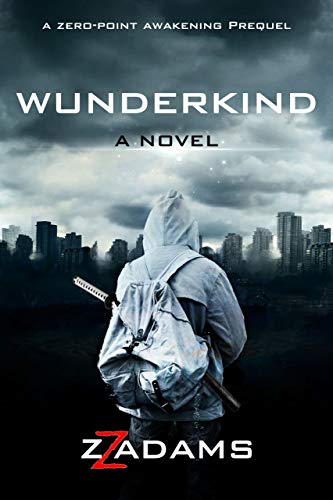
How do you defeat an enemy you cannot touch? When you’re fighting shadows, it pays to remember what might be lurking behind the curtain.
When the usually sleepy university city of Oxford, England is beset by a series of horrific murders, Elliot Goshawk, a fresh arrival to Oxford and one of the youngest to ever pass admission, must overcome his fear and defeat the murderer. At just fourteen, Elliot may not appear to have the skills for the job, but he has had an unusual childhood. Trained from birth as an assassin, there’s no one better qualified to stop this menace.
With a wayward time traveller, a professor of the arcane, and a city full of intelligence operatives on his tail, can Elliot find a way to take on and defeat the deadly alien shadow? Are MI6 agents really harder than those from the Coldhorn Initiative? Do they do any actual studying in Oxford?
Because Elliot also has another, deeper secret and something he fears above everything else: it might have been his fault that the shadow creature emerged in the first place.
This science-fiction thriller is a dark and humorous tale of wayward superheroes, the evil megacorporation stalking them, and the teamwork it will take to save the world.
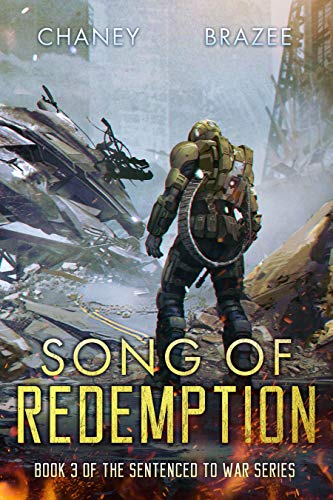 Song of Redemption by Jonathan P. Brazee and J.N. Chaney:
In the midst of humanity’s greatest fight for survival, old rivalries threaten to pull allies apart in a rush for rumored alien tech.
With the newly weaponized Sergeant Reverent Pelletier and his Marine Raiders at the tip of the spear, only they stand a chance at holding the shaky alliance together long enough to meet the enemy.
The Centaurs are on their way to destroy the very birthplace of human civilization: Mother Earth itself.
Humanity’s end may be upon us… but only if Rev and his team fail to do the impossible.
 The Invisible Body by Jenny Cutts:
A strange ability. A discovered corpse. But will his supernatural sleuthing skills lead him into a killer’s trap?
England, 1990. Reed has travelled his whole life in search of someone who understands him. So he’s thrilled when his journey brings him to free-spirited Zoya, who shares his rare ability to dream-walk. But after his gift leads him to a hidden corpse, he becomes the prime suspect in the murder.
Despite the setback, Reed resolves to use his power to help crack the case.
When the real perpetrator delivers a violent threat, he’s tempted to give up, slip into his camper van and hit the road again. After all, who would miss him?
Will Reed flee the tiny seaside town and abandon his new friends – or will he risk everything to expose the murderer?
The Invisible Body is the first book of The Falling Awake Mysteries, a captivating, character-led series that blends amateur sleuth crime story with an exploration of human connection. If you like compelling characters, seaside settings and a hint of the paranormal, then you’ll love Jenny Cutts’ intriguing novel.

George is just your normal peasant, with parents who abandoned him to join up with pirates and a terrible family secret he carries around his neck.
But when a wandering knight scoops him up to carry all his heavy stuff, George feels like his dreams are coming true! Except the knight dies. And now George is in trouble. Will donning the knight’s armor and taking his place solve his problems? What about when a dragon shows up and George is expected to fight it? Things are about to get complicated…
Chase away the darkness with George and his friends in this hilarious rollicking riff on George and the Dragon by USA TODAY bestselling author, Kate Danley.
These dragons aren’t going to slay themselves!
 Of Men and Monsters by Tom Deady:
In June of 1975, Ryan Baxter’s mom moves him and his brother, Matt, to the small seaside town of Bayport, MA to escape their abusive father. For an eleven-year-old, spending lazy days hanging out at the beach and the arcades sounds like a dream.
When he meets Leah and she agrees to be his girlfriend, Ryan is happier than he’s been in his young life. Then the “Sea Monkeys” knock-off he bought from the back of a comic book starts to grow…and grow and grow.
As Ryan and Matt struggle with their new lives and new friends, they begin to receive mysterious phone calls. As the sea monster in their house begins to get out of control, the real monster draws nearer to Bayport in the shape of their father.
Proudly represented by Crystal Lake Publishing—Tales from the Darkest Depths.
 Chasing Shadows by Morgan De Guerre:
A hundred years ago, I hung up my cape.
I was tired of being Destiny’s puppet, serving my purpose through my country’s history, signing my name in blood and death. I had enough of intrigues, mysteries, and betrayals. I sought sanctuary in the Bakirville National Opera, where I found peace, hiding in plain sight.
Killing people onstage after having killed so many in real life keeps my memories alive. I don’t recant my past. I’d like to think I learned from it.
A hundred years was enough for people to forget. They love me now with a different kind of passion than they did centuries ago. I am content to exist here, to bring joy with the same diligence with which I used to bring justice. But I can sense my time of peace is about to end. When two of our singers disappear in the space of a month, I know something is wrong. Someone is hunting my people. Someone is in my house.
Sooner or later, I’ll have to do something about it.
Welcome to Talinia
On this side of the Unbroken Barrier, humans live alongside vampires, werecreatures, wizards and witches, prophets and hellhounds. In our world, souls, youth and power are commodities to be bought and sold.
 Magician Rising by Renée des Lauriers:
Dark powers she can’t control. Deadly hunters tracking her down. Can she rip the target off her back before it turns fatal?
Jun Bear has lived with bad luck all her life. And when a professor threatens to give her a failing grade, the college senior sees her hopes for graduating in two months going down another ill-fated drain. But her fortunes plunge further when an unnatural earthquake shakes the campus and unleashes cold-blooded assassins after her head…
Unsure what’s happening, Jun finds herself facing a trained killer intent on exposing the wielder of the dangerous magic. And when she’s provoked into revealing her unexpected new abilities, she’s determined to prove her innocence before she’s permanently eliminated.
Can she win over an ally and survive a bloodthirsty secret society fixated on wiping her out?
Magician Rising is the fast-paced first book in the Divination in Darkness urban fantasy series. If you like plucky heroines, gory humor, and breathtaking action, then you’ll love Renee des Lauriers’ gritty thrill-ride.
 Iaxiabor’s Revenge by Rachel Ford:
A fully immersive virtual reality system. A beta testing opportunity that’s the stuff of dreams – or a nightmare that may never end.
Jack Owens is stuck in Marshfield Studio’s newest virtual reality RPG. But the end is finally in sight.
Once he’s done with the filler quests and the boss fight from heck, the game will be over. And he can get back to his real life.
Or can he?
 Conjure Web by Yasmine Galenorn:
As January delves into her family history, she discovers dark secrets about her great-grandmother Colleen and those secrets threaten everything she ever thought she knew about her heritage. Now, with her confidence already on shaky ground, January takes on a case with her friend Ari. Hired by a friend to discover whether their child is really their child, January and Ari delve into the Mystic Woods, looking for the answer. Their investigation leads them down the rabbit hole of magical intrigue, unrequited love, and into the world of the Woodlings, where January finds her worldview at risk, as well as her life.
 Ghostly Travels by Lily Harper Hart:
Harper Harlow-Monroe thought getting to her wedding would be the hard part. She was wrong. Getting through her honeymoon is going to be a whole lot worse.
Jared Monroe decided to surprise his new wife with a honeymoon in Salem, Massachusetts. The goal was to have fun, bask in the sun, and eat some good seafood while shutting out the rest of the world. The fact that there’s a ghost hunting conference happening at the same time is just added icing on the cupcake of life.
Then the unthinkable happens and Harper’s best friend Zander Pritchett magically shows up for the conference … and decides to hijack their honeymoon.
Jared might be able to put up with Zander, but when a missing girl and several ghosts rile up the atmosphere, things threaten to spiral out of control.
Harper is who she is. When she finds out several teenagers have gone missing over the course of a month, she can’t stop herself from digging hard. What she finds is a strange nexus of ghosts who don’t act like she expects … and a story that might haunt her for the rest of her life.
Harper is determined to make this a honeymoon to remember despite Zander and the ghosts working against her. She’s going to have to survive for that to happen … and nothing is a given.
Salem is a city with a long history. Hopefully, it won’t be the end for Harper and Jared.
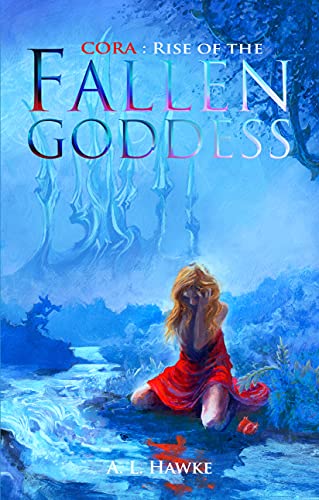 Cora: Rise of the Fallen Goddess by A.L. Hawke:
Abandoned. Imprisoned. Loved.
Cora is the goddess Persephone, living in Greece in the fourteenth century B.C. In order to shelter her from prophecy, her mother, Demeter, sends her away to Azure Blue. The young girl is raised and protected by the nymph queen, Nephrea, in a dreamlike crystal palace among azure trees and amethyst fields under a green sun. She’s adopted into the Amazon code of honor, bravery, and righteousness. But Cora is not an Amazon nymph. And prophecy holds quite a different fate for her as she grows into adulthood—Hades, Lord of the Underworld.
Upon Persephone’s fall, Demeter rages and threatens to freeze the entire world under ice and snow forever. Nephrea offers a sacrifice to quell her rage, but down in the fiery world below, it might be more than just the goddess who will need saving.
 Raven’s Haven for Women of Magic by Anna Kirtlan:
Cassandra Frost has zero interest in fortune telling or brewing foul smelling things in cauldrons, and much prefers the company of non-magical folk. She does her best to keep her powers under wraps to protect the secrecy of the Wellington witching community.
Unfortunately that’s easier said than done when your grandmother lives in Raven’s Haven for Women of Magic. Magical fireworks, mobility broom races and irresponsible use of cat litter spells are all part of the game for the witching retirement village residents. But when Cassandra’s forced to cast a spell in the open to save Adrian, a geeky graphic designer with secrets of his own, her two worlds spectacularly collide, and she learns the haven is much more than meets the eye.
Will Cassandra listen to her heart and learn to embrace her powers? Will the non-magical world be put at risk? Find out in this Contemporary Witchy Fiction novella featuring powerful witches, troublesome crones and an unseemly amount of cats.
 Prelude to a Witch by Amanda M. Lee:
Bay Winchester has battled ghosts, shades, poltergeists … and sometimes her own family. It’s the latter giving her fits now. Well, and Hemlock Cove’s younger set of course.
Bay thought the worst was behind her when she modified the memories of four tempestuous teenagers bent on stealing magic and wielding it in a tyrannical manner. Unfortunately for her, when one of those teenagers ends up dead behind the inn her father owns, things start to spiral.
The girl’s death is ritual in fashion, bloody runes painted on the trees, and Bay can’t wrap her head around exactly what has happened. Then things get worse when dark figures start appearing in windows, black ghosts threatening Bay and her family at every turn.
Between the horror haunting Hemlock Cove and the annoying presence of Bay’s former boss and his current fiancée, who just so happens to be a distant relative, Bay has her hands full … and that’s before her cousin Clove’s baby starts displaying a rather interesting skillset that is going to force accommodations within the family.
All Bay wants is a little break to plan her wedding and look forward to happily ever after with her fiancé Landon Michaels. What’s she’s going to get is a whole lot of trouble.
Bay’s growing powers are drawing in a new element of evil. It’s going to take everything she has – and a little help from Aunt Tillie – to fight the ultimate battle. Survival isn’t a given but Bay is determined to make it to her big day.
No matter what.
 Goodbye to the Sun by Jonathan Nevair:
A nonstop thrill ride across an unstable galaxy, combining moral struggle with character-driven adventure…
Tucked away in the blue sands of Kol 2, the Motes are on the brink of cultural collapse. Razor, a bold and daring pilot, leads a last-ditch gambit against their local oppressors, the Targitians. The plan – abduct visiting Ambassador Keen Draden and use him as a bargaining chip to restore her people’s independence in the Sagittarius Arm. But when the operation unravels, Razor is forced to renegotiate terms with the arrogant diplomat.
Light years away on Heroon a radical resistance blossoms. The alluring rainforest planet haunts Keen. All his problems started there during the Patent War, but it’s where Razor’s troubles may find a solution. The moral tide ebbs, exposing an impossible choice that links their futures together more tragically than they ever thought possible.
Goodbye to the Sun: a space opera inspired by the Greek tragedy, Antigone.
 Broken Angel: The Lost Years of Gabriel Martiniere by Joyce Reynolds-Ward:
Exiled heir. Rebel. Husband. Father.
In 2029, Gabriel Martiniere testified against the Martiniere Group’s forced imposition of mind control programming on unwilling indentured workers.
For his pains, he was forced into exile for over thirty years. Forced to divorce the love of his life.
But he’s still coming. Still bent on vengeance against the man who forced him into exile, Philip Martiniere.
Gabe will win…or die trying.
 Under Black Skies by Clare Sager:
Enemies-to-lovers-to-enemies. Now they’re ‘just friends.’ Sure.
Reunited with her crew, Vice is on the hunt for Drake’s treasure. But there’s a good reason it hasn’t been seen in two hundred years – it’s hidden by fiendish clues and deadly traps. To keep her crew – her family safe, she can’t afford a single misstep. That’s easier said than done with a distraction like Knigh Blackwood around.
Knigh might not sail for the Navy anymore, but he’s found a new place in the world – home with Vice on the Venatrix. Even as he longs for more than ‘just friends’, he battles with demons from his past and one from his present. To save his family, he needs money. Lots of it. A legendary treasure would be the perfect solution.
But traps and troublesome feelings aren’t the only dangers they face. When treachery strikes at the heart of pirate-kind, no one is safe: not their home, not Knigh’s family, not even the Pirate Queen herself.
 Witch’s Guide to Romantic Comedy by Lotta Smith:
Sometimes, the most powerful miracle hits you in the middle of a total magical eclipse…
I’m Sophie Rowling. I used to be a world-renowned violinist, until my world was turned upside down. Following a freak accident in Paris, I can’t remember how to play the violin anymore. To make matters worse, I’m supposed to perform for my childhood teacher’s retirement party, which is just weeks away. Usually I would turn to my BFFs, Jackie the ghost and Allegra the violin fairy, for moral support, but I’ve also lost my ability to talk to them.
Then fate steps in, and Dante enters my life. He’s hot, dangerous, and addictive. I can’t spend a moment without thinking of him, and I keep on bumping into him. Honestly, this is so wrong. I should forget about him and focus on my music—in order to keep what’s left of my sanity.
But wait, do I really need sanity? As they say, “Insane is the new cool,” and maybe I need to try being cool.
* * *
Dante had a simple job: fly to Japan, run an errand, and go back to the US for good. He wasn’t expecting Sophie, an innocent girl with an attitude, to literally fall into his arms. Now they are being followed, attacked, and can’t get enough of each other.
As their lives intertwine, the danger and passion grow between them. Will the fates allow them to have a happily ever after? Or will fate continue to put them in harm’s way?
 Caged Alien Mate by Ivy Sparks:
I’ve been tossed inside a cage with an exiled, tortured alien prince. And our captors expect us to produce an heir.
So here I thought my situation was bad. I’m a navigator in training who crash landed on the galaxy’s most brutal planet, only to be enslaved by reptilians. But after I meet Xavi, I realize I’ve had it easy.
He’s been beaten by our captors for God knows how long, and his massive body has the scars to prove it. He is hardened, vengeful. But when we first lock eyes…
Talk about sparks flying.
He might be an outcast – a figure of contempt and controversy in his world. But in my world? He makes this dungeon bearable.
 Galactic Search and Rescue by Carol Van Natta:
When an earthquake shakes up a nearby world, can two star-crossed rescuers save an entire community… and each other?
Experienced rescuer Subcaptain Taz Correa hides her wounded heart. A telekinetic tech-whiz recently transferred to the worst Galactic Search and Rescue unit in the galaxy, she’d hoped after her string of epically bad breakups she’d have a fresh start. But when she can’t fight her feelings for her new teammate, she’s terrified her secret affection will show and cost both their careers.
Subcaptain Rylando Dalroinn’s telepathic connection to animals used to be everything. But he has no idea how to admit his growing attraction to Taz, especially as it’s completely against the rules. And when they’re sent as a team of two to help a devastated town, he knows he can’t afford to let his heart’s desire distract him from their dangerous mission.
As Taz works with Rylando and his unusual squad of trained animal helpers to free a desperate group of citizens, she puts her life on the line to protect her partner’s beloved creatures. But when Rylando realizes the people he’s rescuing are more than just innocent victims, he’ll have to throw out the rulebook to save them both.
Can love—and a clever crew of animals—guide the couple out of the rubble and into a future together?
Galactic Search and Rescue is a pulse-pounding story in the Central Galactic Concordance space opera series. If you like lovers in denial, edge-of-your-seat twists and turns, and intriguing psychic powers, then you’ll adore Carol Van Natta’s thrilling tale.
 Metal Warrior: Ring of Steel by James David Victor:
The enemy of my enemy is my friend. At last that’s what they want you to believe.
Dane has escaped the clutches of the Exin Queen and her War Master and brought back valuable intel. When they find the wreckage of an Exin warship, they come across a potentially valuable survivor. And a way to possibly win the war. Before they can launch an offensive, the battlefield changes yet again. Will Dane and his fellow mech fighters find themselves surrounded by a ring of steel intent on crushing the life out of all humanity? Or will humanity finally be on the way to winning the war?
Metal Warrior: Ring of Steel is the seventh book in the Mech Fighter series. If you like fast-paced space adventures with engaging characters and exciting battles, you will definitely want to see how the Metal Warriors save mankind, or if they can.

I appeal to the President of the Confederation…
When a duke and duchess are murdered on Franconia and a Cetusian is convicted, he appeals to the Confederation as a last resort. Can the true murderer be brought to justice? And what is the motive?
Chooli has just graduated as a police officer and joined the GIA. She is asked to team up with her partner Alex to investigate the crime on the luxurious planet – one that has dark secrets.
Ignoring warnings to stop their investigation, Chooli is kidnapped by the assassin, making the pursuit personal for Alex, as he battles against time to save her.
When Chooli escapes her captors, she finds herself in the middle of a war where she is captured again and stumbles on a monumental conspiracy that she must stop before it is too late.
Can Alex find Chooli in time to save her? Can Chooli prevent a catastrophe? Can they both bring the mastermind behind it all to justice?
May 29, 2021
New Collection Available: “Tales of the Silencer: The Complete Series”
Before we get to the new release, I first have some other news to share.
I already linked to the interview that the local paper Kreiszeitung did with me about my Hugo nomination.
Now Alexandra Penth of the other local paper Weser-Kurier also interviewed me about my Hugo nomination as well. You can read the interview here, but unless you’re a Weser-Kurier subscriber it’s behind a paywall. However, you can also access the interview via the Google cache of the article or via this archive.is version of the page.
And now, let’s get to the new release, which isn’t actually all that new, since it’s a collection of previously published stories. But if you’ve always wanted to give my Silencer series of retro pulp thrillers a try, but didn’t want to buy the individual stories, you’re in luck, because the entire Silencer series is now available in one handy collection.
Tales of the Silencer: The Complete Series Hardworking pulp writer by day and steel-masked crimefighter by night, the Silencer fights criminal low-lives and larger-than-life master villains in the streets of Depression era New York City. Together with his beautiful fiancée Constance Allen and pickpocket turned butler Neal Cassidy, Richard Blakemore a.k.a. the Silencer keeps the city safe from those criminals the law cannot catch.
This series of high octane adventure stories by two-time Hugo finalist Cora Buhlert is an homage to the heroic pulp crimefighters of the 1930s such as the Shadow, the Spider and Doc Savage as well as the writers who brought them to life.
This complete omnibus edition of 112000 words or approximately 375 print pages collects the entire Silencer series.
Contains the following stories:
Countdown to DeathFlying BombsThe Spiked DeathElevator of DoomThe Great FraudMean Streets and Dead AlleysFact or FictionSt. Nicholas of Hell’s KitchenThe Milk Truck GangA Valentine for the SilencerThe Heavy Hand of the EditorList price: 4.99 USD, EUR or GBP
Buy it at Amazon US, Amazon UK, Amazon Germany, Amazon France, Amazon Netherlands, Amazon Spain, Amazon Italy, Amazon Canada, Amazon Australia, Amazon Brazil, Amazon Japan, Amazon India, Amazon Mexico, Kobo, Barnes & Noble, Apple iBooks, Google Play, Scribd, Smashwords, Thalia, Weltbild, Hugendubel, Buecher.de, DriveThruFiction, Casa del Libro, Vivlio and XinXii.
Indie Crime Fiction of the Month for May 2021

Welcome to the latest edition of “Indie Crime Fiction of the Month”.
So what is “Indie Crime Fiction of the Month”? It’s a round-up of crime fiction by indie authors newly published this month, though some April books I missed the last time around snuck in as well. The books are arranged in alphabetical order by author. So far, most links only go to Amazon.com, though I may add other retailers for future editions.
Our new releases cover the broad spectrum of crime fiction. We have cozy mysteries, historical mysteries, Regency mysteries, 1940s mysteries, paranormal mysteries, hardboiled mysteries, science fiction mysteries, crime thrillers, action thrillers, pulp thrillers, legal thrillers, horror thrillers, noir, police officers, amateur sleuths, private investigators, lawyers, assassins, con artists, missing persons, wrongful accusations, kidnappings, cold cases, masked crimefighters, crime-busting witches, crime-busting socialites, crime-busting psychics, deadly divorces, deadly honeymoons, murder and mayhem in New York City, Chicago, Miami, Louisiana, Northhamptonshire, India and much more.
Don’t forget that Indie Crime Fiction of the Month is also crossposted to the Indie Crime Scene, a group blog which features new release spotlights, guest posts, interviews and link round-ups regarding all things crime fiction several times per week.
As always, I know the authors at least vaguely, but I haven’t read all of the books, so Caveat emptor.
And now on to the books without further ado:
 Tales of the Silencer: The Complete Series by Cora Buhlert
Hardworking pulp writer by day and steel-masked crimefighter by night, the Silencer fights criminal low-lives and larger-than-life master villains in the streets of Depression era New York City. Together with his beautiful fiancée Constance Allen and pickpocket turned butler Neal Cassidy, Richard Blakemore a.k.a. the Silencer keeps the city safe from those criminals the law cannot catch.
This series of high octane adventure stories by two-time Hugo finalist Cora Buhlert is an homage to the heroic pulp crimefighters of the 1930s such as the Shadow, the Spider and Doc Savage as well as the writers who brought them to life.
This complete omnibus edition of 112000 words or approximately 375 print pages collects the entire Silencer series.

A body is found under Welland Viaduct on a bitterly cold winter morning. But this will be a murder investigation like no other.
As DI Caroline Hills and DS Dexter Antoine begin to unravel the dark secrets in the victim’s life, they find themselves sucked into a web of lies and betrayal.
Rutland Police need to find the killer before it’s too late. But with Caroline’s health failing and their main witness suspiciously missing, the stakes couldn’t be higher.
Dark histories, mysterious gifts and hidden secrets abound. But will they discover the truth before anyone else is killed in cold blood?
The Invisible Body by Jenny Cutts:
A strange ability. A discovered corpse. But will his supernatural sleuthing skills lead him into a killer’s trap?
England, 1990. Reed has travelled his whole life in search of someone who understands him. So he’s thrilled when his journey brings him to free-spirited Zoya, who shares his rare ability to dream-walk. But after his gift leads him to a hidden corpse, he becomes the prime suspect in the murder.
Despite the setback, Reed resolves to use his power to help crack the case.
When the real perpetrator delivers a violent threat, he’s tempted to give up, slip into his camper van and hit the road again. After all, who would miss him?
Will Reed flee the tiny seaside town and abandon his new friends – or will he risk everything to expose the murderer?
The Invisible Body is the first book of The Falling Awake Mysteries, a captivating, character-led series that blends amateur sleuth crime story with an exploration of human connection. If you like compelling characters, seaside settings and a hint of the paranormal, then you’ll love Jenny Cutts’ intriguing novel.
 Frightfully Fortune by Jana DeLeon:
Rest when you’re dead?
It’s time for the annual Halloween festival in Sinful, and Fortune, Ida Belle, and Gertie can’t wait to suit up and enjoy the food and activities. But when a dead man gallops through the park on a black stallion and slides to a decapitated stop right in front of Swamp Team 3, they know another festival is about to be turned on its head…so to speak.
Gil Forrest never won any popularity contests and his dramatic and somewhat horrifying ride isn’t going to improve his statistics. But since his body was supposed to be tucked away in a funeral home, no one could explain how it ended up on a horse in the middle of the festival. Everything about the set-up is strange and Fortune, Ida Belle, and Gertie suspect there is more to the Headless Horseman ride than just a tasteless prank. And they plan to find out what it is.
 Dotty Digs Deep by Diane Ezzard:
People are dying at the care home but are the deaths natural or is a serial killer on the loose?
Dotty’s grandma, Grace is persuaded to move into Willowbank Lodge retirement home when her memory and her physical condition worsen.
Then her new friend, Tomas disappears and is found dead.
When other deaths occur, Dotty and her friend Dave, the gay private investigator, wonder if there is something more sinister afoot.
Dotty and Dave dig deep to uncover the truth.
What really happened to Tomas?
Is Willowbank Lodge a dangerous place to live?
Dotty finds out more than she bargains for when she unravels the past lives of the staff and residents.
This is book 7 in the Dotty Drinkwater Mystery series but can be read as a standalone.
 Before He Wakes by Max Allan Gunnells:
Patrick and Clare wake up trapped in a basement, a thin wall separating their cells. Their captor is mysteriously absent, which at first seems like a blessing. As more time passes with no food or water, they begin to realize a clock is ticking for their survival.
Combining their intelligence and determination, the two begin plotting an escape from their shared prison. Overcoming each obstacle only presents another obstacle standing in the way of their freedom. It will take all of their ingenuity and strength to find their way out of this mess.
They know their captor is still out there, and it is only a matter of time before he returns.
Before He Wakes is a fast-paced and tense thriller that ratchets up the suspense and tension before the thrilling conclusion.
Proudly represented by Crystal Lake Publishing—Tales from the Darkest Depths.
Ghostly Travels by Lily Harper Hart:
Harper Harlow-Monroe thought getting to her wedding would be the hard part. She was wrong. Getting through her honeymoon is going to be a whole lot worse.
Jared Monroe decided to surprise his new wife with a honeymoon in Salem, Massachusetts. The goal was to have fun, bask in the sun, and eat some good seafood while shutting out the rest of the world. The fact that there’s a ghost hunting conference happening at the same time is just added icing on the cupcake of life.
Then the unthinkable happens and Harper’s best friend Zander Pritchett magically shows up for the conference … and decides to hijack their honeymoon.
Jared might be able to put up with Zander, but when a missing girl and several ghosts rile up the atmosphere, things threaten to spiral out of control.
Harper is who she is. When she finds out several teenagers have gone missing over the course of a month, she can’t stop herself from digging hard. What she finds is a strange nexus of ghosts who don’t act like she expects … and a story that might haunt her for the rest of her life.
Harper is determined to make this a honeymoon to remember despite Zander and the ghosts working against her. She’s going to have to survive for that to happen … and nothing is a given.
Salem is a city with a long history. Hopefully, it won’t be the end for Harper and Jared.

This time, defense lawyer Cass Leary may be a motive for murder…
Cass is a force in the courtroom. Determined to keep the innocent out of jail, the unyielding defense attorney dominates her opponents to balance the scales of justice. But in a terrible twist of fate, she’s forced to testify against the man she loves when he’s accused of killing his estranged wife.
Vowing to exonerate Detective Wray, Cass despairs at the mounting pile of damning evidence and the prickling fear he may be guilty. And when she learns of a deadly jailhouse plot, she worries her failure to win his freedom will cost him his life.
Will Cass’s investigation result in an acquittal or reveal a terrible truth?
Mercy Kill is the pulse-pounding eighth book in the Cass Leary legal thriller series. If you like bold characters, breakneck drama, and ripping surprises, then you’ll love Robin James’s high-speed nail-biter!

PI Kelly Pruett’s search to locate a former classmate’s missing father ends in what appears to be a tragic accident. Kelly will play a high risk game of chance with a killer willing to gamble everything to win.

Some secrets refuse to stay buried…
When Scott Drayco’s ex-girlfriend begs him to prove her rich fiance, Harry Dickerman, is innocent of murder, Drayco’s torn; he’s suspicious of Harry’s motives for wanting to marry a much younger woman, but on the other hand, the man seems to be a paragon of virtue. The police think it’s an open-and-shut case — the victim was Harry’s ex-wife, killed in Harry’s home with his own letter opener, and only Harry’s prints were on the murder weapon.
But as Drayco digs deeper, he starts to find cracks in that “open-and-shut” case and investigates whether corporate espionage was involved and how a shady attorney figures into the mix. Most puzzling of all, why was the victim living in an mysterious, out-of-the-way commune for Wall Street refugees? And why does the commune seem to be less about peace, love, and brotherhood and more about drugs, sex, and blackmail?
With help from his former FBI partner, “Sarg” Sargosian, Drayco uncovers a possible Russian connection that may be key to the mystery. But as he plunges deeper into a cesspool where everyone seems to be guilty of secrets and lies, he’s not sure who he can trust … or whether a deadly dance with the devil will be his undoing.

Manny Martinez has a history shrouded in secrets, a wake of destruction he hoped he could leave behind. But when his closest childhood companion locates him in America, that can only mean one thing–Manny didn’t run far enough.
To survive, he must embrace his past and outwit his old ally, now a professional hitman bent on revenge. He’s promised that Manny will only die after he watches his friends perish first. It’s a fight that will spill into the streets and demand an answer–how much does it cost to be a Martinez?
Prelude to a Witch by Amanda M. Lee:
Bay Winchester has battled ghosts, shades, poltergeists … and sometimes her own family. It’s the latter giving her fits now. Well, and Hemlock Cove’s younger set of course.
Bay thought the worst was behind her when she modified the memories of four tempestuous teenagers bent on stealing magic and wielding it in a tyrannical manner. Unfortunately for her, when one of those teenagers ends up dead behind the inn her father owns, things start to spiral.
The girl’s death is ritual in fashion, bloody runes painted on the trees, and Bay can’t wrap her head around exactly what has happened. Then things get worse when dark figures start appearing in windows, black ghosts threatening Bay and her family at every turn.
Between the horror haunting Hemlock Cove and the annoying presence of Bay’s former boss and his current fiancée, who just so happens to be a distant relative, Bay has her hands full … and that’s before her cousin Clove’s baby starts displaying a rather interesting skillset that is going to force accommodations within the family.
All Bay wants is a little break to plan her wedding and look forward to happily ever after with her fiancé Landon Michaels. What’s she’s going to get is a whole lot of trouble.
Bay’s growing powers are drawing in a new element of evil. It’s going to take everything she has – and a little help from Aunt Tillie – to fight the ultimate battle. Survival isn’t a given but Bay is determined to make it to her big day.
No matter what.
 The Classy Detective Agency by Duane Lindsay:
Who knew faking class would be so dangerous?
In Duane Lindsay’s latest action-packed noir thriller, private eye Lou Fleener does what he does best: wisecrack, roam his beloved hometown, and get into a hell of a lot of street fights. It’s 1960 in glamorous Chicago, and Lou and his wife Cassidy (turned sardonic, ever-scheming partner in crime), are broke. In need of fast cash, they devise a scheme to advertise themselves as sophisticated private eyes catering to the city’s elite.
But it turns out they aren’t the only ones running a con. Whip-smart as they are, they aren’t prepared for the stealthy criminals hiding among Chicago’s rich and famous.
While hobnobbing at a fancy party, the Classy Detectives catch the eye of a bored socialite who’s cooking up a scheme with a genius art thief. The conspirators are casing a local exhibit that’s chock full of famous, lucrative paintings. But the larcenous pair need a fall guy: they figure that if they put an appropriate suspect in the right place at the right time, they can breezily lift the loot.
So they hire Lou and Cassidy to “guard” the paintings. The Classy Detectives are over the moon: they think they’ve been hired to eat hamburgers and hang out outside the museum.
One dead cop later, they realize they’ve been set up. Quicker than you can say, “Go Cubs!” Cassidy’s arrested. Even worse, the headline LOU FLEENER: COP KILLER is plastered across newspapers and blaring out of radios. Only too obviously, this is the time to concoct Plan B–and thereon hangs a rollicking tale.
 A Ghastly Spectre by Lynn Messina:
Since the new Duchess of Kesgrave cannot be swayed from her unfortunate interest in dead bodies, Lady Abercrombie decides to confront the matter head-on by hosting a murder mystery dinner party. Gathering together several of society’s most influential members, she concocts an amusing puzzle-play, assigns roles, and stands back to allow Bea to impress them all with her ingenuity.
The former spinster will be the height of fashion in no time. Huzzah!
No, she won’t, Bea thinks. Her status has increased with her marriage, yes, but so have the insecurities that bedeviled her first season. Far from charming everyone with her wit, she will appall them with her inability to form coherent or interesting sentences.
’Tis a three-act tragedy in the making.
But then one of the guests is killed in the same manner as her ladyship’s victim and the evening turns genuinely tragic. Horrified, the august company scurry for the exits, and Bea, determined to detain all her lovely suspects, throws herself bodily against the door. Intimidated or not, she will identify the murderer—even if it guarantees her social ruin.
 Never Walk Alone by Willow Rose:
The world is on lockdown due to a virus that originated in Miami.
A woman is kidnapped from her apartment, and Detective Harry Hunter is on the case.
At the same time, his sister shows up after they haven’t seen each other in a year.
As it turns out, Harry’s sister knows more about the virus than she lets on. Soon, he wonders if the virus is connected to the missing woman.
As he digs deeper into the strange mystery, he realizes his sister’s life is in great danger, and so is his.
Cold Case in Nuala by Harriet Steel:

It’s January 1940 and the day of Nuala’s famous motor rally. Excitement is at full throttle, but matters take a dark turn when that same evening, human remains are found buried in a lonely corner of a local tea plantation.
Inspector de Silva has a cold case to solve. Add a playboy racing driver, a missing Bugatti and a family scandal hushed up years ago into the mix and he has plenty to think about. You can be sure that whatever happened in the past, now de Silva’s in the driving seat, you’re in for a gripping ride.
I appeal to the President of the Confederation…
When a duke and duchess are murdered on Franconia and a Cetusian is convicted, he appeals to the Confederation as a last resort. Can the true murderer be brought to justice? And what is the motive?
Chooli has just graduated as a police officer and joined the GIA. She is asked to team up with her partner Alex to investigate the crime on the luxurious planet – one that has dark secrets.
Ignoring warnings to stop their investigation, Chooli is kidnapped by the assassin, making the pursuit personal for Alex, as he battles against time to save her.
When Chooli escapes her captors, she finds herself in the middle of a war where she is captured again and stumbles on a monumental conspiracy that she must stop before it is too late.
Can Alex find Chooli in time to save her? Can Chooli prevent a catastrophe? Can they both bring the mastermind behind it all to justice?
May 18, 2021
Of Spies, Linguists and Hugos
Okay, so this is another link post, but I promise that regular blogging will resume soon.
First of all, I was over at Galactic Journey again, where I review Babel-17 by Samuel R. Delany and also go into the linguistic background of the novel, particularly the theory of linguistic relativity a.k.a. the Sapir-Whorf hypothesis.
Now I had read Babel-17 before, but that was many years ago. Upon rereading the novel, I was struck by how modern it feels. Babel-17 is an undisputed classic of the genre, but unlike other SFF novels from the same era, which can be hopelessly dated, it doesn’t feel like a fifty-five year old book. Of course, the “James Bond in space” aspects are very sixties, but James Bond movies are still being made (and No Time to Die will eventually show up in cinemas) and if anything, the Bond clichés such as the presentation of superweapons or the dinner party gone terribly wrong are more recognisable today after 25 Bond movies than they were in 1966 after four. And indeed, one thing I have noticed while reliving the 1960s at Galactic Journey that Bond knock-offs, pastiches and parodies started showing up at a time, when there were only two Bond films altogether.
The sabotage plot is also born out of Cold War fears about brainwashing, reprogramming and sleeper agents, but again that doesn’t make the novel dated, because these fears are still very much with us, only nowadays we’re not worried about Manchurian Candidates, but about young men radicalised on the Internet. Even the Sapir-Whorf hypothesis, which was already discredited in 1966, still continues to fascinate science fiction authors. “Story of Your Life” by Ted Chiang came out in 1998, while the film adaptation Arrival came out in 2016.
So in short, Babel-17 is a great novel that even people who don’t like older SF can enjoy.
***
And now for something completely different: Part of the reason why blogging has been light these past few weeks is that I was going through last year’s blogposts to assemble my contribution to the 2021 Hugo Voter Packet.
My packet is now ready and if you’re a member of DisCon III, it will be available soon, together with the rest of this year’s Hugo Voter Packet.
However, even if you’re not a member of DisCon III, you can now download my Hugo Voter Packet for free in the format of your choice at StoryOrigin.
Finally, I also want to show off the beautiful cover, courtesy of the hypertalented Tithi Luadthong. Not only does it strike the balance between retro and modern, there also is a rocket in the image.

May 15, 2021
New Story “Little Monsters” Available at the Simultaneous Times Podcast

I will get back to regular blogging eventually, but for now I have another new release announcement to make. Because episode 39 of the Simultaneous Times podcast includes my story “Little Monsters” as well as “Hidden Underneath” by Toshiya Kamei.
Simultaneous Times is a fiction podcast produced by my friends of Space Cowboy Books, a science fiction bookstore in Joshua Tree, California. Space Cowboy Books recently reopened for in-person business after more than a year of pandemic enforced closure. So if you’re in the area, pay them a visit and pick up some books.
“Little Monsters” is another story that originated during the July Short Story Challenge. The story was inspired by Oculus and Ophthalmos, the friendly crochet eyeball monsters I made last year.

Oculus and Ophthalmos, the friendly eyeball monsters, brighten up my bookshelves and pose with several Hugo winning works.
“Little Monsters” is only the second story of mine that ever made it into audio (the first was “Patient X-5”, which Simultaneous Times produced last year). The story is narrated by Jean-Paul Garnier with wonderfully atmospheric music by RedBlueBlackSilver. I always love hearing audio productions of my stories, because even though I know the story – I wrote it, after all – the interpretation always brings completely new aspects to the tale.
Anyway, give it a listen and also make sure to listen to Toshiya Kamei’s excellent story “Hidden Underneath” as well. You can listen on podomatic or right here:
May 5, 2021
Cora is the Winner of the 2021 Space Cowboy Award!
This is yet another announcement post, because I’ve been getting a lot of good news to announce of late.
For starters, I was interviewed by Dierck Wittenberg of the local paper Kreiszeitung about my Hugo nomination. You can read the article here. Only in German, alas.
The other local paper Weser-Kurier also did an interview, but that one hasn’t come out yet. I’ll share the link once it does.
Furthermore, I also sold two short stories, but more about that in due time.
Finally, I also received a lovely surprise in the mail yesterday.
The mailman (and it is a man) suddenly stopped in front of the house and a family member asked, “Are you expecting any parcels?”
Me: “Not that I know of.”
The mailman rings, my family member answers the door, comes back and hands me a parcel. “Well, it is for you. From someplace in California.”
I accepted the parcel, quite puzzled, since I really didn’t expect any deliveries for once. However, I recognised the address and opened the parcel. And inside, I found this:

The 2021 Space Cowboy Award and the box it came in.
Turns out I am the winner of the 2021 Space Cowboy Award for support and excellence in the field of science fiction!
The Space Cowboy Award is a newish entry in the ranks of SFF awards, now in its second year, which makes me the Babel-17 or Flowers for Algernon of the Space Cowboy Award (or the They’d Rather Be Right, though I hope not).
The Space Cowboy Award is given out by Space Cowboy Books, an SFF specialty store in Joshua Tree, California, that’s also the home of the Simultaneous Times science fiction podcast, which produced one of my stories last year and which I also featured as part of my Fanzine/Fancast Project.
I had absolutely no idea this was coming, but I’m very honoured, not to mention thrilled and delighted to have been chosen as the winner of the 2021 Space Cowboy Award. This is the first award I’ve won which comes with a trophy (I also won the “Story of the Year” award of a long defunct magazine many years ago, plus a writing award at university). It’s a beautiful trophy, too, as you can see in the close-up picture below:

A closer look at the beautiful trophy of the 2021 Space Cowboy Award.

Me posing with the Space Cowboy Award in front of a bookshelf.
Those bookshelves, nice as they are, don’t make for a good permanent home for the trophy. They’re not wide enough, for starters, and also in a part of the house, where visitors hardly ever go. So I found a nice spot for the trophy on a shelf that’s pretty much the first thing you see when you enter the house proper. There’s even space for a Hugo rocket, should one come my way in December.

Here’s the 2021 Space Cowboy Award on the shelf that’s its current home.
I initially wanted to move the Matryoshkas aside, but I actually like the fact that it looks as if those friendly, roly-poly Matryoshkas are guarding the trophy. BTW, the books in the background are not mine – I sort of inherited them and kept them out of sympathy for their former owner. Eventually, I’ll put them into storage (though it’s unlikely I’ll ever run out of reading material – even after the apocalypse – that I’ll become desperate enough to read Rosamunde Pilcher) or donate them.
May 2, 2021
First Monday Free Fiction: The Forest of the Hanged
 Welcome to the May 2021 edition of First Monday Free Fiction.
To recap, inspired by Kristine Kathryn Rusch who posts a free short story every week on her blog, I’ll post a free story on the first Monday of every month. At the end of the month, I’ll take the story down and post another.
This month’s free story The Forest of the Hanged is a sword and sorcery story from my Thurvok series. The Thurvok tales are usually more humorous than my other sword and sorcery series, Kurval. However, The Forest of the Hanged is one of the grimmer Thurvok stories. It’s also the story where what had up to then been a trio of adventurers becomes a quartet.
So accompany Thurvok, Meldom and Sharenna as they venture into…
The Forest of the Hanged
The trouble started, as it sometimes did, with a message. It was delivered to Meldom, cutpurse, thief and occasional assassin, at the breakfast table at the Long Drop Tavern, though Thurvok the sellsword had no idea how the messenger had even found his friend and companion here. After all, very few people were supposed to know where they were staying. It was simply safer that way.
While Thurvok nibbled on a joint of ham, Meldom broke the wax seal — plain candle wax and not proper sealing wax — with his dagger and read. His expression darkened.
“Business?” Thurvok asked between two bites.
Meldom shook his head. “No, private.” The dagger was still in his hand, clutched so hard that Meldom’s already pale skin become even paler.
At this moment, Thurvok’s other travelling companion, Sharenna, the flame-haired sorceress, appeared, carrying a jug of milk, a basket of fresh bread and a chunk of cheese. She set down her burden on the table, flashed Thurvok a private smile and settled down on the chair opposite the two men.
Sharenna filled up her cup with milk and helped herself to some bread and cheese. It was only now that she noticed that the normally chatty Meldom was uncharacteristically quiet. For once, he wasn’t plotting grandiose plans for making ridiculous amounts of money. Nor was he making pointed remarks about sleeping arrangements.
Of course, eating normally shut Meldom up, but then he wasn’t eating either. He was just staring at that letter and clutching his dagger, clutching it so hard Thurvok briefly worried that the hilt would shatter.
“What’s wrong?” Sharenna asked.
Meldom looked up, his grey eyes troubled. “Nothing. Just a message from an old friend. I’ll have to leave for a while, though. I have business in Greyvault.”
“I thought you said you couldn’t go back to Greyvault, because you’re wanted for something or other there,” Thurvok pointed out, still gnawing on his joint of ham.
“Well, in theory I can’t go back,” Meldom snapped, “But in practice, I’ll just have to risk it and hope that the constabulary doesn’t catch me.”
In response, Thurvok laid down the joint of ham or rather what was left of it. “We’ll come with you then.”
“It’s private business,” Meldom replied.
“We’ll still come with you,” Sharenna said, her voice softer than usual, “After all, we’re friends. And friends help each other when they’re in trouble.”
“How do you even know I’m in trouble?” Meldom snapped, “Are you using your magic to read my mind or what?”
Sharenna sighed. “For the last time, I can’t read minds. Not that I need to, considering you’re making a face like soured milk.”
Meldom finally put the letter down, though he still clutched the dagger in his hand. “Yeah, I’m sorry. It’s just…”
“Bad news?” Thurvok suggested.
Meldom nodded. “Very bad. An old… friend of mine is in trouble. The sort of trouble that tends to leave you swinging on the end of a rope.”
Thurvok patted his friend on the shoulder. “I’m sorry.”
“You want to help your friend, don’t you?” Sharenna asked.
“If I can.” Meldom replied. “I have to try, at any rate. I owe her my life, after all.”
Across the table, Thurvok and Sharenna exchanged a look. For though Meldom talked a lot, he rarely spoke about his life before he became a wandering mercenary, selling his skills to whoever was willing to pay him. Still, whatever was behind this message had left Meldom rattled, more rattled than Thurvok had ever seen him.
“Then it’s settled.” Thurvok rose to his feet. “We’ll go to Greyvault and save this friend of yours.”
Meldom shot him a warning look. “It’s going to be dangerous.”
Thurvok sighed. “Isn’t it always?”
***
So Thurvok, Meldom and Sharenna set off for the city of Greyvault, a three days’ journey to the northeast. And on the first night of that journey, while they sat huddled around a campfire by the side of the road, Thurvok and Sharenna finally got Meldom to open up.
“So this friend of yours…?” Sharenna, who was better at this sort of thing than Thurvok, began.
“Lysha, yes, Meldom said, reaching for the silver amulet he always wore around his neck.
“So what’s the story there?” Sharenna wanted to know.
There was a long pause, then Meldom took a swig of brandy from his trusty hip flask and began, “I was fifteen, when I met Lysha. I was a street kid running with a gang of thieves on the streets of Greyvault. I was young and fairly slight then and could squeeze even through the smallest openings…”
Thurvok refrained from pointing out that Meldom was still rather slight, at least compared to Thurvok’s muscular frame.
“…so my specialty was burglary. If there was a window left open in a house, any window at all, I’d climb in, sneak around and rob them blind. It always went well, too. Until the night that I broke into the home of Kereban Vandor, a wealthy silk merchant…”
Thurvok leant forward, for this was getting interesting.
“I’d climbed in through an open bedroom window. But I was stupid and bumped against a table, which in turn knocked over a vase. The vase shattered and woke up the occupant of the bedroom. Lysha, Vandor’s only daughter. For the space of a few heartbeats, we just stared at each other in the moonlight that streamed in through the open window, each more scared than the other…”
“And…?” Sharenna asked, clearly intrigued.
“Then someone started banging on the door. Vandor himself. ‘Lysha, are you all right? Open up!’ I decided that whatever there was to steal in that house wasn’t worth getting caught over and was about to jump out of the window again, when Lysha suddenly said, ‘No, not that way. They’ll catch you.’ Then she opened the door of her wardrobe. ‘Come on. Hide in here. I’ll hold him off’.”
Meldom stared into the flickering flames of the campfire, as if there was something in those dancing flames that only he could see.
“So I was hiding in her wardrobe, stuck between silk gowns that cost more than what I could steal in a year, while the banging on the door got louder. And then Lysha opened the door and said, ‘It’s nothing, Papa. I just broke a vase. I’m sorry. I must have been sleepwalking.’ And just like that, she saved my life.”
“How so?” Sharenna wanted to know.
“If they’d caught me, I would have been hanged. And if they’d suspected that I’d as much as touched Lysha — not that I did — they’d have cut off my prick first. Cause she was the daughter of a wealthy merchant and I was just a street kid, gutter scum. But not to Lysha.”
Meldom took another swig of brandy from his flask.
“After her father had gone back to bed, she let me out of the wardrobe. Asked me if I was hungry and gave me something to eat. Biscuits that were so much finer than any food I’d ever had…”
Meldom reached for his necklace again, touching the silver pendant like a holy relic.
“We became friends after that. Whenever she could, Lysha would leave her window open for me. I’d visit and we’d talk…” Meldom shot Thurvok a dirty look. “Yes, really just talk. I was fifteen and had no idea what else to do with a girl…”
Thurvok grinned. “Well, you sure learned fast.”
“Hush,” Sharenna hissed, “I want to hear this.”
“Lysha gave me food and sometimes, she’d even slip me a coin or two. If they’d caught us, both our lives would have been forfeit, for in Greyvault those sheltering thieves are punished as harshly as the thieves themselves and family connections won’t save you either. We were risking the gallows, both of us. But Lysha did not care…”
Meldom took another swig of brandy.
“And then, when I had to leave town in a hurry or face the gallows, Lysha gave me her jewellery to pay for my escape. I used up all of it except for this.”
He reached for his silver necklace again.
“I’ve been wearing it ever since to remember her, to remember the girl who looked at a street kid and thief and saw something worth saving in him.”
“That’s a lovely story,” Sharenna said, “And this Lysha sounds like a very sweet girl.”
Meldom nodded. “She is.”
“So what did she do to get herself in trouble?” Thurvok wanted to know, “Cause the daughters of rich merchants normally don’t find themselves facing the gallows.”
“If you’re a woman, you don’t need to have done anything,” Sharenna pointed out, “Just spurning the advances of the wrong magistrate can be enough. Or the wrong priest king. All it takes is one trumped up charge…”
A few moons ago, Thurvok and Meldom had saved Sharenna from execution at the hands of the priest kings of Khon Orzad.
“Yeah, but you really are a witch,” Thurvok pointed out.
“I still didn’t do anything,” Sharenna countered, “The priest kings just don’t like anybody who’s not them having power, least of all a woman.”
“Does it matter what Lysha did or didn’t do?” Meldom asked testily, “After all, we’ve all done things that would get us sent to the gallows or the scaffold or the stake, if we ever got caught.” He turned back to the fire. “And besides, Lysha really didn’t do anything.”
Sharenna moved closer to Meldom and briefly squeezed his hand. “So what happened?”
“The Rhadur happened,” Meldom said grimly, “The conquered Greyvault last year.”
The Rhadur were a warrior nation from the Far North. Ice and cold had driven them from their homeland to conquer city after city in the realm. They were fearsome, true, but normally content to let commerce and crime continue unabated in the cities they conquered. As long as tributes and taxes were paid on time, they did not care where the money came from.
“You know what the Rhadur do when one of their number is killed in a city they’ve conquered?” Meldom asked.
Thurvok nodded. “They execute twelve random locals in retribution.”
“Yordirr, the Rhadur governor of Greyvault was murdered five days ago. Everybody knows that it’s Khureim, his own second-in-command and successor, who did it. But the Rhadur don’t care who the real killer is or that it’s one of their own. They just want to have a bloody spectacle. And so Khureim has ordered that twelve maidens from Greyvault’s most respectable families be hanged instead, for a crime that he himself committed.”
Even by Rhadur standards, hanging twelve girls from the city’s best families seemed excessively bloody. Mostly, they contented themselves with hanging vagrants, prostitutes and criminals, the sort of people who wouldn’t be missed, as well as the occasional respectable burgher, just to show they meant business.
“And Lysha is one of those twelve maidens who are to be hanged?” Sharenna asked.
Meldom nodded. “When I fled Greyvault, I asked my friends in the city to keep an eye on Lysha, because she’d been good to me. One of them sent me the message that she’ll be hanged on the night of the blood moon in retribution for the murder of the governor.”
Thurvok scratched his chin. “I’ve seen Rhadur mass executions,” he said, “They’re heavily guarded, lest the conquered people get any ideas. Rescuing someone from the Rhadur’s gallows will be difficult. So would your friends in Greyvault be willing to help us?”
“I don’t know,” Meldom admitted, “I hope so.”
He looked straight at Thurvok and Sharenna. “Look, if you want out of this, I… I understand. It’s a huge risk, after all. But I have to do this. I owe Lysha my life after all, so I have to save her or die trying.”
“Don’t worry, pal.” Thurvok patted Meldom on the shoulder. “We’re still in. After all, we’re a team.”
“We need a plan though,” Sharenna pointed out, “Cause like Thurvok said, Rhadur mass executions are too heavily guarded to just barge in there.”
“Don’t look at me,” Thurvok said, “Meldom’s normally the one with the plan.”
“I’m thinking, okay. And besides, we’ve still got time. It’s still a two days’ journey to Greyvault and another night to the blood moon.”
***
Two days later, as they closed in on Greyvault, Meldom was no closer to a plan than he’d been before. Or if he had a plan, he did not share it. And Meldom normally shared every stupid half-baked plan that came into his head.
The road to Greyvault led through a dense forest. And as they travelled through the forest, Thurvok, Meldom and Sharenna came across a hanged man. He was dangling from an oak tree by the side of the road, gently swaying in the wind. Judging by the condition of the body, he’d been here awhile.
Sharenna turned away and muttered something that might have been a prayer, a blessing or a curse in a language that Thurvok did not understand.
Meldom pretended to study his feet. “Oh yes, I probably should have warned you. This is the Forest of the Hanged, the place where Greyvault executes its criminals and leaves them hanging as a warning to others. This is the first body, but it won’t be the last.”
As Meldom had said, there were more dead bodies, swinging in the wind from various trees by the roadside. Most were barefoot, dressed only in plain white shifts. Their hands were bound and around their necks, they often wore placards that detailed their crimes. Thief. Forger. Con man. Bandit. Rapist. Murderer. Assassin. Traitor.
The heads of the dead were mostly covered by burlap sacks or plain white linen hoods or fine silk veils, depending upon the wealth and position of the condemned. Though once in a while, there was a body who’d been hanged bareheaded. Those were the worst, the sight so grisly that even Thurvok and Meldom, who were both not unused to death, averted their eyes.
All three of them had fallen silent by now, speaking only when it could not be avoided. It was as if the constant presence of the dead had settled down like a grey blanket upon them, leaving them tongue-tied and contemplative.
Thurvok wondered just why so many of the so-called civilised cities tended to display corpses outside their walls and by the side of the road. Thurvok’s people burned their dead — whether they’d died peacefully in bed or violently at the end of the blade or by the noose — and did not put them up as signposts and road decorations, because that would be uncivilised. And yet the people who’d created something as abhorrent as the skeleton road of Khon Orzad or this Forest of the Hanged had the nerve to call Thurvok’s people barbarians.
As they passed yet another tree from which the bodies of two young men, just boys really, were swinging gently in the wind, Thurvok broke the silence. “Will the Rhadur be hanging your girl here in the forest, too?”
Meldom shrugged. “I don’t know. I think so, cause that’s the way things are done in Greyvault. Why?”
“Because it makes things easier for us. Cities have walls and gates and the streets are cramped and narrow. But the forest is big and wide open and offers more escape routes. It also makes pursuit more difficult.”
Meldom said nothing. He just touched the amulet on his neck, lost in thought.
“So have you come up with a plan yet?” Sharenna wanted to know.
Meldom turned to her. “That depends. When you reanimated those skeletons in Khon Orzad, was that just a one-off spell or could you do the same with the hanged bodies here?”
Sharenna shot him a calculating look. “I could. But the spell only works on those who died violently and prematurely.”
“Well, hanging is a violent and premature death by definition,” Meldom pointed out.
“The spell doesn’t last very long either, only as long as a short oil wick burns, then the dead crumble into dust again,” Sharenna continued.
“We don’t need a whole lot of time. We only need enough to rescue Lysha and get the hell out of there. And walking corpses make for an excellent distraction.”
“It’s not so easy,” Sharenna insisted, “The spell takes a lot out of me and besides, I cannot control the unquiet dead once I’ve raised them. They will attack those who’ve wronged them, particularly those who’ve caused their death.”
“Well, we should be quite safe then, cause we haven’t killed any of them,” Thurvok said. He shot a questioning look at Meldom. “Unless there’s something you’re not telling us.”
Meldom ignored him. “Well then, listen up, people. Cause I’ve got a plan…”
***
The blood moon was already rising above the horizon, hanging red and bloated in the sky, when the execution procession passed the gates of Greyvault and headed for the Forest of the Hanged.
The progress was slow and measured, so every single person in the crowd that had gathered by the side of the torch-lit road — a larger than usual crowd, for the hanging of twelve young maidens was a rare spectacle — could get a good look.
The bailiff came first, clad in his blood red robe of office and bearing his staff of justice. Next came Khureim, the current Rhadur governor, clad in black robes richly embroidered with silver. He was followed by a squad of Rhadur soldiers in their black and silver armour. They were bearing a pall upon which lay the body of Yordirr, the recently murdered previous Rhadur governor.
Thurvok scoffed as the body of the dead governor was carried past him, the flickering torches highlighting the murdered man’s ghastly featured. Did no one properly burn their dead anymore or even bury them in the ground? Truly, the customs of these supposedly civilised men were most barbarian. Though Thurvok suspected that no one would accuse the Rhadur of being civilised. Which was still no excuse for carting corpses about.
“They bring the body along, so his spirit can watch how his death is avenged with the blood of innocent maidens,” Meldom whispered to Thurvok, clearly just as disgusted by the spectacle as Thurvok himself, “And also because it amuses Khureim, the real killer.”
Once the corpse of Yordirr had been carried past, more Rhadur soldiers followed. Then came a cluster of robed priests, mumbling prayers for those who would soon be put to death. The executioner and his assistants followed, all clad in black. And then, finally, came the twelve maidens who would be hanged this night.
They were young, more girls than women really, the youngest about fifteen or sixteen, the oldest maybe twenty-five. They were all clad in execution gowns of plain white linen. Their feet were bare and their hands bound.
Some of the girls were mumbling prayers, their heads downcast. Others cried and yet others carried their head held high, as they were marched towards the gallows to be hanged for a crime none of them had committed.
“Which one is Lysha?” Thurvok whispered to Meldom.
In response, Meldom pointed at a willowy girl with long dark hair that fell down her back in gentle waves. She held her head high and faced her fate unafraid.
Thurvok briefly squeezed his friend’s shoulder. “We’ll save her,” he said.
Meldom nodded grimly. “Or we’ll die trying.”
It was a distasteful business, Thurvok reflected. Not that the Rhagur’s bloodlust when one of their own was slain wasn’t understandable. But vengeance should be taken on the guilty, not the innocent. The Rhagur, however, did not care who really killed their own, they didn’t even investigate. They just grabbed random citizens and executed them, which was bad enough. But to execute twelve totally innocent girls, put them to death in public, that truly was inexcusable.
Among Thurvok’s people, when it was unavoidable that a woman be put to death, it was custom to lead her to the scarlet execution tent, where she would be quietly strangled or beheaded far from prying eyes. And afterwards, her body would be wrapped in a shroud and consigned to the cleansing flames. That was the civilised way to do it, if it had to be done. Not like this barbaric spectacle.
Worse, the people seemed to be enjoying it. Not just the Rhagur soldiers — no one expected anything but bloodlust from them — but the people of Greyvault as well. Sure, some of them were crying and sobbing, the parents and friends of the condemned girls most likely. But most of the spectators were just here to gawk. Even though these were their own people, daughters of their own city, who would be shamefully hanged like common criminals.
Thurvok shook his head. Sometimes, the so-called civilised people of the western city states were worse than those they called barbarians.
In spite of the large crowd, it did not take long for the procession to reach the execution site, a particularly old and large oak tree. A collapsible platform had been erected around the tree and twelve nooses had been tied to its sturdiest branches, swaying gently in the night wind.
Governor Khureim settled down on a raised chair, from where he had an excellent view of the gallows tree. The bailiff took up his position at his side.
The Rhadur soldiers bearing the body of the dead governor set down their burden in front of the gallows, so that the spirit of Yordirr might watch and enjoy as twelve young women were put to death in his name. Then, the soldiers fanned out, surrounding the gallows tree and forming a cordon to hold back the crowd.
“There’s a whole lot of them,” Thurvok whispered to Meldom, “This is not good.”
“Well, you’ll only have to take out some of them, not the entire squad,” Meldom whispered back, “Just remember that I can’t kill any of the soldiers, because I am still a son of Greyvault and if the blood of a Rhadur soldier stains my hand, twelve more innocents will die.”
The cluster of priests positioned themselves around the gallows tree, mumbling prayers and sprinkling incense and blessing each girl as she was marched past and forced to ascend the platform by the hangman and his assistants. Some of the girls cried out and panicked at the sight of the tree and the nooses swaying in the wind. One even fainted and had to be picked up by a soldier and carried to the gallows, where the man set her on her feet again and rudely revived her with a slap to the face.
When it was Lysha’s turn, she mounted the gallows bravely, her head held high, and even whispered words of comfort to her fellow sufferers as she was marched past them.
On the platform, the hangman’s assistants positioned each girl underneath a noose, six on one side of the stem and six on the other. The hangman went from girl to girl. He gently pulled a white linen hood over the head of every one. Then he placed the noose around their necks and adjusted the knot, so they would not suffer too much.
“I’m sorry, girl,” the hangman whispered to every single one of the maidens before the hood came down, “But there’s naught I can do but make it quick.”
And so the twelve maidens stood shivering under the gallows, hooded and noosed and awaiting their fate. Some of the girls were crying gently into their execution hoods, while others were quietly mumbling prayers and yet others stood straight and defiant.
Khureim, the Rhadur governor, stood up. “People of Greyvault, you have flagrantly abused the mercy of the Rhadur and cowardly murdered my predecessor, Yordirr the Just. For this despicable crime you shall pay dearly. And so twelve daughters of your city, daughters of your best and most respectable families, shall be hanged by the neck like common criminals in front of the eyes of all. This is my decree and cannot be appealed. May the execution commence.”
Khureim nodded at the executioner. “Hangman, do your duty!”
The hangman placed his hand on the lever that would cause the platform to drop away, leaving the girls suspended at the end of a rope. It wasn’t a long drop, not long enough to break the neck. The girls would strangle and suffer.
But before the hangman could pull the lever, a clap of thunder and a blinding flash of lightning split the night sky, which had been clear only a minute before. Everybody — the soldiers, the spectators, the priests, the hangman and his assistants, the bailiff and even Khureim himself, cowered in fear. Only the girls stood upright on the gallows, shivering from the cold and from fear.
Once the lightning faded, Sharenna loomed before of the gallows, looking taller and scarier than she normally was. Her eyes were fire, her hands were glowing and her flame coloured hair was blowing in the wind.
“Vengeance,” she declared, her voice thunder, “I have come to bring vengeance. Vengeance for a murder unatoned.”
She hurled a fire ball at the soldiers, who scattered in panic. At the same time, Thurvok launched himself at more of the Rhadur soldiers, swinging his mighty blade and cutting down two with one stroke.
While everybody’s attention was focussed on Thurvok and Sharenna, Meldom slipped through the disordered ranks of the soldiers and clambered onto the gallows platform. Within a few steps he had reached Lysha.
“Hush, my love, it’s me, Meldom,” he whispered, as he slashed the noose and her bonds with his dagger, “I’ve come to free you.”
He yanked the execution hood off her face, planted a quick kiss onto her lips and proceeded to free the next girl in line.
“The dead shall rise,” Sharenna intoned and as she stood there with fire in her eyes and her robes flapping in the wind, she looked terrifying indeed, “The dead shall rise and avenge the crimes of the living.”
“Hang them,” Khureim exclaimed, terrified, “Hangman, pull that lever now.”
The hangman, however, did not pull the lever. He just cowered under the gallows platform with his assistants, clearly having decided that discretion was the better part of valour.
And then the dead appeared. The bodies of the hanged, many still wearing a noose around their stretched necks, staggered down the road and fell upon soldiers, officials and spectators alike. One corpse chased the bailiff across the execution ground, while several others closed in on the hangman, who cried, “I didn’t pass the sentence, I just executed it,” over and over again before the dead dragged him down.
The body of Yordirr the Just rose from his pall. He advanced upon Khureim, wrapped his bony hands around his killer’s neck and wrung the life out of him.
Up on the gallows, Meldom had just freed the last of the girls.
“Run,” he cried, “Run for your lives.”
In response, the girls jumped from the platform and ran for the woods, still dressed in their execution gowns, their bare feet pittering and pattering upon the mossy ground.
Meanwhile, Thurvok grabbed Sharenna, much weakened now and barely able to hold herself upright, and hustled her away.
Meldom swept up Lysha in his arms. “Come. I’ll take you away from here.”
***
When the blood moon had sunk beneath the horizon and the first rays of the sun were reaching for the sky, Thurvok, Sharenna, Meldom and a shivering and terrified Lysha were clustered around a campfire at the edge of the wasteland called the Bleak Heath, well away from Greyvault and its Forest of the Hanged.
Meldom had wrapped his cloak around Lysha, while Sharenna handed her a cup of herbal tea brewed over the fire.
“Here. This will calm you and help you rest.”
“Thank you,” Lysha said and took a sip of tea.
Sharenna swayed and Thurvok caught her by the waist. Her skin was paler than usual and dark rings had formed under her green eyes. By now, Thurvok knew the signs well. It was the toll that using her magic always took on her body.
“You should have some tea as well,” he said quietly, “And something to eat.” He reached into his pouch and gave her a few dried grapes.
In response, Sharenna flashed him a grateful smile and briefly allowed herself to lean against him.
Meanwhile, Sharenna’s brew seemed to do its job, for Lysha indeed stopped trembling. She turned to Meldom who hadn’t taken his eyes off her for even the space of a heartbeat, ever since they’d rescued her, and touched his face, as if she still couldn’t quite believe that he was real.
“I… I never thought I’d ever see you again,” Lysha said.
Now, Meldom did lower his eyes. “I never wanted to come back either,” he said, “But I couldn’t let them hang you.”
Lysha cast a shy look at Thurvok and Sharenna. “And who are these people?”
Meldom gave her a lopsided grin. “These are Thurvok the sellsword and Sharenna, sorceress and occasional necromancer.”
“Only when I cannot avoid it,” Sharenna said.
“I know they look scary, but they’re my good friends,” Meldom said, “We travel together and work for whoever will pay us.”
“So you’re a mercenary now?” Lysha asked.
“Aye.” Meldom nodded, though Thurvok could not help but notice that he was still unable to meet Lysha’s eyes. Quite probably because he had done things that would horrify the girl who’d hidden a scrawny thief in her wardrobe all those years ago.
As he moved, the silver amulet that Meldom always wore around his neck gleamed in the light of the flickering flames. The glimmer caught Lysha’s eye. She reached out and touched the amulet.
“You still have this?”
Meldom nodded. “Always, my love.”
He wrapped his arms around Lysha and pulled her close, for this one moment keeping her safe from the world and all its dangers.
***
That’s it for this month’s edition of First Monday Free Fiction. Check back next month, when a new free story will be posted.
Cora Buhlert's Blog

- Cora Buhlert's profile
- 14 followers


.jpeg)