
Joyce Magnin's Blog, page 10
May 24, 2011
Community, Book Clubs and Lemon Squares

Here's the thing, book signings are pretty much a hit or miss situation unless you're JK Rowling or Hemingway. Most writers know what it's like to sit at a table and twiddle their thumbs hoping someone will stop by while fighting the urge to chew their arm off. It can be aggravating. There's nothing like a book signing to make you feel all alone in the world. Although, gaining even one new reader is worth the effort. So I won't stop doing them. But, visiting book clubs is a delight. I thoroughly enjoy sitting with a group of people (usually all women) who have read my book and are now eager to learn the story behind the story.
In a recent profile with Publisher's Weekly I talked about the importance of community and why I write about community. This is why I love Bright's Pond. It really is about the town, the people (ok they're a little nuts) but still they work together toward a common good or common goal. They feel comfortable walking in the back door and saying "hey," sharing a slice of pie and their troubles as well as their triumphs.
I believe book clubs do this for folks. Reading books in community is a wonderful way to share a common interest, reach a common goal and then discuss and trade insights, learn from each other and hopefully discover something new about yourself or a friend.
When I visit a book club I am often thrilled by the questions, the depth of reasoning. I smile when a reader sees something in my writing, something tucked between the lines that I didn't even know was there. So much of writing is subconscious, between the lines. I like it when they laugh at the right places and commiserate with my characters.
It's also interesting how each person settles on something particular, usually a little bit different, on a different page than their book club comrade. This, I think is how book clubs should work. Each participant bringing something different. And yeah, the cookies and lemon squares and coffee don't hurt.
One of the questions I am asked most often is how do I come up with my names. Names that PW found worthy of Roald Dahl, ok, shameless self-promo there. But hey. Anyway, I usually tell them that my characters arrive already named. I have never sat down with a baby name book or a phone book or any other resources and excavated for exactly the best name. The characters tell me. And this explanation is satisfactory to book clubs. I think it even makes readers more interested in the writing process.
I also appreciate book clubs because they remain loyal to the writers they enjoy. This might sound a bit self-serving but writing is not only an art form—it's a business. An aspect that all writers have in the back of their mind at all times. But loyalty is a two way street.
Since I've started publishing regularly I've changed my narrative viewpoint a little. In the beginning I wrote what served the story, served me, served the characters. And that's still true. But I also write more with my readers in mind, book clubs in mind. I listen to what they say and have found thai I am quite intentional about incorporating some of their insights, wishes for my characters etc. into a new book.
That's what I like. Community. My books are never really written in isolation. I write to be inclusive. Readers matter.


May 23, 2011
Leave It Alone and It Will Come Home

Here's the thing, yesterday I had the honor of reading and speaking and signing books at my local library in Havertown, Pennsylvania. It's just up the street. I love libraries. I love the stacks of books, the energy, the sounds, the lighting, all the signs and posters and notices on bulletin boards. Everything. But yesterday was a special visit. I told the audience how as a child I would wander the stacks of the library in search of literary treasure and how I would often find a corner in the library and sit and read usually until the librarian would tap me on the shoulder and tell me my mother called—it's time for dinner.
One of the questions that I am asked pretty much at every event is about ideas. Where they come from? What do I do with them when I get them? The short answer is, "I don't know," which to some extent is true. I really am not sure what makes one thought an idea and another thought, "oh yeah, I need toilet paper." Ideas are out there, I suppose. Sometimes I think I'm like Velcro moving through the universe and ideas glom on to me like burrs on my dog's fur. I pick off the good ideas and discard the bad. This much I do know, ideas, the best ideas happen when I'm not thinking about needing an idea. For instance, if I'm stuck at the beginning of a novel I try not to force the issue, instead I let the ideas come to me however they will. I've read that ideas happen, solutions to problems or puzzles come when we rest our brains, stop thinking about the problem. This allows our brains to work at the subconscious level and voila! Ideas spring forth.
The best way for me to cultivate ideas is to play a video game, go for a drive, run, take a shower, or do some needlework. I think it's because when I'm engaged in those activities my writer's brain is disengaged from the problem at hand and able to do what it needs to do without me getting in the way. If that makes any sense.
The trick is in remembering those ideas. I find it especially hard to jot ideas down while driving. I beg for red lights so I can write it down in my Moleskine—which I have with me at all times. Because it's true what they say, you never know when lightning will strike. My advice to anyone who is searching for an idea or a solution is to take a walk, play a game, engage in something totally opposite of that task. The idea will come. You just need to give it a rest. I think this works for astrophysicists and bread bakers (dough needs to rest to rise) as well as authors. It makes me wonder if there is any problem that cannot be solved if you leave it alone long enough.

May 20, 2011
Waiting in Writing Land

Here's the thing, the first two weeks of actually writing a new novel are tortuous. You might as well put bamboo shoots under my fingernails and light them on fire. And even if you did, I would die. Because no amount of harassing me will get a story started. I know the general direction the story is going. I have a beginning, a sort of middle and an end (although nothing is etched in granite). But, when the writing begins I need to wait. Because my stories always begin with character. And characters need time to speak their minds.
In this case I am waiting for Charlotte Figg to speak to me. She has risen among the rank and file of Bright's Pond, called her name the loudest and has convinced me that she will tell Bright's Pond number five. It's called the Yankee Doodle Pie Disaster, after all, and who better to tell a story about pie than the queen of pies herself. So yeah, that's the easy part. But try as I might, I can't hear what Charlotte is saying. I thought it might have something to do with the minor ear issue I've been having. I went to the doctor today and had "a procedure" and I can hear much better but still, no Charlotte. I suspect she's not ready yet.
So what do I do to hear my characters voice? To raise my awareness of her needs at the moment. A few things.
I walk.
I play video games.
I read.
I wander the internet.
I talk to Mango, my cat.
I pray.
I talk to Charlotte. I take her out—for pie and ask her. "So Charlotte, what's going on? What does this story mean to you?"
She isn't answering. I don't think I did anything to offend her. It's just part of the process. First lines, first scenes tend to come in an "all of sudden," "out of the blue," "lightning strike" sort of way.
The good thing is that I know the first line when I hear it and very seldom change it. And once I'm committed I can write like the wind—sometimes 5000 words a day. The trick is getting to that jumping off place.
Oh, I'm not concerned. It will happen. And soon. I know it. I can feel it, taste it, smell it. I just can't hear it yet.
The neat thing about this book is that Charlotte Figg has become a fan favorite character. Everyone just loves Charlotte.
Writing is often all about the waiting. Learning to be patient and content until all that work that has been going on in that odd, surreal place between imagination and reality becomes evident. For me there are never bright flashes of inspiration. No, not for me. My first lines, first scenes, first words, always rise up like the answers on the Magic Eight Ball.
I suppose this method would not work for say a neurosurgeon. "I'm sorry, but your tumor will have to wait until I hear a voice tell me it's time to remove it." No, that would not work. I suspect most other professions would have an equally difficult time convincing others that waiting is part of the process. Well, maybe baseball. Players wait for the pitch they want—usually they don't get it. But the waiting in baseball is a wink in comparison to authoring. No, creative have it tough. We are forced to wait. Wait. And then wait some more. I suppose painters feel this, sculptures, photographers who wait until the sun is I just the right place. It's an honor to wait. Not on line at the grocery store, but then again I guess it kind of is when you consider how many people don't have that luxury. Waiting is a good thing.
So, I will wait. Charlotte's vice will be heard and the writing will begin. Stay tuned.

May 17, 2011
Writers Wandering in the Wilderness? I Don't Think So

Here's the thing, if you write, continue to write or are just beginning to write you will undoubtedly hear the phrase, Write What You Know" at some point. The problem with the statement is that it can be easily misunderstood. I don't believe it means if you know baseball, then you should only write about baseball, unless you want to. No, the word "KNOW" is pivotal.
In yesterday's post I told you guys how it took forty years for me to become a successful author. What was going on in all that time? Granted, much of that time was spent in simply growing up and doing LIFE. But I have also come to KNOW an awful lot. And therein lies the treasure.
From the age of nine to fifty I had many experiences, trials and tribulations, joy and sorrow. All of which have gone into my bank of knowing. This is what I think the statement means. I've known joy. So I can write about joy. I've known grief, so I can write about grief. That's how it works. Writers draw from their life's experiences in order to allow their characters to function. Flannery O'Connor said, "We write WITH Characters and Action, not ABOUT character and action." Only by tapping into our past experiences enables writers to present believable characters in story. Writers must be feeling to revisit the hard places as well as the joyful places.
As a young woman I did some things I am not proud of but now, through God's grace, I can use those things to make me a better writer. I don't need to tell anyone the details—it's the experience that matters, the learned truth, the shared feelings that help bring verisimilitude to my craft. The people of Bright's Pond astound me in many ways. Look, I never grew a prize-winning pumpkin. I know nothing about it and gardening is not one of my favorite activities. But, I can research pumpkins. What I can't research is the joy and defeats of the endeavor—that comes from the wanderings, the willingness not to forget what I've been through. I might ot have birthed a pumpkin, but I've birthed babies. It's the joy of the actual experience you bring to the fictional one.
It ALL matters. More tomorrow.

May 16, 2011
Success Begins at Fifty

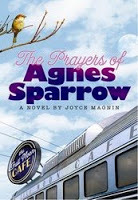
Here's the thing, when I was nine years old I decided that I was going to be a writer. Little did I know it would take forty years, the literary equivalent of Moses wandering the desert, for that to come true. I was fifty years old when I "received the call" that my novel, The Prayers of Agnes Sparrow was going to be published by Abingdon Press. They were starting a brand new fiction line and yep, Agnes Sparrow was one of their debut novels. I was filled with an odd combo of feelings that swung from elation to relief to utter fear, and honestly--embarrassment. Finally, after all these years of trying I was going to see my dream come true.
Sure, I would have loved it if the dream had come true twenty years earlier. There's something to be said for having physical energy and mental agility, but it didn't. I was fifty years old when my career left the launching pad. It was a rocket (I hope) that kept getting delayed for one reason or another—usually my own fault. I struggled with that for a while but then I chose to embrace the notion that my success began at fifty, exactly when it was meant to begin. I'm okay with it now.
I don't believe that the time spent in the wilderness was good for nothing. I graduated from high school—still with the dream in tact, found employment, went to college, got married, raised three children—I'm still raising my son—that's right, he's just twelve. He was another later-in-life success. I struggled through various degrees of financial hardships, medical traumas, near-death diseases, car accidents, teen years with my daughters, driving lessons, shoe-tying, toilet-training, marital separation, etc. etc. etc. But still in the back of my mind in the midst of all that life, I still knew that I knew that I knew that I was meant to write. I refused to give up, even though there were many times when I quit for a season, became so frustrated that I prayed for God to take the dream away from me and replace it with an undying fervor to work at a car wash. (Not that there's anything wrong with that. It just sounded easier.) Emily Dickinson said that, "success is counted sweetest by those who n'er succeed." I made that my theme song for a while, convincing myself that reaching for the stars was somehow better than grabbing hold of one. You see, pre-success holds more possibility than actual success.
So, what was going on in those forty years to prepare me for becoming a published author? Plenty. Tune in tomorrow for more. And let me know if success has come late to you. We can commiserate or celebrate together.

May 14, 2011
Why Do I Do It?
Here's the thing. Why is it that whenever I start a new book I suddenly feel like a failure, like the worst writer in the world. That there is absolutely no way I can write another book. It's crazy. I know there are stories inside of me, but there is just something extremely difficult about beginning a new project. It's like my ideas are encased in some impenetrable fortress that I can't break into. I get cranky and sullen and want to spend the day playing video games instead. But yet, like the call of the siren I am lured back to the keyboard or the yellow legal pad and a brand new Dixon Ticonderoga number two pencil and the urge to put words on paper or on screen rushes back with all the energy of a . . . bet you thought I was going to say a locomotive or tornado, no, like a slug. I sit and I wait for something to pop out of my brain and onto the page—something brilliant, something that will make people say, "WOW." But no, I sit in silence, waiting for my muse, who for me is an odd little man in a three piece suit who smokes cigars and hurls insults at me, to show up and inspire me. This is not a great way to make a living.
But eventually, a thought ambles by like little foxes from a bramble bush and then another and then another and I do my best to grab them, wrestle them to he ground and make the ethereal concrete. This is when I spend most of my time lingering in that strange world somewhere between the imagination and the literal. It's not always a happy place. This, I suppose is why so many writers turn to alcohol or insanity.
The funny thing is that I think my ideas are good ones. I play with them a while and then, quicker than they came, the ideas burst like balloons and fall flat to the ground and I have to start over. Or, I have two or three notions that I want to develop. Three very different ideas and I can't decide which one to work on. This is where I am right now. I mean how do you decide? In my mind can set the ideas out there and see if one or the other or the other rises to the top but there must come a time when I say, "Enough. I choose you." The trick is in staying committed until the writing is done. Writing that first exploratory draft where I search for a voice, character, plot, all that stuff that goes into making a novel. It's hard. Characters come easy—most of the time—story takes a little longer and plot—well plot can take forever or so it seems.
So why do I do it? Why do I torture myself this way? Writing is like being adrift on the ocean sometimes, hoping and waiting for the next wave of words to ride you safely to shore. I do this because frankly it's the only thing I do that when I'm doing it I don't feel like I should be doing something else. So I will sit with my cranky, corpulent, old, muse and watch the smoke from his cigar swirl around and wait for it to swirl itself into an idea I can use. Writing is waiting sometimes. It's hard.
But eventually, a thought ambles by like little foxes from a bramble bush and then another and then another and I do my best to grab them, wrestle them to he ground and make the ethereal concrete. This is when I spend most of my time lingering in that strange world somewhere between the imagination and the literal. It's not always a happy place. This, I suppose is why so many writers turn to alcohol or insanity.
The funny thing is that I think my ideas are good ones. I play with them a while and then, quicker than they came, the ideas burst like balloons and fall flat to the ground and I have to start over. Or, I have two or three notions that I want to develop. Three very different ideas and I can't decide which one to work on. This is where I am right now. I mean how do you decide? In my mind can set the ideas out there and see if one or the other or the other rises to the top but there must come a time when I say, "Enough. I choose you." The trick is in staying committed until the writing is done. Writing that first exploratory draft where I search for a voice, character, plot, all that stuff that goes into making a novel. It's hard. Characters come easy—most of the time—story takes a little longer and plot—well plot can take forever or so it seems.
So why do I do it? Why do I torture myself this way? Writing is like being adrift on the ocean sometimes, hoping and waiting for the next wave of words to ride you safely to shore. I do this because frankly it's the only thing I do that when I'm doing it I don't feel like I should be doing something else. So I will sit with my cranky, corpulent, old, muse and watch the smoke from his cigar swirl around and wait for it to swirl itself into an idea I can use. Writing is waiting sometimes. It's hard.
May 11, 2011
Book Dedications--So short, so meaningful

Here's the thing, they say book dedications are an act of love. It's the next best thing to having the subject of your dedication's name tattooed on your chest inside a big, red heart. And if you're like me, you read the dedications even though you might not have any inkling of its meaning, whether it's pedestrian or filled with secrets and longing. Dedications can be sweet, silly and mysterious. Of course many authors dedicate their books to a spouse. And, as in the case of F. Scott Fitzgerald, they do this in every book. For example, Once Again, For Zelda. And, given the sorry state of their marriage the words "Once Again" sound a bit tired. Ayn Rand dedicated Atlus Shrugged to her husband and her lover-two different men. Most of the time we have no clue who the person or persons are that the author names. Roald Dahl dedicated James and the Giant Peach to Olivia and Tessa. I suppose book dedications have a bit of immortality to them—just as books do. Oh, they go out of print but it seems to me that once a book is out there, it's out there forever. So perhaps dedicating a book to a person we love, someone who has had an effect, maybe good, maybe bad on our lives is a way of making them immortal also.
Behind every-- "This Book is dedicated to . . . " is a story. A story of the special relationship between an author and his or her friend, spouse, dog, sibling, student, even inanimate objects as was the case for one author whose name escapes me that dedicated his book to his beloved typewriter—a Remington I believe.
Here are some of my favorite dedications:
Maya Angelou, I Know Why the Caged Bird Sings
This book is dedicated to
My son, GUY JOHNSON
And all the strong blackbirds of promise
Who defy the odds and gods
And sing the song
Corneila Funke, Inkheart
For Anna, who even put The Lord of the Rings aside
To read this book.
Could anyone ask more of a daughter
And for Elinor, who lent me her name
Although I didn't use it for an elf queen
There are many books dedicated to a wife or husband (some having out-lived the marriage)
Mark Twain, The Adventures of Tom Sawyer
To my WIFE
This book is affectionately dedicated
The Lion, the Witch, and the Wardrobe, by C.S. Lewis
To Lucy Barfield
My Dear Lucy,
I wrote this story for you, but when I began it I had not realized that girls grow quicker than books. As a result you are already too old for fairy tales, and by the time it is printed and bound you will be older still. But some day you will be old enough to start reading fairy tales again. You can then take it down from some upper shelf, dust it, and tell me what you think of it. I shall probably be too deaf to hear, and too old to understand, a word you say, but I shall still be
your affectionate Godfather,
C.S. Lewis
Harry Potter and the Half-Blood Prince
To Mackenzie, my beautiful daughter, I dedicate her ink and paper twin
(The story behind this is that JK was pregnant as she wrote and both the book and her daughter were finished together.)
Zora Neal Hurston dedicated her novel Jonah's Gourd Vine:
TO
BOB WUNSCH
WHO IS ONE OF THE LONG-WINGDED ANGELS
RIGHT ROUND THE THRONE
GO GATOR AND MUDDY THE WATER
-THE AUTHOR
Larry McMurtry, Lonesome Dove
For Maureen Orth
And
In Memory of
The nine McMurtry boys
(1878-1983)
"Once in the saddle they
Used to go dashing . . . "
So, what are your favorite book dedications? Include it in the comments and I will pick two people to receive an autographed copy of Griselda Takes Flight, dedicated to my dear friend Nancy Rue or if you've already read it, Blame it on the Mistletoe which is dedicated to my mother.

May 6, 2011
Without Mom

Here's the thing, Sunday will be my first Mother's Day without my Mom. As most of you know, my mother passed away just before Thanksgiving and only three days shy of her 89th birthday. It was a tough passing. And I think this Sunday will be difficult. For over fifty years I had a mom. Sure, things weren't always great but she was always there and no matter what the situation, she was always ready with a smile or a pat on my hand. The thing I appreciated most about my mother was, well, for one thing, her sense of humor. I've said before that Flossie was one of the funniest women I had ever experienced. Sometimes, it wasn't intentional and other times she was quick and sharp and could pull a pun or an odd connection out of thin air. She could also bake pie better than anyone—hands down, THE best crust maker on the planet. I remember the cherry pie of 1982—the stuff of legend. There was simply something magical about this pie, as there was magic in so many things she did. The whole family felt it AND tasted it. I'm not sure I will ever be able to replicate that magic in anything I bake or do but maybe I'm not meant too. Maybe that magic was expressly my mother's. And that's okay. For a child of immigrants and cowboys—true, my grandfather was a true-life cowboy—a cattle puncher, my Mom did okay. She taught herself practically everything by doing—except to drive. My mother never learned—she just couldn't mange it. Probably better that way. What she did learn was the sport of baseball. Mom loved the Phillies but not always. She learned baseball out of respect and love and a healthy dose of, "can't beat him, join him," for my Dad. She watched with him and learned the game as the years went on until she became an avid fan, rarely missing a game. And she could spew barbs with the best of them.
My mother amazed me at times. She could clean a fish in record time. I remember watching her do it. The way she would hold the fish and run the knife up the fish's belly and in one swoop remove the guts and lop off the head. She always fed the heads and innards to the night critters. I've watched her pluck and butcher a pheasant, ducks, and quail and then turn around that same night and sew dainty details on a blouse she was making. She could make warts go away and soothe sore throats. She made everyone's wedding cakes and wedding dresses and still had time to minister to the neighborhood children, making certain all the kids within her corner of the world were at least given the opportunity to attend Sunday school. She worked in the nursery, taught girl scouts how to decorate a cake and make icing flowers, she altered dresses for a woman badly scarred from a fire. She loved animals and once nursed a baby robin back to health. The bird had a broken leg which she forced the vet to amputate. The bird lived with us for a while. My mother was pretty much fearless. Except on the day she died. Oh, she knew she was walking into the arms of Jesus. It wasn't death that scared her. The fear was in the leaving. She didn't want to leave us without a mother. Just a few hours before she took her last breath, I swiped a tear from the corner of her eye with my finger. It was a stubborn tear. I knew it would be the last one and so I kept it on my fingertip for a few seconds as though I held the last drop of magic and I could take it home, but no, it was Flossie's magic. I miss you Mom. Happy Mother's Day.

May 4, 2011
Just so you know . . .
You can purchase my books either paper or digital from these places.
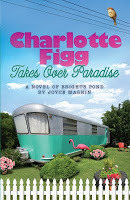
Barnes and Noble
Amazon
CBD
Borders
What fun!
They make great Mother's Day gifts. Moms everywhere love Bright's Pond, especially the pie. Send me your proof of purchase and I will send you the recipe for Charlotte Figg's Very Special Fresh Strawberry Rhubarb Pie.

Barnes and Noble

Amazon

CBD
Borders
What fun!
They make great Mother's Day gifts. Moms everywhere love Bright's Pond, especially the pie. Send me your proof of purchase and I will send you the recipe for Charlotte Figg's Very Special Fresh Strawberry Rhubarb Pie.
April 26, 2011
An Ode to Pollen

Here's the thing, since it is still April and therefore still National Poetry Month I wrote a poem which I dedicate to all my fellow allergy sufferers. I sincerely apologize to Elizabeth Barrett Browning.
Ode to Pollen
Oh, pollen, oh pollen
How do I loathe thee?
I loathe thee to the depth and breadth and snot
My nose can make when feeling
Out of sorts with itchy throat
And itchy skin
And watery eyes to boot.
Oh pollen, oh pollen
How do I loathe thee?
You make me sneeze and cough
And clear my throat
And scratch my eyes incessantly.
I loathe the way you turn
My car, a most disgusting yellow
And float around on wind and air
And settle on the ground
And make me sneeze and sneeze and sneeze
And sneeze and sneeze some more.
Oh pollen, oh pollen
How do I loathe thee?
'Tis every spring I dread your
Very presence and wish, oh wish
I were a fish
And lived down in the ocean.
Where no pollen can attack
And no degree of wind
Can carry you upon it's back
And make me swell with hives.
Oh Pollen, Oh pollen
How do I loathe thee?
I loathe thee more than
Mayonnaise and ants upon my feet.


