Ned Tillman's Blog, page 11
June 24, 2016
The Anthropocene merger of ecology, economics, and politics can no longer be ignored.
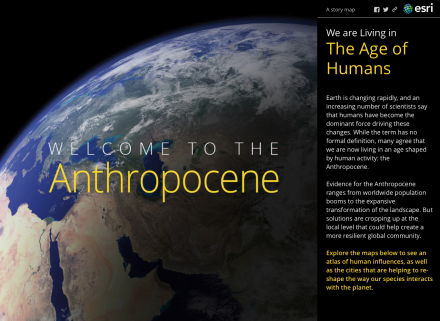 Jedediah Purdy’s essay in AEON may be challenging bedtime literature but it’s worth reading, and rereading, if you want a more holistic view of our current planetary predicament.
I find his conclusions to be a theoretical exploration if not a remedy to the daily frustrations that I run into. The whole idea of being able to do nothing about everything does not sit well me. I much prefer the lessons we have learned in the past that we can change behaviors and cultures, but it often takes a lot of effort and it can take decades.
The Transcendental Movement of the early 1900s took decades but eventually changed the American perspective of the human ability to change – to change one’s situation, one’s place in life. It gave us the sense that we can achieve much more than the life we were born into.
The Conservation Movement of the late 1900s taught us that we can and should preserve our natural resources including lumber, land, water, and of course our great national parks. We went from a culture solely focused on exploitation to one that started to balance other qualities of life into the equation.
The woman’s suffrage movement also took decades as did the human rights for people of color and sexual preference.
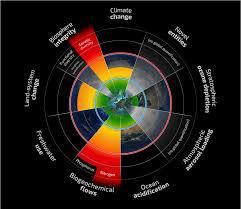 The basic idea and struggle for human rights – such as the right to democratic standing in planetary change – allows us, in fact, impels us to challenge our institutions to create a better and more sustainable world. We need to turn what appears to be an unmanageable situation into a campaign where we can all better focus our energies.
Purdy’s concept of a “democratic Anthropocene is just a thought for now, but it can also be a tool that activists, thinkers and leaders use to craft challenges and invitations that bring some of us a little closer to a better possible world, or a worse one. The idea that the world people get to inhabit will only be the one they make is, in fact, imperative to the development of a political and institutional program, even if the idea itself does not tell anyone how to do that. There might not be a world to win, or even save, but there is a humanity to be shaped and reshaped, freely and always in partial and provisional ways, that can begin intending the world it shapes.”
Purdy is Professor of Law at Duke University in North Carolina. His forthcoming book is After Nature: A Politics for the Anthropocene.


June 23, 2016
Signs of Summer
 The fireflies are in full mating season flashing their unique signals trying to attract just the right partner for the evening. My uncle once told me that he courted his wife while trying to figure out the details of these dramatic insects. He later published his findings of some very exotic fireflies from New Guinea. They are a fascinating species that is trying to share this planet with us. I am glad we stopped wiping out so many insect species by the indiscriminant spraying of pesticides to keep mosquitoes under control. Even with the Zika scare, it seems like most people are not over-reacting and are following the guidelines of the CDC.
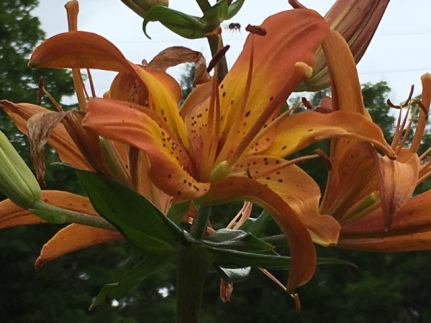
Daylilies are in full bloom these days as well. I love seeing them along country roads. The ones I photographed here were grown in a well landscaped garden. They are so large, they must have been fertilized. I wonder how much of the fertilizer fed the flowers and how much of it washed off in a rain.
Judging by the massive amount of submerged aquatic vegetation in the nearby lake, some of the fertilizer must have washed into the lake. This is a summer long problem. We use way too much fertilizer on our lawns and gardens and it ends up causing over-nutrification of our water bodies.
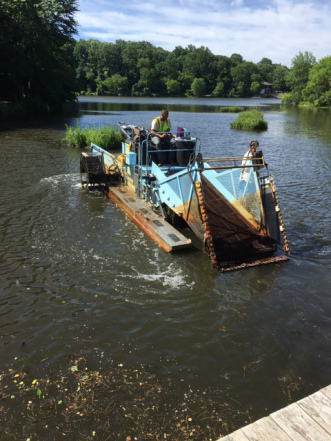 Here is a photo of how our local HOA (Columbia Association) tries to manage this excess nitrogen – they have fossil fuel driven harvesters and essentially mow the grasses in the lake. This is another sign and sound of summer. Things look better for a while, but as we continue to over-fertilize, the grasses come roaring back. In many cases they grow so long they end up floating on the surface. If we all cut back on fertilizing, and installed rain gardens to slow the flow, this problem would go away.
But in general things look very good this time of year. Enjoy it – get outside and go for a walk. Eat black raspberries along the paths – they are ripe now. Mulberries will be coming soon and then the blackberries. It is a glorious time of the year to forage.
Take-a-way: Let’s learn to work together with nature so we can co-evolve a future that is healthier for us all.


June 16, 2016
Bats, Bullfrogs, and Fireflies
 Kathy and I walked a friend home after dinner last night along an unlit path through the woods. The sun had set, the moon was out and we could see numerous stars – it was a spectacular time for a walk. Nighttime walks are another wonderful natural resource we have right in our backyards that very few of us take advantage. After last night’s experience, we are planning to do it much more often.
We walked around Lake Elkhorn in Howard County, MD. Kathy had on a head lamp which was helpful since the stretches in the woods were quite dark and the paths had steep edges. The path that we followed was deserted by humans except for one couple walking arm in arm – but the walk was full of life.
The first surprise was a bat that fluttered right over our heads. Several of them seemed to stay with us for a while, passing back and forth, our headlamp catching them in the light on each pass they took. They were probably harvesting the white moths that were attracted to our light. It was pretty neat to be escorted by bats.
As we approached the open meadows and wetlands at the east end of the lake, we were greeted by hundreds of fireflies doing their mating routines in the tall grasses. The area has been left to grow with many native plants and the fireflies seemed to like the habitat a lot.
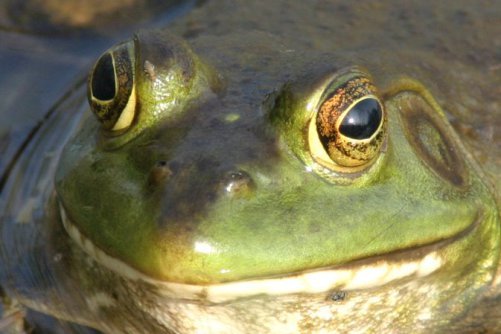
We were also treated by a series of bullfrogs calling out to their mates and often jumping into the water as we passed. Their deep calls resonated across the waters and off the tree-lined edges to the lake. We also heard them later as we drifted off to sleep with our windows open. It is a very soothing and primordial sound.
The last thing we saw was the reflection of our headlamp in the eyes of a small mammal. Turning off the light we could see the silhouette of a fawn standing by the water’s edge. We wished we could have spent the entire night out exploring and learning more about the nocturnal habits of our fellow creatures. I am sure that like the daytime, there is so much to see as a wide range of life goes about their activities around this vibrant ecosystem.
Take-a-way: Enjoy paths near your home for nighttime walks. Probably best to go with friends and be careful of your footing.