Beth Bruno's Blog, page 2
October 2, 2017
Field Notes from a Strong Daughter
Field Notes from a Strong Daughter with Sarabeth Weszley
I don’t really think of myself as a strong woman.
I just think of myself as a woman.
The “strong” is implied. Referring to myself as a strong woman feels like calling myself a “breathing woman.” I think it strange that I could be anything but.
I don’t say this to dismantle the impetus of the blog you are currently reading (how to raise strong women), but to give my mom some credit.
I don’t actually know what she did to raise me as an empowered woman, other than become one herself. I watched (in somewhat of an adolescent haze) my mom as she wrestled with the expectations placed on her as a mom in ministry, and I watched her slowly feel less and less of those expectations coming from God. What Christianity no longer seemed to expect of her, she no longer expected of herself, and I knew that whatever she no longer expected of herself as a woman, she didn’t expect of me. It was a rather free-spirited girlhood.
I experienced pretty dramatic culture shock when I moved three hours West of the Chicago bubble I grew up in, to Iowa. Both of my parents held a view of God that made them feel equal as partners. My dad did the laundry; my mom led a non-profit. I led worship for my home church congregation, composed of grown men and women. None of these ways of life felt political to me; they felt common sense, and they felt spiritual! I didn’t believe God left me out of any part of his kingdom because I was a woman.
I landed in an Iowa church that didn’t let women lead worship, preached on Christian gender roles, and didn’t leave much room for me to question any of that (although I was still quite vocal about my concerns). When I did express disagreement, I was told my defiance was unbiblical womanhood. My role, I was repeatedly told, was to come under men and silently make their ministry unto the Lord look better. This so contradicted my egalitarian upbringing, which also claimed to be rooted in and defended by the Bible. I was confused. I started to study scripture, theology , and church history, attempting to understand how the God who so respected me all my life was also the God of this church.
At the same time, I was old enough that I started to notice the mistreatment of women all around me—not only in my church but also in my classes, and even in the stoner-artist “progressive people” parties I attended. Sexual violence and verbal abuse were commonplace for women in my town, both in and out of the church. I wasn’t quite sure of my theology yet (and to be honest, I’m still not) but I knew this was evil to God.
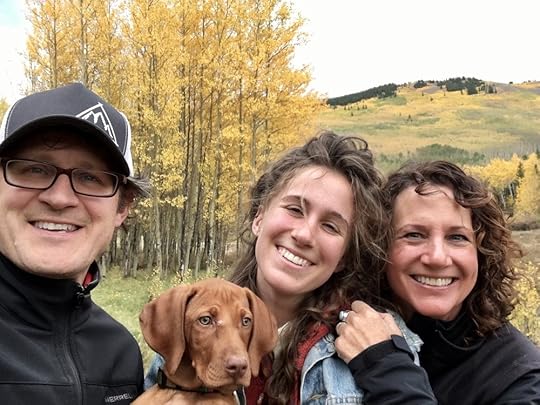
My mom and dad both let me throw my fists and tell them the world was ending as I discovered gender inequality, as if it hadn’t existed in Chicago. They didn’t tell me to calm down. There were enough people labeling female anger “hysteria” and “moral decay.” They knew I just needed to be listened to, even though not everything I said was entirely sound.
Eventually, through all the unrestrained anger, I began to hear God asking me to forgive my church, and ultimately, to forgive what I now came to know as sexism. I even felt called to acknowledge my own near-sightedness and sin in how I dealt with the leadership there. The funny thing is, when people had told me to do the same (submit, forgive, apologize to people who should be apologizing to me) it felt like sexism. When God told me, it was absolutely liberating.
That’s what I’m most grateful to my parents for. They trusted the Holy Spirit enough to let me discover righteous anger and forgiveness on my own. This was their parenting style as a whole, actually! I’m sure they were slightly terrified at the time, letting me screw up and swing between extremes in my worldview, but that freedom empowered me as a woman, and taught me how to empower others.
Now, although I dismiss many of the expectations my society places on me as a woman, I actually have some new expectations of myself, as a human.
I expect myself to forgive oppressors, as I hope others forgive me for my own inadvertent role as an oppressor in society (my nationality, race, wealth). I expect myself to be kind to the man who comes into the restaurant I waitress in, who asks me to compare my body to his fiancé’s and humor him with some flirtation—not because he deserves it, but because I’ve deserved nothing I’ve received. I expect myself to stand against sexism with strength and humility.
I must repeat, though, had anyone tried to convince me of this besides the Lord himself, I would not have listened; I am too spiteful and stubborn, and all too familiar with human attempts to silence women in the name of “morality.” So thank you, parents, for letting me stumble my way into self-sustained empowerment.
~Sarabeth
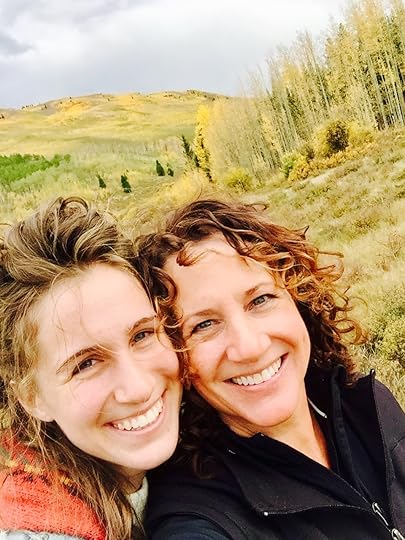
Sarabeth Weszely is a twenty-one year old writer, musician, and waitress who recently graduated from University of Iowa with a degree in English and Social Innovation. She recently released her first full-length, live album, I Talk to God out loud and we call each other Babe. This project along with many others serves as an unconventional prayer for those who do not pray and who are tired of praying alike, also addressing issues such as racial injustice from the angle of personal confession and apology. Sarabeth has a passion for human equality, playful art, and free-spirited Christianity. Her poems and essays have been published in the Iowa Chapbook Prize, Earthwords literary magazine, and Mockingbird.
Angie Weszely is CEO and co-founder of the Christian nonprofit ProGrace. She has spent the past 12 years equipping Christians to create a third response to the abortion debate and meet the needs of both woman and child, first as President of a Chicago-based Christian pregnancy organization, and now in her work with ProGrace. As an accomplished speaker and coach, Angie leads ProGrace workshops and training sessions, while directing the mission, vision and direction of the ministry. In her free time, she likes to hike in her Colorado mountain neighborhood, watch any BBC drama she can get her hands on, and hang out at home with her husband, two kids and three dogs. Connect with her on Twitter @angieweszely.
Learn More about A Voice Becoming


September 18, 2017
From Cheering on the Sidelines to Playing: Raising Girls while we Raise Ourselves
A Voice Becoming Blog Series from Beth Bruno on Vimeo.
From Cheering on the Sidelines to Playing: Raising Girls while we Raise Ourselves with Tracy JohnsonI had no idea that I would become more of myself for having had children, and my four daughters have each called out differently to the best in me. In helping them discover themselves I have often been faced with choosing how to more fully embrace my own self.
My second born, Allison, is the feeler in our family and I mean “feeling all the feels”, all the time. She is my extroverted, passionate, artistic wild child and she was also diagnosed with a learning disability in first grade. Growing up behind her academically high achieving sister was a challenge.
To be honest I struggled to understand the sister dynamic, as I didn’t have a sister growing up. The girls had an interplay of intimacy and animosity that was mind boggling to me most of the time. Sometimes I felt frustrated by their bickering and other times I felt like I had somehow missed out on something so beautiful it ached inside of me.
When Allison was eleven or twelve we were driving home from school one day when she began talking about how she wanted to get the cartilage in her ear pierced. I asked her why and she proceeded to talk about one of Katy’s friends and how she really felt Carly got her because she was an artist and wore interesting clothes and was the second born in her family, like Allison, and she had her cartilage pierced. She went on to make a comment about feeling alone in our family and like none of us understood her. I wasn’t sure how to respond, but I found some words and said, “I love that you see things in Carly that tell you that you belong.” Katy rolled her eyes and I quietly worried that I was losing Allison.
I pondered that whole conversation for days. I hadn’t wanted to come off churchy or with some sort of predictable response like, “Well you know you belong in our family” or “You’re not alone Al, we all love you.” I knew those words would just hit some hollow place inside of her and roll around leaving her sure that she was right and I didn’t understand her.
I had my own ear piercing story and it was a far cry from wanting my cartilage pierced. The whole process of simply getting my ears pierced had felt like a battle between good and evil and clearly ear piercing was evil and highly questionable. While I had often thought it would be sweet to have my cartilage pierced I never really considered doing it, sure it would garner raised eyebrows and judgment.
A week or so later I took a trip to visit a woman who was a mentoring presence in my life. As we stood in her kitchen talking one evening I shared about the kids and told her some of my current favorite Allison stories. She listened and said, “You know Tracy, it seems like you really cheer Allison on and I love that; and I see you on the sidelines and I wonder what it would be like for you to get out on the field and play with her?”
I remember standing there and feeling like I had been invited to something good. I didn’t have an answer in that moment, but I knew in my gut that I wanted to get out on the field with my girl and play.
I flew home pondering the possibilities and decided that a great way to play with Allison would be getting our cartilage pierced together. I picked her up alone from school one day and she was surprised and curious, “what are we doing Mom?” I told her we were going to the mall to get our cartilage pierced together. She was shocked, and filled with joy. She couldn’t stop smiling and asking me, “Seriously, Mom, seriously. Why? Why are you doing this?” I told her that I loved her creativity and uniqueness. I told her I knew she was different from Katy and I told her that I’d always wanted to do it and how glad I was that we could do it together.” Her eyes danced as she listened and she was just a bit tearful.
It wasn’t as easy as I had thought it would be to get it done together. State laws prohibited me from getting her cartilage pierced without her having a military or state issued form of identification, which we didn’t have. Allison wasn’t bothered at all, “Well, Mom you should get yours done so I can see how bad it’s going to hurt!” So, I did. And, I was determined to find a way to get Allison’s done too.
A few days later with a piercing gun borrowed from a friend I pierced Allison’s cartilage in the parking lot of the conservative Christian school she attended, which did raise a few eyebrows and garner some judgment, somehow making it even sweeter.
It’s a fun story that marks the day I stopped cheering from the sidelines and began playing with my daughter to validate who she is and the uniqueness of her heart and soul, to let her know I was with her. The beauty of it is that the validation I gave to Allison came from parched places inside of me that were watered in the process of loving her well.
Allison and I have continued to play and mothering her has taught me much. Today, she has her masters in leadership and works as a resident director at a college where she is passionate to see and care for each of her students as she pushes them to engage with topics of diversity, self-care, intentionality, and identity. I remain grateful for the wise woman who invited me to get out on the field and play - it’s wisdom I have passed down many times to other women trying to figure out how to mother their girls well.
~Tracy
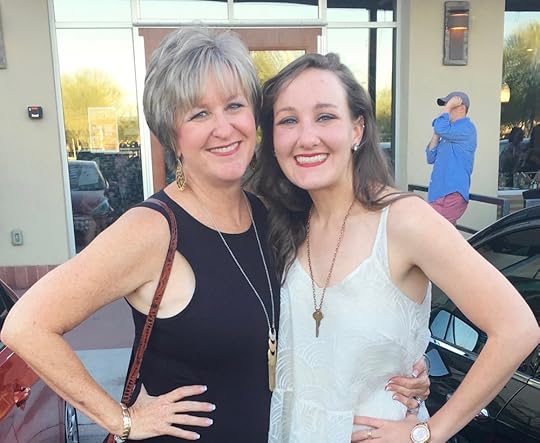
Tracy and Allison
Tracy Johnson is passionate about nurturing communities where people experience healing, hope and celebration. A certified lay counselor she has written curriculum and traveled the world speaking on healing in the context of abuse. Married for 30 years, she and Mark have five children. She is the founder of Red Tent Living and can be found on Instagram and Twitter @seizedbyhope.
Learn More about A Voice Becoming
September 12, 2017
Raising a Phenomenal Woman
A Voice Becoming Blog Series from Beth Bruno on Vimeo.
The Year of Phenomenal Women with Tamara CookWhen I was a teenager, I had the amazing opportunity to hear Maya Angelou tell her story live. I had been blown away by I know Why the Caged Bird Sings and her poetry including the beautiful and a bit cheeky Phenomenal Woman with the famous refrain, “I’m a woman phenomenally. Phenomenal woman, that’s me”. I loved the strength that Maya Angelou projected in her story and especially in this poem. So, when my husband and I decided to design a coming of age process for our twins building up to their 13th birthdays, I was inspired to call the process with my daughter the “year of phenomenal women.”
As I thought and prayed about how I wanted my daughter (and me!) to grow, the fruits of the spirit from Galatians 5 seemed a beautiful guide for our journey. During a silent retreat, I sketched images linked to each fruit and brainstormed scriptures, books, movies, songs, inspiring women and related activities. I then reached out to an artist at Kitengela Glass to commission small round stained-glass circles to represent each fruit. Each outing began by giving my daughter a stained-glass which now all hang across her bedroom window. Our outings ranged from extravagant nights away to a simple lunch on the way home from the salon but each holds a special place in our hearts. Our conversations ranged from the silliness of crushes to the deep complexity of cross-racial adoption and identity. We laughed. We cried. And we each grew more into the phenomenal women that God made us to be and become.
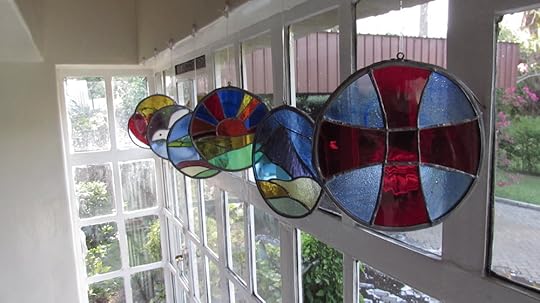
Here is a taste of our experience during the year linked to each of the fruits of the spirit:
Love: We kicked off the year with a night away including a sushi-making class. We studied the famous love chapter in 1 Corinthians 13 about love as an action, not as a fairy tale. The stained-glass was a simple but powerful heart. We stayed up late watching movies linked to love (one from her generation: Catching Fire with lots of examples of selfless love and one from mine: Pretty in Pink with several different angles on what love means). I tucked her into bed by reading our worn copy of I Love You as Much and singing The Rose, a song I used to sing at bedtime.
Joy: We considered the joy of our salvation in Psalm 51 and the line in Amazing Grace “the hour I first believed” that always brings a smile to my face. The stained-glass was a smiley face. The outing was a lunch out where we spent time joyfully staring at the clouds and imagining what shapes we could see.
Peace: We explored the armour of God described in Ephesians 6 and especially what it means to have our feet fitted with the readiness that comes from the gospel of peace. The stained-glass shows a dove in the shape of a hippy peace sign. Our shoe shopping outing was perhaps a bit too silly of a connection but we had a deeper conversation around I am Malala.
Patience: We listened to U2’s 40 inspired by Psalm 40 and the idea of waiting patiently for the Lord. This stained-glass is an acacia tree reminding us of the patience of Wangari Maathai who embodied peace in her fight to bring the green belt movement to Kenya. She was awarded the Nobel Peace Prize in 2004, the same year we adopted the twins while living in Kenya.
Kindness: We pondered the words of Isaiah 58 to loose the chains of injustice, share food with the hungry and provide shelter for the poor. The stained-glass was a sunrise recalling verse 8 “then your light will break forth like the dawn.” We also learned more about the work of Jane Addams and the Hull House.
Goodness: What better description of goodness could there be than the sermon on the mount in Matthew 5? The stained-glass was a mountain and I had hoped we would go for a hike but she wasn’t interested so I didn’t push it and we still had a good talk.
Faithfulness: In a world where faith can be so misunderstood, Romans 12 especially verse 2 reminded us that faith is not about conforming but about being transformed by the renewing of our minds and testing and doing God’s will. The glass was a simple cross reminding us of how Jesus embodied faith as well as all the other fruits.
Gentleness: The imagery of Psalm 23 reminds us of God’s gentleness as he leads us beside still (and gentle) waters. The stained-glass was a stream and we read a stunning rendition of Psalm 23 interpreted for an African-American urban community.
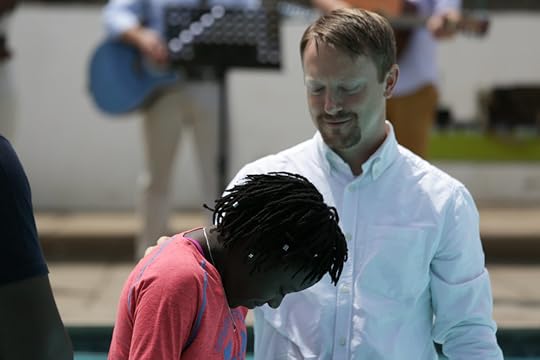
Self-control: We used Paul’s self-discipline metaphor in 1 Corinthians 9 of training for a race as we prepared for a 5k and our last night away. The stained-glass was a rainbow finish line accompanied by a silver necklace with all the fruits inscribed. We ran the 5k on our own because the race we registered for was the same morning as the baptism service. Both twins had decided to follow their steps of faith into the pool that morning where Daddy dunked them with tears in his eyes.
It has now been almost a year since we finished the Year of Phenomenal Women. The teenage years continue to come with the expected and some unexpected challenges. But those stained-glass windows still glisten in the window to remind us both what it means to be phenomenal women.
~Tamara Cook
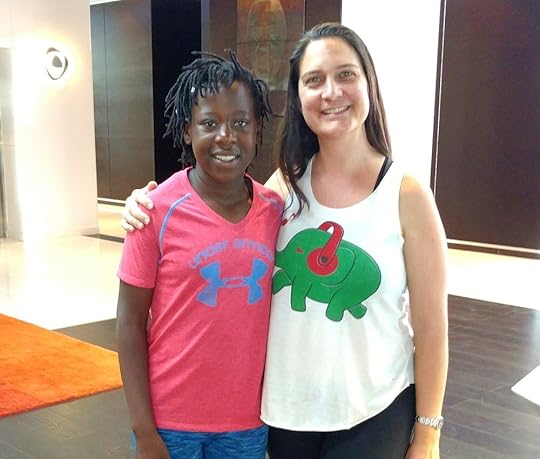
Tamara and Kayla
Tamara is a follower of Jesus, wife of an amazing man who happens to be a pastor (www.lavingtonvineyard.org), mama of three very cool kids, and head of digital innovations at Financial Sector Deepening Kenya (www.fsdkenya.org). She was raised in Chattanooga, Tennessee, studied international affairs at George Washington University, got an MBA at INSEAD in France and has lived with her family in Washington DC, Nairobi, Paris and Seattle while working to increase the value of financial services for people living in poverty.
Read more from Tamara in A Voice Becoming: A Yearlong Mother-Daughter Journey into Passionate, Purposed Living.
Learn More about #avoicebecoming
September 5, 2017
Where Have you Come From: Restorying the Past
Movie Recording from Beth Bruno on Vimeo.
Restorying the Past with Jenni LillieShe and I flew to the small coastal town in the evening. My anxiety grew as we descended into the airport. I hadn’t been back in 12 years. The city was full of loaded memories for me. I knew she needed to see where she was born and hear the story of our brief time there that included her first year of life. I was ready to face the city with all of the underlying weirdness from the dark memories of that season.
She had seen the photos from her birth and the day she was born. She had never questioned why her dad wasn’t in any of them. I hadn’t told her the full story yet.
The first full day was a surprise of her learning where she came from and full of stories. Our first destination was a retired battleship that you can tour and walk through. We ventured into the guts, galleys, and various decks ultimately ending up on the very front of the ship. As soon as I saw the enormous anchor, I knew it was where I would tell her the hard stuff of her beginnings with our little family. I looked around and it appeared to be just us on this huge ship. My heart started racing and I knew it was time.
We sat down on the anchor and I pulled out a photo album from when I was pregnant, the day she was born, and her first few months of life. We flipped through the pages and I walked through the beauty and joy of finding out she was a girl and how excited we were. I paused, took a deep breath, and shared about life being a battlefield with hard things and no matter what happens in her life God is and will always be her anchor. He is good and loves us so much.
I held on to her when I told her that her dad and I were separated while I was pregnant and he wasn’t there when she was born. She was shocked. Her dad had written a note for me to give her when the time was right. She read it and we cried. She asked me a lot of questions, we talked, and for several minutes we sat quietly on the giant anchor in the silence and stillness of the sunshine. We stopped in the gift shop on our way out and she picked out a necklace with an anchor to remember.
I took her to the beach where I would go with her as a baby and we had a picnic lunch in the afternoon. She ran, played, and splashed in the waves. The ocean is her happy place.
Later that evening, we went for a drive before dinner to visit the hospital where she was born. It was dark outside like when I had arrived there 12 years before to deliver her, but it was different too. The main building where she was born was there, but there were new buildings surrounding it. We walked inside and made our way down the hall towards the gift shop. A surprise gift was planning to be there - her dad. She ran to him when he walked in and jumped into his arms. It was beautiful to watch. This time it wouldn’t be just the two of us leaving the hospital together. The three of us were leaving the hospital with a new set of memories as a family. God makes all things new.
The anchor has become my daughter’s symbol of her journey into womanhood this year and part of the foundation of her becoming year. My prayer is she will put her hope in God all of her days and He will be her anchor in all of her joys and sorrows of life.
~Jenni
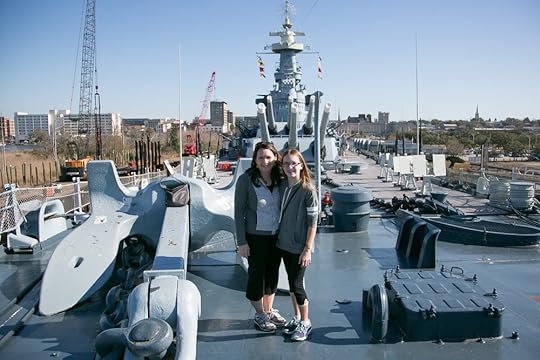
God makes all things new. Jenni and Anna.
Jenni has lived in France, auditioned for The Amazing Race, and started a photography business. These days she is growing two kids with her husband in Colorado and leading an outreach into strip clubs. She can be found on Instagram @jennilillie or Facebook @jenniowenslillie.
Read more about Jenni in A Voice Becoming: A Yearlong Mother-Daughter Journey into Passionate, Purposed Living.
Learn More about #AVoiceBecoming
August 1, 2017
When a Holy Desire is Thwarted
For Red Tent Living this month...
Perhaps you can relate? Ever feel that a genuine, sacred desire is being thwarted? Yeah, that's us.
Clouds move in and the wind picks up. Sunny, blue skies turn gray and thunder ripples west. Another Saturday’s desperate attempt at play, thwarted. Our family story, on repeat. Stuck in a motif we’re rather tired of, weary of.
It began while living overseas. In a megacity of concrete and traffic and millions and millions of bodies, we craved space, nature. We brought picnics to the waterfront patch of green, but stray cats and dogs forced us to move. We bought bikes to transport on the ferry across the sea to an island without cars, but the hordes of people made it virtually impossible to peddle. We left early on weekend mornings to reach a forest outside of the sprawl, spent a refreshing few hours in the trees, before sitting in endless hours of congestion homeward. The hot, stop and go sucked the life from us.
We left the megacity with weary souls.
In the Pacific Northwest, we tried camping with friends. We emptied the nearby camp store of tarps and they were still insufficient to protect us from the onslaught of rain. Years later, when we had all moved to sunny Colorado, we tried again. Memorial Day in the mountains brought rain. We went south in June: Rain. We went to the desert the next year: Rain. We went east to Nebraska: Rain.
It became laughable, so long as we were together. But alone as a family, after a tiresome week of holding trauma for clients or teaching about trafficking or struggling with school friends, we reach for play. When it alludes us time after time, it is not so funny. It is the very opposite of funny.
Continue reading here.
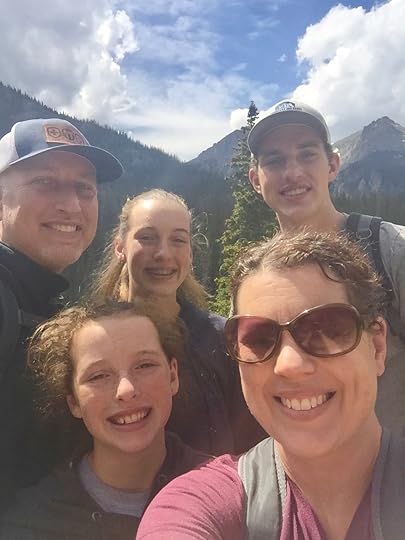
Update
It did not rain!
May 3, 2017
Who Would We Be If We Were A People Of Grace?
For Red Tent Living this month...
If we agree on one thing, perhaps it is that we’re all human?
Since nothing else approaches unifying these days. Perhaps there is that?
A fearful mama writes a post that goes viral. Protecting 3 small children in Ikea, she fears a stalker and tells her Facebook community she is a target of human trafficking. The machine explodes, one side spreads her sincere warning while the other side blasts her misinformed reactionary response.
Mistakenly, she assumed her community was safe.
The same media blamed for not addressing the issue is now blamed for sensationalizing it, fueling stereotypes, spreading inaccuracies. If we didn’t have thoseshows we wouldn’t have these mamas: hysterical and wrong.
The #Ikeamom is not unlike #alllivesmatter and #weareallimmigrants. Well-meaning folks, learning about injustice, trying to synthesize newfound knowledge with lived-experience. Trying to be compassionate. Trying to engage. Trying to support. Doing what they know to do with the understanding they have.
But the machine is ruthless. And there is no space for wrestling truth, stumbling around justice, and just stepping on toes.
What if we all decided it was okay to step on our toes?
Keep reading over at Red Tent Living.
March 7, 2017
The Long Awaited Guilt-Free Book About Connecting with the Sacred as a Mom
Hello Moms! Perhaps you're like me, parenting teens and holding on to a faint memory of having the luxury of time and mental capacity to linger over the Word and in prayer. Many of us go back to work or increase hours as our kids get older, only adding to the depletion of those two valuable assets: time and mental capacity! Can you relate?
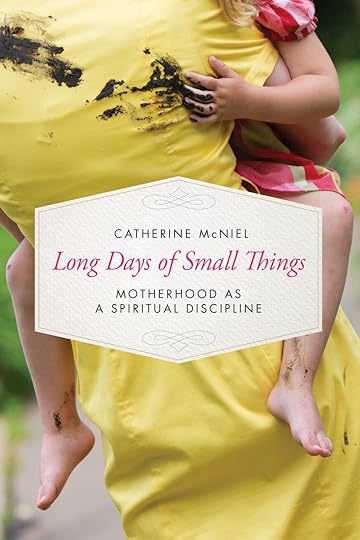
This is why I love my friend, Catherine McNiel's book, Long Days of Small Things, which launches today! Removing all guilt and readjusting our expectations, she writes of how to turn the everyday, mundane and monotonous moments into something sacred. And it is beautiful!
If you're a young mom friend, beware: This is the book I'll be giving out at showers and sending as congrats this year!
Enjoy getting to know Catherine and her heart for the book in this interview. And pay attention to the last question if you're wondering if you should have pulled "it" together by now with older kids!
Catherine, introduce yourself to us.
Thank you! I’m a mom with three kids (and a few part time jobs). I love to read and garden. I love to study theology and ancient cultures. I’m always trying to learn something new. I enjoy getting to know my neighbors and learning how different people see the world. I love to explore how theology impacts our real, physical lives…and how our real lives impact theology. I’m enamored by the creation of new life but find that working in the garden is less exhausting than pregnancy.
Now, introduce us to your book Long Days of Small Things: Motherhood as a Spiritual Discipline.
Long Days of Small Things is a book that looks at the real life work we do in our everyday lives, and finds God right here in the midst of it. It’s a book for moms (or dads…or grandparents…or caregivers…) who know they don’t have any extra time or energy, but still want a way to connect with God and discover how to find Him.
How do you do that in Long Days of Small Things?
In each chapter I tell stories from our real lives—the seasons and stages of motherhood, pregnancy and delivery, infant days, sleepless nights, caring for children of all ages—and the tasks that fill them. I look at spiritual tools that already hide there—like sacrifice, surrender, service, perseverance, and celebration—and consider how we can open our eyes to the spiritual boot camp we walk through every day. Without adding anything extra to our live or to-do lists, we practice so many disciplines every moment of the day.
Why did you decide to write Long Days of Small Things: Motherhood as a Spiritual Discipline?
A few years ago I was a work-from-home mom with a baby, a toddler, and a preschooler. These precious, demanding children took me all the way to the end of my rope…and left me there indefinitely! My life changed in every way, yet I heard only the same spiritual prescriptions I’d always heard: spend quite time each day with God. Find 30-60 minutes each day to be in silence and solitude before the Lord. As I considered the classic spiritual practices (which I love!)—prayer, worship, fasting, meditation, service, solitude, etc.—it became abundantly clear that the realities of motherhood meant I was likely to fail. Or opt out entirely.
But my spirit didn’t allow me to do that. I heard a lament rising in the hearts of the women around me—I have nothing left, nothing left to care for myself or give to God. But as I looked at the actual seasons and tasks of motherhood, I was convinced that there was no better “boot camp” for my soul. Each day we mothers create, we nurture. Each day we are pushed to the end of ourselves and must surrender, sacrifice, and persevere. Each day we serve, pouring ourselves out. We empty ourselves for those in our care—and isn’t this emptiness the very reliance on God that the spiritual disciplines are designed to produce?
[bctt tweet="We empty ourselves for those in our care—and isn’t this emptiness the very reliance on God that the spiritual disciplines are designed to produce?" username="bethhbruno"]
I’m convinced that motherhood is doing an eternal work on my soul, even if I’m too exhausted and overwhelmed to notice just now.
What are the “Practices” that you describe in Long Days of Small Things?
At the end of each chapter, I list three things we are doing already—things like walking, eating, driving, changing diapers, going to work. And I explore how we can use these things, already in our daily routines and schedules, to awaken to God’s presence with us. Moms often don’t have time to add additional tasks and tools into our days, but that doesn’t mean we can’t use the tasks already there! In fact, in many cases, I think these natural things are the most effective.
How has motherhood impacted your understanding of spirituality?
We think of spirituality as something that happens in our minds, in silence. We are taught that our bodies, our mess and complications and noise hold us back from being with God. That doesn’t leave a lot of hope for moms, whose pregnant or post-partum bodies, newborns, toddlers, and van-full of carpool kids have no end of loud, messy, physical, chaotic needs.
But God made us, didn’t He? Genesis describes Him getting in the dirt and forming us from the dust by hand, then breathing His own breath into our mouths. That’s pretty physical and messy! Then He actually took on a body Himself. The King of Kings wiggled around in a woman’s womb, surrounded by amniotic fluid. He entered the world through her birth canal. God was born, you guys. That’s our Good News.
All this physical stuff that we feel keeps us from Him is the same stuff He used to meet with us, to speak to us, to save us.
So Long Days of Small Things is a book for moms “who have neither quiet nor time” as the cover says—or dads, grandparents, and other caregivers.
Describe an experience that first caused you to understand motherhood as a Spiritual Discipline.
I was shopping with my three kids. Can you imagine the scene? Lugging my infant in one of those terribly unwieldy baby-carriers. Holding my toddler by the hand, while my preschooler zoomed around the store. The diaper bag was falling off my shoulders, and I clenched the grocery bags with the same hand that grasped my toddler.
And then…the door. I couldn’t figure out how to get us all through. The baby was wailing for milk and a nap, the toddler and preschooler needed lunch (and a nap). I wanted lunch and a nap too, truth be told. But mostly I just wanted to get us out the door. No one held it open for me, but plenty of people watched me make a fool of myself trying to wiggle us all through without banging any heads or pinching any fingers. It felt like a hero-feat, an epic win.
When I finally got everyone home, fed, and sleeping, I sat down to read an article I’d been saving; a short biography of a favorite Christian teacher. The biographer described this hero of the faith as so spiritual, he radiated peace just by walking through the door.
This stopped me in my tracks. The memory of how I looked going through a door was so fresh in my mind. I realized that if spiritual growth entailed developing an aura of peace and radiance, I was never going to arrive—at least not without getting rid of these precious babies!
The contrast between this teacher and myself was so stark, and I realized he and I were simply on two separate paths. I was seeking God through the chaotic but life-giving seasons and tasks of motherhood, and this was going to look entirely different from the classic spiritual practices. “Results may vary” as they say.
How is this book different from all the other books and conversations out there regarding motherhood today?
There are so many books out there for moms on the topic of devotion and spirituality. Almost all of them have this in common: after admitting that moms are exhausted, stretched too thin, without any margin or time or energy, they look for a few extra minutes here or there which might be harvested for God; or offer a Bible study or prayer list that might fit in the tiny slots. Get up at 4:30am before the baby wakes at 5am! Read two minutes of the Bible each day!
I’m all for doing these things when it works, but I’m convinced that we don’t need to exit motherhood to have a spiritual life. Our children are what we create, and this is where our Creator God meets us. I’m certain of it. Without adding more “should’s” or “to-do’s” to our days, we can open our eyes to a unique spiritual journey, made just for us—and find him here. We’re already doing it. All that waits is for us to breathe deeply and being to drink.
How have you noticed the "practices" change as your kids get older? Can you give one example of how a mother of a tween might experience similar daily spirituality?
That's a great question. My kids are still on the younger side, my oldest is ten. It does seem like the practices change as they get older. Maybe I'm getting more sleep and more time to myself, but I still have ample reasons to lose my patience, or worry, or realize that the parenting task before me is going to require everything I have and probably a whole lot more. And this is where I think parenting becomes a spiritual discipline -- when we have to dig deep and rely on God through stages of suffering, surrender, service, perseverance, etc.
I think the key to everything I describe in Long Days of Small Things is awakening to see that God is already present in each moment we're in. And he invites us to remember him, to reach out to him right there, in the midst of all we're doing. So in my book, I describe what this might look like in the baby stages of breastfeeding and diapers, but I also describe what it might entail when driving carpool, cooking dinner, or punching in at work. Our daily tasks might change as the kids get older, but the key concepts stay the same.
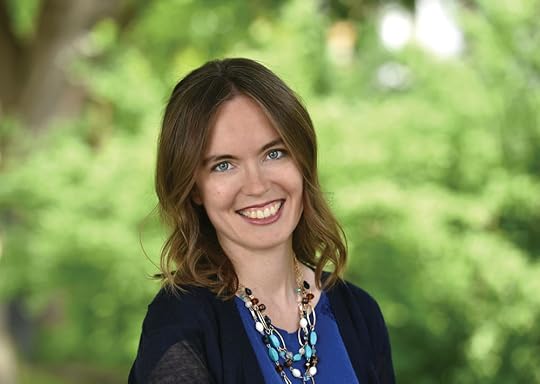
Bio: Catherine McNiel survived her children's preschool years by learning to find beauty in the mayhem. Now, she writes to open the eyes to God's creative, redemptive work in each day. The author of Long Days of Small Things: Motherhood as a Spiritual Discipline (NavPress, 2017), Catherine cares for three kids, works two jobs, and grows one enormous garden.
*I received this book to review and help launch.
January 13, 2017
When and How to Have Tough Conversations with Your Kids

I had a proud mama moment this week. My youngest, a budding activist who happens to be a 5th grader, declared she was one of a few kids who raised their hands when the teacher asked who knew of Malala. She then apparently took over the discussion about girls’ education and Malala’s efforts, having not only read the book, but watched the documentary, He Named Me Malala.
Malala is her hero.
She knows about the youngest Nobel Peace Prize recipient because I bought her the Junior edition in 3rd grade. In 4th grade, I pulled her out of school when limited viewing of the film came to town. And, we’ve continued to discuss global inequity, girls there vs. here, how education decreases terrorism, and the overall privilege she enjoys. She stayed up late the night CNN aired Michelle Obama’s We Will Rise, celebrated Advent with the family at the After Spring Syrian Refugee documentary, and cried with me over Hidden Figures last week.
She’s an activist because of me. She’s a little women’s rights campaigner because of me.
And I’m proud.
A friend asked how to have tough conversations with kids and I knew, he was referencing porn, sex and sexuality, online safety, suicide… all the things we parents muster up the courage to address. We look for books and ask our elders, hoping for an easy, miraculously “safe” way to handle these sensitive topics. And then, if we’re intentional, we schedule a night, a breakfast, a weekend to convey the information, breathing a sigh of relief. We expect behavioral adaptations will follow.
What if they don’t?
Are my kids the only ones who have a short attention span? Is my son the only teen who says “got it” ten billion times a week as the most obvious attempt at covering up a blow off? Surely, I’m not the only parent who repeats herself.
I think osmosis is more effective than a fire hose. Hanging truth upon experience is what makes meaning. Slow parenting looks like repetition over time plus example. And this? This is not accomplished in a singular event.
We cannot teach our kids media literacy over dinner. We won’t raise sexually pure kids as a result of one special weekend. We will not inoculate them from peer pressure after one bullying presentation.
How do parents have tough conversations with their kids? Start young. Don’t stop.
My 10-year old can handle watching a film about Syrian refugees because we’ve talked extensively about global issues. She could read about Malala’s volatile and dangerous life at age 8 because I didn’t shield her from the world’s pain. She wears a “People Don’t Buy People” sweatshirt to school because she gets modern day slavery. Even if she doesn’t fully understand it or picture what it entails, she gets people being forced to do something they never wanted to do.
Raising children to engage the brokenness and darkness and glories of the world as adults requires exposing them to the brokenness and darkness and glories of the world as kids (in age appropriate chunks). As Kate Conner, author of Enough, writes, “Crack the door and let all of the broken, beautiful humanity flood in like a sunbeam. Let it in; let it move her. Let it inspire her, wreck her, challenge her. Let it change her. If you want her to catch the fire, you’re going to have to put her near a flame.”
If you want to have tough conversations with your kids, you’re going to have to get them near the flame. And of course, you’re going to have get near the flame too.
December 20, 2016
21 Years Later. Marriage = Work.
I used to get nervous (on behalf of the author) when several books on the same theme released around the same time, as if the publishers didn’t know this was going to happen. As if the other network broke the news first and one reporter would receive an award while the other might lose her job. Now, I realize that this is a sign of the Divine. It’s a good thing. We should take notice. God is trying to get our attention.
When several authors start writing about similar things and publishers start publishing, we should wake up because the Spirit is moving. He’s moving in and through his people the way he used to do with his prophets. And are artists not prophets? Is it not the role of artists to protest and warn, correct and critique, exhort and instruct? To make visible the invisible. To make meaning of all the pieces? When writers start writing about similar things, the Spirit of God is trying to make visible the invisible. He’s using the voices of his author-artists to make meaning for us.
So in the last few months, as 3 Christian women have released books about marriage, I’ve paid attention. I’ve read them all. And I’ve tried to discern what the Spirit might be saying, particularly considering how different they are in theology, practice, and voice. I’ve read them as a married person and a friend of married persons and the wife of a marriage counselor. I’ve considered who I might give which book to and why and what God had for me in each one and why.
My big conclusion is that the Spirit is reaffirming the covenant of marriage while also affirming how difficult the relationship is. Yeah, it’s hard, but stick with it because it’s the way I intend to bring you healing, bless your community, make you more like me, and you get the picture. Don’t trivialize this commitment. Don’t be so quick to throw in the towel. Don’t settle for less than what it could really be, but be willing to work (hard) to get there.
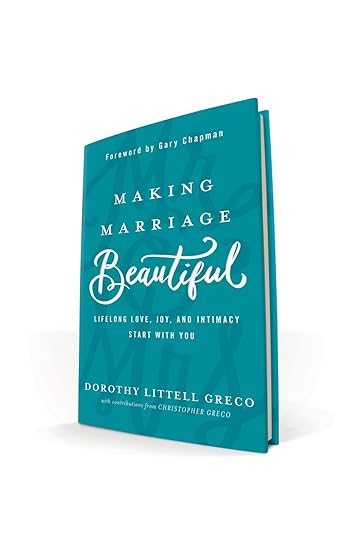
Making Marriage Beautiful by Dorothy Littell Greco is written by a writer, photographer, mother of 3 young adult men, and wife of 25 years. Greco’s writing is a mix of personal anecdote, stories from a diverse set of marriages, and instruction on how to allow marriage to change you so that your marriage will become more beautiful. Because she’s a friend, let me share her words: “Making Marriage Beautiful is truly unlike many other marriage books. First, it’s written by a woman to both men and women. This is almost unheard of. Adding Christopher’s words and the eight other husbands ensures that men are well represented. Second, the book contains very vulnerable, real-life stories. Most authors who write about marriage tend not to be as honest as Christopher and I chose to be. I think readers will easily engage and trust me because I’m choosing to trust them. Finally, I refuse to depend upon cliches or formulas. There’s no chapter titled, Ten Steps to a Perfect Marriage! Marriage and transformation is a process and my goal in writing this book is to help men and women navigate that process well. For the long haul.”
Very Married by Katherine Willis Pershey is a memoir of marriage written by a minister, mother of two young kids, and wife of 14 years. Pershey’s writing is witty and wise, crafted with authentic reflection which opens the curtain on her marriage. She does not shy away from tough reality (like her attraction to another man), but invites us in to her relationship through humor and story, so that we might embrace the hard of our own covenant. I've already passed it along to a girlfriend.
Love Warrior by Glennon Doyle Melton is also a memoir of marriage written by a controversial figure who not only announced her separation and subsequent divorce to her husband just as the book released, but has since announced her relationship to professional soccer player, Abby Wambach. One of the things that is so difficult about the announcements is that the book is essentially about walking through her pain (and Craig walking through his) to discover how to be better individuals and better spouses. It concludes with a recommitment to one another, celebrating the covenant of marriage while affirming its challenges. Admittedly, it’s a quick devour as her writing style is captivating and the way she tackles each of their responses to pain is beautiful. But, what is the Spirit saying to us through her book? Why did he move in her to write about covenant and pain, but then leave us all feeling like the message is disingenuous? I’m not sure what to do with this one. For now, it remains on the shelf. I’m reluctant to pass it on.
Pre-Order your copy today
If my therapist husband were to ask which one of these he should hand to a couple, I would suggest Making Marriage Beautiful. Besides resting in her orthodox view of the marriage covenant, I have confidence men and women can both read it and relate to Dorothy’s voice and instruction. Not only does she include the male voice, but she includes voices from a wide range of cultural and ethnic backgrounds. The reader can tell she speaks not only from personal lived experience, but also from 20 years of counseling couples through similar transformative growth.
The Spirit is making meaning of marriage in these days of trivializing this covenantal bond. For those of us committed to a spouse for the long haul, maybe pick up Dorothy’s book this year and invest in change for the sake of beautiful.
December 7, 2016
Guest Post for Jen Pollock Michel, Home: Musings and Memories
I was honored to be included in Jen Pollock Michel's guest series, “Home: Musings and Memories" and even more excited about her upcoming book, Keeping Place: Reflections on the Meaning of Home (IVP, Spring 2017). Jen believes "home is our most fundamental longing, homesickness our most nagging grief. Most of all, I believe that the historic Christian faith has something to say about that desire and disappointment." It is always a challenge and joy to process my years overseas and digest them for readers. Perhaps you know someone living abroad right now? Maybe ask them to share their home story with you this Christmas? Here's mine:
Daire 3, 5 Blok, Vitol Cikmazi, Moda, Kadikoy, Istanbul, Turkiye
It seemed fitting to live in the largest neighborhood of the largest city in the largest unreached nation. Principle had drawn us here, with our one-year-old in tow and adventure at our backs. It was not a sacrifice. We were young and seeking purpose. And we were planting a flag with the apartment we chose: this would be the haven for our team, the space in which hearts would change.
The day we trudged up the hill with lights and curtains tucked under our arms, preparing the apartment for our move, our new electrician friend pulled us anxiously toward the TV in his shop. While our son played with electrical outlets, we watched planes fly intentionally into towers. We moved into our new home days later amid shock, fear, and grief. Our first team meeting included an angry call with a father in America: he wanted his young daughter on a flight immediately, safely out of the middle east.
Our home was christened with tears.
Months later I ordered a turkey from the butcher and opened canned yams from the black market coming off the military base. We celebrated Thanksgiving with 25 people, only half of whom were American, and shared a little bit of home with new friends. The first of all our wedding gift wine glasses broke that night as young teammates helped in the kitchen. A few stayed late to binge watch Alias thanks to a VHS tape received in the mail.
Our home was anointed with laughter.
Finish reading here.